Ready to know more about San Diego?

Subscribe
Beer NOVEMBER 29, 2023

The Top 9 Must-Visit Breweries in Baja California

The ultimate guide to the percolating beer scene south of the border
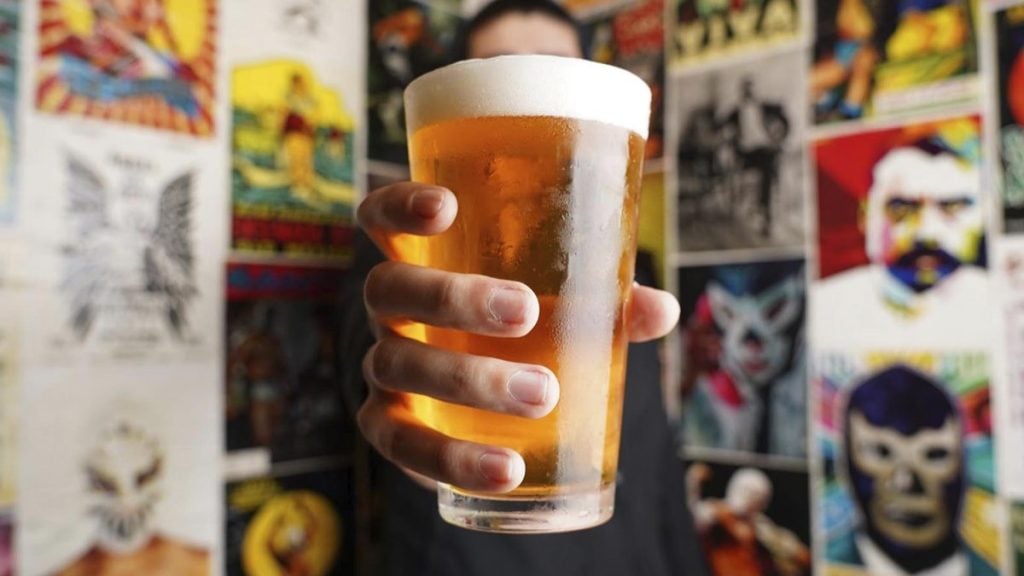
The Top 9 Must-Visit Breweries in Baja California
Courtesy of the State of Baja California

I visited more than 50 breweries in Baja California this year. Its three major cities—Tijuana, Mexicali and Ensenada—have more than 25 breweries each, making it the state with the most breweries in Mexico (and the most awarded).

Tijuana is chaotic and competitive, beer is for city folk in a dog-eat-dog market. Ensenada is laid back and married to the sea, beer is for the tourists seeking relaxation and seafood. Mexicali has hellish weather; beer is for the locals to survive the heat.

Each city has its unique burgeoning scene, as well as some bad players. This list compiles the best beer Baja California has to offer, from ninth best to first. 
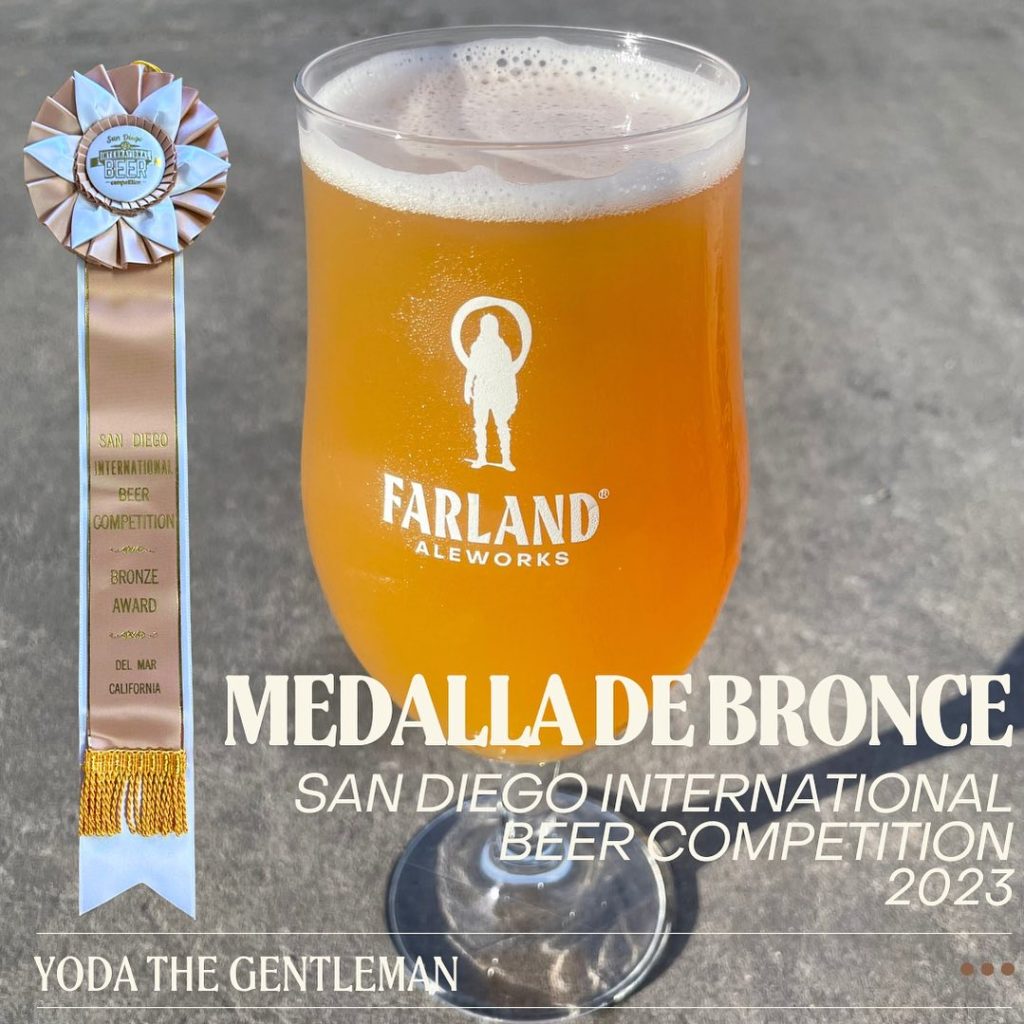
Baja California brewery Farland Aleworks' award winning beer, Yoda the Gentleman from the 2023 San Diego International Beer Competition
Courtesy of Farland Aleworks

Farland Aleworks

Tijuana

It’s only been a year since Farland Aleworks opened in “La Veinte de Noviembre” neighborhood (near the Xolos Stadium). Investing more than a million dollars, Farland set a new standard if you want to be competitive in the Baja beer scene. The brewery did not cut any corners; everything is pristine, the branding, the food, and the beer (in any style). They built a big four-story building alluding to a galactic brewery, the space theme continues into the bathrooms. Their hazy pale ale Yoda the Gentleman, recently won bronze in the San Diego International Beer Competition.
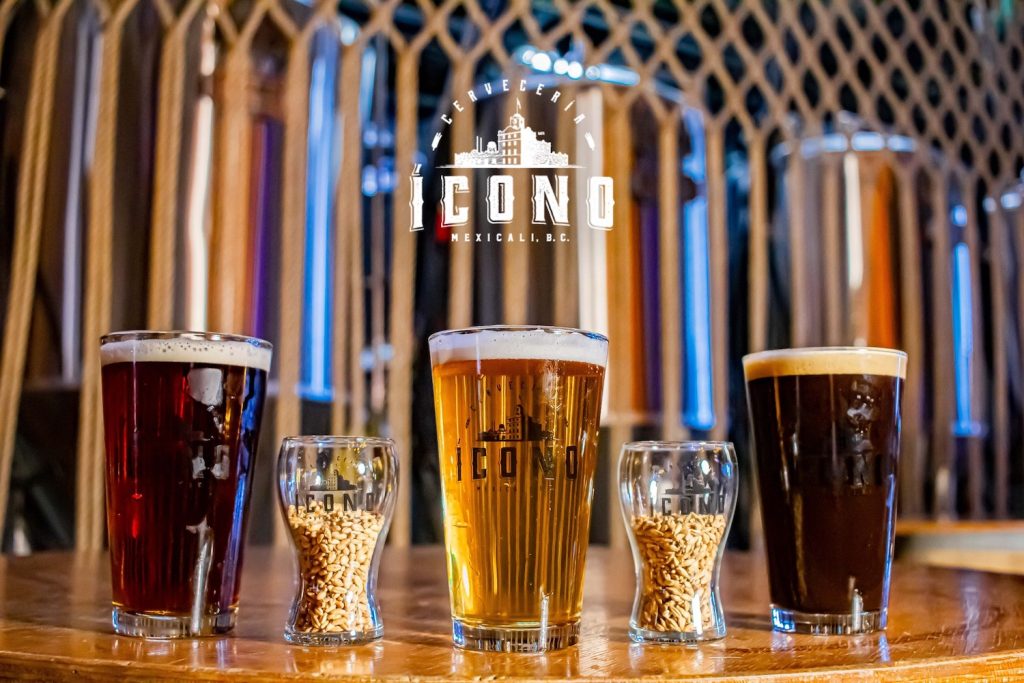
Three beers from Baja California brewery, Cervecería Icono, on a bar in front of brewing casks
Courtesy of Cervecería Icono

Cervecería Icono

Mexicali

Also a big investment, Cervecería Ícono took over the old Mexicali Brewing company grounds, originally built in 1923 and closed in 1973 (and subsequently abandoned). It wasn’t until 2019 that Ícono converted the space into the biggest beer garden in Baja and the second largest in all of Mexico (beaten only by Cervecería Hércules in Querétaro). Besides a solid lineup of beers, it also has a bar, music stage, and contains numerous food options including pizza, burgers, tacos, a smokehouse, and more. 
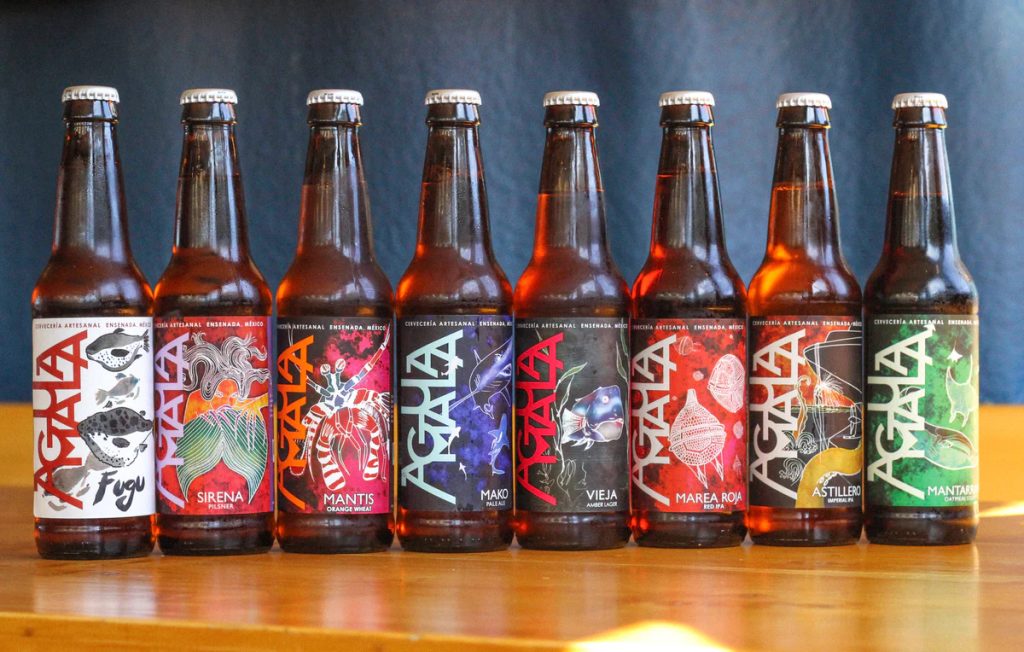
Cervecería Agua Mala's current lineup of beers featuring marine life illustrations
Courtesy of Cervecería Agua Mala

Cervecería Agua Mala

Ensenada

Founded in 2005 by marine biologist Nathaniel Schmidt, most of Agua Mala’s beers are related to the ocean. Their tap room is made out of recycled shipping containers with murals of sea creatures. Though it sounds like “bad water,” the actual translation of Agua Mala is jellyfish (their logo). Agua Mala has been winning awards since 2010, they recently got six medals in Copa Baja including two gold for their Vieja (Amber Lager) and Mero (Czech Lager). With an ocean obsession, the menu has fresh seafood including Kumeyaay oysters, which they also use to brew La Perla Oyster stout.

Amante Brew Company

Mexicali

A hop in the shape of a heart with an arrow across is their logo, Amante translates to lover. Founded in 2011, Amante claims to be the first truly independent brewery in Mexico. Most of their beers have women’s names, others have names like their foreign extra stout which they call “La Panocha” slang for uhh… women’s genitalia. The aforementioned beer recently won silver in Copa Baja and “Marie,” my favorite saison, won bronze. 
Courtesy of Mamut Cervecería

Mamut Cervecería

Tijuana

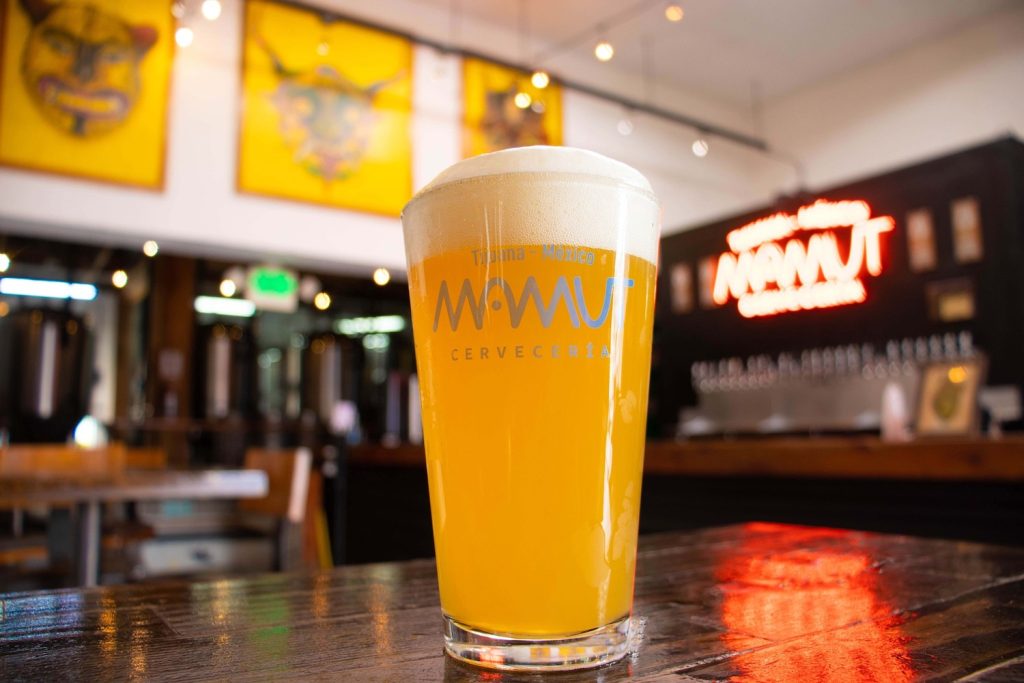
Mamut is the first brewery I tried in Tijuana in 2013, and since then, you often find me drinking there. It’s been a rollercoaster of quality and staff. For a couple of years, they were brewing garbage (many locals swore it off). But Mamut persisted, and in the past years they’ve been brewing award-winning beers, and their quality keeps improving. The spacious brewery is located in one of Tijuana’s oldest buildings, the Foreign Club. But to best enjoy Mamut’s beers, find the original tiny location where it all started inside Pasaje Rodríguez.
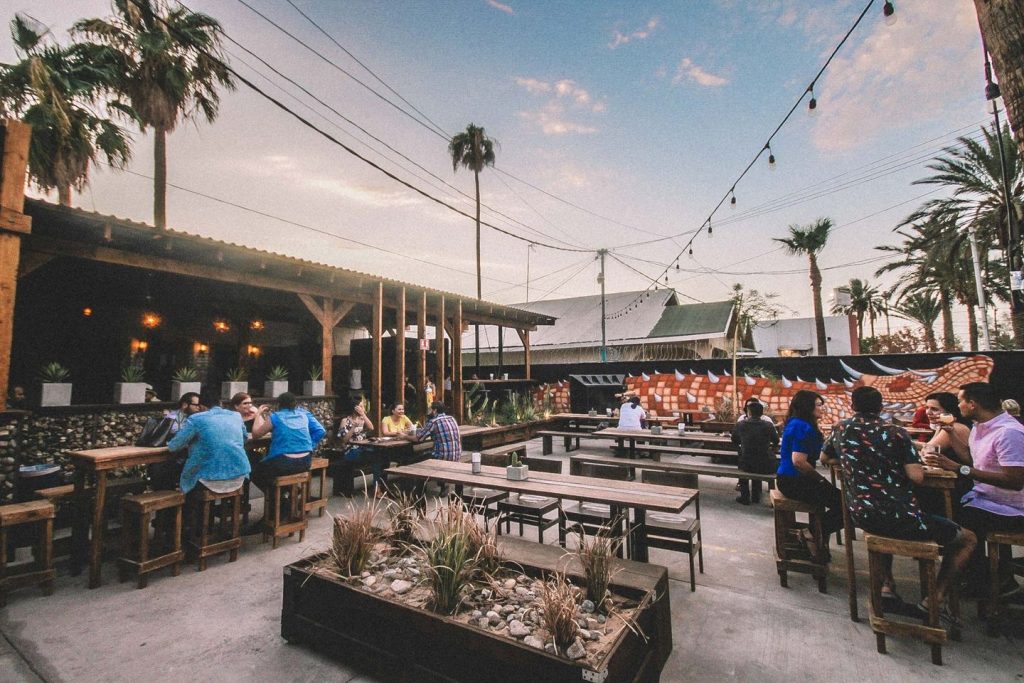
Baja California brewery Fauna Tasting Room's spacious outdoor patio featuring tables and string lights
Courtesy of Fauna Tasting Room

Fauna Tasting Room

Mexicali 

Fauna is a fantasy world of beasts, fairies, goblins, wizards, and beers. It is the biggest and best-established brewery in Mexicali, delivering beer all over Mexico with its Dungeons and Dragons-themed labels. They refer to everyone as a carnavalastro (slang for “bro”) and invite you to taste their magical brews. They won five medals in Copa Baja 2023 including two gold for their Nox Arcana (Imperial Stout) and Gozo Real (Belgian Single). 
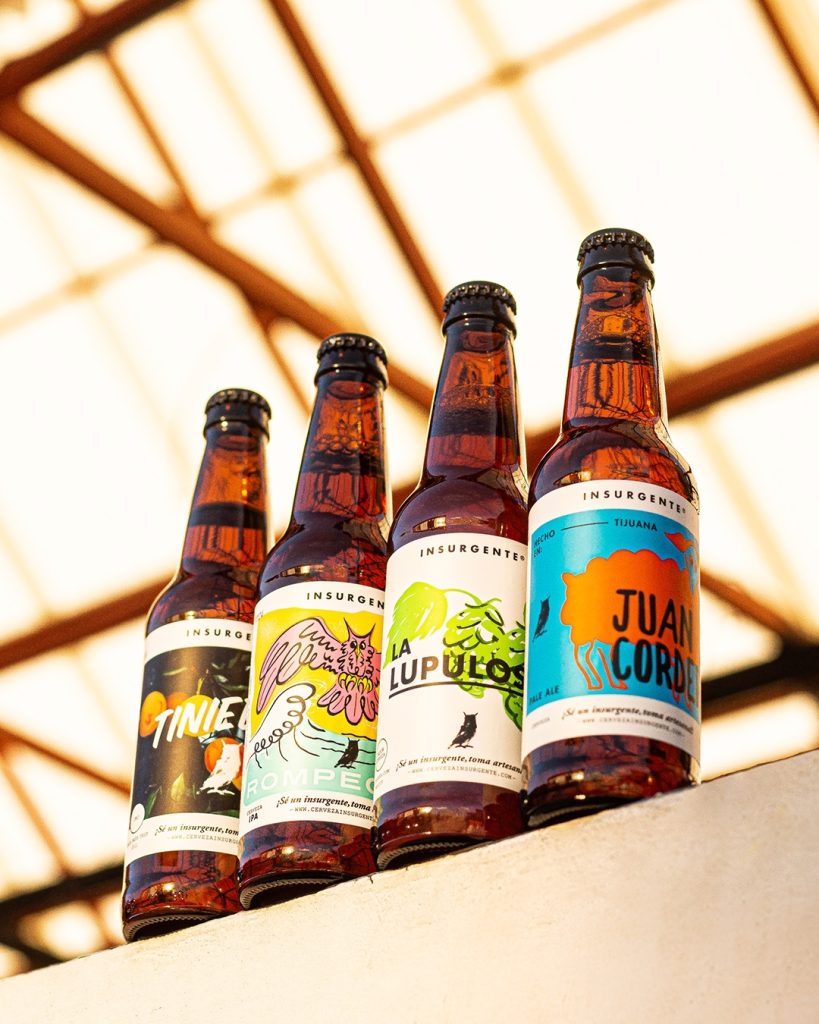
Brewery Cervecería Insurgente's lineup of beers including their popular La Lupulosa brew
Courtesy of Cervecería Insurgente

Cervecería Insurgente

Tijuana

Cervecería Insurgente is home to one of the most recognized IPAs in Mexico “La Lupulosa” or the hoppy one. It is the best-established beer in Tijuana. Their logo of an owl is recognized by beer aficionados all over Mexico and parts of the United States. Insurgente collaborated in 2014 with Stone Brewing to brew Xocoveza, an award-winning stout with Mexican hot chocolate mixed with coffee. Despite fighting with the Tijuana government, which caused them to shut down their plant, Insurgente never lost its superb quality. After three years of struggle, they re-opened their main facility in August 2022.
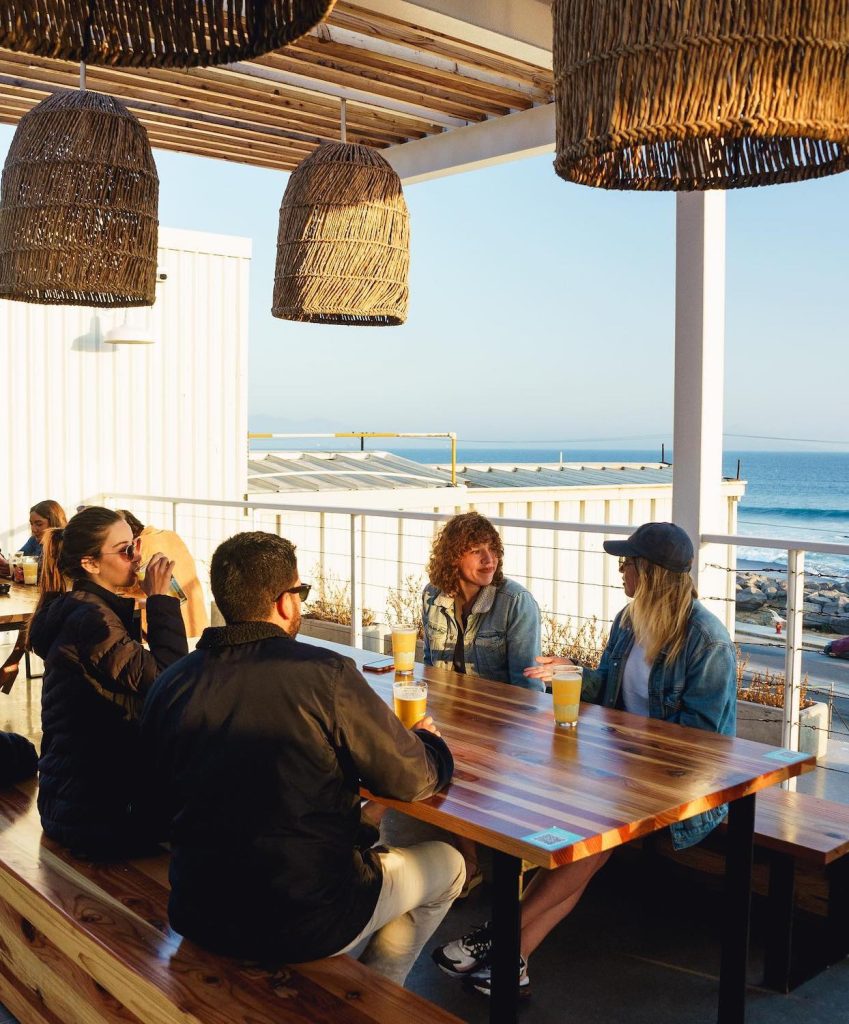
Table of beer drinkers at Wendlandt Tasting Room in Baja California with an oceanfront view
Courtesy of Wendlandt Tasting Room

Wendlandt Tasting Room

Ensenada

Situated in El Sauzal, next to the ocean, Wendlandt is one of the biggest craft breweries in Mexico producing more than 100,000 liters a month. Wendlandt started brewing in 2012 and won the best brewery in Copa Mexico twice (2015 and 2019). In 2016, they expanded distribution to the United States (it’s easily available in San Diego). Everything I tried from Wendlandt has been outstanding, including their food offerings. Their six lines of beers have won multiple awards except for their newest addition, a session IPA named Tuna Turner. 
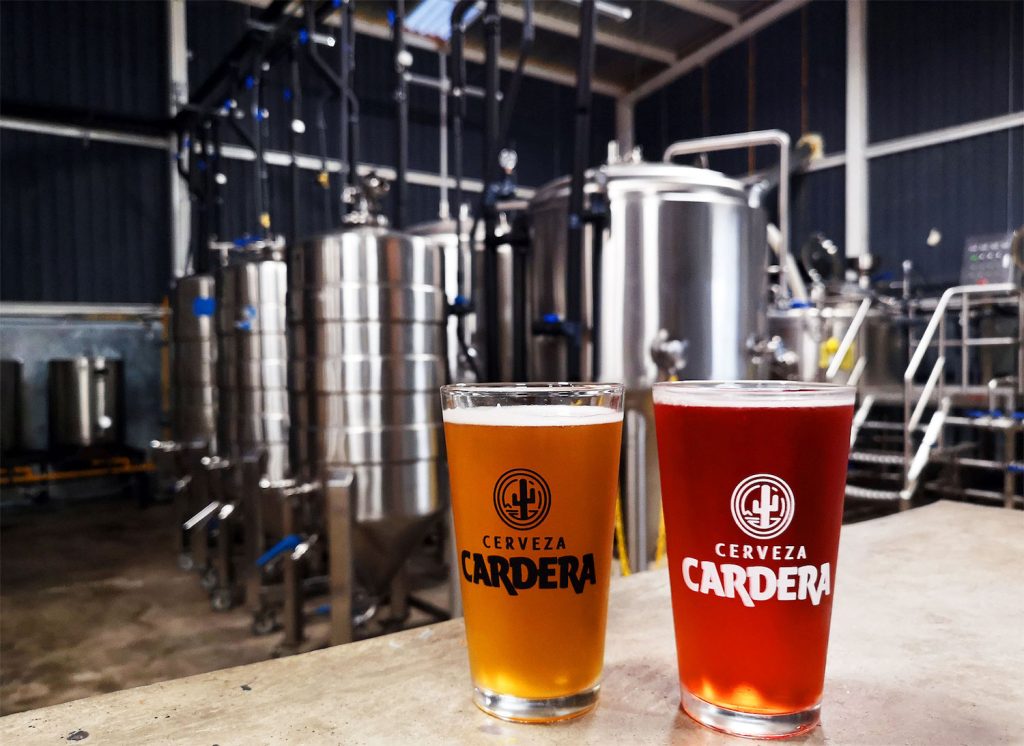
Two beers, one IPA and one red ale, from Baja California brewery Cerveza Cardera in front of brewing casks
Courtesy of Cerveza Cardera

Cerveza Cardera

Ensenada

The first time I tried Cerveza Cardera I was blown away. Their mango with chamoy Berliner-Weisse reminded me of my favorite Mexican candy in a sour beer format. It continued to amaze me with their Dosis Perfecta, a Carajillo Stout with coffee, and Licor 43 (a Spanish liqueur with 43 ingredients). A family business that started in a humble garage in 2013 in a quiet Ensenada neighborhood, it quickly expanded to a large warehouse (which they share with Cerveza Bruer). Cardera is a portmanteau of the owners and married couple Armando Carednas and Rebecca Ramírez. It won Best Brewery Aro Rojo in 2022 (Mexico’s international beer competition) and won three gold and a bronze in the recent Copa Baja.

Subscribe to our newsletters

Select Options

By subscribing you confirm that you agree with our Terms and Conditions and Privacy Policy.

Food & Drink JUNE 30, 2026

An Emo-Themed Bar & Pizza Joint is Rolling Into OB

Drink 182 will pair pop-punk nostalgia with New England-style pizza starting this summer

An Emo-Themed Bar & Pizza Joint is Rolling Into OB
Courtesy of Drink 182

If you’ve ever squeezed yourself into a pair of black skinny jeans with a studded belt, sported a track jacket under a band t-shirt, or swept your Manic Panic-hued hair so far to the side that your part got caught in your cartilage earring, I have good news: Ocean Beach will get a shot of emo and pop-punk nostalgia when Drink 182 opens this July.

The pop-punk bar and pizza spot comes with bonafide scene points. Co-founder Jay Nightride runs the music production studio Nightride Visuals, has worked with artists like Steve Aoki, Lil Jon, and Fall Out Boy, and also plays in Death Cab for Karaoke, a live karaoke band that performs every month at Soda Bar (among other venues). His partner Tony Jaw is easier to spot—he’s the guy with the sky-high mohawk manning the karaoke booth at Redwing Bar & Grill who’s been in the local bar and hospitality business for over a decade. 

Nightride says he’s had the idea for an emo enclave for years, but it wasn’t until after Covid that he partnered with Jaw and got the funding to move forward. “What I was looking to build was a place that I would want to be, where would I want to go to remember these nostalgic songs,” he says. 

Pending permits and final inspections, Drink 182 is slated to open the second half of July. The vibe will be dive bar meets emo night, with memorabilia from different bands who have supported the project splashed across the walls, plus a few arcade games, TVs, and (I assume) a decent sound system. The hours are still undetermined, but Nightride says they tentatively plan to be open until 2 a.m. on weekends and Wednesdays for the OB Farmers Market. In the mornings, they’ll serve fresh pastries and coffee from the similarly music-aligned James Coffee Company (whose co-owner David Kennedy is a member of Angels & Airwaves with blink-182’s Tom DeLonge).

But it’ll be the pizza that really stands out—or at least, they hope. “We’re doing New England beach pizza… a really niche pizza that not a lot of people would know about, unless you’re from North Shore, Massachusetts,” says Nightride, a former Bostonian. “It’s a thin crust, very sweet sauce, very simple, fast, go-to-the-beach kind of thing.”

“Beach pizza” is characterized by its rectangular shape, very thin crust, sweet tomato sauce, and slices of Provolone cheese with minimal toppings. Drink 182’s version will feature homemade dough and sauce, as well as freshly sliced Boar’s Head Provolone. And yes, they are aware there are already a lot of pizza options in the area. It won’t be the same, Nightride promises. 

“Everybody’s first reaction when they hear ‘pizza’ is like, ‘Oh great, another pizza place in OB,’” he laughs. “But we’re trying to do something different, just enough to differentiate it and give people another option.” If you’re not keen on the style, try one of their “drunkables,” another nostalgic riff they hope the pop-punk and emo crowd will appreciate. And if you still need a reason to give Drink 182 a try, I have more good news—you don’t actually have to break out your old skinny jeans. (In fact, please don’t.)

Drink 182 opens July 2026 at 5049 Newport Avenue in Ocean Beach.

Courtesy of Margaritaville Hotels & Resorts

San Diego Restaurant News & Food Events

Beth’s Bites

  • If the steak hype wasn’t hot enough already, The Heritage Steakhouse in Santee just announced Meredith Manée will serve as executive chef of the New York-style steakhouse when it opens in August. Her star-studded kitchen resume spans over 25 years, with stints at the Hotel del Coronado, the Four Seasons, and The Ritz-Carlton Maui, so I think it’s safe to assume we’ll be in good hands. 
  • Rather than waste away in Margaritaville, you have the chance to support the San Diego Music Foundation at the annual Jimmy Buffett-inspired Day of Service at Margaritaville Hotel San Diego Gaslamp Quarter. On September 4 starting at 5 p.m., the rooftop bar will be rocking with live music and plenty of flowing cocktails, plus a silent auction and other activations to raise money for the local music education organization. I’ll drink to that. 
  • The early bird gets the worm and you can get the early ticket to Celebrate the Craft, the annual culinary festival that takes place at The Lodge at Torrey Pines on October 18. If you snag your ticket before the end of June, you can save $50 (which is nothing to sneeze at), plus you’ll be helping support the San Diego Food Bank. 
  • Mani e Grani, the pizza spot from the same people behind Ciccia Osteria, seems to be inching ever closer to opening its doors in Barrio Logan. I know I’m not the only one anxiously awaiting sinking my teeth into some wood-fired, chewy but crispy, hot-from-the-oven, authentic Italian pizza.

Listen Now: The Latest in San Diego’s Food and Drink Scene

Have breaking news, exciting scoops, or great stories about new San Diego restaurants or the city’s food scene? Send your pitches to [email protected].

Beth Demmon

About Beth Demmon

Beth Demmon is an award-winning writer and podcaster whose work regularly appears in national outlets and San Diego Magazine. Her first book, The Beer Lover's Guide to Cider, is now available. Find out more on bethdemmon.com.

Features JUNE 29, 2026

5 San Diego Food Trends to Know About

From surprise revivals to changing dining habits, these are the shifts redefining the local culinary landscape

5 San Diego Food Trends to Know About
Photo Credit: Arlene Ibarra

Comebacks Are the New Kickoffs

If absence makes hearts (and stomachs) grow fonder, then shuttered restaurants quickly become the hottest tickets in town—something a number of iconic institutions found out after taking very public hiatuses after historically long runs. For instance, following a lengthy (and extremely flip-floppy) closing process after 92 years in business, Las Cuatro Milpas reopened two blocks away in Mercado del Barrio. Similarly, Carlsbad butcher shop Tip Top Meats reopened in the same location (albeit a smaller space) after the death of founder Joachim “Big John” Haedrich in 2023. Finally, after a whopping decade out of business, Sami Ladeki and chef Alfie Szeprethy brought back Roppongi to its original Prospect Street space, where it was the talk of the town in the late ’90s. All came back under the same proprietors, so they weren’t third-party nostalgia-licensing deals. The algorithm may have ravaged our attention spans away from all but the newest and shiniest, but this proves there’s still hope for our collective prefrontal cortex.

New Generations Take the Reins

Other local eateries honored their pasts by bringing in new perspectives. The Lion’s Share in Embarcadero, Milton’s Deli in Del Mar, Dudley’s Bakery in Santa Ysabel, and J-K’s Greek Cafe in La Mesa handed over the keys to new owners willing to take on a big task: maintain the soul of icons through particularly rough economic circumstances for restaurants, navigate big feelings from longtime regulars (who often don’t take kindly to change), and make some necessary changes to keep going for another few decades. Taking over a project in process can be a lot harder than starting from scratch. But building that feel-good nostalgia doesn’t happen overnight, so it sure helps to have a well-established playbook of success passed down from those who came before.

Courtesy of Sugarfish

The Expansion Class Arrives

It wasn’t just restaurant groups from Los Angeles that decided to put down roots en masse, although San Diego saw plenty of LA transplants recently (Sugarfish, Mr. Charlie’s, For the Win, Katsuya Ko, Bacari). Global brands like Chef Fei, Zuma, and Pepper Lunch have locations of their own on the way, and upscale Canadian eatery Joey joined to the inescapable gravitational pull of Westfield UTC’s culinary cosmos for its first spot in America’s Finest City. Good to see the rest of the world is catching up with what we’ve been seeing the last few years—San Diego is a dining destination already on the rise.

Choosing To Not Choose

Between the never-ending news cycle of doom and perimenopause brain fog, I’m at the stage in life where I’m more than happy to let someone else make a decision for me, especially when it comes to what’s for dinner. And based on the way a lot of menus look right now, I’m not alone. It seems like half the places I visit offer some version of a prix fixe, omakase, or tasting menu. Restaurants are embracing the curated experience to solve the problem of affordability (a fixed menu reduces food and labor costs, guarantees an acceptable check average, etc.) and critical thinking in one fell swoop. Omakase (meaning “I leave it up to you”) is far from a new concept in high-end Japanese sushi culture, but now that it’s popping up everywhere from coffee experiences to grab-and-go sushi and sandwiches, it’s gone from somewhat niche to nearly omnipresent.

Courtesy of Rikka Fika

Local Coffee Hit the World Stage

The world got an up-close look at San Diego’s coffee industry when we hosted the premier specialty coffee expo World of Coffee for the first time this April. San Diego’s long and rich coffee history stretches back to the late 19th century. Things percolated fairly quietly for around a century before really picking up steam. Today, there are nearly 200 specialty roasters and cafes across the county, with many earning national accolades like the Good Food Award (Steady State Roasting, 2020; Bird Rock Coffee Roasters, 2023, 2021, 2019, 2017, 2016), Roaster of the Year by Roast Magazine (Mostra Coffee, 2020; Bird Rock Coffee Roasters, 2012), and the Specialty Coffee Association Coffee Design Award for packaging (Rikka Fika, 2026). Now that we’ve moved past the comically insufferable coffee snob era of the early 2000s, even java newbies can feel comfortable walking into pretty much any coffee shop in San Diego, asking questions, trying a few things, and feeling confident they’re going to get great service and a great beverage.

Beth Demmon

About Beth Demmon

Beth Demmon is an award-winning writer and podcaster whose work regularly appears in national outlets and San Diego Magazine. Her first book, The Beer Lover's Guide to Cider, is now available. Find out more on bethdemmon.com.

Everything SD JUNE 26, 2026

A New Otay Mesa Border Crossing May Improve Wait Times

A massive $1.3 billion construction project is slated to improve the border-crossing process—will it live up to its expectations?

A New Otay Mesa Border Crossing May Improve Wait Times
Courtesy of SANDAG and Caltrans

You’re coasting home after a weekend in Rosarito Beach—still riding the high of vitamin D and Baja Med—and then comes a slap back into reality: brakelights and gridlock exhaust.

Small wonder, given that San Ysidro is the busiest land border crossing in the western hemisphere (fourth-busiest in the world). Otay Mesa’s no breeze either; it’s the busiest commercial port in California and second-busiest across the entire southern border. Smart Border Coalition says that each day last year, 41,800 vehicles crossed into the US at San Ysidro; 17,800 crossed at Otay Mesa, along with 1,023,000 commercial trucks.

Guide to visiting Tijuana, Baja California, Mexico featuring the skyline

Diana Pazos, a San Diego resident and adolescent psychiatrist working in Tijuana, says the northbound border wait at the San Ysidro crossing is often three to five hours Saturday through Monday—delays that modern humans and multinational maquiladoras alike aren’t built to endure. At the current Otay crossing, “commercial trucks may be in line for six hours or longer,” she says.

Needing to bake a couple hours of commute into the States doesn’t just affect vacations; tens of thousands of people cross the border each day for doctor’s appointments, work, school, you name it. The clog has personal and commercial ramifications.

But change is coming. Construction has begun on a new border crossing in Otay Mesa, which is expected to significantly reduce wait times across all San Diego border crossings, bolster binational trade, and improve the air pollution levels in the area.

Nikki Tiongco, an 18-year Caltrans veteran who oversees the Otay Mesa East project (aka Otay 2) for the agency, says the new border crossing will also be among the most high-tech, efficient, and secure border crossings in the nation.

“We have already completed the roadway network within the Otay Mesa East region,” says Tiongco. Part of this project included building State Route 11, an extension of SR 905, which has been open to the public since August and will feed traffic to the new entry port. Otay 2 comes with a 21st century upgrade, too. Miles of fiber-optic cables have been installed underground, which gives the port the brainpower to efficiently sort and streamline traffic as cars approach the border. (Unlike the San Ysidro border, where lanes get organized by vehicle type, Otay 2’s lanes will be interchangeable. For example, if the system indicates that a high number of commercial trucks is heading to the border, passenger lanes could be converted to cargo lanes in real time.)

Otay 2, driven by a binational collaboration among government agencies (Caltrans, SANDAG, General Services Administration, and U.S. Customs and Border Protection), receives both federal and state funding, plus hefty contributions from Mexico. So far, funds from the $1.3 billion project have helped build new bridges and roadway interchanges that will guide traffic to the crossing. At this stage in the process, Caltrans is “laser-focused on building the facility itself,” Tiongco says.

Now, to the juicy part: the prospect of a “20-to-30-minute border wait time” at Otay 2, according to Tiongco. Currently, there are three standard ways to cross the border at San Ysidro: Ready Lanes, General Lanes, or SENTRI Lanes. Most travelers use either the Ready or General lanes. SENTRI Lanes require a form of pre-approval from the US federal government plus an additional fee. According to CBP, the average wait time in 2025 at the San Ysidro crossing, was as little as 15 minutes in the SENTRI Lanes, 45 minutes in the Ready Lanes, and 1.5 to 2 hours in the General Lanes. Those are best-case scenarios that vary based on lane type and time of day.

Otay 2 is about 12 miles east of the San Ysidro crossing and 2.5 miles east of Otay 1. Those not wanting to spend that much extra time on the road to drive to the new border crossing, despite the allure of an under-30-minute wait, are still expected to see some benefits. Tiongco says Otay 2 will “provide a relief valve” overall by spreading the burden across the three border crossings. As a result, SANDAG says, wait times at San Ysidro and Otay 1 could be cut in half.

It’s not just your time waiting at the border that matters. Multinational corporations that relocated their manufacturing plants (maquiladoras) to Northern Baja have claimed for years that the long delays at Otay 1 eat away at their profits. More than 600 maquiladoras, used by companies such as Samsung and Panasonic, currently use Otay 1 to transport products to US and international markets. Ambassador Alicia G. Kerber-Palma, the consul general of Mexico in San Diego, says the project will facilitate more than $60 billion in cross-border trade annually.

Previous reports say that Otay 2 also has the capacity for around 12,000 passenger cars and 1,500 commercial trucks daily. A shiny, new element to this port: Commercial and personal vehicles that choose to cross will pay a dynamic toll on both sides of the border. The fee will increase during busy hours and decrease during slower periods, Tiongco says. Caltrans estimates that the toll could range from $4 to $30 for passenger vehicles and higher for commercial trucks. Drivers will be able to see current rates before they reach the actual border crossing.

And, with these changes, there are environmental benefits, too. “With shorter wait times at all three ports, there’s less idling and congestion, which should significantly reduce air pollution on both sides of the border,” says Kerber-Palma. The main factor driving improved air quality would be decreasing dirty emissions from idling diesel trucks. This county’s air could use some sprucing up, anyway. A 2026 report from the American Lung Association named San Diego as the fifth-most particle-polluted county in the US. The bulk of that dirty air comes from the heavy-duty trucks and ships that pass through the area.

Otay 2 is not only expected to curb the acceleration of air pollution in San Diego; if the state’s legislature passes California Senate Bill 10, the border crossing could also restore local water quality. This bill would use a portion of Otay 2 toll revenues to fund ongoing maintenance of the South Bay International Wastewater Treatment Plant. Current media reports say, however, that it’s increasingly unlikely that SB 10 will become law.

Otay 2 has been in the works for over two decades and is finally nearing the finish line. Construction estimates show that it should be up and running in 2029. Tiongco says this border crossing is “a good example of how the state, federal and local governments are working together and with Mexico to advance our mutual goals in the region.”

Adam Behar

About Adam Behar

Adam is a longtime San Diego journalist and communications pro. He covers everything from politics and culture to surfing and business.

Studio S FEBRUARY 26, 2026

Chef Aidan Owens Thinks Your Fish is Boring

The 29-year-old culinary director at Herb & Sea is making seafood sexy (and approachable) again

Implementing a farm-to-table model hardly deserves acknowledgement these days. It’s not a stretch. It’s not innovative. “It’s the bare f**king minimum,” says Herb & Sea‘s executive chef Aidan Owens.  

When I arrive at the Encinitas restaurant, I’m ready to talk sustainability, farm-to-table stuff, with Owens. “Did you see the chin on that?” he says of the extra big jiggly chin on the sheephead that just arrived with the day’s fresh catch. I did. It was Jay Leno adjacent.

I learn quickly that he somehow oozes both charm and stone-cold honesty. Maybe he could construct a new dish with chin goo, like he did when he had a bunch of tuna scraps and voila’d it into a smooth and crowd-pleasing ‘nduja. “I want to know what’s in there,” he says.    

Courtesy of Herb & Sea

The instinct to look closer, to dig into what others might discard, says a lot about the chef’s approach. I guide him back to our topic, but he has something else on his mind. “We’re overcomplicating food—what happened to just cooking good food and having fun with it?”

Owens grew up on a farm in Byron Bay, Australia, where sustainability wasn’t a concept you chat about so much as a way of life. Think dirt roads, backyard chickens, pulling vegetables straight from the ground, and a mother who believed that if you couldn’t pronounce the ingredients on a package, you shouldn’t eat what was inside.

Food wasn’t precious or performative. Making it was what you did because you were hungry and that’s still what inspires Owens today. “I like to cook good food because I like to eat good food,” he says.

His approach to sustainability at Herb & Sea began so naturally that it felt just like instinct. “I was just like, ‘Let’s order food from the people who live and work here,’” he says.

Courtesy of Herb & Sea

And why wouldn’t he when lives in San Diego? Cities all over the world vie for our goods. Our tuna is sent overseas. Our spiny lobsters hit dinner plates in China and Japan. Not to mention California’s producing a third of the country’s vegetables and three-quarters of its fruits and nuts. 

“Why would we outsource when it’s all here?” Owens asks.

Sustainability, in this context, is about cooking what exists in abundance, nearby, right now. “I love the local fish here. It’s f**king delicious and San Diego citrus, I mean, it is so f**ing good,” he says.

Instead of importing ingredients, Owens also looks for nearby alternatives. “You can find really cool things in the local waters,” he says, pointing out that stingray cheeks taste similar to scallops.

Courtesy of Herb & Sea

Whatever he finds in that sheephead chin might just be the next substitute for marrow. But to make this work, it means getting diners amped up about the slightly unfamiliar. 

Tasting menus, where diners are completely in his hands, become an opportunity to gently push boundaries. “I’ll serve mackerel, because people think they hate it,” Owens says, noting that the abundant local fish can have some fishiness. “But when it’s fresh, it’s arguably one of the best fish in the ocean.”

He also tweaks the language on the menu so people might feel more compelled to give dishes a try without preconceived notions. He might use “lengua” instead of “tongue.” “Whelk” instead of “snail.” When he puts “stingray throat” on the menu, he disarmingly calls it “skate.” 

To reduce waste, scraps aren’t always discarded but rather turned into something new. Sometimes they’re smoked, cured or fermented. Apples going bad turn into apple ponzu. Lemons turn to marmalade, which stretches their usefulness far beyond peak season. “And it’s super tasty on our pizza,” he says.

What makes the food even richer, is the relationships he’s built with farmers. Though it didn’t always feel natural, Owens sought personal connection first. He recalls approaching a fisherman at the Tuna Harbor Dockside Market. “I was awkward,” he says. “I went up to him and said, ‘I like your fish.’”

Owen’s is now so close to his suppliers—like fishermen Ryan Sebo and Joe Daly—that he gets texted pictures of fresh catches right as they flop on the boat. The messages always ask if he wants first dibs. “I say yes to a lot of fish,” Owens says, noting that Herb & Sea can go through 2,000 pounds of seafood a week.

Courtesy of Herb & Sea

The next evolution of sustainability, in his view, will be chefs working directly with producers such as his alliance with Sebo, cutting out middlemen and purveyors where possible. “It will put more money in the pockets of the people doing the work,” he says.

It will mean that chefs can’t just know their local farmers and producers, but they’ll choose to work with the ones who have the best practices. Dining and sustainability will become much less about the final plate. “It will be more about the impact that plate has on the Earth,” he says.  

Ultimately, he believes sustainability doesn’t need to be loud. It doesn’t need hashtags. It just needs to be honest.

“We aren’t saving lives. We’re feeding people good food,” he says.

And yet, in feeding people well—simply, thoughtfully, responsibly—something meaningful happens. Guests leave satisfied. Ingredients are respected. Local ecosystems are supported and food returns to what it has always been at its core: nourishment, pleasure, and a quiet reflection of the place it comes from.

No buzzwords required.

Food & Drink JUNE 25, 2026

Global Fork Food Hall Opens in Little Italy

Offering everything from smashburgers to sundaes, the latest food hall from Tiger Hospitality opens its doors this weekend

Global Fork Food Hall Opens in Little Italy
Courtesy of Global Fork Food Hall

Omakase and fixed-price menus are one way hospitality businesses are addressing our collective food decision-making fatigue. But on the opposite end of the spectrum, some restaurateurs are offering a bonanza of totally unrelated options for people ordering on a whim. Why not pair a lobster grilled cheese sandwich, açaí bowl, and ridiculously loaded hot dog? 

Starting June 27, diners can satisfy their spur-of-the-moment appetites at Global Fork in Little Italy, the latest food hall from Southern California-based Tiger Hospitality. 

Six different food concepts will be featured in the 4,685-square-foot, indoor-outdoor space along the Piazza della Famiglia promenade. The space’s inaugural lineup includes a mix of Tiger Hospitality-owned concepts (Cosmos Burger, La Vida, Lobster Lab, and Prik Ki Nu Thai) and outside operators (Seattle-based Moto Pizza and Handel’s Homemade Ice Cream). The space next door, Good Enough Cocktail Club, is another Tiger-backed brand, operated by the team behind Same Same and Amor y Magia in Carlsbad.

Cosmos Burger serves smashburgers stacked with classic toppings, while Lobster Lab focuses on seafood favorites including lobster rolls, shrimp rolls, and lobster mac n’ cheese. Prik Ki Nu Thai adds Thai street food to the mix, with traditional noodle, rice, and stir-fry dishes. And for those looking for something on the lighter side, La Vida offers things like smoothies, salads, and wraps. 

Courtesy of Global Fork Food Hall

Moto Pizza focuses on Detroit-style square pizza with Filipino influences and, despite the name, is not affiliated with Mr. Moto Pizza. Handel’s, which began in Ohio in 1945, will offer dozens of flavors ranging from staples like chocolate and vanilla to rotating specialties packed with candies, cookies, and other mix-ins. (Handel’s already has a number of locations across San Diego, with a La Mesa store coming later this year.) 

Some of these vendors already operate at Miramar Food Hall, the other Tiger-owned food hall in San Clemente. And some of them will also appear in Station8, the next food hall slated to open in UC San Diego’s Theatre District Living and Learning Neighborhood later this fall. But if you ask me, reviving the space that housed the Little Italy Food Hall before its closure last February is a far better outcome than leaving empty suites smack in the middle of an area saturated with fantastic food options. Plus, where else can you order a slice of beef adobo pizza alongside squares of caviar toast and a banana split?

Global Fork opens June 27 at 550 W. Date Street, Suite B, in Little Italy. Initial operating hours are from 9 a.m. to 9 p.m., seven days a week, but vendor hours may differ. 

Courtesy of Holland Partner Group

San Diego Restaurant News & Food Events

Beth’s Bites

  • La Jolla is reviving one of its own shuttered spaces this August with Tacos & Jarros, coming to the space on Wall Street that formerly housed Comedor Nishi and Coffee Cup. The all-day Mexican restaurant is the latest project from the family behind Cazadores Mexican Grill in Santee and Cotija’s Taco Shop, and will offer wine, beer, tacos, traditional breakfast dishes, as well as lunch and dinner. Some concepts may have hit their ceiling (craft beer, anyone?), but thankfully, it seems that Mexican food still has a long way to go before that. 
  • In the latest hilariously-named collaboration, on June 9, The Lion’s Share will host executive chef Tara Monsod from Animae for a one-night event called Animaeniacs. (Millennials who know, know.) The three-time James Beard Award Semifinalist Monsod will work with Lion’s Share executive chef and co-owner Dante Romero to create a multi-course, family-style dinner inspired by Romero’s Mexican background and Monsod’s Filipino heritage. Tickets get you a seat at the table, plus access to an afterparty in the Marina neighborhood hotspot’s loft, with seatings at 5 p.m. for the early birds and 8:30 p.m. for the night owls. 
  • Thanks to my son’s lifelong obsession with boba, I’m always on the lookout for the latest bubble tea place to check out. Next on my list is Tera Tea House, a boba, matcha, and fruit tea joint coming this month (maybe?) to City Heights near the Copley-Price YMCA. Will I go because their logo is a cartoon dinosaur sipping on boba tea? No, but it sure doesn’t hurt.
  • After opening their latest outpost in North Park, Moniker Group announced plans to open their third Moniker General later this year inside West, a 37-story mixed use building coming to downtown at 1011 Union Street. The space will continue the group’s signature menu of coffee, cold brew, matcha, small bites, wine, and beer, and founder Ryan Sisson says they identified downtown for their next location due to the area’s “tremendous amount of momentum.” I’ve never lived in a building with a built-in coffee shop, but I’ve got to admit, it does sound like a pretty nice perk.

Listen Now: The Latest in San Diego’s Food and Drink Scene

Have breaking news, exciting scoops, or great stories about new San Diego restaurants or the city’s food scene? Send your pitches to [email protected].

Beth Demmon

About Beth Demmon

Beth Demmon is an award-winning writer and podcaster whose work regularly appears in national outlets and San Diego Magazine. Her first book, The Beer Lover's Guide to Cider, is now available. Find out more on bethdemmon.com.

Food & Drink JUNE 24, 2026

Michelin Chooses San Diego for Its Big Show

How the now iconic rating system became the biggest name in the food and how it made its way to our backyard

Michelin Chooses San Diego for Its Big Show
Photo Credit: Elodie Bost

So, Michelin chose San Diego to host its annual awards show this week. Big thing for our city, which people wrote off as the flaccid mozzarella stick or the “fish tacos bro” of California food culture.

Michelin Guide is a pretty fascinating story. It started as a marketing brochure for a tire company and evolved into the strongest global marketing platform for restaurant culture in history.

In 1900, there were less than 3,000 cars in all of France. André and Édouard Michelin were trying to sell tires. A niche market. If people drove more, they figured, tires would go bald faster. They’d sell more rubber.

So they published a guidebook with maps, gas stations, mechanics, hotels, restaurants, and travel advice. The “How to Go Bald” book with food as the bait. By the 1920s, people were buying the guide just for the restaurant recs.

In 1926, Michelin introduced stars. This changes everything.

Originally just one. Five years later, it expanded to three. One meant “very good restaurant.” Two meant “worth a detour.” Three stars meant “worth a special journey.” In other words, wear those tires down to a nub in search of Dover sole.

Photo Credit: Elodie Bost

By WWII, Michelin was the gold standard guide to French food. And French food was the gold standard for western food. Which was half the world.

Michelin first came to the US in 2005.
New York only.
(Knicks in five).

In 2007, San Francisco. Then LA and Vegas in 2008.

Michelin stopped publishing in LA and Vegas after two years and stayed dark until 2019.

Major theories for this?

First, print is expensive. I can attest. ROI on a printed story is hard.

Second, people wanted local critics, and they were finding them online.

Third, Michelin landed like a stuffed shirt in LA, which had taco carts in its heart. LA swiped hard left.

Then Michelin discovered a new way to fund what it does. Instead of trying to sell enough books to justify the cost (inspectors, printing, restaurant bills, etc.), it had tourism marketing districts pay for inspectors to come analyze their cities or states.

Tourism marketing districts are massive organizations whose primary goal is to sing the priases of their cities and states—attract tourists, who pay for hotels and spend money in the city. Heads in beds.

The first to swipe its credit card was California, which paid $600,000 in 2019 for Michelin to come back to LA, Orange County, Monterey, Sacramento, Santa Barbara, and… San Diego.

It’s an overwhelmingly positive thing, which is never without its doubters and critics.

Namely, not everyone is down with the pay for play model.

The biggest reason is that it means cities without big tourism budgets get left out. Chefs in those cities are chefs non grata in the eyes of Michelin. Which is a fair complaint, though also, sadly or not, kind of how capitalism works.

Michelin isn’t a government organization, or a nonprofit culinary organization. It’s a publicly traded company with real bills to pay and investors and shareholders to answer to.

Since it feels like a tad of a PR dilemma for Michelin, I have a proposal that may or may not work.

What if Michelin took a portion of the money it receives from larger cities and used it to fund its expansion into an underserved city or state that can’t afford it? Bake it into the price it charges California or any other state.

Again, Michelin’s not obligated to do this; there is no penalty beyond the paper cuts of public sentiment. But that sort of pay-it-forward model could help other cities without the resources to play the game, while simultaneously making Michelin’s reach bigger and more holistic.

Second, people claim this TMD-funded model somehow taints the winners.

I don’t buy that at all. All tourism boards are doing is paying a marketing business (Michelin) to come operate in their city. They’re not telling Michelin which restaurants to choose for awards. As I understand it, Michelin has retained independence, and its inspectors only award restaurants that they feel are absolutely worth it based on merit.

True pay for play would be if a restaurant group paid Michelin in exchange for a star. Or if tourism boards had a say in which restaurants received attention or awards.

I haven’t found any proof of that happening, and so I won’t ding the validity of the awards until (and if) I ever do.

All tourism boards can control is which areas they’re willing to pay to have analyzed. For instance, San Diego could technically ask that only the city be analyzed and not the county. Which it did not, most likely because Visit San Diego (our TMD) is in charge of marketing the entire county (and thus why Michelin stars like Jeune et Jolie, Lilo, and Addison are outside of SD city limits).

So, if you’re dead set on criticizing Michelin, I’m not sold yet on the pay-for-play model being the right route.

Troy Johnson

About Troy Johnson

Troy Johnson is the magazine’s award-winning food writer and humorist, and a long-standing expert on Food Network. His work has been featured on NatGeo, Travel Channel, NPR, and in Food Matters, a textbook of the best American food writing.

Partner Content SEPTEMBER 27, 2022

Visit Tuolumne County to Find the Unmistakable Spirit of Fall and Winter

Take a refreshing trip to Tuolumne County, where your senses will get their fill and your wallet will stay full with off-peak accommodation prices

Visit Tuolumne County to Find the Unmistakable Spirit of Fall and Winter
Gold Country Columbia Stage Coach.jpg

Gold Country Columbia Stage Coach.jpg

It’s that time when all of your senses are awakened by the unmistakable feel, sights, tastes, smells, and sounds of fall and winter. Experience them all in Tuolumne County in Northern California! Discover a different side of Yosemite National Park in the quieter and less crowded destinations. Watch as history comes to life with local tales and vibrant colors in Gold Country. Temperatures are dropping, but cooler adventures are found on the trails and slopes of the High Sierra and at unique events throughout the County.

Take a refreshing trip to Tuolumne County, where your senses will get their fill and your wallet will stay full with off-peak accommodation prices.

Find Serenity in Less-Crowded Yosemite National Park and Surrounding Area

Yosemite

Yosemite

Yosemite has quieted down, and now’s the time for national park adventures and new explorations. Find yourself in awe as you take in the sights among the giant sequoias backdropped by colors of maples and dogwoods and maybe some glistening snow in the Tuolumne Grove of Giant Sequoias. Or, hike around stunning Hetch Hetchy Reservoir.

Wander in Groveland, outside of Yosemite, and enjoy a warming pumpkin spice latte or a one-of-a-kind seasonal brew. Feel like shopping? Pop into some of the unique shops in town to find gifts and seasonal decor to bring home.

Discover an Era Past in Gold Country

Gold Country Jamestown - Railtown SHP Roundhouse-3.jpg

Gold Country Jamestown – Railtown SHP Roundhouse-3.jpg

Explore Gold Country starting with the nooks of Columbia State Historic Park, and let your eyes and nose lead you into candle, candy, and provisional shops where their seasonal creations will warm your heart. Listen for clanging from the blacksmith shop or clinking of the authentic stagecoach as it enters town.

In nearby Jamestown, become immersed by the smells, sounds, and sights of Wild West railroad culture at Railtown 1897 State Historic Park, and stroll down Main Street where you’ll find shops, restaurants, and inns housed in picturesque historic buildings.

In Downtown Sonora, you’ll find many shops and restaurants located in historic buildings; as you step inside, you’ll see some interiors are left to show the architecture of 150 years ago. Also, take in a show at the Gold Country’s premier theater company, Sierra Repertory Theatre.

Reach the Mountain Tops in the High Sierra

High Sierra Ski_Photo Credit-Dodge Ridge Mountain Resort.jpg

High Sierra Ski_Photo Credit-Dodge Ridge Mountain Resort.jpg

High Sierra adventures await where brisk mountain breezes are the perfect excuse for a cozy sweater. Take a hike along the Pinecrest Lake Loop Trail, and catch unreal views of changing leaves set against rugged granite mountains. Feel the invigorating wind in your face as you ski, snowboard, or snow tube down glorious mountain sides.

Visit the nostalgic mountain town of Twain Harte and enjoy a relaxing stroll to find some fun fall fashions or handy cooking gadgets to help with upcoming holiday cooking or gift giving.

Stir Up Your Seasonal Cheer

Events Sonora Christmas Parade.jpg

Events Sonora Christmas Parade.jpg

Seasonal cheer is found in every town throughout Tuolumne County. Events include Fall Fest at Indigeny Reserve in Sonora and Harvest Festifall in Columbia State Historic Park in October. The night-time Sonora Christmas Parade, the night after Thanksgiving, and the sights and activities of Christmas Town Sonora delight all ages.  The Polar Express departs Railtown 1897 State Historic Park for the North Pole on weekends following Thanksgiving.

Plan Your Trip to Tuolumne County

Rush Creek Lodge

Rush Creek Lodge

You’ll need a place to stay during your visit. Pick from mountain resorts, historic inns, cozy vacation cabins (perfect for gathering the family), distinctive B&Bs, and full-service RV parks.

Start planning your vacation with the help of travel inspiration and information delivered directly to your mailbox. Request your FREE Tuolumne County Travel Guide at VisitTuolumne.com today. Or, call the Visit Tuolumne County team at 209-533-4420.

Travel Yosemite

Eat Like a Local (Who Knows a Guy).

Restaurant news, culinary storytelling, and Troy Johnson’s sharp takes delivered straight to your inbox twice a month.

Close the CTA

Contact Us

1230 Columbia Street, Suite 800,

San Diego, CA