Ready to know more about San Diego?

Subscribe
Mexico MAY 29, 2025

Guide to Visiting Baja California Sur in 2025

Peruse local history, sample classic coastal Mexican bites, and spend time in nature in this quieter part of Mexico
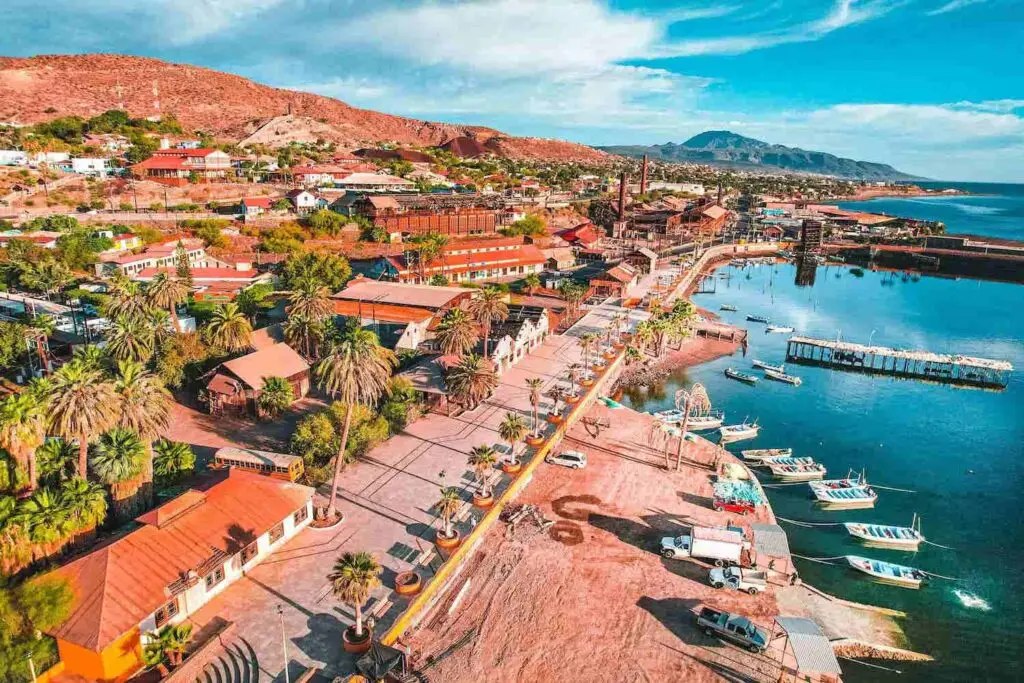
Guide to Visiting Baja California Sur in 2025
Courtesy of Visit Mexico

Before 1973, visitors to Mulegé, Mexico arrived by tiny prop plane on the dirt runway next to Hotel Serenidad. The airstrip was built in the 1950s, when the transpeninsular highway that runs north to south along the Baja peninsula was still just a dream in some civic engineer’s mind. The hotel’s longest-running owner, Don Johnson, was an early transplant to Baja California Sur, and he bought Hotel Serenidad in 1968 and turned it into the famed vacation spot it became during that era.

On the mushroom-shaped bar stools, cemented just below the water line at the swim-up bar, sat many a famous traveler. With the palm trees swaying languorously in the breeze, it’s easy to imagine the hotel freshly painted and sparkling, hosting the great Fred Astaire, Charles Lindbergh, and John Wayne.

Mulegé, like most of the towns of northern Baja Sur, is an oasis, a place where a natural freshwater spring made it possible for the evangelizing Spanish missionaries to settle. Up on a hill above town, its mission church is a stocky, stone building with bright white balustrades lining its rooftop and a statue of the Virgin Mary gazing down on the town below. Climb the handful of stone stairs to the lookout point beside the church, and you can watch the sunrise paint the tips of hundreds of palm trees, slowly bathing the entire valley in soft light each morning.
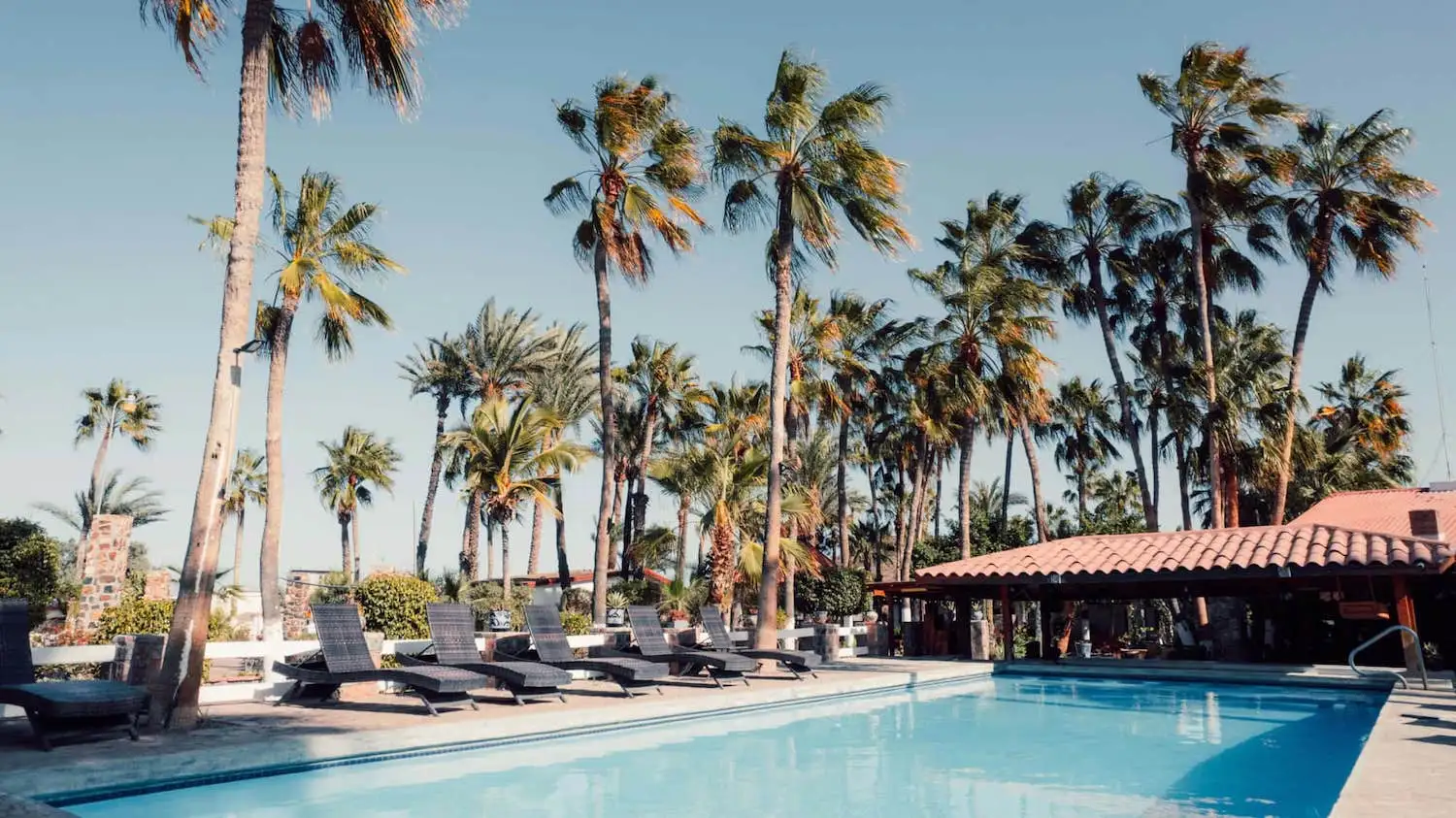
Visiting Baja California Sur, Mexico featuring Hotel Serenidad near Mulegé
Courtesy of Hotel Serenidad

Decidedly sleepy, Mulegé is the place that you come to amble down to California Birrería for birria chilaquiles in the morning, then take a stroll along the riverside, stop for lunch at Histórico Las Casitas (don’t leave without trying the flan), and finish off the day with a beer and some live music out at Mulegé Brewing’s highway bar.

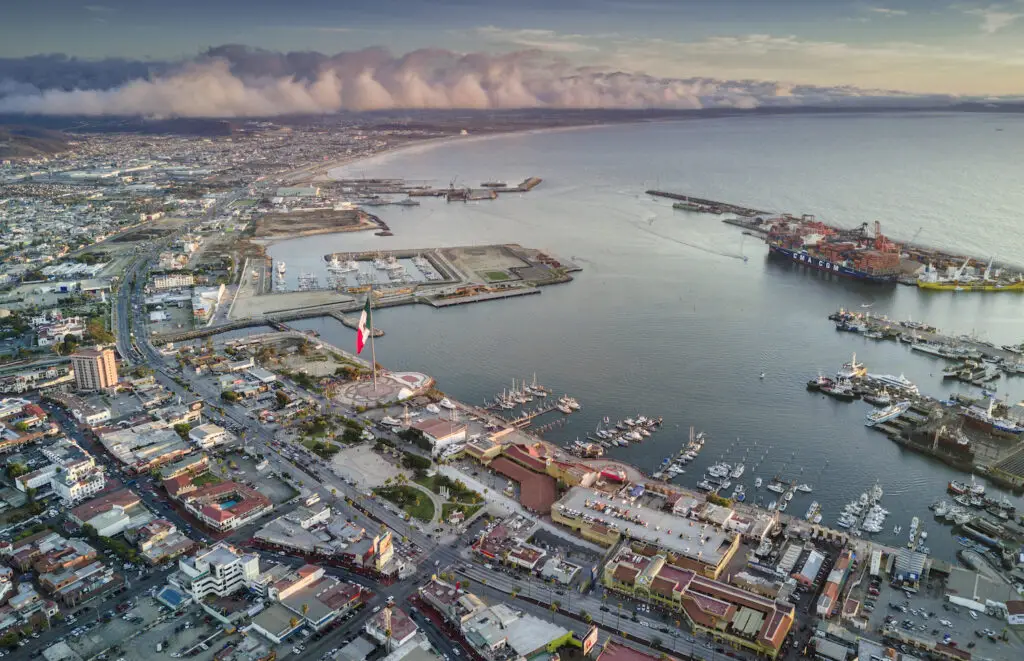
Aerial view of the city of Ensenada in Baja California, Mexico

One of the town’s most fascinating historic curiosities is the “prison without doors,” now converted into a museum on its hillside perch, the stark white façade contrasting the coral blue skies. One of the museum’s two docents will explain how prisoners were sentenced here but had day privileges to make their living in town. They were expected to return to the jail to sleep when the evening bell rang. There was little fear that they would escape, with a vast, empty desert behind them and the Gulf of California in front. Using Mulegé as a base to discover Baja Sur, you can explore the local desert, hidden beaches, and incredible wildlife during the day, returning to the town’s laidback bohemian vibes each evening.
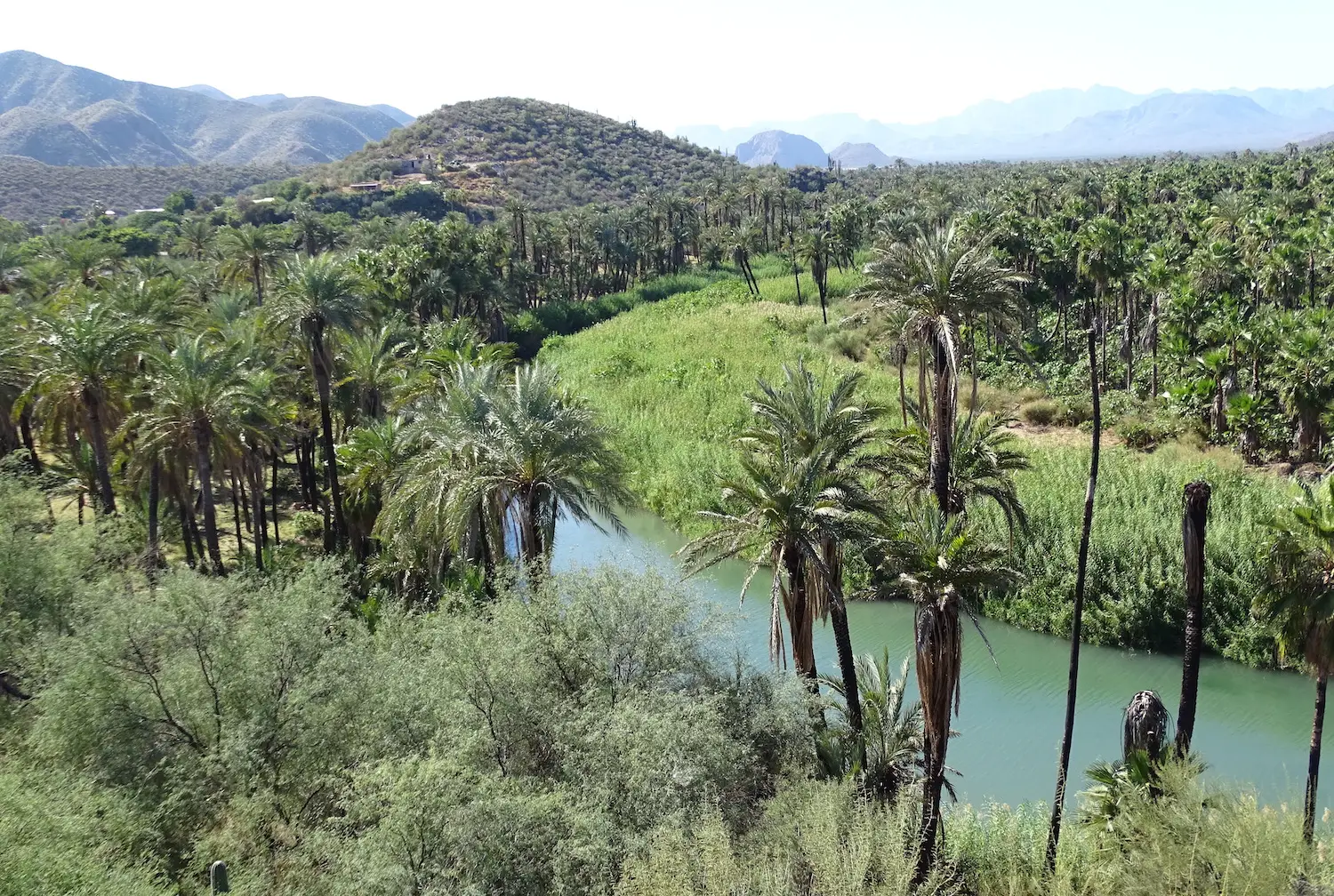
Visiting Baja California Sur, Mexico featuring an oasis near Mulegé
Courtesy of Wikipedia Commons

Much of the culture and language of the peninsula’s original nomadic peoples was destroyed, first by Spanish colonization and later by subsequent populations of settlers. Some of the most awe-inspiring examples that remain are their ancient cave paintings, preserved by the peninsula’s dry climate and the caves’ isolated locations.

An hour from Mulegé is the San Borjitas cave, with some of the finest specimens of this ancient artwork decorating the 16-foot high ceilings of a long, oval-shaped cave that peers out over a dry riverbed below. Dozens of figures in red, black, and white seemingly reach for the stars on the rock face, their significance and meaning remaining a mystery to archaeologists even 73 years after they were discovered. 
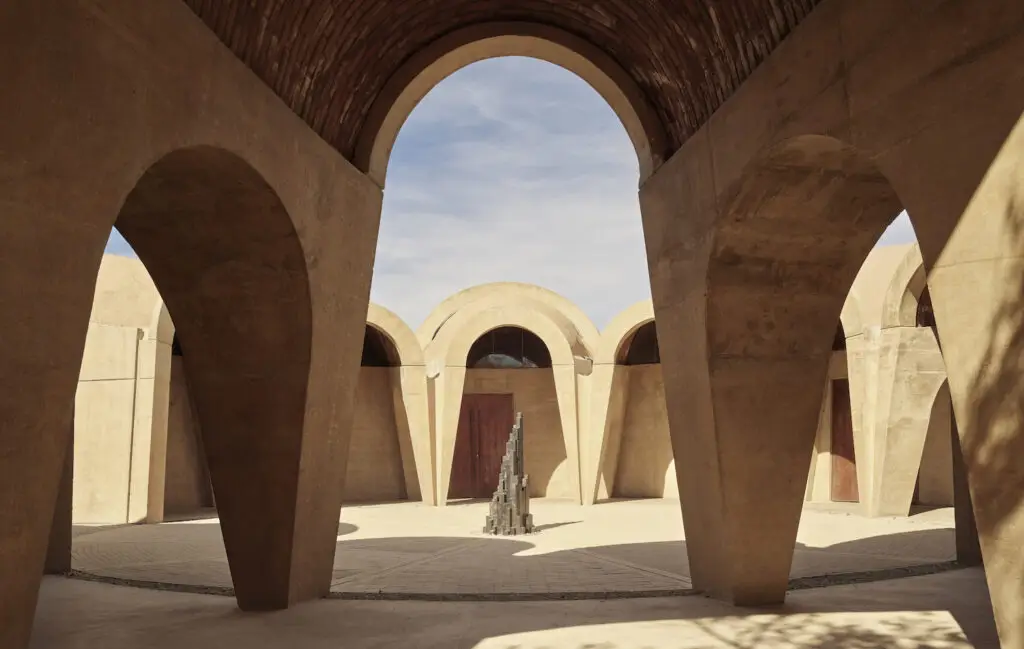
Exterior of the winery at Valle de Guadalupe's Banyan Tree resort

From December to April, all along Baja Sur’s coasts, gray, blue, and humpback whales come to breed, give birth, and feed in the mellow waters of the peninsula’s lagoons and the Gulf of California. Located south from Mulegé along the coast, Loreto, Baja Sur’s largest town, is a popular place to whale-watch, eat lunch, and explore the local history museum.
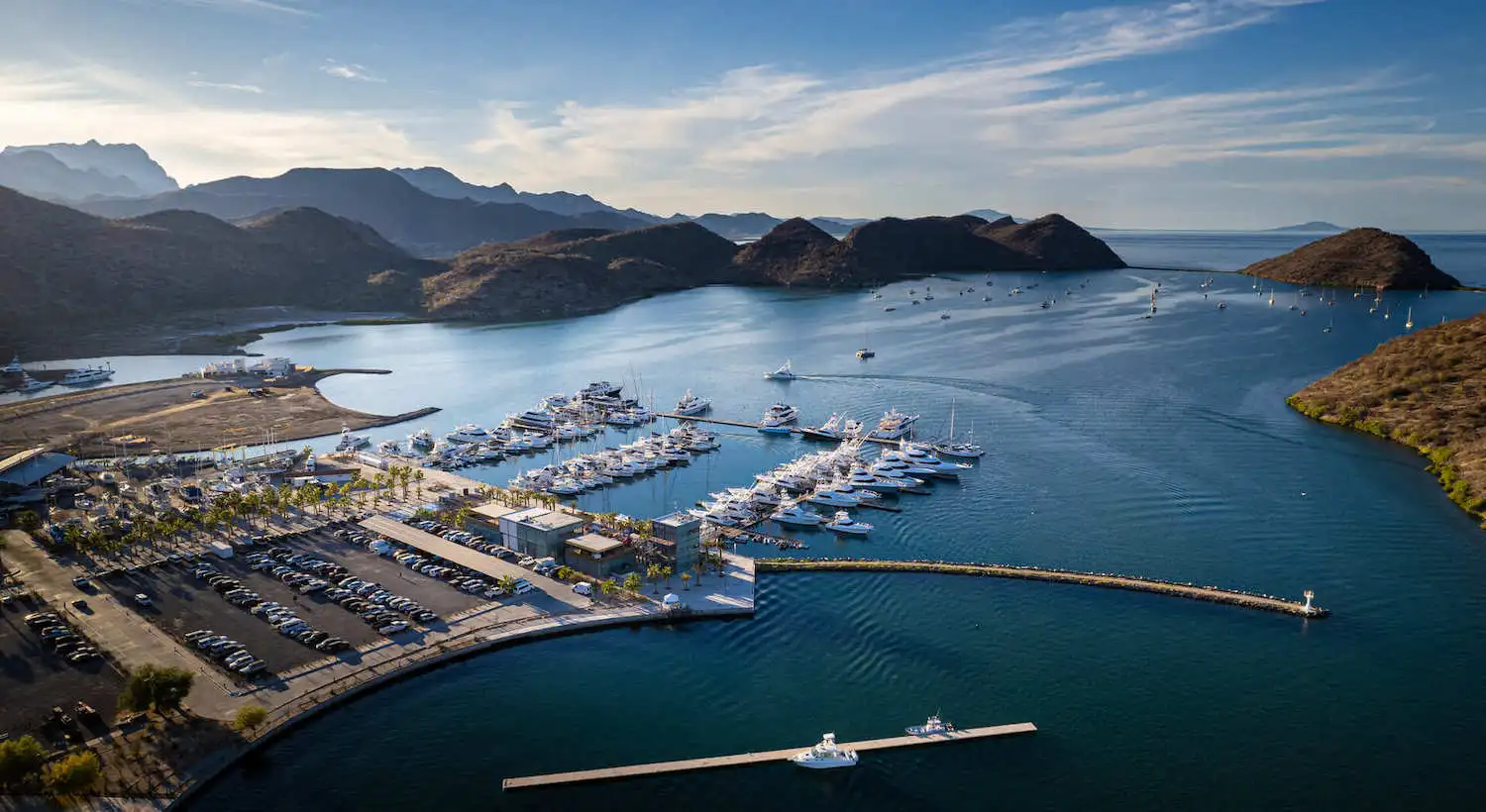
Visiting Baja California Sur, Mexico featuring Puerto Escondido Marina near Loreto Bay
Courtesy of Puerto Escondido Marina

Pleasure cruises leave from the nearby Puerto Escondido Marina, where $1,000+ private charters will take you sport fishing or cruising around the eight islands of the vibrant Loreto Bay National Park that buttresses the coastline. Pods of black dolphins surf in the wake of the boats, and Isla del Carmen is covered with fossilized mollusks that were trapped there when waters receded thousands of years ago, most likely because of tectonic shifts. In the tiny bays tucked into the islands’ edges, you can snorkel to see bright blue and yellow angelfish and the long, skinny Pacific barracuda flitting among the crevices of the shoreline. 

Afternoons are a good time to find yourself a seat at El Zopilote Brewing Co. on the town’s main plaza. Or pop next door for a coffee at La Route. After dark, wander into Asadero Super Burro with the locals for the burrito of a lifetime or Santo Cielo for the rosemary-roasted bone marrow or a half a lobster drizzled with salty butter. The next morning, head to Taquitos del Valle for phenomenal fish tacos or over to Café Olé for sweet cafe de olla and eggs with machaca (dried beef jerky).
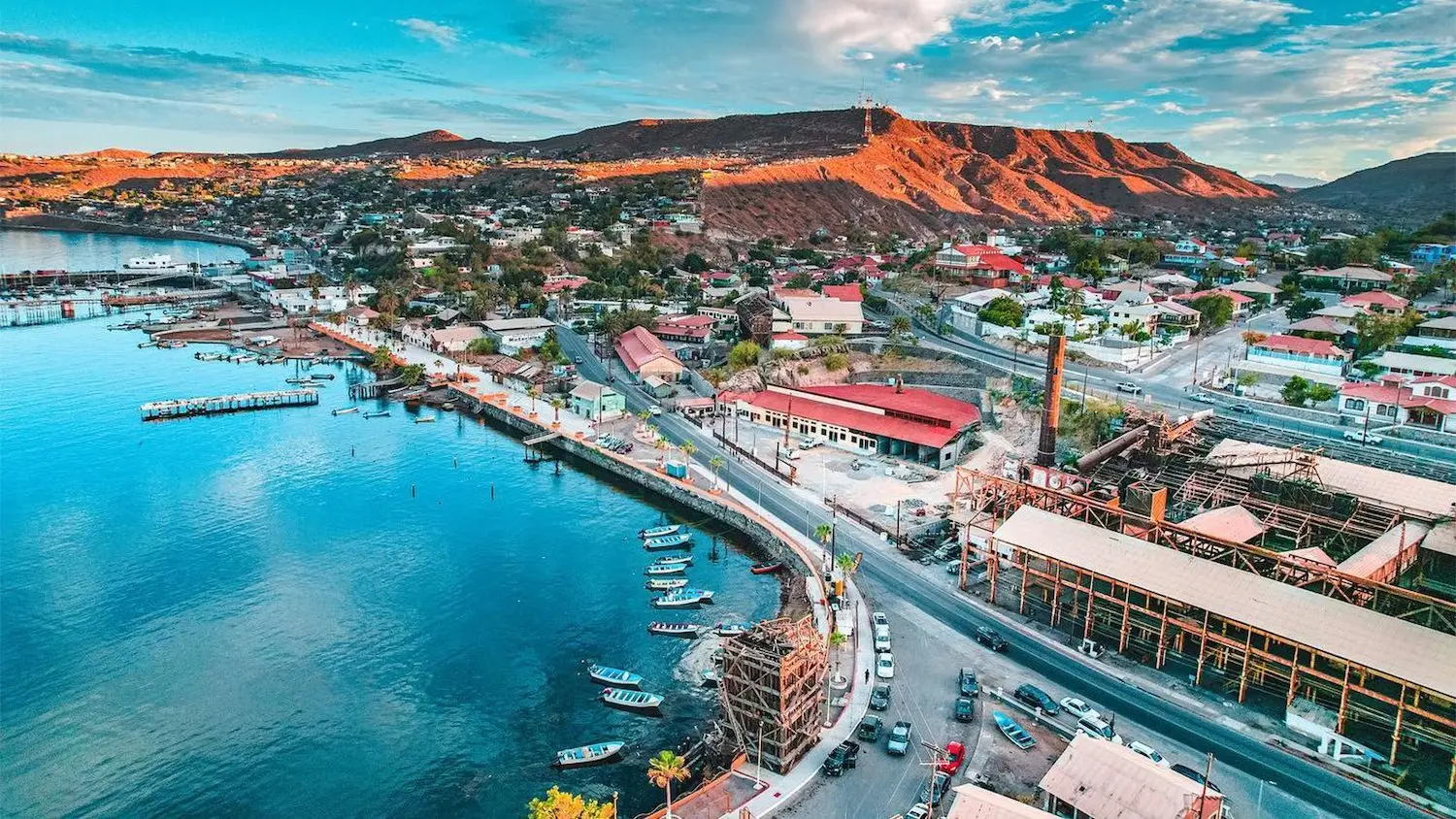
Visiting Baja California Sur, Mexico featuring the city of Santa Rosalía
Courtesy of Visit Mexico

Heading north from Mulegé, stop in Santa Rosalía, a mining town with a dark history of exploitation, but also incredible architecture—a throwback to the days of the wild, wild west. The French mining company that dominated this town for 69 years left behind French Caribbean–style homes and buildings with symmetrical designs, wraparound porches, and peaked roofs. Their presence alongside the local church designed by Gustavo Effiel gives the sensation that you’re walking through a movie set and not a 140-year-old town. 

For lunch, Tacos y Mariscos Calle 6 offers the epitome of Baja-style tacos—the fried scallops are like nothing you will find anywhere else. The town’s bakery, El Boleo, is famous for its “French” bread that isn’t much different from what you will find in bakeries across Mexico, but the locale’s charm and antiquated architecture are enough to merit a visit. Don’t miss Padre Santo Brewing on the marine side of the coastal road that passes through town; it has an excellent red ale hazy IPA called Pecosa, meaning “sinner.”
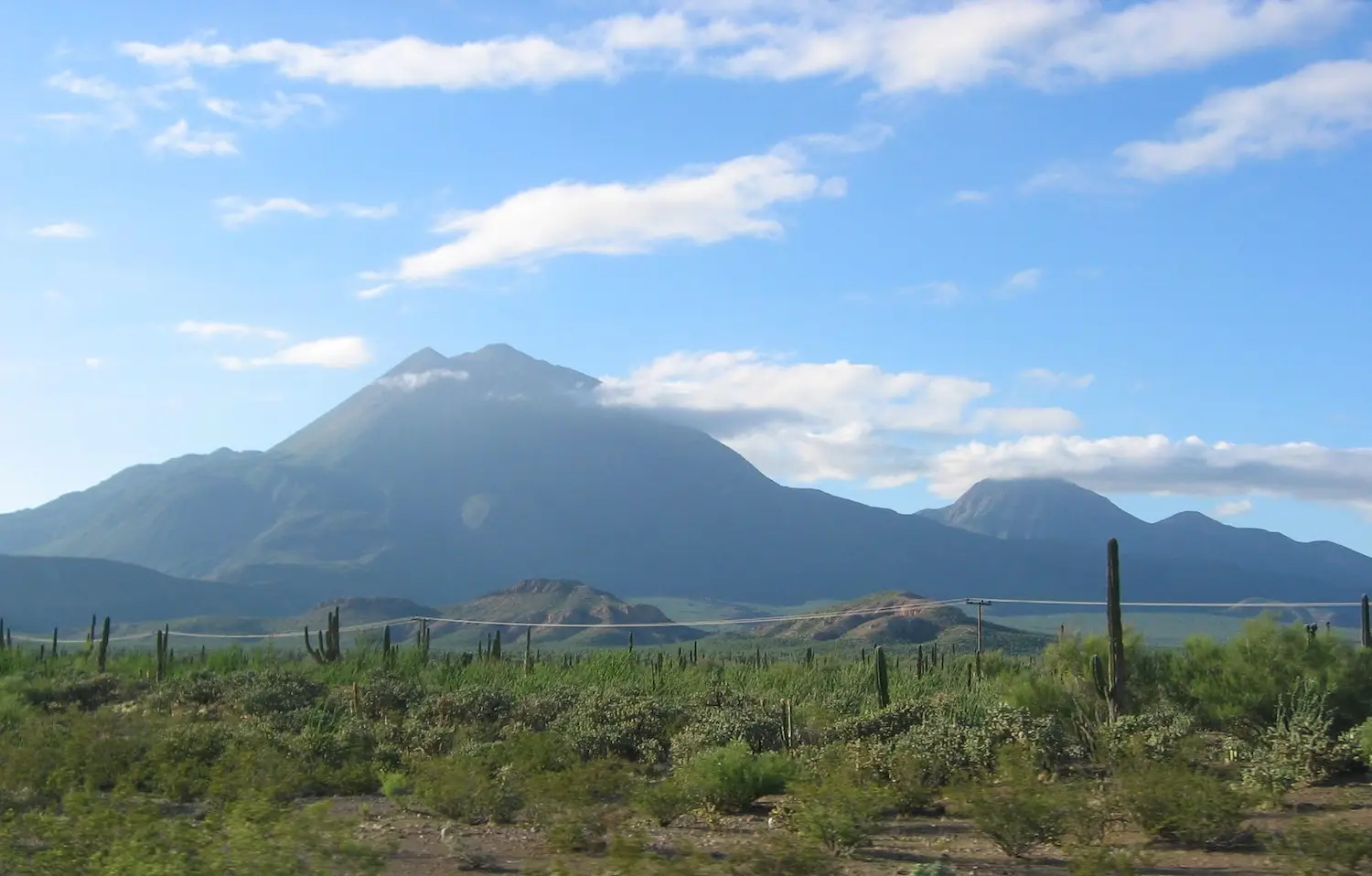
Visiting Baja California Sur, Mexico featuring Trés Vírgenes volcanos and eco lodge
Courtesy of Wikipedia

Don’t let the intense heat of the desert persuade you not to stop at Trés Vírgenes, an eco-lodge just an hour north of Santa Rosalía by car. Afternoons here should be spent sipping a cool drink in the shade, but once the sun starts to set, you’ll experience the spectacular celestial show that is the lodge’s star attraction. Caretakers from the local community host stargazers, hunters, and real-world escapists at this collection of humble cabins.

The area is a special Conservation Management Unit (UMA), which means the community is committed to maintaining the habitat and wildlife of the area. It auctions off two or three bighorn sheep hunting licenses a year to big game enthusiasts, helping to sustainably cull the population and raising thousands of dollars to support the eco-lodge and other community projects. Guides can take you through the desert that surrounds the Trés Vírgenes (three dormant volcanoes sitting in a line from the eco-lodge to the ocean) and out to see 30-foot-high cardon cactus.

These locations are just a small snapshot of what can be explored in Baja California Sur, but, starting here, you are sure to be captivated by the area and find your way back in no time.

Lydia Carey

About Lydia Carey

Lydia Carey is a travel and food writer based in Mexico City, who has spent the last 20 years traveling the Americas and sampling its bounty. She has been published widely online and in print and is the founder of the Mexico City Streets tour company.

Subscribe to our newsletters

Select Options

By subscribing you confirm that you agree with our Terms and Conditions and Privacy Policy.

Everything SD AUGUST 28, 2026

San Diego Is Getting the Music Venue It’s Been Missing

Live Nation is turning the historic Wonder Bread Building into a 4,000-capacity concert hall designed to bring more touring acts to the city

San Diego Is Getting the Music Venue It’s Been Missing
Rendering courtesy of Live Nation

Imagine being the song continuously getting skipped on the playlist. Not because no one wants to hear you, but because you never quite fit the moment. For years, San Diego has been that song on the touring circuit. Artists who have outgrown intimate clubs but aren’t yet filling  arenas and stadiums have often passed us by, heading north to venues better suited to the size of their show. San Diego wasn’t missing the audience, it was missing the room.

That’s all about to change.

On August 17, Live Nation Entertainment announced plans to transform the historic Wonder Bread Building, which it purchased in June for $16.8 million, into a 4,000-capacity indoor venue slated to open in fall 2028. The new space will host music acts as well as private, corporate, and community events. 

Currently, San Diego’s concert landscape jumps quickly from intimate clubs like the Casbah, Winston’s, and Belly Up to larger theaters, amphitheaters, arenas, and stadiums. What’s largely missing—particularly downtown—is a modern indoor room built specifically for roughly 4,000 concertgoers. This leaves a gap in mid-size venues for touring acts that land stages like the Hollywood Palladium or Boston’s MGM Music Hall at Fenway. 

“We are filling a void in the market,” says John Schalk, Live Nation’s Vice President, San Diego Market. “There are other venues in town, but this […] building is just something that doesn’t currently exist.” Although SDSU’s Cal Coast Credit Union Amphitheater serves the 4,000-capacity range, its outdoor, fixed-seating arrangement isn’t as versatile as the proposed Live Nation project. 

Located at 171 14th Street, just a six-minute walk from Petco Park, the building carries a century of history. Architect Eugene Hoffman designed it in 1924, a year after completing the Barcelona Apartment Hotel in Bankers Hill. The landmark brick building served as a bakery and warehouse for the Southern California Baking Company before Continental Baking Company, producers of Wonder Bread, took over in the 1950s and operated there through 1988 continued at the site until 2007.

In the early 2000s, Bob and Gay Sinclair, the couple behind a portfolio of East Village properties, purchased the building. After Bob—the founder of Pannikin Coffee & Tea—died in 2011, Gay sold much of their real estate portfolio but held onto the Wonder Bread Building. Mission Brewing eventually took over the space, where it operated for more than a decade before announcing its 2026 departure.

Now, the building is preparing for another reinvention. Live Nation plans to preserve the historic bakery’s four exterior walls, red brick façade, grain silo, barrel-vaulted trusses, and skylights as part of its next chapter.

Live Nation isn’t looking to erase its history but to celebrate it, allowing the building’s past to give the new venue some soul. “It’s really important for us that we maintain the integrity and the history of that building,” Schalk says. “There will be new construction and design elements as we go through the process to create the concert venue, but we’re working really hard to preserve it.”

Blueprint Studio, Live Nation’s in-house design and development group, and Gensler, the architecture firm behind San Diego International Airport Terminal 1 and Snapdragon Stadium, will be heading the project. The plan is to design the ground-floor space as an open, general-admission area with a premium level above with 600-plus fixed seats, in addition to box and suite sections. There will also be an additional structure built on top of the historical portion of the building (the four original walls that house the lobby) called the Vinyl Room—a Japanese-inspired hi-fi listening VIP lounge serving elevated food options.

One of the most reassuring aspects of the project is the focus on the concertgoer’s experience—specifically the “pet peeves” we all know too well: long bathroom lines, cramped exits, obstructed views. According to Schalk, one of the best things about building upon the existing structure is having the ability to consider potential obstacles and tackle them before construction begins. “I’d say we are ‘purpose building’ the entirety of the project for a music venue,” says Gensler lead project architect Garrett van Leeuwen. “As part of our design process, we do an in-depth sightline analysis to make sure that sightlines are optimized from every point and seat within the venue.” 

Circulation design is also being implemented to ease traffic flow, alongside acoustic optimization and a transformative outdoor beautification effort. According to van Leeuwen, this “public realm space” will grow the existing 14-foot sidewalk to a 32-foot sidewalk complete with plazas and landscaping. 

“This venue is for the fans. For the music lovers,” Schalk explains. The vision is intimate: “I want a fan to walk up to that building, see that red brick facade, grab their ticket from the box office, go into the lobby and see some of the history that will present itself… and feel like you entered a home.” Schalk also expressed a “keen interest in making sure that we work with the local artists, the local bands, the local musicians in town.” It’s a project that recognizes San Diego as a growing market that is hungry and ready to see a vibrant arts and culture community thrive. 

According to an analysis by Oxford Economics analysis shared by Live Nation, the venue is projected to deliver a significant boost to the local economy, generating approximately $97 million in annual economic impact and supporting 660 jobs. This also includes welcoming 316,000 fans each year—with 126,000 traveling from outside the San Diego metro area—and driving $53 million in local spending at nearby restaurants, hotels, and retail establishments. 

Considering its proximity to other major event spaces and overall busy urban areas, traffic and parking may be a concern, especially on nights of overlapping events. But in those cases, Schalk said they would work together on communication efforts; parking availability; and staggering start, end, and loading times; as well as providing easy access to designated rideshare areas. With transit stations nearby (the closest one being a 4-minute walk at 12th & Imperial), public transportation is another great option for enjoying your night out. 

There are still two years of design, construction, and plenty of logistics between now and opening night. But the bigger promise of the Wonder Bread Building is simple: San Diego finally gets a venue built for the artists who have historically passed it by. After years of getting skipped on the touring playlist, the city may finally be getting its turn on repeat.

Camila Ibarra Gallego is a CaliBaja native pursuing a master's degree in culinary journalism at the Basque Culinary Center. Shaped by the culturally rich, bicultural megaregion, she's passionate about sniffing out stories that connect people, territory and culture through food. When she's not tumbling down internet rabbit holes, you can find her pretending to be a wine connoisseur at a local wine bar or nose-deep in a good book.

Everything SD JULY 13, 2026

San Diego Neighborhood Guide: Rancho Santa Fe

Explore restaurants, activities, and shops within this affluent North County community

San Diego Neighborhood Guide: Rancho Santa Fe
Courtesy of the Inn at Rancho Santa Fe

The inland North County community of Rancho Santa Fe is often associated with wealth. It’s one of San Diego’s most expensive residential markets and is consistently ranked one of the highest-income zip codes in California and the U.S. Rancho Santa Fe is known for its large equestrian community including riding facilities and horse trails, as well as its country club lifestyle and associated golf courses.

At the center of this luxury master-planned community is a small, walkable downtown area referred to as the “village,” with The Inn at Rancho Santa Fe acting as both a landmark and social hub. Much of the community, including the historic Inn, was designed by acclaimed architect Lilian Rice, one of California’s earliest female architects. The Spanish Colonial-style architecture she brought to the village is still one of its defining characteristics today.  

Whether you’re coming to Rancho Santa Fe for golf, horseback riding, or pampering at a resort spa, be sure to start with a short walk around the village to take in the neighborhood’s charm. Plan your next visit here with our neighborhood guide to the area’s best restaurants, things to do, and shopping.

Jump To: Restaurants | Things to Do | Shopping

Courtesy of Goli

Rancho Santa Fe Restaurants, Bars, and Coffee Shops

The Pony Room

Families congregate at The Pony Room for elevated California ranch-style cuisine. Lamb lollipops, carne asada tacos, burgers, and weekly dinner specials are offered here, alongside an extensive collection of wine and spirits (especially tequila) and sizeable kids menus. As the signature restaurant of Rancho Valencia Resort & Spa, this all-day eatery is a lively centerpiece of the local social scene.

5921 Valencia Circle

Mille Fleurs

The piano bar at Mille Fleurs is the buzziest spot to be on Friday and Saturday nights in Rancho Santa Fe. French classics like escargot, lobster bisque, duck confit, and steak frites are the main dinner attractions at this local institution that has been around for more than 40 years. Spring for the four-course prix fixe menu before nabbing a coveted bar seat near the piano entertainer.

6009 Paseo Delicias

Nick & G’s Restaurant

Nick & G’s is one of the most prominent restaurants in the village, with an outdoor patio that overlooks the main thoroughfare. Enjoy modern Italian food, steaks, and seafood dishes here, including homemade pasta, pizza, wagyu beef, and oysters. Be sure to check their live music schedule and events calendar for the latest happenings.

6106 Paseo Delicias

Lilian’s

Named after renowned architect and planner Lilian Rice, Lilian’s is The Inn at Rancho Santa Fe’s flagship restaurant. Their upscale menus feature sustainable seafood, grass-fed meats, local produce, and even sushi rolls during dinner. Outdoor seating provides a bird’s-eye view of the village and an elegant backdrop for weekend brunch. Stop by Bing’s Bar (a nod to Bing Crosby) for craft cocktails, beer, wine, and light bites in a refined setting.

5951 Linea Del Cielo

Thyme in the Ranch

Quaint cafe and bakery Thyme in the Ranch serves a small selection of breakfast and lunch items (don’t miss the tarragon chicken salad), but is perhaps best known for its pastries and baked goods. Cakes, pies, muffins, scones, and cookies fly off the shelves here, where locals come for special occasions, parties, and group catering orders.  

16905 Avenida De Acacias

Paseo RSF

Located inside a historic building once home to Rancho Santa Fe’s original schoolhouse, Paseo RSF is one of the village’s newest dining options. The charming American bistro has pasta, salads, burgers, meat and seafood entrees, plus a thoughtfully selected California wine list and new sushi and omakase program. Kids and dogs are both welcome here.

6024 Paseo Delicias, Suite C

Rancho Roasters

Grab a quick coffee to go from this walk-up window in the same shopping center as the post office. Cinnamon roll lattes, cold brew, spiced chai, smoothies, protein bowls, and more can be found at Rancho Roasters, where they brew beans from Dark Horse Coffee.

16950 Via De Santa Fe

Goli Pizza

Casual pizzeria and martini bar Goli is a popular spot for catching the latest sports games. Order one of their unique specialty pizzas like the Casbah with hummus and veggies, build your own pizza or burger, or go with one of their hearty wraps that’s made with an extra thin version of pizza dough.

18021 Calle Ambiente, Suite 403

Cocina del Rancho

Find generous portions of Mexican food at Cocina del Rancho, run by the same owners as Carlsbad’s Cicciotti’s Trattoria Italiana and Village Kabob. Get classic dishes like burritos, tacos, and enchiladas, plus their specialty items including pulpo, carne asada, and fajitas with lobster tail. Don’t skip the margaritas.

16089 San Dieguito Road

Chino Farm Stand

Kai Oliver-Kurtin is a San Diego-based writer who covers travel, dining, events, and culture. Her writing has been published in USA Today, Condé Nast Traveler, Fodor's Travel, Marie Claire, and HuffPost, among others.

Things to Do JULY 6, 2026

10 Ways to Enjoy Comic-Con 2026 Without a Badge 

Free and low-cost options for getting in on the pop culture action outside of the convention center’s walls

10 Ways to Enjoy Comic-Con 2026 Without a Badge 
Courtesy of the Helen Woodward Animal Center

It’s happening, San Diego. The pre–Comic-Con excitement jitters begin to creep in as soon as July hits the calendar. But for those who forgot to set an alarm on registration day, whose batteries died or whose luck ran out in the virtual waiting room, or who simply prefer to soak up the fandom frenzy from the outside, we’ve got the best ways to experience Comic-Con weekend—no badge required.

Ready Party One: The Final Level 2026 SDCC Kickoff Party

Ain’t no party like an after-hours party, and XLE Productions’ Ready Party One is definitely one for comic book fans. Kick-start your convention weekend at Parq Nightclub and enjoy music by fan-favorite ’80s tribute band The Flux Capacitors, along with enough fandom fun, cosplay, retro gaming and pop-culture nostalgia to satisfy your inner geek. At least for the night.

Date & Time: Wednesday, July 22, 8 p.m.
Location: Parq Nightclub, 615 Broadway, San Diego, CA 92101
Price: Tickets start at $34

Interactive Zone at Petco Park and Gallagher Square Events

With more than a dozen activities and brand activations, Petco Park’s Interactive Zone is a badgeless fan’s playground, bringing together brands, games, celebrity appearances and immersive experiences all in one place. On Friday, July 24, Funko’s beloved annual party, hosted by Funko founder Mike Becker, returns to Gallagher Square. This year’s “Quest for the Grail” event will take guests on a journey to the sunken city of Atlantis. Expect themed décor, food, drinks, games and special guest appearances.

Date & Time: Thursday, July 23–Sunday, July 26 (times TBD)
Location: Lexus Premier Lot across from Petco Park
Price: Free; Funko Funday event is ticketed

Chuck Jones Gallery Pop-up Meet-and-Greets

Cartoon and art lovers can celebrate the work of Chuck Jones, creator of some of animation’s most iconic characters, including Bugs Bunny, Daffy Duck, Road Runner, Wile E. Coyote and Pepé Le Pew, at Seaport Village’s Chuck Jones Gallery. During Comic-Con weekend, the showroom will also host meet-and-greets with talented artists including Disney artist and seascape painter Steve Barton, The Simpsons animator Stephen Reis, and licensed Warner Bros., Hanna-Barbera and Disney fine artist Ben Olson.

Date & Time: Thursday, July 23–Saturday, July 25, 2026 (times TBD)
Location: Chuck Jones Gallery, 809 W. Harbor Drive, San Diego, CA
Price: Free

PAWmicon Pet Cosplay

Get your pup’s—and your own—cosplay game ready because Helen Woodward Animal Center’s PAWmicon is back. Enjoy a Comic-Con-themed outing with the whole family while raising awareness for orphaned pets in San Diego. Divided into three categories—Flying Solo, Dynamic Duos & Trios & More, and Fantastic Floats—the event is a paw-fect way to jump-start the festivities.

Date & Time: Tuesday, July 21, 2026, 4:30–7 p.m.
Location: Presidents Way Lawn at Balboa Park
Price: Free

Comic-Con-Themed Bar Crawl

Why leave all the fun, mischief and mayhem to badge holders when you can join more than 300 partygoers and crawl through some of downtown San Diego’s top bars and nightclubs? Whether you’re called to save the universe or have an allegiance to the dark side, the annual Comic-Con Bar Crawl gives attendees exclusive access to more than 20 venues throughout the Gaslamp Quarter, with free welcome shots, exclusive drink discounts and complimentary entry along the way. This event for ages 21 and older is a fun way to celebrate your fandom outside the convention center.

Date & Time: Friday, July 24–Sunday, July 26, 2026, 8 p.m.–2 a.m.
Location: Check-in at Toro, 672 Fifth Ave., San Diego, CA 92101, from 8–9 p.m.
Price: $13–$30

Her Universe Fashion Show

Geek out over couture at the annual Her Universe Fashion Show at the Manchester Grand Hyatt. Hosted by founder and Star Wars: The Clone Wars actress Ashley Eckstein and presented by Warner Bros. Discovery Global Consumer Products, this year’s show will feature a selection of designers showcasing one-of-a-kind DC-inspired creations as they compete for a $2,000 cash prize.

Note: Wristbands are traditionally distributed the morning of the event on a first-come, first-served basis, but official details have not yet been announced.

Date & Time: Thursday, July 23, 6 p.m.
Location: Manchester Grand Hyatt, Seaport Ballroom, 1 Market Place, San Diego, CA 92101
Price: Free

Comic-Con Museum

A destination for all things fandom, Balboa Park’s Comic-Con Museum brings world-premiere and exclusive exhibits and events to the heart of San Diego, giving fans a place to geek out all year long. The museum is currently featuring the U.S. debut of Doctor Who Worlds of Wonder, showcasing 17 of the Doctor’s most iconic costumes, a full-size TARDIS and a collection of original sonic screwdrivers used on-screen. Visitors can also explore Sangre, Sudor y Mito: The Art and Tradition of Mexican Lucha Libre, featuring rare collectibles and authentic masks and costumes worn by legendary luchadores.

Date & Time: Open Thursday through Tuesday (closed Wednesdays), 10 a.m.–5 p.m.
Location: 2131 Pan American Plaza, San Diego, CA 92101
Price: $15–$30; free for children younger than 6

Comic-Con Art Show

Browse an extensive collection of original drawings, paintings, jewelry and other whimsical creations from more than 100 professional and amateur artists at the Comic-Con Art Show. Many pieces will be available for purchase through the silent auction or Quick Sale, giving fans the chance to take home a one-of-a-kind Comic-Con souvenir while supporting talented artists.

Dates & Times:

  • Thursday, July 23: 11 a.m.–8 p.m.
  • Friday, July 24: 9 a.m.–8 p.m.
  • Saturday, July 25: 9 a.m.–6 p.m.
  • Sunday, July 26: 9 a.m.–6 p.m.

Location: Manchester Grand Hyatt, Grand Hall CD, 1 Market Place, San Diego, CA 92101
Price: Free

Hello Kitty Café Truck

Looking for a supercute way to fuel your Comic-Con adventures? Swing by the Hello Kitty Café Truck. This traveling pink café on wheels will be parked at Petco Park’s Interactive Zone, serving up tasty treats and exclusive merchandise. From limited-edition tote bags and hats to mugs and T-shirts, it’s the perfect stop to grab a snack and a little extra kawaii cuteness.

Date & Time:

  • Thursday, July 23–Saturday, July 25: 10 a.m.–4 p.m.
  • Sunday, July 26: 10 a.m. (closing time TBD)

Location: Petco Park Interactive Zone, 100 Park Blvd., San Diego, CA 92101
Price: Menu items vary

PopUp Bagels, Spider-Man and Donut Bar Activations at Pendry San Diego

Get ready to fuel up and hype up. Whether you’re a plain-bagel purist or an everything-bagel fan, don’t miss your chance to grab breakfast or recharge at PopUp Bagels’ Volkswagen bus parked outside Pendry San Diego. Then satisfy your sweet tooth at Provisional with a rotating selection of character-themed doughnuts from Donut Bar. Both are available throughout the weekend beginning at 7 a.m. until sold out.

On July 24 and 25 from noon to 4 p.m., head to Nason’s Beer Hall for photo ops to celebrate Sony Pictures’ upcoming Spider-Man: Brand New Day. Guests can sample Tom Holland’s nonalcoholic beer brand, BERO, served in limited-edition themed cans available exclusively during the event.

Camila Ibarra Gallego is a CaliBaja native pursuing a master's degree in culinary journalism at the Basque Culinary Center. Shaped by the culturally rich, bicultural megaregion, she's passionate about sniffing out stories that connect people, territory and culture through food. When she's not tumbling down internet rabbit holes, you can find her pretending to be a wine connoisseur at a local wine bar or nose-deep in a good book.

Studio S SEPTEMBER 11, 2026

Vi at La Jolla Village – Senior Living in the Heart of Everything

At Vi at La Jolla Village, residents don't have to choose between security and adventure, connection and independence. They get all of it.

Vi at La Jolla Village – Senior Living in the Heart of Everything
Courtesy of Vi at La Jolla Village

Today’s seniors are more connected than ever, with a renewed focus on retirement as a time of discovery and enriching experiences. The ultimate reward for a retirement well-earned is the wisdom to appreciate it all, and what better place to enjoy that unique perspective than Vi at La Jolla Village, in the heart of San Diego.

All-access pass to good living.

As a Continuing Care Retirement Community (CCRC), Vi provides access to a connected and fulfilling community while making it easy to plan for future care, should the need ever arise. With a care plan in place, residents enjoy greater financial predictability and long-term value, freeing them to focus on making the most out of retirement.

Resort-style amenities at the epicenter of a cultural hub like San Diego offer a retirement experience unlike any other. Paired with exceptional dining, spacious accommodations and dedicated staff, the best of maintenance-free living is all around. And with the introduction of Vista 360 Well-Being, Vi’s panoramic approach to wellness, there are more ways than ever for residents to access it all.

The harmony of mind, body and community.

Courtesy of Vi at La Jolla Village

The key to longevity is striking the right balance in maintaining an active lifestyle with an active mind in a fulfilling community. With newly renovated community spaces and restaurants, Vista brings a variety of opportunities for residents to elevate their well-being through Vi-exclusive “Signature Experiences.”

Vista Enrich takes an evidence-based approach to brain vitality, keeping residents at the forefront of cognitive health through exergaming (exercising + gaming), nutritional plans and informative workshops. It is also home to The Brain Vitality Studio, an innovative facility dedicated to cognitive fitness that has garnered national recognition.

Vista Discover invites residents into stimulating educational experiences, from chef-led cooking demos and guided wine tastings to lectures at local universities and intimate lectures following cultural outings.

While Vista Enrich focuses on brain health and Vista Discover engages residents intellectually, Vista Explore cultivates a sense of adventure through curated travel and local excursions. But broadening one’s horizons doesn’t always require a plane ticket. One recent event brought a taste of the world right to the community: an onsite “jazz cruise” featuring live music and global cuisine served at a series of themed “ports” all within the community’s own ballroom.

“Location, location, location”

Courtesy of Vi at La Jolla Village

One of the biggest perks of life at Vi at La Jolla Village is its proximity to just about everything. With easy access to transportation and local attractions just steps away, residents can explore and engage with their community at their own pace.

“There are trolley and bus stops within a 5-minute walk that will get you to the beach, UCSD Campus, medical appointments, downtown La Jolla or San Diego, et cetera. We rarely use our car,” said resident Tom Yager.

With the best of San Diego just steps away, residents don’t just live in the city, they live within reach of everything that makes it special.

The best of all worlds.

Courtesy of Vi at La Jolla Village

At Vi at La Jolla Village, retirement isn’t a chapter to slow down; it’s an invitation to discover more. Tailored community experiences created by Vista, paired with the vibrant pulse of San Diego just outside the door, mean that residents don’t have to choose between security and adventure, connection and independence. They get all of it.

This is what an all-access pass to good living looks like: the comforts of an elevated lifestyle, a community built for growth and a city made for discovery – all in one place.

To learn more about Vi at La Jolla Village or for details on available floor plans, visit ViatLaJollaVillage.com/SDM.

Partner Content
Everything SD JUNE 26, 2026

A New Otay Mesa Border Crossing May Improve Wait Times

A massive $1.3 billion construction project is slated to improve the border-crossing process—will it live up to its expectations?

A New Otay Mesa Border Crossing May Improve Wait Times
Courtesy of SANDAG and Caltrans

You’re coasting home after a weekend in Rosarito Beach—still riding the high of vitamin D and Baja Med—and then comes a slap back into reality: brakelights and gridlock exhaust.

Small wonder, given that San Ysidro is the busiest land border crossing in the western hemisphere (fourth-busiest in the world). Otay Mesa’s no breeze either; it’s the busiest commercial port in California and second-busiest across the entire southern border. Smart Border Coalition says that each day last year, 41,800 vehicles crossed into the US at San Ysidro; 17,800 crossed at Otay Mesa, along with 1,023,000 commercial trucks.

Guide to visiting Tijuana, Baja California, Mexico featuring the skyline

Diana Pazos, a San Diego resident and adolescent psychiatrist working in Tijuana, says the northbound border wait at the San Ysidro crossing is often three to five hours Saturday through Monday—delays that modern humans and multinational maquiladoras alike aren’t built to endure. At the current Otay crossing, “commercial trucks may be in line for six hours or longer,” she says.

Needing to bake a couple hours of commute into the States doesn’t just affect vacations; tens of thousands of people cross the border each day for doctor’s appointments, work, school, you name it. The clog has personal and commercial ramifications.

But change is coming. Construction has begun on a new border crossing in Otay Mesa, which is expected to significantly reduce wait times across all San Diego border crossings, bolster binational trade, and improve the air pollution levels in the area.

Nikki Tiongco, an 18-year Caltrans veteran who oversees the Otay Mesa East project (aka Otay 2) for the agency, says the new border crossing will also be among the most high-tech, efficient, and secure border crossings in the nation.

“We have already completed the roadway network within the Otay Mesa East region,” says Tiongco. Part of this project included building State Route 11, an extension of SR 905, which has been open to the public since August and will feed traffic to the new entry port. Otay 2 comes with a 21st century upgrade, too. Miles of fiber-optic cables have been installed underground, which gives the port the brainpower to efficiently sort and streamline traffic as cars approach the border. (Unlike the San Ysidro border, where lanes get organized by vehicle type, Otay 2’s lanes will be interchangeable. For example, if the system indicates that a high number of commercial trucks is heading to the border, passenger lanes could be converted to cargo lanes in real time.)

Otay 2, driven by a binational collaboration among government agencies (Caltrans, SANDAG, General Services Administration, and U.S. Customs and Border Protection), receives both federal and state funding, plus hefty contributions from Mexico. So far, funds from the $1.3 billion project have helped build new bridges and roadway interchanges that will guide traffic to the crossing. At this stage in the process, Caltrans is “laser-focused on building the facility itself,” Tiongco says.

Now, to the juicy part: the prospect of a “20-to-30-minute border wait time” at Otay 2, according to Tiongco. Currently, there are three standard ways to cross the border at San Ysidro: Ready Lanes, General Lanes, or SENTRI Lanes. Most travelers use either the Ready or General lanes. SENTRI Lanes require a form of pre-approval from the US federal government plus an additional fee. According to CBP, the average wait time in 2025 at the San Ysidro crossing, was as little as 15 minutes in the SENTRI Lanes, 45 minutes in the Ready Lanes, and 1.5 to 2 hours in the General Lanes. Those are best-case scenarios that vary based on lane type and time of day.

Otay 2 is about 12 miles east of the San Ysidro crossing and 2.5 miles east of Otay 1. Those not wanting to spend that much extra time on the road to drive to the new border crossing, despite the allure of an under-30-minute wait, are still expected to see some benefits. Tiongco says Otay 2 will “provide a relief valve” overall by spreading the burden across the three border crossings. As a result, SANDAG says, wait times at San Ysidro and Otay 1 could be cut in half.

It’s not just your time waiting at the border that matters. Multinational corporations that relocated their manufacturing plants (maquiladoras) to Northern Baja have claimed for years that the long delays at Otay 1 eat away at their profits. More than 600 maquiladoras, used by companies such as Samsung and Panasonic, currently use Otay 1 to transport products to US and international markets. Ambassador Alicia G. Kerber-Palma, the consul general of Mexico in San Diego, says the project will facilitate more than $60 billion in cross-border trade annually.

Previous reports say that Otay 2 also has the capacity for around 12,000 passenger cars and 1,500 commercial trucks daily. A shiny, new element to this port: Commercial and personal vehicles that choose to cross will pay a dynamic toll on both sides of the border. The fee will increase during busy hours and decrease during slower periods, Tiongco says. Caltrans estimates that the toll could range from $4 to $30 for passenger vehicles and higher for commercial trucks. Drivers will be able to see current rates before they reach the actual border crossing.

And, with these changes, there are environmental benefits, too. “With shorter wait times at all three ports, there’s less idling and congestion, which should significantly reduce air pollution on both sides of the border,” says Kerber-Palma. The main factor driving improved air quality would be decreasing dirty emissions from idling diesel trucks. This county’s air could use some sprucing up, anyway. A 2026 report from the American Lung Association named San Diego as the fifth-most particle-polluted county in the US. The bulk of that dirty air comes from the heavy-duty trucks and ships that pass through the area.

Otay 2 is not only expected to curb the acceleration of air pollution in San Diego; if the state’s legislature passes California Senate Bill 10, the border crossing could also restore local water quality. This bill would use a portion of Otay 2 toll revenues to fund ongoing maintenance of the South Bay International Wastewater Treatment Plant. Current media reports say, however, that it’s increasingly unlikely that SB 10 will become law.

Otay 2 has been in the works for over two decades and is finally nearing the finish line. Construction estimates show that it should be up and running in 2029. Tiongco says this border crossing is “a good example of how the state, federal and local governments are working together and with Mexico to advance our mutual goals in the region.”

Adam Behar

About Adam Behar

Adam is a longtime San Diego journalist and communications pro. He covers everything from politics and culture to surfing and business.

Guides JUNE 11, 2026

A Guide to the FIFA World Cup 2026 in SoCal

From San Diego’s coastline to Los Angeles stadium and fan zones across the region, here’s how to experience soccer’s biggest event

A Guide to the FIFA World Cup 2026 in SoCal
Courtesy of FIFA

When three nations and 16 cities come together to host the FIFA World Cup 2026, the scale stops feeling like a tournament and starts feeling like geography. A continent becomes the stage as borders soften into corridors. And Southern California—shaped by migration, sport, entertainment, and constant movement—sits inside that landscape with all eyes on it.

San Diego and Los Angeles have always felt connected. Hop on the Pacific Surfliner, and the trip unfolds in one continuous stretch of coastline, passing beach towns, neighborhoods, and city centers.

Traveling from San Diego, everything still feels slightly suspended as the Pacific Surfliner follows the coast north with ocean on one side and a slow suburban blur on the other. San Diego stays in exhale. Los Angeles is already building toward something louder.

This summer, Los Angeles will host eight matches of the FIFA World Cup at Los Angeles Stadium, including the US Men’s National Team opener on June 11, while the region stretches into 39 days of programming across stadiums, parks, transit hubs, beaches, and neighborhoods. Instead of one massive fan hub, Los Angeles is embracing a citywide celebration, with fan zones spread across its entirety.

But this pattern has been rehearsed here for decades. In 1994, Southern California became one of the defining stages of the World Cup, when matches at the Rose Bowl placed global attention on the region and turned local stadiums into international landmarks, confirming its ability to hold the world at scale.

What distinguishes Southern California is not just infrastructure, but cultural permeability. Fashion, music, film, art, and sport constantly overlap here, creating an environment where identity is flexible and always in motion. From the Venice boardwalk, where skate culture shaped modern street style, to global soccer stars rubbing shoulders with Hollywood celebs, to authentic Spanish cuisine moving up and down the I-5 corridor, everything circulates.

The World Cup is not introducing anything new here, it’s showing up for the summer and showing out, revealing what this city has always known about itself. What follows is a look at the fan zones and how Los Angeles turns itself into a city-wide stage for the tournament, one neighborhood at a time.

Courtesy of Los Angeles Tourism & Convention Board

Los Angeles Union Station

As the heart of Los Angeles, Union Station is an official Fan Zone June 25-28 during the World Cup, but in practice it never really stops being one.

It is the city’s circulation point, its meeting ground, its pressure valve. Commuters, travelers, match-day crowds, and everyday Angelenos all move through the same space, and everything mixes, overlaps, and scales in real time. In a way, this is where the World Cup stops arriving in Los Angeles and starts moving through it.

The Pacific Surfliner from San Diego to Los Angeles makes that shift feel almost too easy. No stress or  gridlock anxiety, just a straight line up the coastline with ocean on one side and everything slowly becoming more built on the other. It’s one of the rare ways into LA that doesn’t feel like arrival as friction. You can sit with a laptop, watch the Pacific drift past, grab coffee from the café car, and let the city come to you in pieces.

That’s the beauty of arriving at Union Station. Instead of feeling like you’re on the edge of the city, you’re immediately surrounded by it. And, inside, the station already reads like a World Cup nerve center: banners, movement, multilingual energy, the sense that something global is about to funnel through this exact point. The Heart of the City Fan Zone only sharpens that feeling, with simultaneous match screens, DJ sets, meet and greets, and immersive activations built around marquee games like USA vs. Türkiye.

From there, the city splits outward.

ROW DTLA feels like the first exhale after arrival. A converted industrial campus turned creative district where restaurants, retail, and open-air courtyards form a self-contained ecosystem. If you’re looking for the perfect first meal in LA, make it lunch at Pizzeria Bianco. The thin-crust pizza is reason enough to go, but the space leaves just as much of an impression.

What I liked most about ROW DTLA is how quickly it resets you after the train. One minute you are stepping off at Union Station, and the next you are in a space that feels like its own version of LA, a city inside a city with some of the most curated shopping I’ve ever seen.

Bodega hides itself behind a convenience-store front, a sneaker and streetwear space disguised as something ordinary, like LA refusing to make anything feel too obvious. The whole campus moves like that, part retail, part gallery, part neighborhood you are only temporarily inside.

Isabella Dallas is a freelance writer for San Diego Magazine and the Arts and Culture Editor at The Daily Aztec in her final year at San Diego State University. She previously worked as an editorial intern for SDM, but when she’s not writing, you can find her trying the best coffee spots in SD, devouring the latest rom-coms, and indulging in anything and everything pop culture.

Partner Content OCTOBER 15, 2025

National Philanthropy Day, presented by PNC Bank, Celebrates the Best of Philanthropy in San Diego

The 53rd Annual National Philanthropy Day Takes Place on November 21. Join us from 11:00 a.m. – 1:30 p.m. at the new Gaylord Pacific Resort & Convention Center!

National Philanthropy Day, presented by PNC Bank, Celebrates the Best of Philanthropy in San Diego

Once yearly, AFP San Diego joins with others worldwide to celebrate National Philanthropy Day (NPD), a special day set aside to recognize the great contributions of donors and nonprofits that enrich of our community and the world. San Diego’s NPD is one of the largest and most successful in the U.S., attracting nearly 900 participants, including philanthropists, nonprofit leaders, CEOs, board members, development professionals, and business, community, and civic leaders.

Sponsorship proceeds from National Philanthropy Day are reinvested in education, training, scholarships, career development, and the advancement of fundraising professionals throughout San Diego. These resources and training provide fundraising professionals with the tools necessary to support our region’s diverse array of nonprofit organizations, which rely on charitable giving for close to half of their annual revenues.

The National Philanthropy Day Honorees are selected by the NPD Honorary Committee, a group of highly respected, diverse nonprofit and business leaders. Our 2025 Honorees include:

  • Outstanding Development Emerging Leader – Taylor Thompson
    Self-Nominated
  • Outstanding Development Professional – Sharyn Goodson
    Nominated by: AJ Steinberg & Jeanne Schmelzer
  • Outstanding Organization for IDEA – Accessity
    Self-Nominated
  • Outstanding Philanthropic Institution – Life Science Cares San Diego
    Nominated by: Blair Search Partners
  • Outstanding Philanthropist – Dan & Phyllis Epstein
    Nominated by: CSU San Marcos & KPBS
  • Outstanding Student Volunteer – Camden Hall
    Nominated by: Curebound
  • Outstanding Volunteer – Mateo Magaña
    Nominated by: Chicano Federation

National Philanthropy Day San Diego provides an opportunity to reflect on the meaning of giving and to celebrate the selfless contributions of individuals and organizations across the region. We look forward to celebrating with you!

Sponsorship opportunities and individual tickets are available. Please visit www.afpsd.org for more information.

Thousands of savvy locals already get it.

San Diego's best restaurants, experiences, and events—handpicked and delivered to your inbox weekly. You in?

Close the CTA

Contact Us

1230 Columbia Street, Suite 800,

San Diego, CA