Ready to know more about San Diego?

Subscribe
Travel FEBRUARY 14, 2014

Take Me Out

Padres spring training in Arizona

Take Me Out

If you’re headed to Arizona for Padres spring training, beef up your itinerary with a self-guided tour of the Cactus League Legacy Trail. Baseball geeks will enjoy making pit stops at both rookie and umpire hangouts, as well as restaurants like Don and Charlie’s in downtown Scottsdale, where Hall of Fame-signed memorabilia are on display. Just don’t get so sidetracked that you forget you’re there to support the Padres. experiencescottsdale.com

Take Me Out

Peoria Sports Complex in Scottsdale, Arizona

Peoria Sports Complex in Scottsdale, Arizona

Subscribe to our newsletters

Select Options

By subscribing you confirm that you agree with our Terms and Conditions and Privacy Policy.

Guides JUNE 11, 2026

A Guide to the FIFA World Cup 2026 in SoCal

From San Diego’s coastline to Los Angeles stadium and fan zones across the region, here’s how to experience soccer’s biggest event

A Guide to the FIFA World Cup 2026 in SoCal
Courtesy of FIFA

When three nations and 16 cities come together to host the FIFA World Cup 2026, the scale stops feeling like a tournament and starts feeling like geography. A continent becomes the stage as borders soften into corridors. And Southern California—shaped by migration, sport, entertainment, and constant movement—sits inside that landscape with all eyes on it.

San Diego and Los Angeles have always felt connected. Hop on the Pacific Surfliner, and the trip unfolds in one continuous stretch of coastline, passing beach towns, neighborhoods, and city centers.

Traveling from San Diego, everything still feels slightly suspended as the Pacific Surfliner follows the coast north with ocean on one side and a slow suburban blur on the other. San Diego stays in exhale. Los Angeles is already building toward something louder.

This summer, Los Angeles will host eight matches of the FIFA World Cup at Los Angeles Stadium, including the US Men’s National Team opener on June 11, while the region stretches into 39 days of programming across stadiums, parks, transit hubs, beaches, and neighborhoods. Instead of one massive fan hub, Los Angeles is embracing a citywide celebration, with fan zones spread across its entirety.

But this pattern has been rehearsed here for decades. In 1994, Southern California became one of the defining stages of the World Cup, when matches at the Rose Bowl placed global attention on the region and turned local stadiums into international landmarks, confirming its ability to hold the world at scale.

What distinguishes Southern California is not just infrastructure, but cultural permeability. Fashion, music, film, art, and sport constantly overlap here, creating an environment where identity is flexible and always in motion. From the Venice boardwalk, where skate culture shaped modern street style, to global soccer stars rubbing shoulders with Hollywood celebs, to authentic Spanish cuisine moving up and down the I-5 corridor, everything circulates.

The World Cup is not introducing anything new here, it’s showing up for the summer and showing out, revealing what this city has always known about itself. What follows is a look at the fan zones and how Los Angeles turns itself into a city-wide stage for the tournament, one neighborhood at a time.

Courtesy of Los Angeles Tourism & Convention Board

Los Angeles Union Station

As the heart of Los Angeles, Union Station is an official Fan Zone June 25-28 during the World Cup, but in practice it never really stops being one.

It is the city’s circulation point, its meeting ground, its pressure valve. Commuters, travelers, match-day crowds, and everyday Angelenos all move through the same space, and everything mixes, overlaps, and scales in real time. In a way, this is where the World Cup stops arriving in Los Angeles and starts moving through it.

The Pacific Surfliner from San Diego to Los Angeles makes that shift feel almost too easy. No stress or  gridlock anxiety, just a straight line up the coastline with ocean on one side and everything slowly becoming more built on the other. It’s one of the rare ways into LA that doesn’t feel like arrival as friction. You can sit with a laptop, watch the Pacific drift past, grab coffee from the café car, and let the city come to you in pieces.

That’s the beauty of arriving at Union Station. Instead of feeling like you’re on the edge of the city, you’re immediately surrounded by it. And, inside, the station already reads like a World Cup nerve center: banners, movement, multilingual energy, the sense that something global is about to funnel through this exact point. The Heart of the City Fan Zone only sharpens that feeling, with simultaneous match screens, DJ sets, meet and greets, and immersive activations built around marquee games like USA vs. Türkiye.

From there, the city splits outward.

ROW DTLA feels like the first exhale after arrival. A converted industrial campus turned creative district where restaurants, retail, and open-air courtyards form a self-contained ecosystem. If you’re looking for the perfect first meal in LA, make it lunch at Pizzeria Bianco. The thin-crust pizza is reason enough to go, but the space leaves just as much of an impression.

What I liked most about ROW DTLA is how quickly it resets you after the train. One minute you are stepping off at Union Station, and the next you are in a space that feels like its own version of LA, a city inside a city with some of the most curated shopping I’ve ever seen.

Bodega hides itself behind a convenience-store front, a sneaker and streetwear space disguised as something ordinary, like LA refusing to make anything feel too obvious. The whole campus moves like that, part retail, part gallery, part neighborhood you are only temporarily inside.

Isabella Dallas is a freelance writer for San Diego Magazine and the Arts and Culture Editor at The Daily Aztec in her final year at San Diego State University. She previously worked as an editorial intern for SDM, but when she’s not writing, you can find her trying the best coffee spots in SD, devouring the latest rom-coms, and indulging in anything and everything pop culture.

Travel NOVEMBER 2, 2022

The Hidden Tennis Club In The Middle Of The Desert

The Courts provide scenery, solitude, and sports in Anza Borrego Desert State Park

The Hidden Tennis Club In The Middle Of The Desert
Photos Courtesy of Beth Demmon
the-courts-clubhouse-sdm1122.JPG

the-courts-clubhouse-sdm1122.JPG

Photos Courtesy of Beth Demmon

Take the vogue of Palm Springs, add it to the Instagrammability of Joshua Tree, slash the size of the crowds—and prices—and what’s left is The Courts. The four court tennis club in the heart of Anza Borrego Desert State Park isn’t just for hitting some balls around, although there’s ample space to do so across the five-acre sprawl.

The compound also boasts an outdoor pool and covered cabana, hot tub, basketball court, painstakingly designed clubhouse, coffee bar, communal library and grill, two fully stocked camper trailers to rent, and all the desert scenery one could ask for. It’s like walking into a Wes Anderson set, but without Bill Murray lurking around (yet).

the-courts-anza-pool.JPG

the-courts-anza-pool.JPG

Owned and operated by partners and artists Adil Dara and Leah Goren, The Courts seem more like a desert mirage than an actual venue. Anyone who’s spent time in the desert knows what I mean: there’s a stillness, a mystical quality to the bleak landscape. When someone curates it to the level Dara and Gohen have, it’s otherworldly.

Every detail across the property has been restored or built according to their sharp aesthetic (which makes sense, considering they also run a design studio). For those too far for a visit, there’s even an online shop to get your kitsch fix.

the-courts-clubhouse-interior.JPG

the-courts-clubhouse-interior.JPG

The town of Borrego Springs doesn’t have the glitz and glam of nearby Palm Springs and, frankly, I prefer the solitude of the sparsely populated oasis. When I visited The Courts for a weekend stay this past spring, I didn’t see a single other person on the grounds, although on tennis tournament weekends, I doubt that’s the case. I also doubt this “hidden gem” will remain as tranquil as it has forever. Due to the staggeringly (and increasingly) hot summers, The Courts is only open between October and May and campers book up fast.

Campers fit up to three guests, but from personal experience, I recommend capping it at two (unless the third member of said party is a child—the fold-out bed is best suited for the diminutive.) Be sure to bring plenty of flashlights: Borrego Springs is a designated International Dark Sky Community, and they mean it.

the-courts-camper.JPG

the-courts-camper.JPG

Even with the glow from a crackling campfire, the night sky is almost entirely void of residual light pollution and it makes for some epic star-gazing. Other necessities? Cocktail supplies, a tennis towel, a floppy Coachella-style hat (not a headdress, please), and perhaps an extra phone battery charger. Expect to take pics. Lots of pics.

Without traffic, it takes about two hours from downtown San Diego to arrive at The Courts, so while a day trip is certainly doable, staying the night is never a bad idea. The Courts’ campers aren’t the only place to stay in town, although it’s relatively slim pickins in the rural area, so I strongly recommend making a reservation at a nearby spot ahead of time.

the-courts-amenities.JPG

the-courts-amenities.JPG

Because, let’s face it, we all need a drink after a rousing tennis match or two. I’m more of a pickleball player myself, so if a tennis court can turn me, it’s gotta be pretty legit. Consider me a Courts convert.

The Courts (286 Palm Canyon Drive, Borrego Springs) is open seasonally for public tennis play on Fridays from 1 p.m. – 8 p.m., Saturdays from 8 a.m. – 5 p.m., and Sundays from 8 a.m. – 8 p.m. Day passes are $20, and camper reservations are available here.

Beth Demmon

About Beth Demmon

Beth Demmon is an award-winning writer and podcaster whose work regularly appears in national outlets and San Diego Magazine. Her first book, The Beer Lover's Guide to Cider, is now available. Find out more on bethdemmon.com.

Health & Fitness MARCH 15, 2014

Rosarito–Ensenada Bike Ride

The Border Report: Mexico on two wheels

Rosarito–Ensenada Bike Ride

Rosarito-Ensenada Bike Ride

Rosarito-Ensenada Bike Ride

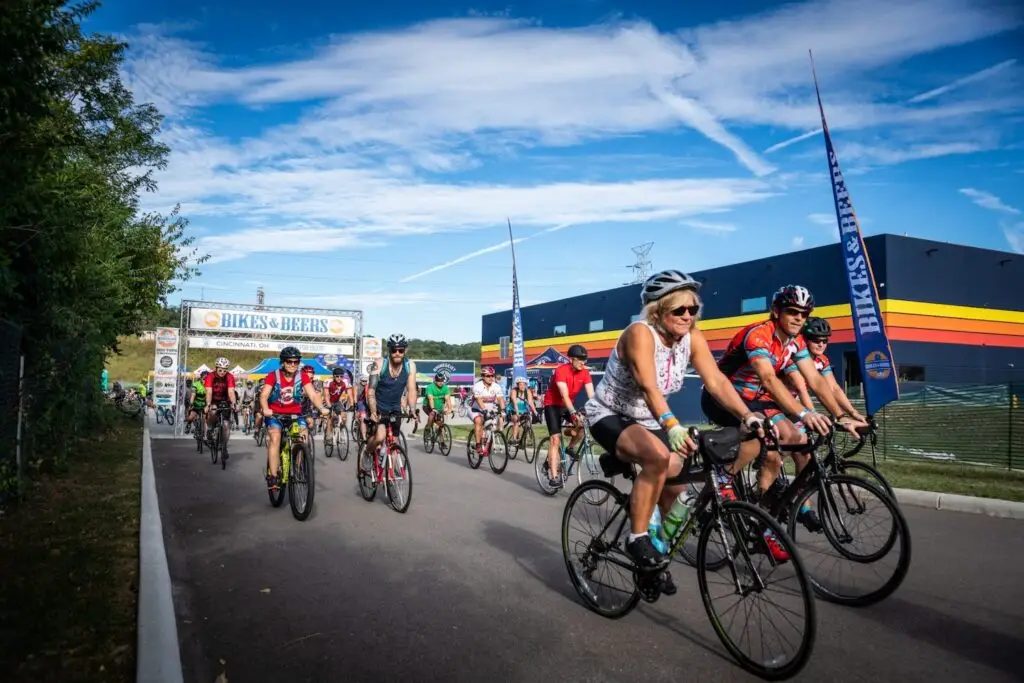
Celebrating its 34th anniversary is the Rosarito–Ensenada bike ride, a 50-mile fun trek that happens twice annually, this year on May 3 and September 27. In what’s billed as one of the largest cycling events in the world, nearly 4,000 participants follow the free road out of Rosarito south along the coast before cutting inland at La Mision and upward through the hills surrounding the Valle de Guadalupe wine country and onward to Ensenada. At the finish line is a street fest with food, bands, and beer. If you don’t want to haul your wheels to Mexico, TNT Ensenada (tntbicicletas.com) rents loaners, and shuttles run back to Rosarito from Ensenada after the race for $22 per cyclist. Preregister online for 400 pesos ($35), or sign up on the day of the ride for 450 pesos ($40).

Getting from San Diego to the border by bike is a 30-mile tour—and an epic one at that (how many bike rides cross international borders?). Cruise the Bayshore Bikeway, a 25-mile loop linking Chula Vista, Imperial Beach, Barrio Logan, and the Silver Strand via the San Diego– Coronado Bay Bridge (the ferry makes for a less-strenuous option), and skim the horse ranches and farms of the Tijuana River Valley before eventually finding yourself face to face with Mexico on the horizon. Even if it’s just to walk your bike across for a quick taco and bag of churros before heading back north.

Ease into riding south of the border with Paseo de Todos Tijuana, a night group ride that departs from beneath the arch on Avenida Revolucion at 8 p.m. the first Friday of the month and occasionally hosts cross-border rides that usually depart from a San Diego bar.

Studio S FEBRUARY 26, 2026

Chef Aidan Owens Thinks Your Fish is Boring

The 29-year-old culinary director at Herb & Sea is making seafood sexy (and approachable) again

Implementing a farm-to-table model hardly deserves acknowledgement these days. It’s not a stretch. It’s not innovative. “It’s the bare f**king minimum,” says Herb & Sea‘s executive chef Aidan Owens.  

When I arrive at the Encinitas restaurant, I’m ready to talk sustainability, farm-to-table stuff, with Owens. “Did you see the chin on that?” he says of the extra big jiggly chin on the sheephead that just arrived with the day’s fresh catch. I did. It was Jay Leno adjacent.

I learn quickly that he somehow oozes both charm and stone-cold honesty. Maybe he could construct a new dish with chin goo, like he did when he had a bunch of tuna scraps and voila’d it into a smooth and crowd-pleasing ‘nduja. “I want to know what’s in there,” he says.    

Courtesy of Herb & Sea

The instinct to look closer, to dig into what others might discard, says a lot about the chef’s approach. I guide him back to our topic, but he has something else on his mind. “We’re overcomplicating food—what happened to just cooking good food and having fun with it?”

Owens grew up on a farm in Byron Bay, Australia, where sustainability wasn’t a concept you chat about so much as a way of life. Think dirt roads, backyard chickens, pulling vegetables straight from the ground, and a mother who believed that if you couldn’t pronounce the ingredients on a package, you shouldn’t eat what was inside.

Food wasn’t precious or performative. Making it was what you did because you were hungry and that’s still what inspires Owens today. “I like to cook good food because I like to eat good food,” he says.

His approach to sustainability at Herb & Sea began so naturally that it felt just like instinct. “I was just like, ‘Let’s order food from the people who live and work here,’” he says.

Courtesy of Herb & Sea

And why wouldn’t he when lives in San Diego? Cities all over the world vie for our goods. Our tuna is sent overseas. Our spiny lobsters hit dinner plates in China and Japan. Not to mention California’s producing a third of the country’s vegetables and three-quarters of its fruits and nuts. 

“Why would we outsource when it’s all here?” Owens asks.

Sustainability, in this context, is about cooking what exists in abundance, nearby, right now. “I love the local fish here. It’s f**king delicious and San Diego citrus, I mean, it is so f**ing good,” he says.

Instead of importing ingredients, Owens also looks for nearby alternatives. “You can find really cool things in the local waters,” he says, pointing out that stingray cheeks taste similar to scallops.

Courtesy of Herb & Sea

Whatever he finds in that sheephead chin might just be the next substitute for marrow. But to make this work, it means getting diners amped up about the slightly unfamiliar. 

Tasting menus, where diners are completely in his hands, become an opportunity to gently push boundaries. “I’ll serve mackerel, because people think they hate it,” Owens says, noting that the abundant local fish can have some fishiness. “But when it’s fresh, it’s arguably one of the best fish in the ocean.”

He also tweaks the language on the menu so people might feel more compelled to give dishes a try without preconceived notions. He might use “lengua” instead of “tongue.” “Whelk” instead of “snail.” When he puts “stingray throat” on the menu, he disarmingly calls it “skate.” 

To reduce waste, scraps aren’t always discarded but rather turned into something new. Sometimes they’re smoked, cured or fermented. Apples going bad turn into apple ponzu. Lemons turn to marmalade, which stretches their usefulness far beyond peak season. “And it’s super tasty on our pizza,” he says.

What makes the food even richer, is the relationships he’s built with farmers. Though it didn’t always feel natural, Owens sought personal connection first. He recalls approaching a fisherman at the Tuna Harbor Dockside Market. “I was awkward,” he says. “I went up to him and said, ‘I like your fish.’”

Owen’s is now so close to his suppliers—like fishermen Ryan Sebo and Joe Daly—that he gets texted pictures of fresh catches right as they flop on the boat. The messages always ask if he wants first dibs. “I say yes to a lot of fish,” Owens says, noting that Herb & Sea can go through 2,000 pounds of seafood a week.

Courtesy of Herb & Sea

The next evolution of sustainability, in his view, will be chefs working directly with producers such as his alliance with Sebo, cutting out middlemen and purveyors where possible. “It will put more money in the pockets of the people doing the work,” he says.

It will mean that chefs can’t just know their local farmers and producers, but they’ll choose to work with the ones who have the best practices. Dining and sustainability will become much less about the final plate. “It will be more about the impact that plate has on the Earth,” he says.  

Ultimately, he believes sustainability doesn’t need to be loud. It doesn’t need hashtags. It just needs to be honest.

“We aren’t saving lives. We’re feeding people good food,” he says.

And yet, in feeding people well—simply, thoughtfully, responsibly—something meaningful happens. Guests leave satisfied. Ingredients are respected. Local ecosystems are supported and food returns to what it has always been at its core: nourishment, pleasure, and a quiet reflection of the place it comes from.

No buzzwords required.

Everything SD MARCH 15, 2014

Rosarito–Ensenada Bike Ride

The Border Report: Mexico on two wheels

Rosarito–Ensenada Bike Ride

Rosarito-Ensenada Bike Ride

Rosarito-Ensenada Bike Ride

Celebrating its 34th anniversary is the Rosarito–Ensenada bike ride, a 50-mile fun trek that happens twice annually, this year on May 3 and September 27. In what’s billed as one of the largest cycling events in the world, nearly 4,000 participants follow the free road out of Rosarito south along the coast before cutting inland at La Mision and upward through the hills surrounding the Valle de Guadalupe wine country and onward to Ensenada. At the finish line is a street fest with food, bands, and beer. If you don’t want to haul your wheels to Mexico, TNT Ensenada (tntbicicletas.com) rents loaners, and shuttles run back to Rosarito from Ensenada after the race for $22 per cyclist. Preregister online for 400 pesos ($35), or sign up on the day of the ride for 450 pesos ($40).

Getting from San Diego to the border by bike is a 30-mile tour—and an epic one at that (how many bike rides cross international borders?). Cruise the Bayshore Bikeway, a 25-mile loop linking Chula Vista, Imperial Beach, Barrio Logan, and the Silver Strand via the San Diego– Coronado Bay Bridge (the ferry makes for a less-strenuous option), and skim the horse ranches and farms of the Tijuana River Valley before eventually finding yourself face to face with Mexico on the horizon. Even if it’s just to walk your bike across for a quick taco and bag of churros before heading back north.

Ease into riding south of the border with Paseo de Todos Tijuana, a night group ride that departs from beneath the arch on Avenida Revolucion at 8 p.m. the first Friday of the month and occasionally hosts cross-border rides that usually depart from a San Diego bar.

Travel FEBRUARY 14, 2014

Staycation: Rancho Bernardo

Where you're staying and what you're doing

Staycation: Rancho Bernardo

Rancho Bernardo Inn

Rancho Bernardo Inn

Where you’re staying:

The 287-room Rancho Bernardo Inn is having a moment. It celebrated its 50th anniversary just last year and made Travel + Leisure’s list of World’s Best Hotels 2014. Not to mention, the newly reborn restaurant Avant (formerly El Bizcocho) is getting rave reviews, even from its longtime regulars.

What you’re doing:

On property, the Inn has 18 holes of golf, three swimming pools, and a full-service spa and wellness center. For hikers, Lake Hodges is a seven-minute drive north of the hotel. The Highland Valley Trail is an easy 4-mile loop and the North Shore is a 14.8-miler, also great for biking. Beer and wine lovers visiting the area can take a different kind of trail—ask the hotel about special packages for tastings at local craft breweries and wineries. For your main dining event, try Avant. Our critic Troy Johnson called the kitchen’s efforts “near flawless,” with “enough excellent [menu] options… to live up to the quite phenomenal new destination that is Avant.” Sold! Rooms start at $199. 17550 Bernardo Oaks Drive

Partner Content FEBRUARY 16, 2026

Torch Heroes: Why San Diego’s Most Trusted Businesses Win by Doing the Right Thing

In a world overflowing with shortcuts, marketing fluff, and “good enough,” there are still companies that choose a different answer. And in San Diego, there are plenty of them.

Torch Heroes: Why San Diego’s Most Trusted Businesses Win by Doing the Right Thing
2025-Torch-SD-09131839 (2)

In a world overflowing with shortcuts, marketing fluff, and “good enough,” there are still companies that choose a different answer.

Integrity guides how they show up every day. They make hard decisions, hold themselves accountable, and build trust the old-fashioned way, one action at a time. At the Better Business Bureau, we call these businesses Torch Heroes: leaders who demonstrate that ethical leadership strengthens businesses and drives long-term success.

And in San Diego, there are plenty of them.

Take House Collective Marketing Solutions, a Carlsbad-based digital agency that won the 2025 Torch Award for Ethics for its people-first approach to marketing. Instead of pushing flashy campaigns, the team often takes a step back to make sure clients’ foundations are strong before going big. Their philosophy? Truth over transaction builds partnerships that last.

Or look at Young Black & N’ Business, where integrity shows up through community action. When a local school lost art funding, founder Roosevelt Williams III and his team stepped in with workshops, mentorship, and hands-on support to help restore creative opportunity. That kind of engagement reflects ethical leadership rooted in real impact.

And in Vista, Lotus Sustainables carried its commitment to ethics all the way to the product line. After discovering defects in a shipment of eco-friendly products, the company issued full refunds and redesigned its offerings at its own expense, a choice that shaped its identity and reinforced to customers that ethics guide every decision.

In North County, Greenway Landscape Design & Build brings integrity into everyday service. When a client’s glass was damaged, likely not by their crew, owner Scott Lawn chose responsibility over blame and covered the repair personally. For Greenway, doing the right thing serves as a north star, guiding every interaction through transparent pricing, accountable partnerships, proactive communication, and follow-through long after the job is done.

Other honorees include At Your Home Familycare, whose leadership turned down a lucrative state contract during the pandemic to protect vulnerable clients and staff, and Bill Howe Family of Companies, where hiring practices, training, and service centers around shared values, every day, on every call.

What connects these diverse businesses, from marketing to nonprofit support to home services, isn’t size, industry, or revenue. It’s something deeper: a commitment to trust as a business strategy.

In San Diego’s competitive marketplace, that trust gives companies an edge. Clients invest in relationships. They refer friends. They stay loyal when others fade.

As one Torch Award winner puts it, integrity isn’t a section in the employee handbook. It’s the operating system of the company,  the invisible code that determines every choice, every day.

And that’s exactly the point of the BBB Torch Awards for Ethics: to spotlight companies that dispel the myth that ethics and success are at odds. These businesses show that when leaders choose honesty, fairness, and accountability, especially when it’s hard, they build brands that matter.

At BBB, we see nominations come in from clients, employees, and business partners who have witnessed ethical leadership up close. These submissions aren’t polished promotions. They’re stories of moments when a company chose people over profit, clarity over confusion, and trust over convenience.

The nomination window for the 2026 Torch Awards for Ethics is open through March 31, 2026, and there are more Torch Heroes waiting to be recognized.

Who comes to mind in San Diego’s business community?

  • A vendor who always delivers — and always explains why.
  • A competitor who chooses the high road even when shortcuts tempt.
  • A team within your own company whose day-in, day-out choices reflect deep character.

And yes, businesses can nominate themselves. We encourage it. If you’ve built your business on principles rather than buzzwords, we want to hear your story.

Because in a world full of noise, integrity still deserves the spotlight, and San Diego is full of stories worth telling. Nominate your hero now

Thousands of savvy locals already get it.

San Diego's best restaurants, experiences, and events—handpicked and delivered to your inbox weekly. You in?

Close the CTA

Contact Us

1230 Columbia Street, Suite 800,

San Diego, CA