Featured articles
Food News
Food & Drink
Food & Drink
Featured articles
Things to Do
Living & Design
Everything SD
Featured articles
Things to Do
Charitable SD
Things to Do
Featured articles
podcast-ep
podcast-ep
video
Featured articles
Things to Do
Everything SD

Everything SD
Featured articles

Things to Do
Food News
Living & Design
Ready to know more about San Diego?
SubscribeReady to know more about San Diego?
From moody retreats to income-generating ADUs, San Diego parents are rethinking the rooms their children left behind
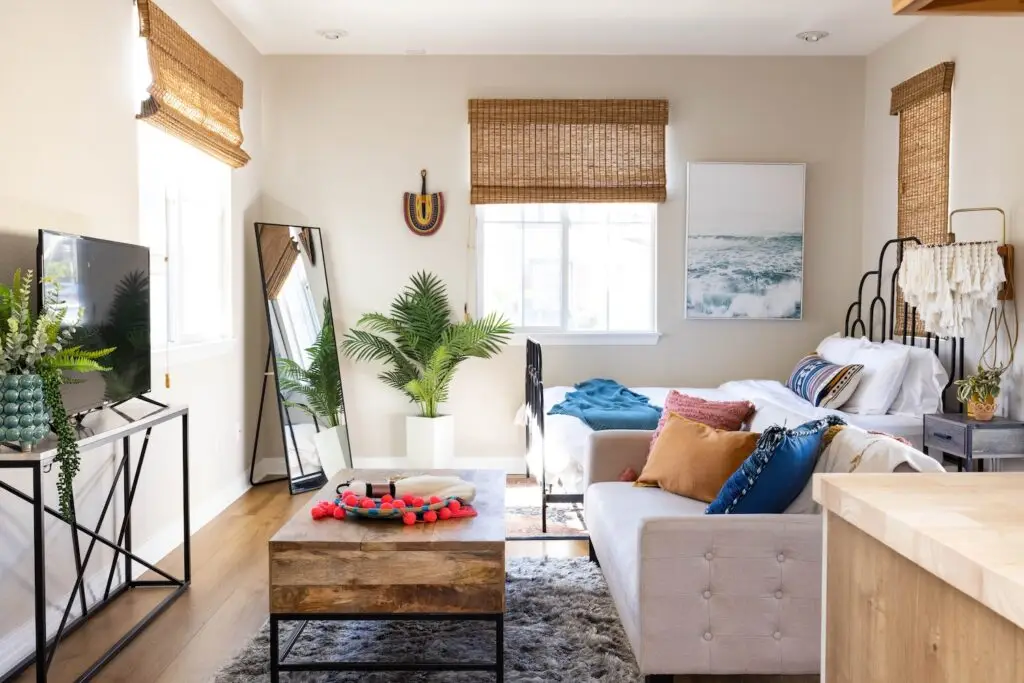
What the hell just happened?
That was the question on loop in my head as I sat, nearly catatonic, watching my chickens scratch and crap, from a chair on my patio. It was the first Monday after dropping my one and only at college on the other side of the country. I was tired to the bone and in shock. Eighteen-plus years of permission slips, math homework, Barbie play (ugh), carpooling—my God, the carpooling—and a teenager who, for four years and counting, communicated almost exclusively through side-eye and not-so-under-the-breath clapbacks. Parenting is insanity, and when it stops, it feels so good and so bad all at once.
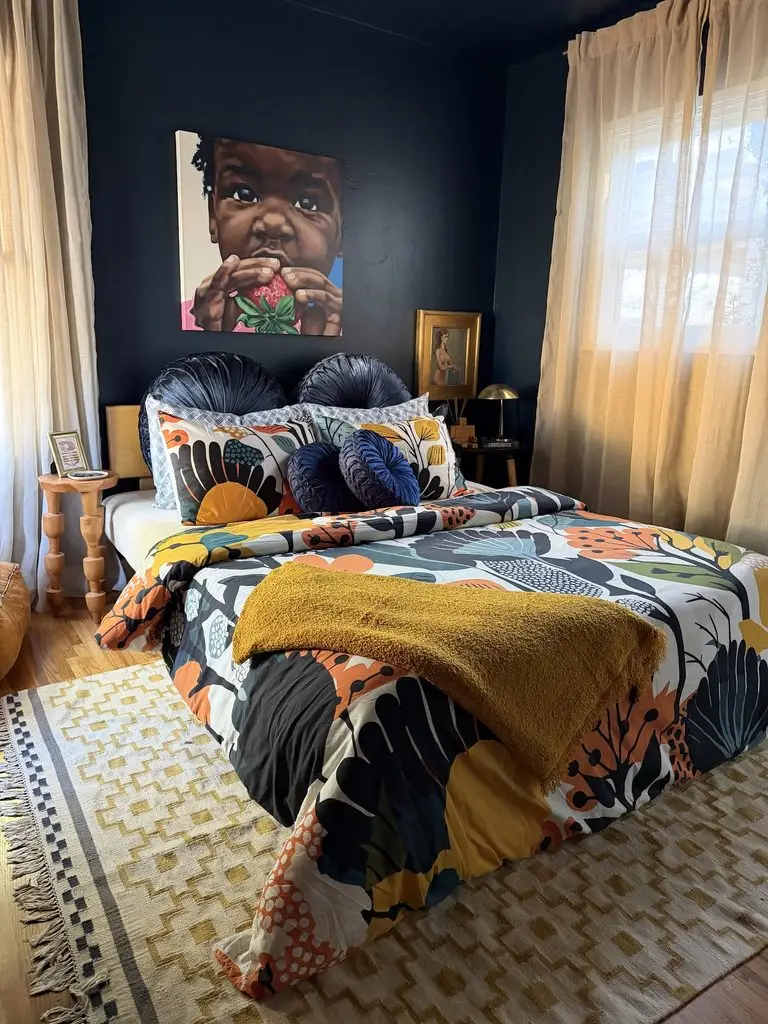
I won’t linger on my personal recovery here, except to say: Part of moving on is dealing with that empty room. What do we parents do with the utensil vortex, and more importantly, when do we do it?
My daughter’s room sat for two years like a forgotten museum exhibit, preserved—not because I was sentimental, but because my husband was. While he didn’t want her to feel erased when she came home, I wanted to expunge her Totoro-meets-Pepto-Bismol gray-and-pink aesthetic, the sports jerseys, the inspirational stick-on decals from Etsy, the bazillion discarded beauty products that didn’t make it into the blue duffel bags.
But with no will to fight, I focused on myself and let the shrine exist while I worked out some big feelings.
My metamorphosis took a while, but I built a new, brilliantly free, empty-nest life. No more driving hundreds of miles a week, no more bleachers, no more ref whistles reverberating in my dreams. I reclaimed myself, then I hired a professional to help me reclaim my kid’s bedroom.
EBSCO’s Research Starters series says that “empty nest syndrome” is a real, if not clinical, diagnosis—no chart line, no billing code. Just a recognized experience of grief, loneliness, and diminished purpose that can take up to a year to resolve.
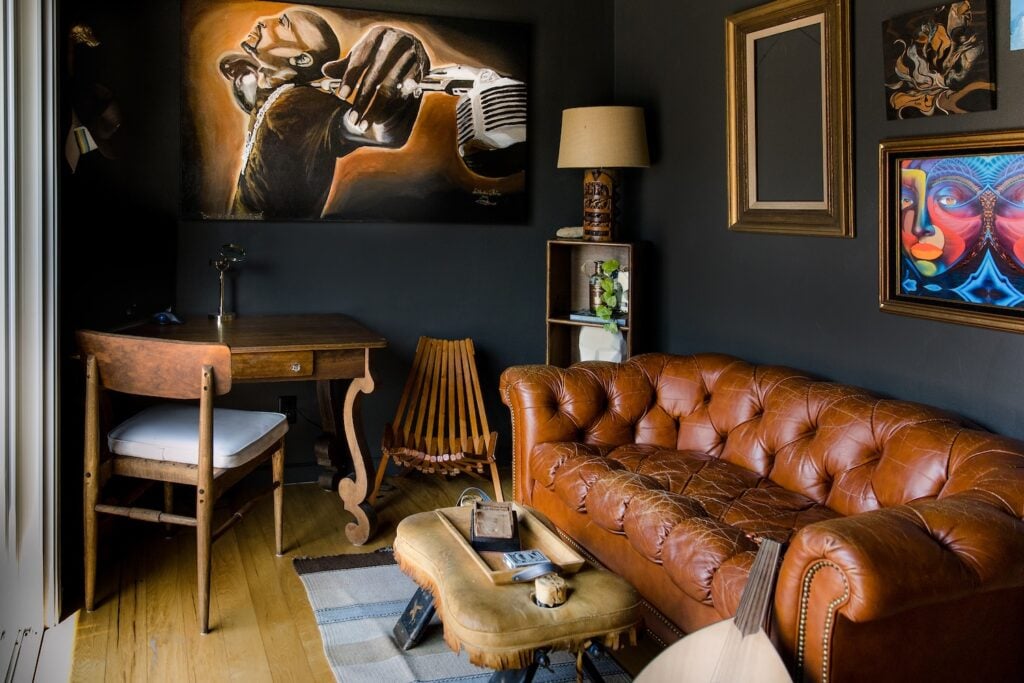
I turned to Treci Smith of Treci Smith Designs because I loved what she did with her son’s bedroom. (Full disclosure: She’s a friend.) After several interrupted attempts at reimagining the room, she designed a den for her husband, Amir. The couple, married 32 years, raised four kids in their four-bedroom ranch home in Bonita, and over the years, the kids switched rooms and pairings countless times.
The house Tetris continued as each child went off to college. But when their youngest left, his bedroom atrophied. It became a haphazard office and, for one stubborn stretch, nothing at all. A purgatory.
“We wanted to utilize every room in our house,” Smith says, “not letting it be a room that just sits empty.” She finally made a plan to evict purgatory, but the pandemic hit, and all four kids moved back home. It took a while longer before the room was finally hers to play with.
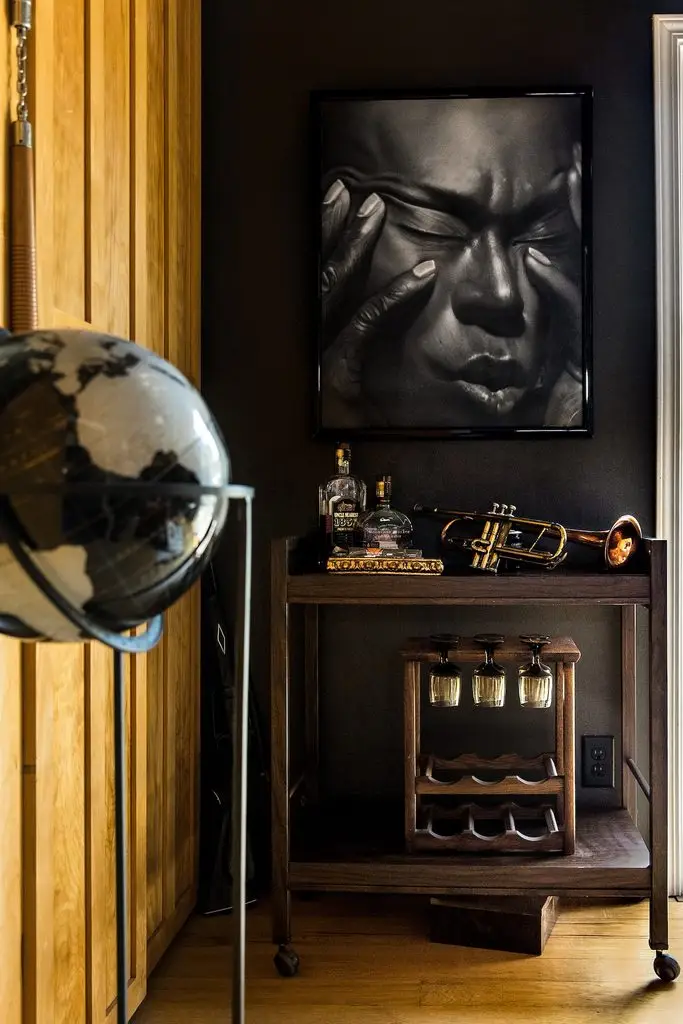
What Smith created in its place is magic. It feels like a speakeasy. Dark, moody, and deliberately masculine, the den looks like how sandalwood and musk would smell if they took physical form. It’s got a bar cart, Amir’s cigars, a speaker, a desk for his real estate research, and French doors that open to a courtyard and pool.
“When we think of meditation, we think of light and airy,” Smith says, rejecting that there’s only one way to create calm. “It’s a sanctuary. It’s a place where the rest of the world doesn’t really feel like it exists.”
Smith doesn’t talk about trends. “I think everything has to have a purpose, and not just to be magazine-ready,” she says. “So I ask clients, ‘How do you want to feel in this space?’”
For my project, Smith isn’t interested in erasing the past so much as spotlighting it. As she guides me in reimagining my kid’s former room, she’s pushing back on my urge to wipe the kid out of it entirely. “I don’t want her to feel like she’s been pushed out of the house, essentially,” she says. “The room is now functioning for other purposes, but it’s still hers.”
She pulls a painting of my daughter off the wall in another part of the house for use in the new space. She also caught sight of a planed section of a pantry door from our last house, which has my daughter’s height marks in my handwriting, climbing as she grew. “Grab that,” she tells me. “It has to go in.”
That’s not just decoration. It’s continuity.

For years, the biggest room in Melissa Gaviria’s Rancho Peñasquitos house was a shared bedroom and playroom for her two kids—absorbing blocks, toys, and balls that, with impressive consistency, never made it into the ball pit. As the kids grew, the room saw less use, then emptied out entirely: Her older child moved out, her younger one moved upstairs.
Gaviria tried turning it into an office, but “that was just one little corner of a whole big room,” she says. When a coworker converted part of a house into an Airbnb-ready ADU, Gaviria was inspired.
She hired award-winning designer Jen Guerin of JG Color Studios to create a junior ADU. It’s technically attached to the house but is functionally its own unit, with a French-door entrance on the side so guests never have to walk through the home’s main living space.
Gaviria didn’t wait until both kids were gone to build her nest egg (the unit pays her mortgage, and she rents the whole house in the summer and travels). The kids were 14 and 10 when construction started, and she gave them markers and crayons for one last pass at the walls. I ask whether she left any of their artwork as an homage. She laughs, “I can’t rent with a Godzilla on the wall.”
I beg to differ there.
Guerin pulled from Gaviria’s Colombian background, incorporating blues and a deep burnt orange as nods to home.
Guerin, who’s designed dozens of these transitions over 20 years, says most parents pivot more slowly than Gaviria. “It always starts with paint,” she says, “then flooring and slowly a replacement of all items.” But the instinct, fast or slow, is the same: “This chapter isn’t about erasing the family story. It’s about making room for the next one.”
Enveloped. Safe. At ease, creative, and a little bit sexy. I wanted an understated drama that didn’t match our minimalist, midcentury design elsewhere in the house, but that matched the inside of my soul. I wanted dark and light, color and whimsy. I wanted to never want to get out of bed, and for guests to feel that too.
Another parameter: I had a tight budget. I mean, let’s be real about the economy, right? Smith guided me toward a dark paint my husband and I put on ourselves, then sourced used and vintage pieces to go with the bed and other accoutrements we already had, and mixed in a few new pieces from Ikea—like the two-tone green speaker lamp. She nudged me not to erase my kid entirely, so I dug through boxes of ephemera in the garage, framed some old artwork, and tucked a few other mementos away for discovery, should someone look closely.
Most guests won’t notice. They’ll just sink into the bed and not want to leave, which is the whole point. But if you know where to look, my ladybaby is still in there—she’s just not running the place.
Aaryn Belfer is a writer and editor specializing in nonfiction across art, architecture, and culture. Once upon a time, she wrote a provocative column for San Diego CityBeat (RIP). She was a runner up in the 2025 Matchbook Stories contest at the San Diego Central Library and is irrationally happy about it. Currently in her Soft Girl Era, Aaryn has expensive taste in (mostly flat) shoes and will choose a great art exhibit or live jazz concert over almost anything else. Except, possibly, Javier Bardem.
San Diegans are finding connection in gardens, shared produce, neighborhood gatherings, and simply sitting outside
Front yards. They used to be the most controlled part of a home—or not. They could be tidy with manicured lawns, have raised vegetable beds with food for sharing, or act as an overflow of things that didn’t quite make it inside. Thank you, capitalism, and the American habit of endless consumption. In Lemon Grove, where I live, it’s not uncommon to see a mechanic running a business from his front yard or a family selling birria on Saturdays from theirs. The front-yard genre is broad.
But in communities across San Diego County, the most exposed part of a house—the strip between public and private life—is being turned into something eminently usable, visible, and hang-outable. At first glance, this may seem decorative, but in creating an intentional space, particularly one that’s visible to neighbors and passersby, it’s also the release of a pressure valve.
Let’s not gloss it over: American life has taken a hard right at high speed; two wheels have lifted off the pavement as we careen toward who-knows-what, and our nervous systems are making a sound best described as zoinks!
People are trying to (re)build connection in an increasingly isolated culture, (re)find beauty in the midst of endless anxiety, and (re)create a system friendly for critters. Many of us are remembering that, Oh yeah—we’re biological creatures.

Landscape designer Andrea Doonan, of Andrea Doonan Horticulture + Design, is a certified arborist with more than 20 years of experience collaborating with homeowners and renters. She rejects sterile, white picket fence designs and places a strong emphasis on edible gardens and usable outdoor spaces. When we speak, she mentions the unusually wide range of plant and animal life in the relatively small size of our region, making us a “biodiversity hotspot.” (San Diego is the most biodiverse county in the Lower 48.) Because of this, we have a unique system of endangered species that rely on plants to survive.
“More and more, people are introducing native landscapes to connect to nature and support birds, butterflies, and bees,” Doonan says. “I’m very passionate about getting people to unplug and ground.”
Whether it’s for a love of all creatures, our climate, or water conservation, Doonan describes a broader shift toward habitat-driven spaces that are both aesthetic and ecological. For her clients, this can mean replacing turf with native planting, adding seating areas, or even rethinking the front walk as an active, planted threshold rather than just a green lawn. “There’s this idea that people want to make a difference,” she says. “But they also want a place to entertain, recreate, and ground.”
At the center of this is a simple but increasingly urgent question: How can small design choices ripple outward into community life?

For Doonan’s client Lee Miller, that shift is fully expressed. After remodeling the interior of his Pacific Beach home, Miller focused on the backyard, thinking that would be the place for his soon-to-be-born daughter to eventually play. The front yard of his corner property was the last detail to be completed.
Miller said he wanted “a very full, very natural look versus having everything measured.” He knew what he liked when he saw it, but it was Doonan who translated his ideas and guided the creation of a wildlife-friendly space with full-grown orange, plum, and pluot trees. “We have lots of birds, lots of bees, lots of lizards,” Miller says. “There’s nothing better than walking outside and eating fruit off a tree.”
The front yard has become where Miller’s family spends time—often more than the backyard. He and his daughter, who’s now 5, explore the space together, checking what’s growing, learning about their little ecosystem, and chasing lizards. It’s where his daughter plays, where she’s built her own fairy garden, and where neighborhood parents and kids tend to gather at the end of the day.

For her own Normal Heights home, Doonan designed a front yard that includes a seed library, raised beds, native plants, and a sitting area where she and her husband spend time. “I’m meeting my neighbors because I put two chairs and some plants in the front yard,” she says. “I’m sharing produce with them.”
That exchange has become part of the landscape itself, and she points to small systems (like seed libraries) as ways of circulating plant material and knowledge directly between people. In real life. Person to person.
More and more, Doonan says, when we’re talking about solving the big problems, it’s important to remember that everything starts local. Even “guerilla gardening”—small acts of informal planting and care in overlooked sections of land, such as parking strips—makes a difference. Tossing some seeds and adding a bench to the sidewalk strip out front can create a “pocket park” or “a mini-mini park.” In that framing, the front yard stops being an ornamental backdrop and starts becoming an infrastructure for connection.
Landscape architect Bret Belyea frames this front-yard movement (my term, not his) as social repair. “It’s a handshake to your neighbors and passersby,” he says. “It says something about who you are.”
Of course, plant choices matter, but not only for ecological reasons. Native and climate-appropriate plantings become part of how neighborhoods re-establish contact with each other, even without formal planning. What he describes is an aesthetic, but it’s also relational in the way a yard can signal openness rather than withdrawal, invitation rather than separation, and connection rather than, “Get off my lawn, ya damn kids!”
Hanging out in the front yard rather than sequestering in the back is a signal to outsiders that they’re really not outsiders at all. Or, at least, they don’t have to remain so.

Not every front yard in this shift toward social spaces has a professional’s influence. Some are created through labor, trial and error, and nostalgia. For Grace Wanjiru, the memory of her childhood in Gitaru, Kenya, led her to beautifully DIY the hell out of the front part of her half-acre Encanto property. When she bought her home nearly two decades ago, it was essentially just a little house plunked down on a giant plot of dirt. She had a blank slate and plenty of memories from which to create something that would imbue the space with peace and hospitality.
The designer-led yards are often framed through an academic understanding of ecology, structure, and intentional planting strategies, and Wanjiru did much of the same thing through instinct. When she’d visit her mother, who lives just outside of Nairobi, she was reminded of the abundant beauty and vibrancy of a childhood spent running free, climbing trees, and being connected to nature. It was important to Wanjiru that her then-young daughters, both now in their early 20s, have that experience.

Wanjiru’s goal was to create the feeling of home, not as replication but as translation. “When you throw a seed in Kenya, something grows,” Wanjiru tells me. “Here, the dirt is horrible for plants. I still wanted green and color. I wanted nature—birds and insects. I grew up with nature, but here: No.”
With an understanding of what would and wouldn’t grow in San Diego, Wanjiru was able to achieve a sense of home with succulents and native plants she purchased at Walmart. She created a large courtyard with a fence built of wood and corrugated metal. Inside, she added a hammock and a bird bath, which Wanjiru settled on after gophers ate through seven different plants; a table with an open cookbook, a bottle of wine, three glasses; a weathered dresser—once in her daughter’s room—that now sits opposite the table and contains Wanjiru’s many seeds. And, of course, strung lights.
The space feels rustic, comforting, personal, emotional, and magical. It feels like love.
Wanjiru likes to host small groups of her friends and family, keeping it intimate but accessible. “This is the kind of house you just call: ‘What are you doing? Are you making your African tea? Can we just come over?’ Because this is what they do [in Kenya],” she tells me. “And so I always want to have that, because I think for foreigners living in America, that’s one of the things we struggle with. We don’t have that kind of community.”
Craving a communal feeling, Wanjiru built it herself. And her kids grew up climbing the jacaranda tree and playing in the garden.
“We still gather out there,” she says. “We read in the hammock, talk, connect.”

Perhaps the most important part of a front yard is a garden, whether it’s a space for entertaining and gathering, retreating and grounding, discovering and playing, resting and people-watching. The science backs up what gardeners have long known: Spending time around plants can be profoundly restorative. A 2024 review of dozens of studies found that gardening is consistently associated with better mental health, greater well-being, and improved quality of life, also linking interaction with plants and green spaces to better nervous system regulation.
For Doonan, this is part of why the conversation around gardens is bigger than aesthetics. “Gardens are for everyone,” she says. “I think it’s a right for all of us to have access to gardens.” “All of us” means homeowners and renters, people with sprawling yards and people with apartment balconies, people with large budgets and people growing herbs in containers from the discount rack at Home Depot.
In my conversation with Belyea, I tell him about a little house I passed in Oceanside this past spring. The owners set out free avocado clippings from their tree for anyone to take. “This is people’s way of putting an olive branch out,” he says. “And it just happens to be an avocado branch.” Maybe that’s what this front-yard shift is really about. Maybe it’s about trying to remember how to live alongside one another again. A hammock beneath string lights. Kids chasing lizards through native plants. Someone slowing to ask what’s growing. A neighbor stopping by and staying longer than they planned to. All of it, a pocket of softness in a culture that’s trying its damndest to make us harden.
Aaryn Belfer is a writer and editor specializing in nonfiction across art, architecture, and culture. Once upon a time, she wrote a provocative column for San Diego CityBeat (RIP). She was a runner up in the 2025 Matchbook Stories contest at the San Diego Central Library and is irrationally happy about it. Currently in her Soft Girl Era, Aaryn has expensive taste in (mostly flat) shoes and will choose a great art exhibit or live jazz concert over almost anything else. Except, possibly, Javier Bardem.
Designer Susan Wintersteen of Savvy Interiors walks us through her favorite kitchen projects
Don’t be alarmed if Susan Wintersteen asks for a meal plan midway through a kitchen redesign consultation. With every new project, Wintersteen, the CEO and creative director of Solana Beach– based firm Savvy Interiors, considers everything from the number of kids and pets running through the house to “how many leftovers they have in their fridge,” she says.
Her focus on the practicalities comes from her background as a mother of five, researching flooring and fabrics that wouldn’t fall apart under the onslaught of rowdy little ones. “I became addicted to the feeling of blending what looks good with what is super functional,” she recalls. Initially a design hobbyist, she used her self-taught skills to launch her business in 2002. Her husband John joined Savvy seven years later, and the pair became general contractors, able to transform spaces through both big builds and aesthetic overhauls.
And it’s not just clients who benefit from Wintersteen’s thoughtful approach. In 2014, Wintersteen began redecorating rooms for kids experiencing medical crises, eventually creating a donor-funded nonprofit, Savvy Giving by Design. The organization now has 11 chapters nationwide and partners with the Make-A-Wish Foundation.
The nonprofit aims to create safe and comfortable spaces for children with medical needs, implementing, for example, automated beds and window coverings to account for limited mobility. But Wintersteen also wants to make the rooms a place of joy, filling them with color and cozy places to hang out and decorating them in line with each kid’s interest (say, superheroes or horses).
“[It] gives them the tools to enhance their healing,” Wintersteen says. “And when you see the impact it has on that kid, it’s really hard to not want to continue doing that.”
We asked Wintersteen to share deets from three of her favorite kitchen revamps.

“We transformed this space into a chic Parisian haven with a powder blue palette, marrying timeless elegance with contemporary charm in this kitchen remodel,” Wintersteen says.
Stools: Four Hands
Tile: Ann Sacks Segmented Hex Mosaic in Whitecap
Countertops: Cambria Winterbourne Light: Arteriors Heloise Pendant Paint Color: Benjamin Moore 1593 Adagio
Range: La Cornue

“We elevated this coastal retreat with a modern kitchen remodel, seamlessly blending sleek design elements and beachfront allure for the ultimate vacation home sanctuary,” Wintersteen explains.
Countertops: Caesarstone Raw Concrete 4004
Range Backsplash and Island: Bedrosians Manhattan Polished Quartzite
Range Wall Tile: Clé Four-Inch Zellige Tiles Range: Miele
Fridge: Sub-Zero

“We wanted to create a space that was easy to use and didn’t feel cramped for a busy family,” Wintersteen says. “When making our design selections, we had function in mind and wanted materials that worked for a family with young kids.”
Hood Color: Benjamin Moore Jojoba AF-460
Range: Bertazzoni 48-Inch Heritage Series Backsplash
Slab: Tutto Marmo Marble Statua Corchia Island Countertop: Cambria Everleigh
Perimeter Countertops: MSI Soapstone Metropolis Concrete Quartz Stools: CB2 Avont White Upholstered Counter Stool recovered with Dorell Fabric, pattern Elliot in color avocado
Amelia Rodriguez is a writer and journalist and winner of the San Diego Press Club's 2023 Rising Star Award and 2024 Best of Show Award, she’s also covered music, food, arts and culture, fashion, and design for Rolling Stone, Palm Springs Life, and other national and regional publications. After work, you can find her hunting down San Diego’s best pastries and maintaining her five-year Duolingo streak.
Designed by legend Kendrick Bangs Kellogg, the La Jolla masterpiece is a singular achievement of design, vision, trust, and collaboration
From the street, the house appears unremarkable. But step through the bold, central-pivot wood-and-glass front door, and the Yen House from famed San Diego architect and visionary Kendrick Bangs Kellogg begins to speak. Undulating, interwoven spaces whisper secrets of living and possibility. Can a house be a sculpture? Can a sculpture be a house?
Mateo Hoke is a journalist and author. His books include Six by Ten: Stories from Solitary, and Palestine Speaks: Narratives of Life Under Occupation.
Behind every beautiful space is a thoughtful process, and ASID San Diego is helping homeowners understand the value of professional design.
A perfectly designed home rarely happens by accident. Those kitchens that feel effortless and rooms that seem to tell a story the second you walk in? They’re usually the work of someone who knows exactly what they’re doing.
It’s knowing which ideas will actually work, which materials will hold up over time, and how to turn a collection of choices into a space that feels intentional. That’s where a professional interior designer comes in.
For the American Society of Interior Designers (ASID) California San Diego Chapter, the goal is to help people see interior design as more than just the finished look. Behind every well-designed space is a process built on technical expertise. Designers are educated in everything from professional software and construction details to building codes, space planning, materials, and functionality.

“People don’t always realize how much goes on behind the scenes,” Kirsten Recce , current president of the ASID California San Diego Chapter, says. “Our designers are not just doing furniture placement and color selection and picking out new fluffy pillows. That’s not what they’re trained for.”
ASID members bring formal education, continued learning, and industry knowledge to their projects, helping create spaces that are not only beautiful, but designed to work. A paint color that changes completely depending on the lighting. A material that looks beautiful in a showroom but doesn’t make sense for everyday life. A layout that photographs well but doesn’t function for the people living there. These are the details where professional guidance can make all the difference.
Still, one of the biggest misconceptions about hiring an interior designer is that it’s reserved for massive renovations, luxury homes, or people who already know exactly what they want. The process can feel intimidating. Where do you begin? Is a designer worth the investment? What if you only need help with one room?
ASID’s answer: start with one hour.
ASID’s Spruce Up events break down one of the biggest barriers between homeowners and professional design: knowing where to begin. Held twice a year, the community program gives homeowners the chance to work directly with an ASID designer through a one-hour, $125 consultation in their own home. Whether you’re looking for advice on furniture placement, window treatments, kitchen and bath updates, remodeling ideas, vacation rentals, color selections or something else entirely, the upcoming September 2026 event offers an approachable way to get expert guidance before committing to a full project. Signups are open through Sept. 7, with consultations taking place Sept. 21 through Oct. 31. Proceeds benefit ASID San Diego’s educational and community programs. Register here!

“It’s a great opportunity for people who are in that exploratory phase,” Recce says. “Maybe they’re not sure they want to hire an interior designer yet, or they think it sounds daunting or expensive. This gives them a chance to discover what working with a designer is actually like.”
Design is personal. A good designer isn’t just creating a beautiful room; they’re helping create a space that fits the way someone lives.
“We’re a resource to all of San Diego County,” Recce says. “It doesn’t cost anything to pick up the phone and call and ask. We’ll answer.”
Follow ASID San Diego on Instagram, LinkedIn, and Facebook for updates on upcoming events, or connect with the chapter directly at [email protected] or 619-548-8847.
The oddity aficionados behind the North Park shop give us a peek inside their ode to desert macabre
Racoons in cowboy hats play poker while tiny, bikini-clad alligators and two-headed baby ducks look on. In the corner, a scurry of squirrels smokes cigarettes while rats turn on stripper poles. Everywhere, something strange.
No, you didn’t accidentally hit the DMT pen instead of your usual vape. You’re fine. You may have simply wandered into The Gold Dust Collective oddities shop in North Park.

Gold Dust is a curiosity hunter’s dream, full of bizarro taxidermy, charms, potions, local art, jewelry, and funky secondhand scores. For fans of the freakish, the store holds down a niche corner of San Diego décor. When you’re in the market for half-stuffed roadkill dressed in doll clothes or an old jug for holding mercury, this is your place. Curated with the care of an art gallery, Gold Dust is more than a place for strange gifts. It’s an ode to the macabre and a middle finger to the mundane.
So it’s no surprise that Gold Dust owners Kate Conner and Damien Ducommun have brought the same spirit to their home in Jamul.

Sitting on more than 8.5 acres of prime rattlesnake and coyote country, their property boasts two houses, an art studio, a freestanding garage, and a large, dusty pen where their tortoise, Earl, eats his salads. The main house is shockingly approachable. Built in 1978, the 2,200-square-foot three-bed, two-bath would look the part in Tahoe or Big Bear with its wood-paneled walls and high, paneled ceilings. Light pours in from large windows showcasing shrubland punctuated by large granite boulders.
A big wraparound deck separates the house from an earth-brick studio with weathered, swinging wooden doors and a terracotta roof. Inside, Ducommun handcrafts stylish western hats under the label Haberdash Hat Co., selling them at Gold Dust and by commission.
“The bricks were all made here from dirt onsite,” Ducommun says of his workshop. “The woman who lived here before us, this was her original art studio.”

Ducommun does more than hats. Many items for sale at Gold Dust have passed through his hands. He rescues dilapidated taxidermy, and his studio is littered with various animals in need of repair. He shows me a stuffed white mouse that he plans on dressing in western wear and mounting on a half-coiled rattlesnake—saddle and all—like a snapshot from a surrealist rodeo.
But it’s up the hill where things get really interesting. The 1,000-square-foot guest house, shaped like a barn and painted dark red, is where the couple spends most of their time. It’s where they sleep and where their true colors shine. Walking in is like stepping into a private oddities expo.
“I call it moody maximalism,” Conner says.

Maximalism might be an understatement. A javelina, a bighorn sheep, a Canadian goose, a raven, an axis deer, an antelope, an armadillo, weasels, raccoons, snakes, a fox in a top hat. Bones from one of their late cats lie reverently in a glass box. The bones of a full human finger dangle delicately from a mount. A foot from a pet chicken killed by a coyote is mounted on the wall, permanently flipping the bird. Maybe it’s the big plants giving all this dead stuff life, but somehow, it doesn’t feel overwhelming. It feels like hanging out in a museum, every item carrying a story.
“I think my favorite taxidermy piece by far is the peacock,” Conner says, pointing to the open bedroom loft above.

“Yeah, when we got it, it was on a really kind of janky mount,” Ducommun explains. “I found this really cool old lamp that was missing all the components. So I just did a little tweaking.”
Conner loves the history of these objects— and the challenge of finding them.
“She’s the queen of winning online auctions and hunting stuff down,” Ducommun says. “That’s a full-time job in itself, knowing what it’s worth, what the market is.”
“Something that I pride myself on a lot is that nothing in here we’ve paid even close to retail for,” Conner adds. “My favorite hobby is the hunt.”
I appreciate animals, but being around so many quirky stuffed ones doesn’t fill me with life, as it seems to do for Conner and Ducommun. To better understand the allure, I called Michelle Cozzaglio in Tulsa, Oklahoma. Her traveling collector market, the Oddities and Curiosities Expo, stops annually in SD.

“Taxidermy in the home is a resurgence of that life,” she tells me. “The animal has passed and you’re kind of giving it a second life. That’s why some people are so drawn to it.”
This seems to ring true for Conner and Ducommun.
“We both have the highest respect for animals,” Conner says. “And honestly, nothing breaks our heart more than seeing pieces of taxidermy that are in a state where clearly the next step is the dump. It just seems so disrespectful and sad. So that’s why we like to find pieces and give them a new life and a name, because they deserve it.”
However, the couple acknowledges that the vibe isn’t for everybody. Some people are minimalists, after all.
“I’m a more-is-more gal, always,” Conner says.
Mateo Hoke is a journalist and author. His books include Six by Ten: Stories from Solitary, and Palestine Speaks: Narratives of Life Under Occupation.
Navajo rugs, Mexican textiles, and folk art abound at the East County ranch of designer and restaurateur Diane Powers and husband Brent Gilman
Diane Powers and Brent Gilman
GUEST ROOMS
8, each with its own theme, such as the All Saints Room and the Pendleton Room
HORSES
12, including a foal that was born this spring
For most San Diegans, Diane Powers will always be the woman who pioneered the birdbath margarita and made Old Town the place to eat chimichangas beneath a sea of colorful umbrellas. But at the East County ranch she shares with husband Brent Gilman, Old Town feels a million miles away. Of course, there is color (lots of it) and tequila (plenty of that, too), but here, the rolling pastures and natural meadows offer a quiet serenity. Inside, the décor is what fans of her Bazaar del Mundo Shops might expect: vivid Guatemalan textiles, Talavera china, and entire rooms of folk art collectibles—a passion that began when a college professor gave Diane her first Mexican Tree of Life. That gift spawned a deep love of Mexican and Southwestern culture that inspires nearly everything she does. At home, she’s created a space that’s distinctly Diane (after all, her aesthetic is part of this city’s history). With a recently remodeled kitchen, separate catering room, and multiple dining areas, it is primed for what this San Diego icon does best. Bring on the chips and salsa!
formal living area
The formal living area features original redwood paneling and hand-hewn rafters tied with rawhide joinery. The room showcases Diane’s extensive collection of vintage Saltillo serapes. Some drape decoratively, while others are used as upholstery. Most of the accessories date back to the ’30s and ’40s, when the ranch was built. “I really tried to keep to what was done in those times,” Diane says. “But I put a contemporary spin on it.”
bedroom
The couple’s custom headboard is made from two posts that once served as structural support columns in Mexico. Diane and her team then drew the rest of the design on the wall and filled it in with golden yellow and turquoise paint. The same design continues above the French doors and window treatments. On the left, Pendleton fabric covers an antique armchair. “Everything just evolves,” says Diane, who frequently travels to the Southwest, Guatemala, and Mexico, buying items for her stores and clients. “There’s a ribbon of continuity and vibrancy, those things that your eye responds to. It’s a style and a lifestyle that’s colorful, vibrant, and cultural.”
boots
Diane turned one of the property’s spare bedrooms into a dressing room, where a sampling of her leather riding boots lines the floor. They are just as vivid as the rest of her life. “I love color,” she says. “That always attracts my eye when they’ve added something more radical.”
horses
“You don’t know you’re in San Diego when you’re here,” Diane says. This is one of her favorite views, from the main house overlooking the valley. “Everything is so natural,” with miles of hiking trails, live oaks, and roving wildlife. The cedar barn (not pictured) stands behind the pool house on the far right. The couple’s Arabian horses are their pride and joy, and have taken the duo all over the country to various competitions. Below, Kimberlite and her filly Karma Link frolic in the meadow and await dinnertime.
the ranch house
The ranch house was built around this pine tree, which is at least 200 years old.
The kitchen features an array of bright Mexican tile work, a large island with a built-in griddle, and an original copper hood. Nestled inside the ranch house cabinetry are stacks of colorful platters and Talavera china. Diane laughs as she sifts through a shelf in search of the perfect bowl. “It looks like my store, right?” For further color, the restaurateur chose shiny cobalt Viking appliances. “I thought it would complement the other colors I have everywhere. I didn’t want to overdo the red, but the blue accents the red.” When asked if she ever gets sick of Mexican food, Diane, who is constantly working with her chefs to create new menu items, replies: “Never! I get addicted to it.”
kitchen
In this sunlit breakfast nook, ceremonial masks, a Guatemalan runner, and other festive textiles add cultural flair. Chevrons, stripes, and florals blend together—a thick border here, a thin accent there, some fringe to garnish. “Color is my passion, but I’d be hard pressed to answer if someone asked what my favorite color is,” Diane says. “I love color combinations. I like hot colors—red, orange, fuchsia—and then I love to contrast those with cobalts and blues.” (Fabrics available at Bazaar del Mundo)
breakfast nook
A few intentional updates can instantly elevate your home’s exterior and create a space you feel proud of every time you pull into the driveway.
In celebration of National Curb Appeal Month, Renewal by Andersen is helping all the renovation superstars out there reimagine what’s possible for their space. We want to give homeowners all the information they need to enhance the exterior of their home and make a strong first impression.
Fortunately, it doesn’t take a complete overhaul to make a big impact. A few intentional updates can instantly elevate your home’s exterior and create a space you feel proud of every time you pull into the driveway.
1. Make a Statement
Your entry door will set the tone for your entire house. Whether you decide on bold colors or stick with a more timeless look, the style you choose helps reflect your unique personality and character.

2. Refresh Your Trim
Don’t underestimate the power of a well-maintained trim! Sharp lines around your windows and doors can instantly give your home a more polished and refined look. At the end of the day, updating your trim brings definition to your home’s architecture and enhances its visual interest. If you want to take it a step further, repainting the outside of your home can give it a brand-new look!
3. Coordinate Your Color Palette
Pairing the right door color with the right window finishes can help you match your home’s exterior and elevate the whole aesthetic. Try black window frames for a modern edge or a soft green door for some subtle charm.
4. Let the Light In
Natural light never goes out of style! Consider adding sidelights or windows with your new door – or try upgrading nearby windows to let more sunlight through. That way, you can boost curb appeal and enhance the overall aesthetic of your home.
5. Enjoy Long-Term Value
Curb appeal isn’t just about appearance; it’s about investing in the future of your home. A new entry door paired with energy-efficient windows can improve insulation, enhance your security, and increase the resale value. When form meets function, you get a transformation that’s as practical as it is beautiful!

Don’t Just Upgrade Your Home – Renew It
Your home should be a spot where you can feel a sense of comfort and peace of mind knowing it’s functioning at its absolute best. So, whether you start with a new window or door, enhancing your home can spark a renewed sense of pride and satisfaction.