Featured articles
Food & Drink
Food & Drink
Food & Drink
Featured articles
Food & Drink
Things to Do
Things to Do
Featured articles
Food & Drink
Food & Drink
Food News
Featured articles
podcast-ep
podcast-ep

podcast-ep
Featured articles

Food & Drink
Food & Drink
Features
Featured articles
Food & Drink
Food & Drink
Partner content
Ready to know more about San Diego?
SubscribeReady to know more about San Diego?
What to do, see, and eat on your next visit to the American Riviera
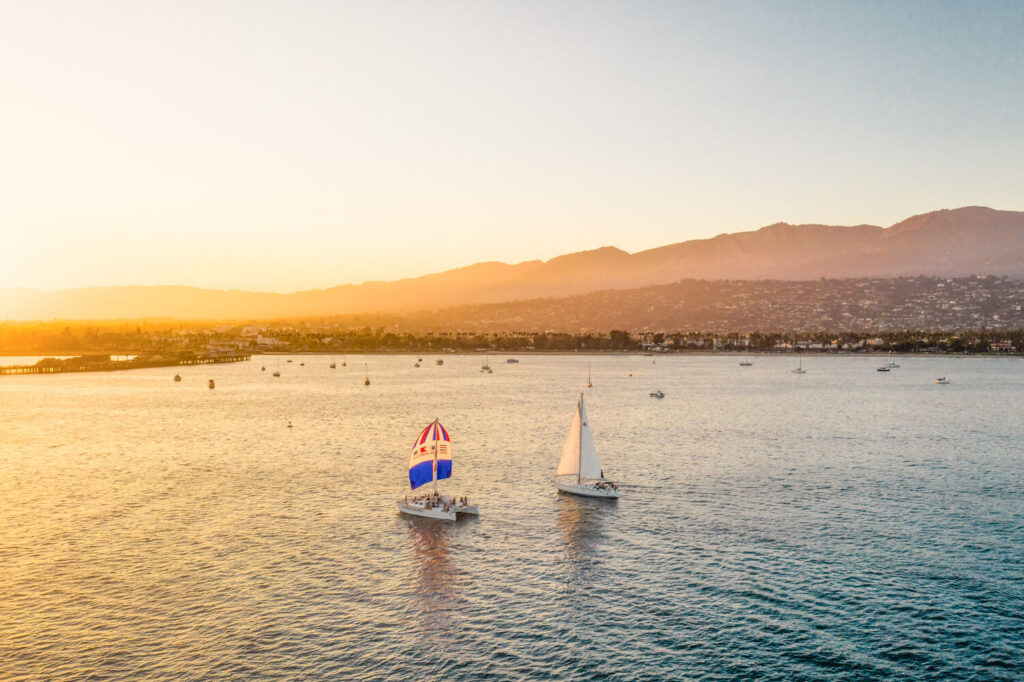
Santa Barbara – Sunset Sail
Check into the Mar Monte Hotel, which is right across from scenic East Beach and Cabrillo Pavilion, the city’s nearly century-old oceanfront events venue, for a relaxing seaside retreat. Mar Monte was recently renovated and is now a Hyatt property, yet it has the feel of a cozy beachside condo instead of a corporate hotel. It’s also in a peaceful location that’s close to the restaurants, bars, and shops on State Street. Book one of the oceanfront rooms with a balcony to let the sea breeze in, and you’re welcome to bring your dog along on your getaway (with a deposit). Over by West Beach, the Hotel Californian is a staple for its Spanish Revival architecture, rooftop pool, and Moroccan-inspired spa, Majorelle. If you’d rather be downtown, Kimpton Canary is a couple blocks from the Santa Barbara Museum of Art and steps away from restaurants and bars.
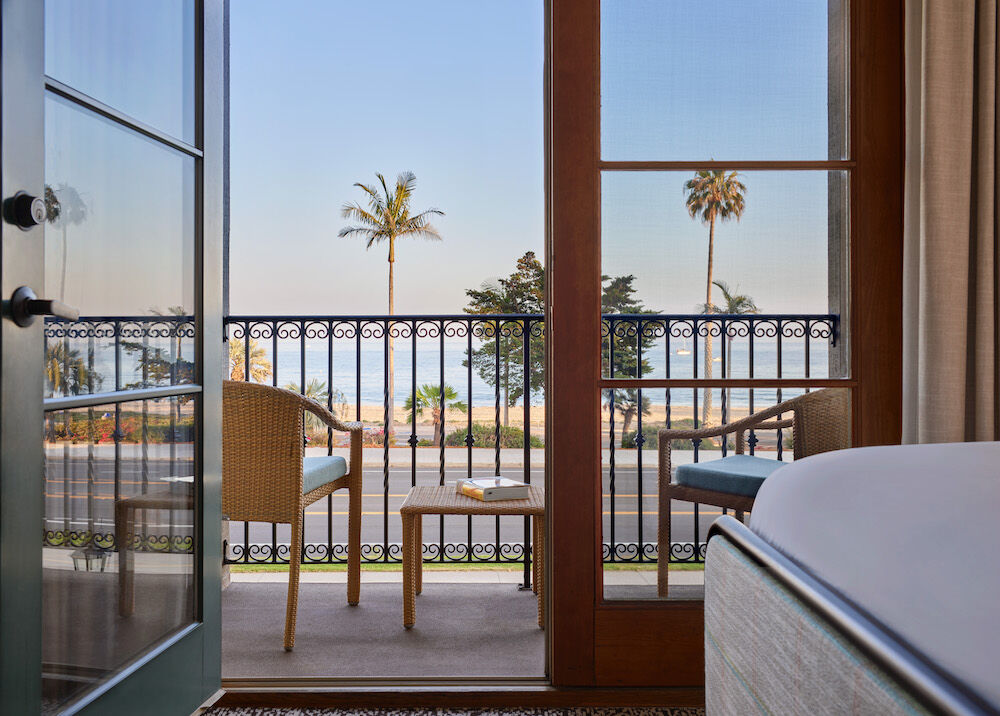
Mar Monte Hotel
The restaurant scene here is big on farm-to-table since Santa Barbara County has more than 1,400 farms, and you’ll find that even casual eateries serve top-notch wines by the glass—no surprise since the region is also famous for its vineyards and was immortalized in the film Sideways. State Street, the city’s main artery, is the place to get your bearings and start exploring. As an added bonus, a ten-block section of it is closed to vehicular traffic. The downtown district is packed with open-air dining, craft breweries, and lounges, and there’s a farmers’ market every Tuesday afternoon.
Start at D’Angelo Bakery on East Gutierrez Street with an espresso and one of a dozen egg dishes, like the smoked salmon Benedict or huevos rancheros, then stroll north toward the end of the promenade at East Sola Street. For lunch and dinner, popular spots include State & Fig for California cuisine and wine, Santa Barbara Craft Ramen for comforting noodle soups, and Bibi Ji for contemporary Indian cuisine. Bouchon Santa Barbara has been a neighborhood staple for over 20 years, serving French bistro fare in an inviting atmosphere. If you want to splurge, arrange to tour the farmers’ market with chef Greg Murphy, then sit down to a three-course dinner with wine pairings.
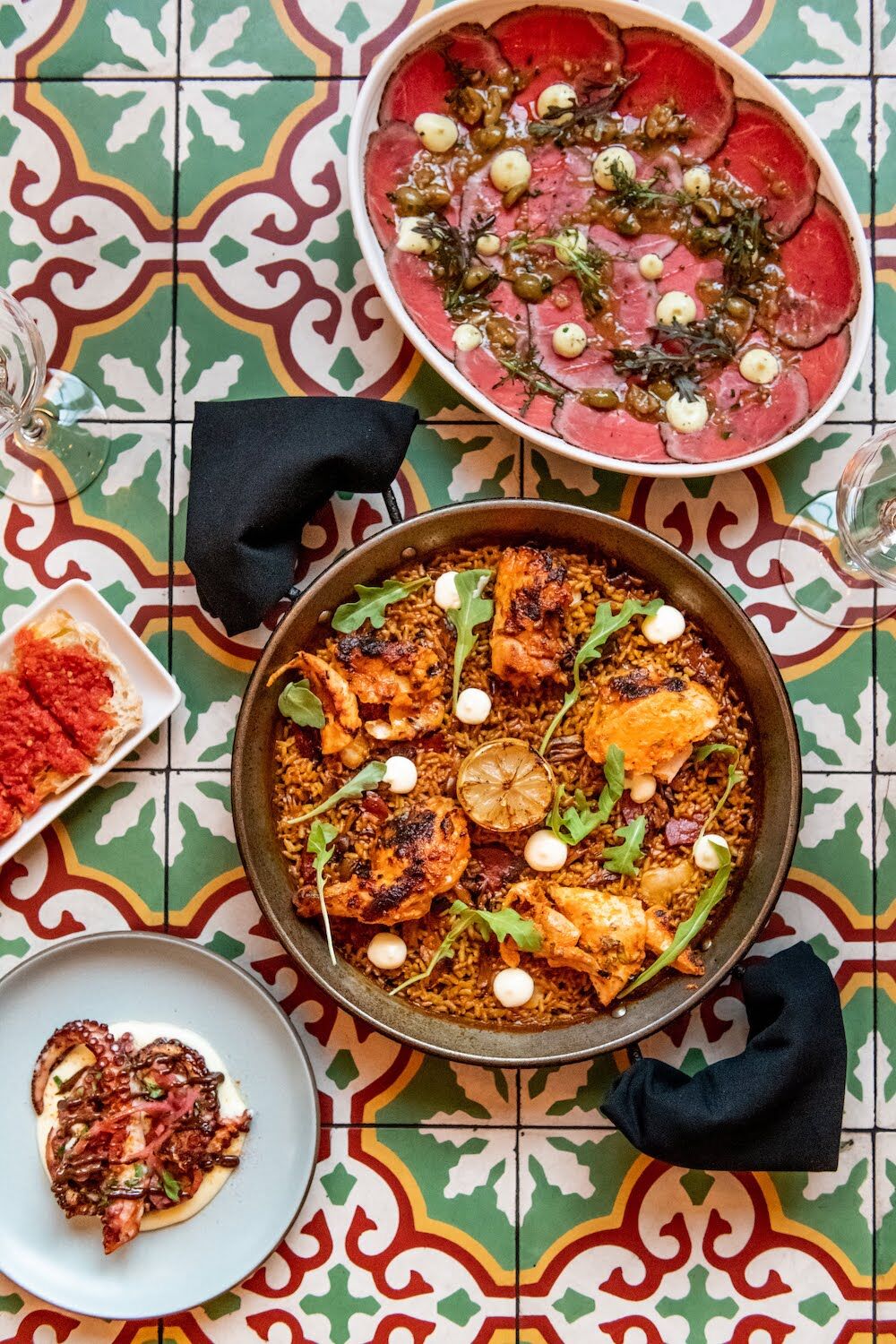
Loquita
Seafood lovers will find plenty of options at Santa Barbara Shellfish Company, a casual shack perched on Stearns Wharf, the oldest working wharf in California and one of the city’s most visited landmarks. You can drive over the wharf’s wooden planks and park near the restaurant, then dig into clam chowder, oyster shooters, and local rock crab and spiny lobster when they’re in season. Loquita is a popular restaurant that was just added to the California Michelin guide this August: Their tapas, three styles of paella, and unique gin and tonics will transport you to Spain. Don’t skip the crispy patatas bravas and beef carpaccio, and book ahead in advance since tables fill up quickly.
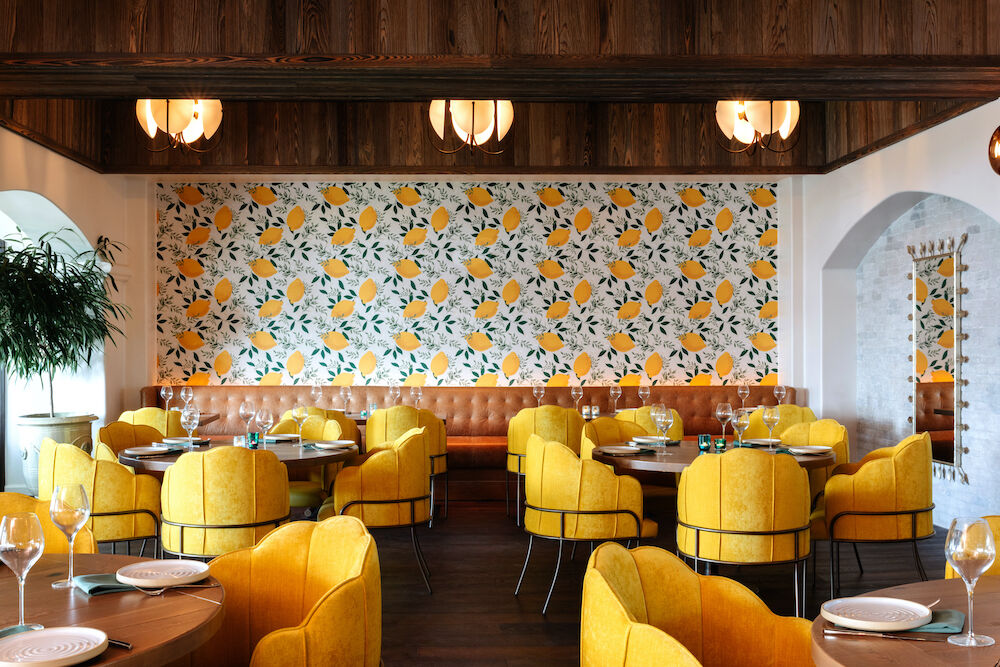
Costa
One of the newer eateries in town is Costa Restaurant at Mar Monte, where chef Nathan Lingle is cooking up flavorful Mediterranean dishes with California influences. Get several plates to share, such as the housemade sourdough flatbread with muhammara (red bell pepper dip), lamb scaloppine with mint salad and charred feta, and one of the seasonal crudos with fish from the local market (and save room for the California olive oil cake for dessert). For something casual, hit up East Beach Tacos for grilled shrimp and báhn mì (pulled pork) tacos, and La Super-Rica, which was noted to be one of Julia Child’s favorite restaurants. Want a meal fit for royalty? One of the few places where Prince Harry and Meghan Markle have been sighted since they moved to the area is Lucky’s Steakhouse in nearby Montecito.
You can get a good sample of the area’s wines without leaving the city by heading to the Funk Zone, a neighborhood made up of former warehouses that have been converted into boutique tasting rooms, galleries, and shops—it’s easy to sip your way through more than a dozen tasting rooms while enjoying art installations and murals. A good first stop is Santa Barbara Wine Collective, which offers flights of different varietals from a handful of local vineyards. Head to the patio at Paradise Springs Winery for a charcuterie plate and a glass of their Pink Ash rosé, which was developed as a fundraiser for victims of the Thomas Fire in 2017. Actor Billy Zane painted the artwork for the label. If you prefer bubbly, Riverbench specializes in flights of sparkling wines. Beer lovers don’t have to worry, as there are several taprooms in the area, like Captain Fatty’s, The Bier Garten, and Lama Dog.
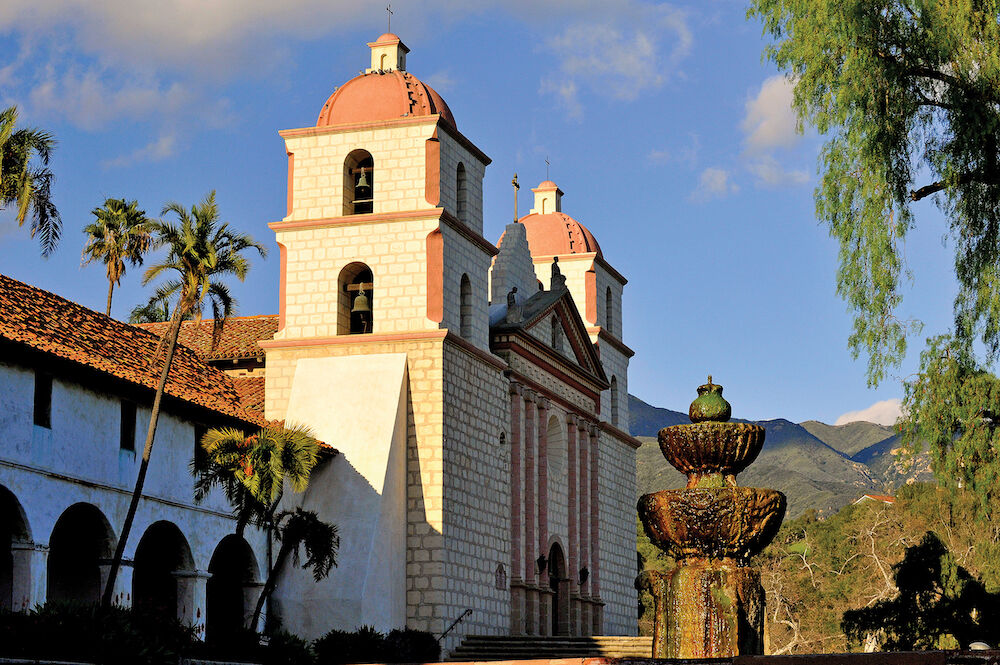
Santa Barbara – Old Mission
Carve out some time to visit Old Mission Santa Barbara, a national historic landmark that’s been nicknamed “the queen of missions” in California. It dates back to 1786 and is the only mission in the state that’s been under the care of Franciscan friars ever since its founding. It hosts services every Sunday and is home to a museum and a picturesque rose garden and park. Admire the artwork in the chapel, then take a pause in the central courtyard’s cemetery to look for the plaque dedicated to Juana Maria. Juana Maria was the last surviving member of the Nicoleño tribe, and in 1853 she was found living alone on San Nicolas Island and brought to the mission—her life story inspired Scott O’Dell’s novel Island of the Blue Dolphins.
A courthouse may not typically make the cut on a vacation itinerary, but the Santa Barbara County Courthouse in downtown’s El Pueblo Viejo district is worth a stop. Its 1920s Spanish-Moorish architecture, murals, and sunken garden make for a photogenic wedding and event venue, and you can ride an elevator to the top of the 85-foot clock tower for a photo op.
If you’re a fan of spa treatments and salt lamps, you may want to check out Salt Cave Santa Barbara. At street level, it’s a small boutique that sells body scrubs, bath salts, and lotions, but below it houses what’s claimed to be the largest underground salt cave in North America. Book a session to rest your legs in a zero-gravity chair right in the salt cave, or sign up for a traditional massage or facial.
PARTNER CONTENT
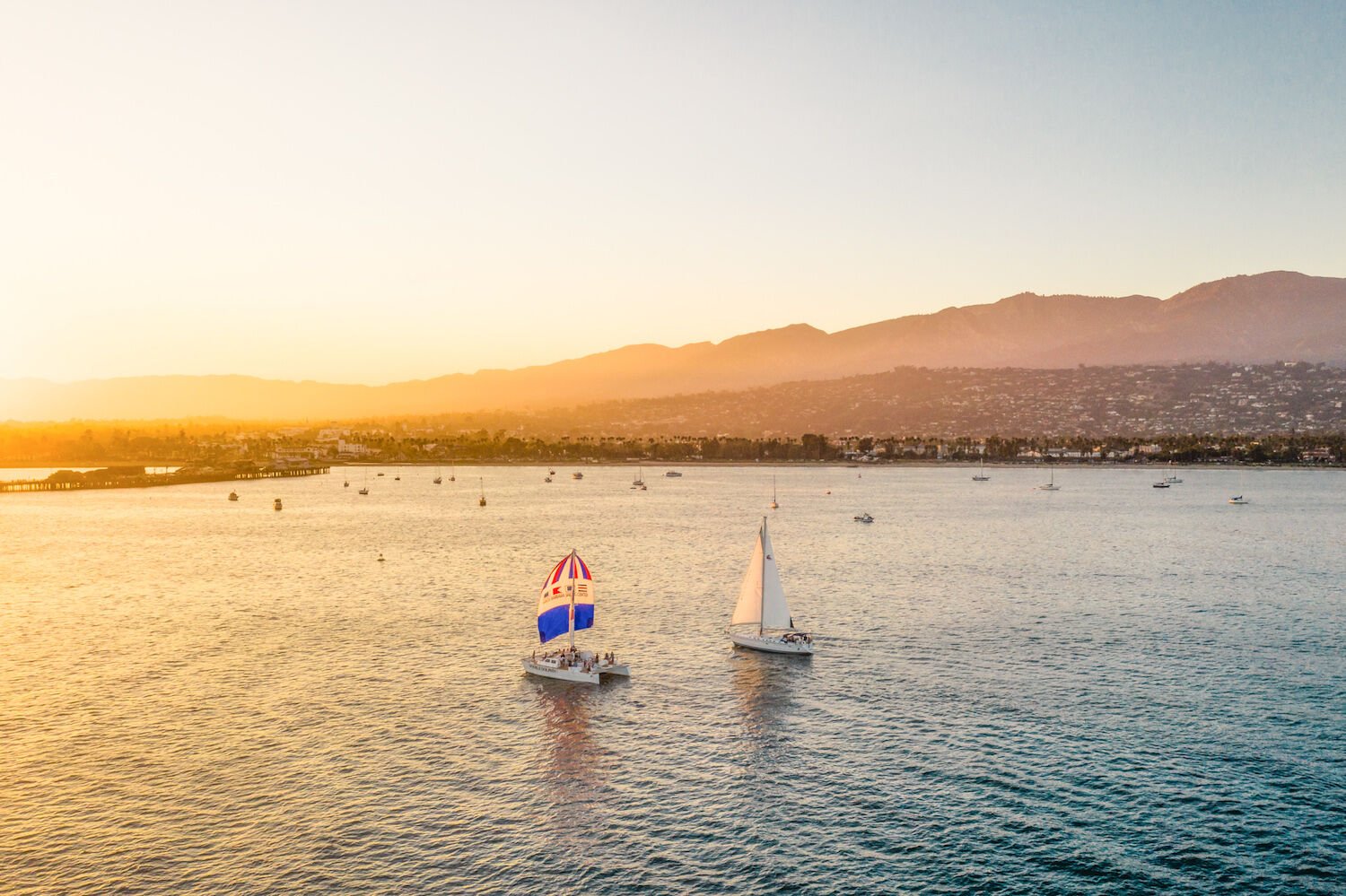
Complete your tour of the American Riviera with a leisurely sunset sail. Santa Barbara Sailing Center offers a daily two-hour cruise that gives you a clear view of the city and the Santa Ynez mountains. They also have two-day (or even longer) excursions to Channel Islands National Park and Marine Sanctuary, or stand-up paddleboards or kayaks for hourly and daily rentals so you can explore the harbor on your own Santa Barbara is relaxing year-round, but now through spring is an even better time to visit to escape the crowds.
Where to stay and activities to enjoy in this quaint seaside town
Disclaimer: The Centers for Disease Control and Prevention says that staying home is the best way to protect yourself and others from the coronavirus. Visit their website for the latest updates and advisories.
We couldn’t take it anymore. Wandering around the house between Zoom meetings, half-dressed from the waist down, ingesting our body weight in snack foods daily. Our regularly heavy travel schedules zapped from 60 to 0 in a nanosecond. The kids were climbing the walls, and so were we.
It was time to venture out, so I started researching places within reasonable driving distance of San Diego. A road trip made the most sense—transferring our family bubble from home to another place with minimal risk. Santa Barbara popped up as a top contender, and after looking into its safety protocols and hospitality management in this new world, we chose it as our home away from home from a few days.
Santa Barbara sits in a unique spot along Highway 101, just a three-hour drive north from San Diego on freeways devoid of regular traffic. This quaint burg enjoys a position far enough from the LA sprawl to be isolated, and is surrounded by mountains on one side and beaches on the other. To the south and north, miles of highway hug the coastline with little room for more than the road itself. It’s a rareified vacation spot in good times, and during not-so-good times those same advantages contribute to a safe shelter.
Santa Barbara County had consistently reported a low number of infections. News reports indicated residents were treating the pandemic seriously by adhering to state guidelines for cleanliness, distancing, and of course, mask wearing.
A guest suite at the Hideaway Santa Barbara
Jon Bailey
The next task was to find lodging where we would feel our health was protected. Two places recommended by Visit Santa Barbara passed the smell test when we reviewed their websites. Not fully satisfied, I contacted both to inquire directly.
The Hideaway Santa Barbara is located near downtown, just blocks from the beach and wharf. Quaint and picturesque, this new hotel contains just nine rooms, each set in a different floor plan. The hotel’s stated cleaning procedures checked out, and we felt comfortable choosing to stay here.
We also looked into the Ritz-Carlton Bacara, perched cliffside on the north end of town in the suburb of Goleta. Their cleaning and safety regulations were voluminous and detailed beyond our expectations. Even still, we decided we would decline housekeeping service at both properties and keep the Do Not Disturb sign on our doorknob 24/7.
Did I bring our own cleaning supplies in the car with us? You bet I did. I carried the bag of sanitizers, deodorizers, bleaches, and germ-killers into our rooms at each hotel. Not once did I feel the need to actually use them, but having them there made me feel less vulnerable.
So off we went, departing San Diego on a sunny morning with the kids firmly ensconced in the backseat with Starbucks in one hand and TikTok in the other. As we rolled north, I never once took my foot off the gas pedal. While passing LAX, I made everyone look up from their screens to note that our passage was free of slowing down or braking at all. Historic!
Upon arrival in Santa Barbara we made the obligatory pilgrimage to La Super Rica for our favorite chorizo and melted cheese on warm handmade corn tortillas. From there we did one of our new favorite pandemic activities: driving through neighborhoods and ogling at beautiful houses, nestled into canyonsides and crevices on what Visit Santa Barbara calls the American Riviera. As we pointed out favorites and appreciated different architectural and landscaping styles, Triton kept a running report from Zillow on the value of each home. Some were surprisingly affordable, considering their million-dollar views of downtown, the harbor, and the deep blue ocean beyond.
Off to the hotel for check-in and my obsessive sanitation inspections, while we plotted our course for the next few days.
Artwork in the Funk Zone
Jon Bailey
We’d heard that the city’s main thoroughfare, State Street, had been converted into a pedestrian promenade, eliminating the interruption of through-traffic. Restaurants spilled out into the streets like a more genteel version of our own Little Italy and Gaslamp neighborhoods. But were there other outdoor activities we could enjoy as a family while avoiding crowds? Turns out there are plenty.
Located downtown between Highway 101 and the beach, several square blocks of a former warehouse district have been revitalized as the “Funk Zone.” We left our teens to their own devices (literally) and walked a couple blocks from The Hideaway to explore what makes this neighborhood so funky. Turns out it’s a great collection of artist’s galleries, winery tasting rooms, boutiques, and fun restaurants. We stopped into Margerum Wine Company for a spectacular tasting experience on their outdoor patio, planning our next few steps with a refreshing wine flight and charcuterie board.
Grab a bike or trolley rental and scoot along the beaches for a breezy open-air tour.
An industrial-chic space with outdoor patios and wine flights featuring local vineyards.
Like a cross between an art gallery and a high-end thrift store, this place fascinated us longer than we anticipated.
Funky fresh clothing and art makes for a fun and colorful experience.
Field + Fort
Jon Bailey
Summerland is a once-sleepy beach village a few miles south of Santa Barbara, now reborn with an upscale vibe. Old standbys like the Nugget Bar & Grill are still pumping out great burgers (pick-up and delivery only right now), and we ventured down the block for a delicious lunch under the sycamore trees at Field + Fort.
A sweet little café with a delicious menu, combined with a sophisticated design boutique and an impressive collection of furniture, art, and gifts.
A garden shop with amazing outdoor furnishings, fountains, and accents.
A unique garden and home shop with very Zen-like displays of merchandise sourced from around the world.
The lotus pond at Ganna Walska Lotusland in Montecito
Jon Bailey
Santa Barbara is blessed with good weather just like San Diego, but it’s a bit cooler in the winter. This allows for plants and flowers that do not grow happily in our arid climate to flourish, and it’s fun to see what is in blossom here throughout the year.
This 39-acre park is a wonderful collection of gardens featuring plants imported from around the world. It was the brainchild of an eccentric Polish opera singer turned philanthropist.
Bring a picnic to this rolling lawn and rose garden area just in front of the iconic mission, with peaceful views and incredible fragrances.
Occupying a whole city block near State Street in the Garden District, this park features a pond with turtles and ducks, a gazebo, and meandering pathways full of plants and flowers.
This cliff-top labyrinth of stones tucked away on the USCB campus generates tranquility among the coastal sage and wildflowers, and has an outstanding ocean view.
East Beach in Downtown Santa Barbara
Jon Bailey
Santa Barbara wouldn’t be Santa Barbara without its devastatingly gorgeous beaches. There are more Instagrammable backdrops here than can be listed in any one story, but we did manage to jot down our favorites:
Home of volleyball tournaments, rows and rows of palm trees, and postcard-perfect views, East Beach is one of the widest and cleanest in the area.
This beach is family friendly and walkable for quite a way south at low tide. It’s right below the grassy views of the Channel Islands and quaint picnic tables at Lookout Park
Hendry’s is the place to play frisbee, make a sandcastle, and watch the dogs dive into the surf while playing fetch.
Directly below the stunning Ritz-Carlton Bacara Resort, Haskell’s is fantastic at low tide, when a walk north yields solitude, ocean breeze, and warm sun on your face.
Jon Bailey writes the travel blog 2dadswithbaggage.com.
Santa Barbara Harbor
Shutterstock
Where to go, what to eat, drink and see
GRAB your bags! We’ve got 13 flyable and road-tripable destinations, packed with secret wine tours, outdoor theater, rooftop yoga, and regatta-viewing madness.
Ojai, CA
Gaszton Gal
Joshua Tree
Palm Springs
Picasa
Las Vegas
Photographer: Alina Solovyova-Vi
Borrego Springs
Los Angeles
Santa Barbara
Adrian Houston
Paso Robles
Lake Tahoe
Joy Strotz
Guadalupe Valley
Todos Santos
San Francisco
Portland, Oregon
Isaac Koval
Our editors searched out all the new food, drinks, hotels, and attractions along the state’s iconic coastal highways—the 1 and 101
Mad Libs. License plate bingo. The “quiet game,” a universal parent savior. Long live Slug Bug, where kids with zero self-control punched each other in the arm every time they saw a VW Bug in the wild—an activity no doubt invented by some Volkswagen marketing intern who now quietly runs the world. A family that cruises together bruises together.
So many threats to pull the car over and leave unruly progeny on the side road for good. GenXers are such baddies because our parents actually followed through. But we tracked those boomers down—or just walked into the wilderness and formed angsty flannel bands. We survived.
There were no downloaded movies back then. No seatback entertainment. Just a mythical road, a few bug-gutty windows, and the fast-moving summer world beyond. Seatbelts ignored, hot air whipping a frenzy of hair and beef-stick child scent.
Very few chaoses match being trapped in a moving car with your entire bloodline. It’s unimaginable, but we kinda liked it.
The road trip was always about endurance, discovery, adventure, creativity, and memory. Somewhere between gas station hot dogs, the Hollywood Walk of Fame, and musty motels with coin-operated vibrating beds—the bored between moments of mutual expedition sealed our love of the long distance car ride.
To respark road lust, we’ve put together a coastal California run up the 101 and Highway 1. The state’s famed road trip siblings, with ocean on one side and possibility in every direction. We analyzed what’s incoming, just-arrived, compelling, or a classic in need of a reminder in almost every county along the way—the kind of places we’d drag our family (or dog or best friend) to.
We start our trip just outside San Diego County lines and work our way through San Francisco. Because, by then, it’s time to turn the car around and do it all again.
The road is still the main character.

A 90-minute drive from downtown San Diego, Laguna Beach is home to serene coves, big-deal art events, miles of hiking trails, and the greatest number of beachfront hotels in California. Among the latter is the newly revamped icon, Surf & Sand Laguna Beach. Along with tweaks to the guestrooms, pool, and onsite Splashes restaurant, the remodel includes a new spa, Aquaterra. Wake up to ocean views, then get outside: Go tide pooling at Shaw’s Cove, or descend to Thousand Steps Beach and spend the day stretched out with a salacious summer read. For dinner, get fancy at the upscale (no swimwear allowed!) Studio Mediterranean at the Montage Laguna Beach hotel. Led by Greek chef Dennis Efthymiou, it serves feta-, phyllo-, and fish-forward cuisine inspired by his heritage.
Head another 15 minutes up the road to Newport, an unlikely destination for adrenaline junkies both relatively tame (family-friendly thrill rides at the Balboa Fun Zone amusement park) and willing to risk life and limb (30-foot waves at the Wedge surf break). It’s also increasingly a killer place to eat, with Luke’s, of international Maine-lobster-roll fame, having recently opened locations in town. James Beard Award winner Tyson Cole just opened his sleek omakase and sushi restaurant Uchi this year. Once you’re stuffed, lay your head at Bay Shores Peninsula Hotel, a midcentury-inspired, 25-room boutique resort overlooking the sea. Watch the waves from beside the hotel’s rooftop fire pits, or paddle out on surfboards provided free for guests.
Huntington Beach has been an icon of California surf culture since the 1910s thanks to Hawaiian Olympic swimmer Duke Kahanamoku. Surfers still chase waves near his old haunts, including the Huntington Beach Pier, where the aptly named Huntington’s on the Pier is scheduled to arrive this fall in the location of the old Ruby’s Diner (RIP, Ruby). It’ll serve seafood, obviously, plus livestreamed videos of groms wiping out just a few feet away. Sports here don’t always require wetsuits: Mini-golf bar Playground is equipped with the obvious, as well as arcade and pinball games. Or bypass physical exertion en masse at the new Holistic Lounge at Hyatt Regency. It’s packed with newfandangled healing tech that uses light, heat, and electromagnetic fields to allegedly repair stressed skin and muscles tired from lifting mojitos.

Amelia Rodriguez is a writer and journalist and winner of the San Diego Press Club's 2023 Rising Star Award and 2024 Best of Show Award, she’s also covered music, food, arts and culture, fashion, and design for Rolling Stone, Palm Springs Life, and other national and regional publications. After work, you can find her hunting down San Diego’s best pastries and maintaining her five-year Duolingo streak.
A look back at the risks, grit, and instincts behind the local restaurant powerhouse
In this city, chef Brian Malarkey and restaurateur Chris Puffer are kind of like peanut butter & jelly, tacos and Tuesday, Padres and Petco—they just go together. This month, the duo celebrates 10 years of partnering on some of San Diego’s top restaurants including their first venture, Herb & Wood.
To celebrate this milestone, we stepped back and revisited their journey becoming some of this city’s most successful restaurateurs.
But first, let’s go back to the beginning. The duo met at Oceanaire in 2007 where they both worked. Malarkey was still riding the high from his stint on Top Chef Season 3 where he won runner-up. He was a great chef, Puffer recalls, if not a tad arrogant. Whatever he was doing, though, it worked. Sales doubled under his watch.
In 2009, Malarkey was approached by some patrons to start what would become Searsucker. He knew he wanted Puffer to be his partner. They had great chemistry and loved hospitality and food. “We both came to this with a bit of a chip on our shoulder,” says Malarkey. “We wanted to prove it to other people that we know what we’re doing.”

Searsucker, Gabardine, and Herringbone (under the Fabric of Social Dining restaurant group) were born through the new partnership. But in 2012, they sold their concepts to Hakkasan and soon partnered on a new lease.
That building would eventually become Herb & Wood. “We were going to do it differently this time around,” says Malarkey as he reflects on Wood’s early days. “And we [wanted to] build it to last.”
The vision: Great food. Great music. Great service. It’d be a place where diners would let go, put their phones down, and be fully present to enjoy a meal together. When they walked into 2210 Kettner Blvd, they knew they had found their spot.
The only problem was that, at the time, that area of Little Italy was still severely underdeveloped. In a 8,500-square-foot space, they were going to have 230 seats to fill. “It may as well have been on Mars,” says Troy Johnson, San Diego Magazine publisher, content chief, and the city’s longtime food critic.

And, of course, there were the naysayers. The prevailing feeling in the dining world was, “Let’s see what these f**king idiots do,” recalls Malarkey. The duo let all the noise be noise. In fact, the noise fueled them. “We weren’t going to cater to the haters,” Puffer says.
Their next hurdle would be to tackle the restaurant’s design. “There was nothing. It was literally a box,” says Puffer of the former space. Design teams were too expensive or didn’t quite get their vision—no, they didn’t want exposed beams or wooden tables made from reclaimed barns. “Then, Puffer was like, ‘f**k it, dude, I’m going to design this restaurant.’”
Having never really designed something like this before, he decided not to work in the programs that most professionals use to create their layouts. 3D mockup? Didn’t need it. CAD? That’s what a paper and pencil are for.

“It was all in my head,” he recalls. “I had this moment where I was like, ‘If I died right now, no one would know where any of this shit goes.’”
“Yeah, it made no sense,” Malarkey says.
And it still doesn’t if you hear him explain it. A mishmash of vignettes from the inner workings of his memory bank, evoking everything from Mississippi riverboats to Eiffel tower ironwork, Kensington home façades, an old theater he frequented, and a canoe, because why not? Yet somehow, it all worked.
“It’s a sense of nostalgia,” says Puffer. “People might say, ‘Oh, my gosh, this feels good’ and they don’t realize it reminds them of the time they were in Paris.’”
“We don’t play trends,” Malarkey says. “We play timeless.”

Over the course of many years and plenty of trial and error, the partnership has continued to thrive. And, the Puffer Malarkey Collective has found its sweet spot within their restaurants: The service had to be kind and unpretentious and the food had to come out quick, delicious, and consistent. “Consistency is key!” says Puffer.
They also learned to balance out one another. “He’s a go-go-go-go [person],” says Puffer, “I’m a let’s-take-a-deep-breath-and-sleep-on-it [type of person].”
So, when they opened the doors to Herb & Wood in April of 2016, with those lessons in place, everything was just right. “We knew it had to fire on all cylinders,” says Puffer. “And it did.”

There was no pretense and the dress code was exceedingly simple. “Money in your pocket,” says Malarkey. “That’s all you need.”
The phones rang, the seats filled, and the haters had to give it to them, those gnocchi hit. People began embracing every aspect of the place, even the edgier ones.
“We thought people were going to complain about all the paintings with boobs,” says Puffer of the many John Lanes on the wall. “But the amount of people who take pictures in front of the boobs is amazing.”
They even had a middle finger statue that Puffer had picked up from a yard sale. If a table was rude or antagonistic toward the staff, he’d walk over to them with the finger. “Congratulations,” he’d say, handing it over. “You’ve won asshole of the night.”

The point is, they were ready to laugh (and not take shit from anyone). When someone wrote a review of Herb & Wood and called it Weed & Boners, they both had a laugh. It’s one of the keys to longevity.
Along with the fun and deliciousness, they’ve also served as a culinary talent incubator for San Diego. “It’s like a centrifuge,” says Johnson about Herb & Wood. “They train up all these young chefs and start spinning all this talent into different parts of the city.”
There’s Sebastian Becerra with Pepino, Samantha Bird of Relic Bakery, Aidan Owens at Herb & Sea, and Tara Monsod of Animae and Le Coq (San Diego’s first James Beard award finalist) to name a few. “They’ve expanded the footprint of the food revolution in San Diego,” says Johnson.
Their plans for the next 10 years?
“We’re just going to keep the magic going,” says Malarkey.
Explore the latest attractions blooming in these warm-weather destinations near-ish San Diego
From artsy, boutique hotels in New Mexico to a revolutionary restaurant in Baja, explore what’s new in these desert cities around San Diego.
Serenity-seeking guests (and, presumably, the free-spirited ghosts of naked people) roam this 13-room wellness escape that was once a clothing-optional resort. Opened a year ago, it offers exclusive, 24-hour access to a Himalayan salt sauna, cold plunge pool, and rain room. For food and drink, it’s tonics and juice cleanses, plus poolside bites from Michael Beckman, exec chef of the nearby Workshop Kitchen + Bar.
Opened last year on the historic, two-acre Movie Colony neighborhood property originally built by actor Errol Flynn (it was called the Normandy then), this is a micro-hotel for people who love Taschen books. Casa Palma reimagined the place as a minimalist, veneers-white 33-room escape with pickleball; tennis; and a mountain view bistro serving breakfast, salads, and sandwiches.
“Surfing in the desert” sounds like an absurd ayahuasca notion, but the Coachella Valley already has one wave pool (Palm Springs Surf Club), and, soon, a 5.5-acre surf lagoon will anchor DSRT Surf, an incoming resort at the Desert Willow Golf Courses. Planned for completion in mid-2026, it’ll include a 139-room hotel, 57 luxury villas, and restaurants.

Last spring, the Casetta Group (the same folks who own SD’s Pearl Hotel) resuscitated an old motor lodge in Taos, a longtime beacon for creatives, and named it after Willa Cather (who finished her novel Death Comes to the Archbishop in town). The 51-room Hotel Willa has adobe architecture, an artist residency, a pool with a giant weeping willow nearby, and a seasonal restaurant from husband-and-wife duo chef Johnny Ortiz Concha and artist Maida Branch.
Originally built in 1965 as the Downtowner, a classic, six-story inn on the motel-culture strip of Route 66 in downtown Albuquerque cycled through several identities before last year, when Palisociety reimagined it with the Secret Gallery (featuring modern work from Southwest artists), a cocktail bar, a restaurant, and 137 dog-friendly rooms. Like any good desert road trip hotel, Arrive Albuquerque hotel is a cheeky, midcentury affair centered around an umbrella-shaded pool scene and those strappy ’80s patio loungers.

After forming Vital Spaces, an org that leased abandoned warehouses and rented them at a low cost to artists, furniture designer Jonathan Boyd launched Leo’s, a no-signage, no-reservations restaurant last August with James Beard Award–winning chef Zakary Pelaccio. It focuses on Thai and Malaysian dishes—catfish sum tum, pork belly with garlic prik phao, fried chicken with tofu-mustard sauce and jiao chili sauce—plus natural wines and inventive cocktails. It promptly landed on Esquire’s Best New Restaurants of 2025.
Trailborn is the base camp of hotel groups. It’s focused on America’s grand outdoorsy arenas, with spots in the Rockies; the Blue Ridge Mountains; and now, Williams, a mile from the Grand Canyon Railroad Depot. This kitchy, 96-room roadside hotel offers a moody, wood-paneled steakhouse; adventure excursions; free breakfast inside a bustling “camp hall;” and front-row access to the fanfare of Route 66’s centennial celebration this year.
Early this year, Paradise Valley (the mountain-wrapped town neighboring Scottsdale) will welcome the 40-acre Kimpton Miralina, with six pools; more than 400 rooms and villas; and three restaurants, including Hecho Libre, a new Baja-inspired concept from fellow Beard semifinalist Wes Avila (known for Angry Egret Dinette and MXO in Los Angeles).
As cities grow and stargazing becomes an endangered pastime, an org called International Dark Sky Places works to protect the best areas in the world to behold night skies. One of them is Fountain Hills on the outskirts of Phoenix. This summer, it’ll get even better with a $28 million discovery center featuring a massive telescope, a planetarium, science exhibits, and a stargazing terrace.

Cote is the only Michelin-starred Korean steakhouse in the US, an idea from Seoul-born and James Beard nominated chef and restaurateur Simon Kim. Part of The Venetian’s $1.5 billion renovation, it’s a show—18,000 square feet, with stadium seating, VIP skyboxes, a crow’s nest DJ booth, a glowing central bar, 1,200 wine bottles, and the inimitable buzz of energetic impulse spending.
2025 was a big year for Formula 1 racing—the sport celebrated 75 years with a Brad Pitt film (for which Rancho Bernardo–based Sony Electronics created a one-of-a-kind camera that took viewers inside the cockpit), and Caesars Palace welcomed a 21,000-square-foot F1 Arcade where fans can flex their inner Lando Norris with 87 racing simulators.
When built in the 1970s as the MGM Grand, the Grand Sierra Resort was one of the biggest hotels in the world with over 1,000 rooms. Almost 50 years later, it’s nearly doubled its occupancy and is undergoing a billion dollar upgrade. The star will be the $435 million, 10,000-seat GSR Arena, which broke ground in September. Once completed (hopefully in fall 2027), it’ll be home to the University of Nevada men’s basketball team.

Utah’s High West Distillery was a groundbreaker, the first legal distillery in Utah when it opened in 2006. Now High West’s master distiller Brendan Coyle has left to open his dream project with his wife, Carly. They purchased 20 acres in Kamas Valley at the foothills of the Uinta mountain range, where they’re growing high elevation apples and flipping them into bone-dry boozy cider with Dendric Estate. You can tour the estate or wait for the onsite tasting room, planned for 2027.
In 2020, Robert Redford sold his famed, conservationist-minded mountain ski resort to Broadreach Capital Partners and Cedar Capital Partners, who promised to keep his “build some, preserve more” vision going. Since, it’s earned a Michelin Key. This month, The Inn at Sundance Mountain Resort—a 63-room, ski-in/ski-out inn—opens with views of the 12,000-foot Mount Timpanagos. Perched right out front, the Outlaw Express chair lift takes you to the Mandan summit in seven minutes (getting there used to take 20). There’s a wrap-around porch, relaxation pools, a sauna, outdoor showers, and a cold plunge at The Springs.
Four years after hosting the Winter Olympics, famed ski-only resort Deer Valley is undergoing a massive expansion of its East Village, including eight new hotels (the Grand Hyatt is already there, and the Four Seasons and others are incoming). Scheduled to open this summer, Canopy will be Hilton’s 180-room, ski-in/ ski-out property with après-ski and rooftop lounges. Deer Valley has also added 2,000 additional acres of skiable slopes, 100 new runs, and 10 new chairlifts.

In the 2010s, Ensenada-born chef Diego Hernández was a headliner in the food-culture revolution in Valle de Guadalupe with Corazón de Tierra—named number 30 in the 2018 “World’s 50 Best Restaurants” list. It closed in 2020 (damn pandemic!). Last January, he returned with an eponymous 40-seat restaurant, Diego, inside Valle’s Museo de La Vid y El Vino, relying on onsite gardens and in-house butchery to prepare seasonal, multi-course tasting menus and à la carte dishes nodding to his Corazón roots.
Over the years, the trend in Cabo resorts has been to get away from the action with secluded beachfront hideouts. Well, not all who travel to Cabo want to be tucked away. Last October, Mexico Grand Hotels (known for elaborate luxury resorts like Marina Fiesta and El Encanto) opened a smaller but still opulent thing: Kadún, a 110-room hotel with a rooftop pool and sundeck. It’s within walking distance to the Cabo Marina (the Vegas of Baja’s southern tip) and Medano Beach (one of the only swimmable beaches in Cabo).

Carnival Cruise Line has a vested interest in building up the ports it parks in. It’s established spots in Grand Turk, Roatan, and Cozumel, and its next elaborate disembarkment project is a $26 million beachside playground in Ensenada, planned for completion in 2027. Expect a sort of Pinocchio’s Island isthmus packed with zip lines, dune buggy rides, river rides, an adult pool, thermal springs, a spa, and wine and cheese pairings from Valle de Guadalupe (the wine region is 15 minutes inland).
Troy Johnson is the magazine’s award-winning food writer and humorist, and a long-standing expert on Food Network. His work has been featured on NatGeo, Travel Channel, NPR, and in Food Matters, a textbook of the best American food writing.
Amelia Rodriguez is a writer and journalist and winner of the San Diego Press Club's 2023 Rising Star Award and 2024 Best of Show Award, she’s also covered music, food, arts and culture, fashion, and design for Rolling Stone, Palm Springs Life, and other national and regional publications. After work, you can find her hunting down San Diego’s best pastries and maintaining her five-year Duolingo streak.
A guide to visiting Revel Surf Park—where to stay, eat, and explore in the city of Mesa
What the hell am I doing in Arizona looking for water?
It’s the kind of question that creeps in the moment you step off the plane at Sky Harbor and the dry heat hits like an open oven door. Arizona is famous precisely because it’s unforgiving, a place where the presence of life amid the extreme lack of water is its own marvel. The compelling thing about attractions on this hot moon is the ingenuity behind the fact that they exist at all.
Long before the golf courses and cul-de-sacs, the Indigenous Hohokam people engineered one of the most sophisticated canal systems in the ancient world, diverting water from the Salt River to irrigate crops and sustain entire communities. Built by hand more than 1,000 years ago, portions of those canals still guide water through the Mesa valley today.
Phoenix’s main pockets tell different stories: Scottsdale has its polished, resort-town sheen; Tempe is full of young brains on vices; and Mesa is expansive and quietly strange. The kind of Arizona you think of when someone says Arizona. It’s the state’s third-largest city by population, but it feels like a series of outposts stitched together: historic downtown blocks, desert trailheads, leftovers of the Old West, and now—the improbable thing that brought me here—a surf park.
As I pull into Revel Surf Park, a watery lagoon glows blue against a backdrop of red dirt and distant peaks. The waves come and go like someone endlessly draining and refilling a mirage.
Revel—the centerpiece of Mesa’s Cannon Beach development—opened in late 2024, turning a patch of desert into Arizona’s first full-scale surf park. Roughly 2.2 million gallons of water circulate through the lagoon in an area that averages just over eight inches of rain a year.
It looks excessive, wildly irresponsible. It isn’t.
“We built this very strategically,” general manager Ryan Armstrong explains. “The well is located right here on the property. It’s processed and piped right into the lagoon.”
The pool runs on a closed-loop filtration system, recycling every drop and losing water only to evaporation. Developers say the park uses less water than a single golf hole—and a mere two percent of what the alfalfa field that once occupied the site consumed. Because Revel draws directly from the ground rather than city taps, Armstrong notes, “our water bill is essentially zero.”
Like many of the staff members at Revel, Armstrong is a surfer transplanted from the coast. The wave technology he oversees didn’t come out of a research lab, but a backyard. Matt Gunn, the creator of Swell Manufacturing, built a functional model of the wave in his own yard before partnering with developer Cole Cannon and pro surfer Shane Beschen to bring it to scale. The result is a private ocean—a lagoon where surfers can choose between the sloping lines of Trestles, the hollow barrels of Oahu’s V-Land, or Malibu’s mellow shoulders.
As a surfer spoiled by San Diego’s coastline, I’m equal parts curious and skeptical. Wave pools can feel sterile, stripped of the wild consequence that makes the ocean seem alive. But the sea can’t come close to the constant supply of waves a surf park offers. “We’re running eight hours a day, eight sessions a day, 10 surfers in each session, with waves every minute,” Armstrong tells me. “We have stadium lights, so sometimes we’re out here surfing until midnight.”
I opt for the Trestles setting, expecting smooth sailing. I’m wrong. The drop is quick, the margin for error thin. I get pitched. I recover. I link together a few snaps, then lose it again. Even manufactured waves have a way of humbling you. A few solid rides save the session.
As I dry off, Armstrong walks me through the broader vision. The 44-acre Cannon Beach district surrounding Revel will include roughly 500,000 square feet of retail.
“There are about seven or eight restaurants going in and a super high-end med spa,” he says, pointing toward the construction. Beyond food and surfing, the site is designed as a multi-sport hub. A massive KTR (Kids That Rip) indoor action sports park is in the works, featuring trampolines, parkour obstacles, and a world-class skate park.
This corner of the desert won’t stay quiet for long.
In hindsight, the advantages to Revel Surf Park are obvious: no suffocating crowds, no jockeying for position. Waves arrive every minute, precisely on schedule (if you miss one, that’s on you). There are no flat days at Revel. You don’t have to monitor weather reports and tide charts to know when it might be a good day for a surf. The swell is never not quite right for the break. It’s surfing’s version of shooting fish in a barrel—a strange, athletic fever dream and a convincing way to scratch the surfing itch when the nearest ocean is more than 300 miles away.
Cole Novak is an award-winning writer with a passion for highlighting local figures, small businesses, and nonprofits. Born and raised in San Diego, Cole is passionate about photography, surfing, art, the local food scene, and the great outdoors.
sometimes, even us sun-soaked San Diegans need a getaway of our own. Fortunately, unforgettable experiences are just a short trip away.
It’s hard to think of two words that go together better than summer and vacation. Every summer, visitors flock to San Diego to explore our breathtaking beaches and awesome attractions—and who could blame them?
But sometimes, even us sun-soaked San Diegans need a getaway of our own. Fortunately, unforgettable experiences abound, around the world and in our own backyard.
This guide will help you pick the perfect summer escape. Want even more ideas? Check out the Central Coast’s tourism guide here.
Ventura Harbor.png
Relax and unwind at Ventura’s seaside Ventura Harbor Village for waterfront treats, fresh seafood, patio dining, coastal shops, artisans, pampering, dive trips, live music, and fun rentals on the water! Walk from Ventura Harbor hotels to scenic beaches, Ventura Harbor Village, and Channel Islands National Park Visitor Center. SEA you SEAside! venturaharborvillage.com
Solvang
Solvang’s walkable village is brimming with wine tasting rooms and bars, museums, galleries, independently owned shops, and restaurants helmed by Michelin-level chefs. Architecture reminiscent of Northern Europe frames Danish-pastry-filled itineraries. Spot the Little Mermaid, chase windmills, brush up on Hans Christian Andersen’s fairy tales— then live one of your own. What’s your Solvang story? Solvangusa.com
Gilroy.png
The super-splashy Water Oasis in Gilroy Gardens is the coolest place to play in Gilroy—but there’s lots more to see and do in the Garlic Capital of the World. Enjoy wine tasting, outlet shopping, golfing, hiking, and more. Visitgilroy.com
Ventura.png
Ventura is your portal to life-changing adventure. The closest of the five islands of Channel Islands National Park are just a 70-minute boat ride from Ventura Harbor, and they offer the wild glory you’d expect from one of America’s least visited national parks. “The Galapagos of North America”? Better. visitventura.com
Paso Robles
Escape to the majestic vineyards, oak-dotted hills, and small-town charm of Paso Robles. It’s where world-class food and wine meet small-town cowboy charm, and it boasts endless lodging options, from historic inns and luxury resorts to rustic vineyard escapes. Recently named a “must-visit region” by the New York Times. travelpaso.com
Pismo Beach.png
It’s all here waiting for you—a gentle climate, where sand, sun, sea, and sky converge to create the ideal getaway. California’s golden past is alive and well in Pismo Beach. Visit experiencepismobeach.com to book your stay. experiencepismobeach.com
Monterey.png
Escape to an inspiring place with striking coastline, secluded redwood forests, and a culinary scene as diverse as the landscape. Now is the moment to embrace the unexpected adventures and natural beauty of Monterey County. Why wait? Plan your trip and join us here. Seemonterey.com
Santa Barbar.png
Discover a gentle crescent of California coast where the sea and mountains meet, the sun feels more golden, and the valleys overflow with a bounty of color. Santa Barbara offers exhilarating outdoor adventure, fascinating arts and culture, an incredible variety of local food and wine, and more. santabarbaraca.com
Buellton.png
#SkipTheBigCities and head to Buellton, nestled in the Sta. Rita Hills wine region, where you’ll also enjoy feeding an ostrich, horseback riding, taking a stroll through the botanic garden, or enjoying the collection at Mendenhall’s Museum of Gasoline Pumps and Petroliana. You’ll find accommodations for all budgets, including “glamping.” discoverbuellton.com