Featured articles
Food & Drink
Food & Drink
Food & Drink
Featured articles

Everything SD
Everything SD

Things to Do
Featured articles
Things to Do
Things to Do
Guides
Featured articles
podcast-ep
podcast-ep

podcast-ep
Featured articles
Everything SD
Everything SD
Food & Drink
Featured articles
Everything SD
Everything SD
Food & Drink
Ready to know more about San Diego?
SubscribeReady to know more about San Diego?
Throughout the state, women over 50 are proving that stoke has no age limit
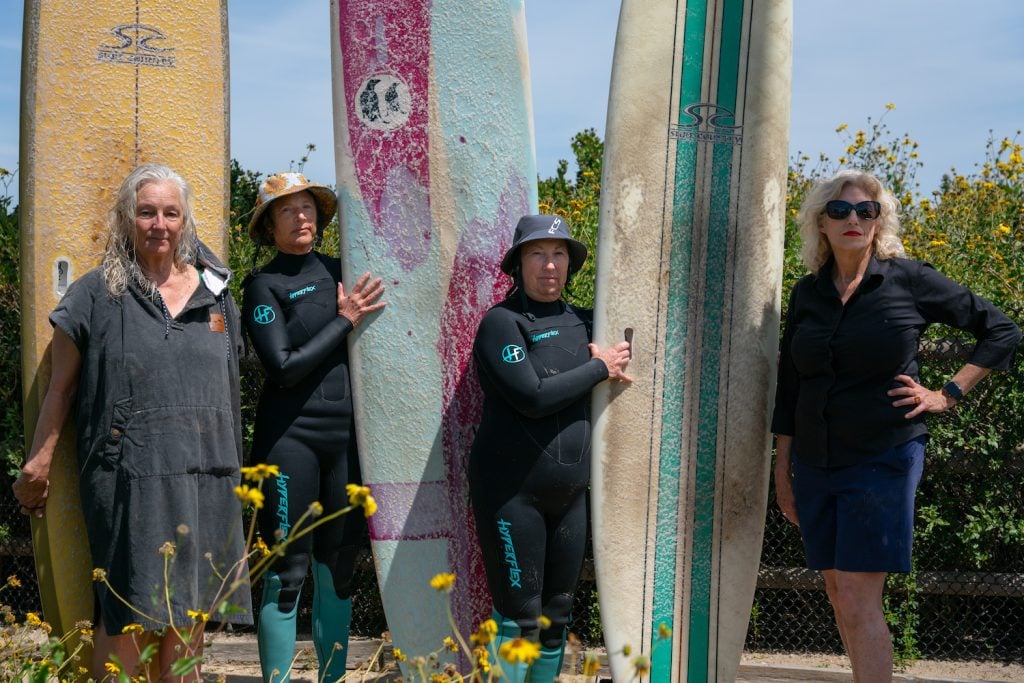
On a chilly Saturday morning, Pam Orr drives to Campus Point at the University of California, Santa Barbara, surfboard in her backseat. It’s been a stormy few days. She and her five friends have been texting all morning about tide reports, wave height, and swell direction, unsure if surfing is a good idea.
It’s the first time in a few months the women’s schedules have aligned. So they go.
By the time Orr rolls up in the palm-tree lined parking lot, across from dorms where she went to college over 40 years ago, the rest of the women are already there, including Vanessa Kirker, who grew up in North San Diego County. She went to Moonlight Beach every summer but never touched a surfboard until she was her 60s.
Marianne McPherson, 68, is there, too, with her red matte lipstick and a torn rotator cuff. Her doctor told her not to surf, and if she’s honest with herself, she’s dreading this. Nevertheless, she stands by her car (emblazoned with a ‘Bichhin’ license plate) on an artificial grass changing mat Orr gifted her.
Orr, meanwhile, is “vibrating stress.” A 63-year-old third grade teacher—her classroom door has the kid’s names written on bright surfboard cut-outs—her week consisted of incessant rain that kept her students stuck inside. She still has a pile of essays to grade. She shouldn’t be here. But the chit-chat is a distraction, and she welcomes it.
“I have your tennis racket.”
“Do I need my hat?”
“The booties stick, so they don’t necessarily land where I want them to land.”
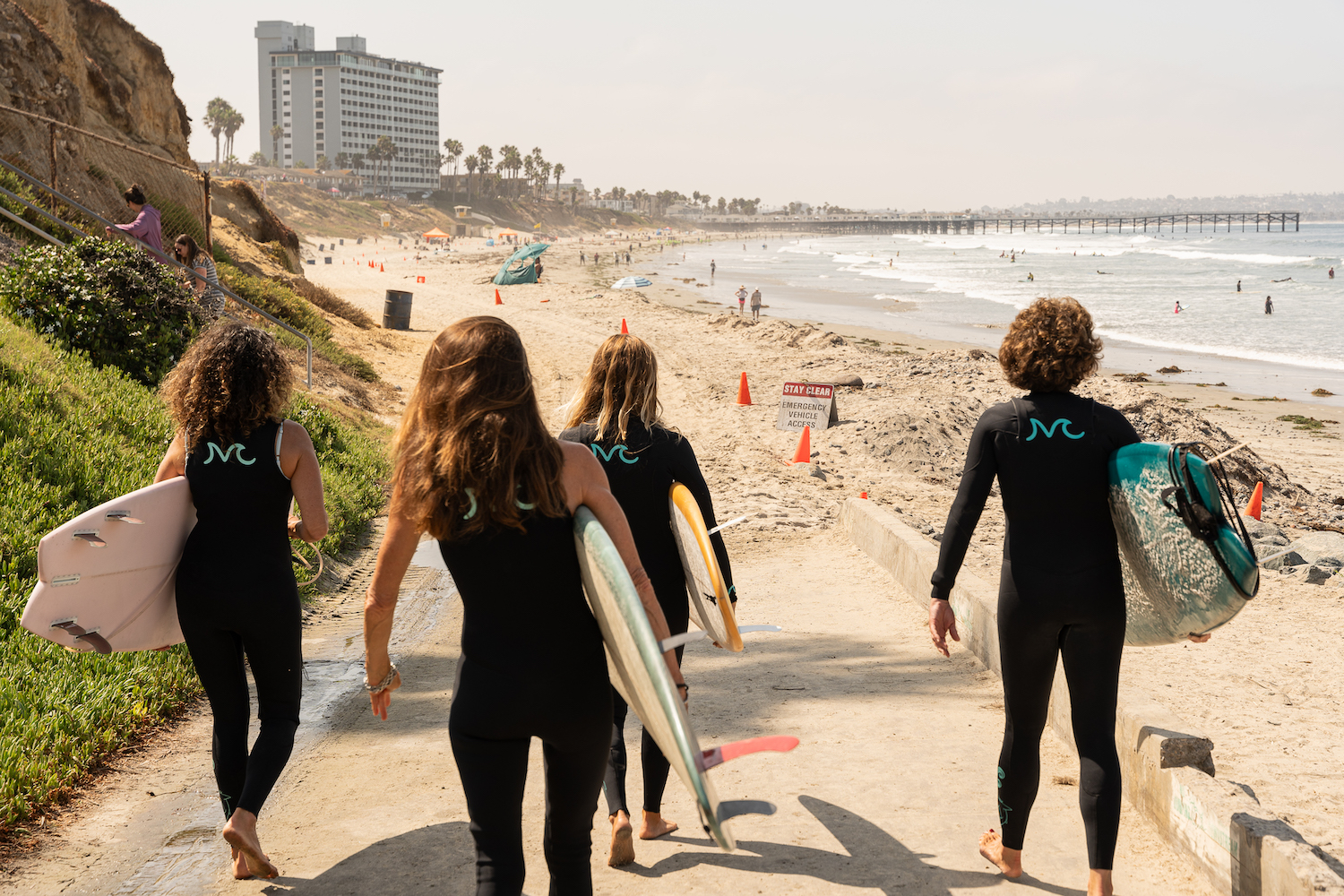
Gauzy fog lingers over the ocean beyond the fence, beckoning. The women unzip long, shiny bags and lay their boards down on the wet cement. They pull sweatshirts over their heads and begin the transformation. Ann Wilbanks, who has dirty blonde hair “proudly going silver,” asks if the wetsuit with neon blue calves Orr takes out is new.
She nodes and jokes. “It’s baggy on me. I was like, ‘Have I shrunk?’”
The women slip salt-soaked wetsuits onto bodies that have skied mountains, cycled hundreds of miles, raced sailboats, swum in triathlons, birthed babies, and cradled grandbabies, pulling and tugging until the spongy neoprene sticks like a second skin.
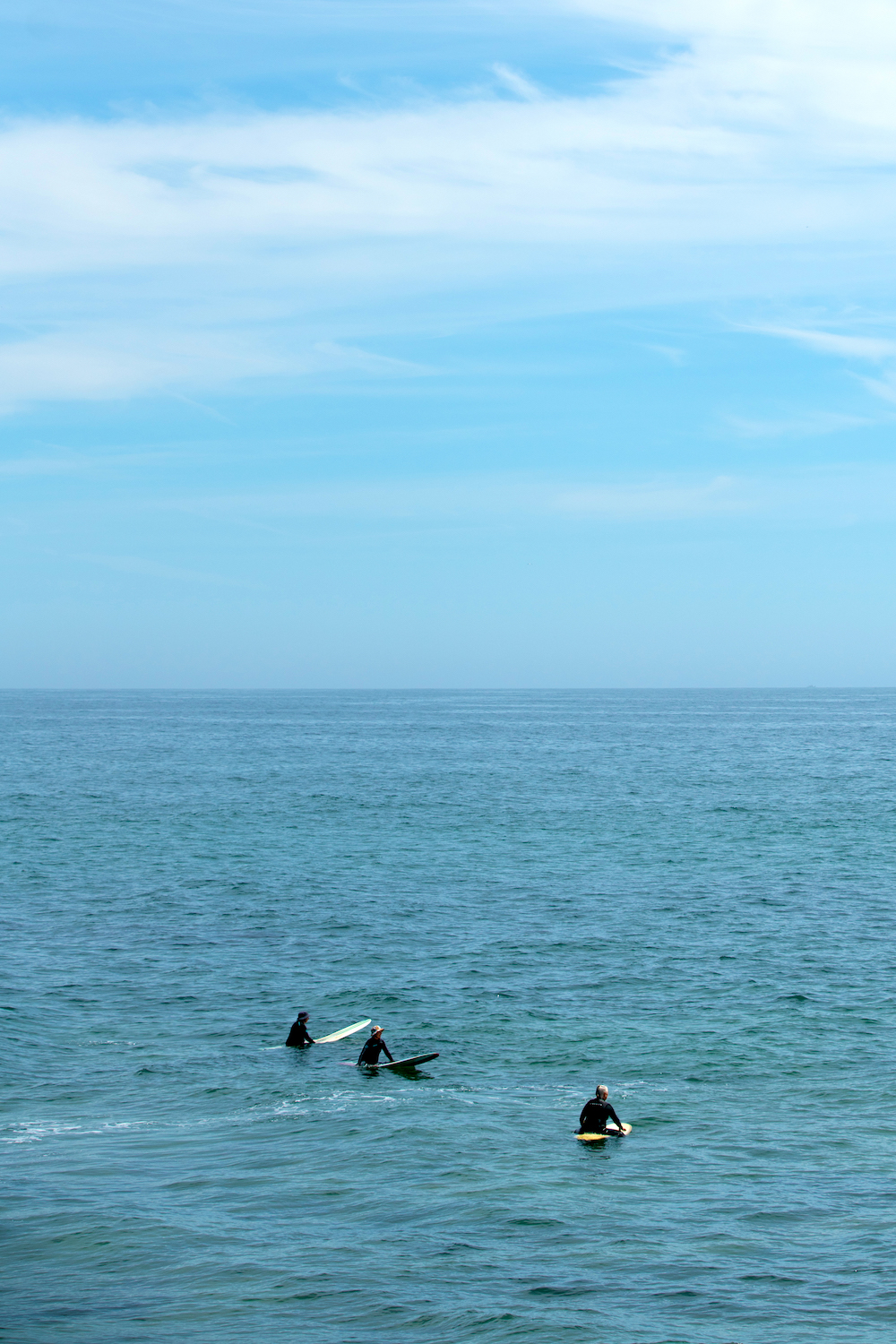
Go to any coastline, and you’ll find that women have continued to reclaim their place in the surfing lineup. Look closer, and you’ll see an abundance of laugh lines on more and more faces of women lured by the beauty and thrill of the ocean.
It’s hard to say how many older women surfers there are in California. Nearly a third of the 60 members of the San Diego chapter of The Wahine Kai Women’s Surf Club are 50-plus—a number that tracks with their three other West Coast chapters. The San Diego Surf Ladies Community, a former nonprofit that’s now a Facebook group, also has its fair share. Co-organizer Alexia Bregman, 51, says there’s a circularity that comes with surfing older.
“There’s a wildness to the ocean that we don’t have in our lives anymore. The wind is in your face and the water is spraying you and the sense of play from being a child comes back,” she says. “It invigorates and reawakens something in your cellular being.”
Despite growing up in the ’60s in the heyday of Gidget, the movie-turned-television-series about a sassy teen girl surfer, surfing came much later for the Santa Barbara women. Careers and children took precedence, with some watching instructors push their kids into the waves instead.
After her children grew up and she had more free time, Orr, for one, finally decided it was her turn. She discovered Salt Water Divas, a Santa Barbara group created by then-46-year-old Toyo Yamane-Peluso in 2012 with the goal of getting more local women into surfing. To date, there are more than 600 members. Doug Yartz, owner of the shop Surf Country, teaches most of the lessons.
Orr took her first lesson on Mother’s Day eight years ago. She remembers second-guessing her decision shortly after signing up. “[I worried,] What will people think of this older woman going out and wanting to surf? Then I saw this older man with white hair, and he got a surfboard and walked down to the beach,” she says. “I thought, Well, nobody thinks twice about an older man.”
The second lesson went poorly, and she almost didn’t continue. A “Never Give Up” sticker she saw on a car afterward led her to the friends she regularly surfs with now: Nancy Arkin, a retiree from the US Forest Service whose daughter is a global surf photographer; McPherson, a mid-level manager at an aerospace company who always wanted to surf but grew up near Oregon’s frigid waters; and Mary Johnson, a retired physical therapist who is dedicated to keeping active.
They were a formidable foursome for a few years. The group expanded when two lawyers who changed careers joined later: Kirker, a therapist who often saw surfers while open water swimming and thought, I could do that; and Wilbanks, an art and antique dealer from Connecticut who spends half the year living near her grown kids, including a daughter who encouraged her to surf.
“There’s nothing I’ve ever done athletically that gives you that feeling of power and speed [like surfing],” Wilbanks, 65, says. “It’s like dancing on water.”
The women all took lessons through Salt Water Divas and gravitated toward each other because of their similar ages. They found they also shared athletic backgrounds, a level of comfort in the water, and another trait, perhaps the most important: stubbornness.
“We were taught to accept the world as it sees us,” Kirker, 66, says. “Learning to surf in your 50s and 60s is not accepting the world as it sees you but accepting you for yourself.”
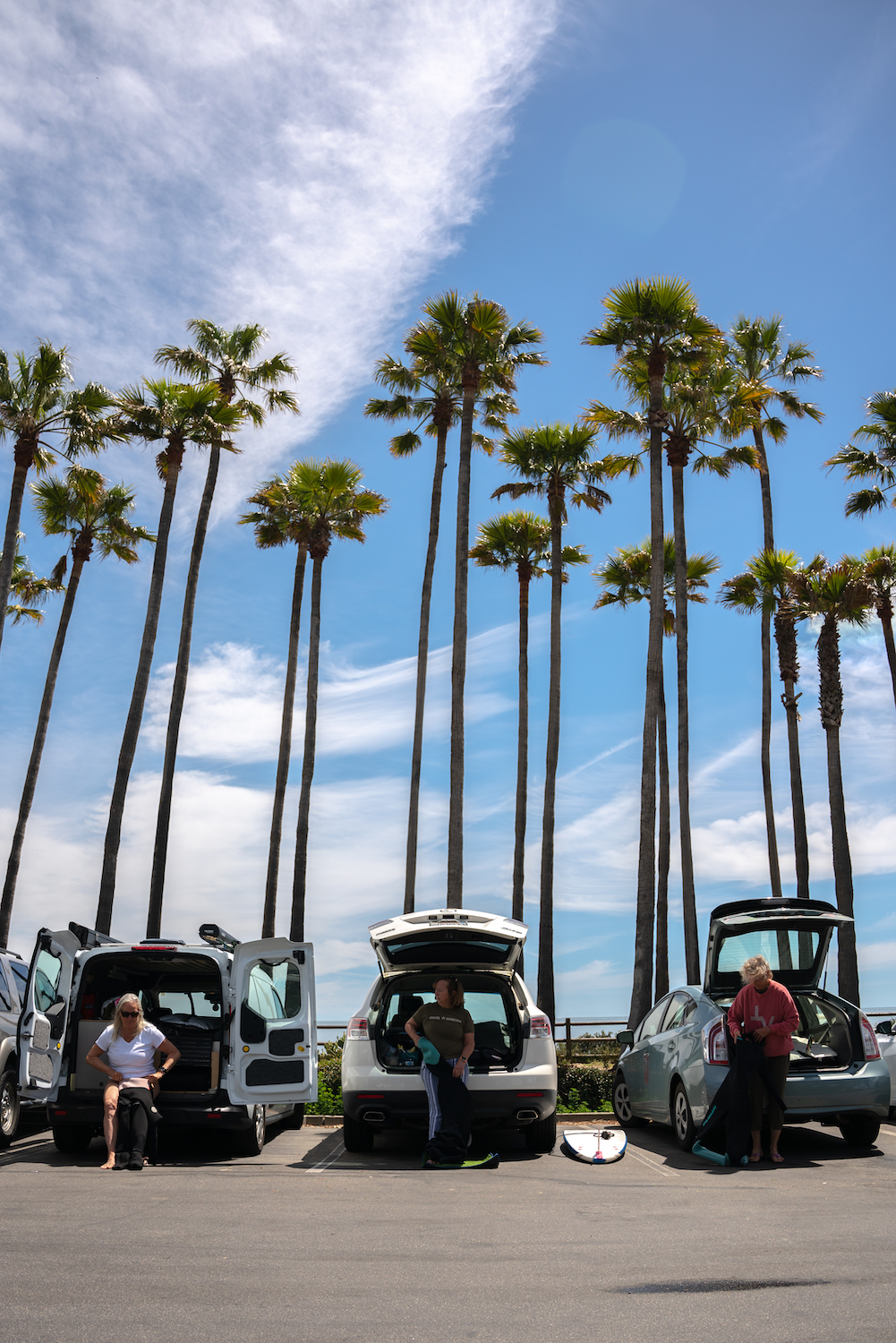
The parking lot this morning is nearly empty. Campus Point is known for being beginner-friendly, often crowded with college kids, but every now and then the women have had to contend with jerks—teenage boys, mostly, who try to take every wave. Often, they’ll move to another spot or let the boys know it’s time for them to share, with letting a little of their annoyance come through in their voices.
It’s not always the boys, though. Once, at C Street, a more aggressive and advanced surf spot in Ventura, a woman yelled at Kirker for accidentally dropping in on her. Kirker apologized, but the woman still berated her, shouting, “What are you doing? You don’t belong here.”
Kirker said nothing, got out of the water, and cried. As a family law litigator for 30 years in a profession dominated by men, she’d had enough of feeling like she didn’t belong. She didn’t want to surf angry, and her board sat in her garage for four years until the pandemic started—around the time she shifted careers, which she attributes to surfing. She was tired of fighting with people.
Today, the wet weather holds the promise of fewer people. The women wax their boards, slip on booties speckled with grains of sand, and, one by one, head to the beach path. Their wetsuits squeak as they walk past the humble Marine Science Institute and over a driftwood-laden rocky shore. Johnson, the oldest of the crew at 71, has wasted no time snapping on a surf cap over her short, white hair and is the first one in the water.
Arkin brings up the rear, holding a longboard with a hook she’s attached so she can grip it better. Her forearm has a fish tattoo with a Buddhist design for freedom. She’s headed towards Poles, a left break named after three poles that used to mark an underground water intake valve. A bonus, they joke later, is that it’s out of range of the surf camera that continuously streams on a giant TV in Yartz’s shop.
Arkin paddles out, the whoops and hollers from her friends already mixing with the screeching of the seagulls.
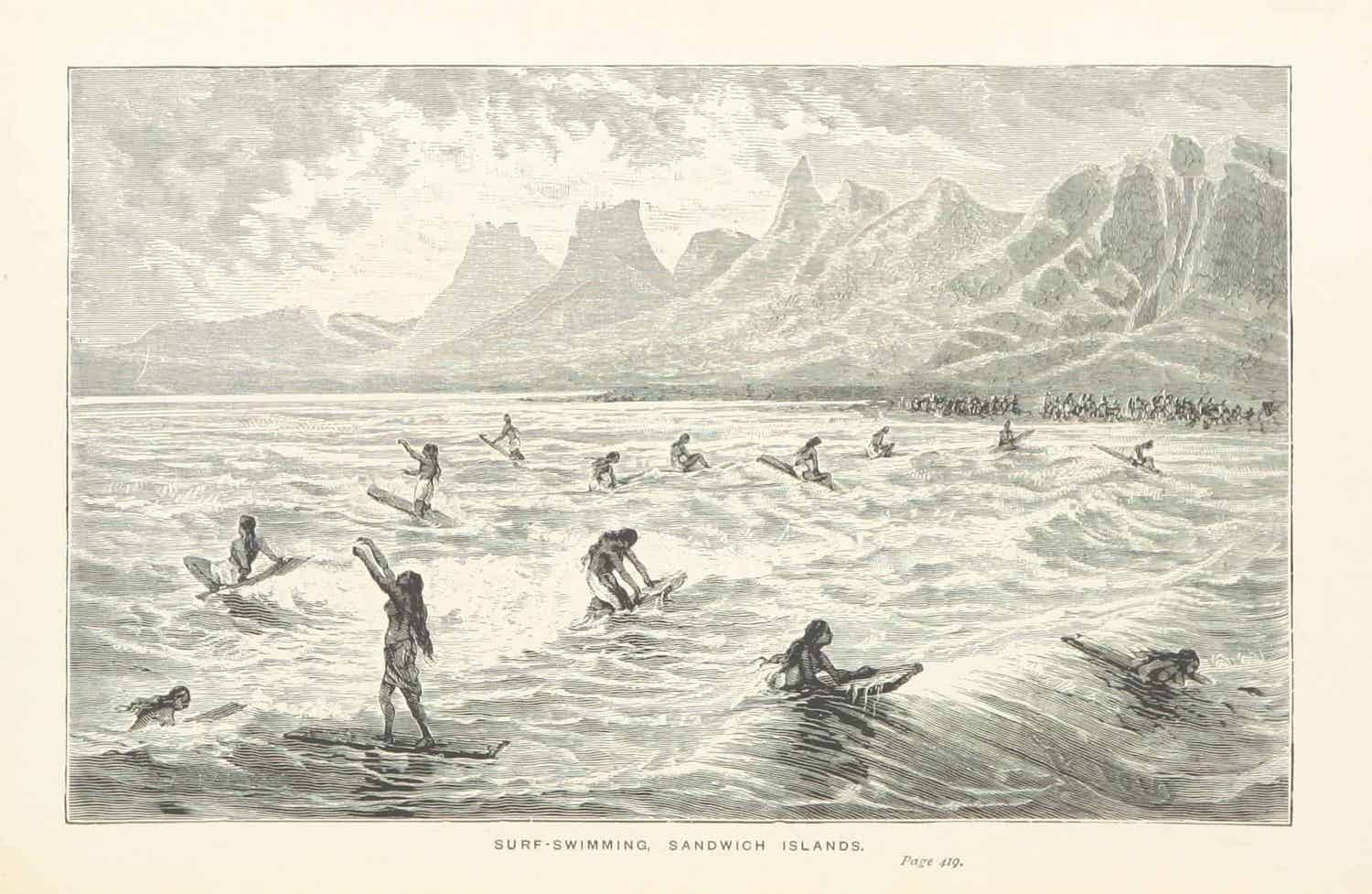
Women have been surfing for a long time—as far back as the 17th century in Hawaii and other Polynesian islands (the daring Princess Kelea of Maui was legendary)—but you wouldn’t know it if you looked at any surf magazines before the ’70s, when women got their own professional circuit. Even then, it took two decades for lifestyle brands to embrace female surfers—usually ones that were blonde and conventionally attractive—in their marketing campaigns.
Representation in the sport has long skewed young, white, and male, but that’s changing. Women surfers who identify as queer, BIPOC, and curvy have led the way in advocating for a more inclusive surf culture.
Older women surfers are a smaller subgroup, though no less loud. When they’re not chasing waves, they’re in Facebook groups and Reddit threads, piping up whenever someone asks, “Am I too old to surf?”
The Santa Barbara women might still be outliers, but they say it’s becoming more and more common to see others who look like them—although it’s not something they fixate on. “I forget about the age thing when I’m in the water,” Johnson says, adding that she does get a kick out of surprising people.
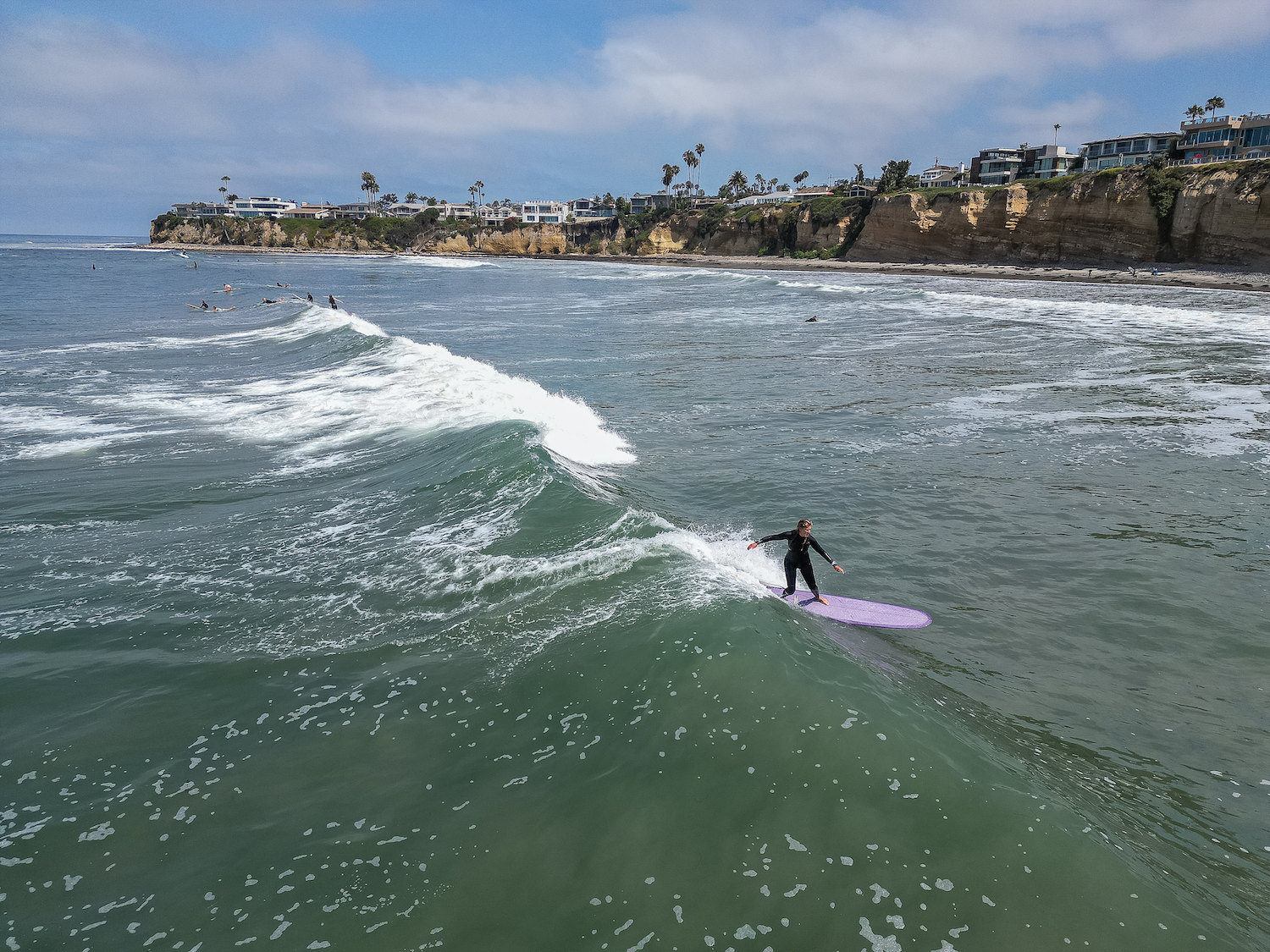
Letting go and living in the moment is one of the draws of surfing. But it’s also a practical strategy, as timing is everything. No wave is ever the same. Then there’s the added variable of age, which comes with decreased flexibility or slower reactions that can make it challenging to pop up, ride a wave for a while, and try out fun tricks.
“We don’t have a pop up. We have a lumber up,” McPherson likes to joke.
The women have all experienced their share of injuries—broken toes and fingers, head gashes, face cuts and bruises—but it’s not enough to stop them.
Though gravitate toward cruisy waves, aware of their bodies’ limits, they are still addicted to the excitement of getting better and better each year. The friends might never go pro, but they have certain advantages that age brings: acceptance, patience, and unapologetic enjoyment of something they can claim as theirs after a lifetime of caring for others.
“We’re like these little lights out there communing in the surf. We all respect and honor each other’s individual experience. And we’re not in relation to anyone. We’re not someone’s mother, someone’s wife, someone’s daughter,” Kirker says. “It’s really freeing.”
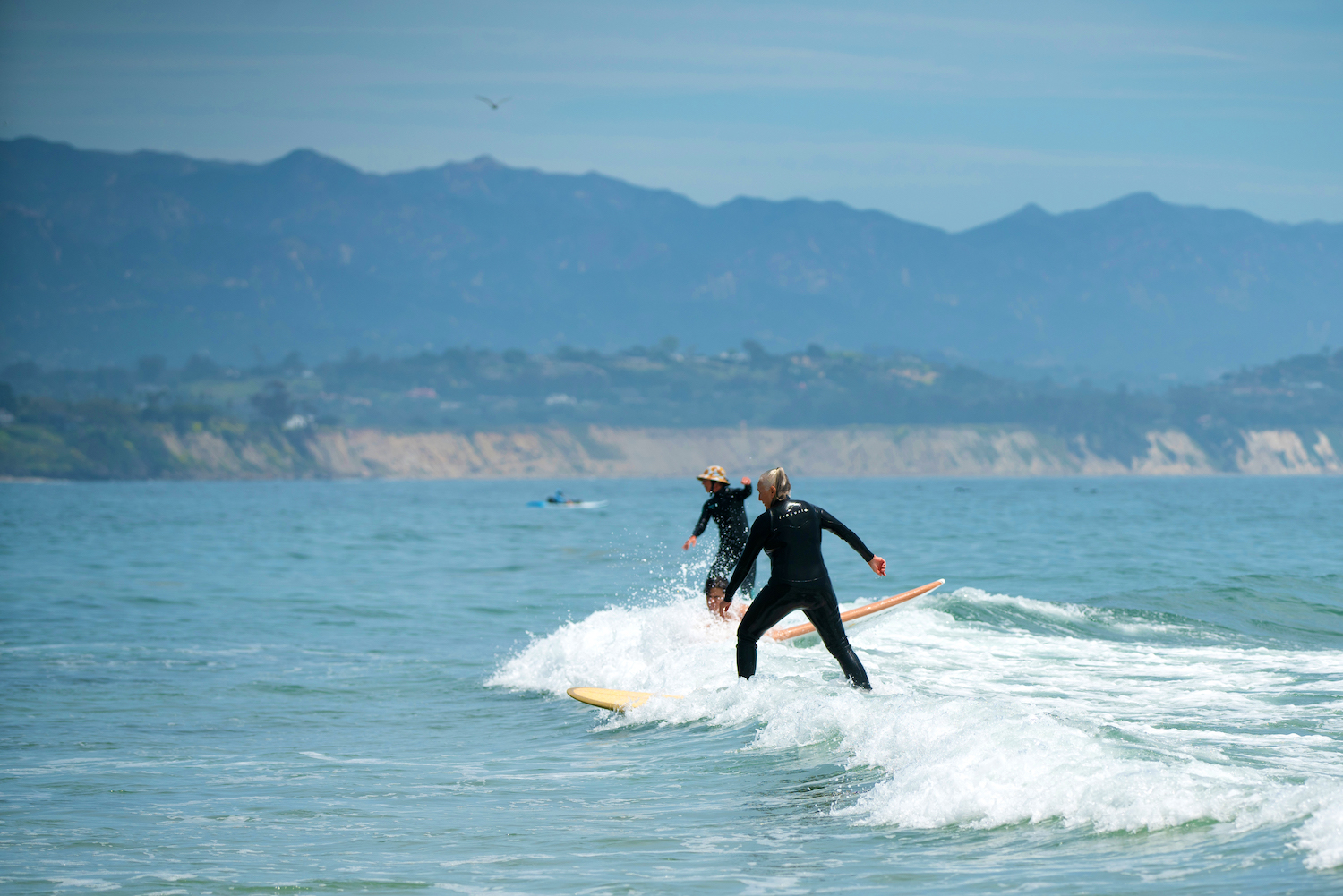
The waves are better than they expect this morning. The water is glassy, meaning there’s little wind, the smooth sheen ideal for surfing.
The women are the only ones in the water except for two surfers who are far enough away to leave them alone. Johnson paddles to catch a wave. Kirker, the crew’s most vocal cheerleader, yells: “Go left, go left!” Johnson stands up, compact and still as a statue, and rides the wave nearly all the way to the shore. Kirker hollersl “Woooohoooo!”
A big part of the joy of surfing is being with each other. Some of it is a matter of safety, knowing that if they wipe out or have the wind knocked out of them someone will be there to help. But it’s the camaraderie that keeps them going out together week after week; everyone else knows to make plans around their surf schedule.
“There’ll be days when I don’t catch anything,” McPherson says. “But the enjoyment of being together and celebrating your own successes with an audience of people who love you, and celebrating their successes—it’s double the adrenaline.”
Nearly all are partnered, with husbands or boyfriends, but most of their men don’t share the stoke. Surfing has become a defining feature of their identities, met with a combination of raised eyebrows and subtle boasts. McPherson’s cousin will often introduce her to others and say, “This is Marianne. She surfs every day.” (She doesn’t.)
Now McPherson straddles the back of her board, lipstick still intact. Kirker is nearby and waits with the others for a good swell. Orr also sits close, her brown-blonde bob she has yet to dye now dark from the saltwater. The rocking of the ocean relaxes her shoulders.
“I just feel like the weight’s off,” she says.
“It’s because I’m here,” Kirker says. Orr laughs.
In an instant, the calm is broken. Orr spots a potential wave. She lies down on her board, turning its nose around toward shore. Everyone cheers. “Go, go, go!”
Careful not to strain knees that need replacing, she pops up for a few seconds before tumbling backwards into the water. “I blew it,” she says when she’s straddling the board again. “That could’ve been a nice, long wave.”
They all flail at some point, limbs flying everywhere, boards bouncing along the whitewash. “Come on, bitches!” Kirker says one time to the waves, furiously paddling, only to have them fizzle out.
It takes a lot for everything to be in sync, and learning how to cope with failure is one of surfing’s greatest lessons. There’s joy in that, too.
“You tend to become competent in the things you do at a certain age,” Arkin says. “But what’s been really fun for me is being incompetent at something new.”
Yet Arkin and the other women are far from incompetent, catching numerous waves, a testament to the number of years they’ve taken lessons together not only at Campus Point, but at surf clinics in Costa Rica and Mexico. They’ll also travel around California together—every Memorial Day for the past eight years, they’ve headed down to Beacons in Encinitas.
Just today, they’ve been out for nearly two hours. Onshore, more people are strolling along the nearby cliffs, while college kids in wetsuits stand at the edge of the water, about to paddle out.
“I’m getting cold,” Arkin says, metal in her finger from a surf injury stiff. They all agree to stop soon.
As they wait for the last few waves, Kirker hums The Monkees theme song. “There’s just something about the ocean that makes me want to sing,” she adds.
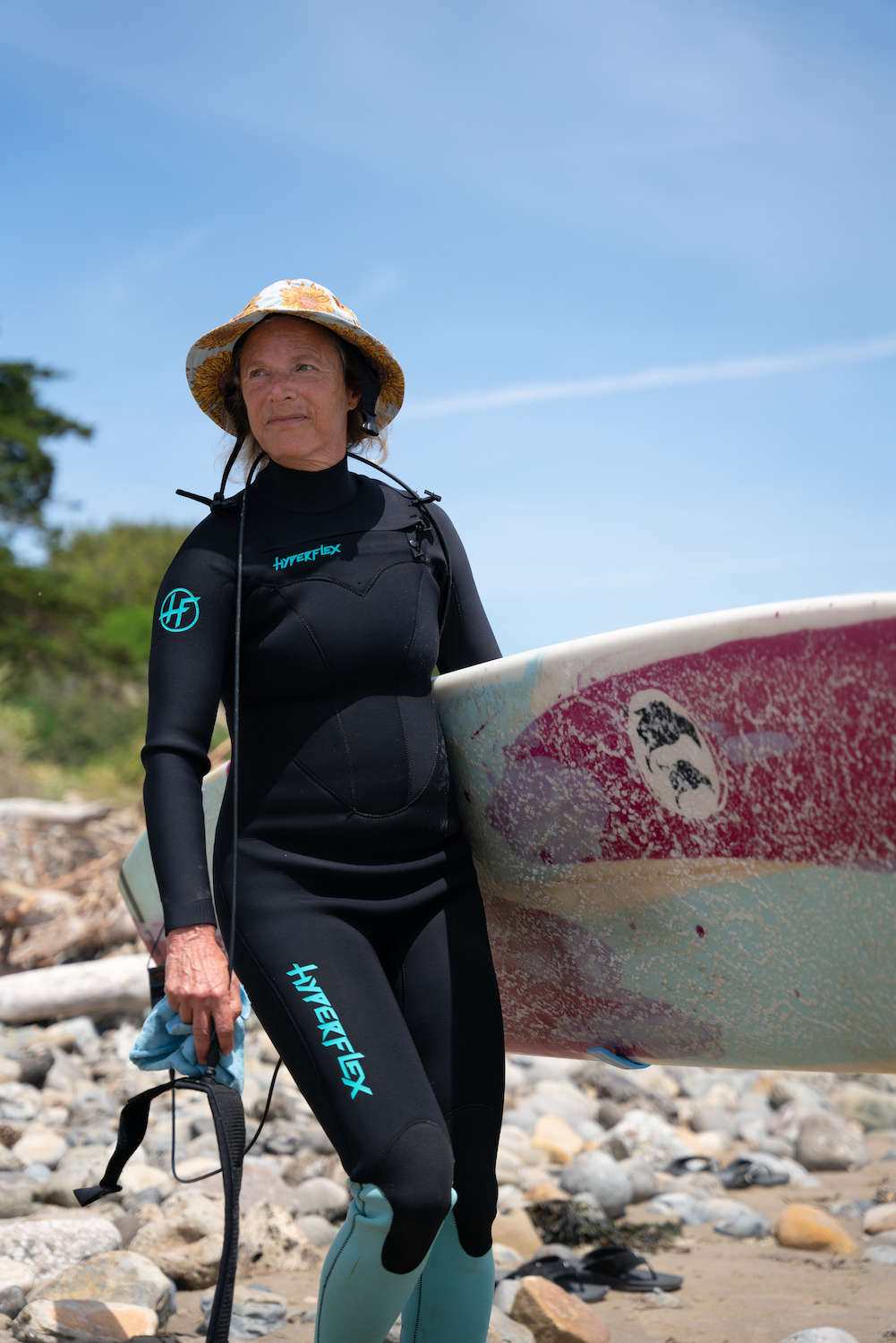
The women carry the boards back to their cars. The parking lot is busier, and a 20-something-year-old wearing a UCSB sweatshirt walks by with an older couple, presumably his parents. One of them sees the friends pulling terry cloth surf ponchos over their heads and smiles. They don’t notice.
There’s talk of going to Starbucks afterwards. Over coffee and chai, they will laugh at obnoxious men on dating sites, reminisce about raising athletic children, and share their personal surfing stats from the Dawn Patrol apps they all have on their Apple watches. (Johnson had 11 waves, with one at 20 mph, nearly twice the average speed.) And they’ll make plans to go surfing again tomorrow.
For now, the focus is on getting warm. The clouds have parted. “Here’s your sunshine!” Kirker says.
“Well, I had more good biffs today,” Arkin says, brushing her wispy hair.
Kirker won’t hear it. “I thought you did fine.”
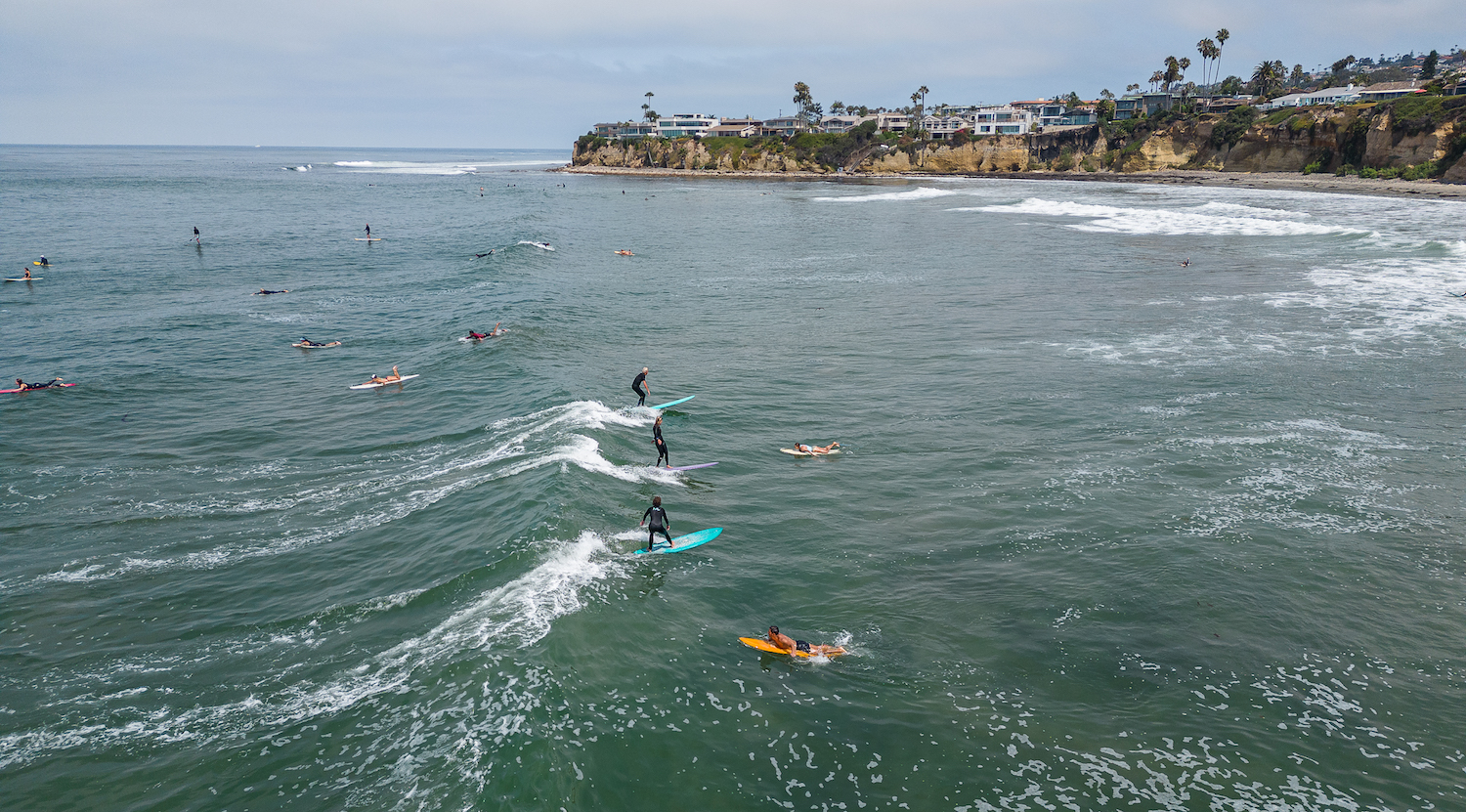
Today, they’ve emerged both tired and triumphant, the ocean leaving them breathless at times. When they go home, they will be unable to fully articulate the feeling—of being themselves, of being together—but it is one they will continue to chase. Because with so much life still ahead of them, they unabashedly want more. Since she began surfing, “my whole world is better,” Kirker says.
PARTNER CONTENT
She sits down on the side of her white cargo van with a “Soul of a Mermaid, Mouth of a Sailor” sticker and pours a jug of water over her head. McPherson towels off, her shoulder fine, at least for right now. Wilbanks helps Johnson slither out of her wetsuit.
Orr is the last one to return. In the back of her mind are the essays she still needs to grade, but they don’t seem as urgent. And, like the rest of her friends, she doesn’t ever foresee a time when she’ll stop surfing. “When I started, I thought, I’ll probably be able to do this for, like, five or six years, and then I won’t be able to do it anymore. But look at Mary. She’s my hero,” she says. “And now I think, God, I hope I can keep surfing as long as her.”
OB-GYNs Dr. Meredith McMullen and Dr. Ashlee Schlesier and hormone coach Bridget Walton weigh in on how to support healthy hormones
Everybody’s talking about hormones. Celebrities like Michelle Obama, Sex and the City’s Kim Cattrall, Oprah Winfrey, and the irrepressible Gwyneth Paltrow are waxing poetic on menopause, and, according to industry publication BeautyMatter, the market for products related to that particular life stage will hit $24.4 billion by 2030. There are more than 225,000 TikTok posts under the hashtag #hormonehealth, many of them focusing on “balancing” out-of-whack levels of estrogen, progesterone, testosterone, and more. Those often-mysterious little chemical messengers are having a moment.
According to Dr. Ashlee Schelsier, a Sharp Community Medical Group board-certified OB-GYN, “hormonal imbalance” isn’t a clinical diagnosis in and of itself, since “our hormones as women vary hour to hour, day to day, and by what part of the cycle we’re in, so it is normal to have big fluctuations.”
However, she adds, “we do have clinical diagnoses that result in changes in our hormones that are a symptom of a disease.” And with age comes the palpable shifts of menopause.

The associated symptoms—annoying at best and debilitating at worst—frequently leave ovary-havers scrambling for solutions, from medications and supplements to foods said to help our hormones achieve equilibrium. “It’s really important to partner with a medical team and a physician that is willing to sit and listen and understand your experience,” says Dr. Meredith McMullen, a San Diego OB-GYN with Kaiser Permanente. “In the past, there has been a tendency to underplay or dismiss these symptoms, both on the patient and provider side. But you don’t have to suffer in silence.”
The first step is working to understand exactly what’s going on. Per the World Health Organization, polycystic ovary syndrome, or PCOS, affects approximately six to 13 percent of reproductive-aged women globally. Doctors typically diagnose PCOS if you have some combination of irregular or absent periods; the titular cysts on your ovaries; and signs of elevated androgenic hormones like testosterone, including acne and excessive hair growth. People with the condition might also experience insulin resistance, chronic inflammation, issues regulating cholesterol, and even depression and anxiety.
“The syndrome itself actually runs with things like Type 2 diabetes … and obesity,” McMullen explains. “That’s why we call it a syndrome, because we see the effects across multiple body systems. This disorder is really specific to women who are still menstruating.”

Others experience the lesser-known premenstrual dysphoric disorder (PMDD), “defined as recurrent, severe, and distressing symptoms that occur during the luteal phase, which is the week or two before menstruation, and significantly improve within a few days after the onset of menstruation,” McMullen says. Symptoms include anxiety, depression, headaches, and severe fatigue, all more extreme than your garden-variety PMS.
Perimenopause (the period of transition just before your cycle stops permanently) and menopause (which you’ll have officially reached once you’ve gone 12 months without a period) are different—they’re normal, age-related stages, but they can come with uncomfortable symptoms and side effects. “What menopause really signifies is the end of the ovaries producing consistent levels of estrogen and progesterone,” McMullen adds. “But instead of the ovaries stopping like a light switch, what we see is that the light switch ‘flickers.’ It’s that flickering time frame that corresponds to the perimenopausal phase where you’re getting irregular secretion of estrogen from the ovaries. That’s why you see these perimenopausal symptoms”— things like night sweats, hot flashes, fatigue, weight gain, even joint pain—“start to become more prevalent.”
But because the symptoms people experience can be so diverse and far-reaching, it can be difficult to tell whether what you’re dealing with is truly a hormone issue. For example, “there are a lot of things that mimic PCOS, like androgen disorders [or] thyroid disease,” Schlesier explains. Clinicians use tools like physical exams, patient history, blood tests, and ultrasounds to diagnose conditions such as PCOS and PMDD.
While many hormonal diseases are not curable, there are plenty of routes to treat them. “There’s a supplement that is helpful with PCOS called inositol,” Schlesier says. “The main treatment for PCOS is going to be an oral contraceptive pill. It increases something called your sex hormone–binding globulin, which binds up those excess androgens. It also regulates your cycle. It is important to have four cycles a year … to protect your uterus against potential pre-cancer and cancer.”
Amelia Rodriguez is a writer and journalist and winner of the San Diego Press Club's 2023 Rising Star Award and 2024 Best of Show Award, she’s also covered music, food, arts and culture, fashion, and design for Rolling Stone, Palm Springs Life, and other national and regional publications. After work, you can find her hunting down San Diego’s best pastries and maintaining her five-year Duolingo streak.
We tapped venues, record stores, and radio DJs all over the state to share the Golden State bands about to blow up
Listen to our Ultimate California Mixtape below featuring each artist
Some of the most famous musicians on the planet got their start in California—the Eagles, the Grateful Dead, Cher, Snoop Dogg, and Fergie, to name a modest handful. But before they were topping charts and selling out stadiums, these heavy-hitters were just kids with a dream.
California’s still full of dreamers, talented artists playing garages and filming TikToks in the hope of making their voices heard. Among them are the next Metallica, Dr. Dre, or Billie Eilish (three more Golden State stars). So, we asked 15 music experts from venues, record shops, and radio stations throughout the state to cut through the noise and tell us who they think is poised to go platinum. Here’s your chance to beat the inevitable Ticketmaster battle royale and see ’em while they’re still up-and-coming.

“I’ve long thought that The Schizophonics (@theschizophonics) are on the verge of going big. They just played a high-profile opening slot for Jack White at the Hollywood Palladium. They’ve got an established national booking agency working for them and a couple big tours over the next few months. They’ve consistently drawn large local crowds and their show is one of the best live shows out there—it must be seen to fully understand.”
Must-Listen Track: “Desert Girl”

“Rexx Life Raj (@rexxliferaj) can rap. He can sing. He’s a clever jokester who talks about the powers of psilocybin, as well as a poet who readily discusses the -isms that plague our society. He is from Berkeley, played college football in Idaho, and [has] done shows around the world. There are a lot of entry points to his catalog for someone who has never heard of him—the California Poppy and Father Figure series are dope. And he’s done a number of remarkable features on other people’s projects.
But The Blue Hour album is a must-listen. In the wake of losing both his parents, he took that pain and made beautiful music for those who are in pain. (Isn’t that what music is for?) He’s dropping another project; it’s titled In Rhythm. I expect more of all of it.”
Must-Listen Track: “New Normal”

“I’ve been the talent buyer at The Whisky for 15 years, and an artist named Anna Thoresen (@anna__thoresen) recently sent over her music and I’m very impressed. She’s in her early 20s and lives in Los Angeles. Her music is a blend of soulful rock and pop—a Gen-Z Stevie Nicks who produces her own music. I think she’s the next big thing!”
Must-Listen Track: “Dirty Laundry”

“On my radar is Shua (@shuatheshua), a San Diego–based artist who, in his words, creates music ‘for lonely people.’ Throughout his career so far, he’s seen highs and lows—[he’s been] on the brink of making it, with record deals inked and songs with millions of streams, and he’s also been on the brink of homelessness, unsure where his next meal might come from. Throughout it all, he’s committed to raw, compelling, and honest storytelling—all with a stunning voice and sonic energy that’s both urgent and delicate.”
Must-Listen Track: “How To Let Go”

“Mareux (@__mareux__) is a totally unique, new LA darkwave genius that also sounds completely familiar—a new kind of goth making music to help us cope with our brave new world.”
Must-Listen Track: “The Perfect Girl”

“Sitting on Saturn (@sittingonsaturnband) [is a] really upbeat trio playing a blend of ska, punk, and indie. Best of all, they are from San Diego and graduated from [San Diego State University]. They’ve made appearances at festivals like Riot Fest and toured with 311, Sublime with Rome, Dirty Heads, and even the Jonas Brothers and have collaborated with artists like G. Love, NOFX, and Simple Plan.”
Must-Listen Track: “Tokyo”

“The Neighborhood Kids (@theneighborhoodkidsmusic) are poised to break out. They are a young, emerging hip-hop group produced by Jon the Funky Monk. They have a great, old-school hip-hop base to their sound while speaking to important political and social issues happening today. The Neighborhood Kids recently won best new artist at the San Diego Music Awards.”
Sloane Moriarty is a rising Junior at the University of California, Berkeley where she studies English and Education and writes for the Daily Californian newspaper. When she is not at a coffee shop doing work, you will find her in front of a bowl of pasta and a good book.
Maya Santiago is a junior at NYU and a Carlsbad native. She finds balance through yoga and is always searching for new book recommendations.
Your ultimate guide to the state's best oenophile destinations—where to stay, what to sip & what to explore
For some, September signals the bittersweet end of summer. For others, it’s a new beginning: the height of harvest season in California wine country. Vineyard grapes reach optimal ripeness for picking, stomping, and fermenting, while the warm, dry, and temperate weather invites wine lovers across the country outdoors to see the vineyards for themselves. Craving a vino vacation of your own? Here’s what to do, eat, and drink, plus where to stay.

Families, in particular, should start in the Riverside County city of Temecula, where anyone age 6 or above can sightsee from the skies with family-run company Cielo Balloons. Those who prefer to keep their feet firmly on the ground might go for a sunset horseback ride with California Ranch Company before turning in for the night at the ultra-luxurious South Coast Winery Resort & Spa—the first and only five-time winner of the “Golden State Winery of the Year” award, as granted by the California State Fair Commercial Wine Competition—or a room at the Spanish-style Ponte Vineyard Inn, which has its own vineyard and is within walking distance of two more.

From there, stroll to Bottaia Winery, where creative types looking to play winemaker for a day can blend their own vinos and bring them home as a souvenir to age. Hop in the car for your five-minute drive to lunch at the upper veranda of Flower Hill Bistro at Miramonte Winery. Wrap up your day with a tasting at the nearby Peltzer Family Cellars before heading into town for a last hurrah dinner at the 98-year-old, storied Swing Inn Cafe & BBQ.

Head north and stop for a meal at the Hotel Californian’s Blackbird restaurant in Santa Barbara, where executive chef Travis Watson and his staff host a once-monthly series featuring a different winery or spirits company. Patrons who don’t want to build their schedule around that event can still savor offerings from local wineries like Lincourt and Firestone before checking in at The Inn at Mattei’s Tavern in Los Olivos.
After spending some time in the property’s airy restaurant and renowned spa, continue onwards to Paso Robles, where you should plan ahead to book a table at the Michelin-starred Six Test Kitchen. There, the seating counter—which can only accommodate 12—wraps around the kitchen for a real-time, behind-the-scenes view of the staff whipping up 12 delicate courses using the bounty of the area’s farms. (Traveling next month? You’re in luck— October is the region’s Harvest Wine Month, when many wineries host special events.)

If you’re looking instead to prioritize the “coast” part of the region’s namesake, follow Carmel-by-the-Sea’s free, self-guided wine walk (get the app for discounts on included wineries’ tastings) before holing up at the romantic, 19th-century Seven Gables Inn, which overlooks Lovers Point Beach in Monterey. Admire the stained glass windows and Victorian architecture; plus, every single one of its 25 rooms offers views of the water.

Take the 101 straight to Livermore’s iconic Wine Trolley, which shuttles riders to three local vineyards for tastings. Or sit down for a casual picnic at Del Valle Regional Park with a sandwich from Ofelia’s Kitchen and a bottle from First Street Wine Company. Make a stop at McGrail Vineyards before unpacking your suitcase for a stay in one of The Purple Orchid Resort & Spa’s 10 fireplace-equipped rooms and suites. Nibble on a complimentary, made-to-order breakfast while looking out at the garden or olive orchard from every room. Guests can also enjoy a community event each evening, featuring an olive oil tasting, wine, and cheeses.

Julie Bogen is an experienced writer and digital strategist whose work has been featured in The Atlantic, The 19th News, Cosmopolitan Magazine, and more. She is passionate about storytelling that centers women and marginalized communities, and when not working she's either with her family or in a barre studio.
Stake Chophouse & Bar brings contemporary classics and old-school service to the heart of Coronado
Stake Chophouse & Bar isn’t your average steakhouse. Blue Bridge Hospitality’s Coronado outpost is a modern interpretation of a big-city steakhouse nestled in the heart of the small coastal community. The team at Stake has reimagined the whole steakhouse experience. By prioritizing a seasonal farm-to-table sourcing philosophy, a personalized guest experience, and unique service touches, like a formal steak presentation and a bespoke knife selection process, Stake distinguishes itself in a sea of steakhouses.
Exceptional steaks, including Wagyu from Japan, Australia, and the U.S., and fresh seafood flown in daily form the core of Stake’s culinary identity. The menu features a five-course omakase-style steak experience highlighting house favorites, plus an array of cuts, and classic steakhouse staples—think a wedge salad, baked potato, or pasta carbonara—refined for a contemporary palate without losing their traditional appeal. Stake focuses on seasonal sourcing from the region’s best family farms and specialty purveyors, and incorporates intentionally unexpected touches to create something truly unique.
“I challenge our chefs and myself to take it a step further in sourcing,” says Chef Ronnie Schwandt. “It’s important to us to highlight different farms, unique one-off farms—whether it’s cattle, strawberries, a local fisherman or from anywhere in the United States, we’re always trying to find that niche.”
Beyond the menu, Stake emphasizes outstanding service, says Vinny Spatafore, Director of Hospitality Operations. Staff maintains detailed notes, allowing them to remember guests by name, recall previous orders such as a favorite martini (also memorable for the customer since it’s served in an extra tall, distinctly-shaped glass), and celebrate special occasions like birthdays and anniversaries.
“When you have those points of topic that you remember about a guest, they appreciate that,” he says. “Our servers are really good with that—we have a couple servers who have been here since the beginning and they’ll remember somebody from years ago, their name, their kids’ names, where they live. I’m really thankful to have a great front of house staff.”
Award-winning wines, rare whiskeys, special events, and a complementary black car service that provides transportation for guests throughout Coronado add to Stake’s appeal.
Schwandt stresses that Stake offers more than a meal; they aim to give patrons something unforgettable.
“It starts when you walk up the stairs and are greeted by the hostess—that sets the tone for the night. Then you’re greeted by a server, who may know you by name, and can guide you through the menu and curate as they get to know you,” says Schwandt. “Most people leave kind of blown away; they leave feeling like they just had an experience. That’s the goal, right? Whether you’re serving smash burgers or high-end steak, you want somebody to leave thinking, Wow, that was awesome.”
Hoping to catch some Zs after two decades of sleep troubles, editor Nicolle Monico tries listening to the sounds in her own head
As I walk into Cereset in Encinitas, I wonder if tonight will finally be the night I get the kind of sleep I remember from my childhood: fully knocked out, vivid dreams, pillow lines on my face. As I get situated in a La-Z-Boy chair, head tech coach Madolyn Dolce places electroencephalogram (EEG) sensors around the crown of my head and on my ear lobes to track my brain’s at-rest activity. I sit with my eyes closed in a dark room for several minutes at a time as headphones relay a symphony of the sounds firing off in my skull.
“Those sensors read a signal, and then the technology translates them into musical tones that you listen to in your ear buds. You’re basically hearing your brain back to you,” Dolce says. “It’s completely non-invasive.”
It had been nearly five years since I had slept without any type of assistance. I’ve struggled with irregular sleep patterns and insomnia for almost two decades, and, eventually, shuteye was only possible if I took prescription sleep aids or 12.5 milligrams worth of cannabis gummies. Without them, I was sleeping about two to three hours non-consecutively.
At the start of this year, I learned about Cereset, a wellness company that claims to use sound to help the brain relax and rebalance, ultimately promoting restorative sleep. Founded in Arizona in 2000 by Lee Gerdes, it’s reportedly aided more than 150,000 people with its BrainEcho technology.
Today, it has over 60 franchise locations in the United States and abroad, including San Diego County. According to the company, Cereset’s neurotechnology employs sensors to observe brain activity and then assigns an auditory tone to dominant brain frequencies. The idea is to hold up an “acoustic mirror” to your brain to help it find balance. While these sounds are incoherent to the human ear, the brain understands them, then self-corrects, Cereset argues.
Since the late 19th and early 20th centuries, research has shown that changes in brain wave patterns can indicate various mental health conditions. Recent studies in journals such as NeuroImage, Basic and Clinical Neuroscience, and Frontiers in Human Neuroscience have also looked at the brain’s ability to self-regulate and correct itself by monitoring its own electrical activity, especially through the use of EEGs. Some research argues that the use of feedback mechanisms (like sound mirroring) can potentially help alleviate symptoms of certain disorders. Though the data is not significant, I’m still hopeful. I’d try almost anything for a full night’s sleep.
Some doctors see promise in this alternative therapy’s potential to enact lasting change. “It’s totally legitimate to take brain activity and reflect it back to kind of help affect the behavior or the function of your brain. We’ve known about it ever since [Russian physiologist Ivan] Pavlov,” says Scripps neurologist Dr. James Grisolia.
He reminds me of Pavlov’s work focusing on classical conditioning. You know the one—dogs, a bell, kibble. His goal was to elicit a learned response, and soon, his dogs began to salivate any time a bell rang, knowing that their food would soon appear.
“You’re conditioning a response. Biofeedback, [what Cereset is doing with its program], is like that, too,” Grisolia says. Enough researchers are curious enough about the power of biofeedback that the technique became its own field of study in the 1960s.
“These types of mechanisms absolutely can work,” Grisolia adds. “[But they aren’t] used very much by regular MDs because, ordinarily, insurance doesn’t really cover them.”
For neuropsychologist Dr. Marian Rissenberg, though, the research isn’t sufficient. “The process and the rationale for [Cereset’s program] did not really make sense to me from a neurological perspective,” Rissenberg says. “[Cereset’s studies] showed a lack of significant effectiveness.”
While Rissenberg can’t back Cereset’s methods, she’s quick to add that she believes in individuals pursuing all avenues to cure their chronic illnesses and physical or mental health conditions.
“If there is no risk to the treatment and … there are no negative psychological or physiological side effects, then I think that there’s nothing wrong with trying something when you’ve run out of options,” she says. “We know that there is a placebo effect and that it does work. Belief seems to play a part in the healing of our immune system.”
After my own research and a quick phone call with Cereset Encinitas’ co-owner Jason Prall, I found myself in an office park listening to the melodies in my head.
Before the first session, Prall asked that I go three weeks without any sleep aids, so I had to say goodbye to my security blankets. It was tough, but I stepped into that initial appointment free of sleep meds for the first time in years.

Nicolle Monico is an award-winning writer and the director of creative projects, digital editor for San Diego Magazine with more than 16 years of experience in media including Outside Run, JustLuxe and The San Francisco Chronicle.
Executive editor Mateo Hoke breaks down the magazine's California issue highlighting the best the Golden State has to offer
Each summer, one of our colleagues here at the office brings in these huge, opulent avocados from a tree at her mom’s house in Poway. They are the stuff of legend. Rich, velvety grenades. On the day they ripen, I know I can never leave California, no matter what comes. I, like so many, am a hostage to the produce.
But it’s not just the guacamole that keeps us here. There’s something in the air. Or maybe the water. Or maybe it’s in the redwoods and bristlecone pines, still holding secrets from a time before California was California. Whatever it is, it’s magnetic, pulling people in and refusing to let them go. On September 9th, California turns 175 (a dodransbicentennial, I’m told). How many people has the state lured during those years? Today, one in eight Americans calls this place home, drawn by gold-plated potential that has captivated dreamers for generations: the Gold Rush, Hollywood, Silicon Valley. California is a grand casino, a promise built on luck, myth, and mirage. A fata morgana of West Coast Americana, full of paradox, power, and heartbreak. There is no other place like this on Earth.
Ingenuity runs hot here. This is the birthplace of blue jeans, skateboards, electric guitars, Barbie dolls, and iPhones—not to mention the whole damn internet and probably your favorite movies, music, and trashy TV. Standing back, it feels like there’s nothing California can’t do.
Our second annual California issue celebrates this spirit. We start with our food. Unparalleled. Straight from the water, the soil, the hands of seventh-generation farmers and culinary chemists. In honor of this bounty, we asked big-name chefs from around the state to tell us the restaurants and dishes they seek out when they’re on the road in CA. Consider it your bucket-list guide to California cuisine. As a complement, we also take you on a tour of the best wine destinations around the state. Together, these stories make the ultimate culinary road trip.
But you’ve gotta listen to something during those long hours on the highway and have the soundtrack for you. We tapped the top music minds from the top music venues, record stores, and radio stations throughout the state to give us their picks for the next big thing in California’s music scene. The state’s bands have a track record for defining generations, so we wanted to hear what’s next. The result is an up-and-coming Golden State mixtape that you can tune into while you explore.
Of course, even in a state where all things edible and audible shine and every autumn sunset is an album cover, we are not without our troubles. The California dream of yesterday faces hard limits today. Drought tightens its grip, housing teeters between aspiration and crisis, and the threat of fire remains top of mind. Wildfires, we know, no longer arrive as an exception—they come year-round.
So, in this issue, we explore how SoCal innovators are building smarter, safer housing for a future in which fire season doesn’t end. The story shows how California is again facing crises with reinvention, as we have throughout the last century and three quarters and will for the next.
We hope this issue helps you feel connected to a larger sense of home—avocado handcuffs and all.
Mateo Hoke is a journalist and author. His books include Six by Ten: Stories from Solitary, and Palestine Speaks: Narratives of Life Under Occupation.
Scripps leads the way in advanced orthopedic treatment and technology
In 2004, Scripps orthopedic surgeons made history when they implanted the world’s first electronic prosthetic knee, replacing a patient’s failing joint and subsequently collecting valuable data on how everyday activities impact the knee. Now, research at Scripps is applying the same approach to the shoulder. Scripps Clinic researchers have secured grant funding to develop a prototype of a rechargeable “smart shoulder”—a Wi-Fi- and sensor-equipped device that will track shoulder usage and provide new insight into the joint’s inner workings. Click here for more about the smart shoulder and other innovative research taking place at the Shiley Center for Orthopaedic Research and Education (SCORE) at Scripps Clinic.
For more nutrition, wellness, and healthy living tips, sign up for the San Diego Health
newsletter here.