My six-year-old is not a big fan of the arts. He doesn’t like singing or dancing. When I ask him to make a craft project with me, he gets stressed that he’s not doing it right. If I offer to take him to a museum, he says, skeptically, “Is it a museum where you do things or just look at things?”
But I’m going to keep trying—because children should be encouraged to interact with art, says Nina Garin, associate director of marketing at The Old Globe.
“Exposing kids to the arts just makes them better citizens of the world,” she explains. “Their point-of-view is expanded, they learn about people different from them, they learn empathy and acceptance, [and] they learn about beauty and hope.”
Luckily, San Diego has a thriving arts scene packed with family-friendly activities, including touchable sculptures, kid-approved studios, and silly stage productions. To help you and your little ones make the most of it, we asked some experts where to go, what to do, and how to encourage your kids to be more interested in art. Here’s their advice.
At What Age to Start
According to Garin, children are never too young to begin exploring the arts.
“If you’re reading your baby a bedtime story, that’s exposing them to fiction and storytelling,” she says. “Drawing pictures in preschool is exposure to visual art. It’s when their lives become busy with school and sports that the arts start fading. The challenge is to keep arts in that rotation, which can be done with dance or music lessons or by making an effort to attend regular arts events, [even something] as simple as a free concert in the park.”
Just be sure to start in the right places, adds Bob Lehman, executive director of the San Diego Museum Council.
“Kids love to … make noise and run around,” he says. “For an awesome first art museum experience, take your kids to the sculpture garden at the San Diego Museum of Art. This is where they can explore real art [while running] through the grassy yard and [getting] a bite to eat at the Panama 66 restaurant. There might even be some live music on the outside patio.”
Visitors can stand near the sculptures but aren’t allowed to touch them, so checking out the garden is also a great way to teach children how to respect both public and gallery art. Get close to one of the pieces and show kiddos how to look with their eyes, not their hands.
These early engagements with creative spaces can help kids interact confidently with art throughout their lives—a boon considering that institutions like museums can sometimes intimidate even adults.
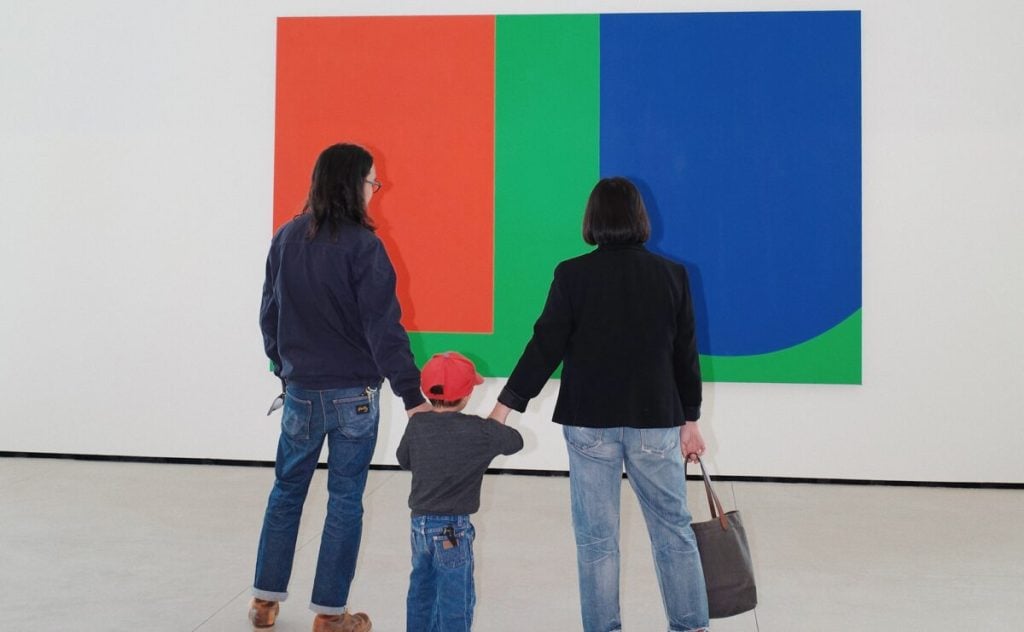
“I think kids, as they grow older, become more self-conscious,” says Maru Lopez, the education and engagement manager at the Museum of Contemporary Art San Diego. “So, definitely, that’s something to take into consideration, since exposure kind of makes them comfortable.”
Courtesy of the Museum of Contemporary Art San Diego
“Essentially, it’s a giant playground made by innovative artists and educators,” Garin says. “Oh, this fun tube slide you’re riding? That’s the work of internationally renowned street artist Panca.”
Gabrielle Wyrick, chief curator and director of audience engagement at the New Children’s Museum, explains that the museum is one of the few in the entire country that commissions artists to make work that kids can play in and interact with.
“In the children’s museum field, there are a lot of museums that focus on STEAM and cross-disciplinary topics and adult readiness,” she says. “And we really felt like this was a prime opportunity to do something distinctive around the arts. And this is such a rich arts community and such a beautiful, beautiful space that it’s become our signature.”
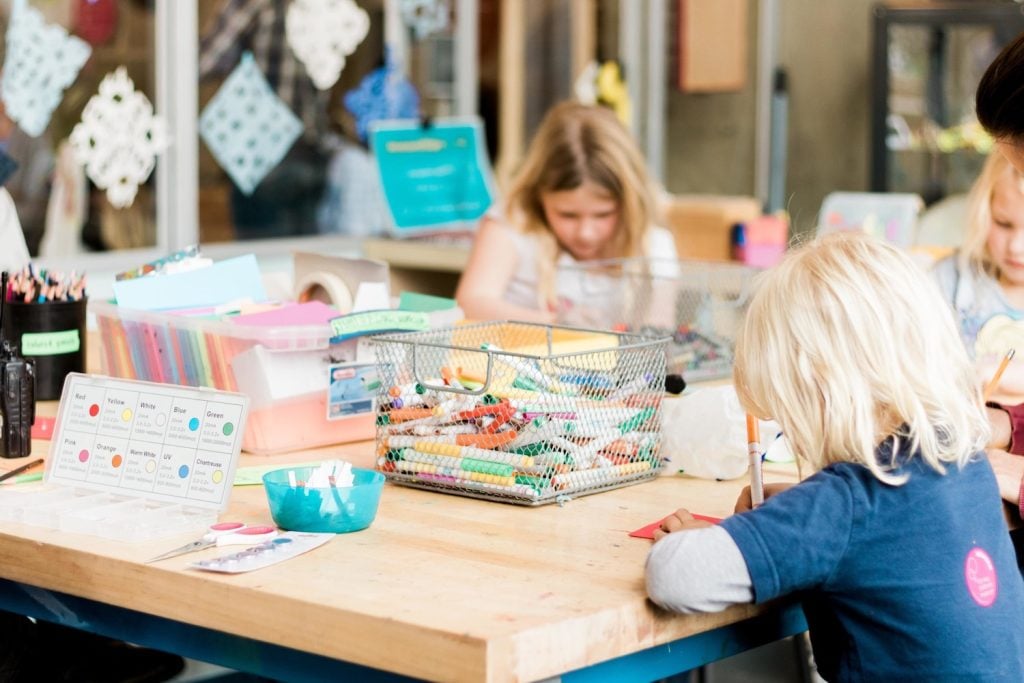
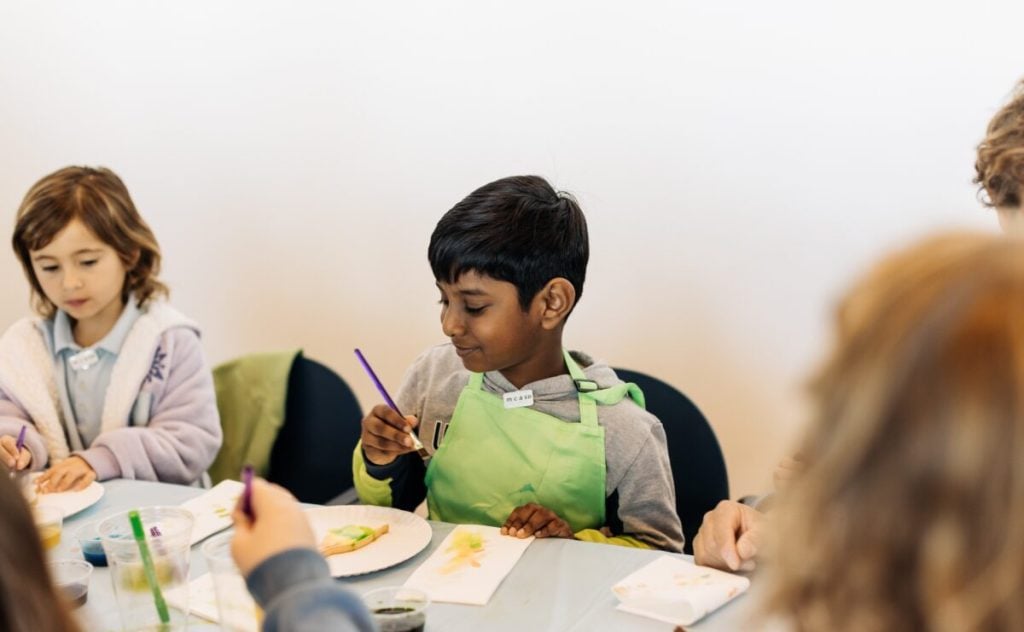
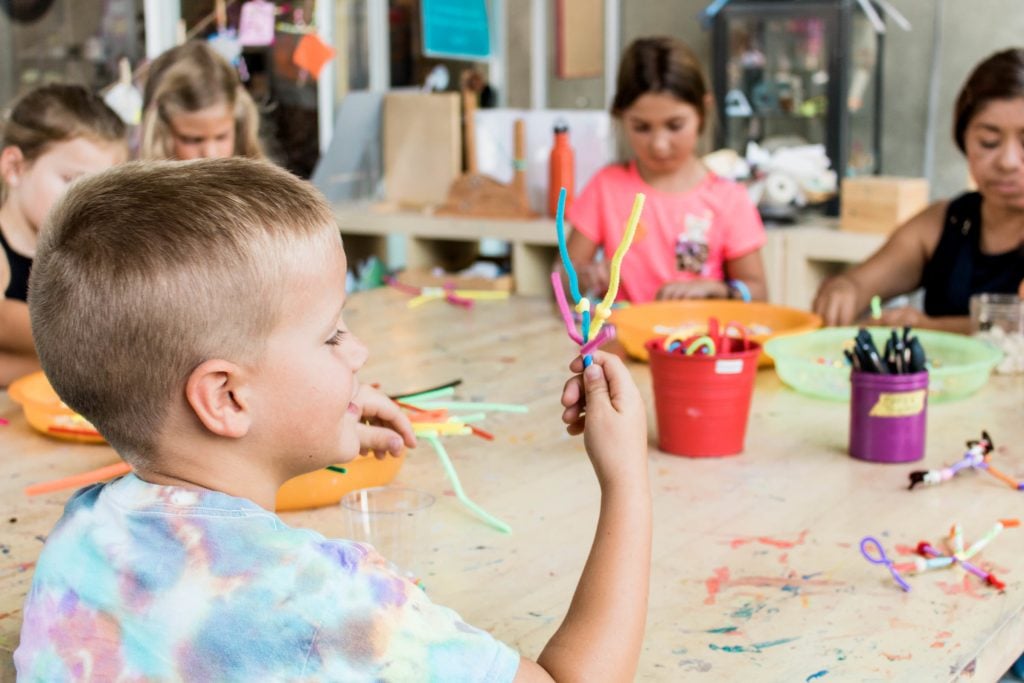
The museum offers daily workshops where kids ages 6 and up can make art. There’s also a paint and clay studio, where children of all ages can drop in and create something. On Fridays, the museum has a program called Toddler Time focused specifically on younger visitors.
Outdoorsy types will appreciate the Stuart Collection at UC San Diego, since most of the pieces are on view in the open air. You can see awesome sculptures and other works while treating the visit like an adventure or scavenger hunt.
The Museum of Contemporary Art hosts a free family Play Day on the second Sunday of each month with kid-friendly museum tours and art projects. The museum collaborates with local artists and organizations, who lead crafts, share stories, and play age-appropriate tunes.
Meanwhile, Family Sundays at the Mingei International Museum also offer storytelling, musical performances, and hands-on art making with San Diego artists. They have a “Mini Mingei” series, too, providing crafts for little ones ages 2 to 5.
Museums also offer camps throughout the year (not only in summer!). And, even if you’re just stopping by for the day, many museums host fun spaces where kids can grab a seat and draw, paint, or craft.
“The Centro Cultural de la Raza has a great table just for kids to play and create,” Lehman says. “Kids can also get their fingers gooey at artistic workshops, like the ICA San Diego Ceramics Lab [that took place] this fall in Encinitas.”
Courtesy of Moonlight Stage Productions
Performances to Check Out
The Old Globe’s annual Dr. Seuss’s How the Grinch Stole Christmas! is the first introduction to theater for many young San Diegans, Garin says. But the Globe also has free student matinees designed to engage high school students.
“I love attending these performances because I see firsthand the impact theater has on young people,” Garin adds. “Teens are dismissed as being addicted to social media or not having long attention spans, but, in our theater, they are so passionate and supportive of what’s on stage that it gives me genuine hope for the future.”
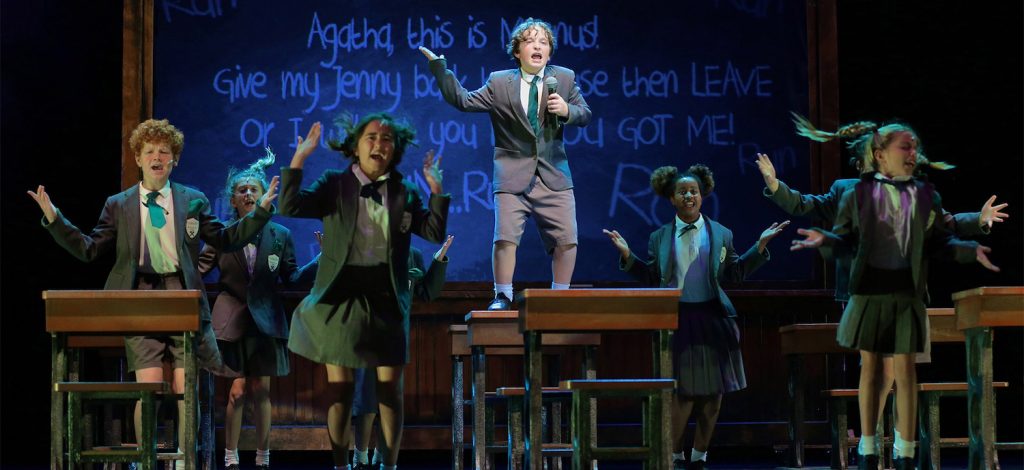
Summer musicals at Moonlight Amphitheater in Vista offer a chance to experience live performances while munching on a picnic. Lawn seating means that “kids can wiggle and squirm without bothering anyone,” Garin says.
Courtesy of the Museum of Contemporary Art San Diego
What to Do When You Get There
When heading out to see art, there are things parents and caregivers can do to encourage their kids to be more engaged. The preparation starts before you arrive, Garin says, so if you’re going to a concert, listen to some of the music beforehand. Or read a summary of a play or an exhibit.
“Make it feel exciting and wondrous on the way there,” she emphasizes. “On the day, I like to arrive early, get kids a treat from concessions, and walk around the venue as long as possible before having to sit for a long period.”
“[Regardless of] how you approach any art activity, it’s correct, and that’s the beauty of art,” Lopez says. “There’s space for all of us to create, no matter our skills, especially when you’re young and you’re at that point where you’re just learning about colors and being creative. … And we say more or less the same thing in the galleries when we’re talking to them and asking, ‘What colors do you see? What is it that you’re seeing here?’ There’s no right or wrong answer. There are multiple points of entry to every work of art.”
Courtesy of the New Children’s Museum
What to Do at Home
You can read books about artists you see and provide your kids with chances to explore their creativity at home, says Eva Struble, an artist and professor at San Diego State University. She likes to give her 6-year-old son Felix found objects—like bamboo or wood scraps from their yard—as fodder for his creative play.
“You can make bridges or gates or towers out of pieces of bamboo,” she says. “We built a little stage in the backyard, so any of these objects might become part of Felix’s pirate costume, and he performs onstage.”
She also suggests bringing paper and crayons along on museum visits, so kids can sit on the floor there and sketch out some art inspired by the work they’re seeing on the gallery walls.
What to Avoid?
There can be pressure to do certain activities or see certain performances (think Hamilton or The Nutcracker), but when allegedly amazing experiences don’t live up to the hype, it can leave a bad taste in everyone’s mouth.
“So, everyone dresses up in uncomfortable clothes and experiences the event as if it’s homework,” Garin says. “This was how I first saw Cats,and I left the theater absolutely hating it. No one prepared me [for the fact] that this show would have zero talking or that the songs would be so treacly, and, from the back row of a giant theater, I felt bored and disconnected.”
Garin now enjoys and appreciates Cats—but it took her years to get there after her initial distaste for the show.
In the same vein, professional productions of The Nutcracker, for example, may feel overwhelming and stuffy to young kids. Instead, check out a version of the ballet put on by your local dance studio, where most people on that stage are students.
“Let your kids get caught up in the iconic Tchaikovsky music, the costumes, and the magical story about a land full of sweets,” Garin says. “Eventually, you can work your way up to a professional Nutcracker, and then maybe even different kinds of ballet and dance.”
Arzu Okhal, an artist and professor at San Diego State University, feels that all art institutions need to continue to find ways to make children feel excited, curious, and relaxed when visiting.
“Do you know any children who would not want to go to Target? I don’t think so,” Okhal says. “These stores provide parents with carts that kids can sit on and comfortably look at products almost from the same eye-level as their parents. Parents are comfortable, as they don’t have to carry the kids. The stores know that children are potential consumers, and if they enjoy the experience, they will be the next generation of consumers of the store.”
Art institutions should also understand this, Okhal adds. She has designed a rolling chair that museums can offer to help kids come face-to-face with the art.
“[Museums] need to find creative ways to engage and involve young audiences,” she says. “Children might not become artists when they grow up, but, if they feel welcomed, they will develop an understanding and appreciation. They will become future members and supporters of these institutions and perhaps collectors of the artwork.”
Claire Trageser has been writing for San Diego Magazine for 10 years. She also is a reporter at KPBS and writes for The New York Times, National Geographic, Marie Claire, Elle and Runner's World.
If you’re anything like me, you’ve probably been planning your wedding your entire life. The impromptu daydreaming usually comes at the most inconvenient times: during a meeting or right as you’re falling asleep after watching too many episodes of TLC’s Four Weddings.
In those imagined scenes, there is always a sunset. Usually some kind of impossible garden that feels like Alice in Wonderland meets The Secret Garden. There are soft pinks and climbing greens, florals that look like they grew a little too perfectly on purpose, and somewhere in the distance, water that catches the light. It’s dramatic in the best way.
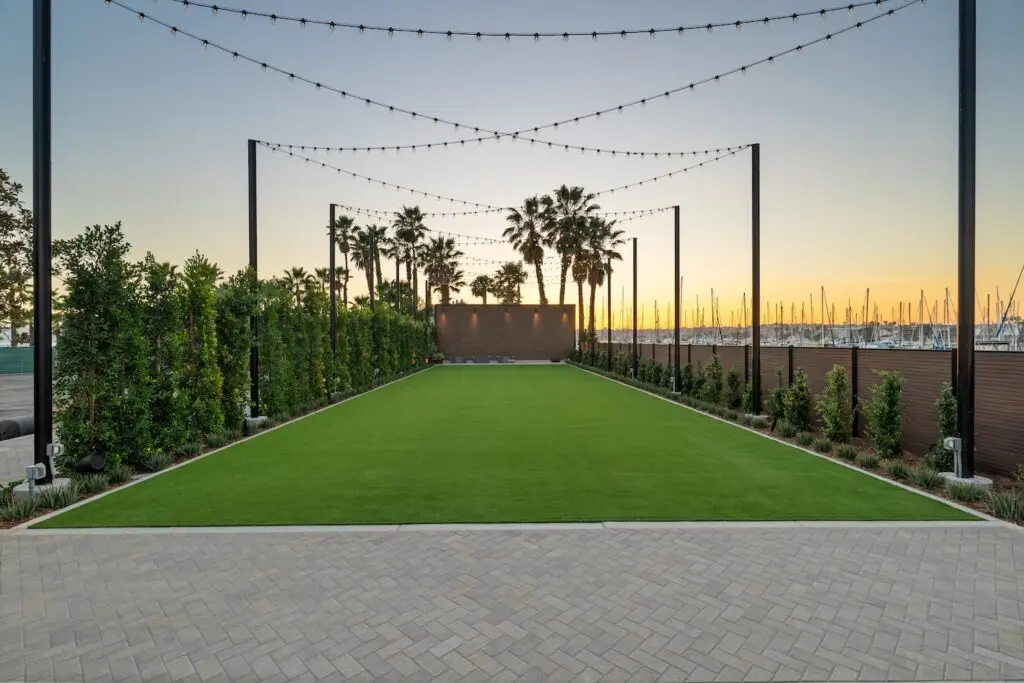
Perched on Harbor Island, Sheraton San Diego Resort feels like a tucked-away bayside escape. But the real centerpiece of its $123 million transformation is the new Garden Terrace, a private green oasis that feels like it was designed specifically for the dream wedding replaying in my head. This is what I had been imagining all those years. White tea roses, lavender, gardenia, jasmine, and magnolia trees line the space, creating a fragrance that feels like it’s part of the architecture.
Courtesy of Sheraton San Diego Resort
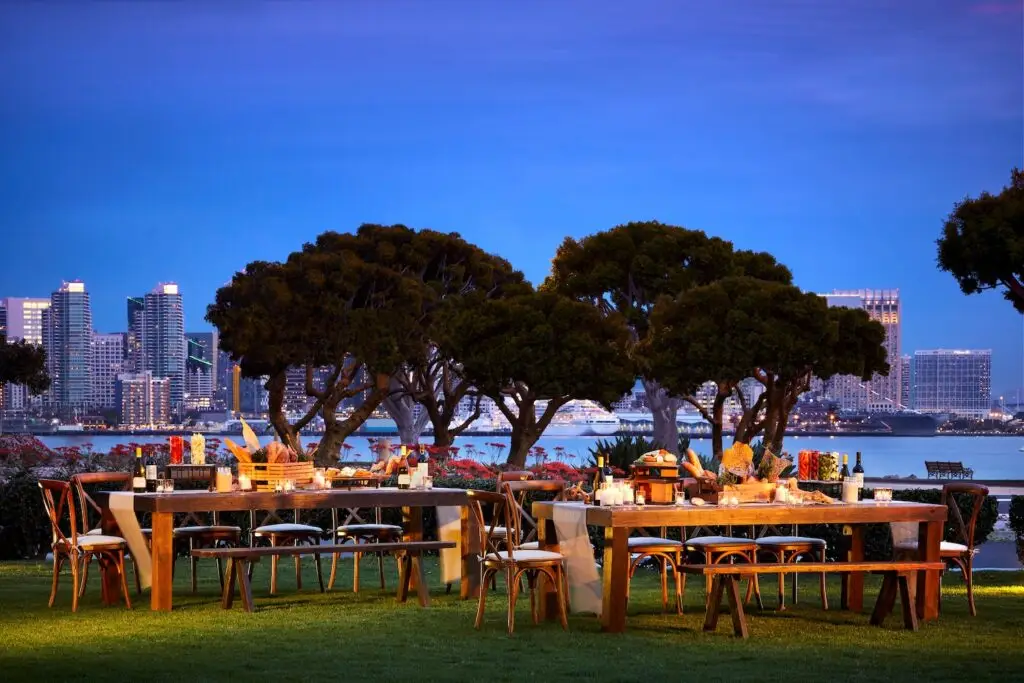
Sheraton San Diego Resort has always had the advantage of its location, but what stands out now is how intentionally the indoor and outdoor spaces coexist. Panoramic harbor views stretch across the property, shifting from soft blue mornings to golden-hour glow and a nighttime skyline that feels almost cinematic. Of course, there are other ceremony and event spaces across the resort, too—including the Lanai Lawn, Harbor Vista Lawn, and Eventide Gardens—each offering its own variation of open-air beauty. But the Garden Terrace is the one that feels like it was made for vows.
I arrived on a Tuesday afternoon with a suitcase slightly overpacked, the result of not knowing what to fully expect from a resort doubling as a wedding venue. I tried to cover every possible version of the trip: a handful of summer dresses, a few breezy pants, marina-esque tank tops, sandals for everything, and accessories meant to sparkle in the sun (seven different earring and necklace options was probably unnecessary, though).
I did, however, underestimate the swimsuits, especially once I saw the paddleboards, endless water activities you’d want to try at least once, and pools and jacuzzis practically whispering your name. Business casual never made it out of the suitcase, replaced instead with easy cover-ups, pinks and greens, and airy button-ups that felt more in tune with the setting than structured jackets ever could.
The resort has been reimagined across rooms, dining areas, and outdoor spaces, with thoughtfully layered tile textures, lighting that shifts with the time of day, warm-toned palettes in the dining rooms, and fresh blues in the bedrooms that complement the views pouring in through the windows. The foyer feels expansive, framed by floor-to-ceiling windows and designed to bring a little bit of San Diego inside with you, rather than shut it out.
Courtesy of Sheraton San Diego Resort
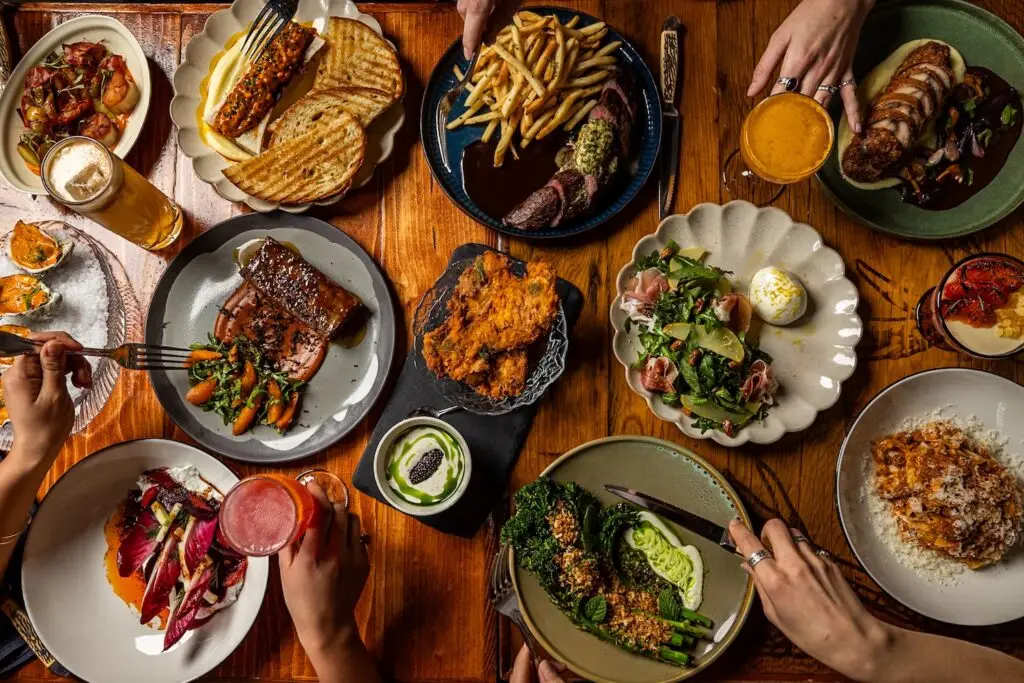
By late afternoon, I was sitting by the marina watching the water shift colors in real time, the kind of view that makes everything feel slower without trying. Dinner at Rumorosa brought the first real taste of the resort’s Cali-Baja identity, starting with a trio of margaritas—passion fruit, spicy watermelon, and creamy coconut—that made it impossible to pick a favorite and slightly dangerous to have them all in front of you at once.
The table opened with guacamole layered with spicy cotija, radish, pomegranate seeds, candied serranos, cilantro, limes, duritos, and warm tortilla chips, followed by Mexican street corn with sweet kernels, spiced aioli, cotija, and more candied serranos that hit just enough heat to keep you absolutely addicted.
For my main, I went with the roasted organic chicken breast with buttered jasmine rice, mole negro, and roasted cauliflower, which felt familiar in structure but elevated in small details like the cilantro and pickled onions. And then the Carajillo tres leches cake, a vanilla sponge layered with coffee and Licor 43 mousse, praline, and caramel sauce, arrived and disappeared faster than it probably should have.
What made it feel so curated wasn’t just the menu, but how intentional everything felt without ever feeling fussy: bright flavors balanced against rich ones, heat against sweetness, and plates that arrived right as the light over the marina started to soften. The next morning carried that same energy. Breakfast could unfold at your own pace, whether that meant taking a Zoom call in your room, heading downstairs for a sit-down meal with friends at Rumorosa, or grabbing something quick from Strada Italian Market. I opted for a vanilla latte from La Colombe at Strada before heading out for the morning.
Courtesy of Sheraton San Diego Resort
I made it just in time for the resort’s complimentary morning yoga on the lawn, boats just visible beyond the stretch of green. The Sheraton offers it daily as part of the stay, a low-pressure option for anyone looking for an easy reset rather than a full workout, which I wasn’t expecting to take part in on this trip but ended up glad I did. The class itself was beginner-friendly, with slow flows and a few optional deeper stretches for anyone who wanted to push into more advanced poses.
Afterward, stand-up paddleboarding shifted everything into a different perspective. My small group launched from the resort’s private dock, boards wobbling slightly as we found our balance, then drifted out into the marina where the water opened up in every direction. We paddled past rows of docked boats, slipped alongside houseboats with their shaded decks and string lights, and followed the gentle curve of the harbor as it widened and narrowed again.
The afternoon transitioned into poolside lounging at Sunglow Cabana Bar, where cabanas, cold drinks, and a poolside lunch had me so relaxed I didn’t even realize my phone had died. Sunglow is open to the public, so if you’re looking for a quick day getaway, you can dock and settle in for SoCal-style shareables and frozen drinks.
Courtesy of Sheraton San Diego Resort
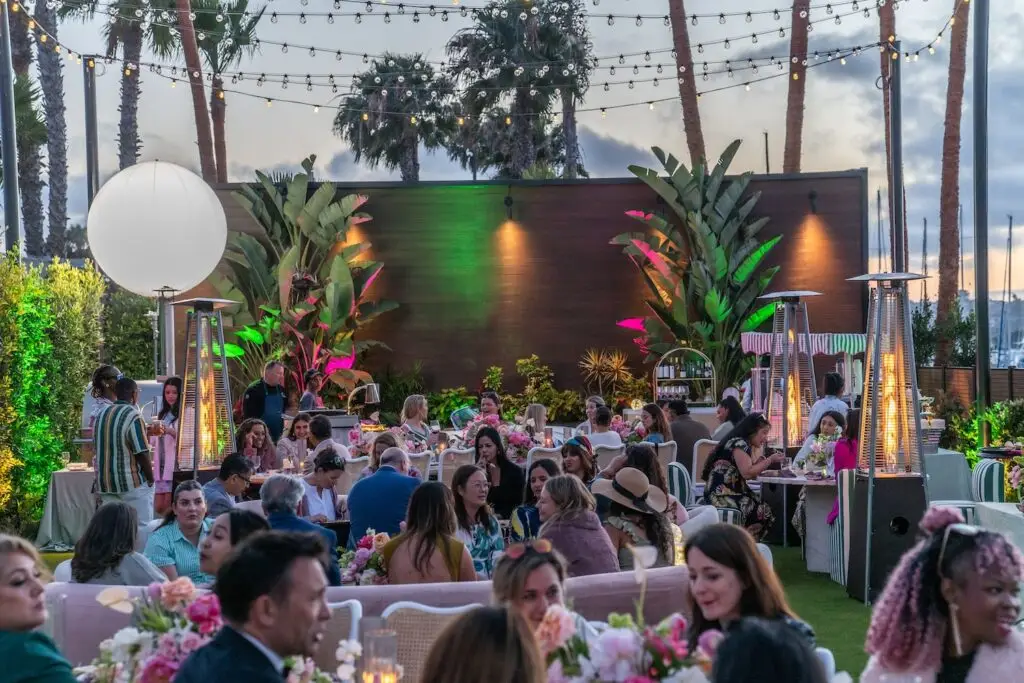
Dinner at the Garden Terrace kind of shifted everything for me. In the daytime it just feels like a nice open space, but at night it becomes something else entirely: more intentional, more “put together” in a way I didn’t really clock at first. As the sun went down over the marina, everything turned warm and the garden lit up in this soft glow that was staged under fairy lights. It was as if you were meant to experience it in this very certain way.
It was easy to picture it then: the quiet before guests arrive, the moment someone steps forward, the pause right before “I do.” There’s often a specific kind of silence right before a ceremony begins. And, at the Garden Terrace, that feeling is built into the space itself. You are standing in a garden wrapped in white blooms and soft greenery, with the harbor stretched out just beyond it. The sun is low enough to turn everything gold. Someone is standing across from you, close enough that everything else fades into background noise.
That evolution, according to Sean Clancy, Vice President and General Manager of Sheraton San Diego Resort, has been years in the making. He describes the property as having been “completely transformed,” from the rooms to the restaurants and everything in between, with new spaces like the Garden Terrace designed to highlight the marina backdrop in a way that feels “naturally stunning” and “magical,” not just scenic.
By the time I checked out on Thursday, watching the sun rise over the marina, empty in the early light, I understood why someone would choose this exact spot to say something they mean forever.
Isabella Dallas is a freelance writer for San Diego Magazine and the Arts and Culture Editor at The Daily Aztec in her final year at San Diego State University. She previously worked as an editorial intern for SDM, but when she’s not writing, you can find her trying the best coffee spots in SD, devouring the latest rom-coms, and indulging in anything and everything pop culture.
If you’ve ever wondered what it would feel like to perform on one of San Diego’s most iconic stages, here’s your shot. The Old Globe is looking for local singers, songwriters, and musicians to take the spotlight before performances of its upcoming musical Begin Again—and the gig comes with a chance to perform on the theater’s main stage and at a new community music event, Begin Again: San Diego Sessions.
Inspired by the opening scene of Begin Again, which makes its pre-Broadway premiere at The Old Globe this fall, the open mic–style performances celebrate local talent while giving audiences a taste of San Diego’s music scene before the curtain rises.
Solo artists and duets ages 18 and older can submit video entries here through Friday, July 10. Selected performers will be notified by July 14.
The public is also invited to Begin Again: San Diego Sessions, a free event on Monday, July 20, at 7 p.m. in the Globe’s Copley Plaza. Attendees can catch performances from top contest participants while enjoying discounted drinks from the theater’s pub.
“Begin Again is a story about hope and someone finding their light,” says Adena Varner, Director of Arts Engagement at The Old Globe. “The opening moment, which is what we’re excited about with this contest, is about an artist who’s unknown taking a chance at an open mic night—and then their life changes.”
“What I love about San Diego is it’s a space where hopes and dreams seem to actually be able to come true, and people get to find themselves, find their light and their voice, so I think the spirit of the show really resonates with who we are as San Diegans,” she says.
For director Lorin Latarro, the pre-show performances are a chance to weave San Diego into the production. While the musical has been developed in New York with New York–based musicians and actors, these performances create a direct connection between the show and the city’s local music community.
“One of the things Lorin is passionate about is wanting these performances to feel like San Diego, so we want them to be diverse,” Varner says. “We want these moments to look like us and all that that means… We have submissions from artists based in Tijuana, North County, and East County, so it’s geographically diverse, ethnically diverse, and we’re looking at age diversity as well.”
The Old Globe has hosted community engagement opportunities tied to past productions—including an art contest and walk-on performances—but nothing quite like this.
“We’ve also never had an open mic night on the plaza, so we’re excited, and we really want the music community to know that they’ve got a place at The Old Globe, too,” Varner says. “We’re getting in the practice of making sure our community feels connected to our shows and have an opportunity to contribute in a way that’s meaningful and impactful for them.”
Begin Again is based on the 2013 film starring Keira Knightley and Mark Ruffalo, with a book by Jenna Clark Embrey and Molly Beach Murphy and music and lyrics by Pat Monahan of Train. Performances run September 6 through October 11, with opening night on September 17.
At the time of publication, The Old Globe had received nearly 100 video submissions.
Kai Oliver-Kurtin is a San Diego-based writer who covers travel, dining, events, and culture. Her writing has been published in USA Today, Condé Nast Traveler, Fodor's Travel, Marie Claire, and HuffPost, among others.
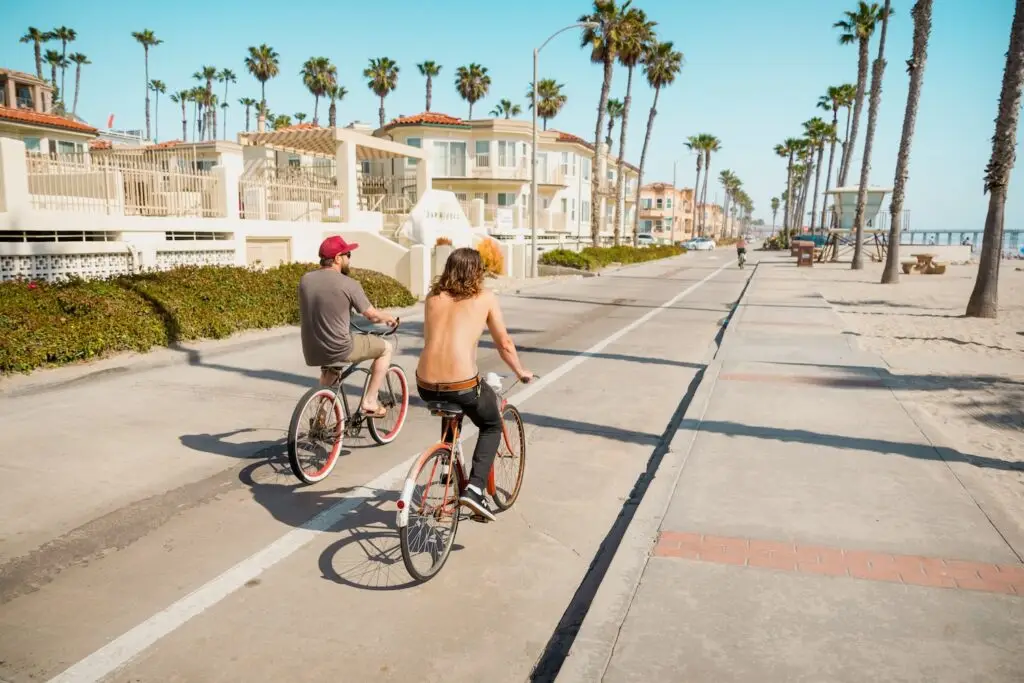
Growing up in Carlsbad, I never quite understood why people vacationed there. What, so you want to check out the field where I have soccer practice? Pay my orthodontist a visit? Carlsbad just felt like a town by the beach, no better or worse than any other in the country. It took going to college out of state for me to actually understand just how rare a place like Carlsbad is.
Thanksgiving break my freshman year, my first time coming home after three months in the Midwest, my shoulders dropped. I rolled down the windows and drove to lifeguard tower 37—the hangout magnet for Carlsbad’s youths (and, in the summer, tourists)—and the smells of the ocean woke me right up like smelling salts do. I finally got it.
Carlsbad isn’t just a stopover town on your way to something better. It is the destination. Travel + Leisure named Carlsbad one of the top 50 places around the world to travel in 2026. From the whole globe, the travel magazine picked my home. Sure, we’ve got the Flower Fields and Legoland—but now it’s the smaller ships and indier dreams that are giving it street-level character.
It’s not just Carlsbad, either. People have talked about the “North County bubble” for decades—a force field that prevents its residents from traveling south of the 56. It’s often used derogatorily, and it’s a fairly accurate burn.
For decades, living up in North County meant giving up on culture, or at least culture within close proximity. But now, the main expansion of San Diego culture is happening up north. Central San Diego restaurants have started taking notice and are expanding into the area—spurred no doubt by Oceanside’s food boom and the Jeune et Jolie–Campfire–Wildland–Lilo constellation in Carlsbad. City Heights burger joint Key & Cleaver opened a new spot in Oceanside; the owners of Parc Bistro-Brasserie in Bankers Hill opened Parc Lounge in Rancho Santa Fe. Possibly the strongest market indicator is that Sam Fox—one of the most successful restaurateurs west of the Rockies—has started focusing on North County for his concepts. In 2025, he opened both The Henry in Carlsbad and Culinary Dropout in Del Mar.
For the ultimate insider guide, we found a handful of inspiring people who live and create and truly know six North County neighborhoods—San Marcos, Escondido, Oceanside, Leucadia, Rancho Santa Fe, and Vista—and asked them how they’d spend a dream day out and about in their town.
Courtesy of North City Farmers Market
San Marcos
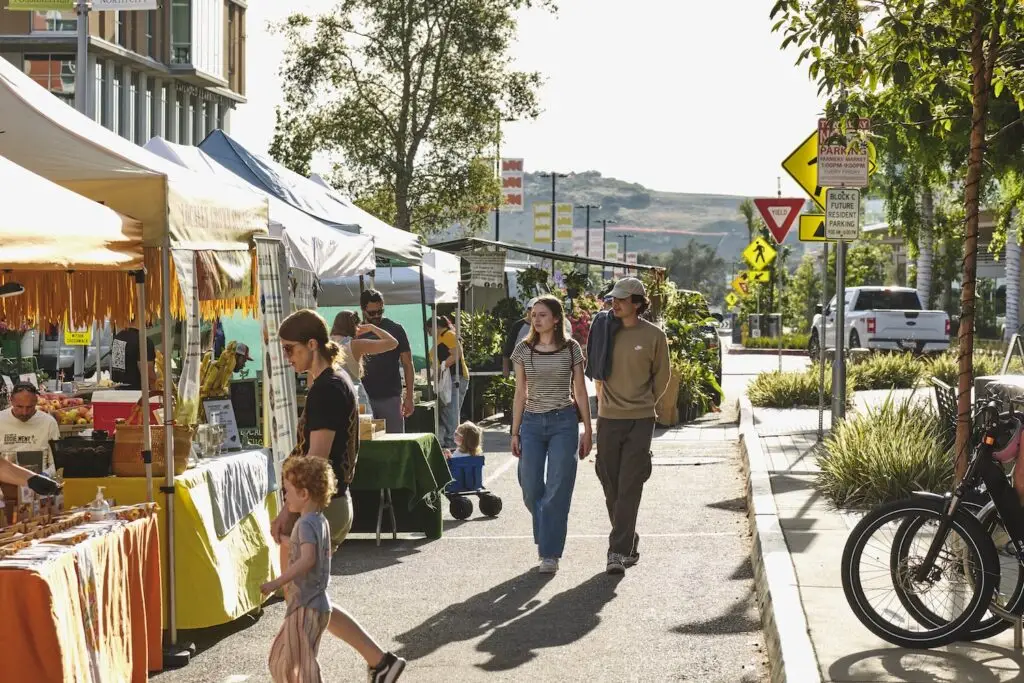
San Marcos is in full renaissance mode. The biggest story is that the grand North City vision is starting to peek through the scaffolding. It’s essentially the North County Downtown that’s been written in the tea leaves and discussed whenever someone gets stuck in traffic at the 5/805 merge: a 200-acre, pedestrian-friendly, mixed-use face-changer that’s slated for 2,600 homes, 350,000 square feet of retail and restaurants, 250 hotel rooms, and about a million square feet of offices and labs. Its most recent manifestation is 222 North City—a 12-story residential tower with over 450 residences, rooftop garden, pool cabanas, art installations, and almost 20,000 square feet of ground-floor retail (Necessity Coffee, Buona Forchetta, Draft Republic, Milonga Empanadas, and a grocery store anchor on its way).
Which means Restaurant Row is no longer burdened with being the primary caregiver for the hungry or the socially inclined. Patricia Prado-Olmos has watched the city morph during her nearly three-decade tenure at CSUSM, having spent the past six years as the school’s chief community engagement officer. She also just announced her forthcoming retirement at the end of the 2026–2027 school year, so she’ll have even more time to haunt local haunts.
Meet the Local: Patricia Prado-Olmos
Those in the know call the university “Cal State StairMaster” from the Sisyphean amount of stairs on the hillside campus. So, any day at or around CSUSM should start with a homestyle carbo-load (biscuits and gravy) from Mama Kat’s.
“There’s something about this breakfast spot that immediately puts me in a good mood,” she says. Mama Kat’s is also known for its pie (strawberry-rhubarb), which is breakfast if you change your perspective.
After a few hours on campus—with a break to pet the university’s official therapy goldendoodle, Frank, who helps ease finals tremors or apprehension of on-campus stairs—Prado-Olmos will wander into North City, just steps away. She says the almond croissant and coffee at Christophe Rull Patisserie rival Parisian cafés: “It feels like the kind of place you’d stumble across in a much bigger city.”
Rull, a Michelin-trained pastry chef who’s done stints on Netflix (Bake Squad) and Food Network (Super Mega Cakes, Halloween Wars), opened his patisserie last fall. The hype hasn’t cooled off yet: Get there early because the crowds do.
Emma Veidt is an editor at San Diego Magazine. She earned her bachelor's and master's degrees from the Missouri School of Journalism. She loves running, hiking, and rock climbing, but really, she mostly loves encounters with the street cats around North Park.
Finding a gift that feels truly personal can be surprisingly difficult. In a sea of generic options — flowers, gift cards, candles, and the like — Xplosion Box offers something more lasting: a customized keepsake built around the photos, messages, and memories that matter most.
Founded by Southern California entrepreneur Jay Vijay, Xplosion Box LLC creates fully customized explosion gift boxes that arrive professionally designed, printed, assembled, and ready to gift. Each box opens layer by layer to reveal personal photos, heartfelt messages, pull-out albums, origami-style photo pockets, and hidden notes, turning a simple gift into an emotional reveal.
The brand was built for people who want to give something meaningful without spending hours printing photos, cutting paper, folding cardstock, or assembling a DIY project. Customers simply choose a box, upload their favorite photos, add personal messages, and the Xplosion Box team transforms those details into a polished keepsake that feels thoughtful, personal, and beautifully made.
Xplosion Box offers personalized gift boxes for birthdays, anniversaries, weddings, graduations, Mother’s Day, Father’s Day, Valentine’s Day, Christmas, proposals, bridesmaid gifts, long-distance relationships, and thoughtful “just because” moments.
Customers can choose from flexible customization options starting at $27. The Mini Surprise Box includes 10 photos, three message cards, and one hidden secret note, while the Mega Surprise Box offers a fuller keepsake experience with 40 photos, three message cards, and one hidden secret note.
What sets Xplosion Box apart is its high level of customization combined with convenience. Filled with personal photos, custom text, decorative details, and layered surprises, each box gives customers the freedom to create a gift that feels one-of-a-kind — without having to make it themselves.
At its core, Xplosion Box helps people turn favorite photos, stories, and words into something tangible: a keepsake that can be opened, revisited, and remembered long after the occasion has passed. asion has passed.
It’s happening, San Diego. The pre–Comic-Con excitement jitters begin to creep in as soon as July hits the calendar. But for those who forgot to set an alarm on registration day, whose batteries died or whose luck ran out in the virtual waiting room, or who simply prefer to soak up the fandom frenzy from the outside, we’ve got the best ways to experience Comic-Con weekend—no badge required.
Ready Party One: The Final Level 2026 SDCC Kickoff Party
Ain’t no party like an after-hours party, and XLE Productions’ Ready Party One is definitely one for comic book fans. Kick-start your convention weekend at Parq Nightclub and enjoy music by fan-favorite ’80s tribute band The Flux Capacitors, along with enough fandom fun, cosplay, retro gaming and pop-culture nostalgia to satisfy your inner geek. At least for the night.
Date & Time: Wednesday, July 22, 8 p.m. Location: Parq Nightclub, 615 Broadway, San Diego, CA 92101 Price: Tickets start at $34
Interactive Zone at Petco Park and Gallagher Square Events
With more than a dozen activities and brand activations, Petco Park’s Interactive Zone is a badgeless fan’s playground, bringing together brands, games, celebrity appearances and immersive experiences all in one place. On Friday, July 24, Funko’s beloved annual party, hosted by Funko founder Mike Becker, returns to Gallagher Square. This year’s “Quest for the Grail” event will take guests on a journey to the sunken city of Atlantis. Expect themed décor, food, drinks, games and special guest appearances.
Date & Time: Thursday, July 23–Sunday, July 26 (times TBD) Location: Lexus Premier Lot across from Petco Park Price: Free; Funko Funday event is ticketed
Cartoon and art lovers can celebrate the work of Chuck Jones, creator of some of animation’s most iconic characters, including Bugs Bunny, Daffy Duck, Road Runner, Wile E. Coyote and Pepé Le Pew, at Seaport Village’s Chuck Jones Gallery. During Comic-Con weekend, the showroom will also host meet-and-greets with talented artists including Disney artist and seascape painter Steve Barton, The Simpsons animator Stephen Reis, and licensed Warner Bros., Hanna-Barbera and Disney fine artist Ben Olson.
Date & Time: Thursday, July 23–Saturday, July 25, 2026 (times TBD) Location: Chuck Jones Gallery, 809 W. Harbor Drive, San Diego, CA Price: Free
PAWmicon Pet Cosplay
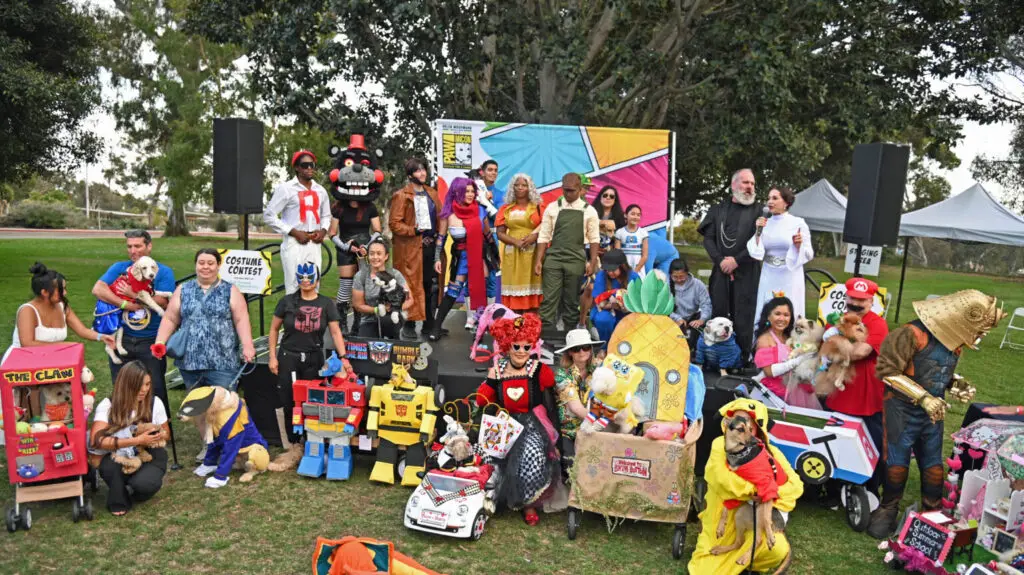
Get your pup’s—and your own—cosplay game ready because Helen Woodward Animal Center’s PAWmicon is back. Enjoy a Comic-Con-themed outing with the whole family while raising awareness for orphaned pets in San Diego. Divided into three categories—Flying Solo, Dynamic Duos & Trios & More, and Fantastic Floats—the event is a paw-fect way to jump-start the festivities.
Date & Time: Tuesday, July 21, 2026, 4:30–7 p.m. Location: Presidents Way Lawn at Balboa Park Price: Free
Comic-Con-Themed Bar Crawl
Why leave all the fun, mischief and mayhem to badge holders when you can join more than 300 partygoers and crawl through some of downtown San Diego’s top bars and nightclubs? Whether you’re called to save the universe or have an allegiance to the dark side, the annual Comic-Con Bar Crawl gives attendees exclusive access to more than 20 venues throughout the Gaslamp Quarter, with free welcome shots, exclusive drink discounts and complimentary entry along the way. This event for ages 21 and older is a fun way to celebrate your fandom outside the convention center.
Date & Time: Friday, July 24–Sunday, July 26, 2026, 8 p.m.–2 a.m. Location: Check-in at Toro, 672 Fifth Ave., San Diego, CA 92101, from 8–9 p.m. Price: $13–$30
Her Universe Fashion Show
Geek out over couture at the annual Her Universe Fashion Show at the Manchester Grand Hyatt. Hosted by founder and Star Wars: The Clone Wars actress Ashley Eckstein and presented by Warner Bros. Discovery Global Consumer Products, this year’s show will feature a selection of designers showcasing one-of-a-kind DC-inspired creations as they compete for a $2,000 cash prize.
Note: Wristbands are traditionally distributed the morning of the event on a first-come, first-served basis, but official details have not yet been announced.
Date & Time: Thursday, July 23, 6 p.m. Location: Manchester Grand Hyatt, Seaport Ballroom, 1 Market Place, San Diego, CA 92101 Price: Free
Comic-Con Museum
A destination for all things fandom, Balboa Park’s Comic-Con Museum brings world-premiere and exclusive exhibits and events to the heart of San Diego, giving fans a place to geek out all year long. The museum is currently featuring the U.S. debut of Doctor Who Worlds of Wonder, showcasing 17 of the Doctor’s most iconic costumes, a full-size TARDIS and a collection of original sonic screwdrivers used on-screen. Visitors can also explore Sangre, Sudor y Mito: The Art and Tradition of Mexican Lucha Libre, featuring rare collectibles and authentic masks and costumes worn by legendary luchadores.
Date & Time: Open Thursday through Tuesday (closed Wednesdays), 10 a.m.–5 p.m. Location: 2131 Pan American Plaza, San Diego, CA 92101 Price: $15–$30; free for children younger than 6
Comic-Con Art Show
Browse an extensive collection of original drawings, paintings, jewelry and other whimsical creations from more than 100 professional and amateur artists at the Comic-Con Art Show. Many pieces will be available for purchase through the silent auction or Quick Sale, giving fans the chance to take home a one-of-a-kind Comic-Con souvenir while supporting talented artists.
Dates & Times:
Thursday, July 23: 11 a.m.–8 p.m.
Friday, July 24: 9 a.m.–8 p.m.
Saturday, July 25: 9 a.m.–6 p.m.
Sunday, July 26: 9 a.m.–6 p.m.
Location: Manchester Grand Hyatt, Grand Hall CD, 1 Market Place, San Diego, CA 92101 Price: Free
Looking for a supercute way to fuel your Comic-Con adventures? Swing by the Hello Kitty Café Truck. This traveling pink café on wheels will be parked at Petco Park’s Interactive Zone, serving up tasty treats and exclusive merchandise. From limited-edition tote bags and hats to mugs and T-shirts, it’s the perfect stop to grab a snack and a little extra kawaii cuteness.
Date & Time:
Thursday, July 23–Saturday, July 25: 10 a.m.–4 p.m.
Sunday, July 26: 10 a.m. (closing time TBD)
Location: Petco Park Interactive Zone, 100 Park Blvd., San Diego, CA 92101 Price: Menu items vary
PopUp Bagels, Spider-Man and Donut Bar Activations at Pendry San Diego
Get ready to fuel up and hype up. Whether you’re a plain-bagel purist or an everything-bagel fan, don’t miss your chance to grab breakfast or recharge at PopUp Bagels’ Volkswagen bus parked outside Pendry San Diego. Then satisfy your sweet tooth at Provisional with a rotating selection of character-themed doughnuts from Donut Bar. Both are available throughout the weekend beginning at 7 a.m. until sold out.
On July 24 and 25 from noon to 4 p.m., head to Nason’s Beer Hall for photo ops to celebrate Sony Pictures’ upcoming Spider-Man: Brand New Day. Guests can sample Tom Holland’s nonalcoholic beer brand, BERO, served in limited-edition themed cans available exclusively during the event.
Camila Ibarra Gallego is a CaliBaja native pursuing a master's degree in culinary journalism at the Basque Culinary Center. Shaped by the culturally rich, bicultural megaregion, she's passionate about sniffing out stories that connect people, territory and culture through food. When she's not tumbling down internet rabbit holes, you can find her pretending to be a wine connoisseur at a local wine bar or nose-deep in a good book.
Before, during, and after the Fourth of July, San Diegans can commemorate America’s 250th anniversary with an abundance of stars, stripes and local celebrations. America The Beautiful: 250 at The Rady Shell and Lamb’s Players Theatre’s revival of American Rhythm will look back at the many songs which define our country. Liberty Station’s Anchored in Freedom celebration and the Independence Day Carnival offer community-centered fun and loads of family-friendly activities. And who can possibly forget the Big Bay Boom, which will resume its reign over San Diego Bay as the state’s biggest fireworks show. Outside of the holiday festivities, this week brings the yearly return of Little Italy’s Summer Sera and the Athenaeum Summer Festival, as well as a slate of championship matches for All Elite Wrestling.
Sip on refreshing beverages and savor a panoramic rooftop view this Friday from 6-8 p.m. during the 21-plus Sunset & Spritz at Margaritaville Hotel San Diego Gaslamp Quarter’s 5 O’Clock Somewhere Bar. There will be a live DJ (until 9 p.m.), appetizers, pool and cabana access, a photo booth, and a cash bar (until 11 p.m.). To accentuate the summer theme, guests are invited to dress in white, pink, and orange attire. Tickets are $29 and come with a welcome aperol spritz.
616 J Street, Gaslamp
The 250 Grand Tasting Menu at Amaya
July 3 & 4
Bring a patriotic palette to the Fairmont Grand Del Mar for The 250 Grand Tasting Menu at Amaya this Friday and Saturday from 5-8:30 p.m. Patrons will be treated to a five-course tasting menu, curated to exhibit a selection of standout regional flavors and culinary concepts that have shaped our country’s distinct food heritage. The meal will also include beverage pairings with each course, such as wine, cocktails, and artisanal drinks. Reservations are $330 per person (with tax and 20% gratuity) on OpenTable.
Don Toliver thrives at being the life of the party (and the “After Party”). His fifth album Octane, released in February, is indicative of his thrill-seeking nature. As with his earlier releases, Octane sees Toliver operating in the space between hip-hop and R&B, with warbling vocals and blaring beats that are best heard at a high volume. This Tuesday at 7:30 p.m., Toliver will play at Pechanga Arena, with rappers SoFaygo, Chase B and SahBabii—who had a guest verse on Octane standout “K9”—as special guests. Tickets start at $156 for this concert.
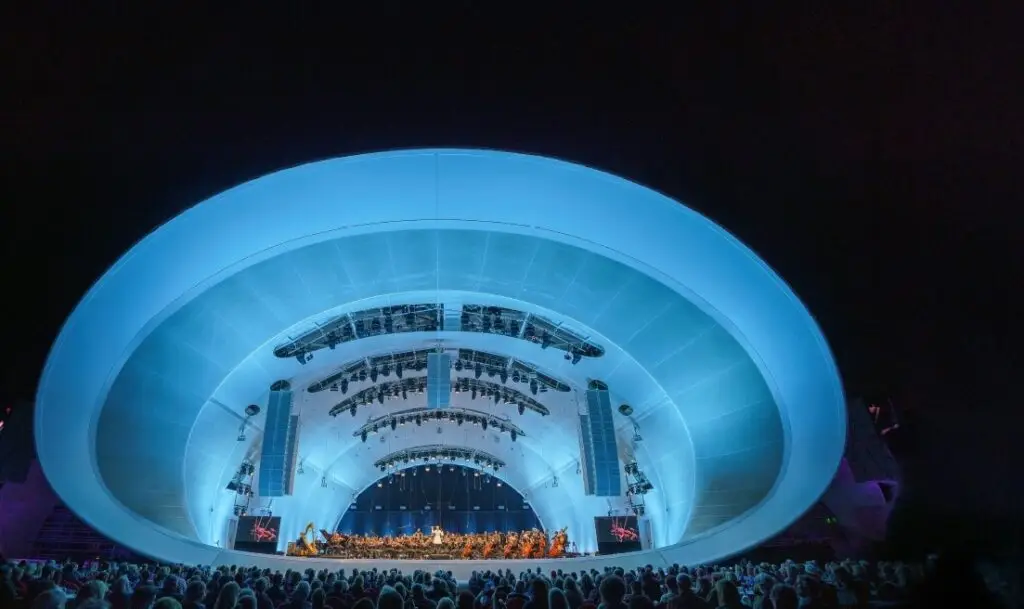
What makes musicals like Wicked, Cats, Chicago, and Jersey Boys so timeless is the legion of excellent songs that makes fans out of those who’ve never even watched the show. This Friday at 7:30 p.m. during Blockbuster Broadway! at The Rady Shell, conductor Evan Roider, the San Diego Symphony Orchestra, and veteran vocalists Alex Getlin, Jessica Hendy, Scott Coulter, and John Boswell (also on piano) will perform an all-star theater soundtrack. In addition to the shows named above, audiences can expect songs from A Chorus Line, The Phantom of the Opera, Annie,and more. Tickets range from $57 to $129 for this concert.
222 Marina Park Way, Embarcadero
America The Beautiful: 250 at The Rady Shell
July 4
One night after recognizing the brilliance of Broadway, The Rady Shell will ring in the United States’ landmark anniversary with America The Beautiful: 250 this Saturday at 7:30 p.m. Conductor Byron Stripling, joined by a five-performer ensemble and the San Diego Symphony Orchestra, will lead a night of ballads that best resemble the red, white, and blue, including songs sourced from the Great American Songbook. After the show, concertgoers are invited to watch the nearby Big Bay Boom from their seats. Tickets range from $71 to $139 for this concert.
222 Marina Park Way, Embarcadero
Athenaeum Summer Festival at Athenaeum Music & Arts Library
Ryan Hardison is a freelance arts and entertainment writer and recent graduate of San Diego State. When he's not staring at his laptop, he's likely eating an adobada burrito or getting sunburnt at the beach.
SeaWorld dazzles with a drone show, big-name entertainers, new animal adventures and more
By Partner Content
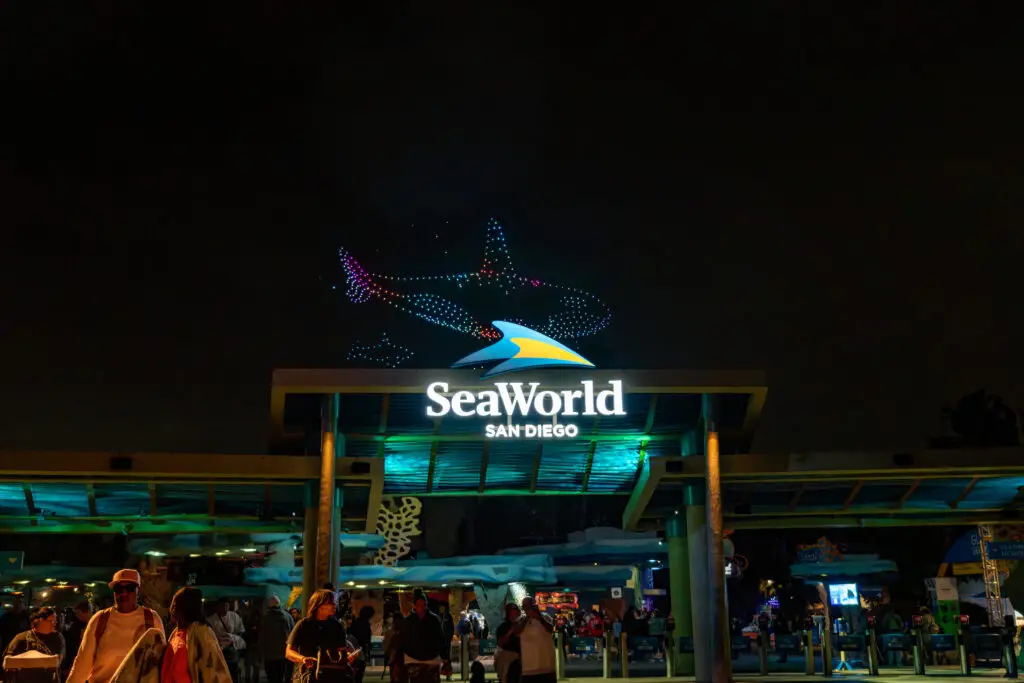
Nights are heating up at SeaWorld San Diego. The quintessential summertime staple on Mission Bay is transforming into a destination for unforgettable day-to-night adventures, bringing back some of its most popular Summer Nights programming and introducing exciting new experiences sure to delight both kids and adults alike.
The 2026 Summer Day to Night at SeaWorld San Diego is the park’s most ambitious season yet. SeaWorld has planned a highly anticipated entertainment lineup that features nine weeks of throwback concerts featuring R&B and hip‑hop favorites from the ‘90s and early 2000s, including Jordin Sparks, Too $hort and Warren G, Ashanti, and an array of boy band heartthrobs performing together as part of the Pop 2000 Tour.
New this season is perhaps the park’s most visible update: a nightly drone show, Ocean of Dreams, which illuminates the sky with hundreds of synchronized sparklers. Drones form sea otters, sharks, dolphins, and a majestic orca that tell a breathtaking 12-minute story of marine life and underwater ecosystems. The show culminates with a spectacular electric neon finale celebrating hope, wonder, and ocean stewardship.
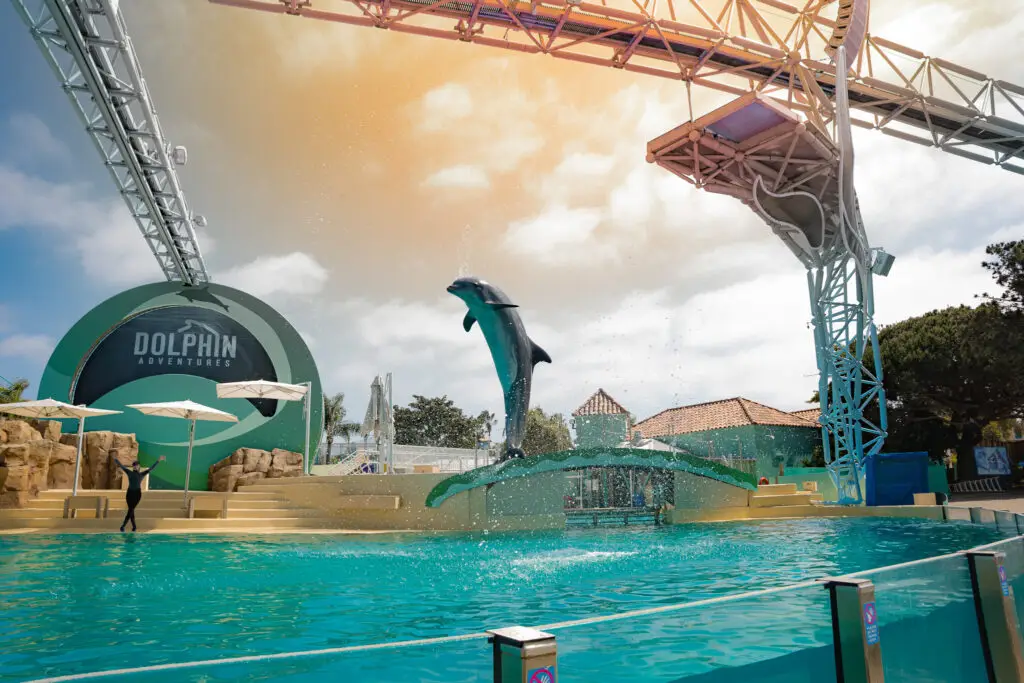
Nighttime visitors are also in store for animal adventures that fuse education with high-energy fun and the dreamy ambiance of nighttime. The park has launched two all-new animal presentations: Shamu’s Celebration:Light Up the Night and Dolphins: Touch the Sky. Shamu’s Celebration:Light Up the Night features vibrant lighting, music, and dynamic choreography that celebrates the power and beauty of killer whales. Dolphins: Touch the Sky showcases playful bottlenose dolphins and the special connection between humans and the natural world. And back by popular demand is fan-favorite Sea Lions Tonite. See the charming pinnipeds splash, play, and parody pop culture in this refreshed crowd-pleaser.
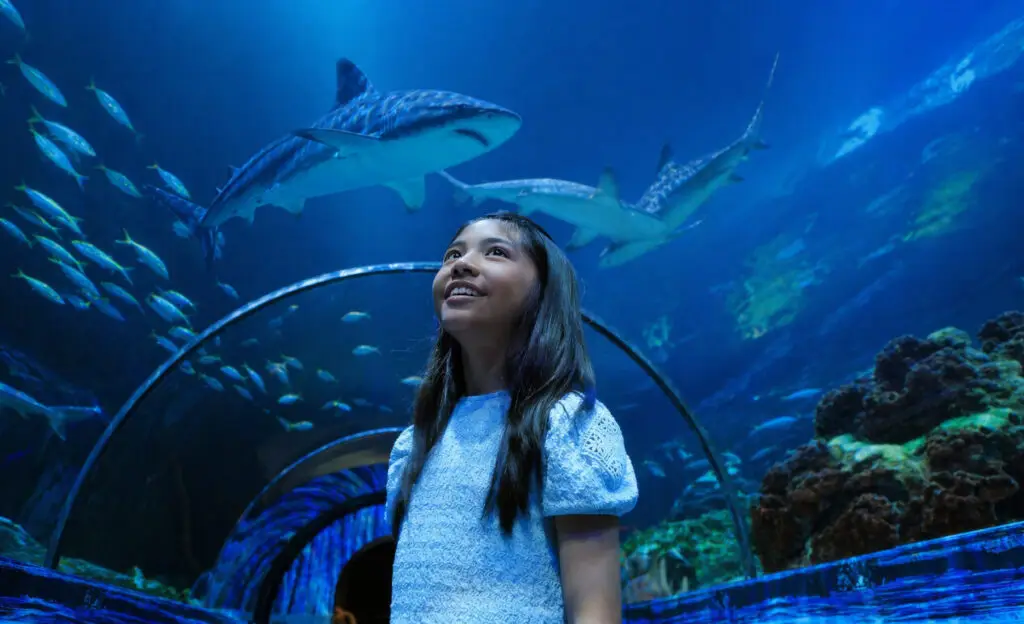
More must-sees: a newly reimagined Shark Encounter, one of the country’s more immersive exhibits highlighting 11 different species up close, SeaWorld’s beloved BMX Blast! stunt show, and high-seas escapade, Pirates Ahoy! The Battle for Mermaid Cove. And don’t miss the park’s all-new Deep Sea Disco, which encourages guests to dance the night away under the glow of the SkyTower, and vibrant closing time laser light display Laser Reef Summer Spectacular.
Amp up the nighttime vibe with local craft beers, curated cocktails, and nostalgic theme park treats with $1 beer all summer long. SeaWorld is the place for day to night summer fun. When the sun goes down, SeaWorld lights up, and inspires guests of all ages to embrace their inner whimsy and see why generations of San Diegans head to SeaWorld to make memories they’ll never forget.