Ready to know more about San Diego?

Subscribe
Everything SD JUNE 26, 2024

Locals Strive to Revive the San Diego Gay Rodeo

The inclusive event thrived from 1989 to 2010—and now it’s riding the Western trend to a triumphant return
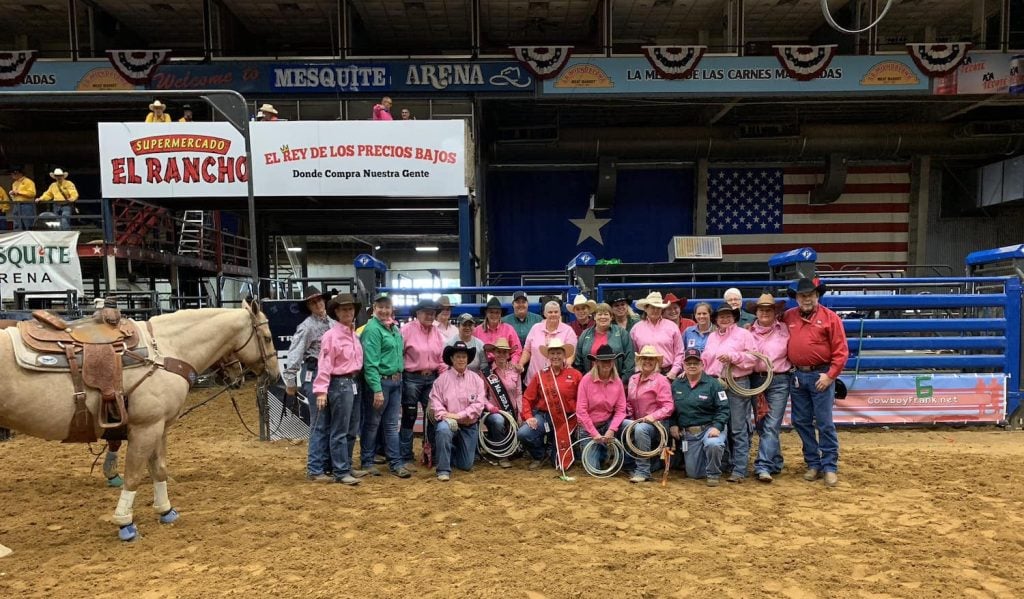
Locals Strive to Revive the San Diego Gay Rodeo
Courtesy of International Gay Rodeo Association

Stop by The Loft on 5th Avenue on a Saturday afternoon, and you might find Andy Siekkinen in a cowboy hat and a red rodeo sash, carrying a platter of Jell-o shots. Don’t be fooled by his understated demeanor and quiet smile—Siekkinen is royalty. Gay rodeo royalty, that is. 

This year, Siekkinen was the first runner-up for Mr. International Gay Rodeo Association (IGRA). In the past two years, he won the distinctions Mr. Golden State Gay Rodeo (GSGRA) and Mr. Palm Springs Hot Rodeo. Despite all these titles, he’s relatively new to the world of rodeo. 

Siekkinen grew up on a dairy farm in Ohio, but he had never ridden a horse until three years ago, when he learned about gay rodeo and started training to compete. Now, it is a central part of his life. And those red and green Jell-o shots he’s hawking have an important role to play—Siekkinen is raising funds to revive the San Diego Gay Rodeo, a once-raucous annual event that hasn’t taken place in 14 years. 
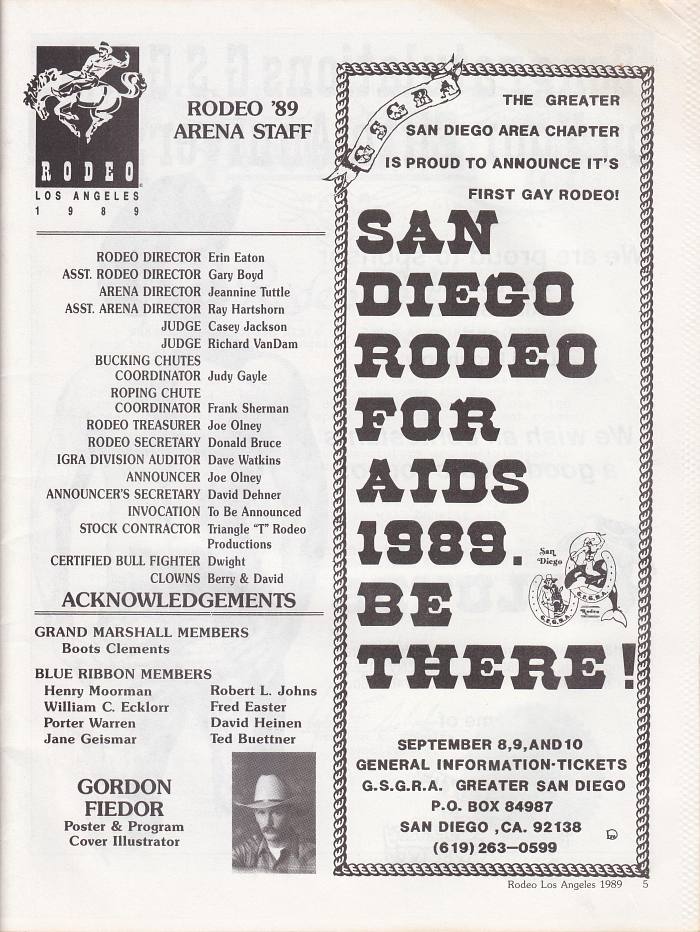
Historic flyer for San Diego's first Gay Rodeo in 1989
Courtesy of Gay Rodeo History

San Diego’s first Gay Rodeo was held in 1989. It continued annually up until 2010, when low membership caused it to shutter. The rodeos are completely volunteer-run, so without actively recruiting members and training new leadership, “you don’t have enough critical mass to keep going,” Siekkinen explains. 

But Siekkinen believes now is the perfect time for the event to return to our city. Mainstream culture has a renewed interest in the Western aesthetic: Cowboy boots are trending, Yellowstone is streaming, and pop stars have started releasing country songs. “Right now, we’re in an upswing,” Siekkinen says. “You can just feel it.” 

Longtime San Diego resident Tim Lowry attended the first-ever San Diego Gay Rodeo. “It was in Lakeside, and we were all worried about getting beat up,” he recalls. But that didn’t stop him from attending. There was too much fun to be had. Thousands of people packed an event hall at the rodeo, line dancing. “I loved me some cowboys and a twirl across the floor,” Lowry says. 

A Golden State Gay Rodeo Association event
Courtesy of Golden State Gay Rodeo Association

What makes a gay rodeo different from a “straight rodeo?” Well, beyond the traditional roping and rough stock competitions, there are events you just won’t find anywhere else—like Steer Decorating, in which a pair of competitors must tie a ribbon to a steer’s tail, or Goat Dressing, in which contestants must wrestle a goat into a pair of tighty-whities and race back across the finish line before the underwear falls down. Then there’s the Wild Drag Race, where a participant has to jump on the back of a steer dressed in full drag. “It’s pure chaos,” Siekkinen says. 

But it’s not all horseplay. Another integral aspect of the event is charity. America’s first gay rodeo, held in Reno in 1976, raised money for a Thanksgiving dinner at a home for the elderly, and subsequent rodeos have donated their profits to muscular dystrophy and HIV research, among other social needs. 

“Our rodeos aren’t just for the LGBTQ community,” Siekkinen says. “I like to say they’re for anybody who’s not an asshole.” In May, one of the bull riders at the Las Vegas Gay Rodeo made his gay rodeo debut after only competing in traditional rodeos. He joined to get involved in the LGBTQ community and support his 13-year-old child who had come out as non-binary. He won the Sportsmanship Award by a landslide, Siekkinen remembers.

Siekkinen isn’t the only one striving to bring the gay rodeo back to town. Tessa Trujillo is working the crowd at The Loft, charming customers and delivering shots. Her voice carries across the patio, punctuated by an infectious laugh. “I’m a people person,” she says.

The Palm Springs Hot Rodeo a regional event as part of the Golden State Gay Rodeo Association featuring cowboys practicing their lassos
Courtesy of Palm Springs Hot Rodeo

Trujillo has spent all her life in San Diego. “My family has been in California since before there was a California,” she tells me. Her grandfather was a cattle farmer. Like Siekkinen, she found her way into the gay rodeo circuit in recent years. “I’ve been to straight rodeos,” she says. “But I never felt at home.” 

When she attended a gay rodeo in Scottsdale, she became hooked. She was crowned Miss Palm Springs Hot Rodeo in 2022 and Miss Golden State Gay Rodeo in 2023. But she wanted her hometown to experience the same energy and community. “I got this urge,” she says. “I thought, ‘I’m gonna bring this back to San Diego.’” 

Trujillo has stayed true to her word. She has thrown herself into planning, recruiting members, and fundraising––she orchestrates pool tournaments, raffles, barbecues. “It’s a lot of work, but I love it,” Trujillo says. “I’m good at it.”

Winners of the 2023 International Gay Rodeo featuring cowboys and drag queens wearing sashes
Courtesy of International Gay Rodeo Association

This year, Trujillo became the first-ever Mx. Golden State Gay Rodeo, a new distinction that Siekkinen helped establish in an effort to make GSGRA more inclusive. The pre-existing royalty categories were Mr., Ms., Miss, and MsTer, the latter two awarded to drag queens and kings, respectively. 

At the annual IGRA convention, Siekkinen proposed adding a Mx. title. He had noticed he wasn’t seeing a lot of non-binary and gender-nonconforming individuals in the rodeo community. “I want everybody to know they’re welcome,” he says. “We need to make sure we’re not stuck in the past. We have to evolve and change and bring younger people in.” The committee took a vote and it passed unanimously.

Trujillo and Siekkinen are hoping to revive the San Diego Gay Rodeo as soon as 2025. There are many steps to the process: graduating from a club to a chapter, becoming a 501(c)3, and raising a lot more money. But Siekkinen is optimistic. “Those early rodeos were wild,” he says. “That’s why so many people would come—because it was such an experience. To recapture that, we have to look to the future and make sure we are part of it.”
Cora Lee

About Cora Lee

Cora Lee was born and raised in San Diego. More of her work can be found at coralee.net.

Subscribe to our newsletters

Select Options

By subscribing you confirm that you agree with our Terms and Conditions and Privacy Policy.

Arts & Culture SEPTEMBER 2, 2026

31 People Shaping San Diego’s Creative Scene

Meet the artists, makers, and advocates whose work shapes how the city looks, sounds, gathers, and connects

31 People Shaping San Diego’s Creative Scene
Photo Credit: Katie Gardner & Matt Furman

San Diego is full of people who deserve a few thousand words on what they make, who they bring together, and how their work changes the city around them. The artists, makers, advocates, and behind-the-scenes talent below are a small part of that larger ecosystem.

To help us narrow our list, we looked for names that kept coming up, work that reflects the diversity of our region, and people building something bigger than themselves.

Jackie is a long-time freelance journalist covering cannabis, food/restaurants, travel, labor, wine, spirits, arts & culture, design, and other topics. Her work has been selected twice for Best American Travel Writing, and she has won a variety of national and local awards for her writing and reporting.

Isabella Dallas is a freelance writer for San Diego Magazine and the Arts and Culture Editor at The Daily Aztec in her final year at San Diego State University. She previously worked as an editorial intern for SDM, but when she’s not writing, you can find her trying the best coffee spots in SD, devouring the latest rom-coms, and indulging in anything and everything pop culture.

Matt Eisenberg is an award-winning writer and photographer based in San Diego. A former ESPN editor, his work has also been published by CNN, Bleacher Report and the New York Daily News.

A

About Aaryn Belfer

Aaryn Belfer is a writer and editor specializing in nonfiction across art, architecture, and culture. Once upon a time, she wrote a provocative column for San Diego CityBeat (RIP). She was a runner up in the 2025 Matchbook Stories contest at the San Diego Central Library and is irrationally happy about it. Currently in her Soft Girl Era, Aaryn has expensive taste in (mostly flat) shoes and will choose a great art exhibit or live jazz concert over almost anything else. Except, possibly, Javier Bardem.

Leorah Gavidor won her first essay contest at age 5. She writes features, news, and non-fiction in San Diego.

Lili Kim

About Lili Kim

Lili Kim is a content coordinator and writer for San Diego Magazine, with experience highlighting local businesses and communities. When not writing or shooting film, she is likely brewing her seventh cup of tea of the day or strolling along Sunset Cliffs.

Emma Veidt

About Emma Veidt

Emma Veidt is an editor at San Diego Magazine. She earned her bachelor's and master's degrees from the Missouri School of Journalism. She loves running, hiking, and rock climbing, but really, she mostly loves encounters with the street cats around North Park.

Gail Czyszczon is owner/copywriter at Z3 Writing and best-selling author of a children’s book series. As a strategic communications professional and editorialist, she's passionate about discovering untold stories and themes that ignite fresh conversation and true change in communities.

Everything SD AUGUST 28, 2026

San Diego Is Getting the Music Venue It’s Been Missing

Live Nation is turning the historic Wonder Bread Building into a 4,000-capacity concert hall designed to bring more touring acts to the city

San Diego Is Getting the Music Venue It’s Been Missing
Rendering courtesy of Live Nation

Imagine being the song continuously getting skipped on the playlist. Not because no one wants to hear you, but because you never quite fit the moment. For years, San Diego has been that song on the touring circuit. Artists who have outgrown intimate clubs but aren’t yet filling  arenas and stadiums have often passed us by, heading north to venues better suited to the size of their show. San Diego wasn’t missing the audience, it was missing the room.

That’s all about to change.

On August 17, Live Nation Entertainment announced plans to transform the historic Wonder Bread Building, which it purchased in June for $16.8 million, into a 4,000-capacity indoor venue slated to open in fall 2028. The new space will host music acts as well as private, corporate, and community events. 

Currently, San Diego’s concert landscape jumps quickly from intimate clubs like the Casbah, Winston’s, and Belly Up to larger theaters, amphitheaters, arenas, and stadiums. What’s largely missing—particularly downtown—is a modern indoor room built specifically for roughly 4,000 concertgoers. This leaves a gap in mid-size venues for touring acts that land stages like the Hollywood Palladium or Boston’s MGM Music Hall at Fenway. 

“We are filling a void in the market,” says John Schalk, Live Nation’s Vice President, San Diego Market. “There are other venues in town, but this […] building is just something that doesn’t currently exist.” Although SDSU’s Cal Coast Credit Union Amphitheater serves the 4,000-capacity range, its outdoor, fixed-seating arrangement isn’t as versatile as the proposed Live Nation project. 

Located at 171 14th Street, just a six-minute walk from Petco Park, the building carries a century of history. Architect Eugene Hoffman designed it in 1924, a year after completing the Barcelona Apartment Hotel in Bankers Hill. The landmark brick building served as a bakery and warehouse for the Southern California Baking Company before Continental Baking Company, producers of Wonder Bread, took over in the 1950s and operated there through 1988 continued at the site until 2007.

In the early 2000s, Bob and Gay Sinclair, the couple behind a portfolio of East Village properties, purchased the building. After Bob—the founder of Pannikin Coffee & Tea—died in 2011, Gay sold much of their real estate portfolio but held onto the Wonder Bread Building. Mission Brewing eventually took over the space, where it operated for more than a decade before announcing its 2026 departure.

Now, the building is preparing for another reinvention. Live Nation plans to preserve the historic bakery’s four exterior walls, red brick façade, grain silo, barrel-vaulted trusses, and skylights as part of its next chapter.

Live Nation isn’t looking to erase its history but to celebrate it, allowing the building’s past to give the new venue some soul. “It’s really important for us that we maintain the integrity and the history of that building,” Schalk says. “There will be new construction and design elements as we go through the process to create the concert venue, but we’re working really hard to preserve it.”

Blueprint Studio, Live Nation’s in-house design and development group, and Gensler, the architecture firm behind San Diego International Airport Terminal 1 and Snapdragon Stadium, will be heading the project. The plan is to design the ground-floor space as an open, general-admission area with a premium level above with 600-plus fixed seats, in addition to box and suite sections. There will also be an additional structure built on top of the historical portion of the building (the four original walls that house the lobby) called the Vinyl Room—a Japanese-inspired hi-fi listening VIP lounge serving elevated food options.

One of the most reassuring aspects of the project is the focus on the concertgoer’s experience—specifically the “pet peeves” we all know too well: long bathroom lines, cramped exits, obstructed views. According to Schalk, one of the best things about building upon the existing structure is having the ability to consider potential obstacles and tackle them before construction begins. “I’d say we are ‘purpose building’ the entirety of the project for a music venue,” says Gensler lead project architect Garrett van Leeuwen. “As part of our design process, we do an in-depth sightline analysis to make sure that sightlines are optimized from every point and seat within the venue.” 

Circulation design is also being implemented to ease traffic flow, alongside acoustic optimization and a transformative outdoor beautification effort. According to van Leeuwen, this “public realm space” will grow the existing 14-foot sidewalk to a 32-foot sidewalk complete with plazas and landscaping. 

“This venue is for the fans. For the music lovers,” Schalk explains. The vision is intimate: “I want a fan to walk up to that building, see that red brick facade, grab their ticket from the box office, go into the lobby and see some of the history that will present itself… and feel like you entered a home.” Schalk also expressed a “keen interest in making sure that we work with the local artists, the local bands, the local musicians in town.” It’s a project that recognizes San Diego as a growing market that is hungry and ready to see a vibrant arts and culture community thrive. 

According to an analysis by Oxford Economics analysis shared by Live Nation, the venue is projected to deliver a significant boost to the local economy, generating approximately $97 million in annual economic impact and supporting 660 jobs. This also includes welcoming 316,000 fans each year—with 126,000 traveling from outside the San Diego metro area—and driving $53 million in local spending at nearby restaurants, hotels, and retail establishments. 

Considering its proximity to other major event spaces and overall busy urban areas, traffic and parking may be a concern, especially on nights of overlapping events. But in those cases, Schalk said they would work together on communication efforts; parking availability; and staggering start, end, and loading times; as well as providing easy access to designated rideshare areas. With transit stations nearby (the closest one being a 4-minute walk at 12th & Imperial), public transportation is another great option for enjoying your night out. 

There are still two years of design, construction, and plenty of logistics between now and opening night. But the bigger promise of the Wonder Bread Building is simple: San Diego finally gets a venue built for the artists who have historically passed it by. After years of getting skipped on the touring playlist, the city may finally be getting its turn on repeat.

Camila Ibarra Gallego is a CaliBaja native pursuing a master's degree in culinary journalism at the Basque Culinary Center. Shaped by the culturally rich, bicultural megaregion, she's passionate about sniffing out stories that connect people, territory and culture through food. When she's not tumbling down internet rabbit holes, you can find her pretending to be a wine connoisseur at a local wine bar or nose-deep in a good book.

Everything SD AUGUST 28, 2026

The Best Things to See, Do & Explore in Balboa Park

Whether you're a lover of the arts, music, or a leisurely stroll through the park, these are Balboa's best attractions

The Best Things to See, Do & Explore in Balboa Park
Photo Credit: Jennifer Curry Wingrove

SDMA’s 100th Anniversary

On February 28, 1926, the Fine Arts Gallery of San Diego (now called the San Diego Museum of Art) opened its Plateresque doors to 3,000 guests for opening day. Over the next century, the museum changed with the times—even once functioning as a naval hospital after Pearl Harbor. This year, the museum is celebrating its 100th birthday with an exhibit (open through January 24, 2027) featuring photographs, ephemera, and film footage spanning the museum’s history.

Courtesy of Tim Novara

Free Concerts at Spreckels Organ Pavilion

Every Sunday from 2 to 3 p.m., stop by the historic Spreckels Organ Pavilion for a free concert presented by the City of San Diego on the largest outdoor organ in the world (more than 5,000 pipes). The pavilion seats 2,400 for performances by the civic organist or guest artists.

The New Natural History Museum

Some think natural history museums are just cemeteries for dioramas that haven’t received an update since the Reagan administration. When it comes to The Nat, which just finished a $7.5 million rejuvenation, they’re totally wrong. The museum debuted a new rooftop that replaces its 25-year-old atrium. The old roof created a greenhouse effect that steamed up some exhibits, so the new one—which includes 200 solar panels and better temperature control—will help preserve the artifacts inside. Each Friday in the summer, The Nat also becomes one of the season’s vibiest hotspots during Nat at Night, with food from places like Wolf in the Woods and The Craft Taco, bars and signature cocktails on several floors, and a rooftop DJ.

Fleet Science Theater Remodel

The Fleet Science Center just received its most significant update since the 1990s. It expanded its exhibit space by 20 percent and introduced a newly designed entrance gallery (formerly the IMAX theater lobby) that includes free exhibits for visitors who want a taste of the science without paying an admission fee. The former ticketing area now houses the Mindbender Mansion exhibit, and there’s a new café, Element 8, that will, of course, sell the center’s famous soft serve.

Studio S MAY 5, 2026

Artistry, Aesthetics, and Inclusive Luxury

KQ Aesthetic Society goes beyond cosmetic to provide comprehensive care and transformative results

Artistry, Aesthetics, and Inclusive Luxury

Kelly H. Harfouche, founder of KQ Aesthetic Society, knows firsthand that cosmetic treatments like fillers, neurotoxins, and microneedling, can not only enhance a person’s appearance and restore confidence, they have the power to truly change a person’s life. An expert injector has the ability to tailor treatments to each individual patient’s anatomy and goals for personalized results. Harfouche, a board-certified nurse practitioner, has spent nearly a decade perfecting her craft as an aesthetic injector and integrating her multifaceted artistic skills with precision patient care. Her commitment to continual education and training, plus a passion for helping people look—and feel—their best, set KQ Aesthetic Society apart in a sea of local medspas. 

For many people considering nonsurgical treatments, the intent is to look refreshed and refined. KQ Aesthetic Society’s philosophy eschews a cookie cutter approach that bases treatments around units, instead working to understand each person’s unique goals, then curating a treatment plan to fit that vision. Harfouche focuses on “inclusive luxury,” the belief that everyone deserves access to aesthetic treatments, respective of budget restrictions. She develops long-standing trusted relationships with her patients, and works with each one to achieve their aesthetic objectives and address the underlying causes of their concerns. 

“For me, forming an honest and open relationship with every patient who walks through the door is essential. This means understanding them on a deeper level and meeting them where they are to define and achieve their individual goals,” she says. 

Drawing on her artistic background, which inspired her transition into medical aesthetics, Harfouche sees each client as a “unique canvas.” Rather than relying on standardized procedures, the practitioner’s distinctive approach combines her profound understanding of the physiological and anatomical changes associated with aging with an unwavering commitment to ongoing education about the newest products and their mechanisms of action. Her goal is to make each patient feel beautiful in their own skin and to embrace their individuality. 

She has also pioneered a way to combine her talent for aesthetic artistry with her philanthropic nature. Harfouche is one of only a handful of providers using dermal fillers to treat patients with lip asymmetry and scarring resulting from cleft lip surgery. Patients travel from around the country for this transformative treatment, noting increased confidence and a restored identity. She hopes to eventually launch a training program to help fill the void in this space.  

“My passion has always been connecting with people and giving back in any capacity that I can,” she says. In the rapidly advancing landscape of aesthetic medicine, you can place your confidence in Harfouche and KQ Aesthetic Society to deliver exceptional care. To learn more or book a consultation, please visit kqaestheticsociety.com.

Arts & Culture AUGUST 27, 2026

The Best Things to Do in San Diego: September 2026

Whether you’re ready to lean into fall or determined to keep summer going, here are all the best things to do this month

The Best Things to Do in San Diego: September 2026
Courtesy of Oceanside Museum of Art

September is San Diego’s unofficial second summer—the crowds thin, the weather stays warm, and the city’s calendar somehow gets even busier. This month brings stadium-sized rock shows, Broadway’s buzziest comedy, a new anime convention, world-premiere theater, gallery openings, food festivals, and the first signs of spooky season. Whether you’re ready to lean into fall or determined to keep summer going, here are the best things to do in San Diego this September.

Concerts & Festivals | Theater & Art Exhibits | More Fun Things to Do

Courtesy of Kehlani

Concerts & Festivals in San Diego This Month

9/2 

As Guns N’ Roses storm into decade five, their appetite for destruction persists. During their Snapdragon Stadium concert, hear the hard rock anthems, new material and a set from The Black Crowes.

9/23

Kehlani is proof that the romance and earnest sensuality of old-school R&B will never go out of style. Hear her take it back to the aughts at Viejas Arena.

Theater & Art Exhibits in San Diego This Month

9/6-10/11

From the silver screen to The Old Globe stage, John Carney will Begin Again (again) with a world premiere musical adaptation featuring new songs—courtesy of Train—and a story overflowing with hope. 

9/12-10/17 

The concept of work is a guiding principle for San Diego native and multidisciplinary creative noé olivas. Observe his community-informed approach via Tierra y Cielo (Earth and Sky) at Best Practice Gallery. 

9/18-10/25 

Two workers grapple with the weight of their roles at a temporary migrant shelter in Mario Vega’s world premiere play Our Lady of the San Diego Convention Center, set for citywide performances. 

9/26-2/28/2027

Luminous visions of peace and the Punjabi-American roots of Rupinder Kaloti inform The Gathering, a wondrous unification of family foretold via paintings at Oceanside Museum of Art. 

9/29-10/4 

It’s Mary Todd Lincoln’s world and we’re just living in it. See the presidential paramour barrel to her way to stardom at the Civic Theatre during Oh, Mary!, Cole Escola’s political spoof. 

Courtesy of SeaWorld

More Fun Things to Do in San Diego This Month

9/5 & 9/6

Pros and Con(vention)s: Anime San Diego will debut at the San Diego Convention Center with cosplayers, panels and more than 400 vendors well-versed in Japanese animation.

9/11-10/31 

Scaredy cats beware: SeaWorld San Diego’s Howl-O-Scream embraces frights forged in darkness. Enjoy an ominous lineup of live shows, scare zones and bloody bars ahead of Halloween. 

9/12

The best parts of Artivál and the Alley Cat Art Walk have united for the free Alley Cat Art Fest, an all-day outing for live music and immersive artwork in Downtown El Cajon.

9/12 & 9/13 

Take a Grecian vacation for a fraction of the price during the annual Cardiff Greek Festival, two days of immersive cuisine and culture—with plenty of dancing—on the Encinitas coast.

9/13-9/20

Step away from the stove! The California Restaurant Association has eight days of eating experiences with your name on it. During San Diego Restaurant Week, explore by meal, neighborhood or cuisine for your personal dining plan. 

9/16 

Nourish yourself with an all-inclusive spread of Pacific Beach eats and locally-crafted artwork during the HeArt of PB Restaurant Walk on Garnet Avenue.

9/19 

When it comes to stand-up comedy, Chelsea Handler is always ready to roast. See Handler tell anecdotes and skewer an assemblage of victims during her Balboa Theatre performance. 

Ryan Hardison is a freelance arts and entertainment writer and recent graduate of San Diego State. When he's not staring at his laptop, he's likely eating an adobada burrito or getting sunburnt at the beach.

Everything SD AUGUST 1, 2026

A Rare Look Inside Callaway Golf’s San Diego Test Center

The Ely Callaway Performance Center is where tour-level fittings, cutting-edge technology, and golf equipment you can’t buy yet all come together

A Rare Look Inside Callaway Golf’s San Diego Test Center
Courtesy of Ely Callaway Performance Center

“Come test something.”

Those are quite possibly my three favorite words in the English language—all due respect to “I love you” or the highly underrated “you were right.”

I’ve been a PGA Golf Professional since 1994, and yes, full bias disclosure, a Callaway Golf Ambassador for 18 years. One of the bonuses that comes with that combo is access to the Ely Callaway Performance Center—a place so exclusive it gives “velvet rope” vibes.

Originally opened in 2006 as a highly functional (yet not exactly breathtaking) test facility, the ECPC got a serious glow-up in 2018 when Gil Hanse (along with partner Geoff Shackelford) turned it into what can only be described as a fully engineered golf playground. Hanse is no stranger to golf course renovations. In 2024, he completed an extensive redesign of the Omni La Costa North Course in Carlsbad, so it could host the NCAA Division 1 Golf Championships. He also worked on acclaimed courses like Winged Foot, Merion Golf Club, and Oakmont Country Club.

In just two months, it went from a standard test center and R&D lab to a fully dialed-in golf playground.

Courtesy of Ely Callaway Performance Center

What was once purely practical is now intentionally designed to be both precise and inspiring. The targets are staggered with purpose—forcing creative shot-making while also calling you out on your actual distances (no more “that’s my 150-yard club … ish”).

Add a massive hitting area, bunkers and greens that mimic real on-course conditions, a “Himalayas” putting green (named for its roller-coaster undulations), an upgraded indoor putting lab, and a 120-decibel sound system blasting a very golf-appropriate playlist, and suddenly it’s a rare blend of high-performance testing facility and “don’t mind if I stay here all day” energy. Since this isn’t exactly open to the public, SDM asked me to take you behind the curtain.

As the iron gates part, it feels less like arriving at a practice facility and more like being granted backstage access at a rock concert—if the bandmembers were made entirely of launch monitors and perfectly manicured turf.

There are no mats. No guessing. No “I think that one felt good?” Just conditions that mirror exactly what tour players see in competition. Because when you’re testing equipment at this level, accuracy isn’t a bonus—it’s the whole point.

Even the sand matters. Different textures. Different densities. Because bunkers have personalities, too, and they are often unfriendly. And the golf balls? Brand. New. Not the usual “these have seen some things” range balls. New balls mean consistent spin, truer trajectory, and no surprises. The older a golf ball gets—and the more it’s been baked in the sun, scuffed, or generally lived a full and complicated life—the less reliable it becomes. Think of it like this: fresh ball, predictable performance; old range ball, slight chaos with a side of mystery.

I’m escorted to my personal hitting bay—basically a pop-up shaded oasis stocked with enough equipment to make a gear junkie weak in the knees. Shafts in every weight and profile imaginable. Heads lined up like they’re waiting to be drafted by their favorite team.

Courtesy of Ely Callaway Performance Center

Toptracer technology was patiently waiting to track every one of my swings, each shot instantly delivering ball speed, launch, spin, carry distance, and dispersion (a polite way of saying consistency, or lack thereof), so there’s no guessing—just data telling the truth, whether I like it or not.

We start with irons. Different heads, different feels, different results. When I miss a shot, the ball tends to leak right, so we check lie angle. A quick adjustment—2 degrees upright—and suddenly the clubface is consistently square at impact like it remembered its job. Effort level: down. Ball flight: improved. Confidence: creeping back.

Next we look at the different shaft options—because nothing says “fun afternoon” like realizing a higher kick point can change your entire golf identity. Shaft flex (how much the shaft bends during your swing) helps determine whether you get more height and distance or more control, while kick point (where the shaft bends the most) influences your ball flight—lower kick point for higher launch, higher kick point for a flatter, more penetrating shot. In other words, one small tweak and suddenly you’re hitting shots you’d normally only describe later, slightly exaggerated, over a glass of wine.

Then we move through the bag: hybrids, fairway woods, drivers, wedges. It’s a full rotation of “try this,” “now try this,” and “okay wait … THAT one.”

And yes—the new Quantum driver and fairway woods made an appearance. Without getting too deep in the weeds, they’re faster, more forgiving, and smarter (thanks to AI face mapping) than previous models. Translation: Even your mishits are now slightly less embarrassing. And they were not the only things getting tested. My patience was under attack because the driver and woods would not be available to the public for a good three months.

Courtesy of Ely Callaway Performance Center

Watching the fitting team work is like watching a Formula 1 pit crew. Clubs are swapped in seconds. Shafts tightened, adjusted, replaced. One minute you’re swinging something that seems “fine,” and the next, you’re holding a club that feels like it is a part of your DNA.

Then there’s the putter fitting. Drivers are physics. Putters are therapy. Inside the putting lab, sensors track everything—tempo, face angle, path—things you didn’t even know could be measured. Within minutes, my data politely informs me that my putter face is slightly closed at impact. Not shocking, but also not ideal.

A few quick adjustments—different head (with a bit more weight at the toe to discourage the face swinging closed at impact), shorter shaft (so I feel more over the ball, which helps my eyeline)—and suddenly the ball starts rolling exactly where I’m aimed.

Same stroke. Same golfer. Completely different outcome. If only the rest of life worked like that.

And then there’s the part that feels slightly classified. The ECPC isn’t “just” a performance center—it’s also where future equipment lives before the public even knows it exists. I’ve been there when certain clubs were basically under surveillance. Not “don’t touch,” but more “please keep phones in your pocket.”

It’s golf’s version of Area 51. Except instead of aliens, it’s drivers that won’t hit shelves for another year—and like I mentioned, waiting is not my strong suit.

Getting to test the newest equipment isn’t just a perk—it’s part of the job. It’s what allows me to stand in front of students and say, “I’ve tried it. I know what works and what doesn’t. And more importantly, I know why.” And if I happen to sprint to my car every time the phone rings and someone says, “Come test something” … well, that’s just professional courtesy.

Other Fitting Spots in SD

Callaway isn’t the only place to get your swing analyzed and clubs fitted. You can stroll into big retail spots like The Golf Mart or Golf Galaxy, book a next-level session at a dedicated studio like Club Champion or True Spec Golf, test brand-specific gear at various manufacturing companies (many located in Carlsbad), or even combine a lesson and a fitting at GOLFTEC. And let’s not forget your local golf course, where fittings happen on actual turf, on a driving range you have some history with—many times with the golf professional who is familiar with your swing so they can give you valuable input. With this many options, there’s really no excuse, other than pride, to keep blaming your clubs.

Partner Content MARCH 26, 2026

Design Leaders & Innovative Interiors: AVRP Studios

A look at San Diego's top designers creating unique environments that combine creativity and function

Design Leaders & Innovative Interiors: AVRP Studios


AVRP Studios’ tradition for Design Excellence and Innovation began in 1976 with Doug Austin, FAIA, in Solana Beach, California. The firm has since grown to complete major projects throughout the United States and Canada. We think of ourselves as a family and we care deeply about people. We want to inspire, help make their lives richer and more complete through our efforts. We believe that architecture is one of the most important art forms because of the impact it can have on the lives of those it touches. We’re delighted to have been recognized with over 150 awards for design excellence.

703 16th Street, Suite 200, San Diego, California 92101  |  619-704-2700  |  avrpstudios.com

Thousands of savvy locals already get it.

San Diego's best restaurants, experiences, and events—handpicked and delivered to your inbox weekly. You in?

Close the CTA

Contact Us

1230 Columbia Street, Suite 800,

San Diego, CA