Featured articles
Food & Drink
Food & Drink

Food & Drink
Featured articles

Everything SD
Everything SD
Everything SD
Featured articles
Things to Do

Things to Do
Things to Do
Featured articles

podcast-ep

podcast-ep

video
Featured articles
Everything SD
Everything SD
Everything SD
Featured articles
Food & Drink
Food & Drink
Ready to know more about San Diego?
SubscribeReady to know more about San Diego?
Known as “That Lady Anna,” Anna Prezio is sharing her recipes on social media for celebrity fans
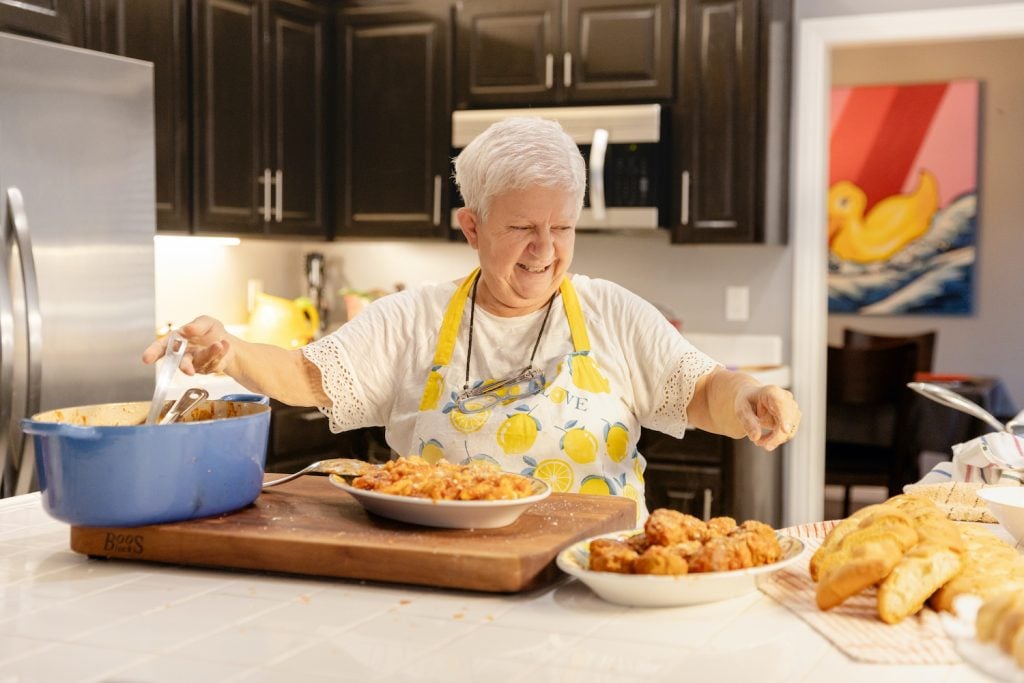
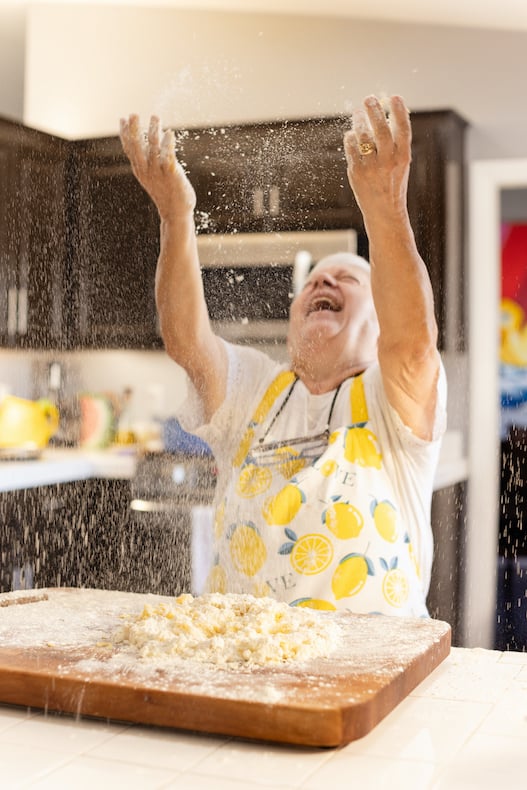
Like any good Italian mom, Anna Prezio loves to cook for her three kids—and, as of late, for her hundreds of thousands of social media followers. But today she’s cooking for one follower in particular: me.
Potato gnocchi with red sauce, beef meatballs, and spicy peppers are on the menu. It’s all homemade, mostly with ingredients grown at her house in inland North San Diego County. I nibble on the appetizers—a hot plate of prosciutto stuffed pizza and freshly baked biscotti—as I watch the 5-foot nothing, 73-year-old, bespectacled Prezio dart from one corner of her kitchen to the next.
It’s clear this is her domain. With Frank Sinatra crooning in the background, Prezio roams the kitchen like Fernando TatÍs patrols right field, deftly moving back and forth between the stove, the cutting board, and the fridge.
“I like to have two or three things going at the same time,” she says. “I could stay in the kitchen night and day and always find something to do. Always.”
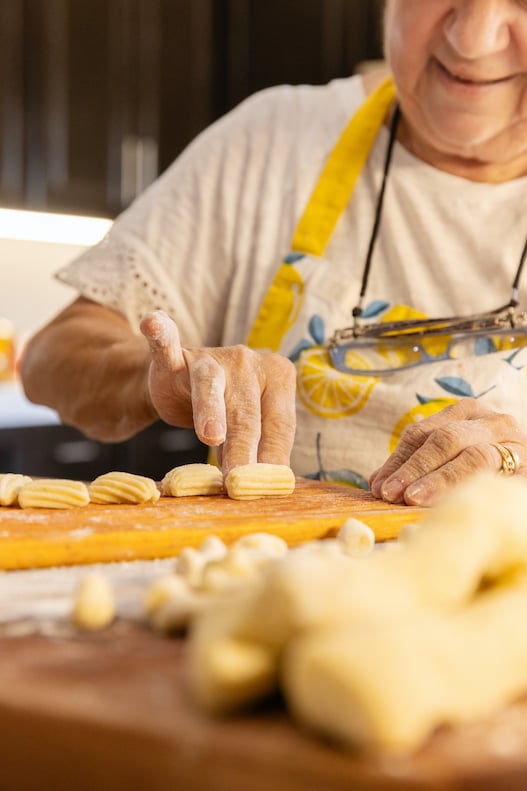
That’s easy to see. Prezio—who was born in Roggiano Gravina in southern Italy and moved to Toronto as a teenager in the ’60s, before she and her husband, Gigi, followed their adult kids to SD about 10 years ago—makes sure to explain the key to good gnocchi: You have to push tiny holes into each one and roll them on a grooved board to allow for maximum sauce pickup.
Before my eyes, she whips up hundreds of gnocchi in the span of a half hour. (That’s not even close to her personal record—she says she once made 972 in a single day.)
Once the gnocchi is plated, she hands me a fork to try my first bite.
“It’s good?” she asks, anxiously leaning forward.
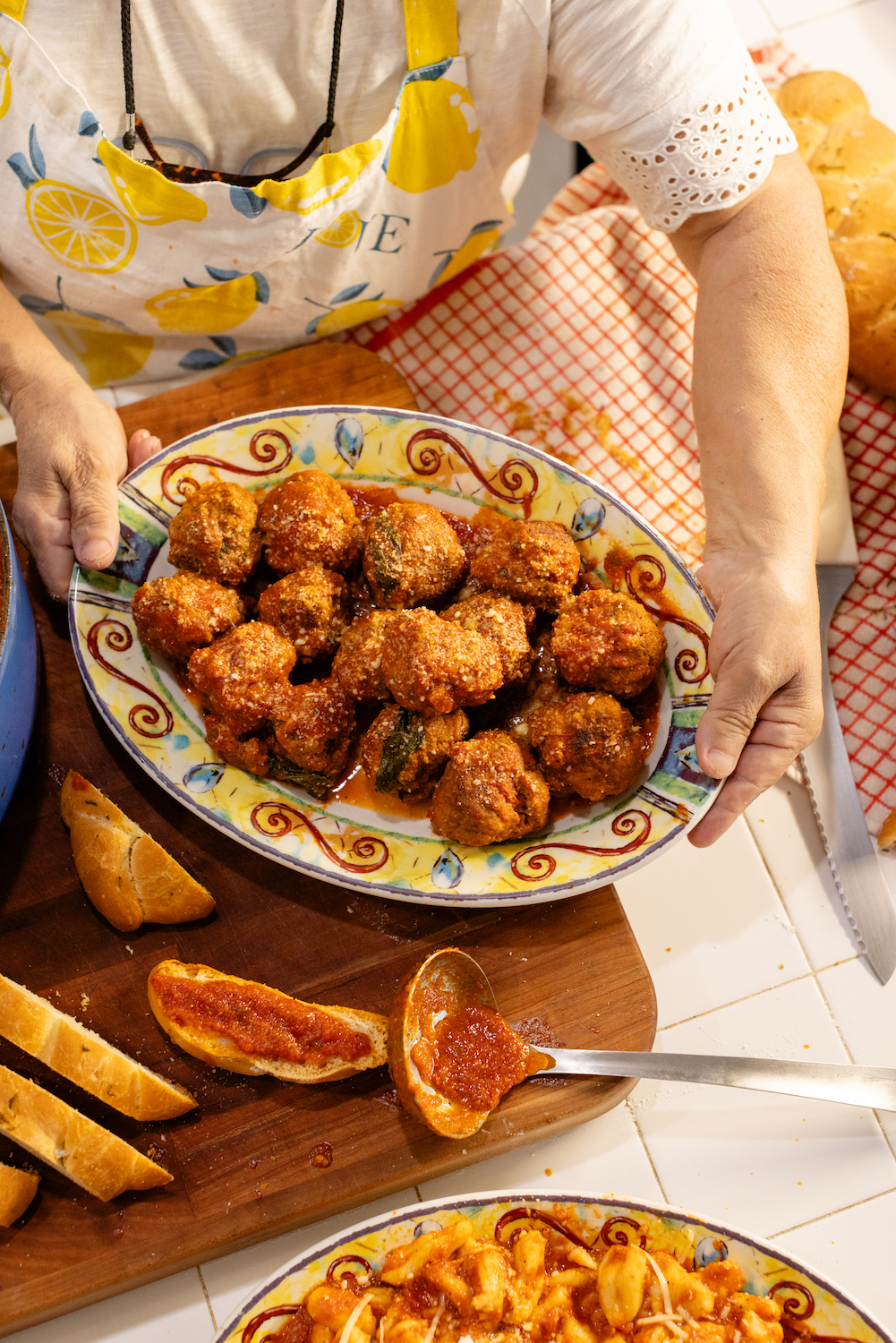
Yes, it’s good. Actually, it’s great. In fact, I tell her, with all due respect to my late grandmother, it’s the best Italian food I’ve ever had. And I mean it. If potato angels existed, these gnocchi would be the fluffy pillows where they laid their heads.
With that, the concern in her brown eyes washes away. She flashes a massive smile and claps her hands.
Recipes like this, coupled with her effervescent Italian nonna vibe, have propelled Prezio to social media fame. On Instagram, TikTok, and YouTube, where she’s known as @thatladyanna, she’s racked up more than 700,000 combined followers since last November, when she shared her first cooking video.
And it didn’t take long for Prezio to get used to working with her “producer”—her son, Reno, a hairstylist based in North Park.
While Prezio grabs more Parmesan for the table, Reno tells me their operation is a simple one: Each weekend, he comes over to visit his parents, and while he’s here, he films his mom cooking on his iPhone. No fancy cameras, no extra lights, no input from some “creative” at a social media agency.
Then, he edits the clips together on Instagram—something he was already used to doing for his hair account—before sharing to her accounts, complete with a full recipe breakdown. Each visit garners him two or three videos to post during the week.
“The hardest part is keeping up with her. Sometimes she’ll do something [in the kitchen] before I film it,” Reno says, drawing another laugh from his mom.
Neither one of them expected to hit it big on social media. They posted their first video on a whim, Reno says, after he recorded his mom cooking for one of his clients. He figured an Instagram account full of videos of her dishes would be “a good visual recipe book for me that I can go back and watch 30 years from now,” he says.
It turned out to be much more than that. Prezio’s recipes built up decent traction in the first few months, nabbing tens of thousands of views, but her following exploded in June. That was when @chefreactions, a popular Instagram and TikTok account with millions of followers, reviewed Prezio’s meatballs.
“One morning, I woke up and saw that he started following her,” Reno recalls. “And I got really excited—but then I got really worried, because he talks smack on bad recipes. I was like, ‘Oh my God, he’s going to talk about my mom!’ Thirty minutes later, he dropped the video, and he loved it, just praising her.”
“Look at this absolute angel of a lady,” @chefreactions said in his review. “Making meatballs [with] perfect portion control. Like I could eat this every Sunday and not complain.”
“From there, it really took off,” Reno adds. Now, Prezio’s videos routinely draw millions of eyes. In July, her eggplant parmigiana recipe was viewed 6.7 million times on Instagram, and earlier this month, her saltimbocca veal dish received 14 million views in its first week.
Her ballooning social media following now includes an eclectic mix of celebrity fans waiting to check out her latest dish. Prezio is especially tickled knowing chef Emeril Lagasse, who she loved watching on Food Network, has seen her posts.
“I used to watch him, and now he watches me,” Prezio says, getting choked up for a moment.
But her recent success hasn’t gone to her head. When I tell her she’s now a social media star, Prezio chuckles and quickly brushes off the assertion.
“I don’t think I’m a star. That’s a big word,” she says. “This really surprised me a lot, because when we started, we didn’t do it to become this. I had no clue whatsoever.”
Reno and Prezio have recently started to monetize her account—he shows me she pulled in about $500 from YouTube in August—but they both view this more as a labor of love. As I help myself to my third serving of gnocchi and meatballs, Reno says they’d like to do a pop-up restaurant in San Diego soon, if only to have more people try Prezio’s recipes out. She loves the idea, because it’ll be an opportunity to break her gnocchi record of 972.
When I excuse myself to leave, my belly is bulging well past my belt, and I have only one question left for Prezio: After all this, are you going to take a day off from the kitchen tomorrow?
“For what?” she asks. “I love to cook!”
Sean is a writer based in North Park, San Diego. Beyond his work for San Diego Magazine, Sean reports on the tech and media world for TheWrap.com, and is a contributor to Spin Magazine.
Sinner Buns is building a following for its slow-made, seriously gooey weekend treats
When I was pregnant, my food craving was singular and intense. If I didn’t eat at least one thing doused in cinnamon every day (ideally, more than one), I was—to put it gently—a complete monster.
Since then, my obsession has tempered somewhat. But cinnamon buns still perch high on my top treats list, so I’m always on the lookout for the next great place to indulge. IMO, The Huddle in Mission Hills’ mondo cinnamon roll remains top-tier, but after eyeing the ooey, gooey goodies from Sinner Buns, we might have a contender.
Originally from Ukraine, Daria Nadar had already done everything one can do at a bakery—business operations, wholesale contracts, actually baking, you name it—so during the pandemic, she started dabbling with perfecting her cinnamon rolls. After she got a couple fans over social media, she threw her first pop-up to see how they’d be received. She sold out.
After a few false starts with a couple storefronts and business deals, Nadar officially launched Sinner Buns in October 2025 with her partner Filipe Pazi. After making it through an unexpectedly hectic season stuffed with holiday orders, the team closed temporarily to get everything in line and reopened this April. Business has remained in full swing ever since.
There are only so many ingredients in a cinnamon roll, but “the process is what makes it special,” she says, adding they use fresh yeast rather than powder and a 48-hour process for each batch of brioche dough made to order. (Thus the need for pre-orders.) Customers can preorder until Thursday each week for pickup Friday, Saturday, or Sunday from Sinner Buns’ ghost kitchen at 780 Hollister Street, just east of Imperial Beach.
You can also catch her at various pop-ups around San Diego, the next one taking place on Saturday, August 22 at Infusion Lab Coffee in Pacific Beach. Eventually, Nadar opens to offer nationwide shipping (once she figures out the logistics and quality control) and one day, her own storefront.
But it’ll be on her terms, not the whims of social media. “We already learned how to not only rely on virality of the product, because you go viral and then it fades,” she says. “It’s a slow burner, and I know eventually, it’s going to grow much more.”

Listen Now: The Latest in San Diego’s Food and Drink Scene
Have breaking news, exciting scoops, or great stories about new San Diego restaurants or the city’s food scene? Send your pitches to [email protected].
Beth Demmon is an award-winning writer and podcaster whose work regularly appears in national outlets and San Diego Magazine. Her first book, The Beer Lover's Guide to Cider, is now available. Find out more on bethdemmon.com.
From her Rancho Peñasquitos kitchen, Yanira Majano is sharing family recipes through San Diego’s growing home-restaurant movement
When San Diego launched Micro Enterprise Home Kitchen Operations (MEHKO), it changed everything. Riverside County first established the experimental program in 2019, with San Diego introducing its own countywide pilot program in 2022 and granting it permanent status in 2024. The new category allowed people to launch at-home retail food operations—basically, home restaurants—with special requirements and restrictions to ensure food safety and smooth operations. Over two dozen counties across California have since adopted their own versions with over 1,200 permits issued, around 100 of them in San Diego alone.
Some have a dizzyingly long waitlist (Warung RieRie), others are still getting their name out there (The Hidden Gazebo Eatery), and still others use MEHKO for pickups rather than fully opening their home as an onsite dining facility. Love Pupusas falls into that category.
Yanira Majano came with her family from El Salvador to the United States when she was 11 years old, bringing a love of cooking and desire to share the country’s cuisine along with her. “There’s a lot of similarity [between Salvadoran food and] Central, South America, even Baja Mexico,” she says. Salvadoran cooking tends to be less spicy than some Mexican cuisines, with an emphasis on ingredients like corn, staples like yucca root (cassava), meats like crispy pork (chicharrón), and sides like curtido, a tangy cabbage slaw that’s typically either naturally fermented or vinegar-based.
And of course, the signature dish of El Salvador—pupusas.
In San Diego, Salvadoran food lacks the widespread availability of other Latin American cuisines like Mexican or Peruvian food, but Majano says she’s seen pupusas gain popularity over the past few years. But she likes to think her recipes, which have been passed down by her mother and kitchen partner Martha, contain a certain special something.
Some pupuserías use rice flour to create the handheld stuffed tortillas, but she prefers the more traditional gluten-free corn flour. Still, it’s what’s inside that really counts. “That’s where we put our own touch,” she explains. Most of Majano’s pupusas come with cheese and different fillings like carnitas, black beans, mushrooms, or zucchini, but she also offers vegan options. Every one comes with a side of curtido and salsa, each made fresh daily.
Showing people the magic of home-cooked food might not have been possible without the MEHKO program or The Cook Alliance, a MEHKO support and advocacy coalition. Opening a brick-and-mortar restaurant requires a huge amount of start-up capital—at least six figures, generally. Not exactly pocket change. “But when the MEHKO program started in 2022, I said, ‘Oh my God, this is for me,’” says Majano.
Now with four years under her belt, she says she’d love to bring Love Pupusas to more food festivals, host more pop-ups, and eventually open a food truck to keep serving the humble dish of her homeland, taking pride in every bite. “[I put] a lot of love in everything I do. You see it when you taste the food,” she promises.
Pre-order Love Pupusas for next day pickup in Rancho Peñasquitos between noon and 5 p.m.
Listen Now: The Latest in San Diego’s Food and Drink Scene
Have breaking news, exciting scoops, or great stories about new San Diego restaurants or the city’s food scene? Send your pitches to [email protected].
Beth Demmon is an award-winning writer and podcaster whose work regularly appears in national outlets and San Diego Magazine. Her first book, The Beer Lover's Guide to Cider, is now available. Find out more on bethdemmon.com.
After two years of farmers markets and pop-ups, the San Diego baker is bringing its Korean-inspired pastries to University Heights
The folks at Kairoa Brewing Company must never be lonely. It seems like there’s always a local pop-up or event at the University Heights space, from Bincho Taco slinging Japanese coal-fired tacos on the rooftop patio every Tuesday to Yipao Coffee serving coffee from a window on the ground floor. Later this year, the New Zealand-inspired brewery will bring yet another resident into the fold—Mon Chourie is launching its first bakery counter service window along Park Blvd.
Mon Chourie owner and baker Kelly Kim first started selling her Korean-style cream puffs at farmers markets and places like Pizza Kaiju, Pho Ga Go, and Mixed Grounds, collaborating with a myriad of other makers (like Amor ice cream and Ming Oun’s) before nabbing a regular spot at Michi Michi Bakery every Wednesday. San Diego Magazine readers even voted Mon Chourie the Best Pop-Up for 2026.
In French, the word for an airy puff pastry is “choux,” which is pronounced generally the same way as “syu,” the Korean word for the same item. (Both sound like “shoe.”) Mon Chourie plays with both iterations with a dash of whimsy by referencing the song My Cherie Amour by Stevie Wonder, which translates to “my darling love.”
As long as all the permits and inspections move forward without issue, Mon Chourie should open in Kairoa before the busy holiday season. She’ll continue appearing every Wednesday at Michi Michi and other pop-ups in the meantime. Once open, expect best-selling flavors like the savory potato croquette (a collaboration with Karanchi chili crisp) and a sweet Dubai chocolate choux au craquelin, a version of puff pastry with a delicate cookie crust.
Classic cream puffs are fluffy, softs and often filled with custard cream in the United States. “What makes a difference for us is we use a very light version of diplomat cream, which is my mom’s recipe,” she explains. Diplomat cream is a lighter French pastry cream that uses whipped cream for a lighter, airier end result.
Choux au craquelin’s signature crunchy top comes from adding a thin disc of cookie-like dough on top of the pastry, which crackles as it bakes, leaving a thin layer of crispiness atop the final product. “It contrasts with the creamy, fluffy cream inside, so it gets that better, deeper texture experience,” she says.

Along with her popular cream puffs and her bite-sized “mini-choux” options, Kim is also planning on offering more of a newer-to-her item: salt bread, a rich butter pastry topped with sea salt that originated in Japan, but went completely viral in South Korea. There are a few places to get it in Los Angeles and New York, “but I know that a lot of people here are interested in trying out new stuff, or maybe they had it in Korea or Japan, and they came back, but they couldn’t find it anymore,” says Kim. At first, she didn’t really get why it was so popular. Then she tried it in South Korea earlier this year.
“I was in love,” she laughs. “This is what the hype is about.”
Ideally, Mon Chourie will eventually open its own storefront and introduce more events in North County to satisfy demand. “I would also love to have our own drink program that reflects what’s popular in Korea,” she says. And to mark two years of puffy pastry prosperity, Mon Chourie is throwing a two-year anniversary party at Easy Does It (5375 Kearny Villa Rd., Suite 112) on Wednesday, August 25 from 4 p.m. to 7 p.m. with drink specials like a misugaru latte (a Korean roasted multi-grain powder with espresso), a DJ, photo booths, special ceramic merch created by local ceramicist Whale Tran, and a few other vendors. Get there early.
Mon Chourie will open inside Kairoa Brewing Company by the end of 2026 and posts the next week’s schedule of upcoming events and pop-ups on Instagram every Monday.
Listen Now: The Latest in San Diego’s Food and Drink Scene
Have breaking news, exciting scoops, or great stories about new San Diego restaurants or the city’s food scene? Send your pitches to [email protected].
Beth Demmon is an award-winning writer and podcaster whose work regularly appears in national outlets and San Diego Magazine. Her first book, The Beer Lover's Guide to Cider, is now available. Find out more on bethdemmon.com.
The 29-year-old culinary director at Herb & Sea is making seafood sexy (and approachable) again
Implementing a farm-to-table model hardly deserves acknowledgement these days. It’s not a stretch. It’s not innovative. “It’s the bare f**king minimum,” says Herb & Sea‘s executive chef Aidan Owens.
When I arrive at the Encinitas restaurant, I’m ready to talk sustainability, farm-to-table stuff, with Owens. “Did you see the chin on that?” he says of the extra big jiggly chin on the sheephead that just arrived with the day’s fresh catch. I did. It was Jay Leno adjacent.
I learn quickly that he somehow oozes both charm and stone-cold honesty. Maybe he could construct a new dish with chin goo, like he did when he had a bunch of tuna scraps and voila’d it into a smooth and crowd-pleasing ‘nduja. “I want to know what’s in there,” he says.

The instinct to look closer, to dig into what others might discard, says a lot about the chef’s approach. I guide him back to our topic, but he has something else on his mind. “We’re overcomplicating food—what happened to just cooking good food and having fun with it?”
Owens grew up on a farm in Byron Bay, Australia, where sustainability wasn’t a concept you chat about so much as a way of life. Think dirt roads, backyard chickens, pulling vegetables straight from the ground, and a mother who believed that if you couldn’t pronounce the ingredients on a package, you shouldn’t eat what was inside.
Food wasn’t precious or performative. Making it was what you did because you were hungry and that’s still what inspires Owens today. “I like to cook good food because I like to eat good food,” he says.
His approach to sustainability at Herb & Sea began so naturally that it felt just like instinct. “I was just like, ‘Let’s order food from the people who live and work here,’” he says.

And why wouldn’t he when lives in San Diego? Cities all over the world vie for our goods. Our tuna is sent overseas. Our spiny lobsters hit dinner plates in China and Japan. Not to mention California’s producing a third of the country’s vegetables and three-quarters of its fruits and nuts.
“Why would we outsource when it’s all here?” Owens asks.
Sustainability, in this context, is about cooking what exists in abundance, nearby, right now. “I love the local fish here. It’s f**king delicious and San Diego citrus, I mean, it is so f**ing good,” he says.
Instead of importing ingredients, Owens also looks for nearby alternatives. “You can find really cool things in the local waters,” he says, pointing out that stingray cheeks taste similar to scallops.

Whatever he finds in that sheephead chin might just be the next substitute for marrow. But to make this work, it means getting diners amped up about the slightly unfamiliar.
Tasting menus, where diners are completely in his hands, become an opportunity to gently push boundaries. “I’ll serve mackerel, because people think they hate it,” Owens says, noting that the abundant local fish can have some fishiness. “But when it’s fresh, it’s arguably one of the best fish in the ocean.”
He also tweaks the language on the menu so people might feel more compelled to give dishes a try without preconceived notions. He might use “lengua” instead of “tongue.” “Whelk” instead of “snail.” When he puts “stingray throat” on the menu, he disarmingly calls it “skate.”
To reduce waste, scraps aren’t always discarded but rather turned into something new. Sometimes they’re smoked, cured or fermented. Apples going bad turn into apple ponzu. Lemons turn to marmalade, which stretches their usefulness far beyond peak season. “And it’s super tasty on our pizza,” he says.
What makes the food even richer, is the relationships he’s built with farmers. Though it didn’t always feel natural, Owens sought personal connection first. He recalls approaching a fisherman at the Tuna Harbor Dockside Market. “I was awkward,” he says. “I went up to him and said, ‘I like your fish.’”
Owen’s is now so close to his suppliers—like fishermen Ryan Sebo and Joe Daly—that he gets texted pictures of fresh catches right as they flop on the boat. The messages always ask if he wants first dibs. “I say yes to a lot of fish,” Owens says, noting that Herb & Sea can go through 2,000 pounds of seafood a week.

The next evolution of sustainability, in his view, will be chefs working directly with producers such as his alliance with Sebo, cutting out middlemen and purveyors where possible. “It will put more money in the pockets of the people doing the work,” he says.
It will mean that chefs can’t just know their local farmers and producers, but they’ll choose to work with the ones who have the best practices. Dining and sustainability will become much less about the final plate. “It will be more about the impact that plate has on the Earth,” he says.
Ultimately, he believes sustainability doesn’t need to be loud. It doesn’t need hashtags. It just needs to be honest.
“We aren’t saving lives. We’re feeding people good food,” he says.
And yet, in feeding people well—simply, thoughtfully, responsibly—something meaningful happens. Guests leave satisfied. Ingredients are respected. Local ecosystems are supported and food returns to what it has always been at its core: nourishment, pleasure, and a quiet reflection of the place it comes from.
No buzzwords required.
Bring home a taste of the city with local coffee, conchas, chili crisp, hot sauce, and other suitcase-worthy finds
Snacks are the best vacation souvenirs. You get all the novelty of having something to unwrap without any of the burden of keeping random crap around. I’m always game to try some chips from a place I can’t find on a map with ingredients I can’t identify by taste. Gimme that spice mix from that Southern barbecue pit whose wine list consists of light beers from lesser-known appellations. Don’t think I won’t lick the inside wrapper of some chocolate bar homemade by a grandma at a farmers market you stumbled upon in a small Midwestern town best known for giant yarn balls.
Even though San Diego is best known for our thigh-sized burritos, fish tacos, and craft beers, those travel about as well as room-temp mayo. So we gathered some of the city’s best food souvenirs: snacks, spices, and sauces worth sliding into your carry-on or gifting to a lucky out-of-towner.

Inside Bread & Salt—Barrio Logan’s old Weber Bread Factory turned into one of the city’s most vibrant art, culture, and community spaces—there’s a cafe in front of a giant, now-defunct bread mixer. Mexican-owned specialty brew shop and roastery Provecho! Coffee started as a pop-up in 2020, but its success quickly bricked-and-mortared. Although Provecho! specializes in sourcing and roasting Mexican coffees, its consistency is variety: The lineup changes regularly as Provecho! finds new sources around the world. Get a to-go taste via the coffee bags that range between 250 g and 2 kg.

Superlova!’s Chinese-inspired, seed oil–free sauces are grocery list mainstays for San Diegans. The sesame sauces (Dan Dan is spicy, May May is tame) pair with noodles, dumplings, or any meal that could use a little more oomph. They don’t have tahini, which is de-hulled; they have Chinese sesame paste, which is dark-roasted for a nuttier flavor and packed with fiber and calcium.

San Diego is known for beer, sure. But real locals pour from a different tap. JuneShine’s low-sugar, yet still refreshingly sweet, hard kombucha is an SD favorite. The brand has joined the canned cocktail tidal wave and now sells vodka mules, tequila palomas, and vodka sodas—all with about two shots per can, real juice, and sparkling water. But for a classic food gift, get a variety pack of the booch. Fit it into your checked bag. It’s worth it.

Double entendre is key to hot sauce brand Down To Ferment, aka DTF. (Popular sauces have flavor names like CornHub, Smokin’ Hot Date, and Ghosted.) But it’s no gimmick. The homemade, kombucha-based sauce is seriously good: DTF’s That’s What Shishito Said made it onto Season 30’s lineup on Internet-famous interview show Hot Ones.

As discussed, carne asada burritos travel about as well as a toddler with emotional-regulation issues. But the soul of a truly great, San Diego burrito? It’s not the fillings. It’s the tortilla. You can’t go wrong from any locally owned spots, but our favorites are Tortilleria Los Reyes in Vista, Windmill Farms Market in Del Cerro (which uses Pancho Villa’s old tortilla press), Esperanza’s Tortilleria in Escondido, and Tortilleria Lily in City Heights.

Handcrafted in small batches, Karanchi’s Sichuan peppercorn–packed chili oil comes in two varieties: original and spicy. The original warms your palate and adds depth to your meal, and the spicy is a form of mealtime masochism. Founder Nguyen Le’s favorite way to eat his garlic-studded chili crisp is on avocado toast—which makes an already San Diego meal even more San Diegan—but it’d make old shoes taste pretty good.
Fresh fish ranks low on society’s acceptable realms of carry-on items. But canned fresh fish straight from local fishermen? You’re the best part of a bruschetta. Every Saturday at the docks behind Seaport Village, fishermen step off their boats and sell what they caught as recently as that morning. While getting yourself some fresh sea urchin and squid, grab a couple cans of locally caught albacore tuna for the tinned-fish lover in your life.

Started as a pandemic baking hobby for BFFs Natalie Rodriguez and Lesly Mendoza, Tus Chefs is now a South County favorite spot for conchas with a twist. The menu is expansive enough to get over a baker’s dozen without any repeats—why not get one of each, anyway?—but if you only have enough space in your carry-on for a few, start with popular “chocolate abuelita,” churro, mazapan, horchata, and brownie conchas.
Emma Veidt is an editor at San Diego Magazine. She earned her bachelor's and master's degrees from the Missouri School of Journalism. She loves running, hiking, and rock climbing, but really, she mostly loves encounters with the street cats around North Park.
SDM's staff shouts out our favorite food finds this month including bites from Glass Box, Pete's Seafood, Kimochi, and Immersion Coffee
It’s August. Corn season—that hallowed dental flossian time—is upon us. Peak summer means the fruits from local farms are downright NC-17. It’s also hot-adjacent, so we search out top-notch sashimi and interesting fruit punches. And because we’re contrarians, we also find ourselves tucking into a warm lobster roll in North Park, vying for a father’s love. Anyway, these are the stories behind the best things we found this month—things we’d recommend to friends who didn’t owe us money. Salamat.

Chef Ethan Yang grew up folding dumplings in his dad’s San Diego restaurants—such as the former Fortune Cookie in Rancho Bernardo, which drew on the family’s Taiwanese and Chinese roots. So the Taiwanese beef noodle soup on the menu at Glass Box (a lovely glass-enclosed sushi and pan-Asian spot at Sky Deck in Del Mar) is a family pride—the result of Ethan, dad, and his brother tinkering endlessly with various bones (they finally found the perfect bone, only sold by one butcher in LA).
But the dish that shows off his raw fish skills is the albacore—lightly cured in soy, mirin, and toasted sesame oil, flame-torched to caramelize, and finished with smoked shoyu, chive oil, shiso oil, house-pickled sweet peppers, and crispy rice pearls. —Troy Johnson

“Wait, where is it?” I hear this a lot when suggesting Luce for drinks or a bite. The Bay Park restaurant is smack dab in a part of the city that isn’t conventionally attractive: on the side of the 5 freeway, next to a bevy of service-looking storefronts. To be in this area, you either live here (homes here are fairly excellent with that bay view) or are getting a muffler fixed. A better reason to be in Bay Park: An evening at Luce, a locals’ haunt. Get the Duroc pork chop (the chefs’ chop, with darker meat, higher fat content, better marbling) with collard greens, toasted grits (toasting anything results in a better version of that anything), and a mustard glaze that makes you feel like you’re in the South enjoying sweet tea with friends. —Nicolle Monico

Ever walk into your kitchen during the afternoon feeling recklessly free and decide the time is exactly right for a glass of Champagne? Maybe you crushed a work project or navigated a 4-year-old’s meltdown with the elegance of a global diplomat. You ever then pour that glass and are immediately pulled away by other demanding life errata—and by the time you eventually return to celebrating being alive, you find the remaining victory-juice sits in the popped bottle, losing its steam, and serving you a metaphor for your day?
Hilary Cocalis solved this for me with Carlsbad-based Sipwell. Tiny Victories is a Champagne-style sparkling white in a 250ml can (a glass and a half—the correct amount), the first can-conditioned sparkling wine on the market, fermented with true Champagne yeast. Crisp apple, a little citrus, that biscuity thing good bubbles do, zero sugar. It’s also the first canned wine to crack Wine Enthusiast’s Top 100, so now there’s no excuse not to celebrate all of life’s tiny victories. —Claire Johnson

If my dad were to rank his favorite things, I think I’d make the podium, but there’s no way I’m outperforming this lobster roll. And why would I? We went to Pete’s on Father’s Day, and Peter DeCoste brought out 5 ounces of Maine lobster smothered in warm butter, tucked haphazardly into a grilled New England–style roll, served with a simple coleslaw and basic fries (no need to overshadow the star). Pete’s has a cold version with mayo, too, but there’s something about warm lobster that really wins over dads and their lobster-jealous daughters. –Lili Kim

Valerio’s 1979 is a quintessential San Diego family story. In the 1950s, the grandparents opened their first bakery in the historic Philippines city, Cavite. Their son, Jimmy, would bake and sell bread before school. After enlisting in the Navy and being stationed in San Diego, Jimmy and his wife, Gloria, opened his own version of the family bakery in National City in 1979—a huge hit and home-away-from-home spot for the city’s massive Filipino community.
Four-plus decades later, with four locations across SoCal, it’s on the third-gen of Valerios. The new blood is reviving the name and place with all kinds of Filipino comfort food, and the turon is a star. The classic Filipino treat is a ripe, sweet saba banana and jackfruit, rolled in lumpia wrapper, deep-fried, and covered in sticky, caramelized brown sugar. “Dessert lumpia” is a phrase to live a life by. —Troy Johnson

Innovative treatment could offer cancer patients new options with fewer side effects
Chemotherapy and radiation have long been considered gold standards of cancer treatment, but they can cause severe side effects. A promising new approach called theranostics—a combination of “therapeutics” and “diagnostics”—could offer patients with certain types of metastatic cancers new hope. It’s a two-step process that uses a drug that binds to specific receptors on cancer cells. Advanced imaging detects this radioisotope, allowing doctors to then use a second radioisotope that binds to the cancer cells and destroys them. Click here to learn more about how specialists at Scripps Cancer Center are using theranostics.
For more nutrition, wellness, and healthy living tips, sign up for the San Diego Health newsletter here.