Featured articles
Featured articles
Featured articles
What's next
Featured articles
Featured articles
Featured articles
Ready to know more about San Diego?
SubscribeReady to know more about San Diego?
Two of San Diego's top Italian chefs put new concept into historic Oceanside building
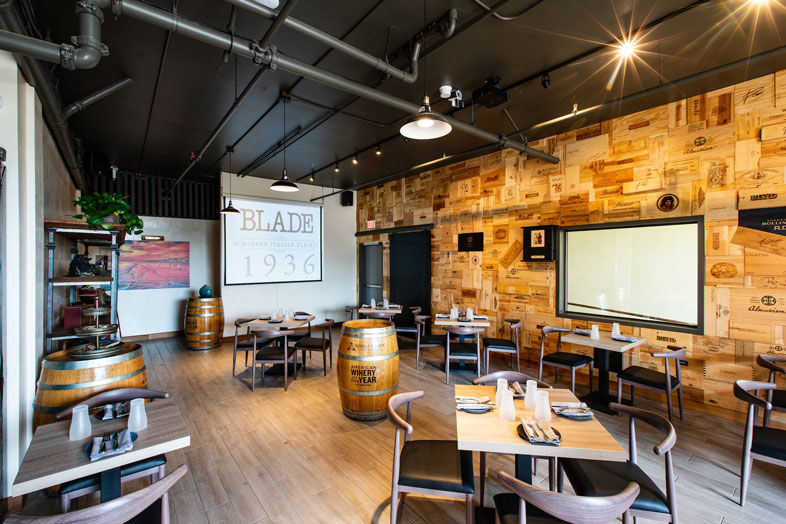
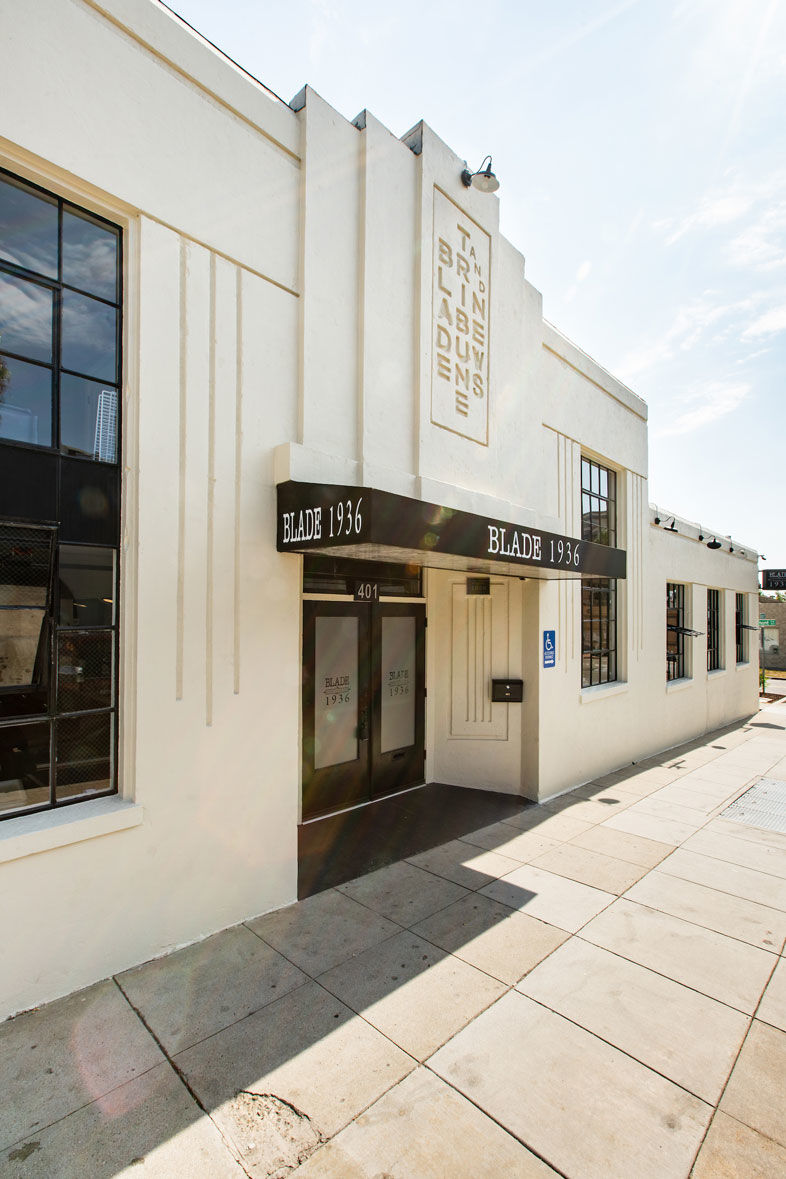
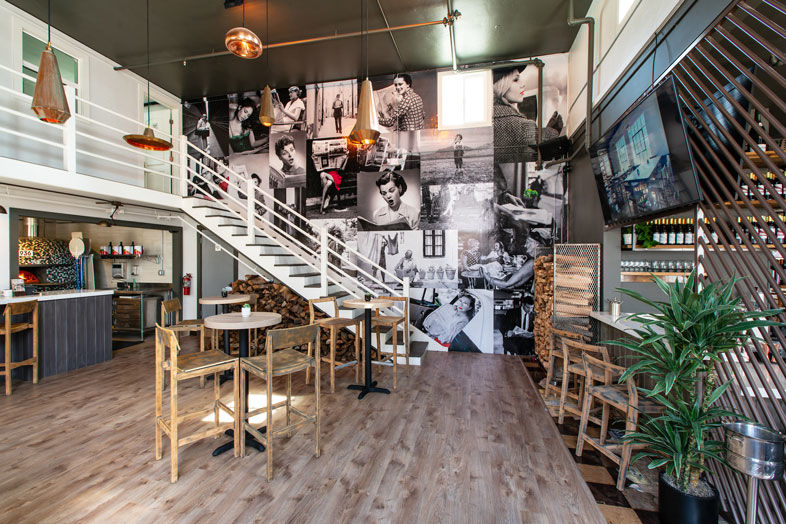
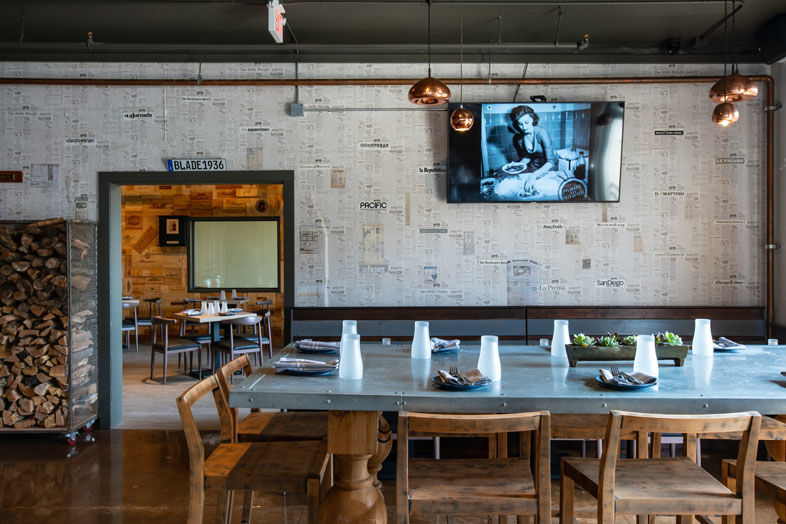
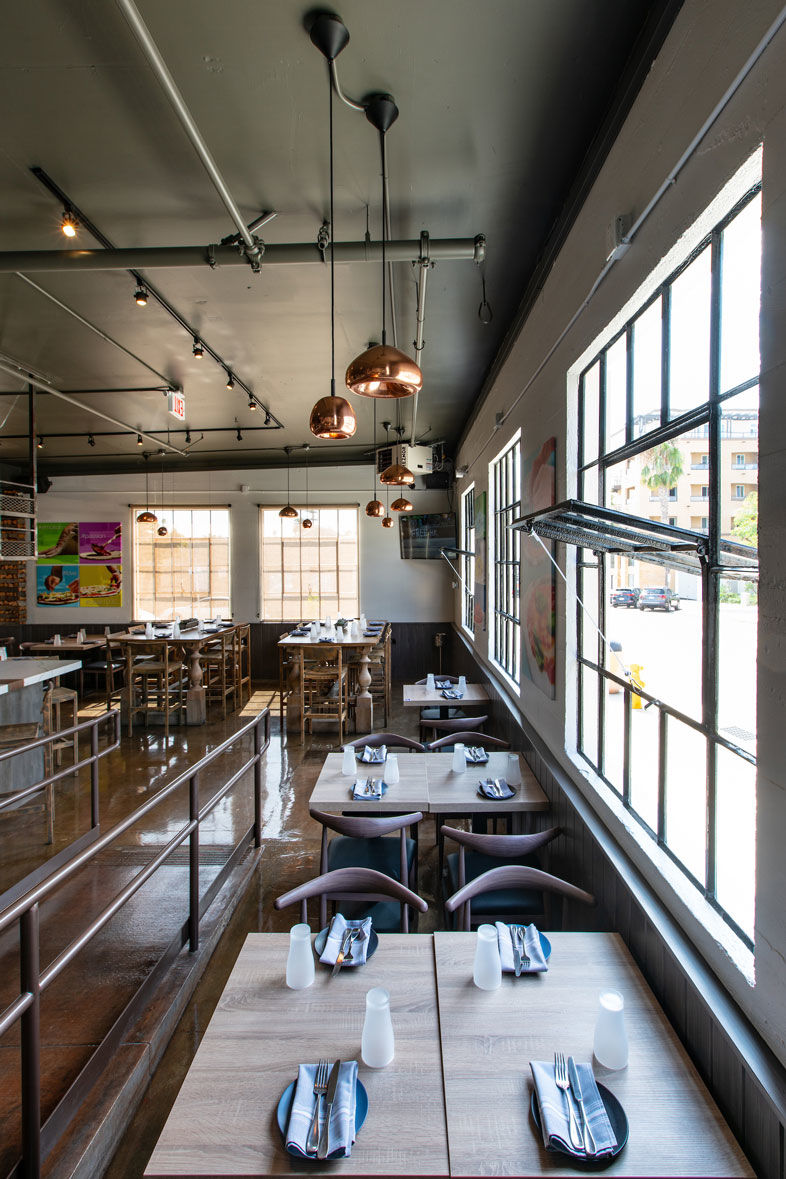
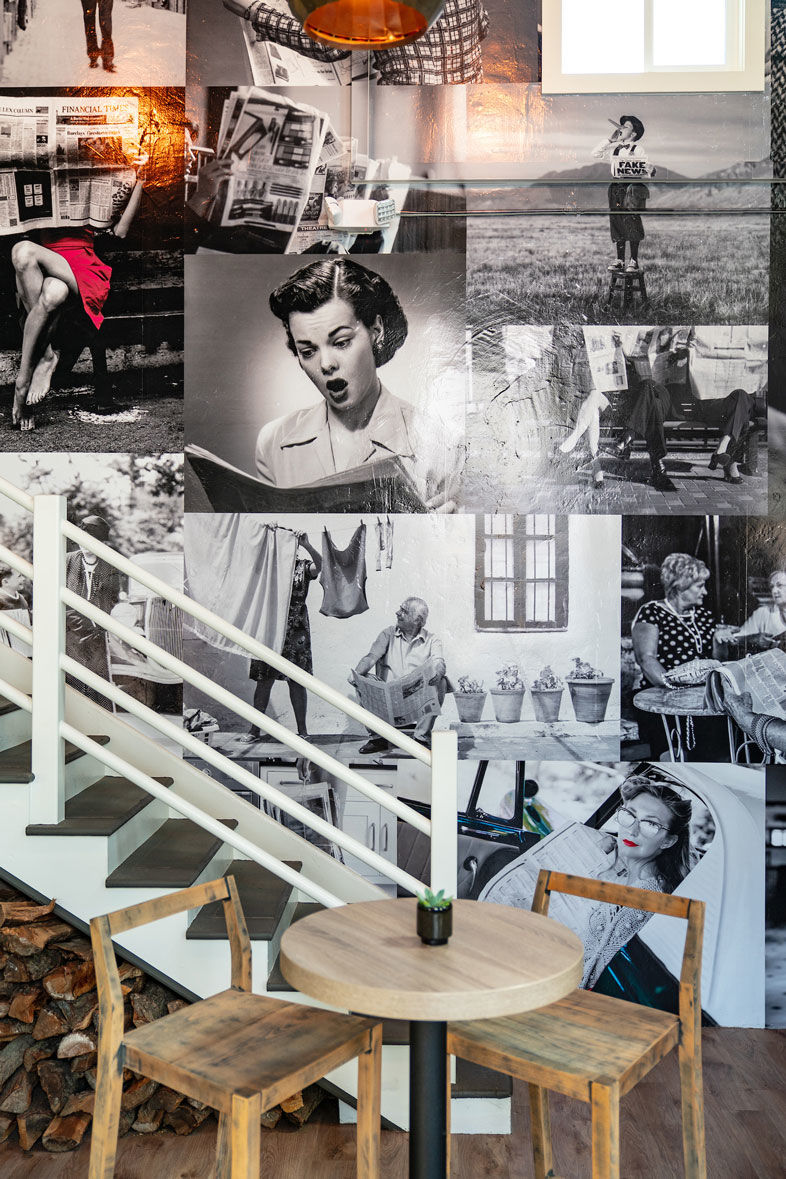
I’m no architecture buff. I once described a turret as “the rocket part of that house.” But the way people talk about him, it seems Irving Gill was San Diego’s own Frank Lloyd Wright. He brought modernism to the city in the early 1900s, and his name is splattered all over the National Register of Historic Places. The last building he designed before he died is in Oceanside. And now it’s the new home of Italian eatery, wood-fired Neapolitan pizza joint, and craft cocktail bar Blade 1936.
The 6,000 square-foot art deco and modern building is on the historical registry, of course, once housing Oceanside’s now-gone newspaper, the Blade-Tribune. And the team leading its new dinner-and-drinks existence includes two notable names: Milanese native chef-restaurateur Mario Cassineri (ex-Bice, ex-Officine Buona Forchetta), and chef John Carlo Ferraiuolo, who’s credited with bringing Neopolitan-style pizza to San Diego with North Park’s Caffe Calabria (the first spot in the city certified by the Associazione Vera Pizza Napoletana).
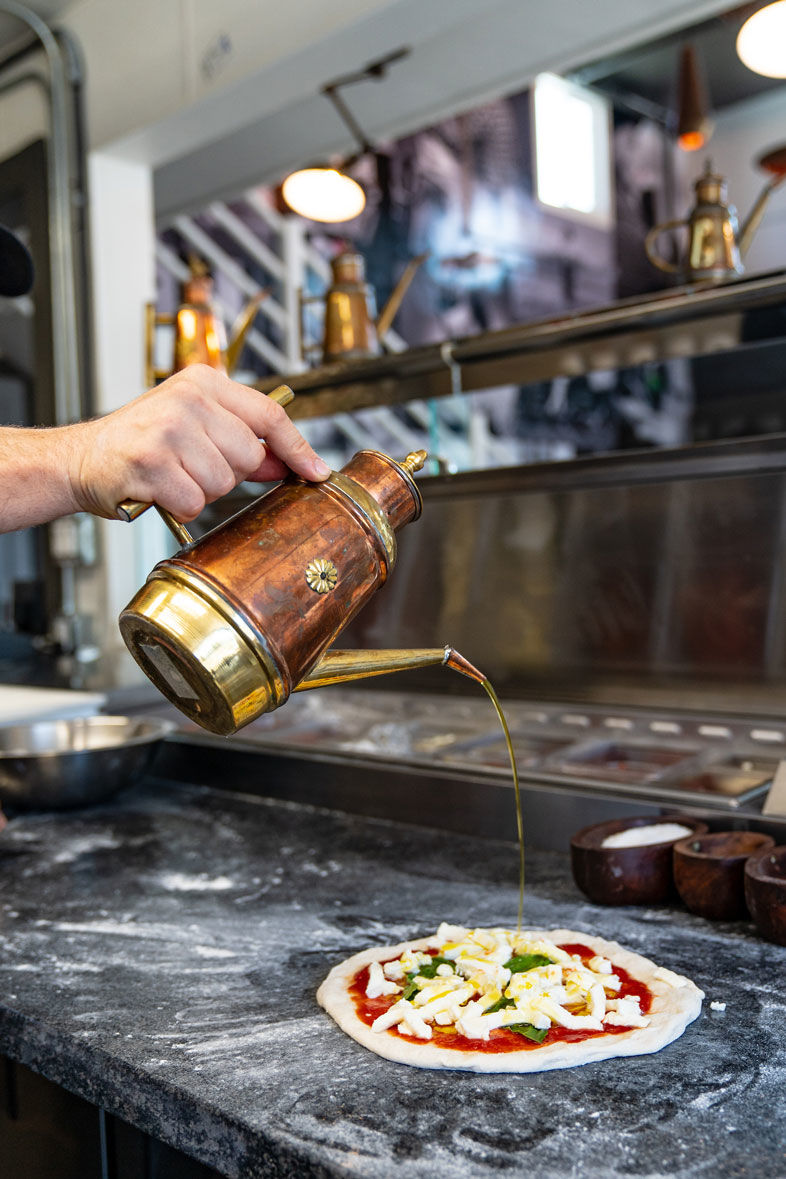
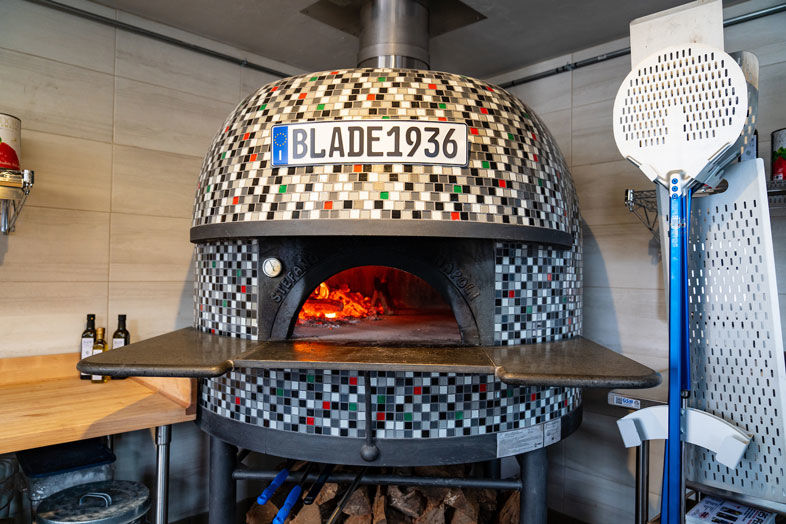
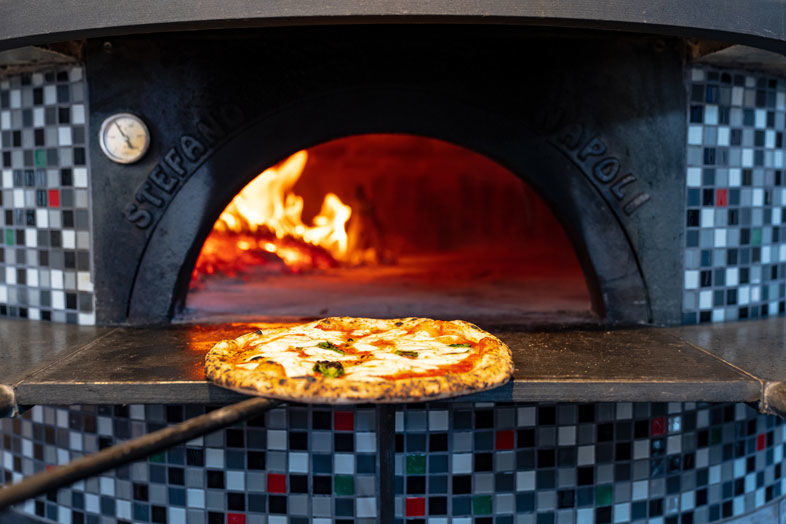
So this will not be half-assed Italian food, or pizza. Chef de cuisine Chris Narvaez (who worked at Michelin-starred Spruce in San Francisco) will have at his disposal a custom-made Stefano Ferrara pizza brick oven from Italy (the Aston-Martin of pizza ovens) for Napoli-style pies, including: a “Zest” with fior di latte, prosciutto cotto, lemon zest, basil, arugula, and shaved Pecorino; a “Carbonara” with caramelized onion, guanciale, fior di latte, egg, basil, and cracked pepper; and a “Carciofi” with artichoke, crimini msuhrooms, provola di Agerola, basil, shaved parmigiano, EVOO. There will be scratch semolina pastas (spag, ravioli, gnocchi, penne, papardelle with sauces like pesto, verdure (fontina), and bolognese). There will be dishes like Carlsbad mussels, frittura mista (calamari, mushrooms, shrimp), tuna tartare (with avocado, tomato, fried onion, ginger sesame dressing), quinoa paella, and salmon (with leek sauce, lentils, cannelloni, lemon kale), and lobster farratto (with burrata, pesto, and tomato sauce). Desserts will include a Blade Sweet Basket, a fresh bread bowl filled with Nutella and Italian donuts. There will be craft cocktails, wine, and local and international beers.
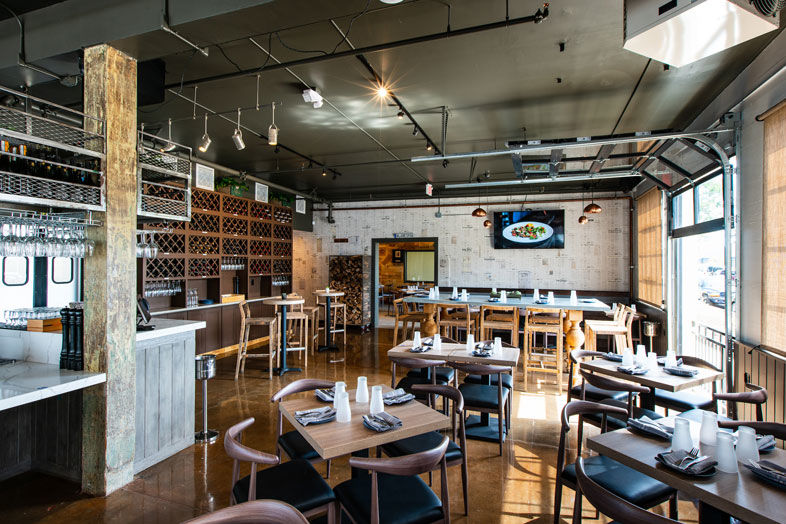
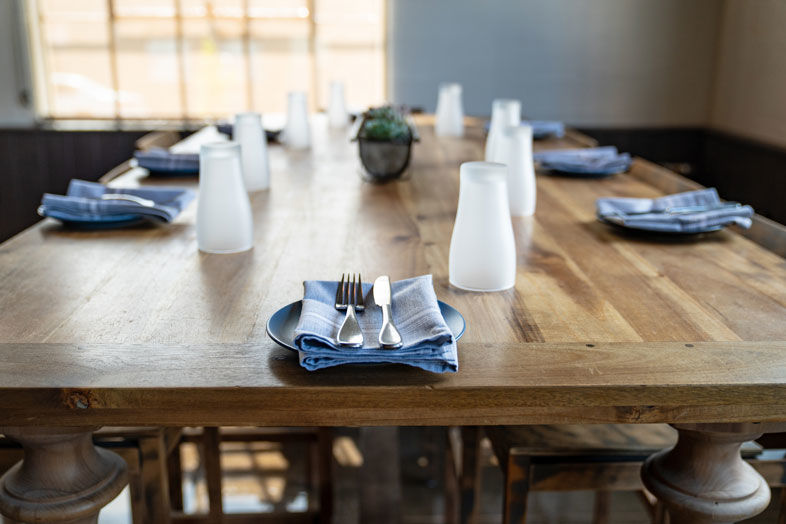
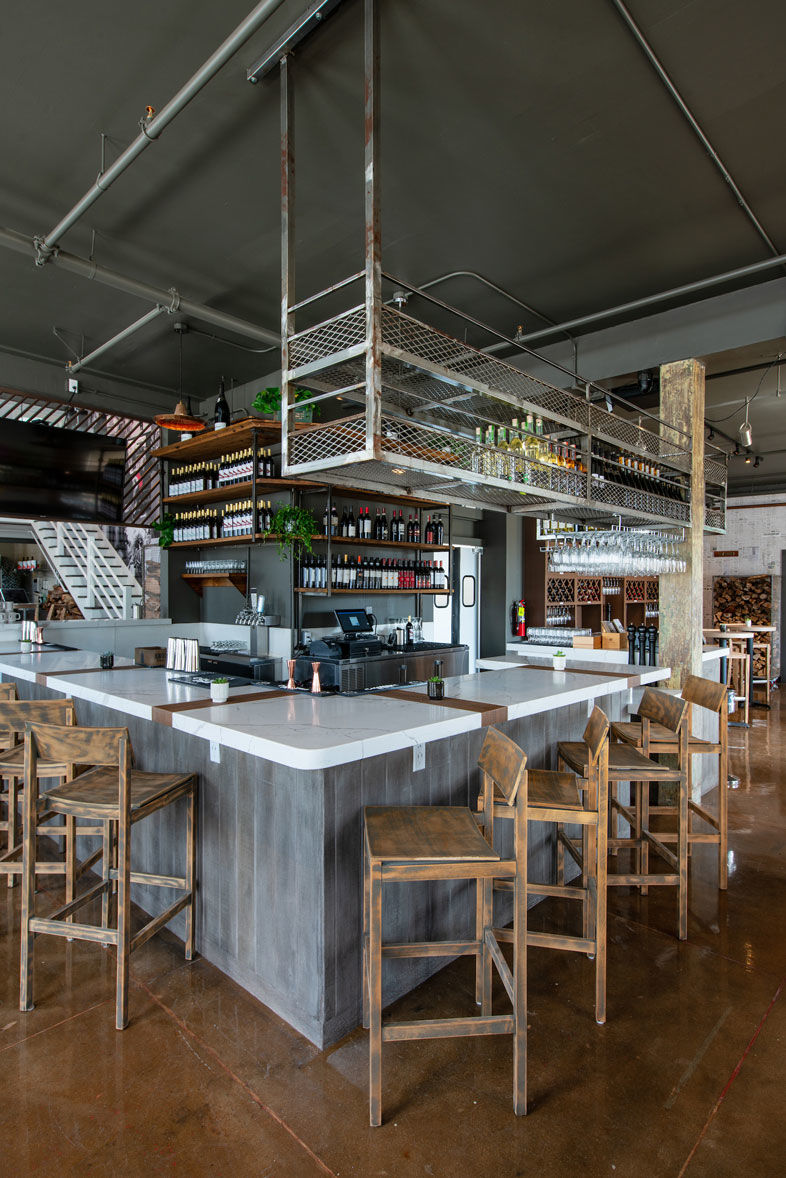
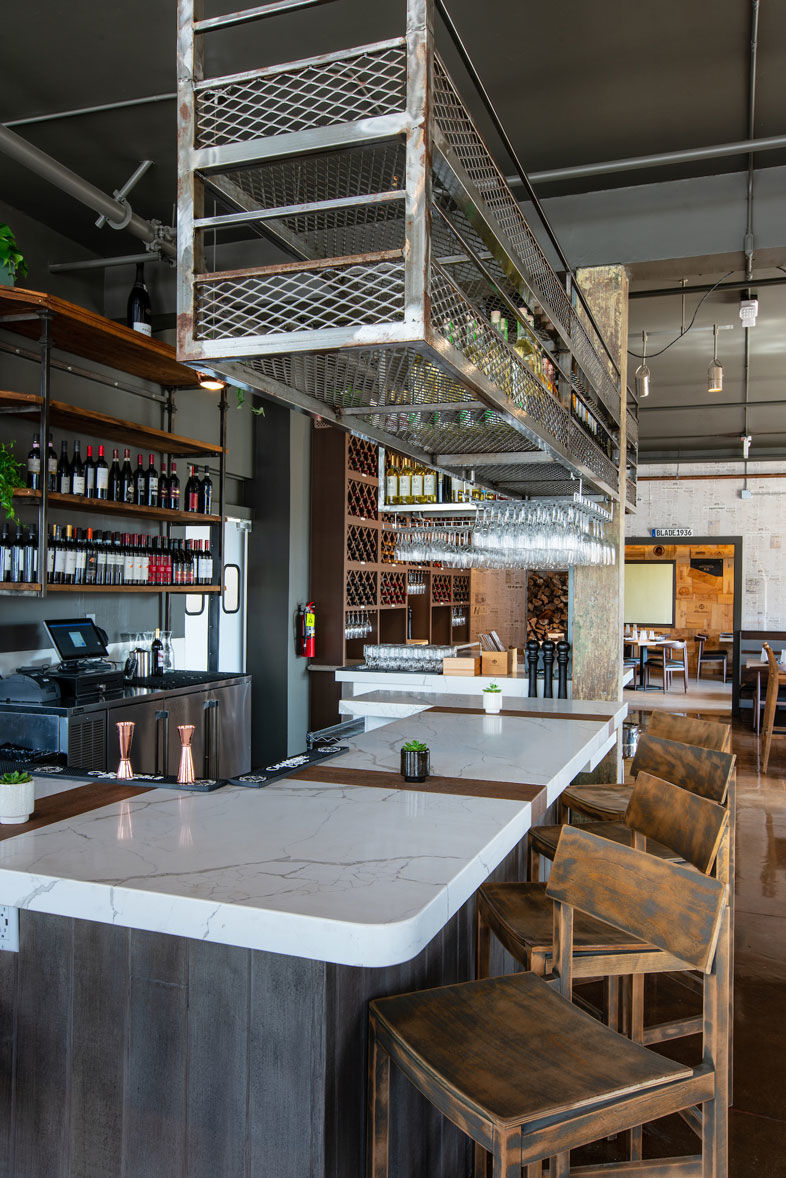
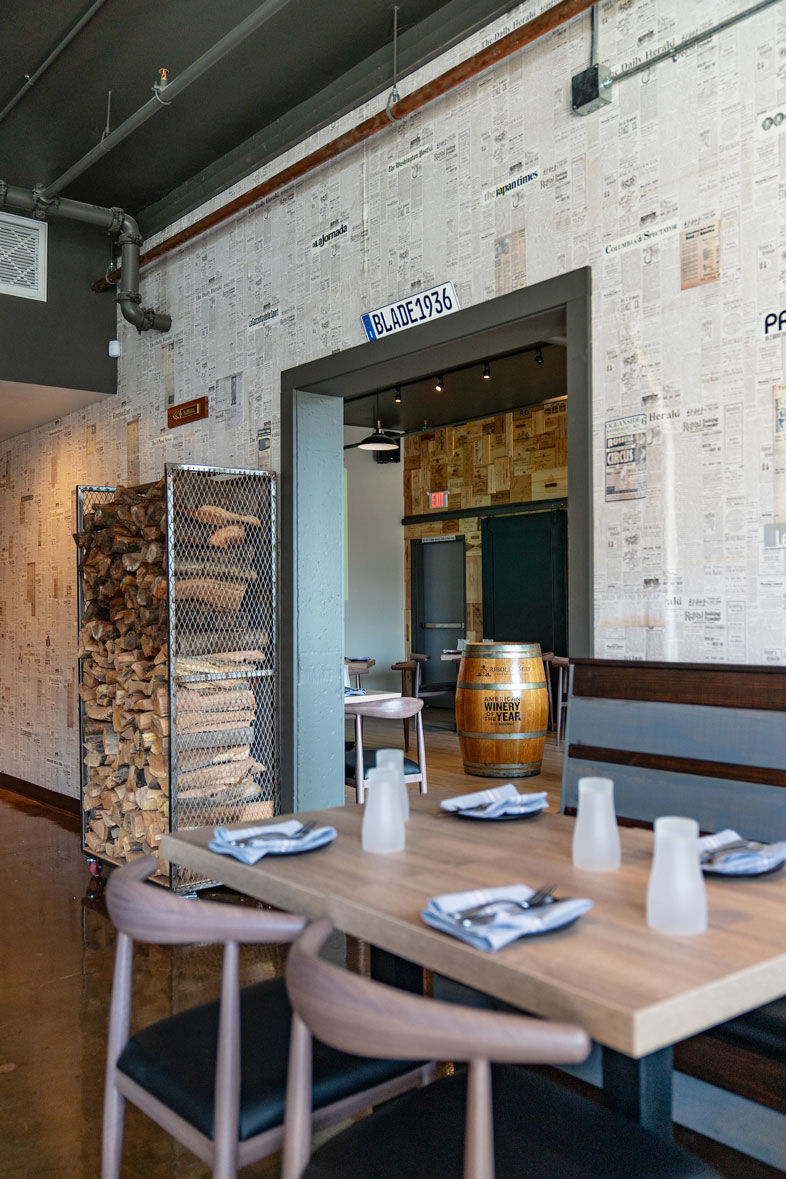
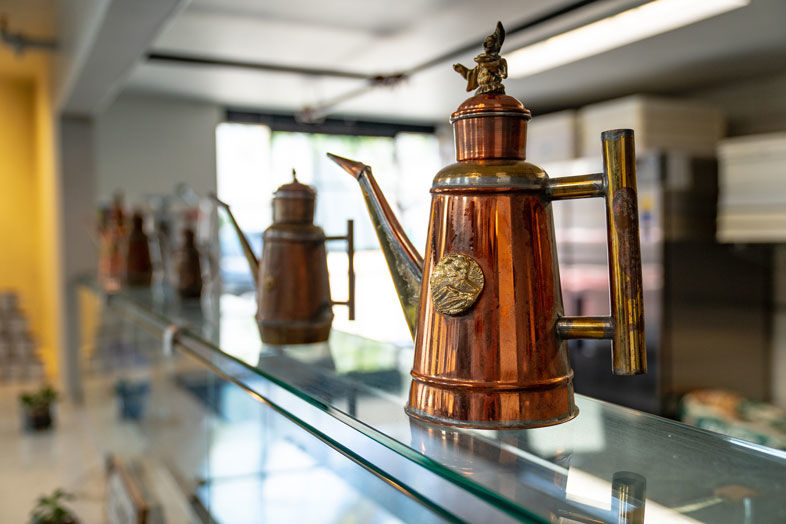
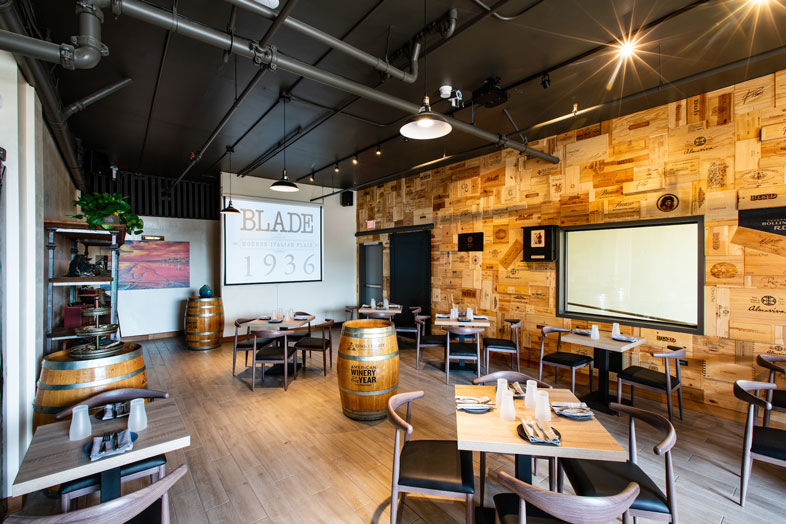
And there will be photos of how local architect Kennith Chriss has reimagined the space (see below).
Blade 1936 is now open seven days a week for dinner, lunch and brunch on weekends. 401 Seagaze Dr., Oceanside.
First Look: Blade 1936
PARTNER CONTENT
First Look: Blade 1936
Troy Johnson is the magazine’s award-winning food writer and humorist, and a long-standing expert on Food Network. His work has been featured on NatGeo, Travel Channel, NPR, and in Food Matters, a textbook of the best American food writing.
San Diego’s fried-chicken heroes join the food evolution of the city’s classic beach-party town
Americans each eat around 100 pounds of chickens per year. In San Diego, Crack Shack seems responsible for about 70 of those lbs. And this week, the fried-chicken spinoff of one of the city’s top restaurants (Juniper & Ivy) opens a new joint in Pacific Beach. The sauces that made them famous will get a proper co-billing.
The Crack Shack first spun off J&I in 2015 on what was once a quiet street in Little Italy. Some called the location premature, but culinary director Jon Sloan knew he had some winners—like the sloppily magnificent Señor Croque breakfast sandwich, and the whole Jidori fried chicken with schmaltz and Crack-spiced fries. A few locations later—Encinitas, Las Vegas, Costa Mesa—and one neighborhood-wide culinary revolution under their belt, they’re ready for the youthful always-always land of PB.
Opening on PB’s main drag (4525 Mission Blvd., between Garnet and Felspar), The Crack Shack will begin welcoming guests in the next week or so. It’s an area Sloan calls the perfect intersection of busy but still growing. “[PB] is evolving,” he says, pointing to the plethora of new eateries and proximity to the comparatively more upscale Bird Rock. “It’s becoming more and more mature.”
At PB, the signature housemade sauces Sloan and his chefs obsessively R&D’ed—ranch, fry sauce, barbecue, pineapple mustard—will be bottled and sold for the first time. Fans have been asking for this for years.
For the barbecue, Sloan mentions the iconic Sweet Baby Ray’s sauce as a cultural jumping-off point—sweet and smoky. For the ranch, they use Kewpie mayo—higher fat, higher vinegar, the chefiest mayo around. The pineapple mustard sauce was originally developed for a Korean pork belly dish at Juniper & Ivy. “We caramelized the heck out of the pineapple with agave,” he explains, then blended multiple mustards with soy sauce for a salty-sweet tanginess that hits all your tongue’s hot spots.
The Sriracha-fry sauce tips a hat to Sloan’s East Coast upbringing, where pastrami sandwiches are slathered with Thousand Island or Russian dressing. Traditionally bone-simple ketchup and mayo, Crack Shack’s fry sauce is of course way more involved. “You have pickle relish in there, you have pickle juice in there, you have chopped up pickles,” he explains. They also use Sriracha, and then chiles that they roast and steep. Then ketchup and Kewpie mayo.
The sauces will only be available for sale at PB to start, but Sloan plans to have them at all locations soon. He’ll also unveil a new sandwich—the Miami Vice, his take on a Cubano. Inspired by a recent trip to Miami, he uses sweet bread and butter pickles; Swiss cheese; Dijon mustard; ham; pork marinated in mojo sauce; a sour orange marinade with garlic, olive oil, oregano; and cumin for a slightly sweeter twist on the classic.
Expect the same vibe and layout as other Crack Shacks—almost all outdoor seating spread over 4,000-square-feet with seating for 95 guests. It’ll still have the lawn games, fire pits, the whole shebang. After opening the last two locations outside of San Diego (he’s also eyeing Nevada and Arizona for the future), Sloan’s glad to be back.
“The chicken is coming home to roost, if you will,” he laughs. “This is its home.”
The Crack Shack Pacific Beach opens soon at 4525 Mission Blvd. Hours are Monday through Thursday, 11 a.m. to 10 p.m.; Friday, 11 a.m. to 11 p.m.; Saturday, 10 a.m. to 11 p.m.; Sunday, 10 a.m. to 10 p.m.
Beth Demmon is an award-winning writer and podcaster whose work regularly appears in national outlets and San Diego Magazine. Her first book, The Beer Lover's Guide to Cider, is now available. Find out more on bethdemmon.com.
Addison alums bring midcentury glamour and cuisine to the former Charles + Dinorah space
What’s old will be new again at Ponyboy, The Pearl Hotel’s reimagined restaurant centered around 1950s and 1960s Southern California culture. The new hospitality group Service Animals took over the former Charles + Dinorah space that will soft open on Wednesday, August 7.
Ian Ward and Danny Romero launched their hospitality group Service Animals in 2024 to create immersive dining experiences that reflect the pair’s high-end training at places like Addison, Southern California’s only three-Michelin-starred restaurant. At Ponyboy, the group’s first project, they’ll focus on recreating classic midcentury recipes and cocktail culture with a few twists.

Along with Ward and Romero, Ponyboy’s opening team includes Service Animals wine expert Kyle South, who is also the lead sommelier of Addison; menu development by Dante Romero, Danny’s brother and partner in their pop-up Two Ducks, as well as executive chef of The Lion’s Share; executive chef Josh Reynolds (Wormwood, Stone Brewing World Bistro, MRKT Space); hospitality expert Patrick Virata (Addison); and pastry chef Yara Lamers (CH Projects).
If you’ve ever flipped through your grandparent’s well-worn copies of Mastering the Art of French Cooking by Julia Child, Simone Beck, and Louisette Bertholle or Betty Crocker’s Cookbook, Ponyboy’s menu may feel familiar. Expect reimagined classics steeped in nostalgia, such as pineapple upside-down cake made with brown butter cake, rum roasted pineapple, cilantro coconut sherbet, and Jamaica sauce. Fondue for two. Aspics. Deviled eggs.
There will be a Juicy Lucy burger with a New School American cheese-stuffed Wagyu patty smothered in Alabama white sauce and Okie onions on a sesame-potato brioche bun and served with fries and a side of more Alabama white sauce. (Will Cheez Whiz, the signature invention of 1953, make an appearance? Time will tell.)

Starting on Wednesday, August 14, Ponyboy will introduce a new section of the menu titled “T.V. Dinners,” which will—you guessed it—feature nightly specials riffing the meal style that generally contains a protein, starch, vegetable, and dessert. Wednesday will be fried chicken nights with seasonally rotating sides, and Ward says future T.V. dinners will all feel playful but recognizable.
With David Tye (formerly of Kingfisher and The Lion’s Share), Chris Blas (The Lion’s Share, Polite Provisions), and Meagan Crumpley (Ironside, Sycamore Den) behind the bar, the cocktail-heavy menu features old-fashioned classics (and probably an Old Fashioned, or at least their spin on it). Look for banana daiquiris, Bahama Mamas, Monte Carlos, and non-alcoholic options like New York egg creams and summer lemonade.
Casetta Group redesigned the hotel in 2020, preserving the retro midcentury aesthetic while updating some worn-out features. The Ponyboy space got a complete refresh from Brooklyn-based design team One Union Studio, with soft lighting and hues of sage green, dusty rose, and cream for a calm vibe that feels both inspired era and modern. Kitschy touches, like plates shaped like clam shells and checkerboard-patterned throw pillows, abound. The lounge area seats 11 guests for drinks only, while the bar can hold 13 and dining space up to 56 between the lounge, dining room, and poolside.
Once open, hours will be Wednesday through Sunday, 4 p.m. to 10 p.m. for the kitchen, with the bar staying open until 11 p.m. A daily “Golden Hour” happy hour at the bar/lounge will run from 4 p.m. to 5 p.m. with a special $1 menu and drink specials. Wednesdays are Dive-In Movie Night, with drink and dinner specials to pair with the selected feature. (For instance, Breakfast at Tiffany’s will go with a Manhattan clam chowder special with pastrami on rye and New York cheesecake, while an Addams Family marathon may offer escargot Bourgogne.) Parking is limited, but valet is available for $15. Party on, Ponyboy.
Have breaking news, exciting scoops, or great stories about new San Diego restaurants or the city’s food scene? Send your pitches to [email protected].
Beth Demmon is an award-winning writer and podcaster whose work regularly appears in national outlets and San Diego Magazine. Her first book, The Beer Lover's Guide to Cider, is now available. Find out more on bethdemmon.com.
The new San Marcos restaurant offers a farm-to-table take on the golf course grill
A golf course restaurant is often a place for sweaty people in visors to house a club sandwich, a carb-and-bacon bulwark against all those tall boys chugged on the links. But The Lakehouse Resort’s new Brickmans Restaurant and Bar is not your average 19th hole ho-hum.
To make it so, the Lakehouse tapped Jarrod Moiles, former executive chef of renowned high-end, food-obsessed resort Rancho Valencia.
“The idea was to have a chef-driven restaurant on the golf course versus just having the generic grill golfer’s restaurant,” says Moiles, who’s both exec chef and director of F&B at the San Marcos resort. To build the menu, he took inspiration from his childhood in the Massachusetts countryside, where farm-to-table was just the way things were done, not a marketing cliché.
Grilled salmon picatta, beet and goat cheese salad, birria tacos, loaded potato skins—a lot of dishes on Moiles’ first menu are a tribute to San Diego and SoCal farms and ranches like third-generation, family-run Brandt Beef. For kicks, he also does cheddar cheese-dusted onion rings, an ode to a culinary icon of the cellophane bag movement: Funions.
The restaurant got a full remodel and remake and still sits at the heart of the Lake San Marcos. Moiles says they recreated it with locals in mind. “We realized we need to focus on who’s coming and living here, and who’s moving into San Marcos right now,” he says. In other words: Keep the quality high and the tendency to resort-gouge away from the prices.
Golfers seeking classic culprits will still find burgers, beer-battered fish and chips, and the mandatory club sandwich. The lettuce will just be a whole lot greener. Aiolis will have chefy-ness. Bread will matter.
They also added more space for folks to gather, including a bright, modern lounge with dark wood accents. A full renovation of the dining room, bar, and patio is set to take place in the future, but with floor-to-ceiling windows overlooking the Kermit-colored driving range, it’s not hell on the eyes.
After all, there are few things more satisfying than watching people exercise while spending quality time with quality beer and upgraded spuds.
Brickmans reopened April 1. The restaurant is located at 1750 San Pablo Drive, San Marcos, inside The Links at Lakehouse.
Lili Kim is a content coordinator and writer for San Diego Magazine, with experience highlighting local businesses and communities. When not writing or shooting film, she is likely brewing her seventh cup of tea of the day or strolling along Sunset Cliffs.
The annual event honors middle market companies creating jobs, scaling up, and investing in the region
San Diego is known for its startup culture and innovation economy, but what happens when the company moves beyond its early-stage years? The San Diego Business Impact Awards aim to answer that question, spotlighting the middle market businesses helping drive the region’s economy.
Hosted by San Diego Regional Economic Development Corporation (EDC) and JPMorganChase, the second annual awards celebration takes place on Thursday, July 23, from 4:30 to 7:00 p.m. at Scripps Research Auditorium. More than 200 executives, entrepreneurs, and business leaders are expected to attend the networking and cocktail event honoring some of San Diego County’s fastest-growing companies.
Businesses headquartered in San Diego County that have operated for at least two years are encouraged to submit their nomination by Thursday, June 18 at 4 p.m. Companies across industries—from technology and life sciences to tourism and consumer products, as well as pre-revenue startups—are eligible for recognition.
For EDC President and CEO Mark Cafferty, the event is as much about building connections as celebrating success. “We’ve had a longtime partnership with JPMorganChase; their work aligns with our efforts to support underserved communities and drive talent development,” says Cafferty. “And the networking was invaluable last year. I’m still in touch with people I met at last year’s awards.”

EDC is an independently-funded nonprofit that works directly with San Diego companies to help them grow the local economy, make the region as a whole more competitive, and attract and retain top-tier talent with quality jobs. Through EDC, companies can get help starting or expanding their business with support for things like site selection, permit navigation, and regulatory guidance, plus connections to local resources and potential business collaborators.
The San Diego Business Impact Awards began as an idea with one of EDC’s longtime strategic partners, JPMorganChase. The two organizations share a commitment to San Diego and are dedicated to bolstering middle market businesses.
“We’re blessed with a robust innovation economy and startup community,” says Aaron Ryan, San Diego Region Manager for JPMorgan’s Commercial and Investment Bank and vice chair of the firm’s’ San Diego Market Leadership Team. “But one of the segments of the business community we felt was overlooked was emerging middle market companies—the businesses that are no longer small but not yet large.”
Ryan says supporting those companies is critical as they scale and decide where to invest, hire, and grow.
San Diego’s high cost of living remains one of the region’s biggest business challenges, making talent recruitment and retention increasingly competitive. But local leaders point to the region’s quality of life, climate, and collaborative business community as advantages that continue to attract employers and workers.

“In order to support thriving households, there has to be enough high-quality jobs for people to be able to afford to live here,” Cafferty says. “Once a company grows and excels past that middle market point in their growth cycle, they become much more likely to pay higher wages and compete globally.”
Both Cafferty and Ryan proudly tout the unique collaboration that exists among San Diego County businesses. Bringing together top universities producing high-quality talent, cutting-edge research institutions, a robust military and defense presence, leading ocean science and environmental organizations, and a binational, cross-border identity creates a distinct business ecosystem that defines and strengthens the San Diego region.
Last year’s San Diego Business Impact Awards celebrated nearly 60 honorees from 49 industries, representing a total of 8,232 jobs across eight sectors, including: software and technology, healthcare and life sciences, consumer goods, professional services, finance, construction and manufacturing, defense, and hospitality and tourism. On average, honoree companies doubled their revenues over the previous year, employed more than 145 San Diegans each, and offered an average annual compensation of $192,415.
Top honorees included defense contractor Innoflight, environmental consulting firm Bancroft Construction Services, life sciences startup Element Biosciences, defense technology contractor GALT Aerospace, organic grocery store chain Jimbo’s, and biopharmaceutical company LENZ Therapeutics. During the event, Innoflight Founder and CEO Jeff Janicik held a fireside chat offering his insights on investing in the community and embracing San Diego culture.
This year, organizers hope to continue highlighting the middle market players driving economic impact across the region. Nominations are now open through June 18 at 4 p.m. Get your tickets to the San Diego Business Impact Awards celebration to enjoy drinks by Snake Oil Cocktail Co., light bites, live music, and networking.
Chef JoJo Ruiz's newest high-end concept celebrates sustainable seafood at approachable prices
Chef JoJo Ruiz has become one of the city’s most celebrated names in sustainable seafood, and his long-awaited new handroll concept in Encinitas is finally open. Temaki Bar is a Clique Hospitality thing, the same group who brought local concepts like Lionfish and Serea.
Walk through Temaki’s front doors, you’ll find an original hand-painted mural by artist Todd DiCiurcio, who also partnered with Rob Machado for custom-designed surfboards-as-art for the space. “It’s a really cool design, I don’t think I’ve seen anything quite like it in San Diego—let alone anywhere—because we’re so close to the beach,” says Ruiz. “It’s a Southern California vibe for sure.”
handroll temaki
Arlene Ibarra
Temaki is a sushi bar-only experience—38 seats in the petite 1,500-square-foot-space (formerly Eve Encinitas). The point is to be up-close with the highly curated sustainable fish in the case, to be handed your food direct from the chefs seconds after it’s made.
“When you sit there and you have a really warm, crunchy nori roll, and you put the rice on still warm, and you put the fresh fish on it, the texture is wonderful,” says Clique founder, Andy Masi.
temaki-bar-crispy-rice-sdm1122.jpg
Arlene Ibarra
Each roll is served one at a time instead of table-drop buffet style, encouraging guests to focus and appreciate the charms of each. Ruiz says a couple of his favorite items are the spicy tuna crispy rice and the yellowtail sashimi. Masi is a fan of Dre’s Pop N’Rock handroll which mixes bang bang shrimp, mango and Pop Rocks (yep, those Pop Rocks). All told, there are 12 handrolls on the menu, along with a variety of sashimi and starters like beef tataki and tuna poke bowl.
“It’s giving a high-quality product at a local price and a local vibe. It’s super casual. Hand rolls are $4-5. You can get in and out of here for lunch for $15,” says Masi. “We wanted to take a super high-end concept and make it very casual and very approachable.”
temaki-bar-poke-bowl-sdm1122.jpg
Arlene Ibarra
“I think we’re excited to do something different. There’s not really anything like this in San Diego at all, whatsoever. The nori is going to be nice and crunchy, you have this nice warm rice we’ve worked hard to create—and make sure it’s this perfect thing—and you have this nice cold fish inside of it. It’s going to be fun,” says Ruiz.
temaki-bar-sdm1122.jpg
Arlene Ibarra
Have breaking-news, exciting scoops, or great stories about San Diego’s food scene? Send your pitches to [email protected].
Elena Gomez is an Emmy-nominated reporter who has spent much of her journalism career working in broadcast news in San Diego and Los Angeles. She joined the San Diego Magazine team as a freelance writer in 2020.
The once-sleepy La Jolla enclave of Bird Rock is waking up to new potential as a dining destination
Bird Rock is an early rising town. By 9 a.m., hordes of tow-headed surfers still dripping from their morning sesh, athleisure-clad moms pushing impossibly expensive strollers, and, of course, the inevitable tourists have claimed their place in line at either Bird Rock Coffee Roasters or Wayfarer Bread & Pastry (or if you’re me, both).
But the serene hamlet is poised for a jolt to its culinary nightlife, albeit one that opens at 3 p.m. Helmed by local couple Eric and Zoe Kleinbub, Paradisaea, whose moniker comes from the bird genus for birds-of-paradise (not to be confused with the plant genus Paradisaeidae) describes itself as “an authentic celebration of the good life in San Diego.”
“Our heart and soul is in it. Every last thing from the doorknobs to everything going out food-wise to the service has been really, really vetted and scrutinized,” says Eric, pointing to the four years it’s taken the pair to open their passion project.
Photo Credit: Douglas Friedman
It’s not just the food and ambiance they hope to take to the highest levels. It’s the people as well. Culinary Director Mark Welker comes with stints at culinary powerhouses like Eleven Madison Park and The NoMad, along with Chef de Cuisine Gabriel Bonis, whose local pedigree includes Nine-Ten, 1500 Ocean, Rancho Valencia, and Cowboy Star.
Despite the heavy French influence of typical high-end cuisines, the pair promises Paradisaea won’t be “a stuffy restaurant with tweezer food,” according to Zoe. It’ll be their take on “California modern,” which they say encompasses influence from Mexico, Europe and beyond, without the fuss of fine dining.
Early dishes include plenty of local ingredients, including tagliatelle with uni, Dungeness crab, sun gold tomatoes, Meyer lemon and saffron; roasted chicken stuffed with lemon-Dijon butter and served alongside buttermilk dressed local greens and salsa verde; and even an “elevated” nacho platter with Wagyu carne asada. “Nobody’s ever taken a nacho platter so seriously,” laughs Eric.
Photo Credit: Douglas Friedman
Paradisaea’s cocktail program stands to be equally aspirational, with Kindred alum Dannika Underhill taking the reins as Beverage Director. Expect tiki influence, bright colors, and zero-proof cocktails for the booze-free drinker.
The main dining room seats 57 guests on ceramic tables designed by local artist Josh Herman, plus bar seating and an outdoor patio. The Kleinbubs will also helm Dodo Bird Donuts, offering coffee and light breakfast fare, as well as home-and-beauty store Tropical Punch in the adjacent space.
If you don’t live in Bird Rock, it’s kind of a pain to get there. But the Kleinbubs hope, geography notwithstanding, the food will entice you to come again, and again, and again.
“We just want people to fall in love with it,” says Eric.
Paradisaea opens on September 25 in the newly restored “Piano Building” at 5680 La Jolla Blvd. Hours of operation are 3 p.m. until close Wednesday through Sunday.
Photo Credit: Douglas Friedman
Beth Demmon is an award-winning writer and podcaster whose work regularly appears in national outlets and San Diego Magazine. Her first book, The Beer Lover's Guide to Cider, is now available. Find out more on bethdemmon.com.
Scripps study shows that some patients may be able to taper their dose and maintain results
While glucagon-like peptide-1 (GLP-1) receptor agents have been used to treat Type 2 diabetes for more than 20 years, their recent emergence as weight-loss wonder drugs marked a new frontier in medicine. But their effectiveness has left some patients wondering what to do once they’ve reached their goal. Stopping the medication could mean regaining some, if not all, of the weight. A Scripps Clinic internal medicine physician recently conducted a small study of whether GLP-1 patients who had reached their goal weight could maintain that weight by taking their regularly prescribed injection every other week instead of weekly. Spoiler alert: 30 of 34 patients did. Read more about the study here and what that may mean as pharmaceutical companies roll out oral GLP-1s.
For more nutrition, wellness, and healthy living tips, sign up for the San Diego Health newsletter here.