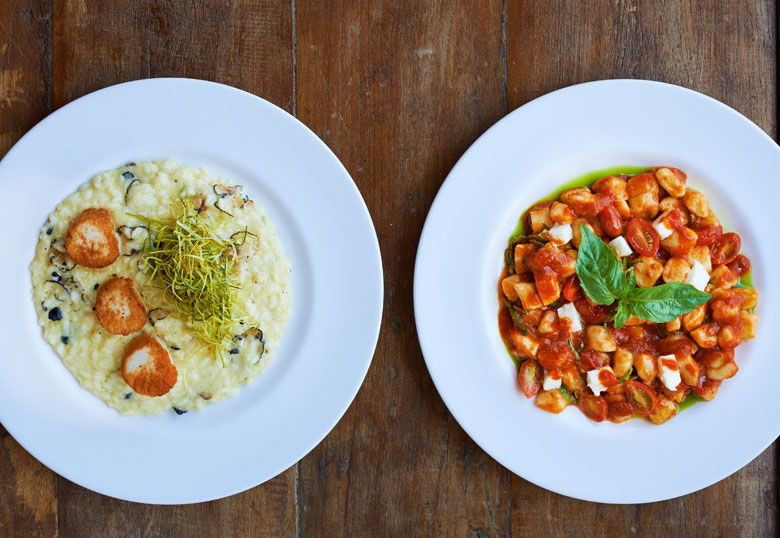
San Diegans love food. We pledge allegiance to the fish taco, go nuts for farm-fresh salads, and are big on burgers. In fact, the bigger, the better. Stir-fry, Korean barbeque, sashimi, pho—the list goes on and on. Thousands of readers voted for their favorites, which we collected, compiled, taste-tested, and tallied. The result: an insanely delicious guide, with expert picks from food critic Troy Johnson. Here, the best of the best—and then some.
A NOTE TO OUR READERS:Accuracy is paramount. But we are a service publication, and the lists we print should inform people and help them decide where to spend their time and money. We don’t want this poll to show readers who has the biggest mailing list or marketing staff. We want it to show which restaurants the people like best. If a restaurant wins an obscene amount of awards, and it’s apparent that “ballot stuffing” has occurred, San Diego Magazine reserves the right to give one or all of their awards to other top vote-getting restaurants that make a little more sense in real life.
Overall
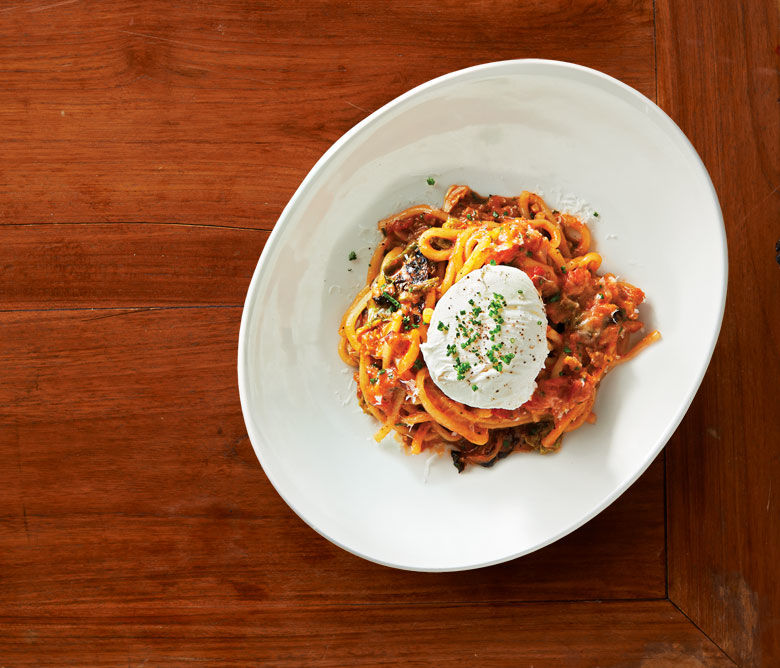
Cucina Enoteca Bucatini
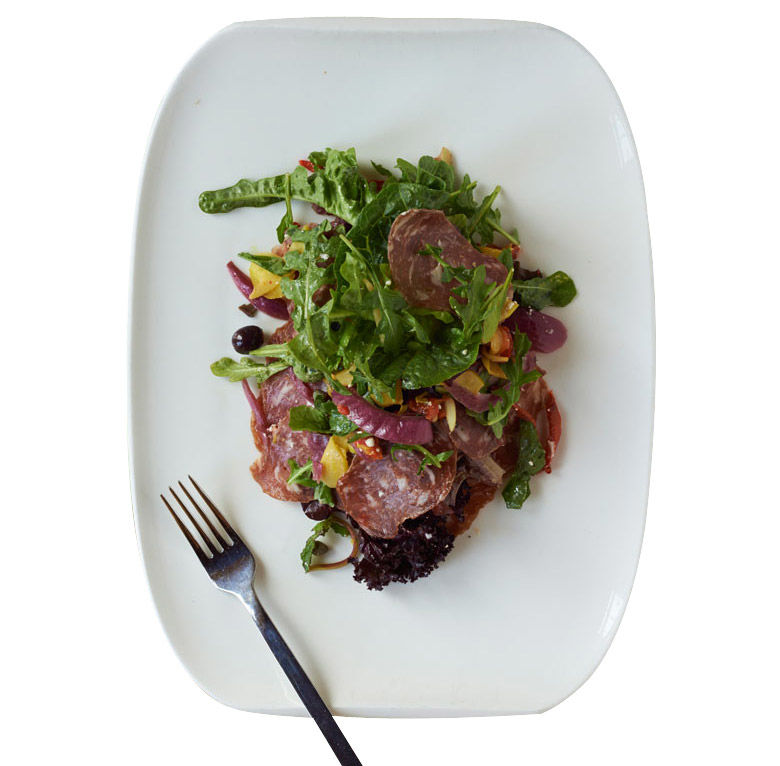
Hearty Helping Cucina Enoteca’s bucatini combines guanciale, burnt cabbage leaf, tomato, chili, and pecorino. The pièce de résistance? The delicate hen egg to top it off.
Best of the Best: Fancy
Readers’ Pick: George’s at the Cove Runner-up: Mister A’s Critic’s Pick: Addison
Best of the Best: Gourmet Casual
Readers’ Pick: Searsucker Runner-up: Cucina Urbana Critic’s Pick: Prepkitchen
Readers’ Pick: Brian’s 24 Runner-up: The Third Corner Critic’s Pick: Starlite
Best Hotel Restaurant
Readers’ Pick: Grant Grill at the US Grant Runner-up: Atoll Restaurant at Catamaran Resort and Hotel Critic’s Pick: A.R. Valentien at The Lodge at Torrey Pines
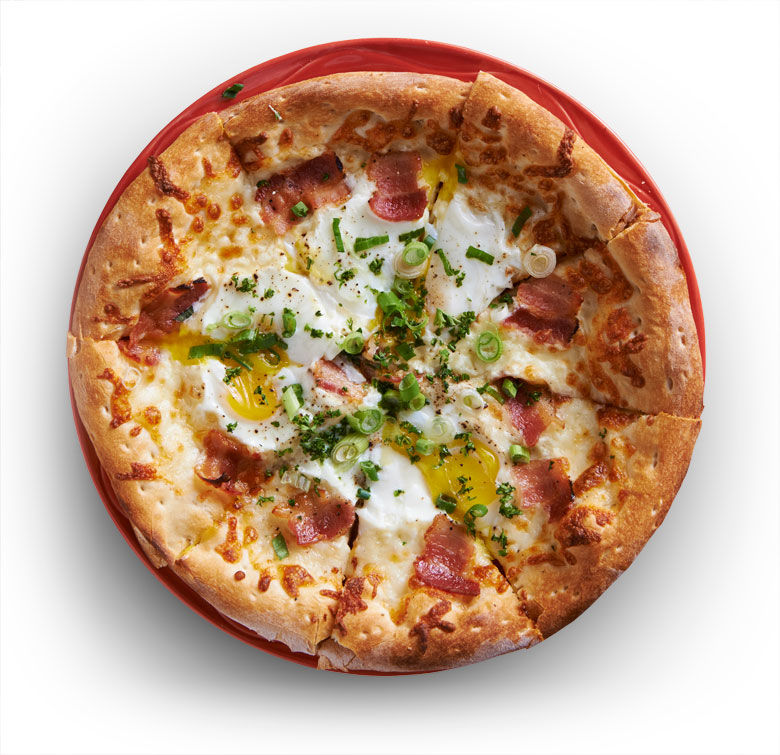
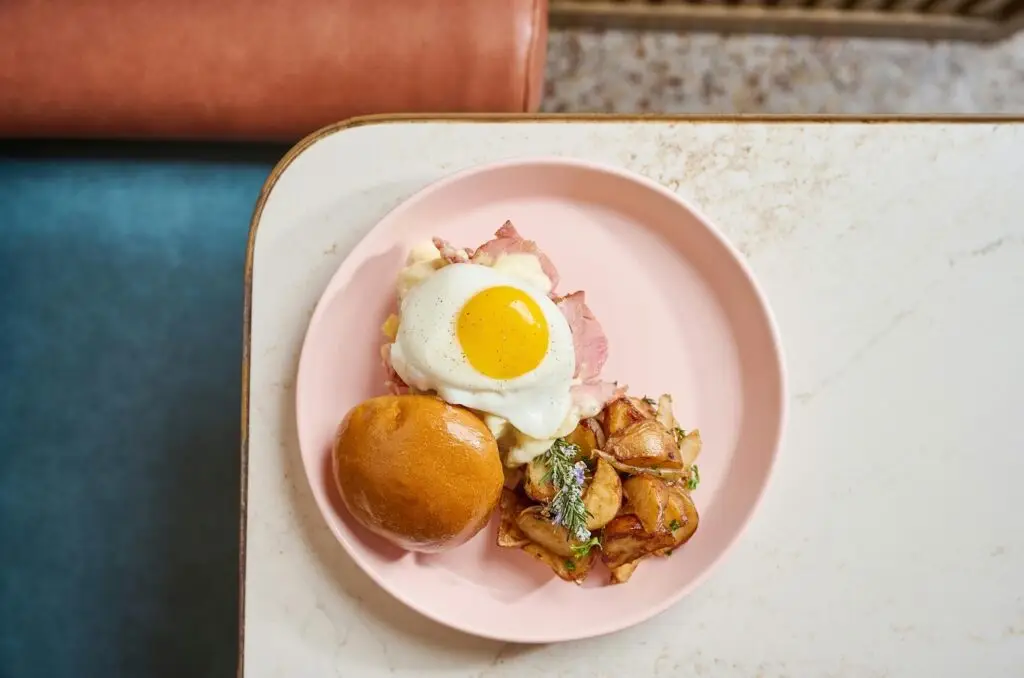
Breakfast Pizza from Bread & Cie
Breakfast Pizza from Bread & Cie
Best Neighborhood Restaurant
Readers’ Pick: Bistro Sixty Runner-up: Fish Public Critic’s Pick: Urban Solace
Best Desserts
Readers’ Pick: Extraordinary Desserts Runner-up: Bistro Sixty (San Diego Desserts) Critic’s Pick: Jsix
Best Food Truck
Readers’ Pick: MIHO Gastrotruck Runner-up: God Save the Cuisine Critic’s Pick: MIHO Gastrotruck
When three nations and 16 cities come together to host the FIFA World Cup 2026, the scale stops feeling like a tournament and starts feeling like geography. A continent becomes the stage as borders soften into corridors. And Southern California—shaped by migration, sport, entertainment, and constant movement—sits inside that landscape with all eyes on it.
San Diego and Los Angeles have always felt connected. Hop on the Pacific Surfliner, and the trip unfolds in one continuous stretch of coastline, passing beach towns, neighborhoods, and city centers.
Traveling from San Diego, everything still feels slightly suspended as the Pacific Surfliner follows the coast north with ocean on one side and a slow suburban blur on the other. San Diego stays in exhale. Los Angeles is already building toward something louder.
This summer, Los Angeles will host eight matches of the FIFA World Cup at Los Angeles Stadium, including the US Men’s National Team opener on June 11, while the region stretches into 39 days of programming across stadiums, parks, transit hubs, beaches, and neighborhoods. Instead of one massive fan hub, Los Angeles is embracing a citywide celebration, with fan zones spread across its entirety.
But this pattern has been rehearsed here for decades. In 1994, Southern California became one of the defining stages of the World Cup, when matches at the Rose Bowl placed global attention on the region and turned local stadiums into international landmarks, confirming its ability to hold the world at scale.
What distinguishes Southern California is not just infrastructure, but cultural permeability. Fashion, music, film, art, and sport constantly overlap here, creating an environment where identity is flexible and always in motion. From the Venice boardwalk, where skate culture shaped modern street style, to global soccer stars rubbing shoulders with Hollywood celebs, to authentic Spanish cuisine moving up and down the I-5 corridor, everything circulates.
The World Cup is not introducing anything new here, it’s showing up for the summer and showing out, revealing what this city has always known about itself. What follows is a look at the fan zones and how Los Angeles turns itself into a city-wide stage for the tournament, one neighborhood at a time.
Courtesy of Los Angeles Tourism & Convention Board
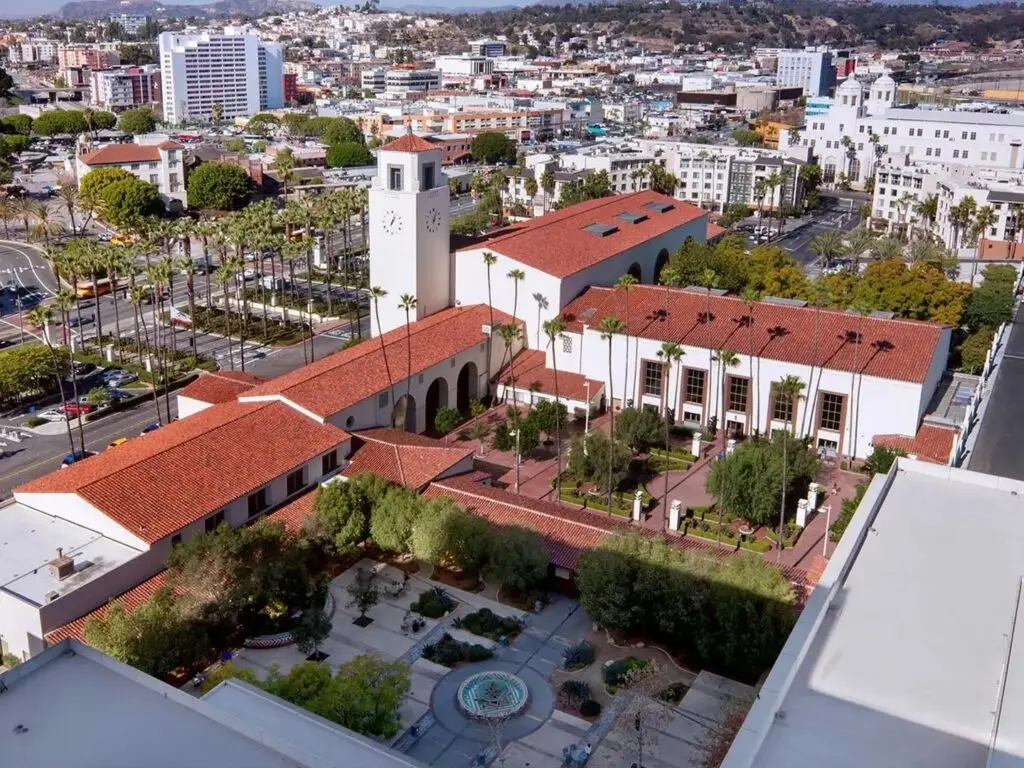
Los Angeles Union Station
As the heart of Los Angeles, Union Station is an official Fan Zone June 25-28 during the World Cup, but in practice it never really stops being one.
It is the city’s circulation point, its meeting ground, its pressure valve. Commuters, travelers, match-day crowds, and everyday Angelenos all move through the same space, and everything mixes, overlaps, and scales in real time. In a way, this is where the World Cup stops arriving in Los Angeles and starts moving through it.
The Pacific Surfliner from San Diego to Los Angeles makes that shift feel almost too easy. No stress or gridlock anxiety, just a straight line up the coastline with ocean on one side and everything slowly becoming more built on the other. It’s one of the rare ways into LA that doesn’t feel like arrival as friction. You can sit with a laptop, watch the Pacific drift past, grab coffee from the café car, and let the city come to you in pieces.
That’s the beauty of arriving at Union Station. Instead of feeling like you’re on the edge of the city, you’re immediately surrounded by it. And, inside, the station already reads like a World Cup nerve center: banners, movement, multilingual energy, the sense that something global is about to funnel through this exact point. The Heart of the City Fan Zone only sharpens that feeling, with simultaneous match screens, DJ sets, meet and greets, and immersive activations built around marquee games like USA vs. Türkiye.
ROW DTLA feels like the first exhale after arrival. A converted industrial campus turned creative district where restaurants, retail, and open-air courtyards form a self-contained ecosystem. If you’re looking for the perfect first meal in LA, make it lunch at Pizzeria Bianco. The thin-crust pizza is reason enough to go, but the space leaves just as much of an impression.
What I liked most about ROW DTLA is how quickly it resets you after the train. One minute you are stepping off at Union Station, and the next you are in a space that feels like its own version of LA, a city inside a city with some of the most curated shopping I’ve ever seen.
Bodega hides itself behind a convenience-store front, a sneaker and streetwear space disguised as something ordinary, like LA refusing to make anything feel too obvious. The whole campus moves like that, part retail, part gallery, part neighborhood you are only temporarily inside.
Isabella Dallas is a freelance writer for San Diego Magazine and the Arts and Culture Editor at The Daily Aztec in her final year at San Diego State University. She previously worked as an editorial intern for SDM, but when she’s not writing, you can find her trying the best coffee spots in SD, devouring the latest rom-coms, and indulging in anything and everything pop culture.
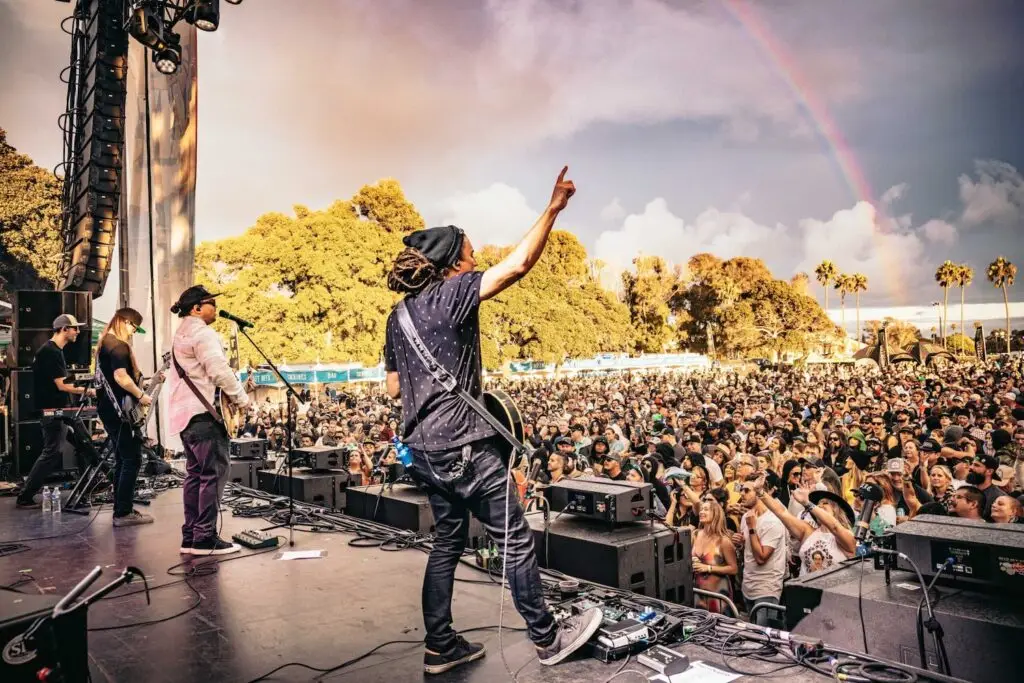
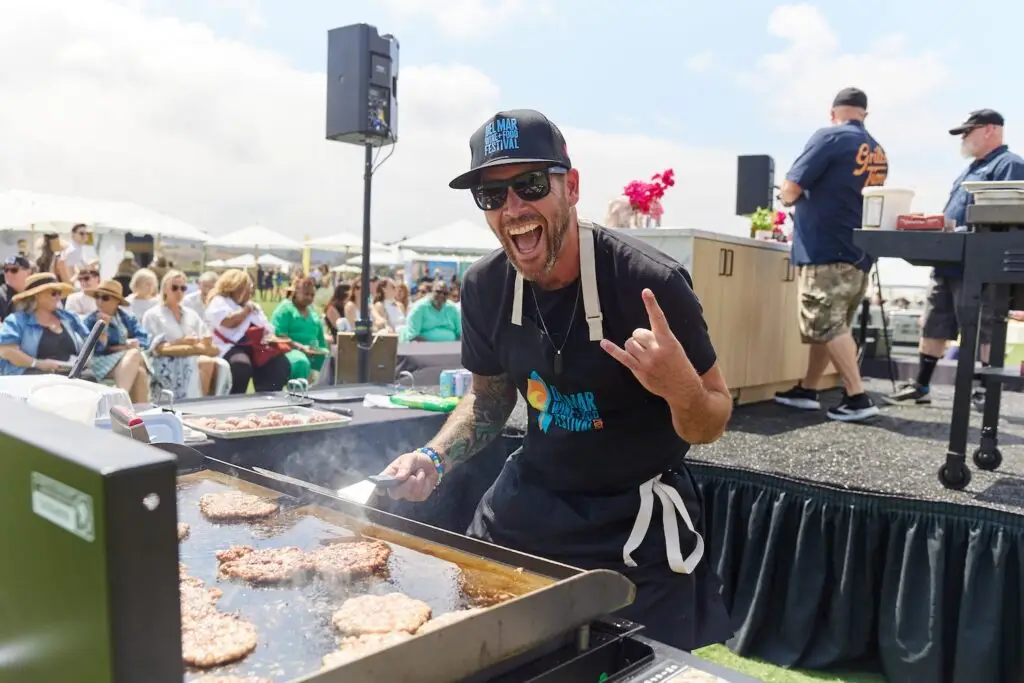
Maybe it was when Breaking Bad stars Bryan Cranston and Aaron Paul drank mezcal with chefs from San Diego and Food Network on the cliffs over Blacks Beach. Or the dinner outside under lights with Alex Morgan, celebrating some of the country’s most badass women chefs. Or the celebrity pickleball tournament hosted by NFL Hall of Famer Drew Brees, where the star of It’s Always Sunny in Philadelphia made thwacking sounds with locals. Or when Iron Chef winner Beau MacMillan commandeered (some say “stole”) a golf cart and delivered drinks and ice to chefs.
Whatever it is, Del Mar Wine & Food seems to have become the food and wine festival for people who don’t usually like food and wine festivals. The most San Diego thing.
Courtesy of Del Mar Wine & Food Festival
Two years ago, Thrillist named it one of the best food festivals in the country. Last year, 10,000 people came out to experience it, including Guy Fieri. Afterward, the founders spent a couple days trying to put their finger on why it felt so special. They had to name it, lean into whatever that was.
“It all came back to play,” says one of those founders, SDM co-owner Troy Johnson, a longtime San Diego food writer and Food Network judge. “Making world-class bread is serious, but breaking bread shouldn’t be. We gather all these incredibly talented people who take their craft very, very seriously—work their butts off all year to make some of the best food and drink in the country—and then we all just kinda play in the grass. We believe it’s possible to create something of incredible value and make the experience of that thing a laidback, easygoing, unpretentious experience. That’s what this is, and who we are in San Diego. The whole reason we did this was to shine a national spotlight on the people who make our food and drink culture hum.”
Courtesy of Del Mar Wine & Food Festival
The festival dropped its 2026 lineup today.
Headlining the fest are Food Network chefs Jet Tila, Maneet Chauhan, and Aarti Sequeira; Top Chef winner and Michelin-starred Buddha Lo; Iron Chef alum Beau MacMillan; MasterChef winner Kelsey Murphy; MasterChef Latinos winner Michelle Mathelin, chef and Guy’s Grocery Games judge Catherine McCord, chef and former Masterchef Mexico judge Benito Molina, Top Chef alum Jackson Kalb, Michelin-starred chef Drew Deckman, Michelin-starred chef Javier Plascencia, James Beard award-winning chef Brady Ishiwata Williams, and James Beard-nominated chef Mawa McQueen.
The party kicks off on Wednesday, September 30 at Monarch Ocean Pub with Signature San Diego, a walk-around tasting of the city’s greatest bites, from Baja seafood to bold Mexican flavors. From there, the energy carries into a celebrity pickleball tournament hosted by Drew Brees at Barnes Tennis Center on October 2, pairing friendly competition with an all-inclusive tasting experience in support of Feeding San Diego.
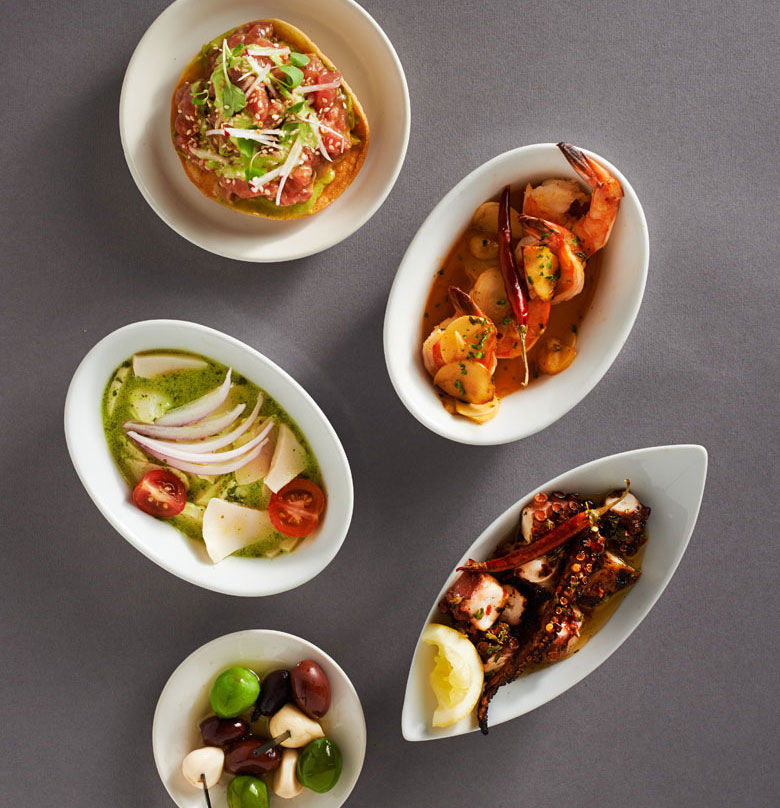
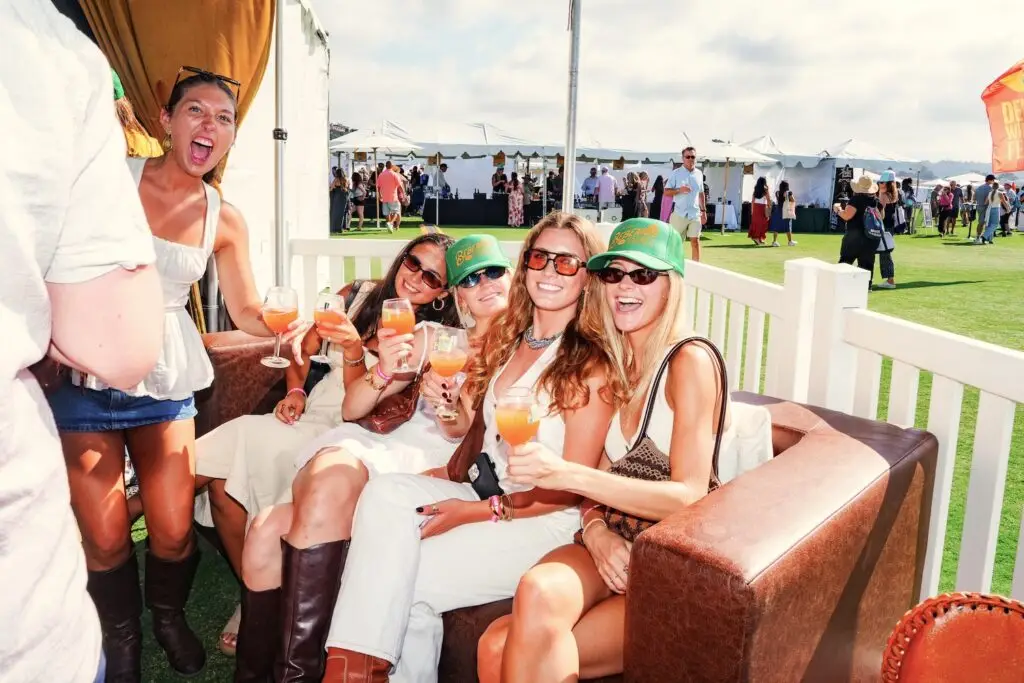
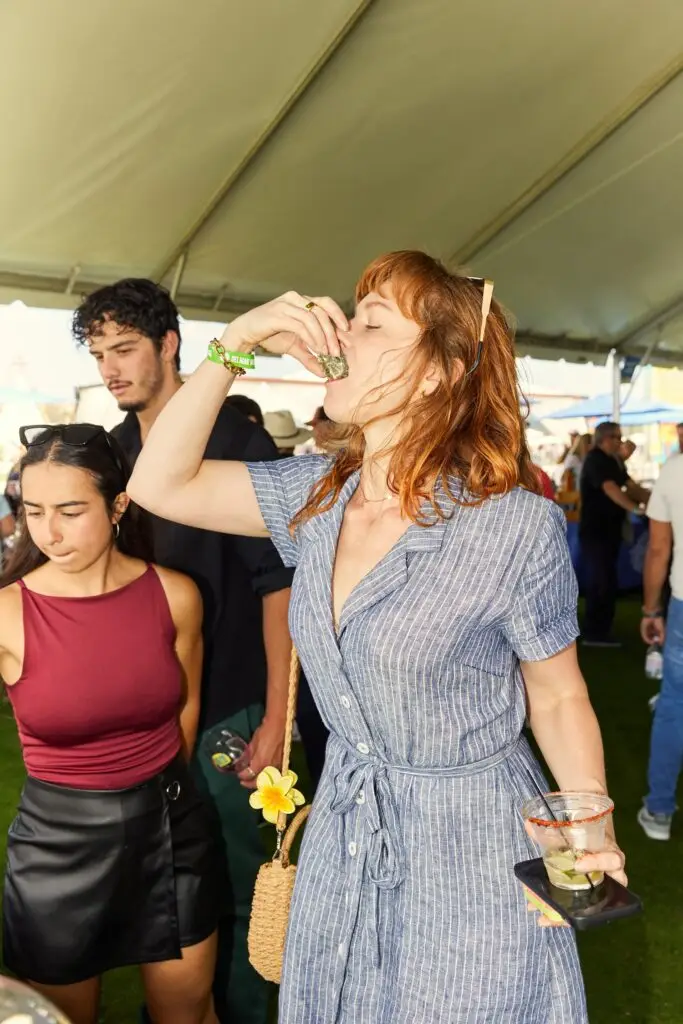
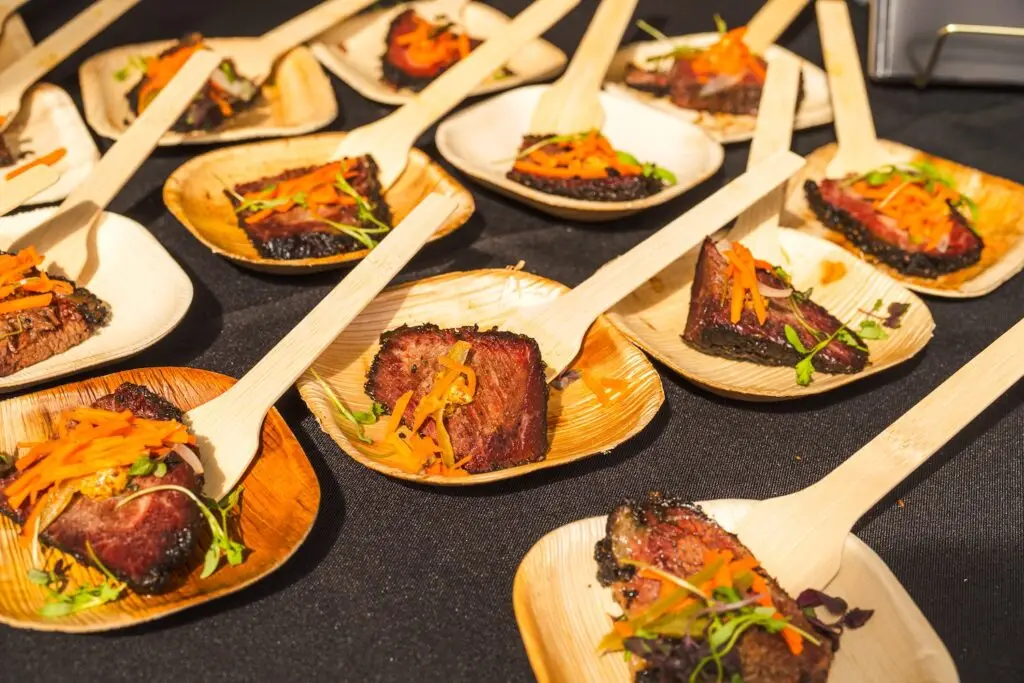
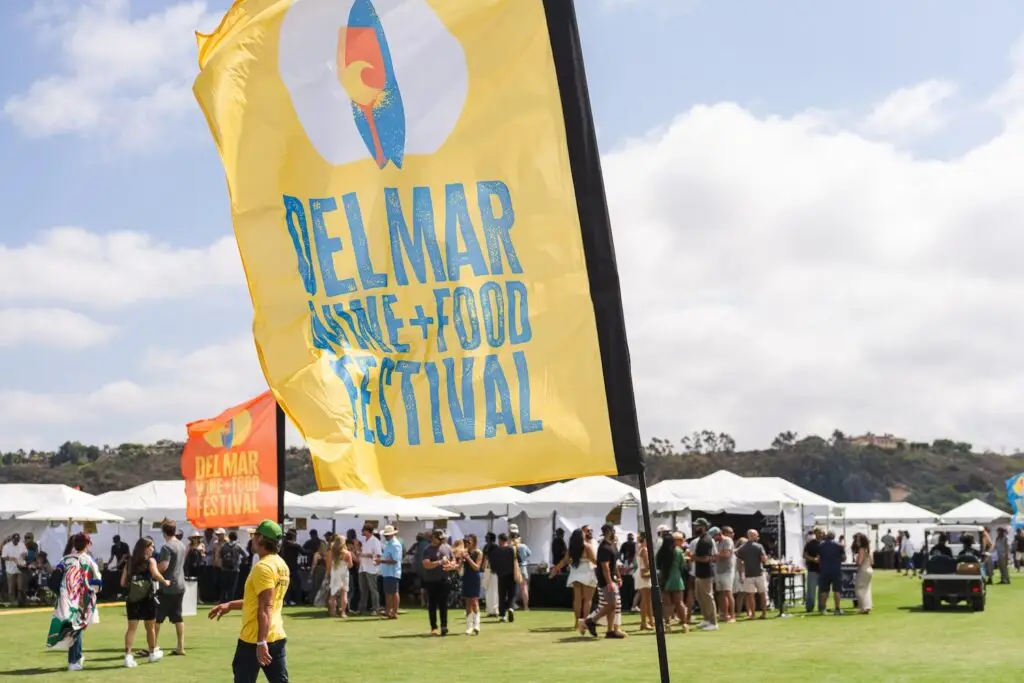
The main event is the two-day Grand Tasting at Surf Sports Park on Oct. 3 and 4. The city’s top chefs, food people from TV lands, and local tastemakers gather on the weirdly perfect grass to serve up everything from juicy Wagyu burgers and beef tallow fries to yellowtail tuna tostadas and veggies dressed up in their Sunday best. Wine and cocktail pairings are designed to round out the whole experience, including activations from Aperol Spritz, Hendrick’s Gin, Tequila Ocho, Mezcal Vago, Rioja wines, and Temecula producers.
Courtesy of Del Mar Wine & Food Festival
A VIP lounge offers exclusive access to curated small plates from Michelin-level chefs and pour from some of SoCal and Napa’s finest wineries and drink makers. The Official After Party at Guesthouse La Valle on October 3, a spirited walk-around tasting just steps from the Grand Tasting, where cocktails take center stage through imaginative bites inspired by the smoky, citrus-forward, and bittersweet flavors of classic drinks.
Zones return with activations including the Big Queer Food Fest celebrating queer chefs and queer-owned businesses; the Wellness Zone led by Novo Dia offering a built-in reset with non-alcoholic mocktails, movement-driven activations, and wellness-forward moments. Coastal lifestyle and locally made brands are also integrated throughout the festival.
“We are excited for the fourth edition of the Del Mar Wine & Food Festival this fall, which has quickly become one of the largest food and wine experiences on the West Coast,” says co-founder Chris Finn. “As the festival continues to grow, we are constantly looking to add events, experiences, and partners that will resonate with our San Diego community, and embody the Southern California way of life.”
Returning as the festival’s partner is local nonprofit Feeding San Diego. To date, Del Mar Wine & Food has raised $100,000 to support their ongoing fight against hunger across the region.
Stay tuned for additional events hosted by festival partners including Rob Machado, San Diego Wave, San Diego FC, Town & Country, and San Diego Mojo.
Courtesy of Del Mar Wine & Food Festival
Del Mar Wine & Food Fest: Frequently Asked Questions (FAQs)
When is the 2026 Del Mar Wine & Food Festival?
The 2026 Del Mar Wine & Food Festival will take place September 30–October 4 throughout San Diego County.
Where is the Del Mar Wine & Food Festival?
The week culminates with the Grand Tasting at Surf Sports Park (formerly the Del Mar Polo Fields) at 14989 Via De La Valle, Del Mar.
A wide variety of exclusive dinners, drink tastings, and other lifestyle events will be announced soon and available for purchase individually on Del Mar Wine & Food Festival’s website. These festivities include chef-curated dining experiences across San Diego’s hottest restaurants, a celebrity pickleball tournament, wine tastings, and more.
When is the 2026 Grand Tasting?
The Grand Tasting takes place this year on Saturday, October 3 and Sunday, October 4.
How much are tickets?
General admission for the single-day Grand Tasting starts at $185. An Early Access option is also available at $235, which includes an extra four hours before general admission to meet, mingle, and feast. For a two-day pass, General Admission starts at $275, while Early Access is $375.
VIP tickets begin at $425 for a single day, offering access to pre-festival experiences, exclusive food vendors, a dedicated VIP area, and more. For the full weekend in VIP, passes are priced at $765.
Where can I buy tickets for the 2026 Del Mar Wine & Food Festival?
Isabella Dallas is a freelance writer for San Diego Magazine and the Arts and Culture Editor at The Daily Aztec in her final year at San Diego State University. She previously worked as an editorial intern for SDM, but when she’s not writing, you can find her trying the best coffee spots in SD, devouring the latest rom-coms, and indulging in anything and everything pop culture.
Consider this your annual reminder that Mother’s Day is not the time to improvise. What’s in: roses, peonies, and a card attempting to summarize a year’s worth of gratitude in three paragraphs or less. What’s out: pretending you “didn’t know it was this weekend.” In a city currently operating at full brunch capacity, San Diego responds as it always does—oceanfront tables, excessive buffet spreads, and sparkling wine refills. Whether it’s waffle stacks, chilled seafood displays, or carving stations doing the most, these San Diego restaurants have you covered.
All moms deserve elegance on Mother’s Day. Celebrate a beachfront with a beautifully timeless and tasteful brunch at the Crown Room in Hotel del Coronado. Indulge in options like lemon vanilla pancakes with berry compote paired with crispy bacon, made-to-order omelets or your very own egg benedict station, shucked oysters, whole in-house smoked brisket, Peach Melba Verrine, and more. Guests over 21 can enjoy a complimentary glass of Champagne.
Price: $235 per adult | $125 per child (6 – 10) | Ages 5 and under are free Hours: 10 a.m. – 3 p.m. Address: 1500 Orange Ave, Coronado Reservations: Hotel del Coronado
Oceana Coastal Kitchen
Mimosas, marina views, and a Mother’s Day where the only thing on the agenda is enjoying it? We’ll cheers to that. Located at the Catamaran Resort, this Mother’s Day brunch literally has it all, from sushi rolls and nigiri to a charcuterie spread stacked with salumi, prosciutto, cornichons, pepperoncini, cherry peppers, and grainy mustard, plus waffle and omelet stations, cedar-planked salmon, and panko and herb-crusted mac and cheese. Kids can also create a bouquet for Mom that’s just chaotic enough to be adorable.
Price: $120+ per adult | $60+ per child (5 – 12) | Ages 4 and under are free Hours: 10 a.m. – 4 p.m. (last seating at 2 p.m.) Address: 3999 Mission Boulevard, San Diego Reservations: Oceana Coastal Kitchen
Mother’s Day at Arlo transforms into an enchanted garden that’s equal parts lush and indulgent: a raw bar, fresh salads, delicate pastries, 12-hour braised short ribs, roasted prime rib, and Szechuan pepper–crusted swordfish from the Santa Maria grill. Spoil moms, grandmas, aunts, and every beloved mother figure with live music, a roaming mimosa cart, floral bouquets, and of course, a little retail therapy courtesy of the Kendra Scott trunk show—necklaces, bracelets, earrings, or, let’s be real, all of the above.
Price: $99 per adult | $40 per child (5 – 12) | Ages 4 and under are free Hours: 9 a.m. – 3 p.m. Address: 500 Hotel Circle N, San Diego Reservations: OpenTable
Rumorosa
Forget the CVS roses (respectfully). Rumorosa’s Mother’s Day brunch is back for its third year, pairing complimentary flowers with sun-drenched marina views. It’s coastal-modern meets Baja soul, where the food is bright and very much not an afterthought. Last year’s spread leans into Carrot Cake Waffles, a made-to-order omelet station, Café de la Olla French Toast, Roasted Lamb Tostadas, and other “yes, I’ll have everything” moments.
Price: $90 per adult | $40 per child (5 – 12) Hours: 9 a.m. – 2 p.m. Address: 1380 Harbor Island Drive, San Diego Reservations: OpenTable
Tidal
A boozy brunch overlooking Mission Bay with Mom? Say less. Celebrated at Tidal with a lavish spread of cheeses and charcuterie, a seafood bar stacked with oysters, shrimp, crab legs, and ahi specialties, and chef-attended carving stations with slow-roasted prime rib. Made-to-order omelets and pancakes, maple-glazed pork belly, roasted Baja grouper, vibrant seasonal salads, and brunch classics round it out, finishing with an abundant mini dessert selection.
Price: $125 per adult | $50 per child (5–12) | Ages 5 and under are free Hours: 11 a.m. – 3 p.m. Address: 1404 West Vacation Road, San Diego Reservations: OpenTable
Animae
Mother’s Day at Animae is anything but expected. Tucked into the Marina District, this world-class steakhouse leans West Coast with a playful Asian twist. This year, treat Mom to a dim sum–style experience: a slightly more elevated, endlessly flowing take on the buffet, where indulgent small plates arrive tableside, perfectly complementing the Art Deco interiors and designed to be picked at, shared, and fully obsessed over. It’s less set menu, more choose-your-own flavor adventure.
Price: $104 per person Hours: 10 a.m. – 2 p.m. Address: 969 Pacific Hwy, San Diego Reservations: OpenTable
Isabella Dallas is a freelance writer for San Diego Magazine and the Arts and Culture Editor at The Daily Aztec in her final year at San Diego State University. She previously worked as an editorial intern for SDM, but when she’s not writing, you can find her trying the best coffee spots in SD, devouring the latest rom-coms, and indulging in anything and everything pop culture.
Today’s seniors are more connected than ever, with a renewed focus on retirement as a time of discovery and enriching experiences. The ultimate reward for a retirement well-earned is the wisdom to appreciate it all, and what better place to enjoy that unique perspective than Vi at La Jolla Village, in the heart of San Diego.
All-access pass to good living.
As a Continuing Care Retirement Community (CCRC), Vi provides access to a connected and fulfilling community while making it easy to plan for future care, should the need ever arise. With a care plan in place, residents enjoy greater financial predictability and long-term value, freeing them to focus on making the most out of retirement.
Resort-style amenities at the epicenter of a cultural hub like San Diego offer a retirement experience unlike any other. Paired with exceptional dining, spacious accommodations and dedicated staff, the best of maintenance-free living is all around. And with the introduction of Vista 360 Well-Being, Vi’s panoramic approach to wellness, there are more ways than ever for residents to access it all.
The harmony of mind, body and community.
Courtesy of Vi at La Jolla Village
The key to longevity is striking the right balance in maintaining an active lifestyle with an active mind in a fulfilling community. With newly renovated community spaces and restaurants, Vista brings a variety of opportunities for residents to elevate their well-being through Vi-exclusive “Signature Experiences.”
Vista Enrich takes an evidence-based approach to brain vitality, keeping residents at the forefront of cognitive health through exergaming (exercising + gaming), nutritional plans and informative workshops. It is also home to The Brain Vitality Studio, an innovative facility dedicated to cognitive fitness that has garnered national recognition.
Vista Discover invites residents into stimulating educational experiences, from chef-led cooking demos and guided wine tastings to lectures at local universities and intimate lectures following cultural outings.
While Vista Enrich focuses on brain health and Vista Discover engages residents intellectually, Vista Explore cultivates a sense of adventure through curated travel and local excursions. But broadening one’s horizons doesn’t always require a plane ticket. One recent event brought a taste of the world right to the community: an onsite “jazz cruise” featuring live music and global cuisine served at a series of themed “ports” all within the community’s own ballroom.
“Location, location, location”
Courtesy of Vi at La Jolla Village
One of the biggest perks of life at Vi at La Jolla Village is its proximity to just about everything. With easy access to transportation and local attractions just steps away, residents can explore and engage with their community at their own pace.
“There are trolley and bus stops within a 5-minute walk that will get you to the beach, UCSD Campus, medical appointments, downtown La Jolla or San Diego, et cetera. We rarely use our car,” said resident Tom Yager.
With the best of San Diego just steps away, residents don’t just live in the city, they live within reach of everything that makes it special.
The best of all worlds.
Courtesy of Vi at La Jolla Village
At Vi at La Jolla Village, retirement isn’t a chapter to slow down; it’s an invitation to discover more. Tailored community experiences created by Vista, paired with the vibrant pulse of San Diego just outside the door, mean that residents don’t have to choose between security and adventure, connection and independence. They get all of it.
This is what an all-access pass to good living looks like: the comforts of an elevated lifestyle, a community built for growth and a city made for discovery – all in one place.
To learn more about Vi at La Jolla Village or for details on available floor plans, visit ViatLaJollaVillage.com/SDM.
Imperial Beach may not yet be in the echelons of Malibu or Newport when it comes to tourist-beckoning beach cities, but the southwestern-most town in the United States is working to get there. “Imperial Beach is primed and ready for change,” says chamber of commerce president Sandi Crosby, who has lived in Imperial Beach for 20 years.
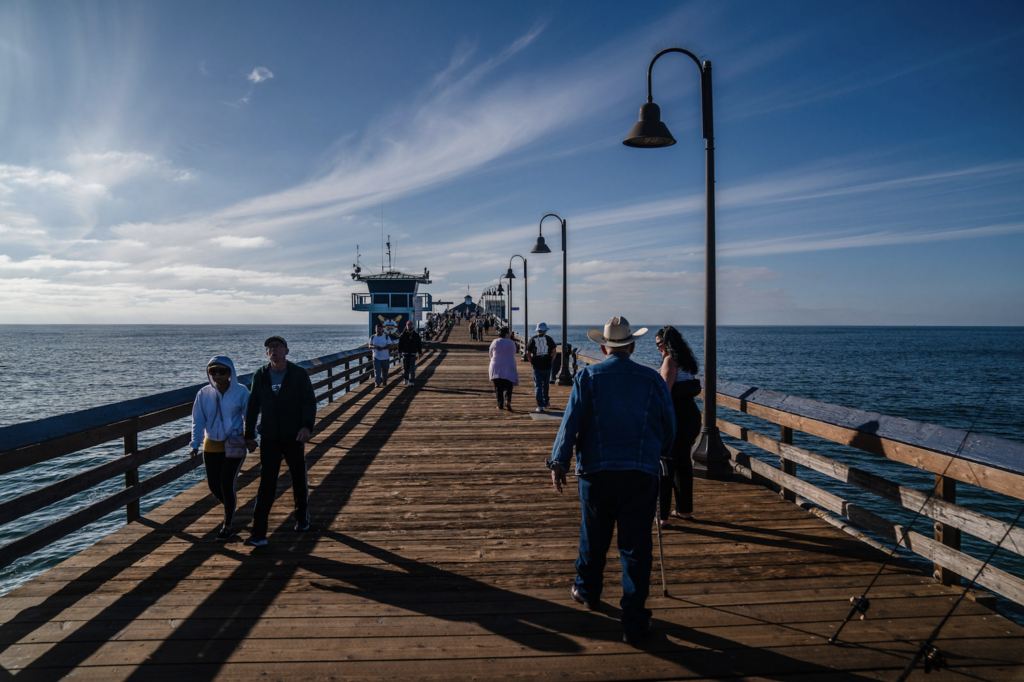
While IB is in the process of reinventing itself as a destination city, it’s always lived up to its moniker with sea-centric activities: wide sandy beaches, the Outdoor Surfboard Museum (featuring Surfhenge, an iconic public sculpture that resembles four, massive colorful boards), the traditional 1,500-foot wooden pier, Bayshore Bikeway, the Tijuana Estuary (a great place for shorebird-spotting), epic Pacific sunsets, world-famous surf breaks.
But the ability to safely enjoy those breaks (or any of the coastline) has been IB’s biggest hurdle. Pollution-related beach shutdowns plague the city, often for weeks at a time, due to sewage contamination in the Tijuana River. There is hope: In 2024, the federal government committed $650 million to clean up the Tijuana River Valley, and a 2025 agreement with Mexico addresses plans for wastewater infrastructure in Tijuana. Lawmakers like Supervisor Paloma Aguirre and State Senator Steve Padilla are introducing legislation to distribute air purifiers, regulate factory-created pollution, and remove infrastructure contributing to airborne toxins. Former mayor Serge Dedina founded the conservation-focused nonprofit WildCoast to protect the biodiverse wetland habitat surrounding IB, and community members continue to raise their voices for pollution remediation.
And it’s still a wonderful place to explore. Exit the 5 at Palm Avenue, head west, and turn south on Seacoast Drive to find the heart of the city. Staycation at Pier South Resort, wander through a tchotchke-filled gift shop, linger over a bowl of clam chowder at Brigantine Seafood & Oyster Bar, peruse public art. Get ice cream at Cow-A-Bunga and walk out on the pier for a classic IB experience. You can’t miss the view of Islas Los Coronados and Playas de Tijuana.
Photo Credit: Ariana Drehsler
Facts About Imperial Beach, CA
It’s no coincidence this beach town and San Diego’s neighboring county share a name: Imperial Beach was founded in 1887 as a retreat for Imperial County residents escaping scorching summer temps.
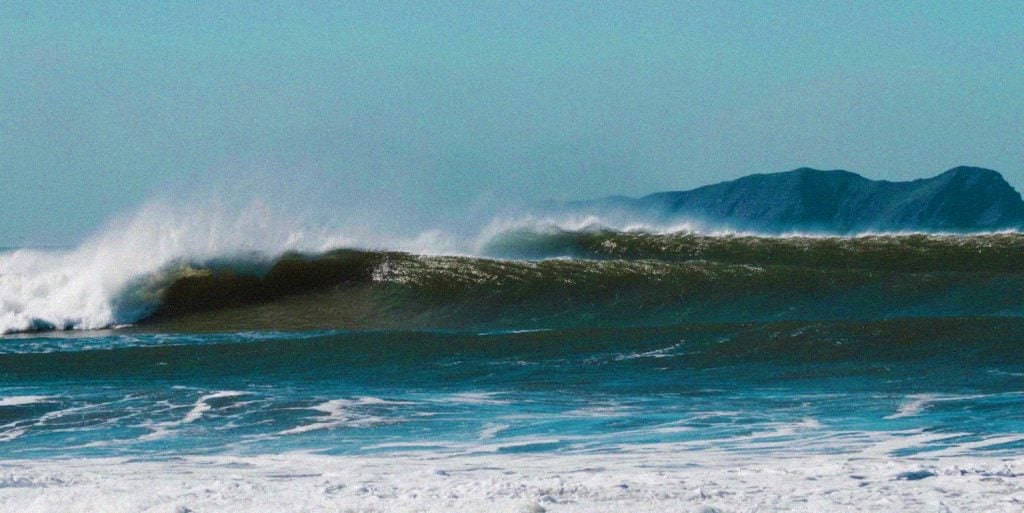
The huge waves at Tijuana Sloughs (up to 20 feet on the right swells) became famous when Dempsey Holder surfed them in 1937.
In the early 1900s, a ferry excursion boat took passengers from downtown San Diego to Imperial Beach for a day at the shore.
In 2025, the average home price in Imperial Beach was $834,000, according to Zillow.
Scenes from Lords of Dogtown, a cult-favorite 2005 film about SoCal surf and skate culture, were shot at Imperial Beach Pier.
Photo Credit: Ariana Drehsler
Locals’ Guide to Imperial Beach, CA
“A lot is new in Imperial Beach in the past five or six years, and some of my favorite places aren’t there anymore,” says Charlie Knowles, who grew up in IB and now co-owns the Portuguese café Bica on Adams Avenue in Normal Heights. But many of his old haunts remain, like IB Forum Sports Bar & Grill, where you can get a cold local beer and a burger on a hot day. “The Philly cheesesteaks are also really good,” Knowles adds, and Crosby says the wings and salads are just as tasty as the burgers.
Opened in the ’60s, IB’s oldest bar, Ye Olde Plank Inn, is a “good old dive,” Knowles says. Just steps from the sand at the corner of Palm Avenue and Ocean Lane, it’s the place with the pirate on top. “And I don’t think [many] people know that there’s a new restaurant attached to it, Plank Cantina,” Crosby points out.
Like any city worth its salt in San Diego, there’s no shortage of quality tacos in IB. Knowles goes to Victoria’s Mexican Food on the corner of Coronado Avenue and Saturn Boulevard for reliably delicious tacos of all varieties, Baja Oyster and Sushi Bar across the street for the fish version, and Ed Fernandez down the block for birria.
Photo Credit: Jessica Paige Photo Co.
“Trident Coffee is one of the new places,” Knowles says. At the end of 13th Street, where it meets the bay and the Otay River, Trident rewards early risers with colorful dawn vistas—and it’s right off the Bayshore Bikeway for a quick caffeine boost during your ride.
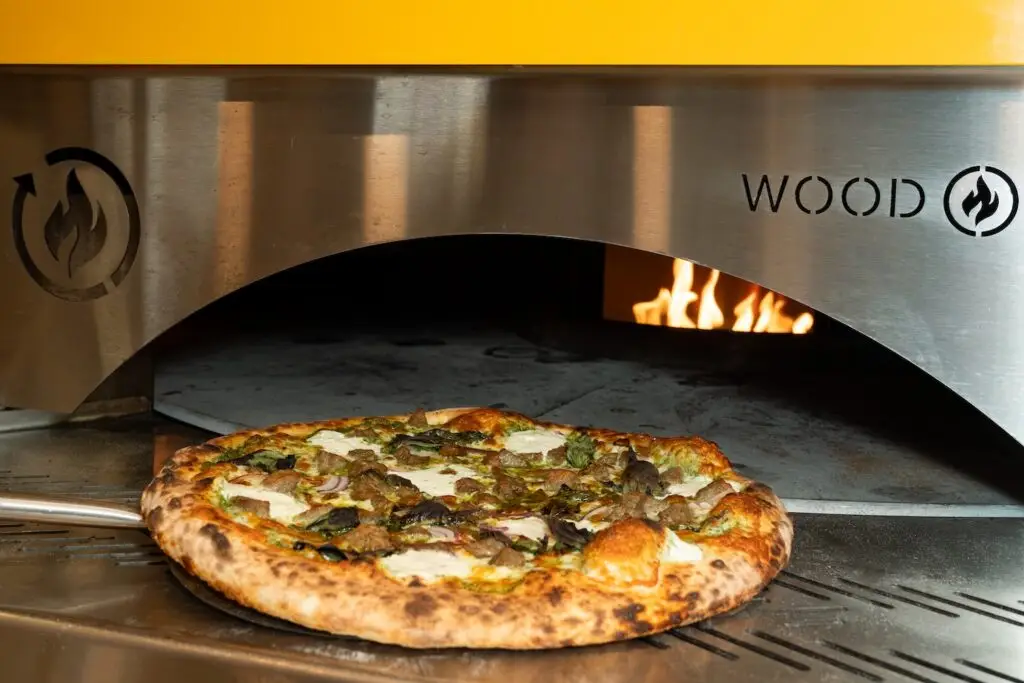
Another new(ish) spot with dreamy ocean views any time of day is Sammy’s Woodfired Pizza and Grill at Pier South Resort. “That’s where I go for girl lunch: Caesar salad, fries, and wine,” Crosby laughs.
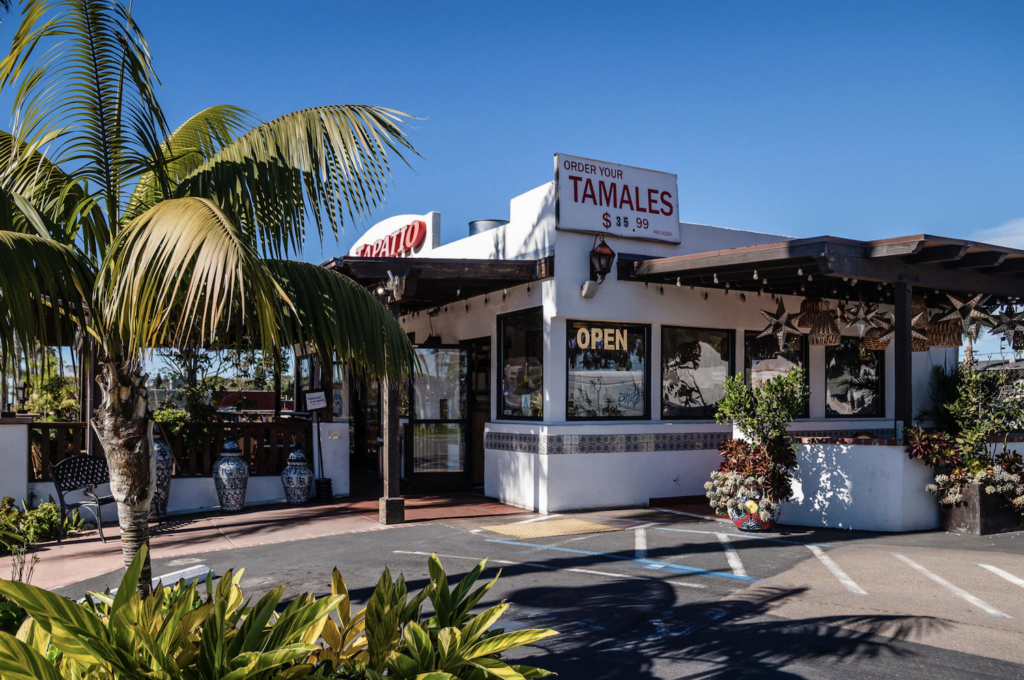
Off the beaten track on 13th Street, she adds, recently opened restaurants bring new experiences to IB—like Millport, which offers curated dining events and gluten- free pastries, and Mangini’s Pizzeria, which serves artisan pizza. Once you venture away from the shore, you can also find local staples like El Tapatio and Star Dust Donut Shop on Palm Avenue, both family-owned and thriving for 40 years or more.
Photo Credit: Ariana Drehsler
What’s About to Happen
More beachy fun is coming to Portwood Pier Plaza. Expected in late 2026, a new splashpad will also include fresh landscaping, lighting, artwork, and seating.
Residents and visitors can also look forward to the potential comeback of Imperial Beach’s claim to fame: the Sun & Sea Festival, featuring the world-renowned sandcastle competition. “It depends on funding, so we’re really hoping the public comes through with donations,” Crosby says.
New events are also on IB’s calendar, Crosby adds, like “female founder” gatherings sponsored by the chamber of commerce for women in business, as well as the IB Expo and Tasting Tour that takes place Father’s Day weekend to coincide with the first-time arrival of a NASCAR race in Coronado (the 3.4-mile street race is expected to summon tens of thousands of spectators).
Crosby is excited to see what kinds of businesses will move into empty spots along Seacoast Drive, and she is encouraged by the recent arrival of unique shops like upscale stationery boutique Crafty Paper Co. SunCoast Market, opened in summer 2025, is another fresh concept for the city—a co-op grocery store offering San Diego–grown produce, locally prepared and packaged food, and more organic choices.
Through the decades, Imperial Beach has maintained a reputation as one of San Diego’s more budget-friendly beach towns. But recent years brought precipitous hikes in housing costs, mostly driven up by investors buying and renting out existing units, lack of affordability in other parts of San Diego, and a dearth of economical housing units under construction in IB. So, it’s big news that a new multi-family development with affordable units is coming to Holly Avenue and 14th Street, complete with a public park and green space—the first of its kind in the area.
“Resiliency is on the rise,” Crosby says. “There’s a general consensus that we’re working toward something better.”
You don’t have to go far to get your forest fix in San Diego County—just take the 8 East past El Cajon and gain altitude in the Cuyamaca Mountains and you’ll hit Alpine, a quasi-rural community of 15,000 with sweeping views. Surrounded by national forest land and two reservations and perched at 2,000-feet elevation, Alpine is only about 30 miles east of downtown San Diego, perfect for a day trip when you’re in the mood for a small-town outing (or a stop along the way to the desert or Viejas).
The Kumeyaay hunted, gathered, and farmed in what is now Alpine more than 12,000 years ago before Spanish missionaries forced them to convert their villages to rancherias. By the late 1840s, after California and Mexico declared independence from Spain, the rancherias were consolidated into one massive “rancho,” and, in the 1850s, the area became a stopover on the “Jackass Mail,” SoCal’s first regular postal route. Then came the Gold Rush and a road to Julian, followed by another kind of gold: Alpine was California’s leading producer of honey in the late 1800s.
Former historical society president and honorary mayor Bob Ring says that during WWI, Alpine became known for having the “best climate” in the United States—healthy for soldiers’ convalescence or those with respiratory issues. Good weather, agriculture, and deer hunting brought folks to Alpine as it grew from hunting shacks to cottages to family homes.
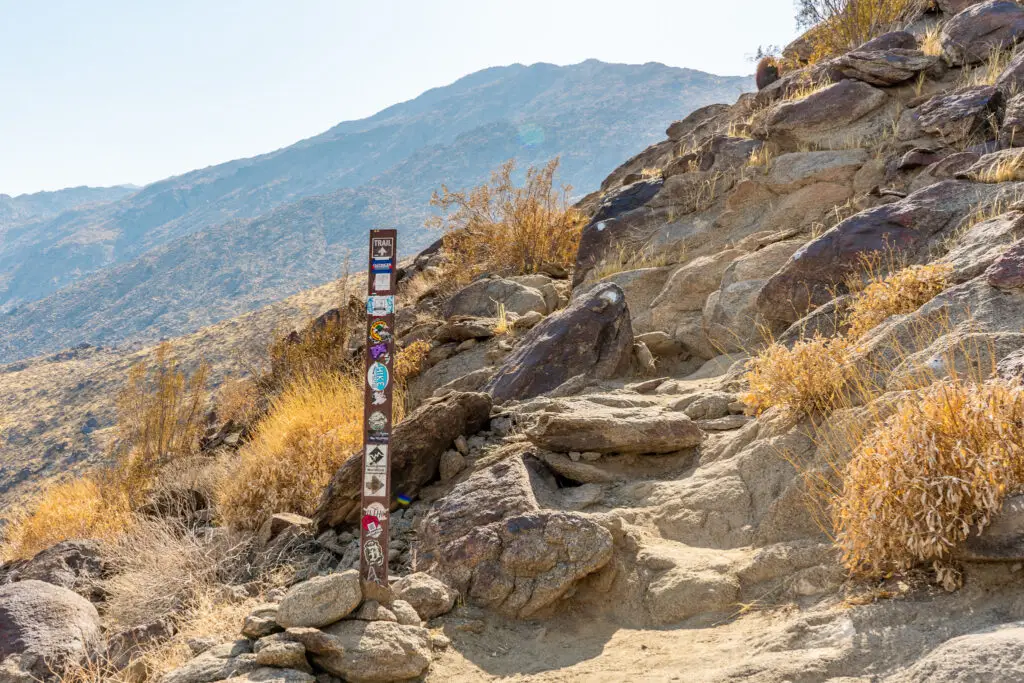
Nowadays, Alpine is a place where “you have to get in touch with nature—because we have no movie theaters,” jokes real estate broker and former chamber of commerce board member Jeff Campbell, a resident since 1974. Getting outdoors in Alpine might mean joining 4-H or Future Farmers of America; hiking or dog-walking at Wright’s Field or Loveland Reservoir; riding horses, ATVs, and mountain bikes; or hitting the trails to discover seasonal waterfalls like Cedar Creek Falls, which cascades into a swimmable pool. Alpine is also the place to get up close with raptors at Sky Falconry and meet rescued big cats at the animal sanctuary Lions Tigers and Bears.
Photo Credit: Ariana Drehsler
Facts About Alpine, CA
Famous Broadway actor William Dalton, who went by the stage name Julian Eltinge and made a fortune playing women’s roles on stage, lived in Alpine in the 1920s. His ranch home still stands.
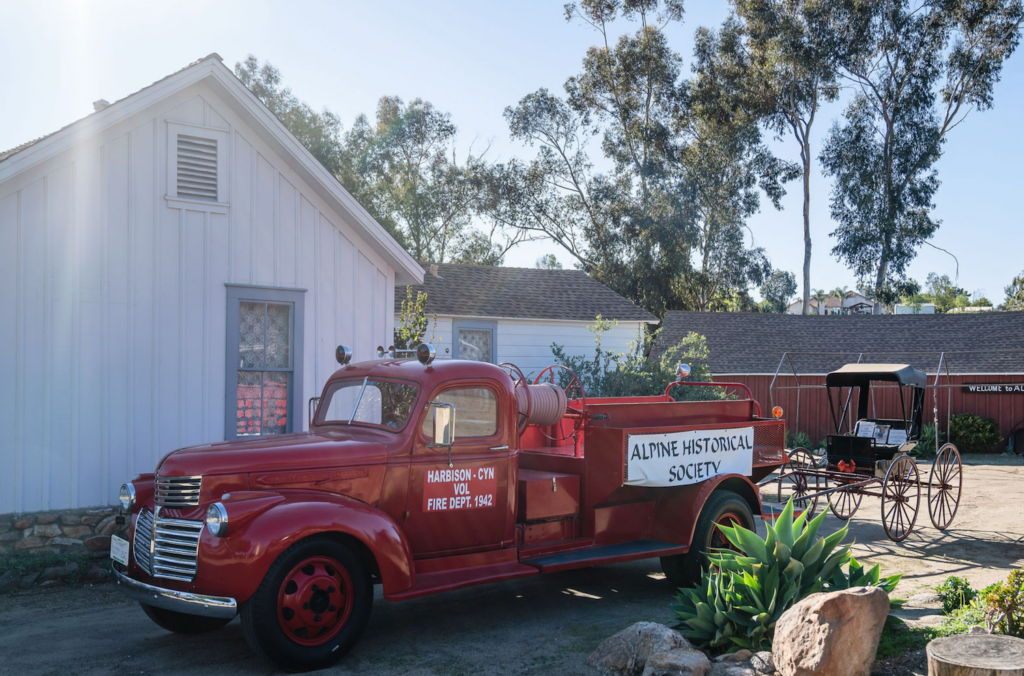
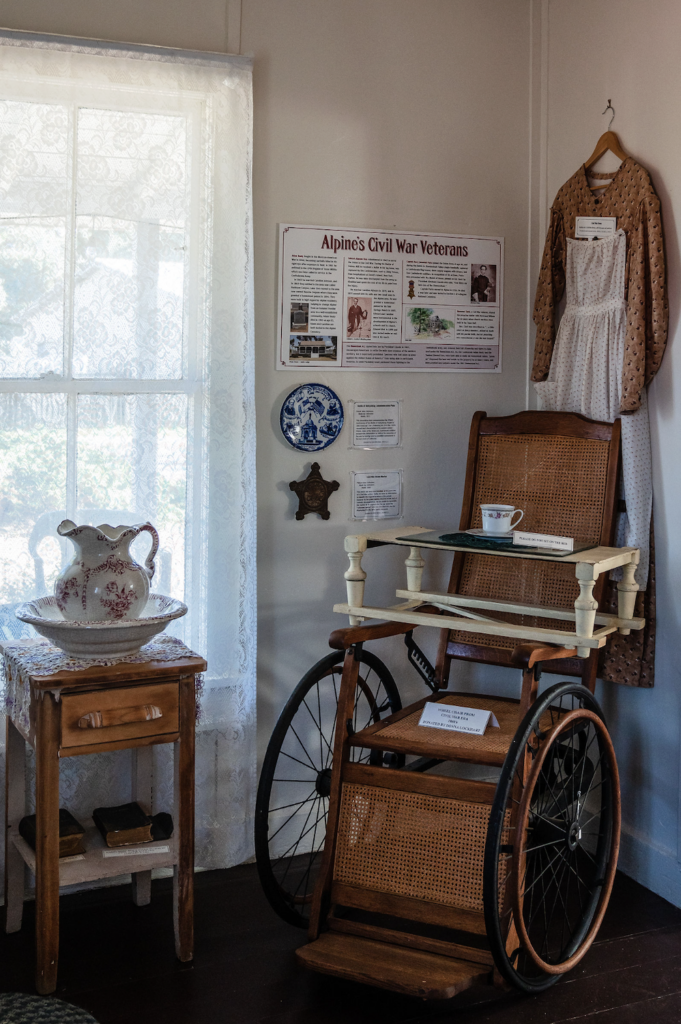
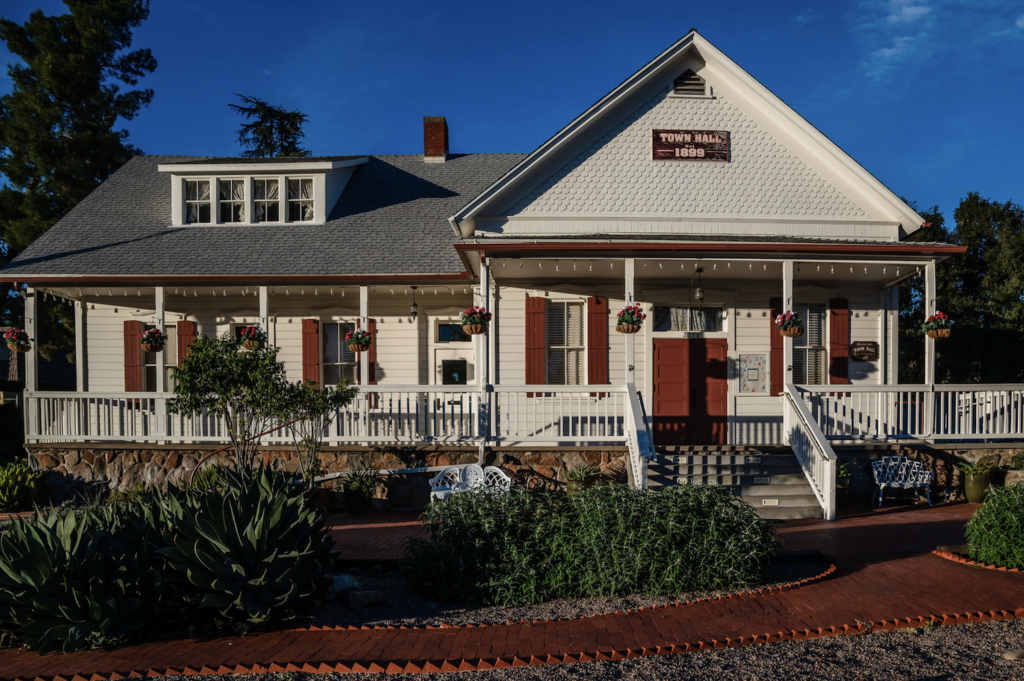
One of California’s earliest female physicians, Dr. Sophronia Nichols, lived in Alpine. Her 1896 home now houses the Alpine Historical Society Museum.
Former major league pitcher and Padres commentator Mark “Mud” Grant resides in Alpine.
Zillow reports the median home price in Alpine is almost $930,000.
Alpine has hosted its holiday Parade of Lights for 30 years. Thousands attend from all over San Diego County.
Photo Credit: Ariana Drehsler
The Locals’ Guide to Alpine, CA
“Here’s how favorites work in Alpine: We all have our preferred menu items at each of our town’s 11 eateries,” Campbell explains. The restaurants are mostly concentrated along Alpine Boulevard right off the 8.
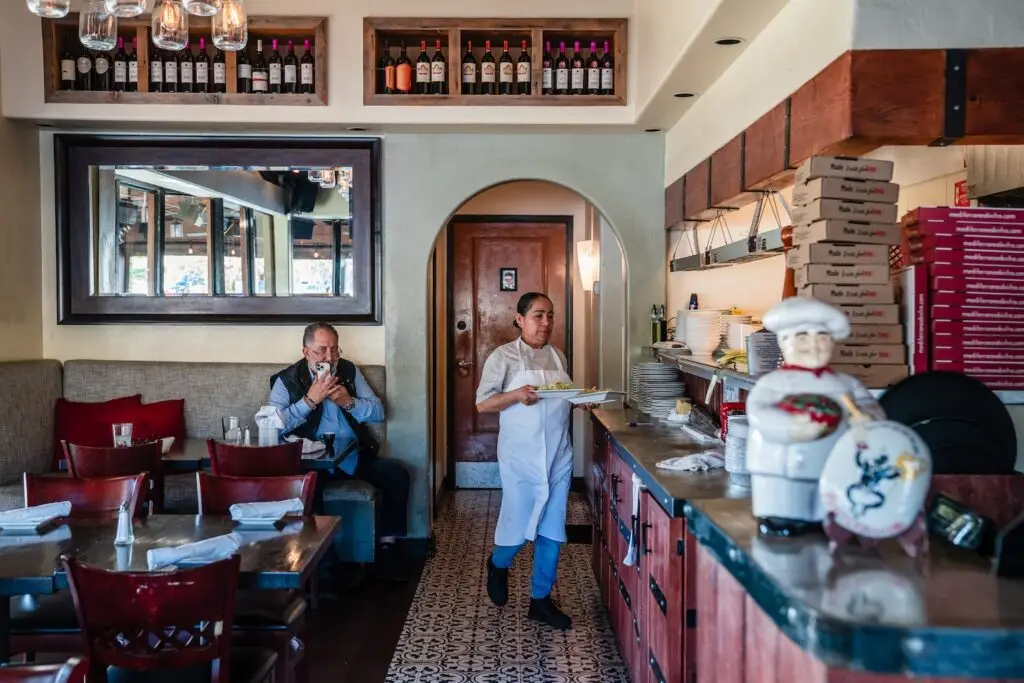
Ring likes the rolled tacos at family-owned Alpine Taco Shop, with extra guac and cheese, while Campbell is partial to the fried fish tacos at Casino Inn Bar & Grill. According to Campbell, Franca’s Italian Kitchen and Bar has the best baked rigatoni not only in Alpine but in all of San Diego County. Ring goes there for family dinners and says he could be satisfied with “just the homemade bread with balsamic and olive oil.” Or head to Mediterraneo (locals call it “the Med”) for vegetarian lasagna. “I’m a keto dude, but it’s that good,” Campbell says.
For coffee, there’s The Well Cafe, where Cecilia Kennedy runs the shop and her husband Alan roasts beans in micro batches at home. Try the dark roast for drip and Mexican mocha for something a little fancier. Breakfast is a must at Janet’s Montana Cafe, which Campbell says serves the fluffiest pancakes, with no syrup needed. “[Janet’s has] homemade everything,” Ring adds, “but try the pies.” Grab supersized treats at Steph’s Donut Hole, and lunch is on the go at Barons Market, where you can pick up soup and salad.
Photo Credit: Ariana Drehsler
With two award-winning breweries in town, Alpine has a good beer scene for its size. Campbell gets the Assaulted By Feather Pillows IPA at Mike Hess Brewing and the Apricot Bells Bluff blonde ale at Mcilhenney Brewing Co.
The town also has a healthy populace of gearheads: Locals like to bring out their classic cars, motorcycles, dune buggies, and fifth wheels. Hang out on a Sunday to ogle old Thunderbirds, Mustangs, and Corvettes. For fun, Alpine parents take their kids to Viejas Outlet Center for outdoor ice skating in winter (and roller skating the rest of the year) or games at the center’s big arcade.
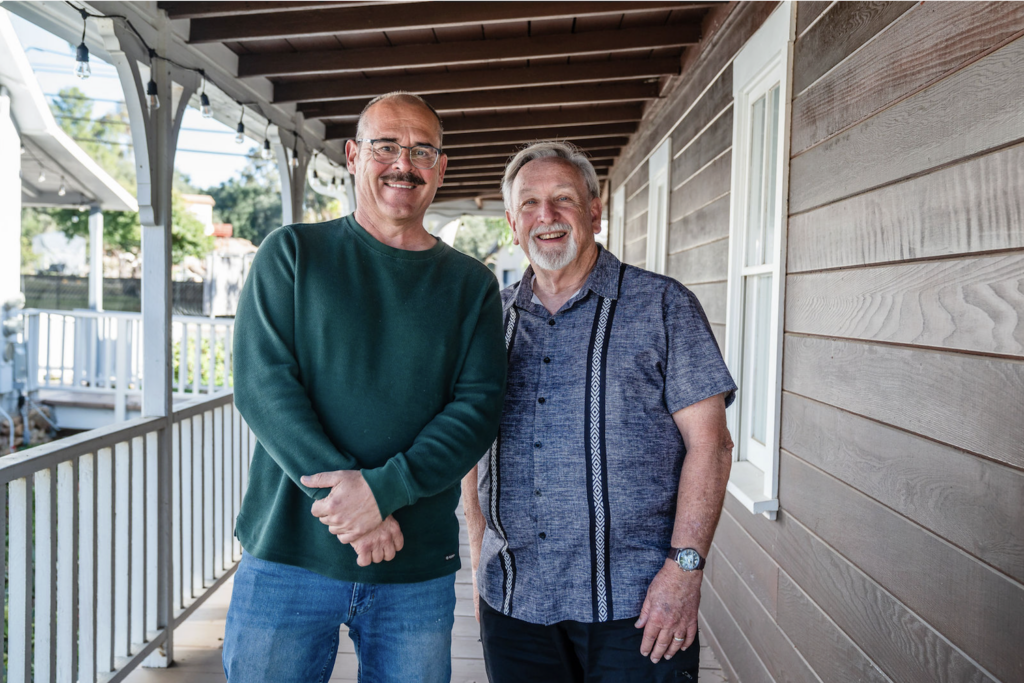
Overall, Campbell and Ring agree, you gotta have humor and heart to live in Alpine. “The culture of this community is that people are always willing to help, even in these busy times,” Ring says.
Photo Credit: Ariana Drehsler
What’s About to Happen?
Change in Alpine is incremental. Campbell anticipates Alpine’s mix of historic and suburban-type housing won’t shift dramatically in the near future, but he has seen some movement by the county to rezone some of its land to encourage more affordable units. “It’s my greatest hope for Alpine,” he says. “Nothing is deeded yet, but it’s on the county’s radar.”
Caltrans is also paying attention to the area, with a recent freeway expansion east of Alpine to Pine Valley, which means more road enhancements could be coming to the two-lane stretch of the 8 that leads from El Cajon west to Alpine.
A new state law that took effect in 2026 will certainly bring changes to Alpine’s mountain aesthetic: Homeowners and businesses must remove all combustible materials within five feet of any structure to help prevent fires. Compliance means replacement of existing landscaping with bare soil, rocks, gravel, concrete, or stone. It could be a whole different look for a rugged town with natural smatterings of oaks, bushy sage, and chaparral.
Campbell has recently seen positive growth and possible expansion in the tribal areas, with new housing subdivisions. In Alpine, he’s noticed a gradual ADU trend, gaining momentum but not catching on as quickly as in other parts of San Diego—“because people come out here for elbow room,” he says.
It’s kind of big news that there’s talk of a small grocery store incoming (the first supermarket to arrive in town since Barons in 2015). New businesses in Alpine used to be heralded with ribbon-cuttings by the chamber of commerce, which disbanded last year—but, Campbell has heard, the organization may get revived soon and bring back this charmingly small-town style of welcome. “Alpine has a need for a center to elevate business to a new level,” he says.
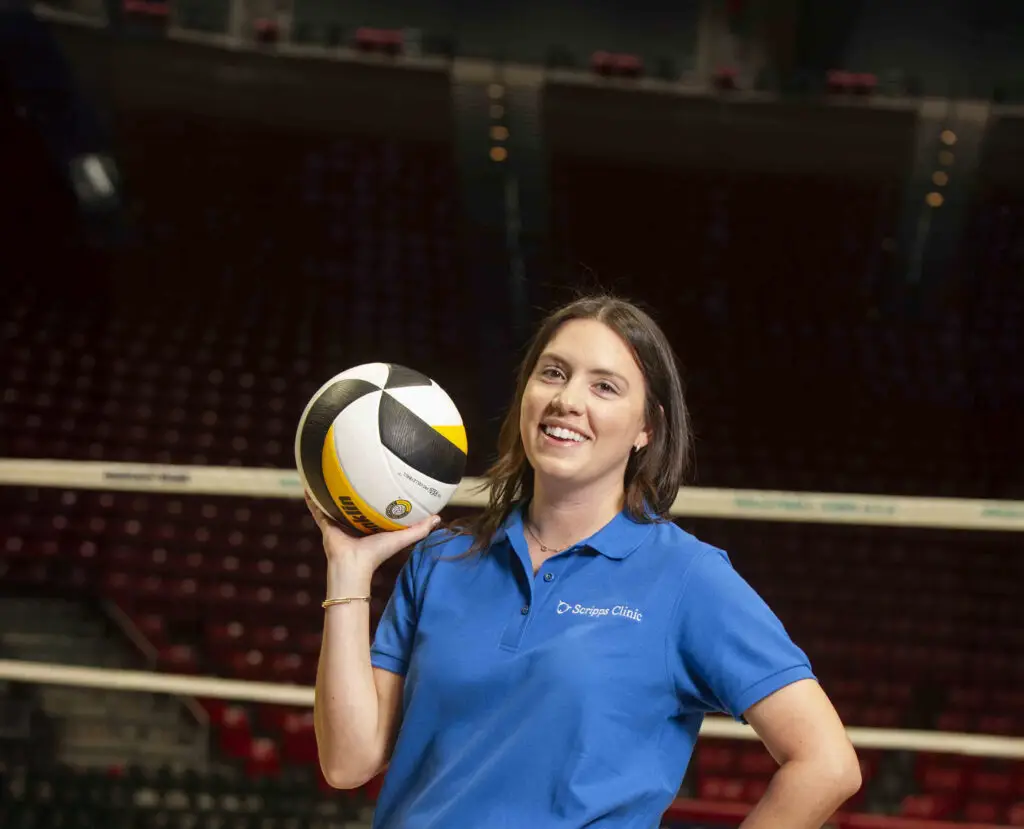
Growing up, Laika Nur, MD, Scripps Clinic sports medicine specialist, loved watching beach volleyball when the Association of Volleyball Professionals tour came to her hometown of Chicago. A talented volleyball player herself, she remembers sitting in the stands all day, and once, even got a couple autographs. Years later, Dr. Nur was attending a professional event focused on women’s sports, and the discussion turned to a new professional women’s volleyball league. The general manager and coaching staff for San Diego’s team, the Mojo, happened to be in attendance, and Dr. Nur took the opportunity to ask them if they needed a team doctor. Flash forward to the Mojo’s inaugural 2024 season, when Dr. Nur officially became the team physician. Click here to read more about Dr. Nur and how she incorporates lessons she learned on the court into her practice.
For more nutrition, wellness, and healthy living tips, sign up for the San Diego Health newsletter here.