Ready to know more about San Diego?

Subscribe
Arts & Culture FEBRUARY 14, 2024

A Complete Guide to Balboa Park’s 18 Museums

With museum admission half-off throughout February, dive into the park’s diverse cultural offerings
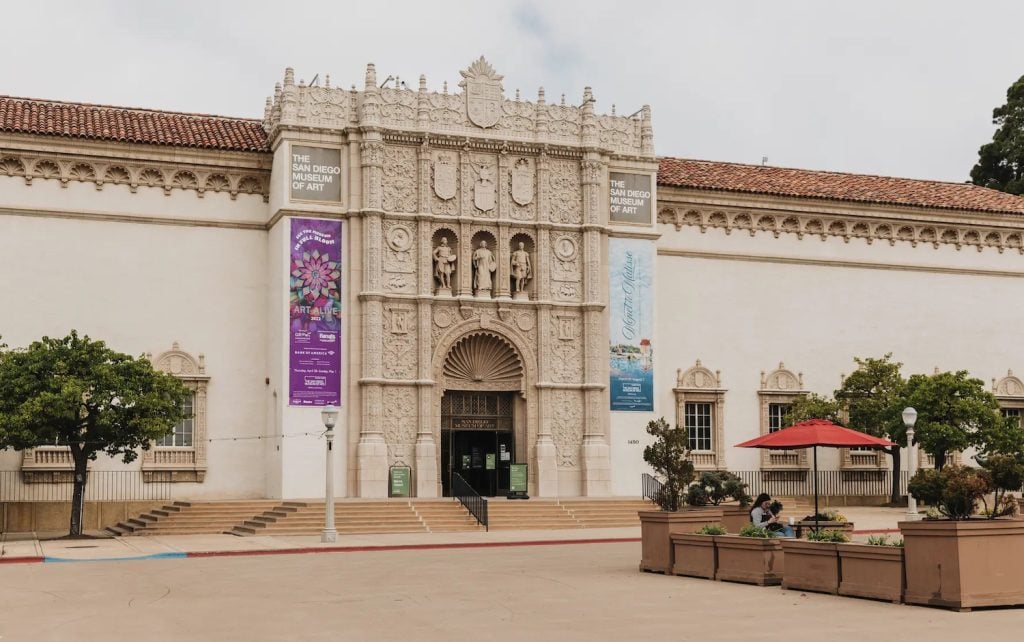
A Complete Guide to Balboa Park’s 18 Museums
Courtesy of Balboa Park

At 1,200 acres, Balboa Park is significantly bigger than most public green spaces, including New York City’s Central Park—in fact, some refer to it as Central Park’s cooler younger sister. Okay, fine, no one has ever called it that, but it is pretty damn cool. 

After all, it’s home to a world-famous zoo, numerous gardens and eateries, and tons of opportunities for shopping and recreation. On top of it all, visitors to the park can explore 18 museums, each offering their own distinctive flair. To celebrate Museum Month (when admission is half-off at cultural institutions throughout the county), here’s our guide to all of Balboa Park’s.
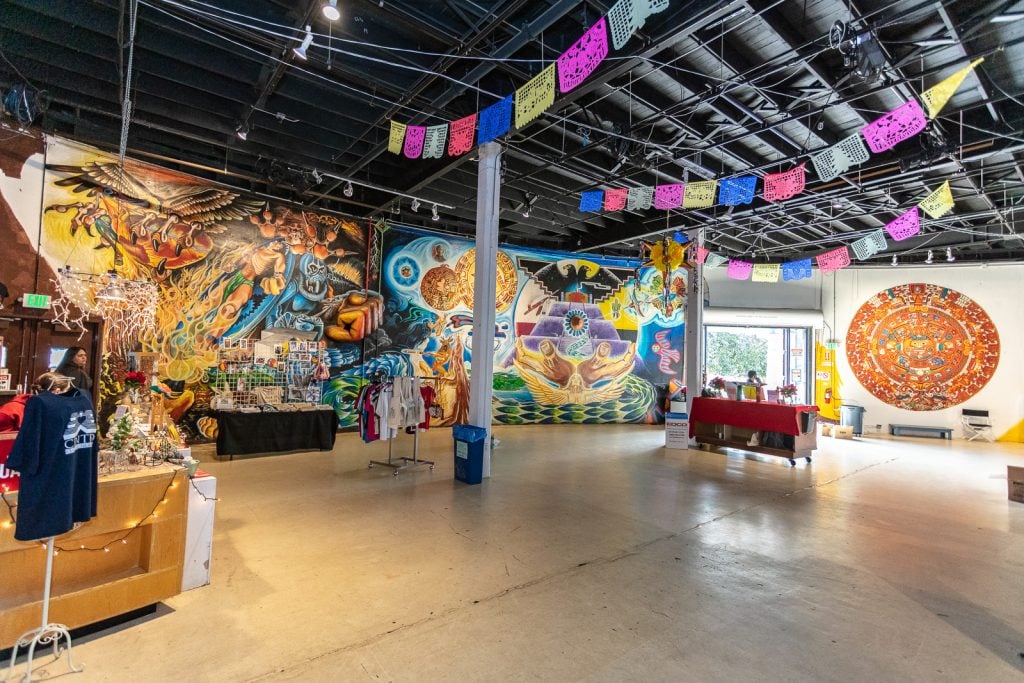
Interior of the Centro Cultural de la Raza at Balboa Park in San Diego featuring large hispanic murals, clothing, and other crafts
Courtesy of Balboa Park Cultural Partnership

Centro Cultural de la Raza

Located in a former water tower, the Centro Cultural de la Raza features exhibitions, theater, dance, music, and films by Chicano, Mexican, Indigenous, and Latino artists. The center also hosts community events such as tango nights and poetry readings. 

Address: 2004 Park Boulevard

Hours: Closed Monday; open Tues.-Sun. from 12 p.m.-5.p.m.

Price: Free; suggested donation of $5
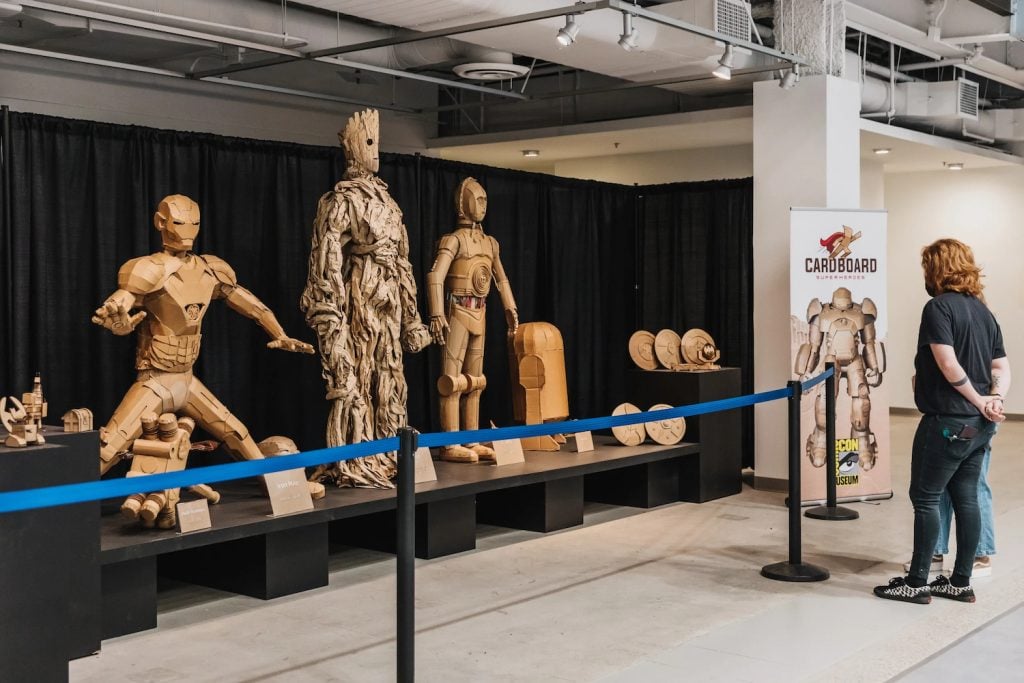
Interior of the Comic-Con Museum featuring an exhibit of cardboard figurines of comic book characters at Balboa Park, San Diego
Courtesy of Balboa Park

Comic-Con Museum

Don’t worry if you missed Comic-Con this year, or have never grabbed tickets—you can explore all things pop-culture-related at this Balboa Park institution. Year-round exhibitions focus on everything from superheroes to sci-fi franchises, and other special events include movie screenings and art-making activities. 

Address: 2131 Pan American Plaza

Hours: Closed Wednesday; open Thurs.-Tues. from 10 a.m.-5 p.m.

Price: $25 for adults; $18 for seniors(65+), students, and military; $12 for youth (6-12); free for kids under 6

Free Resident Day: Second Tuesday of the month
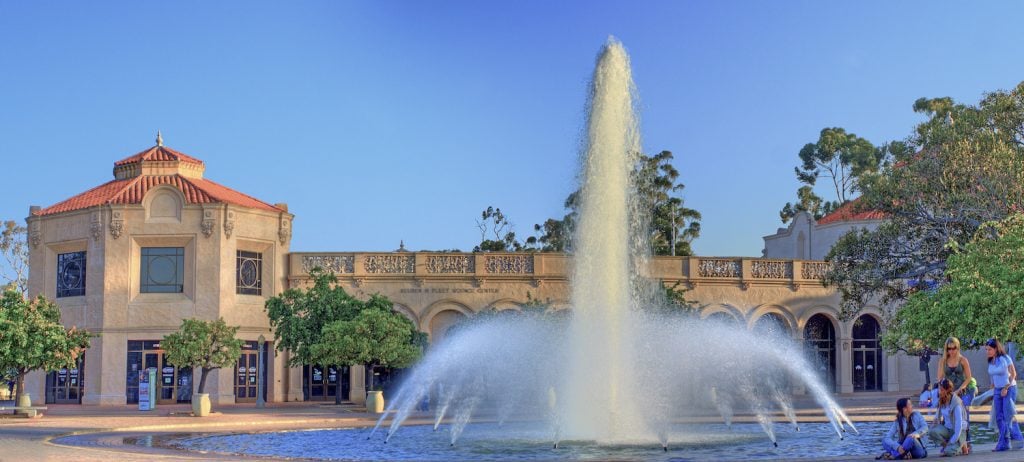
Exterior of the Fleet Science Center and Balboa Park water fountain in San Diego
Courtesy of Wikipedia

Fleet Science Center

The Fleet Science Center is home to over 100 interactive exhibits exploring science and innovation. The museum also features an IMAX theater where you can traverse outer space, follow alongside African mammals, and deep-sea dive with sea creatures in ancient caves.

Address: 1875 El Prado

Hours: Open daily 10 a.m.-5 p.m.; first Wednesday of the month 10 a.m.-8:15 p.m; accessibility morning hours third Saturday of each month 9 a.m.-10 a.m.

Price: $25 for adults; $20 for children (3-12); $23 for seniors(65+)

Free Resident Day: First Tuesday of the month
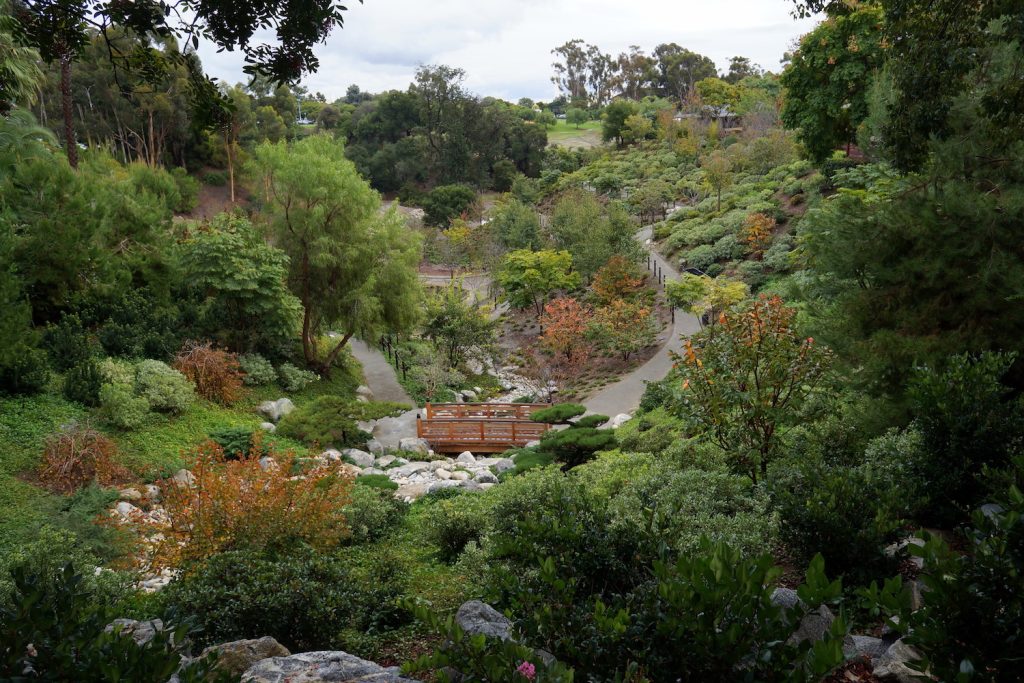
Wide shot of the Japanese Friendship Garden featuring plants, a small bridge, and a stream in Balboa Park, San Diego
Courtesy of Wikipedia

Japanese Friendship Garden of San Diego 

Yokohama, Japan became San Diego’s first sister city in 1957. The Japanese Friendship Garden followed in 1991, designed to foster appreciation and understanding of the country’s culture. The garden includes a bonsai exhibit, black pine trees, azaleas, and ornamental plants, as well as the US’s largest and oldest bronze statue of the Buddhist divinity Kannon. 

Address: 2215 Pan American Road East

Hours: Open daily from 10 a.m.-6 p.m.; last admission at 5 p.m.

Price: $14 for adults; $12 for students, seniors(65+), and military; free for children 6 and younger

Free Resident Day: Third Tuesday of the month (excluding March); fourth Tuesday of the month (March)
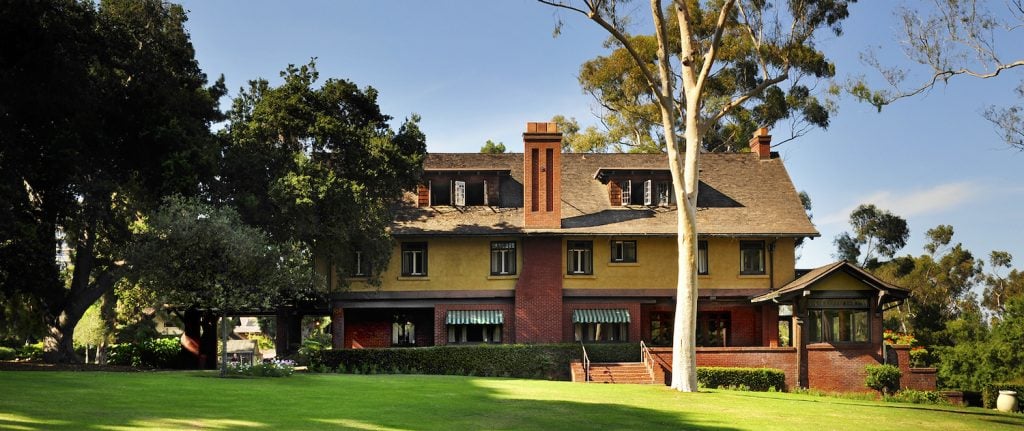
Exterior of the Marston House museum owned by George W. Marston, known for the development of Balboa Park, located at the northwest corner of Balboa Park, San Diego
Courtesy of Balboa Park

The Marston House

You can thank George W. Marston, famous for his contributions to the planning and development of Balboa Park, for much of what you know and love about this place. Visit his home, built in 1905, in the northwest corner of the park to wander five acres of gardens and a gift shop. 

Address: 3525 Seventh Avenue

Hours: Closed Mon.-Fri.; open Sat. & Sun. from 10 a.m.-4 p.m.

Price: $20 for adults, $15 for active duty military, seniors(65+), and students; $7 for children(6-12); free for children 5 and under
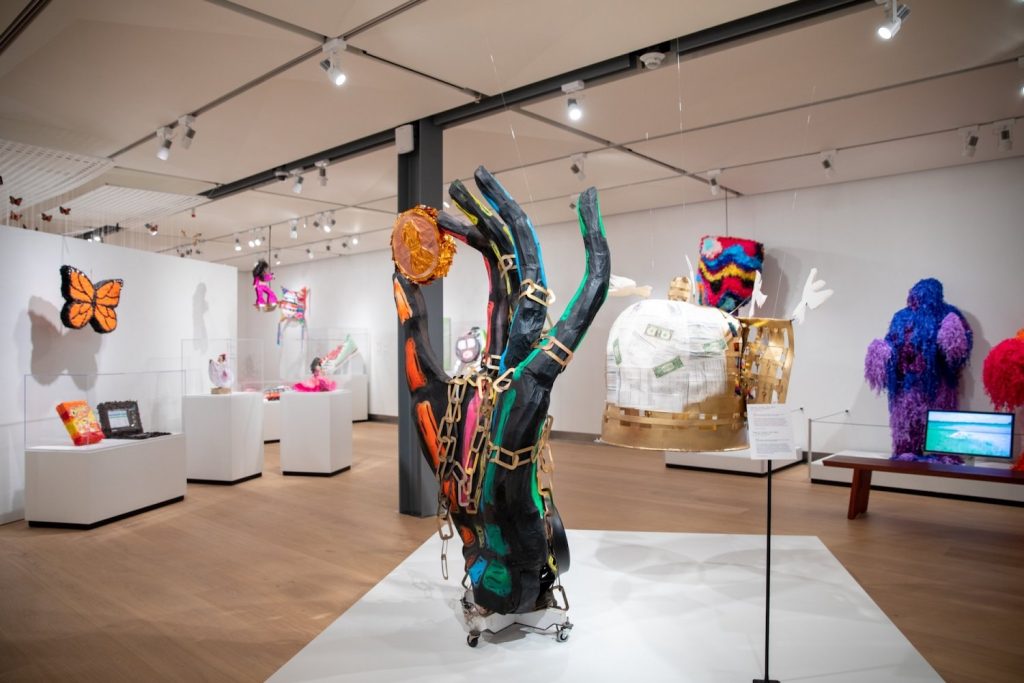
Interior of the Mingei International Museum featuring a large, colorful sculpture of a hand holding a coin
Courtesy of the Mingei International Museum

Mingei International Museum

After three years of renovations, Mingei International Museum has reopened its doors, showing off folk art, craft, and design objects from all over the world. Additionally, the gallery now features a theater, education center, gift shop, café, and new restaurant Artifact.

Address: 1439 El Prado 

Hours: Closed Monday; open Tues.-Wed. & Sat.-Sun. from 10 a.m.-5 p.m. and Thurs.-Fri. from 10 a.m.-8 p.m.

Price: Commons Level is free; Gallery Level costs $15 for adults, $10 for seniors, students, and military; children are free

Free Resident Day: Third Tuesday of the month
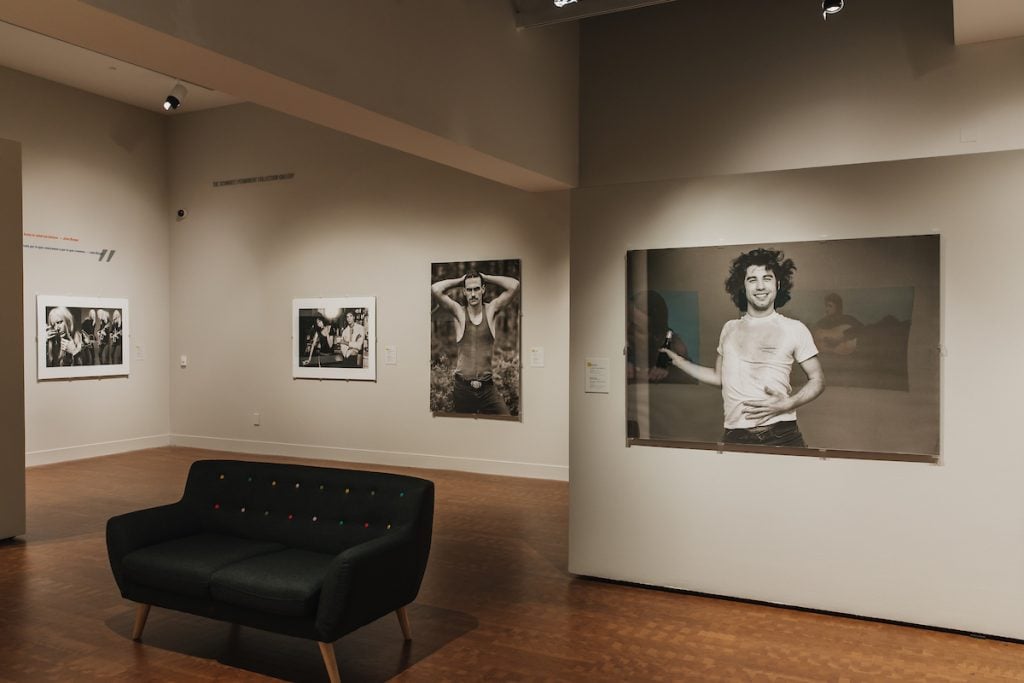
Interior of the Museum of Photographic Arts featuring large glossy prints in an exhibit with dim lighting at Balboa Park, San Diego
Courtesy of the San Diego Tourism Authority

Museum of Photographic Arts

The Museum of Photographic Arts showcases photography, film, and video, with nearly 9,000 permanent images and 24,000 items in the Edmund L. and Nancy Dubois Library. If you’re interested in getting behind the lens yourself, enroll in one of their onsite photo workshops for adults.

Address: 1649 El Prado 

Hours: Closed Mon.-Wed.; open Thurs.-Sun. from 11 a.m.-5 p.m.

Price: Free; donations recommended
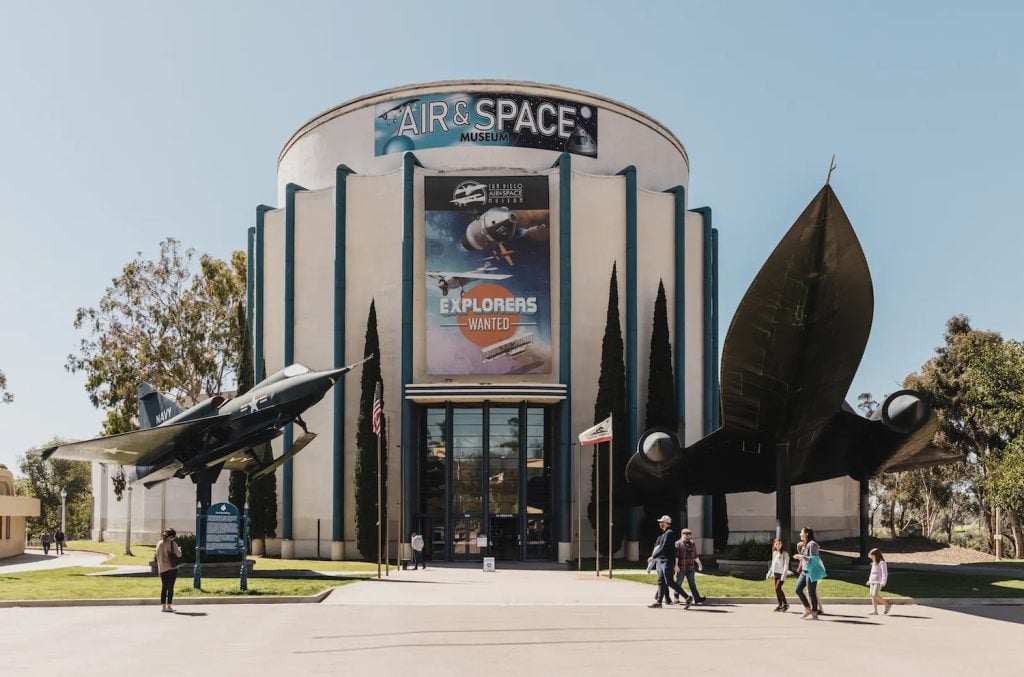
Exterior of the San Diego Air and Space Museum featuring a blackbird and a fighter jet in front of the building in Balboa Park, San Diego
Courtesy of Balboa Par

San Diego Air and Space Museum

Take flight with some of the most famous aviation and space innovators at the San Diego Air & Space Museum. An affiliate of the Smithsonian Institution, this museum is home to the Apollo 9 Command Module, the only real GPS satellite display in the world, and artifacts from the Wright Brothers, Charles Lindbergh, Amelia Earheart, Neil Armstrong, Buzz Aldrin, and other beloved pilots and pioneers.

Address: 2001 Pan American Plaza

Hours: Open daily 10 a.m.-4:30 p.m.

Price: $28 for adults; $23 for students, seniors(65+) and retired military; $17 for children (3-11); free for active military and children under 3

Free Resident Day: Second Tuesday of the month
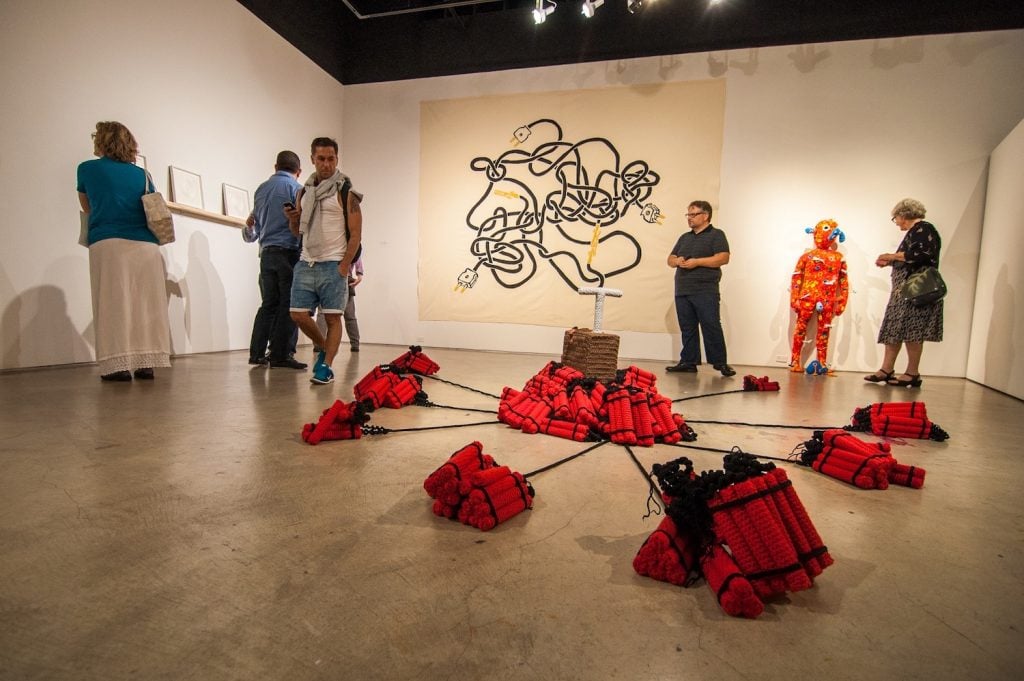
Interior of the Institute of Contemporary Art San Diego featuring an exhibit with fake dynamite and trigger along with other modern art in Balboa Park, San Diego
Courtesy of Balboa Park

Institute of Contemporary Art San Diego

The Institute of Contemporary Art spotlights experimental art, presenting bold and sometimes surreal exhibitions tackling issues facing the modern world. One of their most exciting recurring exhibits is NextGen, a juried showcase of new grads from San Diego’s many arts programs.

Address: 1439 El Prado

Hours: Closed Mon.-Wed.; open Thurs.-Sun. from 12 p.m.-5 p.m.

Price: Free; $10 donations recommended for adults; $5 for students, seniors, and military; free for children 12 and under
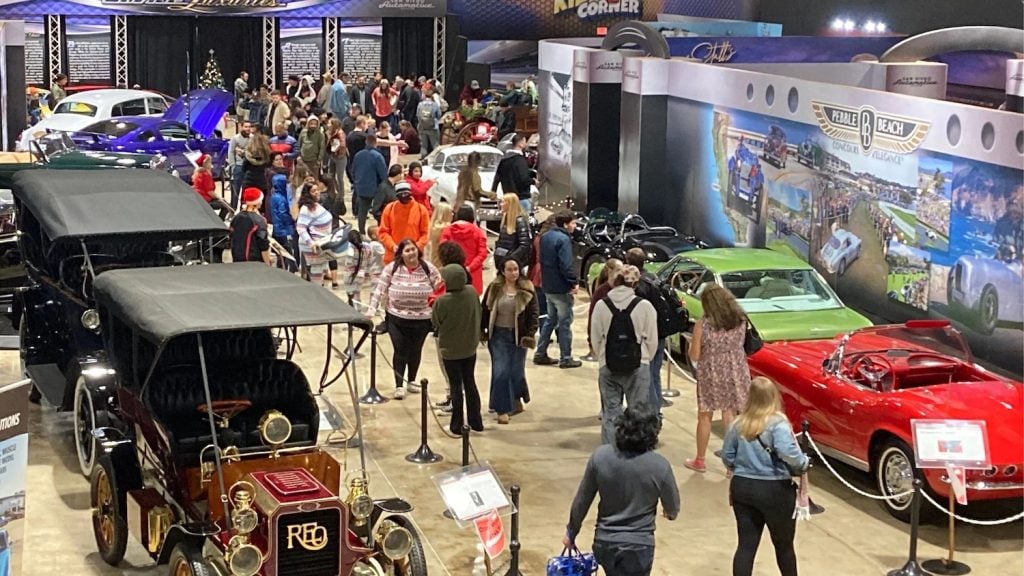
Interior of the San Diego Automotive Museum featuring visitors walking through an attraction featuring retro vehicles
Courtesy of the San Diego Automotive Museum

San Diego Automotive Museum

Check out more than 80 historic cars and motorcycles at the San Diego Automotive Museum, which is known for its unique collection of 20th-century automobiles, including Louie Mattar’s 1947 Cadillac that set a cross-country endurance record in 1952. 

Address: 2080 Pan American Plaza

Hours: Closed Monday; open Tues.-Sun. from 10 a.m-5:00 p.m. with last entry at 4:30 p.m.

Price: $16 for adults; $12 for seniors(65+), military, and students; $11 for children(4-15); free for children 3 and younger

Free Resident Day: Fourth Tuesday of the month
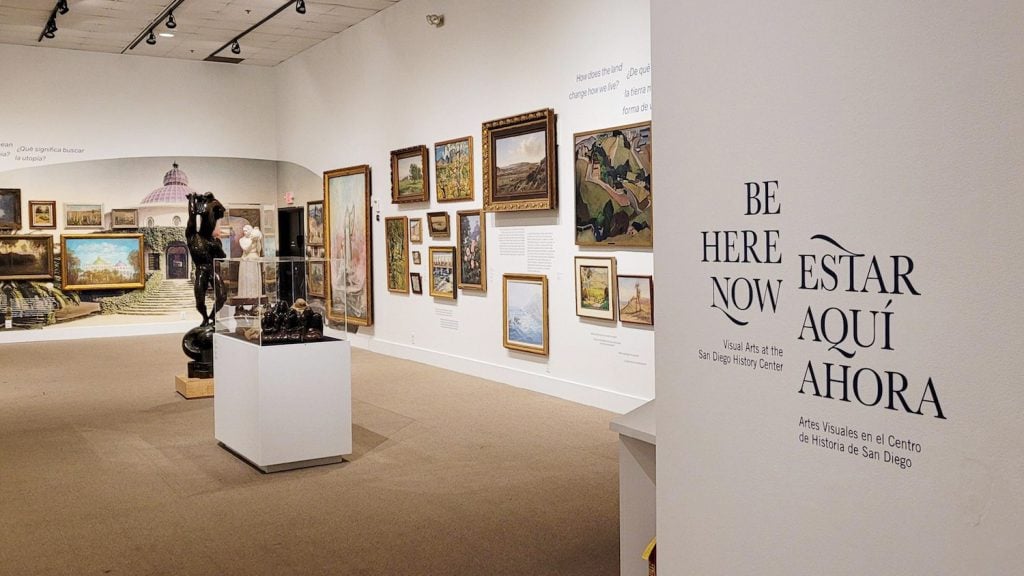
Interior of the San Diego History Center featuring an exhibit called "Be Here Now" with a sculpture and various art on the walls
Courtesy of the San Diego History Center

San Diego History Center

San Diego History Center tells the story of our city with a wide variety of exhibits showcasing photos, art, videos, documents, clothing, and regional objects. Visitors can also watch the award-winning documentary Balboa Park: The Jewel of San Diego.

Address: 1649 El Prado

Hours: Closed Monday and Tuesday; open Wed.-Sun. from 10 a.m.-5 p.m.

Price: Free; $10 donation recommended
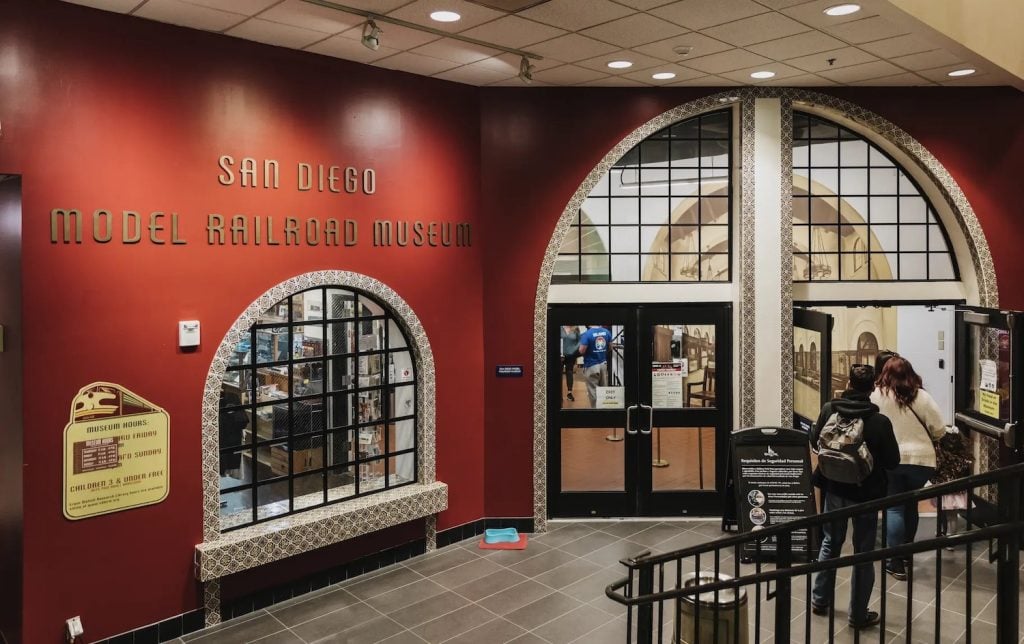
Interior of the San Diego Model Railroad Museum in Balboa Park
Courtesy of Balboa Park

San Diego Model Railroad Museum

San Diego is home to the world’s largest operating model railroad museum, which clocks in at a whopping 28,000 square feet. Feast your eyes on miniature representations of California railroads, a toy train gallery, and an interactive Lionel layout. 

Address: 1649 El Prado

Hours: Closed Monday; open Tues.-Sun. from 10 a.m.-4 p.m.

Price: $20 for adults; $12 for seniors(65+) and military; $10 for students

Free Resident Day: First Tuesday of the month
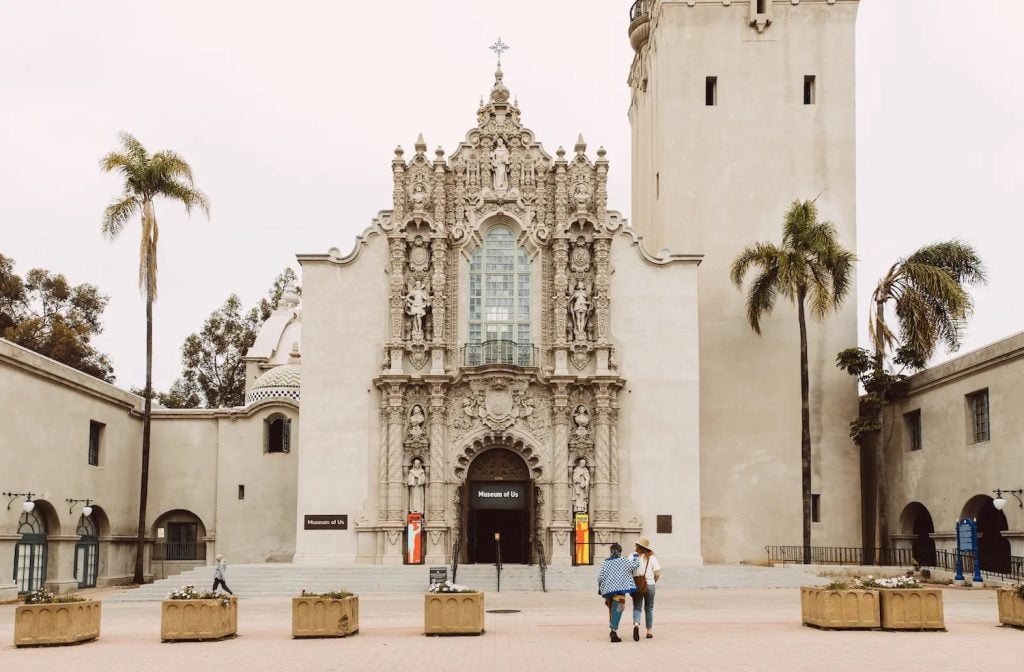
Exterior of the San Diego Museum  of Us featuring two people standing out front at the Prado tower in Balboa Park, San Diego
Courtesy of Balboa Park

San Diego Museum of Us

One thing we all have in common? We’re human. The San Diego Museum of Us explores this fundamental similarity with immersive exhibits focusing on humanity’s relationship to animals, the origins of race, the development of beer, and more.

Address: 1350 El Prado

Hours: Closed Monday and Tuesday; open Wed.-Sun. from 10 a.m.-5 p.m.

Price: $20 for adults; $17 for military, seniors(65+), students, youth(6-17), and educators(with ID)
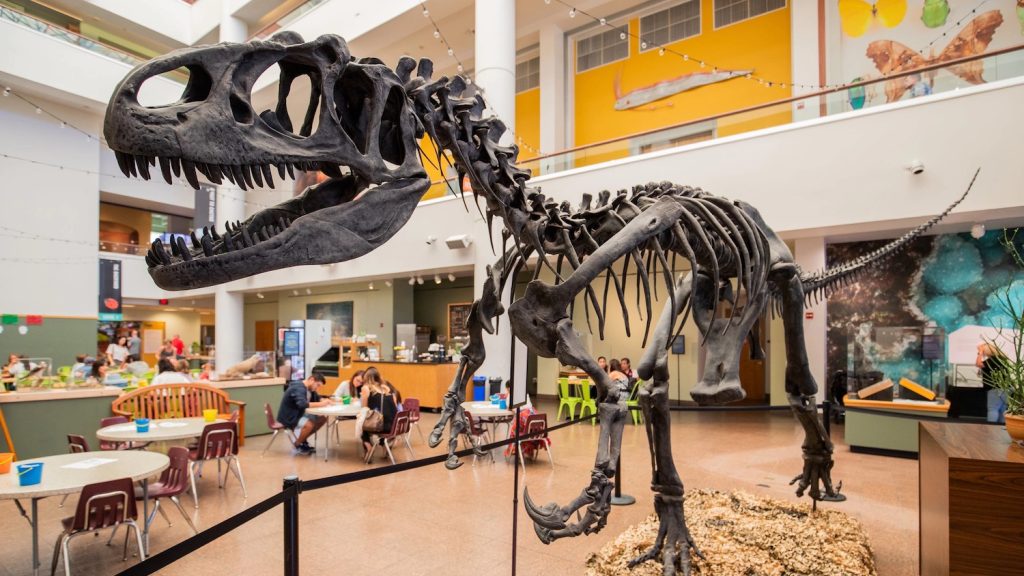
Interior of The San Diego Natural History Museum featuring a dinosaur fossils in the middle of a hall
Courtesy of Expedia

The San Diego Natural History Museum

Unfortunately, the animals and ancient figures on display at the Nat probably don’t come alive at night, but there’s still much to see during open hours at the San Diego Natural History Museum, including dinosaur bones and other fossils and preserved wildlife, plants, and bugs.

Address: 1788 El Prado 

Hours: Open daily from 10 a.m.-5 p.m.

Price: $24 for adults, $20 for seniors(65+), military, and students

Free Resident Day: First Tuesday of the month
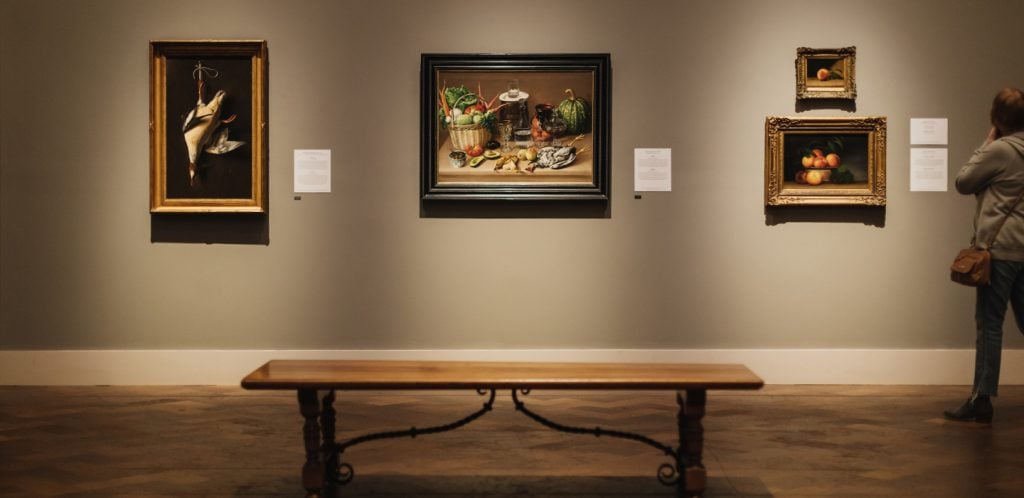
Interior of the San Diego Museum of Art featuring Renaissance paintings and a bench with dim lighting in Balboa Park, San Diego
Courtesy of Balboa Park

MOPA@SDMA

At the heart of Balboa Park sits the MOPA@SDMA, with a gorgeous Spanish-style entrance that sets the scene for the artwork inside. In addition to Spanish works, the collection includes Italian old masters, South Asian manuscript illustrations, and 19th- and 20th-century American paintings and sculptures

Address: 1450 El Prado

Hours: Closed Wednesday; open Thurs.-Sat. & Mon.-Tues. from 10 a.m.-5 p.m.; open Sun. from 12 p.m.-5 p.m.

Price: $20 for adults, $15 for seniors(65+), free for children under 17

Free Resident Day: Third Tuesday of the month
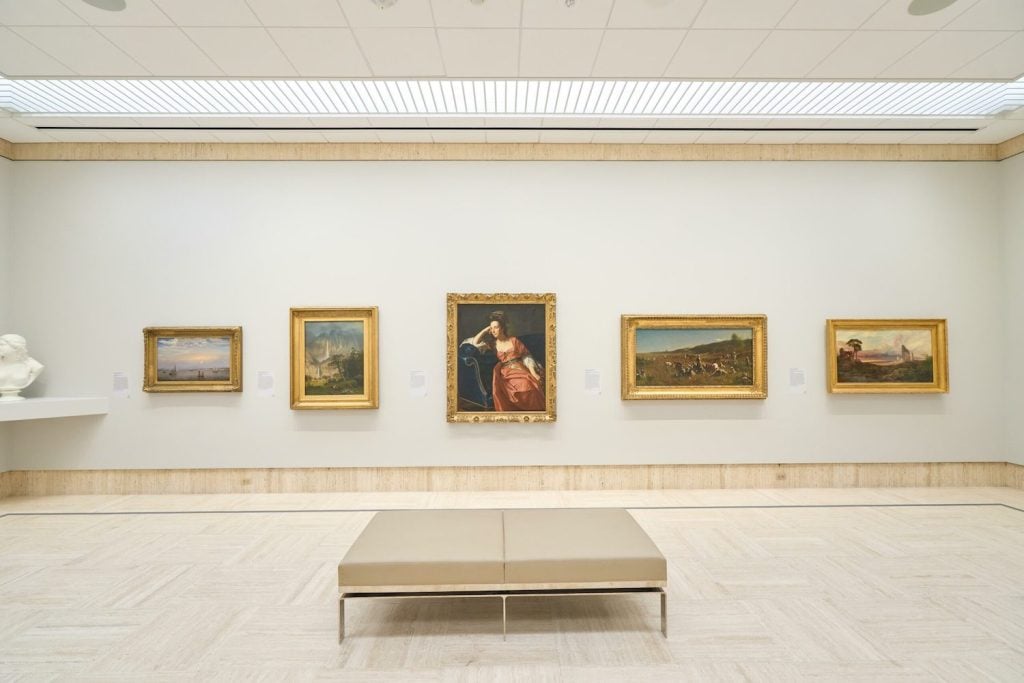
Interior of the Timken Museum of Art featuring a bright room with various historic art framed in gold on the walls in Balboa Park, San Diego
Courtesy of Balboa Park

Timken Museum of Art

The Timken’s airy, mid-century modern building is home to works by European (including Dutch, Flemish, and French), American, and Russian icons. Through May, visitors can see the dazzling, massive-scale Equestrian Portrait of Prince Tommaso of Savoy-Carignan by celebrated painter Kehinde Wiley, the artist behind Barack Obama’s presidential portrait.

Address: 1500 El Prado

Hours: Closed Mon.-Tues.; open Wed.-Sun. from 10 a.m.-5 p.m.

Price: Free
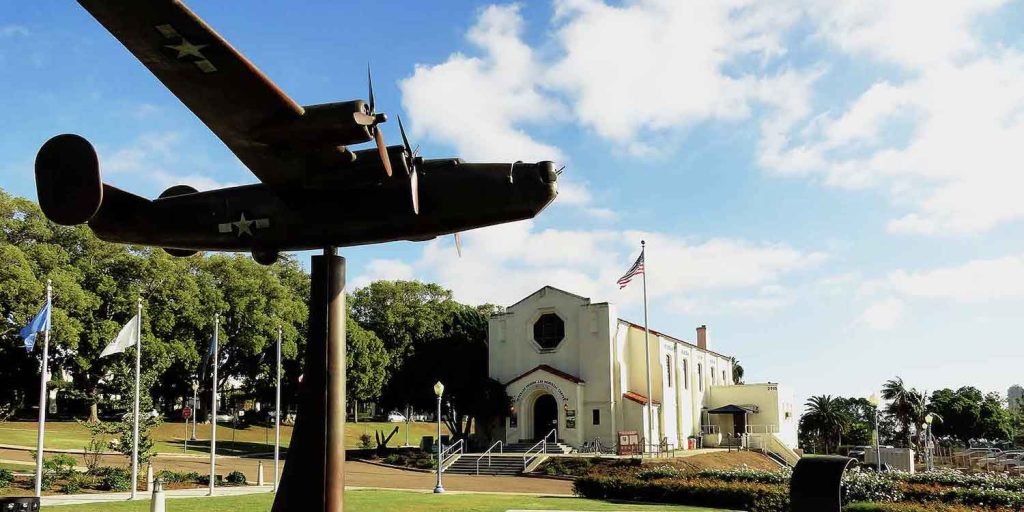
Exterior if The Veterans Museum featuring statue of a WWII plane in front of the building in Balboa Park, San Diego
Courtesy of the Veterans Museum

The Veterans Museum

The Veterans Museum honors military service members, focusing on the history of the Army, Air Force, Navy, Marines, Coast Guard, and Merchant Marines. It holds a unique collection of artifacts, memorabilia, artwork, and papers related to World War I, World War II, Pearl Harbor, the Korean War, Vietnam, Afghanistan and Iraq, and other conflicts.

Address: 2115 Park Boulevard

Hours: Closed Sun.-Tues.; open Wed.-Sat. from 11 a.m.-4 p.m.

Price: $5 for adults, $4 for veterans and seniors; $2 and students; free for children 12 and under; free for active duty military

Free Resident Day: Second Tuesday of the month
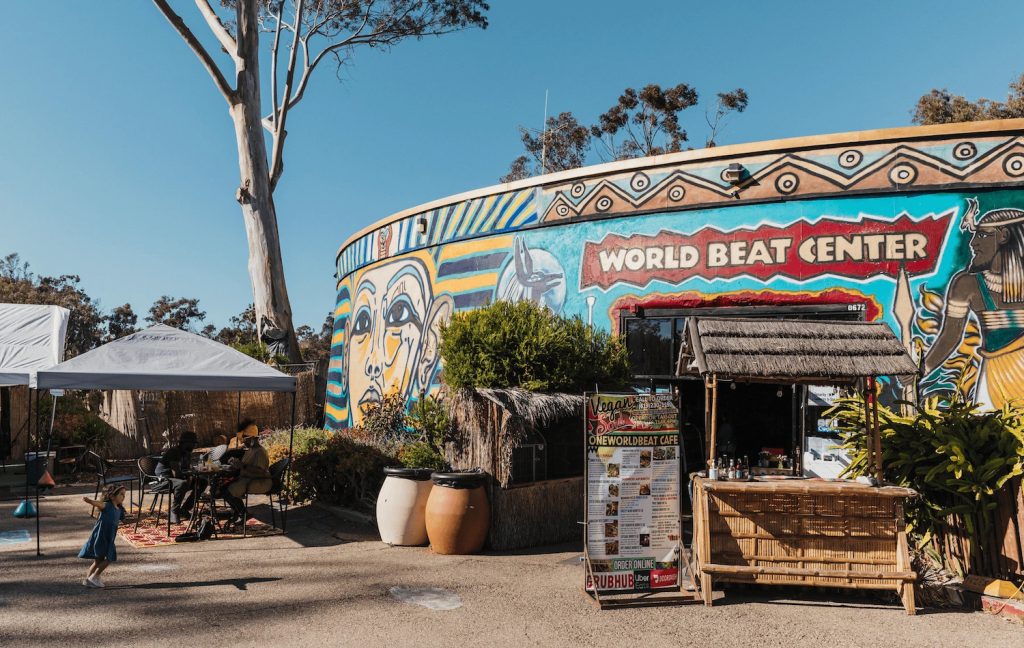
Exterior of the World Beat Center featuring colorful murals and a kid playing out front in Balboa Park, San Diego
Courtesy of Balboa Park

WorldBeat Center

The WorldBeat Center celebrates African, African-American, and Indigenous cultures through art, music, dance, education, and technology. All are invited to join the museum’s concerts, lectures, and community classes in dance and drumming. 

Address: 2100 Park Boulevard

Hours: Closed Monday and Tuesday; open Fri.-Sun. from 11 a.m.-5 p.m.

Price: Free; donations recommended

Maren Hawkins is a freelance writer in her last year at San Diego State University. When she is not writing, she spends her time playing beach volleyball, thrifting for the cutest clothes, and traveling whenever possible.

Subscribe to our newsletters

Select Options

By subscribing you confirm that you agree with our Terms and Conditions and Privacy Policy.

Everything SD AUGUST 28, 2026

San Diego Is Getting the Music Venue It’s Been Missing

Live Nation is turning the historic Wonder Bread Building into a 4,000-capacity concert hall designed to bring more touring acts to the city

San Diego Is Getting the Music Venue It’s Been Missing
Rendering courtesy of Live Nation

Imagine being the song continuously getting skipped on the playlist. Not because no one wants to hear you, but because you never quite fit the moment. For years, San Diego has been that song on the touring circuit. Artists who have outgrown intimate clubs but aren’t yet filling  arenas and stadiums have often passed us by, heading north to venues better suited to the size of their show. San Diego wasn’t missing the audience, it was missing the room.

That’s all about to change.

On August 17, Live Nation Entertainment announced plans to transform the historic Wonder Bread Building, which it purchased in June for $16.8 million, into a 4,000-capacity indoor venue slated to open in fall 2028. The new space will host music acts as well as private, corporate, and community events. 

Currently, San Diego’s concert landscape jumps quickly from intimate clubs like the Casbah, Winston’s, and Belly Up to larger theaters, amphitheaters, arenas, and stadiums. What’s largely missing—particularly downtown—is a modern indoor room built specifically for roughly 4,000 concertgoers. This leaves a gap in mid-size venues for touring acts that land stages like the Hollywood Palladium or Boston’s MGM Music Hall at Fenway. 

“We are filling a void in the market,” says John Schalk, Live Nation’s Vice President, San Diego Market. “There are other venues in town, but this […] building is just something that doesn’t currently exist.” Although SDSU’s Cal Coast Credit Union Amphitheater serves the 4,000-capacity range, its outdoor, fixed-seating arrangement isn’t as versatile as the proposed Live Nation project. 

Located at 171 14th Street, just a six-minute walk from Petco Park, the building carries a century of history. Architect Eugene Hoffman designed it in 1924, a year after completing the Barcelona Apartment Hotel in Bankers Hill. The landmark brick building served as a bakery and warehouse for the Southern California Baking Company before Continental Baking Company, producers of Wonder Bread, took over in the 1950s and operated there through 1988 continued at the site until 2007.

In the early 2000s, Bob and Gay Sinclair, the couple behind a portfolio of East Village properties, purchased the building. After Bob—the founder of Pannikin Coffee & Tea—died in 2011, Gay sold much of their real estate portfolio but held onto the Wonder Bread Building. Mission Brewing eventually took over the space, where it operated for more than a decade before announcing its 2026 departure.

Now, the building is preparing for another reinvention. Live Nation plans to preserve the historic bakery’s four exterior walls, red brick façade, grain silo, barrel-vaulted trusses, and skylights as part of its next chapter.

Live Nation isn’t looking to erase its history but to celebrate it, allowing the building’s past to give the new venue some soul. “It’s really important for us that we maintain the integrity and the history of that building,” Schalk says. “There will be new construction and design elements as we go through the process to create the concert venue, but we’re working really hard to preserve it.”

Blueprint Studio, Live Nation’s in-house design and development group, and Gensler, the architecture firm behind San Diego International Airport Terminal 1 and Snapdragon Stadium, will be heading the project. The plan is to design the ground-floor space as an open, general-admission area with a premium level above with 600-plus fixed seats, in addition to box and suite sections. There will also be an additional structure built on top of the historical portion of the building (the four original walls that house the lobby) called the Vinyl Room—a Japanese-inspired hi-fi listening VIP lounge serving elevated food options.

One of the most reassuring aspects of the project is the focus on the concertgoer’s experience—specifically the “pet peeves” we all know too well: long bathroom lines, cramped exits, obstructed views. According to Schalk, one of the best things about building upon the existing structure is having the ability to consider potential obstacles and tackle them before construction begins. “I’d say we are ‘purpose building’ the entirety of the project for a music venue,” says Gensler lead project architect Garrett van Leeuwen. “As part of our design process, we do an in-depth sightline analysis to make sure that sightlines are optimized from every point and seat within the venue.” 

Circulation design is also being implemented to ease traffic flow, alongside acoustic optimization and a transformative outdoor beautification effort. According to van Leeuwen, this “public realm space” will grow the existing 14-foot sidewalk to a 32-foot sidewalk complete with plazas and landscaping. 

“This venue is for the fans. For the music lovers,” Schalk explains. The vision is intimate: “I want a fan to walk up to that building, see that red brick facade, grab their ticket from the box office, go into the lobby and see some of the history that will present itself… and feel like you entered a home.” Schalk also expressed a “keen interest in making sure that we work with the local artists, the local bands, the local musicians in town.” It’s a project that recognizes San Diego as a growing market that is hungry and ready to see a vibrant arts and culture community thrive. 

According to an analysis by Oxford Economics analysis shared by Live Nation, the venue is projected to deliver a significant boost to the local economy, generating approximately $97 million in annual economic impact and supporting 660 jobs. This also includes welcoming 316,000 fans each year—with 126,000 traveling from outside the San Diego metro area—and driving $53 million in local spending at nearby restaurants, hotels, and retail establishments. 

Considering its proximity to other major event spaces and overall busy urban areas, traffic and parking may be a concern, especially on nights of overlapping events. But in those cases, Schalk said they would work together on communication efforts; parking availability; and staggering start, end, and loading times; as well as providing easy access to designated rideshare areas. With transit stations nearby (the closest one being a 4-minute walk at 12th & Imperial), public transportation is another great option for enjoying your night out. 

There are still two years of design, construction, and plenty of logistics between now and opening night. But the bigger promise of the Wonder Bread Building is simple: San Diego finally gets a venue built for the artists who have historically passed it by. After years of getting skipped on the touring playlist, the city may finally be getting its turn on repeat.

Camila Ibarra Gallego is a CaliBaja native pursuing a master's degree in culinary journalism at the Basque Culinary Center. Shaped by the culturally rich, bicultural megaregion, she's passionate about sniffing out stories that connect people, territory and culture through food. When she's not tumbling down internet rabbit holes, you can find her pretending to be a wine connoisseur at a local wine bar or nose-deep in a good book.

Arts & Culture AUGUST 11, 2026

The Photos San Diego’s Young People Want You to See

Outside the Lens puts cameras in the hands of local youth, giving them the tools to capture their communities from the inside

The Photos San Diego’s Young People Want You to See
Photo Credit: Danny I.

Big feelings hit us all. Younger populations—or those who haven’t yet developed their own language of expression—outsource angst through external means. That’s where homemade haircuts, studded belts, and musicians like The Cure, Elliott Smith, or Phoebe Bridgers come around. In San Diego, though, there’s a nonprofit that gives youth a way to feel not only heard, but also understood, through photography and digital storytelling.

Outside The Lens’ mission is to amplify the voices of systemically marginalized young people and help them develop the confidence (and artistry) to tell their stories and shape their communities. OTL just celebrated its 25th anniversary earlier this year with dual exhibitions of student work at San Diego Central Library and Museum of Contemporary of Art San Diego. Since 2001, more than 30,000 students have completed programs at OTL, getting their hands on industry-respected DSLR cameras (no shade to iPhone photographers), editing files and images with Adobe Creative Suite, and recording podcasts. Participants explore their worlds through the lens and on the mic.

“Our biggest opportunity, and what’s really needed, is to bridge the understanding between the youth and their communities and how people are seeing what youth are going through right now,” says OTL Executive Director Sarah Beckman.

OTL’s participants, Beckman explains, are young people navigating systems that never gave them access to the tools and mentorship that inspire creative expression, financial mobility, and civic engagement. The nonprofit offers support—in the form of meals, transportation, and healing-centered educators—and a creative outlet for exploring and coping with those challenges.

San Diego skater fashion featuring a skateboarder jumping into a bowl at Robb Field Skate Park, Ocean Beach

OTL’s in-school programs meet California core standards for arts and partners with at least 37 schools and community sites throughout San Diego, including the Monarch School in Barrio Logan, East County Community School in El Cajon, and Creative Performing and Media Arts School in Clairemont Mesa. The nonprofit doesn’t just work within the school system. Its Media Makers program invites young adults with intellectual and developmental disabilities to express their place and purpose in the world through film, photography, animation, design, and entrepreneurship.

“We’re always asking the question, and we’re engaging youth in our civic discussions [of], ‘How can we make this city somewhere youth want to be?’” Beckman says. “‘How can we make San Diego somewhere for young people to build a future?’”

This year OTL’s annual Voice Out celebration event spotlighted student work that hung on gallery walls beside “Giants,” the Dean Collection at MCASD. The Voice Out contest is open to all San Diego youth ages 8 to 25; all submissions are published in a catalogue and displayed in a public exhibition. These are some of the students’ works, and their words, from the past three years of Voice Out.

Lines and Light Within Structure

“I wonder how the architect decided to connect the beams [at Del Norte High School] by creating repetition. Without color [in the photo], the structure becomes the focus of the image.” –Monroe S., 15

The Quiet In Between

“Every day, time slips forward, whether we notice it or not, and life can feel overwhelming in its constant motion. In this long-exposure photograph, the blurred train rushes past, symbolizing the speed of life, while the still subject remains grounded and aware. It’s easy to become tangled in society’s expectations: what to wear, what grades to earn, what future to chase. In that rush, we forget to pause. The stillness in this image becomes a breath, a moment of reflection. Through it, I hope to show that wonder lives in slowing down, in watching the world blur while choosing, even briefly, to stand still.” –Leo N., 15

Enough

“Teenagers constantly wonder if they will ever be enough. I wrote words on the mirror that might represent what a teenager thinks about when it comes to being ‘enough’ for the people around them. They might wonder if they are pretty, smart, or good enough. I wanted to bring attention to what thoughts teenagers struggle with in everyday life.” –Illiana I., 16

Go Skate Day

“I took this picture during Go Skate Day in 2023 or 2024 I think … but who cares? It’s sick! Keep riding!” –Danny I., 18

Never Let Go

“This was taken at an all-women’s retreat in the mountains to heal inner trauma, at the end of the trip where we all hugged each other and healed. My mother is the one being hugged and one of her friends is embracing her. Place is somewhere you belong, somewhere you feel comfortable in, and somewhere you can be yourself. I believe womanhood and friendship is not only a place but home.” –Michelle G., 16

Leorah Gavidor won her first essay contest at age 5. She writes features, news, and non-fiction in San Diego.

Arts & Culture JULY 31, 2026

The Best of San Diego 2026: Arts & Culture

Whether you love theater, music, dance, or public art, these are the cultural experiences that stood out this year

The Best of San Diego 2026: Arts & Culture
Photo Credit: Stacy Keck

Best Statewide Arts Flex

Arts District Liberty Station

Arts District Liberty Station officially became one of the state’s designated cultural districts, joining a list reserved for places with thriving creative communities. Considering the campus is home to more than 100 galleries, artist studios, museums, and arts organizations—not to mention The Joan, the 42,000-square-foot performance center housing Cygnet Theatre—it was only a matter of time until the district got its flowers.

Best Deterrent of Public Vandalism

Vision Culture Foundation

If you can’t beat ’em, join ’em. The National City Public Works building has been a target of graffiti artists for years, only to be constantly painted over (and the cycle restarts). Now, it’s working with the local artists from Vision Culture Foundation to create intentional public murals. A win-win in our book.

Best Champion of the Arts

Vanguard Culture

One of the biggest questions this year is who will show up for San Diego arts and culture—so a Best Of nod goes to a nonprofit that’s been doing it for years. Founded by longtime arts advocate Susanna Peredo Swap, Vanguard Culture has staged events for creatives, told their stories, and just created an SD ARTS Pass—a single ticket that gets you access to 39 creative spots.

Photo credit: Carly Topazio

Best Way to Overcome Your Fear of Ghosts

The Rosin Box Project

Ballet’s already got a sort of otherworldly thing going for it, with people morphing into 90-degree angles and defying gravity with each pirouette. The Rosin Box Project feels like a raw, creative new force in the classic art form, though—especially with its annual Ghost Light Masquerade. It’s a dance of eerie spirits that makes you second-guess what’s real and what’s not.

Best Music Venue That Also Sells Hot Dogs

Gallagher Square

Once upon a time, Gallagher Square was just a grassy knoll behind the outfield wall at Petco Park. Now, it’s a concert venue, playground, play ball field, dog park, and unofficial home for those who prefer the vibe of baseball more than the actual game. Big-time performers are showing up: Ms. Lauryn Hill, Cypress Hill, and Peach Pit.

Best Local Canvas

Casa Casillas

Casa Casillas has filled a long-standing gap in Chula Vista’s art scene. Open since last August, the space gives local artists a dedicated venue to display their work and visitors a chance to explore the neighborhood’s vibrant art. Two rotating resident artists always keep the space moving, so it rarely looks the same twice.

Courtesy of Alley Cat Art Fest

Best Place to Say “I Think It’s About Capitalism”

Alley Cat Art Fest

El Cajon translates to “the box” in Spanish—a nod to the city’s surrounding hills—but Alley Cat Art Fest (previously called Artivál) doesn’t stay inside it. As the first arts festival in East County, it celebrates local galleries, sculpture, live music, and food trucks—the whole nine.

Best On-Two-Feet Art Tour

Barrio Art Crawl

Every second Saturday, Barrio Logan turns into a choose-your-own-adventure with the Barrio Art Crawl, a free self-guided art tour through galleries, museums, and murals, with street food and music filling in the gaps. Barrio is one of the city’s most thriving arts neighborhoods, and it’s worth getting a bit lost in.

Best Peek Inside Alicia Keys and Swizz Beatz’s Living Room Without the Awkward DM

Museum of Contemporary Art San Diego

MCASD is showcasing two powerhouse exhibits—Giants: Art from the Dean Collection of Swizz Beatz and Alicia Keys and The Dean Collection Presents: Hometown Heroes. The pop music titans are highlighting local artists, with an intentional focus on diverse experiences. It was one of the biggest (and coolest) art openings of the year, and it closes August 9. So get on it.

Best Season Opener

The Old Globe

Leave it to The Old Globe to give the local theater scene some Hollywood glamour. Katie Holmes led the premiere of Henrik Ibsen’s Hedda Gabler this past spring, turning the classic Norwegian play into one of the most buzzed-about theater productions of the year.

Studio S AUGUST 28, 2026

The Art of Slowing Down at Little Frenchie

Inspired by the effortless charm of French cafés, this taste of France on Orange Avenue invites guests to embrace the simple pleasure of taking their time.

The Art of Slowing Down at Little Frenchie
Courtesy of Little Frenchie

Strolling down Orange Avenue on a sunny afternoon, you’ll hear the hum of beach cruisers rolling by and visitors making their way toward the Hotel del Coronado. Dogs pause to greet one another on the sidewalk, palm trees sway overhead, and for a moment, you’re convinced you’re living inside the postcard from the gift shop you just passed.

Then the scene shifts. Towering white columns, black café awnings and gold-trimmed windows frame Little Frenchie, where woven bistro chairs spill onto the sidewalk and servers deliver bubbling crocks of French onion soup. The scent of caramelized onions and melted Gruyère is practically an invitation to ask, “How long for a table for two?”

That feeling of pulling up a chair and staying awhile is exactly what inspired Little Frenchie. French cuisine has a reputation for feeling a little intimidating, but the restaurant is rewriting that narrative with food and wine that feels approachable.

“Sometimes when you read a French menu, you come across words you can’t even pronounce,” David Spatafore, the owner of Little Frenchie, says. “We wanted to create a restaurant where people felt comfortable.”

Little Frenchie was designed to capture the spirit of the French sidewalk cafés that inspired it. Dating back to 1917, the space already carried the charm of a Parisian bistro, with architectural details that felt more at home on a European street corner than in Coronado. The team saw an opportunity to create a restaurant that matched the character of the space while filling a gap in the neighborhood.

The result is a French restaurant that honors tradition without taking itself too seriously.

At Little Frenchie, classic French techniques are at the heart of the menu, but there is always room for creativity. A cassoulet featuring Toulouse sausage and duck confit pays homage to the recipes and regions that inspired it, while a rich hot chocolate made with ingredients imported from France brings a taste of French café culture to Coronado.

The team loves finding unexpected ways to make familiar dishes feel new. A burger becomes a showstopper when it is finished tableside with melted raclette, while a French Dip gets elevated with prime beef and Wagyu makes its way into the burgers. Even Eggs Benedict gets a French twist, swapping the traditional English muffin for a buttery croissant. The GB&J, Little Frenchie’s take on a grilled cheese, brings that same playful approach with seasonal jam and French Brie layered into a comforting classic.

Nearly everything at Little Frenchie is made from scratch, with ingredients carefully chosen to match the restaurant’s standards. Even the bread receives special attention. Each morning, the team sends a car to Prager Brothers Artisan Bread to pick up freshly baked loaves, ensuring every element of the meal reflects the restaurant’s commitment to quality.

Wine is woven into the experience just as naturally as the food. Inspired by the effortless pairings found in French cafés and bistros, Little Frenchie’s by-the-glass selection invites guests to sip their way through different regions and discover new favorites without the pressure of knowing all the rules.

Partner Content
Arts & Culture JULY 15, 2026

The North County Band You Should Be Listening to Right Now

We the Commas are mixing surf, soul, alternative rock, and sibling chemistry into one unmistakable sound

Siblings make better music. That’s the hot take, and there’s some logic and science behind it. The Bee Gees, Jackson 5, Billie Eilish and Finneas, AC/DC, Van Halen, The Allman Brothers—heck, even the Hanson brothers, why not? Beyond just a shared sense of taste and nonverbal communication developed over decades of living and evolving together, there’s a thing called “blood harmony.” The genetically similar throat cavities, vocal cords, speech patterns, and resonant bone structures all blend each unique voice into a more homophonic sound than what comes out of two non-related singers.

Those throat cavities are working wonders for emerging San Diego band We the Commas—three brothers (from oldest to youngest) Lenny, Jordon, and Cam Comma.

Raised in Vista and Carlsbad, the family opted out of cable TV (video games got a pass). Without binge-watching to fill bored hours, the trio turned to music. Guitar Hero led to GarageBand and finally to live instruments—guitars for Lenny and Cam, drum set for Jordon. In their sound, the influence of Stevie Wonder, Erykah Badu, The Who, and Dave Matthews Band is obvious, and so is surf culture, specifically that laid-back chill of North County surf culture.

“We’re like the Black Beach Boys,” Cam says. (Note: Three of the five founding members of the Beach Boys were siblings—the theory gets stronger.)

Their debut EP pretty clearly lays out how they see their sound—titled SARB, an acronym for Surf Alternative R&B. That resonates in the song “Sherry,” with its easy-listening, windows-down-on-the-101 vibe. It also works in the louder, surf-punkier “Pissed Off.” Despite some advances in reducing core stereotyping tendencies, people still tend to autofill Black musicians into rap and R&B. The Comma brothers immediately circumvent that by declaring themselves out the gates.

“SARB makes it so [listeners are] open to all of the things that we want to do,” Lenny says. “From there, you can put a label on whatever you think it sounds like.”

Courtesy of We the Commas

People—and musicians further up the stream—are taking note. In 2023, they co-wrote the song “I Keep Fallin’” with Eric Cannata, guitarist for multi-platinum SoCal band Young the Giant. In early 2024, they were tapped to open the national tour of Brooklyn’s jazz-pop heroes, Sammy Rae & The Friends. Comedian Gabriel “Fluffy” Iglesias invited them to warm up his show at Pechanga a couple months later.

“We really believe genuinely, with our whole hearts, minds and souls, that this is going to work the way that we think it’s going to,” Cam says, grinning ear to ear.

Currently, the Commas live together in Vista, and the dream, wholeheartedly, is more alive than ever. They’ve put out two dozen singles and a trio of EPs: SARB (2020), Old School Love (2021), and Aeroplane (2024); this year alone brought the release of three new singles, including “Let Me,” a silky-smooth entry in their growing collection of love songs.

“We fully realized the magic is in all of us together,” Lenny says. “We know that this doesn’t happen without each person, and we have respect for each other because we need each other.”

As they grow as brothers and as a band, the Commas try to always remember what unified them in the first place.

“Music has always been a glue,” Jordon says.

Ryan Hardison is a freelance arts and entertainment writer and recent graduate of San Diego State. When he's not staring at his laptop, he's likely eating an adobada burrito or getting sunburnt at the beach.

Arts & Culture JULY 13, 2026

How Scrojo Became One of Rock’s Most Prolific Poster Artists

The San Diego designer has created more than 3,000 concert posters over nearly 40 years for artists including the Rolling Stones and the Red Hot Chili Peppers

How Scrojo Became One of Rock’s Most Prolific Poster Artists
Courtesy of Scrojo

Let’s start with his name.

No, not his birth name, Craig McKenzie Haskett.

Scrojo.

When he was in high school, he and his friends were trying to come up with the perfect name for their punk band that would encapsulate all their personas. Nicaragua. The Freds.

One of his friends said he was going to go by Jimmy Stacks and called it “the perfect rock and roll name.” Their names changed so much that Haskett erupted: “Fine, I’m f—ing Scrotum Joe, the true defender of the Open West.”

Their response: Wow, that’s a great name.

As a teenager, he drew chalkboards for Del Mar’s Pannikin coffee shop and would design T-shirts for surf/skate brand Life’s a Beach. He signed the shirts with his moniker, but even in punk rebellion, who wants a shirt with the words Scrotum Joe on it? “They just cut out the ‘t-u-m,’ and the next thing you know, a client referred to me as that, and it stuck,” he says.

Courtesy of Scrojo

Scrojo could have been part of a band as iconic as The Misfits—had he been able to learn the famously cumbersome bassline to The Kingsmen’s “Louie Louie.” Becoming one of the most renowned concert poster designers—someone who quite literally designed the cover of Art of Modern Rock: The Poster Explosion—is a pretty good Plan B.

“To my knowledge, he’s done more rock posters than anybody else alive,” says Dennis King, whose D. King Gallery in Berkeley, California, serves as one of the largest private rock poster collections in the world. “He’s the hardest-working guy in the poster business.”

King not only co-authored the sequel to music historian Paul Grushkin’s The Art of Rock, but he also handles distribution and sales for all of Scrojo’s work. That’s more than 3,000 different posters over nearly 40 years. (That’s over one poster each week. For four decades straight.)

For anything from boxing matches to rodeos, posters have long been used as promotional items. Toulouse-Lautrec’s famous lithographs advertised Moulin Rouge in the late 1800s. Around the same time, Hatch Show Print in Nashville was making handbills for the Grand Ole Opry.

“I propose this: Cave paintings are the first poster art,” Scrojo says.

Courtesy of Scrojo

Rock and roll posters took off in the 1960s, when the hippie counterculture era replaced conformity and suburbia. Artists like Jimi Hendrix and the Grateful Dead used their vibrant, psychedelic prints as a form of rebellion from the mainstream. Posters were promotional, commemorative, collectible, and especially expressive.

If the name Scrojo is any indication, he doesn’t shy away from imagery that toes the line of being too provocative. He focused more on what inspired him instead of trying to be offensive for the sake of getting attention.

“Didn’t want to show it to my grandmother, but my parents were fine with it,” Scrojo says with a laugh.

“We’ve had to ask him to put a Band-Aid over a nipple every now and then,” says Chris Goldsmith, president of Belly Up Tavern in Solana Beach, where Scrojo started out and hundreds of his posters currently line the walls.

Scrojo spent six weeks at Otis College of Art and Design for a summer semester before drugs, alcohol, and a self-described lack of discipline prevented him from enrolling full time. Still, he taught himself concepts like text hierarchy and later found his niche at the Belly Up and in the surfing and skating world, working with brands like Quiksilver, Rip Curl, Scorpion Bay, and DGK.

His first concert poster was for North County band Borracho y Loco, of which Goldsmith was bass guitarist. Scrojo drew an abstract version of the Belly Up’s iconic shark with colorful calypso and tiki themes.

Early on, he would craft using a pencil, pen, non-reproduction blue pencil, X-Acto knife, rubber knife, and proportion scale to create each poster, and the finished product could take a week or even longer.

Courtesy of Scrojo

“I recommend every artist coming up to do that for like six weeks,” Scrojo says. “It forces you to think about every design decision as you’re going along.”

He has since mastered vector imagery through Adobe Illustrator to the point where, depending on the level of detail needed, he could finish two projects in a day. Still, he fills sketchbook after sketchbook to blueprint.

“I liked his line in particular, and he knows how to draw, which a lot of people don’t really know how to do these days,” King says.

Scrojo would research what each musician’s merchandise looks like to get a feel for each artist’s tone and voice. Once he has his central image in mind, he focuses on what and where to place the text.

He doesn’t have one specific style, ranging his talents from art deco to psychedelic and everything in between (and outside the lines). Want a pop surrealist comic book cartoon devil with splattered paint textures, halftone dot patterns, and pure chaos? Red Hot Chili Peppers, February 1986. Want a minimalist graphic portrait with bold strokes and graffiti text? P!nk, October 2023. Want a carnival sideshow style piece with a tasteful caricature of Jeff Bridges? The Big Lebowski, August 2011.

Scrojo calls himself a jack of all trades because he can create posters for all music genres. King calls him a chameleon for his ability to adapt his voice to new eras.

Courtesy of Scrojo

“The variety of his skillset makes it possible for us to put 50 of his posters on a wall next to each other and have it look compelling, not just a bunch of the same thing over and over,” Goldsmith says.

Some of Scrojo’s favorite posters are when he feels a personal connection to the artist or the album. He has a vivid memory as a child of being trapped in a closet filled with marijuana leaves while playing hide and seek and staring at Jimmy Cliff’s “The Harder They Come” LP. “For whatever reason, as a kid, that sparked a desire to do graphic design,” Scrojo says.

Fast forward to February 2012, Cliff is performing at Belly Up. Scrojo decided to modify Cliff’s original album cover from rainbow gradient fills to classic reggae psychedelia while preserving Cliff’s striped pants and bold hat. Cliff’s manager called him and said they wanted to use it for the rest of their tour.

“We always get artists requesting that he does their posters,” Goldsmith says. “A lot of artists don’t want venues to go all rogue because they want to control how they’re being presented. With him, they’re like, ‘Let him go nuts.’”

Matt Eisenberg is an award-winning writer and photographer based in San Diego. A former ESPN editor, his work has also been published by CNN, Bleacher Report and the New York Daily News.

Partner Content OCTOBER 15, 2025

National Philanthropy Day, presented by PNC Bank, Celebrates the Best of Philanthropy in San Diego

The 53rd Annual National Philanthropy Day Takes Place on November 21. Join us from 11:00 a.m. – 1:30 p.m. at the new Gaylord Pacific Resort & Convention Center!

National Philanthropy Day, presented by PNC Bank, Celebrates the Best of Philanthropy in San Diego

Once yearly, AFP San Diego joins with others worldwide to celebrate National Philanthropy Day (NPD), a special day set aside to recognize the great contributions of donors and nonprofits that enrich of our community and the world. San Diego’s NPD is one of the largest and most successful in the U.S., attracting nearly 900 participants, including philanthropists, nonprofit leaders, CEOs, board members, development professionals, and business, community, and civic leaders.

Sponsorship proceeds from National Philanthropy Day are reinvested in education, training, scholarships, career development, and the advancement of fundraising professionals throughout San Diego. These resources and training provide fundraising professionals with the tools necessary to support our region’s diverse array of nonprofit organizations, which rely on charitable giving for close to half of their annual revenues.

The National Philanthropy Day Honorees are selected by the NPD Honorary Committee, a group of highly respected, diverse nonprofit and business leaders. Our 2025 Honorees include:

  • Outstanding Development Emerging Leader – Taylor Thompson
    Self-Nominated
  • Outstanding Development Professional – Sharyn Goodson
    Nominated by: AJ Steinberg & Jeanne Schmelzer
  • Outstanding Organization for IDEA – Accessity
    Self-Nominated
  • Outstanding Philanthropic Institution – Life Science Cares San Diego
    Nominated by: Blair Search Partners
  • Outstanding Philanthropist – Dan & Phyllis Epstein
    Nominated by: CSU San Marcos & KPBS
  • Outstanding Student Volunteer – Camden Hall
    Nominated by: Curebound
  • Outstanding Volunteer – Mateo Magaña
    Nominated by: Chicano Federation

National Philanthropy Day San Diego provides an opportunity to reflect on the meaning of giving and to celebrate the selfless contributions of individuals and organizations across the region. We look forward to celebrating with you!

Sponsorship opportunities and individual tickets are available. Please visit www.afpsd.org for more information.

Thousands of savvy locals already get it.

San Diego's best restaurants, experiences, and events—handpicked and delivered to your inbox weekly. You in?

Close the CTA

Contact Us

1230 Columbia Street, Suite 800,

San Diego, CA