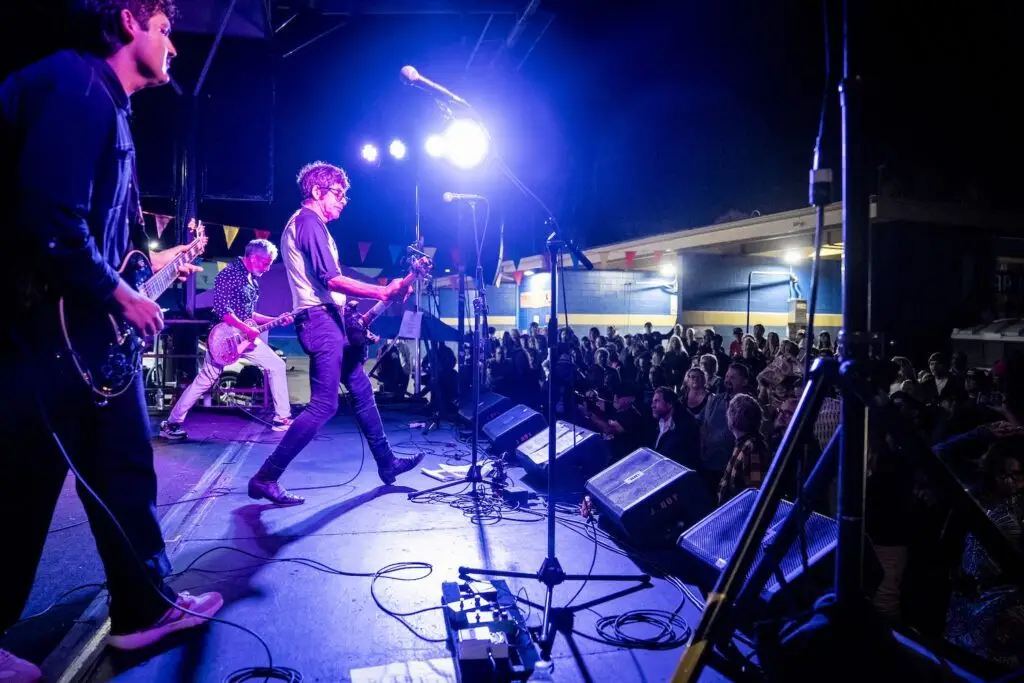
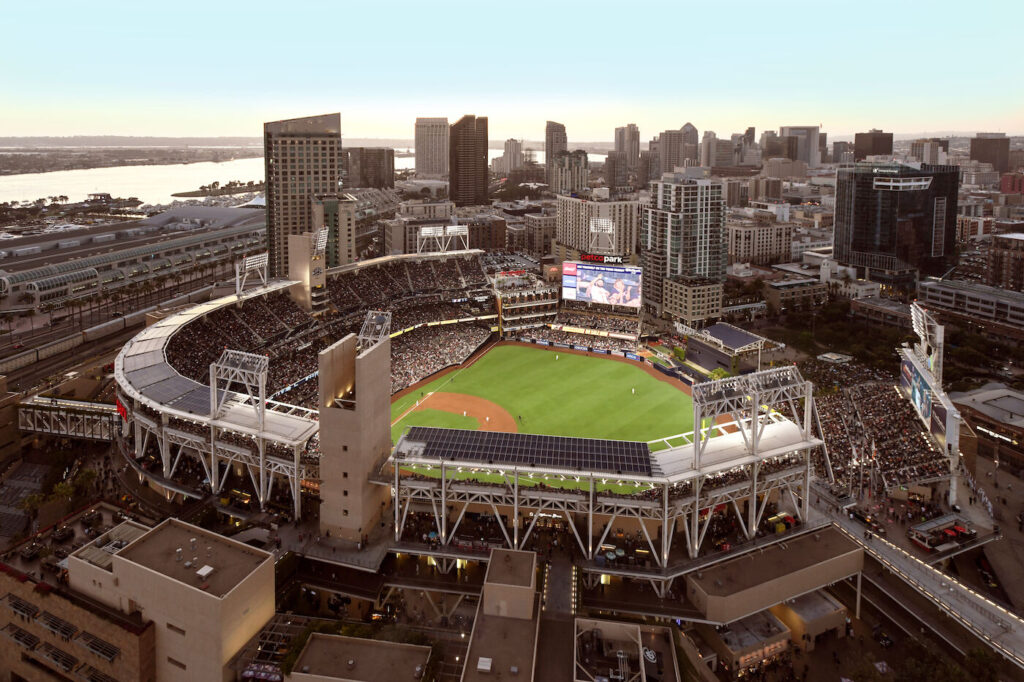
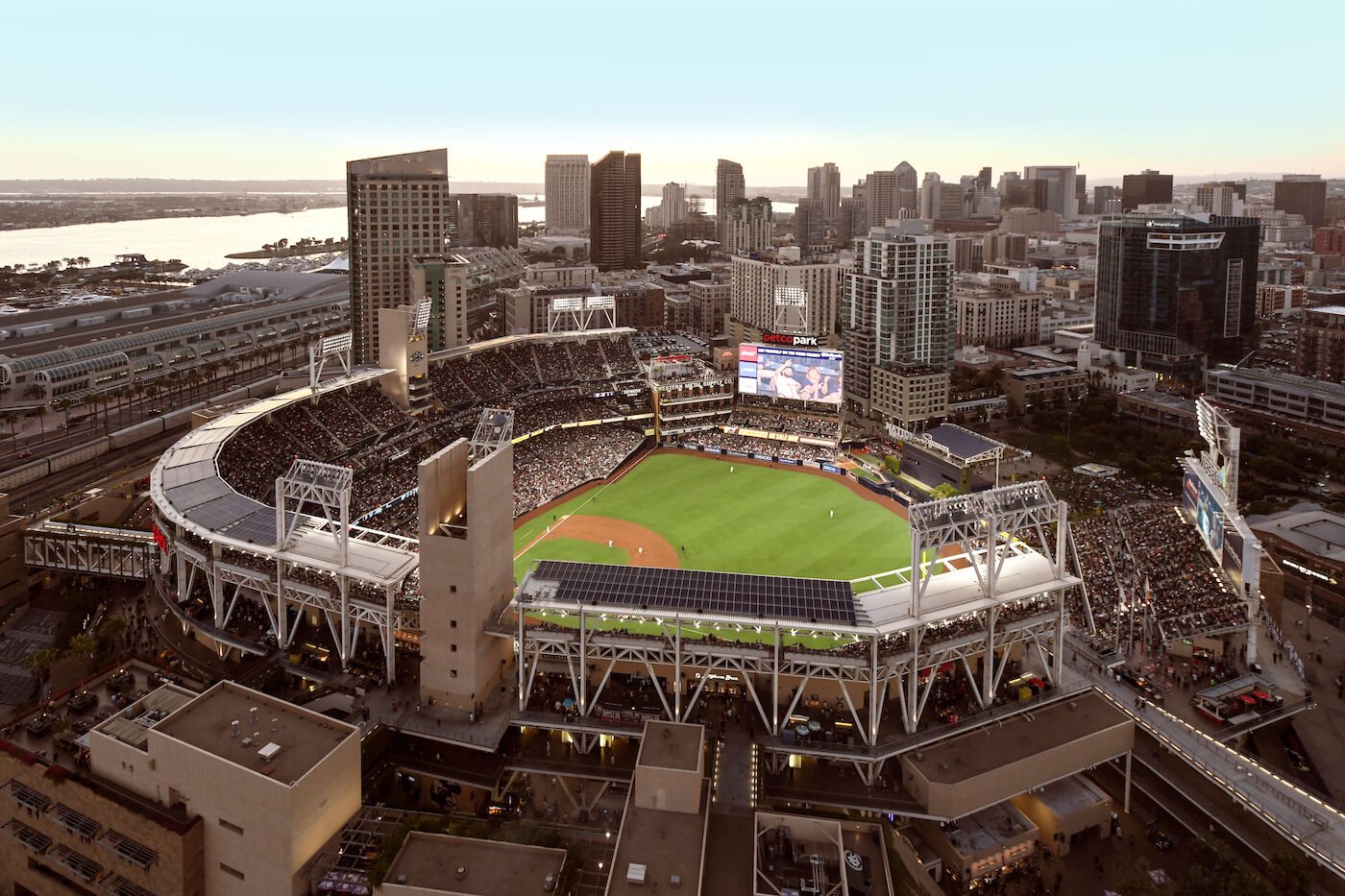
The East Village Opening Day Block Party kicks off at 10:30 a.m. on J Street next to Petco Park’s Gallagher Square (formerly Park at the Park). Admission to this event is free, and there’s plenty of food and drinks for purchase inside, plus live music and games like cornhole.
Downtown parking is limited. Instead, park for free at SDCCU Stadium and take the MTS trolley to Petco Park. Or if you’re coming from North County, park for free at a Coaster station and take the train to Santa Fe Depot, then transfer to the Silver Line.
Eat at the park
The second best thing to enjoy at Petco Park is its concessions. Local favorites like Phil’s BBQ, Lucha Libre, and Buona Forchetta are all accounted for. The most popular dishes last season were Seaside Market’s tri-tip nachos, Board & Brew’s Turkado sandwich, and Ballast Point’s Swingin’ Friar Ale. There are more than 85 kinds of beer at the ballpark, so bottoms up!
Everyone who attends will receive a free Padres Opening Day hat. Take your seat no later than 12:30 p.m. to catch the pregame ceremony.
Wear brown
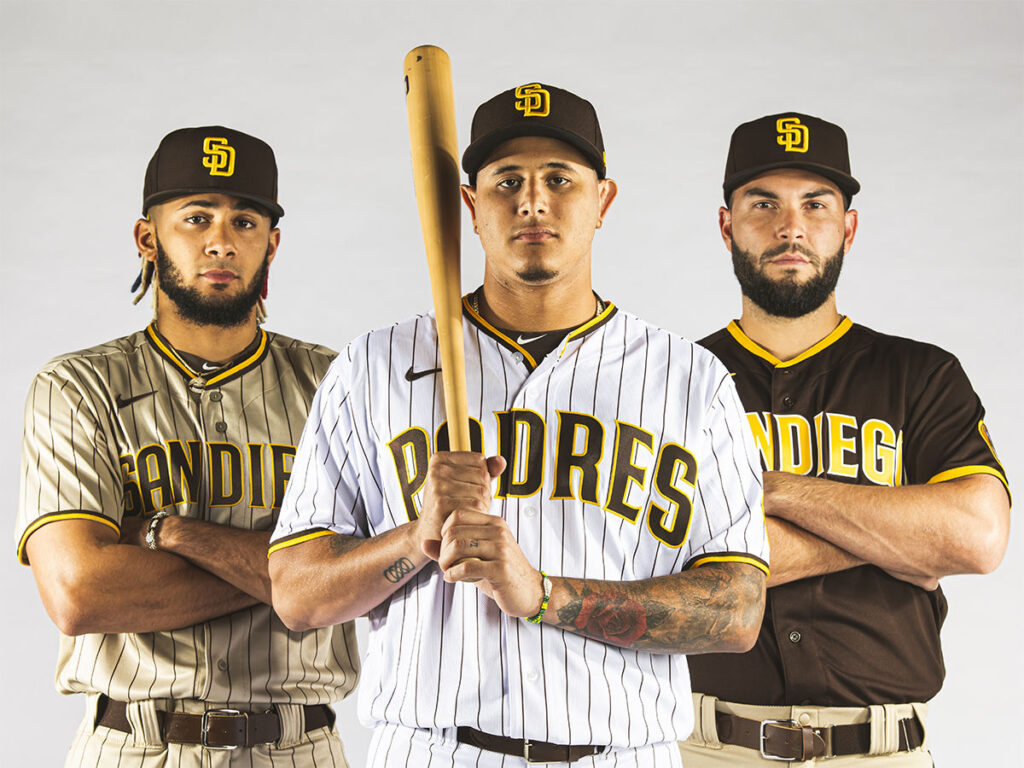
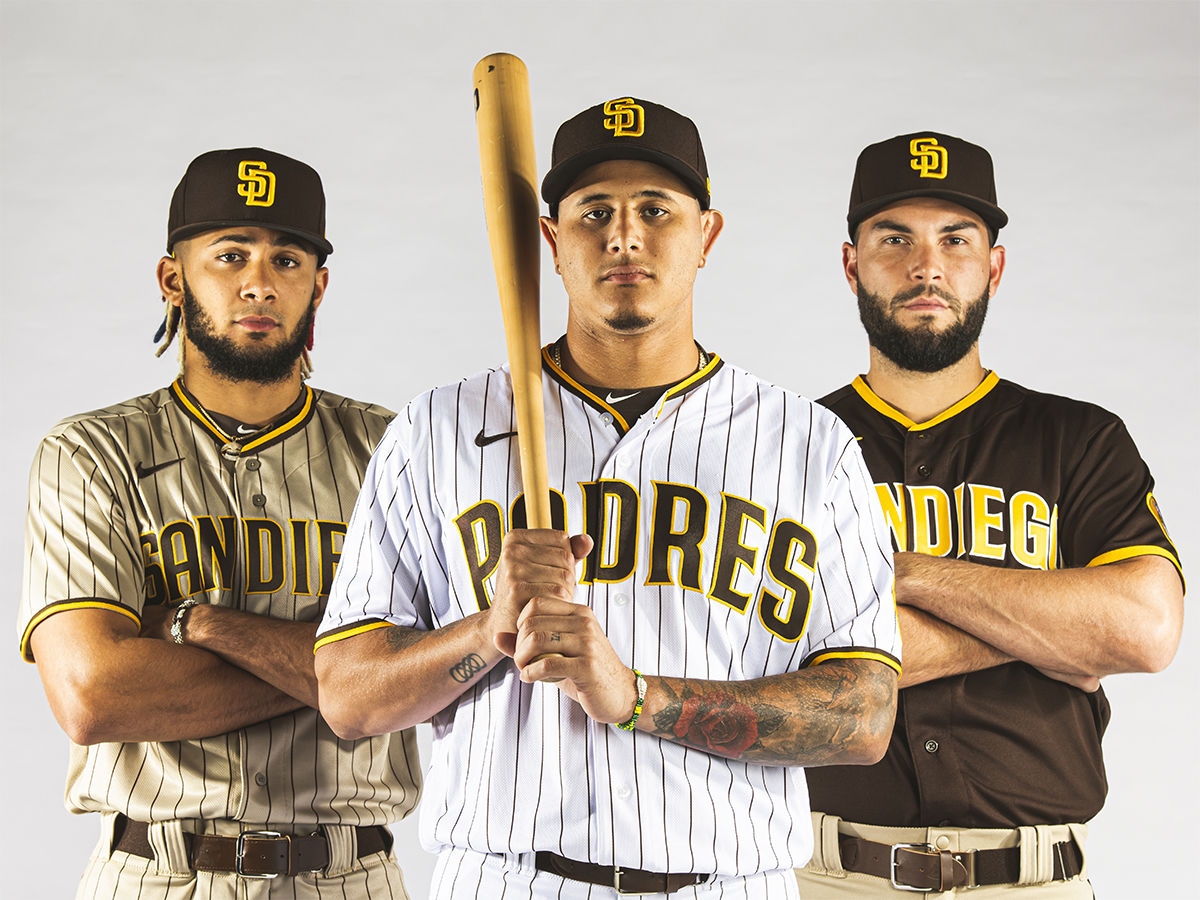
The Padres are reviving their most iconic vintage uniforms in the 2020 season, which means it’s time to swap your blue for brown and your white for gold. At the game, take a selfie and use the hashtag #BrownIsBack for a chance to see your photo on the big screen.
Stay in the shade
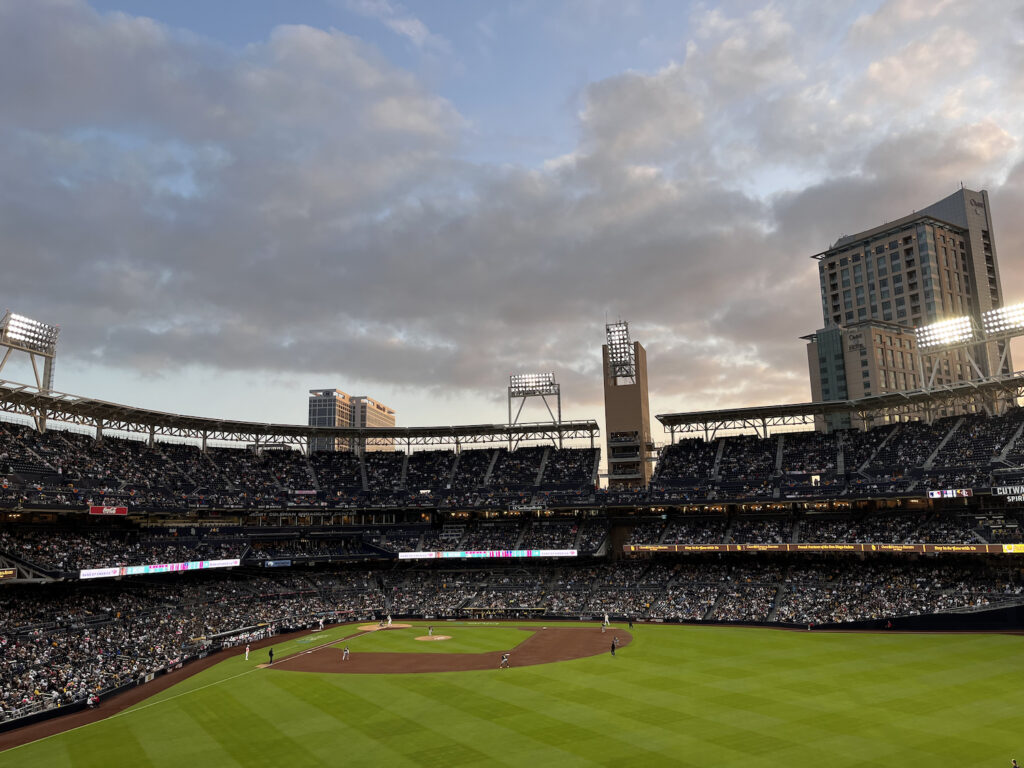
If you don’t want to bake all day, look for seats in the shade or in partial shade. Your best bet is to sit in the stadium’s middle tiers along the third baseline. If you’re set on sitting closer, or in the top tier along the first baseline, bring lots of sunscreen! (For a helpful visual, there’s a shade map at mlb.com/padres.)
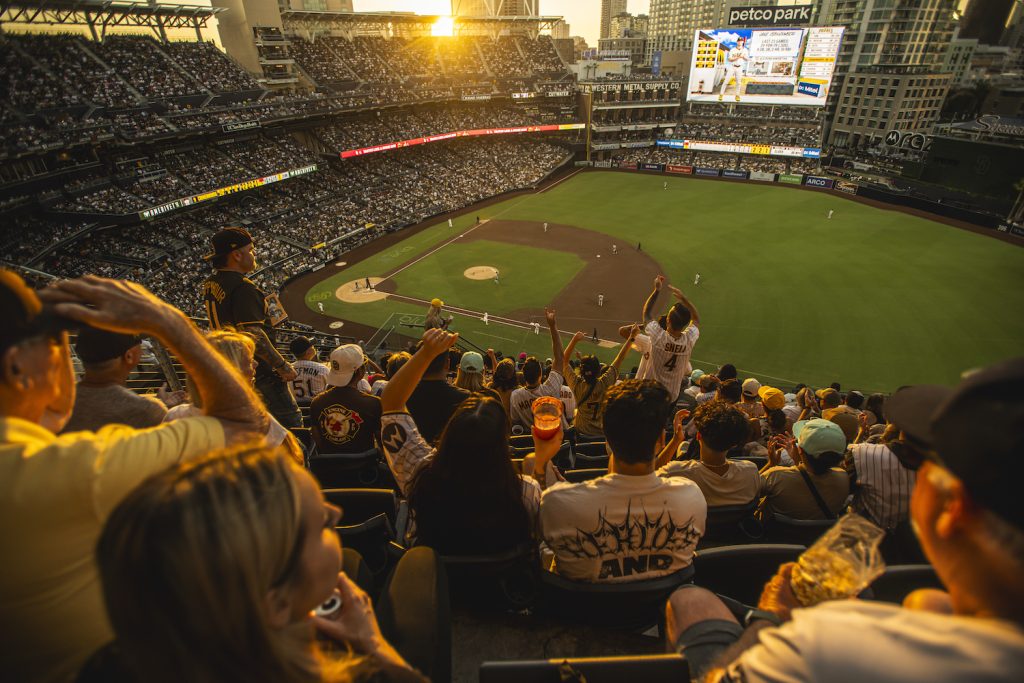
One out, bottom of the fourth, man on second. Tie score in the Padres’ June 10 game against the Oakland Athletics. Pads shortstop and fan favorite Ha-Seong Kim is at the plate. He lashes at a fastball, the bat-on-ball sounding like someone stomped on a bag of chips. Fans at Petco Park erupt as the A’s left fielder watches the ball sail over his head, though he collects it after it caroms off the wall and flings it toward the infield. Those in the stands who jump to their feet only get a better view of Kim getting thrown out at second base.
One step forward, one step back. Such is the story of the 2024 San Diego Padres.
“It’s been a confusing, back and forth season,” says AJ Cassavell, MLB.com’s Padres beat reporter. The team has hovered around .500 and have been unable to separate from the pack in a wide open National League wild card race. That’s in large part because, “the star players haven’t been up to their normal standards,” according to Cassavell. The stats bear that out.
Limited by a lingering elbow injury and a recent strain in his hip, franchise cornerstone Manny Machado is having the most difficult season of his illustrious 13-year career. Second baseman Xander Bogaerts struggled before a broken shoulder shelved him indefinitely. Right fielder Fernando Tatís—arguably the most talented player in baseball—played like a mere mortal during the first two months of the season. The Padres’ most productive player by Wins Above Replacement, a metric that quantifies overall value, is outfielder Jurickson Profar, a journeyman signed to a one-year, $1 million deal.
It’s not all bad. It can’t be when a team wins roughly half its games. Cassavell credits this to the “role players who have been really good,” including center fielder Jackson Merrill, infielder and hitting machine Luis Arráez, and reliever Jeremiah Estrada, who as recently as November could have added #OPENTOWORK on his player profile and by June had struck out 13 consecutive batters, an MLB record. “The Padres might have found the best bullpen bargain in baseball,” proclaimedSports Illustrated.
Padres general manager A.J. Preller has long focused on big free agent signings and splashy trades. At last, he found worthy compliments to a high-priced core, and despite Kim’s baserunning mistake it seemed to have all come together against the A’s on Monday, June 10.
Starting pitcher Dylan Cease scattered eight hits across six innings. Tatis scalded a ball that left the yard so fast it belonged on the Autobahn. Second baseman Jake Cronenworth hit a gentler homer, though one that scored a run all the same. Closer Robert Suarez struckout the side in the ninth to end the game. The stars played like stars, and to Padres manager Mike Shildt the 6-1 victory served as “the blueprint for winning baseball games. You get your starter [to] limit damage, then you get an offense that just completely takes relentless at-bats.“
True to form, the Padres didn’t follow that blueprint for very long. After sweeping the A’s in the three-game set, they flew to New York and gave those three games back to the Mets. The Pads then traveled down I-95 to Philadelphia, only to continue scuffling. They won five of the six games prior to heading east, then lost five of six on the road trip. One step forward. One step back.
Still, Shildt stands by his team. “Short-term? We got to figure it out. We need to be a little more consistent, a little better,” he said after a 9-2 loss to the Phillies. “Long-term concern? None. Zero. I know we’re going to end up right where we want to end up, and that is in October.”
Fans appear to share in the belief that their team will make the playoffs. The Padres rank 15th in winning percentage, smack in the middle of MLB’s thirty teams, but rank second in total attendance. It’s as if Padres fans are motivating the role players to step up, and willing the star players to shine again.
“Can we go on a [playoff] run? Absolutely,” says Hugo “Randy” Salgado, a longtime season ticket holder. Salgado and his family are such big Padres supporters his nickname derives from his father’s fandom of legendary Padres pitcher Randy Jones. Salgado’s little brother’s given name? Randy.
From his seats in right field Salgado sees the struggles of the team’s core, but he also recognizes what could be. “We’re weathering a perfect storm” of injuries and tough scheduling, he says, and making the playoffs “would mean everything to this city, it would mean everything to us fans.”
2023 was a tough year for Padres fans. The team in 2023 scuffled through possibly their most disappointing season ever, let their manager leave for a division rival, had to take out a $50 million loan to address apparent cash flow issues, traded away all-world outfielder Juan Soto, and watched the Los Angeles Dodgers sign the second coming of Babe Ruth. Yet, like Lloyd Christmas, they believe they still have a chance.
“Hopefully, it’s a deal that works both ways,” said Padres president of baseball operations and general manager A.J. Preller, according to The Athletic, referring to Soto’s trade to the New York Yankees, “and we’re seeing him in the postseason next year.” Since the Yankees play in the American League, that would mean the Padres playing in the 2024 World Series. Maybe that’s not so crazy.
The Pads will bring back all-stars and fan favorites in Manny Machado, Fernando Tatis, Ha-Seong Kim, Joe Musgrove, and Yu Darvish. The Soto trade returned several solid contributors, and they signed Japanese pitching star Yuki Matsui. This core will be led by new manager Mike Shildt, who was once named the National League Manager of the Year and led the St. Louis Cardinals to three consecutive postseason appearances. The Padres have never made the playoffs in three consecutive seasons.
Even though they’ll likely lose top pitchers Blake Snell and Josh Hader in free agency, the Pads still possess a “huge amount of talent,” said Michael Baumann, staff writer at FanGraphs. “Preller tried to build not just a good team, but a superteam.” Unfortunately, there are other super teams in the N.L. West.
The Dodgers being the Dodgers, signed two-way superstar Shohei Ohtani to a contract that exceeds the gross domestic product of ten countries. The salary structure is so team-friendly, though, it has allowed the team to splurge on pitcher Tyler Glasnow and they’re homing in on Yoshinobu Yamamoto, the prized free agent pitcher from Japan.
For their part, the San Francisco Giants signed away star outfielder Jung Hoo Lee from his native Korea, and the Arizona Diamondbacks return more or less the same roster that steamrolled three supposedly better teams in this year’s playoffs on their way to the World Series. (There is a fifth team in the N.L. West, the Colorado Rockies, which is about all that can be said of them.)
Courtesy of FriarWire
Losing Padres’ Owner Peter Seidler
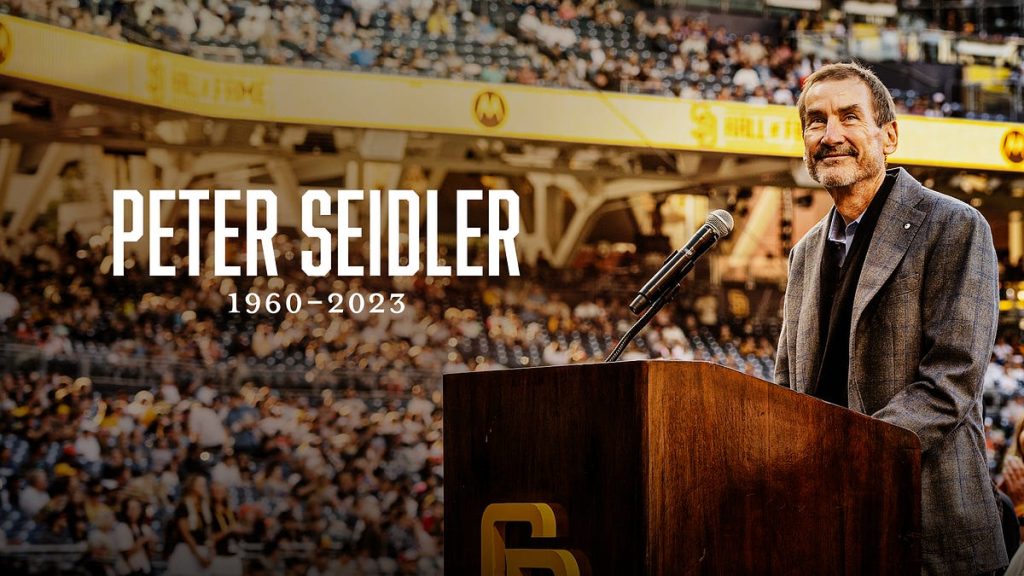
But the most impactful, and heartbreaking, development for the Padres this year was the loss of beloved team owner Peter Seidler. “The best thing a team can have is an owner that cares about winning,” Baumann said, and Seidler certainly did.
He gave Preller free rein to put together a superteam. He invested in the minor leagues and player development, which, either through promotions or trades, resulted in players like Tatis and Soto. He invested in Petco Park, making a Padres game one of the best game day experiences in professional sports. He even invested in his city, having emerged as a civic leader in the fight against homelessness. He did all this despite San Diego being a so-called “small market” team.
Following Seidler’s death in November, news trickled in about how the Padres would manage their roster. The consensus became that they still want to compete, but also need to shed high-cost players after carrying the third-largest payroll in the sport and missing the playoffs.
Looming over this strategic decision and the roster intrigue are larger questions about the direction of the franchise. Will the Padres keep pushing to win that elusive World Series championship? Or will they retreat to more familiar, more modest terrain? After trading Soto but recruiting Matsui, the jury is still out, and it seems San Diego’s other major league sports teams are at a similar crossroads.
Courtesy of Major League Soccer
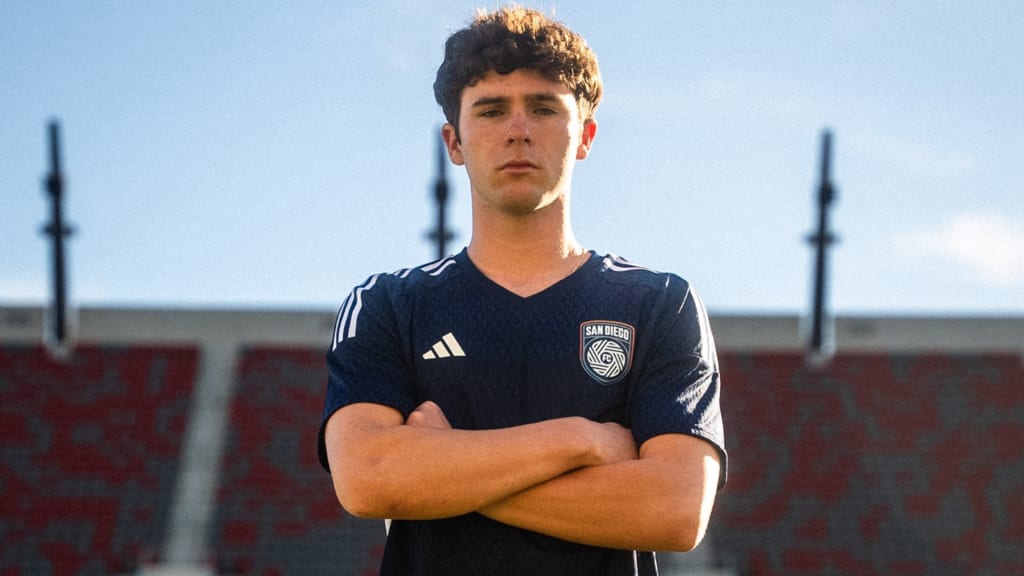
San Diego FC Signs First Player, Duran Ferree
Earlier this month, Duran Ferree became San Diego FC’s first-ever signing, and in turn, the answer to a trivia question coming to a bar near you. Of course, local soccer fans hope Ferree becomes better known as the goalkeeper for Major League Soccer’s next great team. To the club, Ferree’s signing “underscores the Club’s commitment to identify and develop young talent, and build a youthful, dynamic and winning organization.”
Courtesy of San Diego Wave FC
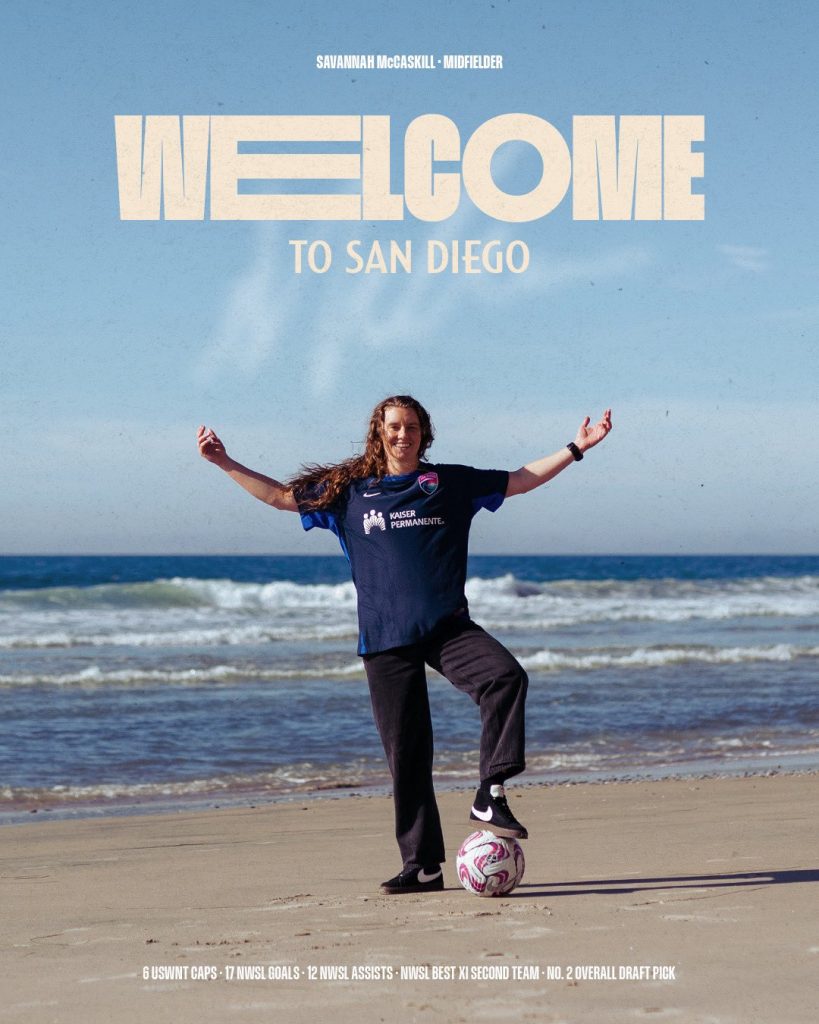
Wave FC Acquires Savannah McCaskill
SD Wave have reached the National Women’s Soccer League semi-finals in back-to-back years, and this year they were the best team in the regular season. They were primed to contend again—at least, they were before the recent NWSL expansion draft, which was necessitated by two new teams starting play next year.
Forward Rachel Hill was poached by Bay FC, and SD Wave had to expend assets to get midfielder Sierra Enge back in the fold. Captain Alex Morgan was not pleased, and the team responded by signing midfielder Savannah McCaskill, a two-time NSWL Player of the Month. “We are confident that Savannah’s ability and experience will prove to be an important part of our continued success,” the team said.
Photo Credit: Matt Thomas
San Diego Sports Fans Set Attendance Records In 2023
San Diego has fans willing to invest in these teams. Despite their struggles, the Padres set an attendance record in 2023 and at one point saw 25 consecutive sellouts. Eight thousand people went to Snapdragon Stadium just to attend SDFC’s brand announcement event, and the Wave were the biggest draw in the NWSL this season. Even our hometown rugby team, The Legion, set a league attendance record.
What’s to be determined in 2024 is if San Diego has teams who, in the face of setbacks, continue to invest in their rosters and turn their pronouncements about winning into reality.
In one way, Padres fans brought pain upon themselves this year. The Padres ousted the Los Angeles Dodgers from last year’s playoffs, finishing three wins shy of the World Series. The fans’ impassioned commitment to the team afforded an unprecedented investment in the roster.
For the 2023 season, the Padres put together their most talented and expensive team in franchise history. Those lofty hopes and stark dollars set up 2023 to become the most maddening and disappointing season in franchise history.
I believe this is a good thing. Hear me out.
For years, San Diego has been characterized as a “small market.” It’s how the city ended up as a one-sport town. It’s how it could have ended up as a no-sport town. On one hand, San Diego ranks just 30th in market size, and the region’s large transplant population might not pledge allegiance to the Padres.
On the other hand, the county is the fifth-most populous in the United States and has a diverse economy, international marketing opportunities, and perfect weather.
Padres team owner Peter Seidler seemed to have skipped the market-size class in business school, or said the hell with it. He spent money on his team like the New York Yankees do—or, at least, how they used to. Padres fans were used to being coupon-clipping underdogs, but now their team was setting the market.
Since 2019, Seidler has committed more than $1.2 billion to third baseman Manny Machado and fellow all-stars Fernando Tatís, Yu Darvish, Xander Boegarts, Jake Cronenworth, and Joe Musgrove. The team traded for top players Blake Snell, Juan Soto, and Josh Hader.
They signed away Ha-seong Kim from his native South Korea, watching him become one of the best all-around players in baseball and a fan favorite. On opening day this year, the Padres possessed the third-highest payroll in baseball, representing a spending spree so rare in San Diego sports they should hang a banner for it.
The roster moves were fueled by a few things. First, Siedler must have realized his unique opportunity. With no NFL, NBA, or NHL team competing for pro-sports eyeballs in the city, the Padres have the opportunity to own San Diego. And it worked. This year, the Padres had their first-ever season ticket waitlist. Jersey sales of Machado and Tatís were among the best-selling in the sport.
In February, fans turned the casual FanFest into baseball Woodstock. Those fans hoped the Padres would finally end the Dodgers’ reign atop the National League West, and they hoped their team would win San Diego’s first major sports championship. Those hopes felt pretty unrealistic after just the first month of play.
“Don’t jump on the bandwagon later on when we start f— raking and we’re doing what we’re supposed to be doing,” Machado said after his team lost ten of their first eighteen games. The raking never came. The unraveling did, though, along with a historic string of bad luck when it mattered most.
Cases in point: The 1969 Montreal Expos are the only other team to have lost their first 12 extra-inning games in a season. The 1935 Boston Braves are the last team to be as pitiful in one-run games. A September surge allowed the Padres to avoid their eleventh losing record in thirteen seasons, but it came too late to matter. They missed the playoffs in the most anticipated season in team history.
The Athletic pinned the disastrous season on the management style of general manager A.J. Preller; the San Diego Union-Tribune attributed it to the performance and personality of Machado. This all made for what was “easily, hands down, not even close, the worst season” Ryan Cohen can remember. Cohen, whose love for the Padres has garnered him a sizable following on social media, has spent most of 2023 grasping at the thinnest silver linings.
As most of those faded away, there remained only one: the fans.
Machado called for their support and they responded: despite an underwhelming team and an outing at Petco Park costing as much as a student loan payment, the Padres drew three million people to their games this year for just the second time in franchise history. Only the Dodgers and Yankees—baseball’s evil empires—drew more fans.
At the final home game in September, a sellout crowd watched the Padres’ playoff hopes die yet another death. The home team lost again in extra innings, this time to the lowly St. Louis Cardinals. The loss dropped their record on the year to 76-79. It seemed impossible, and advanced statistics agreed.
The Padres outscored opponents by more than 100 combined runs during the season—which should have resulted in a 92-win team. It’s as if the fan base tried to will that theoretical team into existence, right until the bitter end.
Since the season concluded on October 1, the San Diego Union-Tribune reported that the Padres will likely pare back its player payroll next season. That makes sense considering the team missed out on the TV money, gate receipts, and memorabilia sales that come with a playoff run.
But for a single season, a franchise, its fans, and its host city shed the “small market” label and exposed it for what it is: an excuse for mediocrity. If Padres fans experienced more pain than ever this year, it’s because their team at last strove for greatness.
The end results didn’t pan out for the Padres in 2023, but the crowd kept showing up. They knew that the investments in their team gave them better odds than ever, and that odds eventually pan out if you play enough times.
After all, the Padres recorded MLB’s best record in this season’s final month, and most of the Padres’ star players return next season. Of course, so will the fans. That’s a scary thing for the rest of the league.
Today’s seniors are more connected than ever, with a renewed focus on retirement as a time of discovery and enriching experiences. The ultimate reward for a retirement well-earned is the wisdom to appreciate it all, and what better place to enjoy that unique perspective than Vi at La Jolla Village, in the heart of San Diego.
All-access pass to good living.
As a Continuing Care Retirement Community (CCRC), Vi provides access to a connected and fulfilling community while making it easy to plan for future care, should the need ever arise. With a care plan in place, residents enjoy greater financial predictability and long-term value, freeing them to focus on making the most out of retirement.
Resort-style amenities at the epicenter of a cultural hub like San Diego offer a retirement experience unlike any other. Paired with exceptional dining, spacious accommodations and dedicated staff, the best of maintenance-free living is all around. And with the introduction of Vista 360 Well-Being, Vi’s panoramic approach to wellness, there are more ways than ever for residents to access it all.
The harmony of mind, body and community.
Courtesy of Vi at La Jolla Village
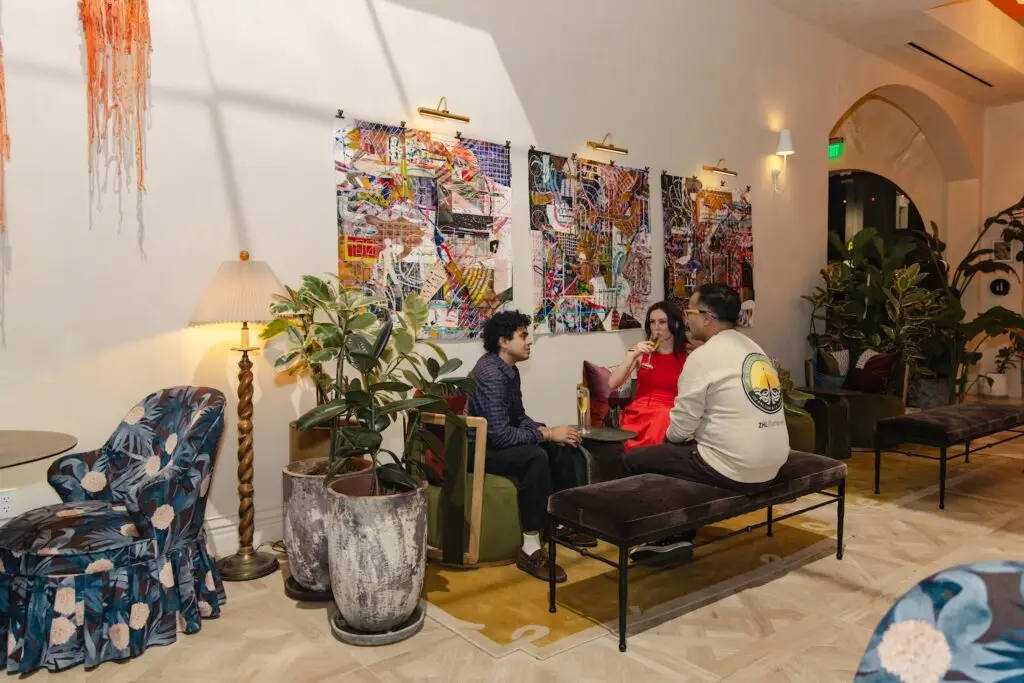
The key to longevity is striking the right balance in maintaining an active lifestyle with an active mind in a fulfilling community. With newly renovated community spaces and restaurants, Vista brings a variety of opportunities for residents to elevate their well-being through Vi-exclusive “Signature Experiences.”
Vista Enrich takes an evidence-based approach to brain vitality, keeping residents at the forefront of cognitive health through exergaming (exercising + gaming), nutritional plans and informative workshops. It is also home to The Brain Vitality Studio, an innovative facility dedicated to cognitive fitness that has garnered national recognition.
Vista Discover invites residents into stimulating educational experiences, from chef-led cooking demos and guided wine tastings to lectures at local universities and intimate lectures following cultural outings.
While Vista Enrich focuses on brain health and Vista Discover engages residents intellectually, Vista Explore cultivates a sense of adventure through curated travel and local excursions. But broadening one’s horizons doesn’t always require a plane ticket. One recent event brought a taste of the world right to the community: an onsite “jazz cruise” featuring live music and global cuisine served at a series of themed “ports” all within the community’s own ballroom.
“Location, location, location”
Courtesy of Vi at La Jolla Village
One of the biggest perks of life at Vi at La Jolla Village is its proximity to just about everything. With easy access to transportation and local attractions just steps away, residents can explore and engage with their community at their own pace.
“There are trolley and bus stops within a 5-minute walk that will get you to the beach, UCSD Campus, medical appointments, downtown La Jolla or San Diego, et cetera. We rarely use our car,” said resident Tom Yager.
With the best of San Diego just steps away, residents don’t just live in the city, they live within reach of everything that makes it special.
The best of all worlds.
Courtesy of Vi at La Jolla Village
At Vi at La Jolla Village, retirement isn’t a chapter to slow down; it’s an invitation to discover more. Tailored community experiences created by Vista, paired with the vibrant pulse of San Diego just outside the door, mean that residents don’t have to choose between security and adventure, connection and independence. They get all of it.
This is what an all-access pass to good living looks like: the comforts of an elevated lifestyle, a community built for growth and a city made for discovery – all in one place.
To learn more about Vi at La Jolla Village or for details on available floor plans, visit ViatLaJollaVillage.com/SDM.
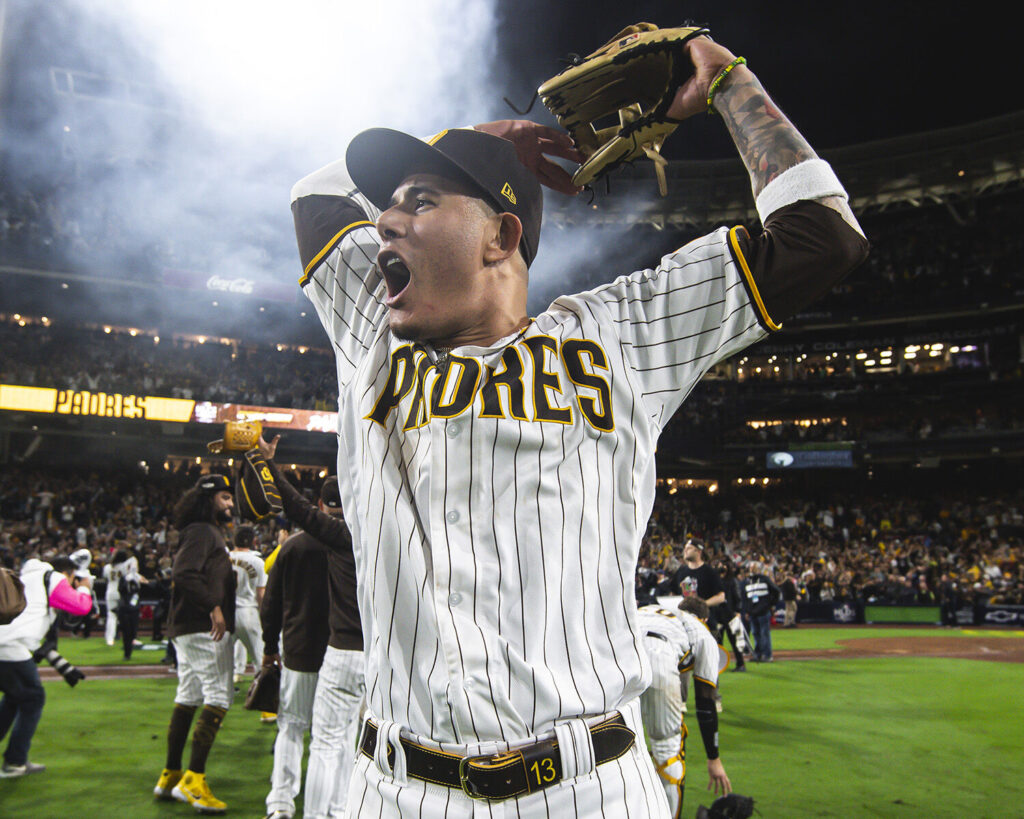
Moments after the Padres’ 2022 National League Division Series win against the Dodgers, Manny Machado and more than 450,000 fans let out the collective cry of phoenixes rising from the ashes of a decades-long legacy of almost.
The Padres are the most exciting sports team on the planet. If that’s not objectively true—seeing as how other continents and soccer exist—it is in our hearts. And in no way, shape, or form were us fans emotionally prepared for this. “Act like you’ve been here before,” they say. Apologies, but we can’t because we haven’t. We’re clapping a bit too loud. Laughing in nervous bursts. Fist-bumping at dad frequencies.
Because it’s been a long, grueling ride to get here.
Growing up a Padres fan was like watching the asteroid pierce the earth’s atmosphere and still raising your “Go Dinosaurs!” foam finger. Each season it felt like part of MLB’s opening ceremonies was the mathematical elimination of our team from the playoffs. Most of our modern lineups consisted of Tony Gwynn, a couple talented young players on entry-level salaries who were contractually obligated to lend us their skills for the sake of parity (a stint with us was like a tour in the Peace Corps), a once-legendary veteran doing a retirement tour on half of one healthy knee and a quarter of a rotator cuff, and some other nice chaps with gloves.
Every year, US media would flash the names of the biggest free agents. Padres fans would kiss sacred rocks, pull muscles from all the praying, promise to be better humans if the gods would just grant us just one Machado. And every year the Dodgers and Yankees outbid us with a chortle and split those stars evenly.
So, San Diego sportswriters became pros at stories about the “untapped potential” of players on our team. How, if all the stars aligned and the earth’s gravity shifted a touch and maybe there was a light intervention from Jesus, they could be legends.
One reason San Diegans loved Tony Gwynn so deeply was that he stuck with the Padres despite the inevitability of disappointment. Just like us! We were Tony, Tony was we—lighting each other’s smokes in the foxhole of small market baseball.
At some point, you start to take pride in your identity as an eternal underdog. Your heart suffers from Stockholm Syndrome. The Padres kidnapped your heart at an early age, and you love them despite rational reasons to leave a harshly worded Yelp review and pick a favorite cricket team.
And then… that just all changed in the most drastically positive way. Owner Peter Seidler, CEO Eric Greupner, and GM A.J. Preller have been consistently, repeatedly binge shopping at the superstar store. We’re the Noah’s Ark of choice for elite athletes. And it’s not just one-year rentals. Manny Machado, Yu Darvish, Xander Bogaerts, Fernando Tatis Jr., Joe Musgrove—all are signed to play for the Padres for at least the next half decade.
It’s important for new fans to know these travails, our budget legacy of almost. It’s why this moment in franchise history feels like petting puppies in the sun with a two-beer buzz after your 23andMe test reveals that you’re 80 percent Dave Grohl. Our brains are hot tubs of endorphins.
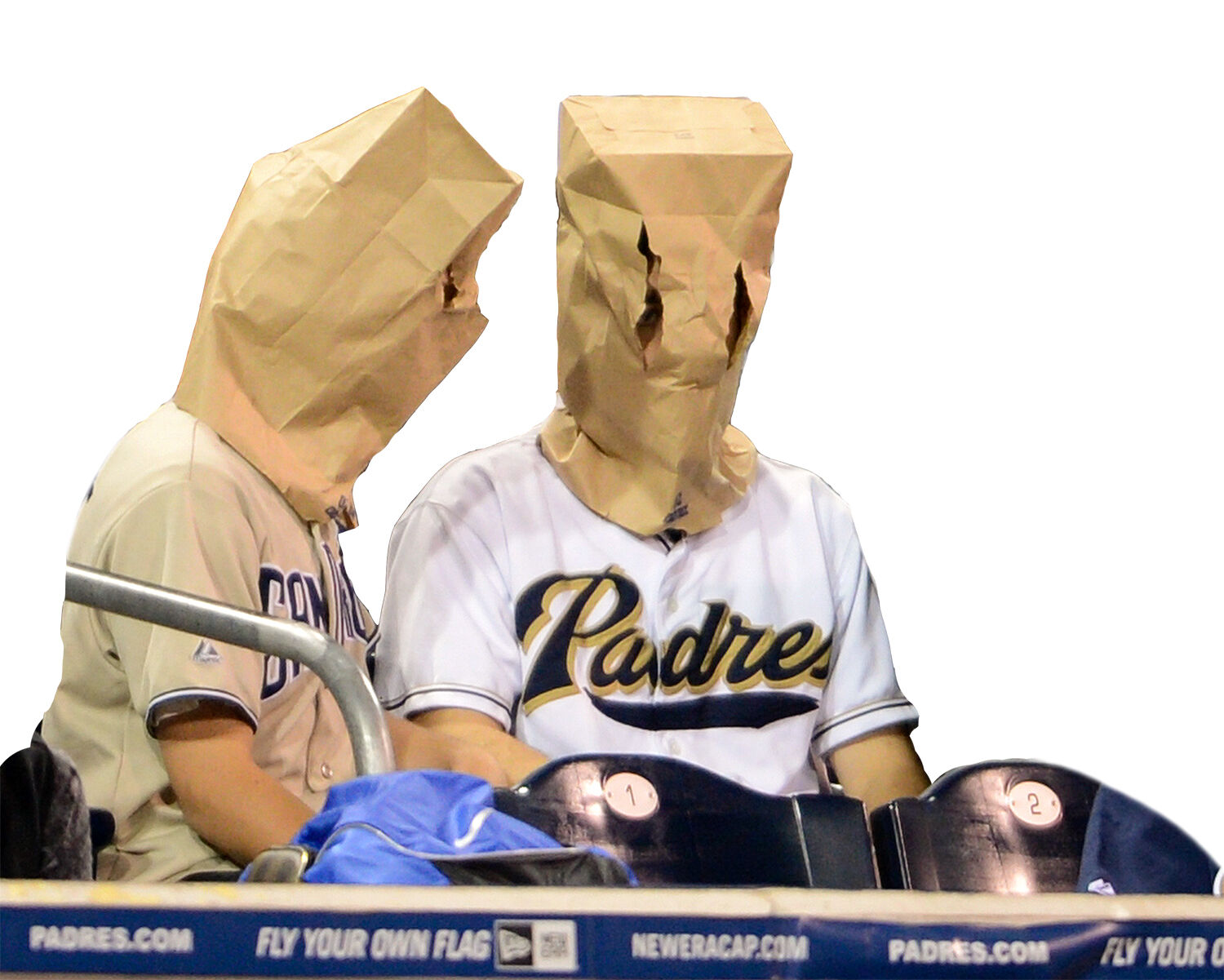
The disappointment was real. Fans donned paper bags during another 2012 loss.
Two things happened to create a historic opportunity for the Padres. First, the Chargers left to pursue their acting career in LA. The three most popular sports in the US are football (74.6 percent of Americans follow the sport), basketball (56 percent), and baseball (50.5 percent).
With the top two sports out of town, San Diego became a baseball city. The Padres had the chance to own almost every sports heart in town. Ownership probably still could’ve set attendance records without investing so heavily in the product. But if he could seize that opportunity and bring the franchise its firstever World Series win? Local babies of all genders would be named Peter for years to come.
Then a second seismic change created the perfect storm for baseball hysteria: the pandemic. For a while (felt like eons), gathering in public and cheering was deemed unsafe for humankind. And gathering with thousands of people— all of us vibing on the same thing—is one of the most emotionally powerful things we do as humans. It’s why Bon Jovi was invented. That’s why people who don’t even like a sport will go see a live game for the experience, the excited human spectacle.
And the Padres are the biggest mass cheering opportunity in the market. After years of virus-enforced isolation, the emotional release of 45,137 fans losing their shit in unison as the Padres beat the Dodgers in the playoffs… was more than baseball. It was a group reclamation of self and joy.
Whether or not you support spending hundreds of millions of dollars on professional athletes, there is no denying the market has decided that value. No matter your estimation of capitalism, its existence is not in doubt. Occasionally, frugal teams win it all, but you’d have to go back 20 years to find a champ that was bottom-five in spending (2003 Florida Marlins). If you want a sane statistical chance, you gotta be in the top half.
I don’t pretend to know Seidler’s thinking. But from the sidelines, we saw all those things converge—a fanbase that loved a team despite its legacy of apologies, the fan vacuum left by the Chargers, the pent-up need for large-group human bonding from the pandemic—and knew the Padres had a historic opportunity to become the most beloved sports team to ever call San Diego home.
All we needed was ownership with the emotional and financial fortitude to push all its chips to the middle.
Troy Johnson is the magazine’s award-winning food writer and humorist, and a long-standing expert on Food Network. His work has been featured on NatGeo, Travel Channel, NPR, and in Food Matters, a textbook of the best American food writing.
Over 4,000 Hot Dogs and 18,000 Beers per Game—We’ve Got the Stats on Petco Park
The numbers to get you excited for baseball season
Andy Hayt/San Diego Padres
By Ron Donoho
Petco Park
Andy Hayt/San Diego Padres
Big-league baseball is a game of inches. A deep-deep-deep fly ball could become a game-winning home run—or disappoint millions. It’s also a numbers game. Few know more about the stats behind Petco Park than Ken Kawachi, VP of ballpark operations. Kawachi oversees more than 50 full-time employees—and over 500 part-timers during baseball season. He breaks down the numbers behind one of MLB’s most iconic fields.
60
Permanent concession stands
58
Portable concession carts.
4
Hours to mow the iconic crisscross on the
98,000
Square-foot field.
4,331
Hot dogs on average consumed per game.
18,474
Beers consumed per game. Those numbers spike on weekends and when the Dodgers come to town to collect their losses
61.2′ x 123.6′
Left-field video board by Daktronics
716
Solar panels, the largest solar array of any MLB facility.
50%
of Petco Park events in 2021 were baseball. There were:
19
Concerts (this year: Red Hot Chili Peppers, July 27; Bad Bunny, September 17)
First, the upfront: This is a paid partnership with the Padres. Second, that’s not going to stop me from reliving one of my favorite kid memories.
I was 11 years old when the Padres played the Chicago Cubs in the playoffs. The Padres were a large part of my world. My mom, a baseball nut, taught me how to keep score in an official book that year. We had season tickets, which meant we were able to get seats for the playoff games. Padres lost the first two games, came back to San Diego on the ropes.
Mom and I were sitting in the left field bleachers when Kevin McReynolds hit a towering fly ball in our direction. The ball got bigger and bigger and bigger. The Cubs’ left-fielder ran toward us, ran fast until he ran out of room. The ball landed, and the stadium exploded.It landed right… HERE. It landed at US.
Up until that moment, I’d always envied the other, closer seats.
Three days later, I was sitting in the upper deck when Craig Nettles threw the ball to Alan Wiggins and the team rioted into a human pile of happy in the center of the field. The Pads’ first trip to the World Series.
The bleachers are where us fans harvest homers. Send us your dingers, your dongers, goners, taters, oppo tacos, no-doubters, moon shots, your grand salamis, and your Machados. Slam Diego isn’t a fictional place. It’s a seat. And that seat… is right here. It’s a tad louder in the bleachers because, well, joy and happiness aren’t quiet. Welcome to the party at the end of the home run rainbow.
It’s down to the wire, the biting of nails. Machado and Soto and Joe and Yu and Snellzilla and all the players with great hair could use locals at the finish line. Get a seat. Any seat. All have their unique charms. And should you decide to become a member (partial or whole season tickets for 2023), the list of perks is pretty impressive, including:
—priority access to Postseason tickets (and, baseball gods be willing, World Series)
—before each game, it’s happy hour (more than half-off select beer, wine, and cocktails)
—invitation to watch batting practice to catch homers (if you get a ball with gold-stitching, you get a free Pads jersey of your choice)
—10% off all schwag (City Connect calling your name)