Featured articles
Featured articles
Things to Do
Guides
Things to Do
Featured articles
Things to Do
Things to Do
Things to Do
What's next
Featured articles
Featured articles
Featured articles
Things to Do
Things to Do
Guides
Ready to know more about San Diego?
SubscribeReady to know more about San Diego?
The Border Report: Mexico on two wheels
Rosarito-Ensenada Bike Ride
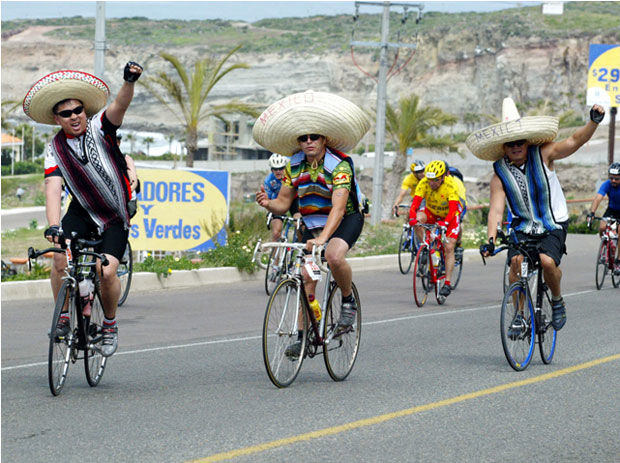
Celebrating its 34th anniversary is the Rosarito–Ensenada bike ride, a 50-mile fun trek that happens twice annually, this year on May 3 and September 27. In what’s billed as one of the largest cycling events in the world, nearly 4,000 participants follow the free road out of Rosarito south along the coast before cutting inland at La Mision and upward through the hills surrounding the Valle de Guadalupe wine country and onward to Ensenada. At the finish line is a street fest with food, bands, and beer. If you don’t want to haul your wheels to Mexico, TNT Ensenada (tntbicicletas.com) rents loaners, and shuttles run back to Rosarito from Ensenada after the race for $22 per cyclist. Preregister online for 400 pesos ($35), or sign up on the day of the ride for 450 pesos ($40).
Getting from San Diego to the border by bike is a 30-mile tour—and an epic one at that (how many bike rides cross international borders?). Cruise the Bayshore Bikeway, a 25-mile loop linking Chula Vista, Imperial Beach, Barrio Logan, and the Silver Strand via the San Diego– Coronado Bay Bridge (the ferry makes for a less-strenuous option), and skim the horse ranches and farms of the Tijuana River Valley before eventually finding yourself face to face with Mexico on the horizon. Even if it’s just to walk your bike across for a quick taco and bag of churros before heading back north.
PARTNER CONTENT
Ease into riding south of the border with Paseo de Todos Tijuana, a night group ride that departs from beneath the arch on Avenida Revolucion at 8 p.m. the first Friday of the month and occasionally hosts cross-border rides that usually depart from a San Diego bar.
June Gloom isn’t stopping San Diegans from making the most out of the month. There’s something for every music lover, from swaying to smooth jazz at The Rady Shell to rocking out at Slightly Stoopid’s Field of Dreamz Festival. Art enthusiasts can visit the Mingei for an exhibit showcasing Native American and Pacific Rim heritage, […]
June Gloom isn’t stopping San Diegans from making the most out of the month. There’s something for every music lover, from swaying to smooth jazz at The Rady Shell to rocking out at Slightly Stoopid’s Field of Dreamz Festival. Art enthusiasts can visit the Mingei for an exhibit showcasing Native American and Pacific Rim heritage, while foodies can try the latest fried fad at the San Diego County Fair. Whatever your interests, it’s time to text the group chat and make some plans. Here are all the best things to do in San Diego this month:
Concerts & Festivals | Theater & Art Exhibits | More Fun Things to Do
World-class jazz musicians are returning to The Rady Shell for the San Diego Smooth Jazz Festival.
“If you build it, they will come,” and so they shall to Slightly Stoopid’s inaugural Field of Dreamz Festival. The OB-native rock band will share the lineup with Stephen Marley, Sublime, Pepper, and more at Petco Park.
Khalid is headlining his first tour since 2019—this time for the R&B and pop showstopper After the Sun Goes Down—and he’s ready to dance through Cal Coast Credit Union Open Air Theatre.

With a beat that can’t be stopped, New Village Arts will revive the joyful musical Hairspray, a fusion of teen pop stardom and racial integration in Civil Rights–era Baltimore.
Cat Gunn poignantly examines the impact of forced separation from ancestral lineage through If Only by the Light of a New Moon, their solo museum debut at ICA Central.
See lasting visions of cultural heritage via Clearly Indigenous: Native Visions Reimagined in Glass, a traveling showcase for Native American and Pacific Rim glassmakers at Mingei International Museum.

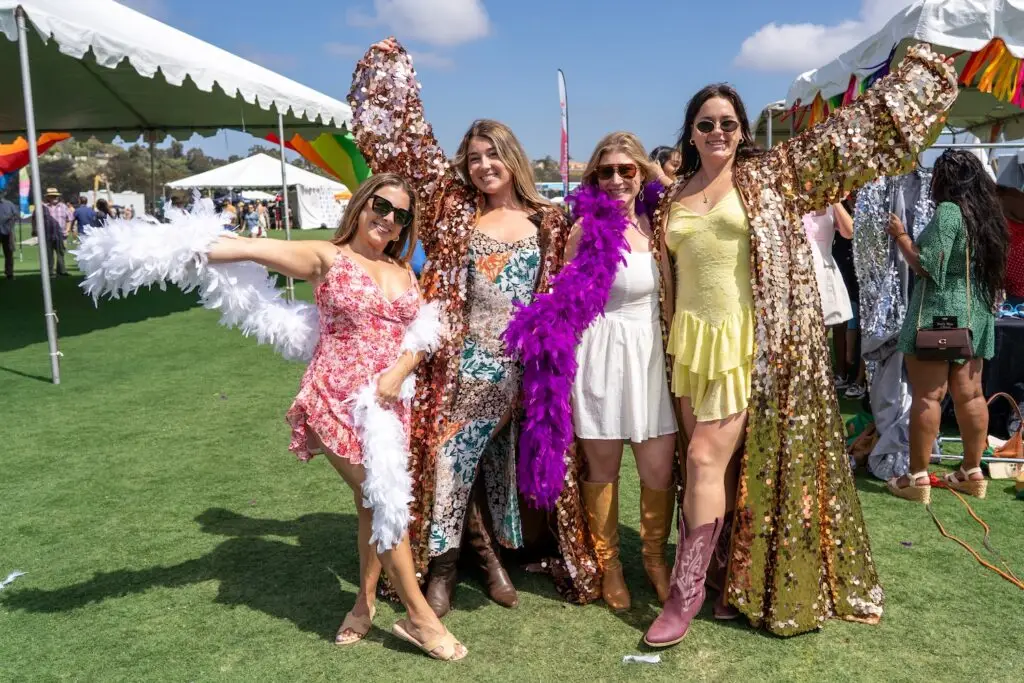
Proceed to Pride Month with the Out & Abt Festival, featuring a carnival-themed playground at The Soap Factory, an afterparty hosted by Gossip Grill, and the next day, a sapphic poolside bash at the Hard Rock Hotel.
Imagine and experience your favorite fairytale ending during the San Diego County Fair, which returns this summer with a new theme: Once Upon a Fair.
The return of the Switchfoot Bro-Am means two things: an elegant seaside fundraiser in North County and a free bash at Moonlight Beach full of sun, surf competitions, and live music.
For the first time, NASCAR will start its engines in San Diego. Naval Base Coronado will host this one-of-a-kind racing spectacle to commemorate the U.S. Navy’s semiquincentennial.
Itadakimasu! In other words: Let’s eat! Sample, then rank, the best Pan-Asian dishes from local eateries at Julep Venue during SD Mag’s 21+ Omakase Open, done to support the Convoy District.
If you ever needed a reason to eat ice cream and gelato, here’s a charitable one. Raise money—one waffle cone at a time—for Feeding San Diego during this year’s Scoop San Diego festival.
Ryan Hardison is a freelance arts and entertainment writer and recent graduate of San Diego State. When he's not staring at his laptop, he's likely eating an adobada burrito or getting sunburnt at the beach.
Hear The Sound of Music, reserve a seat at The Blank Table and spend two days jamming at Fiesta Del Sol
Dive into the unexpected this weekend, where curated meals, experimental performances and behind-the-scenes experiences await. Foodies are invited to the first 2026 gathering of The Blank Table as well as Chef Onyi’s seasonal Rooted dinner at Millport. Broaden your artistic horizons with Project [BLANK]’s Working Title No. 5, or check out the genre-bending musical lineups at Seek Fest or Fiesta Del Sol. As an added bonus, The Rosin Box Project is pulling back the curtain and opening a trio of after-hours rehearsals to the public ahead of its new Incubator Lab show.
Food & Drink | Concerts & Festivals | Theater & Art Exhibits | More Fun Things to Do
San Diego may be a craft beer capital, but it’s also home to a diverse array of wineries. During the San Diego County Vintners Association’s annual San Diego Wine Week, oenophiles can sample several of the best pours the region has to offer. The centerpiece event, Sunday’s all-inclusive SDCVA Wine Festival from 3-6 p.m., will feature over 20 local wineries at Bernardo Winery; general admission is $90. Additional Wine Week events include Vintners Table at Cordiano Winery (Thursday), San Diego Wine Country at the Bay at Mission Beach Women’s Club (Thursday) and the Seedling Soiree at Olivewood Gardens (Saturday).
Citywide
The Blank Table series is an exercise in local culinary creativity, innovation and collaboration with the most secret of ingredients readily available: the element of surprise. On six Thursdays from May-October—with year seven of the series beginning this Thursday at 6 p.m.—60 patrons will be served a unique menu with five set courses, each with curated cocktail pairings. And to keep the air of mystery alive, the dinner location and menu will not be disclosed until 24 hours ahead of time. Tickets are $275 for Thursday’s dinner and a season pass for all six monthly dinners is $1,402; a portion of event proceeds will be donated to Feeding San Diego.
Surprise Location
Chef Onyinyechukwu Akpa welcomes food lovers to try a seasonal spread, dually inspired by her mastery of West African flavors and California’s seasonal ingredients, during the second edition of Rooted: A Dinner Experience at Millport. This Saturday from 6-9 p.m., chef Onyi will serve a five-course tasting menu, with dishes such as slow roasted beef, plantain upside down cake and akara, Nigerian black-eyed pea fritters. The meal will be entirely gluten-free, with vegan accommodations also available. Tickets are $115 and can be purchased here.
775 13th Street, Imperial Beach
Dearest reader, Estanica La Jolla opens up its grounds once a month for its outdoor Tea in the Garden series, and you’re in luck, because this month’s tea time is inspired by the enchanted English setting of Bridgerton. During the Bridgerton & Blooms High Tea this Sunday from noon to 3 p.m., guests can savor an afternoon worthy of the ton, complete with floral accoutrements, custom teas, cocktails, finger foods and enough sweets treats for Lady Whistledown to write home about. Tickets are $82.
9700 North Torrey Pines Road, La Jolla

Over the years, Juvenile has more than proven himself as an all-time emcee, with his breakout 1998 album 400 Degreez still a defining example of the South’s hip-hop brilliance. This Friday at 7 p.m. at House of Blues San Diego, Juvenile will play hits like “Slow Motion” and “Back That Azz Up,” along with selections from Boiling Point, his first album in 12 years. Plus, he’ll be joined by the sensational 400 Degreez Band, and as anyone who’s seen his NPR Tiny Desk performance already knows, Juvenile with a live ensemble is a match made in music heaven. Tickets start at $55 for this concert.
1055 Fifth Avenue, Gaslamp
Kuumba Fest returns this Saturday from 11 a.m. to 5 p.m. with the theme of “Black 2 Mind, Spirit & Body” for its 34th annual iteration. This free community festival, organized in support of the city’s Black Arts + Culture District, will feature DJs, dancing, spoken word, musical performances and an African marketplace with food, apparel, health resources and more. Then from 6-8 p.m. at the Elementary Institute of Science, the festival will conclude with a screening of the documentary American Curl followed by a Q&A panel with the film’s producers.
6381 Imperial Avenue, Encanto; 608 51st Street, Emerald Hills
Ryan Hardison is a freelance arts and entertainment writer and recent graduate of San Diego State. When he's not staring at his laptop, he's likely eating an adobada burrito or getting sunburnt at the beach.
As Rancho Valencia's Chef Concierge and US Nominee for Les Clefs d'Or Young Leader Award, Simona Marciulaityte is equal parts doer and fixer
Your cup of coffee shows up exactly how you like it. The fully booked restaurant suddenly has a table. The last-minute, once-in-a-lifetime experience somehow comes together without a hitch. In the world of hospitality at top resorts, there’s an iceberg of scrupulous planning for each guest.
A concierge is in charge of that iceberg. There’s even an award for the best in the world: the Les Clefs d’Or Young Leader Award. It’s a months-long, multi-stage process with interviews, tests, and international competition, culminating at a global congress. Each member country only gets one nominee. Representing the US this year? Simona Marciulaityte from San Diego.
As Chef Concierge at Rancho Valencia Resort & Spa—a Relais & Châteaux retreat with Forbes Five-Star and AAA Five Diamond, a highly accoladed place with commiserate expectations—Marciulaityte is equal parts doer, fixer, and project manager for guests’ sometimes wild travel dreams.
“We see hospitality as theatre,” she explains. “There are a lot of moving parts, but when we arrive to the stage, it’s always with grace and a performance to create an incredible experience for the guests.”
That impossible-to-get reservation with custom cake and balloons at the table? She’s already texted three people. A guest calling on their way to the Zoo requesting a VIP-tour in 15 minutes? Booked in seven. The usual ‘Hey can you schedule me an appointment with Hermès to buy a $30K Birkin bag and plan my proposal in Italy’ request? Oddly specific, true story—and fully handled.

“Great concierge work truly begins long before a guest ever steps on property,” Marciulaityte says. “Who is traveling, notes from prior visits, special occasions, and dining history help me understand the nature of the stay. For new guests, I read between the lines: the questions they ask, the pace they seem to want, the kinds of experiences they gravitate toward.
“Curation draws on something that can’t be replicated by a search engine. It’s years of genuine relationship-building with partners across San Diego and beyond.”
Nearly a decade ago, Marciulaityte was juggling life as a personal stylist at Nordstrom and hostess/server at Brian Malarkey’s Herringbone and Searsucker. After working an event for the San Diego Concierge Association, she had a moment of clarity: “I remember thinking, oh my god—this is exactly what I want to do.”
Being a part of Les Clefs d’Or grants entry to a global network of concierges who operate like a very discreet, very efficient hotline (“In service through friendship,” as their motto goes). When local super-chef Tara Monsoud was nominated for a James Beard, Marciulaityte worked with the SD Concierge Association and Le Coq to send flowers and photos to Chicago where the chef was staying.
“It’s not only guests—we hope to touch everyone with our concierge magic.”
Lili Kim is a content coordinator and writer for San Diego Magazine, with experience highlighting local businesses and communities. When not writing or shooting film, she is likely brewing her seventh cup of tea of the day or strolling along Sunset Cliffs.
Yes, Chef! winner Emily Brubaker leads the robust culinary program at Omni La Costa Resort & Spa
For Executive Chef Emily Brubaker, Omni La Costa Resort & Spa feels like home. She grew up just a mile-and-a-half away from the 400-acre property and fondly recalls walking the golf course perimeter as a kid. Though her ambitions led her away from San Diego for nearly two decades in which she honed her craft in some of the highest of high-profile Las Vegas restaurants—including triple Michelin-starred Joël Robuchon at MGM Grand—they ultimately brought her back to North County.

Today, the classically French-trained chef, who’s fresh off a victory on NBC’s Yes, Chef!, judged by Martha Stewart and José Andrés, oversees Omni La Costa Resort & Spa’s seven distinct dining concepts. Her goal is to elevate the resort’s culinary program with her creative, hyperlocal ingredient-driven approach while maintaining the Spanish- inspired flavors and fresh California coastal cuisine that are the bedrock of its culinary identity.
“The San Diego food scene is really growing, and in North County alone, it’s really exploded in the last five years,” Brubaker says. “There are Michelin stars, beautiful tasting menus, craft bakers, and all this food—when I was growing up in La Costa, it was fish tacos. Now there are really cool things popping up, and I’m so happy to be here to see where it’s going to go.”
Brubaker gives chefs de cuisine at each individual restaurant autonomy, however, her influence is evident across the resort.
For example, lobby restaurant Bar Traza serves as Omni La Costa’s culinary centerpiece and features bold Spanish flavors in a lively, social atmosphere. Brubaker overhauled the menu to be more consistent and centered on casual bites with that signature vibe. Think smoky paprika, vibrant citrus, and Spanish meats and cheeses.
At VUE, the focus is on seasonal offerings, California coastal cuisine, and Baja-inspired dishes. She and Chef de Cuisine Cameron Dixon change the menu biannually, which heading into summer, will highlight farm-fresh produce and hyperlocal ingredients—the resort even has its own herb garden and honeybee hives.

Poolside dining options are leaning into the country’s 250th this summer with a selection of classic American dishes with an Omni La Costa twist. And Bob’s Steak & Chop House (Brubaker is a trained butcher) offers a classic steakhouse experience with elevated service.
The chef and company also plan menus for special events at the resort where her creativity can really shine. For an upcoming National Ski Association dinner, the banquet hall will be transformed into an Alpine-themed winter wonderland complete with a snow machine, savory sausages, and melty, decadent raclette. A recent dinner was built around the Carlsbad Flower Fields and each course was matched to a color of ranunculus (Did you know pink dragonfruit are grown in North County? You do now.).
“It’s my zen to be in the kitchen playing with food,” Brubaker says.
Omni La Costa’s culinary program is a key part of the resort experience. And with Brubaker’s leadership, it’s becoming a draw for visitors and locals alike.
“These aren’t just hotel restaurants, these are restaurants that you should go to. They’re destinations, and I’m really hoping for the future that’s where we’re going,” Brubaker says.

Brubaker is also channeling her experience on Yes, Chef! into the culture at Omni La Costa—more emphasis on teamwork and collaboration, empowering her staff to share constructive critiques, and embracing different perspectives. Alongside her leadership role, Brubaker has become an advocate for mental health in the hospitality industry, serving as chief ambassador for the Burnt Chef Project and serves on the Board of Advisors for the Apex Culinary Program, where she mentors and develops future talent.
For more on Omni La Costa Resort & Spa and its dining program, please visit omnihotels.com/hotels/san-diego-la-costa.
We asked 12 golf pros from across the county to choose the city's top holes to create the "Dream 18"
At the top of a golf swing, the world settles into a hush. Anyone within 50 yards kindly shuts up in reverence. Steady heartbeats tuck inside the sound of the wind. Time stands still.
Or—panic sets in, a thousand warnings from coaches and YouTube tutorials prattle through your brainpan. You wonder if a good walk prepares to be ruined.
On descent, the club rearranges air particles as it slices on a perfect or unwise line toward an earth so green, it seems like AI. The iron face meets the ball, and the satisfying or unsettling thwack echoes across the fairway like a nonviolent gunshot or a cry for help. Breath catches, curse words load in the prefrontal cortex. Eyes squint to follow the hard-to-see projectile zip majestically through the air or bounce lamely along the ground like a failed hurdler.
Sometimes it goes a couple hundred yards in the right direction, other times a couple yards into uncaring swamps. Golf’s beautiful and hard as hell.
Mindfulness and stillness reign over speed and might—which goes against most basal American instincts regarding sport. Its quiet, serene mocking of our human abilities is what brings so many of us to the life-long process of sharpening the skill. Because who hasn’t stared at the most beautiful parks and lawns in the world and said, “How can I turn this into a game and win it?”
Luckily, San Diego has an abundance of courses to improve and curate self-doubt. The county is home to over 70 courses that attract the top golfers in the country. Some of the biggest names in the sport—Callaway, TaylorMade, Cobra, Titleist, Odyssey, Honma—are based here. Perfect weather never hurts. But San Diego golf courses also promise a smorgasbord of terrains: rocky canyons, hot deserts, and lush greens overlooking the expanse of the Pacific Ocean.
If you could take the 1,300-ish holes around San Diego and pick the very best ones to create your ultimate course, which would they be? We asked some of the top golf pros in the county to do just that. The result? San Diego’s Dream 18. Think fantasy football but for golf.
Just like any great course, our Dream 18 includes four par 3s, 10 par 4s, and four par 5s—everything from tricky dog legs and psychological tee shots to just pretty, pretty views. Once we had our list, we either asked the head golf pro what makes a hole so special, or other pros spoke on its behalf. Go ahead, tell us what we missed.

“One of the most iconic par 3s on the West Coast. The cliffside setting above the Pacific and the constant ocean breeze make it both beautiful and demanding.”
—Anthony Valverde, Director of Golf, The Crosby Club at Rancho Santa Fe
“It’s a downhill par 3 over water with a great view from the tee down to the green. It’s surrounded by bunkers as well, so it almost feels like an island green even though it’s not. What’s really cool is once you drive to the next hole, if you look back on No. 14, it’s a great view as well. One of the signature holes [at Santaluz].”
—Josh Rider, Head Golf Pro, The Santaluz Club
Hole 15
“Hole 15 is widely considered one of the best and most memorable holes on the course. At about 250 yards, it’s a long downhill with multiple tiers and panoramic views into the valley. It looks intimidating at first, but there are lots of recovery contours and the green is fairly large.”
—Editor’s Choice
“Sitting high above the green with views of the Pacific Ocean, this dramatically downhill par 3 requires the perfect club selection.”
—Mike Mulford, Director of Golf, Omni La Costa

“While it’s beautiful with the backdrop of the Batiquitos Lagoon and the Pacific Ocean, this finishing hole demands both precision and nerve. The water guarding the right side and fairway bunkers ahead create a visually striking, strategic tee shot, while the expansive green rewards a confident, well-placed approach. If you can make a par on this hole, you’ve played it very well.”
—Renny Brown, Director of Golf, Aviara Golf Club
“The 18th hole at Del Mar CC is a demanding par 4 with an elevated tee box. Water guards the right side of the green, and a player must hit a precise shot into this green.”
—Renny Brown, Director of Golf, Aviara Golf Club
“It’s a difficult 428-yard par 4 playing into the predominant west wind. The hole is post-renovation and the vegetation was trimmed back, so now it exposes a penalty on the right. It’s uncomfy at the tee but a good challenge. Plus, it’s the No. 1 handicap for [all players].”
—Chris Lungo, Head Golf Pro, Rancho Santa Fe Golf Club
Lili Kim is a content coordinator and writer for San Diego Magazine, with experience highlighting local businesses and communities. When not writing or shooting film, she is likely brewing her seventh cup of tea of the day or strolling along Sunset Cliffs.
With wellness-centered lifestyles on the rise, party culture is getting a 10 p.m. rebrand
A ’90s pop hit is blasting as I drive up to Solana Beach to go dancing. I’m dressed in the millennial nightlife uniform: black tee, cute jeans, heels. It is 6:30 p.m. on a Tuesday. The dance party starts soon. I’ll be home by 10 p.m. at the latest. I may even catch an episode of Summer House.
I am acutely aware of my age in this moment. I haven’t willingly chosen the club life since my 20s and early 30s. Yet here I am, transported back to 2014 with a few more wrinkles, a lot more ibuprofen, and a touch of “pandemic stole this from me” in my pocket.
A few days earlier, a friend texted to suggest we go to a concert the upcoming weekend. “I can’t, I’m already tired on Friday,” I replied. At 42, two glasses of cabernet bend my space-time equilibrium. A hard sneeze risks a sprained neck. Did I mention the perimenopausal night sweats yet?
I arrive at the Belly Up at 7 p.m. Wilson Phillips comes on the stereo, and I sing-shout the lyrics before stepping out of the car.
Someday, somebody’s gonna make you want to turn around and say goodbye | Until then, baby, are you gonna let ’em hold you down and make you cry?
Tonight’s event is billed as “the dance party that starts earlier.” Surprisingly, I’m not the oldest person in the room. A 60-something man shoulder bops to the DJ set. A Gen X woman shimmies by and snaps photos of the glow-stick-spinning raver on stage. Few are drinking.
Started by two North County locals, Amal Chandaria (32) and Max Gold (37), Earlier is a dance party for older adults who want a club experience without the sleep-deprived, hungover physical toll. Running 6:30 to 10 p.m., attendees get home at a reasonable hour for a full night’s sleep.

Seems I’m not alone in my tired.
“[We’re in] a time where loneliness is high, people are craving connection,” says Chandaria. “One thing we were really intentional about is that you don’t need to go and have drinks to have fun. It’s about the music and getting the wiggles out.”
Early is part of a national trend: the green-juice-ifying of party culture. Americans aren’t going out as much as they used to. They’re drinking less, and 10 p.m. has become the new 2 a.m. Wellness as a lifestyle concept is old hat, and each generation manifests itself in different forms (fitness booms in the ’80s, organic food in the 2000s).
According to a 2024 survey by consulting firm McKinsey & Company, the US wellness market now exceeds $500 billion annually, up from roughly $300–$350 billion a decade ago. More striking than the spend: Wellness as a top priority has surged from about 42 percent in 2020 to more than 80 percent today.
The timing makes sense. Studies show Covid led to long-term shifts in lifestyle patterns. We all began to reassess our lives and made some existential changes—like 6 p.m. soberish dance parties. In a recent Gallup poll, only 54 percent of US adults reported drinking alcohol, the lowest level in about 30 years. Conversations around longevity turned “treat yourself” into “invest in yourself.”
The downer of any wellness trend, though, has been the “can’t” philosophy—can’t eat that cake, can’t sip that marg, can’t binge that show. What if we could do health stuff and still dance and not totally suck the joy out of life? That’s what people like Chandaria and Gold are banking on.
Last year when they attended Atomic Groove—a variety dance band from 5–8 p.m. most Fridays at Belly Up—it sparked an idea. “People want to be healthy and active, and they don’t want to compromise on that by not feeling rested,” says Gold. “I thought, ‘I bet if we’re feeling this way, other people are looking for something like this, too.’”
He was right. Nearly 200 people showed up to the pair’s first dance party last July. Tonight’s crowd is nearing that number again. Among them is Cardiff-by-the-Sea resident and second-time attendee Lauren Marley.
“If you do one thing for yourself—and it means that you don’t have to be completely exhausted and wrecked for all the stuff you have to do the next morning—it’s great,” she says.
Though EDM isn’t quite my thing (give me some stank-face hip-hop from the 2000s), it’s clear from the number of return attendees that Chandaria and Gold have filled a need, one that isn’t just in famously health-forward cities like San Diego.
In DC, Dancing on the Waterfront occurs every Saturday from 5–9 p.m. while Extended Play DC wraps up at 10 p.m. Philly has Matinee Dance Party (5–10 p.m.). New York City finally chooses to sleep, with Friday Feeling and Matinee Social Club both ending at 10 p.m. Last year, Day Shift, geared toward those over 30, debuted at Bloom Nightclub in San Diego.
In Chicago, Earlybirds Club was founded in 2023 by high school friends Laura Baginski and Susie Lee. About 100 people showed up to the sold-out “dance party for ladies who got shit to do in the morning.” Two years later, Earlybirds Club is now held in nearly 60 cities and regions across the US.
“It’s an outlet that [middle-aged women] don’t get in our everyday life,” says Baginski, who also recently appeared on the Kelly Clarkson Show to share their story. “It’s movement and dance. We’ve learned now that it’s really essential to being a happy person.”
Admittedly, it’s a bit harder to be happy when I walk into the Music Box for Earlybirds’ event in San Diego. War’s about to start, protests are the new social gathering, and the economy is gaslighting me into believing salads should cost $18.
But soon the club is a sea of 700 people wanting to dance their asses off. Any negative emotions quickly begin to disappear. Tonight’s music features hits from the ’80s, ’90s, and 2000s: Madonna, Britney, Christina, 50 Cent, Ludacris.
Shuffling past the bar to the already-crowded dance floor, my heartbeat quickens. Pure, unadulterated joy is oozing in this place.
“The whole club was women’s bathroom culture,” said returning attendee and San Marcos resident Beth Avant, 50. “[You get to] freely dance, not care about what you’re wearing, you’re not trying to really impress people.” Soon Whitney Houston’s golden pipes set the room on fire, arms raise, smile lines deepen, and for a few hours, nothing else matters.
Oh, I wanna dance with somebody / I wanna feel the heat of somebody
While Baginski continues to run the operation, Lee lost her battle with stage IV metastatic breast cancer in August of last year. Honoring her memory at each event are words from Lee herself: “Sing f**king loud, dance like nobody gives a shit, and remember who the f**k you are.”
And who we are are sleepy people. If this new wellness era really takes off, imagine the possibilities. Dinner dates at 5 p.m., the Super Bowl at 2 p.m. EST, Justin Bieber headlining Coachella at 7 p.m. Until then, you’ll find me in bed shooting down plans past 8 p.m.
Nicolle Monico is an award-winning writer and the director of creative projects, digital editor for San Diego Magazine with more than 16 years of experience in media including Outside Run, JustLuxe and The San Francisco Chronicle.
The 29-year-old culinary director at Herb & Sea is making seafood sexy (and approachable) again
Implementing a farm-to-table model hardly deserves acknowledgement these days. It’s not a stretch. It’s not innovative. “It’s the bare f**king minimum,” says Herb & Sea‘s executive chef Aidan Owens.
When I arrive at the Encinitas restaurant, I’m ready to talk sustainability, farm-to-table stuff, with Owens. “Did you see the chin on that?” he says of the extra big jiggly chin on the sheephead that just arrived with the day’s fresh catch. I did. It was Jay Leno adjacent.
I learn quickly that he somehow oozes both charm and stone-cold honesty. Maybe he could construct a new dish with chin goo, like he did when he had a bunch of tuna scraps and voila’d it into a smooth and crowd-pleasing ‘nduja. “I want to know what’s in there,” he says.

The instinct to look closer, to dig into what others might discard, says a lot about the chef’s approach. I guide him back to our topic, but he has something else on his mind. “We’re overcomplicating food—what happened to just cooking good food and having fun with it?”
Owens grew up on a farm in Byron Bay, Australia, where sustainability wasn’t a concept you chat about so much as a way of life. Think dirt roads, backyard chickens, pulling vegetables straight from the ground, and a mother who believed that if you couldn’t pronounce the ingredients on a package, you shouldn’t eat what was inside.
Food wasn’t precious or performative. Making it was what you did because you were hungry and that’s still what inspires Owens today. “I like to cook good food because I like to eat good food,” he says.
His approach to sustainability at Herb & Sea began so naturally that it felt just like instinct. “I was just like, ‘Let’s order food from the people who live and work here,’” he says.

And why wouldn’t he when lives in San Diego? Cities all over the world vie for our goods. Our tuna is sent overseas. Our spiny lobsters hit dinner plates in China and Japan. Not to mention California’s producing a third of the country’s vegetables and three-quarters of its fruits and nuts.
“Why would we outsource when it’s all here?” Owens asks.
Sustainability, in this context, is about cooking what exists in abundance, nearby, right now. “I love the local fish here. It’s f**king delicious and San Diego citrus, I mean, it is so f**ing good,” he says.
Instead of importing ingredients, Owens also looks for nearby alternatives. “You can find really cool things in the local waters,” he says, pointing out that stingray cheeks taste similar to scallops.

Whatever he finds in that sheephead chin might just be the next substitute for marrow. But to make this work, it means getting diners amped up about the slightly unfamiliar.
Tasting menus, where diners are completely in his hands, become an opportunity to gently push boundaries. “I’ll serve mackerel, because people think they hate it,” Owens says, noting that the abundant local fish can have some fishiness. “But when it’s fresh, it’s arguably one of the best fish in the ocean.”
He also tweaks the language on the menu so people might feel more compelled to give dishes a try without preconceived notions. He might use “lengua” instead of “tongue.” “Whelk” instead of “snail.” When he puts “stingray throat” on the menu, he disarmingly calls it “skate.”
To reduce waste, scraps aren’t always discarded but rather turned into something new. Sometimes they’re smoked, cured or fermented. Apples going bad turn into apple ponzu. Lemons turn to marmalade, which stretches their usefulness far beyond peak season. “And it’s super tasty on our pizza,” he says.
What makes the food even richer, is the relationships he’s built with farmers. Though it didn’t always feel natural, Owens sought personal connection first. He recalls approaching a fisherman at the Tuna Harbor Dockside Market. “I was awkward,” he says. “I went up to him and said, ‘I like your fish.’”
Owen’s is now so close to his suppliers—like fishermen Ryan Sebo and Joe Daly—that he gets texted pictures of fresh catches right as they flop on the boat. The messages always ask if he wants first dibs. “I say yes to a lot of fish,” Owens says, noting that Herb & Sea can go through 2,000 pounds of seafood a week.

The next evolution of sustainability, in his view, will be chefs working directly with producers such as his alliance with Sebo, cutting out middlemen and purveyors where possible. “It will put more money in the pockets of the people doing the work,” he says.
It will mean that chefs can’t just know their local farmers and producers, but they’ll choose to work with the ones who have the best practices. Dining and sustainability will become much less about the final plate. “It will be more about the impact that plate has on the Earth,” he says.
Ultimately, he believes sustainability doesn’t need to be loud. It doesn’t need hashtags. It just needs to be honest.
“We aren’t saving lives. We’re feeding people good food,” he says.
And yet, in feeding people well—simply, thoughtfully, responsibly—something meaningful happens. Guests leave satisfied. Ingredients are respected. Local ecosystems are supported and food returns to what it has always been at its core: nourishment, pleasure, and a quiet reflection of the place it comes from.
No buzzwords required.