Featured articles
Food & Drink
Food & Drink
Food & Drink
Featured articles
Things to Do
Everything SD
Everything SD
Featured articles
Things to Do
Things to Do
Things to Do
Featured articles
podcast-ep
podcast-ep
podcast-ep
Featured articles
Everything SD
Everything SD
Everything SD
Featured articles
Food & Drink
Things to Do
Everything SD
Ready to know more about San Diego?
SubscribeReady to know more about San Diego?
The suburban community is home to hidden gems, local faves, and outdoor adventures
Nestled near University City, Clairemont is a seemingly sleepy residential neighborhood packed with hidden culinary gems. Turkish classics, Hawaiian comfort food, vegan shrimp—you’ll find it all here, along with expansive green spaces, wellness-focused studios, and unassuming shops catering to hobbyists and pet owners.
Here are our favorite spots to eat, shop, and play in Clairemont.

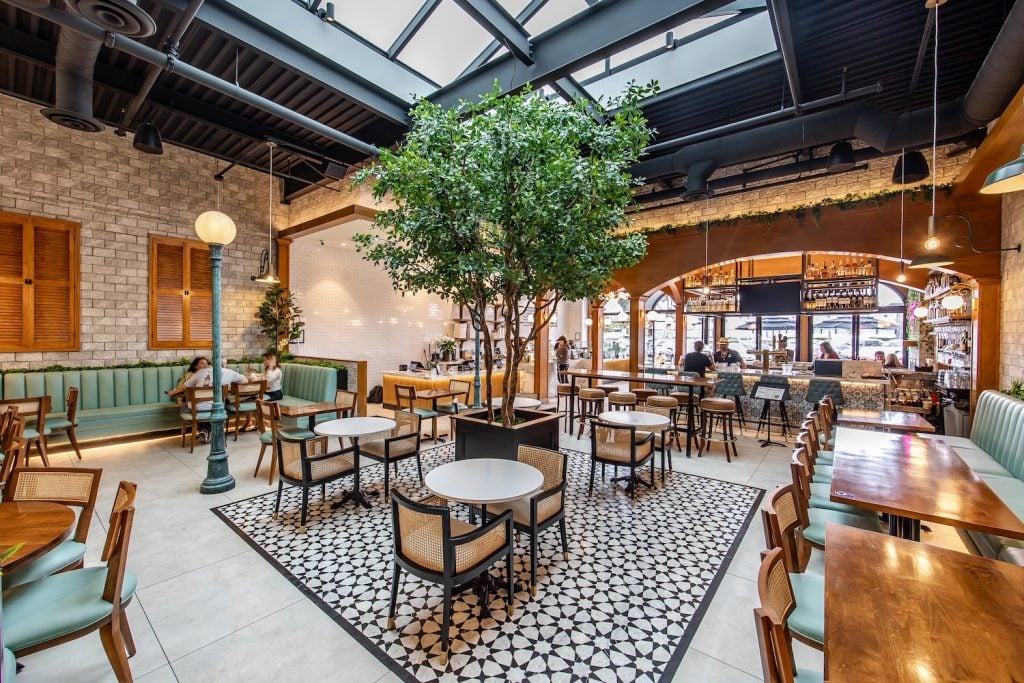
This casual, strip-mall joint offers Mediterranean eats inside or out on the patio. The robust menu includes a solid lineup of vegetarian options and harder-to-find dishes like Turkish tajine, zarb, and borak in addition to shawerma and gyros.
5420 Clairemont Mesa Boulevard
Settle into Havana Grill’s soft bench seats with a plate of plantains and lechón. This Cuban restaurant centers organic and locally sourced ingredients in traditional dishes like arroz con pollo, ropa vieja, and yuca fries. Douse it all in mojo sauce—a classic blend of olive oil, garlic, and citrus.
5450 Clairemont Mesa Boulevard, Suite G
Tucked away in a Smart & Final parking lot is a cozy spot with a broad selection of yakitori and sake. The jazz music–filled eatery is just as popular as its sister restaurants, Convoy’s Yakyudori and Kearny Mesa’s Hinotez, so make a reservation to nab one of the few seats.
5185 Clairemont Mesa Boulevard
This hidden gem is a craft burger and local beer joint serving meat (including bison, turkey, and lamb) and plant-based burgers, hot dogs, seafood, and more. On Fridays and Saturdays, stop by The Butcher N Cheese at 6 p.m. for live music and $5 beers.
4705 Clairemont Drive, Suite C
This bakehouse slinging Mexican-inspired donuts landed a spot on our March 2023 staff favorites list for its tart guayaba flavor, but there are plenty of other bites worth the visit here, including mazapan and jamaica donuts. They sell tortas, tamales, and coffee, too.
4714 Clairemont Mesa Boulevard
San Diegan Mike Touma took a birria tour of Mexico to help develop the recipes at his birria-focused food-truck-turned-storefront. Mike’s Red Tacos loads its titular tacos with beef birria, but you’ll also find the slow-simmered meat in unexpected places, like ramen, fries, and a Taco Bell–inspired “crunchstack.”
4310 Genesee Avenue, Suite 104
A just-as-casual alternative to the coffee date, Feng Cha is a bustling spot ideal for catching up with friends or getting to know romantic prospects over foam-topped teas and tiny cakes. Try the crème brûlée dirty boba, which comes threaded with crunchy brown sugar bits.
4340 Genesee Avenue, Suite 107
This hole-in-the-wall slings giant plates of Hawaiian comfort food, including Spam musubi, loco moco, and Kahlua pig. Breakfast is technically served all day, but you’ll have to arrive early to grab an order of macadamia nut pancakes—they always sell out.
7524 Mesa College Drive
Plant-based diners, rejoice: Everything at this Asian-fusion outpost is vegetarian (and most dishes are vegan), from the kung pao “chicken” and salt-and-pepper “shrimp” to the sushi and pho. Before digging into your main dish, split an order of vegan crab rangoons with the table.
5501 Clairemont Mesa Boulevard
Grab your chef’s coat. At this family-owned Mongolian restaurant, you’ll select from six different broths (including two vegetarian options) and dunk in an array of meats, seafood, veggies, and noodles. Their weekday lunch special for one is a steal.
4718 Clairemont Mesa Boulevard

A San Diego mainstay for more than 20 years, Comickaze vends popular and independent titles for graphic novel and manga fans. They always see a long line of customers during San Diego Comic-Con weekend, but it’s worth stopping by year-round to poke through the packed bookshelves.
5517 Clairemont Mesa Boulevard, Suite A
Making mezze? Pick up everything you need for your chef-ing at Balboa International Market, which carries a swath of tough-to-find groceries from the Mediterranean and beyond, plus pre-packaged tabbouleh and dolmas to go.
5905 Balboa Avenue
Around 84 percent of items donated to thrift shops end up in landfills, a stat Bridge Thrift works to combat. The secondhand shop ensures even unsellable items receive a second life (through recycling or upcycling) and donates 100 percent of its profits to local organizations like Hope for San Diego.
4220 Balboa Avenue
A nondescript warehouse hides one of SD’s most vibrant outposts for local and organic produce. In addition to seasonal fruits and veggies, shoppers can find snacks, nuts, honey, salad dressings, and firewood.
4330 Morena Boulevard, Suite C
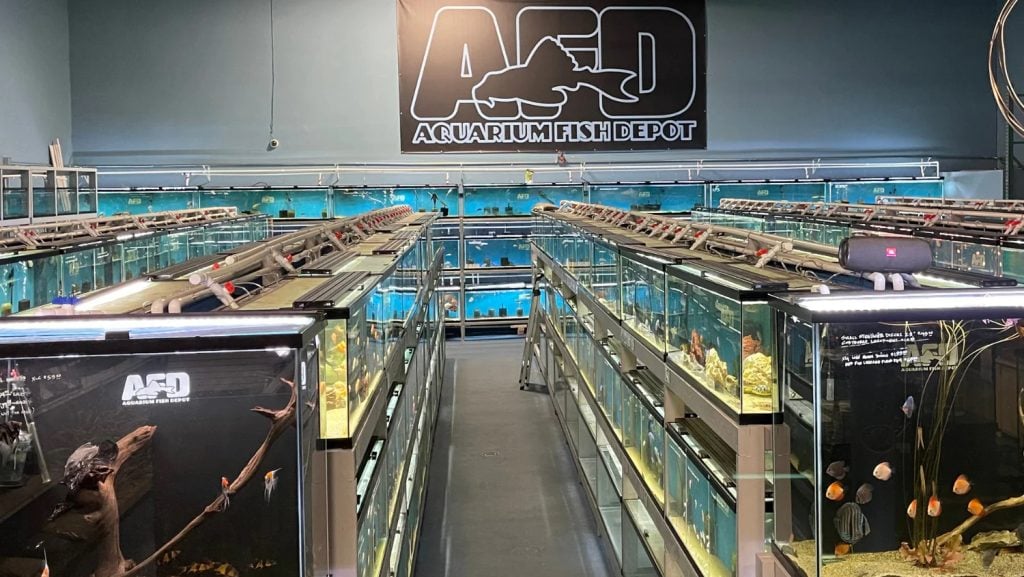
Anyone who spent their childhood dentist visits enthralled with the waiting room fish tank can fulfill their aquarium dreams at this well-stocked shop featuring finned friends (both fresh and saltwater varieties), live coral, and marine invertebrates like shrimp, snails, and crabs—and everything they need to thrive.
5121 Santa Fe Street, Suite F
Find a new feathered friend (and all their required supplies) at BirdSmart, where staff has been hand-raising birds onsite for more than 26 years. Even if you’re not in the market for a pet, drop by to say hello to baby finches, macaws, and other avian infants.
4688 Clairemont Mesa Boulevard
This little shop is packed wall to wall with collectable cards. Neatly organized by player and year, the stock primarily features NFL, NBA, and MLB heavy hitters (plus a nice assortment of Pokémon cards).
3949 Clairemont Drive, Suite 4

This spacious community park gets its moniker from a shady, bench-filled olive grove. The ample green space, picnic tables, and playground make it a great spot for kids’ birthday parties, while NBA aspirants can hit the park’s open basketball courts.
6075 Printwood Street
Perched in San Clemente Canyon, the 467-acre Marian Bear Memorial Park provides three miles of creekside walking and hiking paths. While most treks are flat, adventurers seeking a challenge can follow finger canyon trails up to the top of the mesa.
5491 Genesee Avenue
Tee up at this 3,161-yard golf course designed by Robert Trent Jones, Sr., and Sam Snead. A large practice facility with a driving ranges, putting and chipping greens, and more offers space to perfect your game before hitting the links.
2755 Snead Avenue
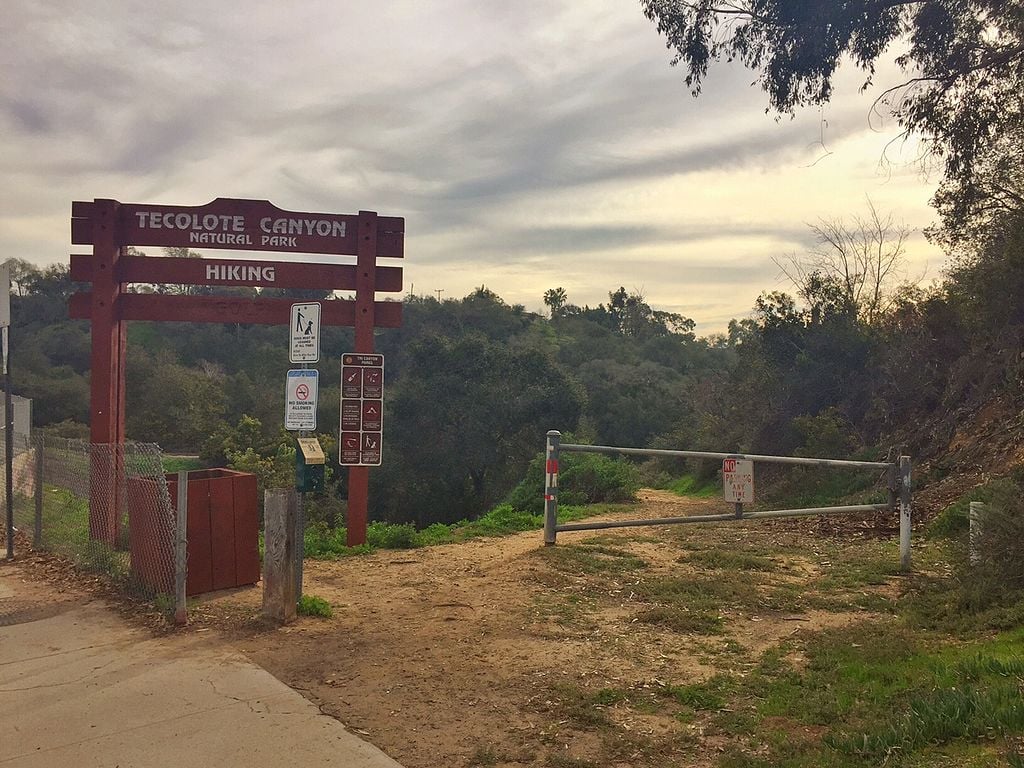
This park’s nature center is an ideal spot to learn about the canyon’s flora and fauna, including the owl (or tecolote) after which it is named. The preserve features about 6.5 miles of trails open to runners, hikers, and bikers.
5180 Tecolote Road
A glass of malbec probably won’t help your balance in triangle pose, so plan to hit this yoga studio’s onsite wine bar after your 5:30 p.m. “happy hour” flow. The bar also serves bites like salads, sandwiches, and charcuterie, making it a good brunch spot for pals embracing both fun and wellness.
6185 Balboa Avenue
Partner dances like salsa and bachata form the focus at this all-ages studio (though they also offer a women’s-only Latin fusion class). While classes typically start at $35 per drop-in, Indigo sometimes holds $5 intro events where you can pick up a few beginner steps.
5035 Shawline Street
PARTNER CONTENT
This martial arts studio offers tai chi, qi gong, and taekwondo classes for adults, teens, and kids four years and older. Golden Rishi offers free intro classes for beginners, and little ones ready to go all-in can sign up for summer camp programs that run for one or two months.
7380 Clairemont Mesa Boulevard, Suite 110
Mimi Le is a web intern at San Diego Magazine. She is currently majoring in Communications at the University of California - San Diego with a minor in Marketing and plans to graduate in spring of 2024. She is always looking for creative and culturally-enriching ways to fill her days.

We ask the city's best food photographers to choose their favorite pics and share their secrets to capturing a drool-worthy pic
Food is a notorious diva to photograph. The wrong lighting can make José Andrés’ paella look like a jaundiced grain bowl. You could be staring at the best sandwich of your life, but shoot it from above and—hey, congrats on that abandoned piece of lettuce bread. A cottage meme industry has been built around the hilariously bad photos on review sites that make Michelin-star food look like Michelin tires.
Especially in a visual modern media world, food culture depends on great photographers capturing the painstaking work in equally deserving ways. We asked four of San Diego’s top food photographers for their favorite shot from another year of documenting what we eat.

Getting this kind of shot takes a bit of yoga. Asana yourself into the corner, hold your breath, pray that a chef on the move doesn’t back into your light stand.
“You’re stepping into someone’s workspace during their busiest moments, so it’s a balance of being present to get the shot and being invisible to not slow anything down,” Kimberly Motos says.
The subject here is the Birdman sandwich from Chick & Hawk—hot fried chicken thigh, tangy slaw, kimchi comeback sauce, sweet and spicy pickles, potato brioche bun—getting a hearty dousing of its difference-maker seasoning. Motos captures the parts of the process that diners don’t usually see: the chaos behind something that looks so simple.

“I love this image because it feels like a moment you want to step into,” says Lucianna McIntosh. A warm, sunny day at The Fishery in PB with oysters, caviar, and martinis. Yes, please.
The little details—the glass sweating a little, the direct afternoon light creating stark shadows, the oyster glistening on the tray—are the main characters. Instead of trying to overly control the setup, McIntosh “followed the light and lines that draw you in more,” she says. “This was one of those moments where everything lined up on its own for a second. I love it when the shadows end up being just as important as the food itself.”

La Jolla native Eric Wolfinger—who won a James Beard Award for Tartine Bread, one of the most stunning bread books of all time—says he doesn’t have a signature style. His style is a conduit.
“I see my job is to translate the chef’s point of view into something you can feel,” he says.
For this shot, Fleurette chef Travis Swikard had one directive: cuisine du soleil (“cuisine of the sun”). With a spread of leeks vinaigrette, herb-roasted golden chicken, and beets, Wolfinger wanted to create a scene that felt straight out of the French Riviera, relaying the light, bright style of Swikard’s new spot.
Some bonus additions here: Extra lights—to add lots of warmth—and a clipping from an olive tree.

Timing and light are everything in food photography. In Lucien—La Jolla’s tasting-menu-only restaurant with moody ambiance—a single strobe flash creates the ideal spotlight.
Dee Sandoval says she uses the “natural, just-plated energy” of the dish to “create a portrait of moment and craft.” That’s why this Mostra Ghost Bear espresso ice cream—with San José dark chocolate mousse, soy-miso caramel, and koji shoyu chocolate sauce—looks like it might dissolve halfway to your mouth.
Emma Veidt is an editor at San Diego Magazine. She earned her bachelor's and master's degrees from the Missouri School of Journalism. She loves running, hiking, and rock climbing, but really, she mostly loves encounters with the street cats around North Park.
Meeting new friends is a scary and sweaty venture—that’s where the city's social event planners come in
Walking into a room full of strangers isn’t high on the fun index for most. It’s inherently awkward: Everyone’s standing in closed-loop clusters, deep in conversation, and, depending on your social aptitude, the feeling is somewhere between light apprehension and burning alive from the inside out. The pull to retreat or reflexively look busy on your phone is stronger than the drink you now deeply crave. Having friends is nice, but making friends can be brutal.
There’s plenty of commentary on the loneliness epidemic. Last year, the American Psychiatric Association reported that one in three adults feel lonely at least once a week; those aged 18 to 34 are more likely to feel isolated and even more likely to turn to social media as a result. Dr. Vivek Murthy’s “My Parting Prescription for America” cautioned that “being socially disconnected increases our risk of heart disease, dementia, depression, anxiety, and premature death.” So it’s not just an emotional need; it’s nearly nutritional—chit-chat and the occasional wine-fueled, emotional deep-dive are just as important as Pilates and a reasonable amount of kale.
Finding social connections in any city is hard, but San Diego has very specific challenges. This is largely a transient population that acts as a temporary hotspot for many and a permanent home for few. Pick your reason: high rent, surreal gas prices, housing shortage, meh job opportunities (ranked 71st in the country in 2025), or the fact that active military is a sizable chunk of us (110,000-ish)—stationed here for a stretch, then gone. This constant flow of departees sucks out the potential for deeply established families and friend groups, leaving a good share of nomads, searchers, and plenty of people feeling socially awkward.
“There’s an underlying loneliness in all of us,” says Ramel Wallace, the host of monthly meetup CreativeMornings. “There are not a lot of San Diegans who are born and raised here, so [even those] San Diegans end up being just as lonely as the person who just got here.”

Every month, in local libraries, breweries, and small businesses, there are ambitious social architects who have made a career out of undoing social sads. Extroverted champions of the awkward and searching, they’ve struck gold on in-person connection.
The first moments in a social situation are crucial. Sets the tone and cools the nerves.
At Pitch-A-Friend, singles recruit their close friends to present a slideshow of their dating green flags. The entry points for connection at Pitch-A-Friend are simple, old tech: stickers. Each colored sticker indicates if the wearer is single or taken, queer or straight, or practicing ethical non-monogamy (in a partnership but open to others under a mutual understanding).
At the helm of each showcase is Arielle Fuller, aka Chief Wingwoman, who is making dating hopeful again. As Fuller explains, this takes some of the fear of rejection out of a first interaction. “Putting a sticker on immediately means, ‘I wanted to leave my house and talk to someone, and I am a safe space to come and speak to me,’” she says.
Of course, not all of San Diego’s events designed to make connections are romantic. On the last Friday of every month, hundreds gather at San Diego Central Library for the local chapter of CreativeMornings—an org formed to unite creatives in various cities across the world (designers, artists, writers, producers, performers, architects, etc.).

These aren’t your standard business card swaps, though. Coming from a hip-hop background, host Wallace uses call-and-response to break the fourth wall. “This is not my stage at all, this is our stage,” he says.
In your standard lecture-based meetup, the crowd silently faces the host and acknowledges nobody except those they came with. At CreativeMornings, everyone is encouraged to look around, pay attention to the strangers in the audience—not just the host. Wallace will pull volunteers to read the CM manifesto aloud, and he passes the mic to creatives, who make 30-second pitches to the community about projects they’re working on—and there’s always an invitation to connect and collaborate with the presenters whose ideas struck a chord.
The U.S. Chamber of Connection (yes it exists) says people experience life transitions nearly every year, and in these stretches are more open to forming new habits, relationships, and communities. In a revolving-door city like ours, the transition often comes when someone moves away. In 2023, the Census Bureau reported San Diego had the ninth-highest rates of domestic out-migration in the US.
This poses an issue for friendships that IRL SD addresses in monthly friend-making events called 619 Night.
“San Diego isn’t a place a lot of people stay forever,” says Alex Hunter, the creator of IRL SD. “They leave, and people [who stay] lose that community, so they’re hungry for community again.”
Their website describes the vibe as “backyard party meets college fair meets networking event meets happy hour.” Each follows a theme—wellness, sports, refresh and reset, etc.—with related community groups joining as well.
“The people I encounter are trying to get a fresh start in some capacity, so they’re more open, receptive, and ready to meet new friends,” Hunter says. “They need the circle.”

Another way adults can break out of this disconnection is to revert in unison, says artist Elisa Summiel-Bey. The 2015-ish adult coloring book moment in the US was based on some real science, with multiple studies finding coloring has a noticeable meditative and stress-release effect by taking the brain away from anxieties and mental inventories, and focusing it on a simple, easy art. Summiel-Bey’s company Illustrated Melanin throws “Color & Chill” events, turning that trend into a group exercise, along with live DJ sets, wellness experts doing sound baths, and food and drink from BIPOC-owned local businesses. “I tend to think of coloring as your way to tap back into your childlike play,” she says. “As adults, I think we’re almost scared to let loose and have that unabashed joy.”
All of these social meetups attract crowds of likeminded connection-seekers, but high attendance is not the only thing that matters. Metrics nuts can track RSVPs, but spreadsheets can’t capture intangible wins: friendships made, innovative ideas sparked, collaborations kicked off. At CreativeMornings, Wallace redefines ROI as Return On Imagination. Resounding success means thoughtful inquiries over coffee, curiosity about the monthly meeting themes, and requests to take the microphone.
A simple, observable ROI is an increased number of window shoppers to the experience—on the periphery, watching from afar, looking for the right way in. Hunter from IRL SD sees the anxiety in her DMs. “The scariest part for you right now is not meeting new friends: It’s the unknown,” she says. “It’s the gap between ‘I’m here’ and ‘That’s where I need to be.’ If I can help you understand, or get a little bit of a shape around that unknown, it’s much more approachable.”

Being able to bridge that gap, however, depends on your ability to step out of your own mind. “It’s not a connection crisis; it’s a courage and confidence crisis,” says Fuller. The first hello could be as easy as, “Hey, cool shirt.” These are the types of things she includes in her confidence lab reels on Instagram and weekly newsletters.
Ever left a social event and shot straight into a spiral? Was I being weird? Why did I tell that story? I hope that person moves to another state very soon.
The experts say that post-event self-interrogation is a standard-issue part of being alive.
“I love awkward people, and I love being awkward myself,” says Wallace. “It’s humbling to experience: ‘I’m not alone. Finally someone is not put together.’ So give yourself that grace.”
Jeannine Boisse (she/her) is a freelance writer and professional creative with a background in Radio & Television. Based in sunny San Diego, Jeannine spends her time exploring the city's vibrant brewery scene, cooking up new recipes in the kitchen, and connecting with new people.
Spruce up your home bar setup with product recommendations from local cocktail aficionado and Collins & Coupe owner Gary McIntire
I peel myself off my couch, crack my back, and force myself to the bar (23 years old, by the way). It’s a Friday night, and my smart watch is already informing me my body battery is critically low.
Nevertheless, party we must.
Because, to be fair, one of the best things about going out—dive bar, velvet-clad cocktail lounge, or anywhere in between—is the performance of it all. Watching a bartender shake and stir like it’s choreography, finishing the drink with a sprig or petal placed just so, feeling like your collection of mixers and spirits is worth pouring into the Holy Grail.
One of the worst things about going out, though? Being out.
So I thank God for the home bar.
No lines, no cover, no shouting your order over someone named Kyle who just discovered the AMF. No $19 cocktails that taste suspiciously like juice. Just me, my apartment (where I can play whatever music I want), and the quiet confidence of knowing I can make something decent without putting on real pants.
A home bar, I’ve learned, doesn’t have to be impressive. It just has to be intentional—a few bottles you actually like, some tried-and-true tools, and at least one drink you can make without Googling. That’s it. That’s the barrier to entry.
To create the ultimate home bar collection, we tapped the folks at San Diego cocktail supply shop Collins & Coupe to give us some of their recommendations. Pick and choose what you need, and start cocktailing.

You won’t get very far in your cocktail-making-journey without shaker tins. Boston shakers (two pieces, tin-on-tin) and cobbler shakers (three pieces with a strainer and cap) are the most classic styles, but if you want to avoid the tins getting stuck (or creating a mess on the floor), Boston shakers are the way to go.
“Koriko Tins by Cocktail Kingdom are the gold standard for every bar worth their salt. Every new bar we help outfit with tools insists on this brand and model,” says Collins & Coupe co-owner Gary McIntire.
“These are handmade, 100 percent solid copper and will last a lifetime,” McIntire says. “Because they are solid, there is no plated finish to wear off, and they will only look more beautiful with age.”
According to the pros, don’t even bother getting bar spoons shorter than 12 inches. One foot long is the magic length to get the best stirring results: “Rule of thumb is at least 50 percent of the spoon should be out of the glass,” says McIntire.
Sugar Skull Bar Spoon
Cocktail Kingdom Enamel Lucky Cat Bar Spoon
Pulp in your orange juice? We’ll allow it. But in your cocktail? Smooth and strained is optimal. You have two choices here: Hawthorne strainers have a spring that attaches snugly to shaking tins; julep strainers have no tabs or springs (originally created to drink mint juleps before straws became commercially available).
Bull in China Julep Strainer, Brushed Stainless Steel
Barfly Two-prong Heavy Duty Hawthorne Strainer
We’ve all seen those seasoned bartenders with the arm tats and haughty demeanors who can assemble perfect drinks with their eyes shut. The rest of us, however, need training wheels. Jiggers—those hourglass-shaped measuring tools—make consistent cocktail-making easy, although cheap versions tend to be inaccurate. Don’t skimp out on these.

“Heavy-duty and made of one piece,” McIntire says. “We use [this jigger] in our classes and at home. It comes in a bell-shaped version and a Japanese version, which is tall and narrow.”
“Glassware is always essential to the cocktail experience,” says McIntire. The martini glass is an avatar for American hair-loosening for a reason: sleek, viciously “V,” and highly spillable (danger always looks good). To start, look for a coupe glass (the fancy cat bowl-looking thing), a highball (glassware with posture), and a rocks glass (the blue collar hero).
Milo Crystal Rocks Glass by Viski
Savage Coupe by Nude Glassware
Meridian Highball with Gold Rim by Viski
You know how Caesar dressing tastes way better when you don’t think about the fact that there are anchovies in it? The same goes for cocktails and raw egg whites. Some of your favorites rely on the frothy ingredient to shine (whiskey sours, gin fizzes, etc.). Mesh strainers help make that magic happen. According to McIntire, always get the conical version; the round, bowl style could cause spills.
Lili Kim is a content coordinator and writer for San Diego Magazine, with experience highlighting local businesses and communities. When not writing or shooting film, she is likely brewing her seventh cup of tea of the day or strolling along Sunset Cliffs.
The 29-year-old culinary director at Herb & Sea is making seafood sexy (and approachable) again
Implementing a farm-to-table model hardly deserves acknowledgement these days. It’s not a stretch. It’s not innovative. “It’s the bare f**king minimum,” says Herb & Sea‘s executive chef Aidan Owens.
When I arrive at the Encinitas restaurant, I’m ready to talk sustainability, farm-to-table stuff, with Owens. “Did you see the chin on that?” he says of the extra big jiggly chin on the sheephead that just arrived with the day’s fresh catch. I did. It was Jay Leno adjacent.
I learn quickly that he somehow oozes both charm and stone-cold honesty. Maybe he could construct a new dish with chin goo, like he did when he had a bunch of tuna scraps and voila’d it into a smooth and crowd-pleasing ‘nduja. “I want to know what’s in there,” he says.

The instinct to look closer, to dig into what others might discard, says a lot about the chef’s approach. I guide him back to our topic, but he has something else on his mind. “We’re overcomplicating food—what happened to just cooking good food and having fun with it?”
Owens grew up on a farm in Byron Bay, Australia, where sustainability wasn’t a concept you chat about so much as a way of life. Think dirt roads, backyard chickens, pulling vegetables straight from the ground, and a mother who believed that if you couldn’t pronounce the ingredients on a package, you shouldn’t eat what was inside.
Food wasn’t precious or performative. Making it was what you did because you were hungry and that’s still what inspires Owens today. “I like to cook good food because I like to eat good food,” he says.
His approach to sustainability at Herb & Sea began so naturally that it felt just like instinct. “I was just like, ‘Let’s order food from the people who live and work here,’” he says.

And why wouldn’t he when lives in San Diego? Cities all over the world vie for our goods. Our tuna is sent overseas. Our spiny lobsters hit dinner plates in China and Japan. Not to mention California’s producing a third of the country’s vegetables and three-quarters of its fruits and nuts.
“Why would we outsource when it’s all here?” Owens asks.
Sustainability, in this context, is about cooking what exists in abundance, nearby, right now. “I love the local fish here. It’s f**king delicious and San Diego citrus, I mean, it is so f**ing good,” he says.
Instead of importing ingredients, Owens also looks for nearby alternatives. “You can find really cool things in the local waters,” he says, pointing out that stingray cheeks taste similar to scallops.

Whatever he finds in that sheephead chin might just be the next substitute for marrow. But to make this work, it means getting diners amped up about the slightly unfamiliar.
Tasting menus, where diners are completely in his hands, become an opportunity to gently push boundaries. “I’ll serve mackerel, because people think they hate it,” Owens says, noting that the abundant local fish can have some fishiness. “But when it’s fresh, it’s arguably one of the best fish in the ocean.”
He also tweaks the language on the menu so people might feel more compelled to give dishes a try without preconceived notions. He might use “lengua” instead of “tongue.” “Whelk” instead of “snail.” When he puts “stingray throat” on the menu, he disarmingly calls it “skate.”
To reduce waste, scraps aren’t always discarded but rather turned into something new. Sometimes they’re smoked, cured or fermented. Apples going bad turn into apple ponzu. Lemons turn to marmalade, which stretches their usefulness far beyond peak season. “And it’s super tasty on our pizza,” he says.
What makes the food even richer, is the relationships he’s built with farmers. Though it didn’t always feel natural, Owens sought personal connection first. He recalls approaching a fisherman at the Tuna Harbor Dockside Market. “I was awkward,” he says. “I went up to him and said, ‘I like your fish.’”
Owen’s is now so close to his suppliers—like fishermen Ryan Sebo and Joe Daly—that he gets texted pictures of fresh catches right as they flop on the boat. The messages always ask if he wants first dibs. “I say yes to a lot of fish,” Owens says, noting that Herb & Sea can go through 2,000 pounds of seafood a week.

The next evolution of sustainability, in his view, will be chefs working directly with producers such as his alliance with Sebo, cutting out middlemen and purveyors where possible. “It will put more money in the pockets of the people doing the work,” he says.
It will mean that chefs can’t just know their local farmers and producers, but they’ll choose to work with the ones who have the best practices. Dining and sustainability will become much less about the final plate. “It will be more about the impact that plate has on the Earth,” he says.
Ultimately, he believes sustainability doesn’t need to be loud. It doesn’t need hashtags. It just needs to be honest.
“We aren’t saving lives. We’re feeding people good food,” he says.
And yet, in feeding people well—simply, thoughtfully, responsibly—something meaningful happens. Guests leave satisfied. Ingredients are respected. Local ecosystems are supported and food returns to what it has always been at its core: nourishment, pleasure, and a quiet reflection of the place it comes from.
No buzzwords required.
After eight years and numerous awards, the cafe and roastery expands its operations in North County
San Diego’s coffee industry has yet to hit its ceiling. There are at least 850 coffee shops across the county (possibly over 1,000 at this point) and more specialty cafes and roasters seem to join the roster every other week.
Some newcomers, like Chance’s Coffee, focus on specialties like Vietnamese coffee; other stalwarts, like Bird Rock Coffee Roasters, have helped put the local coffee scene on the map with internationally acclaimed beans and baristas for 20 years. You can get a classic pour-over or an ultra, whipped cream–topped strawberry lavender basil blueberry matcha latte sprinkled with unicorn glitter—whatever your coffee style, San Diego’s got it… somewhere.
Steady State Roasting falls more in the former category, focusing on traceable, sustainable sourcing and no-nonsense roasting (no unicorn glitter here, sorry!). Founder and lead roaster Elliot Reinecke first started Steady State in a garage behind his house, roasting small batches until expanding slightly to a shared and not-quite-permitted space before landing in a lucky spot on State Street in Carlsbad.
Now, eight years later, Steady State is scaling up once more, opening its second cafe in San Marcos next to their roastery. The new location offers the same food and drink menu as the original Carlsbad location, and Reinecke says he plans to add an onsite bakery to bake items like English muffins and country loaves to supplement Prager Brothers’ more specialized pastries.
He doesn’t plan on opening more cafes, though. Rather, Reinecke plans to expand roasting operations and strategic sourcing. Currently, he sources beans from Colombia, Panama, across Africa, and as of this year, Costa Rica. “We’ve had Costa Rican coffee before, but we went to origin a few months ago and bought six different lots from there, all from really good high-end local farmers,” he explains.
The rising cost of sourcing does present some challenges, as does changes within coffee culture itself. Coffee has moved from a mass-market beverage to a highly personalized artisanal experience, but the current feeling is moving back towards focusing on quality over flashiness, says Reinecke.
If Reinecke’s prediction is right, coffee is headed on a similar trajectory to craft beer. Ten years ago, no one knew what Citra hops were. Now, even casual beer fans are versed in hop varieties, and that attention to detail is spilling over to coffee as well. How many of San Diego’s 1,000 coffee shops will remain once the unicorn glitter’s luster fades? My bet is on anyone remaining steadfast to sourcing, sustainability, and simplicity.
Steady State San Marcos is now open at 1320 Grand Avenue, Suite #9, San Marcos. Initial operating hours are Tuesday through Saturday, 7 a.m. to 2 p.m.
Listen Now: The Latest in San Diego’s Food and Drink Scene
Have breaking news, exciting scoops, or great stories about new San Diego restaurants or the city’s food scene? Send your pitches to [email protected].
PARTNER CONTENT
Beth Demmon is an award-winning writer and podcaster whose work regularly appears in national outlets and San Diego Magazine. Her first book, The Beer Lover's Guide to Cider, is now available. Find out more on bethdemmon.com.
Dine at The Freedom Table, see Bob Dylan in concert, and explore local and national history through America 250
As summertime inches closer to the shores of San Diego, there are plenty of reasons to be ecstatic. For one thing, there’s the impending arrival of the summer solstice (Sunday), and three days before that, Del Mar’s own Summer Solstice will return for its yearly golden hour. There are also plenty of local Juneteenth events, such as Kinfolk Fest, the Cooper Family Foundation’s Juneteenth Celebration, and The Freedom Table, a new, food-centered event from the originators of Juneteenth San Marcos. We’re also less than three weeks away from America’s 250th anniversary, and the celebrations range from the San Diego History Center’s America 250: San Diego 1776-2026 to NASCAR’s weekend of racing at Naval Base Coronado.
Food & Drink | Concerts & Festivals | Theater & Art Exhibits | More Fun Things to Do

Cbar has planned a week’s worth of festivities to mark its first birthday, and everyone can get in on the fun. The 1-Year Anniversary Week celebrations continue with a special edition of the Sips & Shells craft series ($50) on Tuesday from 6-8:30 p.m., half-off pastries with any purchase of a barista drink (plus an anniversary summer wine flight) on Wednesday and a five-course winemaker dinner on Thursday from 6-9 p.m. ($130). Finally, the birthday bash will conclude with live music on Friday (Will Fedak) and Saturday (Cappo Kelley) from 6-9 p.m.
2917 State Street, Carlsbad
Little Italy’s annual food crawl has so many options that it warrants splitting into two evenings, each boasting a diverse lineup of 20 neighborhood vendors. During the Taste of Little Italy, taking place Tuesday and Wednesday from 4-8 p.m., attendees can make their way from the Piazza della Famiglia to nearby dining destinations for bites like esquites, sausage rolls, hot chicken tenders, and forkfuls of handmade pasta. Each night will also include live music and stops for drinks, desserts, and vegetarian items. Tickets are $71 per day.
Little Italy
As spring makes its golden transition into summer, welcome the new season with open arms and a big appetite during Del Mar Village’s marquee tasting event this Thursday from 5-8 p.m. With the Summer Solstice celebrating its 20th anniversary, this year’s iteration will include dozens of food and drink offerings from Del Mar Village vendors, soulful tunes from Christian Jules Taylor, live art by Sarah O’Connor, and wave-crashing views at Powerhouse Park. General admission (21+) is $157 and comes with unlimited tastings as well as a commemorative tasting glass, while VIP tickets are sold out; proceeds support the Del Mar Village Association.
1658 Coast Boulevard, Del Mar
After hosting the first-ever Juneteenth San Marcos festival in 2025, Lionel and Natalie Saulsberry have upped the ante with The Freedom Table, an elevated observance of community, culture, and the culinary arts. This Friday from 4-9 p.m. at TERI Campus of Life, guests can enjoy storytelling, art installations, live music, curated cocktails, and a chef-led dining experience, all in recognition of Juneteenth’s lasting importance. Ticket options include general admission ($261), plus two charitable ticket options: supporter ($313) and impact ($417), with a portion of sales going towards the youth nonprofit Achievement in Motion.
555 Deer Springs Road, San Marcos
In honor of NASCAR’s Coronado debut and Talladega Nights: The Ballad of Ricky Bobby, ARLO is throwing a Father’s Day brunch for the dads who want to go fast. This Sunday from 8 a.m. to 2 p.m., patrons can order from ARLO’s regular brunch menu, as well as a trio of holiday specials: the Dad’s Day Steak and Fries ($64), the Fit For a King Muffuletta Sandwich ($29), and the Big Daddy Brookie ($14). This shake and bake-approved meal will also include a DJ, cigar rollings, whiskey tastings and a Ricky Bobby costume contest. Reservations can be made online.
500 Hotel Circle North, Mission Valley
Ryan Hardison is a freelance arts and entertainment writer and recent graduate of San Diego State. When he's not staring at his laptop, he's likely eating an adobada burrito or getting sunburnt at the beach.
The 53rd Annual National Philanthropy Day Takes Place on November 21. Join us from 11:00 a.m. – 1:30 p.m. at the new Gaylord Pacific Resort & Convention Center!
Once yearly, AFP San Diego joins with others worldwide to celebrate National Philanthropy Day (NPD), a special day set aside to recognize the great contributions of donors and nonprofits that enrich of our community and the world. San Diego’s NPD is one of the largest and most successful in the U.S., attracting nearly 900 participants, including philanthropists, nonprofit leaders, CEOs, board members, development professionals, and business, community, and civic leaders.
Sponsorship proceeds from National Philanthropy Day are reinvested in education, training, scholarships, career development, and the advancement of fundraising professionals throughout San Diego. These resources and training provide fundraising professionals with the tools necessary to support our region’s diverse array of nonprofit organizations, which rely on charitable giving for close to half of their annual revenues.
The National Philanthropy Day Honorees are selected by the NPD Honorary Committee, a group of highly respected, diverse nonprofit and business leaders. Our 2025 Honorees include:
National Philanthropy Day San Diego provides an opportunity to reflect on the meaning of giving and to celebrate the selfless contributions of individuals and organizations across the region. We look forward to celebrating with you!
Sponsorship opportunities and individual tickets are available. Please visit www.afpsd.org for more information.