Featured articles
Food News
Food News
Food & Drink
Featured articles
Things to Do
Things to Do

Everything SD
Featured articles
Things to Do
Things to Do
Everything SD
Featured articles
podcast-ep
podcast-ep
podcast-ep
Featured articles
Food & Drink
Everything SD
Everything SD
Featured articles
Food News
Things to Do
Things to Do
Ready to know more about San Diego?
SubscribeReady to know more about San Diego?
The border report
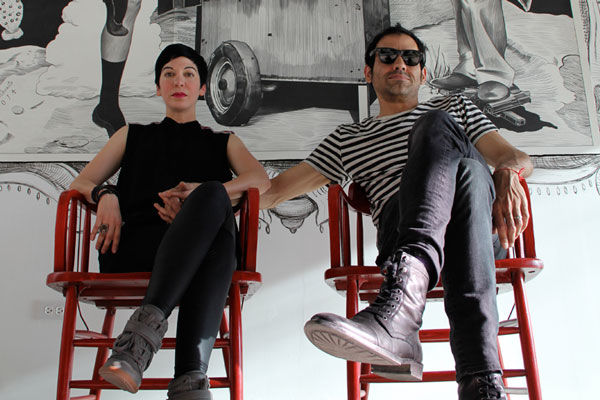
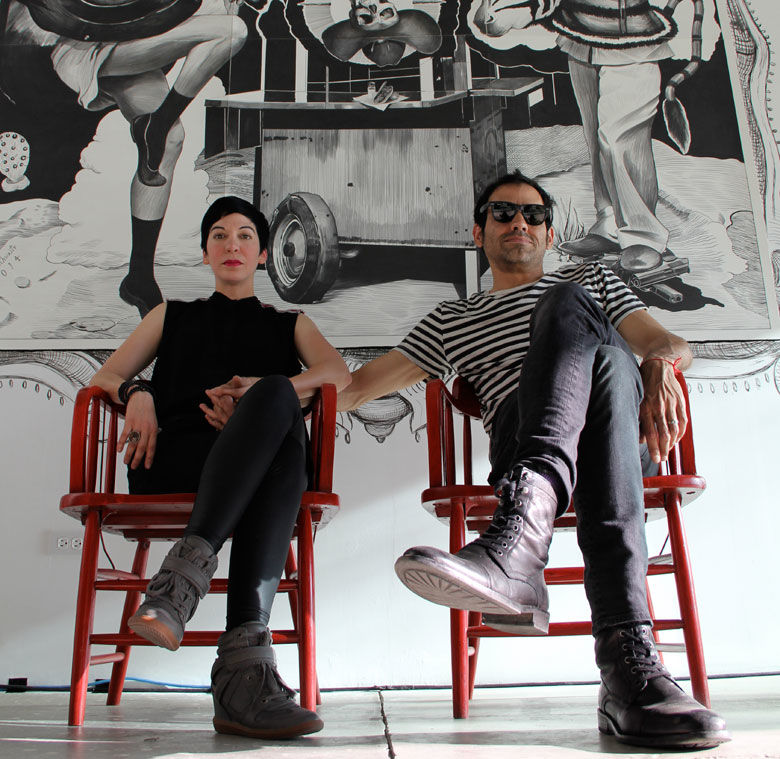
Mely Barragan and Daniel Ruanova
Baja California chalks up more ties to China than meets the unassuming eye. Not only is Mexico’s northernmost state home to its largest per capita community of Chinese immigrants, their Mexodus has resulted in Mexicali-style Chinese cuisine, now famous from Cabo to Cancun. The two also share a maritime border (albeit the widest in the world)—the Pacific Ocean, over which Aeromexico jets folks from Tijuana direct to Shanghai twice weekly. And now, Tijuana boasts a new art house dedicated to the flow of cultural industry between Beijing, Baja, and beyond: TJINCHINA Project Space. The project is the brainchild of Tijuana artists and husband-and-wife team Daniel Ruanova and Mely Barragan, who launched it in 2011 during a two-year stint in Beijing’s trendy Caochangdi art district. The pair later returned home to open TJINCHINA’s second chapter in February on Avenida Revolución.
Housed in what was once the typical tchotchke outfitters between Sixth and Seventh streets, the two-story gallery now plays host to what Barragan and Ruanova call “cultural producers of an ever-shrinking local art network.” It’s focused on an exchange across new borders, hoisting border-manufactured art onto the Beijing scene, and vice versa. “We believe that what is happening in Tijuana today is something new, true, and authentic,” Ruanova says. “If we continue doing things with honesty, openness, and desire, it could be that this time the border boom leaves something for tijuanenses.”
Juana Ortiz's organization, founded in honor of her sisters, has housed almost 70 young residents
A handful of teenage girls share this bedroom. Posters of their favorite singers and notes from their friends paper the walls, and piles of stuffed animals populate the beds. One girl sits quietly at the vanity, brushing her hair and touching up her makeup. Juana Ortiz, her legal guardian, mentions how pretty she looks. The room is dimly lit, a curtain gently blowing in the Tijuana breeze. It’s a sleepy afternoon at Eunime—a rarity with 20 young residents.
The kids at Eunime Por Tijuana orphanage are just like other children. Their deep belly laughs, sweaty games of street soccer, and ambitions and dreams for the future are the same. However, one difference sets them apart: Most of the kids at Eunime are HIV-positive.
Just a few miles south of the San Diego-Tijuana border crossing and framed by a rainbow fence, Eunime serves as a safe haven, providing orphaned children the necessary medical care and resources to live a life as unaffected by their diagnosis as possible. Founder Juana Ortiz started Eunime 20 years ago in honor of her sisters Eunice and Noemi, who, according to Juana, were among the earliest diagnosed cases of HIV/AIDS in Tijuana. Ortiz now serves as the general director.
“Eunice did not have the opportunity to receive treatment and be in good health,” Ortiz explains in Spanish. “It is in her memory that we do our best to give attention to all children that may need it.”
While Ortiz and I talk, I hold a 22-day-old baby, still unnamed, in my arms. His fate remains unknown, as the bloodwork that will determine his status hasn’t come back yet. His mother is HIV-positive and doesn’t regularly take her medicine. After he was surrendered at a local hospital, the hospital reached out to the National System for Integral Family Development, which contacted Ortiz for placement help. The baby’s eyes, big and brown, catch mine. He gurgles contentedly and falls back asleep, nestled in my chest.
“Do you think Sebastian fits him?” Ortiz coos, pinching his fat tummy.

“I do,” I reply, trying to swallow the growing lump in my throat. Ortiz and I walk to the abandoned lot next door which, thanks to a recent donation, now contains a playset. The children flock around her with their incessant chirps of Juana, Juanita, Ma.
A little boy swings on the new playset, pumping his legs with all his might to achieve the highest possible arc. The other residents race under him, nearly keeled over with laughter, trying to avoid colliding with the pendulum.
Despite support from donations and government assistance, Eunime is increasingly more expensive to run. Ortiz cites the increased minimum wage and decreased government support following the pandemic as financial stressors.

“We are operating with 70 percent of what we need,” she says. A rotating staff of caretakers and volunteers allow for around-the-clock care and supervision. Between looking after newborn babies, doing laundry for 20, helping with homework, and distributing the children’s medicine, there is never a dull moment.
Once, Ortiz tells me, the kids managed to sneak around 20 dogs into the orphanage, moving the pups from room to room trying to avoid her, hoping she wouldn’t hear the pack.
“We have to have some sort of rule in place,” she laughs. “There can’t be more dogs than kids.”
Since 2004, nearly 70 children have called Eunime home. Eight have been adopted; the rest have grown up entirely under Juana’s wing.
“We will never match the attention [a child can get from an adoptive] family,” Ortiz says. “So we feel deeply grateful that God may grant them the opportunity to have a family.”
Ortiz works closely with the kids to create a life plan for when they age out of the orphanage at 18. Residents have gone straight from Eunime into university. Others have joined the workforce or started their own families.
Ortiz motions to a wall of photos in the waiting room. Alongside images of her sisters are records of all her residents’ young lives, from baby pictures to middle school sports team shots to college graduation photos.
“Here, we are a big family,” she says.
Lilly Corcoran is a journalism student at Point Loma Nazarene University. She likes old movies, new TV, and bacon egg and cheeses.
Billed as a way for asylum seekers to secure appointments, the CBP One app is instead marked by long wait times and biased requirements
Abu Bakr, a 21-year-old Turkish mechanical engineering student turned asylum-seeker, speaks to me through the border wall near San Ysidro. He’s being held by Border Patrolin one of the two open-air detention sites in San Diego County–this one sits between the two border walls.
“My mother’s friend said, ‘If you go to America, […] you have your rights. If you are afraid that someone is following you and your life is in danger, they accept you there,’” he tells me.

Abu Bakr wears round hipster glasses and has an iPhone in his pocket—a device he used to try to get an appointment to request asylum through the CBP One app. Right now, CBP One is virtually the sole means of accessing asylum—a right recognized by both international law and US law—but the app is proving to be a nightmare for both migrants and advocates at the border.
“[The CBP One app] didn’t work, so we chose this way,” Abubakr says. By “this way,” he means crossing the border without permission, outside of the official ports of entry.
Migrants like Abu Bakr who cannot figure out the app, wait, or know about it often find the gaps in the primary border wall to go through, then turn themselves in to the Border Patrol.
“They have no other option if they want to seek asylum,” says Hollie Webb, a supervising attorney at Al Otro Lado (AOL), a nonprofit that helps migrants navigate the asylum system. “Because if they go to a port of entry, which they have a legal right to do, they will almost 99 percent of the time be turned away.”

The AOL team and their clients, alongside another immigration-focused nonprofit called Haitian Bridge Alliance, are currently embroiled in a class-action complaint against California’s Southern District. AOL attorneys argue that, in turning asylum seekers away at ports of entry, the United States is violating international and domestic law.
The cell phone app CBP One has been around since 2020. In May of 2023, however, the Biden administration made it the only way people could ask for asylum in the United States, just as the controversial, Trump-era Title 42—which allowed speedy deportations of migrants during Covid—was phased out.
At the time, officials touted the software as the solution for longtime problems with the US immigration system. “[The app] will expand the number of appointments, allow for additional time, [and] prioritize those first registered,” Customs and Border Protection announced in a press release.

But migrant advocates at the border say the app has proven problematic. “People here in Tijuana are having to wait for three [or] four months or longer to get an appointment,” Webb explains. Before the app and Title 42, people could come to any Port of Entry and ask for asylum then and there, without having to wait.
And there are other issues: CBP One is only offered in three languages (English, Spanish, and Haitian), and is reportedly riddled with error messages and bugs, crashes often, can only be used in Mexico north of Mexico City, and requires migrants to have an address in the US.
Additionally, Webb sees a clear discrepancy with the treatment of thousands of Ukranian asylum-seekers who arrived in Tijuana in 2022–while Title 42 was still in place– and were processed as they reached the San Ysidro Port of Entry.
“The administration and CBP are always talking about the lack of capacity, and that’s why they can’t process the asylum seekers,” she says. “But we saw the year before last with the Ukrainians that they processed up to 1,000 asylum seekers just at the San Ysidro port of entry. Suddenly, when the asylum seekers aren’t white, there’s a problem with capacity.”

A 10-minute drive from the open-air detention site where I speak to Abukabr, I meet Jehovana de los Ángeles Rangel Serrano. She is sitting on the floor holding her six-month-old baby in front of the Ped West port of entry in San Ysidro, among 60 or so other migrants who were able to get one of the prized appointments and put in their asylum petitions with CBP. “We waited a month-and-a-half in Mexico,” she says. “But that was just lucky.”
Rangel Serrano’s family had to register through the app four times before finally securing an appointment at the border. “We waited in Mexico City, then Monterrey, Saltillo, and Tijuana—everywhere really!” she recalls.
Her husband and older child are beside her, looking tired but happy. They are Venezuelan, same as many other families in their group. Just past noon, a bus arrives to take them to a shelter, where they will wait—yet again—to board a plane to their final destination. In Rangel Serrano’s case, that’s Philadelphia, where her brother lives.
Migrants in this group seem satisfied with the existing asylum channels. Webb tells me that most migrants who get an appointment through CBP One feel good about it; that the petition process was shorter than they expected.

But back at the open-air detention site between the border walls, Abu Bakr sits on a camping chair. He came alone with his mother, but in his group are two other women, one with two small children and another with four, including a baby who is currently sleeping peacefully on her lap.
“We have been waiting here since 3 a.m.,” he tells me. He explains that his family received death threats after his grandfather, a government official, passed away. “In Tajikistan, I was with my mother when the police came and they put restraints on her. They asked her for money,” he recalls.
Looking at the makeshift camp made of blue tarps and easy-up tents provided by migrant advocates, I ask him if this is what he imagined when he decided to travel to the US.
“I was ready for everything for the safety of my mother,” he answers.
María José Durán is a bilingual, Emmy and Golden Mike award-winning journalist with two decades of experience across two continents and three countries. She’s interested in all things motherhood, border life, intersectional feminism, and lifestyle.
The annual Fandango Fronterizo event celebrates 15 years, despite shifting border policies affecting its mission
On October 7, I stood three feet away from the San Diego-Tijuana border wall, listening to the rattling sounds coming from an instrument made with a donkey’s jaw (a quijada de burro) played by Fandango Fronterizo musician Sergio Pérez Bibiano.
Founded in 2008 by Jorge Castillo, Fandango Fronterizo is a cross-border event put on with the intention of bringing together son jarocho musicians from both the US and Mexico. Today, it has become a powerful symbol for breaking down the boundaries between people, communities, and countries.
This month, the Fandango Fronterizo celebrated its 15-year anniversary with a music festival in the same site where it first emerged: the border. Fandango Fronterizo, which loosely translates to “border jam session,” features a form of folk music originating from Veracruz in the Gulf Coast of Mexico.
Son jarocho combines multiple cultures—Spanish, African, and Indigenous—that came together more than 500 years ago, and its stanzas involve a type of call and response between the musicians and their listeners (the most popular son jarocho tune is the song “La Bamba”).

Unlike in Fandango Fronterizo’s earlier years, though, when the musicians sing their calls at Parque de la Amistad in Tijuana, no responses come from the other side. Castillo explains that they haven’t received permission from Border Patrol to sing on the United States side of the wall since 2018.
“We organize this event every year,” says Castillo. “As far as I know, we haven’t caused any problems. We follow the rules.” The silence on the US side has cut off an integral aspect of the annual event.
“[Playing only on the Tijuana side] is very sad,” says Carmen Castro, a member of Fandango Fronterizo’s committee and a participant in the festival for a decade. “[Playing on both sides] was a way of telling the world that music, fraternity, and family are not divided by this wall—they surpass borders.”
In recent years, this shift has made it increasingly difficult to hold the festival in the way it was created—on both sides of the border—due to the militarization of the wall. “We don’t need walls. Why do we have to be separated? Why can birds fly over and wind and music cross [the wall], and we can’t,” Castillo asks. “That’s the message that we give everytime we’re here—that’s our main thought.”
Longtime participant Mari Carmen Arjona says that now, many colleagues no longer attend. In previous years, they would spend mornings celebrating on both sides of the border wall; then, everyone who could, would cross to TJ for an all-night party.

“You feel like you’re missing a part, because [the community] is precisely what characterizes the border fandango,” says Arjona who lives in the Bay Area and first visited the San Diego-Tijuana border in 1999. Back then, she says, there were bars separating the two countries, but people could reach through them and touch each other. “You could buy mangos across the border!” she recalls, laughing.
Then came the interwoven fence that blocks objects or hands from passing through, the visitation hours imposed by Border Patrol on the north side of the fence, and, now, the taller, prison-like, and sometimes deadly 30-foot wall. In 2018, author Kebir Sehgal focused on Fandango Fronterizo as a blueprint for how to heal relations between the US and Mexico in his book Fandango at the Wall: Creating Harmony Between the United States and Mexico.
Castro says that she has experienced this healing power firsthand. The sense of togetherness is the reason she has come back all these years. “I fell in love with friendship, with community, with caring about doing something for others,” she says. “I’m a social worker, so I feel like I fit perfectly.”
The very first Fandango Fronterizo began in the afternoon. “Around 4:30 p.m., [Border Patrol agents] said, ‘It’s better that you guys start wrapping up,’” Castillo recalls. “And I said, ‘Just one more song.’ Then, we started playing ‘La Bamba,’ and the song lasted for one hour, and [the agents] couldn’t believe it was still the same song. I tried to wrap it up and [the other musicians] wouldn’t, because everybody was so into it.”
Next year, they hope to once again sing, play, and dance in the two countries at the same time. “We are transborder communities. We have exchanges [and] interdependence, and the way to remember that is through art [and] culture,” Arjona says. “That’s why it’s important to keep this space, claim it, and keep insisting that we want to sing on both sides of the border.”
This post contains affiliate links to products and services. We may receive compensation when you click on links.
María José Durán is a bilingual, Emmy and Golden Mike award-winning journalist with two decades of experience across two continents and three countries. She’s interested in all things motherhood, border life, intersectional feminism, and lifestyle.
The 29-year-old culinary director at Herb & Sea is making seafood sexy (and approachable) again
Implementing a farm-to-table model hardly deserves acknowledgement these days. It’s not a stretch. It’s not innovative. “It’s the bare f**king minimum,” says Herb & Sea‘s executive chef Aidan Owens.
When I arrive at the Encinitas restaurant, I’m ready to talk sustainability, farm-to-table stuff, with Owens. “Did you see the chin on that?” he says of the extra big jiggly chin on the sheephead that just arrived with the day’s fresh catch. I did. It was Jay Leno adjacent.
I learn quickly that he somehow oozes both charm and stone-cold honesty. Maybe he could construct a new dish with chin goo, like he did when he had a bunch of tuna scraps and voila’d it into a smooth and crowd-pleasing ‘nduja. “I want to know what’s in there,” he says.

The instinct to look closer, to dig into what others might discard, says a lot about the chef’s approach. I guide him back to our topic, but he has something else on his mind. “We’re overcomplicating food—what happened to just cooking good food and having fun with it?”
Owens grew up on a farm in Byron Bay, Australia, where sustainability wasn’t a concept you chat about so much as a way of life. Think dirt roads, backyard chickens, pulling vegetables straight from the ground, and a mother who believed that if you couldn’t pronounce the ingredients on a package, you shouldn’t eat what was inside.
Food wasn’t precious or performative. Making it was what you did because you were hungry and that’s still what inspires Owens today. “I like to cook good food because I like to eat good food,” he says.
His approach to sustainability at Herb & Sea began so naturally that it felt just like instinct. “I was just like, ‘Let’s order food from the people who live and work here,’” he says.

And why wouldn’t he when lives in San Diego? Cities all over the world vie for our goods. Our tuna is sent overseas. Our spiny lobsters hit dinner plates in China and Japan. Not to mention California’s producing a third of the country’s vegetables and three-quarters of its fruits and nuts.
“Why would we outsource when it’s all here?” Owens asks.
Sustainability, in this context, is about cooking what exists in abundance, nearby, right now. “I love the local fish here. It’s f**king delicious and San Diego citrus, I mean, it is so f**ing good,” he says.
Instead of importing ingredients, Owens also looks for nearby alternatives. “You can find really cool things in the local waters,” he says, pointing out that stingray cheeks taste similar to scallops.

Whatever he finds in that sheephead chin might just be the next substitute for marrow. But to make this work, it means getting diners amped up about the slightly unfamiliar.
Tasting menus, where diners are completely in his hands, become an opportunity to gently push boundaries. “I’ll serve mackerel, because people think they hate it,” Owens says, noting that the abundant local fish can have some fishiness. “But when it’s fresh, it’s arguably one of the best fish in the ocean.”
He also tweaks the language on the menu so people might feel more compelled to give dishes a try without preconceived notions. He might use “lengua” instead of “tongue.” “Whelk” instead of “snail.” When he puts “stingray throat” on the menu, he disarmingly calls it “skate.”
To reduce waste, scraps aren’t always discarded but rather turned into something new. Sometimes they’re smoked, cured or fermented. Apples going bad turn into apple ponzu. Lemons turn to marmalade, which stretches their usefulness far beyond peak season. “And it’s super tasty on our pizza,” he says.
What makes the food even richer, is the relationships he’s built with farmers. Though it didn’t always feel natural, Owens sought personal connection first. He recalls approaching a fisherman at the Tuna Harbor Dockside Market. “I was awkward,” he says. “I went up to him and said, ‘I like your fish.’”
Owen’s is now so close to his suppliers—like fishermen Ryan Sebo and Joe Daly—that he gets texted pictures of fresh catches right as they flop on the boat. The messages always ask if he wants first dibs. “I say yes to a lot of fish,” Owens says, noting that Herb & Sea can go through 2,000 pounds of seafood a week.

The next evolution of sustainability, in his view, will be chefs working directly with producers such as his alliance with Sebo, cutting out middlemen and purveyors where possible. “It will put more money in the pockets of the people doing the work,” he says.
It will mean that chefs can’t just know their local farmers and producers, but they’ll choose to work with the ones who have the best practices. Dining and sustainability will become much less about the final plate. “It will be more about the impact that plate has on the Earth,” he says.
Ultimately, he believes sustainability doesn’t need to be loud. It doesn’t need hashtags. It just needs to be honest.
“We aren’t saving lives. We’re feeding people good food,” he says.
And yet, in feeding people well—simply, thoughtfully, responsibly—something meaningful happens. Guests leave satisfied. Ingredients are respected. Local ecosystems are supported and food returns to what it has always been at its core: nourishment, pleasure, and a quiet reflection of the place it comes from.
No buzzwords required.
San Diego locals doing interesting things in July
Elizabeth Huettinger
One of our 50 to Watch in 2012, the Grand Del Mar’s somm is profiled in this month’s Wine Spectator.
Terry Winnett
Not yet a Wine Spectator subject, but he and his wife opened Dulzura’s first winery, hoping to make I-94 a wine trail. Try the Riesling!
Christopher Beach
La Jolla Music Society’s leader launches a $50 million capital campaign to build a performing arts center in the village.
Andy Roddick
The SD Aviators looking to make pro team tennis fly in San Diego? Getting this guy on the court is a nice start. Watch the match July 7.
Jeremy McGhee
Local paraplegic extreme athlete will cover 32 miles this month in the Molokai-2-Oahu Paddleboard Race. Inspiring.
San Diego locals doing interesting things in July
Elizabeth Huettinger
One of our 50 to Watch in 2012, the Grand Del Mar’s somm is profiled in this month’s Wine Spectator.
Terry Winnett
Not yet a Wine Spectator subject, but he and his wife opened Dulzura’s first winery, hoping to make I-94 a wine trail. Try the Riesling!
Christopher Beach
La Jolla Music Society’s leader launches a $50 million capital campaign to build a performing arts center in the village.
Andy Roddick
The SD Aviators looking to make pro team tennis fly in San Diego? Getting this guy on the court is a nice start. Watch the match July 7.
Jeremy McGhee
Local paraplegic extreme athlete will cover 32 miles this month in the Molokai-2-Oahu Paddleboard Race. Inspiring.
In a world overflowing with shortcuts, marketing fluff, and “good enough,” there are still companies that choose a different answer. And in San Diego, there are plenty of them.
In a world overflowing with shortcuts, marketing fluff, and “good enough,” there are still companies that choose a different answer.
Integrity guides how they show up every day. They make hard decisions, hold themselves accountable, and build trust the old-fashioned way, one action at a time. At the Better Business Bureau, we call these businesses Torch Heroes: leaders who demonstrate that ethical leadership strengthens businesses and drives long-term success.
And in San Diego, there are plenty of them.
Take House Collective Marketing Solutions, a Carlsbad-based digital agency that won the 2025 Torch Award for Ethics for its people-first approach to marketing. Instead of pushing flashy campaigns, the team often takes a step back to make sure clients’ foundations are strong before going big. Their philosophy? Truth over transaction builds partnerships that last.
Or look at Young Black & N’ Business, where integrity shows up through community action. When a local school lost art funding, founder Roosevelt Williams III and his team stepped in with workshops, mentorship, and hands-on support to help restore creative opportunity. That kind of engagement reflects ethical leadership rooted in real impact.
And in Vista, Lotus Sustainables carried its commitment to ethics all the way to the product line. After discovering defects in a shipment of eco-friendly products, the company issued full refunds and redesigned its offerings at its own expense, a choice that shaped its identity and reinforced to customers that ethics guide every decision.
In North County, Greenway Landscape Design & Build brings integrity into everyday service. When a client’s glass was damaged, likely not by their crew, owner Scott Lawn chose responsibility over blame and covered the repair personally. For Greenway, doing the right thing serves as a north star, guiding every interaction through transparent pricing, accountable partnerships, proactive communication, and follow-through long after the job is done.
Other honorees include At Your Home Familycare, whose leadership turned down a lucrative state contract during the pandemic to protect vulnerable clients and staff, and Bill Howe Family of Companies, where hiring practices, training, and service centers around shared values, every day, on every call.
What connects these diverse businesses, from marketing to nonprofit support to home services, isn’t size, industry, or revenue. It’s something deeper: a commitment to trust as a business strategy.
In San Diego’s competitive marketplace, that trust gives companies an edge. Clients invest in relationships. They refer friends. They stay loyal when others fade.
As one Torch Award winner puts it, integrity isn’t a section in the employee handbook. It’s the operating system of the company, the invisible code that determines every choice, every day.
And that’s exactly the point of the BBB Torch Awards for Ethics: to spotlight companies that dispel the myth that ethics and success are at odds. These businesses show that when leaders choose honesty, fairness, and accountability, especially when it’s hard, they build brands that matter.
At BBB, we see nominations come in from clients, employees, and business partners who have witnessed ethical leadership up close. These submissions aren’t polished promotions. They’re stories of moments when a company chose people over profit, clarity over confusion, and trust over convenience.
The nomination window for the 2026 Torch Awards for Ethics is open through March 31, 2026, and there are more Torch Heroes waiting to be recognized.
Who comes to mind in San Diego’s business community?
And yes, businesses can nominate themselves. We encourage it. If you’ve built your business on principles rather than buzzwords, we want to hear your story.
Because in a world full of noise, integrity still deserves the spotlight, and San Diego is full of stories worth telling. Nominate your hero now.