Featured articles
Food & Drink
Food & Drink
Food News
Featured articles

Arts & Culture
Everything SD
Everything SD
Featured articles
Things to Do
Things to Do

Everything SD
Featured articles
podcast-ep
podcast-ep

podcast-ep
Featured articles

Everything SD
Everything SD
Food & Drink
Featured articles
Arts & Culture
Everything SD
Partner content
Ready to know more about San Diego?
SubscribeReady to know more about San Diego?
The California-based nonprofit provides food, shelter, clothing, medical care, and legal aid to those displaced along the United States-Mexico border
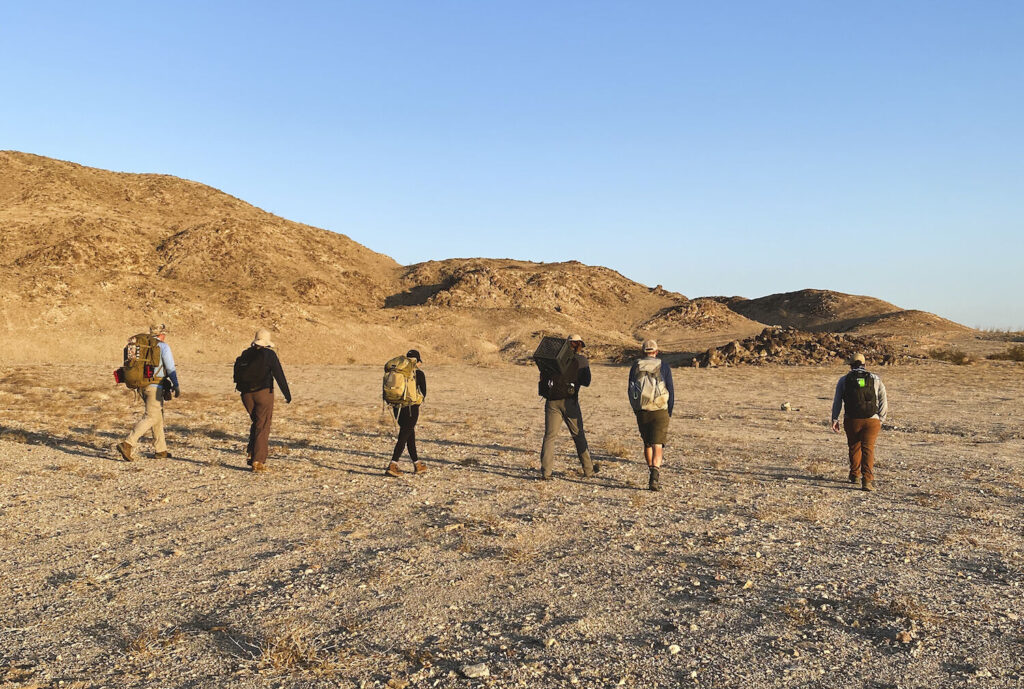
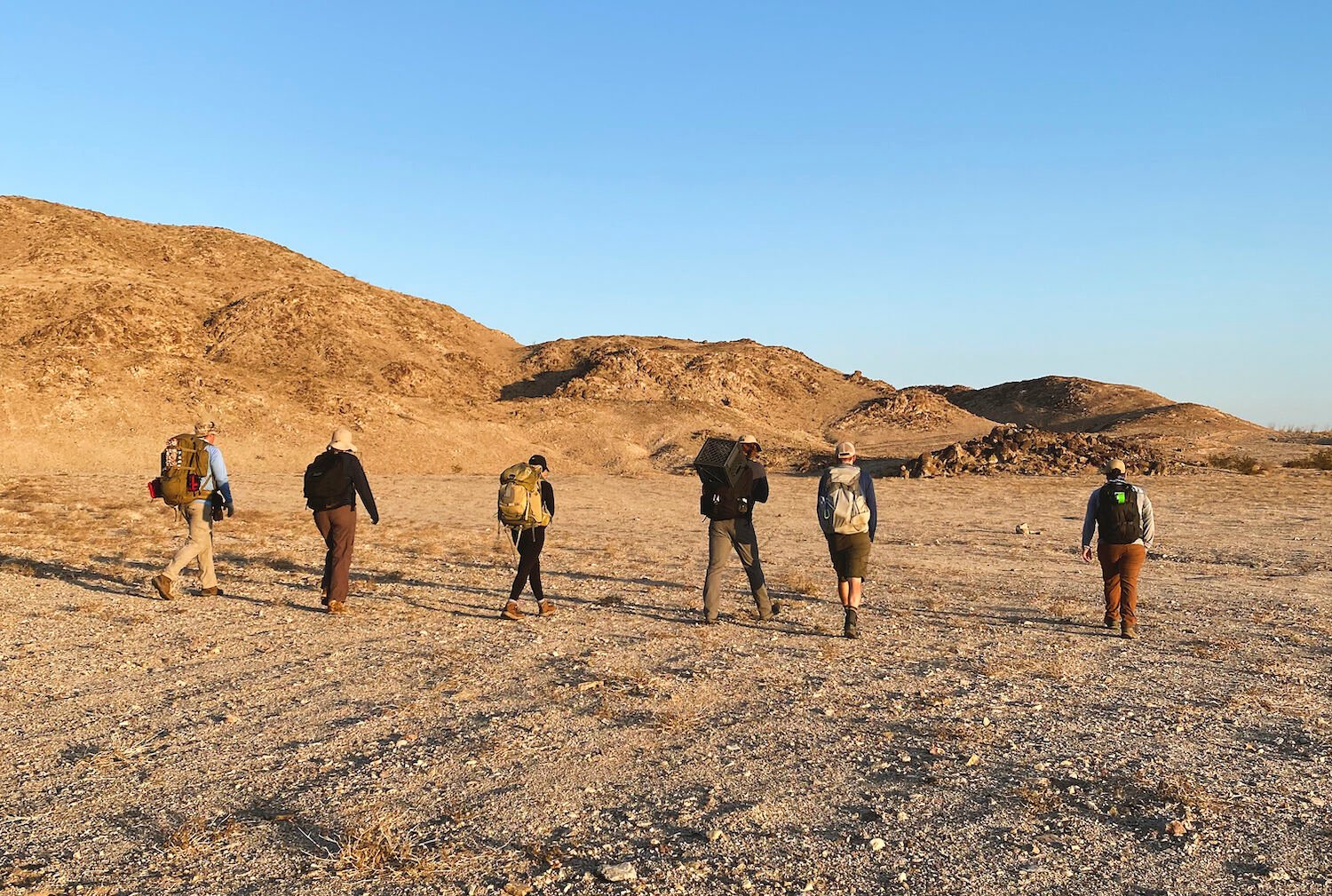
A Border Kindness group heads out just after sunrise. An average group is “usually around 8 to 12 people with an average hike length of 5 to 10 miles,” Cordero says.
James Cordero
Every week a group of volunteers heads to the eastern reaches of San Diego County, somewhere in the mountains, past the end of the big fence. They’re with Border Kindness, a California-based nonprofit that provides food, shelter, clothing, medical care, and legal aid to asylum-seekers, migrants, refugees, and the displaced along the United States-Mexico border. The San Diego chapter, run by James Cordero and his fiancé Jacqueline Arellano, handles the area’s water drops, which require arduous hikes into the deserts where migrants cross by foot, regardless of whether there’s searing summer temperatures or snow.
Border Kindness volunteers leave water, food, and clothing in canyons, mountains, and desert flats known to be frequented both by migrants and Customs and Border Protection (CBP, border patrol). They also remove trash from through-hikers and migrants who leave their personal effects along the rocks. The team has come across just about every likely scenario from border patrol apprehensions to encountering the remains of people who lost their lives in the final stretch of what was almost surely a long journey throughout the Americas.
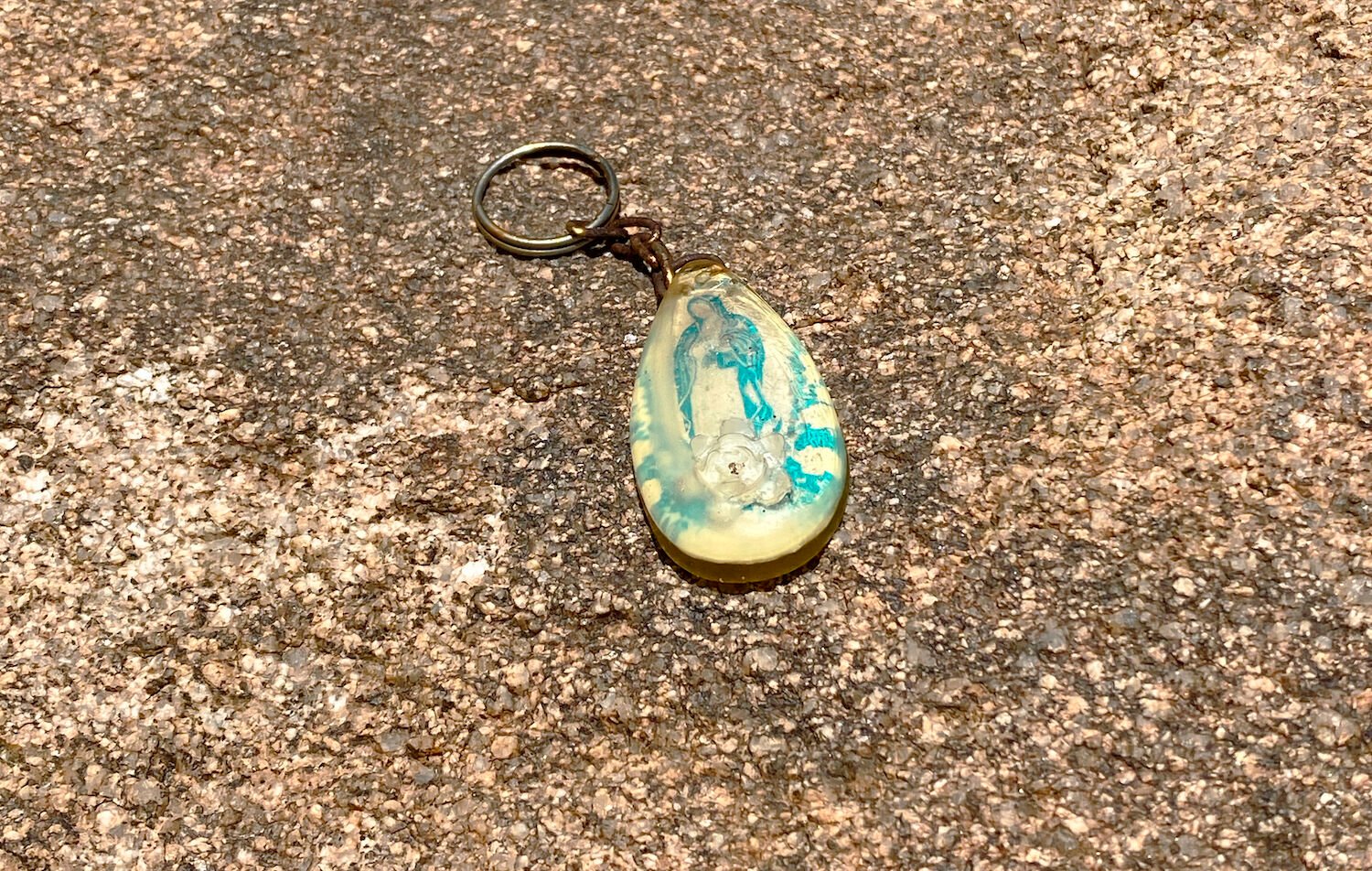
A keychain left behind with the image of la Virgen de Guadalupe—patron saint of both the Americas and vulnerable people. It’s a common image seen on items belonging to migrants.
James Cordero
Aside from witnessing and experiencing trauma in real-time, there are other risks: in 2019 a volunteer with an organization doing similar water drops in Arizona was charged with two counts of felony harboring and one count of conspiracy. In the end, he went free with a hung jury, but the legal risks of unsanctioned humanitarian aid are real.
“We provide humanitarian aid for many reasons,” Cordero says. “We have family that has immigrated to the United States. We want to help minimize the suffering and death that occurs all too frequently along the US-Mexico border. When you have a serious issue presented in front of you, it becomes a moral responsibility to do what you can to help. That is what we do.”
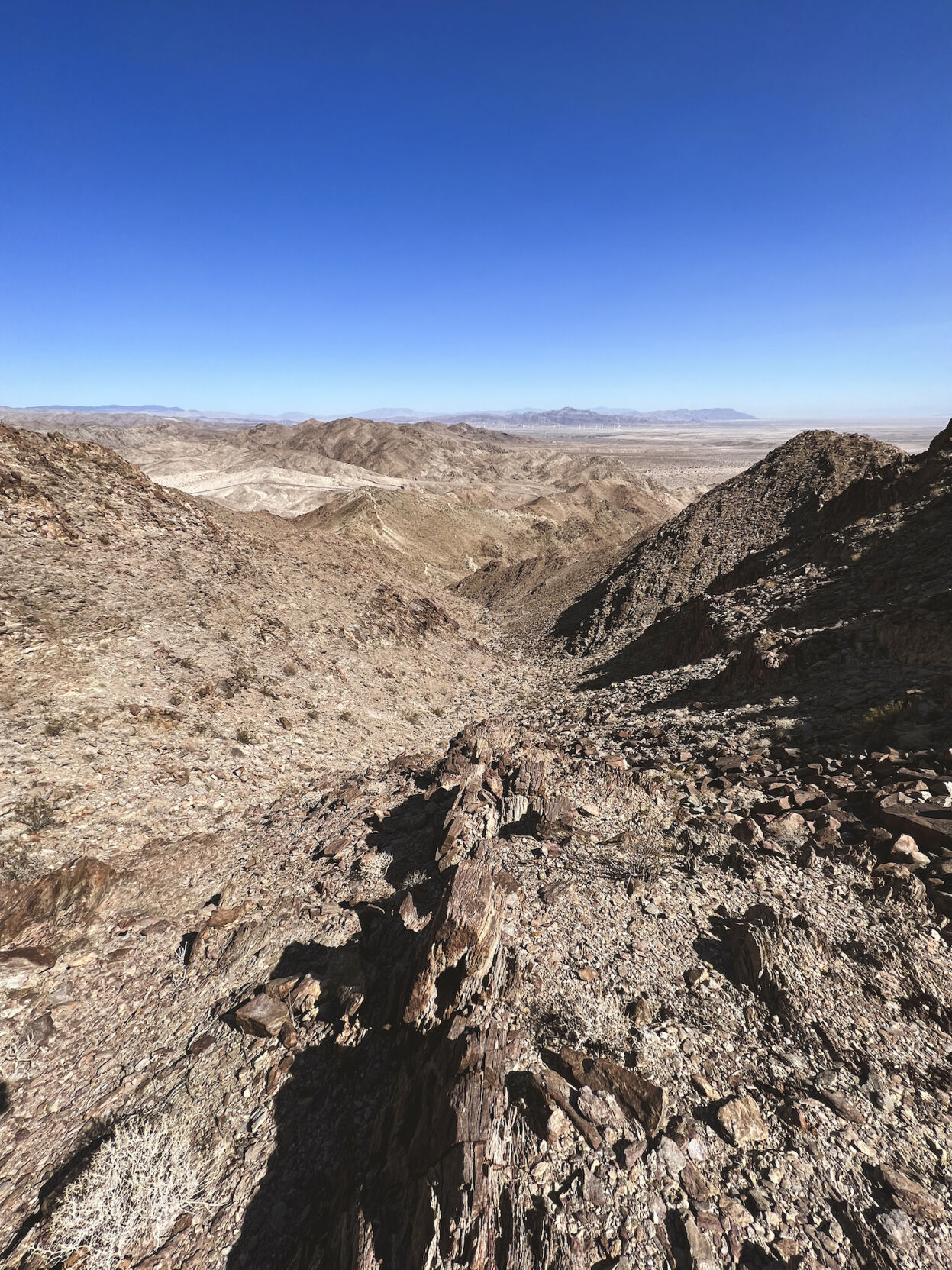
A view from the top of a mountain ridge shows the canyons where migrants have to travel to try to evade border patrol. “Some caches are deposited over 5,000ft of elevation in the mountains, but most drop sites are less than 1,000ft, some below sea level,” Cordero says.
James Cordero
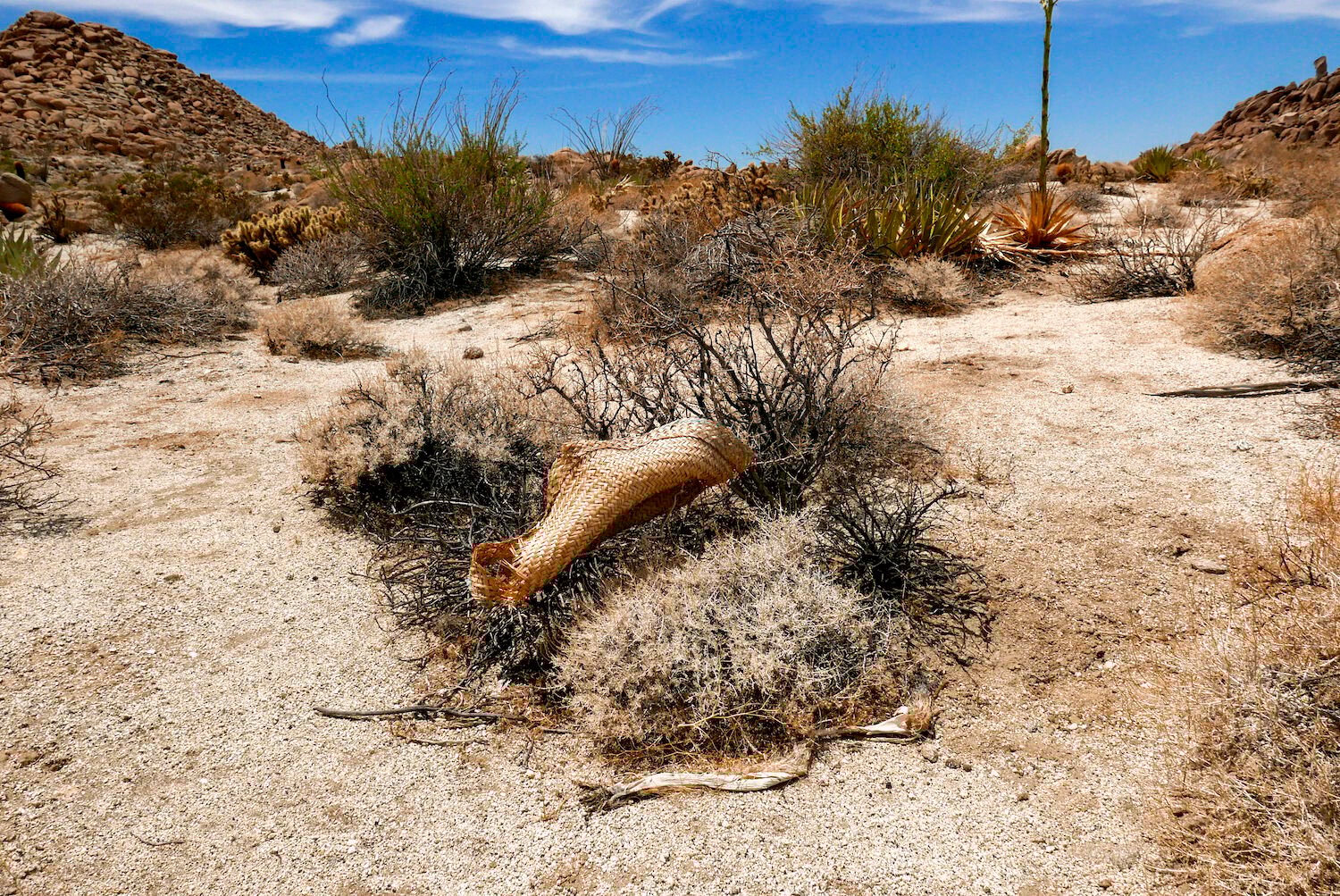
A sombrero lays on top of a bush in a very windy area. “We presume the hat blew off the head of someone traveling through,” Cordero says.
James Cordero
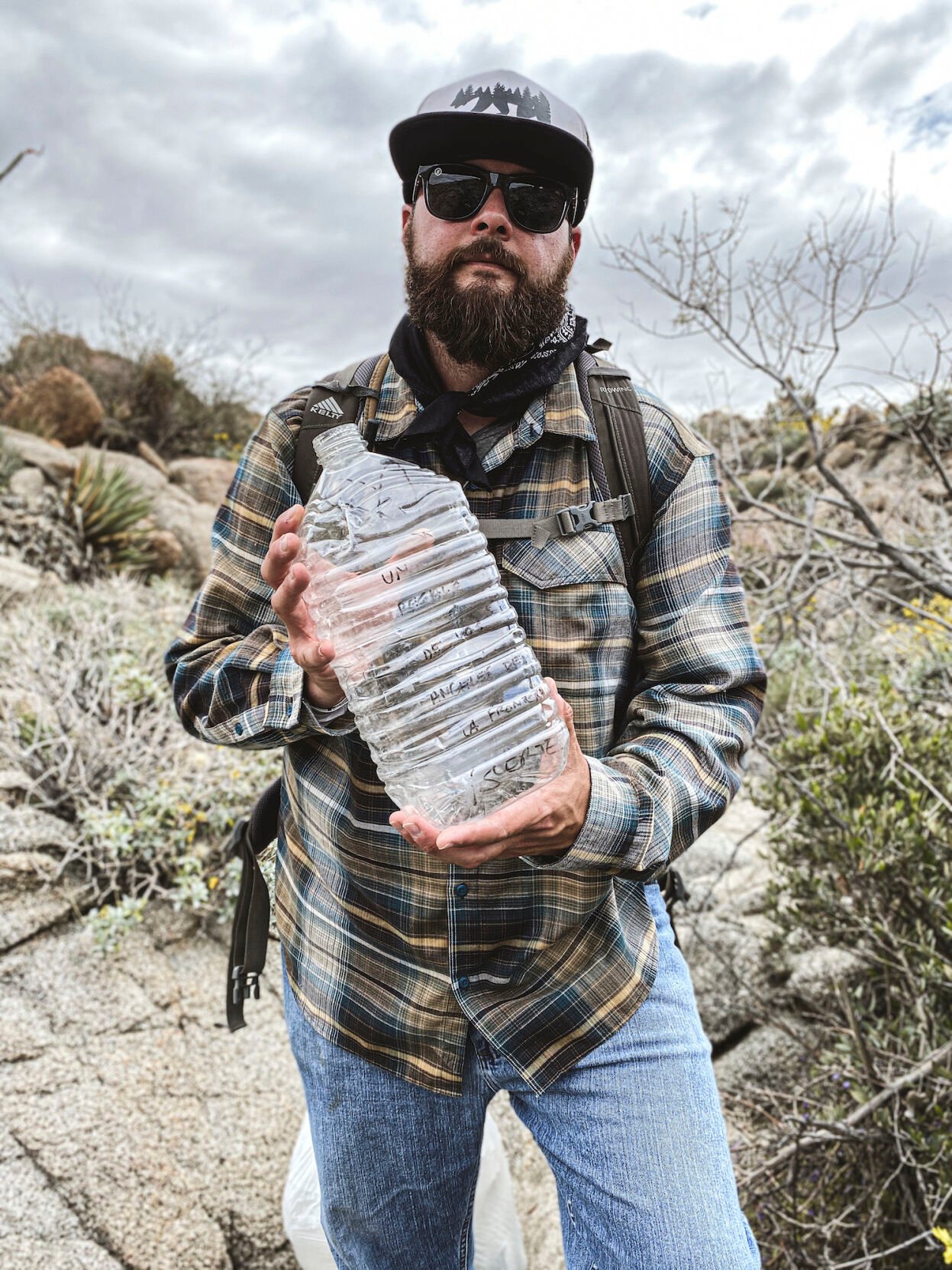
Border Kindness Water Drop co-director James Cordero poses with a consumed gallon of water he left behind on a previous drop. The volunteers pick up trash, including discarded water bottles, as they deposit supply caches along their hiking routes.
James Cordero
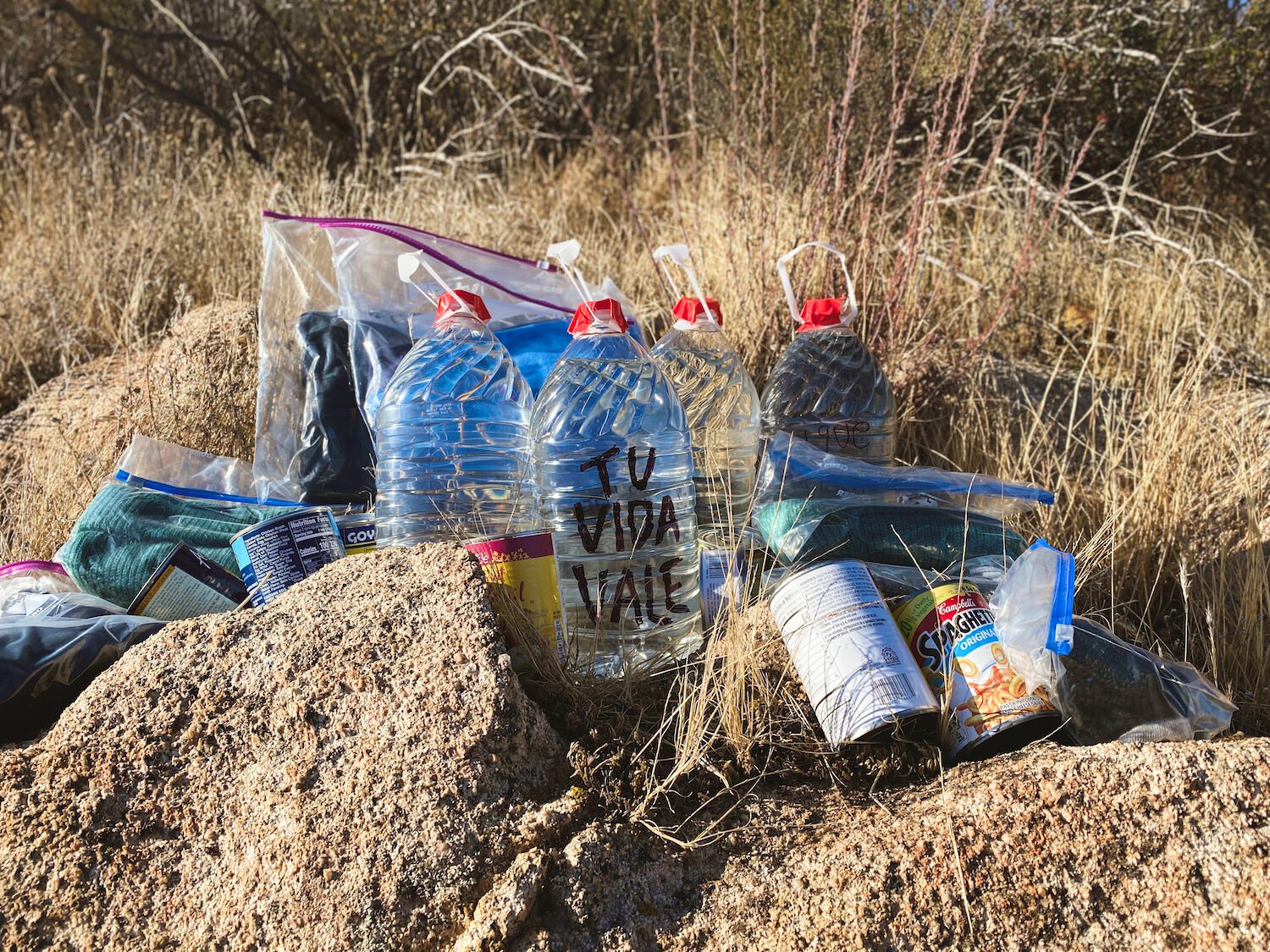
Border Kindness volunteers leave a supply cache consisting of gallons of water, canned food, and sun-protective clothing.
James Cordero
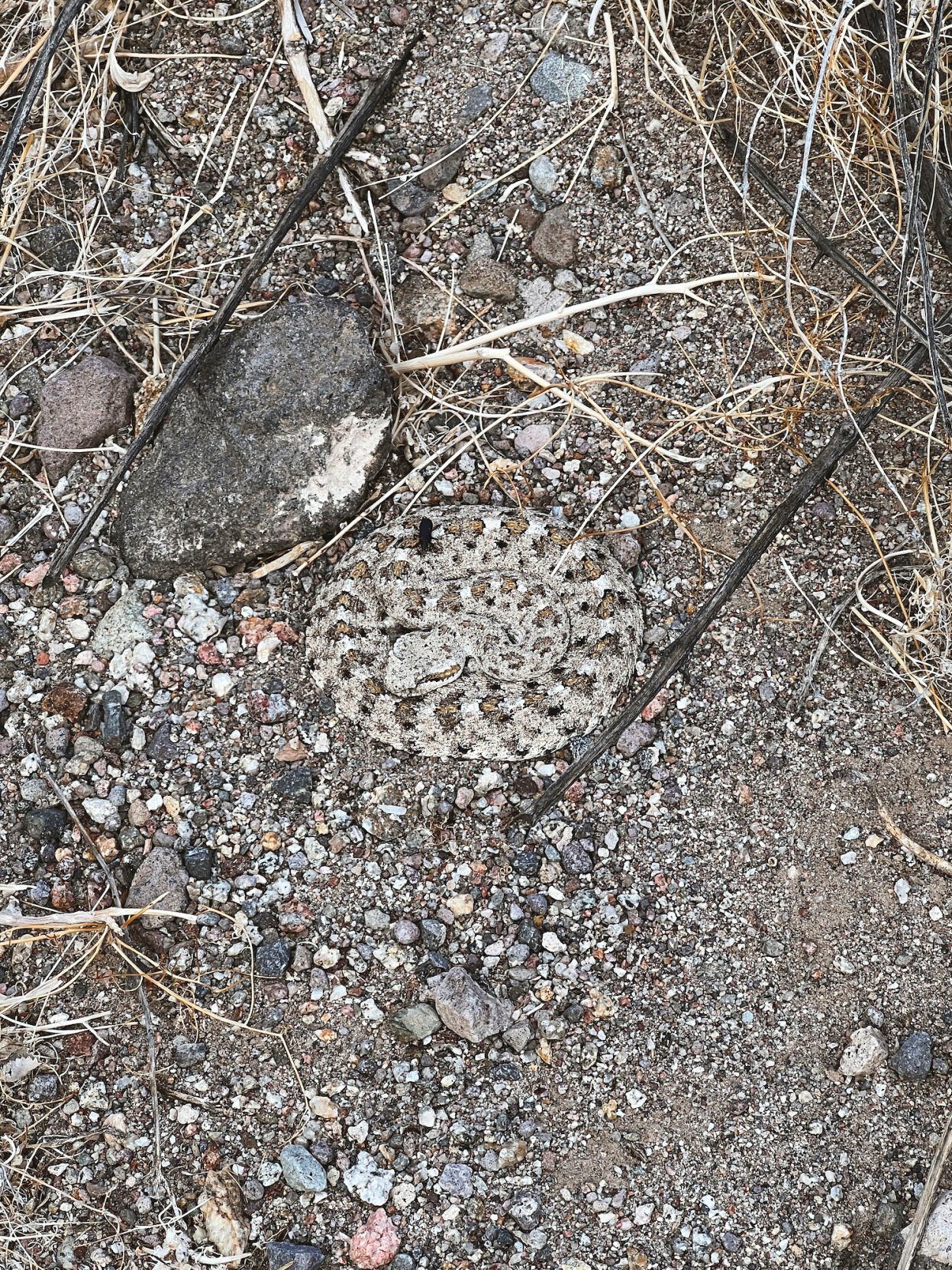
A juvenile rattlesnake, coiled up, camouflages into the decomposed granite and sandy wash believed to be transited by migrants.
James Cordero
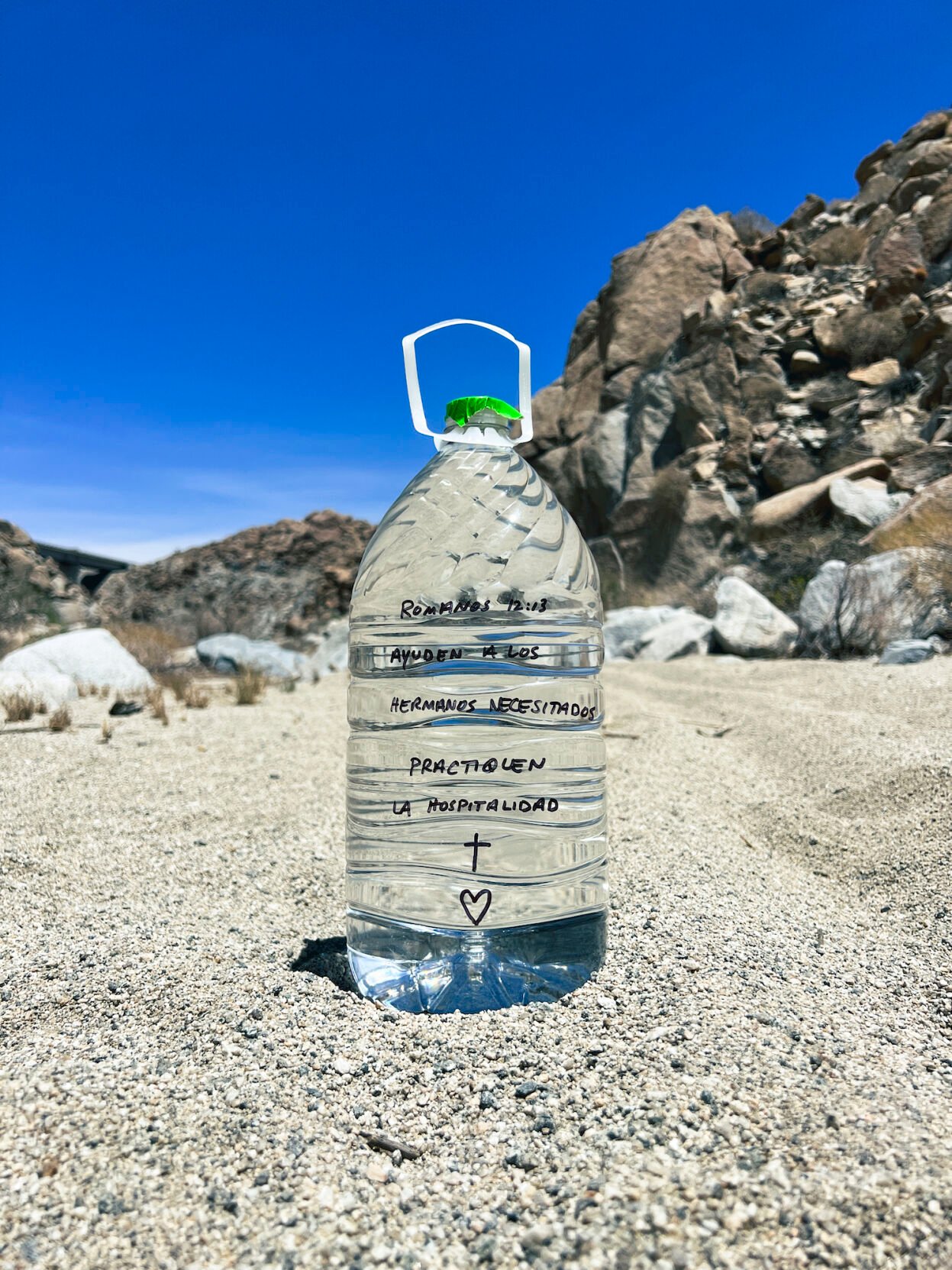
Cordero scribbled a bible verse from Romans 12:13: “Share with the Lord’s people who are in need. Practice hospitality.” It is assumed that the vast majority of migrants are culturally familiar with Catholicism.
James Cordero
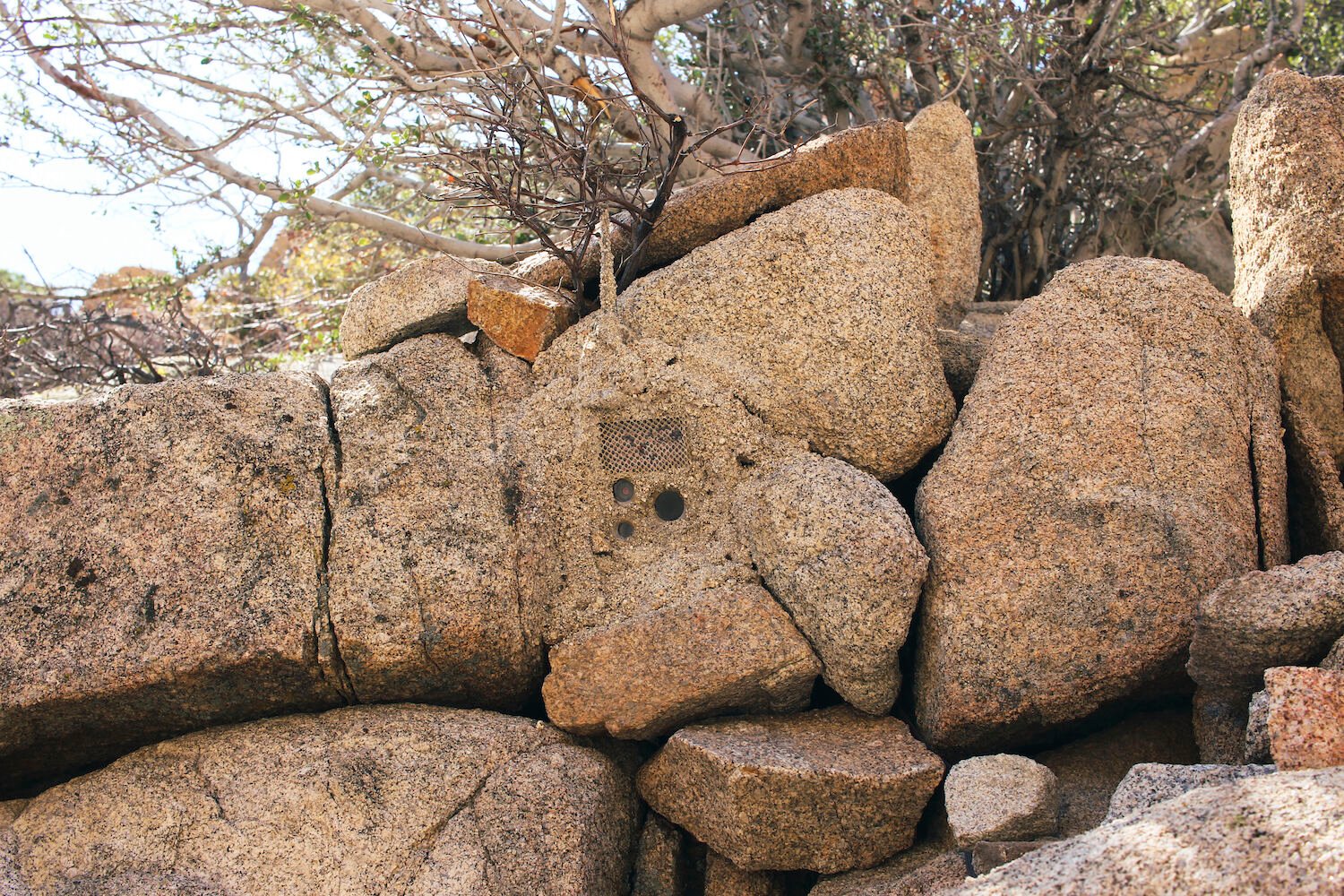
A camouflaged CBP motion detection surveillance camera was recently installed in a highly migrant-traveled corridor to track human movement.
James Cordero
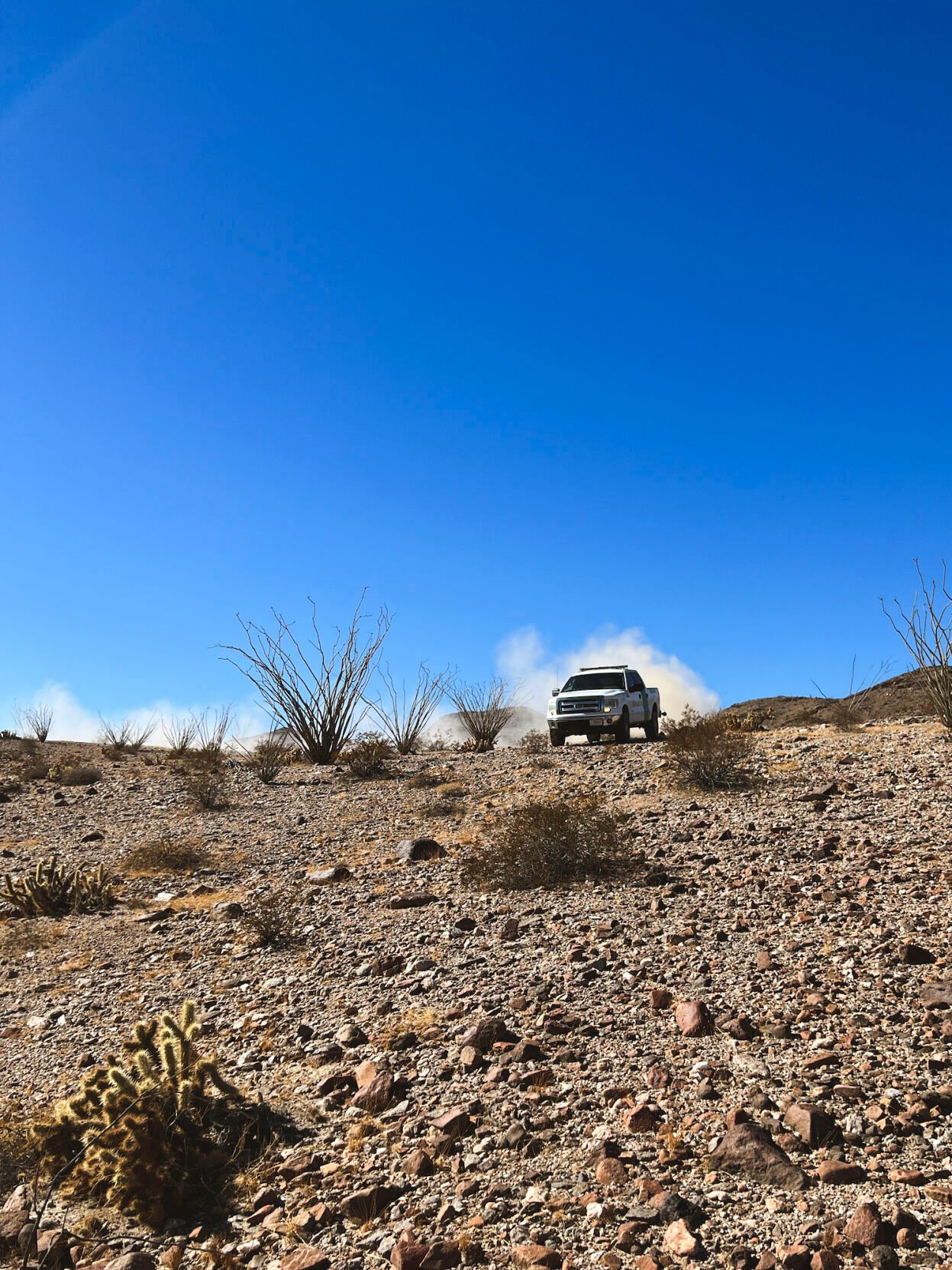
A border patrol truck races toward the Border Kindness Water Drop team. After realizing who they were, they let them be.
James Cordero
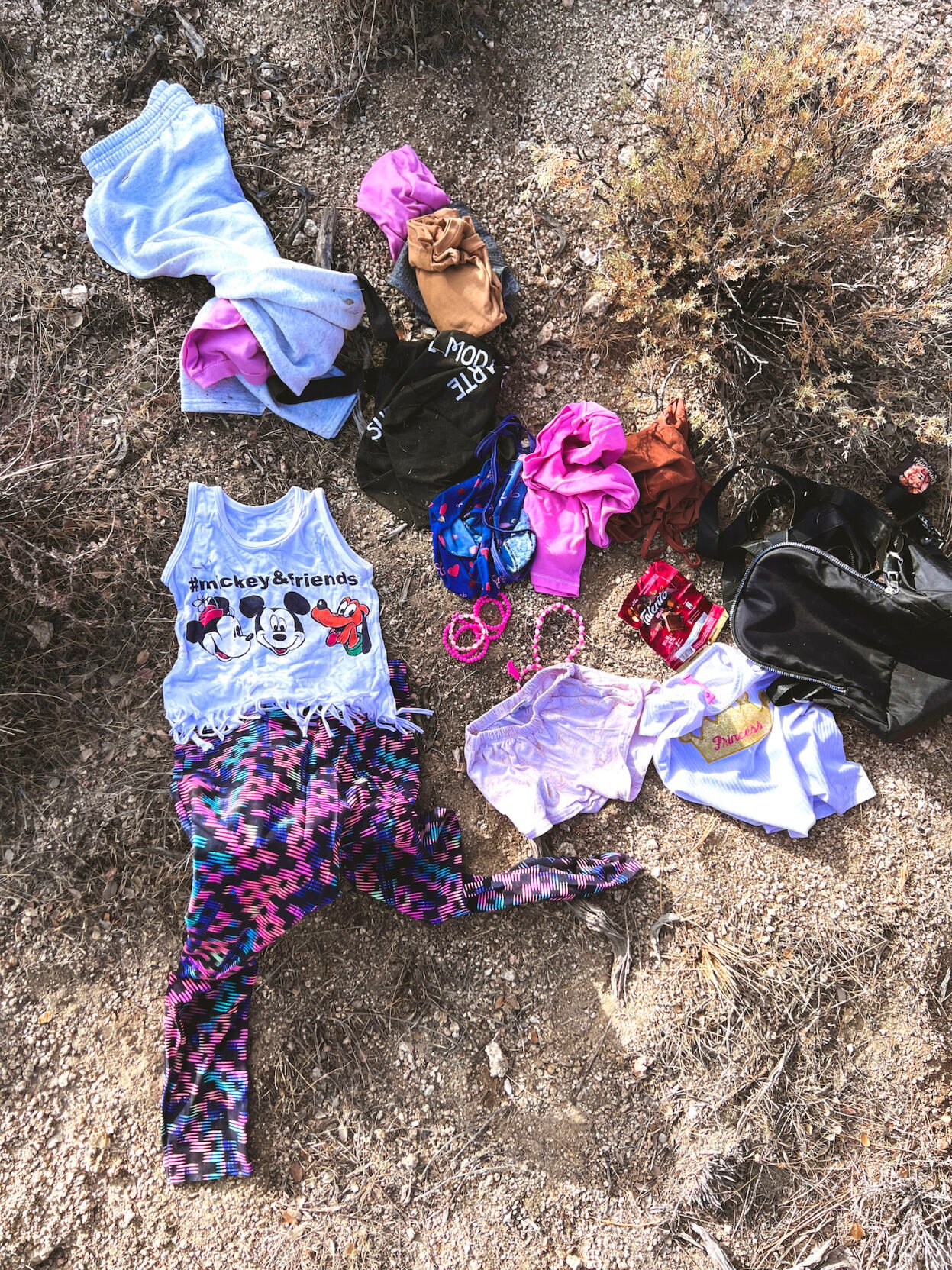
Children’s clothes strewn about a hillside, at the site of a border patrol apprehension, shows the reality of who’s actually crossing the desert.
James Cordero
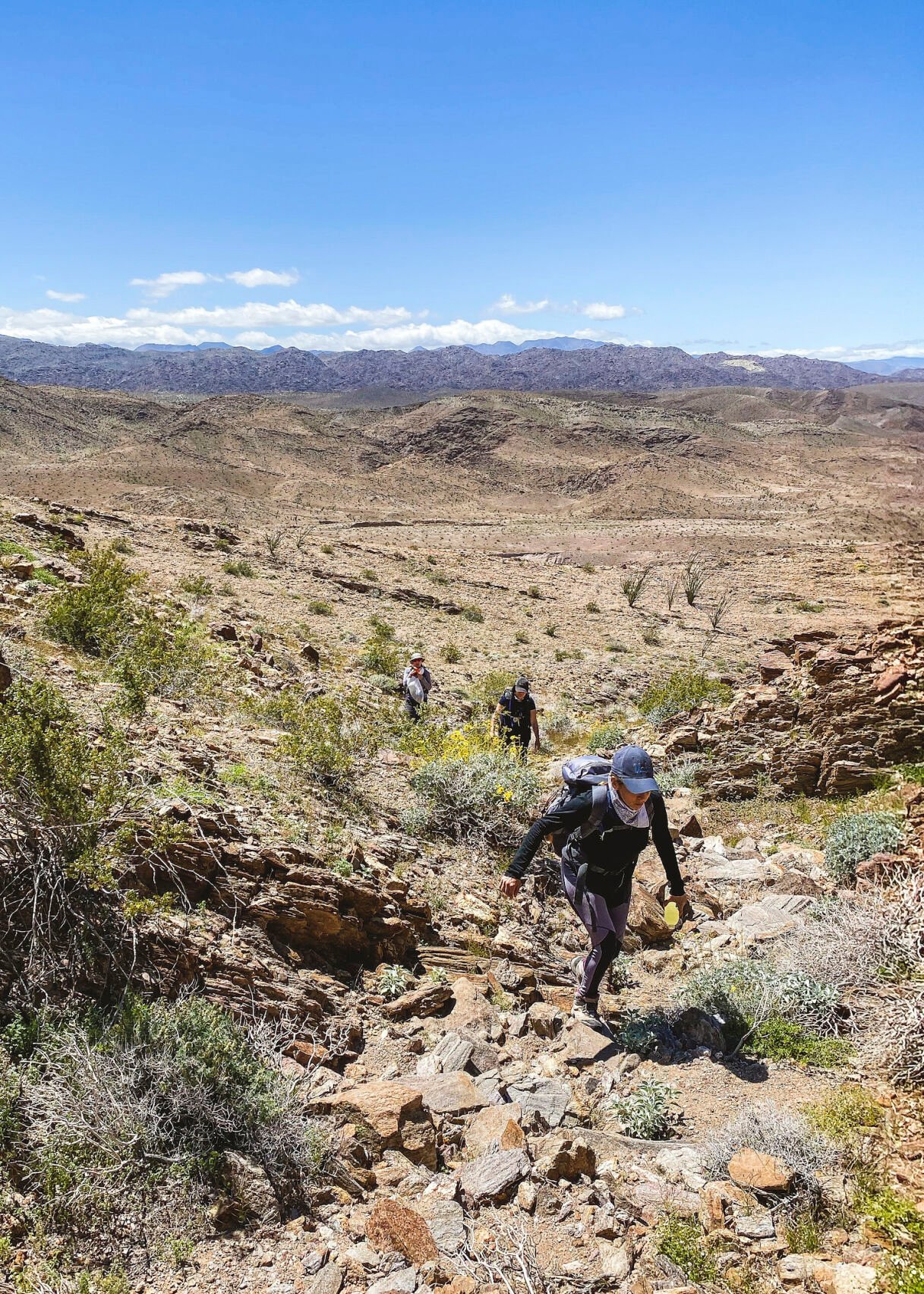
A Border Kindness group scales a rocky mountainside, scouting for traces of recent migrant travel.
James Cordero
Jackie is a long-time freelance journalist covering cannabis, food/restaurants, travel, labor, wine, spirits, arts & culture, design, and other topics. Her work has been selected twice for Best American Travel Writing, and she has won a variety of national and local awards for her writing and reporting.
A feast for your eyes and inspiration for your next remote vacation
The world is a stunning place full of culture, nature, and really great food. To celebrate our annual travel and adventure issue, we tapped some of our favorite globetrotting photographers to help us experience life through their lenses. To tickle your travel bug we’re heading around the world to buy cheese in a Puglian market, stroll the streets of Osaka, and admire wild donkeys in the Oaxacan mountains. You’re guaranteed to come away longing for your own far-flung adventure. These photos are even sexier and more enticing on the page, so be sure to subscribe to San Diego Magazine for more gorgeous travel photos.


Amelia Rodriguez is a writer and journalist and winner of the San Diego Press Club's 2023 Rising Star Award and 2024 Best of Show Award, she’s also covered music, food, arts and culture, fashion, and design for Rolling Stone, Palm Springs Life, and other national and regional publications. After work, you can find her hunting down San Diego’s best pastries and maintaining her five-year Duolingo streak.
Photographer Maha Bazzari navigates San Diego’s cultural landscape to uncover the dialogue between art and space
“The $105-million overhaul of MCASD, including the new Jacobs Hall, feels more connected to the topography. “It’s a delicate balance in capturing the art and architecture for each space,” says Bazzari of her approach. “Do I highlight the architecture and emphasize the artwork? Will the ocean views be the focal point, or how does the architecture connect with the landscape?”
Maha Bazzari
“I experience art within the space, sit with it, and then digest it.” That’s not the technical part, but it’s absolutely the starting point for Maha Bazzari, an architectural photographer who splits her time between San Diego and Palm Springs. The trained architectural designer and fine artist is an accidental photographer. She started by shooting her own work, then friends, and then global architecture firm Gensler came knocking.
Most recently, she was tapped by MCASD La Jolla to chronicle the quiet minimalism of the $105-million overhaul by Selldorf Architects. The photographer came often: mid-morning as the marine layer lifted. Golden hour. During a rainstorm. “I know every nook, in every light,” she says, perched on a concrete bench in the museum shop.
When she’s not traveling (Berlin, most recently) she frequents local architectural gems from the Salk Institute to Bell Pavilion. Her work has been featured in Dwell, WSJ Magazine and National Geographic. “Expressive images require an understanding of the artist’s concepts. And being selective.” Bazzari often collaborates with local artist Yomar Augusto, and there’s a fluency that develops between them. “To capture Yomar’s work is to follow the flow of lines and strong colors.”
“Bazzari maximized the rare stormy day to capture this dramatic image of architect Annabelle Selldorf and MCASD director Kathryn Kanjo. “With the use of strobe lighting and image bracketing I was able to uncover the rainy views, bring them to the foreground, and show the expansive lines of the architecture.”
Maha Bazzari
“Bazzari maximized the rare stormy day to capture this dramatic image of architect Annabelle Selldorf and MCASD director Kathryn Kanjo. “With the use of strobe lighting and image bracketing I was able to uncover the rainy views, bring them to the foreground, and show the expansive lines of the architecture.”
Maha Bazzari
“The size of the exhibit space dictates the photography style. For the smaller exhibitions, the art must be at the right scale to the architecture so they complement each other. For larger gallery spaces, I don’t want the art to get lost or capture too much information.”
Maha Bazzari
“My love for the visual arts goes beyond a still image. I dabble in painting and explore different materials. This is a detail of Gravitational Attraction. I used acrylic paint, graphite, spray paint, and iron filings that were manipulated by the use of magnets to create this shape. Concept: The force of attraction is inescapable, especially the connections between people and their souls through interaction, sharing of ideas, stories, and experiences.”
Maha Bazzari
Macro-micro is a common theme throughout Bazzari’s photos, as shown with these two shots of a piece by San Diego artist Melissa Walters. Of All Things was a site-specific installation made of 2,600 paper tetrahedrons. “The amount of detail that went into this piece is mind-boggling,” Bazzari says. “I had to consider the physical space in relation to the theoretical Omniverse that contains it.”
Maha Bazzari
“I photographed this beautifully dramatic artwork for Yomar’s solo show at Point Loma Nazarene University. Although the mural was the main piece in the exhibition, the pieces came together through the narration of graphics throughout the gallery space.”
Maha Bazzari
For this mural, commissioned by San Diego Made Factory, Bazzari added scale with pedestrians and trolley tracks. “I wanted to underscore the urban setting of the East Village.”
Maha Bazzari
This abstract and colorful geometric calligraphy painting was commissioned for a residence in Mission Hills. “We wanted to highlight the colorful streaks and textures by enhancing the contrast, especially on the dark canvas.”
Maha Bazzari
This light fabrication is by Tecture in collaboration with Gensler San Diego. “I captured the curvilinear sculptural elements made from independent layers of milled extruded PVC with suspended lighting in between.”
Maha Bazzari
“This historic preservation of a mid-century modern house in San Diego [by architect Kristi Byers] is one of those projects that I photograph and admire all the work and consideration that went into it.”
Maha Bazzari
“We arrived before sunrise to make sure we captured the best light on the small chapel at Point Loma Nazarene University. It took us five hours to photograph the saturated colors, clean lines, and thoughtful materials.” The Lyle and Grace Prescott Memorial Prayer Chapel is a collaboration between architects Carrier Johnson and Tecture.
Maha Bazzari
On The Salk Institute by Louis Kahn: “I can spend all day capturing this monumental architecture with its details, observing the light moving across all the surfaces.”
Maha Bazzari
There are many approaches to shooting a door, especially this one designed and built by Tecture for a San Diego beachfront home. “It is a large pivot door with four operable windows, and a wheel operated gear system. So, we played around. Opening, closing and passing through it.”
Maha Bazzari
A symphony of concrete was required to show off the muscularity of this chair designed and fabricated by Tecture. “We connected this piece to its surroundings—the concrete chair to the concrete floor and walls. Aligning textures and materials was the goal.”
Maha Bazzari
San Diego’s most prolific architectural photographer turns his lens on Sea Ranch Lodge
“I took a ‘selfie’ looking out at the ocean, from the first housing built there, called Condo One. Note the steeply raked rooflines to deflect the wind. My camera here is in the courtyard of the building, which was also designed to provide outdoor space sheltered from the wind and weather.”
Darren Bradley
Darren Bradley’s camera can turn concrete and cedar shingles into symbols of romance. If a structure has charisma, he lures it out. With light. Through angles.
“Architects are always telling stories and making statements through their work,” he says. “I generally try to zero in on that story or statement, and find the best possible way to photograph the building to ensure that the message is conveyed properly.”
“Weather can be unpredictable at Sea Ranch. The development occupies 5,000 acres of rocky coastline. The architecture was meant to blend in with the surroundings, while also deflecting the wind and protecting its inhabitants from the often- unpredictable weather. Sea Ranch is about 100 miles north of San Francisco but feels a world away.”
Darren Bradley
Architectural photography has developed into its own art form, and it might be as important as the built work itself. A good image can give the viewer a feeling of the atmosphere and design intention without actually being in the place. Bradley does this.
Sea Ranch, 4
Darren Bradley
His Instagram profile, @modarchitecture, which has 117,000 followers, is packed with eye-catching buildings from around the world and those closer to home, including the Salk Institute for Biological Studies and the Geisel Library at UC San Diego. Born in Hawai‘i, raised in San Diego, and having studied history at the Sorbonne in Paris, he mostly focuses on modernist architecture from the 1950s through today. On his profile, he shares history, humorous field notes, and insight on his editing methodology.
For the Sea Ranch, he captured the discreet beauty of this secluded, forward-thinking residential enclave set on 53 rugged acres of Northern California coastline about halfway between Bodega Bay and Mendocino. At the time it was built in the 1960s, the vernacular architecture and ecological sensitivity were radical.
“My wife walking down the path towards the cliffs, under the lodge. The ram’s horns are the logo of Sea Ranch, and evoke a time when the area was a sheep ranch. They were designed by local artist Barbara Stauffacher.”
Darren Bradley
A dream team of Bay Area architects—including Charles W. Moore, Donlyn Lyndon, Joseph Esherick, William Turnbull, and landscape architect Lawrence Halprin—evolved a concept of dynamic conservation of “living lightly on the land.” They created a tapestry of 2,200 private homes, clustered by cypress hedgerows, undeveloped lots, undulating meadows, rolling hills, redwood and Douglas fir forests, nature trails, and ocean views. All this on a former sheep ranch.
Last year, The Sea Ranch Lodge reopened after a detailed remodel; it includes a refreshed restaurant, The Bar + Lounge, a new café, and a general store, as well as a roster of cultural events.
“There’s even a San Diego connection to Sea Ranch! Local artist and architect James Hubbell designed this chapel.”
Darren Bradley
“This is the Ohlson Recreation Center. The structure on the right is meant to also serve as a screen to deflect the often-high winds coming in off the cliffs.”
Darren Bradley
Usually, Bradley’s photo assignments are commissions from architects and publishers the likes of Phaidon, for whom he has photographed two midcentury- modern travel books. But Sea Ranch was a family affair, framing his wife, Elise, and daughter, Ava, amid the organic architecture. “I am often alone when I travel to photograph architecture,” says Bradley. “Being able to share that experience with my family was a rare treat and a memorable one. Sea Ranch is an iconic modernist architectural vision that has remained unspoiled by time.”
“Sea Ranch has always been a haven for creative types. Graphic designer and artist Barbara Stauffacher created the ‘Supergraphics’ that are used throughout the development, including in this changing room at one of the site’s several public swimming pools. This pool is known as the Moonraker Pool… yes, like James Bond!”
Darren Bradley
“A view of the Sea Ranch Lodge perched on the steep cliffs overlooking the ocean.”
Darren Bradley
“My daughter enjoying the view at our condo. Okay, I may have asked her to pose there! This complex includes several condos and was the first structure to be built at Sea Ranch. Designed by architects Richard Whitaker, Donlyn Lyndon, Charles Moore, and William Turnbull in the early 1960s.”
Darren Bradley
“View of the lounge area of the Sea Ranch Lodge. I enjoyed sitting here with a cup of coffee with a book while watching the weather and the waves.”
Darren Bradley
“The steep, slanted rooflines are meant to deflect the wind. There are no windows high up on the structures because of the difficulty of keeping them clean.”
Darren Bradley
“On our way up to Sea Ranch, we stopped at the former Russian colony at Fort Ross. In the early 1800s, this fort housed soldiers and fur traders. This Russian Orthodox chapel at the fort also served as inspiration for the architects who designed Sea Ranch.”
Darren Bradley
“Here’s the interior of the chapel designed by San Diego artist and architect James Hubbell.”
Darren Bradley
“The Sea Ranch Lodge also serves 9. as the area’s only restaurant and community post office. It was designed by Joseph Esherick in 1964 and modeled after an old-fashioned country store. The sculpture is by artist Robert Holmes.”
Darren Bradley
Stake Chophouse & Bar brings contemporary classics and old-school service to the heart of Coronado
Stake Chophouse & Bar isn’t your average steakhouse. Blue Bridge Hospitality’s Coronado outpost is a modern interpretation of a big-city steakhouse nestled in the heart of the small coastal community. The team at Stake has reimagined the whole steakhouse experience. By prioritizing a seasonal farm-to-table sourcing philosophy, a personalized guest experience, and unique service touches, like a formal steak presentation and a bespoke knife selection process, Stake distinguishes itself in a sea of steakhouses.
Exceptional steaks, including Wagyu from Japan, Australia, and the U.S., and fresh seafood flown in daily form the core of Stake’s culinary identity. The menu features a five-course omakase-style steak experience highlighting house favorites, plus an array of cuts, and classic steakhouse staples—think a wedge salad, baked potato, or pasta carbonara—refined for a contemporary palate without losing their traditional appeal. Stake focuses on seasonal sourcing from the region’s best family farms and specialty purveyors, and incorporates intentionally unexpected touches to create something truly unique.
“I challenge our chefs and myself to take it a step further in sourcing,” says Chef Ronnie Schwandt. “It’s important to us to highlight different farms, unique one-off farms—whether it’s cattle, strawberries, a local fisherman or from anywhere in the United States, we’re always trying to find that niche.”
Beyond the menu, Stake emphasizes outstanding service, says Vinny Spatafore, Director of Hospitality Operations. Staff maintains detailed notes, allowing them to remember guests by name, recall previous orders such as a favorite martini (also memorable for the customer since it’s served in an extra tall, distinctly-shaped glass), and celebrate special occasions like birthdays and anniversaries.
“When you have those points of topic that you remember about a guest, they appreciate that,” he says. “Our servers are really good with that—we have a couple servers who have been here since the beginning and they’ll remember somebody from years ago, their name, their kids’ names, where they live. I’m really thankful to have a great front of house staff.”
Award-winning wines, rare whiskeys, special events, and a complementary black car service that provides transportation for guests throughout Coronado add to Stake’s appeal.
Schwandt stresses that Stake offers more than a meal; they aim to give patrons something unforgettable.
“It starts when you walk up the stairs and are greeted by the hostess—that sets the tone for the night. Then you’re greeted by a server, who may know you by name, and can guide you through the menu and curate as they get to know you,” says Schwandt. “Most people leave kind of blown away; they leave feeling like they just had an experience. That’s the goal, right? Whether you’re serving smash burgers or high-end steak, you want somebody to leave thinking, Wow, that was awesome.”
Jeff Russell traded dreams of SNL for bee rescues, building a social media following of more than 4 million people along the way
The Groundlings improv theater has churned out world-famous comedic talents like Will Ferrell and Maya Rudolph. And in San Diego, a former Groundling has used that training to campaign for a higher power. The power to protect bees.
“The goal was to try and get on SNL,” says Jeff Russell of his time in the improv troupe. “[But now], I have an audience, and I get to crack jokes and be silly and entertain and educate.”
That audience? The over 4 million people who follow Mr. and Mrs. Bee Rescue in the socialmediaverse. Jeff and his wife, Julie, operate the business, which means they remove unwelcome bees without harming them and rehome them to apiaries throughout the county. Their social media is a hub of videos of Jeff peeling open car trunks, flooring, barbecues—any cozy spot for a bee to set up shop—and using smoke to coax them out of the hive (sometimes working sans gloves or protective gear).
Bees in a hive will follow their queen, so finding and moving her helps speed along the relocation process. It’s “a really hard game of Where’s Waldo,” Julie says. But there’s a secret to it: “If the bees start running completely in some random opposite direction in a hurry, then we know that the queen is probably that direction,” says Jeff. Their social videos document this process in a way that turns a reasonable nightmare (being swarmed by bees) into a form of entertainment and advocacy. The Russells spread the apian gospel, sharing why relocating bees is the only option to consider.
Since the 1960s, bee populations across the US have shrunk drastically for a slew of reasons—habitat loss (postwar industrialization led to fewer farms and crops), climate change (petulant temps affect blooming schedules), and pesticides (when used improperly, they can be toxic for bees).
Bees are also responsible for up to 75 percent of all flowering plants; 35 percent of food crops rely on animal pollinators to reproduce. So, basically, we’d be living in a flowerless world fueled by a diet of wind-pollinated oats and Red Dye 40 without them.
Jeff and Julie met on Tinder in 2016. “It would have been more appropriate if we met on Bumble,” Julie says. A photographer and graphic designer, she had no experience in a swarm of stingers before 2018. When Jeff broke his back surfing, she had no choice but to step in. Later, when she was laid off from her job in 2020, she focused on growing Mr. and Mrs. Bee Removal’s social media accounts. That’s when their business took off. These videos work. People are learning.
“Quite a lot of my customers were [initially] like, ‘Why don’t we just kill?’” Jeff says. “Now, the vast majority are like, ‘You take them alive, don’t you?’”
Emma Veidt is an editor at San Diego Magazine. She earned her bachelor's and master's degrees from the Missouri School of Journalism. She loves running, hiking, and rock climbing, but really, she mostly loves encounters with the street cats around North Park.
Jordan Glazier's Wildfire Systems is reinventing loyalty rewards for some of the world's biggest brands
You visit your favorite ancient Egyptian merchant, and as you’re buying some papyrus to hieroglyph your way to the 3000 B.C. version of a Pulitzer, he slips you a special token as a thank you for being so loyal. It’s the least he can do for keeping him in business, and you can use that reward to barter for anything you want—like beer.
A few thousand years later, those tokens would evolve to copper coins that American retailers handed out so you could spend. The Sperry & Hutchinson company introduced its groundbreaking “Green Stamps” program in the late 1800s. Today, your sandwich shop’s loyalty card is one hole punch away from giving you a free sub. And you’ve surely justified some extravagant purchases in the name of airline miles.
Point is: Free stuff has always been a compelling way to earn human loyalty. And with his Solana Beach–based company Wildfire Systems, Jordan Glazier has built one of the city’s biggest tech companies by modernizing that simple, ancient idea.
“Being able to save money when you shop is nice to have when times are good,” Glazier says. “When you have periods of inflation or financial stress, that nice-to-have becomes a must-have.”
He launched Wildfire in 2017. It’s essentially a white-label platform that builds and operates programs for enterprise brands across most industries—from banking (Visa, Citi) to travel (TravelArrow) to fintech (Sezzle, Acorns), to rewards (Shop Your Way, KashKick), you name it. Customers of, say, RBC (also a client), can install a browser extension or enable a feature on a mobile app that activates savings and cashback offers. Wildfire has now spent three straight years on Inc. 5000’s list of the fastest-growing private companies.
Glazier’s no stranger to scaling new ideas. As one of the early executives at eBay, he built and ran the consumer electronics, computer, and industrial equipment verticals. Later he turned San Diego tech company Eventful into the world’s largest online calendar and events discovery platform (CBS acquired it in 2014).
“Part of being an entrepreneur is building things and solving for things that haven’t been solved before,” he says.
It’s a lesson he learned early on. His grandparents started a women’s clothing manufacturing company in Chicago in the 1910s, and it remained a family business for over seven decades. Preteen Glazier would punch in as a stock boy and sit with the sales team making phone calls.
“That was my very first paycheck,” he says with a smile.
Now he and his own team of 70 have grown Wildfire’s revenue 721 percent over the past three years.
“I want to make sure we are building a business that’s built to last,” he says. “We are eight years in, and I feel like we’re just getting started.”
Glazier named the company because of how people recommend products and services to each other. Great shirt, where’d you get it? Anyone know of a good sushi spot? “Word of mouth,” he says, “spreads like wildfire.”
San Diego’s tech industry seems to come and go. There were predictions that the post-pandemic, remote work world would see all luminous brains migrating south to our famous clime, but that has been only partially the case. As tides turn, big names like Glazier’s hold anchor.
“San Diego is such a great place to live and to build a business,” he says. “I always feel sorry for people who don’t live here.”
Matt Eisenberg is an award-winning writer and photographer based in San Diego. A former ESPN editor, his work has also been published by CNN, Bleacher Report and the New York Daily News.
SeaWorld dazzles with a drone show, big-name entertainers, new animal adventures and more
Nights are heating up at SeaWorld San Diego. The quintessential summertime staple on Mission Bay is transforming into a destination for unforgettable day-to-night adventures, bringing back some of its most popular Summer Nights programming and introducing exciting new experiences sure to delight both kids and adults alike.

The 2026 Summer Day to Night at SeaWorld San Diego is the park’s most ambitious season yet. SeaWorld has planned a highly anticipated entertainment lineup that features nine weeks of throwback concerts featuring R&B and hip‑hop favorites from the ‘90s and early 2000s, including Jordin Sparks, Too $hort and Warren G, Ashanti, and an array of boy band heartthrobs performing together as part of the Pop 2000 Tour.
New this season is perhaps the park’s most visible update: a nightly drone show, Ocean of Dreams, which illuminates the sky with hundreds of synchronized sparklers. Drones form sea otters, sharks, dolphins, and a majestic orca that tell a breathtaking 12-minute story of marine life and underwater ecosystems. The show culminates with a spectacular electric neon finale celebrating hope, wonder, and ocean stewardship.
Nighttime visitors are also in store for animal adventures that fuse education with high-energy fun and the dreamy ambiance of nighttime. The park has launched two all-new animal presentations: Shamu’s Celebration: Light Up the Night and Dolphins: Touch the Sky. Shamu’s Celebration: Light Up the Night features vibrant lighting, music, and dynamic choreography that celebrates the power and beauty of killer whales. Dolphins: Touch the Sky showcases playful bottlenose dolphins and the special connection between humans and the natural world. And back by popular demand is fan-favorite Sea Lions Tonite. See the charming pinnipeds splash, play, and parody pop culture in this refreshed crowd-pleaser.

More must-sees: a newly reimagined Shark Encounter, one of the country’s more immersive exhibits highlighting 11 different species up close, SeaWorld’s beloved BMX Blast! stunt show, and high-seas escapade, Pirates Ahoy! The Battle for Mermaid Cove. And don’t miss the park’s all-new Deep Sea Disco, which encourages guests to dance the night away under the glow of the SkyTower, and vibrant closing time laser light display Laser Reef Summer Spectacular.
Amp up the nighttime vibe with local craft beers, curated cocktails, and nostalgic theme park treats with $1 beer all summer long. SeaWorld is the place for day to night summer fun. When the sun goes down, SeaWorld lights up, and inspires guests of all ages to embrace their inner whimsy and see why generations of San Diegans head to SeaWorld to make memories they’ll never forget.