

Food & Drink
Copper Cowboy Is Bringing Western Flair to the Gaslamp Quart...
Read article

Featured articles

Food & Drink
Food & Drink
Food & Drink
Featured articles

Everything SD

Everything SD

Everything SD
Featured articles

Things to Do

Things to Do
Things to Do
Featured articles
podcast-ep
podcast-ep
podcast-ep
Featured articles
Features
Features

Features
Featured articles
Food & Drink
Food & Drink
Food & Drink

Our copy chief gets a word in with the hosts of San Diego radio show A Way with Words
Q&A: ‘A Way with Words’ Goes on Tour
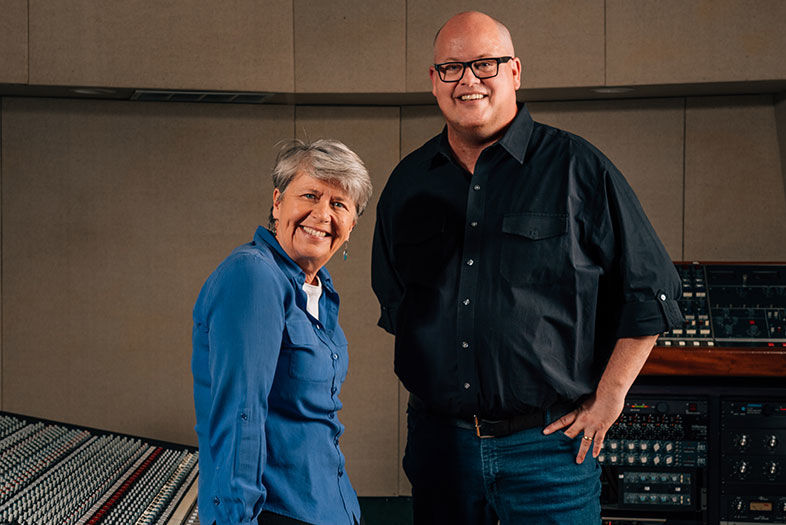
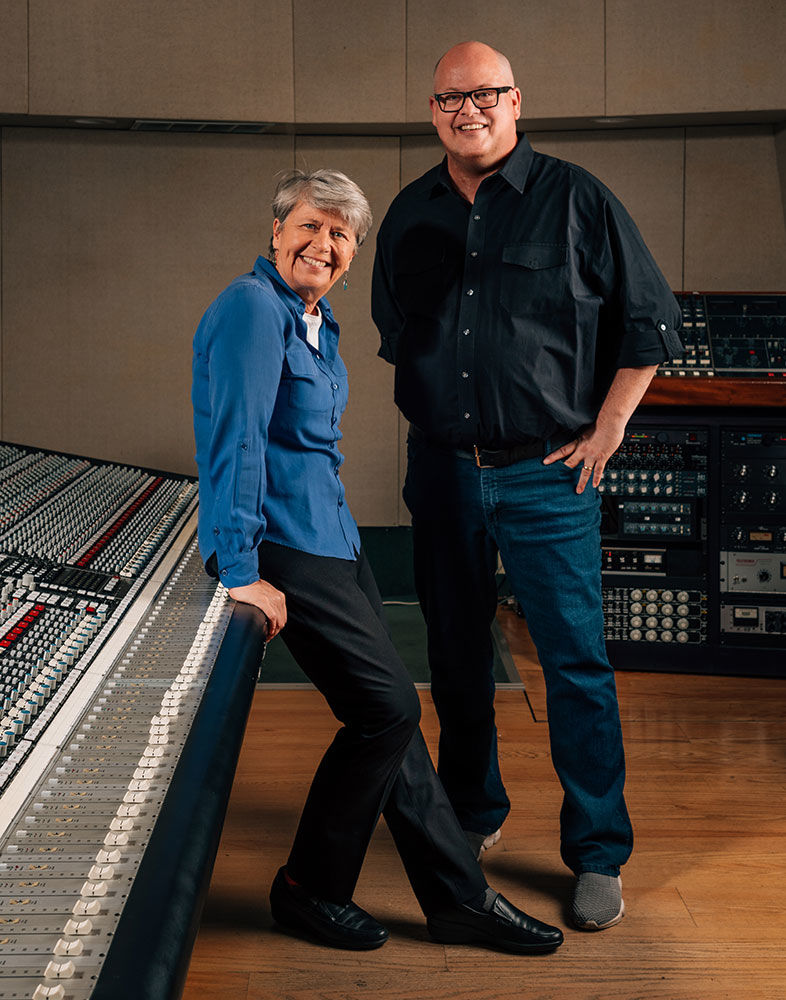
Boston has Car Talk, Chicago has This American Life, and San Diego has A Way with Words. Originally produced by KPBS in 1998, the hourlong radio show went independent in 2007 and has been entertaining audiences across the country with the quirks and surprising origins of English ever since. Now hosts Martha Barnette and Grant Barrett are busy preparing for a nine-city live tour, including right here in North Park—but we were able to get a few words in edgewise.
Martha Barnette: I’ve become far less prescriptive. I’m an English teacher’s daughter, so I was very much a stickler for “proper grammar” back in the day. But the more I did the show, the more I learned about rules we’re taught but really have no basis.
Grant Barrett: Richard Lederer and Charlie Elster, who had done the show before us, were looking to make order in the world. Martha and I come at this from a sociolinguistic perspective. There is no one perfect form of English, and those differences are important and entertaining.
MB: People get this idea that our show is a place to air pet peeves, and there’s so much more interesting stuff to talk about. It’s a celebration of the joy of language itself. My focus is on etymology, the fossilized poetry in a single word.
MB: I stole it from Ralph Waldo Emerson.
GB: Complaints about language are almost always about some other group. Some of it is “They’re trying to put on airs, to impress others,” some of it is feeling left out of major changes in culture, racial difference, ethnic difference. It’s almost never only about somebody being “wrong.” We speak English, we write English, we feel fluent, but most of us are no more qualified to judge the speech of other people than we are to talk to a nephrologist about our kidneys.
MB: I think we’ll always get calls from people who move across the country and use a term and people look at them like they have two heads—when they use the expression “needs washed” rather than “needs to be washed.” These delightful linguistic heirlooms are passed down from generation to generation. If anything, we’re getting more diverse, not less.
MB: It’s not a taping of the radio show—it’s Grant and me talking about language. We’ve been doing this for a while in lots of different venues and cities around the country, and it’s a lot of fun. We always make sure to leave a good chunk of time for Q&A to get the audience involved.
MB: It’s funny you say that, because people are always afraid to play me at Scrabble and I’m terrible at it! I’m always looking for that big Latin-derived word and somebody wins with a two-letter something.
GB: Probably 1600 to 1700 would be as far back as you could go and be understood. They’d think you were weird and your accent was incredibly odd, but you would understand enough to find an inn and get a meal, that sort of thing.
GB: If you go back to the original folios of Shakespeare, you can read it pretty well—but speaking it is strange; it sounds a little bit like Swedish with some English thrown in.
MB: And if you go farther back to around the year 1000, then English isn’t gonna make a whole lot of sense. The beginning of Beowulf is “Hwæt. We Gardena in geardagum, þeodcyninga, þrym gefrunon, hu ða æþelingas ellen fremedon!“
GB: Within 50 to 100 years of the colonies being settled, British people were complaining about English sounding different in the New World. American and British English have both changed so much that a modern speaker from either country would have equal problems.
GB: Yeah, he tried thousands of them, and very few stuck. He was rather infused with a sense of his own power to get his dictionary into the average American home. He saw it as an opportunity to force one person’s will on an entire nation.
MB: We’re glad they’ve finally come around. It’s been used that way for hundreds of years.
GB: It’s about time. The third-person gender-neutral singular is a standard part of English. Authors have been doing it as far back as Jane Austen, and frankly, the style books are kind of slow to catch up with the times.
GB: That’s like asking your favorite star in the sky! I like “pamplemousse.” It’s French for “grapefruit.” It sounds a little bit like a dessert and a little like a large horned animal.
MB: It depends on the day, but my fallback is “mellifluous.” It describes the sound of a beautiful voice, but if you break it down, the “mell” comes from the Latin for “honey,” and the “fluous” means “flowing.” So it’s “a voice that’s flowing with honey.”
MB: It does! And it’s a great example of that fossilized poetry that keeps me doing this day after day.
A Way with Words comes to The Observatory North Park on January 25. Purchase tickets at waywordradio.org, plus download the weekly podcast or tune in live on KPBS, every Sunday at 3 p.m.
