Featured articles
Food & Drink
Food & Drink
Food & Drink
Featured articles
Things to Do
Everything SD
Everything SD
Featured articles
Things to Do
Things to Do
Things to Do
Featured articles
podcast-ep
podcast-ep
podcast-ep
Featured articles
Everything SD
Everything SD
Everything SD
Featured articles
Food & Drink
Things to Do
Everything SD
Ready to know more about San Diego?
SubscribeReady to know more about San Diego?
Another year, another couple thousand dishes—including these 21 standouts
I ate a lot of food this year. I made it a point to visit chefs’ kitchens as often as possible just to see what new creations they’d come up with. So much talent in this city. Such great food. To end the year, I went through my notes and made this list—the best dishes I tried in San Diego in 2016. If happiness is a pursuit, I’d give them a try.
Best Things I Ate All Year
Slow roasted bone marrow, Baja shrimp, shallots, garlic butter, fried parsley, chimichurri. The shrimp, sautéed in the bone marrow (which is essentially meat butter) is phenomenal. Miguel Valdez is cooking over here. Really cooking.
Best Things I Ate All Year
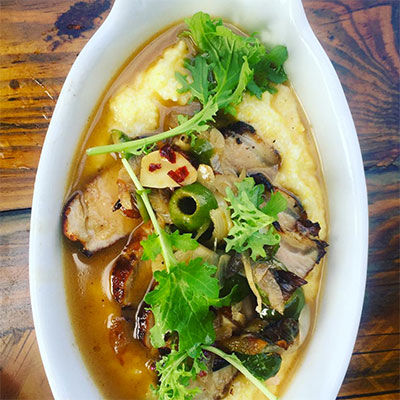
This is everything you want in winter, minus the Snuggy. Creamy polenta, sherry-braised Castleveltrano olives, shallots, garlic, mustard greens, then slices of that perfectly cooked chop in that glorious mess. Blew us away.
Best Things I Ate All Year
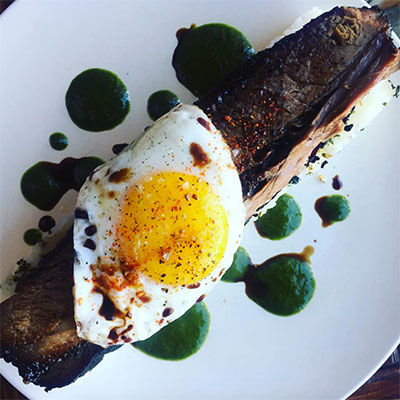
A big slab of brisket is served with chimichurri, sushi rice, and Japanese furikake (spice mixture usually with dried fish and/or dried bonito, sesame seeds, seaweed, etc.). That mixture of spice, meat, and vinegar in the chimichurri is perfect.
Best Things I Ate All Year
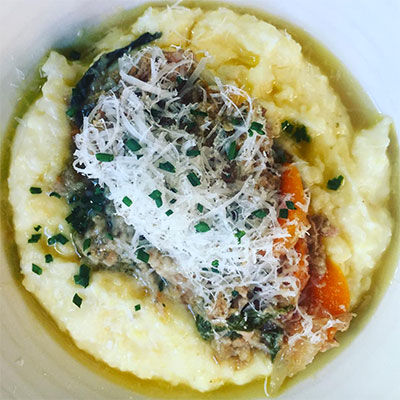
Mascarpone polenta, ragu with Nantes carrots. The polenta is made using the whey chef Joe Magninelli has leftover from making ricotta in-house. The exact contents of the ragu vary with what’s in season, but it’s easily one of the best bites in the city.
Best Things I Ate All Year
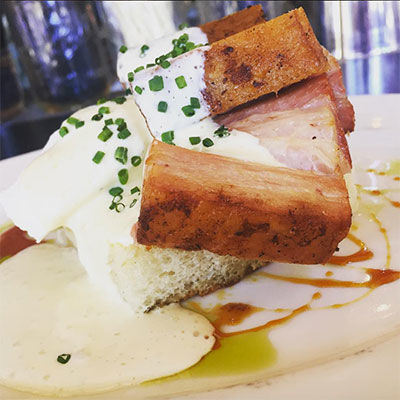
A singular reason to have brunch at Searsucker. Pork belly, poached egg, brioche, brown butter hollandaise, balsamic, and serrano chili aioli. So dirty, so good.
Best Things I Ate All Year
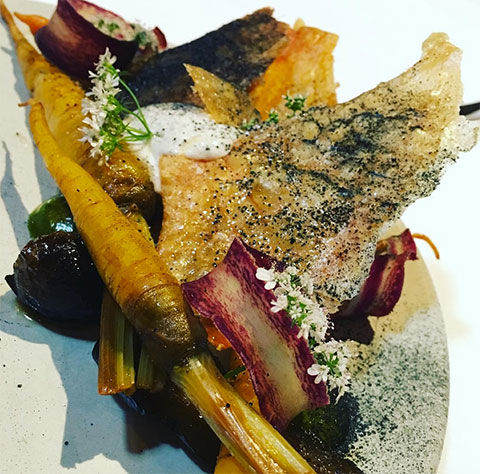
Creativity and good flavor aren’t easy to pull off. This nails it. The chicken skin is dusted with Japanese binchotan coal ash, the burrata ice cream is shocking and delicious, and marinated cucumber and cilantro chimichurri cut through the fat.
Best Things I Ate All Year
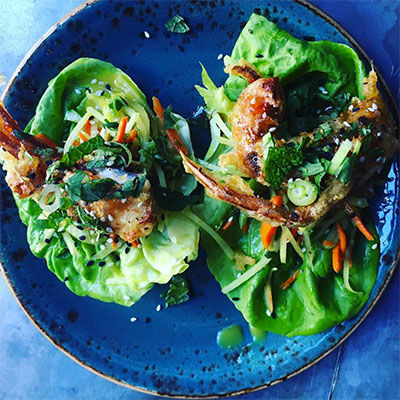
Green papaya and bok choy slaw, lemongrass vinaigrette and chile glaze. The lemongrass vinaigrette and the slaw are a play on the great Thai salad, som tum.
Best Things I Ate All Year
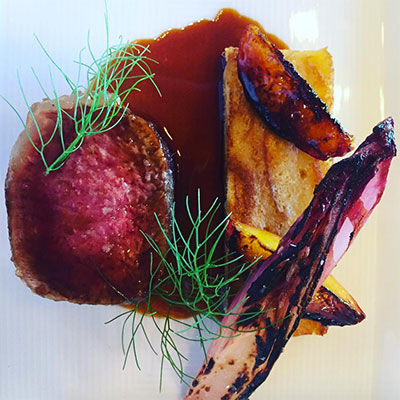
The lamb gets a caramel-anise glaze and jus, which is one of the best sauces I’ve tasted. Then you’ve got bone marrow French toast, balanced by the nicely bitter endive and a sweet charred peach.
Best Things I Ate All Year
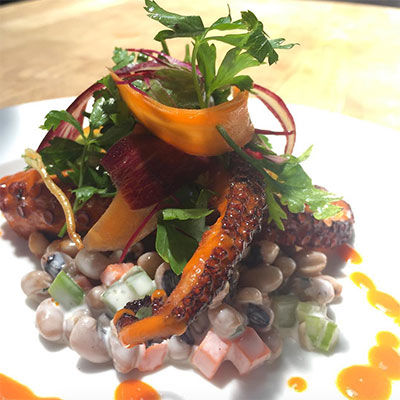
If anywhere near La Jolla in San Diego, go try this at Herringbone. Braised octopus done “buffalo style” over a cold salad of black eyed peas in house-made buttermilk ranch dressing. This is an entry for the city’s best octopus dish (right next to the one at The Patio).
Best Things I Ate All Year
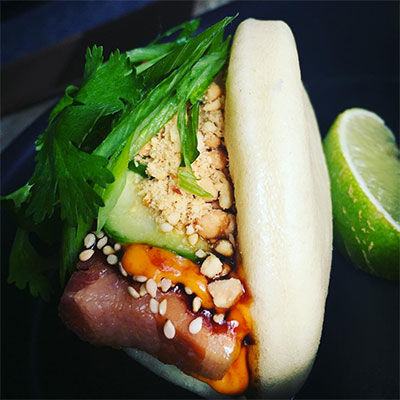
Pickled cucumber, crushed peanuts, gochujang and hoisin on a steamed bun. Steamed buns are one of the greatest textures in the world, and this is sweet, savory, nutty, excellent.
Best Things I Ate All Year
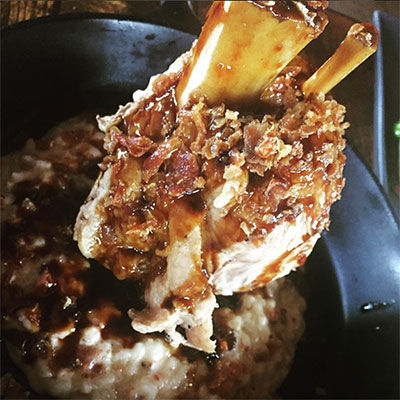
A tonnage of food, and every bite delicious. Braised pork shank with bacon and Asiago risotto, topped with cracklins. The pork is so flavorful and tender-juicy.
Best Things I Ate All Year
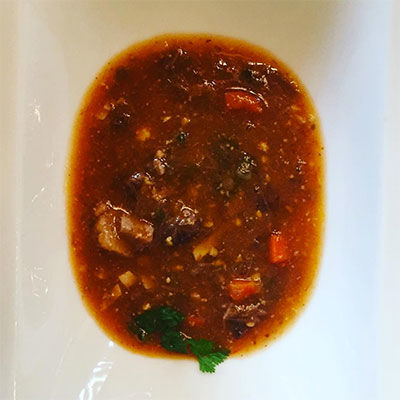
A form of this dish has been on menu here for about 70 years. Made with pot roast, sherry drizzled atop table side. Phil the sous chef makes it every single day. No one else. Can’t get more classic than this.
Best Things I Ate All Year
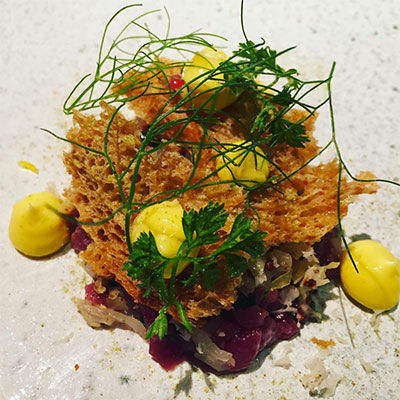
Levain crisp, mustard-fennel kraut, horseradish, egg yolk, ramps, dehydrated spruce. Beef is a combo of dry aged 28-day New York strip and the eye of round. The beef is tossed with pickled ramps, shallots, chives, lemon, and olive oil. The mustard fennel kraut is a mix of fennel and cabbage fermented in house for two weeks. The horseradish is grated fresh. The egg yolk is an emulsion of egg yolks cooked slowly at 67 degrees until it is custard like and whipped with olive oil and salt. Then a light dust of dehydrated young spruce that the chefs. preserved from the spring. Tastes like the best Reuben you’ve ever had, only raw.
Best Things I Ate All Year
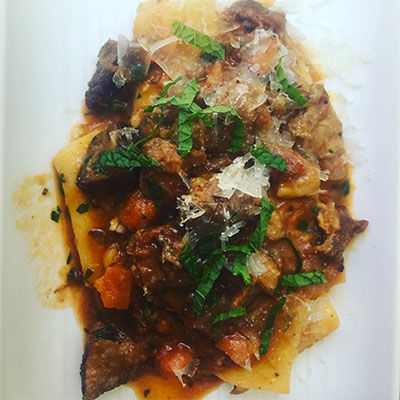
One of my all time favorite lamb dishes in San Diego. The braised lamb sugo with Pecorino and house-made pappardelle. It’s just the right amount of sweet.
Best Things I Ate All Year
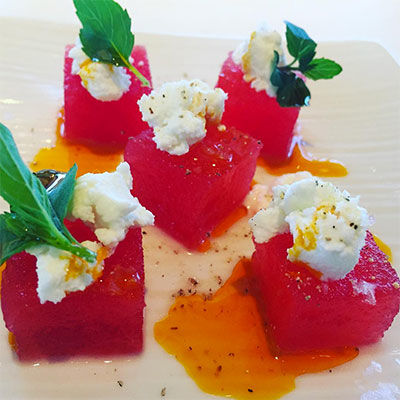
Served with goat cheese, mint and chili oil. The watermelon is sliced evenly, seasoned with piment d’espelette and bruised mint before being “cryovac’d” and compressed into dense, concentrated slices. The slices are portioned into even cubes which are individually seasoned with sea salt and espelette oil, then topped with Cyprus Grove goat cheese and micro mint.
Best Things I Ate All Year
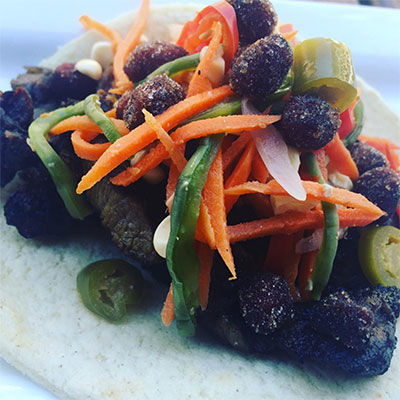
Grilled tongue, salsa macha (usually deep-fried chipotles), pickled candied peanuts. Sweet, crispy, savory, tart.
Best Things I Ate All Year
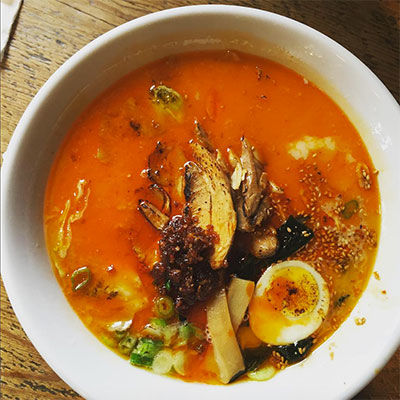
Extra thick noodles, Tonkotsu broth (pork marrow bone broth), sizzled garlic chips, five-spice soy pickled egg, bean sprouts, scallions, bamboo shoots, wakame seaweed and crushed sesame. Spicy, creamy, delicious.
Best Things I Ate All Year
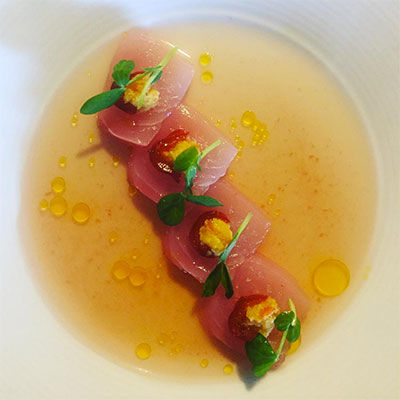
God I love this sushi joint. A sushi restaurant for punks and garage sale addicts (just look around at all the weirdcool collectibles in the joint). I’d probably just do an omakase (where chef Davin Waite serves you creative riff after riff until you surrender), but this dish was especially fantastic. Monchong is a really clean, beautiful fish. Chef Davin Waite floats his in tomato water with tangerine koshu, candied red jalapeño and pea shoots.
Best Things I Ate All Year
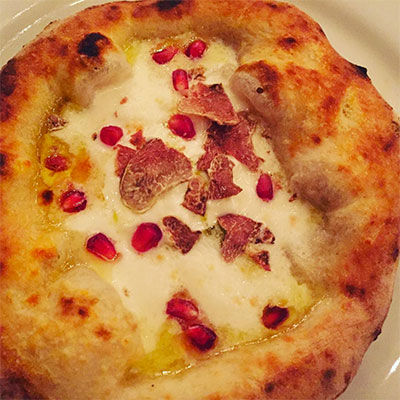
Some of the best pizza in San Diego, hands down. Buffalo mozzarella, truffles, pomegranate seeds. Oh lord. Really, any pizza here will do.
Best Things I Ate All Year
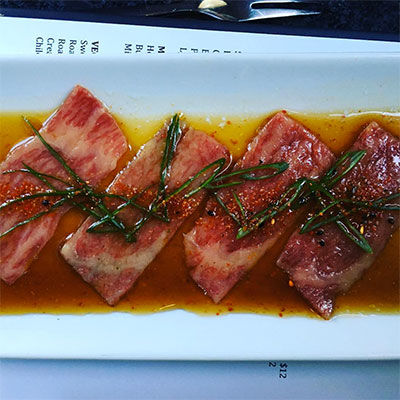
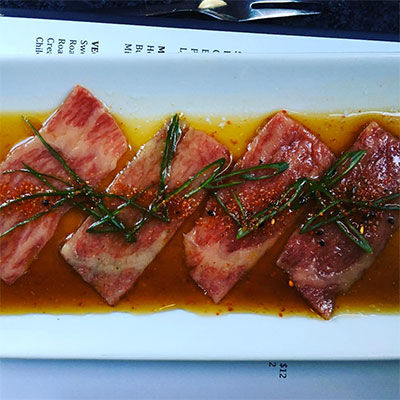
Chef Tim Kolanko said they wanted to do a sashimi with the A5 (the highest grade), but initial experiments failed. “Cold beef fat just isn’t delicious,” he says. The solution was simple. They warm the plate so that the fat becomes tender and slightly rendered. Served in ponzu with togarashi and chives. Incredible.
Best Things I Ate All Year
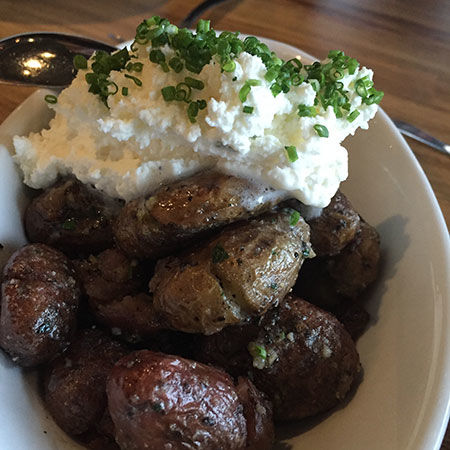
Fire-grilled fingerling potatoes with vinegar whipped cream. The whipped cream, savory and tart from the vinegar, soaks up the smoky, grilled flavor on the potatoes nicely. One of the city’s best side dishes at one of the best new restaurants that opened in San Diego in 2016.

San Diego's big public market unveils three big new concepts
Every city wants one of these. A public food market on par with Pike Place in Seattle or the Ferry Building in San Francisco. A hall of food, an amusement park for your discerning mouth. And now Liberty Public Market is reportedly two months away from its debut in November (a betting man might say December is more likely). The 22,000 square-foot project next to Stone Brewing in Liberty Station, spearheaded by Coronado’s Blue Bridge Hospitality (Stake Chophouse, Leroy’s, etc.), will include 30 mostly local food vendors. It’ll have bread, coffee, wine, cheese, seafood, meat, produce, a restaurant, a bar, beer, juice bar, ice cream, lobster rolls, desserts—everything that’s legal and consumable.
Some of those vendors have previously been announced, including Venissimo Cheese, Le Parfait Paris, Liberty Meat Shop (run by local butcher icon, Tommy Battaglia), Cane Patch Pies, Cecilia’s Taqueria, Fully Loaded Juice, Local Greens, Mastiff Sausage, MooTime Creamery (a Blue Bridge concept), WestBean Coffee Roasters, Wicked Maine Lobster, Pasta Design, Stuffed, Point Loma Tea, Fishbone Kitchen and Parana Empanadas.
Today San Diego Mag breaks news on their newest projects. First, four new vendor concepts: Crafted Baked Goods (from Blue Bridge’s pastry chef Francis Laureano, formerly of Bottega Louie), Mama Made Thai, Bread & Butter (a co-op of the city’s best bakeries) and a produce section featuring San Diego farm goods. Then, four big announcements:
With Stone’s success next door, and San Diego’s top pizza joint Buona Forchetta opening their second location a few hundred feet away, it looks like Liberty Station is finally hitting its stride.
Rendering of the incoming Liberty Public Market, set for a November open (we guess more like December).
We ask the city's best food photographers to choose their favorite pics and share their secrets to capturing a drool-worthy pic
Food is a notorious diva to photograph. The wrong lighting can make José Andrés’ paella look like a jaundiced grain bowl. You could be staring at the best sandwich of your life, but shoot it from above and—hey, congrats on that abandoned piece of lettuce bread. A cottage meme industry has been built around the hilariously bad photos on review sites that make Michelin-star food look like Michelin tires.
Especially in a visual modern media world, food culture depends on great photographers capturing the painstaking work in equally deserving ways. We asked four of San Diego’s top food photographers for their favorite shot from another year of documenting what we eat.

Getting this kind of shot takes a bit of yoga. Asana yourself into the corner, hold your breath, pray that a chef on the move doesn’t back into your light stand.
“You’re stepping into someone’s workspace during their busiest moments, so it’s a balance of being present to get the shot and being invisible to not slow anything down,” Kimberly Motos says.
The subject here is the Birdman sandwich from Chick & Hawk—hot fried chicken thigh, tangy slaw, kimchi comeback sauce, sweet and spicy pickles, potato brioche bun—getting a hearty dousing of its difference-maker seasoning. Motos captures the parts of the process that diners don’t usually see: the chaos behind something that looks so simple.

“I love this image because it feels like a moment you want to step into,” says Lucianna McIntosh. A warm, sunny day at The Fishery in PB with oysters, caviar, and martinis. Yes, please.
The little details—the glass sweating a little, the direct afternoon light creating stark shadows, the oyster glistening on the tray—are the main characters. Instead of trying to overly control the setup, McIntosh “followed the light and lines that draw you in more,” she says. “This was one of those moments where everything lined up on its own for a second. I love it when the shadows end up being just as important as the food itself.”

La Jolla native Eric Wolfinger—who won a James Beard Award for Tartine Bread, one of the most stunning bread books of all time—says he doesn’t have a signature style. His style is a conduit.
“I see my job is to translate the chef’s point of view into something you can feel,” he says.
For this shot, Fleurette chef Travis Swikard had one directive: cuisine du soleil (“cuisine of the sun”). With a spread of leeks vinaigrette, herb-roasted golden chicken, and beets, Wolfinger wanted to create a scene that felt straight out of the French Riviera, relaying the light, bright style of Swikard’s new spot.
Some bonus additions here: Extra lights—to add lots of warmth—and a clipping from an olive tree.

Timing and light are everything in food photography. In Lucien—La Jolla’s tasting-menu-only restaurant with moody ambiance—a single strobe flash creates the ideal spotlight.
Dee Sandoval says she uses the “natural, just-plated energy” of the dish to “create a portrait of moment and craft.” That’s why this Mostra Ghost Bear espresso ice cream—with San José dark chocolate mousse, soy-miso caramel, and koji shoyu chocolate sauce—looks like it might dissolve halfway to your mouth.
Emma Veidt is an editor at San Diego Magazine. She earned her bachelor's and master's degrees from the Missouri School of Journalism. She loves running, hiking, and rock climbing, but really, she mostly loves encounters with the street cats around North Park.
Spruce up your home bar setup with product recommendations from local cocktail aficionado and Collins & Coupe owner Gary McIntire
I peel myself off my couch, crack my back, and force myself to the bar (23 years old, by the way). It’s a Friday night, and my smart watch is already informing me my body battery is critically low.
Nevertheless, party we must.
Because, to be fair, one of the best things about going out—dive bar, velvet-clad cocktail lounge, or anywhere in between—is the performance of it all. Watching a bartender shake and stir like it’s choreography, finishing the drink with a sprig or petal placed just so, feeling like your collection of mixers and spirits is worth pouring into the Holy Grail.
One of the worst things about going out, though? Being out.
So I thank God for the home bar.
No lines, no cover, no shouting your order over someone named Kyle who just discovered the AMF. No $19 cocktails that taste suspiciously like juice. Just me, my apartment (where I can play whatever music I want), and the quiet confidence of knowing I can make something decent without putting on real pants.
A home bar, I’ve learned, doesn’t have to be impressive. It just has to be intentional—a few bottles you actually like, some tried-and-true tools, and at least one drink you can make without Googling. That’s it. That’s the barrier to entry.
To create the ultimate home bar collection, we tapped the folks at San Diego cocktail supply shop Collins & Coupe to give us some of their recommendations. Pick and choose what you need, and start cocktailing.

You won’t get very far in your cocktail-making-journey without shaker tins. Boston shakers (two pieces, tin-on-tin) and cobbler shakers (three pieces with a strainer and cap) are the most classic styles, but if you want to avoid the tins getting stuck (or creating a mess on the floor), Boston shakers are the way to go.
“Koriko Tins by Cocktail Kingdom are the gold standard for every bar worth their salt. Every new bar we help outfit with tools insists on this brand and model,” says Collins & Coupe co-owner Gary McIntire.
“These are handmade, 100 percent solid copper and will last a lifetime,” McIntire says. “Because they are solid, there is no plated finish to wear off, and they will only look more beautiful with age.”
According to the pros, don’t even bother getting bar spoons shorter than 12 inches. One foot long is the magic length to get the best stirring results: “Rule of thumb is at least 50 percent of the spoon should be out of the glass,” says McIntire.
Sugar Skull Bar Spoon
Cocktail Kingdom Enamel Lucky Cat Bar Spoon
Pulp in your orange juice? We’ll allow it. But in your cocktail? Smooth and strained is optimal. You have two choices here: Hawthorne strainers have a spring that attaches snugly to shaking tins; julep strainers have no tabs or springs (originally created to drink mint juleps before straws became commercially available).
Bull in China Julep Strainer, Brushed Stainless Steel
Barfly Two-prong Heavy Duty Hawthorne Strainer
We’ve all seen those seasoned bartenders with the arm tats and haughty demeanors who can assemble perfect drinks with their eyes shut. The rest of us, however, need training wheels. Jiggers—those hourglass-shaped measuring tools—make consistent cocktail-making easy, although cheap versions tend to be inaccurate. Don’t skimp out on these.

“Heavy-duty and made of one piece,” McIntire says. “We use [this jigger] in our classes and at home. It comes in a bell-shaped version and a Japanese version, which is tall and narrow.”
“Glassware is always essential to the cocktail experience,” says McIntire. The martini glass is an avatar for American hair-loosening for a reason: sleek, viciously “V,” and highly spillable (danger always looks good). To start, look for a coupe glass (the fancy cat bowl-looking thing), a highball (glassware with posture), and a rocks glass (the blue collar hero).
Milo Crystal Rocks Glass by Viski
Savage Coupe by Nude Glassware
Meridian Highball with Gold Rim by Viski
You know how Caesar dressing tastes way better when you don’t think about the fact that there are anchovies in it? The same goes for cocktails and raw egg whites. Some of your favorites rely on the frothy ingredient to shine (whiskey sours, gin fizzes, etc.). Mesh strainers help make that magic happen. According to McIntire, always get the conical version; the round, bowl style could cause spills.
Lili Kim is a content coordinator and writer for San Diego Magazine, with experience highlighting local businesses and communities. When not writing or shooting film, she is likely brewing her seventh cup of tea of the day or strolling along Sunset Cliffs.
Stake Chophouse & Bar brings contemporary classics and old-school service to the heart of Coronado
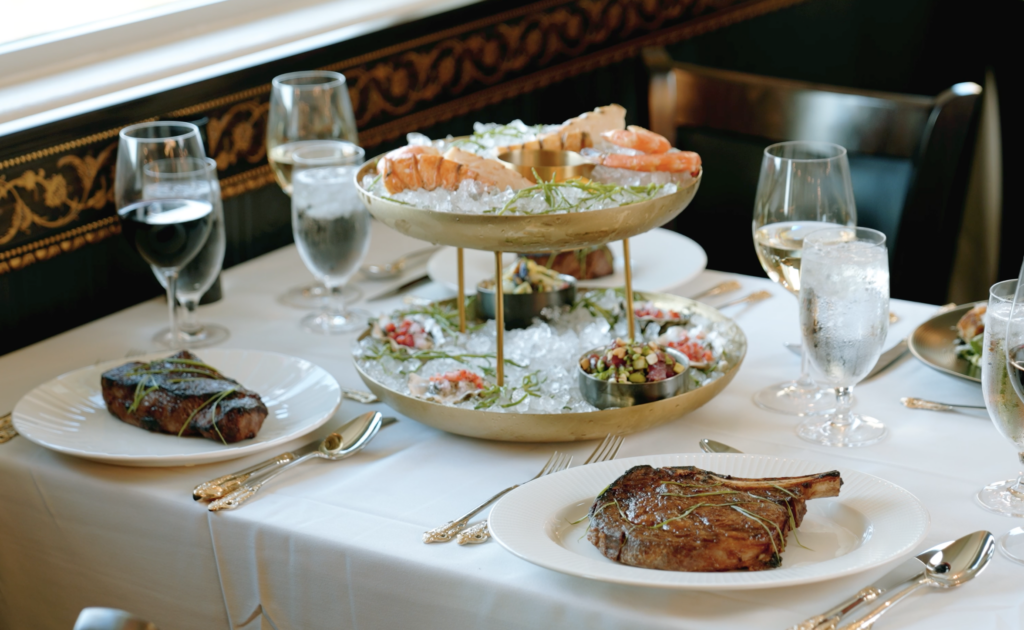
Stake Chophouse & Bar isn’t your average steakhouse. Blue Bridge Hospitality’s Coronado outpost is a modern interpretation of a big-city steakhouse nestled in the heart of the small coastal community. The team at Stake has reimagined the whole steakhouse experience. By prioritizing a seasonal farm-to-table sourcing philosophy, a personalized guest experience, and unique service touches, like a formal steak presentation and a bespoke knife selection process, Stake distinguishes itself in a sea of steakhouses.
Exceptional steaks, including Wagyu from Japan, Australia, and the U.S., and fresh seafood flown in daily form the core of Stake’s culinary identity. The menu features a five-course omakase-style steak experience highlighting house favorites, plus an array of cuts, and classic steakhouse staples—think a wedge salad, baked potato, or pasta carbonara—refined for a contemporary palate without losing their traditional appeal. Stake focuses on seasonal sourcing from the region’s best family farms and specialty purveyors, and incorporates intentionally unexpected touches to create something truly unique.
“I challenge our chefs and myself to take it a step further in sourcing,” says Chef Ronnie Schwandt. “It’s important to us to highlight different farms, unique one-off farms—whether it’s cattle, strawberries, a local fisherman or from anywhere in the United States, we’re always trying to find that niche.”
Beyond the menu, Stake emphasizes outstanding service, says Vinny Spatafore, Director of Hospitality Operations. Staff maintains detailed notes, allowing them to remember guests by name, recall previous orders such as a favorite martini (also memorable for the customer since it’s served in an extra tall, distinctly-shaped glass), and celebrate special occasions like birthdays and anniversaries.
“When you have those points of topic that you remember about a guest, they appreciate that,” he says. “Our servers are really good with that—we have a couple servers who have been here since the beginning and they’ll remember somebody from years ago, their name, their kids’ names, where they live. I’m really thankful to have a great front of house staff.”
Award-winning wines, rare whiskeys, special events, and a complementary black car service that provides transportation for guests throughout Coronado add to Stake’s appeal.
Schwandt stresses that Stake offers more than a meal; they aim to give patrons something unforgettable.
“It starts when you walk up the stairs and are greeted by the hostess—that sets the tone for the night. Then you’re greeted by a server, who may know you by name, and can guide you through the menu and curate as they get to know you,” says Schwandt. “Most people leave kind of blown away; they leave feeling like they just had an experience. That’s the goal, right? Whether you’re serving smash burgers or high-end steak, you want somebody to leave thinking, Wow, that was awesome.”
After eight years and numerous awards, the cafe and roastery expands its operations in North County
San Diego’s coffee industry has yet to hit its ceiling. There are at least 850 coffee shops across the county (possibly over 1,000 at this point) and more specialty cafes and roasters seem to join the roster every other week.
Some newcomers, like Chance’s Coffee, focus on specialties like Vietnamese coffee; other stalwarts, like Bird Rock Coffee Roasters, have helped put the local coffee scene on the map with internationally acclaimed beans and baristas for 20 years. You can get a classic pour-over or an ultra, whipped cream–topped strawberry lavender basil blueberry matcha latte sprinkled with unicorn glitter—whatever your coffee style, San Diego’s got it… somewhere.
Steady State Roasting falls more in the former category, focusing on traceable, sustainable sourcing and no-nonsense roasting (no unicorn glitter here, sorry!). Founder and lead roaster Elliot Reinecke first started Steady State in a garage behind his house, roasting small batches until expanding slightly to a shared and not-quite-permitted space before landing in a lucky spot on State Street in Carlsbad.
Now, eight years later, Steady State is scaling up once more, opening its second cafe in San Marcos next to their roastery. The new location offers the same food and drink menu as the original Carlsbad location, and Reinecke says he plans to add an onsite bakery to bake items like English muffins and country loaves to supplement Prager Brothers’ more specialized pastries.
He doesn’t plan on opening more cafes, though. Rather, Reinecke plans to expand roasting operations and strategic sourcing. Currently, he sources beans from Colombia, Panama, across Africa, and as of this year, Costa Rica. “We’ve had Costa Rican coffee before, but we went to origin a few months ago and bought six different lots from there, all from really good high-end local farmers,” he explains.
The rising cost of sourcing does present some challenges, as does changes within coffee culture itself. Coffee has moved from a mass-market beverage to a highly personalized artisanal experience, but the current feeling is moving back towards focusing on quality over flashiness, says Reinecke.
If Reinecke’s prediction is right, coffee is headed on a similar trajectory to craft beer. Ten years ago, no one knew what Citra hops were. Now, even casual beer fans are versed in hop varieties, and that attention to detail is spilling over to coffee as well. How many of San Diego’s 1,000 coffee shops will remain once the unicorn glitter’s luster fades? My bet is on anyone remaining steadfast to sourcing, sustainability, and simplicity.
Steady State San Marcos is now open at 1320 Grand Avenue, Suite #9, San Marcos. Initial operating hours are Tuesday through Saturday, 7 a.m. to 2 p.m.
Listen Now: The Latest in San Diego’s Food and Drink Scene
Have breaking news, exciting scoops, or great stories about new San Diego restaurants or the city’s food scene? Send your pitches to [email protected].
PARTNER CONTENT
Beth Demmon is an award-winning writer and podcaster whose work regularly appears in national outlets and San Diego Magazine. Her first book, The Beer Lover's Guide to Cider, is now available. Find out more on bethdemmon.com.
The team behind Harumama and Blue Ocean will open Little Kiki Katsu & More on June 15, serving premium cutlets, Japanese sandos, and curated sake pairings
Every culture has its own comfort foods—cozy dishes that nurture the soul as much as the body. In the US, dipping a grilled cheese sandwich in a bowl of tomato soup can feel as satiating as pulling a warm sweater out of the dryer. In China, a steaming bowl of congee is basically a miracle remedy for anything you can imagine. I’m pretty sure Italian carbonara could achieve world peace. And in Japan, katsu remains one of the most universally satisfying inventions of the past century.
Katsu was originally invented as a riff on côtelette de veau, the classic French veal cutlet coated with breadcrumbs and pan-fried in butter. In 1899, a Western-style restaurant called Rengatei in Tokyo decided to put their own spin on the dish by pounding the cutlets until thin, then coating them with softer panko and deep-frying versus pan frying (like tempura) for a crispier, lighter, crunchier bite. Today, pork—called tonkatsu in Japanese—tends to be the most common base for katsu.
The dish has yet to achieve the same mainstream status as say, chicken nuggets, in the US. But Little Kiki Katsu & More hopes to change that, when the katsu-focused restaurant opens in Carlsbad on June 15.
Created by the team behind Harumama and Blue Ocean, Little Kiki will focus on premium katsu dishes paired with sake and around a dozen small bites like miso soup, karaage, edamame, and Japanese pickles. Executive chef James Pyo, who co-owns all three restaurants with his wife Jenny, created a menu that features proteins like Berkshire Kurobuta pork, Jidori chicken, salmon, scallops, and dry-aged Pacific cod for the katsu and grilled stone selections. (Note: the grilled stone options will be offered for dinner only.)

The lunch menu includes Japanese-style sandos like a tonkatsu sandwich with pork, housemade bread, and tonkatsu sauce (available regular or spicy). Dessert options are simple to start—yuzu cheesecake, matcha crème brûlée, and mango/yuzu mochi ice cream. The Pyos curated a selection of premium sakes as well, specifically for pairing purposes, as well as offering some beer and cocktails.
Little Kiki, which is named for Jenny’s cat, seats 25-30 guests inside with room for only a few more on the small outdoor patio as well. Designer and assistant Yoojin Jang says the vibe is meant to be warm and welcoming but modern, using colors like olive green, cream, and pops of orange against Japanese-style wood slats.
Initially, Little Kiki will only be open for dinner service, but aims to introduce lunch hours for the grand opening on July 1. Due to the limited seating, Jang encourages guests to make reservations, and while the restaurant will offer takeout, it will not be available on food delivery apps like Uber Eats or DoorDash to motivate guests to come experience it for themselves.
“Come in curious and leave satisfied,” says Jang. And keep your eyes open for subtle cat motifs—she promises they are hidden all over the place. Whimsy, it seems, is also on the menu.
Little KiKi Katsu & More soft opens on June 15, 2026 at 2958 Madison Street, Suite 101 in Carlsbad. Hours are Monday, Wednesday, Thursday, and Sunday from 11:30 a.m. to 3 p.m. for lunch and 5 p.m. to 9:30 p.m. for dinner; Friday and Saturday from 11:30 a.m. to 3 p.m. for lunch and 5 p.m. to 10 p.m. for dinner; closed Tuesday.

Listen Now: The Latest in San Diego’s Food and Drink Scene
Have breaking news, exciting scoops, or great stories about new San Diego restaurants or the city’s food scene? Send your pitches to [email protected].
Beth Demmon is an award-winning writer and podcaster whose work regularly appears in national outlets and San Diego Magazine. Her first book, The Beer Lover's Guide to Cider, is now available. Find out more on bethdemmon.com.
Scripps study shows that some patients may be able to taper their dose and maintain results
While glucagon-like peptide-1 (GLP-1) receptor agents have been used to treat Type 2 diabetes for more than 20 years, their recent emergence as weight-loss wonder drugs marked a new frontier in medicine. But their effectiveness has left some patients wondering what to do once they’ve reached their goal. Stopping the medication could mean regaining some, if not all, of the weight. A Scripps Clinic internal medicine physician recently conducted a small study of whether GLP-1 patients who had reached their goal weight could maintain that weight by taking their regularly prescribed injection every other week instead of weekly. Spoiler alert: 30 of 34 patients did. Read more about the study here and what that may mean as pharmaceutical companies roll out oral GLP-1s.
For more nutrition, wellness, and healthy living tips, sign up for the San Diego Health newsletter here.