Featured articles
Food & Drink
Food & Drink
Food News
Featured articles
Everything SD
Everything SD
Everything SD
Featured articles
Things to Do
Things to Do
Everything SD
Featured articles
podcast-ep
podcast-ep
podcast-ep
Featured articles
Everything SD
Everything SD
Food & Drink
Featured articles
Partner content
Everything SD
Everything SD
Ready to know more about San Diego?
SubscribeReady to know more about San Diego?
How a 45-year-old restaurant chain keeps up with the new, hip Joneses
Our need for new is nothing new—it’s just becoming stronger. Blame the whirlwind of reinvention that is the tech sector. Whereas planned obsolescence once bothered American consumers, we now demand a revolutionary new version of the iPhone every year.
For a long time, restaurants seemed immune to reinvention culture. People loved having “their spots”—dependable, unchanging restaurants that served as satellites of their homes. A favorite table at a restaurant with a long history of quality was just fine.
“Now, I think restaurants need to reinvent or at least refresh themselves every eight to 10 years,” says Mike Morton, Jr., president of The Brigantine. Beloved by locals for its swordfish, beef stew, three-dollar fish taco happy hours, oysters, and ice-cold beers, “The Brig” has been quietly giving itself a gigantic facelift over the last 10 years.
In the ’60s, Mike Morton, Sr. and his brothers owned a liquor store in Point Loma (now Trader Mort’s). They used to watch the area’s famed fishermen unload prize swordfish at the dock. The Chart House, then the hottest seafood restaurant in town, made the seafood restaurant business look easy. “So in 1969 my dad and his brother had the crazy idea to take a second mortgage out on their mom’s house and open a restaurant on a shoestring budget,” says Morton, who now helps run the family business with his wife, brothers, and about 1,200 employees.
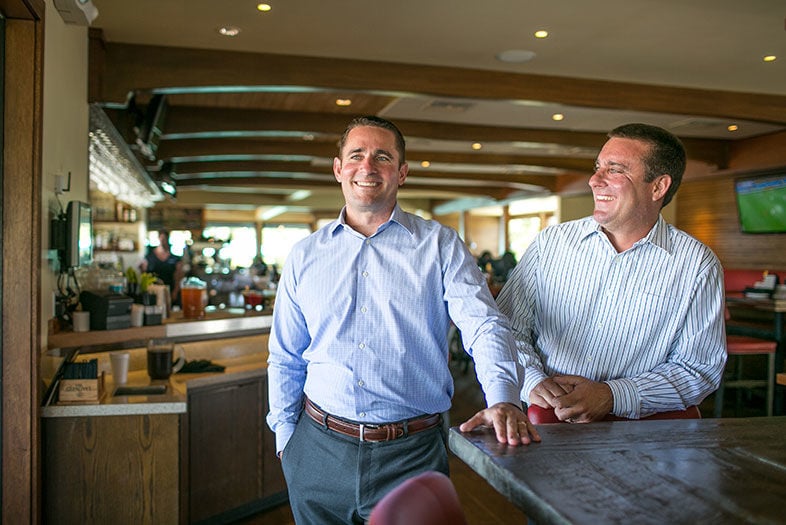
Morton brothers of the Brigantine
The next generation: Mike Morton, Jr. (left, with brother Mark on right) took over the family business and now works to carefully evolve the flagship restaurants to cater to the modern diner.
They took over a duplex on Shelter Island Drive [now Miguel’s Cocina], originally an insurance office and flower shop. Out of the gate, they struggled. The senior Morton and his wife, Barbara, cooked, washed dishes, waited tables, poured drinks, handled accounts. “My dad’s favorite time was the weekend,” explains his son, “because the banks were closed. At one point they didn’t have enough money to make payroll, so my dad sold my mom’s car. I’m not sure she ever forgave him, but they’re still married.”
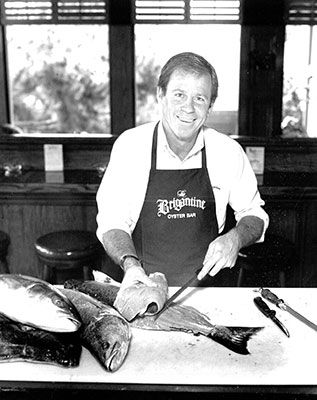
Mike Morton, Sr
Opening day: Mike Morton, Sr. opened the first Brigantine in 1969 with his wife and brother.
Eventually things got better—mostly because the Mortons resolved to stay open to 2 a.m. When The Chart House closed down for the night, the employees and other locals would head to The Brig for nightcaps. The late-night scene saved them. In 1973, they were able to open a second Brigantine in Coronado, across the street from the Hotel Del. In ’82, they opened their first Mexican concept, Miguel’s Cocina, using family recipes from their employee Javier Alaniz (thank his relatives for their esteemed white sauce). In 1999, they rounded out their portfolio with The Steakhouse at Azul on Prospect Street in La Jolla.
Now, 45 years later, Brigantine has 14 locations and three different concepts. Their general manager at the Coronado Brig, Eileen Montgomery, has been there since it opened. Their regional VP, Pat Walsh, started as a dishwasher 38 years ago.
It’s a San Diego institution, which comes with its own set of advantages—like customer loyalty, a recognizable brand, and bulk buying power. But a 45-year-old chain of restaurants also comes with its disadvantages. Mainly, staying relevant. The cult of new-new-new has never been stronger in the restaurant world. How can a nice family place once heavily decked with nautical paraphernalia and lacquered wood compete with the hip, designer restaurants that seem to open every three months? (Have you been to Little Italy lately?)
“If you look at the way big brands have evolved, you can see a 180-degree shift,” says Tom Penn of San Diego restaurant consulting group Real Restaurant Solutions. “As brands rolled out in the last half of the 20th century, there was value in the predictability and trust people had in a brand. Customers will go to a Starbucks in a different city because they know what they want, the risk is reduced, and they feel more secure that they know what they are going to get. A good brand is competent in delivering consistency.
“But the shift is on,” says Penn. “The level of sophistication of consumers continues to grow, so they are demanding more quality and unique experiences.”
Morton acknowledges that loyalty among their regulars is key to their success. “But you don’t want to age out with your guests. We had to take a good, hard look at our places.”
A series of moves within the Brigantine business plan has kept them in the game for the long haul.
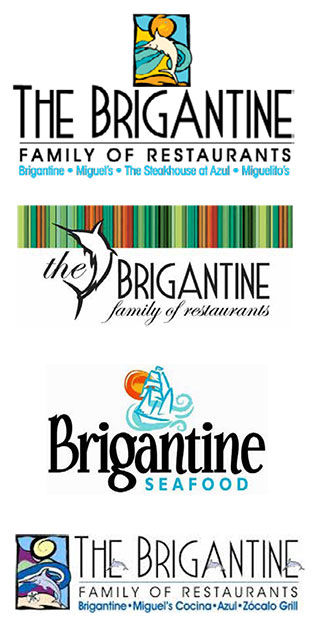
Brigantine Old Logos
Brigantine new logo
In 1984, Harpoon Henry’s seafood restaurant in Point Loma closed. It was basically across the street from the original Brigantine. The Mortons loved the idea of a second-floor balcony overlooking the harbor. “So we literally closed on a Friday and moved in there on a Monday,” recalls Morton.
The view was nice. But it was the live oyster bar with the miniature performance kitchen that really started a new era. “My folks and some senior people had been scouting restaurants in San Francisco and the East Coast,” Morton explains. “The live oysters were great, but it was more that people could see the kitchen action happen right in front of them.”
In the past, restaurants kept the kitchen in the back of the house so that the grimy, unsexy mechanics of producing food didn’t dwindle the magic of the final, grandiose meal. By inverting that setup, The Brig turned cooking into an attraction itself. As the success of Food Network has shown, Americans get a primal satisfaction from watching food being made. Instead of CNN or ESPN on a TV above the bar, you can watch your fish taco get dressed. As we’ve seen with the success of Chipotle and In-n-Out, having an open kitchen also increases the trust level of an increasingly wary dining culture.
“People really responded to that,” Morton says. “They could have a seat and watch their food being made. Every Brig location would have an oyster bar from that point on.”
Earlier this year, Mike Morton realized his company’s website was less than optimal. In the third quarter of 2013, over 40 percent of OpenTable users booked a reservation using a mobile device. The company website was comparably analog.
On the advice of Ballast Point owner Jack White, an old Point Loma high school friend, Morton called MiresBall, a San Diego creative agency. The original plan was to overhaul the website, but MiresBall felt the Brig’s brand needed a little more TLC.
“There were about nine different logos printed all over the place,” says MiresBall creative director, Scott Mires. “You could tell it had evolved organically over time, with each restaurant kind of adding its own spin. But it was confusing to the customer.”
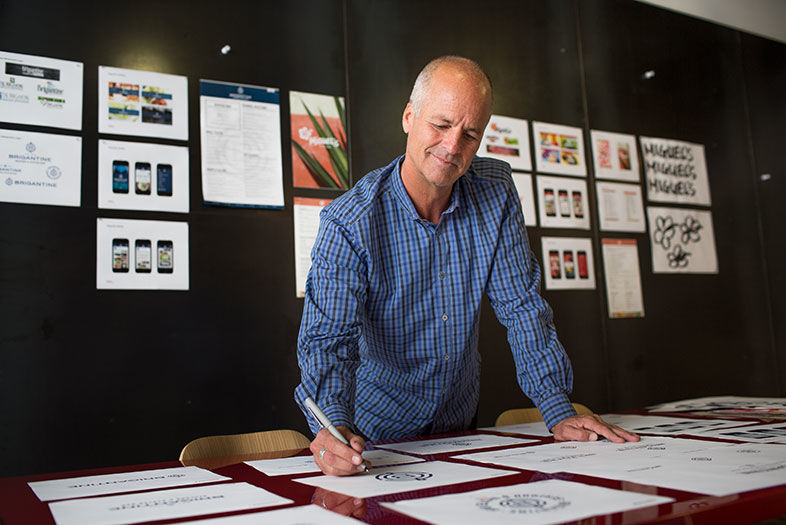
Scott Mires of MiresBall
Fresh eyes: Scott Mires of MiresBall was brought in to refresh the company’s logo, website, and overall brand image.
The Brigantine had always given each of its locations autonomy over their personality. “We really encourage our general managers to become part of the neighborhood and let them decide what’s best,” explains Morton. The result was a scattered identity. In one place, the Brigantine was represented by a clipper ship with sails at full mast. In another, it was a swordfish majestically leaping out of the water between the letters.
“The swordfish leaping is one of the ultimate seafood clichés,” says Mires. “Hopefully we develop a good enough relationship with our clients that we can tell them some of those hard truths.”
MiresBall conducted interviews with shareholders. (“Independently,” Mires notes, “so that the loudest one in the room didn’t dominate the conversation.”) They interviewed employees. They visited all of the locations and observed, took photos, notes.
“You have this really old, built-in crowd of locals,” explains Mires. “The people that work there are old Point Loma surfers. It just has this really cool local vibe that I’m not sure was being expressed in their marketing.”
To keep it natural, MiresBall didn’t hire models when taking new photos for the website and other company visuals. There is no obligatory “pretty woman laughing over wine with her handsome friend” photo. “People can tell when they’re being marketed to,” says Elisha Lutz, MiresBall’s director of marketing.
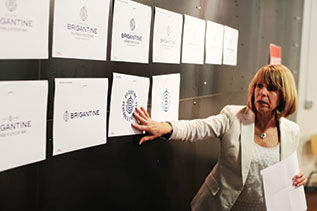
MiresBall Creative Process
Make it modern: Creatives at MiresBall work to streamline four legacy logos into one modern symbol of the brand.
Mires adds, “The new generation is really good at sniffing out poseurs.”
The biggest overriding change in the process was to remove the clutter. At some Brigantine locations, you would have logos from every concept on a single napkin, which ends up looking like the hood of a NASCAR instead of a clean, iconic image of The Brig. The new logo is clean—a “B” in the middle of what looks to be either a periscope, series of fishhooks, or some sort of meditative circular maze. It’s a creative mashup, intentionally ambiguous. The image will be used everywhere—on menus, napkins, aprons, etc. The prosaic swordfish is dead.
The new Brig image—and website—launches this summer.
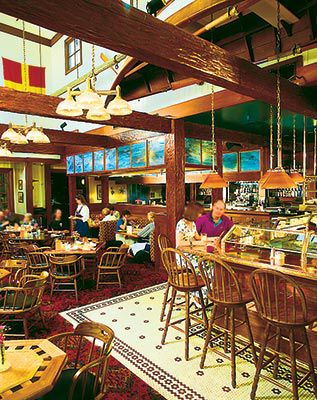
Poway Brigantine then
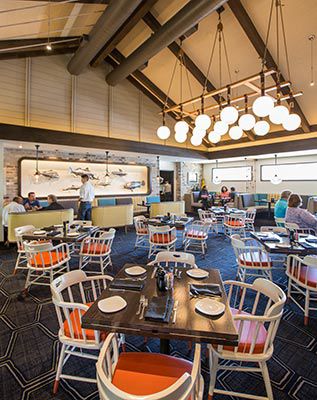
Brigantine now
Another crucial part of keeping up with the times started for The Brig in 2004, when they face-lifted the Coronado location. The Brigantine trademark atmosphere—heavily lacquered woods, nautical tchotchkes, and dark interiors—had fallen a little behind.
The discerning ’70s diner didn’t mix dinner business with drinking pleasure. So restaurants separated church and state. “People either wanted to go have a dining experience in a dining room, or they wanted to have a drink at the bar,” explains Morton. “We had real small lounges and big dining rooms.”
Now, social dining is in. At restaurants like Monello and Ironside Oyster Co., the bar action is highly visible from the dining room, with very little barrier between the two.
“You want to make everyone feel part of that energy,” explains Hatch Design Group owner Mike Hatch, who renovated the Del Mar and Escondido locations. “We did that at the Brigantine Del Mar location. You have a central bar where you can look across at each other. And you can see your food being cooked, which makes for a good experience.”
The 1970s were also a dark time. “Old restaurants had dark bars in ’em,” says Hatch. “But today everything is lighter, healthier, indoor-outdoor. It’s almost like you’ve got a problem if you’re drinking in a dark bar.”
Almost every one of the Brigantine locations featured dark woods with mood lighting. Shadows were the overriding design theme. These days, natural light rules the restaurant scene. Roll-up garage doors. Completely al fresco restaurants. San Diego has pretty nice weather, and restaurants are framing that as a design element. At Del Mar, Hatch blew out as many walls as he could to let the outside in.
“A lot of the dark woods went away,” says Morton. “Our locations now have much more of an open-air feeling. We want to get away from dark corner booths.”
Outfitted with a full ship’s mast in the dining room, the Escondido Brigantine was the most ship-like of any of the Brigantines. “It looked like the Pirates of the Caribbean,” admits Morton. “So we spent about $2 million and blew it out.”
To renovate the entire building would’ve cost way too much, so they made slighter changes. Hatch replaced the dark woods with white tiles, and created a modern entry space so that people’s first impression walking in the door felt circa now. The new Escondido Brigantine opened in March (their Eastlake location is next on the list for renovating). Morton is very pleased with the results, although it’s not without detractors.
“We still get emails from old customers who are upset that we changed it,” he says. “But you have to make a leap of faith.”
That’s really it, according to Morton. That’s how a restaurant survives 45 years in the culture of new. Institutionalizing what works (swordfish, fish tacos, bulk buying power) and slowly ponying up the cost to fix what doesn’t (dark bars, scattered branding, over-indulging in the nautical tchotchke market).
“It’s an evolution, not a revolution,” says MiresBall’s Lutz. “They had this really rich history, and we weren’t going to throw that out.”
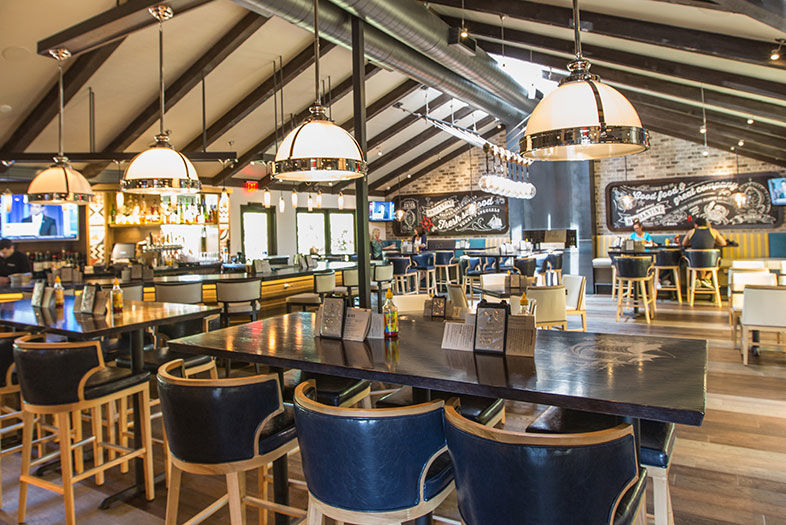
Brig Changes
Light and bright: The Brigantine in Escondido
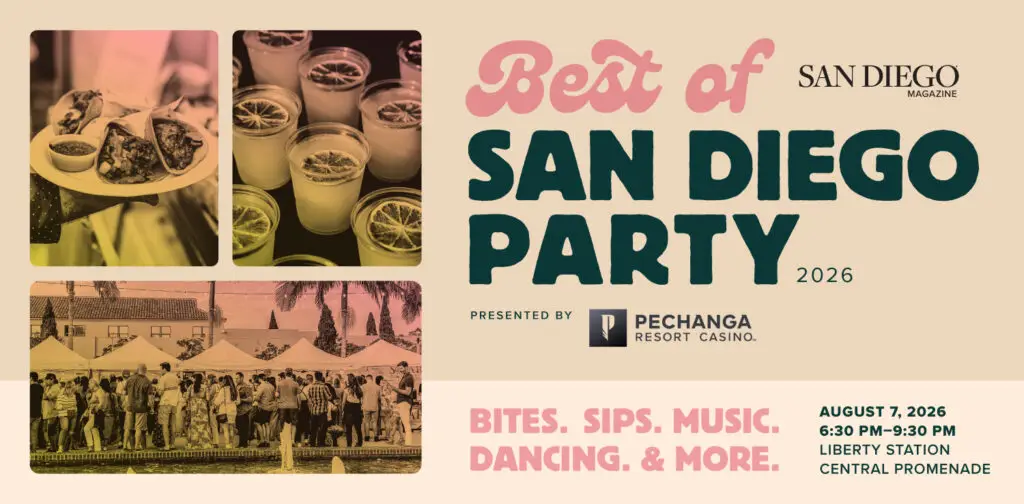
Offering everything from smashburgers to sundaes, the latest food hall from Tiger Hospitality opens its doors this weekend
Omakase and fixed-price menus are one way hospitality businesses are addressing our collective food decision-making fatigue. But on the opposite end of the spectrum, some restaurateurs are offering a bonanza of totally unrelated options for people ordering on a whim. Why not pair a lobster grilled cheese sandwich, açaí bowl, and ridiculously loaded hot dog?
Starting June 27, diners can satisfy their spur-of-the-moment appetites at Global Fork in Little Italy, the latest food hall from Southern California-based Tiger Hospitality.
Six different food concepts will be featured in the 4,685-square-foot, indoor-outdoor space along the Piazza della Famiglia promenade. The space’s inaugural lineup includes a mix of Tiger Hospitality-owned concepts (Cosmos Burger, La Vida, Lobster Lab, and Prik Ki Nu Thai) and outside operators (Seattle-based Moto Pizza and Handel’s Homemade Ice Cream). The space next door, Good Enough Cocktail Club, is another Tiger-backed brand, operated by the team behind Same Same and Amor y Magia in Carlsbad.
Cosmos Burger serves smashburgers stacked with classic toppings, while Lobster Lab focuses on seafood favorites including lobster rolls, shrimp rolls, and lobster mac n’ cheese. Prik Ki Nu Thai adds Thai street food to the mix, with traditional noodle, rice, and stir-fry dishes. And for those looking for something on the lighter side, La Vida offers things like smoothies, salads, and wraps.

Moto Pizza focuses on Detroit-style square pizza with Filipino influences and, despite the name, is not affiliated with Mr. Moto Pizza. Handel’s, which began in Ohio in 1945, will offer dozens of flavors ranging from staples like chocolate and vanilla to rotating specialties packed with candies, cookies, and other mix-ins. (Handel’s already has a number of locations across San Diego, with a La Mesa store coming later this year.)
Some of these vendors already operate at Miramar Food Hall, the other Tiger-owned food hall in San Clemente. And some of them will also appear in Station8, the next food hall slated to open in UC San Diego’s Theatre District Living and Learning Neighborhood later this fall. But if you ask me, reviving the space that housed the Little Italy Food Hall before its closure last February is a far better outcome than leaving empty suites smack in the middle of an area saturated with fantastic food options. Plus, where else can you order a slice of beef adobo pizza alongside squares of caviar toast and a banana split?
Global Fork opens June 27 at 550 W. Date Street, Suite B, in Little Italy. Initial operating hours are from 9 a.m. to 9 p.m., seven days a week, but vendor hours may differ.

Listen Now: The Latest in San Diego’s Food and Drink Scene
Have breaking news, exciting scoops, or great stories about new San Diego restaurants or the city’s food scene? Send your pitches to [email protected].
Beth Demmon is an award-winning writer and podcaster whose work regularly appears in national outlets and San Diego Magazine. Her first book, The Beer Lover's Guide to Cider, is now available. Find out more on bethdemmon.com.
How the now iconic rating system became the biggest name in the food and how it made its way to our backyard
So, Michelin chose San Diego to host its annual awards show this week. Big thing for our city, which people wrote off as the flaccid mozzarella stick or the “fish tacos bro” of California food culture.
Michelin Guide is a pretty fascinating story. It started as a marketing brochure for a tire company and evolved into the strongest global marketing platform for restaurant culture in history.
In 1900, there were less than 3,000 cars in all of France. André and Édouard Michelin were trying to sell tires. A niche market. If people drove more, they figured, tires would go bald faster. They’d sell more rubber.
So they published a guidebook with maps, gas stations, mechanics, hotels, restaurants, and travel advice. The “How to Go Bald” book with food as the bait. By the 1920s, people were buying the guide just for the restaurant recs.
In 1926, Michelin introduced stars. This changes everything.
Originally just one. Five years later, it expanded to three. One meant “very good restaurant.” Two meant “worth a detour.” Three stars meant “worth a special journey.” In other words, wear those tires down to a nub in search of Dover sole.

By WWII, Michelin was the gold standard guide to French food. And French food was the gold standard for western food. Which was half the world.
Michelin first came to the US in 2005.
New York only.
(Knicks in five).
In 2007, San Francisco. Then LA and Vegas in 2008.
Michelin stopped publishing in LA and Vegas after two years and stayed dark until 2019.
Major theories for this?
First, print is expensive. I can attest. ROI on a printed story is hard.
Second, people wanted local critics, and they were finding them online.
Third, Michelin landed like a stuffed shirt in LA, which had taco carts in its heart. LA swiped hard left.
Then Michelin discovered a new way to fund what it does. Instead of trying to sell enough books to justify the cost (inspectors, printing, restaurant bills, etc.), it had tourism marketing districts pay for inspectors to come analyze their cities or states.
Tourism marketing districts are massive organizations whose primary goal is to sing the priases of their cities and states—attract tourists, who pay for hotels and spend money in the city. Heads in beds.
The first to swipe its credit card was California, which paid $600,000 in 2019 for Michelin to come back to LA, Orange County, Monterey, Sacramento, Santa Barbara, and… San Diego.
It’s an overwhelmingly positive thing, which is never without its doubters and critics.
Namely, not everyone is down with the pay for play model.
The biggest reason is that it means cities without big tourism budgets get left out. Chefs in those cities are chefs non grata in the eyes of Michelin. Which is a fair complaint, though also, sadly or not, kind of how capitalism works.
Michelin isn’t a government organization, or a nonprofit culinary organization. It’s a publicly traded company with real bills to pay and investors and shareholders to answer to.
Since it feels like a tad of a PR dilemma for Michelin, I have a proposal that may or may not work.
What if Michelin took a portion of the money it receives from larger cities and used it to fund its expansion into an underserved city or state that can’t afford it? Bake it into the price it charges California or any other state.
Again, Michelin’s not obligated to do this; there is no penalty beyond the paper cuts of public sentiment. But that sort of pay-it-forward model could help other cities without the resources to play the game, while simultaneously making Michelin’s reach bigger and more holistic.
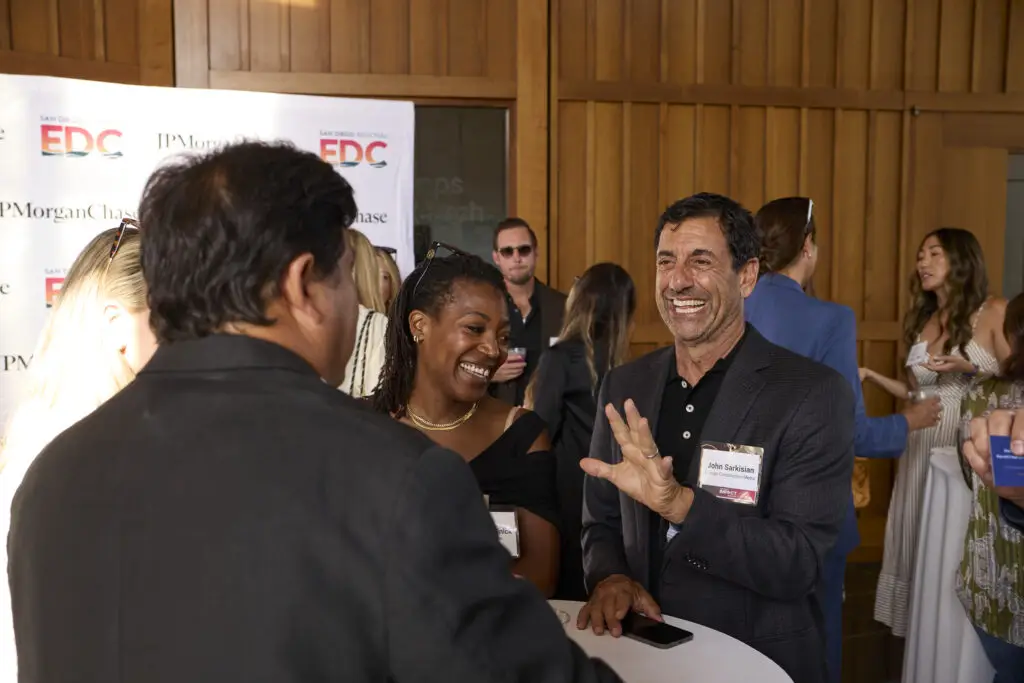
Second, people claim this TMD-funded model somehow taints the winners.
I don’t buy that at all. All tourism boards are doing is paying a marketing business (Michelin) to come operate in their city. They’re not telling Michelin which restaurants to choose for awards. As I understand it, Michelin has retained independence, and its inspectors only award restaurants that they feel are absolutely worth it based on merit.
True pay for play would be if a restaurant group paid Michelin in exchange for a star. Or if tourism boards had a say in which restaurants received attention or awards.
I haven’t found any proof of that happening, and so I won’t ding the validity of the awards until (and if) I ever do.
All tourism boards can control is which areas they’re willing to pay to have analyzed. For instance, San Diego could technically ask that only the city be analyzed and not the county. Which it did not, most likely because Visit San Diego (our TMD) is in charge of marketing the entire county (and thus why Michelin stars like Jeune et Jolie, Lilo, and Addison are outside of SD city limits).
So, if you’re dead set on criticizing Michelin, I’m not sold yet on the pay-for-play model being the right route.
Troy Johnson is the magazine’s award-winning food writer and humorist, and a long-standing expert on Food Network. His work has been featured on NatGeo, Travel Channel, NPR, and in Food Matters, a textbook of the best American food writing.
The restaurants and people behind the fastest sold-out event in San Diego Magazine’s history
The Sapporo Omakase Open is upon us. The event that sold out faster than any in San Diego Magazine’s history. The birth of another tradition.
The idea was simple: partner with the city’s preeminent force in Asian business and culture (the Convoy District) and the longest-running Japanese brewer in the world (Sapporo, founded 1876). Then bring together some of our favorite chefs and food and drink people who specialize in Asian delicacies—sushi, pho, xiao long baos, mochi, musubi, sake, tea, you name it—to shine a light on who they are and the delicious things they create.
There will be a friendly competition, judged by everyone in attendance and a panel of food experts, including longtime Food Network judge (and SDM co-owner) Troy Johnson. Winners will be named and trophied and exalted.
But moreover, SDM and its partners—Snake Oil Cocktail Co, Rivian, Del Mar Wine & Food Festival, and Komé Collective—believe in building local culture will bring together a room full of people to eat, drink, commune, and celebrate those who make San Diego’s food and drink culture hum.
Here is your guide to the restaurants, chefs, and people cooking and creating at the inaugural Sapporo Omakase Open:

The OG. Dumpling Inn & Shanghai Saloon started in a tinier strip-mall space, famous for Shanghai-style comfort food like jellyfish salad and xiao long baos (XLBs, aka soup dumplings). It became so loved that they took over the giant anchor spot on Convoy (a former iconic Chinese grocery store, which also helped launch Convoy into the pan-Asian food wonderland its become). Its menu is vast, but the dumplings are the legend—with fresh dough rolled each morning, a rounded pocket of porky goodness and a gush of broth. Celebrating 10 years in its massive space (and 32 years overall), the Inn’s XLB comforts everything in its path.
This is the family-run spot in Convoy for seafood boils, brought to you by the owners of one of the city’s top restaurants, Kingfisher. Crab Hut is their OG idea from owners Ky Phan, sister Kim, and brother in law Quan Le. It’s a love note to their childhood home and family tradition where they grew up in Vietnam. Behind their house was a river. The Phans would fish during the day, and sit around the communal table boiling up the day’s haul at night. There’s the “Bucket for One” filled with snow crab clusters, shrimp, crawfish, mussels, clams, corn on the cob, potatoes, and andouille sausages. There’s the “Go to Town” boil overflowing with everything previously mentioned, plus king crab legs and a glorious Dungeness crab. The most delicious kind of mess.
Lumi by Akira Back is led by world-renowned Korean-American chef Akira Back—the ex-pro snowboarder turned Michelin-star, best known for Dosa in Seoul, Yellowtail in Vegas, and this rooftop sushi-plus concept in the Gaslamp. Overlooking Fifth Ave, it’s serious food with a little party in its heart. Along with a serious sushi program, there are dishes like his Japanese-inspired take on pizza (a tuna carpaccio + ponzu mayo idea) or the miso pork belly kimchee chaufa. Want the full show? Order the Nano 9, Lumi’s Signature Mystery Box, a limited nine-piece omakase sushi course unveiled tableside in an ornate carrier leaking fog all over the place. Keep going big (but refined) with Mist of Kyoto, a cocktail-for-two experience—Knob Creek Barrel Rye, Mizunara liqueur, Japanese sweet vermouth, and black walnut bitters, served in a ceremonial tea pot with two equally ceremonious cups.
This concept was inevitable. Ayaka Ito first came onto San Diego’s restaurant scene in 2016 with Beshock Ramen in East Village. The ramen is fantastic, but the place was unique in that it was one of the city’s first portals into the craft of world-class sake. Ito is a kikizakeshi—essentially a certified sake sommelier or master. Sake Bar GAGA is her sake tasting bar in East Village, a 10-seater destination that takes guests on an omakase-style journey of around 20 sakes, hand selected by Ito. For the food, she and chef Ryan Miller collaborated on tapas-style bites with Marie Chiba, a certified sake samurai (one of the few in the world) and owner of Tokyo’s famous sake bar, Eureka. When you choose your dishes—like the blue cheese ham katsu, scallop mango tartar, A5 Wagyu Nigiri, konbu-aged red snapper, snow crab croquettes, you name it—the bar customizes your sake to each food.
San Diego’s largest oceanfront rooftop, hovering above the beach-culture pandemonium at Belmont Park. With a qualification like that, Cannonball could serve gas station sushi and mid boat drinks and be just fine. But local restaurant group Eat. Drink. Sleep (JRDN, The Lakehouse) and chef Luis Romero have made sure the seafood lives up to the view—with over 30 sushi creations, apps like bluefin tostadas with aguachile negro, baked blue crab dip with sriracha honey—plus entrees like a ribeye in uni butter and miso black cod. Watching the daily mix of tanned, parrot-wielding locals, Fit gym body-bods, and tourists is a show in and of itself, made even more enjoyable with a Lychee Lychee—vodka, nigori sake, yuzu liqueur, and lychee syrup.
Hard to call him underrated, since he won best dish at Del Mar Wine + Food Festival last year. But chef Ethan Yang’s Glass Box still deserves more. The restaurant is an attraction in and of itself—encased in a giant glass cube inside the Sky Deck at Del Mar Highlands. Yang and his chefs are on display, slicing top-notch fatty toro or premium wagyu filet. He offers a 10 to 15 course omakase experience, and the bar brings classics like a Toki Old Fashioned (Suntori Toki, bitters, orange) and modern plays like a Matchatini.
Cooking. That’s what chef Stevan Novoa’s ikegi is; a Japanese word meaning “reason for being.” A military veteran with 13-plus years of experience in kitchens across the coast of California and Mexico, Novoa has cooked most styles that make the region hum—and developed a deep appreciation for local farmers, fishermen, and ingredient people. Ikegi by Chef Stevan Novoa is his private chef concept, curating tasting menus that span the gamut (coastal California, Mexican, Japanese izakaya) for people in their favorite space: their home.
Few things in life are more affirming than light, fluffy dough balls stuffed with cream and baked to perfection. South Korea native and New York art-student-turned-baker Kelly Kim specializes in classic choux au craquelin—the oversized French cream puffs baked with a slender cookie disc that melts across the top during baking. At Mon Chourie, she starts with her mom’s recipe, then tweaks with seasonal, global flavors—often in collaboration with other local makers. Like the recent pandan mango ice cream choux with indie San Diego-based ice cream brand, Amor. Or a peach oolong tea choux—silky oolong tea-infused cream, peach compote inside that twice-baked, light-as-atmosphere pastry dough. She pops up on Wednesdays at local bakery Michi Michi, plus other spots in town.
A restaurant within a restaurant from the family who owns Crab Hut and Kingfisher. Pho is all about the broth and the lengths you’re willing to go for it. At Phở Gà Go, the whole idea is to take the quality of broth they have at Kingfisher—one of food critic Troy Johnson’s “Top Five Restaurants in San Diego”—and serve it in a more casual setting. Chicken bones are simmered for over 12 hours with the highest-possible ingredients (including heirloom garlic from the famed Christopher Ranch in Gilroy), resulting in a broth that’ll send the slightest throat tickle or sniffle scampering away like a frightened little puppy. They also specialize in chả giò—Vietnamese imperial rolls that are in the realm of Chinese-American egg rolls, but ineffably lighter thanks to using rice flour instead of wheat dough—stuffed with pork, shrimp, taro, wood ear mushroom, carrots, and mung bean noodles.
In early-2000s San Diego, the next generation of sushi chefs were largely trained in two spots: Sushi Ota, or Roppongi Restaurant & Lounge. First opened in 1998, Roppongi was the Japanese-inspired standout from restaurateur Sami Ladeki, who had made his name with Sammy’s Woodfired Pizza but was blown away by the food culture in Roppongi, Japan. La Jollans cried multiples when it closed in 2015, and relentlessly bugged Ladeki to bring it back. So he did exactly that last year with chef Alfie Szeprethy. They supercharged the design of the space, and rebirthed some of the classics—like the Polynesian crab stack, Mongolian duck quesadilla, the Roppongi Roll (tempura shrimp, unagi, spicy toro), and the Japanese hot rock (thinly sliced steak sizzling on a smooth stone with chili ponzu, sesame goma sauce, and cucumber sunomono). Welcome back.
Jeff Roberto is a low-key, laidback icon of sushi in San Diego. At any event, if you spot a surprisingly elaborate sushi case and setup and a couple of itamaes wielding blow-torches or breaking down an entire tuna—that’s Roberto and his Sushi On a Roll. He’s been one of the city’s premier sushi caterers since 1993 (when he started, there were only seven sushi restaurants in the city)—a powerhouse on wheels offers everything from sushi making workshops and classes. When a few US presidents needed sushi, Roberto got the call. His arsenal at this point includes over 1,000 sushi options. But moreover, he’s the warm, smiling attraction at any party that involves high-quality fish in the nude.
Hard to decide if Sweet Vibe is a viral dessert shop or a highly popular newish entry in tea culture, which runs deep in Convoy. Their cakes have somewhat stolen the buzz, with Thai milk tea cake, taromisu (taro + tiramisu), yuzu cheesecake, sea salt Oreo, etc. They’re also cute as hell, with their bearamisu (a tiramisu with a bear on it) and mousses shaped like French bulldog pups. But its drinks are the core of the menu, with vibrant fruit and milk teas (green Thai lemon, uji matcha foam with jasmine milk, lychee lemon, iced peach oolong), yogurts with Crystal boba, and fruit slushes (mango pomelo, strawberry milk, pink lychee)—all with adjustable sugar and ice levels and boba add-ons.
It’s a sandwich. It’s nigiri. No, it’s musubi. For all the SPAM skeptics, we urge you to honor the deeply Hawaiian and Japanese tradition and witness the charms of a warm, handheld block of sticky rice with a thick slab of teriyaki-glazed canned meat wrapped in nori. Those who have either been raised in the arts or converted tend to exude a higher than expected life happiness. This Musubi Love, a Leucadia musubi speakeasy (you heard us right), focuses exclusively on the minor food religion. The MEHKO (Micro Enterprise Home Kitchen) from founder Roger Post serves classics, plus riffs like the Cordon Bleu-Subi made with panko-fried SPAM, shredded rotisserie chicken, swiss cheese and Bachan’s Japanese BBQ sauce. Or the Dawn Patrol with SPAM, egg, bacon, cheddar cheese and spicy mayo. If you’re still not convinced, the fried BBQ chicken tender musubi or the crispy BBQ tempura shrimp musubi might change your mind.
It’s the pastry hybrid that everyone who values their mouth should have seen coming. Mochi is having a true uprising in San Diego. Most people know the Japanese specialty from the mochi-covered ice cream found in boxes at various grocery stores, but artisanal mochi comes in many, far more interesting forms. Like donuts. Mochi donuts have that crispy-fried traditional donut exterior, but the chewy-soft, rice-flour soul in the middle. Mochichi in Encinitas—a startup from SDSU grad Beth Kass—specializes in them. Base flavors include creme brulee, strawberry glaze, ube Oreo, churro, an Nutella, but she customizes on request and whim. She also serves an ube float and a Vietnamese coffee float because, well, that should clearly exist.
Stake Chophouse & Bar brings contemporary classics and old-school service to the heart of Coronado
Stake Chophouse & Bar isn’t your average steakhouse. Blue Bridge Hospitality’s Coronado outpost is a modern interpretation of a big-city steakhouse nestled in the heart of the small coastal community. The team at Stake has reimagined the whole steakhouse experience. By prioritizing a seasonal farm-to-table sourcing philosophy, a personalized guest experience, and unique service touches, like a formal steak presentation and a bespoke knife selection process, Stake distinguishes itself in a sea of steakhouses.
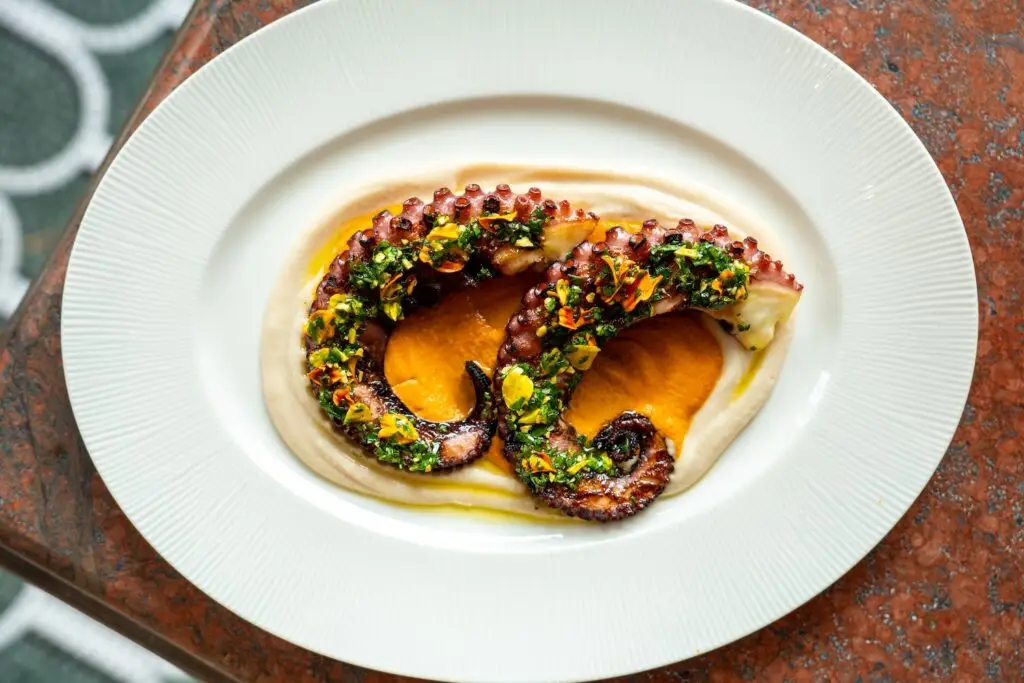
Exceptional steaks, including Wagyu from Japan, Australia, and the U.S., and fresh seafood flown in daily form the core of Stake’s culinary identity. The menu features a five-course omakase-style steak experience highlighting house favorites, plus an array of cuts, and classic steakhouse staples—think a wedge salad, baked potato, or pasta carbonara—refined for a contemporary palate without losing their traditional appeal. Stake focuses on seasonal sourcing from the region’s best family farms and specialty purveyors, and incorporates intentionally unexpected touches to create something truly unique.
“I challenge our chefs and myself to take it a step further in sourcing,” says Chef Ronnie Schwandt. “It’s important to us to highlight different farms, unique one-off farms—whether it’s cattle, strawberries, a local fisherman or from anywhere in the United States, we’re always trying to find that niche.”
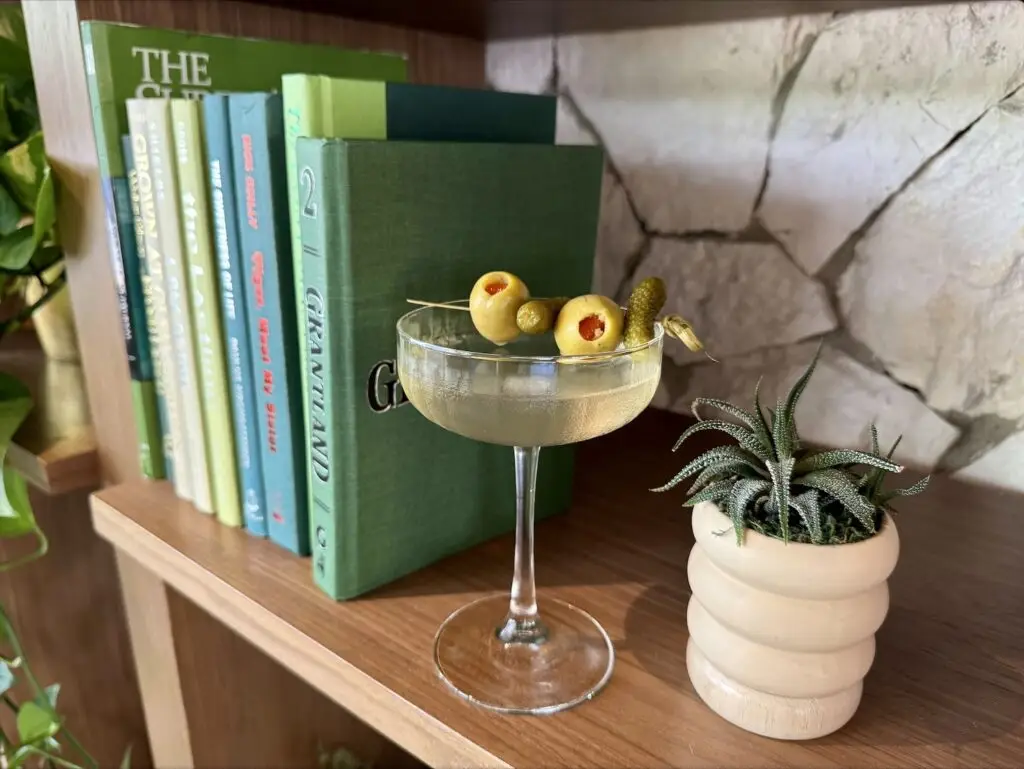
Beyond the menu, Stake emphasizes outstanding service, says Vinny Spatafore, Director of Hospitality Operations. Staff maintains detailed notes, allowing them to remember guests by name, recall previous orders such as a favorite martini (also memorable for the customer since it’s served in an extra tall, distinctly-shaped glass), and celebrate special occasions like birthdays and anniversaries.
“When you have those points of topic that you remember about a guest, they appreciate that,” he says. “Our servers are really good with that—we have a couple servers who have been here since the beginning and they’ll remember somebody from years ago, their name, their kids’ names, where they live. I’m really thankful to have a great front of house staff.”
Award-winning wines, rare whiskeys, special events, and a complementary black car service that provides transportation for guests throughout Coronado add to Stake’s appeal.
Schwandt stresses that Stake offers more than a meal; they aim to give patrons something unforgettable.
“It starts when you walk up the stairs and are greeted by the hostess—that sets the tone for the night. Then you’re greeted by a server, who may know you by name, and can guide you through the menu and curate as they get to know you,” says Schwandt. “Most people leave kind of blown away; they leave feeling like they just had an experience. That’s the goal, right? Whether you’re serving smash burgers or high-end steak, you want somebody to leave thinking, Wow, that was awesome.”
One of One combines creative seasonal drinks, ethical sourcing, and Filipino-American roots to stand out in San Diego's crowded cafe scene
In a city overflowing with cortados, ceremonial-grade matcha, and ambitious coffee startups, standing out isn’t easy. It’s even harder when your business doesn’t have a fixed address. That’s the challenge (and increasingly, the appeal) of One of One.
The Filipino-American coffee and matcha pop-up concept is the work of Kristin Cleavinger, a San Diego native who spent nearly a decade working in the Los Angeles specialty coffee business before returning home to build a concept of her own. The business takes its name from Cleavinger’s grandfather Gregorio Magnaye Bolor, who immigrated from the Philippines to the United States in the 1970s with almost nothing, but managed to build a life for him as well as his descendants.
It’s that sense of grit, perseverance, and identity that Cleavinger says fueled her to build One of One. “Throughout my time in specialty coffee, I was really curious about Filipino representation, because that wasn’t something that I saw,” she explains. She began to research coffee from the Philippines, but considering the island nation only produces about 0.25 percent of the world’s largest producer, Brazil, there wasn’t much to find.
Instead, she turned inward, drawing from her family’s history and her own Filipina-American identity to build something personal. “To me, this really is a way to honor my family’s legacy—my nanay, Maria Nieves Bolor, and my tatay Gregorio.”

For her drinks, Cleavinger never uses refined sugars, and syrups are made in-house from organic and regenerative ingredients. The Summer Peach latte, the current seasonal special, layers Ceylon cinnamon, unrefined cane sugar, Maldon sea salt, and ripe yellow peaches for a riff on one of summer’s most glorious treats: peach cobbler. Another new drink is Mint Chip, inspired by Thrifty ice cream with a fresh mint syrup, dark cocoa powder, and chocolate chunks with a base of either espresso or hojicha (roasted Japanese green tea with a mild, sweet, earthy flavor and lower caffeine content than other green teas).
Other crowd pleasers include the signature Neapolitan latte, which is inspired by childhood memories of her family using Neapolitan ice cream to create pan de sal ice cream sandwiches. She layers housemade organic strawberry syrup, Madagascar vanilla bean-infused oat milk, and dark cocoa-swirled espresso for a tricolored beverage experience that she recommends sipping before stirring to taste each layer on its own merit.
Past specials have ventured deeper into Filipino flavors, like a turon-inspired latte using jackfruit and banana; another was a coconut pandan matcha made with organic coconut water and topped with a pandan matcha cream.

The sourcing decisions behind these drinks are equally deliberate. Coffee comes from Boondocks, a Filipino-owned LA roaster whose founder is originally from National City. Its current offering, the Galleon blend, combines beans from southern Luzon in the Philippines with Chiapas, Mexico—a nod to the communities woven into San Diego’s own cross-border identity. Matcha is sourced through Este, a local San Diego company that works directly with producers in Mie Prefecture, Japan.
Every supplier is chosen for value alignment as much as quality—Boondocks’ current blend, for example, directly supports women-owned farms. “Each person has the power to choose where they want to put their dollar,” Cleavinger says.
You can catch her at regularly scheduled pop-ups at places like Olivewood Gardens in National City (every third Saturday), Ayi in South Park’s Summer Series (every Saturday morning in June), and on regular rotation at Home Ec and Best Bud Floral in Kensington. (More dates are listed on Instagram as well.) Cleavinger says she does have plans to launch a brick-and-mortar shop in the future, ideally with an expanded beverage menu, space for art shows, and a community gathering place for local and Filipino-owned makers.
In a crowded field of coffee concepts, One of One shows that a memorable drink can do more than wake you up. It can tell you something about the person behind the idea—who they are, where they’re from, and where they’re going next.
Listen Now: The Latest in San Diego’s Food and Drink Scene
Have breaking news, exciting scoops, or great stories about new San Diego restaurants or the city’s food scene? Send your pitches to [email protected].
Beth Demmon is an award-winning writer and podcaster whose work regularly appears in national outlets and San Diego Magazine. Her first book, The Beer Lover's Guide to Cider, is now available. Find out more on bethdemmon.com.
CoCo Ichibanya's wildly popular katsu curry has become a ballpark favorite—and now the chain is opening a second San Diego location
I’m a creature of habit. When I go to Petco Park for a Padres game, I order two things without fail: a Swingin’ Friar ale from Ballast Point and a Friar Frank (extra mustard, no ketchup). I might supplement with tri-tip nachos from Seaside Market, or splurge on fancy fish tacos from Deckman’s at the Draft, but there’s no way I’m going to a ballgame without enjoying the classic combo of a beer and hot dog.
But this season, I’m faced with a conundrum. CoCo Ichibanya, the world-famous Japanese curry chain with locations in Convoy District, Los Angeles, Orange County, and Texas, debuted this March at the Mercado near Section 104. I recently attended a game against the New York Mets when I noticed a woman sitting in the row in front of me with a giant helping of chicken katsu curry. I hadn’t seen CoCo’s curry in the wild at the ballpark yet, but the aroma of the crispy fried chicken bathed in savory curry wafting over her shoulder absolutely intoxicated me (and ended up being a nice distraction to the 7-3 loss). Hopefully, she didn’t notice me leering with envy, but I’m 92 percent sure I got some drool on the guy next to me.
The world’s largest Japanese curry chain isn’t done popping up in San Diego quite yet. This July, CoCo Ichibanya will open its second standalone store in San Diego on the ground floor of the Denizen building in Hillcrest.
First launched in Nagoya, Japan in 1978, CoCo Ichibanya specializes in Japanese-style curry dishes, a comfort food signature. Unlike fiery Thai and Indian curry, Japanese curries are often more like gravy, served over rice and alongside katsu pork, chicken, or beef, or as curry omurice (omelet rice). The chain expanded to the United States 15 years ago, and owner Teruyoshi Ono says they’d been eyeing more opportunities in San Diego for some time.

The location in Hillcrest spans 2,585-square-feet with seating for around 49 guests. Menu favorites like the chicken cutlet curry with vegetables, the pork cutlet omelet, and Thai tea will be available, but Ono said Hillcrest will be the first location in the US to offer one major crowd-pleaser: alcohol. And keeping with local baseball fandom, “We will also have Padres x CoCo Ichi limited merchandise at our Hillcrest location,” he promises.
Ono also revealed that CoCo’s future expansion plans include looking for more locations across Southern California and possibly more in San Diego. While the Japanese yen remains at a historic low against the dollar (making it an absolutely unbeatable time to visit the Land of the Rising Sun), why fly overseas when you can get a taste of Japan in your own backyard—or ballpark?
CoCo Ichibanya Hillcrest is slated to open at 3833 5th Avenue in July.
Listen Now: The Latest in San Diego’s Food and Drink Scene
Have breaking news, exciting scoops, or great stories about new San Diego restaurants or the city’s food scene? Send your pitches to [email protected].
Beth Demmon is an award-winning writer and podcaster whose work regularly appears in national outlets and San Diego Magazine. Her first book, The Beer Lover's Guide to Cider, is now available. Find out more on bethdemmon.com.
SeaWorld dazzles with a drone show, big-name entertainers, new animal adventures and more
Nights are heating up at SeaWorld San Diego. The quintessential summertime staple on Mission Bay is transforming into a destination for unforgettable day-to-night adventures, bringing back some of its most popular Summer Nights programming and introducing exciting new experiences sure to delight both kids and adults alike.

The 2026 Summer Day to Night at SeaWorld San Diego is the park’s most ambitious season yet. SeaWorld has planned a highly anticipated entertainment lineup that features nine weeks of throwback concerts featuring R&B and hip‑hop favorites from the ‘90s and early 2000s, including Jordin Sparks, Too $hort and Warren G, Ashanti, and an array of boy band heartthrobs performing together as part of the Pop 2000 Tour.
New this season is perhaps the park’s most visible update: a nightly drone show, Ocean of Dreams, which illuminates the sky with hundreds of synchronized sparklers. Drones form sea otters, sharks, dolphins, and a majestic orca that tell a breathtaking 12-minute story of marine life and underwater ecosystems. The show culminates with a spectacular electric neon finale celebrating hope, wonder, and ocean stewardship.
Nighttime visitors are also in store for animal adventures that fuse education with high-energy fun and the dreamy ambiance of nighttime. The park has launched two all-new animal presentations: Shamu’s Celebration: Light Up the Night and Dolphins: Touch the Sky. Shamu’s Celebration: Light Up the Night features vibrant lighting, music, and dynamic choreography that celebrates the power and beauty of killer whales. Dolphins: Touch the Sky showcases playful bottlenose dolphins and the special connection between humans and the natural world. And back by popular demand is fan-favorite Sea Lions Tonite. See the charming pinnipeds splash, play, and parody pop culture in this refreshed crowd-pleaser.

More must-sees: a newly reimagined Shark Encounter, one of the country’s more immersive exhibits highlighting 11 different species up close, SeaWorld’s beloved BMX Blast! stunt show, and high-seas escapade, Pirates Ahoy! The Battle for Mermaid Cove. And don’t miss the park’s all-new Deep Sea Disco, which encourages guests to dance the night away under the glow of the SkyTower, and vibrant closing time laser light display Laser Reef Summer Spectacular.
Amp up the nighttime vibe with local craft beers, curated cocktails, and nostalgic theme park treats with $1 beer all summer long. SeaWorld is the place for day to night summer fun. When the sun goes down, SeaWorld lights up, and inspires guests of all ages to embrace their inner whimsy and see why generations of San Diegans head to SeaWorld to make memories they’ll never forget.