Featured articles
Food & Drink
Food & Drink
Food & Drink
Featured articles

Everything SD

Everything SD
Everything SD
Featured articles

Things to Do
Things to Do

Things to Do
Featured articles

podcast-ep

video
podcast-ep
Featured articles
Everything SD
Everything SD
Everything SD
Featured articles
Everything SD
Partner content
Food & Drink
Ready to know more about San Diego?
SubscribeReady to know more about San Diego?
Discover eateries, outings, and shops within this inland North County community
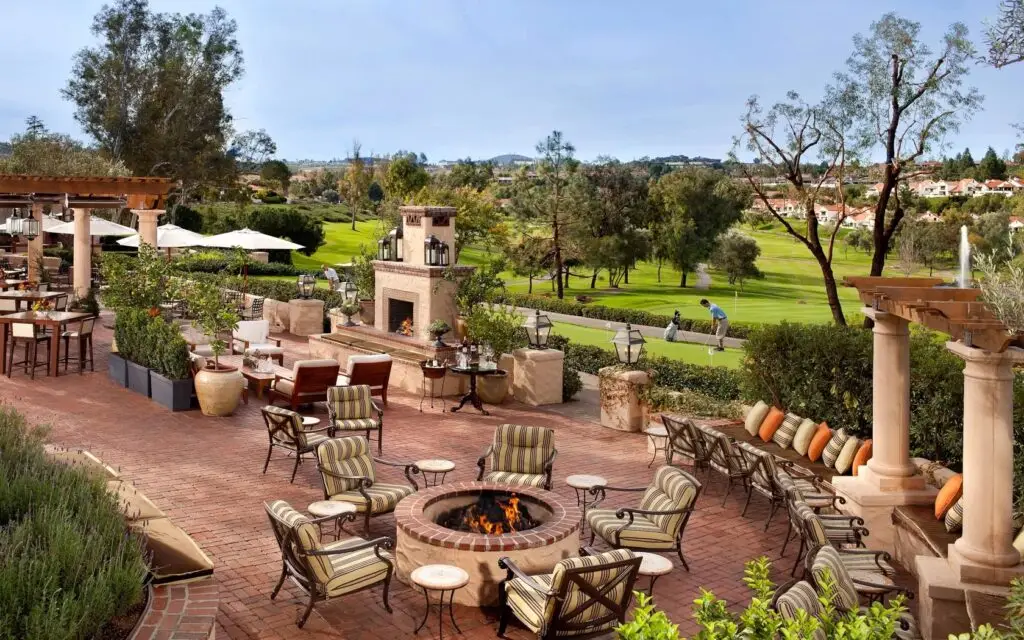
Just south of Lake Hodges near 4S Ranch and Poway, Rancho Bernardo is a suburban community that blends residential neighborhoods with industrial pockets, elevated by a decidedly diverse food scene.
Over 60 years ago, this North County neighborhood was once part of a family ranch. Since that time, big tech companies have taken up residence here, including Amazon, Sony Electronics, Oura Ring, HP, Teradata, and ASML. Rancho Bernardo Inn serves as a community hub, with locals frequently meeting at the hotel’s restaurants, golf course, and spa.
Whether it’s work or a round of golf that brings you to Rancho Bernardo, we’ve taken care of the agenda planning with our guide to the area’s best restaurants, activities, and shops.
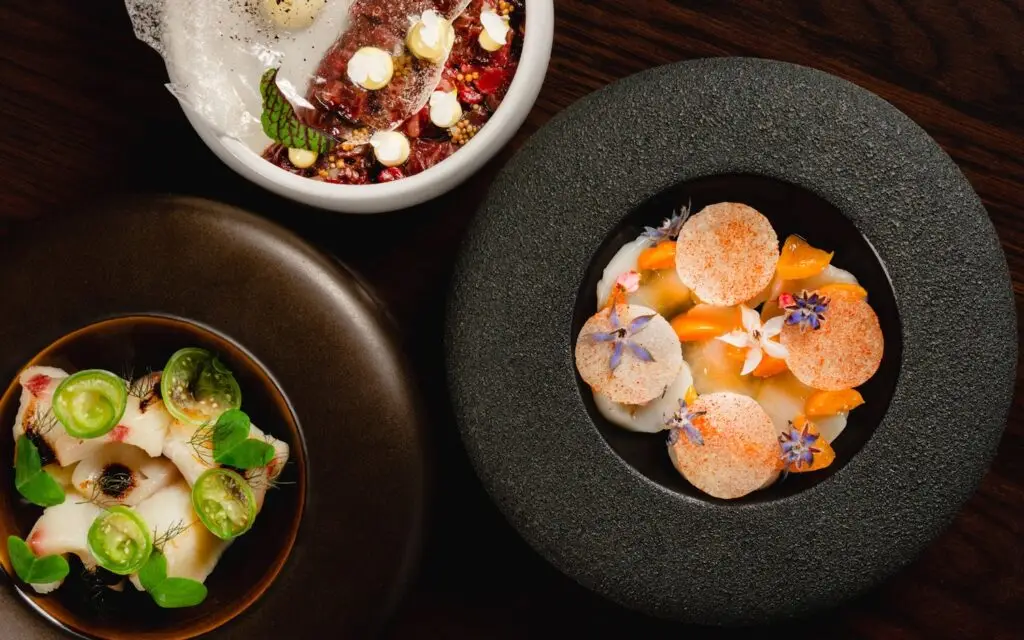
Sample ingredients plucked straight from Rancho Bernardo Inn’s onsite garden and served at their signature restaurant Avant. One of the neighborhood’s most upscale dining options, they serve a French-inspired menu with nods to California, including many seafood options. Don’t miss their more casual sister restaurant Veranda for al fresco dining.
17550 Bernardo Oaks Drive
Wood-fired pizzas and handmade pastas are standouts at The Kitchen, Bernardo Winery’s counter-service restaurant specializing in Sicilian flavors. Charcuterie boards and bruschetta make for great starters or snacks while wine tasting.
13330 Paseo Del Verano Norte
Fast-casual and family-owned eatery Bushfire Kitchen recently opened a location in Rancho Bernardo, serving sandwiches, bowls, salads, burgers, protein plates, and housemade empanadas. Bushfire prepares comfort food with healthy ingredients, and offers plenty of vegetarian and vegan options.
11962 Bernardo Plaza Drive, Suite 110
Some might call The Cork & Craft an overachiever. This gastropub has an in-house craft brewery and winery: Abnormal Beer and Wine. The more, the merrier. Their sushi menu is definitely worth exploring, but don’t miss other specialties like garlic noodles, chicken wings, and pork belly.
16990 Via Tazon
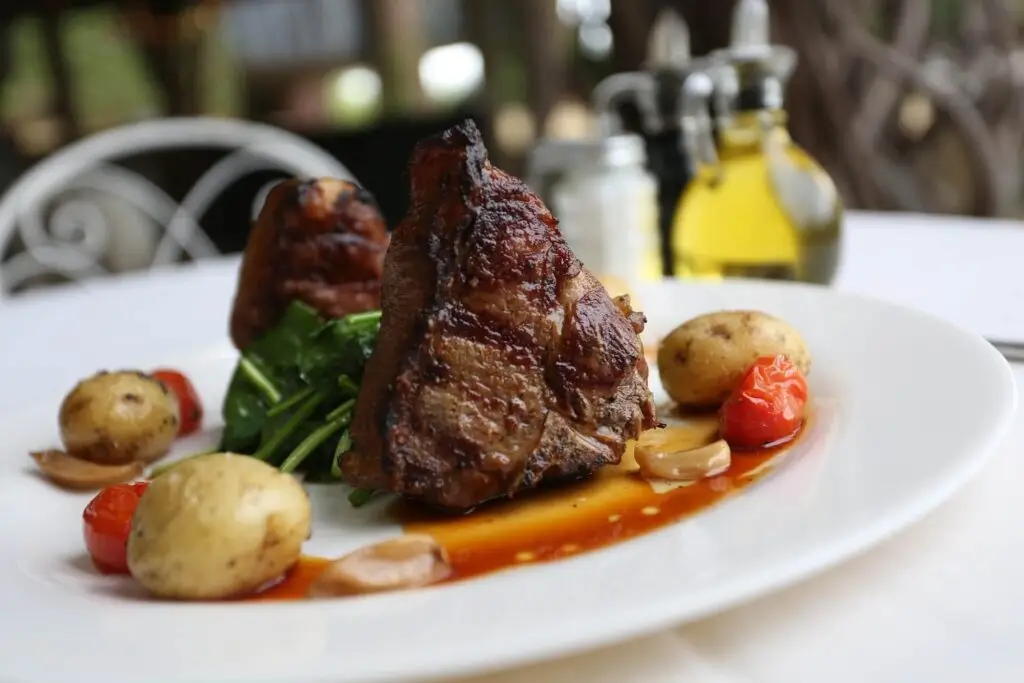
You don’t have to leave Rancho Bernardo to get a white tablecloth steakhouse experience. Carvers Steaks & Chops has prime rib (their best seller), filet, ribeye, porterhouse, New York strip, and other cuts, served alongside crab-stuffed mushrooms, wedge salad, French onion soup, potato skins, and other steakhouse specialties.
1940 Bernardo Plaza Drive
This no-frills Burmese restaurant is known for its traditional tea leaf salad that’s topped with sesame and sunflower seeds, garlic chips, peanuts, tomatoes, jalapeños, fried yellow beans, and fermented green tea leaf dressing. Tucked into a nondescript strip mall, Burma Place is a great takeout option when you want to eat garlic noodles, fried rice, chicken curry, and samosas from the comfort of your couch.
16719 Bernardo Center Drive, Suite A
Find authentic Vietnamese cuisine at Phở Ca Dao, including favorites like phở noodle soup, vermicelli noodles, broken rice dishes, and spring rolls. One of eight locations throughout San Diego, this family-owned chain uses robot servers for food delivery.
11808 Rancho Bernardo Road, Suite 100
It’s all about the sauce at fast-casual Mediterranean restaurant The Kebab Shop. Smothering your chicken shawarma, gyro, or falafels in garlic yogurt, cilantro jalapeno, fire chili, and dill yogurt sauce is practically a rite of passage. The hardest part is deciding whether to order a wrap, bowl, or salad.
11980 Bernardo Plaza Drive
Get a taste of South Asian flavors at Casa Lahori, a Pakistani restaurant noted for its grilled meat kabobs. Other best-selling dishes include beef nihari, chicken biryani, and shahi paneer— best enjoyed with naan bread.
11975 Bernardo Plaza Drive
Grill your own meat on the tabletop at Kangnam Korean BBQ, an interactive, all-you-can-eat experience that’s well-suited for large groups. Marinated beef bulgogi, grilled galbi short ribs, and spicy pork are served alongside traditional banchan dishes like kimchi, japchae glass noodles, and flavorful stews. Weekday lunch specials provide a nice discount on these filling meals.
11828 Rancho Bernardo Road, Suite 117–119
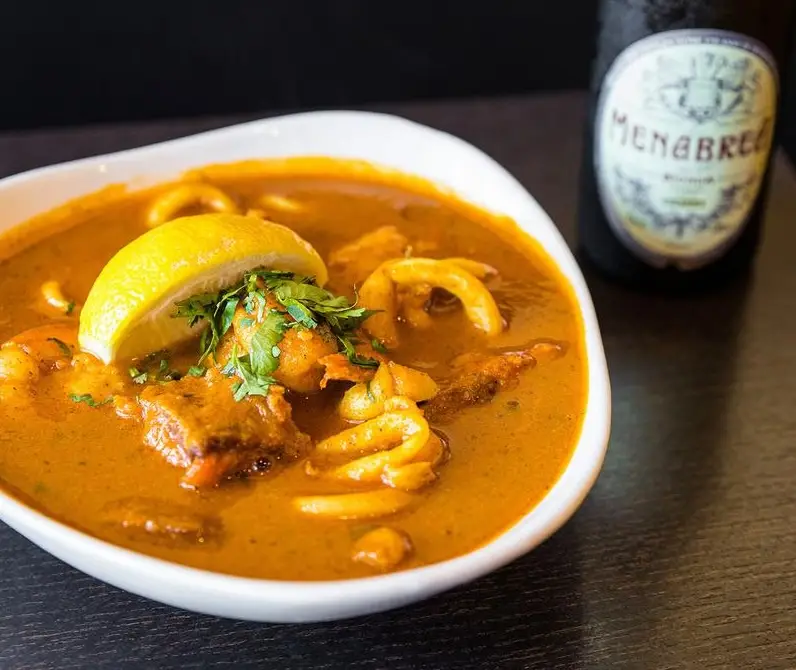
Dig in to your favorite curries and kebabs at Curry & More Indian Bistro. Most entrees are served with a choice of two side dishes, including basmati rice, potatoes with cumin, daal, naan, or mixed greens. Help offset the spice with one of their sweet mango or strawberry lassi drinks.
11808 Rancho Bernardo Road, Suite 123
The menu at Sushi Kami is seemingly endless, with nigiri, baked rolls, combos, hand rolls, and traditional maki rolls, plus salads and apps to quickly fill your tables and bellies. Bestsellers include the double albacore, dragon, and tuna heaven rolls, but their lunch combos offer the biggest bang for your buck.
11611 Rancho Bernardo Road
Choose between hearty deep dish or traditional crust at this family-owned pizzeria, bar, and bottle shop. Build your own pizza with the toppings and crust (gluten-free available) of your choice, or opt for handmade pasta, salads, or charcuterie boards at The Shop: Pizza + Cocktails. Don’t miss their happy hour Sunday through Thursday for deals on starters, wine, and beer.
11967 Bernardo Plaza Drive
With five locations throughout the county (including the airport), Phil’s BBQ is often associated with having a long line of faithful customers out their front doors. Whether it’s pork baby back ribs, beef ribs, barbecue chicken, or wings that you’re craving, Phil’s serves up mesquite-grilled meats slathered in their signature tangy BBQ sauce.
17051 W. Bernardo Drive
European-style cakes and pastries line the shelves at Edelweiss Bakery, a beloved family-owned bake shop in business for more than 40 years. While it may seem overwhelming to choose from their various treats, you can’t go wrong with any of the ready-made special occasion cakes, coffee and pound cakes, cookies, tortes, or danishes.
11639 Duenda Road
Expect housemade syrups from Compa Coffee Roasters when ordering your lattes in flavors ranging from salted maple and honey cinnamon to lavender thyme and vanilla. The family-owned, small-batch roastery may draw in customers with its drinks (don’t miss the chai latte!) but biscuit sandwiches, sourdough toasts, and flaky pastries are also a big hit for this bustling cafe.
11828 Rancho Bernardo Road, Suite 101
Dubbed “RBI” by locals, this destination hotel situated on 265 acres is a popular gathering spot for fine dining, spa days, pool time, and golfing. Check Rancho Bernardo Inn’s event calendar for special resort programming like poolside movies, live music, and culinary pop-up events.
17550 Bernardo Oaks Drive
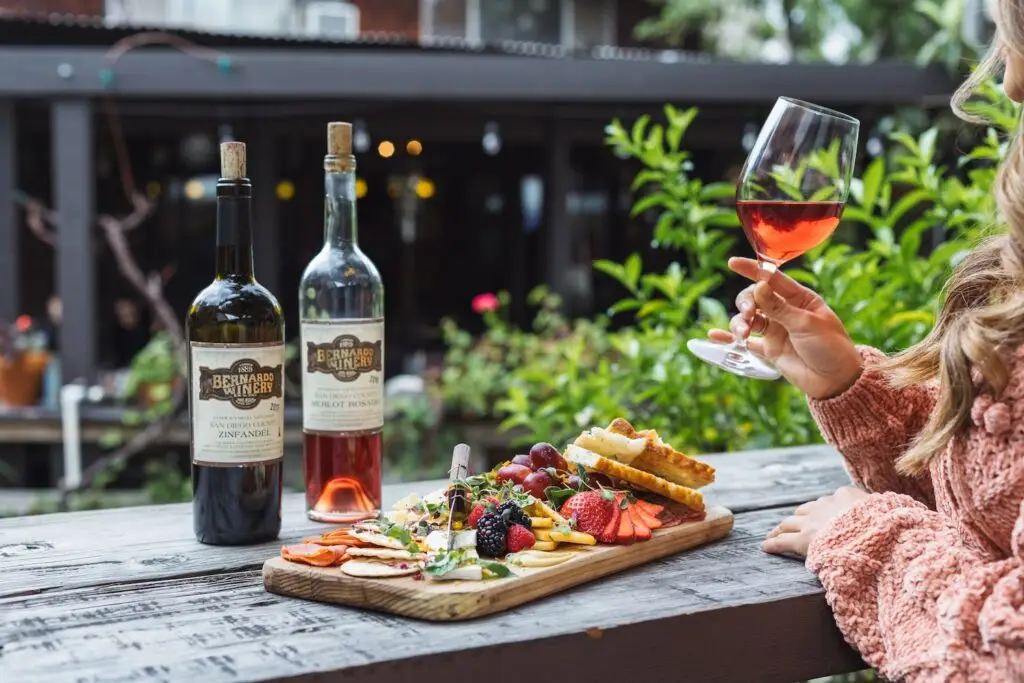
The family-owned-and-operated Bernardo Winery (which produces wine from San Diego County-grown grapes) is one of California’s oldest wineries, providing a scenic gardenscape backdrop for vino tastings. With an onsite restaurant, coffee and gelato shops, boutiques, and event spaces, the winery is a hub of activity, even hosting Rancho Bernardo Farmers’ Market on Fridays from 9 a.m. to 1 p.m.
13330 Paseo Del Verano Norte
There’s plenty of greenspace to bask in the sunshine at Rancho Bernardo Community Park. Encompassing 38 acres, the park includes a rec center, indoor gym, playgrounds, baseball fields, basketball and tennis courts, lawn bowling, and a dog park. You can also access local hiking trails here including Bernardo Bay Trail.
18448 W. Bernardo Drive
Slap on your boots and flannel once autumn is here and head to Rancho Bernardo Pumpkin Farm, open in September and October. Here you can stroll a pumpkin patch, snap photos in sunflower fields, get lost in the corn maze, hitch a tractor ride, and check out farm animals in their petting zoo.
13421 Highland Valley Road
Take in nature’s tranquility at Webb Lake, a charming park tucked into an otherwise busy area near the I-15. Meander walking paths around the pond with ducks, turtles, and koi fish, and pay your respects at the veterans’ memorial.
11666 Avena Place
Find trendy resort wear, accessories, candles, and other gift items at Veranda Boutique inside Rancho Bernardo Inn. Locally-made swimwear can be paired with sun hats and tote bags for a full look.
17550 Bernardo Oaks Drive
Shop for clothes, jewelry from local designers, and handbags galore at The Bag Cellar. Discover the latest trends from brands like House of Sacred Flame, KEAAN, Mary Frances Accessories, and UNOde50.
13330 Paseo Del Verano Norte
Browse home and garden decor, including locally-crafted furniture, plus gifts and specialty food items at Olive & Cork. Take home jams, vinegars, and olive oil in flavors like jalapeño, blood orange, and chipotle—all produced in San Diego.
13330 Paseo Del Verano Norte

Kai Oliver-Kurtin is a San Diego-based writer who covers travel, dining, events, and culture. Her writing has been published in USA Today, Condé Nast Traveler, Fodor's Travel, Marie Claire, and HuffPost, among others.
The county that helped push skating into the mainstream is now nurturing the competitors, communities, and culture shaping its future
It was the summer of 1999. MTV, The Matrix, and first-generation PlayStation glowed on tube TV sets all over America. What a time to be alive. Smartphones weren’t yet stealing people from the moment. Cultural was a shared reality. During the last few minutes of the monoculture, Tony Hawk executed the first-ever 900 at X Games V in San Francisco. That’s two and a half aerial rotations with a side of the dizzies.
The time had run out on the Vert Best Trick competition long before the 11th attempt when he pulled off the fateful feat. Nobody cared. Not the judges, not the competition, and certainly not the crowd. “Let that bird fly,” they said. Once the trick was landed, they partied like it was 1999 … because it was.
That was the tipping point when the skateboarding world exploded, going from counterculture to a national phenomenon. Shortly after that, “Tony Hawk’s Pro Skater” video game came out, introducing millions of kids to what skate culture looked like. Oh, the game had a killer punk soundtrack, too.
We can all thank Hawk for the globalization of skateboarding. But we can also recognize his local influence and how San Diego County continues to be a hub for skateboarders young and old, for competitors and street skaters. To see it all, go to Park De La Cruz in City Heights—or, heck, any other skatepark in the county—which, at 19,000 square feet, is about twice the size of the average skatepark and has signature features like an M-shaped transition ramp. The amount of talent that continues to evolve in this county is a testament to deep-rooted skate culture and world-class athletes supporting the next generation.

I’m a little early for a skate lesson with pro skater Mike Owen when I get to Linda Vista Skatepark. In the 2010s, Owen ranked as one of the world’s top bowl riders. He’s the founder of San Diego Skateboarding and has “helped thousands of kids, teens, and adults learn to skate safely, confidently, and with style,” the company’s site says. And now it’s my turn. We start the lesson on the nearby tennis courts, getting my basic foot mechanics down. Safety before style.
In terms of street plaza features, the massive Linda Vista Skatepark is loaded with rails, stairs, manuals, and ledges. There are more bowls than you can get from Cava: a flow bowl, backyard-style pool, and vert bowl. The main feature is a full pipe for advanced line riders. It’s a hell of a park, even if somebody just wants to watch the action from the 100-foot-long pedestrian skybridge overhead.
Right now, San Diego has over 50 public skateparks scattered throughout the county. “There are now more [skateparks], more resources for them, and more terrain,” Owen tells me. “Now, they’re offering different competitive style skateparks that help for competitions. The best parks have a variety of different terrain where you have things for beginners and bigger transitions. Not every town has that.”
San Diego, luckily, does. But despite the bounty, Owen believes there should still be more—public skateparks are safe spaces for all to learn and develop on-board skills. Without them, a huge portion of San Diego’s culture withers. Encinitas could be the next city to add a skatepark to the county’s roster: In early July, the Encinitas City Council appointed 12 local skaters and community members for the newly established Skate Feature Committee. In partnership with two councilmembers, the committee’s purpose is to design a working skatepark or feature for the city.
But like any big project, Owen says, it’s a long process to add another skatepark to the community.
“I wish it were easier,” he says. “When there are different contractors for different things, [there’s only] a certain amount of time to build. It gets tricky.”
Then there’s the matter of funding the actual construction and development of the skatepark. That usually comes from grants, fundraisers, and donations. For reference, Linda Vista Skatepark was built on a $4.46 million grant from the California Department of Housing and Community Development in 2014. With an additional $40,000 donated by the Tony Hawk Foundation, the park opened in 2018 and is the largest in San Diego’s Parks and Recreation system. The best way to get a skatepark in your neighborhood, Owen says, is to start a petition and reach out to your city.

Jordan Thrower’s first street skate sesh at San Diego City College in 2003 ended with a police chase. The campus was swarming with skaters riding rails, jumping stairs, and grinding tricks on benches, curbs, and ledges. When the cops got on their loudspeaker telling them not to run, everyone obviously ran. Back then, cops would give tickets and confiscate boards. The vibe has loosened since. “Now, the police don’t really care,” Thrower says. “They just make you leave. It’s not anything crazy.”
Street skating is when riders use real-world urban obstacles, rather than pristinely designed bowls or ramps—such as in college campuses, downtown areas, corporate buildings, and malls. Abandoned mini-golf courses and construction sites do the trick, too.
Thrower says the street skating hub here isn’t as huge as it once was. Thanks to modern technology and social media, skaters aren’t tied to any certain place to create skate videos. You know, those videos that could have been taken this year but have the low-fi vibe of 2004, where skaters carve down stairwells into parking lots, over mailboxes, or across park benches. The silver lining: Even though there are fewer street skaters than there once was, those who stayed in San Diego are still tight.
“Everyone skates with each other and knows each other here,” Thrower says. “In LA, it’s not really like that. It’s small there, but not everybody knows each other, and they don’t really skate with each other too much. They just have a lot of little crews.”
Back in 2015, Thrower started his own street team and brand that sells boards and shirts called Tantrum. The Tantrum team is split between San Diego and San Francisco. It doesn’t take much to be a part of a skate team. You just have to be a good hang.
“The way I pick people [for the team] is if I can get along with them,” he says. “It doesn’t even really matter if they’re that good. If you’re likable and funny, you can pretty much be on the team.”

Running it up to North County, a Vista-based nonprofit organization called Exposure Skate has been shaping up the youth since 2012. Its mission is to give more opportunities to otherwise underrepresented women, girls, and non-binary individuals by offering classes and camps. This, to build up confidence and community. We could all use a little bit of that, eh?
Thanks to Exposure Skate, 13-year-old Joey Yarbrough has found herself competing in the LA Olympic trials. (Her first time on a skateboard came at just 18 months old at an Exposure Skate Rising event.)
While competing for Team USA in Rome in June of this year, she finished 13th at the first Olympic qualifier for LA28. Currently ranked 21st in the world and 5th among American women, the young prodigy is blooming. And she’s in good company and mentorship from her biggest influence, Bryce Wettstein.
“She taught me at the first Exposure Skate Rising when I was little,” Yarbrough recalls. “I compete and skate with her all the time now, and it’s super fun. [At Exposure,] it feels so good to have someone there to help me whenever I need it. They’re like my family, always encouraging me and always there for me.”
Yarbrough will be just 15 years old when the Olympics go down in LA. She’s following the Olympic torch carried by other locals such as Wettstein, Ruby Lilley, Jordyn Barratt, and Exposure Skate’s Amelia Brodka.
“I’m working my hardest to get there,” she says. “I’ll also work my hardest to go higher in the Olympics, maybe on podium. That’s just my dream. So, hopefully it’ll come true.”
Jake Peterson is a San Diego-based journalist and culture writer. His work explores the city’s music scene, sports, local characters, and the offbeat corners of San Diego’s subcultures.
No gatekeepers, no creative rules, no perfect definition—the city’s DIY publishing scene makes room for anyone with something to say.
If magazines are like the adultier eldest daughters who know exactly how much anarchy they can get away with, zines are the far less predictable younger siblings going on whim and instinct. Those who draw on the walls around the house, DIY their own piercings, and experiment with different emo/straight-edge/back to emo phases (or not-phases). Boundaries and routines are what zines were created to rail against.
Walk into Verbatim Books’ zine corner, and this rebellion is immediately clear. Zines have no singular form, no clean category or definition. Vintage magazine scraps are collaged into new meaning alongside mini fandom zines. Single sheets of plain white printer paper are covered in nothing but black ballpoint pen. Repurposed hardback book covers are folded into something entirely new. Some are duct-taped together, others stapled. Some glossy, others matte. There are guides to anything and everything, comic panels, photography, hand-drawn cartoons, poetry, recipes, diaries, and ramblings that only make sense to the person who made them—and that’s on purpose.
Zines are creative magic. And with no rules, they’re incredibly accessible. Anyone can zine and have a voice, regardless of artistic training or work life experience.
You are your own Anna Wintour, Graydon Carter, Ruth Whitney.
San Diego–based zine creator Lyssette Williams specializes in mini zines—often limited to eight pages, they’re meditations in abbreviation. Outlining, thumbnailing, and revision all move quickly from idea to page. Larger projects, including Williams’ long-form graphic novel thesis, move at a slower pace. For those, she often returns to pen and ink, a choice that resists the over-editability of digital work.
Raised by a single mother and navigating mixed-race identity in a predominantly white town, she finds a home for processing it all in zines. Her work deals in identity, belonging, self-definition, and punk-rock childhood. But it isn’t always heavy; Williams creates a mini duck-themed zine called Backyard Duck Propaganda that’s hard not to love. “When I create, I think about what would have helped me find the words back then, what my younger self would’ve needed,” Williams says. “[Zines] put the tools in your hands and democratize art. They’re translations of memories and identities.”

For Williams, a big reason she keeps creating is being surrounded by other creatives—a scene that extends across the border. She points to Verbatim and Comicbook Artists of San Diego, plus events like Zine Fest (October 17–18 this year at Woo in Barrio Logan) and Black Comix Day at the WorldBeat Cultural Center.
Zines have always been a road for subcultures. During the Harlem Renaissance, Black creatives like Langston Hughes and Zora Neale Hurston self-published one issue of Fire!!, which inspired other Black authors. In the 1930s, zines (then called fanzines) were hubs for sci-fi nerds to write fanfiction, address the fandom, and create new characters. Superman actually made his public debut in a fanzine called Science Fiction (he was originally cast as a villain with a fully receded hairline). A couple decades later, zines about feminism and riot grrrl became subculture de rigueur.
The internet nearly killed zines, of course. But now, people tired of the algorithm’s firehose are finding comfort and renewed inspiration in analog. Zines, a salve for digital fatigue.

A giant figure in San Diego zine culture is Burn All Books. Founded by Amanda and Nick Bernal, BAB started as a risograph (digital screen printing) studio and turned into one of those places that keeps expanding the whole scene around it, even forming its own archive group, SCANNNERS. Since opening in January 2023, it has published over 35 works and collaborated with more than 100 artists, writers, and zinesters.
For Duophobia, the pseudonym for local twin sisters Alora and Kiani Dotson (affectionately known as the “possum twins”), zines make room for experimentation and play that doesn’t fit anywhere else. Room for eclectic cartoons and dirty jokes. For sticker-covered sketchbooks.
It’s that same brand of nostalgia you might feel when, say, you walk past the carcass of an abandoned mall and see a faded cartoon mural. Their work lives somewhere between childhood and adulthood, where being unserious is taken very, very seriously.
“We’re born and raised in San Diego, and the community of artists here is a main reason we started publishing,” Kiani Dotson says. “There are people here like Trixxie Land who run open art gatherings. Show up, and you’re part of it.”
Land, a zinester herself (she made 250 single-page zines during 2020’s lockdown), is all about storytelling over hierarchy. Art shouldn’t be about gatekeeping or intimidation, she says. So she holds open-invite arts shows at Subterranean Coffee.

Duophobia regularly share their work at local galleries like Subterranean, filling that lowbrow space with pieces that answer: “What would’ve made us laugh as kids?” Children are often the first to pick up their zines, unfolding them in every direction while parents briefly panic at the impulsive destruction. The twins always step in. “No, no, it’s okay,” they say, before showing how one sheet of paper folds into an entire little book. “It’s like magic.” More often than not, the kids leave with a tiny zine tucked under a tiny arm, future San Diego zinesters in the making.
When asked what a zine really is, Alora Dotson’s response was simple: “It’s anything. Literally anything. The more genuine you are, the more people are going to hear what you have to say. Your voice matters, even if it’s just a silly joke or story. People want to hear about it.”
Not a perfect definition? Exactly. Zines inherently resist categories. Want to turn a single playing card into a storybook? Do it. What about your favorite graffiti artist’s signature tag at Prince Memorial Skatepark? Turn it into a zine.
Everything’s a zine.
Isabella Dallas is a freelance writer for San Diego Magazine and the Arts and Culture Editor at The Daily Aztec in her final year at San Diego State University. She previously worked as an editorial intern for SDM, but when she’s not writing, you can find her trying the best coffee spots in SD, devouring the latest rom-coms, and indulging in anything and everything pop culture.
From celebrity pickleball tournaments to intimate dinner parties with your favorite Food Network chefs, here are all of the can’t-miss events going on Sept 30–Oct 4
Play is underrated. Somewhere along the way, someone decided it was something we should outgrow. That you A good song comes on, and they dance. A game appears, and they’re in. Someone hands them a melting ice cream cone, and somehow it’s the best part of the day.
Adults tend to need a reason. Or maybe just the right setting.
That’s part of what makes the Del Mar Wine & Food Festival feel different. Yes, the week revolves around food and wine, with celebrated chefs, winemakers, and restaurants drawing crowds from across the region. But what lingers afterward is the conversations that stretch a little longer than expected, the strangers who become dinner companions, the live music that pulls people out of their seats, and the rare chance to spend a few hours simply enjoying yourself without much of an agenda.
The Grand Tasting is the festival’s centerpiece, bringing thousands of guests together over two days for hundreds of bites and pours. But some of the week’s most memorable experiences happen on a smaller scale. In the days leading up to the main event, intimate dinners, chef collaborations, and guided tastings create opportunities for guests to interact more closely with the people behind the food and wine and with each other.
Here’s your guide to the 2026 Del Mar Wine & Food Festival happening September 30–October 4.

Start festival week the San Diego way: ocean views, Baja-inspired bites, and a drink in hand as the sun goes down. The Signature San Diego Opening Night Party at Monarch Ocean Pub sets the tone for the week ahead with a walk-around tasting experience celebrating the flavors that make this city impossible to replicate. It’s an evening of fresh coastal cuisine, bold Mexican flavors, Baja seafood, and plenty of local favorites—all served against one of Del Mar’s most iconic backdrops. Consider it your first official toast to the weekend ahead…

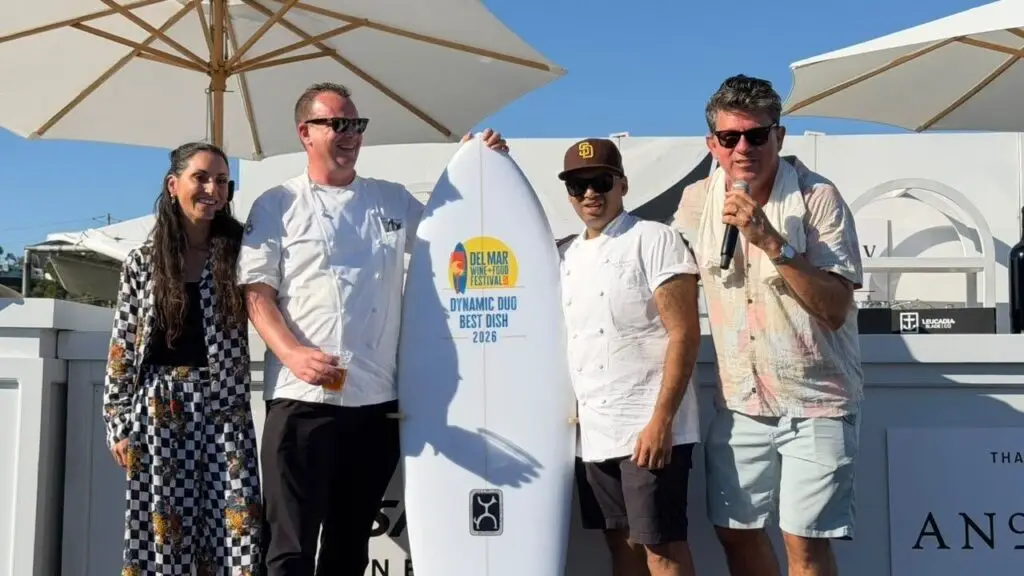
Wine and competition make an unexpectedly perfect pair. You can join Drew Brees and celebrity players at Barnes Tennis Center for a pickleball tournament benefiting Feeding San Diego, where the sidelines are just as exciting as the court. Grab a paddle, cheer from the sidelines, or simply enjoy a glass of wine while the action unfolds. The day blends friendly competition with an all-inclusive tasting experience.
Since year one, Del Mar Wine & Food Festival has partnered with Feeding San Diego to raise $100,000 in support of the organization’s mission to fight hunger across the region. Every serve, sip, and bite helps give back to the community that makes this festival possible.
Remember that pickleball paddle you swore you’d use? Time to put it to work.

This is essentially a passport to Spain with no airport required. Set among the lush grounds of Rancho Valencia, Rioja Uncorked celebrates one of Spain’s most iconic wine regions with an evening of exceptional pours and thoughtfully paired bites. Guests will sip their way through Rioja wines while enjoying a menu featuring everything from Hiramasa crudo and uni toast to duck rillette, birria mini tacos, Cardiff Crack tri-tip sandwiches, and a sweet finale from Karen Krasne of Extraordinary Desserts (date night plans, solved).

Justin Wine Dinner sounds simple: three chefs, one unforgettable table. But chefs Kaitlyn Weber (Estancia La Jolla), Buddha Lo (Top Chef), and Jackson Kalb (Top Chef) are taking you on a one-night-only culinary ride where three styles collide over a multi-course menu paired with exceptional pours from Justin Vineyards & Winery. Set in Estancia’s coastal estate, the evening unfolds course by course with pairings from Justin wines as each chef brings their own style to a menu focused on craft, connection, and a bit of friendly culinary overlap. It’s the kind of culinary conversation that only happens when very, very talented people cook together.

Isabella Dallas is a freelance writer for San Diego Magazine and the Arts and Culture Editor at The Daily Aztec in her final year at San Diego State University. She previously worked as an editorial intern for SDM, but when she’s not writing, you can find her trying the best coffee spots in SD, devouring the latest rom-coms, and indulging in anything and everything pop culture.
The 29-year-old culinary director at Herb & Sea is making seafood sexy (and approachable) again
Implementing a farm-to-table model hardly deserves acknowledgement these days. It’s not a stretch. It’s not innovative. “It’s the bare f**king minimum,” says Herb & Sea‘s executive chef Aidan Owens.
When I arrive at the Encinitas restaurant, I’m ready to talk sustainability, farm-to-table stuff, with Owens. “Did you see the chin on that?” he says of the extra big jiggly chin on the sheephead that just arrived with the day’s fresh catch. I did. It was Jay Leno adjacent.
I learn quickly that he somehow oozes both charm and stone-cold honesty. Maybe he could construct a new dish with chin goo, like he did when he had a bunch of tuna scraps and voila’d it into a smooth and crowd-pleasing ‘nduja. “I want to know what’s in there,” he says.

The instinct to look closer, to dig into what others might discard, says a lot about the chef’s approach. I guide him back to our topic, but he has something else on his mind. “We’re overcomplicating food—what happened to just cooking good food and having fun with it?”
Owens grew up on a farm in Byron Bay, Australia, where sustainability wasn’t a concept you chat about so much as a way of life. Think dirt roads, backyard chickens, pulling vegetables straight from the ground, and a mother who believed that if you couldn’t pronounce the ingredients on a package, you shouldn’t eat what was inside.
Food wasn’t precious or performative. Making it was what you did because you were hungry and that’s still what inspires Owens today. “I like to cook good food because I like to eat good food,” he says.
His approach to sustainability at Herb & Sea began so naturally that it felt just like instinct. “I was just like, ‘Let’s order food from the people who live and work here,’” he says.

And why wouldn’t he when lives in San Diego? Cities all over the world vie for our goods. Our tuna is sent overseas. Our spiny lobsters hit dinner plates in China and Japan. Not to mention California’s producing a third of the country’s vegetables and three-quarters of its fruits and nuts.
“Why would we outsource when it’s all here?” Owens asks.
Sustainability, in this context, is about cooking what exists in abundance, nearby, right now. “I love the local fish here. It’s f**king delicious and San Diego citrus, I mean, it is so f**ing good,” he says.
Instead of importing ingredients, Owens also looks for nearby alternatives. “You can find really cool things in the local waters,” he says, pointing out that stingray cheeks taste similar to scallops.

Whatever he finds in that sheephead chin might just be the next substitute for marrow. But to make this work, it means getting diners amped up about the slightly unfamiliar.
Tasting menus, where diners are completely in his hands, become an opportunity to gently push boundaries. “I’ll serve mackerel, because people think they hate it,” Owens says, noting that the abundant local fish can have some fishiness. “But when it’s fresh, it’s arguably one of the best fish in the ocean.”
He also tweaks the language on the menu so people might feel more compelled to give dishes a try without preconceived notions. He might use “lengua” instead of “tongue.” “Whelk” instead of “snail.” When he puts “stingray throat” on the menu, he disarmingly calls it “skate.”
To reduce waste, scraps aren’t always discarded but rather turned into something new. Sometimes they’re smoked, cured or fermented. Apples going bad turn into apple ponzu. Lemons turn to marmalade, which stretches their usefulness far beyond peak season. “And it’s super tasty on our pizza,” he says.
What makes the food even richer, is the relationships he’s built with farmers. Though it didn’t always feel natural, Owens sought personal connection first. He recalls approaching a fisherman at the Tuna Harbor Dockside Market. “I was awkward,” he says. “I went up to him and said, ‘I like your fish.’”
Owen’s is now so close to his suppliers—like fishermen Ryan Sebo and Joe Daly—that he gets texted pictures of fresh catches right as they flop on the boat. The messages always ask if he wants first dibs. “I say yes to a lot of fish,” Owens says, noting that Herb & Sea can go through 2,000 pounds of seafood a week.

The next evolution of sustainability, in his view, will be chefs working directly with producers such as his alliance with Sebo, cutting out middlemen and purveyors where possible. “It will put more money in the pockets of the people doing the work,” he says.
It will mean that chefs can’t just know their local farmers and producers, but they’ll choose to work with the ones who have the best practices. Dining and sustainability will become much less about the final plate. “It will be more about the impact that plate has on the Earth,” he says.
Ultimately, he believes sustainability doesn’t need to be loud. It doesn’t need hashtags. It just needs to be honest.
“We aren’t saving lives. We’re feeding people good food,” he says.
And yet, in feeding people well—simply, thoughtfully, responsibly—something meaningful happens. Guests leave satisfied. Ingredients are respected. Local ecosystems are supported and food returns to what it has always been at its core: nourishment, pleasure, and a quiet reflection of the place it comes from.
No buzzwords required.
From handmade goods to one-of-a-kind finds, these local shops prove the best souvenirs are the ones with a story
Almost everything in this Oceanside shop is made by local artists and independent weirdos, and almost none of it requires a gallerist’s budget. Goblin Shark Emporium rotates a new featured artist every month between the vinyl crates, blacklight posters, and hilariously specific stickers, so you can walk out with original work and a tarot reading to contemplate as you sip your Banana Dang Coffee from a couple storefronts down.
Tucked within the potting tables and ferns of Mission Hills Nursery, the oldest nursery in Southern California and a Kate Sessions original, sits Through the Fold, the sweet indie bookstore that mother-daughter team Gail Levine and Jennifer Medeiros hand-built and opened in late April. Two retired educators and lifelong bibliophiles run it like a neighborhood living room: three book clubs, toddler story time, and a summer camp for the 7-to-12 set. It’s the rare retail run that smells like soil and new paperbacks, which is to say, like a very specific kind of heaven.
Open since 1993 under the unbeatable tagline “Books of Martians, Murder, Magic, and Mayhem,” this Rosecrans Street institution is the city’s portal for anyone who would rather be on a different planet. Load up on sci-fi, horror, and fantasy, then stick around for the weekly Dungeons & Dragons campaign, because the only thing better than reading about another universe is rolling a d20 inside one.
On the ground floor of the downtown Central Library, tucked into the Joan and Irwin Jacobs Common, sits the Library Shop, a tightly curated gift store stocked with presents and trinkets you didn’t know you needed: wind-up kitchen timers, specialty pencils, felt coasters in colors cheerful enough to overcome the first half of the Padres’ season—you get it. Every dollar funds the San Diego Public Library system, which makes the shop’s official “Guilt-Free Shopping” motto the rare slogan that holds up. Come for a paperback, leave having formed a genuine emotional attachment to a $4 pencil.
The window at this North Park shop is alive: a front-of-house catio where adoptable rescue cats audition for your heart while you pretend to be just browsing. From there, a literal catwalk runs along the ceiling to a back resting room (because existing around inferior beings is exhausting for cats). Owner Vera Blatchley of Purrgatory stocks the full cat-lover arsenal, plus a wall of gifts for the feline who already has nine of everything. Fan favorite: a retro-style, bubblegum-pink Kit-Cat Clock.
Surf art’s everywhere, but it’s somehow always a little kooky. Painter Andy Davis’ style captured that elemental soul, making him one of the most successful surf artists of the last few decades (check his giant mural at Town and Country Resort). His tiny Encinitas storefront, Club Paradise, is a gallery-slash-gift shop that stocks his paintings and prints—and he’s using the space as a culture club for local and touring creatives.
Tulux is the Pacific Beach swimwear label out of Cass Street, where designer Yamhed Torres turns the whole Tulum fantasy into bold, limited-run bikinis. This year, Vogue México y Latinoamérica named her one of just 10 emerging designers to watch, so each suit comes with the kind of credentials that practically books its own sunset getaway. Everything is one and done: When a piece sells, it’s gone for good, which is either smart scarcity or the universe telling you to commit.
Free lotto tickets at crystal shops? Yes, please. Pacific Beads owner Shlomo Gruer greets you at the door of this Clairemont Mesa warehouse with 4,000 square feet of crystals, geodes, and beads by the bin. You come for wholesale amethyst and sterling findings; you leave holding a fistful of healing stones and a statistically remote shot at early retirement. Need another reason to visit? Owner Gruer has his own line of jewelry, and Pacific Beads also hosts jewelry-making classes.
El Cajon’s Parkway Plaza could look radically different in the near future, as city officials are hatching plans to reinvent the one-time community and commercial center. Inflection points of iconic structures are always compelling times to visit and tabulate your own urban-planning daydreams. As you do, hit the first NAMA-certified automatic cotton candy vending machine in the country. Push a button, and 123 Sweetsss spins you a fresh cloud of childhood in under a minute. No carnival, no county fair admission, no sweaty teenager in a paper hat required.
From getting your sweat on at hip-hop class to celebrating with a zero-proof cocktail, here are San Diego's top fitness and wellness spots
For thousands of years, the Kumeyaay who lived in this area called a mountain south of Julian Cush-pii, meaning “sharp peak.” Then, after the Civil War, Confederate sympathizers saw that same mountain and decided to rename it Stonewall Peak—after General Stonewall Jackson. The name stuck for nearly a century and a half, until Cuyamaca Rancho State Park announced earlier this year that the name will return to its original, Cush-pii. Hike to the summit for expansive views of the Coronado Islands to the west and Mexico to the south.

In 1993, Angie Bunch gathered a group of hip-hop dancers—called Culture Shock Dance Troupe—and gave them a space to practice and perform. As hip hop grew through the ’90s, so did Culture Shock. It has since become a nonprofit, a space for young and old, beginner and expert dancers. Culture Shock has also expanded to Los Angeles, Oakland, Las Vegas, Chicago, Atlanta, New York City, and Washington, D.C., as well as Ottawa and Toronto, Canada.
In 2019, Amanda Leach created the Yoga Box method, which takes high-energy flows and adds strength-building poses in heated, vibey, lava-lamp-lit studios. What started on Grand Avenue in Pacific Beach has spread to 15 locations across the county, with even more trickling into Denver, Chicago, and Brooklyn. The best part? Mindfulness newbies who can’t touch their toes and six-packed contortionists can hang in the same class. You can customize each session based on your ability and fitness level.

A gym taking over a historic beachfront pool sounds like the setup for a new season of Love Island, but Fit Mission Beach operating the nearly 100-year-old Plunge at Belmont Park is real. The independent fitness brand has spent the past several years building a loyal following through group fitness classes, community events, and a members’ social club overlooking the ocean. Upstairs, members can work remotely, meet friends, or hang out long after their workout ends. Between the Plunge, the coworking-style lounge, and a packed calendar of events, Fit has evolved into something bigger than a gym. It’s a clubhouse for San Diego’s fitness crowd.
The wellness world is finally transitioning away from HIIT workouts and cult-like spin classes, where your heart rate hits Zone 5 within minutes and stays there until cooldown. Good. At Breathe Degrees, wellness takes the form of zenned-out communal breathing sessions or vagus nerve–activating cold plunges. Breathwork is said to boost your mood in the short term and improve your heart health in the long term, and maybe that’s why everyone’s coming back for more. You can’t run into someone in Carlsbad who hasn’t dropped into at least one breathwork session, and now the studio has opened a second location in Liberty Station.

Pilates wasn’t just popular this year; it was practically a requirement for maintaining your San Diego residency. New studios seemed to appear weekly across San Diego, each promising stronger cores and better posture, but Soul Pilates and Care found a way to stand out by addressing a challenge many parents know well: finding time to exercise at all. Fitness doesn’t have to compete with parenting responsibilities. Parents can drop their kids off with trained caregivers while they head into reformer classes, eliminating one of the biggest barriers to working out. The studio has earned strong reviews for both its instruction and family-friendly approach.
The Hotel del Coronado’s sweeping $550 million restoration touched nearly every corner of the historic resort, but one of the most anticipated unveilils was the debut of its redesigned spa. The oceanfront wellness destination now features 21 treatment rooms, a relaxation lounge, a sauna, steam room, and a treatment menu inspired by the coastal environment just steps away. The redesign blends the Del’s Victorian legacy with a cleaner, more contemporary aesthetic, creating a space that feels distinctly SoCal rather than generic luxury hotel. For locals who don’t have time for a vacation, it’s the next best thing.
As non-alcoholic beverages continue their meteoric rise, Good News Bar has become one of San Diego’s most compelling arguments for a booze-free evening. The University Heights hotspot serves a menu of carefully crafted zero-proof cocktails that borrow techniques and ingredients from traditional cocktail programs (it’s not just fancy juices and soda water), minus the hangover. The space also hosts regular community events and has quickly become a gathering place for everyone from sober San Diegans to the merely sober-curious. In a nightlife industry built around alcohol sales, Good News proved there’s plenty of demand for connection without the buzz.
SeaWorld dazzles with a drone show, big-name entertainers, new animal adventures and more
Nights are heating up at SeaWorld San Diego. The quintessential summertime staple on Mission Bay is transforming into a destination for unforgettable day-to-night adventures, bringing back some of its most popular Summer Nights programming and introducing exciting new experiences sure to delight both kids and adults alike.

The 2026 Summer Day to Night at SeaWorld San Diego is the park’s most ambitious season yet. SeaWorld has planned a highly anticipated entertainment lineup that features nine weeks of throwback concerts featuring R&B and hip‑hop favorites from the ‘90s and early 2000s, including Jordin Sparks, Too $hort and Warren G, Ashanti, and an array of boy band heartthrobs performing together as part of the Pop 2000 Tour.
New this season is perhaps the park’s most visible update: a nightly drone show, Ocean of Dreams, which illuminates the sky with hundreds of synchronized sparklers. Drones form sea otters, sharks, dolphins, and a majestic orca that tell a breathtaking 12-minute story of marine life and underwater ecosystems. The show culminates with a spectacular electric neon finale celebrating hope, wonder, and ocean stewardship.
Nighttime visitors are also in store for animal adventures that fuse education with high-energy fun and the dreamy ambiance of nighttime. The park has launched two all-new animal presentations: Shamu’s Celebration: Light Up the Night and Dolphins: Touch the Sky. Shamu’s Celebration: Light Up the Night features vibrant lighting, music, and dynamic choreography that celebrates the power and beauty of killer whales. Dolphins: Touch the Sky showcases playful bottlenose dolphins and the special connection between humans and the natural world. And back by popular demand is fan-favorite Sea Lions Tonite. See the charming pinnipeds splash, play, and parody pop culture in this refreshed crowd-pleaser.

More must-sees: a newly reimagined Shark Encounter, one of the country’s more immersive exhibits highlighting 11 different species up close, SeaWorld’s beloved BMX Blast! stunt show, and high-seas escapade, Pirates Ahoy! The Battle for Mermaid Cove. And don’t miss the park’s all-new Deep Sea Disco, which encourages guests to dance the night away under the glow of the SkyTower, and vibrant closing time laser light display Laser Reef Summer Spectacular.
Amp up the nighttime vibe with local craft beers, curated cocktails, and nostalgic theme park treats with $1 beer all summer long. SeaWorld is the place for day to night summer fun. When the sun goes down, SeaWorld lights up, and inspires guests of all ages to embrace their inner whimsy and see why generations of San Diegans head to SeaWorld to make memories they’ll never forget.