El Niño Is Threatening One of San Diego’s Most Famous Delicacies
Warm ocean waters are taking a toll on local sea urchins, leaving restaurants like Callie and Fleurette without their prized uni and divers uncertain about the future
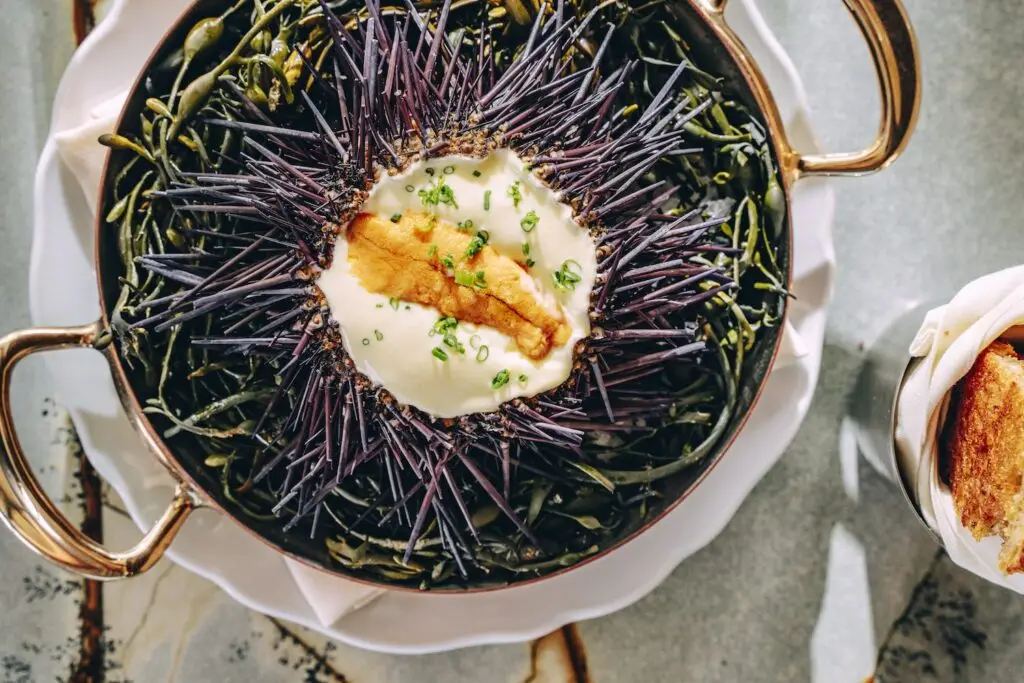
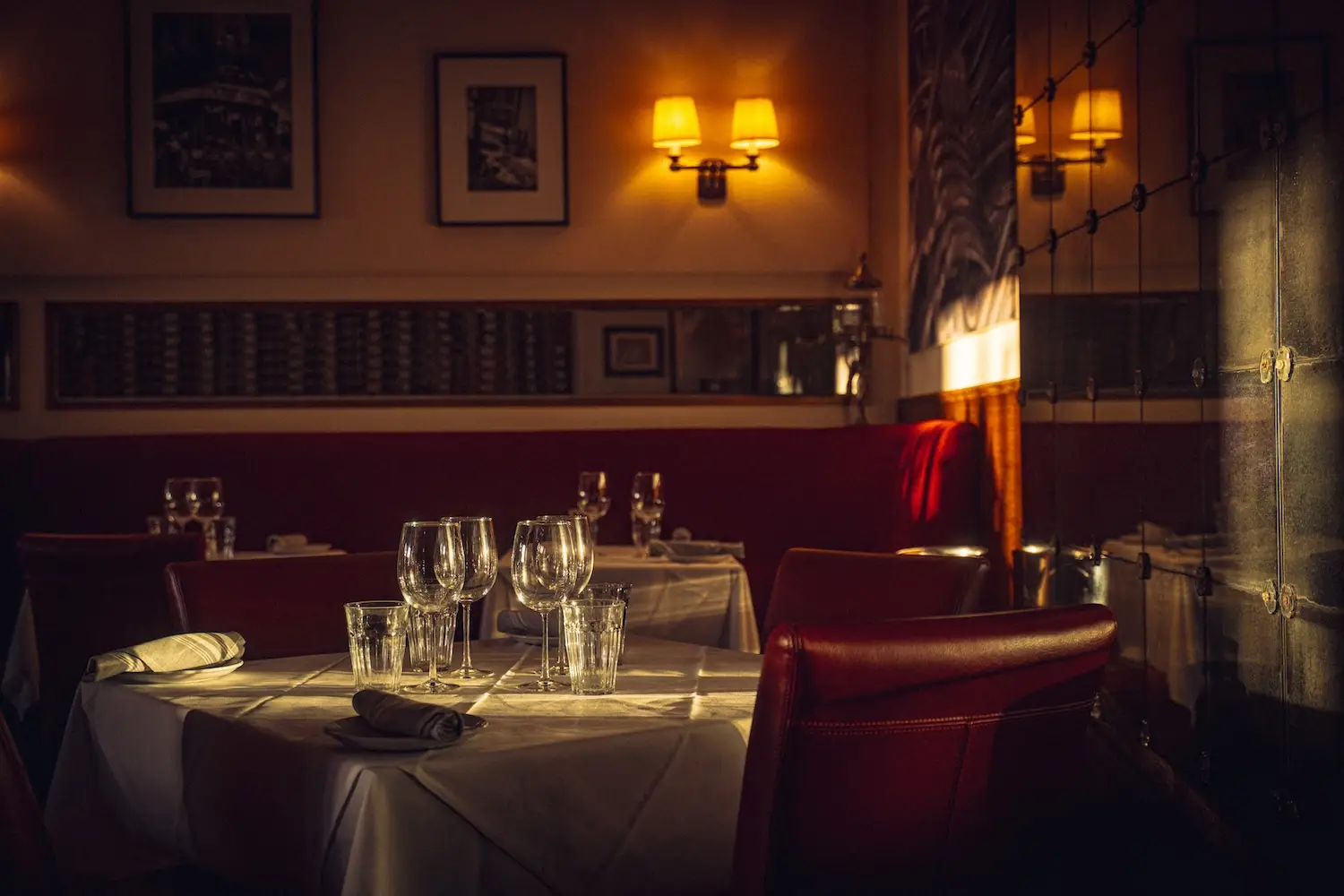
Last week, chef Travis Swikard had to take his best-selling dish off the menu at both of his restaurants, Callie in East Village and Fleurette in La Jolla. Local uni—the famed San Diego seafood delicacy—is nowhere to be found.
His supplier, Luke Halmay, sent him photographs from the usual dive spots. “Normally, it’s teeming with life,” says Swikard. “Now it’s nothing. Nothing.”
San Diego was built on tuna, but our sea urchin is legendary. Less than one percent of the world’s uni supply originates from San Diego, but the buttery, briny golden-orange lobes that come out of our waters are prized as some of the highest quality uni in the world. That, coupled with our unusual year-round ability to harvest the precious delicacy, makes our coastal region a figurative hot spot for sea urchin fans.
Unfortunately, “hot spot” is now a literal designation as well.
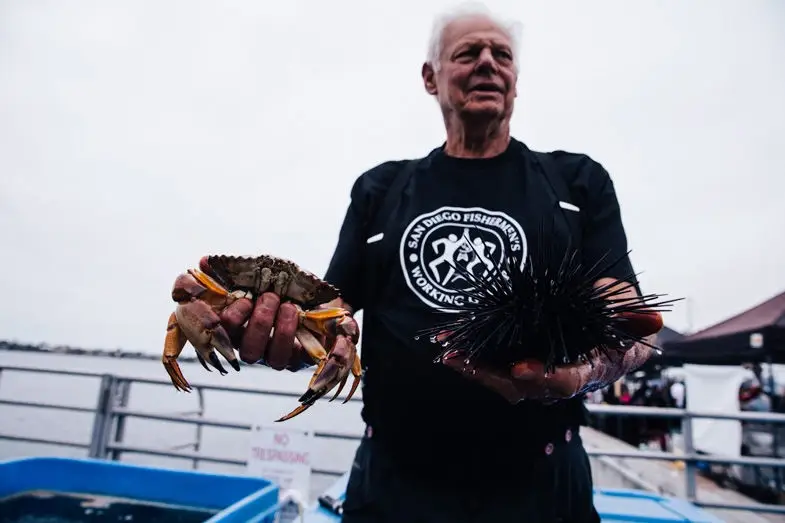
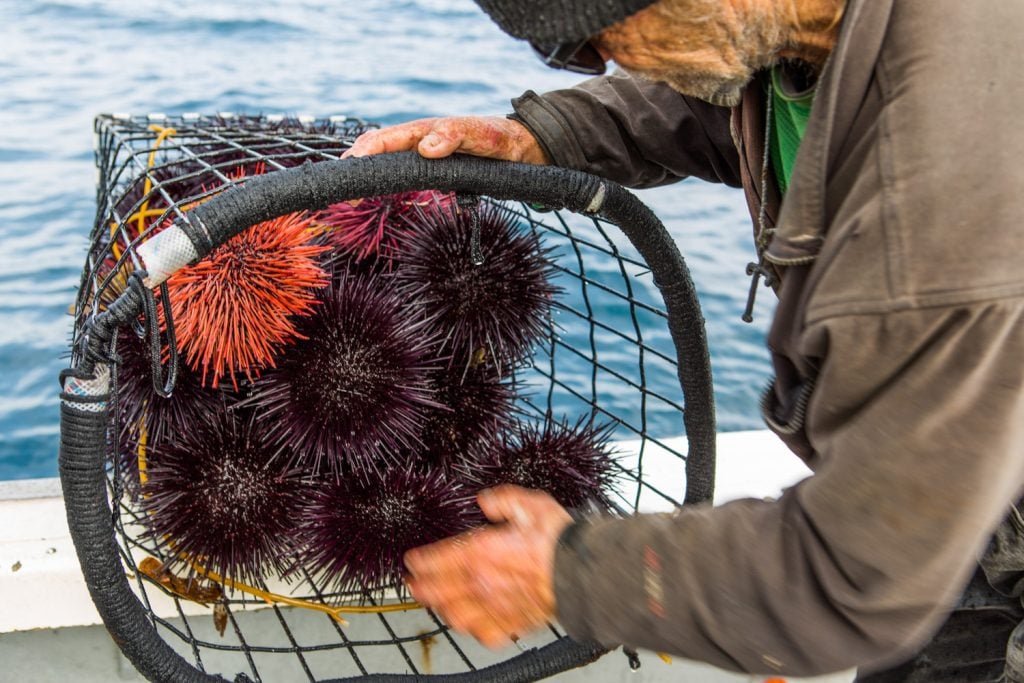
Peter Halmay has been a commercial sea urchin diver for five decades, now working alongside his son, Luke. A month ago, he and his colleagues started noticing a massive sea urchin die-off in the warmer-than-usual local waters. “It was very fast,” he says. “We don’t know the extent of the die-off at this time […] now we’re in survey mode where we can still probably collect, but it’ll be far less than we had before.”
This year’s super El Niño hasn’t yet reached its peak, but it’s already wreaking havoc with elevated sea levels, higher tides, pounding surf, and warmer water from Kelvin waves. Kelvin waves are naturally occurring events that bring swells of warm water to the surface, which can significantly raise oceanic temperatures and ultimately lead to massive die-offs of marine plants and animals.
Normally, two species of sea urchin thrive in San Diego’s typically chilly intertidal regions: the more common and larger red sea urchins, as well as the smaller and more delicate purple sea urchins. These spiny marine invertebrates feast on cold water food sources like giant kelp and leafy algae, and generally flourish in intertidal zones and rocky reefs closer to the surface.
Right now, that’s not the case. Giant kelp thrives between 50 and 60 degrees Fahrenheit. Anything higher tolls a death knell for uni’s biggest food source. In short: no kelp, no uni. (It’s a steep price to pay for this summer’s pleasant but unseasonably warm and crystal clear water.)
Photo Credit: Eric Wolfinger
Large-scale die-offs don’t happen every El Niño, but this year seems exceptional. Halmay points to previous El Niño periods in 1982, 1997, and 2015. “It never brought this warm weather or warm water,” he says. He’s not the only one who’s noticed. Tommy Gomes, known locally as Tommy the Fishmonger, co-owns and runs Tunaville Market & Grocery with Mitch Conniff of Mitch’s Seafood. “Even out in deeper water where it should be colder, it’s not,” says Gomes.
Will it get worse before it gets better? No one knows. But for now, local uni is off the menu.
Chefs like Swikard will make do with other local seafood like spiny lobster and swordfish. But for the handful of specialized sea urchin divers left in San Diego, both Halmays included, it’s the uncertainty of the future that alarms them more than the crisis of the present. At its peak, up to 30 divers in San Diego could harvest around two million pounds of product a year. Now, Halmay estimates there are less than 10 divers left. And with nothing to harvest, that number could shrink even further.
Swikard has spent a lifetime cooking in the best kitchens in the world, from New York City to Europe and beyond. He sees something special in San Diego, especially our seafood. “There are only a few places in the world that can actually say that they have anything close to what we have,” he says. To lose it would be to lose a part of our core identity.
With so many question marks still lingering, Halmay remains hopeful rather than despondent. “The ocean has a beautiful way of restoring itself,” he says.
“[Uni] is just going to disappear for a little while,” Gomes says. “They’ll come back. They always do.”
Beth Demmon is an award-winning writer and podcaster whose work regularly appears in national outlets and San Diego Magazine. Her first book, The Beer Lover's Guide to Cider, is now available. Find out more on bethdemmon.com.