Featured articles
Featured articles
Featured articles
What's next
Featured articles
Featured articles
Featured articles
Ready to know more about San Diego?
SubscribeReady to know more about San Diego?
Marijuana's legal. How did it go from evil death drug to medical miracle and billion-dollar industry?
It seems like a standard boardroom. A big table for big conversations. A small fridge with small waters. A flat-screen flips through striking photos of the company’s products. But then there’s that huge window. It doesn’t face outdoors; it’s an observation window. I look into the sepia-toned room below, and there they are. A couple hundred “babies,” as OutCo CEO Lincoln Fish calls them. “In six weeks, they’ll be six feet tall and the whole room will be green.”
Marijuana plants. Luscious, vibrant, emerald marijuana plants. Legal marijuana plants.
On January 1, recreational marijuana became legal in California. With a 56 percent yes vote, residents passed Prop 64 on November 8, 2016. Last September, the San Diego City Council voted 6-3 to go all-in—legalize and regulate marijuana cultivation, distribution, and retail—making it one of the most progressive cannabis cities in California.
Now the green rush is on. The state estimates legal weed sales could raise $7 billion a year in revenue by 2021, including $1 billion a year in taxes. When legal cannabis sales began in Colorado in 2014, it took only 10 months to sell $1 billion worth.
With that kind of revenue, you can hear potholes being filled, teachers getting raises, parks being cleaned. You can also hear parents doomsaying, the alcohol industry plotting revenge, and small marijuana farmers giving retirement speeches as corporations move in—like Privateer Holdings, a $150 million cannabis investment fund backed by PayPal founder Peter Thiel, or Constellation Brands, an alcohol distribution company that recently bought 10 percent of the Canadian marijuana market.
How we got here is a long and winding road. The brief history of marijuana goes something like this, according to author Bruce Barcott in his book Weed the People. California first outlawed weed in 1913, when it was almost exclusively imported from Mexico. The Harrison Act of 1913 put control of narcotics under the purview of the federal government, but it concerned only cocaine and opiates. Harry Anslinger, the first commissioner of the Federal Bureau of Narcotics, didn’t initially want to go after marijuana. But then the Great Depression hit. His bureau was underfunded and in danger. Anslinger needed a cause to justify his organization’s existence. He convinced Congress that America was about to lose its soul to weed.
The Hearst newspaper empire helped, renowned as it was for making slight concerns into national moral panics. Its headlines included “Marijuana Makes Fiends of Boys in 30 Days” and the verbose “Murder Weed Found Up and Down Coast—Deadly Marihuana Dope Ready for Harvest that Means Mass Enslavement of California Children”.
Marijuana became enemy number one. Parents hid their children. This was ISIS, the plant.
But then the studies came. In 1925 the US Army commissioned lawyers, officers, and public and mental health professionals to study cannabis use by soldiers in Panama. The committee found no evidence that marijuana “has any appreciably deleterious influence on the individuals using it.” Fears of marijuana-fueled insanity “appear to have little basis in fact,” they went on.
Anslinger responded by making any such research into the drug illegal. Despite opposition from health officials, marijuana got lumped in with heroin and other hard drugs in the 1951 Boggs Act, a spat of hardline antidrug laws. As marijuana became the relaxant of choice for the antiwar hippie movement, it ruffled another powerful man: Richard Nixon. With the Comprehensive Drug Abuse Prevention and Control Act, he set out to separate drugs into five categories: The least harmful were given Schedule V, and the most harmful Schedule I. Cocaine and meth got Schedule II. Heroin and LSD landed in Schedule I.
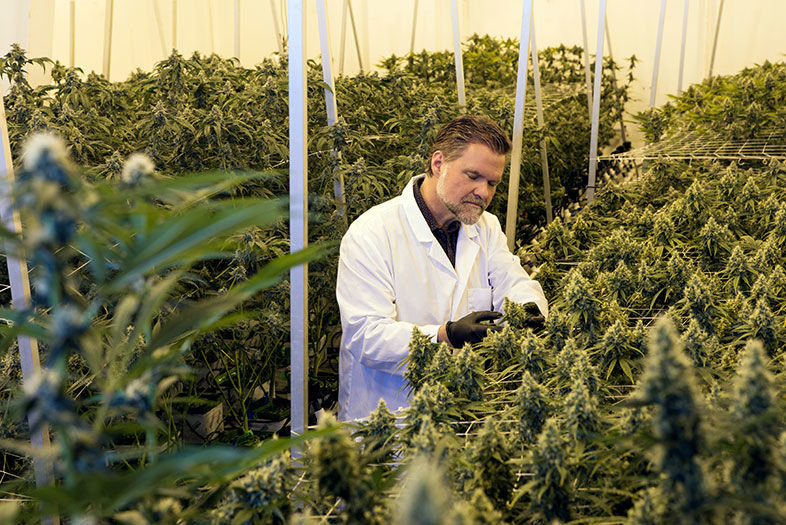
Green Rush: Inside San Diego’s Emerging Cannabis Industry
Lincoln Fish was anti-marijuana until a friend suggested he research the medical benefits. Now he owns OutCo in El Cajon, the largest cultivation operation in SoCal.
Nixon created the infamous Shafer Commission to help him decide where to put marijuana. Made up of political conservatives, the commission seemed sure to vilify weed. It didn’t. After a year of study, it released its report, “Marihuana: A Signal of Misunderstanding,” which recommended an end to prohibition. In 1973, Nixon ignored their findings and classified marijuana Schedule I, as dangerous as heroin and LSD. Some states had read the report for themselves, and decriminalized the drug. Still, arrests skyrocketed.
From 1972 to 1990, marijuana arrests averaged 400,000 per year. There was also a racial element to the war against marijuana. Anslinger infamously claimed, “Marijuana causes white women to seek sexual relations with Negroes.” Between 2001 and 2010, about 800,000 Americans were arrested every year on marijuana charges; a majority of them were nonwhite. In 1990, the arrests of nonwhite teenagers was 3,100; in 2010, it was 16,400. In the mid-2000s, about 40,000 people were in federal or state prisons on marijuana charges, most of them black men. Black men were four times as likely as white men to be arrested on pot charges.
So how’d we go from Reefer Madness to legalization? Medical marijuana happened. Soldiers reported it helped with PTSD. Cancer patients used cannabis to alleviate their nausea and increase their appetite. Harvard reported it helped reduce spasms in patients with multiple sclerosis. It reduces the intense eye pressure associated with glaucoma. Patients with epilepsy reported it prevented seizures (a GW Pharmaceuticals study proved that in 2017).
Gallup polls from the early 2000s show that only about one-third of America favored legalization. After reports of its health benefits, that number jumped to 44 percent in 2009. In 2013, 58 percent of Americans said it should be legalized. California legalized medical marijuana in 1996, and 19 other states plus Washington, DC, did the same by 2013.
In 2009, President Obama’s deputy attorney general, David Ogden, sent a memo to US attorneys advising them not to pursue federal charges against people whose marijuana usage complied with state laws. CNN’s top medical correspondent, Dr. Sanjay Gupta, wrote an article for Time that year called “Why I Would Vote No on Pot”—but in 2013, after spending six months studying the medical uses of marijuana, he reversed his stance in a CNN article titled “Why I Changed My Mind on Weed.” Regarding its classification as a Schedule I drug and its exaggerated harm, he explained: “We have been terribly and systematically misled for nearly 70 years in the United States, and I apologize for my own role in that.”
If Gupta could change his mind, so could the most vocal opponents—American parents. A 2017 study showed over 93 percent of Americans support medical marijuana, and 73 percent would oppose a federal crackdown.
“A few reasons for legalization,” says Chris Conrad, one of the country’s foremost cannabis expert witnesses: “It’s nontoxic. You don’t have any history of anybody ever dying from marijuana. It’s safer than alcohol or aspirin. You have a bigger chance of having a heart attack during sex. Also, I’d prefer to buy it from a store. It’s safer. And it’s going to create a lot of jobs.”
Currently, 29 states and the District of Columbia have legalized marijuana in some form. Colorado and Washington were the first states to allow nonmedical use, in 2012, and six more states have followed.
In 2014, Congress passed the Rohrabacher-Blumenauer amendment, barring the Department of Justice from using federal money to prosecute people who comply with state marijuana laws. As of press time, the amendment has not yet been renewed for 2018. And US Attorney General Jeff Sessions—a longtime antidrug advocate who famously said that “good people don’t smoke marijuana”—rang in the new year by rescinding the Ogden memorandum.
Still, despite the new administration’s stance on the drug, California remains the sixth largest economy in the world. That may not be a fight Sessions wants to pick.
“You don’t put the jack back in the box,” says Rachel Laing, a lobbyist for the San Diego–based United Medical Marijuana Coalition.
Even amid fear of federal intervention, business must go on.
A few years ago, Lincoln Fish was anti-pot. Now he runs OutCo in El Cajon, the largest legal cultivation outfit in Southern California, and its associated dispensary. He had already created and sold a successful nutritional supplement business when a colleague paid him a visit.
“He told me he was getting into cannabis,” says Fish in his boardroom, overlooking his marijuana plants. “I said, ‘Are you are crazy? I’m not getting involved in drugs.’ I was a nerd through school and didn’t use the stuff. He said, ‘Go home and read about it.’ And sure enough, I was almost embarrassed that I was that out of touch and did not understand the hypocrisy involved with this.
“What really changed my mind was learning about the medicinal side. Wipe everything we think about it now, good or bad. If we found this plant in the Amazon tomorrow, it would be the greatest scientific find of our time.”
While giving a talk at a recent event, Fish ran into the head of the San Diego Police Department’s Domestic Violence Unit. “He said, ‘Take a guess what percentage of our cases involve alcohol.’ I said, ‘I dunno, 40?’ He said 70 percent. I said, ‘How many involved cannabis?’ He said none.”
OutCo opened as a medical marijuana dispensary and cultivation business in 2014. Through the front door you’re greeted by a security guard. Most dispensaries have one, because marijuana is a cash business. Since it’s not federally legal, and banks are federally insured, banks won’t touch the money.
Past a locked door is a clean, modern retail room. It looks like a Sephora. Budtenders assist clients at a glass case stocked with dried buds in various jars, which have names like Zskittlez, Girl Scout Cookies, and Chernobyl. There are tinctures (alcohol-based marijuana extracts) in flavors like peppermint and tangerine. There’s “Cannanut Oil,” a mixture of cannabis and coconut oil. A female sexual stimulant, OutCo Love Budder. There’s a range of products with just CBD, the non-psychoactive cannabinoid responsible for most of marijuana’s health benefits.
“We just came out with this,” says communications director Virginia Falces. It’s a cannabis suppository to help ease menstrual cramps. She tells of a family member who suffered from terrible cramps, and says this has been the only thing that works.
Fish takes me beyond the dispensary into the cultivation operation. I meet Allison Justice, vice president of cultivation. She’d never grown marijuana before coming to OutCo—she’d spent her whole life studying carnations, and has a doctorate in plant and environmental science.
OutCo is full of PhDs. German chemical scientist Markus Roggen runs their extraction program, in which machines use CO2 and pressure to extract the cannabis oil from the flowers. “The average yield is 70 percent,” says Fish. “Markus has gotten 90 percent.”
When staffing OutCo, Fish didn’t want longtime marijuana vets. He felt they had wisdom, but not science. For instance, after the plants are harvested, they need to be dried for 10–12 days. Fish asked some old-school growers how they knew it was perfectly dried. “They said, ‘Well, hold up the stem, bend it, and listen for the snap.’ That’s not really scalable science, guys.”
Most marijuana experts would say that OutCo’s harvest isn’t ideal, since it’s grown indoors, which wastes resources. The company is working on a 103,000-square-foot greenhouse project on Native American land, but the new legislation has made that trickier. On the other hand, here in El Cajon, they use zero artificial products. The most popular method of cannabis extraction is ethanol-based, but OutCo uses a blood centrifuge, which increases yield without having to use ethanol. Fish opens a fridge that’s filled with mason jars of extract. Picking up one that’s about half full, he says, “That’s about $20,000 worth.”
He points out the window of the boardroom. “See those things hanging on the rafters that look like wristwatches? Those are cameras. Those feed into a software program. The software can take the image, with heat and other signatures, and look for nutrient deficiencies, watering issues. The researchers behind this came out from Colorado to us because they couldn’t find anyone in Colorado who had enough of a scientific team to do it.”

Green Rush: Inside San Diego’s Emerging Cannabis Industry
It’s not just “bud.” Dispensaries are using extracts and tinctures to develop all sorts of products of varying concentration and potency.
Allison Justice also discovered a flaw in Colorado’s testing practices. A major argument for legalizing weed is that it’ll be safer. For instance, there’s a nasty fungicide called Eagle 20 used by some black-market producers. When combusted, it turns into hydrogen cyanide. Testing should ensure that no harmful pesticides or microbes are present.
“Allison started seeing these crops in Colorado that were testing ‘zero microbes,’” says Fish. “We have microbes on our skin. Microbes are everywhere. It’s just impossible.”
“None of the growers would tell me how they did this,” Justice adds. “Finally someone told me—you take your own sample, and prior to taking it to the laboratory for testing, you put it in the microwave.” Fish mentioned this to Colorado testing authorities, who changed the law. Now the lab must go to the cultivator and choose a sample. The authorities also began doing DNA tests on the cannabis. “So even if you had bud that had E. coli on it, and you put it in the microwave,” Justice explains, “the E. coli will show up on the DNA tests.”
Former NFL star Ricky Williams, who famously used marijuana to deal with his social anxiety, is working with OutCo to develop his own line of cannabis. He came to the El Cajon laboratory to work with the scientists. “He’s actually getting his doctorate in Chinese herbal medicine,” says Fish.
Business-wise, OutCo has a problem, as do others who’ve set up in the area. They chose El Cajon because it was the only place they could legally grow cannabis at the time. But last year, while the city legalized adult use, the county voted to ban new cultivation and retail in unincorporated areas. OutCo and others are suing the county.
“We had the three votes we needed and then Kristin Gaspar beat Dave Roberts for the seat,” explains Fish. “She told us at a meeting at a fundraiser, ‘I have no problem with medical marijuana, sounds great.’ And then she and Dianne [Jacob] made some backroom deal and voted against us. Everyone was floored.”
Asked for comment, Gaspar’s communications director, Itica Milanes, replied, “The supervisor’s position on medical marijuana is well established. Any decisions pertaining to it before the board have been strictly a land use decision and don’t involve the merits of medical marijuana.”
Fish says he’s not concerned. “We’re getting involved in two of the supervisor contests. We have vested rights; we should be able to do what we were planning on doing originally under the ordinance. The other guys did not buy multimillion-dollar buildings in the area just to be able to open a tiny dispensary. They bought it so that they can cultivate.”
For now, Fish and OutCo are continuing as a medical-only operation. Clients must have their medical card, which—incidentally—takes about 10 minutes to acquire online. They’ll be opening an adult-use dispensary in Sorrento Valley soon, with plans for five or so more in the state. They’re also working on two cultivation centers in Long Beach.
But OutCo’s long-term goal isn’t dispensaries. It’s science. “Everything we do has been tested to the nth degree,” he says. “We’re doing shelf stability studies. Nobody can tell you how long flower stays good on a shelf before it degrades. A big part of making cannabis is curing, which makes the flower smell good. When we age wine, we know exactly what happens from a molecular level. But nobody can tell you what happens to cannabis.
“The question is, who’s going to spend the money on real science? Well, we are. We know the future of this business is going to be the people who have the quality, consistency, safety, and efficacy. That’s a game we can win with science.”
What you need to know about San Diego’s new cannabis laws
Who can purchase marijuana?
Anyone with a valid government ID proving they are 21 or older.
Do I need a medical card?
No, though some dispensaries are still licensed only for medicinal use. Check before you go.
Can I use a credit card?
Don’t count on it. Cash only. Nearly all have ATMs on site.
Can I use cannabis in public?
No. $100 fine. Home use only, unless a local ordinance allows it. Can’t smoke within 1,000 feet of a school, daycare center, or youth center while kids are there. If you’re caught smoking at a place where tobacco is also illegal (in a restaurant, near schools, etc.), $250 fine.
How much can I legally carry?
Up to an ounce of flower/bud, or eight grams of concentrate (hash, tincture, oil, dabs, etc.)
Can I drive with it in my car?
You’re allowed to drive with cannabis in a closed package. Police can cite you for an “open container.” However, you can drive with an open package in the trunk.
Am I allowed to grow it?
Yes. Up to six plants.
Can my employer still drug test me?
Yes. Know your workplace’s rules regarding cannabis.
“I’m in Florida making a presentation to high-net-worth investors,” says Will Senn. “We’re in the middle of a big raise for Floris Capital Management.”
Senn’s story is the story of legalized marijuana in San Diego. He grew up in San Francisco’s East Bay, which is ground zero for California’s cannabis industry. He worked for dispensaries in high school before moving to San Diego and opening his own in 2009. At the time, the laws were nonexistent, or at the very least gray.
After the passage of Prop 215 in 1996 and subsequent legal battles, San Diego started accepting applications for medical marijuana dispensaries. They boomed.
“At one point, there were over 200 dispensaries,” Senn says. “But the city council started to pass an ordinance that was going to shut everyone down. Well, that wasn’t going to work. I started the Patient Care Association of California, and Citizens for Patient Rights. We ran a referendum. The city council ended up repealing that ordinance.”
I spoke with Senn in December. As the owner of Urbn Leaf, the largest dispensary group in San Diego, he was on the precipice of history. “We’re 30 days away from the fifth largest economy in the world opening its market,” he says. “It’s exciting, and nerve-racking. We don’t know if we’re going to have lines around the corner, or if we already tapped out our client base.”
Rachel Laing, the cannabis lobbyist, predicts the former. Especially now that, under the law, all people will need is an ID proving they’re at least 21. “I know a lot of professionals who partake, but would never get a card because they don’t want that on their record. I think sales are going to go through the roof.”
At least initially, Laing was right. On January 1, the lines at San Diego dispensaries were massive. Opening day sales at Urbn Leaf were four times the norm. I visited them on the 2nd, a Monday. There was no line, but the place was significantly more packed than my previous visits before legalization.
Urbn Leaf, along with OutCo’s Outliers Collective and other dispensaries like Torrey Holistics in Sorrento Valley, represents the new face of marijuana. It’s their job to rebrand an industry that’s long been stereotyped as the realm of burned-out hippies, do-nothings, couch-dwellers, late-night pizza eaters, and college kids getting as high as humanly possible. Torrey Holistics looks like a warmer Apple store, clean and modern and high-end. At Urbn Leaf, a big sign reads “A Feel Good Drug Boutique.” The interior could be a hip craft-beer tasting room.
“We wanted a modern, industrial concept,” says Senn. “We wanted to embrace the stigma of cannabis and redirect it. Our message is that this shouldn’t be a Schedule I drug. It’s great for you, and it should be legalized. We want anyone who comes in, whether they’re 85 or 21, to feel comfortable. A lot of older clientele, well into their 70s and 80s, come in because it’s a very welcoming atmosphere. I think that clientele has always been in the cannabis market, but they only choose where they go based on the comfort. We analyzed everything from the music in the waiting room to the smell in the lobby. There is a specific scent we developed for when you walk in.”
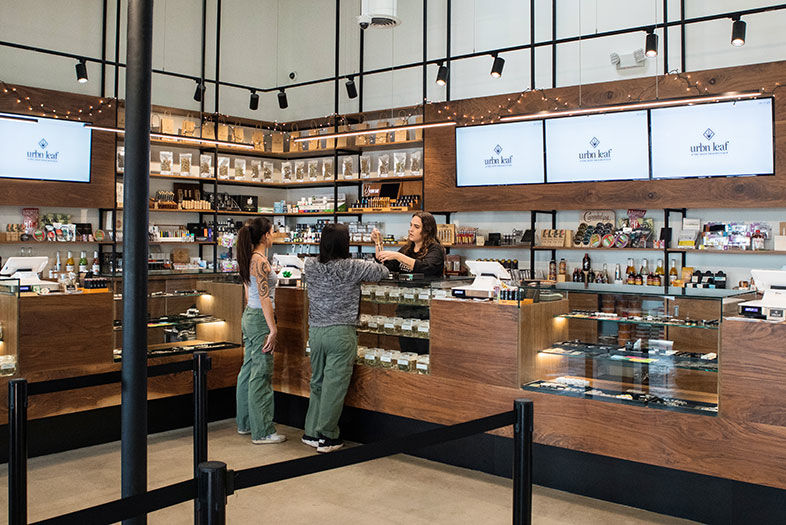
Green Rush: Inside San Diego’s Emerging Cannabis Industry
Urbn Leaf in Bay Park is designed in a modern style, showcasing products like Legal beverages, FlavRx chocolates, and various vaporizing oils fortified with cannabis.
Torrey Holistics marketing director Ruthie Edelson also designed their brand to be all-inclusive. “I didn’t want it to be a bunch of pictures of marijuana,” she explains. “I wanted a place where you could feel at ease, to reach the baby boomers and people who used to do it, but grew up when Nancy Reagan was saying no to drugs and it got a bad rap. The people who think, ‘What will my kids think?’ Truth is, their kids are doing it, too. We want to bring a peace of mind. Marijuana is medicine, it’s legal, and we’re safe.”
Urbn Leaf has multiple buses downtown wrapped with their logo. Its Bay Park location is set to undergo a massive expansion and redesign, and a third location is set for Middletown. Senn’s biggest concern is money. Being cash-only makes everyone in the industry—retail clerks, drivers, everyone—a huge target for robbery. Senn has purchased an old Wells Fargo bank vault, which is a secure but impermanent solution. If the city and the state want to collect the massive tax revenue from this industry, they’ll have to ensure its safe storage and transportation.
“The way you make it safe is you give me a bank,” Senn says. “I’m hopeful that John Chiang can help us. He’s talking about creating a state bank specifically for cannabis.”
Chiang, California’s state treasurer, spearheaded a working group that studied how to help cannabis businesses open bank accounts and pay their taxes. I spoke with Chiang, who speaks like a state treasurer. To be honest, I didn’t understand a lot of it. But I understood this:
“We’re addressing this on multiple fronts,” he says. “We’re not going to have a final disposition until Washington, DC, steps up and provides leadership in the cannabis space, whether it’s banking, criminalization, or regulatory actions. We’re looking at the use of couriers. Who wants to be at risk carrying $200,000 to commit your obligation to the tax board or Employment Development Department? If we use an armed courier, the technical recipient would be the state. Other businesses could be participating in this program, so it would not just be cannabis dollars. Some financial businesses were concerned that they would only get cannabis dollars. Now it’s the money of the state. And these are dollars that come from multiple, varied businesses.”
The other concern is the black market. Because legal businesses are paying taxes and licensing fees, their costs are higher. Someone growing illegally could easily undercut legitimate businesses on price. On the first day marijuana became legal in Colorado, Weed the People author Barcott witnessed a black market dealer working the line at a dispensary. A lot cheaper and no waiting, the dealer bragged.
“The city attorney and SDPD have been pretty aggressive on any unlicensed cannabis operation,” says Senn, who compliments how the city has handled legalization. “They’ve been holding up their end of the bargain. Our product can’t compete because of compliance, overhead, taxes.”
The crackdown on the black market is helped by the fact that most newly legal cannabis outfits know who runs the black market. They’ve been swimming in the same circle for decades.
Senn is optimistic the state and city will help legal marijuana businesses survive. The monetary incentive helps. “If the projections are right,” he says, “this will be bigger than the wine industry.”
In 2010, Jena Perez used her mother’s recipe to start her artisanal toffee business, SweetBricks. She did well, featured in this magazine and on Food Network. Now she’s stopped selling SweetBricks.
“Jetty Extracts approached us in 2016 and asked if we wanted to put their cannabis extract in our product,” she explains. “My partner Darlene and I had no experience. I never thought I’d get into edibles. We did a very public campaign about it. We were one of the first mainstream food companies to jump into edibles.”
Their new, cannabis-infused version is called Mind Tricks Toffee. There was a learning curve. Cannabis extract has the consistency of molasses, so they had to reconfigure the recipe. Each Mind Tricks Toffee includes a 10-milligram dose, and at first, Perez would have to break down a 100-milligram package of extract by hand.
“I was terrified of adding too much,” she said. “I’m terrified of edibles. Everyone is. You’ve heard the stories. But now it comes to us in 10 milligram packages. People can finally enjoy it. Soccer moms are hitting me up and say they just want a tiny dose instead of their glass of wine at night.”
The feedback was incredible, as was the profit. While she sold a 2-ounce bag of SweetBricks for $2, the same amount of Mind Tricks sells for $15. That money helps her family, especially her mother, who has multiple sclerosis and lives with Perez. Every night, she gives her mom a dose of CBD, which improves her circulation and helps her sleep.
“I remember going to my mom and asking her if it was okay to change her recipe,” she says. “She knows I’m not really into weed. She said, ‘I trust you, and you gotta do what you need to do.’”
Now Mind Tricks production is about 10,000 packages per month. In September, Rolling Stone featured Perez in their story “Weed Warriors: Meet Six Women Shaping the Cannabis Industry.” After a year and a half of making Mind Tricks, she finally tried her own product three months ago. “I tried it for the first time with Snoop Dogg at a party,” she says. “It was insane. Like, ‘Who am I?’”
“A lot of hospitality veterans are getting into the space,” says Ted Glennon, former sommelier at the Hotel del Coronado. One of the city’s top pastry chefs is (anonymously) behind the brand Kaneh Co. Entrepreneur Marie Tahan Daniels operates San Diego’s Closed Door Supper Club, a pop-up dinner series with local chefs that incorporates cannabis. There’s a whole market of CBD extracts for pets. At OutCo, Virginia Falces tells me stories of clients whose pets are entering the late stages of life. “I can’t tell you how many people come back in after giving their dog or cat CBD and say, ‘Oh my god, he ran! He hasn’t run in years.’” One local company, Cannimal, specializes in “ailment-specific animal products combining the healing power of adaptogenic herbs and CBD.”
Then there’s the whole new industry of “weedings.” Weddings with weed. Leslie Monroy owns Flowers on Flowers, which claims to be “California’s first and only team of medical cannabis florists.” She says, “I’ve been growing cannabis since I was in high school. Weddings just came out of nowhere. Some will do personalized joints with a guest’s name on it and seating arrangement. A lot of people will do an open bud bar. You have your budtender, and usually have it off to the side. It’s just like a regular bartender. You have to judge your crowd, know when someone’s had too much, not enough. It’s lots of fun. You get an older crowd who comes over and is just curious.”
She’ll often place marijuana in the floral arrangements at the table, or in the bride’s bouquet. “They’ll do toke-and-toasts,” she says. “At the beginning of the toast, the groomsmen will stand up and say, ‘You all have a joint at your table. Light it now.’ And then they’ll give the speech.”
Finding venues willing to host a weeding isn’t easy, but Monroy’s tapped a few. The biggest issue for marketing her business is that most clients don’t want photos taken. The stigma still exists, but she expects that will change with legalization.
Monroy charges an extremely low rate, because all of her weeding work is for charity—specifically Canines for Disabled Kids, which helps children get service animals. “I can do your whole wedding party for about $300,” she says. “A lot of florists are mad at me. I’m not trying to buy a Lamborghini. I’m just trying to get my business out there.”
She’s not the only one. The green rush is on.
We asked cannabis experts for their favorite edibles
Green Rush: Inside San Diego’s Emerging Cannabis Industry
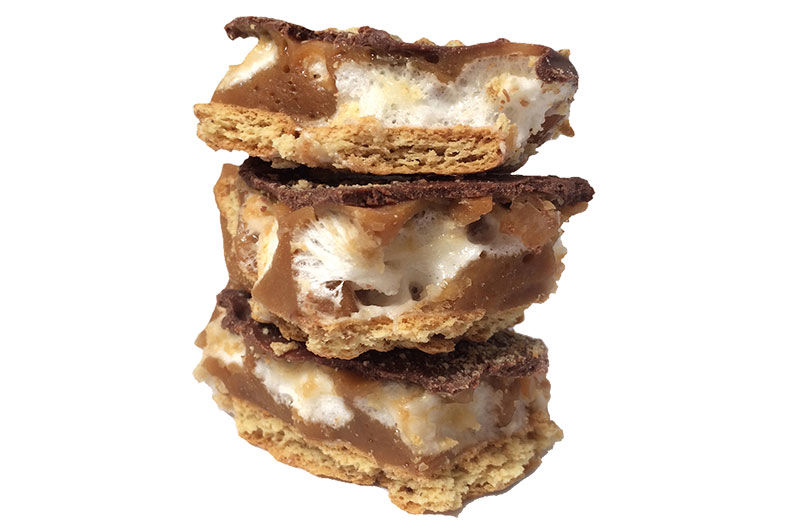
Mind Tricks Toffee (pictured) includes 10 milligrams of cannabis added to a beloved family recipe.
Flav has a huge roster of treats, and is best known for their gummies and chocolates.
Beboe emphasizes sleek branding for its bespoke vaporizers and candies.
Kaneh has a well-known (but anonymous) pastry chef behind its brownies, cookies, and bars.
Green Rush: Inside San Diego’s Emerging Cannabis Industry
PARTNER CONTENT
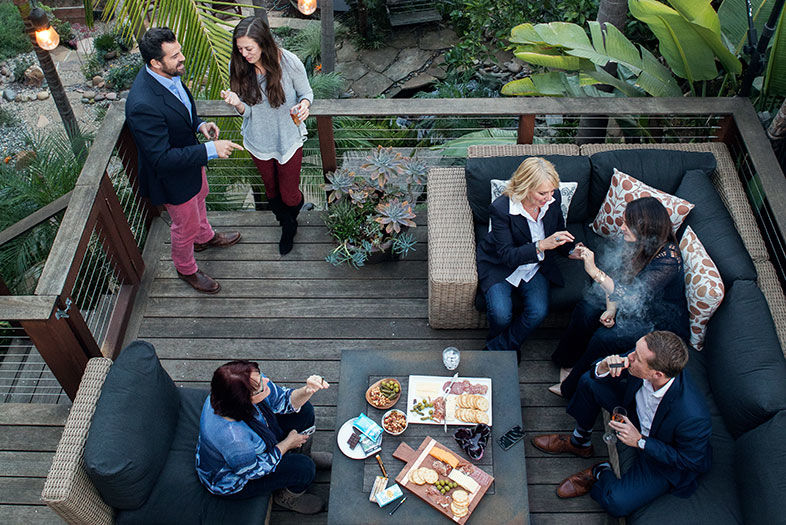
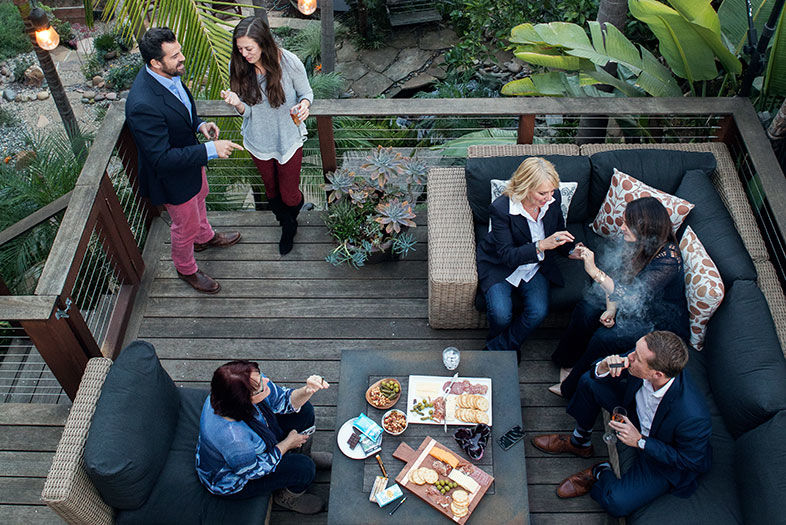
At a home in Mission Hills, these professionals and medical patients challenge the old stereotype of marijuana users.

Discover eateries, outings, and shops within this inland North County community
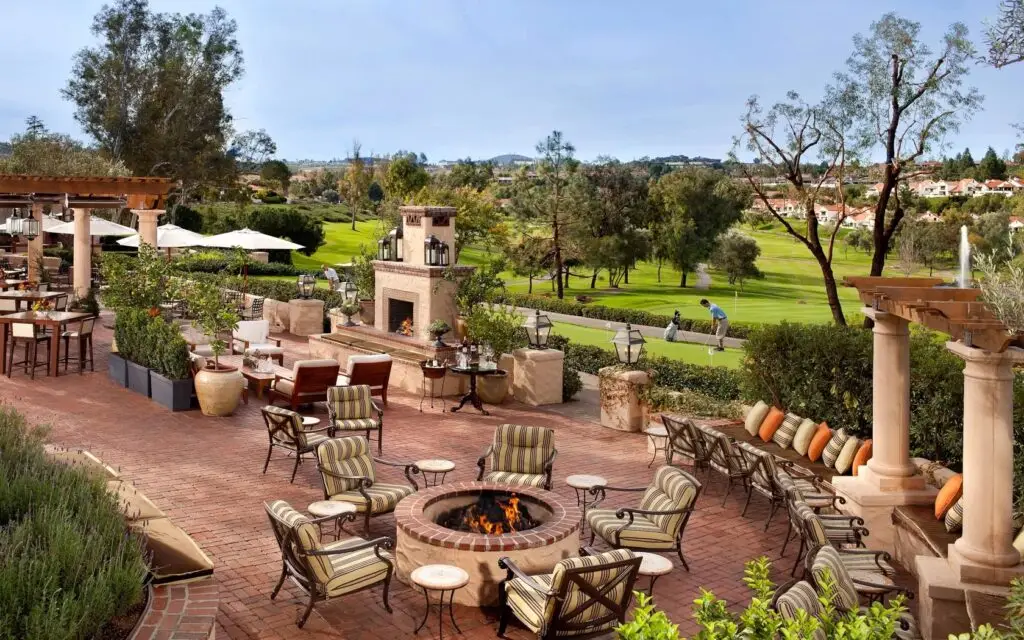
Just south of Lake Hodges near 4S Ranch and Poway, Rancho Bernardo is a suburban community that blends residential neighborhoods with industrial pockets, elevated by a decidedly diverse food scene.
Over 60 years ago, this North County neighborhood was once part of a family ranch. Since that time, big tech companies have taken up residence here, including Amazon, Sony Electronics, Oura Ring, HP, Teradata, and ASML. Rancho Bernardo Inn serves as a community hub, with locals frequently meeting at the hotel’s restaurants, golf course, and spa.
Whether it’s work or a round of golf that brings you to Rancho Bernardo, we’ve taken care of the agenda planning with our guide to the area’s best restaurants, activities, and shops.

Sample ingredients plucked straight from Rancho Bernardo Inn’s onsite garden and served at their signature restaurant Avant. One of the neighborhood’s most upscale dining options, they serve a French-inspired menu with nods to California, including many seafood options. Don’t miss their more casual sister restaurant Veranda for al fresco dining.
17550 Bernardo Oaks Drive
Wood-fired pizzas and handmade pastas are standouts at The Kitchen, Bernardo Winery’s counter-service restaurant specializing in Sicilian flavors. Charcuterie boards and bruschetta make for great starters or snacks while wine tasting.
13330 Paseo Del Verano Norte
Fast-casual and family-owned eatery Bushfire Kitchen recently opened a location in Rancho Bernardo, serving sandwiches, bowls, salads, burgers, protein plates, and housemade empanadas. Bushfire prepares comfort food with healthy ingredients, and offers plenty of vegetarian and vegan options.
11962 Bernardo Plaza Drive, Suite 110
Some might call The Cork & Craft an overachiever. This gastropub has an in-house craft brewery and winery: Abnormal Beer and Wine. The more, the merrier. Their sushi menu is definitely worth exploring, but don’t miss other specialties like garlic noodles, chicken wings, and pork belly.
16990 Via Tazon

You don’t have to leave Rancho Bernardo to get a white tablecloth steakhouse experience. Carvers Steaks & Chops has prime rib (their best seller), filet, ribeye, porterhouse, New York strip, and other cuts, served alongside crab-stuffed mushrooms, wedge salad, French onion soup, potato skins, and other steakhouse specialties.
1940 Bernardo Plaza Drive
This no-frills Burmese restaurant is known for its traditional tea leaf salad that’s topped with sesame and sunflower seeds, garlic chips, peanuts, tomatoes, jalapeños, fried yellow beans, and fermented green tea leaf dressing. Tucked into a nondescript strip mall, Burma Place is a great takeout option when you want to eat garlic noodles, fried rice, chicken curry, and samosas from the comfort of your couch.
16719 Bernardo Center Drive, Suite A
Find authentic Vietnamese cuisine at Phở Ca Dao, including favorites like phở noodle soup, vermicelli noodles, broken rice dishes, and spring rolls. One of eight locations throughout San Diego, this family-owned chain uses robot servers for food delivery.
11808 Rancho Bernardo Road, Suite 100
It’s all about the sauce at fast-casual Mediterranean restaurant The Kebab Shop. Smothering your chicken shawarma, gyro, or falafels in garlic yogurt, cilantro jalapeno, fire chili, and dill yogurt sauce is practically a rite of passage. The hardest part is deciding whether to order a wrap, bowl, or salad.
11980 Bernardo Plaza Drive
Get a taste of South Asian flavors at Casa Lahori, a Pakistani restaurant noted for its grilled meat kabobs. Other best-selling dishes include beef nihari, chicken biryani, and shahi paneer— best enjoyed with naan bread.
11975 Bernardo Plaza Drive
Grill your own meat on the tabletop at Kangnam Korean BBQ, an interactive, all-you-can-eat experience that’s well-suited for large groups. Marinated beef bulgogi, grilled galbi short ribs, and spicy pork are served alongside traditional banchan dishes like kimchi, japchae glass noodles, and flavorful stews. Weekday lunch specials provide a nice discount on these filling meals.
11828 Rancho Bernardo Road, Suite 117–119

Dig in to your favorite curries and kebabs at Curry & More Indian Bistro. Most entrees are served with a choice of two side dishes, including basmati rice, potatoes with cumin, daal, naan, or mixed greens. Help offset the spice with one of their sweet mango or strawberry lassi drinks.
11808 Rancho Bernardo Road, Suite 123
Kai Oliver-Kurtin is a San Diego-based writer who covers travel, dining, events, and culture. Her writing has been published in USA Today, Condé Nast Traveler, Fodor's Travel, Marie Claire, and HuffPost, among others.
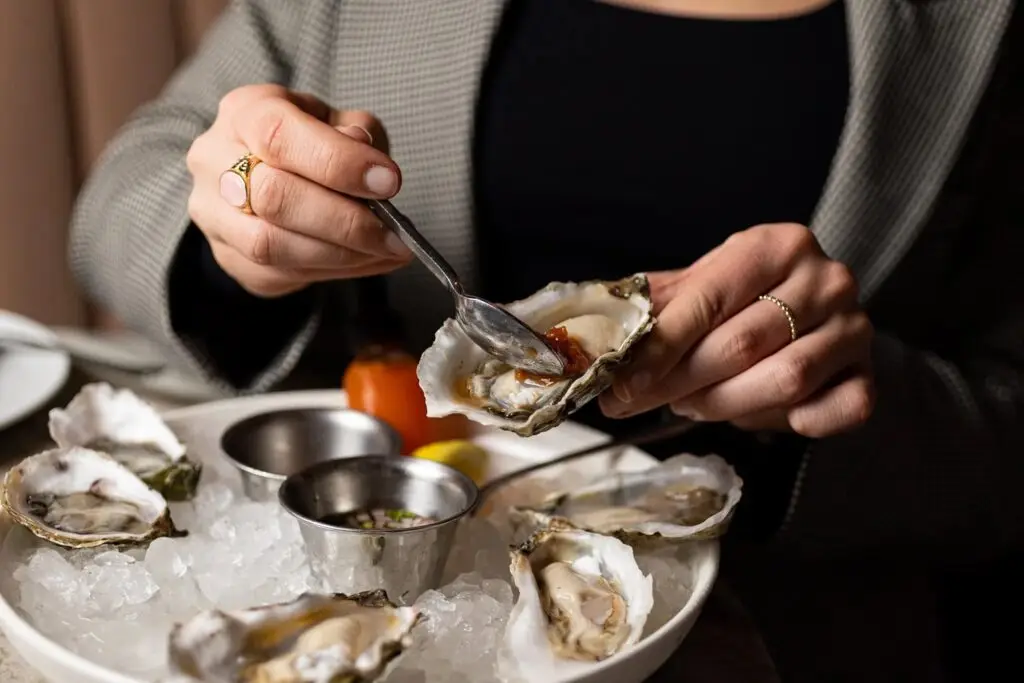
Food writer Beth Demmon names local bites we love—both at the high and low ends of our budgets
We love a mega-fancy tasting menu, but let’s be honest—we’re not all blessed with unlimited Wagyu funds. So we picked some of the breakout dishes of the last year (or couple of years) from the best chefs in the city, reverse-engineered their chief charms (salty, smoky, caramelized?) in the test lab of our mouths, and found some budget-friendly alternatives that hit some of the same notes with an everyday price tag.
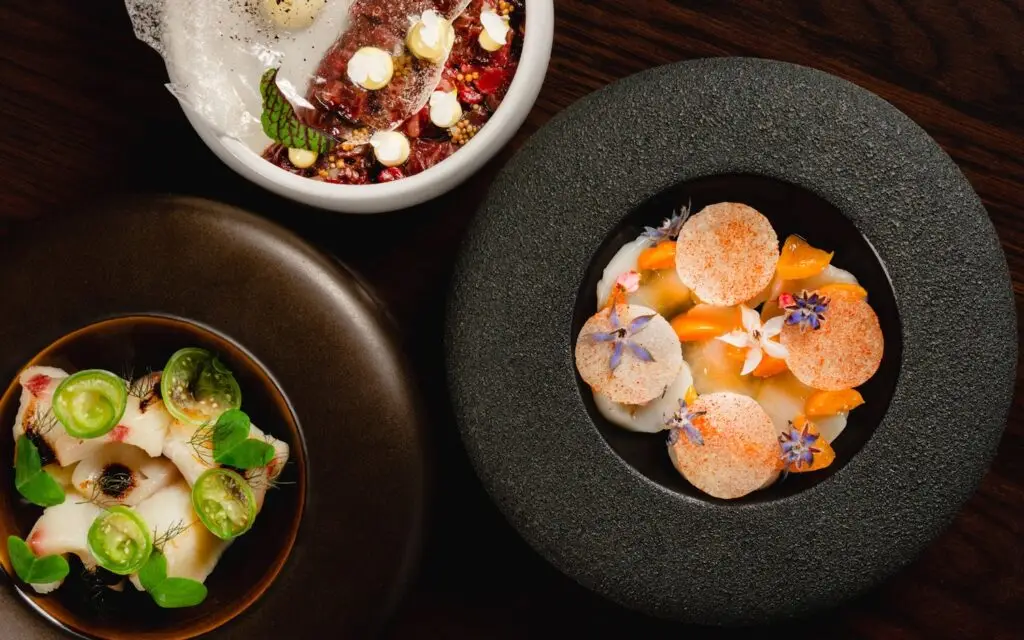
Where do delicately plucked marigold blossoms adorn Deer Isle scallops, or ingredients like fermented raspberry precede roasted coffee oil, shiro miso caramel, or bronze fennel in a parade of hit-after-hit dishes? Lilo in Carlsbad, of course. San Diego’s newest Michelin star changes its menu with the seasons, but one stalwart dish has kept tongues wagging since opening day last April: the caviar ice cream. A boat-shaped sliver of orgeat ice cream, smoked celery root bushi, and freshly pressed almond oil are topped with a generous heap of caviar. It’s a dish so good and defining that chef Eric Bost will tire of talking about it for a very long time.
Price: $265 for the tasting menu (before tax, tip, and drinks)
There’s a reason Stella Jean’s s’mores ice cream is part of the local scoop shop’s “always available” menu. Made with fire-roasted marshmallows and coconut ash ice cream mixed with dark chocolate-covered graham crackers and mini marshmallows, its strangely ashen hue dabbled with flecks of tawny brown is a far cry from the wildly vibrant ube and pandesal toffee flavor seemingly made for Instagram reels. But it’s a sensation in your mouth—smoky, toasty, torched, creamy, marshmallowy, coconutty, ashy, and bitter from the dark chocolate. Pro tip: If you really want to DIY Lilo’s ultra-luxe treat, bring your own caviar.
Price: $6.25 for a single scoop
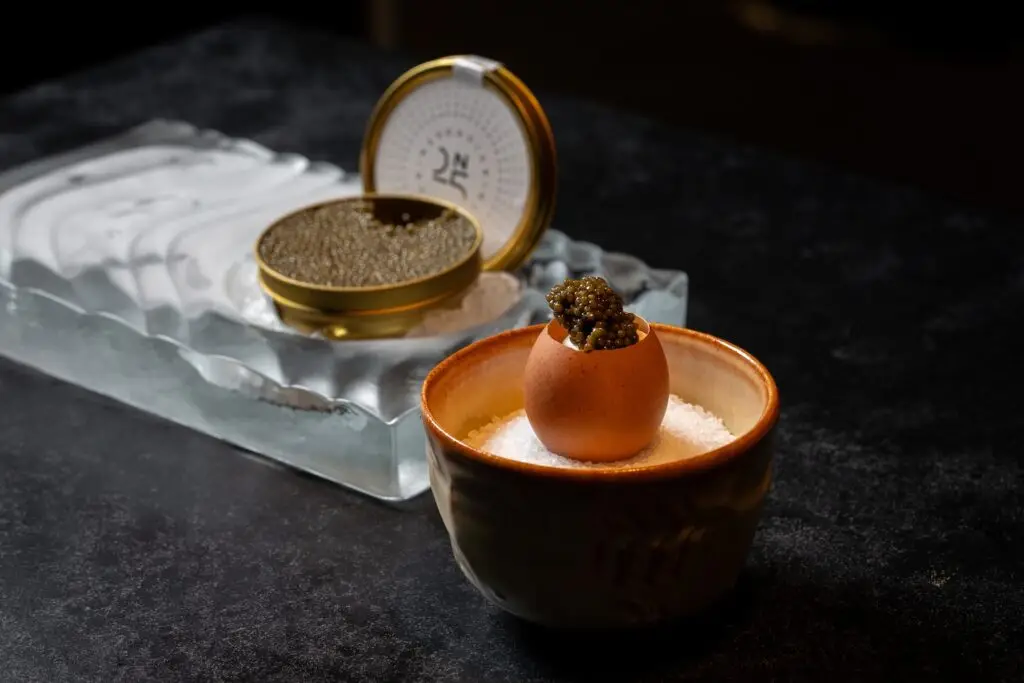
There’s no question what comes first at Lucien. It’s the egg. Chef and co-owner Elijah Arizmendi’s 12-course tasting menu begins with welcome bites under the calamansi tree before moving inside to start the Journey (the actual name of this section of the menu). The first step is one of the most astounding—a perfectly intact, upright, ochre-hued eggshell containing his take on Japanese chawanmushi (egg custard), topped with a dollop of caviar. The accompanying ingredients have ranged from sweet corn and huitlacoche to banana and buckwheat, but each one has precisely demonstrated Arizmendi’s commitment to French technique with California experimentation and global influence.
Price: $260 for the chef’s tasting menu (before tax, tip, and drinks)
The biggest difference (besides price) is that while Lucien’s dish changes with the season, Sushi Ota is comfortably predictable. A San Diego staple since 1990, the legendary Sushi Ota has been one of those if you know, you know joints that locals try to keep off the radar. (It hasn’t worked at all.) Known for ultra-fresh fish and ultra-traditional service, the small Pacific Beach restaurant also serves Japanese comfort foods like udon noodle soup alongside sashimi, nigiri, and rolls. But it’s the savory steamed egg custard, called chawanmushi, that really gives you the warm and fuzzies. Add a side of salmon roe (ikura) for a few bucks more, and this dupe is about as good as it gets.
Price: $12 for chawanmushi, $11 for ikura

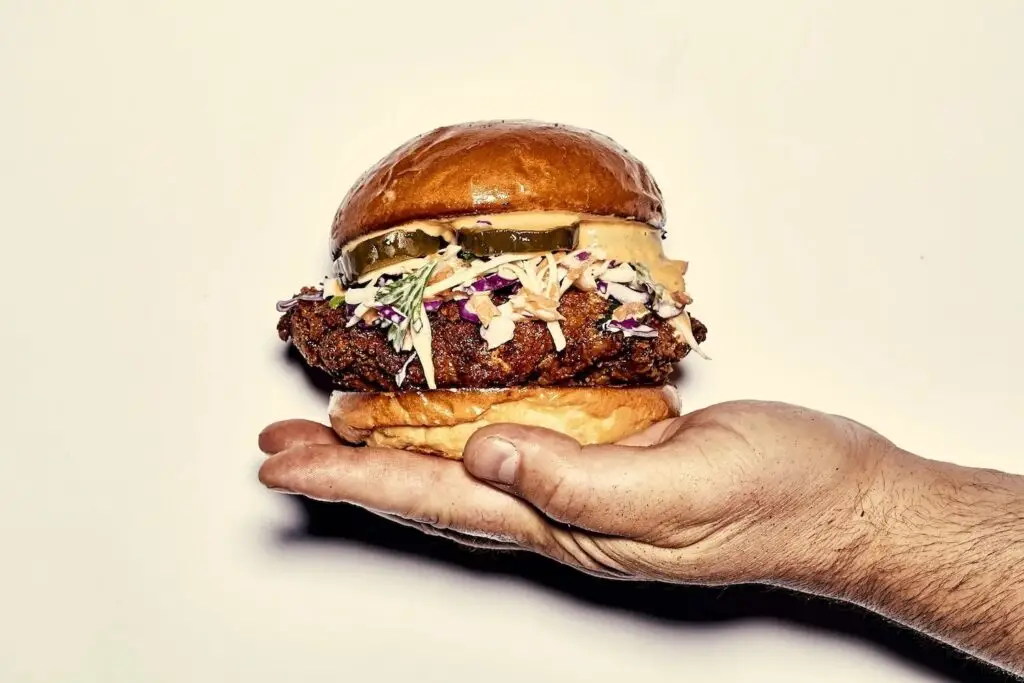
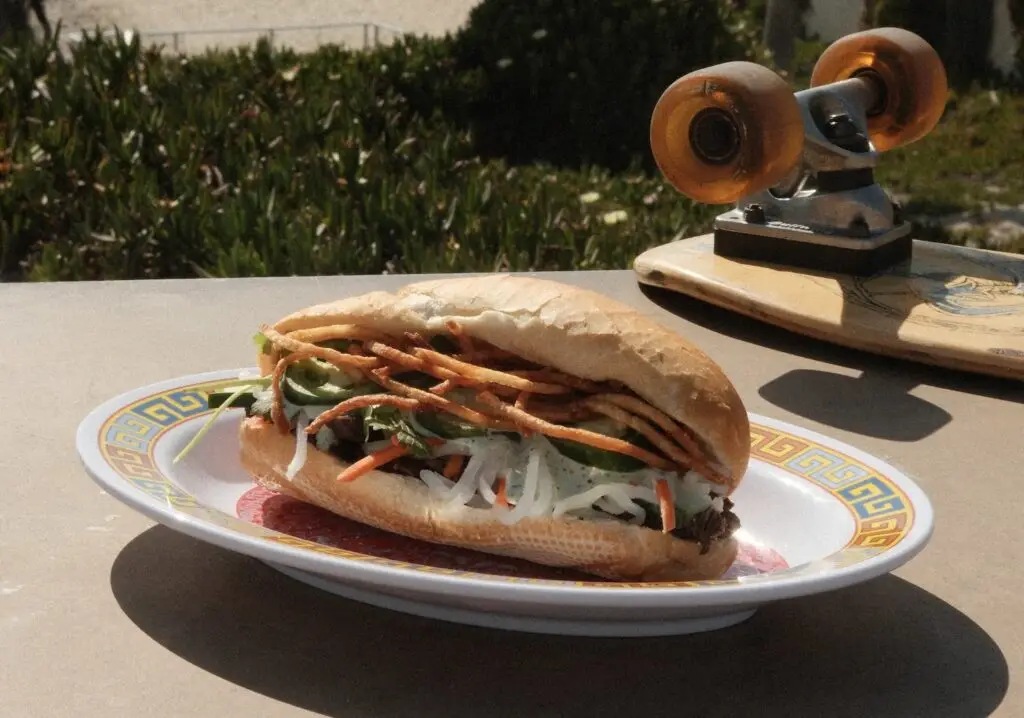
Enough ink—and tears, I’m sure—has been spilled over Chick & Hawk’s long and arduous journey to opening its doors. But now that the Encinitas eatery is in full swing, chef Andrew Bachelier’s tightly curated menu of fried chicken sandwiches, fries, and bowls command lines of hungry locals and skate-culture loyalists. The Birdman, the signature hot chicken sandwich named for partner and skateboarding legend Tony Hawk, is piled with cabbage slaw and pickles and slathered with a tangy kimchi comeback sauce on a soft brioche bun. Although this Nashville meets California meets Mississippi meets Korea sando doesn’t command a triple-digit price tag, the fact that it’s nearly a $20 chicken sandwich (sans side) has been a topic of conversation. Bachelier—who worked at Addison before opening Jeune et Jolie, then launched SDM’s 2024 “Best New Restaurant,” Atelier Manna—and his team earned that price tag.

Price: $18
It’s hard to beat Koreans at the chicken game. Korean fried wings are defined by a double-fry technique—first at a low temperature to ensure the chicken is cooked through, then at a high temperature to ensure the famed extra-crispy, ear-splittingly crunchrageous magic. At Cross Street, they follow a similar fusion ethos as Chick & Hawk, using inspiration from the American South as well as Thailand, Korea, Vietnam, and more, with flavors like “Seoul Spicy” or “Honey Butter” for whatever you’re feeling that day. Pair it with a cold beer to go full chimaek (a popular Korean combination of pairing fried chicken and beer). Now that’s a combo—and price tag—that’s hard to beat.
Price: $8.75 for five wings

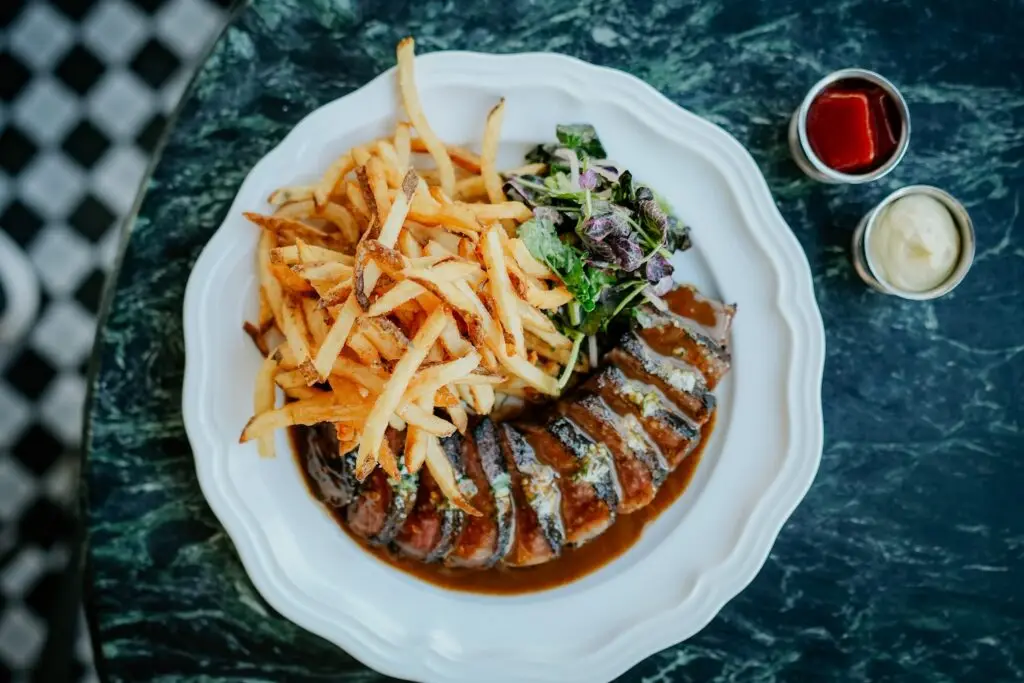
PB&J. Captain & Tennille. Brad Wise and steak. Steak frites ranks among the iconic global duos. And when the holy union of prime cuts and twice-fried carbs comes from Wise and the meat-loving masters at Trust Restaurant Group, it’s a pretty safe bet. À L’ouest—the group’s newest fancy, but not fussy, drippy plant dreamscape of a French steakhouse on the prime corner of 30th and University in North Park—gives guests a choice: 12-ounce New York strip, 8-ounce filet mignon, or 8-ounce Wagyu hanger, topped with sauce au poivre (the classic French pan sauce—peppercorns, shallots, heavy cream, brandy) and served with a heaping pile of 24-hour salt-brined fries and a watercress salad. One bite acts as a transport to a Parisian brasserie, so if you think about the cost in terms of time-space travel, it’s a pretty great deal.
Price: starts at $48
To satisfy the same urge for meat and potatoes, feel at least moderately European while doing so, and save a couple quid, a trip to The Shakespeare in Mission Hills ticks all the boxes. The classic British shepherd’s pie arrives in a piping hot oval au gratin dish, smothered with a thick layer of mashed potatoes. Beneath it lies a hefty portion of marinated ground beef and vegetables in the pub’s secret sauce, and while there are a few choices of sides, the correct order is peas and “proper” chips (a.k.a. chunky, thick-cut fries versus the typically thinner American “French” fries). It’s more tickety-boo than très bien, but it’s immensely satisfying in any language.
Price: $22.95
Beth Demmon is an award-winning writer and podcaster whose work regularly appears in national outlets and San Diego Magazine. Her first book, The Beer Lover's Guide to Cider, is now available. Find out more on bethdemmon.com.
SDM owner and food critic Troy Johnson identifies some standout stars in SD's food scene
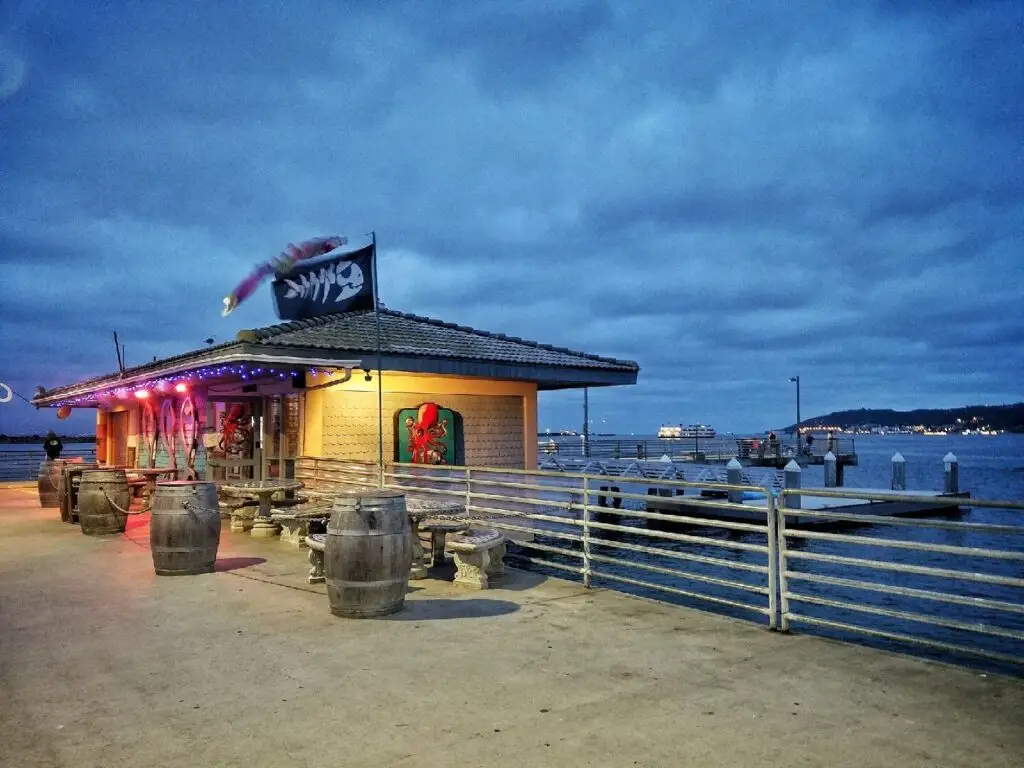
I spent time in a hot dog stand on the edge of San Diego Bay, looking out a window that mattered. Mattered to a kid whose mom taught him to fish on this pier. They’d turn on a little transistor radio, find a signal through the static, stare at the water, and talk life and his dad. Dennis Borlek’s dad was out there, somewhere, commanding a naval submarine through god knows what. When his dad would dock in Point Loma weeks or months later, Borlek biked down the street along Shelter Island to see him and steal back stolen moments.
Later, Borlek helped midwife the craft beer scene, managing seminal spots like Small Bar and Liar’s Club. Wondering what to do with the rest of his life, he went back to that pier and saw a for-lease sign on the bait and tackle shop. He tore through the public library and spent the whole night learning how to write a business plan (he had no clue). A couple days later he found himself at the intimidating end of a massive conference table, pitching his dream to the very official Port of San Diego executives.
They gave it to the San Diego kid. Not sure if they ever imagined Fathom Bistro—the tiniest, mightiest craft beer and hot dog stand, filled with spear guns, ocean monster figures, and seafaring oddities—would still be there 13 years later, let alone be a local’s favorite. It’s the most San Diego place in the world. Borlek taught himself to make kimchi and puts it on his Explodo Dog. His friend Kevin, who played with him in a punk band, dresses as a pirate and works the door on weekends. Has done so for years.
And when Borlek stares out the window, he can see the sub base and the memories of his dad.

Later, a few beach towns over, I sat in an employee break area—a shaded back-alley alcove with grape vines that serves as an escape garden for the crew. The place used to be a taco shop. Owner Crystal White points to a window of a single bedroom behind the dough-mixing part of the kitchen. She lived there when she started, often finding herself on the roof at midnight, staring at a broken compressor, trying to will it into working.
A blue-collar kid who fell in love with bread, she moved to San Diego with a business plan and zero cash. Banks don’t loan money to bread dreamers. Fate, kismet, and door-knocking found her enough investors. In the weeks leading up to opening that dream—perfect croissants, kouign-amanns, sandwiches, pizzas, baguettes fermented with wild La Jolla yeasts—she was outside hammering and painting. Locals would pause to ask what she was putting into the spot. “A bakery!” she’d reply.
“Oh, we don’t need one of those,” they’d say. Eight years later, White has moved out of the bedroom, and Wayfarer Bread is one of the best bakeries in the land. I ask if she’ll ever open another location. “I grew up dirt poor,” she says. “This has surpassed even my wildest dreams. This is enough. Please make sure you mention Emma Koehler, K-O-E-H-L-E-R, my kitchen manager. She deserves the credit now.”
These are the people and the stories behind “Best Restaurants.” This issue is dedicated to them, the culture they’ve gritted into being. On the surface, the annual tradition—naming a list of “winners,” my favorite places and my honest answers to “who has the best taco/pizza/Thai…”—is a good-natured competition among friends. But the deeper point is that it’s a way to highlight hundreds of places that have risked it all to build a little magic across the city. Sure, some owners were born in the stars and used that dust to make more stars. But many or most restaurants started with a scrappy go-getter or two. And now those places are filled with dozens or hundreds of people who love the work, show up day in and day out, for years. People like Koehler and the ones we feature in our story, “Behind the Line”.
So please use this list as a beachhead. Try these places, email me ([email protected]) to say “thanks” or “you truly messed up.” Eat, drink, commune, say hello, get to know the stories of the people making your favorite food. Make your own list, and share it with us.
(Note: Fathom didn’t win anything, probably because there’s no category for “Best Hot Dog Craft Beer Stand on a Pier with a Pirate,” which is a shortcoming on our part. So I put him here because he should be a part of any conversation about best San Diego things.)
Troy Johnson is the magazine’s award-winning food writer and humorist, and a long-standing expert on Food Network. His work has been featured on NatGeo, Travel Channel, NPR, and in Food Matters, a textbook of the best American food writing.
The 29-year-old culinary director at Herb & Sea is making seafood sexy (and approachable) again
Implementing a farm-to-table model hardly deserves acknowledgement these days. It’s not a stretch. It’s not innovative. “It’s the bare f**king minimum,” says Herb & Sea‘s executive chef Aidan Owens.
When I arrive at the Encinitas restaurant, I’m ready to talk sustainability, farm-to-table stuff, with Owens. “Did you see the chin on that?” he says of the extra big jiggly chin on the sheephead that just arrived with the day’s fresh catch. I did. It was Jay Leno adjacent.
I learn quickly that he somehow oozes both charm and stone-cold honesty. Maybe he could construct a new dish with chin goo, like he did when he had a bunch of tuna scraps and voila’d it into a smooth and crowd-pleasing ‘nduja. “I want to know what’s in there,” he says.

The instinct to look closer, to dig into what others might discard, says a lot about the chef’s approach. I guide him back to our topic, but he has something else on his mind. “We’re overcomplicating food—what happened to just cooking good food and having fun with it?”
Owens grew up on a farm in Byron Bay, Australia, where sustainability wasn’t a concept you chat about so much as a way of life. Think dirt roads, backyard chickens, pulling vegetables straight from the ground, and a mother who believed that if you couldn’t pronounce the ingredients on a package, you shouldn’t eat what was inside.
Food wasn’t precious or performative. Making it was what you did because you were hungry and that’s still what inspires Owens today. “I like to cook good food because I like to eat good food,” he says.
His approach to sustainability at Herb & Sea began so naturally that it felt just like instinct. “I was just like, ‘Let’s order food from the people who live and work here,’” he says.

And why wouldn’t he when lives in San Diego? Cities all over the world vie for our goods. Our tuna is sent overseas. Our spiny lobsters hit dinner plates in China and Japan. Not to mention California’s producing a third of the country’s vegetables and three-quarters of its fruits and nuts.
“Why would we outsource when it’s all here?” Owens asks.
Sustainability, in this context, is about cooking what exists in abundance, nearby, right now. “I love the local fish here. It’s f**king delicious and San Diego citrus, I mean, it is so f**ing good,” he says.
Instead of importing ingredients, Owens also looks for nearby alternatives. “You can find really cool things in the local waters,” he says, pointing out that stingray cheeks taste similar to scallops.

Whatever he finds in that sheephead chin might just be the next substitute for marrow. But to make this work, it means getting diners amped up about the slightly unfamiliar.
Tasting menus, where diners are completely in his hands, become an opportunity to gently push boundaries. “I’ll serve mackerel, because people think they hate it,” Owens says, noting that the abundant local fish can have some fishiness. “But when it’s fresh, it’s arguably one of the best fish in the ocean.”
He also tweaks the language on the menu so people might feel more compelled to give dishes a try without preconceived notions. He might use “lengua” instead of “tongue.” “Whelk” instead of “snail.” When he puts “stingray throat” on the menu, he disarmingly calls it “skate.”
To reduce waste, scraps aren’t always discarded but rather turned into something new. Sometimes they’re smoked, cured or fermented. Apples going bad turn into apple ponzu. Lemons turn to marmalade, which stretches their usefulness far beyond peak season. “And it’s super tasty on our pizza,” he says.
What makes the food even richer, is the relationships he’s built with farmers. Though it didn’t always feel natural, Owens sought personal connection first. He recalls approaching a fisherman at the Tuna Harbor Dockside Market. “I was awkward,” he says. “I went up to him and said, ‘I like your fish.’”
Owen’s is now so close to his suppliers—like fishermen Ryan Sebo and Joe Daly—that he gets texted pictures of fresh catches right as they flop on the boat. The messages always ask if he wants first dibs. “I say yes to a lot of fish,” Owens says, noting that Herb & Sea can go through 2,000 pounds of seafood a week.

The next evolution of sustainability, in his view, will be chefs working directly with producers such as his alliance with Sebo, cutting out middlemen and purveyors where possible. “It will put more money in the pockets of the people doing the work,” he says.
It will mean that chefs can’t just know their local farmers and producers, but they’ll choose to work with the ones who have the best practices. Dining and sustainability will become much less about the final plate. “It will be more about the impact that plate has on the Earth,” he says.
Ultimately, he believes sustainability doesn’t need to be loud. It doesn’t need hashtags. It just needs to be honest.
“We aren’t saving lives. We’re feeding people good food,” he says.
And yet, in feeding people well—simply, thoughtfully, responsibly—something meaningful happens. Guests leave satisfied. Ingredients are respected. Local ecosystems are supported and food returns to what it has always been at its core: nourishment, pleasure, and a quiet reflection of the place it comes from.
No buzzwords required.
As Rancho Valencia's Chef Concierge and US Nominee for Les Clefs d'Or Young Leader Award, Simona Marciulaityte is equal parts doer and fixer
Your cup of coffee shows up exactly how you like it. The fully booked restaurant suddenly has a table. The last-minute, once-in-a-lifetime experience somehow comes together without a hitch. In the world of hospitality at top resorts, there’s an iceberg of scrupulous planning for each guest.
A concierge is in charge of that iceberg. There’s even an award for the best in the world: the Les Clefs d’Or Young Leader Award. It’s a months-long, multi-stage process with interviews, tests, and international competition, culminating at a global congress. Each member country only gets one nominee. Representing the US this year? Simona Marciulaityte from San Diego.
As Chef Concierge at Rancho Valencia Resort & Spa—a Relais & Châteaux retreat with Forbes Five-Star and AAA Five Diamond, a highly accoladed place with commiserate expectations—Marciulaityte is equal parts doer, fixer, and project manager for guests’ sometimes wild travel dreams.
“We see hospitality as theatre,” she explains. “There are a lot of moving parts, but when we arrive to the stage, it’s always with grace and a performance to create an incredible experience for the guests.”
That impossible-to-get reservation with custom cake and balloons at the table? She’s already texted three people. A guest calling on their way to the Zoo requesting a VIP-tour in 15 minutes? Booked in seven. The usual ‘Hey can you schedule me an appointment with Hermès to buy a $30K Birkin bag and plan my proposal in Italy’ request? Oddly specific, true story—and fully handled.

“Great concierge work truly begins long before a guest ever steps on property,” Marciulaityte says. “Who is traveling, notes from prior visits, special occasions, and dining history help me understand the nature of the stay. For new guests, I read between the lines: the questions they ask, the pace they seem to want, the kinds of experiences they gravitate toward.
“Curation draws on something that can’t be replicated by a search engine. It’s years of genuine relationship-building with partners across San Diego and beyond.”
Nearly a decade ago, Marciulaityte was juggling life as a personal stylist at Nordstrom and hostess/server at Brian Malarkey’s Herringbone and Searsucker. After working an event for the San Diego Concierge Association, she had a moment of clarity: “I remember thinking, oh my god—this is exactly what I want to do.”
Being a part of Les Clefs d’Or grants entry to a global network of concierges who operate like a very discreet, very efficient hotline (“In service through friendship,” as their motto goes). When local super-chef Tara Monsoud was nominated for a James Beard, Marciulaityte worked with the SD Concierge Association and Le Coq to send flowers and photos to Chicago where the chef was staying.
“It’s not only guests—we hope to touch everyone with our concierge magic.”
Lili Kim is a content coordinator and writer for San Diego Magazine, with experience highlighting local businesses and communities. When not writing or shooting film, she is likely brewing her seventh cup of tea of the day or strolling along Sunset Cliffs.
We asked 12 golf pros from across the county to choose the city's top holes to create the "Dream 18"
At the top of a golf swing, the world settles into a hush. Anyone within 50 yards kindly shuts up in reverence. Steady heartbeats tuck inside the sound of the wind. Time stands still.
Or—panic sets in, a thousand warnings from coaches and YouTube tutorials prattle through your brainpan. You wonder if a good walk prepares to be ruined.
On descent, the club rearranges air particles as it slices on a perfect or unwise line toward an earth so green, it seems like AI. The iron face meets the ball, and the satisfying or unsettling thwack echoes across the fairway like a nonviolent gunshot or a cry for help. Breath catches, curse words load in the prefrontal cortex. Eyes squint to follow the hard-to-see projectile zip majestically through the air or bounce lamely along the ground like a failed hurdler.
Sometimes it goes a couple hundred yards in the right direction, other times a couple yards into uncaring swamps. Golf’s beautiful and hard as hell.
Mindfulness and stillness reign over speed and might—which goes against most basal American instincts regarding sport. Its quiet, serene mocking of our human abilities is what brings so many of us to the life-long process of sharpening the skill. Because who hasn’t stared at the most beautiful parks and lawns in the world and said, “How can I turn this into a game and win it?”
Luckily, San Diego has an abundance of courses to improve and curate self-doubt. The county is home to over 70 courses that attract the top golfers in the country. Some of the biggest names in the sport—Callaway, TaylorMade, Cobra, Titleist, Odyssey, Honma—are based here. Perfect weather never hurts. But San Diego golf courses also promise a smorgasbord of terrains: rocky canyons, hot deserts, and lush greens overlooking the expanse of the Pacific Ocean.
If you could take the 1,300-ish holes around San Diego and pick the very best ones to create your ultimate course, which would they be? We asked some of the top golf pros in the county to do just that. The result? San Diego’s Dream 18. Think fantasy football but for golf.
Just like any great course, our Dream 18 includes four par 3s, 10 par 4s, and four par 5s—everything from tricky dog legs and psychological tee shots to just pretty, pretty views. Once we had our list, we either asked the head golf pro what makes a hole so special, or other pros spoke on its behalf. Go ahead, tell us what we missed.

“One of the most iconic par 3s on the West Coast. The cliffside setting above the Pacific and the constant ocean breeze make it both beautiful and demanding.”
—Anthony Valverde, Director of Golf, The Crosby Club at Rancho Santa Fe
“It’s a downhill par 3 over water with a great view from the tee down to the green. It’s surrounded by bunkers as well, so it almost feels like an island green even though it’s not. What’s really cool is once you drive to the next hole, if you look back on No. 14, it’s a great view as well. One of the signature holes [at Santaluz].”
—Josh Rider, Head Golf Pro, The Santaluz Club
Hole 15
“Hole 15 is widely considered one of the best and most memorable holes on the course. At about 250 yards, it’s a long downhill with multiple tiers and panoramic views into the valley. It looks intimidating at first, but there are lots of recovery contours and the green is fairly large.”
—Editor’s Choice
“Sitting high above the green with views of the Pacific Ocean, this dramatically downhill par 3 requires the perfect club selection.”
—Mike Mulford, Director of Golf, Omni La Costa

“While it’s beautiful with the backdrop of the Batiquitos Lagoon and the Pacific Ocean, this finishing hole demands both precision and nerve. The water guarding the right side and fairway bunkers ahead create a visually striking, strategic tee shot, while the expansive green rewards a confident, well-placed approach. If you can make a par on this hole, you’ve played it very well.”
—Renny Brown, Director of Golf, Aviara Golf Club
“The 18th hole at Del Mar CC is a demanding par 4 with an elevated tee box. Water guards the right side of the green, and a player must hit a precise shot into this green.”
—Renny Brown, Director of Golf, Aviara Golf Club
“It’s a difficult 428-yard par 4 playing into the predominant west wind. The hole is post-renovation and the vegetation was trimmed back, so now it exposes a penalty on the right. It’s uncomfy at the tee but a good challenge. Plus, it’s the No. 1 handicap for [all players].”
—Chris Lungo, Head Golf Pro, Rancho Santa Fe Golf Club
Lili Kim is a content coordinator and writer for San Diego Magazine, with experience highlighting local businesses and communities. When not writing or shooting film, she is likely brewing her seventh cup of tea of the day or strolling along Sunset Cliffs.
In a world overflowing with shortcuts, marketing fluff, and “good enough,” there are still companies that choose a different answer. And in San Diego, there are plenty of them.
In a world overflowing with shortcuts, marketing fluff, and “good enough,” there are still companies that choose a different answer.
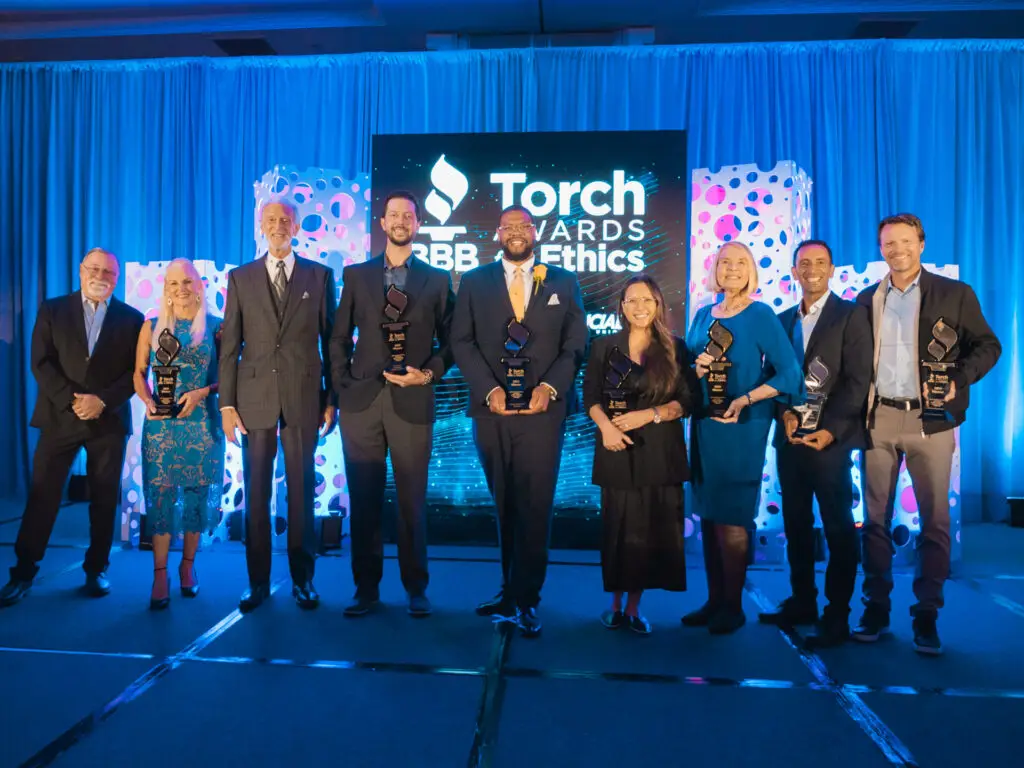
Integrity guides how they show up every day. They make hard decisions, hold themselves accountable, and build trust the old-fashioned way, one action at a time. At the Better Business Bureau, we call these businesses Torch Heroes: leaders who demonstrate that ethical leadership strengthens businesses and drives long-term success.
And in San Diego, there are plenty of them.
Take House Collective Marketing Solutions, a Carlsbad-based digital agency that won the 2025 Torch Award for Ethics for its people-first approach to marketing. Instead of pushing flashy campaigns, the team often takes a step back to make sure clients’ foundations are strong before going big. Their philosophy? Truth over transaction builds partnerships that last.
Or look at Young Black & N’ Business, where integrity shows up through community action. When a local school lost art funding, founder Roosevelt Williams III and his team stepped in with workshops, mentorship, and hands-on support to help restore creative opportunity. That kind of engagement reflects ethical leadership rooted in real impact.
And in Vista, Lotus Sustainables carried its commitment to ethics all the way to the product line. After discovering defects in a shipment of eco-friendly products, the company issued full refunds and redesigned its offerings at its own expense, a choice that shaped its identity and reinforced to customers that ethics guide every decision.
In North County, Greenway Landscape Design & Build brings integrity into everyday service. When a client’s glass was damaged, likely not by their crew, owner Scott Lawn chose responsibility over blame and covered the repair personally. For Greenway, doing the right thing serves as a north star, guiding every interaction through transparent pricing, accountable partnerships, proactive communication, and follow-through long after the job is done.
Other honorees include At Your Home Familycare, whose leadership turned down a lucrative state contract during the pandemic to protect vulnerable clients and staff, and Bill Howe Family of Companies, where hiring practices, training, and service centers around shared values, every day, on every call.
What connects these diverse businesses, from marketing to nonprofit support to home services, isn’t size, industry, or revenue. It’s something deeper: a commitment to trust as a business strategy.
In San Diego’s competitive marketplace, that trust gives companies an edge. Clients invest in relationships. They refer friends. They stay loyal when others fade.
As one Torch Award winner puts it, integrity isn’t a section in the employee handbook. It’s the operating system of the company, the invisible code that determines every choice, every day.
And that’s exactly the point of the BBB Torch Awards for Ethics: to spotlight companies that dispel the myth that ethics and success are at odds. These businesses show that when leaders choose honesty, fairness, and accountability, especially when it’s hard, they build brands that matter.
At BBB, we see nominations come in from clients, employees, and business partners who have witnessed ethical leadership up close. These submissions aren’t polished promotions. They’re stories of moments when a company chose people over profit, clarity over confusion, and trust over convenience.
The nomination window for the 2026 Torch Awards for Ethics is open through March 31, 2026, and there are more Torch Heroes waiting to be recognized.
Who comes to mind in San Diego’s business community?
And yes, businesses can nominate themselves. We encourage it. If you’ve built your business on principles rather than buzzwords, we want to hear your story.
Because in a world full of noise, integrity still deserves the spotlight, and San Diego is full of stories worth telling. Nominate your hero now.