Featured articles
Food & Drink
Food & Drink

Food & Drink
Featured articles

Things to Do
Everything SD
Everything SD
Featured articles
Things to Do
Things to Do
Things to Do
Featured articles
podcast-ep
podcast-ep
podcast-ep
Featured articles
Everything SD
Everything SD

Everything SD
Featured articles
Food & Drink
Things to Do
Everything SD
Ready to know more about San Diego?
SubscribeReady to know more about San Diego?
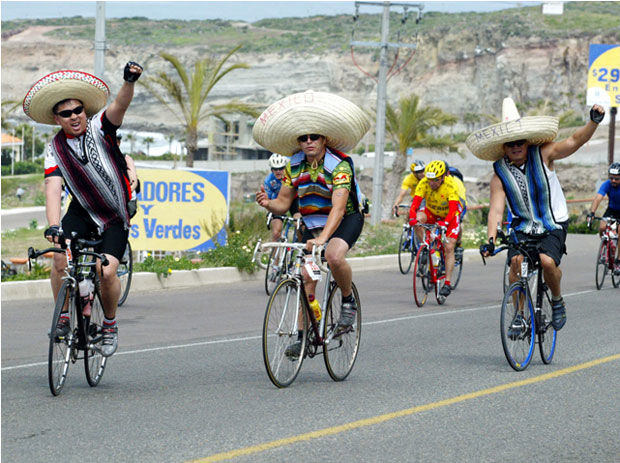
The Border Report: Mexico on two wheels

Rosarito-Ensenada Bike Ride
Celebrating its 34th anniversary is the Rosarito–Ensenada bike ride, a 50-mile fun trek that happens twice annually, this year on May 3 and September 27. In what’s billed as one of the largest cycling events in the world, nearly 4,000 participants follow the free road out of Rosarito south along the coast before cutting inland at La Mision and upward through the hills surrounding the Valle de Guadalupe wine country and onward to Ensenada. At the finish line is a street fest with food, bands, and beer. If you don’t want to haul your wheels to Mexico, TNT Ensenada (tntbicicletas.com) rents loaners, and shuttles run back to Rosarito from Ensenada after the race for $22 per cyclist. Preregister online for 400 pesos ($35), or sign up on the day of the ride for 450 pesos ($40).
Getting from San Diego to the border by bike is a 30-mile tour—and an epic one at that (how many bike rides cross international borders?). Cruise the Bayshore Bikeway, a 25-mile loop linking Chula Vista, Imperial Beach, Barrio Logan, and the Silver Strand via the San Diego– Coronado Bay Bridge (the ferry makes for a less-strenuous option), and skim the horse ranches and farms of the Tijuana River Valley before eventually finding yourself face to face with Mexico on the horizon. Even if it’s just to walk your bike across for a quick taco and bag of churros before heading back north.
PARTNER CONTENT
Ease into riding south of the border with Paseo de Todos Tijuana, a night group ride that departs from beneath the arch on Avenida Revolucion at 8 p.m. the first Friday of the month and occasionally hosts cross-border rides that usually depart from a San Diego bar.
We asked 12 golf pros from across the county to choose the city's top holes to create the "Dream 18"
At the top of a golf swing, the world settles into a hush. Anyone within 50 yards kindly shuts up in reverence. Steady heartbeats tuck inside the sound of the wind. Time stands still.
Or—panic sets in, a thousand warnings from coaches and YouTube tutorials prattle through your brainpan. You wonder if a good walk prepares to be ruined.
On descent, the club rearranges air particles as it slices on a perfect or unwise line toward an earth so green, it seems like AI. The iron face meets the ball, and the satisfying or unsettling thwack echoes across the fairway like a nonviolent gunshot or a cry for help. Breath catches, curse words load in the prefrontal cortex. Eyes squint to follow the hard-to-see projectile zip majestically through the air or bounce lamely along the ground like a failed hurdler.
Sometimes it goes a couple hundred yards in the right direction, other times a couple yards into uncaring swamps. Golf’s beautiful and hard as hell.
Mindfulness and stillness reign over speed and might—which goes against most basal American instincts regarding sport. Its quiet, serene mocking of our human abilities is what brings so many of us to the life-long process of sharpening the skill. Because who hasn’t stared at the most beautiful parks and lawns in the world and said, “How can I turn this into a game and win it?”
Luckily, San Diego has an abundance of courses to improve and curate self-doubt. The county is home to over 70 courses that attract the top golfers in the country. Some of the biggest names in the sport—Callaway, TaylorMade, Cobra, Titleist, Odyssey, Honma—are based here. Perfect weather never hurts. But San Diego golf courses also promise a smorgasbord of terrains: rocky canyons, hot deserts, and lush greens overlooking the expanse of the Pacific Ocean.
If you could take the 1,300-ish holes around San Diego and pick the very best ones to create your ultimate course, which would they be? We asked some of the top golf pros in the county to do just that. The result? San Diego’s Dream 18. Think fantasy football but for golf.
Just like any great course, our Dream 18 includes four par 3s, 10 par 4s, and four par 5s—everything from tricky dog legs and psychological tee shots to just pretty, pretty views. Once we had our list, we either asked the head golf pro what makes a hole so special, or other pros spoke on its behalf. Go ahead, tell us what we missed.

“One of the most iconic par 3s on the West Coast. The cliffside setting above the Pacific and the constant ocean breeze make it both beautiful and demanding.”
—Anthony Valverde, Director of Golf, The Crosby Club at Rancho Santa Fe
“It’s a downhill par 3 over water with a great view from the tee down to the green. It’s surrounded by bunkers as well, so it almost feels like an island green even though it’s not. What’s really cool is once you drive to the next hole, if you look back on No. 14, it’s a great view as well. One of the signature holes [at Santaluz].”
—Josh Rider, Head Golf Pro, The Santaluz Club
Hole 15
“Hole 15 is widely considered one of the best and most memorable holes on the course. At about 250 yards, it’s a long downhill with multiple tiers and panoramic views into the valley. It looks intimidating at first, but there are lots of recovery contours and the green is fairly large.”
—Editor’s Choice
“Sitting high above the green with views of the Pacific Ocean, this dramatically downhill par 3 requires the perfect club selection.”
—Mike Mulford, Director of Golf, Omni La Costa

“While it’s beautiful with the backdrop of the Batiquitos Lagoon and the Pacific Ocean, this finishing hole demands both precision and nerve. The water guarding the right side and fairway bunkers ahead create a visually striking, strategic tee shot, while the expansive green rewards a confident, well-placed approach. If you can make a par on this hole, you’ve played it very well.”
—Renny Brown, Director of Golf, Aviara Golf Club
“The 18th hole at Del Mar CC is a demanding par 4 with an elevated tee box. Water guards the right side of the green, and a player must hit a precise shot into this green.”
—Renny Brown, Director of Golf, Aviara Golf Club
“It’s a difficult 428-yard par 4 playing into the predominant west wind. The hole is post-renovation and the vegetation was trimmed back, so now it exposes a penalty on the right. It’s uncomfy at the tee but a good challenge. Plus, it’s the No. 1 handicap for [all players].”
—Chris Lungo, Head Golf Pro, Rancho Santa Fe Golf Club
Lili Kim is a content coordinator and writer for San Diego Magazine, with experience highlighting local businesses and communities. When not writing or shooting film, she is likely brewing her seventh cup of tea of the day or strolling along Sunset Cliffs.
With wellness-centered lifestyles on the rise, party culture is getting a 10 p.m. rebrand
A ’90s pop hit is blasting as I drive up to Solana Beach to go dancing. I’m dressed in the millennial nightlife uniform: black tee, cute jeans, heels. It is 6:30 p.m. on a Tuesday. The dance party starts soon. I’ll be home by 10 p.m. at the latest. I may even catch an episode of Summer House.
I am acutely aware of my age in this moment. I haven’t willingly chosen the club life since my 20s and early 30s. Yet here I am, transported back to 2014 with a few more wrinkles, a lot more ibuprofen, and a touch of “pandemic stole this from me” in my pocket.
A few days earlier, a friend texted to suggest we go to a concert the upcoming weekend. “I can’t, I’m already tired on Friday,” I replied. At 42, two glasses of cabernet bend my space-time equilibrium. A hard sneeze risks a sprained neck. Did I mention the perimenopausal night sweats yet?
I arrive at the Belly Up at 7 p.m. Wilson Phillips comes on the stereo, and I sing-shout the lyrics before stepping out of the car.
Someday, somebody’s gonna make you want to turn around and say goodbye | Until then, baby, are you gonna let ’em hold you down and make you cry?
Tonight’s event is billed as “the dance party that starts earlier.” Surprisingly, I’m not the oldest person in the room. A 60-something man shoulder bops to the DJ set. A Gen X woman shimmies by and snaps photos of the glow-stick-spinning raver on stage. Few are drinking.
Started by two North County locals, Amal Chandaria (32) and Max Gold (37), Earlier is a dance party for older adults who want a club experience without the sleep-deprived, hungover physical toll. Running 6:30 to 10 p.m., attendees get home at a reasonable hour for a full night’s sleep.

Seems I’m not alone in my tired.
“[We’re in] a time where loneliness is high, people are craving connection,” says Chandaria. “One thing we were really intentional about is that you don’t need to go and have drinks to have fun. It’s about the music and getting the wiggles out.”
Early is part of a national trend: the green-juice-ifying of party culture. Americans aren’t going out as much as they used to. They’re drinking less, and 10 p.m. has become the new 2 a.m. Wellness as a lifestyle concept is old hat, and each generation manifests itself in different forms (fitness booms in the ’80s, organic food in the 2000s).
According to a 2024 survey by consulting firm McKinsey & Company, the US wellness market now exceeds $500 billion annually, up from roughly $300–$350 billion a decade ago. More striking than the spend: Wellness as a top priority has surged from about 42 percent in 2020 to more than 80 percent today.
The timing makes sense. Studies show Covid led to long-term shifts in lifestyle patterns. We all began to reassess our lives and made some existential changes—like 6 p.m. soberish dance parties. In a recent Gallup poll, only 54 percent of US adults reported drinking alcohol, the lowest level in about 30 years. Conversations around longevity turned “treat yourself” into “invest in yourself.”
The downer of any wellness trend, though, has been the “can’t” philosophy—can’t eat that cake, can’t sip that marg, can’t binge that show. What if we could do health stuff and still dance and not totally suck the joy out of life? That’s what people like Chandaria and Gold are banking on.
Last year when they attended Atomic Groove—a variety dance band from 5–8 p.m. most Fridays at Belly Up—it sparked an idea. “People want to be healthy and active, and they don’t want to compromise on that by not feeling rested,” says Gold. “I thought, ‘I bet if we’re feeling this way, other people are looking for something like this, too.’”
He was right. Nearly 200 people showed up to the pair’s first dance party last July. Tonight’s crowd is nearing that number again. Among them is Cardiff-by-the-Sea resident and second-time attendee Lauren Marley.
“If you do one thing for yourself—and it means that you don’t have to be completely exhausted and wrecked for all the stuff you have to do the next morning—it’s great,” she says.
Though EDM isn’t quite my thing (give me some stank-face hip-hop from the 2000s), it’s clear from the number of return attendees that Chandaria and Gold have filled a need, one that isn’t just in famously health-forward cities like San Diego.
In DC, Dancing on the Waterfront occurs every Saturday from 5–9 p.m. while Extended Play DC wraps up at 10 p.m. Philly has Matinee Dance Party (5–10 p.m.). New York City finally chooses to sleep, with Friday Feeling and Matinee Social Club both ending at 10 p.m. Last year, Day Shift, geared toward those over 30, debuted at Bloom Nightclub in San Diego.
In Chicago, Earlybirds Club was founded in 2023 by high school friends Laura Baginski and Susie Lee. About 100 people showed up to the sold-out “dance party for ladies who got shit to do in the morning.” Two years later, Earlybirds Club is now held in nearly 60 cities and regions across the US.
“It’s an outlet that [middle-aged women] don’t get in our everyday life,” says Baginski, who also recently appeared on the Kelly Clarkson Show to share their story. “It’s movement and dance. We’ve learned now that it’s really essential to being a happy person.”
Admittedly, it’s a bit harder to be happy when I walk into the Music Box for Earlybirds’ event in San Diego. War’s about to start, protests are the new social gathering, and the economy is gaslighting me into believing salads should cost $18.
But soon the club is a sea of 700 people wanting to dance their asses off. Any negative emotions quickly begin to disappear. Tonight’s music features hits from the ’80s, ’90s, and 2000s: Madonna, Britney, Christina, 50 Cent, Ludacris.
Shuffling past the bar to the already-crowded dance floor, my heartbeat quickens. Pure, unadulterated joy is oozing in this place.
“The whole club was women’s bathroom culture,” said returning attendee and San Marcos resident Beth Avant, 50. “[You get to] freely dance, not care about what you’re wearing, you’re not trying to really impress people.” Soon Whitney Houston’s golden pipes set the room on fire, arms raise, smile lines deepen, and for a few hours, nothing else matters.
Oh, I wanna dance with somebody / I wanna feel the heat of somebody
While Baginski continues to run the operation, Lee lost her battle with stage IV metastatic breast cancer in August of last year. Honoring her memory at each event are words from Lee herself: “Sing f**king loud, dance like nobody gives a shit, and remember who the f**k you are.”
And who we are are sleepy people. If this new wellness era really takes off, imagine the possibilities. Dinner dates at 5 p.m., the Super Bowl at 2 p.m. EST, Justin Bieber headlining Coachella at 7 p.m. Until then, you’ll find me in bed shooting down plans past 8 p.m.
Nicolle Monico is an award-winning writer and the director of creative projects, digital editor for San Diego Magazine with more than 16 years of experience in media including Outside Run, JustLuxe and The San Francisco Chronicle.
Pacific bluefin once dominated San Diego, but in our modern food system, wild fish come from cages
Swimming above a thousand bluefin tuna in the deep waters of the Pacific, one feels a dizzying calm. Below, the fish move in endless, unhurried loops, slowly growing plump in their monotony. Weighing around 170 pounds each, the fish in this net-pen are considerable. Heavy as a man and as wide as a surfboard, they move like hydrodynamic refrigerators, pewter backs reflecting water-filtered light like suncatchers.
Not long ago, these fish were in the open ocean, gunning 18 miles an hour through cold currents, possibly detecting our planet’s magnetic field using mineral deposits in their snouts, and tracing ancient migration patterns through the largest ocean on Earth. But here, with a gringo in a wetsuit bobbing above them, the fish merely draw lazy loops inside a giant aquaculture cage tethered far offshore, awaiting their fate as some of the most sought-after and expensive cuts of protein on the planet.
This is Baja Aqua Farms (BAF). Located in Mexican waters southwest from San Diego, BAF is, at any given time, home to tens of thousands of tuna worth tens of millions of dollars, making it one of the largest tuna ranching operations in the world and a major player in a modern global fish farming industry that now supplies more than half of the world’s seafood.

If one were to, say, fly a helicopter over this operation, the view through the omnipresent cloud of gulls would prove impressive. Thirty Olympic pool–sized net-pens float in an open-water grid, each filled with a single school of a thousand or more bluefin. Some are huge, weighing more than 400 pounds, and some are smaller, around 45 pounds (still a lot of fish). And anchored in the middle of it all is a sizable, computerized central feeding vessel where specialists sit on aging rolling chairs inside an air-conditioned cabin, monitoring each school’s food consumption and their pen’s water quality on screens 24/7. A ship that thousands of pounds of feeder fish visit briefly each day after being offloaded from sardine boats and before being pumped into the bellies of tuna.
I ventured here on an educational mission. As a lover of both the ocean and tuna, I wanted to find out how bluefin—an animal fished nearly to extinction within my lifetime—makes its way into the tartares and chirashi bowls of today. My search led me here, face down in the water, listening to the sound of my breath through a snorkel and contemplating the vast machinations that keep these incredible fish churning through the global food system.
Silent as they are, these tuna tell a story about the future of fish and the future of how we interact with the ocean.
All of which we’ll get to. But first, let’s eat.

By the time the bluefin arrives on my plate as glistening, fatty slices of pink otoro at Ophelia restaurant in Ensenada, it has already crossed oceans, boundaries, and moral terrain.
This fish was part of a school of tuna born in the open Pacific from eggs laid off the coast of Japan, captured as juveniles in Mexican waters by BAF boats in vast purse seine nets, towed for months to the BAF ranch, and fattened for many more months with feeder fish harvested from our coastal ecosystem by the BAF sardine fleet, then efficiently and bloodily killed, refrigerated, and brought to shore here in Ensenada to be packaged and driven over the border to LAX, where they either get exported—mostly to Japan— or eaten in high-end omakase and strip-mall sushi joints throughout San Diego, once the world’s tuna fishing capital.
Bluefin tuna, recent developments have shown, is both a symbol of past overfishing and a surprising conservation success. And its future now lies in operations like Baja Aqua Farms, which represent the next phase of human seafood consumption.
With me at the table, talking tuna, is Rodrigo Armada Tapia, the head of sustainability at BAF. Having grown up in Ensenada, Tapia speaks with pride about the region’s food culture—where tuna is often a star ingredient. Before taking me to the farm the next day, he wanted me to try the product, which BAF packages under the name Bluefiná.

“You can’t understand the fish until you taste it,” he tells me.
Ophelia is Michelin-recognized. It sources bluefin from BAF, as do some notable restaurants in San Diego.
Mateo Hoke is a journalist and author. His books include Six by Ten: Stories from Solitary, and Palestine Speaks: Narratives of Life Under Occupation.
The 29-year-old culinary director at Herb & Sea is making seafood sexy (and approachable) again
Implementing a farm-to-table model hardly deserves acknowledgement these days. It’s not a stretch. It’s not innovative. “It’s the bare f**king minimum,” says Herb & Sea‘s executive chef Aidan Owens.
When I arrive at the Encinitas restaurant, I’m ready to talk sustainability, farm-to-table stuff, with Owens. “Did you see the chin on that?” he says of the extra big jiggly chin on the sheephead that just arrived with the day’s fresh catch. I did. It was Jay Leno adjacent.
I learn quickly that he somehow oozes both charm and stone-cold honesty. Maybe he could construct a new dish with chin goo, like he did when he had a bunch of tuna scraps and voila’d it into a smooth and crowd-pleasing ‘nduja. “I want to know what’s in there,” he says.

The instinct to look closer, to dig into what others might discard, says a lot about the chef’s approach. I guide him back to our topic, but he has something else on his mind. “We’re overcomplicating food—what happened to just cooking good food and having fun with it?”
Owens grew up on a farm in Byron Bay, Australia, where sustainability wasn’t a concept you chat about so much as a way of life. Think dirt roads, backyard chickens, pulling vegetables straight from the ground, and a mother who believed that if you couldn’t pronounce the ingredients on a package, you shouldn’t eat what was inside.
Food wasn’t precious or performative. Making it was what you did because you were hungry and that’s still what inspires Owens today. “I like to cook good food because I like to eat good food,” he says.
His approach to sustainability at Herb & Sea began so naturally that it felt just like instinct. “I was just like, ‘Let’s order food from the people who live and work here,’” he says.

And why wouldn’t he when lives in San Diego? Cities all over the world vie for our goods. Our tuna is sent overseas. Our spiny lobsters hit dinner plates in China and Japan. Not to mention California’s producing a third of the country’s vegetables and three-quarters of its fruits and nuts.
“Why would we outsource when it’s all here?” Owens asks.
Sustainability, in this context, is about cooking what exists in abundance, nearby, right now. “I love the local fish here. It’s f**king delicious and San Diego citrus, I mean, it is so f**ing good,” he says.
Instead of importing ingredients, Owens also looks for nearby alternatives. “You can find really cool things in the local waters,” he says, pointing out that stingray cheeks taste similar to scallops.

Whatever he finds in that sheephead chin might just be the next substitute for marrow. But to make this work, it means getting diners amped up about the slightly unfamiliar.
Tasting menus, where diners are completely in his hands, become an opportunity to gently push boundaries. “I’ll serve mackerel, because people think they hate it,” Owens says, noting that the abundant local fish can have some fishiness. “But when it’s fresh, it’s arguably one of the best fish in the ocean.”
He also tweaks the language on the menu so people might feel more compelled to give dishes a try without preconceived notions. He might use “lengua” instead of “tongue.” “Whelk” instead of “snail.” When he puts “stingray throat” on the menu, he disarmingly calls it “skate.”
To reduce waste, scraps aren’t always discarded but rather turned into something new. Sometimes they’re smoked, cured or fermented. Apples going bad turn into apple ponzu. Lemons turn to marmalade, which stretches their usefulness far beyond peak season. “And it’s super tasty on our pizza,” he says.
What makes the food even richer, is the relationships he’s built with farmers. Though it didn’t always feel natural, Owens sought personal connection first. He recalls approaching a fisherman at the Tuna Harbor Dockside Market. “I was awkward,” he says. “I went up to him and said, ‘I like your fish.’”
Owen’s is now so close to his suppliers—like fishermen Ryan Sebo and Joe Daly—that he gets texted pictures of fresh catches right as they flop on the boat. The messages always ask if he wants first dibs. “I say yes to a lot of fish,” Owens says, noting that Herb & Sea can go through 2,000 pounds of seafood a week.

The next evolution of sustainability, in his view, will be chefs working directly with producers such as his alliance with Sebo, cutting out middlemen and purveyors where possible. “It will put more money in the pockets of the people doing the work,” he says.
It will mean that chefs can’t just know their local farmers and producers, but they’ll choose to work with the ones who have the best practices. Dining and sustainability will become much less about the final plate. “It will be more about the impact that plate has on the Earth,” he says.
Ultimately, he believes sustainability doesn’t need to be loud. It doesn’t need hashtags. It just needs to be honest.
“We aren’t saving lives. We’re feeding people good food,” he says.
And yet, in feeding people well—simply, thoughtfully, responsibly—something meaningful happens. Guests leave satisfied. Ingredients are respected. Local ecosystems are supported and food returns to what it has always been at its core: nourishment, pleasure, and a quiet reflection of the place it comes from.
No buzzwords required.
Peruse local history, sample classic coastal Mexican bites, and spend time in nature in this quieter part of Mexico
Before 1973, visitors to Mulegé, Mexico arrived by tiny prop plane on the dirt runway next to Hotel Serenidad. The airstrip was built in the 1950s, when the transpeninsular highway that runs north to south along the Baja peninsula was still just a dream in some civic engineer’s mind. The hotel’s longest-running owner, Don Johnson, was an early transplant to Baja California Sur, and he bought Hotel Serenidad in 1968 and turned it into the famed vacation spot it became during that era.
On the mushroom-shaped bar stools, cemented just below the water line at the swim-up bar, sat many a famous traveler. With the palm trees swaying languorously in the breeze, it’s easy to imagine the hotel freshly painted and sparkling, hosting the great Fred Astaire, Charles Lindbergh, and John Wayne.
Mulegé, like most of the towns of northern Baja Sur, is an oasis, a place where a natural freshwater spring made it possible for the evangelizing Spanish missionaries to settle. Up on a hill above town, its mission church is a stocky, stone building with bright white balustrades lining its rooftop and a statue of the Virgin Mary gazing down on the town below. Climb the handful of stone stairs to the lookout point beside the church, and you can watch the sunrise paint the tips of hundreds of palm trees, slowly bathing the entire valley in soft light each morning.

Decidedly sleepy, Mulegé is the place that you come to amble down to California Birrería for birria chilaquiles in the morning, then take a stroll along the riverside, stop for lunch at Histórico Las Casitas (don’t leave without trying the flan), and finish off the day with a beer and some live music out at Mulegé Brewing’s highway bar.
One of the town’s most fascinating historic curiosities is the “prison without doors,” now converted into a museum on its hillside perch, the stark white façade contrasting the coral blue skies. One of the museum’s two docents will explain how prisoners were sentenced here but had day privileges to make their living in town. They were expected to return to the jail to sleep when the evening bell rang. There was little fear that they would escape, with a vast, empty desert behind them and the Gulf of California in front. Using Mulegé as a base to discover Baja Sur, you can explore the local desert, hidden beaches, and incredible wildlife during the day, returning to the town’s laidback bohemian vibes each evening.

Much of the culture and language of the peninsula’s original nomadic peoples was destroyed, first by Spanish colonization and later by subsequent populations of settlers. Some of the most awe-inspiring examples that remain are their ancient cave paintings, preserved by the peninsula’s dry climate and the caves’ isolated locations.
An hour from Mulegé is the San Borjitas cave, with some of the finest specimens of this ancient artwork decorating the 16-foot high ceilings of a long, oval-shaped cave that peers out over a dry riverbed below. Dozens of figures in red, black, and white seemingly reach for the stars on the rock face, their significance and meaning remaining a mystery to archaeologists even 73 years after they were discovered.
From December to April, all along Baja Sur’s coasts, gray, blue, and humpback whales come to breed, give birth, and feed in the mellow waters of the peninsula’s lagoons and the Gulf of California. Located south from Mulegé along the coast, Loreto, Baja Sur’s largest town, is a popular place to whale-watch, eat lunch, and explore the local history museum.

Pleasure cruises leave from the nearby Puerto Escondido Marina, where $1,000+ private charters will take you sport fishing or cruising around the eight islands of the vibrant Loreto Bay National Park that buttresses the coastline. Pods of black dolphins surf in the wake of the boats, and Isla del Carmen is covered with fossilized mollusks that were trapped there when waters receded thousands of years ago, most likely because of tectonic shifts. In the tiny bays tucked into the islands’ edges, you can snorkel to see bright blue and yellow angelfish and the long, skinny Pacific barracuda flitting among the crevices of the shoreline.
Afternoons are a good time to find yourself a seat at El Zopilote Brewing Co. on the town’s main plaza. Or pop next door for a coffee at La Route. After dark, wander into Asadero Super Burro with the locals for the burrito of a lifetime or Santo Cielo for the rosemary-roasted bone marrow or a half a lobster drizzled with salty butter. The next morning, head to Taquitos del Valle for phenomenal fish tacos or over to Café Olé for sweet cafe de olla and eggs with machaca (dried beef jerky).

Heading north from Mulegé, stop in Santa Rosalía, a mining town with a dark history of exploitation, but also incredible architecture—a throwback to the days of the wild, wild west. The French mining company that dominated this town for 69 years left behind French Caribbean–style homes and buildings with symmetrical designs, wraparound porches, and peaked roofs. Their presence alongside the local church designed by Gustavo Effiel gives the sensation that you’re walking through a movie set and not a 140-year-old town.
For lunch, Tacos y Mariscos Calle 6 offers the epitome of Baja-style tacos—the fried scallops are like nothing you will find anywhere else. The town’s bakery, El Boleo, is famous for its “French” bread that isn’t much different from what you will find in bakeries across Mexico, but the locale’s charm and antiquated architecture are enough to merit a visit. Don’t miss Padre Santo Brewing on the marine side of the coastal road that passes through town; it has an excellent red ale hazy IPA called Pecosa, meaning “sinner.”

Don’t let the intense heat of the desert persuade you not to stop at Trés Vírgenes, an eco-lodge just an hour north of Santa Rosalía by car. Afternoons here should be spent sipping a cool drink in the shade, but once the sun starts to set, you’ll experience the spectacular celestial show that is the lodge’s star attraction. Caretakers from the local community host stargazers, hunters, and real-world escapists at this collection of humble cabins.
The area is a special Conservation Management Unit (UMA), which means the community is committed to maintaining the habitat and wildlife of the area. It auctions off two or three bighorn sheep hunting licenses a year to big game enthusiasts, helping to sustainably cull the population and raising thousands of dollars to support the eco-lodge and other community projects. Guides can take you through the desert that surrounds the Trés Vírgenes (three dormant volcanoes sitting in a line from the eco-lodge to the ocean) and out to see 30-foot-high cardon cactus.
These locations are just a small snapshot of what can be explored in Baja California Sur, but, starting here, you are sure to be captivated by the area and find your way back in no time.
Lydia Carey is a travel and food writer based in Mexico City, who has spent the last 20 years traveling the Americas and sampling its bounty. She has been published widely online and in print and is the founder of the Mexico City Streets tour company.
After 85 years, Rancho La Puerta remains true to its roots with daily fitness activities, group lectures and guests speakers, and health-focused fare
The story starts when she is 17.
World War II is raging, and Deborah Szekely is newly married to a Jewish health guru known as the Professor. “My husband was a prominent writer, a Hungarian with a Romanian passport,” she recalls. “When his visa expired in the United States in 1940, we tried to get it renewed, but we were unsuccessful.”

So, they go to Tecate, Mexico, where they rent a hay shack at the foot of the sacred Mt. Kuchumaa for $50 a year. It’s the furthest thing from fancy, but that doesn’t stop the people from coming—health-conscious devotees drawn by the Professor’s work. For $17.50 a week and some chores, they can hear him speak and follow his diet and exercise recommendations, sleeping in tents they bring themselves. They don’t know it yet, but they’re the first guests of one of the first wellness retreats in the world. Eventually encompassing 4,000 acres just south of the US-Mexico border, it would come to be known as Rancho La Puerta.
Now, in RLP’s 85th year, guests have traded tents for Mexican-tiled casitas equipped with wood-burning fireplaces. But an adult summer camp sensibility endures.

A typical day at the Ranch, as guests and staff affectionately call it, starts around 6 a.m. “I would say 90 percent of our guests do some kind of hike or walk before breakfast,” says Director of Guest Experience Barry Shingle. After you eat, it’s off to your pick of RLP’s 40-or-so daily 45-minute classes—meditation, water workouts, Pilates, yoga, breathwork, art, sound healing, stretching, pickleball clinics, dance, tai chi—from 9 a.m. to about 4 p.m., with a midday break for a buffet lunch and, if one is so inclined, a spa treatment or a few hours by the pool. Dinner is four pescatarian courses, usually shared with strangers. After that, it’s time for a movie or lecture before an early bedtime, so you can do it all again the next day.

Some travelers (the must-sightsee-everything or don’t-talk-to-me-until-I’ve-had-my-breakfast-margarita types) will find this concept akin to paying $5,150 or more to spend a week in a Daedalean labyrinth of small talk and abdominal soreness. For a certain kind of person, it’s heaven.
More than 60 percent of guests return after their first visit, with plenty booking dozens of eight-day stays over the years. (A handful have made their way there more than 100 times.) And while many publications have sung RLP’s praises (“I first read about this place in Teen magazine when I was 13 and I thought, ‘I have to go there,’” now-retired, first-time guest Gloria Rathbun tells me), most people find themselves here on the recommendation of friends. The Ranch tends to create evangelists.

Many credit Szekely’s warm influence. Turning 103 this month, she is vibrant, still sharp, a living advertisement for the RLP brand of wellness. “I think some people make wellness too complicated and can get obsessive,” she says. “For me, regular exercise, eating well, and communing in nature helps me feel well.”
Indeed, you won’t encounter blood tests or calorie counts or supplements or body scans at the Ranch. Instead, you move. You eat produce grown on the property’s five-acre organic garden. And, with a maximum of 150 guests a week and all those group classes and structured mealtimes, you spend most of your waking hours immersed in one of wellness’s most underrated tenets: community.

While the Ranch, now run by the Szekelys’ daughter, always has something new in the works—they are currently building onsite residences, and a treatment plant that will process wastewater from 5,000 local families—its guiding lights remain the same.
“After we’d been in business for about 10 years, a reporter from the San Diego Union Tribune came to the Ranch to give us a review and called us ‘a cult to end all cults,’” Szekely remembers. “But today, many of the things the Professor taught and we’ve practiced at the Ranch since the beginning … are all considered common sense. Wellness is like buoyancy; you float in happiness, and you can do things that you wouldn’t be able to do if you were tired.”
Amelia Rodriguez is a writer and journalist and winner of the San Diego Press Club's 2023 Rising Star Award and 2024 Best of Show Award, she’s also covered music, food, arts and culture, fashion, and design for Rolling Stone, Palm Springs Life, and other national and regional publications. After work, you can find her hunting down San Diego’s best pastries and maintaining her five-year Duolingo streak.
In a world overflowing with shortcuts, marketing fluff, and “good enough,” there are still companies that choose a different answer. And in San Diego, there are plenty of them.
In a world overflowing with shortcuts, marketing fluff, and “good enough,” there are still companies that choose a different answer.
Integrity guides how they show up every day. They make hard decisions, hold themselves accountable, and build trust the old-fashioned way, one action at a time. At the Better Business Bureau, we call these businesses Torch Heroes: leaders who demonstrate that ethical leadership strengthens businesses and drives long-term success.
And in San Diego, there are plenty of them.
Take House Collective Marketing Solutions, a Carlsbad-based digital agency that won the 2025 Torch Award for Ethics for its people-first approach to marketing. Instead of pushing flashy campaigns, the team often takes a step back to make sure clients’ foundations are strong before going big. Their philosophy? Truth over transaction builds partnerships that last.
Or look at Young Black & N’ Business, where integrity shows up through community action. When a local school lost art funding, founder Roosevelt Williams III and his team stepped in with workshops, mentorship, and hands-on support to help restore creative opportunity. That kind of engagement reflects ethical leadership rooted in real impact.
And in Vista, Lotus Sustainables carried its commitment to ethics all the way to the product line. After discovering defects in a shipment of eco-friendly products, the company issued full refunds and redesigned its offerings at its own expense, a choice that shaped its identity and reinforced to customers that ethics guide every decision.
In North County, Greenway Landscape Design & Build brings integrity into everyday service. When a client’s glass was damaged, likely not by their crew, owner Scott Lawn chose responsibility over blame and covered the repair personally. For Greenway, doing the right thing serves as a north star, guiding every interaction through transparent pricing, accountable partnerships, proactive communication, and follow-through long after the job is done.
Other honorees include At Your Home Familycare, whose leadership turned down a lucrative state contract during the pandemic to protect vulnerable clients and staff, and Bill Howe Family of Companies, where hiring practices, training, and service centers around shared values, every day, on every call.
What connects these diverse businesses, from marketing to nonprofit support to home services, isn’t size, industry, or revenue. It’s something deeper: a commitment to trust as a business strategy.
In San Diego’s competitive marketplace, that trust gives companies an edge. Clients invest in relationships. They refer friends. They stay loyal when others fade.
As one Torch Award winner puts it, integrity isn’t a section in the employee handbook. It’s the operating system of the company, the invisible code that determines every choice, every day.
And that’s exactly the point of the BBB Torch Awards for Ethics: to spotlight companies that dispel the myth that ethics and success are at odds. These businesses show that when leaders choose honesty, fairness, and accountability, especially when it’s hard, they build brands that matter.
At BBB, we see nominations come in from clients, employees, and business partners who have witnessed ethical leadership up close. These submissions aren’t polished promotions. They’re stories of moments when a company chose people over profit, clarity over confusion, and trust over convenience.
The nomination window for the 2026 Torch Awards for Ethics is open through March 31, 2026, and there are more Torch Heroes waiting to be recognized.
Who comes to mind in San Diego’s business community?
And yes, businesses can nominate themselves. We encourage it. If you’ve built your business on principles rather than buzzwords, we want to hear your story.
Because in a world full of noise, integrity still deserves the spotlight, and San Diego is full of stories worth telling. Nominate your hero now.