
Featured articles
Featured articles
Things to Do

Guides
Things to Do
Featured articles
Things to Do
Things to Do

Things to Do
What's next
Featured articles
Featured articles
Featured articles
Things to Do
Things to Do
Guides

Ready to know more about San Diego?
SubscribeReady to know more about San Diego?
The joint venture will help restore the defunct field at Border View Family YMCA to bring back youth leagues and programming to San Ysidro
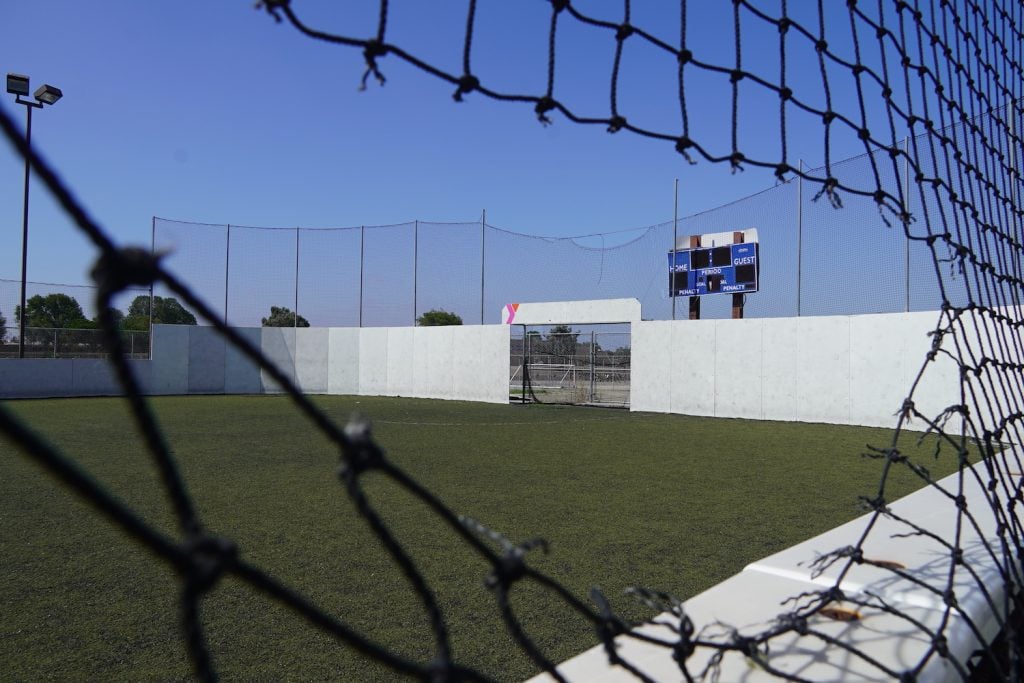
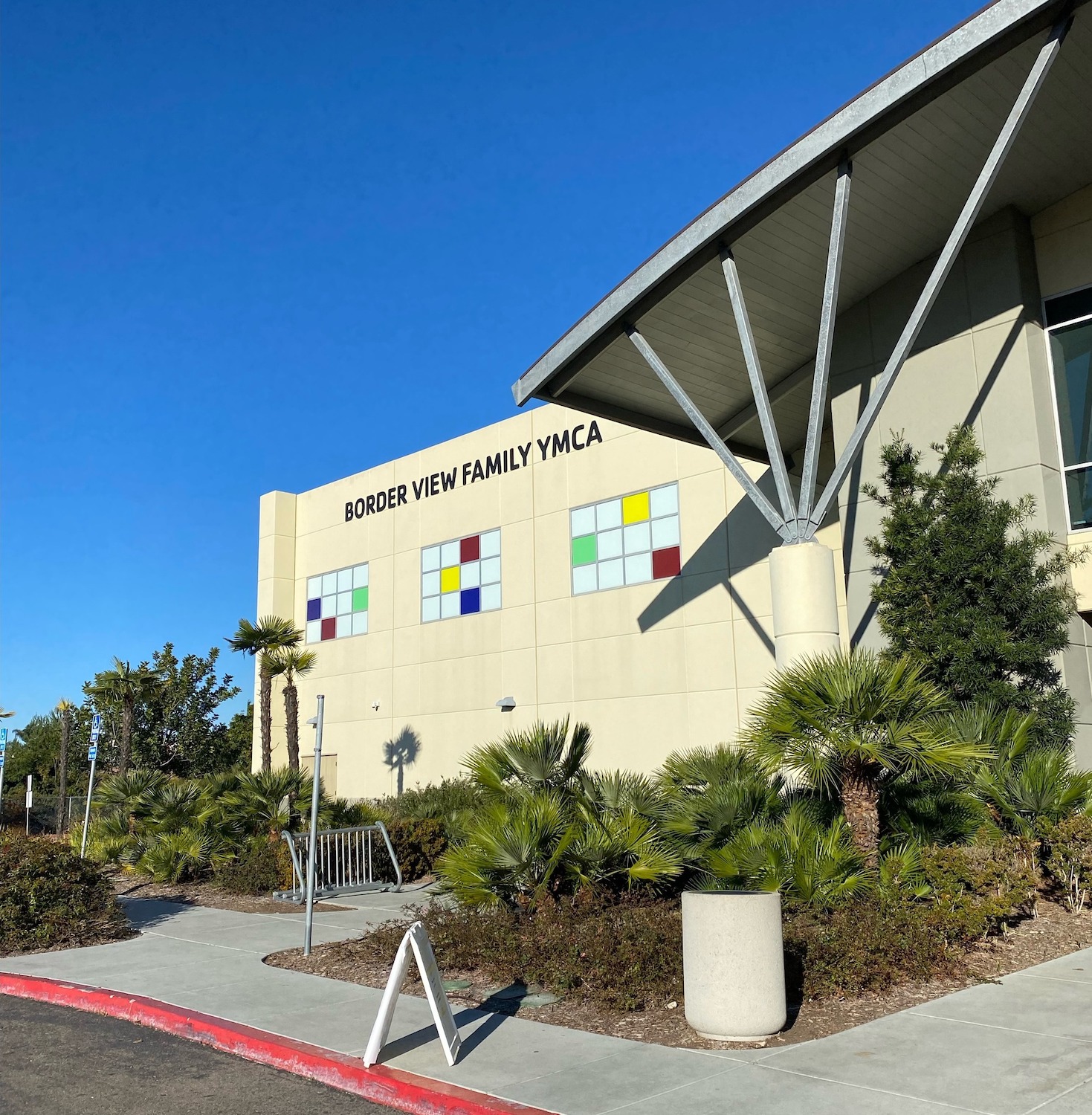
The Border View Family YMCA has been in San Ysidro for 30 years, and it’s a unique YMCA branch. It has the typical fitness room and gym, but it also does a lot more—offering childcare referrals, feeding programs, vaccinations during Covid and child wellness checks.
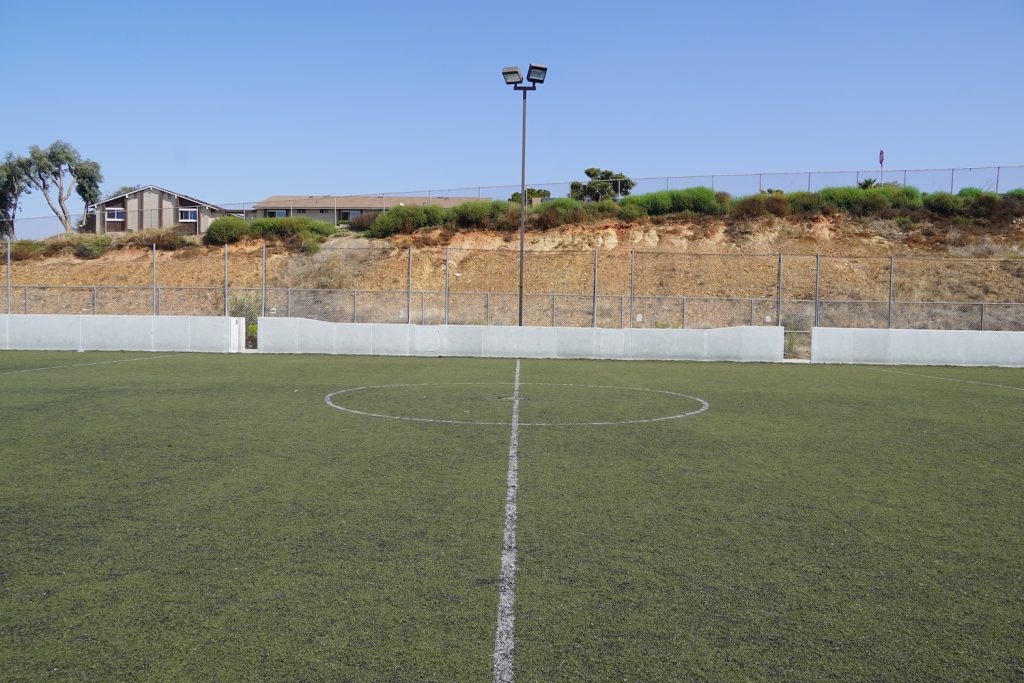
The facility also has a soccer field with an outsized role in the area—it’s a joint use field that’s also used by Montgomery Middle School in the Sweetwater School District. Soccer is very important to the middle schoolers and the surrounding neighborhood.
“Before the pandemic, we were programming it with all sorts of different sports, mostly soccer, adult leagues, kid youth leagues,” says Courtney Cordero, vice president of development for the YMCA of San Diego County. “And then unfortunately, because of the pandemic, we had to close our Border Y. And at that time, too, the field was already kind of on its last leg, kind of pushing up into the pandemic.”
Covid came, and the Border View YMCA was one of the slowest to reopen and when it did in 2021, it had limited hours. Only recently has it returned to five days a week (closed Fridays and Sundays). Unfortunately, due to years of wear and tear paired with rains and flooding, the soccer field remained closed.
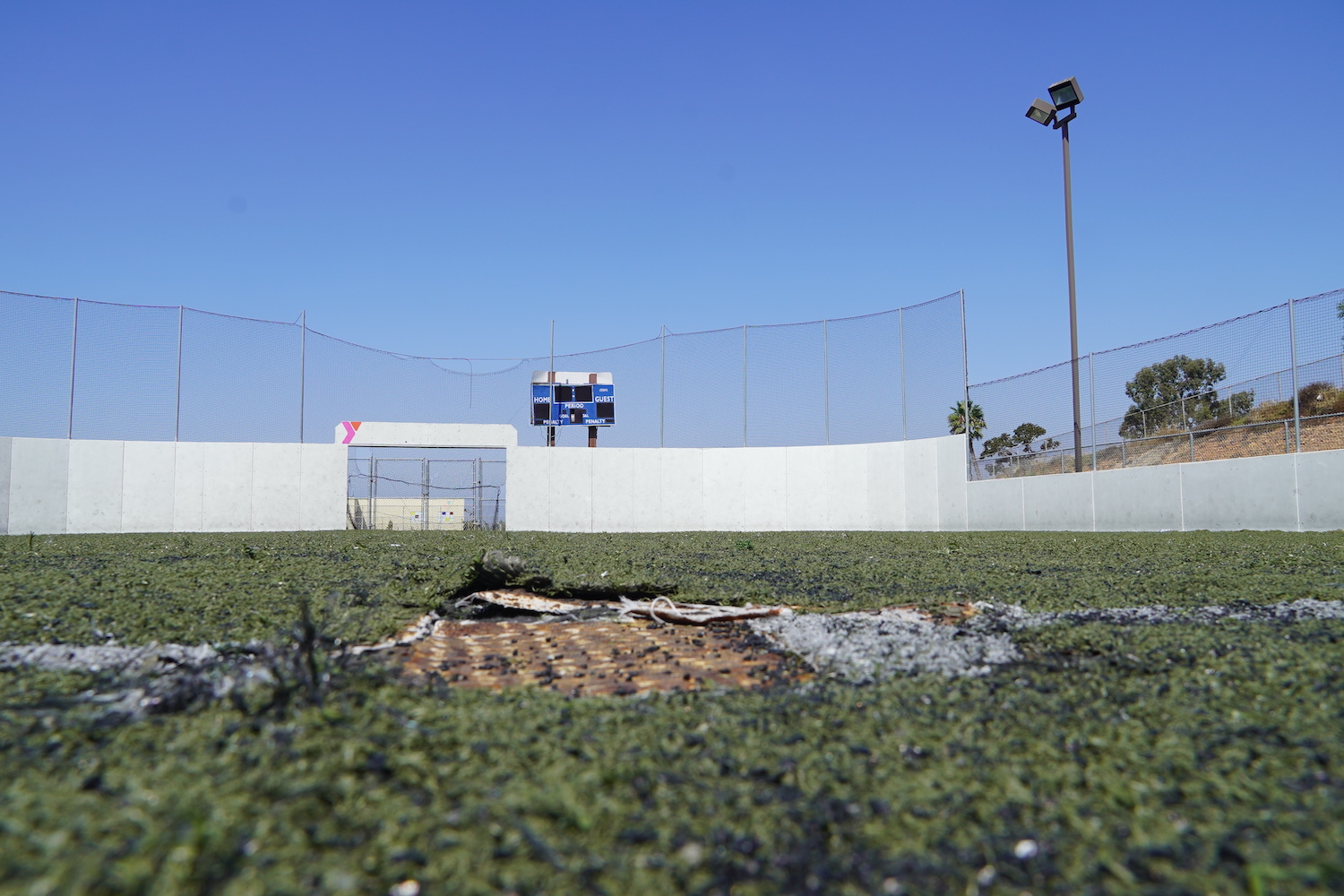
The loss of the field was big for the community, says Dan Cruz, spokesperson for the San Diego County YMCA. He says they run some soccer programs out of the nearby South Bay YMCA, but that doesn’t replace the soccer field at Border View.
“A lot of kids use that field for summer camp, for before and after school programs, things of that nature,” he says. “So it’s got multiple uses versus just being a field. It’s more of a community resource than just a place where there’s soccer.”
Plus, students at Montgomery Middle School also couldn’t use it. A new field was clearly needed. That’s when Alan Prohaska, a board member at the YMCA, saw an opportunity. As regional president at PNC Bank, he worked to fundraise to fix the field. He also reached out to the San Diego Wave FC to partner on the project.
“They have really been ingraining themselves in the community and looking how they can give back,” Cordero says of PNC. “So they thought how could they partner together to create more opportunities for kids? And really what that meant was them coming together both financially to make a capital donation to our Y. So Alan came to our CEO and said, ‘I have this vision of partnering with the Wave to make some fields in the community so that we can promote early childhood education as well as our positive youth development and engage kids in sports.’ So I think their vision is bigger that they would like to do this, they would like to see more in the future. But the first is starting with us at the Border Y.”
Prohaska says the idea was to do more than just give money.
“We’re always thinking about how we give back in a way that’s very meaningful and tangible,” he says. “And one thing we’ve really wrapped ourselves around is sport, especially youth sports. And soccer is at the head of that. It’s just the most widely played sport, from the border to Oceanside. And so we wanted to give something back to a community that was more permanent, more so than just a donation to a nonprofit to partially fund a program or something like that.”
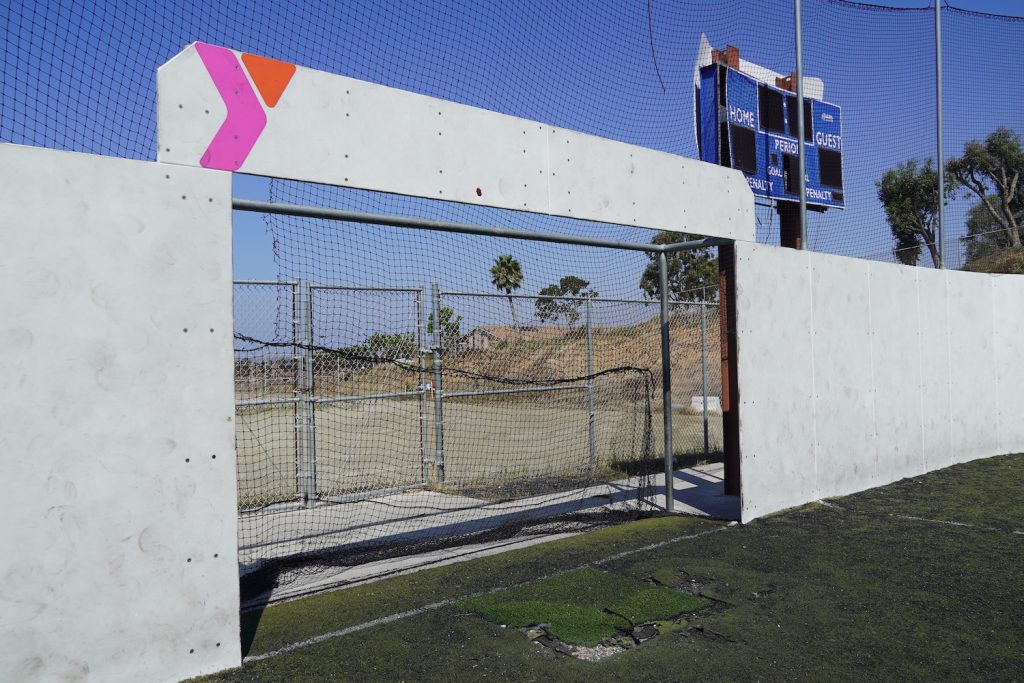
When he heard about the work needed on the field at the Border View Y, which is technically called a futsal field because it’s fenced and smaller than a regulation soccer field, he knew it would be the right project.
The field is turf, which typically has a 10-year lifespan, and had become lumpy and was shredding, turning into a tripping hazard. Also, the scoreboard was broken. The field had been closed for 18 months at that point, and its closure was having a big impact on the community.
“It was a really perfect opportunity for us to invest some money into the physical rehab of something that not just goes back to the YMCA and all of their members and kids that go there, but also the community, because it’s available to them and the middle school, so the kids could use it at lunch or on their PE break,” he says.
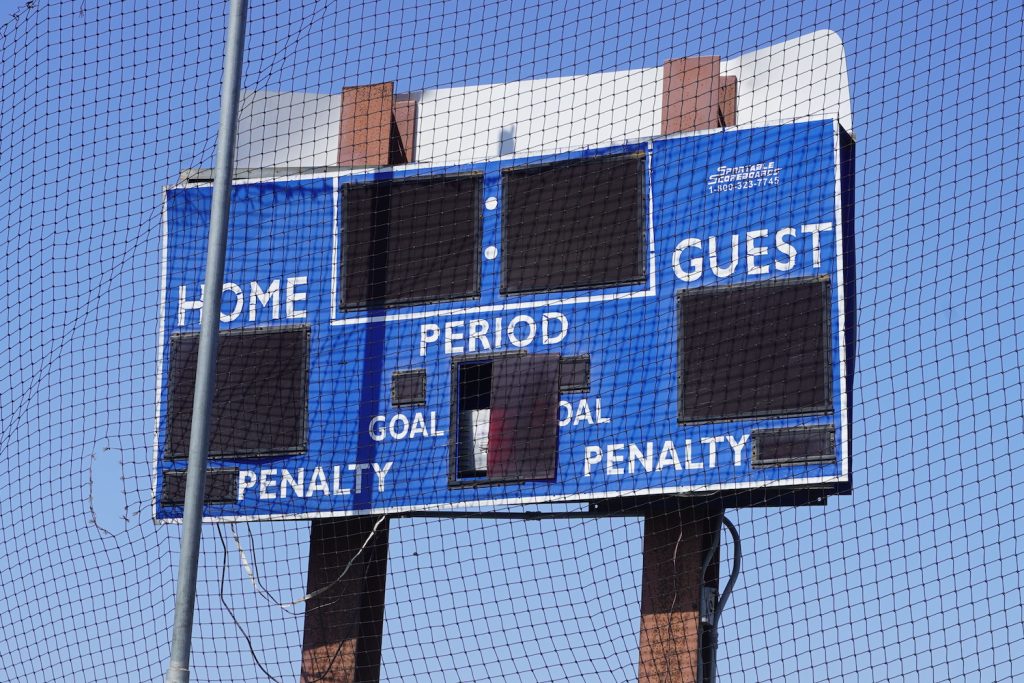
The project is already underway and will last about four weeks. The Wave is contributing a new scoreboard and bleachers.
“It hits all of these major pillars or targets that we’re all trying to do from giving back to the community standpoint,” Prohaska says. “And so it was kind of a no brainer call on the Wave’s part to get involved.”
Cordero with the Y says she hopes this project isn’t the end of rehabilitation at Border View YMCA.
“We’re currently fundraising to get that pool open,” she says. “It’s really exciting to see it come back and start the programming. It’s way more than just a gym and programs. It’s a community center.”
Plans for the reopening of the soccer field are slated for late April.

Claire Trageser has been writing for San Diego Magazine for 10 years. She also is a reporter at KPBS and writes for The New York Times, National Geographic, Marie Claire, Elle and Runner's World.
Here’s where to celebrate, connect, give back, and make a difference this month
Margaritaville Hotel San Diego Gaslamp Quarter will honor the legacy of the late Jimmy Buffet with a fundraiser for the San Diego Music Foundation. Its Day of Service at its rooftop bar will feature a performance by The Buffett Band, a travel and experience themed silent auction, and interactive entertainment.
Hundreds of San Diegans will gather at NTC Park at Liberty Station for the McAlister Institute’s 14th Annual Walk for Sobriety. In addition to the walk, the event will include a resource fair with more than 35 nonprofits, healthcare providers, and community organizations that are part of a network of support for those in recovery.
Celebrities, athletes, and other notable names will face off for a great cause at the Drew Brees Celebrity Pickleball Event at the Barnes Tennis Center. The friendly competition, part of the Del Mar Wine + Food Festival, will benefit Feeding San Diego.
Foreigner will take the stage to benefit Promises2Kids at its Dream On Concert Gala at a private home in La Jolla. Proceeds from the exclusive event will help Promises2Kids create a brighter future for local foster kids.
The Lucky Duck Foundation will host its annual Showcase Soirée at the Estancia La Jolla Hotel & Spa. Proceeds from the event will support the nonprofit’s mission to prevent and alleviate the suffering of homelessness throughout San Diego County.
Show your support for families of local children with life-threatening diseases at the Emilio Nares Foundation’s Harvest for Hope at the Fairmont Grand Del Mar. Funds raised will benefit programs like Ride With Emilio, which provides no-cost transportation for families seeking medical treatment, and Healing Through Nature activities for kids in recent cancer remission.
To celebrate the 50th anniversary of Girl Scouts San Diego’s Camp Winacka, the organization will host a nostalgic evening under the stars. This year’s Urban Campout: Ignite the Possibilities at Girl Scouts San Diego’s Balboa Campus will feature camp-inspired cuisine, cocktails, and activities.
The Boys and Girls Clubs of Greater San Diego will celebrate its impact on local youth at its 13th annual An Evening of Changing Lives. Proceeds from the gala at the Marriott Marquis San Diego Marina support programs that promote academic success, character development, and healthy lifestyles.
Youth Tennis San Diego will honor the sport’s American icons at its annual gala at the Barnes Tennis Center. An Evening Celebrating Tennis Heritage & Legends will help the nonprofit make tennis accessible to all youth in San Diego, regardless of background or skill level.
Serving Seniors will produce a Jukebox Broadway-style show for its highly anticipated Sunshine Gala. The evening at the Hilton San Diego/Del Mar will support Serving Seniors’ compassionate and life-changing services for seniors in need throughout San Diego.
Tom Petty Tribute Band, PettyBreakers, will take the stage at the Doors of Change 2026 Concert of Hope at the California Center for the Arts in Escondido. This year, the nonprofit will celebrate its 25th year of transforming the lives of unhoused youth.
Boys to Men Mentoring will celebrate 30 years of service this year at its annual 100 Wave Challenge. The annual surf-a-thon event welcomes hundreds of surfers who attempt to catch 100 waves in one day and raise $1,000 or more to support Boys to Men Mentoring.
The San Diego Automotive Museum will host The Party in the Park to raise money for the museum and programs that equip youth for careers in the automotive industry. The Roaring 20s-themed event at the Balboa Park institution will feature live jazz and an exhibit of 1920s automobiles.
Sarah Sapeda is San Diego Magazine’s Custom Content Editor. In her 15 years in San Diego journalism, she has covered charitable events, health care, education, crime, current events, and more.
The Ely Callaway Performance Center is where tour-level fittings, cutting-edge technology, and golf equipment you can’t buy yet all come together
“Come test something.”
Those are quite possibly my three favorite words in the English language—all due respect to “I love you” or the highly underrated “you were right.”
I’ve been a PGA Golf Professional since 1994, and yes, full bias disclosure, a Callaway Golf Ambassador for 18 years. One of the bonuses that comes with that combo is access to the Ely Callaway Performance Center—a place so exclusive it gives “velvet rope” vibes.
Originally opened in 2006 as a highly functional (yet not exactly breathtaking) test facility, the ECPC got a serious glow-up in 2018 when Gil Hanse (along with partner Geoff Shackelford) turned it into what can only be described as a fully engineered golf playground. Hanse is no stranger to golf course renovations. In 2024, he completed an extensive redesign of the Omni La Costa North Course in Carlsbad, so it could host the NCAA Division 1 Golf Championships. He also worked on acclaimed courses like Winged Foot, Merion Golf Club, and Oakmont Country Club.
In just two months, it went from a standard test center and R&D lab to a fully dialed-in golf playground.

What was once purely practical is now intentionally designed to be both precise and inspiring. The targets are staggered with purpose—forcing creative shot-making while also calling you out on your actual distances (no more “that’s my 150-yard club … ish”).
Add a massive hitting area, bunkers and greens that mimic real on-course conditions, a “Himalayas” putting green (named for its roller-coaster undulations), an upgraded indoor putting lab, and a 120-decibel sound system blasting a very golf-appropriate playlist, and suddenly it’s a rare blend of high-performance testing facility and “don’t mind if I stay here all day” energy. Since this isn’t exactly open to the public, SDM asked me to take you behind the curtain.
As the iron gates part, it feels less like arriving at a practice facility and more like being granted backstage access at a rock concert—if the bandmembers were made entirely of launch monitors and perfectly manicured turf.
There are no mats. No guessing. No “I think that one felt good?” Just conditions that mirror exactly what tour players see in competition. Because when you’re testing equipment at this level, accuracy isn’t a bonus—it’s the whole point.
Even the sand matters. Different textures. Different densities. Because bunkers have personalities, too, and they are often unfriendly. And the golf balls? Brand. New. Not the usual “these have seen some things” range balls. New balls mean consistent spin, truer trajectory, and no surprises. The older a golf ball gets—and the more it’s been baked in the sun, scuffed, or generally lived a full and complicated life—the less reliable it becomes. Think of it like this: fresh ball, predictable performance; old range ball, slight chaos with a side of mystery.
I’m escorted to my personal hitting bay—basically a pop-up shaded oasis stocked with enough equipment to make a gear junkie weak in the knees. Shafts in every weight and profile imaginable. Heads lined up like they’re waiting to be drafted by their favorite team.

Toptracer technology was patiently waiting to track every one of my swings, each shot instantly delivering ball speed, launch, spin, carry distance, and dispersion (a polite way of saying consistency, or lack thereof), so there’s no guessing—just data telling the truth, whether I like it or not.
We start with irons. Different heads, different feels, different results. When I miss a shot, the ball tends to leak right, so we check lie angle. A quick adjustment—2 degrees upright—and suddenly the clubface is consistently square at impact like it remembered its job. Effort level: down. Ball flight: improved. Confidence: creeping back.
Next we look at the different shaft options—because nothing says “fun afternoon” like realizing a higher kick point can change your entire golf identity. Shaft flex (how much the shaft bends during your swing) helps determine whether you get more height and distance or more control, while kick point (where the shaft bends the most) influences your ball flight—lower kick point for higher launch, higher kick point for a flatter, more penetrating shot. In other words, one small tweak and suddenly you’re hitting shots you’d normally only describe later, slightly exaggerated, over a glass of wine.
Then we move through the bag: hybrids, fairway woods, drivers, wedges. It’s a full rotation of “try this,” “now try this,” and “okay wait … THAT one.”
And yes—the new Quantum driver and fairway woods made an appearance. Without getting too deep in the weeds, they’re faster, more forgiving, and smarter (thanks to AI face mapping) than previous models. Translation: Even your mishits are now slightly less embarrassing. And they were not the only things getting tested. My patience was under attack because the driver and woods would not be available to the public for a good three months.

Watching the fitting team work is like watching a Formula 1 pit crew. Clubs are swapped in seconds. Shafts tightened, adjusted, replaced. One minute you’re swinging something that seems “fine,” and the next, you’re holding a club that feels like it is a part of your DNA.
Then there’s the putter fitting. Drivers are physics. Putters are therapy. Inside the putting lab, sensors track everything—tempo, face angle, path—things you didn’t even know could be measured. Within minutes, my data politely informs me that my putter face is slightly closed at impact. Not shocking, but also not ideal.
A few quick adjustments—different head (with a bit more weight at the toe to discourage the face swinging closed at impact), shorter shaft (so I feel more over the ball, which helps my eyeline)—and suddenly the ball starts rolling exactly where I’m aimed.
Same stroke. Same golfer. Completely different outcome. If only the rest of life worked like that.
And then there’s the part that feels slightly classified. The ECPC isn’t “just” a performance center—it’s also where future equipment lives before the public even knows it exists. I’ve been there when certain clubs were basically under surveillance. Not “don’t touch,” but more “please keep phones in your pocket.”
It’s golf’s version of Area 51. Except instead of aliens, it’s drivers that won’t hit shelves for another year—and like I mentioned, waiting is not my strong suit.
Getting to test the newest equipment isn’t just a perk—it’s part of the job. It’s what allows me to stand in front of students and say, “I’ve tried it. I know what works and what doesn’t. And more importantly, I know why.” And if I happen to sprint to my car every time the phone rings and someone says, “Come test something” … well, that’s just professional courtesy.
Callaway isn’t the only place to get your swing analyzed and clubs fitted. You can stroll into big retail spots like The Golf Mart or Golf Galaxy, book a next-level session at a dedicated studio like Club Champion or True Spec Golf, test brand-specific gear at various manufacturing companies (many located in Carlsbad), or even combine a lesson and a fitting at GOLFTEC. And let’s not forget your local golf course, where fittings happen on actual turf, on a driving range you have some history with—many times with the golf professional who is familiar with your swing so they can give you valuable input. With this many options, there’s really no excuse, other than pride, to keep blaming your clubs.
The county that helped push skating into the mainstream is now nurturing the competitors, communities, and culture shaping its future
It was the summer of 1999. MTV, The Matrix, and first-generation PlayStation glowed on tube TV sets all over America. What a time to be alive. Smartphones weren’t yet stealing people from the moment. Cultural was a shared reality. During the last few minutes of the monoculture, Tony Hawk executed the first-ever 900 at X Games V in San Francisco. That’s two and a half aerial rotations with a side of the dizzies.
The time had run out on the Vert Best Trick competition long before the 11th attempt when he pulled off the fateful feat. Nobody cared. Not the judges, not the competition, and certainly not the crowd. “Let that bird fly,” they said. Once the trick was landed, they partied like it was 1999 … because it was.
That was the tipping point when the skateboarding world exploded, going from counterculture to a national phenomenon. Shortly after that, “Tony Hawk’s Pro Skater” video game came out, introducing millions of kids to what skate culture looked like. Oh, the game had a killer punk soundtrack, too.
We can all thank Hawk for the globalization of skateboarding. But we can also recognize his local influence and how San Diego County continues to be a hub for skateboarders young and old, for competitors and street skaters. To see it all, go to Park De La Cruz in City Heights—or, heck, any other skatepark in the county—which, at 19,000 square feet, is about twice the size of the average skatepark and has signature features like an M-shaped transition ramp. The amount of talent that continues to evolve in this county is a testament to deep-rooted skate culture and world-class athletes supporting the next generation.

I’m a little early for a skate lesson with pro skater Mike Owen when I get to Linda Vista Skatepark. In the 2010s, Owen ranked as one of the world’s top bowl riders. He’s the founder of San Diego Skateboarding and has “helped thousands of kids, teens, and adults learn to skate safely, confidently, and with style,” the company’s site says. And now it’s my turn. We start the lesson on the nearby tennis courts, getting my basic foot mechanics down. Safety before style.
In terms of street plaza features, the massive Linda Vista Skatepark is loaded with rails, stairs, manuals, and ledges. There are more bowls than you can get from Cava: a flow bowl, backyard-style pool, and vert bowl. The main feature is a full pipe for advanced line riders. It’s a hell of a park, even if somebody just wants to watch the action from the 100-foot-long pedestrian skybridge overhead.
Right now, San Diego has over 50 public skateparks scattered throughout the county. “There are now more [skateparks], more resources for them, and more terrain,” Owen tells me. “Now, they’re offering different competitive style skateparks that help for competitions. The best parks have a variety of different terrain where you have things for beginners and bigger transitions. Not every town has that.”
San Diego, luckily, does. But despite the bounty, Owen believes there should still be more—public skateparks are safe spaces for all to learn and develop on-board skills. Without them, a huge portion of San Diego’s culture withers. Encinitas could be the next city to add a skatepark to the county’s roster: In early July, the Encinitas City Council appointed 12 local skaters and community members for the newly established Skate Feature Committee. In partnership with two councilmembers, the committee’s purpose is to design a working skatepark or feature for the city.
But like any big project, Owen says, it’s a long process to add another skatepark to the community.
“I wish it were easier,” he says. “When there are different contractors for different things, [there’s only] a certain amount of time to build. It gets tricky.”
Then there’s the matter of funding the actual construction and development of the skatepark. That usually comes from grants, fundraisers, and donations. For reference, Linda Vista Skatepark was built on a $4.46 million grant from the California Department of Housing and Community Development in 2014. With an additional $40,000 donated by the Tony Hawk Foundation, the park opened in 2018 and is the largest in San Diego’s Parks and Recreation system. The best way to get a skatepark in your neighborhood, Owen says, is to start a petition and reach out to your city.

Jordan Thrower’s first street skate sesh at San Diego City College in 2003 ended with a police chase. The campus was swarming with skaters riding rails, jumping stairs, and grinding tricks on benches, curbs, and ledges. When the cops got on their loudspeaker telling them not to run, everyone obviously ran. Back then, cops would give tickets and confiscate boards. The vibe has loosened since. “Now, the police don’t really care,” Thrower says. “They just make you leave. It’s not anything crazy.”
Street skating is when riders use real-world urban obstacles, rather than pristinely designed bowls or ramps—such as in college campuses, downtown areas, corporate buildings, and malls. Abandoned mini-golf courses and construction sites do the trick, too.
Thrower says the street skating hub here isn’t as huge as it once was. Thanks to modern technology and social media, skaters aren’t tied to any certain place to create skate videos. You know, those videos that could have been taken this year but have the low-fi vibe of 2004, where skaters carve down stairwells into parking lots, over mailboxes, or across park benches. The silver lining: Even though there are fewer street skaters than there once was, those who stayed in San Diego are still tight.
“Everyone skates with each other and knows each other here,” Thrower says. “In LA, it’s not really like that. It’s small there, but not everybody knows each other, and they don’t really skate with each other too much. They just have a lot of little crews.”
Back in 2015, Thrower started his own street team and brand that sells boards and shirts called Tantrum. The Tantrum team is split between San Diego and San Francisco. It doesn’t take much to be a part of a skate team. You just have to be a good hang.
“The way I pick people [for the team] is if I can get along with them,” he says. “It doesn’t even really matter if they’re that good. If you’re likable and funny, you can pretty much be on the team.”

Running it up to North County, a Vista-based nonprofit organization called Exposure Skate has been shaping up the youth since 2012. Its mission is to give more opportunities to otherwise underrepresented women, girls, and non-binary individuals by offering classes and camps. This, to build up confidence and community. We could all use a little bit of that, eh?
Thanks to Exposure Skate, 13-year-old Joey Yarbrough has found herself competing in the LA Olympic trials. (Her first time on a skateboard came at just 18 months old at an Exposure Skate Rising event.)
While competing for Team USA in Rome in June of this year, she finished 13th at the first Olympic qualifier for LA28. Currently ranked 21st in the world and 5th among American women, the young prodigy is blooming. And she’s in good company and mentorship from her biggest influence, Bryce Wettstein.
“She taught me at the first Exposure Skate Rising when I was little,” Yarbrough recalls. “I compete and skate with her all the time now, and it’s super fun. [At Exposure,] it feels so good to have someone there to help me whenever I need it. They’re like my family, always encouraging me and always there for me.”
Yarbrough will be just 15 years old when the Olympics go down in LA. She’s following the Olympic torch carried by other locals such as Wettstein, Ruby Lilley, Jordyn Barratt, and Exposure Skate’s Amelia Brodka.
“I’m working my hardest to get there,” she says. “I’ll also work my hardest to go higher in the Olympics, maybe on podium. That’s just my dream. So, hopefully it’ll come true.”
Jake Peterson is a San Diego-based journalist and culture writer. His work explores the city’s music scene, sports, local characters, and the offbeat corners of San Diego’s subcultures.
KQ Aesthetic Society goes beyond cosmetic to provide comprehensive care and transformative results
Kelly H. Harfouche, founder of KQ Aesthetic Society, knows firsthand that cosmetic treatments like fillers, neurotoxins, and microneedling, can not only enhance a person’s appearance and restore confidence, they have the power to truly change a person’s life. An expert injector has the ability to tailor treatments to each individual patient’s anatomy and goals for personalized results. Harfouche, a board-certified nurse practitioner, has spent nearly a decade perfecting her craft as an aesthetic injector and integrating her multifaceted artistic skills with precision patient care. Her commitment to continual education and training, plus a passion for helping people look—and feel—their best, set KQ Aesthetic Society apart in a sea of local medspas.
For many people considering nonsurgical treatments, the intent is to look refreshed and refined. KQ Aesthetic Society’s philosophy eschews a cookie cutter approach that bases treatments around units, instead working to understand each person’s unique goals, then curating a treatment plan to fit that vision. Harfouche focuses on “inclusive luxury,” the belief that everyone deserves access to aesthetic treatments, respective of budget restrictions. She develops long-standing trusted relationships with her patients, and works with each one to achieve their aesthetic objectives and address the underlying causes of their concerns.
“For me, forming an honest and open relationship with every patient who walks through the door is essential. This means understanding them on a deeper level and meeting them where they are to define and achieve their individual goals,” she says.

Drawing on her artistic background, which inspired her transition into medical aesthetics, Harfouche sees each client as a “unique canvas.” Rather than relying on standardized procedures, the practitioner’s distinctive approach combines her profound understanding of the physiological and anatomical changes associated with aging with an unwavering commitment to ongoing education about the newest products and their mechanisms of action. Her goal is to make each patient feel beautiful in their own skin and to embrace their individuality.
She has also pioneered a way to combine her talent for aesthetic artistry with her philanthropic nature. Harfouche is one of only a handful of providers using dermal fillers to treat patients with lip asymmetry and scarring resulting from cleft lip surgery. Patients travel from around the country for this transformative treatment, noting increased confidence and a restored identity. She hopes to eventually launch a training program to help fill the void in this space.

“My passion has always been connecting with people and giving back in any capacity that I can,” she says. In the rapidly advancing landscape of aesthetic medicine, you can place your confidence in Harfouche and KQ Aesthetic Society to deliver exceptional care. To learn more or book a consultation, please visit kqaestheticsociety.com.
Serving Seniors provides meals and coordinated services to more than 13,000 older adults each year, aided by a dedicated volunteer network
Seniors today face challenges that were unimaginable to previous generations, and some turn to nonprofit organizations to bridge the gap. Serving Seniors helps low-income older adults with housing assistance, social services, and more. The nonprofit provides 1.5 million meals and coordinated services to 13,265 older adults each year, the majority living on less than $1,125 per month.
Dedicated volunteers, like Fred Davis, help make this important work possible. Since roughly 2008, Davis has spent six days a week at the Serving Seniors Gary and Mary West Senior Wellness Center serves as a liaison to help clients access much-needed resources. Here, he shares what keeps him coming back day after day.

I have a community outreach ministry and my grandson and I were on the streets downtown handing out sack lunches, water, hygiene products, clothes and shoes, and things like that and I noticed that most of the people I met appeared to be seniors. So the next logical step for me was to find a senior group that I could work with. I heard about Serving Seniors, and I made a few phone calls. No one really responded to me, so I showed up. They opened the door for me and now they can’t get rid of me. I found a home. I’ve met some really good people over the years. And as it turned out, I’ve been here longer than most of them. I’ve been here at the West Center ever since the doors opened. And matter of fact, I was the one who gave Gary and Mary West an award for their generous donation that made it possible to open up this center.
I’m in ministry, but I don’t want that to be the highlight of what I do. It’s not just a passion for serving people, it’s a calling. I like the idea of giving and serving people and trying to meet their needs. So I counsel, I oversee the serving of the lunches, and I work with the head of the volunteer group. I’m involved in different activities. Matter of fact, this coming Saturday, I’m going to take a group of seniors out sailing. I also helped start the Civic Engagement Group. It was a group of us, and there are about three members that are left from when we originally started it. Now Serving Seniors is taking it over, and my role is to work with them. I also took it a little bit further and ended up joining Aging and Independent Services and sat on that advisory board for a number of years. That led to me being elected to the California Senior Legislature. So I’ve been advocating for seniors for a very long time. They’re a vulnerable group. They worked hard and don’t always get the respect that they deserve.

The people—this is my target group right here. I don’t have to walk the streets like my grandson and I did anymore; they’re right here. I’m here every day at the West Center but Sunday.
The biggest challenge is not being able to help someone who really needs the help. But we try to find a way. I reach out to different organizations, faith-based organizations or other nonprofits, sometimes with success and a lot of times without success. There are quite a few people that are in need who are hardworking people, dedicated people who still want to provide for themselves and their family, and they’re just caught in that void.

I was handing out clothes; I usually have a sock drive and I gave a homeless person a pair of socks. As they peeled their filthy socks off their feet, this person cried. You don’t know how important these little things are that we take for granted. It was really touching.
A lot of people use the term giving back, but I just say giving. When you say ‘giving back,’ that means you’re trying to repay something and you’re taking credit. But giving is a passion. It’s something that you do from your heart, not out of obligation.
Sarah Sapeda is San Diego Magazine’s Custom Content Editor. In her 15 years in San Diego journalism, she has covered charitable events, health care, education, crime, current events, and more.
The beloved annual festival raised a record-breaking $60,000 for Feeding San Diego
More than 6,000 ice cream lovers devoured tasty treats at this year’s Scoop Ice Cream Festival for a great cause. The event on June 28 launched an ongoing partnership with Feeding San Diego and raised $60,000, or enough to provide 120,000 meals to San Diegans facing hunger.
See photos from the night below.


Sarah Sapeda is San Diego Magazine’s Custom Content Editor. In her 15 years in San Diego journalism, she has covered charitable events, health care, education, crime, current events, and more.
A look at San Diego's top designers creating unique environments that combine creativity and function


AVRP Studios’ tradition for Design Excellence and Innovation began in 1976 with Doug Austin, FAIA, in Solana Beach, California. The firm has since grown to complete major projects throughout the United States and Canada. We think of ourselves as a family and we care deeply about people. We want to inspire, help make their lives richer and more complete through our efforts. We believe that architecture is one of the most important art forms because of the impact it can have on the lives of those it touches. We’re delighted to have been recognized with over 150 awards for design excellence.
703 16th Street, Suite 200, San Diego, California 92101 | 619-704-2700 | avrpstudios.com