Featured articles
Food & Drink
Food & Drink
Food & Drink
Featured articles
Things to Do
Features
Features
Featured articles
Things to Do
Things to Do
Everything SD
Featured articles
podcast-ep
podcast-ep
podcast-ep
Featured articles
Features
Features
Features
Featured articles
Things to Do
Food & Drink
Partner content
Ready to know more about San Diego?
SubscribeReady to know more about San Diego?
'Tis the season for cakes, cookies, pastries, pies, profiteroles, and other sweet treats—just don't tell your dentist to send us the bill
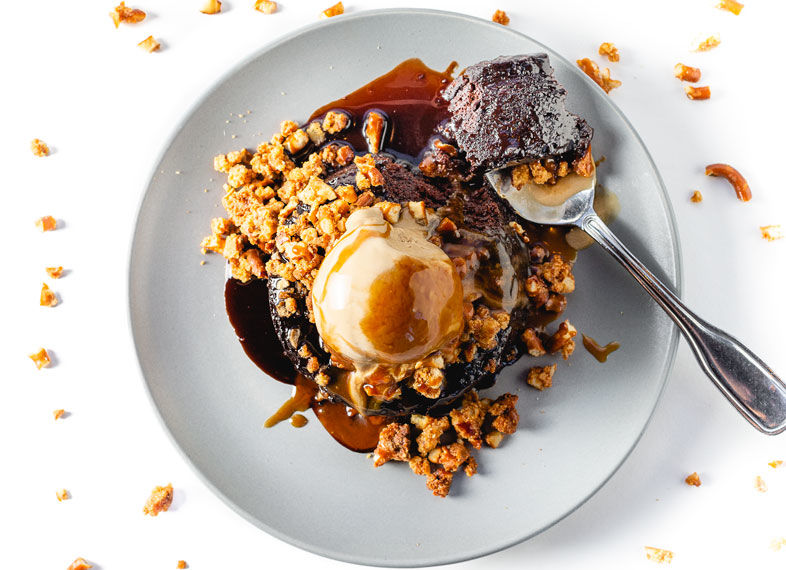
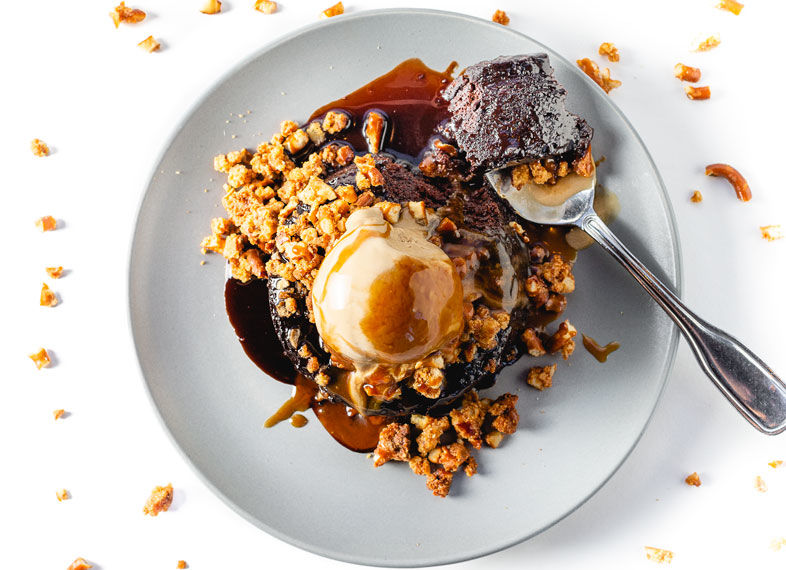
It’s a cardinal sin to serve a cold brownie à la mode. Thankfully, this restaurant always plates a soft, warm chocolate brownie topped with their signature espresso-Bailey’s ice cream. And thanks to Chef de Cuisine Tyler Nollenberger’s love for chocolate pretzels, the most recent iteration includes pretzel crumbles with a drizzle of chocolate sauce. “This dish really takes me back to my childhood,” says Nollenberger. “When you’re 10 years old, what’s better than a brownie and ice cream? And making the ice cream with Bailey’s? Well, that appeals to my adult side.”
2202 Fourth Avenue, Bankers Hill

73 Must-Try Desserts in San Diego
Justin McChesney-Wachs
“I love the idea of a toasted frosting where you dig in to discover what’s inside,” says Vivian Hernandez-Jackson, owner and chef of the Ocean Beach dessert shop that combines her Cuban background with French pastry training. At the center of this white chocolate soufflé cake—served in individual portions—is a tart passion fruit cream, and on the outside are raspberries and a glossy vanilla bean cooked meringue icing. “Passion fruit tastes like a tropical vacation—it really transports people and has such a unique taste. I use it anywhere I see lemon in recipes.”
4820 Newport Avenue, Ocean Beach
73 Must-Try Desserts in San Diego
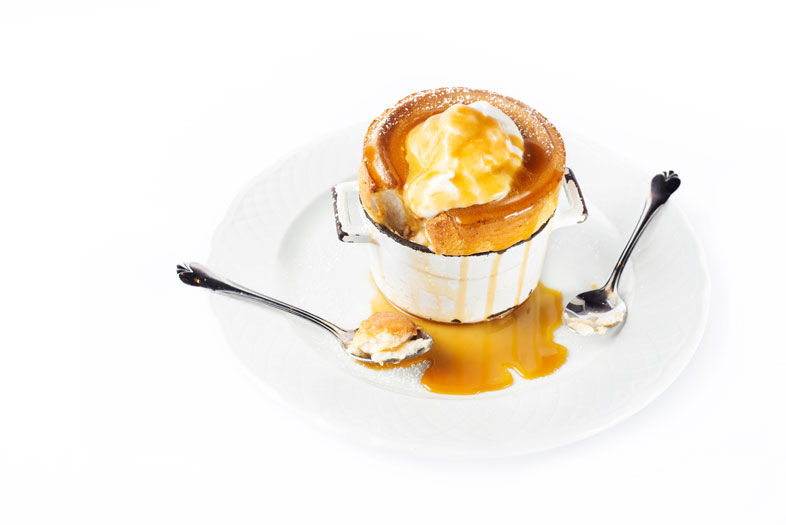
Pulling from his tenure at the two-Michelin-star Spago in Beverly Hills, Herb & Wood’s Executive Pastry Chef Adrian Mendoza has a slate of five-star desserts at this glam Little Italy restaurant. The showstopper is the soufflé, a gluten-free option with flavors that rotate seasonally (blueberry in the summer, pear currently). He uses Bartlett pears sourced from Penryn Orchard Specialties in Northern California and a touch of sugar to create the base, then folds in meringue and lavender whipped crème fraîche. On top is a drizzly caramel sauce and salted caramel gelato. It’s quick to prepare but requires the precision of a scientist with the sugar, the ramekins, and especially the egg whites. “If you underwhip, it won’t rise as high, but if you overwhip, the soufflé will rise tall then deflate within seconds,” Mendoza says. “If it’s whipped just right, the soufflé has a three-to-five-minute window before it starts descending.”
2210 Kettner Boulevard, Little Italy
73 Must-Try Desserts in San Diego
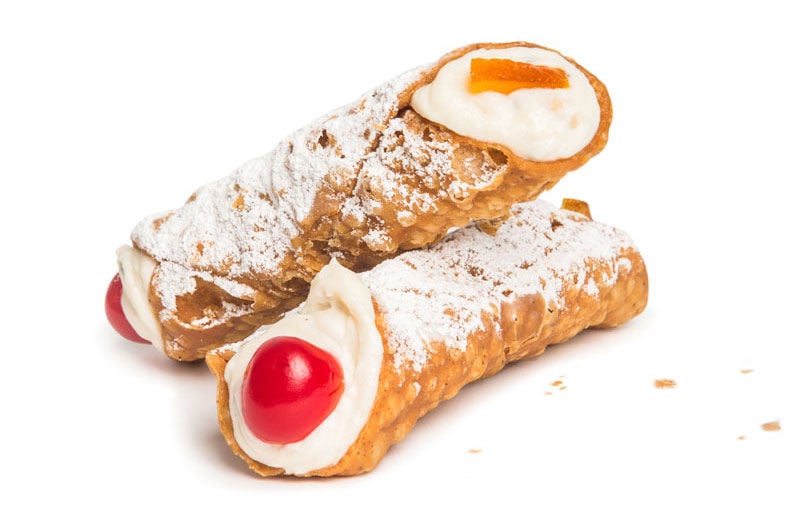
Cannoli can fall victim to stale shells and overly sweet cream. Not so at this traditional Italian deli owned by a sweet husband-and-wife team. After the arancini, pasta, and focaccia, save room for this one. They’re not reinventing the cannoli wheel, and we’re thankful for that. Expect a perfectly balanced ricotta filling and a crunchy shell for an ideal contrast. Bellissimo!
7918 Ivanhoe Avenue, La Jolla
73 Must-Try Desserts in San Diego
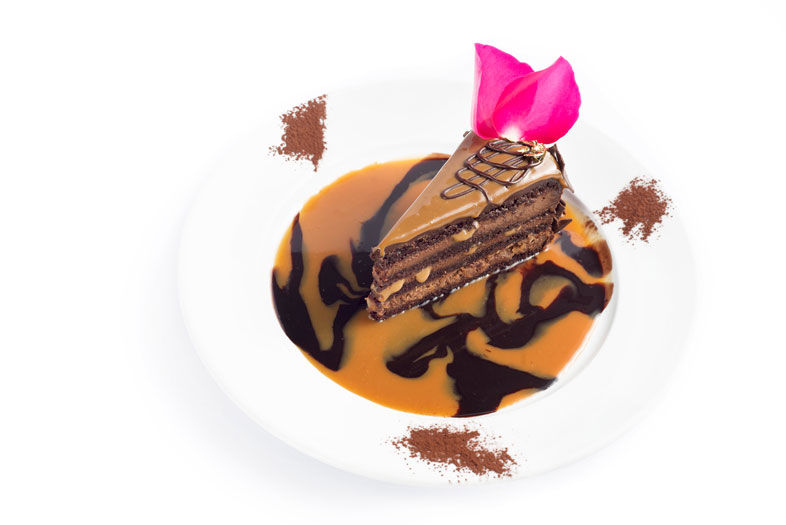
Owner and pastry chef Karen Krasne pulled inspiration from a cake she had in Uruguay for her version, made with a dark chocolate sour cream base, chocolate mousse, and burnt caramel, plus a crunchy layer of macadamia nuts and crushed French wafers. The genius is in the housemade dulce de leche (a caramelized condensed milk). It’s been on the menu since Extraordinary Desserts opened, but it shot to stardom after chef Marcela Valladolid picked the cake on the Food Network’s Best Thing I Ever Ate: Cake Walk. Krasne may be closing her original location near Balboa Park, but she’ll open a larger, more modern one a few blocks away at Bankers Hill’s Louie Lofts soon.
2870 Fourth Avenue, Bankers Hill; 1430 Union Street, Little Italy
73 Must-Try Desserts in San Diego
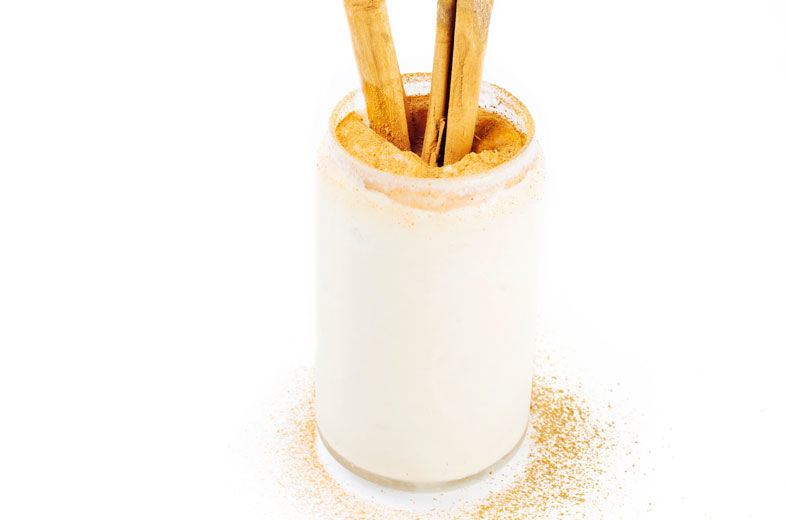
On the menu since Puesto’s first location (in La Jolla) opened in 2012, the frozen horchata was the brainchild of cofounder Eric Adler and Executive Chef Luisteen Gonzalez. The idea was to present the traditional Mexican drink in a fun new way. As for the recipe, that’s a family secret, but it does involve Straus organic cream and cinnamon. Best of all, $1 of every frozen horchata is given to a charity, which rotates monthly. To date they’ve raised $48,000 for No Kid Hungry and the Surfrider Foundation, among others. This month your buck will go to Workshops for Warriors, a veteran-focused nonprofit.
789 West Harbor Drive, Downtown; 1026 Wall Street, La Jolla
73 Must-Try Desserts in San Diego
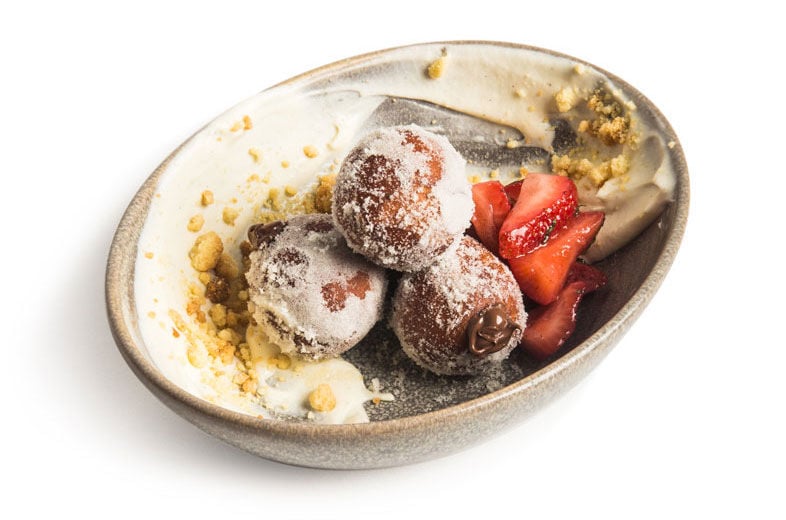
The menu and wines are Italian, so it only makes sense that the Bankers Hill restaurant would want authentic desserts, too. They pulled from the Italian tradition of restaurants frying and sugaring leftover dough to serve to kids after school in brown paper bags. Cucina Urbana (and their Kensington offshoot, Cucina Sorella) no longer uses the paper-bag presentation, but the crux of the dessert remains the same. Flavors for their dipping sauce change seasonally, like a blood orange syrup. “They are just so simple and dependable,” says Executive Chef Joe Magnanelli. “It’s fried dough, sugar, and Nutella. There’s nothing complicated, and that’s comforting.”
505 Laurel Street, Bankers Hill; 4055 Adams Avenue, Kensington
73 Must-Try Desserts in San Diego
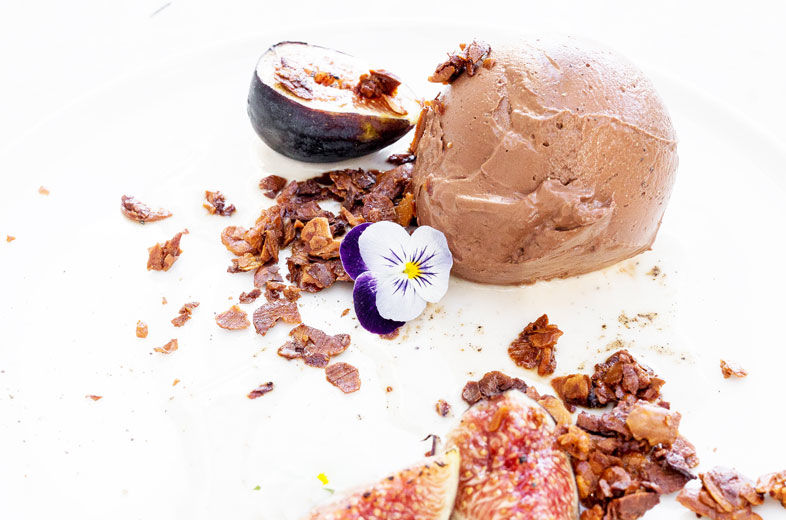
In a quaint corner of South Park lies this vegan, Victorian gothic restaurant-bar with its pink wallpaper and occult decor touches. And the menu is just as delightfully irreverent—think charcuterie boards made with fig sausage. There’s lots of fun in the plant-based dessert menu, too. “There’s no lack of inspiration or innovation in a dairy-free world,” says Kindred’s head chef, Emmy Miller. She combines dark chocolate blended with oat milk and Tcho chocolate with a black pepper crème anglaise, gingered almonds, nasturtium flowers, and seasonal fruit. “Each element plays its part. Sweet, salty, creamy, crunchy—sugar, spice, and everything nice!”
1503 30th Street, South Park
73 Must-Try Desserts in San Diego
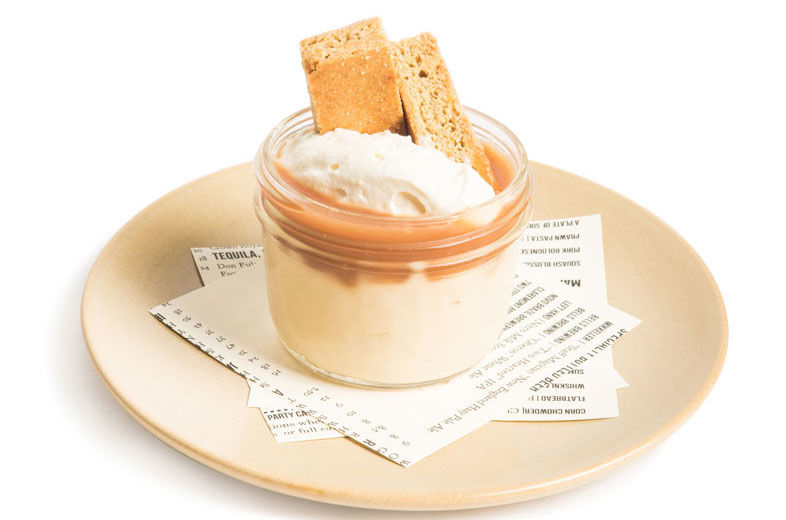
Look around at this La Jolla restaurant and you’re bound to see most tables finish their meal with this budino, a grown-up take on pudding. Theirs is a butterscotch custard topped with salted caramel, whipped cream, and housemade brown butter blondies. “It’s been off and on the menu since the opening,” says Culinary Director Ryan Johnston. “Every time we attempt to replace it, it always makes its way back on.” The budino is the brainchild of Whisknladle’s first pastry chef, Tracy Wei, and is a staple of the dessert menu. “Even if you think you don’t have any room left for dessert,” Johnston says, “we definitely subscribe to the ‘treat yourself’ mentality.”
1044 Wall Street, La Jolla
73 Must-Try Desserts in San Diego
Justin McChesney-Wachs
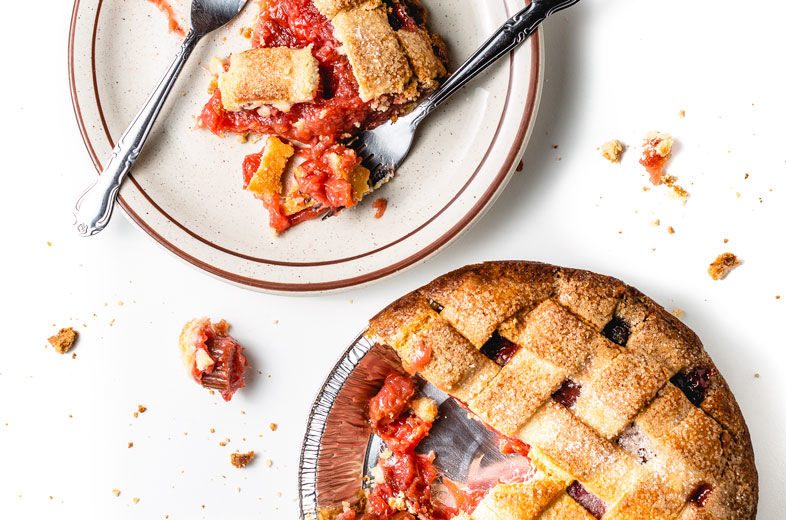
Many pies at this Encinitas bakery are seasonal—the peach and pecan are particularly great for summer and fall, respectively—but thankfully, the strawberry rhubarb is available year-round. A buttery lattice crust encapsulates chunks of juicy berries and tart rhubarb. You can add fixings like butterscotch, whipped cream, or ice cream. And if you want to add a traditional touch to the holiday spread, try their Thanksgiving pie, a buttermilk biscuit crust filled with roasted turkey, gravy, mashed potatoes, green beans, and stuffing baked golden in a sage buttermilk biscuit crust that’s served with chipotle cranberry sauce (available through December).
155 Quail Garden Drive, Encinitas
73 Must-Try Desserts in San Diego
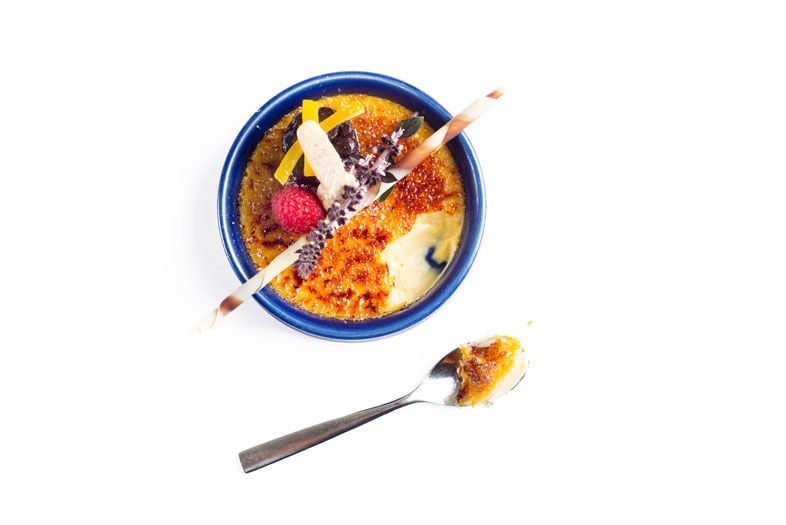
On the menu since Executive Chef Bernard Guillas joined the team 24 years ago, the Marine Room’s crème brûlée is almost as famous as its high-tide spectacle. This version, on the menu since May, has a macadamia-liqueur-spiked custard that gives off nutty scents of roasted almonds, plus notes of dried citrus and pepper. It also includes macerated blueberries soaked in passion fruit syrup, preserved orange peels, cardamom-flavored shortbread cookies, and a raw turbinado sugar on top to give it a crunch. That stoneware dish? It’s made by Guillas’s friend Mike Totah at Leucadia pottery shop The Wheel.
2000 Spindrift Drive, La Jolla
73 Must-Try Desserts in San Diego
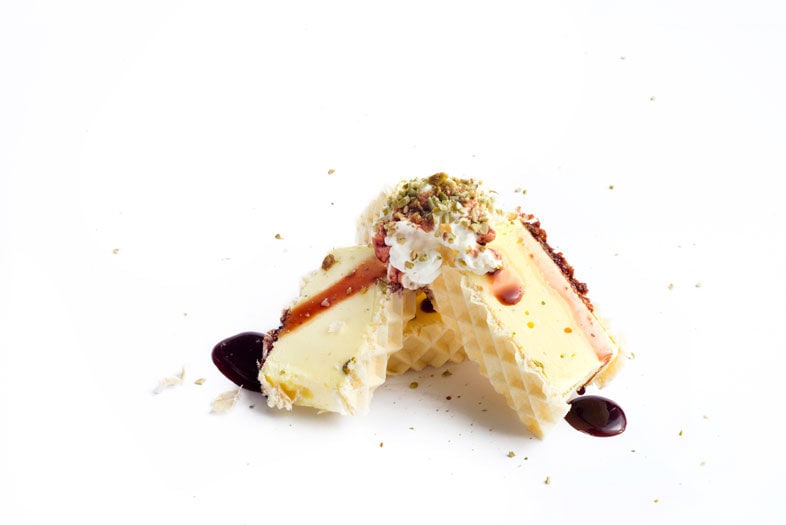
Some believe Akbar Mashti was the owner of the first ice cream parlor in Tehran, Iran, but there are other origin stories too. “An Indian man suggested it was named after Akbar the Great, the 16th century Mughal king of India who promoted Persian art, fine cuisine, and poetry,” says Soltan Banoo co-owner Sanam Govari. “He loved the ice cream so much that his cooks learned to make it for him.” Folklore aside, the traditional saffron-flavored ice cream, with hints of rose water and pistachio, comes sandwiched between two thin wafers. “The wafer for Iranians is like the cone for Americans.” The final touch is a drizzle of tart sour cherry syrup on to top balance the sweetness.
4645 Park Boulevard, University Heights
73 Must-Try Desserts in San Diego
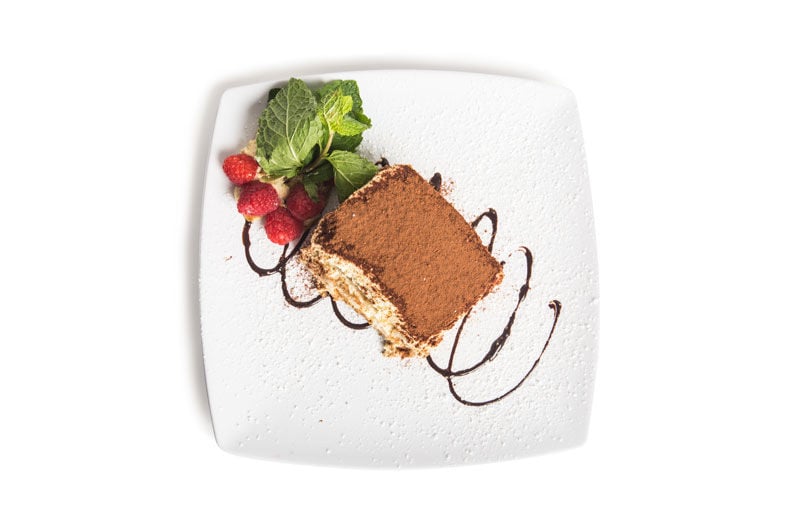
Neapolitan pizza may be its calling card, but it’d be a sweet sin to miss out on Buona Forchetta’s desserts, curated by owner Matteo Cattaneo’s mother, Augusta. Every October, she comes to San Diego from Italy for a few months to make the desserts herself. She has a new lineup this fall, including an Italian riff on cotton candy, but we love the classics, like her tiramisu, just as much. “I grew up eating this,” Matteo says. “It’s a traditional summertime dessert for us because it’s so hot in Umbria!”
3001 Beech Street, South Park;
Officine Buona Forchetta: 2865 Sims Road, Liberty Station
73 Must-Try Desserts in San Diego
Danielle Jackson
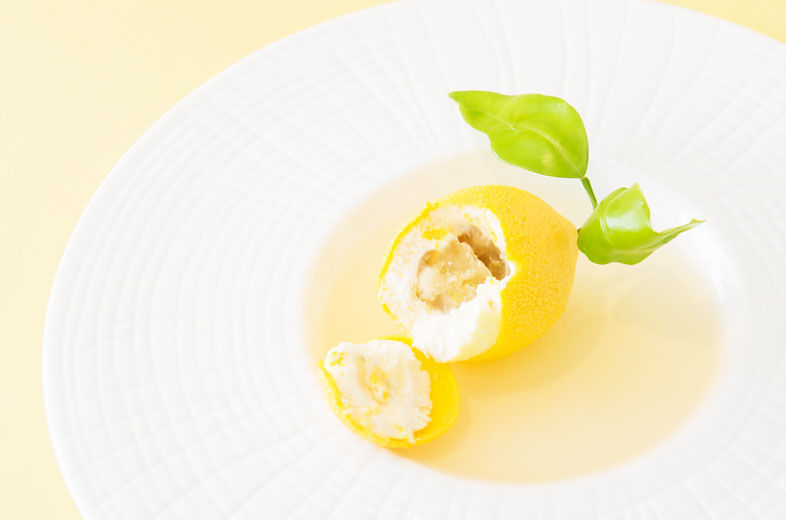
Luxurious and delicious? We’d expect no less from the Hotel del Coronado restaurant, run by Master French Chef Patrick Ponsaty. Like many of his fellow European-trained chefs who began putting a playful touch on more serious cuisines, Ponsaty created a lemon dessert that looks like, well, a lemon. He starts with a special silicon mold in the distinctive shape. The center of the dessert has a poached Meyer lemon core with chocolate mint from The Del’s on-site garden and a yuzu-spiked white chocolate mousse. He then coats the frozen dessert with white chocolate and natural yellow colorant. The finishing touch is a dust of gold spray. Luxury all the way.
1500 Ocean Avenue, Coronado
73 Must-Try Desserts in San Diego
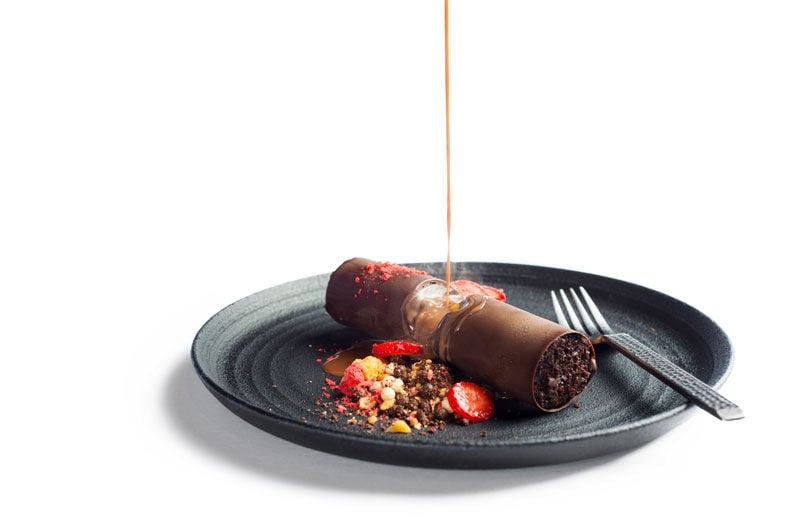
It’s the most popular dessert on the menu at Richard Blais’s Little Italy restaurant. For proof, just look at all the tables around you ogling at the theatrical way they serve it. Pastry chef Bradley Chance whips up a cylinder of tempered dark chocolate filled with hazelnut brittle, coffee “soil,” chocolate pudding, chocolate pearls, freeze-dried and fresh strawberries, chocolate cake, and white chocolate chiboust cream. Make sure to get your camera out when the server begins pouring the milk chocolate ganache on top. As Chance says, “It’s all in the presentation.”
2228 Kettner Boulevard, Little Italy
73 Must-Try Desserts in San Diego
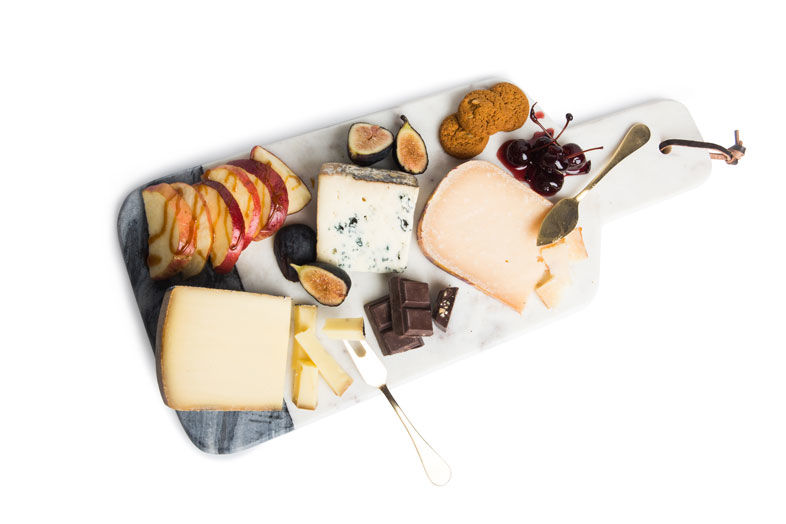
Cheese as dessert? “Leave it to the French to propose such a thing!” says Gina Freize, co-owner of Venissimo Cheese. “But cheese is like crème brûée for those who prefer savory to sweet, since cheese is essentially creamy milk with salt. And creamy things are a wonderful digestive.” She suggests a blue cheese to cleanse and a Brie to soothe the palette, and an aged gouda, which is naturally sweet and texturally crunchy. Her picks? Bayley Hazen Blue cheese served with fresh figs, chocolate, and balsamic; the hard cow’s milk Appenzeller from Switzerland paired with apple slices and caramel sauce; and ginger snaps and sour cherries with Ewephoria, a sweet sheep’s milk gouda out of the Netherlands.
Locations in Del Mar, Liberty Station, Mission Hills, and North Park
73 Must-Try Desserts in San Diego
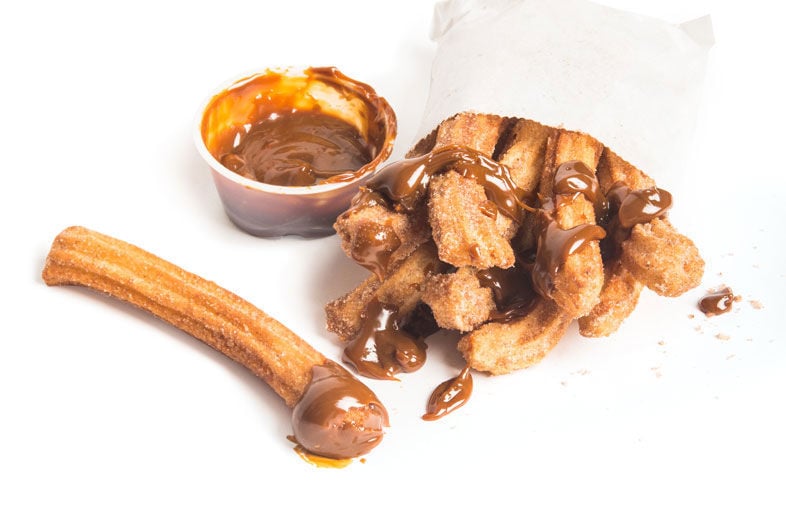
You don’t have to cross the border to get piping-hot, sugar-dusted churros. Just visit this small kiosk inside Las Americas Premium Outlets in San Ysidro. The churro masters make sundae and ice cream sandwich spins on the namesake, but we prefer them clásico. Served in six- and nine-piece batches or a fun 20-piece mini option, you can dip the churros in chocolate or cajeta (caramel) sauce. For an extra $1.50, add Bavarian cream, strawberry preserves, or lechera, a sweetened condensed milk.
211 Camino de la Plaza, San Ysidro
73 Must-Try Desserts in San Diego
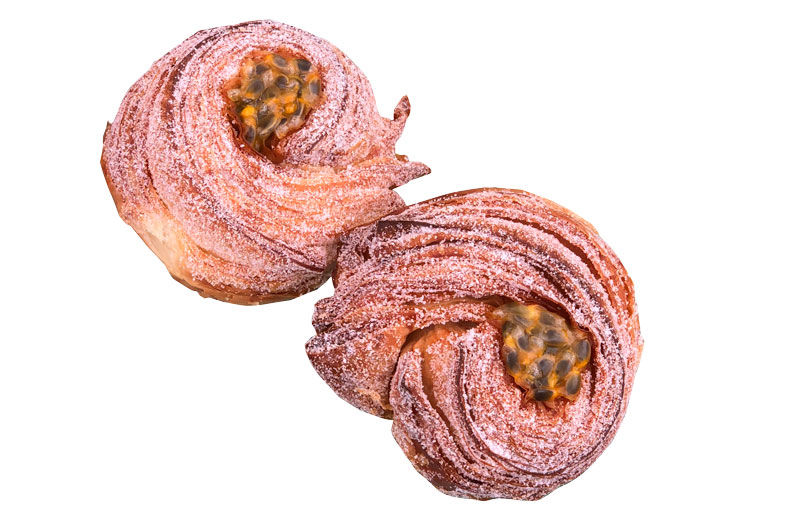
Owner Crystal White honed her skills at San Francisco’s famed Tartine Bakery before opening Proof Bakery in LA, then launching a series of pop-ups. Thanks to a successful Kickstarter campaign, she now has her own brick-and-mortar—which recently got a write-up in the New York Times—where she slings loaves, tarts, morning buns, and more. The cream bun is our favorite, a croissant bun filled with pastry cream and a seasonal component. “It’s a way to showcase San Diego’s incredible produce in a morning pastry,” she says. “The outside of the croissant can expand as it bakes, which makes the outer texture flaky, crispy, and crunchy. But the inner and bottom of the bun are confined in a muffin tin, so they remain soft, chewy and buttery.” Future flavors for fall include apple butter with honey, pear vanilla, and maple date.
5525 La Jolla Boulevard, Bird Rock
73 Must-Try Desserts in San Diego
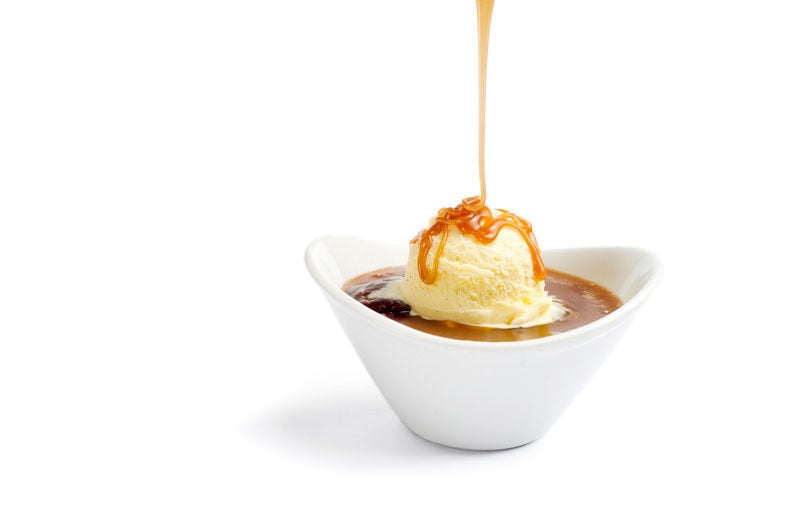
The La Jolla restaurant has served more than 50,000 of these cakes since its opening—that’s 2,375 pounds of dark chocolate, 20,000 eggs, another 20,000 egg yolks, 1,250 pounds of sugar, and 172 pounds of flour. Crafted by Nine-Ten’s first pastry chef, Jack Fisher, who wanted to create his own version of the famous molten chocolate cake made by acclaimed chef Jean-Georges Vongerichten, the cake comes with a housemade vanilla bean ice cream and caramel sauce. The secret to its success is ensuring the sides are fully baked, so it holds its form while the middle remains melted.
910 Prospect Street, La Jolla
73 Must-Try Desserts in San Diego
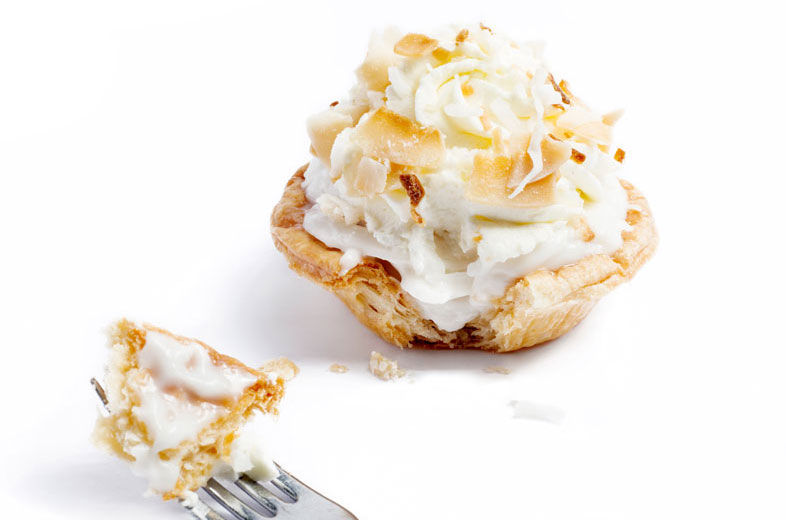
They may have just opened an ice cream shop next door (Stella Jean’s), but we’re still suckers for the original concept, an ode to sweet and savory pies of all shapes and sizes. For dinner, the five-inch steak and ale pie and roasted veggies with curry pie are popular, but we don’t leave without the 3.5-inch coconut cream pie. The best-seller combines tender young coconut from Thailand with a coconut-milk-based pastry cream that’s topped with fresh whipped cream and toasted coconut flakes.
4404 Park Boulevard, University Heights
73 Must-Try Desserts in San Diego
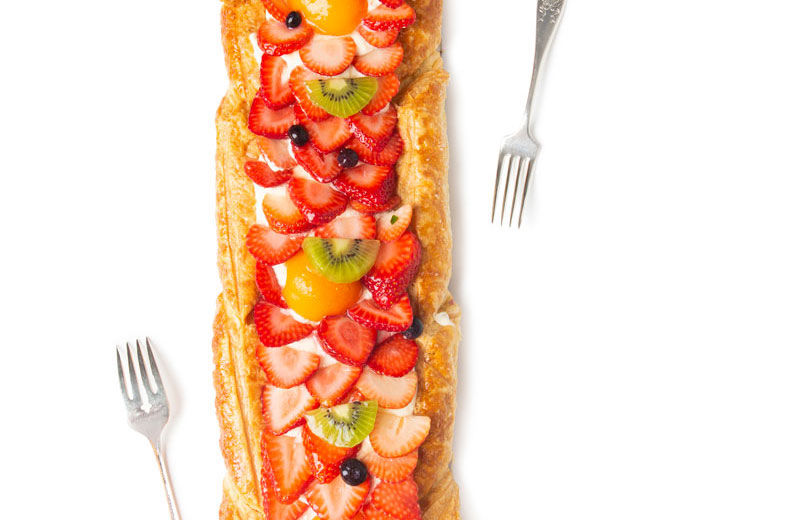
The eponymous pastry chefs learned how to make European-style cakes in their native Holland before opening this low-key Bonita bakery in 1991. Their menu spans cheese Danishes, caramel walnut tortes, lemon bars, and elaborate cakes like Colombian mocha buttercream, but the fan favorite—especially during the holidays—is the fresh fruit strudel, a thick puff pastry base layered with fluffy Bavarian cream and topped with berries, kiwis, apricots, and more. The dessert stretches two feet long, but you can also find individual-size strudels in the dessert case if you’re not one for sharing.
5080 Bonita Road, Bonita
73 Must-Try Desserts in San Diego
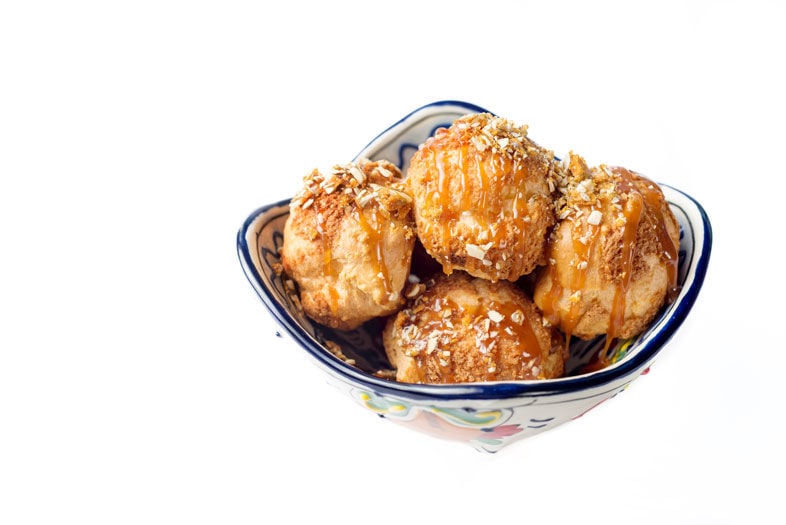
Pastry chef Jeremy Harville takes flour, milk, butter, eggs, and salt and transforms them into pillow-soft dough balls topped with a brown sugar crumble and seasonal cream fillings. “I wanted a play on a croquembouche,” he says. This month, he’ll serve horchata cream profiteroles with cajeta (a goat milk caramel sauce) and pumpkin seed brittle. “I put them on the second dessert menu after opening and haven’t been able to take them off since—due to possible protests and rioting.”
3752 Park Boulevard, Hillcrest
73 Must-Try Desserts in San Diego
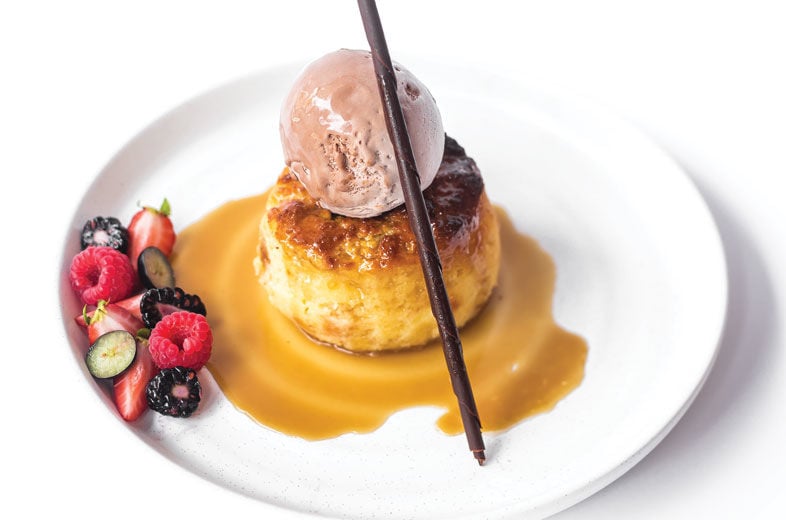
The menu at Cowboy Star reads a little like its decor—Old West tradition (cowboy gear and wooden beams) mixed with some industrial touches (exposed brick, steel accents). The same goes for this dessert, a staple since the East Village steakhouse opened in May 2008. Chef-partner Victor Jimenez wanted a “wow factor” dessert, so he took inspiration from a memorable bread pudding he had tasted in New York City. Now a signature dish, the pudding is made with housemade brioche, chocolate chips, and custard—the perfect post-steak palate cleanser.
640 10th Avenue, East Village
73 Must-Try Desserts in San Diego
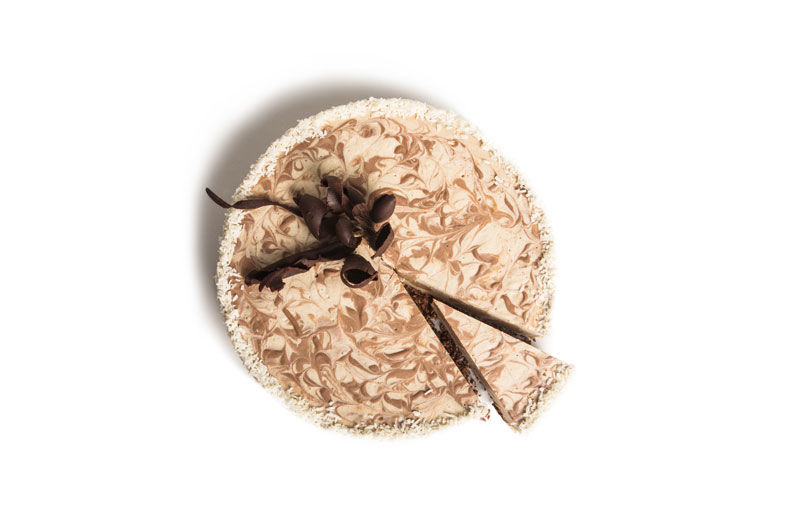
The stylish, plant-based restaurant—basically vegan except for its use of honey in some dishes—is known for lentil bowls, raw pesto kelp noodles, and mole tempeh, but don’t overlook their menu of sweets, made sans egg or dairy. There’s the vegan riff on Almond Joy chocolate bars and gluten-free chocolate chip walnut cookies, but we always head straight to the cakes and pies. The highlight is the coconut cream pie, which has a photogenic swirl of dark chocolate and a crust made out of dates. Look for it on the menu under the eatery’s signature affirmation-style name, the Irresistible. We couldn’t agree more.
1980 Kettner Boulevard, Little Italy

73 Must-Try Desserts in San Diego
Formerly known as Wow Wow Waffle, the charming eatery behind a laundromat may have changed its name, but the thick, fluffy, Liège-style waffles are all the same. The menu, which offers “Sweet,” “Not So Sweet,” and “Savory” waffles also serves seasonal spins, like a pumpkin butter with bananas. We go for the Nutella, with its generous layer of hazelnut spread, sliced strawberries, whipped cream, and powdered sugar (also offered in a smaller size for kids). Take it to the fire pit, preferably with a cup of Coffee & Tea Collective coffee by your side.
3519 30th Street, North Park
73 Must-Try Desserts in San Diego
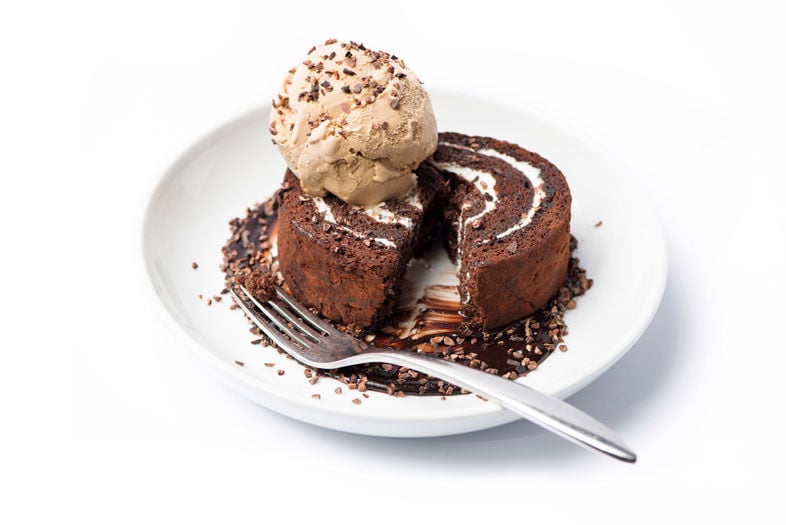
When the Coronado eatery retired its first Hostess-inspired dessert, the Naughty Ding Dong, Executive Pastry Chef Lori Sauer decided to continue the trend. Her gourmet Ho-Ho is made of a chocolate sponge cake with marshmallow whip, fudge, cacao, and a large scoop of MooTime Creamery coffee ice cream. “It’s a twist on a nostalgic American sweet treat,” Sauer says. “The name and description alone just sucker you into trying it.”
1015 Orange Avenue, Coronado
73 Must-Try Desserts in San Diego
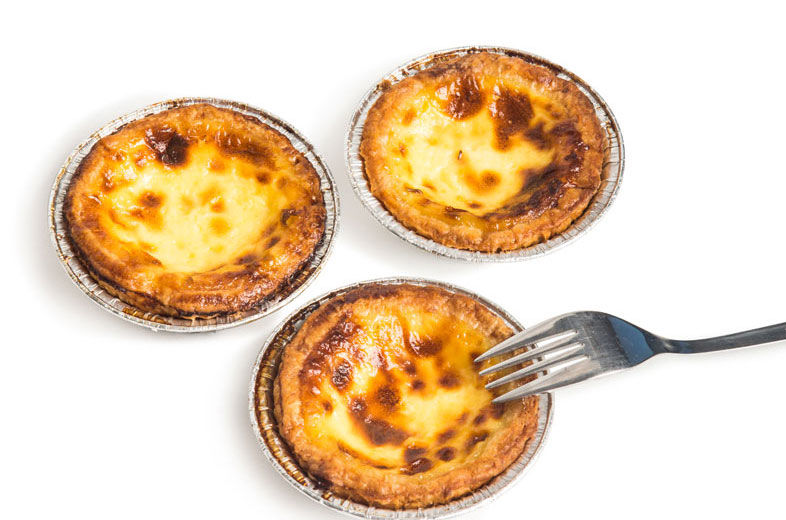
Tracing the origins of this dessert involves a little history. The egg custard tart in a puff pastry shell, or pastel de nata, was created in Portugal but also found a fan base in the Portuguese colony of Macau and in its neighbor, Hong Kong. Bakers in the megalopolis put their own spin on the dessert by adding more egg yolk and cutting down on the sugar. The resulting dan tat has proliferated in Taiwanese bakeries, like the 85°C chain, where the palm-sized tart (and all their other pastries) are made hourly. It’s soft like panna cotta with a flaky crust like pie.
Locations in Kearny Mesa, Mira Mesa, National City, Point Loma, and UTC.

73 Must-Try Desserts in San Diego
Keeping with the tradition of creative desserts born in Asia, this Kearny Mesa spot has brought over one of Taiwan’s most popular street foods. The sundae starts with a soft, bulbous waffle—the puffle—and gets a hefty dose of custard. Then comes the fun part: the variety of themed toppings. You can get the Perfect Matcha with a green-tea-tinged puffle, green tea custard, mochi, and a condensed milk drizzle; the Black Out, an Oreo puffle paired with vanilla custard, Oreo cookies, and a chocolate drizzle and others.
4619 Convoy Street and 7655 Clairemont Mesa Boulevard, Kearny Mesa
73 Must-Try Desserts in San Diego
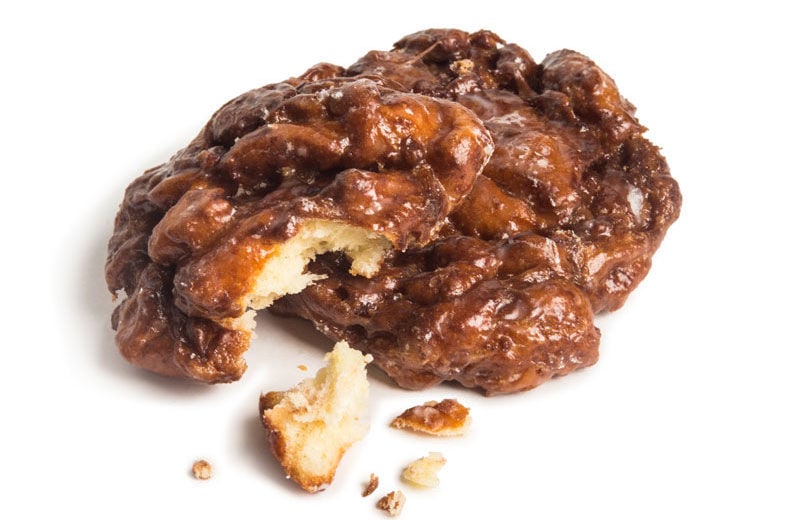
Rose Donuts
In a sea of out-there flavors, this legendary bakery near USD remains true to classics, like glazed and cinnamon sugar donuts and maple bars. The cash-only shop is lined with cases of the fried goodies that are just as fresh in the afternoon as they are at 5 a.m. We wake up early for the apple fritters, the huge pastry that’s glazed and crunchy on the outside, soft on the inside, and dotted with juicy apple chunks throughout. Word to the wise: The fritters are often the first item to sell out.
5201 Linda Vista Road, Morena
73 Must-Try Desserts in San Diego
Justin McChesney-Wachs
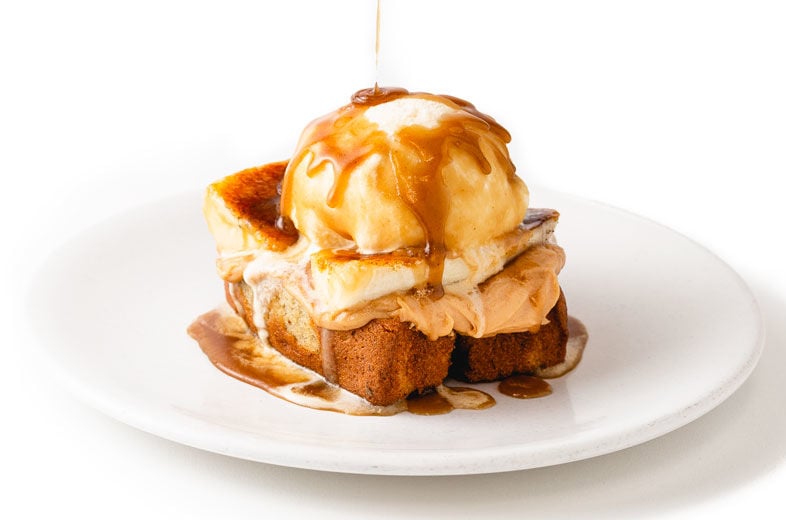
Pastry chef Eli Peralta wanted to put something on the menu at The Patio on Lamont that paid tribute to his favorite sweet, banana bread. But this is no subtle dessert. The housemade bread comes with peanut butter mousse, a rich topping balanced by vanilla ice cream, brûléed banana, and foster sauce. Since hitting the menu in 2012, it’s now become available at The Patio on Goldfinch in Mission Hills and The Patio on 101 in Encinitas.
4445 Lamont Street, Pacific Beach
The Patio on Goldfinch: 4020 Goldfinch Street, Mission Hills
The Patio on 101: 345 South Coast Highway 101, Encinitas
73 Must-Try Desserts in San Diego
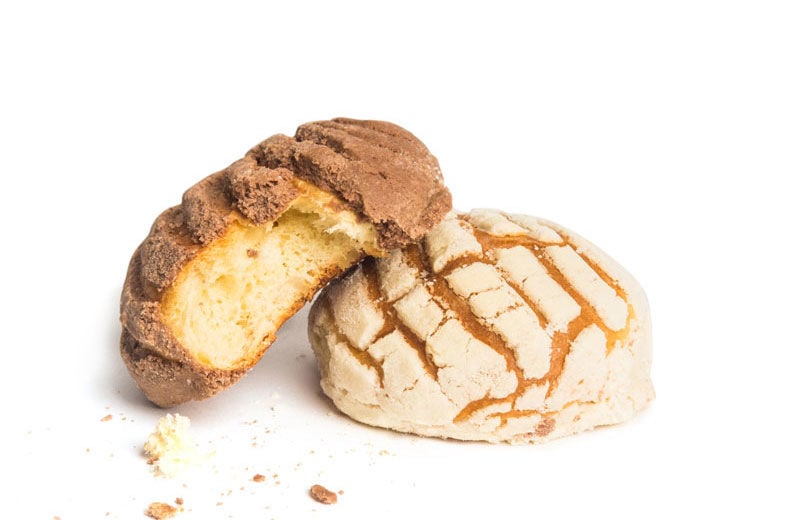
This traditional Mexican sweet bread, named for its shell-like appearance, is a breakfast staple and coffee snack whose origin is said to trace back to brioche, brought over by the French during European settlement in Mexico. The base is a yeasted, sweetened wheat dough covered in a crumbly sugar topping. Beyond the classic version, it also comes in chocolate.
Locations in Barrio Logan, City Heights, Golden Hill, and North Park
73 Must-Try Desserts in San Diego
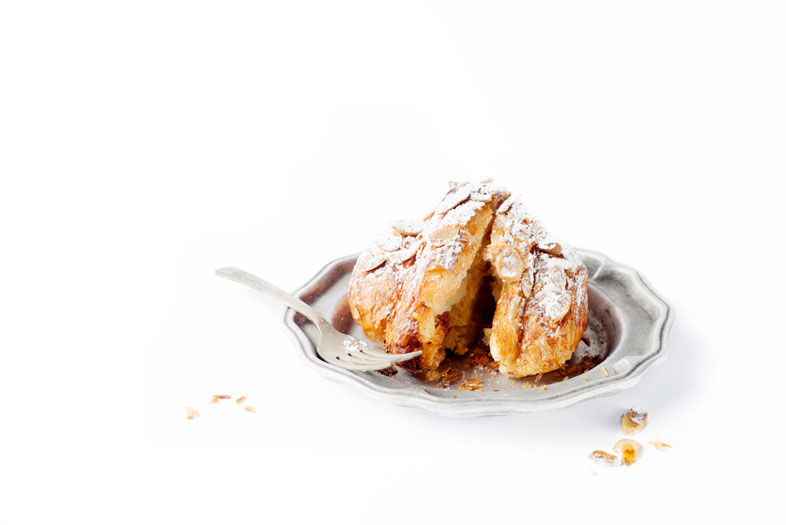
At the fast-casual component of Herb & Wood, Executive Pastry Chef Adrian Mendoza crafts some of the city’s best croissants. While his butter version is the number-one seller, we prefer the almond. The process begins with an 18-hour dough starter that then proofs, or rises, for one hour before it’s chilled and folded with (a lot of) butter. After it’s divided and shaped, it’s left to rise for another two hours before it bakes for 22 minutes at 385°F to get the deep brown, flaky exterior.
2210 Kettner Boulevard, Little Italy
“>”>
73 Must-Try Desserts in San Diego
Warm chocolate brownie

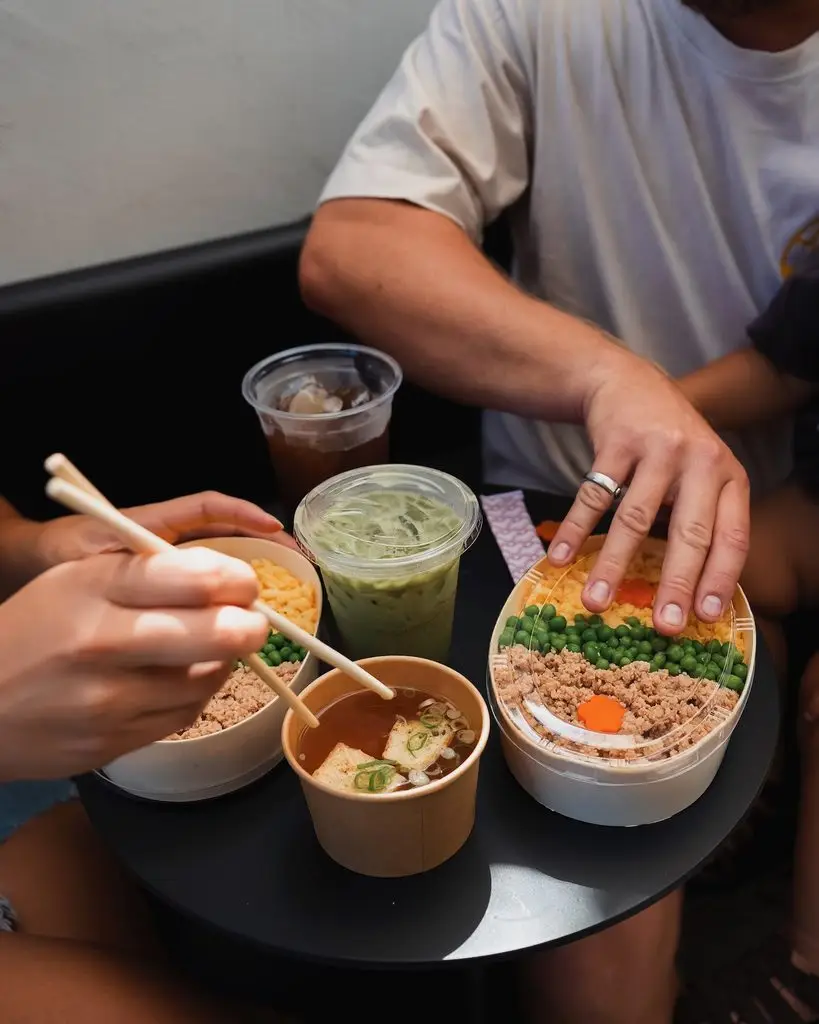
San Diego entrepreneur Kenji Blouin-Ito is turning a tiny Uptown Inn space into a destination for bentos, coffee, snacks, and more
Tokyo unquestionably holds the title as one of the best, if not the best, food cities of the world. But despite the plethora of Michelin-starred kaiseki restaurants and hole-in-the-wall ramen joints, you’d be remiss in walking past glowing signs beckoning you to enter one of the 56,000-plus konbini across the country.
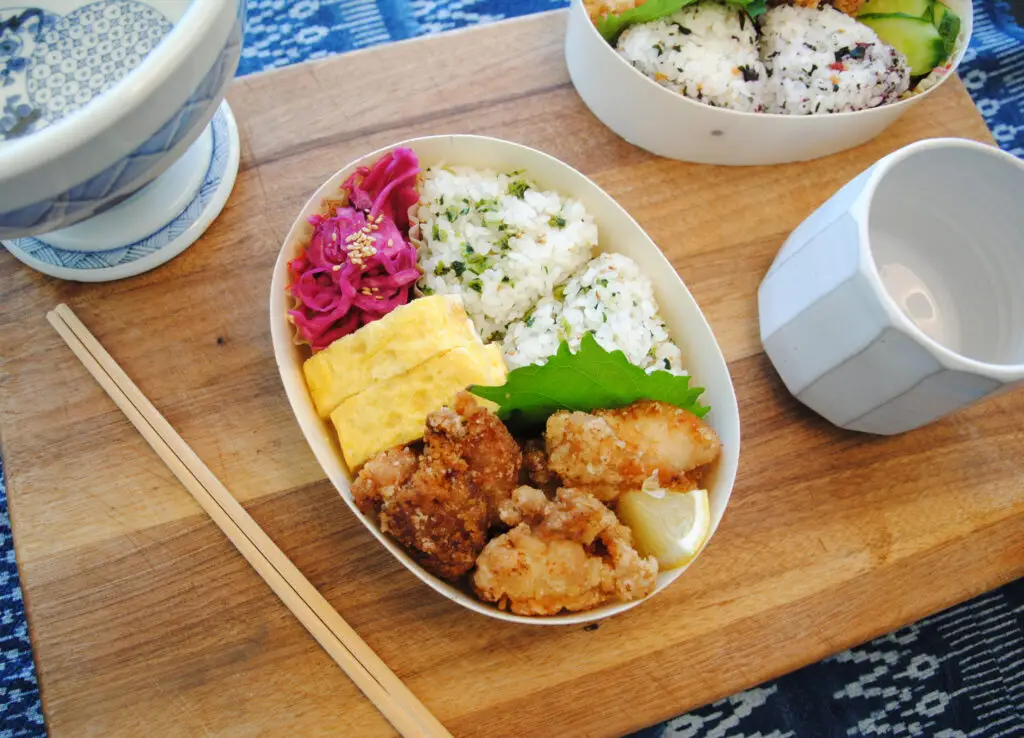
Konbini cafes like Lawson’s, FamilyMart, and 7-Eleven may look like run-of-the-mill convenience stores, but convenience store culture is a completely different animal there. Absent are the sad, floppy hot dogs sizzling sweatily on a rotating wheel of misery. Instead, konbini are stocked with a bevy of hot and cold drinks in every imaginable flavor, meals like tamago sandos (Japanese egg salad sandwiches) and prepacked bento boxes, snacks like onigiri (handheld triangles of rice and seaweed, often filled with fish or pickled plum), and even limited-edition merchandise (not unlike Wawa’s line of merch).
Soon, Hillcrest will get a taste of konbibi culture. Hako Hako opens in front of Uptown Inn by Vantaggio, next to Ramen Ryoma, in early 2027.
Kenji Blouin-Ito, a half-Japanese, half-French San Diego native grew up eating Japanese food at home and during trips across the Pacific. “I remember looking forward to eating bentos on the train,” he says, grabbing quick items to munch on without sacrificing quality or succumbing to cost. When in France, he saw a rise of appreciation for casual Japanese cuisine, “long before it happened here.”

So he decided to bring it here. After AB 626 passed in 2018 to allow different jurisdictions to permit Microenterprise Home Kitchen Operations (MEHKOs), Blouin-Ito launched Foodnome, the first legal marketplace for homemade food in the US. Eventually, the national nonprofit The Cook Alliance took over the project, leaving him open to the next new idea but with the experience of running a food-based business.
“That experience changed how I think about food, not just what makes it good but what makes it work,” he explains. Bento boxes felt affordable in a time of inflation, convenient in a bustling world, and versatile to a variety of palates. When he got the chance to open a konbini himself, he went for it.
His family runs Uptown Inn, a mix of apartments and hotel rooms that’s seen increased food traffic over the past few years. “We had a small space in front of the building that wasn’t being used, and it just made sense,” he says. Hako means “box” in Japanese, a reference to both bentos and small space from where he’ll sling freshly made bentos, coffee, drinks, pastries, snacks, and a small retail selection.
Hako Hako will initially open for morning and afternoon hours, but you don’t have to wait until next year to get a taste of Japanese culture. Blouin-Ito’s concept is popping up at various coffee shops around San Diego, with a few coming up: Easy Does It on September 19 and Cafe Moto on October 17. Until then, practice the art of gaman: patience with grace.
Hako Hako opens at 819 University Avenue in Hillcrest in early 2027.
Listen Now: The Latest in San Diego’s Food and Drink Scene
Have breaking news, exciting scoops, or great stories about new San Diego restaurants or the city’s food scene? Send your pitches to [email protected].
Beth Demmon is an award-winning writer and podcaster whose work regularly appears in national outlets and San Diego Magazine. Her first book, The Beer Lover's Guide to Cider, is now available. Find out more on bethdemmon.com.
With Sosal Line, Heidi Greenwood and Juerie Masters are importing traceable seafood from small producers and building a global pantry business along the way
No matter your job, it’s helpful to find some sort of joy in it to avoid going completely insane. Some people savor the variety of personalities when dealing with customers. Others find comfort in the predictability of closing a bar after last call, counting tips and wiping counters. Perhaps achieving Inbox Zero really gets your blood pumping, or shipping a new product design sparks joy.
For Heidi Greenwood and Juerie Masters, work doesn’t get better than logistics and operations.
“[We] both love all the unsexy parts of supply chain and backend management,” laughs Greenwood. Tracking outbound orders? Ensuring compliance? Managing inbound freight? Stop me if this is getting too hot for you!
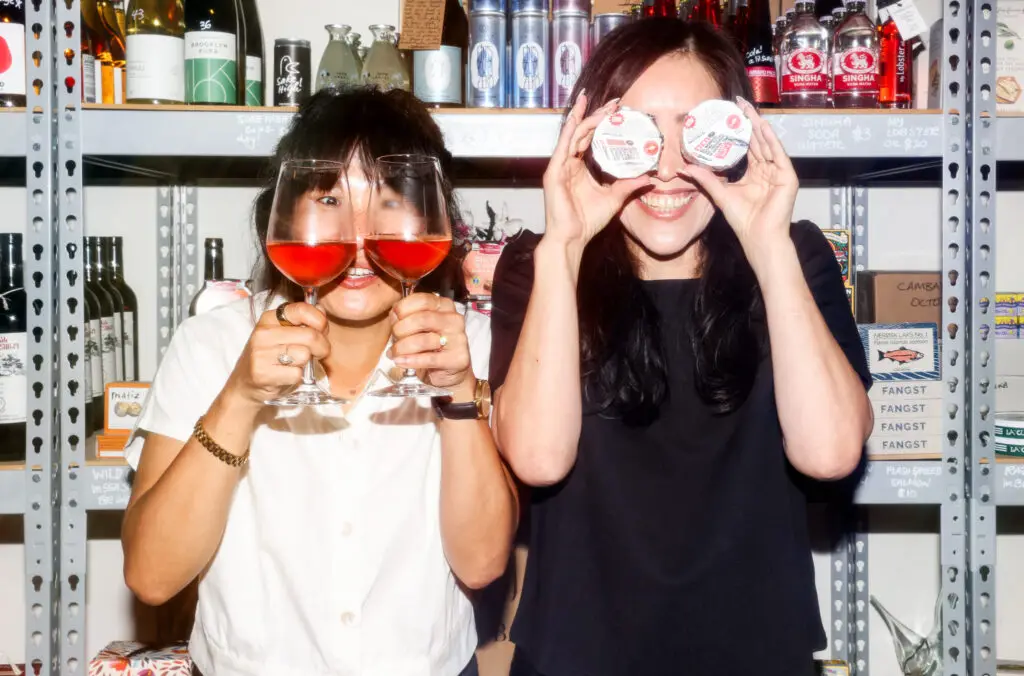
Not enough people think about the unsexy reality of running a business before launch, but effectively and consistently keeping an eye on operations separates successful companies from out-of-business ones. Both Masters and Greenwood already own their own businesses—Greenwood is behind the wine zine Campestre Mag and runs the online wine shop Esquina, and Masters co-owns Clos Wine Shop and Fintastic Provisions in University Heights with her husband Paul. Apparently, these gigs weren’t enough to satisfy their collective yearning for spreadsheets and inventory maintenance.
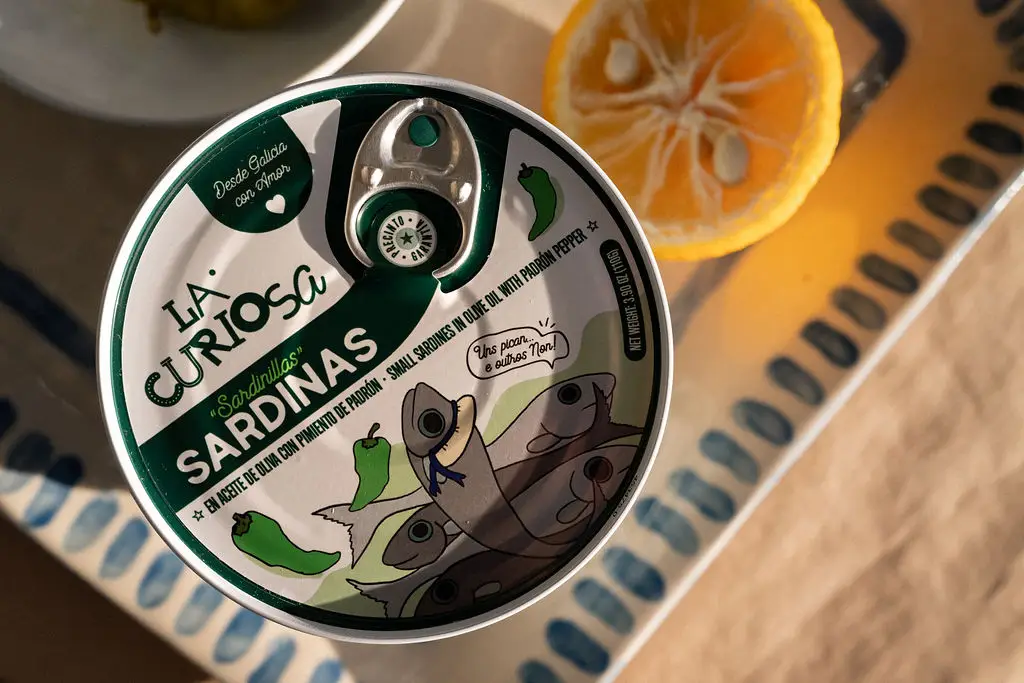
So, they decided to start another business together—Sosal Line, a San Diego-based import and distribution company specializing in global pantry items. The pair launched Sosal Line at the beginning of 2025 and currently only sell three brands of tinned fish, but Greenwood says they plan to expand their offerings as they discover other small or family-run businesses that share their values.
“We want to work with brands and with products that really have a sense of place and actually tell a story—not just the product, but the people behind it too,” she says.
Masters and Greenwood are both Korean-American and named this burgeoning business after Haenyeo, the legendary free-diving women of Jeju Island in South Korea. Traditional Haenyeo equipment and garb include oribal (swim fins), yeoncheol (lead belts to help them sink), and the company’s namesake sosal, a hand-held fishing spear (sometimes called jaksal).
The average person, if sitting completely still, can stay underwater for up to a minute and a half at most. Haenyeo can hold their breath for up to three minutes while actively foraging, harvesting, and swimming. Scientists say these diving women spend more time underwater than any other group of humans on earth. Not badass enough for you? The average age of Haenyeo is around 70.

“Fishing is a strong heritage for Koreans, and it’s the same here in San Diego with the Portuguese settlers,” Greenwood explains. (We aren’t the tuna capital of the US for no reason.)
Sosal Line carries 100 percent traceable, wild caught fish from Galicia in Northern Spain and the Pacific Northwest, all family-owned companies who don’t compromise on sustainable practices. Tinned fish has never been more popular—or more debated—but there’s more to it than cute labels designed for maximum Instagram reach. “I want to know who I’m purchasing from,” says Greenwood. One of their suppliers, Craft Fish Co., which is based in San Diego but fishes in the PNW, is run by JJ and Jessica Gerritsen. JJ catches, Jessica packages, and it’s a business relationship on a first-name basis. “You can’t find that when you’re working with some nameless brand.”
San Diegans can find Sosal Line products at local retailers like Clos/Fintastic (obviously), allmine in Oceanside, Always Hungry Grocery & Goods in Carlsbad, J. Brix Wines in San Marcos, Collins & Coupe/Tablespoon in North Park, and Green Acre in La Jolla. They’re also available in select retailers in Northern California, Oregon, Arizona, and strangely enough, South Carolina. Expanding its client base is, of course, a goal. But not at the expense of quality or joy of discovery.
“I would love to see people try food from different cultures and be excited about it,” says Greenwood. “Maybe make them want to travel to experience different areas of the world.”
Beth Demmon is an award-winning writer and podcaster whose work regularly appears in national outlets and San Diego Magazine. Her first book, The Beer Lover's Guide to Cider, is now available. Find out more on bethdemmon.com.
The folks behind Oddish Wine and Lost Cause Meadery are partnering with Bica to open an all-day cafe, coffee shop, wine bar, and restaurant near La Mesa Village
La Mesa: a bucolic, hill-dappled city long regarded as a somewhat frumpy, never quite trendy bridge between the urban cool of Mid-City and the rural sprawls of East County. La Mesa’s population clocks in at around 4 percent of the city of San Diego’s—fewer than Chula Vista, Oceanside, Escondido, Carlsbad, El Cajon, Vista, San Marcos, and Encinitas, in that order. It’s home to a killer Oktoberfest, one of the best charter high schools in the state, and a theatrical mayor who tools around town in a golf cart (and so far, hasn’t cut any arts funding or closed public bathrooms).
But any area that’s only 20 minutes from downtown San Diego and under 20 miles to Mission Bay will only stay under the radar for so long. Slowly but surely, bits and bobs from San Diego’s cultural tastemakers have been popping up all over town. Dark Horse Coffee and the boutique Small Batch both opened in La Mesa in 2018. Stella Jean’s and Pop Pie are coming later this year. Native Poppy is building its new headquarters and studio this fall. After a year in business, the new owners of JK’s Greek have established themselves as one of the best Greek restaurants in the county.
Next year, La Mesa will get one of its most ambitious projects yet. Billy and Suzanna Beltz, owners of Lost Cause Meadery and Oddish Wine, are pouring everything they have into renovating a 5,000-square-foot building between the Village and MacArthur Park to open a wine/beer bar, coffee shop, all-day cafe, and wine shop.
The concept doesn’t have a name (yet), and Bica in Normal Heights will come on as a partner to run the restaurant aspect and coffee program (which also won’t be called Bica. Still lots of naming decisions to be made). But the Beltz’s vision is to create something in La Mesa that doesn’t exist yet—a community gathering space open from morning until night that’s family-friendly, creatively designed, and well… cool.
The building has been around since the 1940s, first operating as a neighborhood market, then butcher shop, secondhand children’s store, electronics store, dry cleaners, and bike shop. The Beltzses say they plan to keep the “soul and character” of the space as much as possible, highlighting original details like a barrel-shaped wooden roof, brightening up the corner building by utilizing the large front windows, and eventually building an outdoor dining/drinking space and kid-friendly area—a must for the neighborhood’s plethora of young families. They tapped all locals for the design and build: Tecscape Design, design consultant Carly Miller-Chen (who owns Ayi boutique in South Park) to create the space, and local contractor CLTVT.

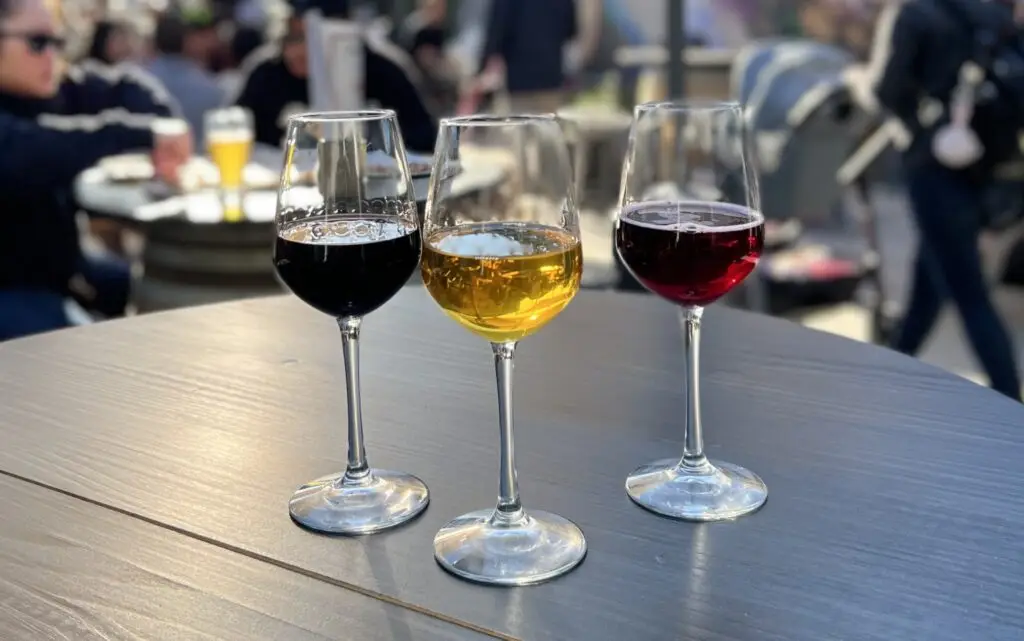
Starting in the morning, the space will offer coffee and light breakfast items before transitioning to lunch and dinner menus, plus a full bar that will feature Oddish and Lost Cause products as well as other local wines, beers, ciders, and other beverages alongside an aperitivo program and low-ABV cocktails and spritzes. Food-wise, they plan to install a wood-fired oven and rotisserie, but expect more menu details to be revealed closer to opening.
There will also be a small retail space focused on natural wines and ciders from places like Raging Cider & Mead in San Marcos and other San Diego and Baja California makers. But don’t expect run-of-the-mill options from the guy who makes weird wines and mead, the oldest alcoholic beverage in human history (hardly TikTok trend material). “We have a unique perspective… Hopefully we can expand some palates and minds in the process,” says Billy.
Community is the heart of the project, more than food, more than drinks. “We have a young family. [Bica owners] Manny [Da Luz] and Charlie [Knowles] have families,” says Billy. Suzanna adds: “People want a space that they know they’re going to get really amazing food, really fun drinks, but they can also feel like they can bring their kids during the weeknights.” It won’t be North Park 2.0, although many families now living in La Mesa came from various neighborhoods across Mid-City (like the Beltzes). It’s filling a void. It’s something they can build from the ground up. And just maybe, it’s something that will surprise people who have yet to discover La Mesa’s potential.
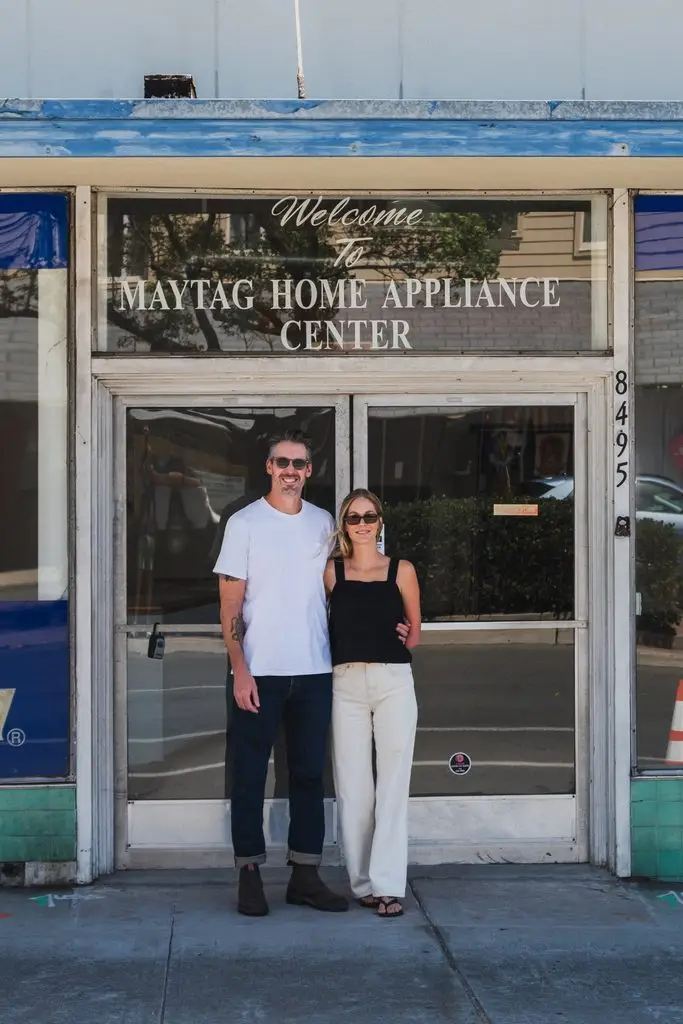
Oddish Wine/Lost Cause Meadery’s new concept is projected to open by the end of 2027 at 8495 La Mesa Blvd.

Listen Now: The Latest in San Diego’s Food and Drink Scene
Have breaking news, exciting scoops, or great stories about new San Diego restaurants or the city’s food scene? Send your pitches to [email protected].
Beth Demmon is an award-winning writer and podcaster whose work regularly appears in national outlets and San Diego Magazine. Her first book, The Beer Lover's Guide to Cider, is now available. Find out more on bethdemmon.com.
ArtsConnect brings those experiences into view, helping residents discover what they can see, hear and create at UC San Diego while experiencing the campus in a new way.
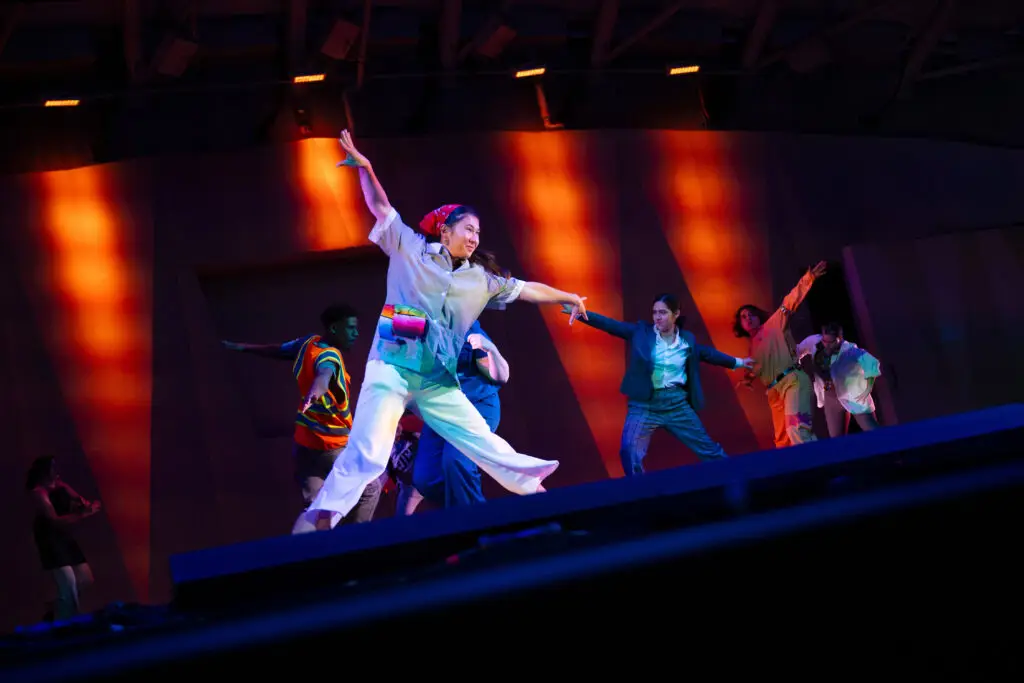
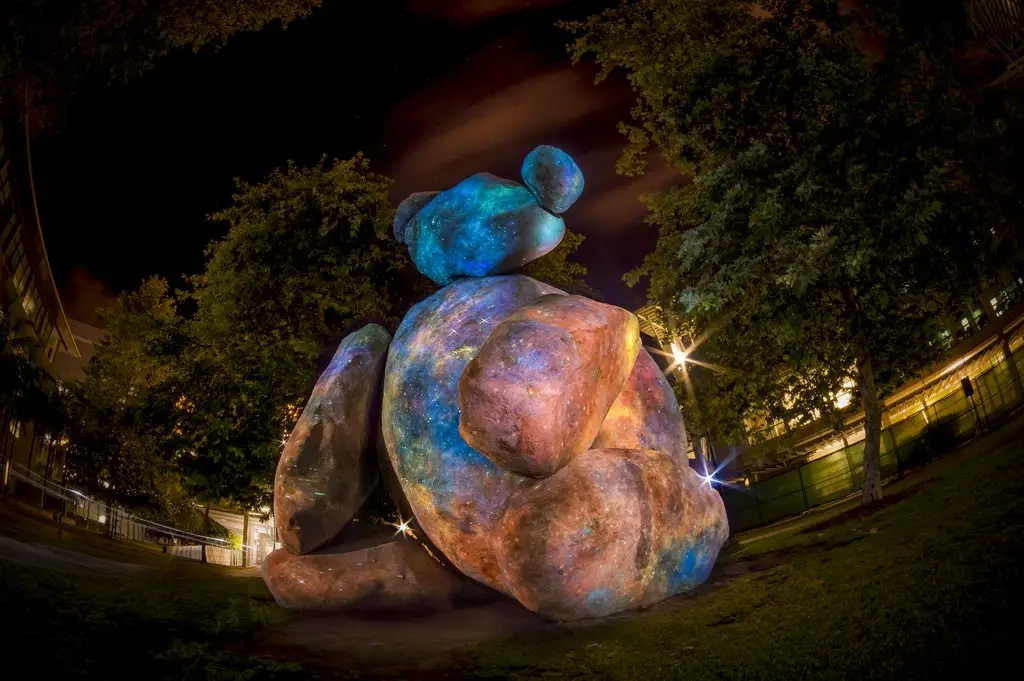
Ask most people what UC San Diego is known for, and the arts may not be the first answer. Yet this fall, San Diegans can watch Ghostbusters with a live orchestra, try their hand at glassmaking and wander among more than 20 works of public art woven throughout the university’s La Jolla campus.
ArtsConnect brings those experiences into view, helping residents discover what they can see, hear and create at UC San Diego while experiencing the campus in a new way.

“The arts are at the heart of UC San Diego’s student-centered mission and vision,” says Alysson Satterlund, Vice Chancellor for Student Affairs and Campus Life. “Whether creating, participating in, or experiencing performances, the arts are essential to a healthy and truly fun Triton student experience.”
That invitation often begins where the arts intersect with other fields.
“Some of the most innovative work and discovery happen where disciplines don’t usually share a stage,” says Cristina Della Coletta, Dean of the UC San Diego School of Arts and Humanities. “So through our unique intersection of the arts with science, technology, and medicine, we are improving lives, physically and emotionally.
Take The Inaudible Ocean, a collaboration between Department of Music Professor Lei Liang and Scripps Institution of Oceanography Assistant Project Scientist Josh Jones. Over eight years, the pair recorded earthquakes, ship noise, whale songs and other sounds in remote underwater locations. They transformed those recordings into a live music experience that allowed audiences to hear the ocean in an entirely new way. The work premiered on campus in May and continues to evolve.
The arts also connect the campus to the global art world and diverse perspectives. Chief Campus Curator Jessica Berlanga Taylor recently curated the Mexico Pavilion at the 61st Venice Biennale, featuring RojoNegro, the collective formed by Noé Martínez and María Sosa. The collective will unveil a compelling new permanent installation for UC San Diego’s celebrated Stuart Collection later this fall.

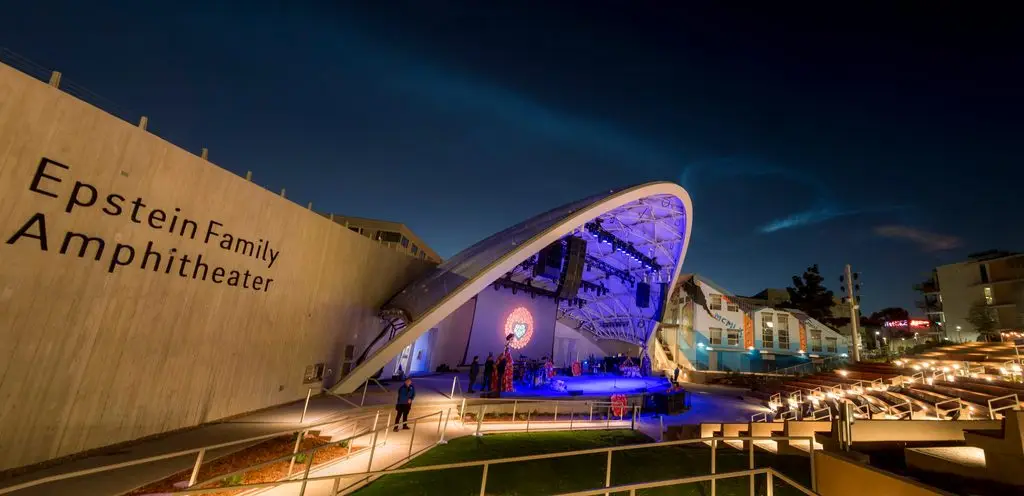
ArtPower offers another easy entry point, bringing touring performers to venues including the outdoor Epstein Family Amphitheater and the intimate Loft. The nearly three dozen performances featured through its 2026-2027 season span music, dance, film, theater and conversation.
Among the fall highlights is Ghostbusters in Concert on Sept. 25, pairing the beloved 1984 film with a live performance of Elmer Bernstein’s score. Tickets start at $35, and the amphitheater is located next to the UC San Diego Blue Line trolley station.
“Every member of our community should have access to world-class art, so we work hard to remove the barriers that stand in the way,” says Colleen Kollar Smith, executive artistic director of the Campus Performances and Events Office. “That means affordable ticket prices, and performances, voices and experiences where people see themselves reflected on stage and know they belong.”
The arts at UC San Diego are not only something to watch. The Craft Center offers public classes and workshops in ceramics, jewelry, woodworking, culinary arts and even surfboard shaping. At the new Glass Center, beginners and experienced makers can explore glassmaking through classes, demonstrations and studio experiences.
Whether you want to attend a performance, make something yourself or spend an afternoon exploring public art, there is an easy way in. And the invitation extends well beyond students and alumni.
Kollar Smith says it best: “Visit, participate, spectate or create. You’re invited, and we hope you’ll connect with us soon.”
Explore upcoming experiences at ucsd.edu/artsconnect.
Artists and advocates are building a more sustainable creative future through public funding, political organization, and cross-border collaboration
This is part of a three-part series. This is Act III. See Act I and Act II here.
We’ve been here before.
In 2012, city funding for the arts and culture in San Diego had eroded. As a corrective, the city council unanimously approved “Penny for the Arts”—a promise to dedicate roughly one penny of every dollar spent on hotel rooms (the Transient Occupancy Tax, or TOT).
The logic was fair and sound: Cultural institutions and events help attract visitors. Those visitors pay hotel taxes. So, the people agreed, some of that hotel-tax revenue should go back into maintaining the cultural ecosystem that helps bring those visitors and that money.
Projected as a five-year plan, the measure was supposed to increase funding to $17.9 million by 2017.
It never did. The penny was never guaranteed, so each year the city used part of it for other priorities. By 2023, the money going to arts and culture was up to about a half a penny. Even as TOT revenue has gone up significantly.
In 2019, TOT revenue was $245 million.
In 2025: $325 million.
One fix would be to guarantee the penny. Not simple, given San Diego’s financial woes. But the alternative—eroding the culture that makes San Diego San Diego, give it its identity—also doesn’t feel wise. Plus, even a locked percentage still rises and falls with tourism, which is why culture advocates want a guaranteed floor on top of it.
Another solution would be to give the arts commission actual authority.
“It’s an advisory body,” says arts commissioner Kamaal Martin. “You’d be hard-pressed to find anybody who takes our advice.”

He described the commissioners debating real, consequential questions this year, like whether and how to divide the cuts between funding pools. But those conversations “don’t connect to whoever’s actually deciding,” Martin says. “We haven’t been entrusted with decision-making about relevant things nearly enough.”
Christine Martinez is building political infrastructure through her organization Arts+Culture:San Diego—which is starting a 501(c)(4) lobbying structure not unlike police and fire unions. Martinez is also keeping her community actively engaged. “We won’t be caught off guard next year like we were this year,” she tells me.
Then there’s the evergreen issue of affordability and accessibility. Kiplinger’s most recent report ranks San Diego as the 11th most expensive city in the US, based on cost of living. The average home value is $980,700 (the US median is $540,000), but San Diego’s median household income is only one-third greater than the national level. Rent is also 66 percent higher than the national average ($2,716 vs. $1,636).
This is why San Diego has long suffered from the creative brain drain—creatives leaving for more affordable cities. “Artists are free to live wherever they want, and they will go where the rent is affordable,” says Jennifer de Poyen of Space 4 Art. “When they leave, they take their gifts with them, and their contributions, and their economic impact.”
One saving grace is the presence of Tijuana, where the cost of living is about 60 percent lower than San Diego, per Numbeo. Tijuana has long functioned as an affordable neighborhood for many in San Diego’s creative culture. It’s part of the reason why the binational identity is such a constant in our galleries, music, theater, murals, and culture. While that cross-border blood flow is one of San Diego’s most compelling attributes, few artists living that life would call it convenient or easy. A city is at a disadvantage when its culture creators have to cross a border to go home at night, and cross again the next morning to work.
In May, San Diego County Board of Supervisors approved a $2.75 million arts initiative of its own. It includes an Artist Space Grant Program aimed directly at the affordability crisis, as well as an artist-in-residence program, a dedicated Binational Creative Economy Investment, and a one-time investment in the Black Arts and Culture District in Encanto.
Bob Lehman of San Diego Art Matters has been doing county-level, binational organizing for years; in 2023, he helped get the county’s arts commission reestablished after 30 years of defunctness. That’s important because it gives arts and culture an official seat in county government, advising the County Board of Supervisors on arts and culture policy. He also brought in consultant Laura Zucker, who ran LA County’s arts program for three decades, to build a real regional plan.
“I really believe we’ll have something set up here that other communities come and look at,” he told me. “A national template other cities come to learn from.”
When asked who decides which artists will get the new grant money, county arts commissioner and executive director of the Chicano Park Museum and Cultural Center Monica Delgadillo Hernandez doesn’t hedge.
“That’s part of the infrastructure we’re going to be building,” she says. “What should a panel of reviewers look like? Should it be the commissioners? Should it be other folks? A supervisor?” She was just as candid that the commission itself doesn’t reflect San Diego’s population—Chicano communities are roughly a third of the city, she tells me, “and that’s not represented at the table yet.”

The great news is that none of these solutions have to be invented from scratch. Numerous cities serve as examples of what’s possible—if we have the will.
Jonathon Glus—Prebys Foundation Senior Fellow for Art & Design, the Executive Director of the Art + Design District, and board president for California for the Arts—worked in Houston before coming to San Diego. The Texas city dedicates 74.5 percent of its hotel tax to arts grants by formula, and that support is guaranteed. Washington, DC locked in dedicated arts funding in 2019. Salt Lake City, my hometown, has run a voter-approved arts tax for almost 30 years, most recently reauthorized through 2034. And just this summer, New York City pushed cultural funding to a record $323.8 million, even incorporating an emergency fund.
Denver’s model is interesting because instead of a city-dependent funding model, theirs is a 0.1 percent regional sales tax. In place since 1988 and renewed by voters three times, their Scientific & Cultural Facilities District has distributed between $54 million and $85 million to arts, culture, and scientific orgs—each of the last 12 years.
This is part of a three-part series. This is Act III. See Act I and Act II here.
None of these cities got there by accident. They decided, on purpose, that arts and culture were worth protecting from politics—and, in some cases, worth building an entire identity around.
“That’s how Miami has flipped the switch,” says Glus. “People go to Miami for culture as much as they do the beach.”
San Diego has spent decades selling itself backward: Beach and weather first, culture as an afterthought you might stumble into. Glus would love to see the strategy flipped: Visitors should come for the art, “and then, by the way, you’re on the beach.”

“I do think it was a wake-up call for the community,” de Poyen says of the budget fight. “People understand that our funding is vulnerable. It was a lesson in how much power people have when they coalesce. But wow, is it painful.”
Glus says he’s genuinely optimistic. “The players have all changed seats, but the work is moving forward.”
“I believe optimism is a moral duty,” says Martin, who’s both power-fist and polite.
In eight months, there will be another budget fight. Everyone I talked to expects it will be worse. But something happened this spring that can’t be undone.
“I hope this rupture has brought us together in a moment of self-realization,” says Leticia Gomez Franco of the Balboa Art Conservation Center. “I hope we stop being so transactional; we begin to see ourselves and each other as partners in this work.”
That’s the whole ask, really. And it’s on all of us.
This is part of a three-part series. This is Act III. See Act I and Act II here.
Aaryn Belfer is a writer and editor specializing in nonfiction across art, architecture, and culture. Once upon a time, she wrote a provocative column for San Diego CityBeat (RIP). She was a runner up in the 2025 Matchbook Stories contest at the San Diego Central Library and is irrationally happy about it. Currently in her Soft Girl Era, Aaryn has expensive taste in (mostly flat) shoes and will choose a great art exhibit or live jazz concert over almost anything else. Except, possibly, Javier Bardem.
The history, communities, and creative movements behind a cultural scene that extends far beyond the city’s postcard image
This is part of a three-part series. This is Act II. See Act I and Act III here.
Without concrete, wildflowers are just weeds. Any honest history of San Diego art and culture is tension and its reckonings. It begins before the name existed, with the Kumeyaay. It must pass through the Panama-California Exposition, one hell of a county fair that conjured Balboa Park as our grand cultural stage. It pays tribute to the lights of La Jolla, where the donor pool helped realize unrealizable things. It should mention names like Marston, Scripps, Ochoa, DeWitt, Lopez, Klauber, Baldessari, Torres… so many.
In short spaces like this, long histories like that become roll calls. So this is more of a walk through pressure points, notes on recurring forces and regional oddities.
Border life is key to understanding the here of here. Art without dialogue is just decoration. At its best, that dialogue should be a tad muddy, emotionally gassed. In other words, it should be in need of art—to widen perspective, parse meaning, see the unseen.
San Diego’s central dialogue—the magic and the stressor—is being flatmates with Mexico’s second-largest city by population. That makes San Diego a swing-gate of shared and vastly different perspectives, both its own place and something larger. And in no other major city in the US do the fresh flow of ideas from two countries—different governments, laws, mores, expressions, arts, cultures, traditions, economies, loves, and resentments—mingle at such a constant daily rate (due respect to El Paso).
That binational steam created Chicano Park, one of the most uniquely San Diegan contributions to national and international culture. When construction of the I-5 and Coronado Bridge divided Logan Heights, neighbors protested by transmuting prejudicial concrete into redwoods of Chicano art. Turning a civic wound into a beautiful and enduring landmark that expressed and preserved a core identity—like East Side Gallery in Berlin or Constitution Hill in Johannesburg—is damn near the core of what art is supposed to do.
Like any city, the underground-overground friction is crucial in San Diego. Our culture is headlined by institutions that lift creative work onto national and international stages: MCASD, The Nat, SDMA, Centro Cultural de la Raza, the Symphony, WorldBeat Center, The Old Globe, La Jolla Playhouse, Mingei, Museum of Us, Stuart Collection, Timken, ICA, Comic-Con, etc. The next mutations grow in the seams: street murals, music dives, tattoo shops, wheatpasted walls, graffiti, lowriders, surf and skate art (though in San Diego, this is mainstream), pop-up shows, backyard shows, beach raves, any place with room for people and a loose relationship with regulations.

Both art and culture get their power from power. They’re fundamentally a conversation with and retort against dominant structures. San Diego’s most pervasive structure is arguably the most rigid form: the military. Its presence is heavy in the southern tip (Border Patrol), the middle (Navy and MCAS Miramar), and northern edge (Camp Pendleton). The military is San Diego’s largest employer, by a long shot.
Within this plus-sized environment of order and hierarchy, it’s understandable that Shepard Fairey’s “OBEY” posters in the late ’90s struck such a potent chord. The most compelling punk rock is often outside a strong governor’s window. (The “OBEY” series featured an ominous, propaganda-style André the Giant wheatpasted on random ugly surfaces across San Diego—launching Fairey’s style that he eventually used for Obama’s “HOPE” poster.)
Armed forces are often viewed as the absence of creative culture—understandably so, since rogue individual expression feels like a pretty sure way to sink a war effort.
But in San Diego, the Navy’s unsuspecting role as art creator—directly or indirectly—is hard to ignore. Tattoos are a dawn-of-time practice of many early cultures, including the Kumeyaay. But Polynesia was a core realm. Sailors were exposed to it on deployment in the Pacific Rim, inking their arms with the names of loved ones and unit insignia. Back in San Diego, they’d flaunt those tats in the beaches and bars of Mission Beach or PB (Marines did the same in Oceanside.) Enlistees were the muscular flesh galleries that helped turn skin art into one of the city’s most widespread modern art forms.
During WWII, the military also trained huge legions of San Diego laborers how to build war machines. Those mechanics, engineers, machinists, welders, painters, and metal fabricators used those skills for creative good in their neighborhoods—especially in custom car culture, which took off in the post-war ’50s and ’60s. Mexican-American vets helped develop the lowrider scene, a deeply rooted part of San Diego creative expression. Galleries on slow-moving wheels.
Tourism is the other mainstream force ripe for creating against. It is both critical to San Diego’s economy, and one of the greatest barriers to deeper, more nuanced expressions of what and who San Diego is. The industry of selling our city to passers-through creates a gigantic tarp of cultural tropes. It reinforces the most obvious charms—cute zoo animal takes in an epic sunset with a giant margarita—and doesn’t yield much airspace to the thrilling micro-cultures that live and breathe where locals live and breathe. Nothing against watercolors of dolphins, but much against the hegemony of watercolors of dolphins.
Maybe because of these dominant forces, San Diegans especially tend to force underground and institutional art into a needless cage match. It’s human instinct to champion the underdog as more worthy, but that has always felt like a form of articide.

It’s like saying the only good food is made by gritty upstarts who crafted their own whisks from discarded shopping carts. Most of those plucky whisk-makers would love to eventually be paid properly, would love a stage, a grant, a building, a donor, a lighting rig, health insurance, maybe even one chair that doesn’t threaten the spine.
That’s what the major institutions do. Both stages—the duct-taped and the donored—serve vital roles and deserve commensurate support if we care about the entire lifespan of creative expression and not just its first exciting steps. Championing the starving artist exclusively just secures an enduring poverty for the creative class at large.
I’ve often theorized it’s harder to create great art and culture in cities like San Diego, where the climate is supernaturally pleasant. In colder/hotter/rainier/less beautiful cities, people are forced indoors to fabricate their own beauty (the grunge music of Seattle, the obscene creative output of Reykjavík). San Diego’s eternally mild sunshine tends to make the human body our art medium of choice. But scratch the surface of that surf poster (and I’ve only scratched a miniscule percent here), and this city’s far from the cultural shallows it gets accused of being.
Addendum: A Personal Agenda. In scouting the route of art and culture across San Diego county through history, two areas come up again and again: La Jolla and Barrio Logan. So I propose a collaboration between two icons of artful concrete—Chicano Park and Salk Institute (one of the world’s great examples of brutalism architecture). Let Barrio Logan’s muralists go nuts on that coastal science fortress, unite the realms for a moment in time.
This is part of a three-part series. This is Act II. See Act I and Act III here.
Troy Johnson is the magazine’s award-winning food writer and humorist, and a long-standing expert on Food Network. His work has been featured on NatGeo, Travel Channel, NPR, and in Food Matters, a textbook of the best American food writing.
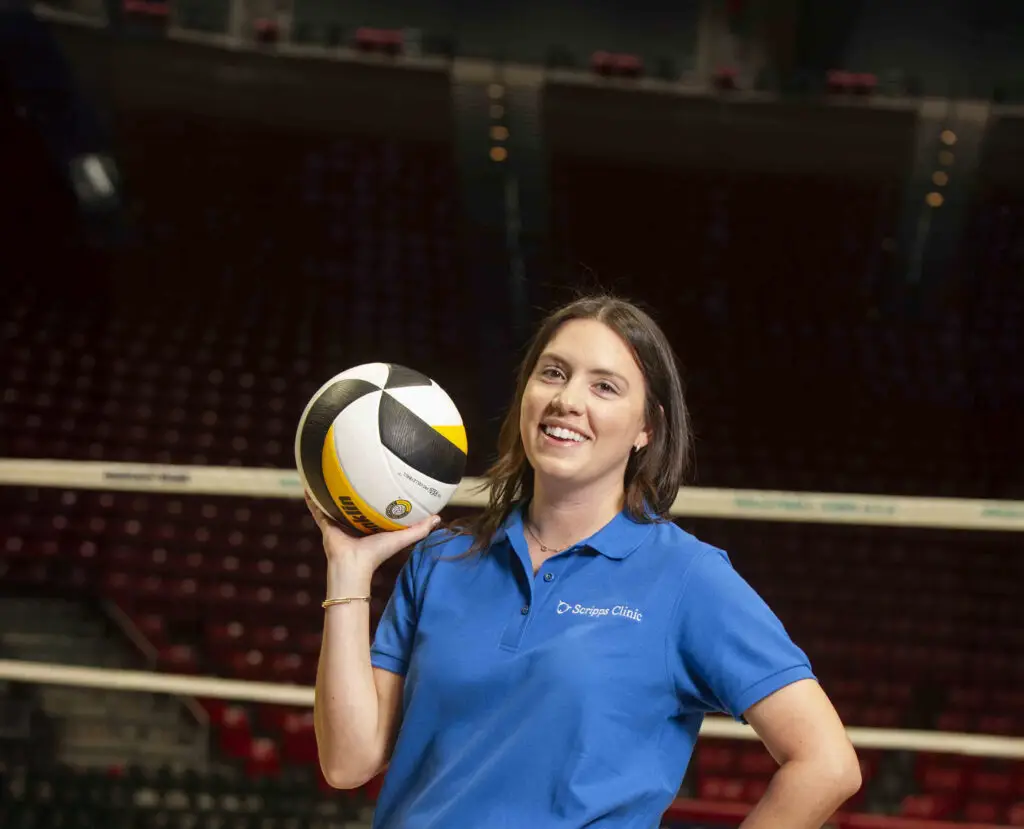
Laika Nur, MD, takes her love of volleyball from the court to the clinic as team physician for the San Diego Mojo
Growing up, Laika Nur, MD, Scripps Clinic sports medicine specialist, loved watching beach volleyball when the Association of Volleyball Professionals tour came to her hometown of Chicago. A talented volleyball player herself, she remembers sitting in the stands all day, and once, even got a couple autographs. Years later, Dr. Nur was attending a professional event focused on women’s sports, and the discussion turned to a new professional women’s volleyball league. The general manager and coaching staff for San Diego’s team, the Mojo, happened to be in attendance, and Dr. Nur took the opportunity to ask them if they needed a team doctor. Flash forward to the Mojo’s inaugural 2024 season, when Dr. Nur officially became the team physician. Click here to read more about Dr. Nur and how she incorporates lessons she learned on the court into her practice.
For more nutrition, wellness, and healthy living tips, sign up for the San Diego Health newsletter here.