Featured articles
Food & Drink
Food & Drink
Things to Do
Featured articles
Things to Do
Arts & Culture
Arts & Culture
Featured articles
Charitable SD
Things to Do
Things to Do
Featured articles
podcast-ep
podcast-ep
podcast-ep
Featured articles
Arts & Culture
Arts & Culture
Features
Featured articles
Food & Drink
Food & Drink
Charitable SD
Ready to know more about San Diego?
SubscribeReady to know more about San Diego?
How the pandemic convinced us all to adopt telehealth, made San Diego's top docs social media stars, and changed healthcare forever
Influencer Doctors-lipstick
Stacy Keck
It was late one night in early March 2020, and Rebecca Fielding-Miller was on her laptop after putting her toddler to bed. As an epidemiologist at UC San Diego who specialized in infectious disease in sub-Saharan Africa, she was paying attention to the early spread of the Covid-19 pandemic and sensed what was coming.
That night, Fielding-Miller took case data from the San Diego County website and made a graph–not for research but simply to see what was going on. Then, she posted the graph on Facebook. A friend tagged Scott Lewis, editor of Voice of San Diego, and the next day Lewis called Fielding-Miller for an interview.
“It just kind of started snowballing from there, which was a little bit surprising and not what I anticipated,” Fielding-Miller says. “I would do an interview, and then somebody would see me or something I said and thought it sounded coherent, and then they would call me up, and I would speak to the next person.”
She had done just one media interview before Covid-19, and now, more than two years later, she’s done more than she can count, with outlets from Voice of San Diego and KPBS to USA Today and The Guardian. “Scientists can’t talk like [the average person],” Fielding-Miller says. “I don’t know what it is, but I understand. I recognize that one of the reasons that people call me up is because I can talk like a person. And that’s just not training that scientists get.”
Influencer Doctors-Phone
Fielding-Miller does talk like an everyday person–she’s lively and engaged and even funny. She’s also an expert in the spread of infectious diseases. The combination has made her into one of several local Covid-19 celebrity health experts–doctors and researchers who journalists call on to share information, give health advice, and generally try to make sense of this truly novel pandemic that has consumed everyone’s lives.
For years, healthcare professionals and insurance companies have been trying to get patients to embrace a certain amount of telehealth or remote consultations. The adoption was slow, and people were understandably reticent. The pandemic changed all that.
For the first time in American medical history, during the pandemic, people began getting their health information not from their own physicians but through doctors speaking via news stories, in soundbites on TV, or in short posts on Twitter. And it changed the lives and practices of those doctors. It exposed weaknesses in government health agencies and our healthcare system, leaving many with lingering misinformation about Covid-19 that has damaged public health on a larger scale.
“The Trump administration really tried to play down the virus, especially in the beginning, and there weren’t good federal guidelines. And so everybody was looking for an expert on something that nobody was an expert in,” Fielding-Miller says.
Doctors in the media have long been a thing. Of course, there are the medical dramas– General Hospital, M*A*S*H, ER, and Grey’s Anatomy–but there have also been several medical TV news shows. In 2003, Dr. Mehmet Oz launched his first TV show Second Opinion with Dr. Oz, and he became a regular TV personality through the 2000s. The Doctors, a news talk show offering medical advice, started in 2008. Then, during Covid-19, as the top news story for the entire planet became health-related, doctors became constant guests on TV news and regular sources in news stories.
Before Covid-19, Dr. Abisola Olulade, a family medicine doctor at Sharp, had done one media interview about vaping for CBS San Diego. Fast forward to February 2020, she was once again tapped as a source regarding Covid-19. Now, she’s done hundreds of interviews for outlets ranging from local TV to national publications, including Forbes, The Atlantic, Cosmopolitan, and NPR.
Influencer Doctors-Chart
“When I look back and think about the fact that I’ve been a full-time practicing physician as well, sometimes it’s been just really crazy,” she says. “There are times when I was interviewed four times in one day by different stations, back to back.”
Dr. Olulade learned how to communicate health information in a way that balances “educating people, not causing them to be panicked, and being reassuring as much as you can, but also being very honest.”
She says she’s always had a good bedside manner, which translates onto the screen. “Next to being competent, a good bedside manner is probably the most important thing for a medical provider to have,” she says. “You can have all the knowledge in the world, but if you can’t communicate it in the right way to your patient, it’s totally pointless. It is important to convey information in a clear and concise manner that is respectful, nonjudgmental, and empathetic.”
She says sometimes she was recognized on the street (other doctors said they weren’t), a new phenomenon in her world which is typically a private, closed-door experience with patients. Anyone who’s been on TV knows it takes a bit of putting together to not look shadowy, ghostly, or wholly unprepared for the on-screen experience.
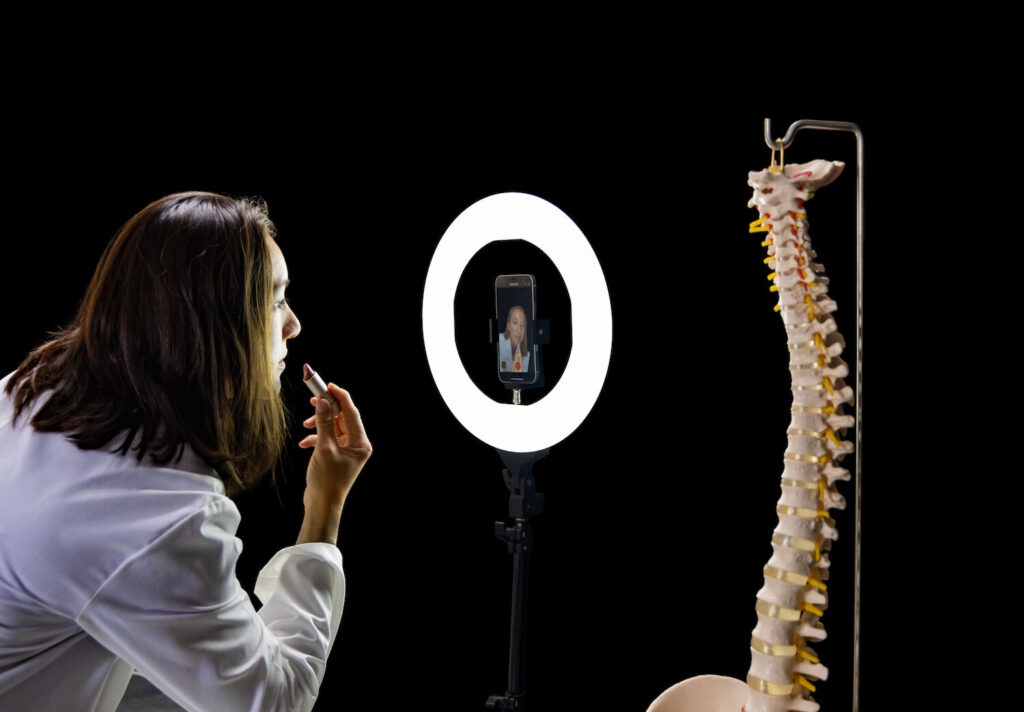
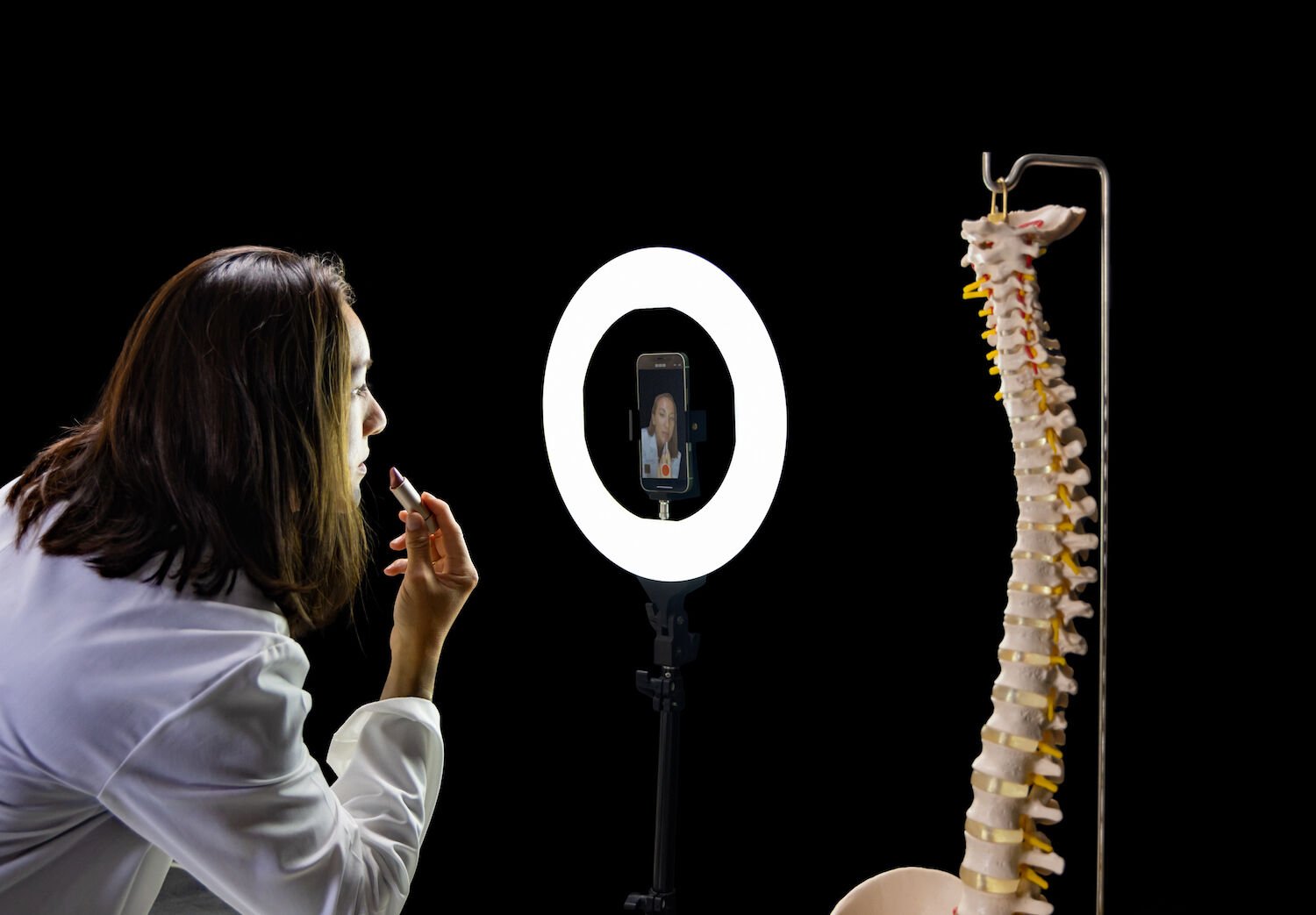
“I do prefer to wear makeup for interviews,” she says, “but I can’t exactly do it in the morning because it gets ruined by the mask, so I do it immediately prior to interviews. It’s an added time commitment in addition to preparing for what I am going to say in the interviews. Lighting is also important. I have gone through several lighting kits both at home and in my office. I would recommend using one.”
Fielding-Miller also started paying more attention to her appearance–and that of her office–due to TV. “I wore a lot more makeup than I would have otherwise,” she says. “My usual amount is none, but I realized that some mascara and good red lipstick make a difference on camera. I keep an extra tube of lipstick and some eyeshadow in my office at work now in case I get asked to do an interview that I hadn’t planned on.”
She also changed up her office, making it Zoom-ready. She hung a “very cute, bold curtain from Anthropologie” over the window, added throw pillows for the couch and liked to play around with the bookshelf behind her. “There is often a copy of How to Survive a Plague back there, and sometimes the board game Pandemic,” she says.
For Fielding-Miller, another big lesson was learning about the different types of media outlets and what each needed. “Some people do long, thoughtful investigations where they do background reading and they really want to give an accurate portrayal, and some you just have to get news on at 5 o’clock and they want the soundbite, and they’re done,” she says. “Both are valid things, and I get it. People watch the 5 o’clock news, and people hear things in soundbites. And so I want people to hear the clip that says, ‘Hey, maybe wear a mask.’ If that is the sound bite I can get out into the world, then that’s all right.”
Dr. Mark Sawyer, an infectious disease specialist at Rady Children’s Hospital, has done tons of interviews, especially about Covid-19 vaccines, and recalls one interview with a local TV station that was a challenge. “Clearly, the agenda of the person doing the interview was to cast a negative light on immunizations for Covid-19, and they wouldn’t accept my explanations for why I didn’t agree with that approach,” he says. “We ended up agreeing to disagree at the end.”
Meanwhile, Dr. Christopher Longhurst, now the chief medical officer at UC San Diego Health, says he worked with his media relations department to learn how to “frame things” during interviews. Before Covid-19, he had done one interview. Now he averages about five a month. “There were a couple of interviews where I flopped and said things I wish I hadn’t, and our media folks were patient with me,” he says. But, he notes, he never had a bad experience with a reporter editing his soundbites incorrectly, and though he didn’t always get much airtime, he felt the stories were always accurate.
“They were looking for sound bites that would play well, but they also were trying to educate, be accurate,” he says. “Even some of those in the more far-right kind of news were looking for the angles that would help people understand that getting vaccinated could save their life. It’s a tough job, I think, to be fair and balanced for a lot of different audiences. And I just appreciated the role that they played in communicating accurate information as opposed to misinformation.”
Another critic, Longhurst says, kept him humble: his wife.
“We’d flip on the local news, and there I was,” he says. “That got really old for my wife after two or three times, and she’s like, ‘Oh, local Brad Pitt here.’”
As these doctors were getting spun up on how to talk to the press, they also had to navigate where to get their own information about a virus that was so new. Quickly, the CDC began holding regular briefings, as did the California Department of Public Health and San Diego County. The daily press briefings were live streamed, so anyone could watch.
Dr. Ghazala Sharieff, the chief medical officer at Scripps Health, said following instructions and guidance from the different agencies took a whole team–people to listen to briefings, read papers, and then meet with her and other decision-makers to decide what to do.
“Covid-19 was brand new, right? No one knew anything, and there was so much conflicting information. So how do you communicate something when nobody even knows the answer?” she says. “Frankly, that is why our team felt like I should get out in the media. I wanted to be the voice of reason, but also we wanted to be the voice of truth. So, we decided to go with, ‘Here’s what it means clinically, here’s what we are going to do,’ because some of the recommendations that were coming up actually made no clinical sense to anybody, and it was hard to follow some of the guidance.”
Dr. Sawyer says it was a huge challenge simply sifting through the sheer volume of information being dispensed. “There have been thousands and thousands of papers published about Covid-19,” Dr. Sawyer says. It was impossible to read everything, so he had to pick and choose which sources were most useful.
To explain something very simply, you have to understand it very deeply, Dr. Olulade says. “The first step is always to make sure that you are up to date on all the correct information and have the right sources. You also need to stay up to date on what’s coming in terms of research and be able to communicate that on the fly.”
In early Covid-19, the Trump Administration was downplaying Covid-19. (“I think that’s a problem that’s going to go away… They have studied it. They know very much. In fact, we’re very close to a vaccine.”) And there wasn’t enough information to satisfy an increasingly concerned public.
“The federal government was not putting out trustworthy evidence-based guidelines, and we were dealing with a novel coronavirus, so this wasn’t something that anybody had studied for 20 years,” Fielding-Miller says. “The public was watching scientists learn in real-time, and those of us doing science communication were trying to educate ourselves and provide clear information on a topic where the picture was still coming into focus.”
The gaps in information drove some people to the internet to find answers, and the media rose to the demand–some of it fact-based, and some of it wildly not. There were online posts, videos, podcasts, and social media accounts making all kinds of Covid-19 claims—like recommending people take Vitamin D or chloroquine phosphate (a fish tank cleaner) to avoid Covid-19 or claims about why masks do more harm than good. The endless information was overpowering to people like Vicky Sorriso, a 39-year-old pastry chef who lives in San Diego.
“I was obsessed with the county counts, the nation counts,” she recalls. “I do have diagnosed OCD, and one of my things is germs and cleanliness. I wanted to know the numbers everywhere for everyone.” Sorriso follows local news like NBC San Diego on Twitter, plus subscribes to national outlets and constantly watches MSNBC. In early Covid-19, she could not look away, and it affected her mental state.
“It was just like a constant stream of bad information,” she says. “I used to walk my dog every day before work down by the Embarcadero, and they’d have these weekly marches and were so vicious to anybody wearing a mask.” Sorriso also has ADHD and says in the past, she’s fallen victim to social media accounts convincing followers not to take medication. “The best resource for me was getting myself to the doctor,” she says. “That was it. Don’t rely on the internet to diagnose yourself.”
Local doctors had to make their voices loud enough to overpower bad information coming from questionable sources. During this time, there was a considerable increase in telehealth, especially as people were avoiding going into doctors’ offices to risk exposure.
But doctors also saw the importance of putting their voices out on social media as well. While it hasn’t changed his overall clinical practice, Dr. Hardeep Phull, Palomar Health Cancer Institute Director of Oncology, said that he’s “very careful” what he posts, “knowing that a broad audience, including patients, could be reading what I have to say.” To that point, he thinks there are differences between social media platforms: He has recently increased his use of LinkedIn, considered to be a more professional network, where he feels he’s gotten positive responses to his posts. But he completely locked down on Facebook. “I feel I have too much personal stuff there, [like] posts from friends, photos, et cetera.”
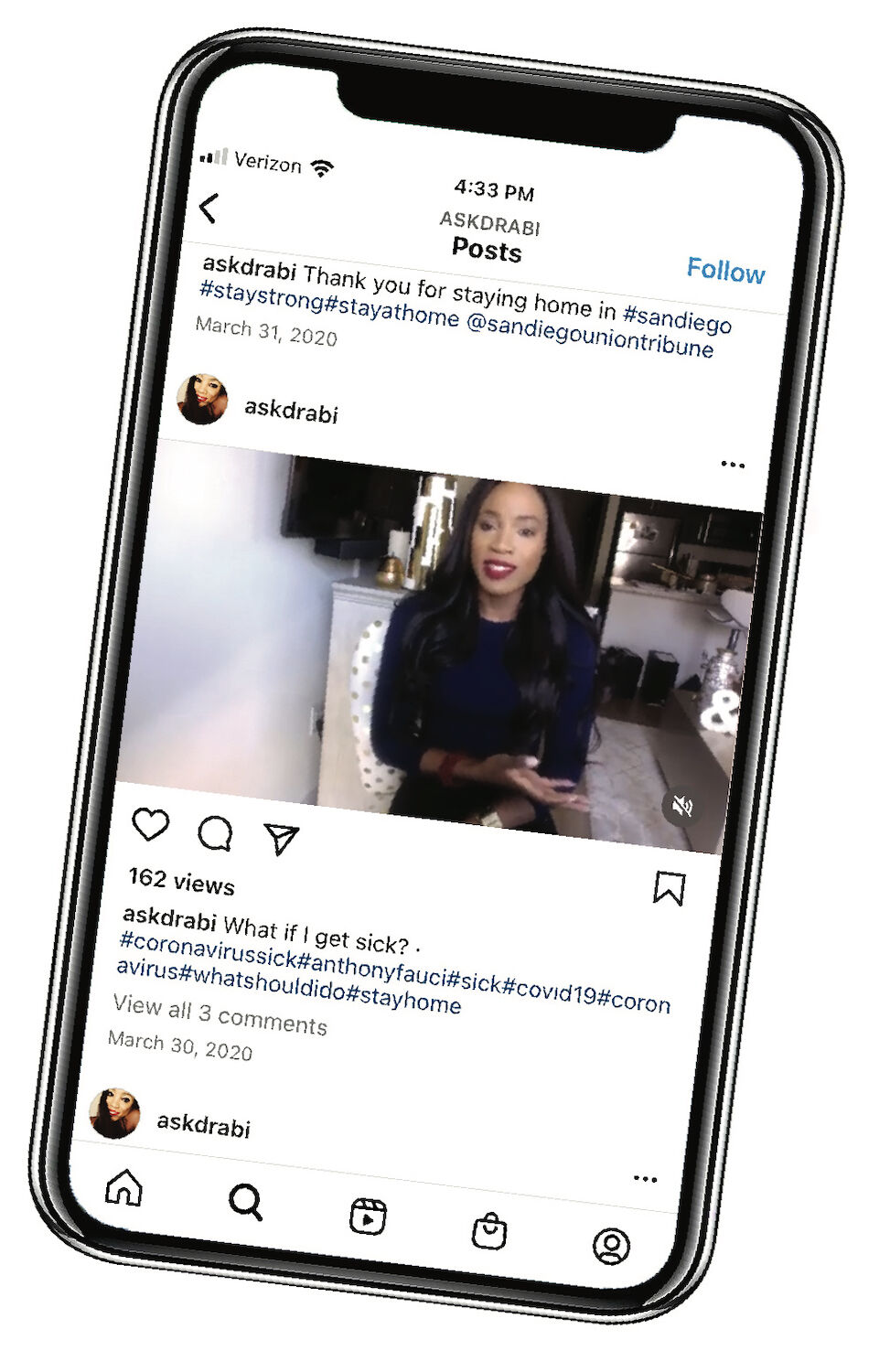
Dr. Olulade took another approach. She launched an Instagram account where she recorded videos answering common Covid-19 questions. Fielding-Miller made her graphs on Facebook and spoke out about the virus on Twitter.
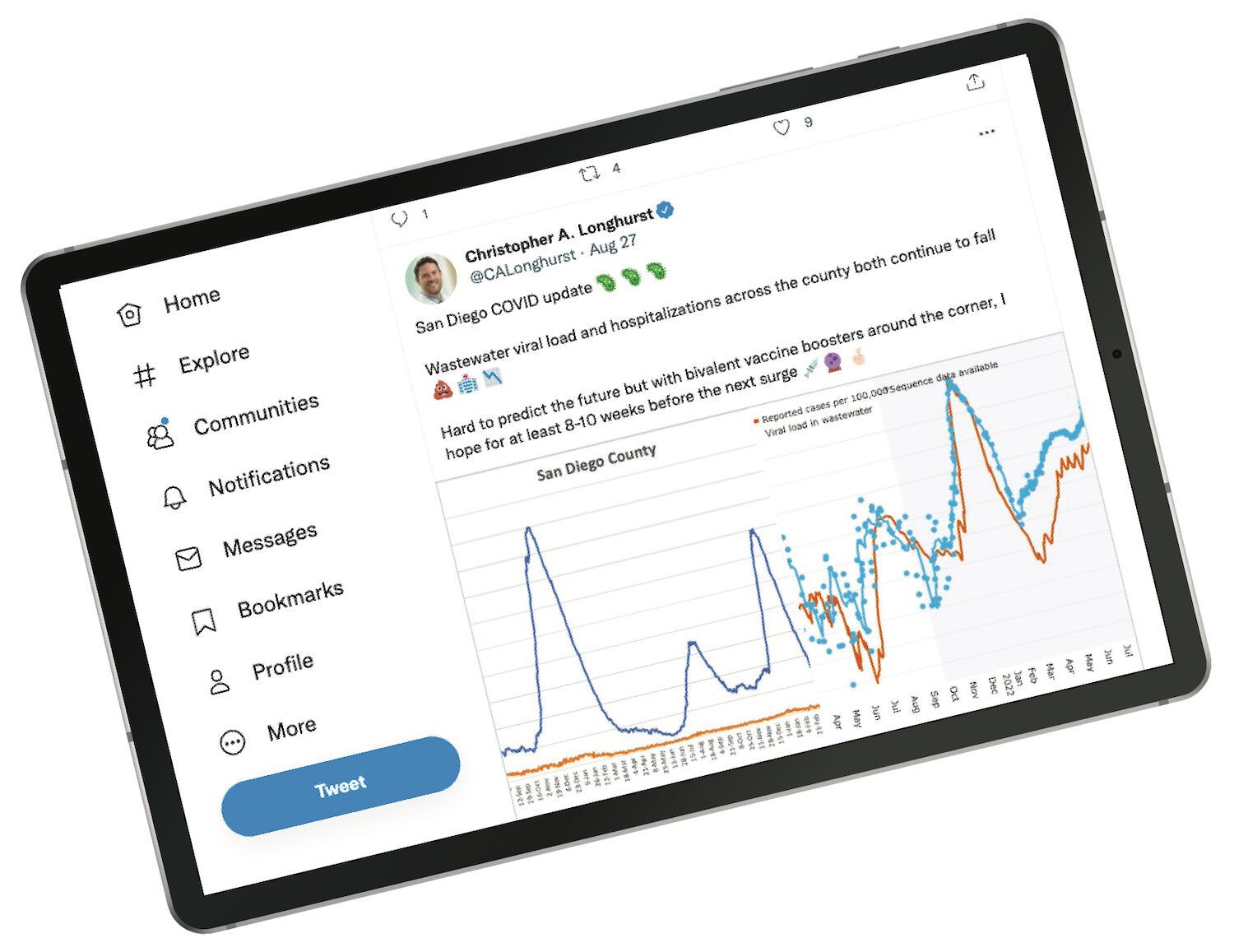
Dr. Longhurst had a Twitter account for years but rarely used it. In March 2020, he noted another doctor, Dr. Bob Wachter at UC San Francisco, was tweeting about Covid-19. “I intentionally spoke to our media team about it, and I said, ‘Look, here’s Dr. Wachter sharing a lot of information with the public, and we could do something similar. Can I get your permission to do that?’” Longhurst recalls.
Permission was granted, and soon Longhurst was blowing up. He now has nearly 10,000 followers and regularly makes news with his tweets. “I would sit there in the evenings after the kids went to bed, and I’d think about the data I wanted to share and the message I wanted to send, and I’d hit send,” he says. “Then, the next day, it’s, ‘We saw your tweet, and we’d like to interview you,’ or there’d be even a KPBS article with my tweet embedded in the article.”
Longhurst says his biggest social media moment of fame was getting Mark Hamill to tell his 5.2 million followers to download the CA Notify contact tracing app. “Luke Skywalker used the force to boost public health, definitely a social media highlight for me,” Longhurst says.
Being a warrior against Covid-19 misinformation also sometimes involves personal attacks and even safety concerns. Fielding-Miller says after watching heated San Diego County Board of Supervisors meetings where public commenters hurled insults and threats at officials, she signed up for a service that scrubbed her personal information from the Internet.
“Because, who knows, right?” she says. “I did one interview with an outlet that skews a little bit to an audience that’s a little bit less enthused about Covid-19 regulations, and I did get at least one weird voicemail on my office phone—to the point that my mentors suggested, ‘Maybe we should just get security.’”
Dr. Sharieff says there were times when her hospital altered security because “we’ve got some people that are pretty angry out there— and so they walked me to my car sometimes.” She also received threats and vitriol when vaccines first became available from people who didn’t want to wait in line–especially on one online forum in particular.
“The NextDoor people, they were awful,” she says. “I don’t know why they just start slamming you. Let me explain why we didn’t have things for you. Believe me, as fast as I get it, I get it out to you.”
Along with safety concerns, Dr. Sharieff worried about looking like a hypocrite–not wanting to be in a Governor Gavin Newson eating indoors at the French Laundry situation. “I think I went to my first outside restaurant just last week with a friend because I have not done that,” she says. “So I have to learn myself. How do I reemerge back into society? I’m not going to go to the restaurant and tell everybody else not to do it. And so it’s taking a personal toll.”
The fact that anyone was looking to Dr. Sharieff or any of these doctors to answer their questions about when to eat at a restaurant, or any other Covid-19-related question, is somewhat strange in actuality, though it’s become part of everyday life. The most privileged members of society have doctors they’d normally turn to for health advice and pay for anytime access. But during Covid-19—when everyone had questions at the same time, and everything was so new—the country’s health system didn’t have the capacity for individualized attention, and not everyone has good access to quality care.
“People don’t have health coverage that good,” Fielding-Miller says. “There’s not a number that you can just call and get advice.” Most doctors’ offices didn’t usually provide Covid-19 vaccines or testing, and doctors didn’t have information beyond the little that was coming from government agencies. They’re also not trained in public health, biology, and immunology, “and all of the different things they would need to be an expert in to be able to give up-to-the-minute advice,” she adds. So media, and social media, became the doctor’s office that gathered all the various specialists under one virtual roof.
Research consistently shows people are more likely to listen to their primary care doctors, with whom they feel more comfortable, about things like masking and vaccines, Dr. Olulade explains—and that’s a bad thing when it comes to a crisis like Covid-19. “[Having a primary care doctor] is not available to a lot of people, and we really saw the impact of that during the pandemic,” she says.
Influencer Doctors-Spine
Stacy Keck
Dr. Sharieff says she was aware of the weight of her messages and would choose the timing of her media appearances judiciously as a result. When case counts were lower, she’d be more likely to turn down an interview because she didn’t want to wear out her message.
“I don’t want to be that lady that tells everybody they can’t have fun because there was a trust that was developed. I don’t want it to pivot to the point where people don’t listen to me anymore,” she says. “So [my media team] and I kind of go back and forth sometimes, and I’m like, ‘I don’t think the time is right. We’ll do it when the surge comes.’”
Doctors communicating about Covid-19 through the news created an unusually symbiotic relationship between journalists and doctors who wanted to get information out there, and journalists wanted that information plainly, with very little spin. All the local doctors interviewed for this story say they had largely positive experiences with reporters– the facts were usually right, and the message was rarely skewed. And the experience of communicating life-or-death health information to as many people as possible left them with a new appreciation for the media.
“I have felt a real sense of responsibility to try and get information out that can help keep people healthy,” Fielding-Miller says. “And if I can do an interview right before New Year’s reminding people to be a little bit extra careful and provide information that can prevent an infection or can prevent somebody from getting very ill, that has been really amazing and just something that I don’t take for granted.”
Dr. Longhurst says he appreciates the role of journalism far more now, from KPBS to print media like The New York Times and The LA Times and “even [San Diego Union Tribune health reporter Paul] Sisson.”
Dr. Sharieff says she has gotten to know several local TV newscasters. “We know who the friendlies are, and they do such a good job of getting the word out there,” she says.
On a larger scale, she says Covid-19 made Scripps Health see the importance of engaging not just with their patients but the community as a whole. “Really, we have to have an impact on our community which does, of course, benefit our patients in the long run,” she says.
Now, as Covid-19 seems to drop on the list of pressing concerns for many people, the question will be whether they still pay as much attention to health news and these celebrity doctors. Signs point to yes. Some news organizations have expanded their health coverage, and these doctors are now out there in the media and on social media and aren’t likely to lose their followings. For example, Dr. Sharieff says there is much more attention to monkeypox and demand for vaccines than there might have been pre-Covid-19.
Meanwhile, Dr. Olulade says she’s finding patients are asking more questions about the risks versus benefits of medications and interventions, “and that is a very good thing.”
“When patients can understand things, it makes it easier for them to make healthcare decisions. They often feel more empowered,” she says. “Overall, patients seem to be doing more of their own research into health topics, and it’s obviously an opportunity for us in the medical community to corner that space with the right information.”
Dr. Longhurst says the question of whether people will be more likely to listen to medical advice about things other than Covid-19 is a double-edged sword. “People who were looking for a trusted source followed doctors and other experts on social media, but social media also clearly exacerbated misinformation,” he says.
One change he is confident will last and have a positive impact: the rise of telehealth.
“Three years ago, telehealth visits accounted for less than 0.1 percent of our visits, and now account for an average of 15 percent to 17 percent,” hesays.
At Sharp, the experience with media during Covid-19 has led to a systematic change. Dr. Olulade has been promoted to Chief Impact Officer, with a focus on how to better communicate and engage with the larger community, not just individual patients, and that will include engaging with the media.
“Public health messaging has to improve, and that is going to have to be done in partnership with the media, and I think it should be a partnership,” she says. “Of course, Covid-19 has created the rise of the celebrity healthcare professional in a way. There are lots of talking heads on cable news, TikTok, Instagram, and those types of things, but it’s just so time-consuming. And so that’s why the health care systems and organizations have to buy into it and support providers in doing that.”

Claire Trageser has been writing for San Diego Magazine for 10 years. She also is a reporter at KPBS and writes for The New York Times, National Geographic, Marie Claire, Elle and Runner's World.
We take a look at how the use of AI, hospital openings, and new advancements are shaping shape one of the largest healthcare companies in the United States
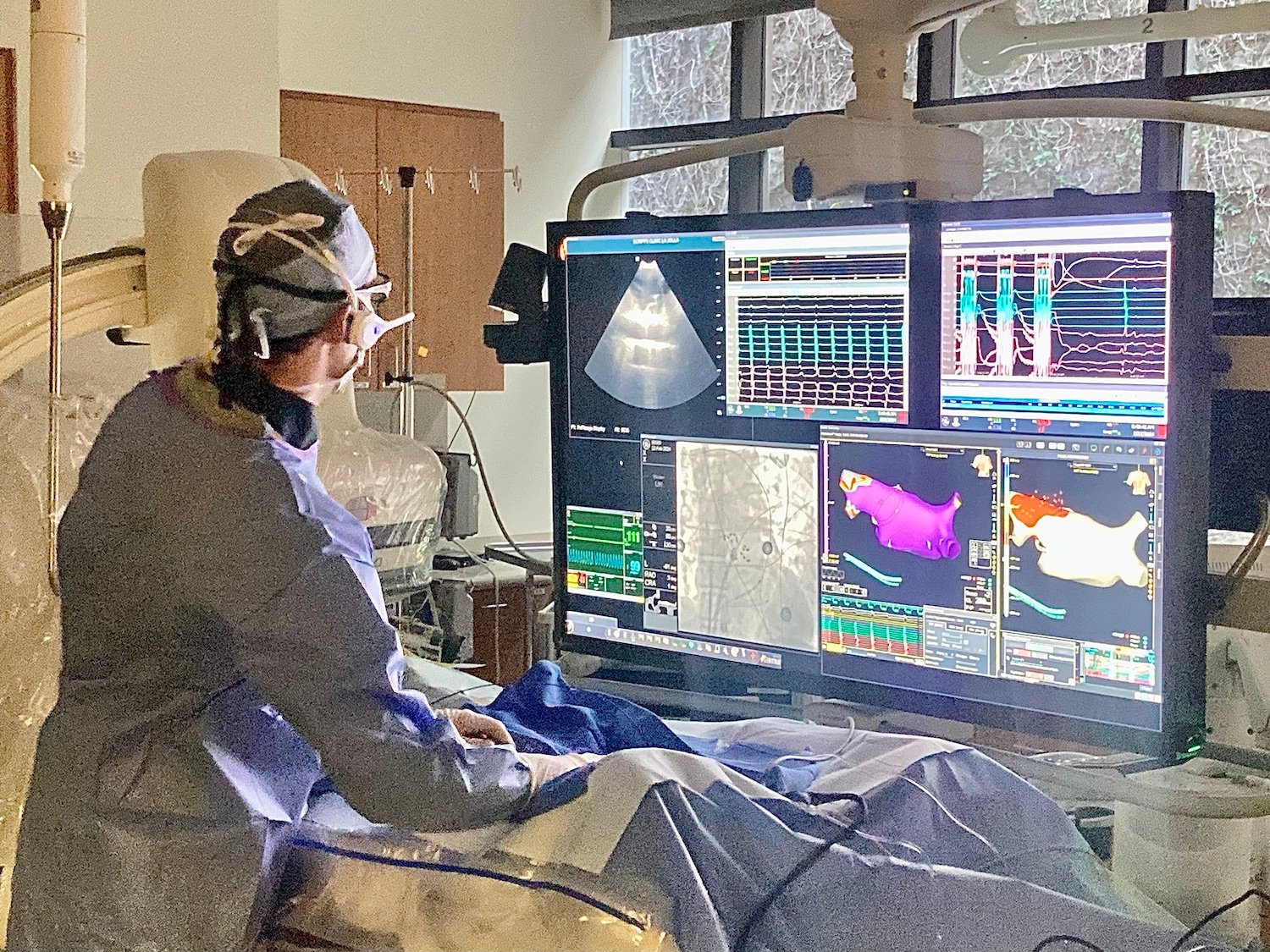
In Kaiser Permanente‘s hospital exam rooms, artificial intelligence is listening—and that’s a good thing. “It brings the joy back into… getting to know a patient,” says Assistant Area Medical Director Dr. William Tseng. “It restores the connection between doctor and patient, allowing us to actually see each other during the exam.” AI is now a routine part of patient care at Kaiser’s Southern California facilities, where it’s replacing “COWS,” computers on wheels, that can act as a physical barrier between physicians and their patients. Ambient AI functions as a scribe, listening to the exam room conversation (with patient permission), taking notes, and later transcribing everything to the medical record.
In collaboration with generative AI platform Abridge, Kaiser’s San Diego facilities have rolled out the region’s biggest deployment of “assisted clinical documentation” technology, and Tseng is excited about its potential for the entire healthcare industry.

His AI assistant, he says, “[doesn’t] miss things. It improves quality and efficiency.” AI has applications for diagnosis, as well. For example, “in radiology, we can use it to pick up diseases earlier by analyzing images of potential strokes and [helping doctors prioritize which scans they review,] based on severity,” Tseng explains.
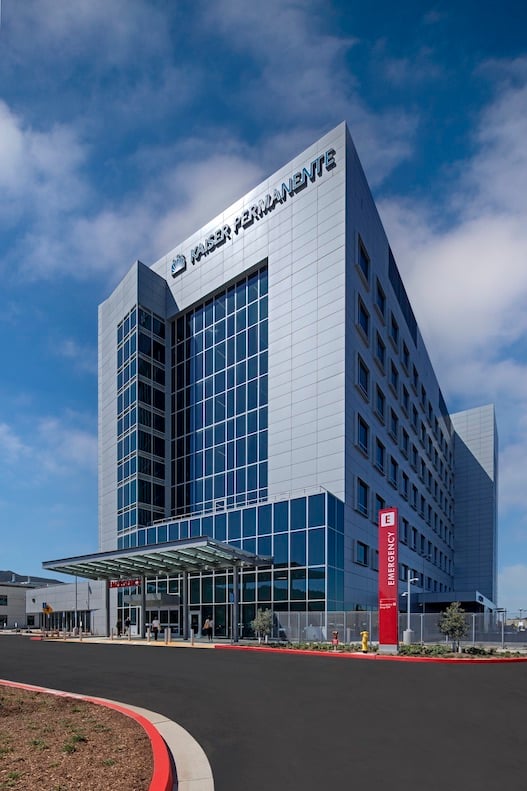
Kaiser Permanente also rolled out two new hospitals in San Diego County in recent years. The latest, San Marcos Medical Center, opened in August of 2023. It has a labor and delivery ward, a neonatal ICU, a 24-hour emergency department, and 206 single-patient rooms.
Like many health systems in the area and the nation, Kaiser Permanente is no stranger to struggles with staffing. In late 2023, San Diego Kaiser workers went on strike as part of walkouts across four states to protest exhausting working conditions related to labor shortages and pay that didn’t cover the current cost of living. The walkouts resulted in a new contract that led to what President Biden called “historic” increases in healthcare worker wages.

Two of Kaiser’s San Diego medical centers nabbed a top-60 spot on US News and World Report’s 2023 list of the best hospitals. The publication named Zion Medical Center in Mission Valley and San Diego Medical Center in Kearny Mesa (both Kaiser facilities) among the best hospitals for maternity care this year. Contrasting a recent trend in maternity ward closures across California, the new San Marcos maternity ward opened shortly after two local facilities shuttered L&D services.
Additionally, the organization’s cancer survival rates consistently beat the National Cancer Institute’s SEER (Surveillance, Epidemiology, and End Results) averages. A study published in 2024 showed Kaiser patients with colorectal, breast, and lung cancers have better survival rates after five years than other patients tracked in SEER data.
Tseng attributes this to Kaiser Permanente’s integrated model, where members have access to preventive care, smoking cessation programs, and cancer screenings—along with a national referral system providing regional Kaiser doctors with a comprehensive database related to cancer treatment, to ensure they’re delivering the most up-to-date and effective therapies.
Leorah Gavidor won her first essay contest at age 5. She writes features, news, and non-fiction in San Diego.
Established in 1924, the health system remains a medical leader while tackling healthcare's emerging challenges
It’s a big year for Scripps. The healthcare institution is celebrating its 100th birthday, and in its century in SD, it’s racked up its fair share of accolades: US News and World Report has named Scripps in the top 50 hospitals for cardiology and orthopedics for 19 and 11 years running, respectively.
And it’s not letting age slow it down.
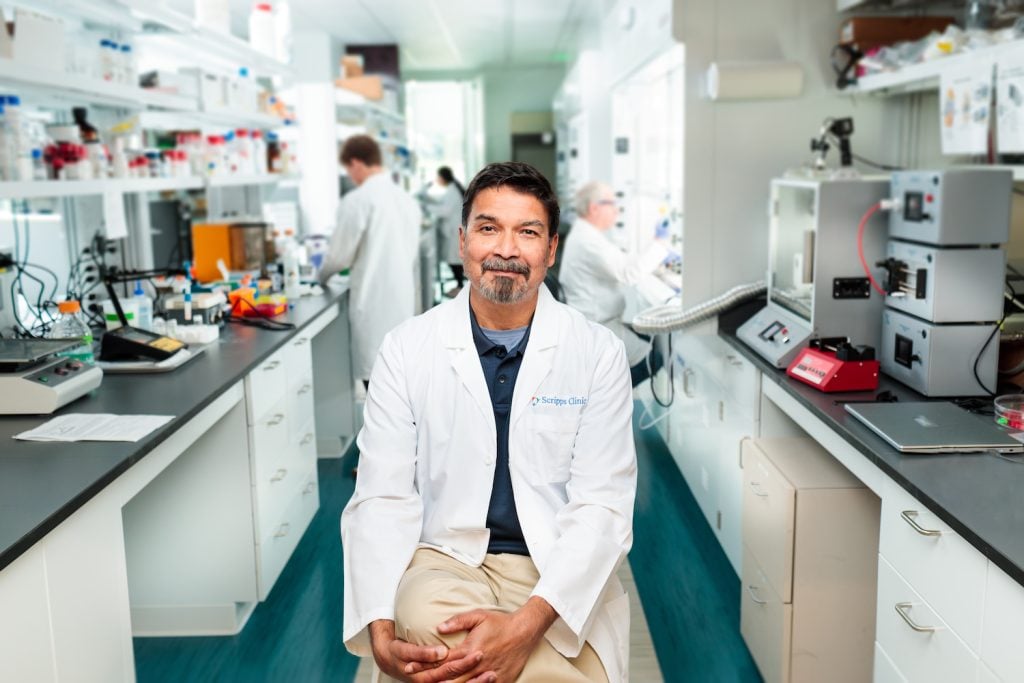
At Scripps Clinic’s Shiley Center for Orthopaedic Research and Education (SCORE), scientists are currently in the discovery phase of developing tissue from human stem cells to use in rotator cuff treatment. The eventual goal is to create a biologically engineered tendon to replace or repair the patient’s torn rotator cuff.
“This is a common injury, and as our population ages, there’s a pressing need to find new solutions,” says lead researcher Darryl D’Lima, MD, PhD, and director of orthopedic research for SCORE at Scripps Clinic.

This year also marked 40 years of the Mohs Micrographic Surgery and Dermatologic Oncology Fellowship, led for all four decades by Dr. Hubert Greenway. Dr. Greenway teaches doctors a technique pioneered by his mentor, Dr. Frederic Mohs, who developed a method of removing skin cancer layer by layer, checking for cancer cells along the way and preserving healthy tissue in the process. Dr. Greenway has performed 45,000 Mohs surgeries and trained 68 physicians to disseminate the technique as skin cancer cases increase each year.
Aside from treating formidable health issues, Scripps Health faces a growing, industry-wide challenge: violence against healthcare workers. Workplace violence at all five Scripps hospital campuses jumped by 31 percent in 2023, reaching 2,335 total incidents. Healthcare staff experience demeaning comments, verbal abuse, and assaults on a regular basis.
Scripps Health President & CEO Chris Van Gorder is part of a countywide task force addressing the problem, and the organization recently hired a retired FBI special agent to enhance staff security and safety training.

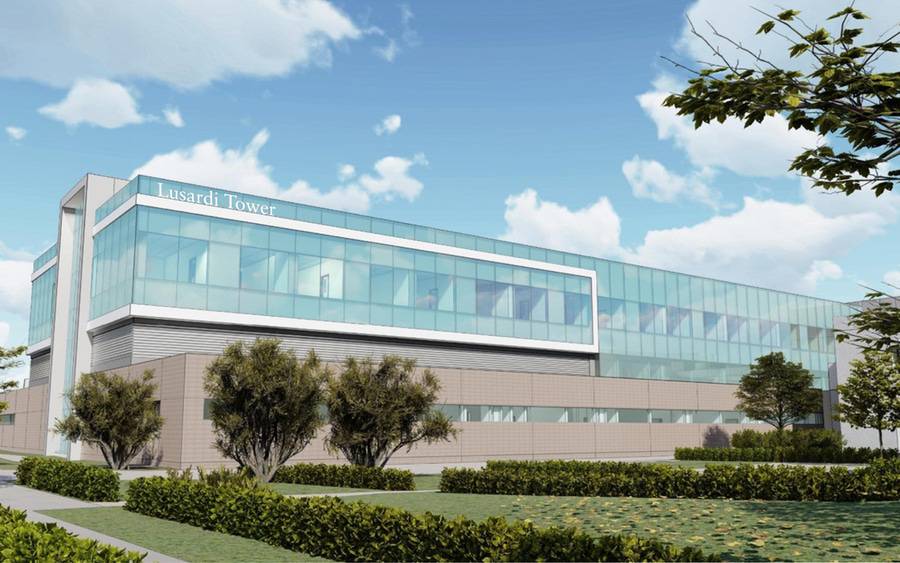
Next up for Scripps Health? A new, 227,000-square-foot, three-story building that will expand acute care services and increase the number of hospital beds. Lusardi Tower at Scripps Encinitas is scheduled to open in 2025, housing private inpatient rooms, operating facilities, intensive and progressive care units, and a pulmonary institute.
Leorah Gavidor won her first essay contest at age 5. She writes features, news, and non-fiction in San Diego.
Jonathon Glus on the Art + Design District, investing in the creative economy, keeping artists in the city, and what we can learn from places like London and Chicago
Jonathon Glus is the Prebys Foundation senior fellow leading the development of the Art + Design District at the Downtown San Diego Partnership. He has been asked what an arts and design district is many times. In our conversation, I asked him instead to describe what it isn’t. His answer opened up a broader discussion about what San Diego has and hasn’t invested in, what it has the capacity to become, and what other cities have done that we haven’t. Glus speaks about global art fairs and architecture biennials in Chicago and long tables at dinner parties all with the same fluency. He also discusses who gets to live in the neighborhoods where creative work happens, and what it means when they can’t afford to stay.
Jonathon Glus: It is not a place designed intentionally and specifically for tourists. Of course there will be opportunities for tourists to come, but the district is really focused on creatives, on creative education, and on the creative workforce—as well as our major performing arts organizations. That is the emphasis.
[It needs to] develop greater connectivity between the anchor institutions—the symphony, Broadway San Diego, the opera, all the wonderful things happening in Balboa [Park]—and the creative workforce that will be living and working in that neighborhood 24/7.
We have not been intentionally investing in the contemporary art product that other major cities have been building. A contemporary art fair. A biennial that reflects the ethos of this region. Chicago developed an architecture biennial about eight years ago. London has a design biennial. Desert X, right here in Southern California, invests in and elevates contemporary artists inside a city. We have not really been playing in the global art market in a way that we have the capacity to.
We have a wonderful foundation. Two theater companies that produce work that goes to Broadway more than many regional theaters in the country, major museums, artists teaching at UC San Diego and University of San Diego. What a city does when it wants to take itself to the next level is intentionally create the product. Miami went after the Art Basel fair; they did not passively receive it. You have to have the intention and the will, and you have to go after it. We haven’t done that in the way that other cities have.
Look at what we did with the tech sector; we’re now a major tech center. That was intentional. Leadership organized around it. We have to do the same thing around the arts. We have a lot of contemporary art collectors here. We have a lot of galleries. But the ecosystem of the business of contemporary art is not as organized or as visible as it should be.
It’s bits and pieces of different cities. Dubai has invested very quickly and very intentionally in contemporary art—art fairs, design fairs, higher education, artist residencies from all over the world. London has centered artists and creatives in the contemporary zeitgeist in a way that was not true 40 years ago. They built biennials. They ensured British artists had affordable housing and workspace. They made sure the media paid attention to what they were doing.
If you don’t have an artist at your dinner table, it’s not a dinner party. That sounds elitist, but it’s true. It shows the value that artists have in a community. Our relationship culturally with Tijuana is really significant here because artists in Baja seem to be at the table.
They aren’t. When super creative people are in a community doing extraordinary work, that draws other super creative people doing extraordinary work. That’s why other arts and design districts around the world end up populated with some of the most interesting restaurants and young fashion designers. Creatives want to be around other creatives.
Our creative economy already employs about 170,000 people and generates more than $11 billion in economic activity. It’s large and robust. But we must center all of this in accessibility and affordability. Williamsburg used to be affordable. Artists can’t afford to live there anymore. Wicker Park and Bucktown in Chicago—artist central, now unaffordable. If we’re going to invest in this district, we have to be really intentional about housing and workspace, so creatives have a place in the future of this district.
I think the lesson is that nothing changes. What do people love? Long tables. Why? Because you’re with a lot of people—some you may have known your entire life, but most you don’t. And if it’s driven by a creative process, all the better. We know one of the best ways to do that is around food, but also music.
For the Art + Design District, part of why we’re leaning into the process is because, culturally, we’re bringing down the barriers between film, fashion, multimedia, tech, and architecture. It’s an experiential mashup in the best possible way.
And it’s not just about art and design, but community writ large. Creative expression is something we all desire. Whether it’s at a long table, at the opera, or in your studio, we gravitate toward creative expression as a way of building community and communicating with the people around us.
I hope you are writing about this in seven years when the district is fully mature. But this is just the beginning for all of this. I think that’s what’s most exciting to me. We don’t know what this is going to be like, but we know it’s going to be creatively centered, and that’s super exciting to me.
At Vi at La Jolla Village, residents don't have to choose between security and adventure, connection and independence. They get all of it.
Today’s seniors are more connected than ever, with a renewed focus on retirement as a time of discovery and enriching experiences. The ultimate reward for a retirement well-earned is the wisdom to appreciate it all, and what better place to enjoy that unique perspective than Vi at La Jolla Village, in the heart of San Diego.
All-access pass to good living.
As a Continuing Care Retirement Community (CCRC), Vi provides access to a connected and fulfilling community while making it easy to plan for future care, should the need ever arise. With a care plan in place, residents enjoy greater financial predictability and long-term value, freeing them to focus on making the most out of retirement.
Resort-style amenities at the epicenter of a cultural hub like San Diego offer a retirement experience unlike any other. Paired with exceptional dining, spacious accommodations and dedicated staff, the best of maintenance-free living is all around. And with the introduction of Vista 360 Well-Being, Vi’s panoramic approach to wellness, there are more ways than ever for residents to access it all.
The harmony of mind, body and community.

The key to longevity is striking the right balance in maintaining an active lifestyle with an active mind in a fulfilling community. With newly renovated community spaces and restaurants, Vista brings a variety of opportunities for residents to elevate their well-being through Vi-exclusive “Signature Experiences.”
Vista Enrich takes an evidence-based approach to brain vitality, keeping residents at the forefront of cognitive health through exergaming (exercising + gaming), nutritional plans and informative workshops. It is also home to The Brain Vitality Studio, an innovative facility dedicated to cognitive fitness that has garnered national recognition.
Vista Discover invites residents into stimulating educational experiences, from chef-led cooking demos and guided wine tastings to lectures at local universities and intimate lectures following cultural outings.
While Vista Enrich focuses on brain health and Vista Discover engages residents intellectually, Vista Explore cultivates a sense of adventure through curated travel and local excursions. But broadening one’s horizons doesn’t always require a plane ticket. One recent event brought a taste of the world right to the community: an onsite “jazz cruise” featuring live music and global cuisine served at a series of themed “ports” all within the community’s own ballroom.
“Location, location, location”

One of the biggest perks of life at Vi at La Jolla Village is its proximity to just about everything. With easy access to transportation and local attractions just steps away, residents can explore and engage with their community at their own pace.
“There are trolley and bus stops within a 5-minute walk that will get you to the beach, UCSD Campus, medical appointments, downtown La Jolla or San Diego, et cetera. We rarely use our car,” said resident Tom Yager.
With the best of San Diego just steps away, residents don’t just live in the city, they live within reach of everything that makes it special.
The best of all worlds.

At Vi at La Jolla Village, retirement isn’t a chapter to slow down; it’s an invitation to discover more. Tailored community experiences created by Vista, paired with the vibrant pulse of San Diego just outside the door, mean that residents don’t have to choose between security and adventure, connection and independence. They get all of it.
This is what an all-access pass to good living looks like: the comforts of an elevated lifestyle, a community built for growth and a city made for discovery – all in one place.
To learn more about Vi at La Jolla Village or for details on available floor plans, visit ViatLaJollaVillage.com/SDM.
A conversation with Sebastián Morúa on art, community, and why the club’s future heroes should include the creatives helping build it
Sebastián Morúa is the Senior Vice President of Brand & Innovation for San Diego FC. He oversees Playmakers, the program through which the club has, over the past three years, engaged with over 80 working artists—not as marketing partners, but as co-creative directors.
Morúa didn’t build Playmakers as a community-outreach program bolted onto a Major League Soccer franchise. He built it as the identity of the franchise. When we sat down, he talked about the World Cup, San Diego’s creative workforce, his challenge to other sports franchises in the city, and the mural of heroes he hopes people will see one day when they close their eyes and picture San Diego FC.
Sebastián Morúa: I want to answer that in two parts. Philosophically first—because I think what you’re really asking is why should any sports team do this when most don’t.
Sport is a platform for transformation. It has proven that over and over. We saw it this summer with countries participating in the World Cup for the first time and what that did in their home countries—the sense of self-identification, pride, possibility. That is the power of sport.
When you take a sports team that’s fueled by that principle and understands what it could mean for other stakeholders in a community, you start to think about what you can accomplish in collaboration with them. One of those stakeholders, very early on, was the creative community. If we were going to build a team that represents this place and its people, we needed to go to the source. Artists are uniquely positioned to translate the essence and the soul of a community. When you zoom out and look at the multitude of artists in a place, you start to see the fabric of that local culture. That’s where the sense of pride and possibility gets unlocked.
Our mission is to create opportunities for talent to flourish and make San Diego shine. That means the club is a platform. When we started doing the early research for the brand, we brought artists into our focus groups. The response was immediate. There was a clear need. In 2024, we ran the first full year of what became Playmakers, working with more than 20 artists to help us tell the story of how San Diego FC could weave 18 distinct communities together.
We’re in the business of developing communities through sport. We’re not in the business of fútbol to entertain communities. That is an outcome—but not the purpose.
No. I wasn’t thinking about where this was going or how much it would cost. It instinctively felt aligned with our organizational purpose, and we made a decision to go for it. Now it’s become what it’s become.
If a fan closed their eyes 20 years from now and tried to paint a mural of the heroes that make up the club, they would see a big percentage of Playmakers artists on that mural. Ask any fan about the team they’ve supported for decades, and they’ll tell you about players, maybe a coach, maybe an owner. We’re expanding that. In our mural, there’ll be artists, entrepreneurs, community leaders, youth coaches. The community will be present.
Three to five years from now, Playmakers is an established community of creatives who have co-directed the identity of the club and the evolving identity of San Diego. If we keep the pace we’ve kept, we should have collaborated with 150 to 200 artists whose stories we’ve told and whose next steps we’ve helped support.
There’s a huge benefit for us as a club and as a brand. This is symbiotic. The artists have a need, we can support that need, and in return the community cares more about our club because of the investment we’re doing in the community. That’s what I would tell another organization.
San Diego is waking up to how much it has to offer the global conversation around culture. There’s a purity to life here—partly because of the weather, which allows us to spend so much time outside, in nature—and that exists alongside this incredible richness in food, music, art, and now sports.
I have a sense that San Diego is ready to unlock its full potential. You see it in the artists and creatives here. They’re ready. There’s very little hesitation. It’s more like: “Hell yeah, of course I want to do this. I know I’m talented. I’ve been waiting for something like this.”
That energy, combined with the unique lifestyle and character of this place, creates a really exciting sense of what San Diego can become in the years ahead.
I would ask: What would you say to the other big players in San Diego who are—or could be—shaping the cultural fabric of our community? Do they understand the symbiotic benefit? Are they supporting it?
Because Playmakers, in the end, is a cultural compass. It’s making sure that San Diego still feels—and will always feel—represented in the creative process of building San Diego FC and what that means for San Diego.
The pitch is a canvas. Athletes are painting collectively during every game. There is a story in every game. That’s the link between sport and art. At the core, it’s the same creative process.
Artists and advocates are building a more sustainable creative future through public funding, political organization, and cross-border collaboration
This is part of a three-part series. This is Act III. See Act I and Act II here.
We’ve been here before.
In 2012, city funding for the arts and culture in San Diego had eroded. As a corrective, the city council unanimously approved “Penny for the Arts”—a promise to dedicate roughly one penny of every dollar spent on hotel rooms (the Transient Occupancy Tax, or TOT).
The logic was fair and sound: Cultural institutions and events help attract visitors. Those visitors pay hotel taxes. So, the people agreed, some of that hotel-tax revenue should go back into maintaining the cultural ecosystem that helps bring those visitors and that money.
Projected as a five-year plan, the measure was supposed to increase funding to $17.9 million by 2017.
It never did. The penny was never guaranteed, so each year the city used part of it for other priorities. By 2023, the money going to arts and culture was up to about a half a penny. Even as TOT revenue has gone up significantly.
In 2019, TOT revenue was $245 million.
In 2025: $325 million.
One fix would be to guarantee the penny. Not simple, given San Diego’s financial woes. But the alternative—eroding the culture that makes San Diego San Diego, give it its identity—also doesn’t feel wise. Plus, even a locked percentage still rises and falls with tourism, which is why culture advocates want a guaranteed floor on top of it.
Another solution would be to give the arts commission actual authority.
“It’s an advisory body,” says arts commissioner Kamaal Martin. “You’d be hard-pressed to find anybody who takes our advice.”

He described the commissioners debating real, consequential questions this year, like whether and how to divide the cuts between funding pools. But those conversations “don’t connect to whoever’s actually deciding,” Martin says. “We haven’t been entrusted with decision-making about relevant things nearly enough.”
Christine Martinez is building political infrastructure through her organization Arts+Culture:San Diego—which is starting a 501(c)(4) lobbying structure not unlike police and fire unions. Martinez is also keeping her community actively engaged. “We won’t be caught off guard next year like we were this year,” she tells me.
Then there’s the evergreen issue of affordability and accessibility. Kiplinger’s most recent report ranks San Diego as the 11th most expensive city in the US, based on cost of living. The average home value is $980,700 (the US median is $540,000), but San Diego’s median household income is only one-third greater than the national level. Rent is also 66 percent higher than the national average ($2,716 vs. $1,636).
This is why San Diego has long suffered from the creative brain drain—creatives leaving for more affordable cities. “Artists are free to live wherever they want, and they will go where the rent is affordable,” says Jennifer de Poyen of Space 4 Art. “When they leave, they take their gifts with them, and their contributions, and their economic impact.”

One saving grace is the presence of Tijuana, where the cost of living is about 60 percent lower than San Diego, per Numbeo. Tijuana has long functioned as an affordable neighborhood for many in San Diego’s creative culture. It’s part of the reason why the binational identity is such a constant in our galleries, music, theater, murals, and culture. While that cross-border blood flow is one of San Diego’s most compelling attributes, few artists living that life would call it convenient or easy. A city is at a disadvantage when its culture creators have to cross a border to go home at night, and cross again the next morning to work.
In May, San Diego County Board of Supervisors approved a $2.75 million arts initiative of its own. It includes an Artist Space Grant Program aimed directly at the affordability crisis, as well as an artist-in-residence program, a dedicated Binational Creative Economy Investment, and a one-time investment in the Black Arts and Culture District in Encanto.
Bob Lehman of San Diego Art Matters has been doing county-level, binational organizing for years; in 2023, he helped get the county’s arts commission reestablished after 30 years of defunctness. That’s important because it gives arts and culture an official seat in county government, advising the County Board of Supervisors on arts and culture policy. He also brought in consultant Laura Zucker, who ran LA County’s arts program for three decades, to build a real regional plan.
“I really believe we’ll have something set up here that other communities come and look at,” he told me. “A national template other cities come to learn from.”

When asked who decides which artists will get the new grant money, county arts commissioner and executive director of the Chicano Park Museum and Cultural Center Monica Delgadillo Hernandez doesn’t hedge.
“That’s part of the infrastructure we’re going to be building,” she says. “What should a panel of reviewers look like? Should it be the commissioners? Should it be other folks? A supervisor?” She was just as candid that the commission itself doesn’t reflect San Diego’s population—Chicano communities are roughly a third of the city, she tells me, “and that’s not represented at the table yet.”

The great news is that none of these solutions have to be invented from scratch. Numerous cities serve as examples of what’s possible—if we have the will.
Jonathon Glus—Prebys Foundation Senior Fellow for Art & Design, the Executive Director of the Art + Design District, and board president for California for the Arts—worked in Houston before coming to San Diego. The Texas city dedicates 74.5 percent of its hotel tax to arts grants by formula, and that support is guaranteed. Washington, DC locked in dedicated arts funding in 2019. Salt Lake City, my hometown, has run a voter-approved arts tax for almost 30 years, most recently reauthorized through 2034. And just this summer, New York City pushed cultural funding to a record $323.8 million, even incorporating an emergency fund.
Denver’s model is interesting because instead of a city-dependent funding model, theirs is a 0.1 percent regional sales tax. In place since 1988 and renewed by voters three times, their Scientific & Cultural Facilities District has distributed between $54 million and $85 million to arts, culture, and scientific orgs—each of the last 12 years.
This is part of a three-part series. This is Act III. See Act I and Act II here.
None of these cities got there by accident. They decided, on purpose, that arts and culture were worth protecting from politics—and, in some cases, worth building an entire identity around.
“That’s how Miami has flipped the switch,” says Glus. “People go to Miami for culture as much as they do the beach.”
San Diego has spent decades selling itself backward: Beach and weather first, culture as an afterthought you might stumble into. Glus would love to see the strategy flipped: Visitors should come for the art, “and then, by the way, you’re on the beach.”

“I do think it was a wake-up call for the community,” de Poyen says of the budget fight. “People understand that our funding is vulnerable. It was a lesson in how much power people have when they coalesce. But wow, is it painful.”
Glus says he’s genuinely optimistic. “The players have all changed seats, but the work is moving forward.”
“I believe optimism is a moral duty,” says Martin, who’s both power-fist and polite.
In eight months, there will be another budget fight. Everyone I talked to expects it will be worse. But something happened this spring that can’t be undone.
“I hope this rupture has brought us together in a moment of self-realization,” says Leticia Gomez Franco of the Balboa Art Conservation Center. “I hope we stop being so transactional; we begin to see ourselves and each other as partners in this work.”
That’s the whole ask, really. And it’s on all of us.
This is part of a three-part series. This is Act III. See Act I and Act II here.
Aaryn Belfer is a writer and editor specializing in nonfiction across art, architecture, and culture. Once upon a time, she wrote a provocative column for San Diego CityBeat (RIP). She was a runner up in the 2025 Matchbook Stories contest at the San Diego Central Library and is irrationally happy about it. Currently in her Soft Girl Era, Aaryn has expensive taste in (mostly flat) shoes and will choose a great art exhibit or live jazz concert over almost anything else. Except, possibly, Javier Bardem.
San Diego Magazine's Private School Guide 2026
NewBridge School is San Diego’s only school dedicated to the education of students with dyslexia and related learning profiles. For 30 years we have successfully served students with dyslexia, dysgraphia, dyscalculia, receptive/expressive language disorders, ADHD, executive functioning and memory deficits. Students transition successfully into academically rigorous high schools and colleges across the country. Why NewBridge? Training, training, training (plus intensive individualization, and comprehensive program design). All teachers are trained and retrained biennially in Orton-Gillingham, the only approach proven to remediate dyslexia based on Science of Reading research, and complete a year-long training program. Every aspect of our program is designed around our students’ learning styles and needs. Every class is taught by a highly-trained expert, and our Speech/Language and Occupational Therapy teams embed throughout the day. Our multisensory, multi-tiered math program has been developed in conjunction with sister schools and experts across the country. Don’t wait—early intervention is magic!
Enrollment: 100
Grades: K – 8
Tuition: $30,000
Deadline: Rolling
Gender: All-inclusive
Details Nonsectarian
Open House Tours by appointment

12285 Oak Knoll Road • Poway, California 92064
858-679-5744 • [email protected] • thenewbridgeschool.com