Featured articles
Food & Drink
Food & Drink
Food & Drink
Featured articles

Things to Do
Features
Things to Do
Featured articles
Things to Do
Things to Do
Things to Do
Featured articles
podcast-ep
podcast-ep
podcast-ep
Featured articles
Features
Food & Drink
Everything SD
Featured articles
Things to Do
Features
Food & Drink
Ready to know more about San Diego?
SubscribeReady to know more about San Diego?
From San Diego’s coastline to Los Angeles stadium and fan zones across the region, here’s how to experience soccer’s biggest event
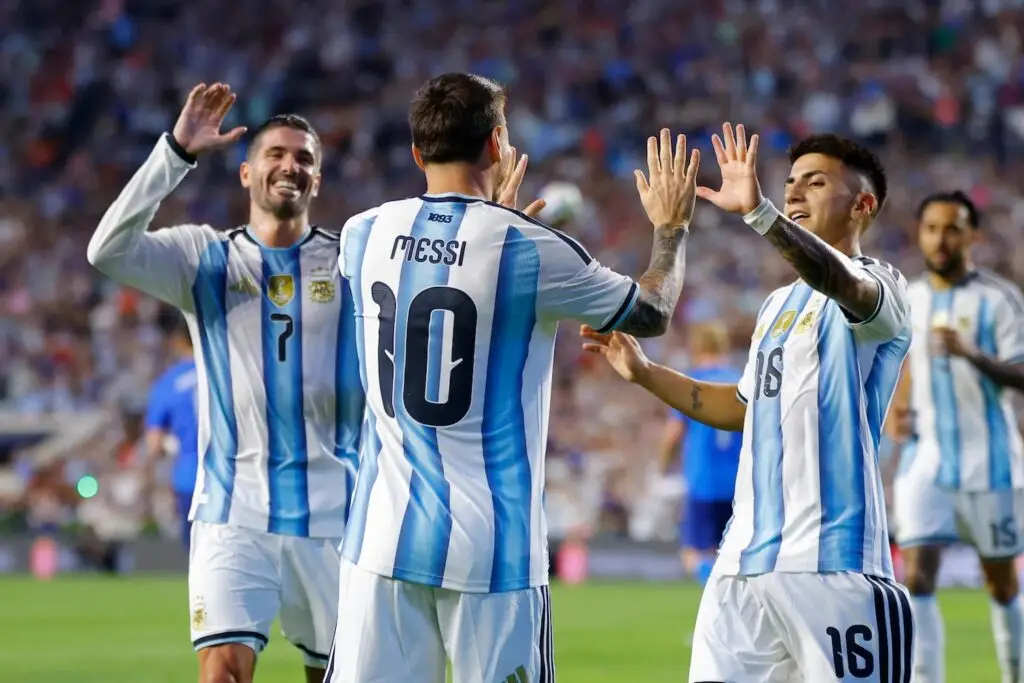
When three nations and 16 cities come together to host the FIFA World Cup 2026, the scale stops feeling like a tournament and starts feeling like geography. A continent becomes the stage as borders soften into corridors. And Southern California—shaped by migration, sport, entertainment, and constant movement—sits inside that landscape with all eyes on it.
San Diego and Los Angeles have always felt connected. Hop on the Pacific Surfliner, and the trip unfolds in one continuous stretch of coastline, passing beach towns, neighborhoods, and city centers.
Traveling from San Diego, everything still feels slightly suspended as the Pacific Surfliner follows the coast north with ocean on one side and a slow suburban blur on the other. San Diego stays in exhale. Los Angeles is already building toward something louder.
This summer, Los Angeles will host eight matches of the FIFA World Cup at Los Angeles Stadium, including the US Men’s National Team opener on June 11, while the region stretches into 39 days of programming across stadiums, parks, transit hubs, beaches, and neighborhoods. Instead of one massive fan hub, Los Angeles is embracing a citywide celebration, with fan zones spread across its entirety.
But this pattern has been rehearsed here for decades. In 1994, Southern California became one of the defining stages of the World Cup, when matches at the Rose Bowl placed global attention on the region and turned local stadiums into international landmarks, confirming its ability to hold the world at scale.
What distinguishes Southern California is not just infrastructure, but cultural permeability. Fashion, music, film, art, and sport constantly overlap here, creating an environment where identity is flexible and always in motion. From the Venice boardwalk, where skate culture shaped modern street style, to global soccer stars rubbing shoulders with Hollywood celebs, to authentic Spanish cuisine moving up and down the I-5 corridor, everything circulates.
The World Cup is not introducing anything new here, it’s showing up for the summer and showing out, revealing what this city has always known about itself. What follows is a look at the fan zones and how Los Angeles turns itself into a city-wide stage for the tournament, one neighborhood at a time.
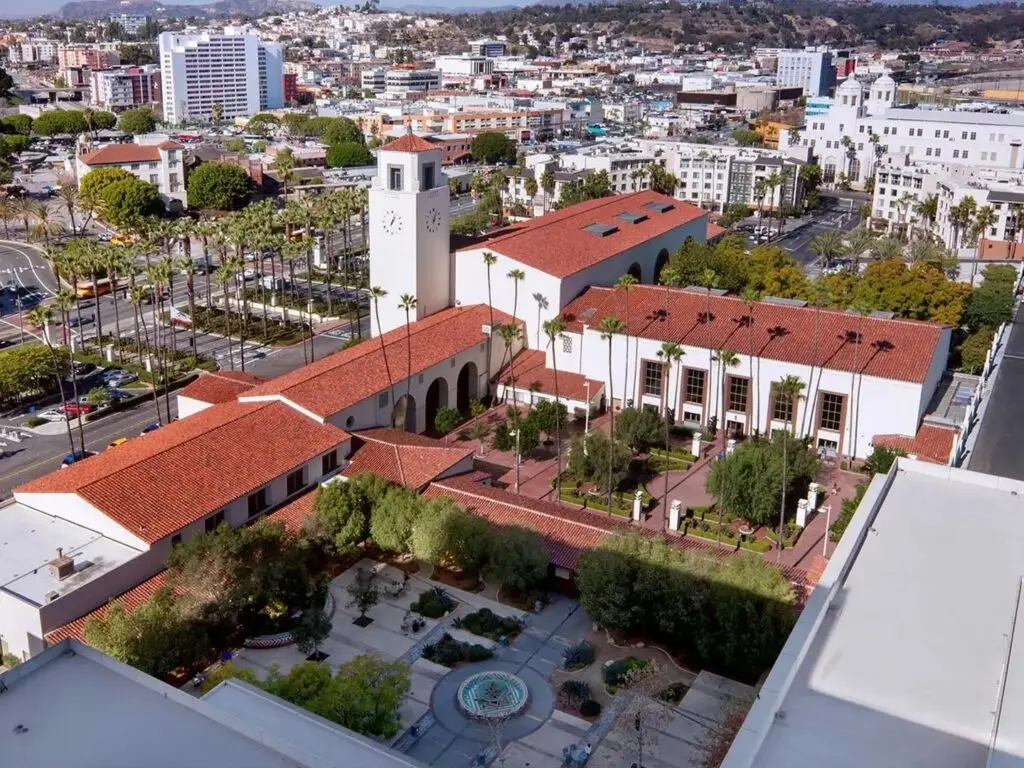
As the heart of Los Angeles, Union Station is an official Fan Zone June 25-28 during the World Cup, but in practice it never really stops being one.
It is the city’s circulation point, its meeting ground, its pressure valve. Commuters, travelers, match-day crowds, and everyday Angelenos all move through the same space, and everything mixes, overlaps, and scales in real time. In a way, this is where the World Cup stops arriving in Los Angeles and starts moving through it.
The Pacific Surfliner from San Diego to Los Angeles makes that shift feel almost too easy. No stress or gridlock anxiety, just a straight line up the coastline with ocean on one side and everything slowly becoming more built on the other. It’s one of the rare ways into LA that doesn’t feel like arrival as friction. You can sit with a laptop, watch the Pacific drift past, grab coffee from the café car, and let the city come to you in pieces.
That’s the beauty of arriving at Union Station. Instead of feeling like you’re on the edge of the city, you’re immediately surrounded by it. And, inside, the station already reads like a World Cup nerve center: banners, movement, multilingual energy, the sense that something global is about to funnel through this exact point. The Heart of the City Fan Zone only sharpens that feeling, with simultaneous match screens, DJ sets, meet and greets, and immersive activations built around marquee games like USA vs. Türkiye.
From there, the city splits outward.
ROW DTLA feels like the first exhale after arrival. A converted industrial campus turned creative district where restaurants, retail, and open-air courtyards form a self-contained ecosystem. If you’re looking for the perfect first meal in LA, make it lunch at Pizzeria Bianco. The thin-crust pizza is reason enough to go, but the space leaves just as much of an impression.
What I liked most about ROW DTLA is how quickly it resets you after the train. One minute you are stepping off at Union Station, and the next you are in a space that feels like its own version of LA, a city inside a city with some of the most curated shopping I’ve ever seen.
Bodega hides itself behind a convenience-store front, a sneaker and streetwear space disguised as something ordinary, like LA refusing to make anything feel too obvious. The whole campus moves like that, part retail, part gallery, part neighborhood you are only temporarily inside.
Plus, the idea that someone can get on a train in San Diego, stay on the same line, and end up inside a World Cup city without ever crossing a hard border feels almost unreal in the best way. Well until, of course, you experience it yourself.
The Original Farmers Market has Los Angeles already running at fan zone capacity long before FIFA arrives. Founded in 1934, it’s a stitched-together maze of food stalls, grocery counters, and long-standing vendors that somehow makes global cuisine feel local without trying too hard.
During the World Cup, it becomes an official Fan Zone from June 18 – 21. USA vs. Australia, Mexico vs. Korea Republic, projected over tables of gumbo, empanadas, and sushi rolls that have been sitting next to each other for years like it’s the most normal thing in the world.
Lunch here doesn’t land as a break. Orders fly, languages converge, and people cut through space like they already know where they’re going. Just a few steps away, the Grove turns the volume up in an unmistakably LA way, with shopping bags drowning shoulders and Erewhon smoothies acting like accessories. It’s ridiculous. (It’s perfect).
And close proximity, LACMA folds into the same orbit, which is exactly why it belongs in this fan zone network. Urban Light does what it always does, turns strangers into a shared composition under its glow. Inside, the World Cup is already quietly present, especially in Fútbol Is Life by Lyndon J. Barrois, Sr., where iconic soccer moments are rebuilt from gum wrappers, paint, and glue into something intimate and handmade.
It works here because everything is already overlapping at scale. A global tournament rendered through craft, sitting inside a cultural campus that is steps from where people are already eating, shopping, and gathering.
And then LA starts to split itself open.
On June 20, Downey becomes an official Fan Zone, screening matches like Germany vs. Côte d’Ivoire and Tunisia vs. Japan across a large civic viewing space built for crowds, not polish. There’s an opening ceremony, soccer exhibitions, an art walk, interactive booths, food vendors, and a beer garden that makes it feel like the neighborhood collectively decided to host the world.
Hansen Dam (July 2–5) takes it a step further: LED screens, stadium sound bouncing off water and sky, families showing up early like it’s already a tradition. Magic Johnson Park (July 4–5) brings a different cadence again, just more South LA energy. Whittier Narrows (July 9–11) stretches it into the San Gabriel Valley like the tournament is learning how far it can actually travel.
The pattern becomes obvious pretty quickly. The World Cup isn’t being held in LA so much as it’s being distributed through it, connecting places like Exposition Park, where the city already knows how to act like a built-in fan zone.
The Coliseum sits there like it has been waiting for this moment since the Olympics, while BMO Stadium, the Science Center, and the Natural History Museum stack into one dense cultural cluster that already knows how to hold crowds.
Walking through the Natural History Museum, it felt like the World Cup had already started arriving in small ways. Global exhibits, layered histories, and then suddenly FIFA merch in the gift shop, like the city was quietly rehearsing for what is coming. Nothing about it felt random…it felt placed.
Just outside the park, West Adams resets the pace completely. Lunch at Highly Likely is an absolute must. It is calm, design-forward, full of locals and creatives moving through their day, the ideal reset after the intensity of a fan zone or museum marathon. And that contrast is exactly the point.
The fan zone idea is not just big screens and tourist traps. It is places like this too, already functioning as gathering points without needing a tournament to justify it.
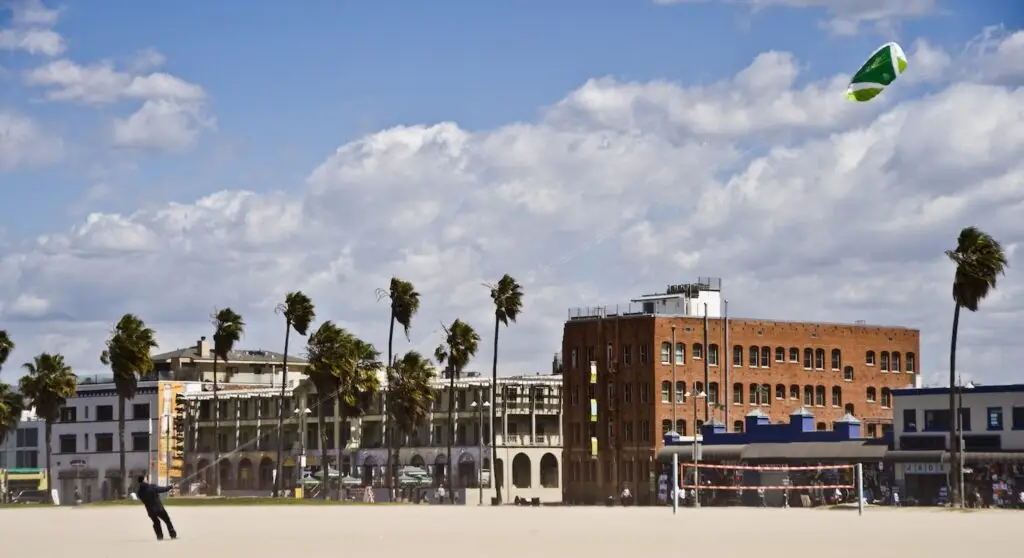
If you’re going for only one Fan Zone in LA, it needs to be Venice. No debate.
Venice doesn’t really “become” a World Cup site. It already behaves like one on a normal day, just with more sunscreen and louder speakers. So when quarter-finals hit the boardwalk, the whole thing just tips slightly into overdrive.
The Fan Zone stretches across Windward Avenue and the sand, with giant screens, DJs, global food vendors, and that very Venice mix of chaos and confidence that somehow works every time. One minute you are watching a match, the next someone is rollerblading past in a flag cape like that is a completely reasonable life choice.
It is all technically free and open to the public, which feels very Venice: maximal energy, minimal explanation. Then there is the “if you know, you know” layer at Windward Plaza with premium seating and after-parties, for people who want their football with fewer beach grains involved.
Staying at Hotel Erwin basically drops you directly in absolutely everything. It is one of those rare hotels where the location is the entire personality. Rooftop views that feel like the entire coastline is in on it, rooms that look straight onto the action, and Kassi upstairs where you end up eating Greek-inspired food like you didn’t plan anything else that day anyway.
Everything in Venice is walkable in a slightly chaotic, very charming way. Abbot Kinney for shopping that somehow feels curated and casual at the same time. There are even the canals when you need a reset from the boardwalk.
The bike tour through Venice and Santa Monica with Bikes and Hikes LA is where it all starts to click in a different way. You are literally moving through the coastline story while an insanely animated, genuinely excited guide pulls everything together in real time (even my friend I brought along, who has never watched a full soccer match in her life, started getting weirdly invested in the World Cup). It stops feeling like sightseeing and starts feeling like you are accidentally understanding LA.
Between lunch at Gjelina, always buzzing, always slightly overbooked, always worth it, and dinner at Ospi Venice with its famous vodka sauce you should absolutely put on everything (pasta, pizza, chicken parm, no exceptions), it is the kind of place where you sit down thinking you will “quickly eat” and leave remembering that Venice has its own pace and you are just temporarily synced to it.
Before the city fully tips into its final stretch, it pulls back into something quieter on the Westside, like a deep inhale before the ending.
The Getty Center sits above Los Angeles in a way that makes everything feel briefly organized. The noise drops out the higher you go. Hilltop architecture, wide courtyards, Vincent van Gogh’s Irises, and lush gardens that seem to move slower than the rest of the city create a kind of visual pause. From here, LA doesn’t feel chaotic, just mapped out.
It’s also where the World Cup starts to register in a different register. People are spread out on the grass picnicking, looking over a city that will soon hold global crowds, and it feels like the preview version of something larger about to switch on below.
Dinner at Telefèric Barcelona in Brentwood (also a must) brings that calm into something more social again. It is Spain translated into LA without losing its energy: shared plates, paellas arriving in the center of tables, tapas moving constantly, sangria built for conversation that stretches. The room feels alive but not rushed, like everything is happening at once but still making time for itself.
What stands out is how natural it feels here. A Spanish dining culture operating fully inside Brentwood, just minutes from where the city’s biggest stadium and fan zones are preparing to host the world. That’s what makes LA so LA, they layer all these cultures from around the world, not separate.
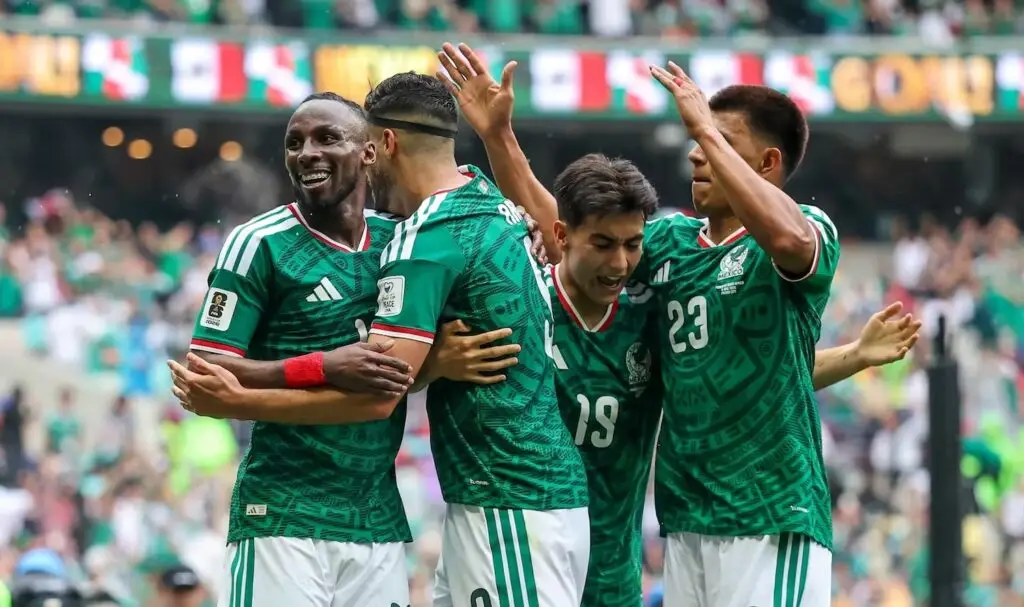
By the time the World Cup reaches its final phase, it becomes all about Los Angeles Stadium in Inglewood and the final matches.
Even touring the stadium ahead of the tournament, it already feels like a preview of something inevitable. The pitch is real grass stitched into sand and lifted slightly above ground level, making the field feel almost staged inside the space rather than sunk into it. Seating is engineered for closeness, with vertical sightlines designed so there is no bad angle, no visual barrier, no distance that feels accidental.
The video board hangs above everything like a moving skyline, visible from anywhere in the stadium, constantly pulling your attention between the field and the scale of the experience itself. Even the canopy reacts to light and weather, softening the appearance into something that feels less like a fixed arena and more like a venue built to respond to the game.
And the final zones (July 14–15 and July 18–19) expand the moment outward. Fairplex moves the finals inland into a full-scale festival built around the semifinals, third-place match, and final, with interactive exhibits, mascots, and “science of soccer” installations that feel less like a viewing site and more like a temporary world. West Harbor brings it back to the coast, where screens face open water and an active port, crowds set against cargo ships drifting through the background like part of the broadcast. Downtown Burbank closes it at street level, turning the final matches into screenings, street fair energy, and global food that feels structured but uncontained.
By the end, nothing in Los Angeles feels severed anymore. Stadiums, museums, waterfronts, vintage stores, and city streets all function as one connected grid for the same event, each absorbing a different version of the finale as it passes through.
Maybe that’s the trick. The World Cup 2026 doesn’t begin at Los Angeles Stadium. The tournament begins somewhere between San Diego and Los Angeles, coffee in hand on the Pacific Surfliner, watching the coastline slowly trade one version of Southern California for another.
Isabella Dallas is a freelance writer for San Diego Magazine and the Arts and Culture Editor at The Daily Aztec in her final year at San Diego State University. She previously worked as an editorial intern for SDM, but when she’s not writing, you can find her trying the best coffee spots in SD, devouring the latest rom-coms, and indulging in anything and everything pop culture.
As NASCAR lands in San Diego this weekend, a recently burgled dad is irregularly excited
My 15-year-old daughter tried to steal our car this week, so I’m ready to become a NASCAR dad. It would be appropriate discipline. We just relocated to a nice suburb within walking distance of her high school. The suburbs are like living in a Tesla commercial. I am pretty far from the wealthiest dad in this neighborhood (I am the least wealthy dad in this neighborhood), more than a few engineering degrees short of being in the running.
I’m fairly certain watching NASCAR is a violation of our HOA and a violation of my daughter’s emotional HOA. But NASCAR hits San Diego this weekend and I have a fever I’ve never felt before. I want to watch 111 drivers do dangerous things in cars and trucks on an active military base in the ocean. Since my lifelong exposure to NASCAR is limited to Talladega Nights and every single iteration of the movie Cars, I can only base my plan of attack on oafish stereotypes.
So while other neighbor dads are sizing bubble jackets for their golf simulators, I’m gonna grow a Ricky Bobby, run the extension cord for the TV out into the carport we share with six other condos, fill a cooler with a proper 80-20 split of Hamm’s and Mountain Dew, treat a lawn chair like an ADU, and spend a few hours yelling ohsheeeit as if it’s a single, nine-syllable word.
The quality parents in our neighborhood seem highly attuned to the sound of any vehicle breaching the 6 MPH threshold, so I should gather a crowd pretty fast. They may come over with strongly worded emails in their hearts, but one glimpse of Shane van Gisbergen and hometown hero Jimmy Johnson guzzling the last remaining drops of gasoline on the planet in a dazzling display of carmanship—they’ll join my NASCAR pop-up party.
By the time my daughter brings her friends over, we’ll have a real welcoming committee.
Because, like I said, my daughter tried to steal my car.
She wasn’t going to Mexico. But while Claire and I were off doing businessy stuff to afford my teen’s skincare rituals, she and a friend decided to teach themselves stick shift. She’s never driven a stick before. I’m not saying she has, but if she has driven a vehicle at all—it would have been done in a remote, abandoned parking lot where the only possible thing she could destroy was the concept of driving itself.
But a couple TikTok videos later, she and her friend felt a certain level of mastery had been achieved, and they gave it a go. They backed our VW Bug out of the garage with a series of stalls and transmission seizures, and managed to get it into the carport, attempting to do “donuts.” That’s when I got a call from a resident, who had taken an active interest in this experiment.
Which got me wondering about the power and might of vehicles. Turns out, even at carport speeds there exists a bit of potential fireworks. A garage door could become not a garage door anymore. At 145 MPH on Naval Base Coronado this weekend (don’t worry, they slow down to 100 MPH for turns), NASCAR drivers are essentially doorbell ditching gods. I didn’t register the temperature after my daughter’s trial run, but the track at NASCAR races usually hits a cool 130-150 degrees, enough to lightly sear some Nikes (the tires themselves hover in the 200 degree range).
And that is at least part of our fascination with NASCAR (the other fascination is the legendary pit parties, which either set humanity back a few evolutionary links, or advance it by the same amount of links). These drivers do something all of us do every day in a very efficient, boring way—drive a car—and take it to its extreme impulse. Grace and precision at the thunderous edge of shit going terribly wrong. Most of us have looked at San Diego home prices and felt a burning desire to see how fast our Honda Pilot could make it to our new home in Vegas. So NASCAR drivers are acting on our own wildest impulse.
Troy Johnson is the magazine’s award-winning food writer and humorist, and a long-standing expert on Food Network. His work has been featured on NatGeo, Travel Channel, NPR, and in Food Matters, a textbook of the best American food writing.
San Diego’s biggest food and drink festival is back for a week-long celebration of SoCal’s best restaurants, chefs, and wineries from Sept. 30–Oct. 4
Maybe it was when Breaking Bad stars Bryan Cranston and Aaron Paul drank mezcal with chefs from San Diego and Food Network on the cliffs over Blacks Beach. Or the dinner outside under lights with Alex Morgan, celebrating some of the country’s most badass women chefs. Or the celebrity pickleball tournament hosted by NFL Hall of Famer Drew Brees, where the star of It’s Always Sunny in Philadelphia made thwacking sounds with locals. Or when Iron Chef winner Beau MacMillan commandeered (some say “stole”) a golf cart and delivered drinks and ice to chefs.
Whatever it is, Del Mar Wine & Food seems to have become the food and wine festival for people who don’t usually like food and wine festivals. The most San Diego thing.

Two years ago, Thrillist named it one of the best food festivals in the country. Last year, 10,000 people came out to experience it, including Guy Fieri. Afterward, the founders spent a couple days trying to put their finger on why it felt so special. They had to name it, lean into whatever that was.
“It all came back to play,” says one of those founders, SDM co-owner Troy Johnson, a longtime San Diego food writer and Food Network judge. “Making world-class bread is serious, but breaking bread shouldn’t be. We gather all these incredibly talented people who take their craft very, very seriously—work their butts off all year to make some of the best food and drink in the country—and then we all just kinda play in the grass. We believe it’s possible to create something of incredible value and make the experience of that thing a laidback, easygoing, unpretentious experience. That’s what this is, and who we are in San Diego. The whole reason we did this was to shine a national spotlight on the people who make our food and drink culture hum.”

The festival dropped its 2026 lineup today.
Headlining the fest are Food Network chefs Jet Tila, Maneet Chauhan, and Aarti Sequeira; Top Chef winner and Michelin-starred Buddha Lo; Iron Chef alum Beau MacMillan; MasterChef winner Kelsey Murphy; MasterChef Latinos winner Michelle Mathelin, chef and Guy’s Grocery Games judge Catherine McCord, chef and former Masterchef Mexico judge Benito Molina, Top Chef alum Jackson Kalb, Michelin-starred chef Drew Deckman, Michelin-starred chef Javier Plascencia, James Beard award-winning chef Brady Ishiwata Williams, and James Beard-nominated chef Mawa McQueen.
The party kicks off on Wednesday, September 30 at Monarch Ocean Pub with Signature San Diego, a walk-around tasting of the city’s greatest bites, from Baja seafood to bold Mexican flavors. From there, the energy carries into a celebrity pickleball tournament hosted by Drew Brees at Barnes Tennis Center on October 2, pairing friendly competition with an all-inclusive tasting experience in support of Feeding San Diego.
The main event is the two-day Grand Tasting at Surf Sports Park on Oct. 3 and 4. The city’s top chefs, food people from TV lands, and local tastemakers gather on the weirdly perfect grass to serve up everything from juicy Wagyu burgers and beef tallow fries to yellowtail tuna tostadas and veggies dressed up in their Sunday best. Wine and cocktail pairings are designed to round out the whole experience, including activations from Aperol Spritz, Hendrick’s Gin, Tequila Ocho, Mezcal Vago, Rioja wines, and Temecula producers.

A VIP lounge offers exclusive access to curated small plates from Michelin-level chefs and pour from some of SoCal and Napa’s finest wineries and drink makers. The Official After Party at Guesthouse La Valle on October 3, a spirited walk-around tasting just steps from the Grand Tasting, where cocktails take center stage through imaginative bites inspired by the smoky, citrus-forward, and bittersweet flavors of classic drinks.
Zones return with activations including the Big Queer Food Fest celebrating queer chefs and queer-owned businesses; the Wellness Zone led by Novo Dia offering a built-in reset with non-alcoholic mocktails, movement-driven activations, and wellness-forward moments. Coastal lifestyle and locally made brands are also integrated throughout the festival.
“We are excited for the fourth edition of the Del Mar Wine & Food Festival this fall, which has quickly become one of the largest food and wine experiences on the West Coast,” says co-founder Chris Finn. “As the festival continues to grow, we are constantly looking to add events, experiences, and partners that will resonate with our San Diego community, and embody the Southern California way of life.”
Returning as the festival’s partner is local nonprofit Feeding San Diego. To date, Del Mar Wine & Food has raised $100,000 to support their ongoing fight against hunger across the region.
Stay tuned for additional events hosted by festival partners including Rob Machado, San Diego Wave, San Diego FC, Town & Country, and San Diego Mojo.

The 2026 Del Mar Wine & Food Festival will take place September 30–October 4 throughout San Diego County.
The week culminates with the Grand Tasting at Surf Sports Park (formerly the Del Mar Polo Fields) at 14989 Via De La Valle, Del Mar.
A wide variety of exclusive dinners, drink tastings, and other lifestyle events will be announced soon and available for purchase individually on Del Mar Wine & Food Festival’s website. These festivities include chef-curated dining experiences across San Diego’s hottest restaurants, a celebrity pickleball tournament, wine tastings, and more.
The Grand Tasting takes place this year on Saturday, October 3 and Sunday, October 4.
General admission for the single-day Grand Tasting starts at $185. An Early Access option is also available at $235, which includes an extra four hours before general admission to meet, mingle, and feast. For a two-day pass, General Admission starts at $275, while Early Access is $375.
VIP tickets begin at $425 for a single day, offering access to pre-festival experiences, exclusive food vendors, a dedicated VIP area, and more. For the full weekend in VIP, passes are priced at $765.
Buy tickets today at DelMar.Wine.
Unfortunately, only service animals are allowed at the venue. All attendees must be 21 years or older.
Isabella Dallas is a freelance writer for San Diego Magazine and the Arts and Culture Editor at The Daily Aztec in her final year at San Diego State University. She previously worked as an editorial intern for SDM, but when she’s not writing, you can find her trying the best coffee spots in SD, devouring the latest rom-coms, and indulging in anything and everything pop culture.
Một Bánh Mì melds Vietnamese and Mexican traditions in a new pop-up concept featuring its take on a local favorite
Is there any food more quintessentially San Diegan than the California burrito? That was a rhetorical question since the French fry-stuffed, flour tortilla-wrapped torpedo of carne asada bliss came into being in the 80s (either invented by Lolita’s or Santana’s, depending on who you ask). But now, Vietnamese-Mexican pop-up Một Bánh Mì may be giving the longtime champ a run for its money.
Một Bánh Mì’s original California banh mi takes cues from both cultures, using traditional Vietnamese baguettes from Paris Bakery filled with carne asada and garnished with cilantro-jalapeno crema, Vietnamese mayonnaise, pickled vegetables, cilantro, cucumber, jalapenos, and of course, French fries.
“It’s so San Diego—it’s so us,” says Desmond Bui, pop-up founder and owner with partner Marisol Santiago. “It really encapsulates the Vietnamese-American and Mexican-American journey and identity here.”
Both grew up in San Diego. Bui is Vietnamese. Santiago is Mexican-American. The sandwich makes utter personal sense.
Neither of them cooked professionally before launching Một Bánh Mì earlier this year, when they popped up for the first time at Convoy Rising for Lunar New Year. But after seeing the rise of the local Vietnamese coffee scene with shops like Saigon Coffee, Chance’s Coffee, and Em Coffee House, Bui knew there was an opportunity for a new generation to put a fresh spin on Vietnamese food in San Diego.
While there are plenty of places to grab a banh mi around town (K Sandwiches, Ba Le French Sandwich Shop, Lee’s Sandwiches, and so on), we’ve yet to hear of a California banh mi. Firsts are being firsted.
“Banh mi is regarded by top chefs as the best sandwich in the world,” says Bui. (Side note: I concur.) And after discovering overlap between Mexican and Vietnamese cuisines through common ingredients like cilantro, lime, jalapeno, white onion, and pickled vegetables, they began planning a menu.

Một Bánh Mì also serves Bánh Mì Đặc Biệt (Vietnamese cold cuts), Bánh Mì Thịt Nướng (grilled lemongrass pork banh mi), and Bánh Mì carnitas de hongos (mushroom pâté banh mi), along with some specials like Thịt Nướng tacos (grilled lemongrass pork) and hopefully soon, al pastor trompo banh mi (marinated pork shaved off a spit) and charcoal-grilled adobada.
Other banh mi shops Americanize names for English-speaking audiences—for example, listing “grilled chicken sandwich” instead of Bánh Mì Gà Nướng. Not Một Bánh Mì. If you’re not sure how to pronounce something, Bui says they’re happy to help. It’s an educational opportunity, he explains, as well as a chance for them to be “unapologetically Vietnamese and Mexican.”
Part of the immersive experience is playing Vietnamese tunes from the ‘60s and ‘70s.
“When you think of universal languages, what are ways when you travel or meet a different group of people that you can still find common ground and connect and feel like we’re a lot more alike than we are different?” Bui asks. “Food and music.”
The musical element is part of Một Bánh Mì’s greater vision. They’d like to evolve into a lifestyle brand and media company, with merch, jars of pickled vegetables, you name it. Eventually, they’d like to open a brick-and-mortar somewhere in Mid-City. In the meantime, they’ll continue to pop up at places like Mixed Grounds and Chance’s Coffee, or wherever they can. (Bui called Provecho Coffee their “dream collab,” hint hint.)
Listen Now: The Latest in San Diego’s Food and Drink Scene
Have breaking news, exciting scoops, or great stories about new San Diego restaurants or the city’s food scene? Send your pitches to [email protected].
Beth Demmon is an award-winning writer and podcaster whose work regularly appears in national outlets and San Diego Magazine. Her first book, The Beer Lover's Guide to Cider, is now available. Find out more on bethdemmon.com.
Tips from the trusted experts at Mauzy Cooling, Heating, Plumbing, and Electrical
San Diego summers can be brutal. But since the hottest period is typically late summer into early fall, San Diegans still have time to prepare. The pros at Mauzy Cooling, Heating, Plumbing, and Electrical are standing by to help homeowners fortify their homes against the elements and ensure their air conditioning is as frosty as the penguins that serve as the company’s mascots.
Many homeowners underestimate the load their AC system faces, especially in the inland valleys where temperatures regularly top 100 degrees. San Diego regularly sees multi-day heatwaves each summer, and a system that struggles on the first day will likely fail by the third. Longer run times, unusual sounds or smells, and uneven cooling from room to room are all signs that your system may not survive the next hot spell.
Systems typically last 12 to 17 years, but there are exceptions. If a system is approaching that, or is already there, a professional evaluation is recommended before summer really heats up. A good rule of thumb: If you can’t remember when your system was last serviced, it’s due.
“As technology changes, systems become smarter and smarter,” says Sean O’Connor, an install manager at Mauzy with 42 years of experience. “There are a lot of people out there who will say a system’s only good for 10 years. I don’t buy that—these systems are built to last as long as they’re taken care of.”
There are also a few steps homeowners can take between services to extend the life of their system. Regularly changing a dirty filter—especially if you have kids or pets—and keeping an outdoor unit clean can help head off problems in the future, says O’Connor.
Also, be realistic about whether it’s time to replace a unit. O’Connor likens pouring money into salvaging a faulty unit with patchwork repairs and replacement parts to “tripping over a dollar to pick up a dime.” When one part fails, others are sure to follow, and newer parts may not be compatible with older units. Mauzy recommends homeowners use the 50% rule: If a repair costs more than 50% of the system’s replacement value, and the equipment is over 10 years old, replacement is usually the better long-term value. And don’t forget the ducting. An older house that was built with heat and later had air conditioning added may not have sufficient airflow, regardless of how good the system is.
Last but not least, homeowners should know who to trust when it comes to their homes. Built on three generations of professional integrity, Mauzy has grown into not just a leader for cooling, heating, plumbing, and electrical services, but a leader in the community known for supporting local nonprofits across an array of causes. To ensure complete peace of mind, Mauzy stands behind a comprehensive 12-point guarantee that outlines its commitment to outstanding service, quality equipment, expert technicians who understand how the local microclimates affect HVAC performance, and no upsells or surprises on the bill.
“We go the extra mile. That’s what sets us apart,” O’Connor says. To get a free quote today, visit mauzy.com.

Savor the Taste of Hillcrest, two-step through Boots in the Park and watch the inaugural Oceanside Bombers game
Watch theater productions with meta commentary, participate in (or spectate) local sports and take advantage of unique dining options this weekend in San Diego. See a play within a play during The Play That Goes Wrong at Lamb’s Players Theatre and the nostalgic Broadway musical The Drowsy Chaperone at Coronado Playhouse. Enjoy new and old sports traditions in North County, with the 40th anniversary of the Carlsbad 5000 race and the debut of Oceanside‘s new arena football team, the Bombers. Plus, reserve a spot at scenic eating experiences (if weather permits), such as the Taste of Hillcrest, Estancia La Jolla’s annual Garden Party and Smoke on the Vine at The Flower Fields.
Food & Drink | Concerts & Festivals | Theater & Art Exhibits | More Fun Things to Do

Dine outdoors in The Flower Fields during Smoke on the Vine this Friday from 6 to 8:30 p.m. Patrons will eat four courses arranged by Napatini Wine Bar Executive Chef Joshua Holt, each paired with specialty pours from Rombauer Vineyards. As they feast on ribeye cap steak and smoky Hokkaido scallops with citrus flavors, guests will learn more about the evening’s selections from the chefs and winery partners. Reservations are $150 per person and come with admission to The Flower Fields. Another Smoke on the Vine dinner will take place April 17.
5704 Paseo Del Norte, Carlsbad
Craving pizza, tacos, ramen AND cookies? Fortunately, you can sample all of those foods and much more during the annual Taste of Hillcrest this Saturday from noon to 4 p.m. This all-ages event—with a few 21+ only locations included—is a chance to stroll the neighborhood for an afternoon of diverse bites and sips. After checking in at Next Step Treasures or Crest Taco, attendees can follow the white and orange balloons to explore 38 Hillcrest eateries. Tickets are $51, and come with one sample at each participating location.
Hillcrest
Gather in the greenery of Estancia La Jolla during the hotel’s annual Garden Party this Sunday from noon to 4 p.m. Dine on earthy cocktails and botanically-inspired fare while taking in the natural ambiance of spring in all its blooming wonder. This sophisticated soiree will include a curated selection of local artisan vendors to peruse and shop from, plus a floral dress theme. Admission is $82 for the Garden Party and comes with a welcome beverage and two cocktails.
9700 North Torrey Pines Road, La Jolla

One hundred years ago, jazz pioneers Miles Davis and John Coltrane were born, and today, their music continues to mesmerize. To celebrate this dual milestone, La Jolla Music Society is hosting a Jazz Mini Festival (April 6-12), including a tribute concert headlined by trumpeter Terence Blanchard and saxophonist John Coltrane. This Thursday (7:30 p.m.) at Balboa Theatre, the two jazz luminaries will be joined by guitarist Charles Altura, pianist Eden Ladin, bassist David Ginyard Jr. and drummer Oscar Seaton. Plus, concertgoers can enjoy a pre-show interview featuring Blanchard and Coltrane at 6:30 p.m. Tickets range from $71 to $119 for this concert.
868 Fourth Avenue, Gaslamp
FKA Twigs is a pop star operating at the absolute peak of her powers. Her 2025 was seismic, with a pair of exciting new electronic-infused albums: January’s Eusexua and November’s Eusexua Afterglow, each adding to her penchant for world building. Though her international Body High Tour includes stops at sizable venues like Madison Square Garden and The O2 Arena, local listeners can catch Twigs, plus multi-hyphenate artist Izzy Spears, in a more intimate space this Thursday at 8 p.m. at The Sound. Tickets start at $112.
2260 Jimmy Durante Boulevard, Del Mar
Nancy Sinatra said these boots are made for walkin’, but at Boots in the Park, these boots are made for rockin’. This Saturday at 1 p.m., the traveling festival will ride back to Waterfront Park with a spirited lineup of country music musicians like Miranda Lambert, Jordan Davis, Mackenzie Carpenter and Dylan Scott. In addition to the tunes, attendees can check out experiences such as themed bars, mechanical bull riding, line dancing lessons and photo-op worthy art installations. Ticket options include general admission ($124), GA+ ($219) and VIP passes ($299).
1600 Pacific Highway, Embarcadero
Ryan Hardison is a freelance arts and entertainment writer and recent graduate of San Diego State. When he's not staring at his laptop, he's likely eating an adobada burrito or getting sunburnt at the beach.
Enjoy the holiday with the city’s best restaurants offering seasonal brunch buffets, prix-fixe menus, and à la carte specials
Consider this your annual reminder that Mother’s Day is not the time to improvise. What’s in: roses, peonies, and a card attempting to summarize a year’s worth of gratitude in three paragraphs or less. What’s out: pretending you “didn’t know it was this weekend.” In a city currently operating at full brunch capacity, San Diego responds as it always does—oceanfront tables, excessive buffet spreads, and sparkling wine refills. Whether it’s waffle stacks, chilled seafood displays, or carving stations doing the most, these San Diego restaurants have you covered.
Brunch Buffets | Mother’s Day Specials & Prix Fixe Menus | À La Carte Brunch

All moms deserve elegance on Mother’s Day. Celebrate a beachfront with a beautifully timeless and tasteful brunch at the Crown Room in Hotel del Coronado. Indulge in options like lemon vanilla pancakes with berry compote paired with crispy bacon, made-to-order omelets or your very own egg benedict station, shucked oysters, whole in-house smoked brisket, Peach Melba Verrine, and more. Guests over 21 can enjoy a complimentary glass of Champagne.
Price: $235 per adult | $125 per child (6 – 10) | Ages 5 and under are free
Hours: 10 a.m. – 3 p.m.
Address: 1500 Orange Ave, Coronado
Reservations: Hotel del Coronado
Mimosas, marina views, and a Mother’s Day where the only thing on the agenda is enjoying it? We’ll cheers to that. Located at the Catamaran Resort, this Mother’s Day brunch literally has it all, from sushi rolls and nigiri to a charcuterie spread stacked with salumi, prosciutto, cornichons, pepperoncini, cherry peppers, and grainy mustard, plus waffle and omelet stations, cedar-planked salmon, and panko and herb-crusted mac and cheese. Kids can also create a bouquet for Mom that’s just chaotic enough to be adorable.
Price: $120+ per adult | $60+ per child (5 – 12) | Ages 4 and under are free
Hours: 10 a.m. – 4 p.m. (last seating at 2 p.m.)
Address: 3999 Mission Boulevard, San Diego
Reservations: Oceana Coastal Kitchen
Mother’s Day at Arlo transforms into an enchanted garden that’s equal parts lush and indulgent: a raw bar, fresh salads, delicate pastries, 12-hour braised short ribs, roasted prime rib, and Szechuan pepper–crusted swordfish from the Santa Maria grill. Spoil moms, grandmas, aunts, and every beloved mother figure with live music, a roaming mimosa cart, floral bouquets, and of course, a little retail therapy courtesy of the Kendra Scott trunk show—necklaces, bracelets, earrings, or, let’s be real, all of the above.
Price: $99 per adult | $40 per child (5 – 12) | Ages 4 and under are free
Hours: 9 a.m. – 3 p.m.
Address: 500 Hotel Circle N, San Diego
Reservations: OpenTable
Forget the CVS roses (respectfully). Rumorosa’s Mother’s Day brunch is back for its third year, pairing complimentary flowers with sun-drenched marina views. It’s coastal-modern meets Baja soul, where the food is bright and very much not an afterthought. Last year’s spread leans into Carrot Cake Waffles, a made-to-order omelet station, Café de la Olla French Toast, Roasted Lamb Tostadas, and other “yes, I’ll have everything” moments.
Price: $90 per adult | $40 per child (5 – 12)
Hours: 9 a.m. – 2 p.m.
Address: 1380 Harbor Island Drive, San Diego
Reservations: OpenTable
A boozy brunch overlooking Mission Bay with Mom? Say less. Celebrated at Tidal with a lavish spread of cheeses and charcuterie, a seafood bar stacked with oysters, shrimp, crab legs, and ahi specialties, and chef-attended carving stations with slow-roasted prime rib. Made-to-order omelets and pancakes, maple-glazed pork belly, roasted Baja grouper, vibrant seasonal salads, and brunch classics round it out, finishing with an abundant mini dessert selection.
Price: $125 per adult | $50 per child (5–12) | Ages 5 and under are free
Hours: 11 a.m. – 3 p.m.
Address: 1404 West Vacation Road, San Diego
Reservations: OpenTable
Mother’s Day at Animae is anything but expected. Tucked into the Marina District, this world-class steakhouse leans West Coast with a playful Asian twist. This year, treat Mom to a dim sum–style experience: a slightly more elevated, endlessly flowing take on the buffet, where indulgent small plates arrive tableside, perfectly complementing the Art Deco interiors and designed to be picked at, shared, and fully obsessed over. It’s less set menu, more choose-your-own flavor adventure.
Price: $104 per person
Hours: 10 a.m. – 2 p.m.
Address: 969 Pacific Hwy, San Diego
Reservations: OpenTable

Isabella Dallas is a freelance writer for San Diego Magazine and the Arts and Culture Editor at The Daily Aztec in her final year at San Diego State University. She previously worked as an editorial intern for SDM, but when she’s not writing, you can find her trying the best coffee spots in SD, devouring the latest rom-coms, and indulging in anything and everything pop culture.
The 53rd Annual National Philanthropy Day Takes Place on November 21. Join us from 11:00 a.m. – 1:30 p.m. at the new Gaylord Pacific Resort & Convention Center!
Once yearly, AFP San Diego joins with others worldwide to celebrate National Philanthropy Day (NPD), a special day set aside to recognize the great contributions of donors and nonprofits that enrich of our community and the world. San Diego’s NPD is one of the largest and most successful in the U.S., attracting nearly 900 participants, including philanthropists, nonprofit leaders, CEOs, board members, development professionals, and business, community, and civic leaders.
Sponsorship proceeds from National Philanthropy Day are reinvested in education, training, scholarships, career development, and the advancement of fundraising professionals throughout San Diego. These resources and training provide fundraising professionals with the tools necessary to support our region’s diverse array of nonprofit organizations, which rely on charitable giving for close to half of their annual revenues.
The National Philanthropy Day Honorees are selected by the NPD Honorary Committee, a group of highly respected, diverse nonprofit and business leaders. Our 2025 Honorees include:
National Philanthropy Day San Diego provides an opportunity to reflect on the meaning of giving and to celebrate the selfless contributions of individuals and organizations across the region. We look forward to celebrating with you!
Sponsorship opportunities and individual tickets are available. Please visit www.afpsd.org for more information.