Featured articles
Featured articles
Featured articles
What's next
Featured articles
Featured articles
Featured articles
Ready to know more about San Diego?
SubscribeReady to know more about San Diego?
San Marcos gets an ambitious, two-story gastro-lodge on the lake
“San Marcos: The New Dining Hot Spot!” is not a headline anyone has, nor will, write. North County inland has long had more places that grow food than good restaurants that serve it. But today, with the opening of Decoy Dockside, that changes a little bit.
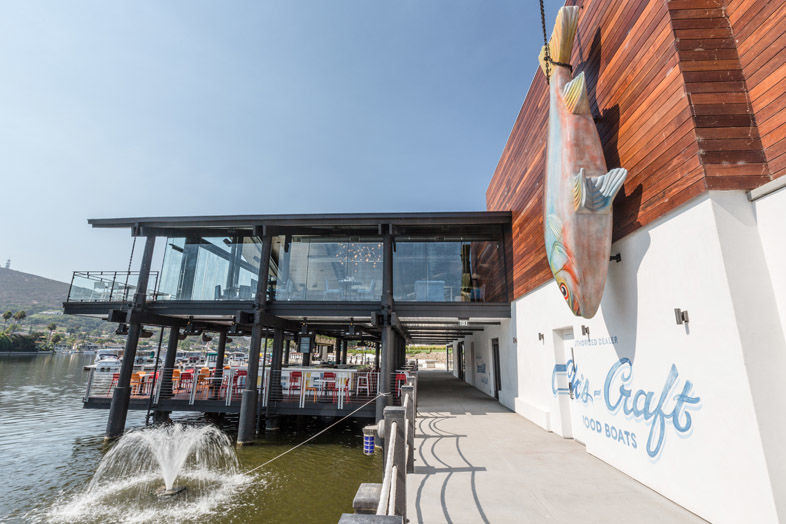
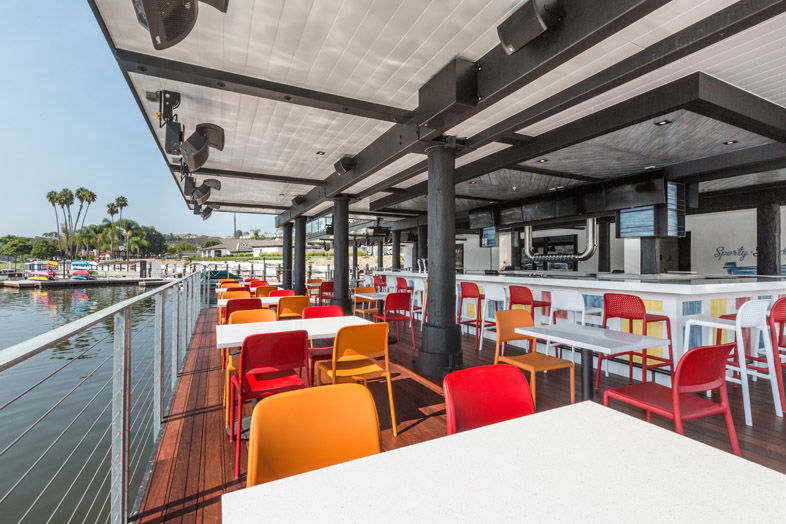
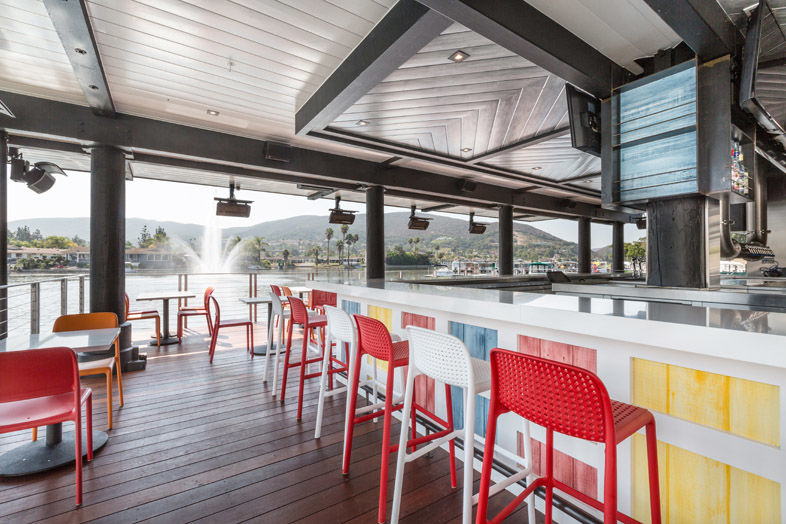
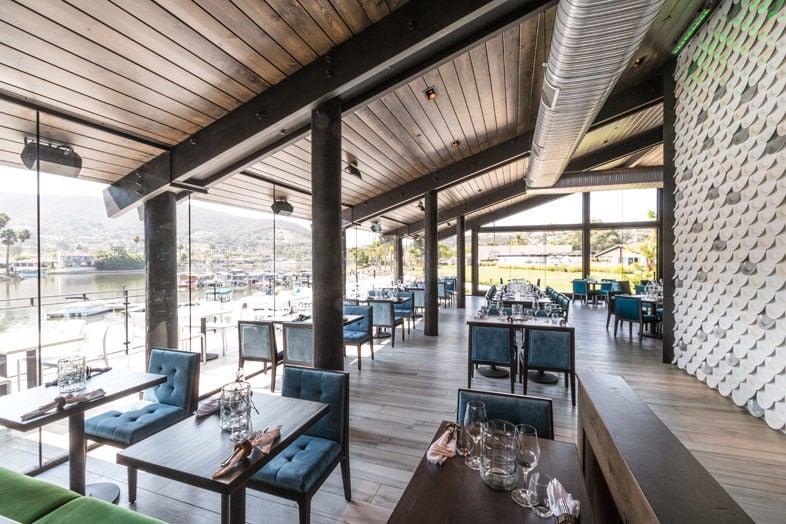
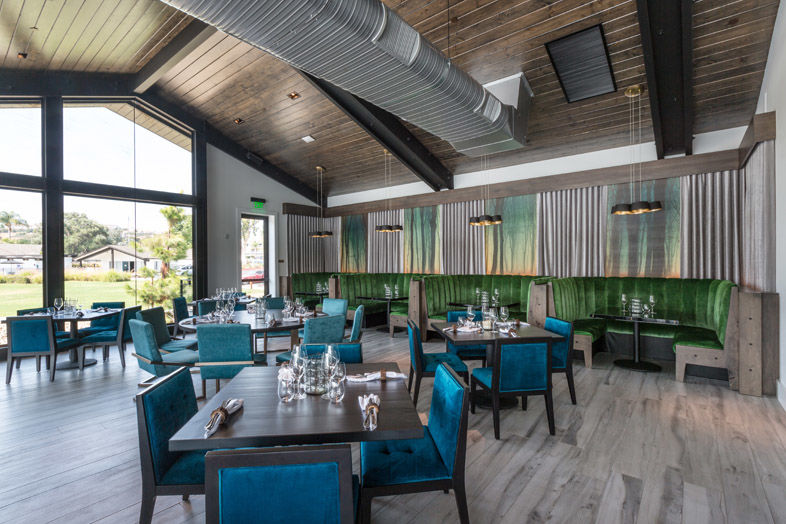
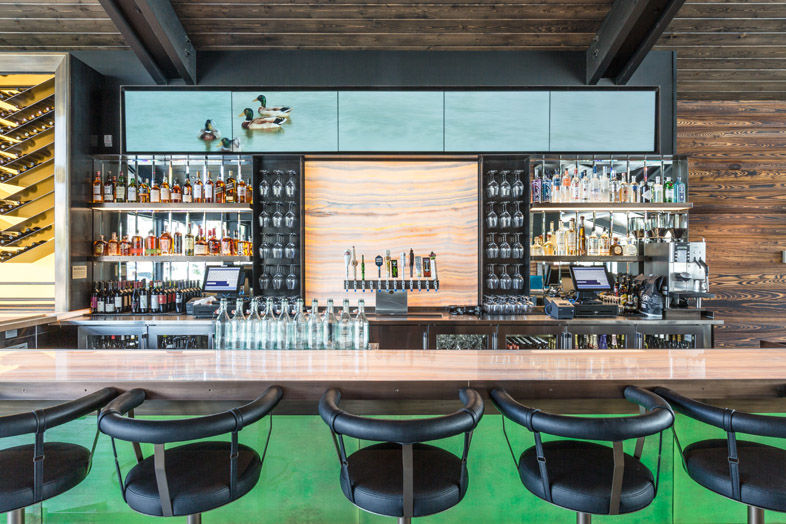
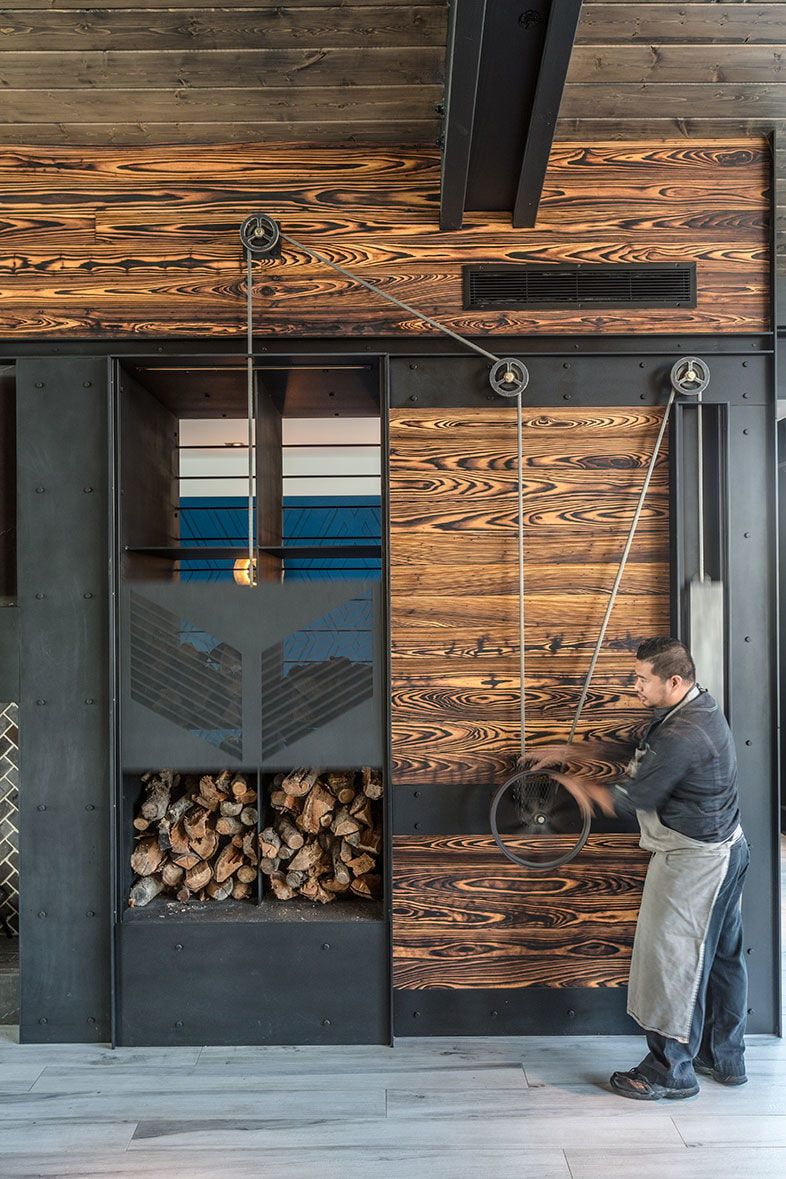
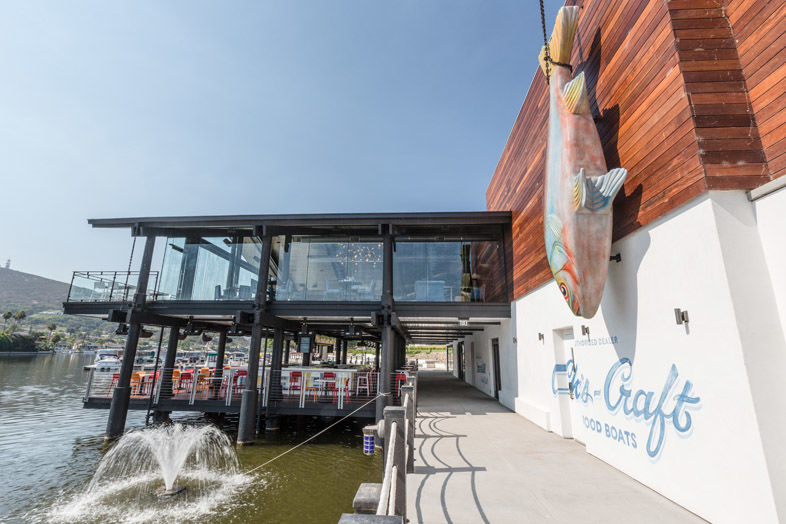
Decoy is the new two-story, lake-view restaurant and bar concept from Eat.Drink.Sleep., the hospitality company behind JRDN and Cannonball. It’s a pretty stunning part of the rehab of the Lakehouse Hotel & Resort at Lake San Marcos. Overseeing the “great outdoors” dining concept for both floors is chef Danilo Tangalin, most recently with JRDN. The 1,000 square-foot, indoor-outdoor bottom floor is called Dock Bar, where lake people can drink some craft cocktails and beers, plus casual bites like burgers, duck meatball banh mis, and ostrich empanadas (anyone who’s driven to the Wild Animal Park has seen the ostriches on local farms).
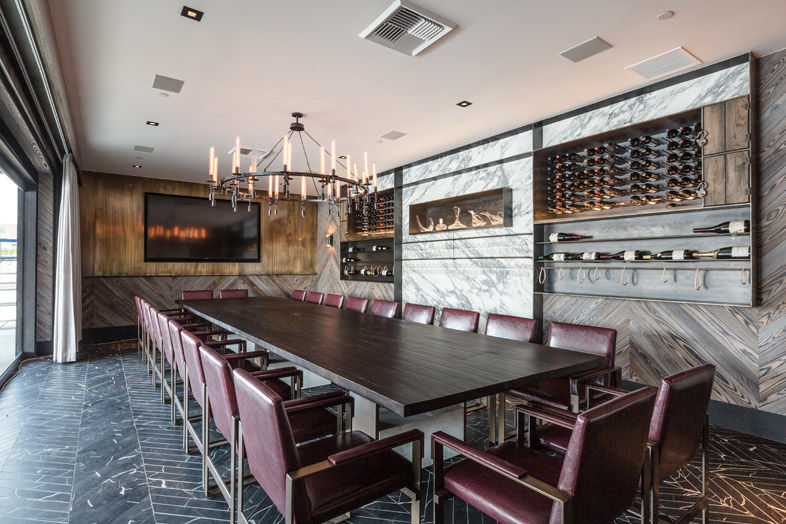
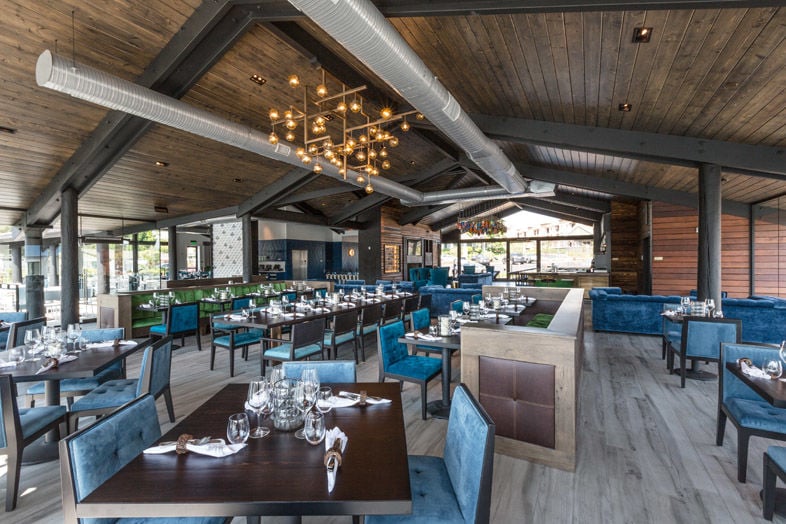
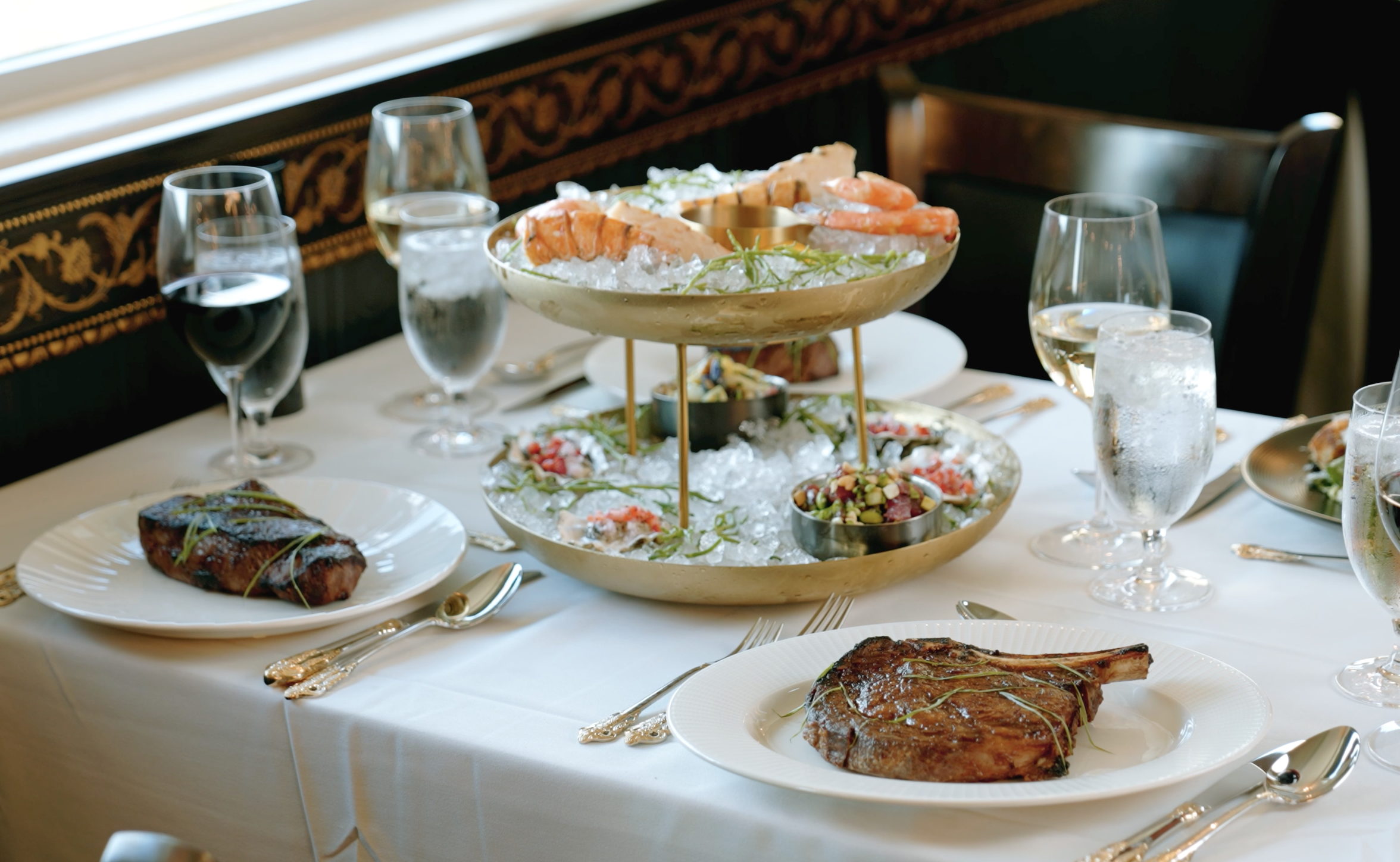
The 8,000 square-foot dining room upstairs will focus on freshwater fish and game, largely cooked in a wood-burning oven. Elk osso bucco will come over risotto and topped with mint salsa verde, while the whole roasted lavender duck is designed to share. There’s also a wood-and-bronze private dining room.
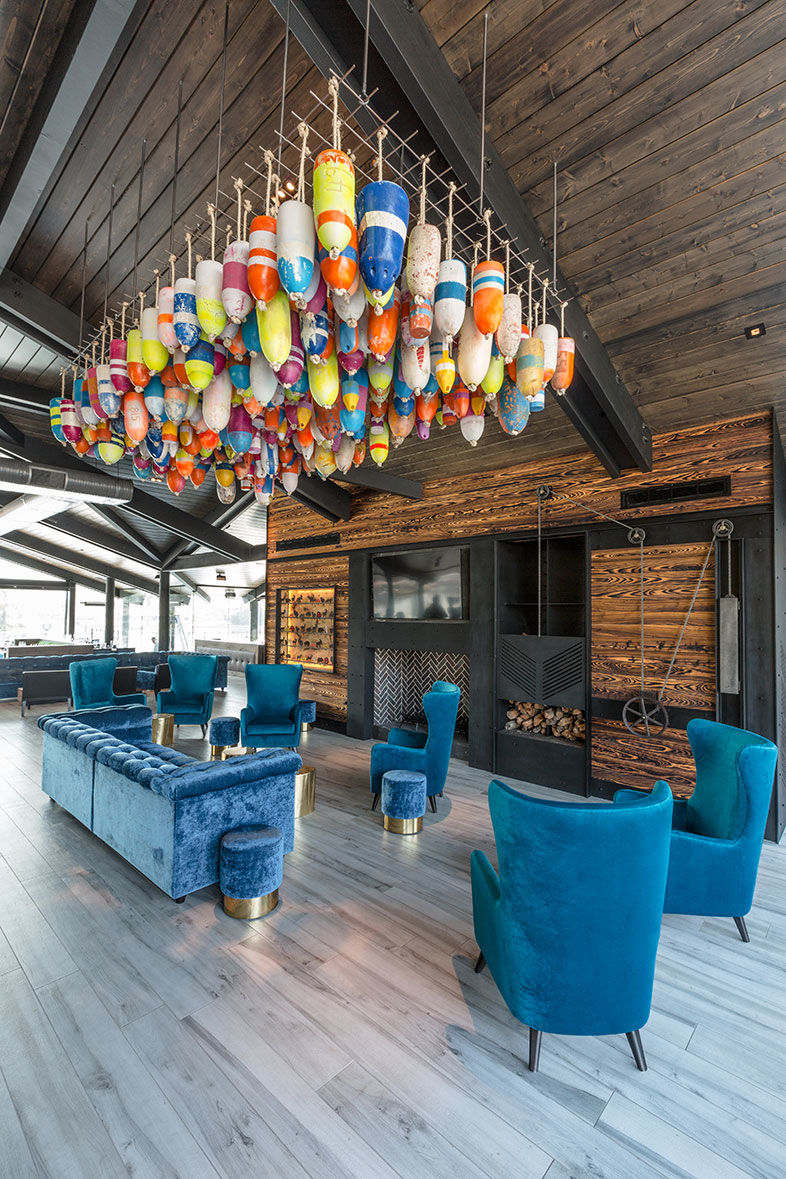
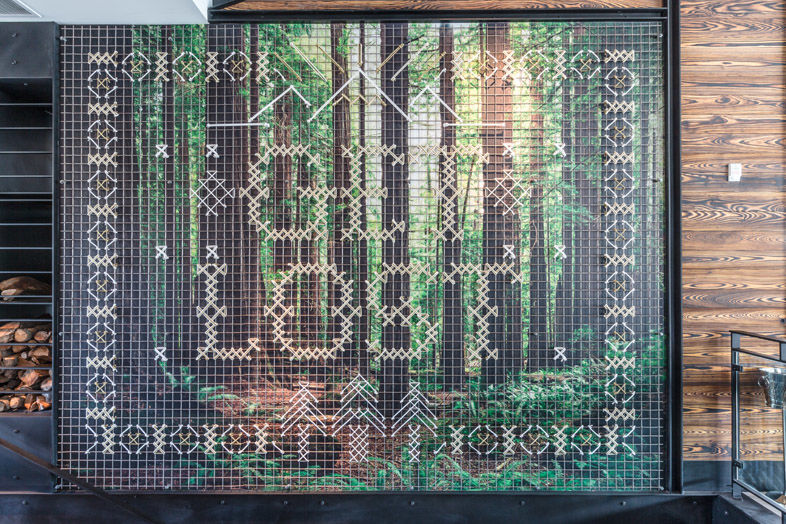
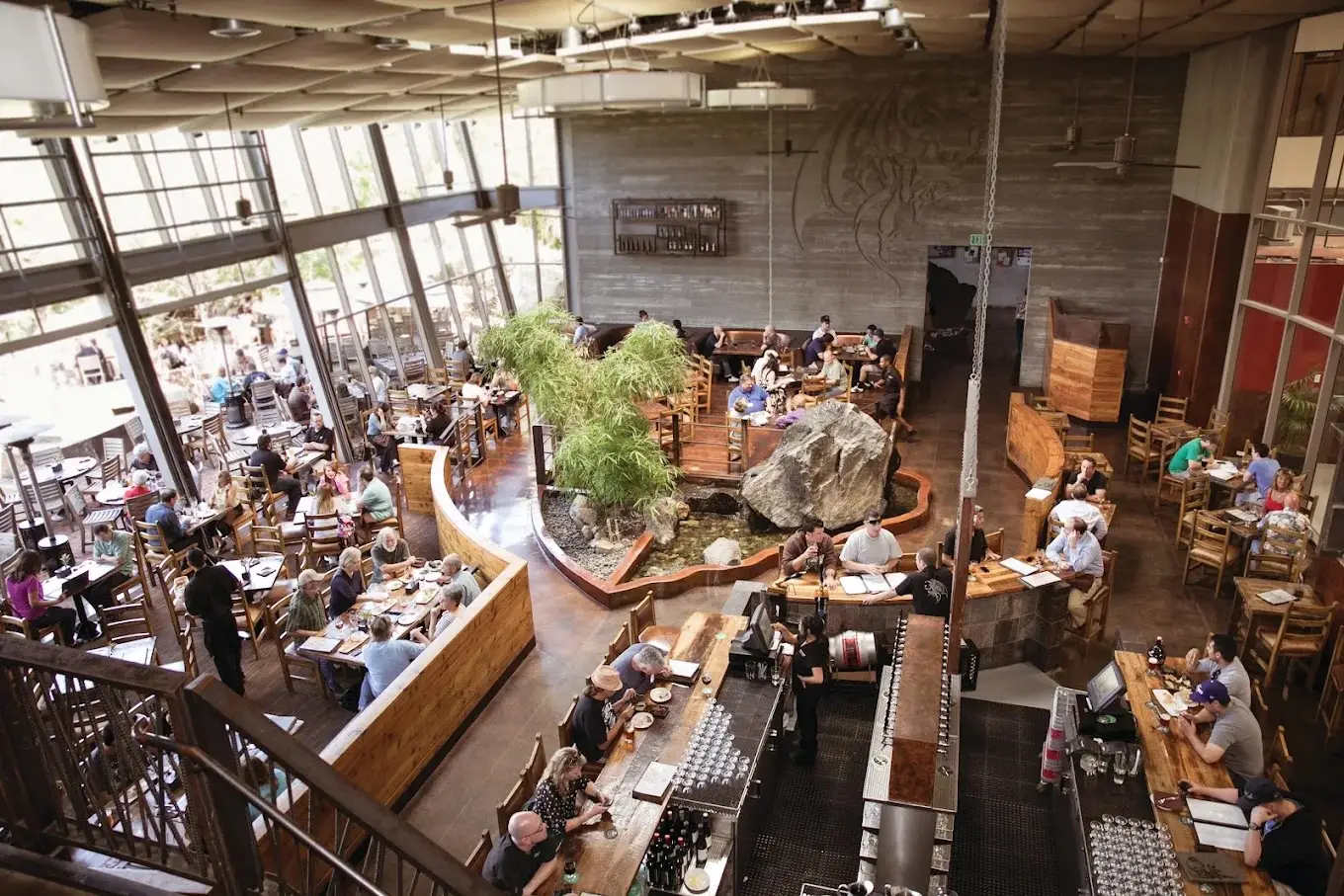
The upstairs has fireplaces, images of wildlife, lake-faring paraphernalia, green velvet booths, and large-scale landscapes of forests and California redwoods. Blue velvet chairs dot the dining room. Over 300 buoys hang overhead in an art installation by Hollis Brand Culture, who helped create the space with Eat.Drink.Sleep. director of design, Anthony Garcia.
Enough words. Please enjoy the first known photos of Decoy Dockside below.
FIRST LOOK: Decoy Dockside

PARTNER CONTENT
FIRST LOOK: Decoy Dockside
French-born pastry chef Christophe Rull will debut his first eatery this September
If you don’t know the name Christophe Rull yet, you will soon. Born and raised in Marseille in southern France, Rull started his apprenticeship at age 15 before five years of culinary school where he studied cooking and pastry. He bounced from Michelin-starred kitchens to luxury hotels to the École Nationale Supérieure de Pâtisserie (ENSP), the prestigious pastry school that Alain Ducasse (record holder for most awarded Michelin stars on the planet) founded in 1999.
After France, Rull opened Aria Resort & Casino in Las Vegas and worked at MGM Grand. He won season 7 of the Food Network’s Halloween Wars, followed by another win on Holiday Wars. He appeared on Bake Squad and then topped it all off with the title of U.S. Chocolate Master in 2021 and a fifth-place finish in the 2022 World Chocolate Masters.
So, all of this is to say, the guy can bake. And he’s about to open his first shop of his own. Christophe Rull Patisserie opens later this month in San Marcos.
Rull can bake, sure. But he’s smart, too—he knows San Diego is the place to be for the best food and quality of life. After six years in Las Vegas, he accepted the role of executive pastry chef at the AAA Five Diamond Park Hyatt Aviara Resort, Golf Club & Spa in Carlsbad from 2016 to 2021. “I fell in love with this area,” he says. But after he quit to pursue his dream of competing at the world championship, he came back to the US jobless and unsure of what to do next.
“It’s the same high as athletes—you go to the Olympic Games, and you’re sacrificing two years of your life to prepare for that big event, and once the event is done, then you’re done,” he laughs. So he asked himself “What am I doing now?” He ended up at the Hotel Bel-Air in Los Angeles as the executive pastry chef for a new concept, which allowed him hands-on decision making from development all the way to opening. Basically, it was a dress rehearsal for launching his own place.
Rull decided on San Marcos for his first patisserie for a few reasons. One, he loves North County’s chill vibe. Two, he sees all the development potential over the next few years. Getting in now will pay off later, he’s betting. The North City suite is on the small side—around 1,200-square-feet total, with around one-third as kitchen space and the remainder front of house. But he doesn’t need a ton of space to realize his ethos of “simplicity well done.”
“I like to stay really fundamental, and to the classics, such as a good butter croissant or almond croissant,” he explains. His menu will include his famous cinnamon roll and sourdough bread, plus around a half dozen different breakfast pastries, croissants, French macarons, danishes, eclairs, chia seed pudding, cookies, and some sandwiches like a classic French ham and cheese and chicken pesto, all made with imported French butter and flour.

He’ll offer around 10 eclairs at a time, ranging from classic vanilla and lemon meringue to passion fruit mango, salted caramel, tiramisu, and more. Coffee service will be simple, featuring Lavazza drip coffee and traditional espresso.
It’s a family-run business, with his wife Wilma working side-by-side with him. They both decided to leave the luxury hotel world to take a chance on the dream, something that Rull says takes risk and sacrifice. “[This] is where I wanted to be,” he says.
Christophe Rull Patisserie opens late August or early September at 251 North City Drive, Suite 121 in San Marcos.

For one-night only, everyone who has yearned for the return of University Heights’ Small Bar will get their wish. Better still, the pop-up is going to feature its famous fried chicken as orders of either half or full birds, and it’s all going down at Grand Ole BBQ in North Park on Monday, August 25 from 6 p.m. to 9 p.m. I strongly suggest arriving beforehand, because my inner psychic is predicting a ridiculously fast sellout.

Listen Now: The Latest in San Diego’s Food and Drink Scene
Have breaking news, exciting scoops, or great stories about new San Diego restaurants or the city’s food scene? Send your pitches to [email protected].
Beth Demmon is an award-winning writer and podcaster whose work regularly appears in national outlets and San Diego Magazine. Her first book, The Beer Lover's Guide to Cider, is now available. Find out more on bethdemmon.com.
The local wine label will launch its first consumer-facing space in San Marcos later this year
Emily Towe and Jody Brix Towe made their first wine in their garage. Twelve years later, J. Brix Wines is a respected California-based wine brand and an integral part of the San Diego wine community. Come this fall, consumers will be able to sip their products onsite for the first time when the pair opens North County’s first tasting room, serving exclusively natural wines made with minimal intervention.
Slated to open around early October, J. Brix’s flagship tasting room will be located at 250 North City Drive, Suite 10, in San Marcos at the North City development. Newtopia Cyder currently occupies the building, but Jody says now that their lease is signed, the cidery will begin moving out at the end of August so J. Brix can enter what he calls a turnkey space. “It’s beautiful,” he adds.

The couple always had their eyes open for the right opportunity, but they hadn’t found one until North City reached out to them with this space. “We have said for years and years of looking around and seeing what was available that it would have to be exactly the right thing,” Emily recalls. “There had to be no question that this was the perfect opportunity.”
The 890-square-foot corner suite checked all the boxes, featuring high ceilings, natural lighting, indoor and outdoor seating, a spacious wooden bar, and plenty of nearby businesses and community events, keeping foot traffic high. J. Brix won’t have a kitchen, but guests can bring their own food; stop by nearby Buona Forchetta, Milonga Empanadas, or Umami Japanese; or grab a quick munchie from behind the bar.

Jody estimates that, depending on the season and availability, they’ll have six to 12 different wines on tap and in bottles, ranging from the traditional to the esoteric. “If you like wine, we’re going to have something for you,” Emily promises.
Emily says they hope to continue nurturing San Diego’s hyper-local wine community by providing a new place to gather, learn, and enjoy good company and great wine—ideally bringing vino people together. Jody feels that, while the local craft beer community has merged as a single unit, San Diego wine needs to catch up. “It’s time,” he says. “You can see it coming.”

Cali BBQ owner Shawn Walchef opened his barbecue joint in Spring Valley in 2008 and has experimented with expansion ever since. His ghost kitchens at Barrio Food Hub and Aztec Food Hub didn’t work out, but a suite at Snapdragon Stadium crushes it every event. Though his attempt to bid on a space in the new airport terminal wasn’t accepted, a new Cali BBQ space is coming this August at Naval Base San Diego off 32nd Street in Barrio Logan. It won’t be open to the general public, but Walchef couldn’t be more stoked to bring his brand of barbecue to the servicemembers and employees with on-base access. (Those without can hit up the original location in Spring Valley or check out Cali BBQ the next time they’re at Snapdragon Stadium.) Cali BBQ will be the first local restaurant on the base.
“Our goal is to be the best possible partner with the Navy, so it hopefully opens up other opportunities—because we would love to be on Camp Pendleton,” Walchef says. “We would love to be on North Island. There are a lot of amazing men and women that take care of this country and need to eat … We think we can be a credible, quality, local option for them.”

Have breaking news, exciting scoops, or great stories about new San Diego restaurants or the city’s food scene? Send your pitches to [email protected].
Beth Demmon is an award-winning writer and podcaster whose work regularly appears in national outlets and San Diego Magazine. Her first book, The Beer Lover's Guide to Cider, is now available. Find out more on bethdemmon.com.
The new San Marcos restaurant offers a farm-to-table take on the golf course grill
A golf course restaurant is often a place for sweaty people in visors to house a club sandwich, a carb-and-bacon bulwark against all those tall boys chugged on the links. But The Lakehouse Resort’s new Brickmans Restaurant and Bar is not your average 19th hole ho-hum.
To make it so, the Lakehouse tapped Jarrod Moiles, former executive chef of renowned high-end, food-obsessed resort Rancho Valencia.
“The idea was to have a chef-driven restaurant on the golf course versus just having the generic grill golfer’s restaurant,” says Moiles, who’s both exec chef and director of F&B at the San Marcos resort. To build the menu, he took inspiration from his childhood in the Massachusetts countryside, where farm-to-table was just the way things were done, not a marketing cliché.
Grilled salmon picatta, beet and goat cheese salad, birria tacos, loaded potato skins—a lot of dishes on Moiles’ first menu are a tribute to San Diego and SoCal farms and ranches like third-generation, family-run Brandt Beef. For kicks, he also does cheddar cheese-dusted onion rings, an ode to a culinary icon of the cellophane bag movement: Funions.
The restaurant got a full remodel and remake and still sits at the heart of the Lake San Marcos. Moiles says they recreated it with locals in mind. “We realized we need to focus on who’s coming and living here, and who’s moving into San Marcos right now,” he says. In other words: Keep the quality high and the tendency to resort-gouge away from the prices.
Golfers seeking classic culprits will still find burgers, beer-battered fish and chips, and the mandatory club sandwich. The lettuce will just be a whole lot greener. Aiolis will have chefy-ness. Bread will matter.
They also added more space for folks to gather, including a bright, modern lounge with dark wood accents. A full renovation of the dining room, bar, and patio is set to take place in the future, but with floor-to-ceiling windows overlooking the Kermit-colored driving range, it’s not hell on the eyes.
After all, there are few things more satisfying than watching people exercise while spending quality time with quality beer and upgraded spuds.
Brickmans reopened April 1. The restaurant is located at 1750 San Pablo Drive, San Marcos, inside The Links at Lakehouse.
Lili Kim is a content coordinator and writer for San Diego Magazine, with experience highlighting local businesses and communities. When not writing or shooting film, she is likely brewing her seventh cup of tea of the day or strolling along Sunset Cliffs.
The annual event honors middle market companies creating jobs, scaling up, and investing in the region
San Diego is known for its startup culture and innovation economy, but what happens when the company moves beyond its early-stage years? The San Diego Business Impact Awards aim to answer that question, spotlighting the middle market businesses helping drive the region’s economy.
Hosted by San Diego Regional Economic Development Corporation (EDC) and JPMorganChase, the second annual awards celebration takes place on Thursday, July 23, from 4:30 to 7:00 p.m. at Scripps Research Auditorium. More than 200 executives, entrepreneurs, and business leaders are expected to attend the networking and cocktail event honoring some of San Diego County’s fastest-growing companies.
Businesses headquartered in San Diego County that have operated for at least two years are encouraged to submit their nomination by Thursday, June 18 at 4 p.m. Companies across industries—from technology and life sciences to tourism and consumer products, as well as pre-revenue startups—are eligible for recognition.
For EDC President and CEO Mark Cafferty, the event is as much about building connections as celebrating success. “We’ve had a longtime partnership with JPMorganChase; their work aligns with our efforts to support underserved communities and drive talent development,” says Cafferty. “And the networking was invaluable last year. I’m still in touch with people I met at last year’s awards.”

EDC is an independently-funded nonprofit that works directly with San Diego companies to help them grow the local economy, make the region as a whole more competitive, and attract and retain top-tier talent with quality jobs. Through EDC, companies can get help starting or expanding their business with support for things like site selection, permit navigation, and regulatory guidance, plus connections to local resources and potential business collaborators.
The San Diego Business Impact Awards began as an idea with one of EDC’s longtime strategic partners, JPMorganChase. The two organizations share a commitment to San Diego and are dedicated to bolstering middle market businesses.
“We’re blessed with a robust innovation economy and startup community,” says Aaron Ryan, San Diego Region Manager for JPMorgan’s Commercial and Investment Bank and vice chair of the firm’s’ San Diego Market Leadership Team. “But one of the segments of the business community we felt was overlooked was emerging middle market companies—the businesses that are no longer small but not yet large.”
Ryan says supporting those companies is critical as they scale and decide where to invest, hire, and grow.
San Diego’s high cost of living remains one of the region’s biggest business challenges, making talent recruitment and retention increasingly competitive. But local leaders point to the region’s quality of life, climate, and collaborative business community as advantages that continue to attract employers and workers.

“In order to support thriving households, there has to be enough high-quality jobs for people to be able to afford to live here,” Cafferty says. “Once a company grows and excels past that middle market point in their growth cycle, they become much more likely to pay higher wages and compete globally.”
Both Cafferty and Ryan proudly tout the unique collaboration that exists among San Diego County businesses. Bringing together top universities producing high-quality talent, cutting-edge research institutions, a robust military and defense presence, leading ocean science and environmental organizations, and a binational, cross-border identity creates a distinct business ecosystem that defines and strengthens the San Diego region.
Last year’s San Diego Business Impact Awards celebrated nearly 60 honorees from 49 industries, representing a total of 8,232 jobs across eight sectors, including: software and technology, healthcare and life sciences, consumer goods, professional services, finance, construction and manufacturing, defense, and hospitality and tourism. On average, honoree companies doubled their revenues over the previous year, employed more than 145 San Diegans each, and offered an average annual compensation of $192,415.
Top honorees included defense contractor Innoflight, environmental consulting firm Bancroft Construction Services, life sciences startup Element Biosciences, defense technology contractor GALT Aerospace, organic grocery store chain Jimbo’s, and biopharmaceutical company LENZ Therapeutics. During the event, Innoflight Founder and CEO Jeff Janicik held a fireside chat offering his insights on investing in the community and embracing San Diego culture.
This year, organizers hope to continue highlighting the middle market players driving economic impact across the region. Nominations are now open through June 18 at 4 p.m. Get your tickets to the San Diego Business Impact Awards celebration to enjoy drinks by Snake Oil Cocktail Co., light bites, live music, and networking.
A Caesar salad and a Japanese tri-tip sammy to pine for at this ‘elevated’ San Marcos spot
Tri-tip sando anyone?
Deanna Sandoval
In an innocuous-looking restaurant, a culinary romp around the world awaits. The catch: It isn’t located Downtown or Little Italy or North Park. It’s in the emerging north.
With flavors from Latin America and Asia and a little Southern cooking, the dishes at Inland Tavern in San Marcos remain rooted in Southern California. Prime example: the Korean Cali Burrito. Skirt steak is marinated in a sweet and spicy Korean gochujang sauce and then grilled, wrapped up alongside thick-cut fries (essential, or else it’s not a Cali burrito), given a deep note with caramelized onions, and served with a cooling curry sauce.
Delicious.
Located on the main commercial artery of San Marcos Boulevard, Inland Tavern is surrounded by fast food chains, and for now, a clanking orchestra of construction as the city erects its Creekside District (a $108 million project to build bridges, bike lanes, and trails, restore habitat, prevent flooding, just generally improve the area). This summer, the restaurant relaunched its menu under chef Keith Lord, who started his career at the Lark Creek Inn in Marin County, before becoming a staple in San Diego’s catering scene (Wild Thyme, Picnic People). Lord worked closely with owner Pete Zacarias on a land-and-sea menu—enough intrigue to lure adventurous palates without scaring away the timid.
The word ‘elevated’ is overused in food journalism precisely because it works in cases like this: Inland Tavern does elevated pub food. Take the Caesar salad, for instance. It’s garnished with rose water-pickled onions for a gentler bite and dusted with finely grated nutty, salty Parmigiano-Reggiano—flavors that contrast beautifully with the creamy dressing. Slivered Brussels sprouts add enough substance to order as a meal, and crushed croutons bring just enough crunch and yield—thankfully unlike the rock hard, bagged-and-boxed squares that have wrecked the roofs of mouths for generations. This salad is exceptional.
Inland Tavern’s ‘elevated’ Caesar salad
Deanna Sandoval
If dining with a group, start with a few rounds of shrimp and salmon poke seasoned with furikake and served with taro chips (ask for more chips). Then add the flatbread with labneh, a soft Mediterranean yogurt so thick it’s nearly the consistency of cheese, drizzled with olive oil and amped up with za’atar (a spice blend starring toasted sesame seeds, sumac, and oregano).
Next, order the Katsu Crack Sando. This one’s substantial enough to share, and may require a fork, a knife, and ambition. The famed tri-tip from Seaside Market (known colloquially as Cardiff Crack) gets the katsu treatment (breaded with panko crumbs and fried) while griddled slices of Hokkaido milk bread aims to contain crunchy kimchi slaw, garlic aioli, hot mustard, and Asian BBQ sauce.
A perfect order at Inland Tavern
Deanna Sandoval
For vegetarians and vegans, well, there’s always water and oxygen. Not much. But they’ve got a few salads and a hearts of palm ceviche, which proves zesty and refreshing with microgreens, quartered watermelon radish slices, and charred lime. Again… elevated. As I snack on cream cheese-stuffed garlic milk bread rolls (softer and fluffier than the average bread roll), I watch a pair of regulars hem and haw over the ceviche, then suspiciously inspect the dish, and finally call chef Lord over to rave about it.
In addition to its new menu, happy hour specials include 20 percent off appetizers and $2 off craft beers on tap, a Taco Tuesday lineup of carnitas, carne asada, and shrimp tacos, and half-off wings on Wednesdays.
I’ll make it out for weekend brunch as soon as I’ve had my fill of that Caesar salad.
Ligaya Malones grew up in Kaua’i, Hawai’i and is a San Diego-based writer covering the intersection of food, travel, and culture. Her work has appeared in publications including Food52, Condé Nast Traveler, Lonely Planet, and Salt & Wind Travel.
Eating world-champion pizza in the secret alterna-world of Lake San Marcos
The famed Stefano Ferrara pizza oven burns anywhere from 700 to 1,000 degrees.
Photo Credit: James Tran
This lake has racy secrets. I can just tell. It’s lined with unassuming single-story homes that have their own tiny docks, pontoon boats moored until the next martinis. Martinis tend to be plural on lakes. A giant inflatable unicorn suns in one of the yards, its vinyl rainbow mane lightly bleached. In the middle of the lake, a 30-foot-tall fountain blooms, like an indie version of the Bellagio water show. There is a man standing in a gondola with a striped shirt and a flat-brim hat, guiding his love canoe with his love oar. I call down to ask him how big the lake is. Says about a mile. Says there’s a little waterfall at the end. Says for a price he’ll show me a sunset.
I have wandered onto the set of Ozark. It all feels too suspiciously idyllic and hidden in plain sight to not have one or two versions of Jason Bateman running illicit lake schemes. Someone tells me Lake San Marcos is unincorporated, a word that’s always had an appealing “Timothy Leary of real estate” ring to it. No boat is allowed to have an engine over 9.9 horsepower, so it’s a nice, safe lake full of buoyant golf carts.
Forty-eight years a native and I’ve never been here. How did this manmade wonderpond of suburban serenity escape me for so long?
The puffy unicorn suggests a younger crowd is moving into Lake San Marcos, which has primarily been a golden-aged community. To be fair, it still has a strong elder scene, but an influx of new blood is also suggested by the fact that I’m eating some bruschetta and drinking a gigantic Aperol spritz on the deck of an impressive modern restaurant—Amalfi Cucina Italiana—overlooking the man in the love boat trying to sell me sunsets.
From the coast of Amalfi to the coast of San Marcos—a feast.
Photo Credit: James Tran
Lake San Marcos was created in 1946 when the landowner built a 50-foot dam on San Marcos Creek so he could have year-round access to water for his onion, tomato, and walnut crops. In the late ’50s, the lake was bought by three brothers—Bob, Don, and Gordon Frazar. More than a few thought Gordon (the lead dreamer) was nuts—a neighborhood on a glorified pond? A community in a then-rural area too far from San Diego and much too far from LA? They drained the lake, increased its size to 80 acres, and built the first master-planned lakeside development in California (also one of the first in the country). It was the first housing community to have built-in cable TV (no gaudy antennas on rooftops), and one of the first to have all utilities underground.
They put in a couple golf courses, a community center, and a grand two-story restaurant hanging over the water (originally called The Quails Inn, now Amalfi). They filled the lake with bass. The first houses were sold in 1963 for $30,000. And by god, it worked. Locals called it “the compound.”
Over the decades it’s had its share of issues. Mostly with water quality, due to agricultural runoff and algal blooms. The water can look muddy in spots and the algae can stink. It’s no Crater Lake. But in recent years a few municipal entities have taken to cleaning it, adding water purifiers. On the two days we dine here, the only scent we catch is the lusty musk of wood-fired pizza.
Imperfections aside, I love it here. Far as I’m concerned, this is boat-ramp La Jolla.
Amalfi lit up at dusk for the martini pontooners.
Photo Credit: James Tran
I also love Amalfi’s artichokes. Full stalks and hearts and tender leaves, lightly pan-fried in olive oil and served on a bed of arugula and shards of Grana Padano Parmesan.
The dish looks spartan, like just a few great things rested on a plate. But it’s incredibly delicious, proof that sometimes the best cooking technique is restraint. Amalfi imports them from Civitavecchia, Rome. In Rome, artichokes rank somewhere between carbonara and the Pope.
Amalfi opened here in summer 2020, a timing best described with many curse words. And yet, here they are. The main dining room—with its window-rich A-frame overlooking the lake—is jammed on a Saturday for lunch, packed for Tuesday lunch, stuffed for Wednesday dinner. This fact isn’t surprising given the team: four Italian friends and former leaders of the Buona Forchetta group. Chef Marcello Avitabile was the executive chef of Buona Forchetta, and is a five-time World Pizza Champion.
Some pretty famous Italian speck and sausage on a blistered pie.
Photo Credit: James Tran
Visitors see his oven when they first walk in—a custom Stefano Ferrara (the Ferrari of pizza ovens) built in Naples, golden tile, formidable, hot as hell, designed to do one thing perfectly in its lifespan. So no surprise Amalfi’s pizza is instantly in any “what’s your favorite in the city” conversation, thin crusted, leopard spotted, laden with famous ingredients. For instance, the Valtellina has speck imported from Alto Adige Sudtirol, the revered mozzarella provola di Agerola, Brie, caramelized onions, and Italian sausage flown in from Campagna. Or just get a Margherita, or have them stick a plain dough circle in the oven and eat the crust by itself. It’s that good.
Amalfi is far more than a pizza joint with fancy light fixtures. It’s a whole ode to the culinary scene of the Amalfi coast, with housemade pastas, apps, seafood, and specials. Start with the fried eggplant, tossed with San Marzano tomato sauce and topped with burrata cheese—a recipe that’s been passed down through Chef Avitabile’s family for three generations. The bruschetta is bright and beautiful, even if I wish it were toasted more—baked in the wood-fired oven, spread with burrata, topped with heirloom tomatoes, Meyer lemon zest, and olive oil chosen by Italians who know what great olive oil tastes like. The team grinds the beef for their polpette (meatballs) in house, but the key is that sauce. The meatballs rest in the San Marzano sauce for hours, trading flavors back and forth until everything is right in the world.
The house-ground meatballs rest in San Marzano sauce for hours, trading secrets.
Photo Credit: James Tran
The pizza in a jar is cute, but it’s a bit of a jumble. I don’t care if the pizza is on a plate or in a jar or on a bed of $100 bills, but I’m a stickler about wanting char on that crust and I didn’t get any. I calmed down about this immediately when I saw just how massive their bar program is—cocktails and Italian wines and beers of all stripes. It’s part Italian restaurant, part beverage emporium. Try the Amalfi Spritz (Aperol, Solerno blood orange liqueur, Prosecco, soda water) or the Four Seasons (Bacardí Superior rum, Giffard pamplemousse, cinnamon-bark syrup, lime, pineapple, and a stick of torched cinnamon).
Mind if we smoke? The Four Seasons cocktail is rum, grapefruit, cinnamon-bark syrup, lime, and pineapple, topped with torched cinnamon.
Photo Credit: James Tran
For seafood, the dish that sounds terrible on paper but absolutely works is the ravioli—filled with shrimp scampi and Buffalo mozzarella, then sautéed in a pan with butter and basil. The intimidating part is that they then airlift a whole heap of Baja ahi tartare atop. Sounds odd, but I’ve had raw tuna tossed in browned butter at a sushi restaurant and it’s a revelation. This is basically that, plus handmade pasta.
They take two days to concoct their Bolognese, and it’s about as classic as they come (Chef Avitabile cooked in Bologna for most of his career). It’s 100-percent grass-fed beef (no pork), ground the day before to let it dry-age overnight. Chef does the same thing with the veggies for the soffritto (Italian mirepoix)—dices and then rests them, which he says removes the acidity and water. The sauce is slow-cooked for six hours. Also try the boscaiola, a pink sauce (tomato, touch of cream) with farmers’ market veggies and two kinds of imported meats: sausage from Campagna and prosciutto from Emilia-Romana.
Even if San Diego’s drought one day drains the lake and it turns into a museum explaining to future generations what lakes were—I get a feeling Amalfi will still be right here.
Troy Johnson is the magazine’s award-winning food writer and humorist, and a long-standing expert on Food Network. His work has been featured on NatGeo, Travel Channel, NPR, and in Food Matters, a textbook of the best American food writing.
Scripps study shows that some patients may be able to taper their dose and maintain results
While glucagon-like peptide-1 (GLP-1) receptor agents have been used to treat Type 2 diabetes for more than 20 years, their recent emergence as weight-loss wonder drugs marked a new frontier in medicine. But their effectiveness has left some patients wondering what to do once they’ve reached their goal. Stopping the medication could mean regaining some, if not all, of the weight. A Scripps Clinic internal medicine physician recently conducted a small study of whether GLP-1 patients who had reached their goal weight could maintain that weight by taking their regularly prescribed injection every other week instead of weekly. Spoiler alert: 30 of 34 patients did. Read more about the study here and what that may mean as pharmaceutical companies roll out oral GLP-1s.
For more nutrition, wellness, and healthy living tips, sign up for the San Diego Health newsletter here.