Featured articles
Food News
Food News
Food & Drink
Featured articles

Things to Do

Things to Do
Everything SD
Featured articles
Things to Do
Things to Do

Everything SD
Featured articles
podcast-ep
podcast-ep

podcast-ep
Featured articles

Food & Drink
Everything SD
Everything SD
Featured articles
Food News
Things to Do
Things to Do
Ready to know more about San Diego?
SubscribeReady to know more about San Diego?
Where to eat, shop, and play in this historic neighborhood adjacent to Balboa Park
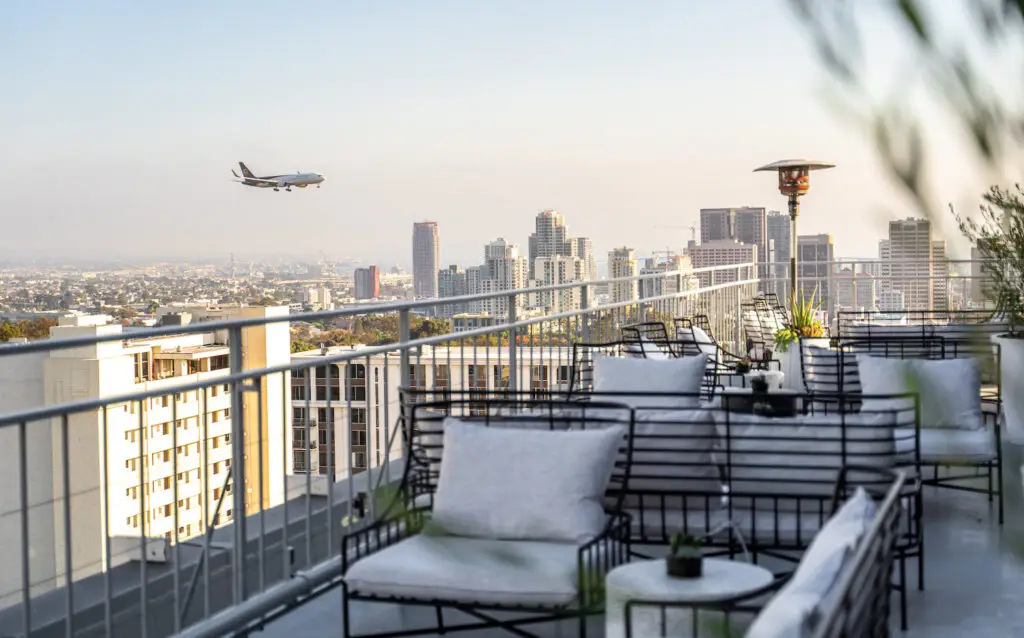
Tucked between Little Italy, Mission Hills, Hillcrest, and Balboa Park, the upscale neighborhood of Bankers Hill (its name a nod to its affluent reputation) is home to historic architecture dating back to the 1800s, designed by industry legends such as Irving Gill. The walkable area also boasts a number of beloved restaurants, bars, and cafés, including the legendary Mister A’s and hidden gems like WetStone Wine Bar. Here’s a quick guide on where to eat, explore, and shop next time you’re wandering this picturesque neighborhood.
Food critic Troy Johnson named The Balboa’s patties among the best burgers in San Diego. With locations in both Chula Vista and Bankers Hill, locals and guests can chow down on favorites like The Original Balboa Burger made with lettuce, tomato, onion, American cheese, and homemade zesty aioli or opt for The Centennial with two patties and double bacon, two slices of cheese, and all the fixings.
1863 5th Avenue
The quaint, charming Parc Bistro-Brasserie lays down classic French plates like tender steak with crispy, shoestring frites and an oven-roasted rack of lamb with tomatoes provençale, haricot verts, and mint chutney. Go for brunch, get the $18 bottomless mimosas, and try to find the bottom.
2760 5th Avenue
Pure Project Balboa Park is a microcosm of San Diego’s citywide beer renown: It’s a small-batch, ingredient-centric craft brewery and beer garden next to the iconic Balboa Park. There are flights and unique flavors, like Costa Rican coffee and vanilla or prickly pear and nebbiolo grapes. And although the beers are the star of the show, Pure Project Balboa Park’s empanadas (try the ham and cheese) play very well with suds.
2865 5th Avenue
A Bankers Hill institution for nearly six decades, Mister A’s has borne witness to a not-insignificant percentage of the city’s proposals, anniversary dinners, and celebratory fêtes, thanks to its ritzy, piano-soundtracked atmosphere and perfect views of downtown San Diego and Balboa Park. Try the crispy bacon and maple apple cider brussel sprouts and the lemony Roman artichokes next time you’re ringing in a milestone.
2550 5th Avenue
Cucina Urbana is much-loved for Italian classics like wild mushroom pasta and margherita pizza with housemade mozzarella (and also a great hamachi crudo). Got a ticket to a show at The Old Globe in Balboa Park? Chow down at Cucina Urbana, then hop on the restaurant’s free shuttle to the theater.
505 Laurel Street
You’ll find lots of local fish at this cozy haven for sushi, sashimi, and nigiri—plus fancy ingredients like white truffle oil and real blue crab (no imitation here). Try the “r u kidding me?” roll, with both of the above, plus scallops, tempura asparagus, garlic ponzu, and fried leeks.
2321 5th Avenue
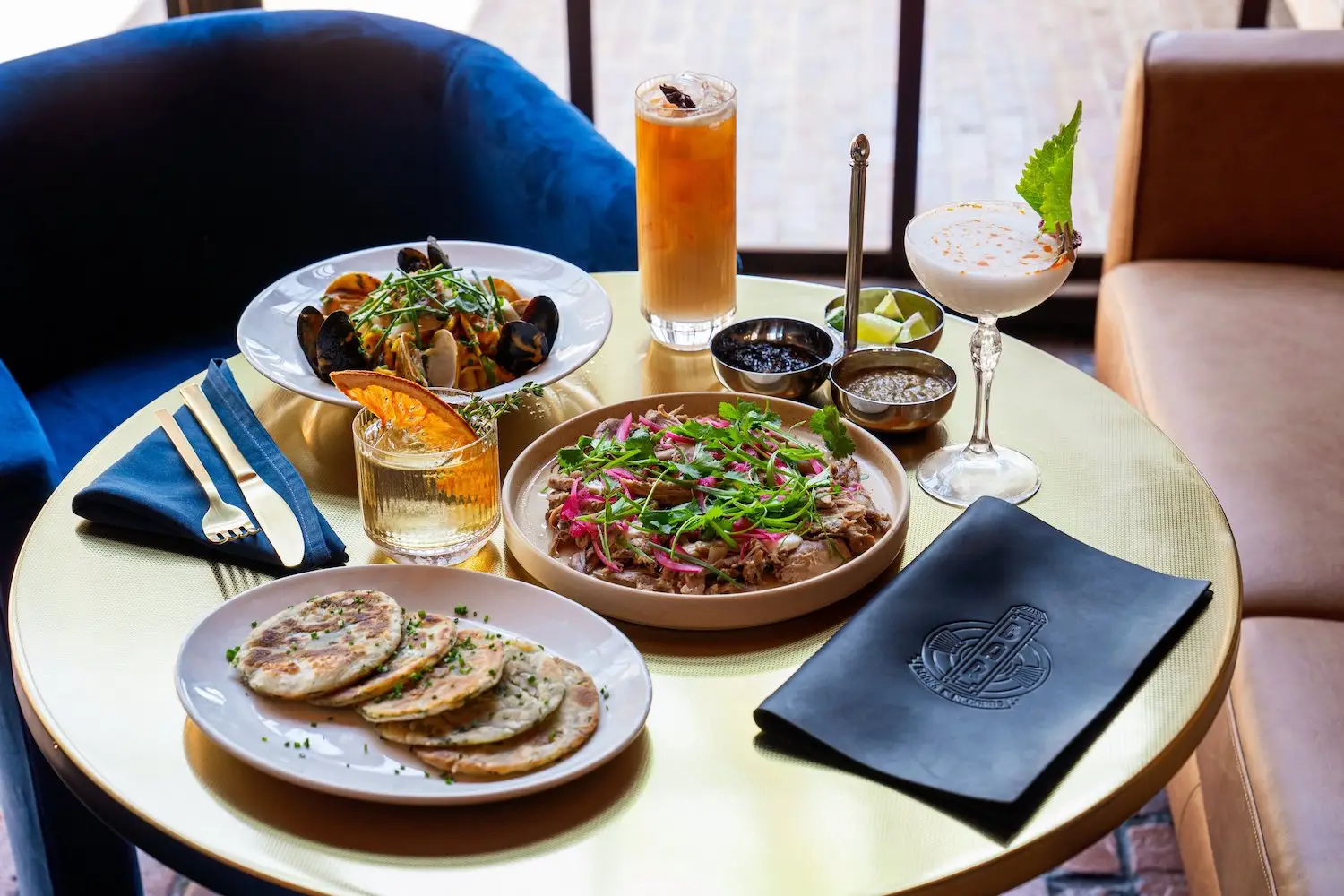
This sexy, dimly lit spot for sharable plates (and brunch!) lives up to its name with live music and a little library near the bar. Make sure to add the cocktail menu to your reading list—the Tom Kha Lins is a complex twist on the classic with coconut cream, lemongrass, and chili oil, and the Purple Rain marries whiskey and ube.
2202 4th Avenue
Owner Todd Camburn moved to San Diego in 2004, attended the San Diego Culinary Institute in 2008, and has been making innovative, nutritious, Mexican-style food (like a chopped salad with corn salsa, romaine lettuce, radish, cucumber, cotija, and tortilla strips) at Barrio Star since 2010. You’ll also find cocktails here, including The Paola, a sipper made with house-infused roasted jalapeno tequila, fresh cucumber, lime, orange juice, and blue agave.
2706 5th Avenue
The brewery’s patty melts and smash burgers are worthy of their own place in the brewery’s moniker (this is us proposing a name change to “North Park Burgers & Beer Company”). Lunch specials run Monday through Friday from 11 a.m. to 2 p.m.: $15 for a quarter-pound burger, fries, and a 10-ounce beer or soda or $18 for all the same, but with a 16-ounce house beer instead.
3095 5th Avenue
Known for its sandwiches, this corner store is always bustling, so take advantage of its order-ahead feature to snag picnic-ready bites like the turkey club or the New Yorker (hot pastrami, corned beef, and swiss cheese on rye bread with mustard). Once you’ve secured your lunch, grab a blanket and settle in at Balboa Park next door.
2601 5th Avenue
Café Bassam is proof that coffee dates can be romantic: Charm your boo over lattés in a space that looks like the trinket section of an antique store (sans the smell of dust), with jazz playing softly in the background.
3088 5th Avenue
For an easy start to the morning, head over to 5th Avenue to pick up a detox juice or açai bowl at this spot. Fruit lines the shelves around the register, like a sweet sneak peek of what’s about to hit your belly (and your Instagram feed. #healthy).
3156 5th Avenue
Settle into a high-top at this homey bar—or its fairy-lit, plant-dotted alleyway—for snacks, salads, small plates, and flatbreads along with a glass or two from the wine list. Can’t decide? Let the staff curate a blind wine flight for you for $24.
1927 4th Avenue
Open only four days a week until 2 p.m., Michi Michi is an underrated bakery offering sweet and savory treats. There’s no inside seating, so be prepared to picnic with your box of pastries—may we suggest the flaky earl grey morning bun and apple caramel miso monkey bread?
2800 5th Avenue
Azuki Sushi’s omakase-only sister spot seats only 10 guests for an immersive odyssey through a seasonal tasting menu of sushi and other dishes celebrating fish caught near Tokyo Bay. You can add on a sake and wine tasting, or sip a selection from the tea menu as a callback to the 16th century Japanese tea ceremonies that kicked off this kind of dining.
2505 5th Avenue
The rare San Diego restaurant with ample street parking nearby, Ocho is a laidback joint for classic Mexican eats. Want to skip the to-go box? Browse the restaurant’s “mini” options, which include teeny tortas and baby burritos.
1870 4th Avenue
Owner Sergio Torrisi honors his daughter Mia with the name of this Italian-Mediterranean spot laying down calamari, seafood pasta, lamb ribs with red wine reduction, and other date night–ready dishes.
3401 1st Avenue
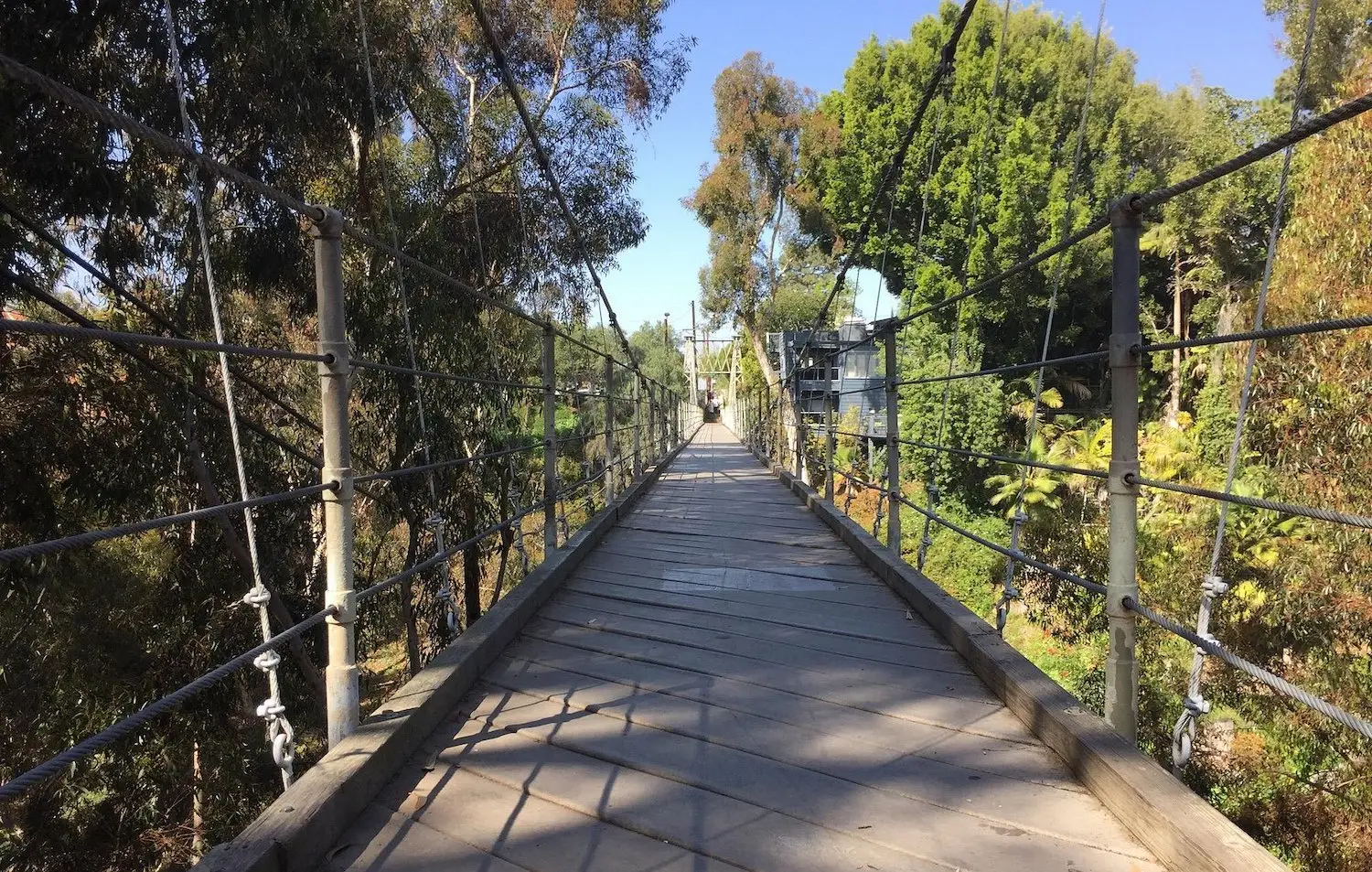
Call Royal Food Mart ahead of time to order lunch (it’s got hot sandwiches, salads, and monthly specials; if you’re stuck, get the Royal March brisket sandwich) and stroll down the Spruce Street Suspension Bridge while scarfing.
3403 1st Avenue
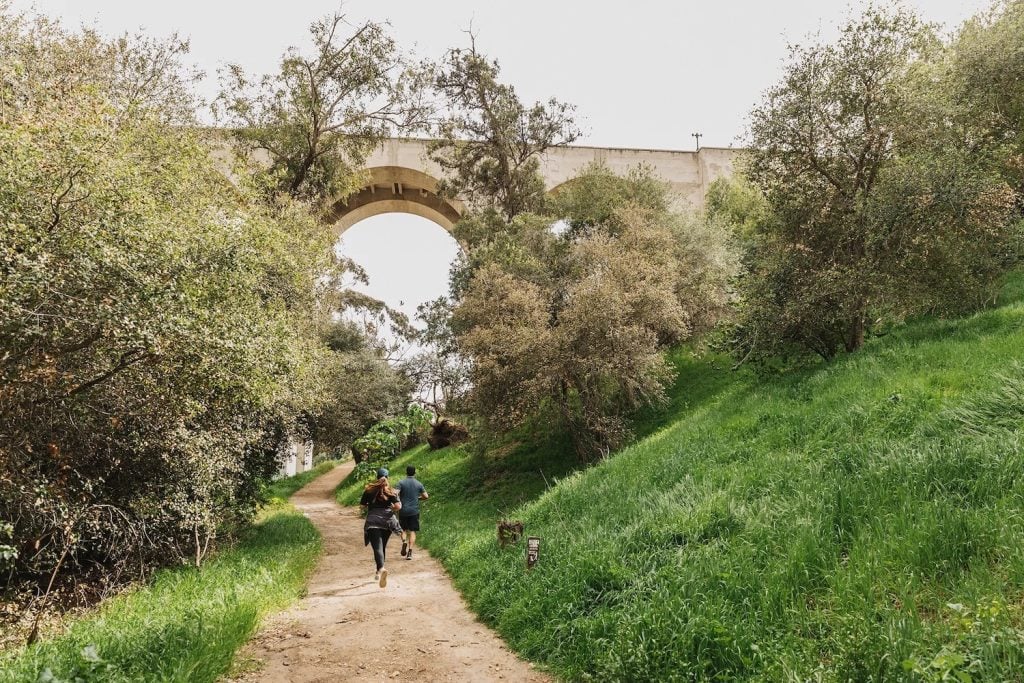
Like its name implies, Maple Canyon Trail is slow-moving, easy, and sweet, an hourlong-or-less meander across two historic bridges amid vibrant greenery. It’s a great way to get outside with kids, and four-legged friends are allowed, too.
Third Avenue
Perched near the top of Maple Canyon is Olive Street Park. Opened in December of 2024, the park is fully outfitted with a climbing structure, fitness equipment, and an observation deck and seating area that overlooks the canyon.
2772 Third Avenue
For an adventurous photo-op, look no further than the Spruce Street Suspension Bridge. It overlooks Bankers Hill Open Canyon, and there’s a great view of downtown San Diego just beyond the treeline. Be warned: The bridge may sway a little more than some are comfortable with.
West Spruce Street
One of the best places to sightsee in Bankers Hill is on the corner of West Kalmia Street and Albatross Street. From there, you’ll be able watch planes whiz overhead and catch gorgeous vistas of the Harborview shoreline. Just down the way, on Albatross Street and West Ivy Street is another airplane-spotting spot that also overlooks downtown San Diego’s skyline.
West Kalmia Street & Albatross Street & West Ivy Street
Fresh off a half-marathon… or an eight-hour shift at your desk? Whatever’s got you up in knots, you can untie ’em at this massage-focused day spa that also offers facials and other skincare. Those who want to lock self-care into their regular schedule can join The Knotstop’s membership program for a monthly treatment starting at $89.
2655 Fourth Avenue
Bankers Hill has a big biking community thanks to its opportune elevation—a slight decline, running from Upas Street to downtown. It’s a great way to explore the area’s scenery or get place to place on a DIY, self-guided food tour. Just don’t forget your helmet.
Fifth Avenue
Bankers Hill was settled in the late 1800s, and many of its historic buildings are still standing to this day. From the Late Victorian period to 20th-century architecture and early modern styles, there’s a plethora of preserved historical interest in the area’s nooks and crannies.
3536 Front St
Kick start a new hobby (or simply make yourself a new board for your next charcuterie party, so your excellent taste in gruyere won’t be the only thing you get to brag about) at Art Magic, a studio offering guided workshops in resin and epoxy art, candle-painting, and more.
2399 Fifth Avenue
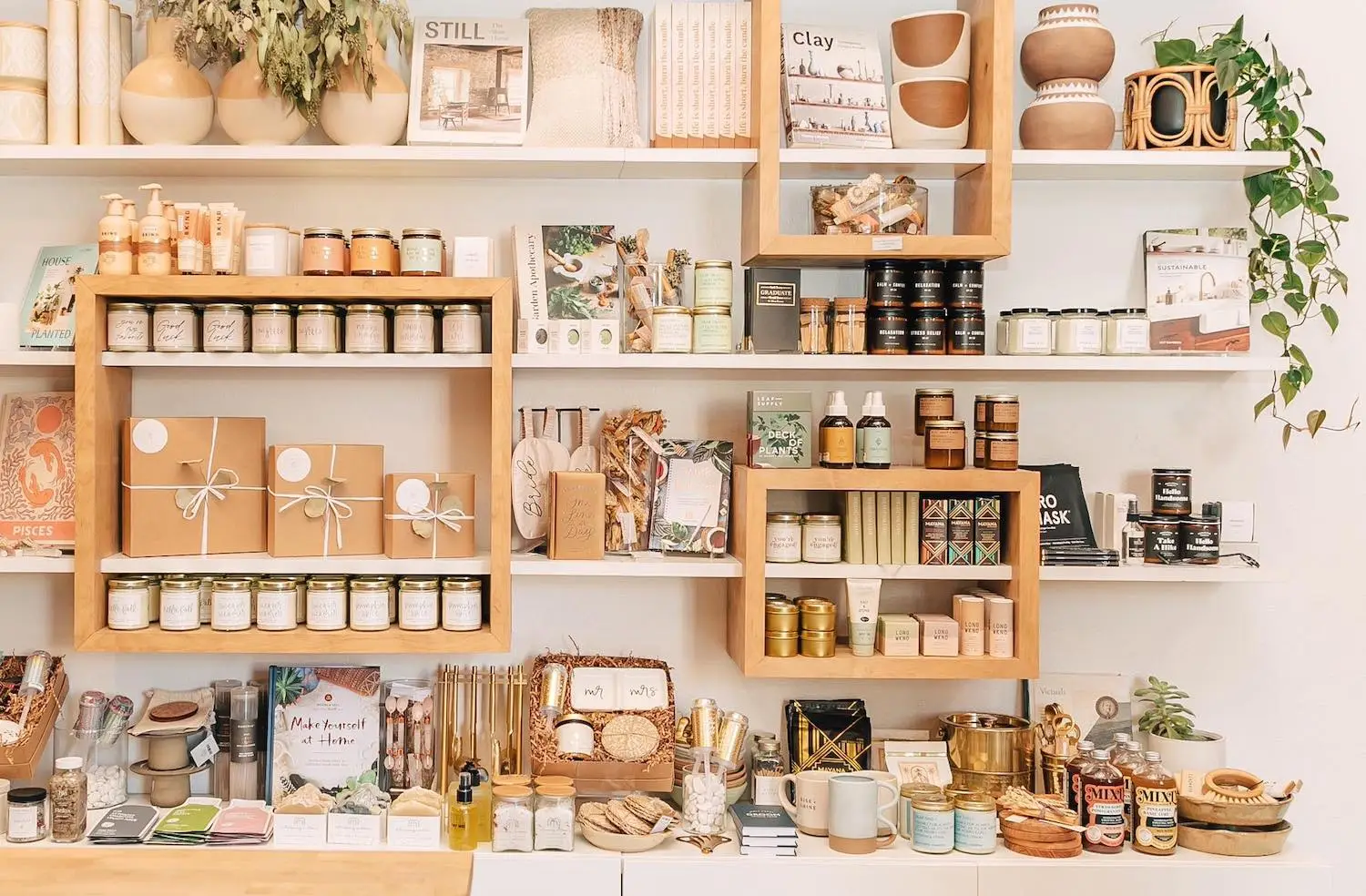
It’s a color-coordinated, boho-chic haven. Beyond clothes and beauty items, Thread + Seed offers customizable specialty gift boxes. Plus, the staff tailors their suggested clothing picks to your body shape to bring out the silhouettes that flatter you most.
2870 Fourth Avenue, Suite 106
This airy boutique aims to carry local brands—and the clothes reflect a certain San Diego ethos, from cardigans emblazoned with ocean creatures to flowy sets perfect for throwing on for dinner after a long day at the beach.
2808 Fifth Avenue
Gift Horse Handmade founder Valentine Viannay grew up designing apparel and baubles at her mother’s Parisian jewelry studio. Now, the lifelong artist uses those skills to design funky statement wearables and home goods at her Bankers Hill shop.
2655 Reynard Way
After four decades of dressing stylish men in San Diego and beyond (he counts MLB icon Willie Mays among his past clients), Ron Ford is still fitting folks with suits, sport coats, button-down shirts, and more at his haberdashery.
2410 First Avenue
It’s The RealReal… in real life. This luxury consignment boutique carries clothing, jewelry, and handbags from top brands like Louis Vuitton, Chanel, Armani, and Burberry—and even one of Hermès’ sought-after Birkin bags (if it hasn’t already been snapped up).
3028 Fifth Avenue

Joshua Silla is an award-winning editorial intern for San Diego Magazine, also interning for The San Diego Sun and EdSource in his last semester at San Diego State University. When he’s not writing, he’s either out biking, burning CDs, or calling his mom.

Amelia Rodriguez is a writer and journalist and winner of the San Diego Press Club's 2023 Rising Star Award and 2024 Best of Show Award, she’s also covered music, food, arts and culture, fashion, and design for Rolling Stone, Palm Springs Life, and other national and regional publications. After work, you can find her hunting down San Diego’s best pastries and maintaining her five-year Duolingo streak.
The creator of Mission Hills' iconic topiary garden hoped future owners would preserve the living artwork she spent decades cultivating
Edna Harper asked for one thing before she died: that the next owner of her iconic Mission Hills home keep the street-facing “garden.” Which is essentially asking the future residents to be curators of a whimsical and obsessive, delightful and strange, classic, cartoony and slightly unhinged sculpture museum. Harper, who died in January at the age of 87, poured her heart into this topiary bonanza, and it’s right there for everyone to see.
Like thousands (or millions, there’s no formal estimation) of others, I had scrolled through the photos of this topiary fantasia before I ever stood in front of it. As of this writing, Harper’s Topiary Garden is No. 227 of 2,686 Things to Do in San Diego on Tripadvisor, making it a popular tourist stop between fish tacos, a day at the beach, and a stroll in nearby Presidio Park. But crowdsourced photos quickly snapped in direct overhead sunlight tend to flatten the shapes that, while meticulously manicured, refuse to behave. In person, Harper’s figures seem to be in motion and, given that they’re sculpted out of bushes, they literally are. (I’d love to see a maintenance timelapse.)
Animals emerge out of shrubs as if they have impish ideas. A fanciful whale, a man in a sombrero, a random spiral twisting skyward, otherworldly creatures that defy categorization—all of these exist together in a neatly trimmed cascade pouring down the steep front slope of the property.
You don’t accidentally end up with a yard like this. You decide to create it and choose to cultivate it, and then you keep deciding and cultivating—for decades.
Although a consistent parade of looky-loos have visited over the years, most have never been inside the home, which is on the market for the first time since Harper and her husband, Alex (who died in 2020), bought it in 1969.

“It was and is a landmark,” says Christopher Delgado, Harper’s cousin and trustee of her estate. “She specialized in Chinese brush art and Japanese art called ‘sumi-e,’ a form of Zen art. She was a creator … she was very, very talented.”
I can’t stop thinking about Harper, sitting at the kitchen window, looking down at her masterpiece and the watchers watching it. The image of Harper enjoying the joy the public took from her handiwork makes me want to understand the woman behind the work. Because topiary, as an art form, has always been a little… loaded.
Topiary has always had a bit of an identity crisis—and that’s part of its charm.
When I think of topiary, I immediately think: Fancy. French bourgeoisie. Palace of Versailles. Mais non! Topiary has its origins in Rome. According to the Center for Architecture, the word “topiary” has its origins in late 16th century English, which combines the Greek word “topos” for place and the Latin word “topiarius” for ornamental gardner.

Topiary started as a flex, really. A Julius-Caesar-adjacent pastime for the most ancient one-percenters; an expression accessible only to those with land, labor (or, put more plainly, enslaved people), and spare time. In its earliest form, topiary was about control: bending nature into submission. It’s where symmetry and precision signaled order, taste, and money.
But with the collapse of the Roman Empire and the Dark Ages that followed, the topiary almost preceded the Dodo Bird in extinction. Monks quietly kept the art alive by growing herbs and manicuring the gardens and hedges within the courtyards of their monasteries.
It wasn’t until the Renaissance nine centuries later when topiary saw a resurgence—ah, Versailles!—and this form of pleasure gardening went into overdrive. Nature became architecture. The French pruned their foliage into iconic cones and obelisks, walls to keep out the riffraff, and ornamentation designed to impress. The Dutch got a little freaky, as they do, and sculpted complicated figures, animals, and even furniture.
Inevitably, the pendulum swung again, and topiary fell out of favor once it became viewed as excessive and even absurd. Even so, it never really disappeared. It just migrated to exist in a completely different paradigm. It was less Versailles and more, “What if this bush were a mouse?”
Fast forward to Disneyland in 1963. That year, the park opened a topiary garden in Fantasyland with verdant sculptures of giraffes, camels, elephants, and hippos all inspired by Denmark’s Tivoli Gardens.
Disney’s interpretation of topiary—which is still a fixture of park decor today—falls more into the realm of imagination and possibility than restrained aristocratic performance.
That’s one of the stranger throughlines of topiary: It moves from elite to everyday, from stiff and formal to playful and silly, from symbol of control to something steeped in personal expression.
Which is what makes a place like Harper’s Topiary Garden so compelling and the woman behind it utterly intriguing.

Born in 1938, Edna Harper was something of a Renaissance woman. She worked for two decades as a dental assistant, and she later became a notable painter, calligrapher, and stained glass artist (the house itself is adorned with her work). But she was also savvy in other ways.
“She graduated [with a degree in dental assisting] from San Diego City College and wanted to have her own money and her independence,” says Delgado. “Most people didn’t know that she was such a great businessperson, and for many years, she managed all of [the couple’s] properties on her own. She was great at building relationships … she touched a lot of people’s lives.”
Her friend and fellow artist Julie Roth attributes her artistry to her relationship with Harper. The pair met two decades ago at an art class at Oasis in Mission Valley.
“She was just the most encouraging person,” Roth says. “I didn’t know I could paint, but apparently I can. She was a tremendous person.”
I asked Roth what she’d want people to know about her friend.
“Her empathy and diplomacy,” she says. “[She had] a sharp eye for other talent. She spotted me, but I’m not the only one she encouraged.”
That sharp eye suggests attention, the same kind it takes to look at a bush and also see a whale. Or a spiral. Or something that doesn’t exist yet, but could.

Nothing about Harper’s life suggests someone chasing attention. And yet, she ended up creating something that demanded hers, and she took great pleasure in seeing people enjoy her creations.
The garden didn’t happen all at once. It grew out of years of travel, observation, and collaboration. Harper often traveled without her husband, always returning from trips to Japan, Thailand, and other parts of Asia with ideas and impressions captured through sketches in a notebook.
“She would get creative ideas from her travels … she’d come back with ideas and pictures, and they’d go about cutting that topiary bush into shape,” Delgado says.
For the past 25 years, she had the help of her gardener, Pedro Duran—who’s still employed by the trust and has maintained the garden since Harper’s passing.
In the early topiary years, Harper worked closely with Duran in what Delgado describes as a kind of shared “labor of love.” She would share her sketches and together the pair would shape the bushes into something deliberate.

“As she got older, she would increasingly draw her ideas and [Duran] would [carry them out],” Delgado says.
That collaboration reinforces that her garden was not an act of control, but one of creative collaboration and translation. From memory to sketch. From sketch to shrub. From something seen, somewhere else in the world, to something rooted in the soil of a steep hillside in Mission Hills.
Harper also made sure that the lawn’s boisterous energy made its way into the house on Union Street. Apparently, she threw legendary parties.
“Fairly regularly, in the late ’70s and ’80s, she would host Super Bowl parties with 200 people. She had TVs everywhere,” Delgado says.
It’s not hard to square that image with the stillness of the garden which, despite the careful pruning and intentional design, is voluminous and nearly vibrating.
And, damnit, I wish I’d watched some sportsball on her shocking number of TVs and wandered out front to the topiary—slightly wine-drunk with an orange smear of wing sauce on the corner of my mouth—to marvel at the leafy hippo and this woman’s elaborately creative life.

I can hear Delgado smiling as we talk on the phone. He’s going back to his childhood, when he talks about being one of the cousins Harper doted on when he visited.
“The adults were inside, and we’d be out in the camper,” he says, “and [Harper] would come check on us, make sure we were okay. She always had gifts for us. If it was Easter, there were chocolate eggs. If it was Christmas, stockings. We were the beneficiaries of them not having kids because they showered us with all their love.”
Knowing this and taking a look at her garden again, you can see it’s not the work of a shut-away curmudgeon. It’s wondrous, inviting, and the right kind of weird.
“Ultimately, she did it for herself and family, first and foremost,” Delgado says of Harper’s Topiary Garden.
Harper’s one request of whomever buys her home may seem like a focus on basic maintenance, about hedges and upkeep and preserving something visually striking. But it’s really about attention. And maybe, too, about legacy. Not hers, per se, but the legacy of community, relationships, art, creativity, possibility, adventure, culture, dedication, and love.
For now, it’s there for anyone to see, and its future is in the hands of whomever comes next.
San Marcos-based Vintage Cellars designs and builds customized, high-end wine storage with calibrated humidity, racking systems, and LED lighting
The floor is made of glass. Under your feet, you can see the cellar—15-foot ceilings, soft light, and stained white oak walls the color of desert silt.
Tucked behind the wood, inside the doors, and in the ceiling is a highly advanced and very specific network of tech assembled in San Marcos—perfectly calibrating the room for humidity and temperature with vapor barriers, specialized insulation, and LED lights. Along the walls on matte blag pegs lay 1,000-plus bottles of wine—some iconic collector vintages, some with stories, some earmarked for major life moments.
This is a very serious wine home, built by someone whose obsession eventually leads to a call with Chris Noel.
“We have some clients who have been collecting wine since the ’60s and the ’70s, and they have collections of 15,000 or 20,000 or more bottles,” says Noel, owner of Vintage Cellars, the San Marcos–based designer of custom wine vaults for some of the region’s top restaurants and super-collectors. “[For them], collecting wine is similar to Jay Leno collecting cars.”

Before the wheel, there was wine. Fermenting fruit sugars into alcohol was a thing as early as 4100 B.C. (wheel, circa 3500 B.C.), most likely a happy accident. Unsurprisingly, the tipsy breakthrough in juice arts was a huge hit. The challenge was that it was also hugely perishable.
The first efforts to save it from spoil were clay vessels called amphora, often fully or partially buried to create a sun-proof, temperature-stable environment. The terra-cotta pots were pointy-bottomed, which stacked and traveled better, encouraged gas circulation (thus preventing oxidation, the famed wine ruiner), and helped separate sediments.
Once basic preservation was figured out, makers noticed the aging process ushered in a moodier magic. So they engineered structures to tinker with the possibilities of the long haul. Those first wine holes in the dirt evolved into entire catacombs, tombs, quarries, and caves.

Ancient Romans engineered wine storage rooms called fumariums, built facing north to avoid the sun and filled with smoke to speed the aging process (no doubt rapidly aging the cellar workers in the process).
For centuries, specialized wine storage was mostly a commercial venture. Serious wine people would (and still do) outsource their collections to a bonded storage facility or turn to professional cellarers who run giant chilled warehouses of cabernets.
A few major social moments sparked a more serious at-home cellar trend. First, the “Judgment of Paris” in 1976 (California wines famously besting the French in a blind tasting) established US wineries as worthy of collections.
A few years later came the 1982 Bordeaux, one of the most-coveted vintages in history. It was championed by a US lawyer named Robert Parker, whose 100-point scale rating system would quickly become the gold-standard for grading wines, creating a huge boom of wine collectors for the next few decades (wine as an economic investment became a thing).
The US economy also boomed in the ’80s, while France hit a skid. With the dollar trading 6-1 against the franc, US collectors had a rare chance to pick up Grand Crus at serious bargains, which demanded equally serious storage.

Given that framing, 1990 was a fairly great time for Vintage Cellars to get into the game. Noel—who worked his way up at the company and then eventually took over as owner in 2020—and his team work with architects, designers, and builders to create cellars that both fit the space and act as an attraction in multimillion-dollar homes across the region, and at top restaurants like Pamplemousse Grille in Del Mar and Avant Restaurant in Rancho Bernardo Inn. They hide cooling systems in brick-walled enclosures, bend bottle racks around curved walls, create standalone pavilions—engineer structures for cabs.
Their cellars hover between 50 to 70 percent humidity to keep the cork appropriately moist. Air too dry, and a cracked cork will give up the ghost—O2, in excess, turns wine into vinegar. If the air’s too dry, it can shrink the cork, eventually evaporating the wine and creating a low pressure that will pull in destruction. Too humid, and mold contaminates the works.
Light’s a big no-no for wine, too. Incandescent or halogen lights were the norm for cellars 20 years ago, but they emitted heat. Like Schrödinger’s Cat, these bulbs would risk the subject in order to view it. Vintage Cellars adopts LED lighting and, for glass cellars in the sightline of bright windows, mechanized shades that lower during UV exposure times.
Custom circumference-cut cove trays, leather saddles, and pegs stabilize bottles in Vintage Cellars storage areas; movement disturbs the tannins and upsets the aging process. And these cellars are smart, with app-based monitoring, remote temperature monitoring, and eSommelier cellar management. Don’t fret, Siri’s got your Syrah.
The most important decision, however, is deciding when to uncork that special bottle.
“[A lot of times, people] are saving those wines for specific moments in life—maybe a 50th anniversary or when their firstborn turns 21,” says Noel. “That’s how they look at it: as social and also to create memories.”
Pete Peterson has served as high as Editor-in-Chief of an enthusiast media magazine and as low as writer of his own bio… In addition to contributing to San Diego Magazine, Pete authored the YA novel One Tiger One Teen and is working on his second novel. Slightly more info is available at petepetersonauthor.com.
Troy Johnson is the magazine’s award-winning food writer and humorist, and a long-standing expert on Food Network. His work has been featured on NatGeo, Travel Channel, NPR, and in Food Matters, a textbook of the best American food writing.
Meeting new friends is a scary and sweaty venture—that’s where the city's social event planners come in
Walking into a room full of strangers isn’t high on the fun index for most. It’s inherently awkward: Everyone’s standing in closed-loop clusters, deep in conversation, and, depending on your social aptitude, the feeling is somewhere between light apprehension and burning alive from the inside out. The pull to retreat or reflexively look busy on your phone is stronger than the drink you now deeply crave. Having friends is nice, but making friends can be brutal.
There’s plenty of commentary on the loneliness epidemic. Last year, the American Psychiatric Association reported that one in three adults feel lonely at least once a week; those aged 18 to 34 are more likely to feel isolated and even more likely to turn to social media as a result. Dr. Vivek Murthy’s “My Parting Prescription for America” cautioned that “being socially disconnected increases our risk of heart disease, dementia, depression, anxiety, and premature death.” So it’s not just an emotional need; it’s nearly nutritional—chit-chat and the occasional wine-fueled, emotional deep-dive are just as important as Pilates and a reasonable amount of kale.
Finding social connections in any city is hard, but San Diego has very specific challenges. This is largely a transient population that acts as a temporary hotspot for many and a permanent home for few. Pick your reason: high rent, surreal gas prices, housing shortage, meh job opportunities (ranked 71st in the country in 2025), or the fact that active military is a sizable chunk of us (110,000-ish)—stationed here for a stretch, then gone. This constant flow of departees sucks out the potential for deeply established families and friend groups, leaving a good share of nomads, searchers, and plenty of people feeling socially awkward.
“There’s an underlying loneliness in all of us,” says Ramel Wallace, the host of monthly meetup CreativeMornings. “There are not a lot of San Diegans who are born and raised here, so [even those] San Diegans end up being just as lonely as the person who just got here.”

Every month, in local libraries, breweries, and small businesses, there are ambitious social architects who have made a career out of undoing social sads. Extroverted champions of the awkward and searching, they’ve struck gold on in-person connection.
The first moments in a social situation are crucial. Sets the tone and cools the nerves.
At Pitch-A-Friend, singles recruit their close friends to present a slideshow of their dating green flags. The entry points for connection at Pitch-A-Friend are simple, old tech: stickers. Each colored sticker indicates if the wearer is single or taken, queer or straight, or practicing ethical non-monogamy (in a partnership but open to others under a mutual understanding).
At the helm of each showcase is Arielle Fuller, aka Chief Wingwoman, who is making dating hopeful again. As Fuller explains, this takes some of the fear of rejection out of a first interaction. “Putting a sticker on immediately means, ‘I wanted to leave my house and talk to someone, and I am a safe space to come and speak to me,’” she says.
Of course, not all of San Diego’s events designed to make connections are romantic. On the last Friday of every month, hundreds gather at San Diego Central Library for the local chapter of CreativeMornings—an org formed to unite creatives in various cities across the world (designers, artists, writers, producers, performers, architects, etc.).

These aren’t your standard business card swaps, though. Coming from a hip-hop background, host Wallace uses call-and-response to break the fourth wall. “This is not my stage at all, this is our stage,” he says.
In your standard lecture-based meetup, the crowd silently faces the host and acknowledges nobody except those they came with. At CreativeMornings, everyone is encouraged to look around, pay attention to the strangers in the audience—not just the host. Wallace will pull volunteers to read the CM manifesto aloud, and he passes the mic to creatives, who make 30-second pitches to the community about projects they’re working on—and there’s always an invitation to connect and collaborate with the presenters whose ideas struck a chord.
The U.S. Chamber of Connection (yes it exists) says people experience life transitions nearly every year, and in these stretches are more open to forming new habits, relationships, and communities. In a revolving-door city like ours, the transition often comes when someone moves away. In 2023, the Census Bureau reported San Diego had the ninth-highest rates of domestic out-migration in the US.
This poses an issue for friendships that IRL SD addresses in monthly friend-making events called 619 Night.
“San Diego isn’t a place a lot of people stay forever,” says Alex Hunter, the creator of IRL SD. “They leave, and people [who stay] lose that community, so they’re hungry for community again.”
Their website describes the vibe as “backyard party meets college fair meets networking event meets happy hour.” Each follows a theme—wellness, sports, refresh and reset, etc.—with related community groups joining as well.
“The people I encounter are trying to get a fresh start in some capacity, so they’re more open, receptive, and ready to meet new friends,” Hunter says. “They need the circle.”

Another way adults can break out of this disconnection is to revert in unison, says artist Elisa Summiel-Bey. The 2015-ish adult coloring book moment in the US was based on some real science, with multiple studies finding coloring has a noticeable meditative and stress-release effect by taking the brain away from anxieties and mental inventories, and focusing it on a simple, easy art. Summiel-Bey’s company Illustrated Melanin throws “Color & Chill” events, turning that trend into a group exercise, along with live DJ sets, wellness experts doing sound baths, and food and drink from BIPOC-owned local businesses. “I tend to think of coloring as your way to tap back into your childlike play,” she says. “As adults, I think we’re almost scared to let loose and have that unabashed joy.”
All of these social meetups attract crowds of likeminded connection-seekers, but high attendance is not the only thing that matters. Metrics nuts can track RSVPs, but spreadsheets can’t capture intangible wins: friendships made, innovative ideas sparked, collaborations kicked off. At CreativeMornings, Wallace redefines ROI as Return On Imagination. Resounding success means thoughtful inquiries over coffee, curiosity about the monthly meeting themes, and requests to take the microphone.
A simple, observable ROI is an increased number of window shoppers to the experience—on the periphery, watching from afar, looking for the right way in. Hunter from IRL SD sees the anxiety in her DMs. “The scariest part for you right now is not meeting new friends: It’s the unknown,” she says. “It’s the gap between ‘I’m here’ and ‘That’s where I need to be.’ If I can help you understand, or get a little bit of a shape around that unknown, it’s much more approachable.”

Being able to bridge that gap, however, depends on your ability to step out of your own mind. “It’s not a connection crisis; it’s a courage and confidence crisis,” says Fuller. The first hello could be as easy as, “Hey, cool shirt.” These are the types of things she includes in her confidence lab reels on Instagram and weekly newsletters.
Ever left a social event and shot straight into a spiral? Was I being weird? Why did I tell that story? I hope that person moves to another state very soon.
The experts say that post-event self-interrogation is a standard-issue part of being alive.
“I love awkward people, and I love being awkward myself,” says Wallace. “It’s humbling to experience: ‘I’m not alone. Finally someone is not put together.’ So give yourself that grace.”
Jeannine Boisse (she/her) is a freelance writer and professional creative with a background in Radio & Television. Based in sunny San Diego, Jeannine spends her time exploring the city's vibrant brewery scene, cooking up new recipes in the kitchen, and connecting with new people.
KQ Aesthetic Society goes beyond cosmetic to provide comprehensive care and transformative results
Kelly H. Harfouche, founder of KQ Aesthetic Society, knows firsthand that cosmetic treatments like fillers, neurotoxins, and microneedling, can not only enhance a person’s appearance and restore confidence, they have the power to truly change a person’s life. An expert injector has the ability to tailor treatments to each individual patient’s anatomy and goals for personalized results. Harfouche, a board-certified nurse practitioner, has spent nearly a decade perfecting her craft as an aesthetic injector and integrating her multifaceted artistic skills with precision patient care. Her commitment to continual education and training, plus a passion for helping people look—and feel—their best, set KQ Aesthetic Society apart in a sea of local medspas.
For many people considering nonsurgical treatments, the intent is to look refreshed and refined. KQ Aesthetic Society’s philosophy eschews a cookie cutter approach that bases treatments around units, instead working to understand each person’s unique goals, then curating a treatment plan to fit that vision. Harfouche focuses on “inclusive luxury,” the belief that everyone deserves access to aesthetic treatments, respective of budget restrictions. She develops long-standing trusted relationships with her patients, and works with each one to achieve their aesthetic objectives and address the underlying causes of their concerns.
“For me, forming an honest and open relationship with every patient who walks through the door is essential. This means understanding them on a deeper level and meeting them where they are to define and achieve their individual goals,” she says.

Drawing on her artistic background, which inspired her transition into medical aesthetics, Harfouche sees each client as a “unique canvas.” Rather than relying on standardized procedures, the practitioner’s distinctive approach combines her profound understanding of the physiological and anatomical changes associated with aging with an unwavering commitment to ongoing education about the newest products and their mechanisms of action. Her goal is to make each patient feel beautiful in their own skin and to embrace their individuality.
She has also pioneered a way to combine her talent for aesthetic artistry with her philanthropic nature. Harfouche is one of only a handful of providers using dermal fillers to treat patients with lip asymmetry and scarring resulting from cleft lip surgery. Patients travel from around the country for this transformative treatment, noting increased confidence and a restored identity. She hopes to eventually launch a training program to help fill the void in this space.

“My passion has always been connecting with people and giving back in any capacity that I can,” she says. In the rapidly advancing landscape of aesthetic medicine, you can place your confidence in Harfouche and KQ Aesthetic Society to deliver exceptional care. To learn more or book a consultation, please visit kqaestheticsociety.com.
Spruce up your home bar setup with product recommendations from local cocktail aficionado and Collins & Coupe owner Gary McIntire
I peel myself off my couch, crack my back, and force myself to the bar (23 years old, by the way). It’s a Friday night, and my smart watch is already informing me my body battery is critically low.
Nevertheless, party we must.
Because, to be fair, one of the best things about going out—dive bar, velvet-clad cocktail lounge, or anywhere in between—is the performance of it all. Watching a bartender shake and stir like it’s choreography, finishing the drink with a sprig or petal placed just so, feeling like your collection of mixers and spirits is worth pouring into the Holy Grail.
One of the worst things about going out, though? Being out.
So I thank God for the home bar.
No lines, no cover, no shouting your order over someone named Kyle who just discovered the AMF. No $19 cocktails that taste suspiciously like juice. Just me, my apartment (where I can play whatever music I want), and the quiet confidence of knowing I can make something decent without putting on real pants.
A home bar, I’ve learned, doesn’t have to be impressive. It just has to be intentional—a few bottles you actually like, some tried-and-true tools, and at least one drink you can make without Googling. That’s it. That’s the barrier to entry.
To create the ultimate home bar collection, we tapped the folks at San Diego cocktail supply shop Collins & Coupe to give us some of their recommendations. Pick and choose what you need, and start cocktailing.

You won’t get very far in your cocktail-making-journey without shaker tins. Boston shakers (two pieces, tin-on-tin) and cobbler shakers (three pieces with a strainer and cap) are the most classic styles, but if you want to avoid the tins getting stuck (or creating a mess on the floor), Boston shakers are the way to go.
“Koriko Tins by Cocktail Kingdom are the gold standard for every bar worth their salt. Every new bar we help outfit with tools insists on this brand and model,” says Collins & Coupe co-owner Gary McIntire.
“These are handmade, 100 percent solid copper and will last a lifetime,” McIntire says. “Because they are solid, there is no plated finish to wear off, and they will only look more beautiful with age.”
According to the pros, don’t even bother getting bar spoons shorter than 12 inches. One foot long is the magic length to get the best stirring results: “Rule of thumb is at least 50 percent of the spoon should be out of the glass,” says McIntire.
Sugar Skull Bar Spoon
Cocktail Kingdom Enamel Lucky Cat Bar Spoon
Pulp in your orange juice? We’ll allow it. But in your cocktail? Smooth and strained is optimal. You have two choices here: Hawthorne strainers have a spring that attaches snugly to shaking tins; julep strainers have no tabs or springs (originally created to drink mint juleps before straws became commercially available).
Bull in China Julep Strainer, Brushed Stainless Steel
Barfly Two-prong Heavy Duty Hawthorne Strainer
We’ve all seen those seasoned bartenders with the arm tats and haughty demeanors who can assemble perfect drinks with their eyes shut. The rest of us, however, need training wheels. Jiggers—those hourglass-shaped measuring tools—make consistent cocktail-making easy, although cheap versions tend to be inaccurate. Don’t skimp out on these.

“Heavy-duty and made of one piece,” McIntire says. “We use [this jigger] in our classes and at home. It comes in a bell-shaped version and a Japanese version, which is tall and narrow.”
“Glassware is always essential to the cocktail experience,” says McIntire. The martini glass is an avatar for American hair-loosening for a reason: sleek, viciously “V,” and highly spillable (danger always looks good). To start, look for a coupe glass (the fancy cat bowl-looking thing), a highball (glassware with posture), and a rocks glass (the blue collar hero).
Milo Crystal Rocks Glass by Viski
Savage Coupe by Nude Glassware
Meridian Highball with Gold Rim by Viski
You know how Caesar dressing tastes way better when you don’t think about the fact that there are anchovies in it? The same goes for cocktails and raw egg whites. Some of your favorites rely on the frothy ingredient to shine (whiskey sours, gin fizzes, etc.). Mesh strainers help make that magic happen. According to McIntire, always get the conical version; the round, bowl style could cause spills.
Lili Kim is a content coordinator and writer for San Diego Magazine, with experience highlighting local businesses and communities. When not writing or shooting film, she is likely brewing her seventh cup of tea of the day or strolling along Sunset Cliffs.
Dine at The Freedom Table, see Bob Dylan in concert, and explore local and national history through America 250
As summertime inches closer to the shores of San Diego, there are plenty of reasons to be ecstatic. For one thing, there’s the impending arrival of the summer solstice (Sunday), and three days before that, Del Mar’s own Summer Solstice will return for its yearly golden hour. There are also plenty of local Juneteenth events, such as Kinfolk Fest, the Cooper Family Foundation’s Juneteenth Celebration, and The Freedom Table, a new, food-centered event from the originators of Juneteenth San Marcos. We’re also less than three weeks away from America’s 250th anniversary, and the celebrations range from the San Diego History Center’s America 250: San Diego 1776-2026 to NASCAR’s weekend of racing at Naval Base Coronado.
Food & Drink | Concerts & Festivals | Theater & Art Exhibits | More Fun Things to Do

Cbar has planned a week’s worth of festivities to mark its first birthday, and everyone can get in on the fun. The 1-Year Anniversary Week celebrations continue with a special edition of the Sips & Shells craft series ($50) on Tuesday from 6-8:30 p.m., half-off pastries with any purchase of a barista drink (plus an anniversary summer wine flight) on Wednesday and a five-course winemaker dinner on Thursday from 6-9 p.m. ($130). Finally, the birthday bash will conclude with live music on Friday (Will Fedak) and Saturday (Cappo Kelley) from 6-9 p.m.
2917 State Street, Carlsbad
Little Italy’s annual food crawl has so many options that it warrants splitting into two evenings, each boasting a diverse lineup of 20 neighborhood vendors. During the Taste of Little Italy, taking place Tuesday and Wednesday from 4-8 p.m., attendees can make their way from the Piazza della Famiglia to nearby dining destinations for bites like esquites, sausage rolls, hot chicken tenders, and forkfuls of handmade pasta. Each night will also include live music and stops for drinks, desserts, and vegetarian items. Tickets are $71 per day.
Little Italy
As spring makes its golden transition into summer, welcome the new season with open arms and a big appetite during Del Mar Village’s marquee tasting event this Thursday from 5-8 p.m. With the Summer Solstice celebrating its 20th anniversary, this year’s iteration will include dozens of food and drink offerings from Del Mar Village vendors, soulful tunes from Christian Jules Taylor, live art by Sarah O’Connor, and wave-crashing views at Powerhouse Park. General admission (21+) is $157 and comes with unlimited tastings as well as a commemorative tasting glass, while VIP tickets are sold out; proceeds support the Del Mar Village Association.
1658 Coast Boulevard, Del Mar
After hosting the first-ever Juneteenth San Marcos festival in 2025, Lionel and Natalie Saulsberry have upped the ante with The Freedom Table, an elevated observance of community, culture, and the culinary arts. This Friday from 4-9 p.m. at TERI Campus of Life, guests can enjoy storytelling, art installations, live music, curated cocktails, and a chef-led dining experience, all in recognition of Juneteenth’s lasting importance. Ticket options include general admission ($261), plus two charitable ticket options: supporter ($313) and impact ($417), with a portion of sales going towards the youth nonprofit Achievement in Motion.
555 Deer Springs Road, San Marcos
In honor of NASCAR’s Coronado debut and Talladega Nights: The Ballad of Ricky Bobby, ARLO is throwing a Father’s Day brunch for the dads who want to go fast. This Sunday from 8 a.m. to 2 p.m., patrons can order from ARLO’s regular brunch menu, as well as a trio of holiday specials: the Dad’s Day Steak and Fries ($64), the Fit For a King Muffuletta Sandwich ($29), and the Big Daddy Brookie ($14). This shake and bake-approved meal will also include a DJ, cigar rollings, whiskey tastings and a Ricky Bobby costume contest. Reservations can be made online.
500 Hotel Circle North, Mission Valley
Ryan Hardison is a freelance arts and entertainment writer and recent graduate of San Diego State. When he's not staring at his laptop, he's likely eating an adobada burrito or getting sunburnt at the beach.
A look at San Diego's top designers creating unique environments that combine creativity and function


AVRP Studios’ tradition for Design Excellence and Innovation began in 1976 with Doug Austin, FAIA, in Solana Beach, California. The firm has since grown to complete major projects throughout the United States and Canada. We think of ourselves as a family and we care deeply about people. We want to inspire, help make their lives richer and more complete through our efforts. We believe that architecture is one of the most important art forms because of the impact it can have on the lives of those it touches. We’re delighted to have been recognized with over 150 awards for design excellence.
703 16th Street, Suite 200, San Diego, California 92101 | 619-704-2700 | avrpstudios.com