Featured articles
Food & Drink
Food & Drink
Food & Drink
Featured articles
Things to Do
Everything SD
Everything SD
Featured articles
Things to Do
Things to Do
Things to Do
Featured articles
podcast-ep
podcast-ep
podcast-ep
Featured articles
Everything SD
Everything SD
Everything SD
Featured articles
Food & Drink
Things to Do
Everything SD
Ready to know more about San Diego?
SubscribeReady to know more about San Diego?
Santee brewer opening tasting room in P.B.; The Patio acquires Swell, plans expansion
Slowly but surely, quality food and drink is infiltrating Mission and Pacific Beaches. When I lived in the area 10 years ago, the food quality seemed to assume every taste bud within two square miles had been rendered comatized by Jaegermeister.
Over in Mission Beach, The Patio Restaurant Group (PRG) has struck again. This time they’ve acquired one of San Diego’s best, sustainable coffee outposts, Swell Café. In September they to launch in-house roasting of different blends with partners James Coffee Company. Some of those custom roasts, of course, will go to the Patio’s existing and planned locations—which now includes Pacific Beach, Mission Hills and Liberty Station. With PRG’s help, Swell plans to open more outlets and launch a large-scale roasting facility for a wholesale operation. “[I plan to] travel directly to coffee origins,” says Swell founder John Vallas, “bringing dollars directly to farmers and villages in parts of the world that don’t know what it’s like to spend $4 on a coffee, or even have shoes or running water for that matter. We are in the midst of creating our opportunity to change the world through coffee, and I like that idea.”
In Pacific Beach, Twisted Manzanita Ale Company (formerly Manzanita Brewing) will open a tasting room between Duck Dive and Dirty Birds (4652 Mission Blvd., the former Surf Indian shop). Aiming for a Labor Day opening, head of marketing Nina Izadi says the spot will showcase “our more experimental beers and casks—getting back to the real definition of a tasting room. Not just our core six beers, which you can get anywhere.” They’ll do pints, flights, kegs, bottles and growlers to go.

INCOMING: Manzanita Tasting Room, More Swell Cafes
The specialty coffee and dessert shop will open in late June to early July
Hospitality-centric businesses are starting to work smarter, not harder. Some are leaning into experiential concepts, like Harland Brewing’s golf course taproom. Some are joining up with other businesses to share space and costs, like Scoopy Scoopy. Then there’s the multi-hyphenate approach, using food and drink as a jumping-off point for bigger aspirations—like Infusion Lab, a specialty dessert and coffee shop opening in Pacific Beach this summer.
The name is strategically vague, explains co-founder and finance director Baran Aydin. Initially, the space will offer a menu of specialty coffee—traditional espresso-based drinks, plus matcha and signature ube beverages alongside breakfast, lunch sammies and desserts like cookies made in-house and European-inspired desserts.
Aydin and co-founder/coffee director Aselin Bay plan to expand into a lifestyle brand with streetwear-inspired merch—shirts, hats, bags, socks, and more that are “designed to reflect the lifestyle and culture behind Infusion Lab,” he explains.
“The goal is to create a space where people can work, socialize, create content, and become part of a growing community,” says Aydin.
Pacific Beach is growing, with major residential expansions like AVA Pacific Beach adding units to a market that’s tightened nearly 30 percent over the last year, according to the Whissel Beer Group real estate team. Currently, there are fewer than 20 coffee shops in Pacific Beach for a population of around 41,000—plus 10,000 to 20,000 more people visiting during summer and weekends.
Infusion Labs’ design is elemental white-and-maroon, with line drawing art. Their space, next to the now-closed Copper Top Coffee & Donuts, will feature some Chesterfield-style seating (deep button sofas) and a dedicated social media area.
Holy Matcha may have helped start the “camera eats first” coffee shop experience with its explosive pink floral wall backdrop, but between Saya Brasserie’s entire social media-centric business strategy, S3 Coffee Bar’s over-the-top coffee concoctions, and Infusion Labs’ online oasis, it seems San Diego coffee shops are still making sure they feed your body and your follower count.
Infusion Lab opens at 4638 Mission Blvd. in Pacific Beach in late June or early July.
The owners behind Hermosa Surf in Bird Rock soft-launched their new cafe, Sungold Point—right next door at 5632 La Jolla Blvd. It’s a modern take on an old-school diner, explains Stirling, with seating for around 35 people and lots of pink, burgundy, turquoise, checkerboard, and terrazzo to feast your eyes on. Owners Stirling and Benny Walter designed the breakfast and lunch menu to use organic ingredients whenever possible and make everything from scratch, including breakfast sandwiches, salads, bowls, and a full espresso menu.

PARTNER CONTENT
Beth Demmon is an award-winning writer and podcaster whose work regularly appears in national outlets and San Diego Magazine. Her first book, The Beer Lover's Guide to Cider, is now available. Find out more on bethdemmon.com.
Grandson Steaks is now open in the former Wildflour space
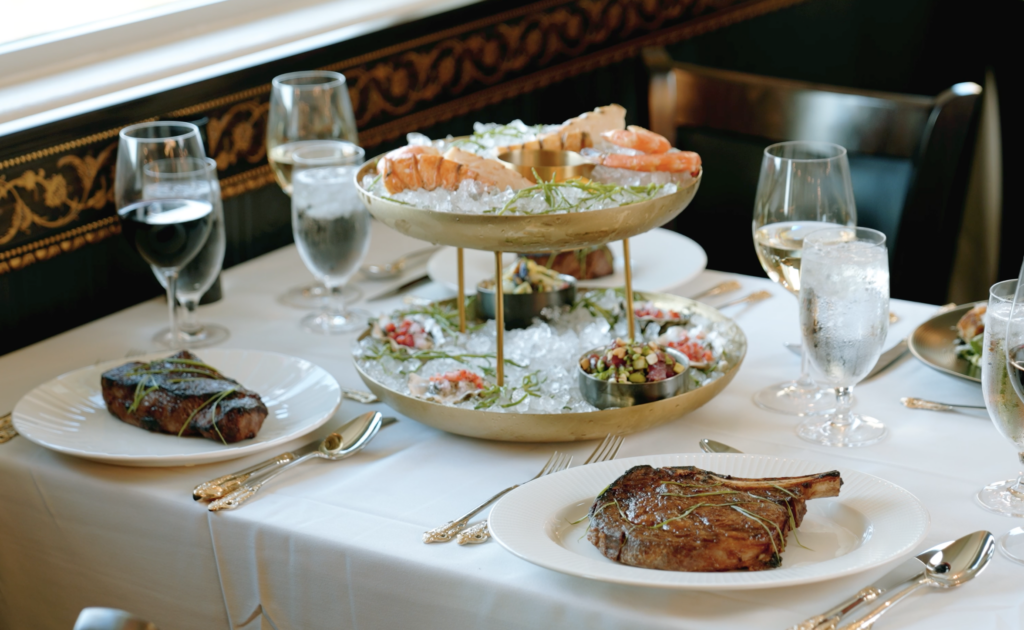
It’s never taken so much green to eat red meat. The price of beef has doubled since 2020, and once you add a few drinks (the cost of wine rose 11 percent in 2025) and tack on the rising price of labor (up 23 percent in 2025 and 33 percent in 2024 and 2023), before you know it, a night out at the steakhouse costs as much as the monthly payment for a brand-new Mercedes G-Wagon.
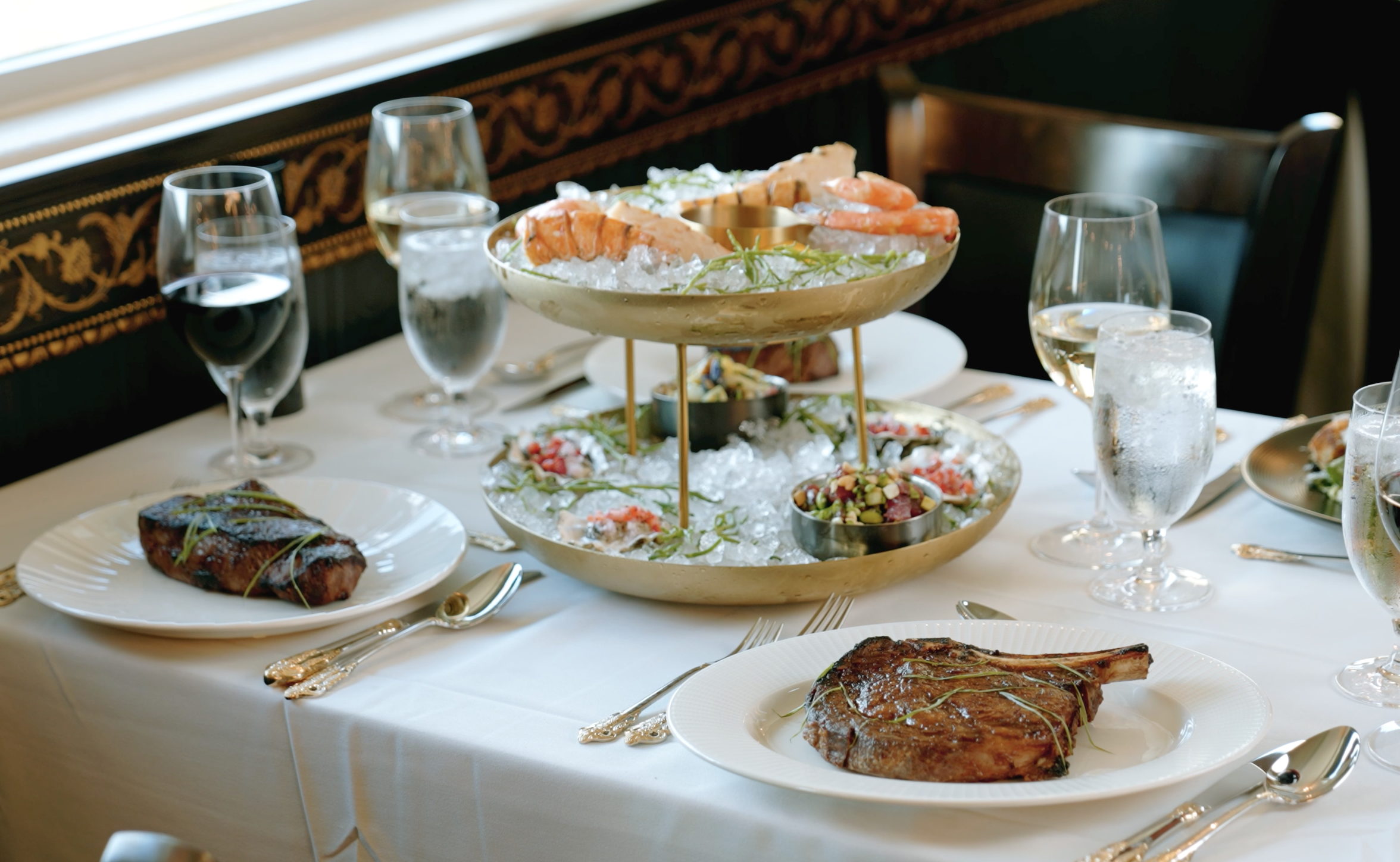
At Grandson Steaks, Roger Cañez wants to change that. He only serves USDA Prime and Choice Brandt Beef from the family-owned ranch in the Imperial Valley, known for its high-quality, hormone-free, vegetarian-raised Holstein cattle with signature marbling and top-notch taste. But as the Brandt Beef distributor in Mexico, Cañez gets wholesale volume pricing that other smaller restaurateurs can’t access.
Those savings get passed to the consumer: At Grandson, a 12-oz. house-cut (Choice) ribeye costs $34, while Prime goes up to $44. Comparatively, a 14-oz. Prime ribeye at a competing high-end local steakhouse runs around $66.

“There are a lot of people in San Diego who really love steaks, but they can’t afford it—that’s reality,” says Cañez. “So we decided to kind of cut all the fine dining rules and put everything into the quality.”
Cañez has tried the “steak-for-less” model before. He opened Brasa Norte in Market on 8th in National City, offering plates like a Tomahawk steak with bone marrow, four quesadillas, and a side of beans for $44.99. He also operates Roger’s Mariscos inside the market, and he brought some of those stall’s best sellers (like the Baja shrimp cocktail and yellowfin tuna tostada) to Grandson Steaks for a surf n’ turf menu plus tacos, salads, and desserts meant for the family-friendly Liberty Station crowd.

It’s the second concept for the fully built-out corner suite, which formerly housed the ambitious California deli concept Wildflour Delicatessen from chef Phillip Esteban, the mastermind behind White Rice and Base Kamp Meals. Not much changed design-wise, other than adding some more booths, moodier lighting, and a couple of guitars for that modern Mexican flair. Most of the 130 seats are outside (98, to be precise), with 20 seats inside and an additional 12 at the bar.
But after you choose where to sit, you’ll be able to also choose how much to spend. “If you want to have a casual afternoon with tacos and margaritas, or if you want to have a full steakhouse [experience] with bottles of wine, we can do both,” says Cañez.
Grandson Steaks is now open at 2690 Historic Decatur Road, Suite 102. Hours are Tuesday through Thursday, 11:30 a.m. to 9 p.m.; Friday through Saturday, 11:30 a.m. to 10 p.m.; and Sunday, 11 a.m. to 9 p.m. (closed Monday).

Listen Now: The Latest in San Diego’s Food and Drink Scene
Have breaking news, exciting scoops, or great stories about new San Diego restaurants or the city’s food scene? Send your pitches to [email protected].
Beth Demmon is an award-winning writer and podcaster whose work regularly appears in national outlets and San Diego Magazine. Her first book, The Beer Lover's Guide to Cider, is now available. Find out more on bethdemmon.com.
An Artist @ The Table’s immersive dinner series unites creativity through art and food March 20-22 at Chapel in Liberty Station
There’s a certain strangely yellow-tinted lightbulb in a certain bathroom in a certain bar on Main Street in Richmond, Virginia that I used to frequent when I was in college. (IYKYK) To locals, we knew that if you wanted to look super hot, or at least feel super hot, it was the lightbulb-mirror combo worth waiting in line for. That tiny one-stall room became the perfect place for selfies, surreptitious makeout sessions—pretty much anything but actually going to the bathroom.
Color theory is science, not magic. Yellow light is less harsh on the eyes than white or blue, and can promote a feeling of relaxation and happiness. A little color can go a long way to change a mood—and that’s exactly what visual artist Ben Guerrette hopes to accomplish when he drenches Chapel at Liberty Station with an immersive light installation synchronized to pair with chef Flor Franco’s four-course menu exploring the four elements of earth, fire, air, and water from March 20 through 22 for the latest An Artist @ the Table dinner series.
The series is part of local nonprofit Vanguard Culture’s 10th anniversary programming, marking a decade of advancing San Diego’s creative industries through professional development opportunities, events, collaborations, and other resources. Executive director Susanna Peredo Swap says previous An Artist @ the Table dinner series have featured artwork from a variety of artists ranging from the estate of Jean-Michel Basquiat to British fashion icon Zandra Rhodes, and chefs like Ron Oliver (former chef de cuisine of Marine Room) and Carlos SanMartano (Salt & Cleaver, Herb & Wood).

“[But] this is the first time that we’ve done something so large-scale and so immersive,” she says. Over three nights with room for 30 guests each night, each dinner begins with an hour-long silent auction to raise money for Vanguard Culture’s nonprofit support of the local arts, after which Swap will introduce Guerrette, Franco, and explain the run of the show. “Then the experience will happen, which is about a three-to-five minute immersive sound and light experience, and then the food will come out, and then we’ll repeat that three more times after that,” Swap says, at which point the space will open for time for guests to unwind and absorb the experience.
That time to unwind with one another, she stresses, is crucial. “I think that’s part of why the arts—and the culinary arts in particular—are so important now. It’s that ability to just remember our humanity and come back to the joy of living, the joy of this moment, the joy of art, the joy of sound, the joy of food, the joy of gathering,” says Swap. “And so even though big things are happening, we get to kind of disconnect for just one moment and sit together in community and find joy and share together.”
During the conversation with Franco, Swap, Guerrette, and myself, I wondered: If eating together is an inherently communal act, but emotional reaction to art is a personal experience, how do the two coexist?

Franco believes they go hand-in-hand. “I think in this particular dinner, people are going to take home both the experience of community, but also it’s going to be very personal for every single one,” she says. She could be watching a play with friends and find herself crying, but the person sitting next to her will be dry-eyed. “The senses are different for each person.”
The meal itself, inspired by the four elements, will remain a surprise for the guests, but Franco did provide a few hints of the framework. “There will be plenty of seafood, you know, for the water part,” she promises, as well as a red meat entree for land and a few other tricks up her sleeve. But to coincide with the artistic vision, “the plating is going to have to do a lot,” she says. Despite her long experience as a chef in Baja California and San Diego (as well as the first female chef inducted to the prestigious gastronomic society Disciples Escoffier International in 2018), it’s her first time working in tandem with light design.
For Guerrette, he hopes people leave both feeling moved and inspired. “I’m hoping that this becomes something that maybe inspires more people, other artists to maybe make big, grandiose ideas like this,” he says. “If you have big ideas, go for it.” (Pro tip: be sure to turn on some blue or green light to help boost your creative process. Like I said, it’s science.)
Tickets to An Artist @ the Table with artist Ben Guerrette and chef Flor Franco on March 20 through 22 are now available.
Listen Now: The Latest in San Diego’s Food and Drink Scene
Have breaking news, exciting scoops, or great stories about new San Diego restaurants or the city’s food scene? Send your pitches to [email protected].
Beth Demmon is an award-winning writer and podcaster whose work regularly appears in national outlets and San Diego Magazine. Her first book, The Beer Lover's Guide to Cider, is now available. Find out more on bethdemmon.com.
Stake Chophouse & Bar brings contemporary classics and old-school service to the heart of Coronado
Stake Chophouse & Bar isn’t your average steakhouse. Blue Bridge Hospitality’s Coronado outpost is a modern interpretation of a big-city steakhouse nestled in the heart of the small coastal community. The team at Stake has reimagined the whole steakhouse experience. By prioritizing a seasonal farm-to-table sourcing philosophy, a personalized guest experience, and unique service touches, like a formal steak presentation and a bespoke knife selection process, Stake distinguishes itself in a sea of steakhouses.
Exceptional steaks, including Wagyu from Japan, Australia, and the U.S., and fresh seafood flown in daily form the core of Stake’s culinary identity. The menu features a five-course omakase-style steak experience highlighting house favorites, plus an array of cuts, and classic steakhouse staples—think a wedge salad, baked potato, or pasta carbonara—refined for a contemporary palate without losing their traditional appeal. Stake focuses on seasonal sourcing from the region’s best family farms and specialty purveyors, and incorporates intentionally unexpected touches to create something truly unique.
“I challenge our chefs and myself to take it a step further in sourcing,” says Chef Ronnie Schwandt. “It’s important to us to highlight different farms, unique one-off farms—whether it’s cattle, strawberries, a local fisherman or from anywhere in the United States, we’re always trying to find that niche.”
Beyond the menu, Stake emphasizes outstanding service, says Vinny Spatafore, Director of Hospitality Operations. Staff maintains detailed notes, allowing them to remember guests by name, recall previous orders such as a favorite martini (also memorable for the customer since it’s served in an extra tall, distinctly-shaped glass), and celebrate special occasions like birthdays and anniversaries.
“When you have those points of topic that you remember about a guest, they appreciate that,” he says. “Our servers are really good with that—we have a couple servers who have been here since the beginning and they’ll remember somebody from years ago, their name, their kids’ names, where they live. I’m really thankful to have a great front of house staff.”
Award-winning wines, rare whiskeys, special events, and a complementary black car service that provides transportation for guests throughout Coronado add to Stake’s appeal.
Schwandt stresses that Stake offers more than a meal; they aim to give patrons something unforgettable.
“It starts when you walk up the stairs and are greeted by the hostess—that sets the tone for the night. Then you’re greeted by a server, who may know you by name, and can guide you through the menu and curate as they get to know you,” says Schwandt. “Most people leave kind of blown away; they leave feeling like they just had an experience. That’s the goal, right? Whether you’re serving smash burgers or high-end steak, you want somebody to leave thinking, Wow, that was awesome.”
The fast-casual shop focuses on the region’s two specialties: grilled meat and thin flour tortillas
Americans often have our own regional cuisine preferences—for instance, I tend to go for Carolina-style whole hog barbecue over Texas brisket (but certainly wouldn’t kick a Kansas City burnt end out of bed, either). So why is it when it comes to Mexican food, we’re occasionally guilty of lumping the entire country’s cuisine under one broad brush?
There’s far more to Mexican cuisine than tamales, pozole, and chilaquiles—Oaxaca is as famous for its seven moles as Baja California is for the Ensenada-style fish taco. And when it comes to Sonora, the northwestern Mexican state bordering Arizona and New Mexico features plenty of cattle ranches and wheat fields, giving the region its signature ranchero grilling culture and paper-thin flour tortillas. San Diego is about to get a taste of the fire-grilled flavors, when TacoNora opens in Pacific Beach on Saturday, March 7.
Renata Vázquez, founder of Tyche Food & Beverage Consulting and cofounder of TacoNora, says it’s the first location for the family-owned brand (although the ownership group operates four other taquerías in Sonora under a different name), and they are already actively looking to open more locations in North County and Arizona. But Pacific Beach felt like a good place to start for the grill-forward, fast-casual concept.

“Guests start by choosing their protein,” she explains, pointing to options like asada, pork belly, chicken made with a house seasoning mix, trompo-style ribeye or sirloin steak, or grilled Anaheim chiles. Then they can choose if they want it as a regular taco, lorenza (an open-faced, crispy taco), caramelo (a Sonoran specialty where carne asada and melted cheese are sandwiched between two crispy flour tortillas), costra (a “crust” of caramelized cheese wrapped around the chosen filling), a Sonoran-style burrito, or TacoNora’s signature taco pizza.
“Each format highlights the tortilla and the grill differently, but the meat remains the focus,” Vázquez explains.
TacoNora will also offer housemade guacamole, beans slow-cooked with pork fat and red chile, and a salsa bar with 10 different housemade salsas. The entire experience is meant to be interactive, customizable, and something new, but still unfussy. “We wanted to create a concept where the quality of the meat speaks first, the tortilla supports it, and everything else enhances it—without overcomplicating the experience,” she says. “Sonoran food deserves a voice in San Diego.”
TacoNora opens Saturday, March 7 at 956 Garnet Avenue.

Tip Top Meats, the iconic European deli and market that closed in 2024, officially soft re-opened at 6118 Paseo Del Norte in Carlsbad, bringing back its famous meats and Old World sundries. While the team and family may have decades of experience under their belts, it’s still a new era, so give ‘em some grace during the soft opening as they get their feet (and meat) under them once more. Open 7 a.m. to 8 p.m. daily.

Listen Now: The Latest in San Diego’s Food and Drink Scene
Have breaking news, exciting scoops, or great stories about new San Diego restaurants or the city’s food scene? Send your pitches to [email protected].
Beth Demmon is an award-winning writer and podcaster whose work regularly appears in national outlets and San Diego Magazine. Her first book, The Beer Lover's Guide to Cider, is now available. Find out more on bethdemmon.com.
After years of closure, the wartime venue has been restored and will begin hosting community gatherings and celebrations once more
For more than 80 years, the North Chapel has been one of Liberty Station’s defining silhouettes. Opened in 1942, the multi-faith chapel has hosted Navy services, weddings, memorials, and countless community milestones during wartime years. Its story stretches from religious services for military men and women to cultural anchor.
Then came a stalemate. In 2018, a new tenant, 828 Events, proposed a modernization of the building’s interior, sparking fierce pushback from preservationists and neighbors. The San Diego Union Tribune reported that the online leasing opportunity boasted the chapel would be “perfect for a restaurant or retail tenant.” The suggestion that the historic chapel may become a restaurant caused uproar from local community members. According to Congressman Scott Peters’ official website, his office requested an investigation by the City Attorney. The plan was halted, but what remained was a structure in limbo.
In the years following, Liberty Station reshaped itself; breweries opened, restaurants buzzed with crowds, and gelato melted on children’s hands in sunny courtyards. The chapel remained unopened in a district otherwise reborn—until now, when Snake Oil Venue Company became its new stewards.

If you’re wondering why a company known for cocktails is reopening a historic chapel, the answer is simple: they’re no longer just a cocktail company. In 2019, after a decade crafting cocktails, Snake Oil launched its first venue, Julep, and pivoted into full-service events. Growth snowballed from there. This April, it opened Bramble Bay in Imperial Beach, followed quickly by Vesper at Liberty Station. In just one year, its footprint jumped from 32,000 square feet of event space to more than half a million.
But, even as experienced venue operators, the chapel was a unique endeavor. “This wasn’t acquisition; it was responsibility,” says Snake Oil’s CEO Michael Esposito.

The first time he walked inside, the neglect was unmistakable. “Here was a sacred San Diego landmark sitting quietly in a deteriorated state,” he recalls. Curtains were stained, corners layered with dust, and the once-ornate woodwork was overshadowed by a red carpet that “smelled like damp newspapers.”
The chapel had sat unoccupied since 2019, according to Joe Haeussler, executive vice president of Pendulum Properties Partners, which acquired the leasehold to the chapel and several other Liberty Station properties in 2018. After considering several proposals for the dormant space, Pendulum brought Snake Oil on in 2023 to reopen and steward the building. “We felt their plans were the most respectful of the historic asset and would open the building to the public in the right way,” Haeussler explained.

Rather than impose a new vision, Snake Oil chose preservation. While it’s now an events space, it has retained its original intent as a gathering place for the community. Restoration, in this case, meant listening to the building. When the team began pulling up the carpeting, they uncovered exquisite, period-specific 1940s Douglas Fir flooring. They refinished the planks rather than replace them, breathing life back into the chapel’s historic foundation. Even the stained glass windows, which were not part of the original Navy design, remained. The earlier plans featured frosted panes that brought in soft, controlled daylight, but the stained glass had become part of the chapel’s collective memory. The restoration cost nearly $1.2 million.

Beyond sentiment and preservation, the North Chapel’s renewed functionality includes a main hall which offers 4,000 square feet of flexible space and seats roughly 425 guests, with additional pew seating on a mezzanine. An adjacent side chapel adds another 600 square feet for more intimate gatherings. Outside, three connected exterior zones (over 3,000 square feet total) provide ample room for receptions, cocktail hours, or garden-style events.The venue will have a preferred-vendor list, with some flexibility for outside vendors. Beverage and cocktail service is handled exclusively by Snake Oil Cocktail Company.

Christopher Bittner at OBr Architecture, Tim Wright of Wright Management, and Andre Childers with Pacific Building Group Construction led the improvement process, while Melissa Strukel of We are Human Kind designed the interiors and furnishings. Bittner says the project was shaped less by reinvention than by attention to what was already there.
“The building itself was the inspiration,” he says. Rather than dramatic alteration, the work focused on careful adjustment. “The building needed small, yet thoughtful, modifications to allow the building to be used for the new use. We worked through many options for how the building would function and at each stage thought through the potential historical ramifications.”

As word spread of the restoration, the stories came streaming in, carried by people whose most meaningful life moments unfolded within its walls. “For some, it was a grandfather who found a moment of resolve here before leaving to serve in World War II,” says Esposito. “For others, a bride who walked down the aisle as a young woman, or the loved one of a first responder whose life was honored within these walls.” The stories varied, but the sentiment was shared: the chapel’s legacy matters.
Ingrid Yang, M.D., J.D. is a hospital-based physician in San Diego, CA, certified yoga therapist, and longevity specialist. She loves *double hearts* San Diego and spends her days helping people fully engage in long, healthy lives through evidence-based lifestyle medicine. Her books include Adaptive Yoga, Zen Mindfulness, and Hatha Yoga Asanas. When she’s not leading international wellness retreats, she is chasing sunsets, handstanding in nature, or geeking out over mitochondria.
Scripps study shows that some patients may be able to taper their dose and maintain results
While glucagon-like peptide-1 (GLP-1) receptor agents have been used to treat Type 2 diabetes for more than 20 years, their recent emergence as weight-loss wonder drugs marked a new frontier in medicine. But their effectiveness has left some patients wondering what to do once they’ve reached their goal. Stopping the medication could mean regaining some, if not all, of the weight. A Scripps Clinic internal medicine physician recently conducted a small study of whether GLP-1 patients who had reached their goal weight could maintain that weight by taking their regularly prescribed injection every other week instead of weekly. Spoiler alert: 30 of 34 patients did. Read more about the study here and what that may mean as pharmaceutical companies roll out oral GLP-1s.
For more nutrition, wellness, and healthy living tips, sign up for the San Diego Health newsletter here.