Everything SD AUGUST 15, 2024

Big Changes Coming to Market on 8th

National City’s food hub is now under new ownership, with a near-full reset of restaurants
Big Changes Coming to Market on 8th
Courtesy of Market on 8th

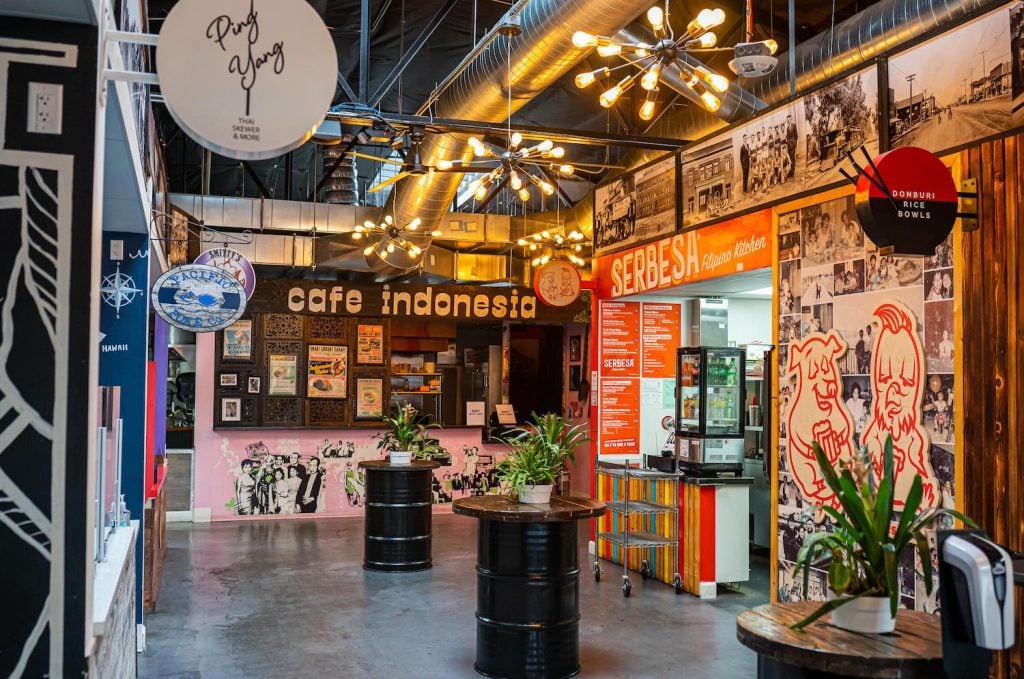
During a recent stroll through the once jam-packed Market on 8th, I confusedly gazed around at the empty stalls. Where was everyone—and what happened? 

So I called Rogelio Cañez, the market’s new owner, to find out his plans for the 11,000-square-foot building. Joel Tubao, who also founded Novo Brazil Brewing Company, initially launched the market in 2021 with an emphasis on offering food from abroad, including Southeast Asia and Thailand, as well as soul food, pizza, and coffee. Cañez’s Mexican eatery La Central has been a tenant at the market since it opened, but he assumed full market ownership from Tubao on July 1, 2024.

Cañez wanted to shift the market’s focus to more affordable but still high-quality Mexican food options. “My goal is to have all the chefs, the well-known chefs, to keep the prices simple so that we can give the families in the neighborhood—the families that are not usually going to Little Italy to spend $200—to get the same service, the same atmosphere, the same structure, and the same kind of place for like, 30 bucks,” he says. “I don’t want anyone to spend more than that, even if you get a ribeye.”

Ping Yang Thai and Donburi Rice Bowls will remain at their current stalls.
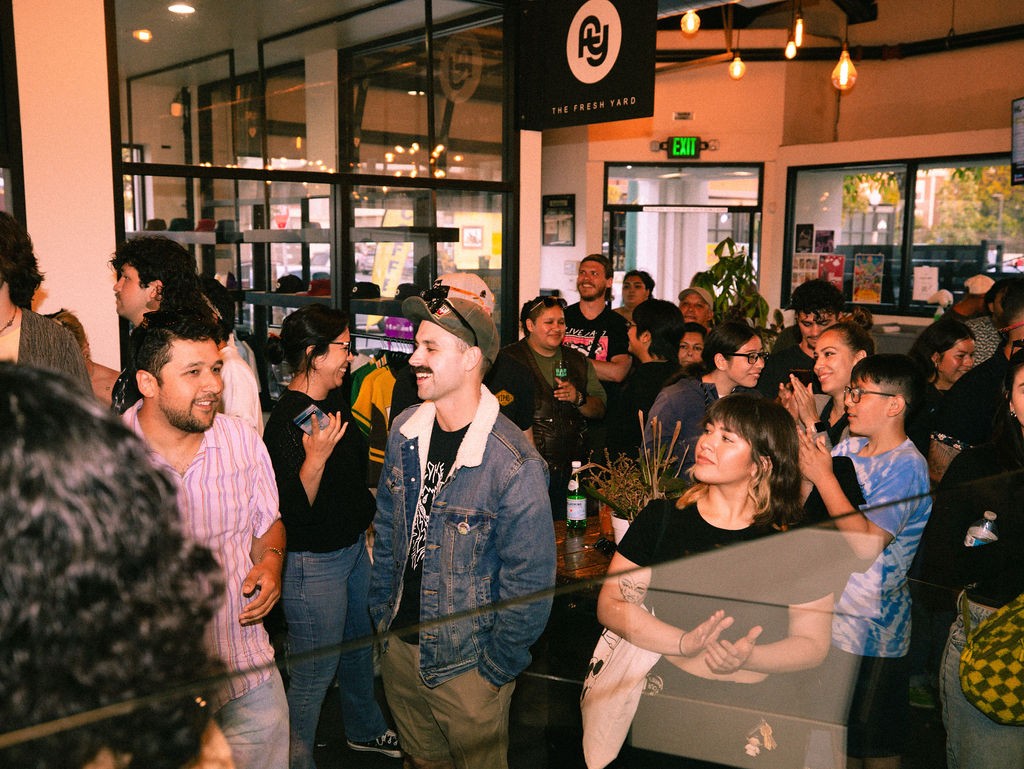
People waiting in line at San Diego food marketplace Market on 8th in National City which is introducing new restaurants and is under new ownership
Courtesy of Market on 8th

New Restaurants Coming to Market on 8th

  • XI-CALI by Chez Loma is a Coronado-based French restaurant Cañez bought in 2023 after selling his stake in La Central. It will be the first Mexicali-style Mexican-Chinese eatery in San Diego, directed by chef Luis Gomez (Javier Plascencia‘s Misión 19, the Mina Group).
  • La Parrilla del Che by chef Dante Ferrero. Cañez calls Ferrero’s Mexico City-based steakhouse Dante Braza y Fuego “one of the most important Argentinian restaurants in Mexico City,” with a menu that will include classic steakhouse options as well as Argentinian favorites, such as empanadas with chimichurri.
  • Kiko’s Place is the mariscos food truck based on Morena Blvd. and is featured on Netflix’s Taco Chronicles
  • Carnitas Quiroga is run by chef Darío Villagómez, who launched the first carnitas stall at Los Angeles’ Grand Central Market 27 years ago.
  • Coleta serves modern Mexican brunch and is run by chef Antonio Luiu. Luiu also owns Garbatella in Otay Ranch, multiple locations of Gianluca Ristorante Pizzeria in Tijuana, and Trentino in Valle de Guadalupe.
  • Poppy Burgers & Shakes, serving burgers, milkshakes, and more, is also run by Luiu.
  • Marcella, a Neapolitan-style pizzeria by chef Guillermo Ivan, for whom this will be his first brick-and-mortar.
  • Cafe Alessi is a morning cafe attached to a coffee stall serving desserts by Diego Márquez (Farmers Table).
  • Barra 8 is a revamped bar space that focuses on margaritas, sangria, wines from Valle de Guadalupe and California, and specialty cocktails

Live music will also be played on Thursdays and Saturdays, as well as karaoke and family-friendly events throughout the week. On weekends, expect carnival-style pop-ups with vendors on the patio offering churros, micheladas, and other street food carts. 

Cañez hopes to have everyone operating by the first or second week of September. He’s also introducing a valet parking option and a free shuttle for nearby residents to quickly get to and from Market on 8th without paying for a rideshare. He says additions like this, as well as the strategic prices, are specifically to cater to the hyperlocal community. “National City is kind of the heart of San Diego,” he says, citing its proximity to downtown and South Bay. “I see the potential.”
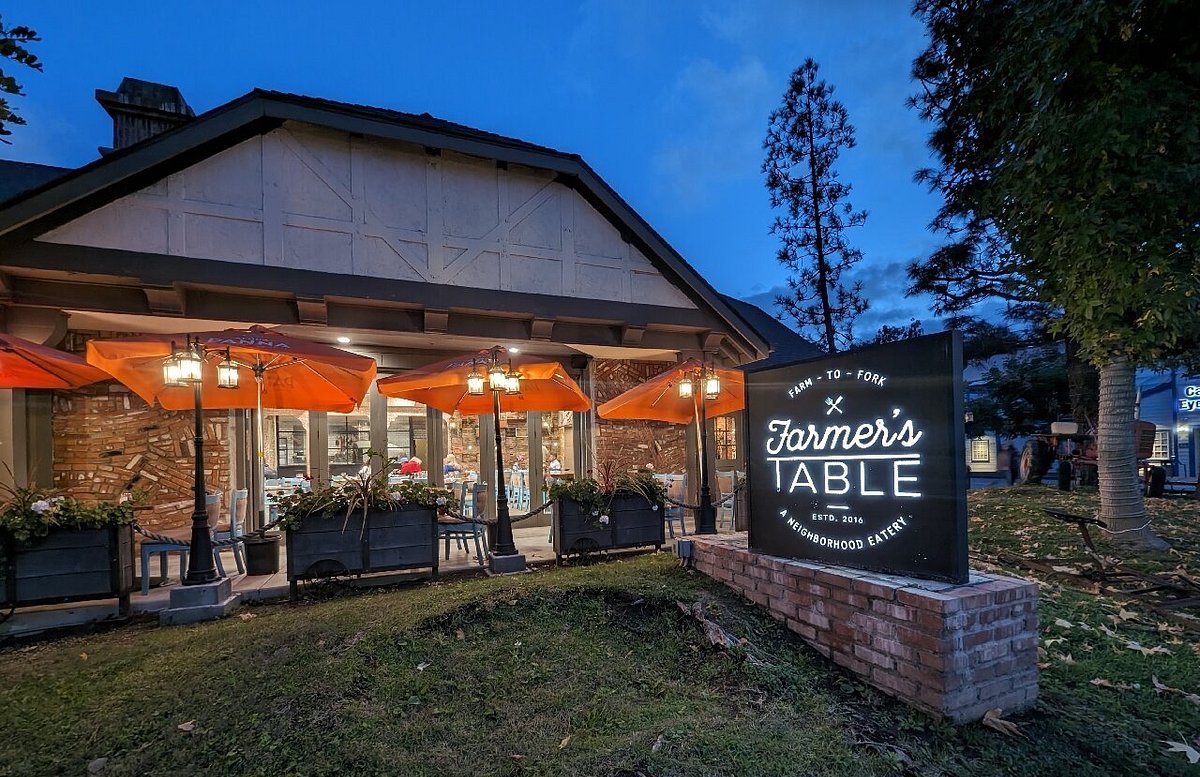
Exterior of the new San Diego restaurant Farmer's Table in Chula vista which opened this week after renovations
Courtesy of Tripadvisor

San Diego Restaurant News & Food Events

Coco & Jules Cookies Coming to Normal Heights

Julie Mussil launched her gluten-free bakery Coco & Jules Cookies, seven years ago as a cottage business operating out of her kitchen. This September, she’ll open the doors of her first brick-and-mortar at 3415 Adams Avenue. “We’re almost ready,” she promises, adding she’ll serve her famous cookies, cakes, and other baked goods, plus vegan options and a rotating gelato menu. Everything is gluten-free and non-GMO, and Mussil says they’ll initially open six days a week before moving to daily hours. Coco & Jules will stay open late on weekdays (between 8 p.m. and 10 p.m., she estimates) and until 2 a.m. on weekends to accommodate the nearby bar crowds. Follow @cocojulescookies on Instagram for grand opening details.

Alba Restaurant Group to Launch Three-Restaurant Concept in Chula Vista

Farmers Table opened its fourth location in Chula Vista in 2021, but it’s getting some company after a recent renovation. Marco Sotomayor, Director of Operations of Alba Restaurant Group, says two new concepts are coming to the 10,000-square-foot space: Acqua E Farina Trattoria Romana and a yet-to-be-named barbecue concept. Acqua E Farina Trattoria Romana is a traditional Italian eatery serving pizza, pasta, dessert, cocktails, and more. It will be open from 4:30 p.m. to 9 p.m. on weekdays and until 10 p.m. on weekends. 
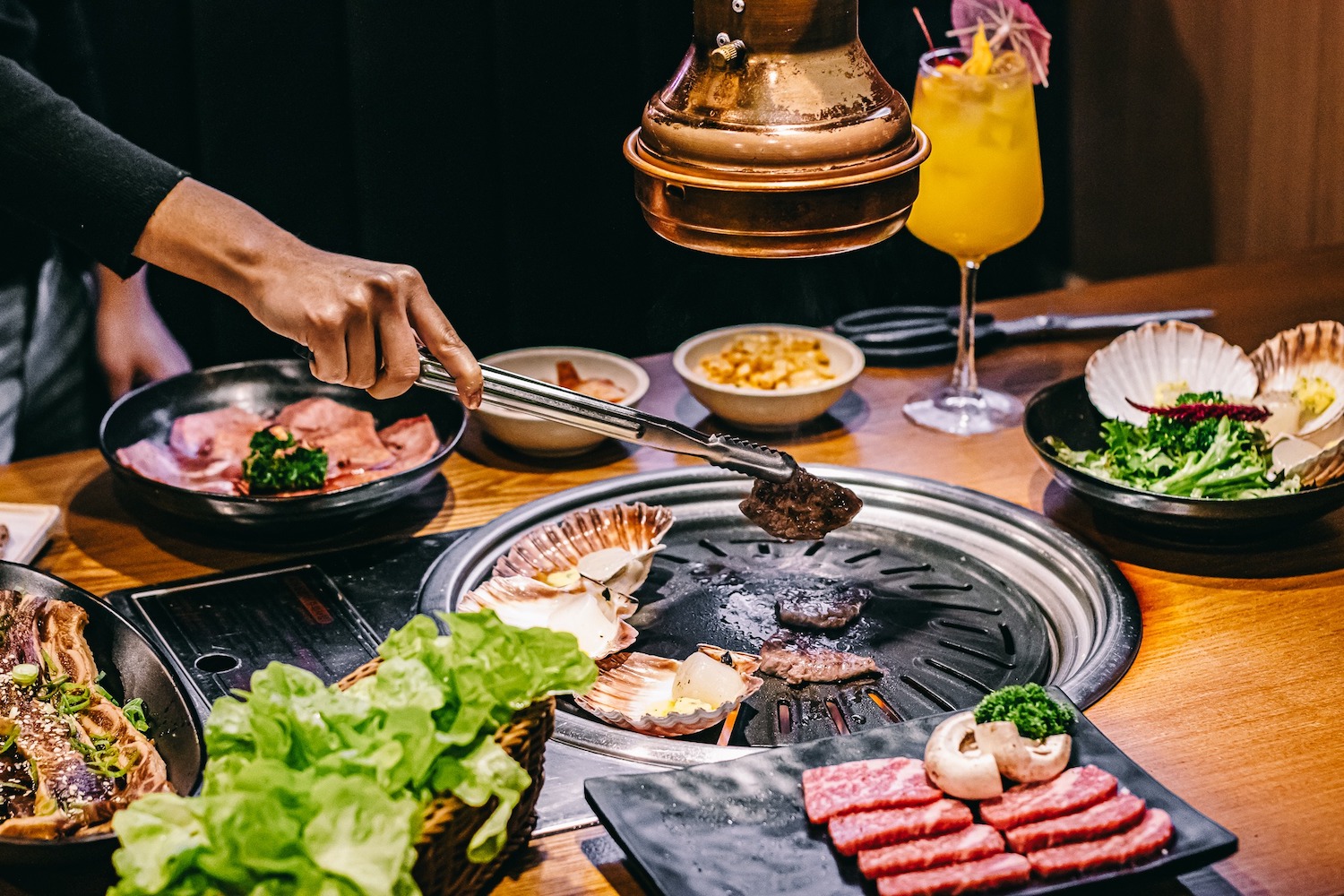
People grilling meat at new San Diego Korean restaurant Sura Korean BBQ
Courtesy of Sura Korean BBQ

Beth’s Bites

  • Come for the art, stay for the food at the Museum of Contemporary Art in La Jolla. Along with their new dinner service and happy hour, chef Tim Kolanko’s latest “The Study of” dinner series features a one-ingredient, five-course tasting menu centered around a specific seasonal ingredient as a jumping-off point. “The Study of—Corn” kicks things off on Thursday, September 12, and reservations are available here
  • 664 TJ Birrieria has already planted its birria flag from Tijuana to National City, El Cajon, Pacific Beach, and beyond, but the latest outpost is (drum roll)… Gaslamp District. The 664 TJ Taco Bar concept will look a little different than the others, but if history is any indication, it’ll be just as bomb.
  • Popcorn, candy, and… sushi? Movie theater food has gone way up since my childhood days of month-old Twizzlers and smuggled-in snacks. The Lot La Jolla is taking it further with Zentrl Kitchen + Bar, with entirely new breakfast, lunch, dinner, and cocktail menus. Yes, there is sushi. No, you don’t have to see a movie to eat there. 
  • Sura Korean BBQ is open in Chula Vista! I’ve definitely pushed the standard two-hour time limit during past meals before, but I’ve never heard of a discount on future meals if you finish in under an hour. Challenge accepted.

Have breaking news, exciting scoops, or great stories about new San Diego restaurants or the city’s food scene? Send your pitches to [email protected].

Beth Demmon

About Beth Demmon

Beth Demmon is an award-winning writer and podcaster whose work regularly appears in national outlets and San Diego Magazine. Her first book, The Beer Lover's Guide to Cider, is now available. Find out more on bethdemmon.com.

Subscribe to our newsletters

Select Options

By subscribing you confirm that you agree with our Terms and Conditions and Privacy Policy.

Everything SD JUNE 12, 2026

Where to Golf with Your Dog in San Diego

The city's pet-friendly courses combine scenic greens, wagging tails, and a round that’s as much about your pup as your swing

Where to Golf with Your Dog in San Diego
Photo Credit: Jed Villejo

Golf doesn’t have to mean stiff collars, pleated khakis, whisper-talking on the green, or pretending your sand trap fails aren’t actually hilarious. Around San Diego, a handful of rebel courses are quietly rewriting the rules of an afternoon round, making them more relaxed, more social, and yes, more dog-friendly. These are the fairways where leashed pups pad alongside their people; where a suspenseful search for a golf ball in the bushes or—no!no!no!no!no!—in the water hazards are part of the fun; where every polite golf clap comes with a smiling, panting audience. If your ideal golf day includes a walk, a drink, and your dog riding shotgun, this is your teeing ground.

Emerald Isle Golf Course, Oceanside

For proof that a golf course can be approachable without being boring, look no further than Emerald Isle Golf Course in Oceanside. The executive course delivers consistently beautiful greens, rolling elevations, and just enough challenge to keep you engaged, not stressed—unless your pup breaks free and runs for the rolling elevations, in which case you’ll be very engaged and maybe a little stressed. Locals love holes like the canal carry on No. 3 and the wildlife-dotted pond on No. 16, while golden-hour sunsets steal the show most evenings. Dogs are genuinely welcome here, not an afterthought. Grab them a slice of watermelon from the clubhouse, pose in the cart for Instagram cameos with an Emerald Isle scarf (it doubles as an adorable bandana for your four-legged friend), or introduce them to the course’s resident pups like Bogey, the assistant director of instruction, and shop dogs Karl and Frank. Affordable, friendly, and no-frills, Emerald Isle feels like golf you and doggo can’t wait to play.

660 S El Camino Real, Oceanside

Courtesy of The Loma Club

The Loma Club, Point Loma

The Loma Club is where golf goes social. Set in Liberty Station, this historic 9-hole par-3 course trades country club stiffness for an easy, neighborhood energy that feels distinctly San Diego. The course is walkable and unintimidating, with skyline and harbor views doing most of the heavy lifting. The Loma Club is just dipping its paws into the dog-friendly trend, and welcomes them on the mini course and off the fairways. Though your pup is the epicenter of your world, the patio at Loma Club is the real star, hosting live music, trivia (even the smartest dogs are stumped), and cocktails that rival golf itself. You don’t even need clubs to enjoy it. Show up with your dog, wander the course, grab something from the clubhouse, and stay for hours. You’ll feel like you’re exactly where you’re supposed to be.

2960 Truxtun Rd, San Diego

Photo Credit: Jed Villejo

Goat Hill Park Golf Course, Oceanside

Calling Goat Hill Park a golf course almost undersells it. Known as the “People’s Park,” this historic Oceanside staple operates more like a community space where golf happens. Expect dogs strolling alongside the players, music streaming from magnetic speakers attached to golf carts, beginners smacking balls alongside serious talent, and locals and tourists sharing the same teeing grounds with a few four-legged besties trotting alongside. Saved from redevelopment in 2014, Goat Hill embraces a raw, unpolished look that’s both intentional and refreshing. With ocean views, a “19th-hole” fire-pit, and zero pretense, it’s golf at its most human…because: dogs.

2323 Goat Hill Dr, Oceanside

Courtesy of Omni La Costa Resort

The Club at Omni La Costa

Ready to add your pup’s name to the illustrious list of golf greats? Same. At the iconic The Club at Omni La Costa, the vibe is equal parts championship-caliber and casually fabulous. Emerald fairways so perfect you’ll hesitate to step on them, palm-lined paths practically begging for a golden-hour strut, and rolling greens that ripple in the sun. And just when you thought it couldn’t get any better, your four-legged plus-one enters the chat: For members and overnight guests, the La Costa lifestyle rolls out the (very chic) welcome mat for your (leashed) pup, turning tee times into a social affair of breezy, citrus-kissed luxury and leisurely strolls. Really—what are you waiting for? Even your dog’s got a standing invite.

2100 Costa Del Mar Rd, Carlsbad

Isabella Dallas is a freelance writer for San Diego Magazine and the Arts and Culture Editor at The Daily Aztec in her final year at San Diego State University. She previously worked as an editorial intern for SDM, but when she’s not writing, you can find her trying the best coffee spots in SD, devouring the latest rom-coms, and indulging in anything and everything pop culture.

Food & Drink JUNE 11, 2026

Spanish Wine, Tapas, Paella & More Coming to UTC

Telefèric Barcelona will open its first San Diego location early this summer

Spanish Wine, Tapas, Paella & More Coming to UTC
Courtesy of Telefèric Barcelona

Westfield UTC mall is adding yet another “first” to the ever-growing roster of restaurants. The first US location for China’s stir-fry sensation Chef Fei is on the way later this year, Japan already reinvented crispy rice pioneer Katsuya by opening the first Katsuya Ko, and now, it’s Spain’s turn—Telefèric Barcelona opens early this summer. 

The family-owned, Barcelona-based tapas joint first opened in the US 10 years ago in Walnut Creek, California, but co-founder and CEO Xavi Padrosa says they’ve had their eye on San Diego for years. Westfield UTC “just clicked,” he says, pointing to the burgeoning collection of world-class eateries already within the mall’s walls. Plus, La Jolla’s breezy vibe echoes Spain’s easygoing tapas culture.  

The indoor/outdoor space spans 5,526-square-feet, with seating for 150 inside, 60 on the patio, and 16 more at the bar. Xavi’s sister and co-owner Maria Padrosa designed the Mediterranean-inspired space as a contemporary take on coastal Catalonia, using imported furniture and materials from Spain like hand-glazed tiles and wood accents. And if all the dining spaces are planets, the center of the suite’s universe is the bar.

Courtesy of Telefèric Barcelona

Padrosa points to signature favorites like patatas bravas (fried potatoes drizzled with a spicy red sauce and house aioli), jamón ibérico de bellota (Spanish ham from free-range pigs raised on acorns, cured for 38 months and sliced to order), gambas al ajillo (garlic shrimp), pulpo Telefèric (octopus with potato purée and pimentón XO, a spicy Spanish/Cantonese fusion sauce), and croquetas (a popular fried tapas dish coated in breadcrumbs and made with béchamel mixed with fillings like jamón or king crab.

There are a very small handful of legit paella spots in San Diego (Costa Brava in Pacific Beach and Cafe Sevilla in Gaslamp Quarter come to mind), so I’m personally looking forward to giving Telefèric’s a go—especially the squid ink paella negra, which is perhaps the most goth paella of all. Every location also offers different weekend specials, La Jolla’s being seafood-driven and meant to pair with beverage director Alex Serena’s drinks. There are over a hundred Spanish wines, Spanish-inspired cocktails, sangria, and of course, plenty of twists on the iconic gin and tonic. The restaurant will also have a gourmet market called The Merkat with imported Spanish sundries. 

Courtesy of Telefèric Barcelona

With more US locations in the works (Newport Beach will open soon after La Jolla), Padrosa says the company hopes to open more across California, but are open to anywhere in the country that feels right. “We don’t know exactly what new cities will appear on our map in the coming years,” he says. But in true Catalan fashion, anywhere they go should be ready for big plates of hearty Spanish cuisine.   

Telefèric Barcelona La Jolla opens early summer 2026 in Westfield UTC. Opening hours will be Monday through Thursday, 11:30 a.m. to 10 p.m.; Friday and Saturday, 11:30 a.m. to 11 p.m.; and Sunday, 11 a.m. to 10 p.m.

Photo Credit: Gretchen Dunn

San Diego Restaurant News & Food Events

Arcana In Encinitas Is Now Anigma

Most of the time, you have to be 18 years old to change your name. In Arcana’s case, it was about a month. The immersive speakeasy behind Archive in Encinitas updated their moniker to Animga (a play on “enigma”) earlier this month, after what one can only assume was an upset letter from a similarly-named business. However, partner Paula Vrakas promises that the concept remains the same—mystery, cocktails, and a forthcoming bottle locker membership club. Since the only constant is change, Anigma is off to a good start!

Courtesy of Good Honey

Beth’s Bites

  • It’s not a salad barMary’s Gourmet Salads is a salad experience. And soon, Bankers Hill will get a taste of the green when the local eatery opens its third location at the corner of Sixth Avenue and Upas Street in the Park Summit building. Yes, that’s the same building as Cowboy Star’s new venture She Rode West, so it sounds like veggie lovers and carnivores alike will be covered. 
  • Speaking of expansion plans, La Corriente is likewise on a roll. The Mexican seafood concept opened its first location in the US in La Jolla in 2024, followed by Coronado in 2025, and announced plans to open a third branch in Oceanside in the Freeman Collective. With neighbors like Tanner’s Prime Burgers and Little Fox ice cream, the culinary collective is only getting more ridiculously tasty.
  • One delicious event that will occur before both of the aforementioned openings is a honey + cheese + focaccia tasting at Pastaria Vivi on July 17. With the help of Good Honey (which took top honors as the highest-rated honey in the U.S. at the International London Honey Awards) and Point Reyes Farmstead Cheese Company (easily one of the best artisanal cheesemakers in California), the Encinitas-based pasta shop and market will host a free pairing event from noon to 3 p.m. And if you’re an aspiring apiologist, don’t miss Good Honey’s on-site observation hive to watch these busy bees in action.

Listen Now: The Latest in San Diego’s Food and Drink Scene

Have breaking news, exciting scoops, or great stories about new San Diego restaurants or the city’s food scene? Send your pitches to [email protected].

Beth Demmon

About Beth Demmon

Beth Demmon is an award-winning writer and podcaster whose work regularly appears in national outlets and San Diego Magazine. Her first book, The Beer Lover's Guide to Cider, is now available. Find out more on bethdemmon.com.

Guides JUNE 11, 2026

A Guide to the FIFA World Cup 2026 in SoCal

From San Diego’s coastline to Los Angeles stadium and fan zones across the region, here’s how to experience soccer’s biggest event

A Guide to the FIFA World Cup 2026 in SoCal
Courtesy of FIFA

When three nations and 16 cities come together to host the FIFA World Cup 2026, the scale stops feeling like a tournament and starts feeling like geography. A continent becomes the stage as borders soften into corridors. And Southern California—shaped by migration, sport, entertainment, and constant movement—sits inside that landscape with all eyes on it.

San Diego and Los Angeles have always felt connected. Hop on the Pacific Surfliner, and the trip unfolds in one continuous stretch of coastline, passing beach towns, neighborhoods, and city centers.

Traveling from San Diego, everything still feels slightly suspended as the Pacific Surfliner follows the coast north with ocean on one side and a slow suburban blur on the other. San Diego stays in exhale. Los Angeles is already building toward something louder.

This summer, Los Angeles will host eight matches of the FIFA World Cup at Los Angeles Stadium, including the US Men’s National Team opener on June 11, while the region stretches into 39 days of programming across stadiums, parks, transit hubs, beaches, and neighborhoods. Instead of one massive fan hub, Los Angeles is embracing a citywide celebration, with fan zones spread across its entirety.

But this pattern has been rehearsed here for decades. In 1994, Southern California became one of the defining stages of the World Cup, when matches at the Rose Bowl placed global attention on the region and turned local stadiums into international landmarks, confirming its ability to hold the world at scale.

What distinguishes Southern California is not just infrastructure, but cultural permeability. Fashion, music, film, art, and sport constantly overlap here, creating an environment where identity is flexible and always in motion. From the Venice boardwalk, where skate culture shaped modern street style, to global soccer stars rubbing shoulders with Hollywood celebs, to authentic Spanish cuisine moving up and down the I-5 corridor, everything circulates.

The World Cup is not introducing anything new here, it’s showing up for the summer and showing out, revealing what this city has always known about itself. What follows is a look at the fan zones and how Los Angeles turns itself into a city-wide stage for the tournament, one neighborhood at a time.

Courtesy of Los Angeles Tourism & Convention Board

Los Angeles Union Station

As the heart of Los Angeles, Union Station is an official Fan Zone June 25-28 during the World Cup, but in practice it never really stops being one.

It is the city’s circulation point, its meeting ground, its pressure valve. Commuters, travelers, match-day crowds, and everyday Angelenos all move through the same space, and everything mixes, overlaps, and scales in real time. In a way, this is where the World Cup stops arriving in Los Angeles and starts moving through it.

The Pacific Surfliner from San Diego to Los Angeles makes that shift feel almost too easy. No stress or  gridlock anxiety, just a straight line up the coastline with ocean on one side and everything slowly becoming more built on the other. It’s one of the rare ways into LA that doesn’t feel like arrival as friction. You can sit with a laptop, watch the Pacific drift past, grab coffee from the café car, and let the city come to you in pieces.

That’s the beauty of arriving at Union Station. Instead of feeling like you’re on the edge of the city, you’re immediately surrounded by it. And, inside, the station already reads like a World Cup nerve center: banners, movement, multilingual energy, the sense that something global is about to funnel through this exact point. The Heart of the City Fan Zone only sharpens that feeling, with simultaneous match screens, DJ sets, meet and greets, and immersive activations built around marquee games like USA vs. Türkiye.

From there, the city splits outward.

ROW DTLA feels like the first exhale after arrival. A converted industrial campus turned creative district where restaurants, retail, and open-air courtyards form a self-contained ecosystem. If you’re looking for the perfect first meal in LA, make it lunch at Pizzeria Bianco. The thin-crust pizza is reason enough to go, but the space leaves just as much of an impression.

What I liked most about ROW DTLA is how quickly it resets you after the train. One minute you are stepping off at Union Station, and the next you are in a space that feels like its own version of LA, a city inside a city with some of the most curated shopping I’ve ever seen.

Bodega hides itself behind a convenience-store front, a sneaker and streetwear space disguised as something ordinary, like LA refusing to make anything feel too obvious. The whole campus moves like that, part retail, part gallery, part neighborhood you are only temporarily inside.

Isabella Dallas is a freelance writer for San Diego Magazine and the Arts and Culture Editor at The Daily Aztec in her final year at San Diego State University. She previously worked as an editorial intern for SDM, but when she’s not writing, you can find her trying the best coffee spots in SD, devouring the latest rom-coms, and indulging in anything and everything pop culture.

Studio S JUNE 8, 2026

Seven Restaurants, One Rising Star

Yes, Chef! winner Emily Brubaker leads the robust culinary program at Omni La Costa Resort & Spa

Seven Restaurants, One Rising Star
Courtesy of Omni La Costa

For Executive Chef Emily Brubaker, Omni La Costa Resort & Spa feels like home. She grew up just a mile-and-a-half away from the 400-acre property and fondly recalls walking the golf course perimeter as a kid. Though her ambitions led her away from San Diego for nearly two decades in which she honed her craft in some of the highest of high-profile Las Vegas restaurants—including triple Michelin-starred Joël Robuchon at MGM Grand—they ultimately brought her back to North County.

Courtesy of Omni La Costa

Today, the classically French-trained chef, who’s fresh off a victory on NBC’s Yes, Chef!, judged by Martha Stewart and José Andrés, oversees Omni La Costa Resort & Spa’s seven distinct dining concepts. Her goal is to elevate the resort’s culinary program with her creative, hyperlocal ingredient-driven approach while maintaining the Spanish- inspired flavors and fresh California coastal cuisine that are the bedrock of its culinary identity.

“The San Diego food scene is really growing, and in North County alone, it’s really exploded in the last five years,” Brubaker says. “There are Michelin stars, beautiful tasting menus, craft bakers, and all this food—when I was growing up in La Costa, it was fish tacos. Now there are really cool things popping up, and I’m so happy to be here to see where it’s going to go.”

Brubaker gives chefs de cuisine at each individual restaurant autonomy, however, her influence is evident across the resort.

For example, lobby restaurant Bar Traza serves as Omni La Costa’s culinary centerpiece and features bold Spanish flavors in a lively, social atmosphere. Brubaker overhauled the menu to be more consistent and centered on casual bites with that signature vibe. Think smoky paprika, vibrant citrus, and Spanish meats and cheeses.

At VUE, the focus is on seasonal offerings, California coastal cuisine, and Baja-inspired dishes. She and Chef de Cuisine Cameron Dixon change the menu biannually, which heading into summer, will highlight farm-fresh produce and hyperlocal ingredients—the resort even has its own herb garden and honeybee hives.

Courtesy of Omni La Costa

Poolside dining options are leaning into the country’s 250th this summer with a selection of classic American dishes with an Omni La Costa twist. And Bob’s Steak & Chop House (Brubaker is a trained butcher) offers a classic steakhouse experience with elevated service.

The chef and company also plan menus for special events at the resort where her creativity can really shine. For an upcoming National Ski Association dinner, the banquet hall will be transformed into an Alpine-themed winter wonderland complete with a snow machine, savory sausages, and melty, decadent raclette. A recent dinner was built around the Carlsbad Flower Fields and each course was matched to a color of ranunculus (Did you know pink dragonfruit are grown in North County? You do now.).

“It’s my zen to be in the kitchen playing with food,” Brubaker says.

Omni La Costa’s culinary program is a key part of the resort experience. And with Brubaker’s leadership, it’s becoming a draw for visitors and locals alike.

“These aren’t just hotel restaurants, these are restaurants that you should go to. They’re destinations, and I’m really hoping for the future that’s where we’re going,” Brubaker says.

Courtesy of Omni La Costa

Brubaker is also channeling her experience on Yes, Chef! into the culture at Omni La Costa—more emphasis on teamwork and collaboration, empowering her staff to share constructive critiques, and embracing different perspectives. Alongside her leadership role, Brubaker has become an advocate for mental health in the hospitality industry, serving as chief ambassador for the Burnt Chef Project and serves on the Board of Advisors for the Apex Culinary Program, where she mentors and develops future talent.

For more on Omni La Costa Resort & Spa and its dining program, please visit omnihotels.com/hotels/san-diego-la-costa.

Partner Content
Arts & Culture JUNE 10, 2026

Artist India Thompson Weaves New Meaning into Everyday Items

On view at Mingei International Museum now through October 18, Thompson's basketry invites viewers to notice the seemingly mundane

Artist India Thompson Weaves New Meaning into Everyday Items
Photo Credit: Ron Kerner

When was the last time you really looked at your fridge? Not for milk or ketchup or that takeout you hope is still good, but really looked at it. Considered it. Its texture. Its shape. Its role in your life. “Never” is probably your answer here. But once you’ve seen India Thompson’s life-size fridge made of reed, you’ll probably pause the next time you’re in your kitchen.

Thompson’s new Looks Like Home exhibit on view at Mingei International Museum takes everyday items that most of us use on a daily basis—the things that usually make our lives faster and more convenient—and renders them useless but beautiful as intricately woven reed sculptures.

The museum’s name comes from the philosophy of Yanagi Sōetsu, who wrote in the essay “The Beauty of Miscellaneous Things” that “when one becomes too familiar with a sight, one loses the ability to truly see it. Habit robs us of the power to perceive anew, much less the power to be moved.”

Thompson joins artists who use material transformation to remake the familiar, like Katarina Kamprani who redesigns everyday objects in ways that render them physically unusable, or Do Ho Suh who recreates domestic spaces through labor-intensive processes. Thompson’s approach is quieter, more tender: She doesn’t distort. She weaves.

Photo Credit: Ron Kerner

Seeing her work for the first time brought up emotions I hadn’t felt since I was a kid watching The Brave Little Toaster, the movie that taught me to hold space for the invisible servants that make up our homes. Thompson’s collection encourages a kind of reckoning with what it means to ignore the essential. It asks you to reconsider what “home” means in an era where so few can afford to buy one. Her sculptures are like a challenge to pause where you usually press on. Being close to her work is like taking a breath and not realizing how long you’ve been holding it.

Thompson was born in Los Angeles and is now a multidisciplinary artist based in San Diego. While ceramic is her primary artistic medium, this exhibition highlights her exploration of basketry—a thousand-year-old, time-consuming process and an art form she describes as one of “care and memory-keeping.”

Thompson also happens to 9-to-5 as Mingei’s studio program specialist. Assistant Curator Ariana Torres didn’t know about Thompson’s basketry work until she saw Thompson post a picture of her woven toilet paper on Instagram. Then came a woven microwave.

“It seemed really poignant and uncanny,” Torres says. “It was mundane, but it was also kind of quiet … something you wouldn’t think anybody would focus on.”

Photo Credit: Ron Kerner

Thompson began making art five years ago in her college ceramic class called Handbuilding, and she immediately fell in love. The first art she ever shared with others were her ceramic figurines: round, red-clayed pot-like sculptures with minimalist, barely-there faces in a variety of expressions. Some look surprised. Some look very concerned. Some look like they spend Friday nights at a Star Wars cantina. She calls them “Moots.”

The definition of the English word moot, in verb form, is “to gather and discuss an important topic,” as Thompson explains. “They look so serious … like they’ve wriggled through the earth to talk to each other.”

Thompson found her way to basketry three years ago and learned by watching YouTube videos.

“It’s something you can do at home,” she says. “And I love a repetitive process.”

The toilet paper roll came to her while making a cylinder that she thought looked like a roll of Charmin. Then she thought maybe she should make one on purpose. “I just thought it would be funny and really challenging, too,” she says. “Because there’s no tutorial for that. Why would there be, right?”

She figured it out and shared it on Instagram. People loved it. It received more than double the amount of likes and comments she usually got, but what really struck her was how many people came up to her in person to talk about how they connected with it. That, to her, was even more meaningful than the online response.

So she kept going and chose to make a microwave next.

Photo Credit: Ron Kerner

“[It’s an] object we all own and we all need,” she says. “Yet no one really cares about a microwave.”

She started the collection during a time when her landlord was coming into her apartment constantly with a crew of people, making notes of what they were going to remodel without ever acknowledging her in the room.

“It was such a weird fishbowl moment,” she says. “I technically don’t own my apartment, but I still consider it home. I live here and I pay to live here, but this isn’t mine. We live in this space and I call it my apartment. I call it my refrigerator. But it could be taken away at any moment.”

It dawned on her how much we depend on things we don’t own, how little we notice the things we rely on every day, and how temporal the word “my” can be.

The woven refrigerator is the largest in Thompson’s collection at Mingei, and inside it you can find additional woven items like a ranch bottle, a Brita filter, and a sandwich on a plate. You can’t open the freezer door, but if you look carefully between the gaps of woven reed, you might be able to see a few other things Thompson made and placed inside.

“If you really look closely,” she explains, “you’ll be rewarded.”

Food & Drink JUNE 10, 2026

Where is Coral Strong Now?

Talking farm to table, fraud-to-table, and the feasibility of the movement with the beloved restaurateur who saw it all

Where is Coral Strong Now?
Courtesy of Chef Coral Strong

Garden Kitchen was special. During its seven-year run on a quiet street in Rolando, even the farmiest-to-table devotees were pointing to chef-owner Coral Strong and slow-clapping. When a dramatic rent-hike forced her to close in 2022, Strong wasn’t sure what to do next.

Farm-to-table wasn’t new by any means—chef Alice Waters spawned the movement at her pioneering restaurant Chez Panisse in Berkeley in the early ‘70s, and many San Diego chefs did it right. But by the mid-2000s, the idea had been so co-opted by the mainstream that the meaning was almost completely lost. 

“In the beginning, I used to get very honestly angry and upset when I would go to other restaurants that were claiming they were farm-to-table, but knowing some of the chefs or prep cooks inside [telling me] ‘Oh no, that comes from Restaurant Depot,’” she says.

Food critic Troy Johnson’s cover story in 2015 documented the fraud, titled “Farm to Fable.” At Garden Kitchen, Strong only used produce and meat sourced from local San Diego farms—an honorable, if not arduous endeavor.

Strong grew up in Cardiff before her parents moved the family to Costa Rica in 1989. They’d bounce between the two countries for months at a time, but when they lived in a motel by the beach while building their own house, she witnessed an incredibly tight-knit food culture. “As a Latin American country, everyone kind of cooks together,” she says. Everyone chopped, prepped, prepared, and served as a unit. “[That] definitely shaped my adolescence as to how I thought about food and the community of food.” 

Photo Credit: Olivia Hayo

When her father, a commercial fisherman, brought the family back to San Diego, Strong leaned into an entrepreneurial streak, moving from coffee to accounting and eventually bartending to pay the bills. But food remained a passion, especially after she met her future husband, who was working at a farm and ranch in Escondido.

“We were just always disappointed with the vegetables out at restaurants and were like, ‘Why can’t they just make vegetables taste good?” she wondered. She realized that despite having more small farms than any other county in the country, most restaurants in San Diego simply weren’t using local ingredients. 

So she decided to do it herself. 

Strong opened Garden Kitchen without any formal culinary training—just a commitment to getting the freshest vegetables, meat, fruits, and other produce onto people’s plates. Her first chef quit within a month, telling her it was impossible. “So I got in the kitchen one day and said, ‘I can do this, let’s figure it out.’ I taught myself how to cook.”

She already had connections with farmers, fishermen, and ranchers, and designed a different menu almost daily based on what she could get. “My farmers sometimes delivered in the middle of dinner service,” she laughs. 

Garden Kitchen lasted until after the pandemic, but before the current economy cut into already razor-thin margins. Could Garden Kitchen exist today? She’s not sure.

“The biggest thing right now is just looking at the finances and how expensive it is,” says Strong. “Obviously, the cost of food is up right now, gas is crazy right now… it just crushes you.” Despite that, she believes that committing to the true farm-to-table ethos is as easy as one decides to make it.  

“If you think it’s hard to order directly from your farmer, if you don’t understand the absolute pleasure in doing that and you’d rather order from a computer, then that’s your own difficulty,” she says. “People say they’re into it, but are they willing to make the effort like I am, to drive an hour to go get my meat, or drive 35 minutes to go to my farm to go pick it up? I don’t know.” 

Today, Strong works as a private chef, hosts pop-ups, and offers catering services, all still using seasonally available ingredients from San Diego. And while she has no intentions of opening another restaurant, she says we might see even more of her in the future.

“I have a large property [in Valley Center], and let’s say that there will be more of my food to come,” she promises. 

Courtesy of Tajima Ramen

San Diego Restaurant News & Food Events

Beth’s Bites

  • Dora is less than a year old, but already shaking things up—mostly, behind the bar. Bar lead Francesca Proietti Semproni (whose resume includes stints at Young Blood, Civico, and Rustic Root) launched what sounds (in my humble opinion) like an absolutely charming initiative called Nonna’s Recipe Book. Instead of picking your next drink off a menu, tell the bartender what you’re in the mood for, what you’re eating, and what flavors you tend to enjoy and they’ll whip up a unique concoction just for you. But wait, there’s more! Once the custom cocktail comes to life, the Dora team adds it into a living archive of recipes—a collection of guest-created drinks you can come back to again and again and again. In an age of algorithmic choices made for us rather than by us, I kind of love this analog vibe. 
  • South Bay’s local coffee favorite Cafecito on Palm is doing the damn thing for number two. Cafecito on Park will open later this year near San Diego City College, bringing their signature espresso service closer to downtown. Hopefully, City College attendees can plan for their next finals week to be a little more java-driven. 
  • It’s always 5 o’clock at Margaritaville Hotel San Diego Gaslamp Quarter, and now, it’s perpetual summer as well with a slew of rooftop cabanas now available to the public. If you ask me, it’s just in time for the hotel’s Yappy Hour, hosted on the last Thursday of every month through October, where pups and people can kick back on the rooftop and enjoy dog-friendly (and people-friendly) menus, plus giveaways, leis, and more. If your dog likes to chill as much as you do, this might be the place to hang poolside this summer. 
  • Time flies when you’re slurping noodles. Tajima Ramen just hit the big 2-5 and is marking the occasion with a month of specials, events, deals, and other giveaways throughout June. From June 1 to 7, head back in time with their Throwback Menu bringing back some old favorites, June 8 through 14, you can get any two ramen bowls for $25 or free extra noodles with your ramen (dine-in only), or from June 15 through 21, snag happy hour prices all day, every day. There’s even more on the schedule, so take a peek at your local shop’s calendar and enjoy the taste (and some prices) circa 2001. 

Listen Now: The Latest in San Diego’s Food and Drink Scene

Have breaking news, exciting scoops, or great stories about new San Diego restaurants or the city’s food scene? Send your pitches to [email protected].

Beth Demmon

About Beth Demmon

Beth Demmon is an award-winning writer and podcaster whose work regularly appears in national outlets and San Diego Magazine. Her first book, The Beer Lover's Guide to Cider, is now available. Find out more on bethdemmon.com.

Partner Content JUNE 10, 2026

New Options for GLP-1 Users

Scripps study shows that some patients may be able to taper their dose and maintain results

New Options for GLP-1 Users
Courtesy of Scripps Health

While glucagon-like peptide-1 (GLP-1) receptor agents have been used to treat Type 2 diabetes for more than 20 years, their recent emergence as weight-loss wonder drugs marked a new frontier in medicine. But their effectiveness has left some patients wondering what to do once they’ve reached their goal. Stopping the medication could mean regaining some, if not all, of the weight. A Scripps Clinic internal medicine physician recently conducted a small study of whether GLP-1 patients who had reached their goal weight could maintain that weight by taking their regularly prescribed injection every other week instead of weekly. Spoiler alert: 30 of 34 patients did. Read more about the study here and what that may mean as pharmaceutical companies roll out oral GLP-1s.

For more nutrition, wellness, and healthy living tips, sign up for the San Diego Health newsletter here.

Partner Content

Eat Like a Local (Who Knows a Guy).

Restaurant news, culinary storytelling, and Troy Johnson’s sharp takes delivered straight to your inbox twice a month.

Close the CTA

Contact Us

1230 Columbia Street, Suite 800,

San Diego, CA