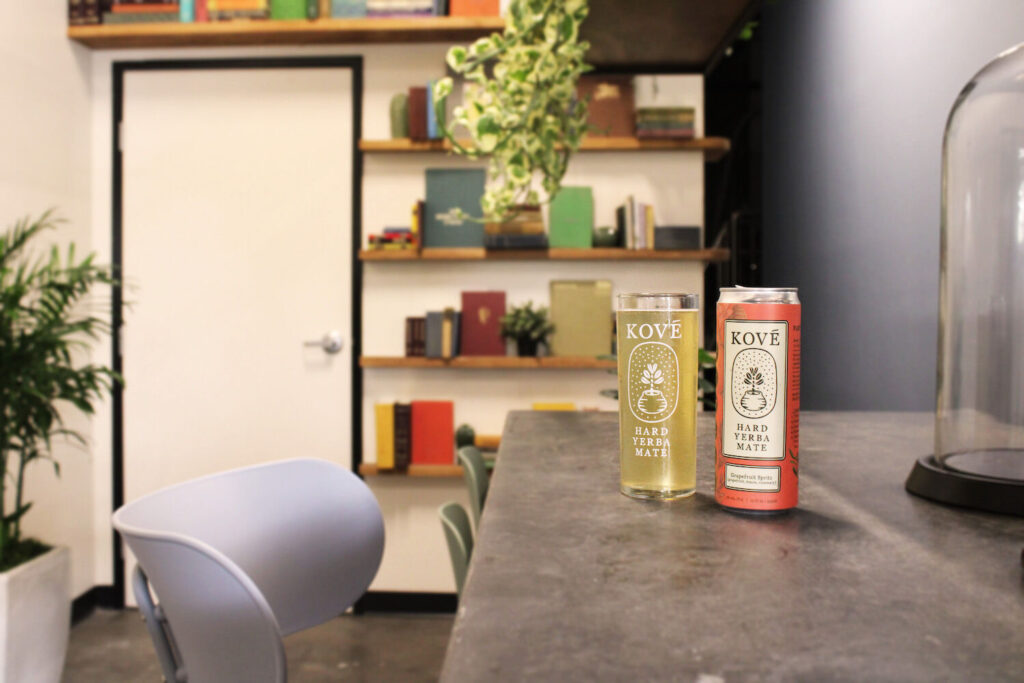
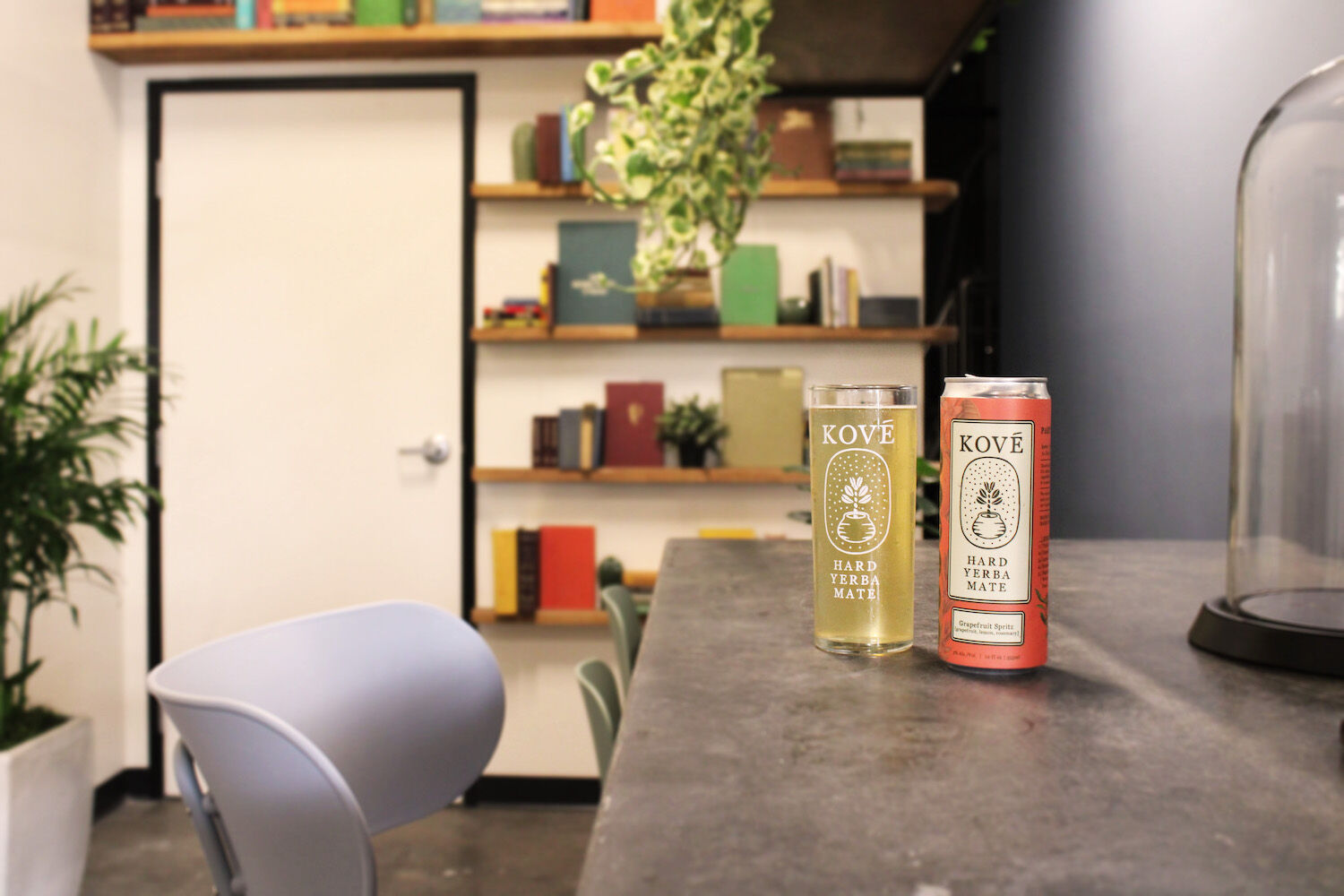
One year after opening their inaugural tasting room and brewing facility in Barrio Logan, Kové Hard Yerba Mate is ready to open their second location in Miramar. Yerba mate, an herbal tea popular in South America, has yet to achieve mainstream popularity in the American alcohol industry, but as the world’s first 100% organic, gluten-free, vegan hard yerba mate, Kové hopes to introduce the lightly caffeinated beverage to more people through distribution and expanding roster of San Diego locations.
The new space—which lies smack in the middle of a fermentation hub that includes Pure Project, Duck Foot Brewing Company, Ballast Point, Cutwater Spirits, and more—is the first of several planned outposts for Kové.
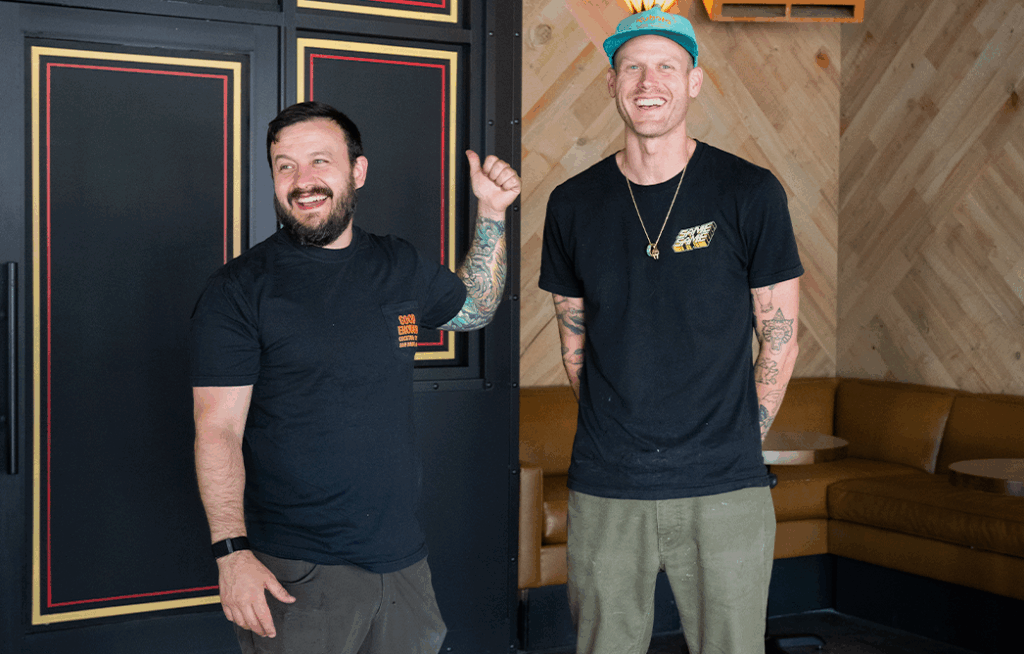
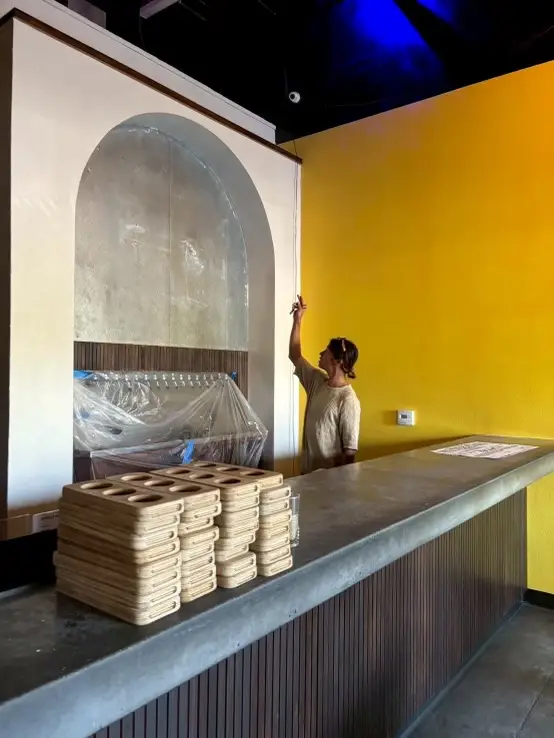
Alex Montelbano, Kové co-founder & CEO says with this new location, they aim to transcend the standard taproom setting, calling it a “unique visual experience” complete with artist collaborations and an emphasis on greenery.
“Visually, it is more of an artist curation space with botanicals weaved in, rather than an outdoor botanical experience,” Montelbano says. “Customers will have access to exclusive varietals from Kové’s expert brewer while enjoying beautiful art in various forms from local artists.”
Collaborations with artists, cocktail experts, yoga teachers, professional snowboarders, and other brand ambassadors have been a defining part of Kové’s ethos since its original launch in 2021. Montelbano says these partnerships are “incredibly purposeful” and a key part of their lifestyle image. Plus, as one of the few alcoholic drinks that naturally contains caffeine, their 5-percent-ABV cans are specifically designed to be enjoyed any time of day to complement any activity. “Party with a purpose!” Montelbano laughs.
The 720-square-foot tasting room will also feature a small batch brewing facility. Guests can expect 14 taps with core offerings, rotating specials, and seasonal flavors, as well as plenty of cans, growlers, and variety packs for to-go purchases. Plus, Montelbano promises, they plan to announce several partnerships and new flavors for release later this year. With the added brewing capabilities of the Miramar space, Montelbano says they hope to produce 4,500 barrels of hard yerba mate over the next 12 months. (For comparison, in 2021 Modern Times Beer reported an output of 53,000 barrels.)
The Miramar tasting room will soft launch on June 7 with a grand opening planned for June 25. Operating hours will be 4 p.m. to 8 p.m., Monday through Thursday; noon to 10 p.m. Friday and Saturday; and noon to 8 p.m. Sundays.
Visit the new Kové tasting room at 9030 Kenamar Drive, Suite 309 and follow their progress atdrinkkove.com.
Humans are naturally drawn to vibrant hues like bubblegum pink, amethyst purple, and super-duper lime green. But as appealing as those colors are to our eyes and the algorithm, Nguyen Le says they’re rarely natural.
For example, pure, unadulterated matcha gets its Kermit color from tea leaves (specifically, Camella sinensis leaves), which are then cultivated under shade to boost their chlorophyll and amino acids. Matcha tweaked for our maximum stimuli often include green dyes, or extracts from other leaves (suji, moringa), plus flavor enhancers. For pandan, it’s the same.
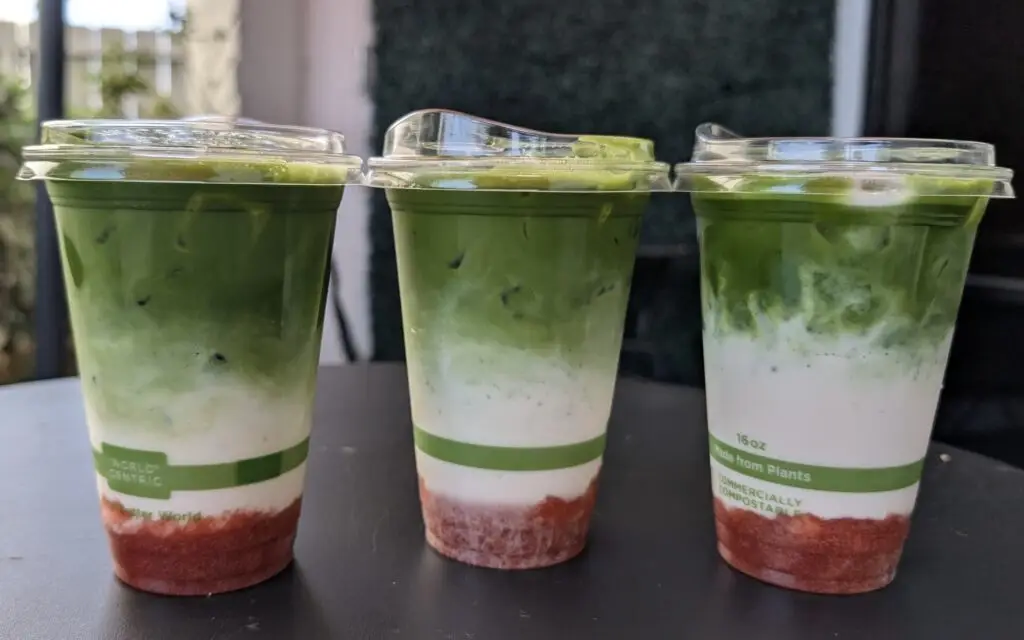
For the signature matcha latte at Prosperitea, Le’s pop-up tea service uses real pandan leaves to create a simple syrup and flavorless green chlorophyll to brighten it up. By avoiding artificial flavors and colors and using seasonal fruits to create different syrups, Le says they can highlight what should be the star of the show—the tea itself.
Photo Credit: Nguyen Le
Le grew up casually drinking tea with meals, but found himself getting more and more into coffee during the pandemic in order to support local coffee shops. “My caffeine intake was getting out of control,” he laughs. He switched to loose leaf tea and eventually matcha, which contains less caffeine and releases it more slowly than coffee. But when he tried matcha in Japan, he realized there was an opportunity to bring its ceremonial-grade to San Diego.
Often used liberally, the term “ceremonial grade,” has no official meaning or criteria, Le explains. It’s an unregulated marketing term that anyone can use to suggest a level of quality (and isn’t used in Japan).
“I think the more accurate description of ‘ceremonial’ would be the first harvest of the tea,” he says. “There’s multiple harvests throughout the year, and the first harvest of the year will always yield the best flavor and color for matcha… typically that’s used for ceremonies for the tea schools.”
Propsperitea offers drinks like lattes and Americanos made with matcha or houjicha (a savory Japanese roasted green tea), milk teas, and cold brew teas infused with seasonal fruits. For fall, Le says they’re bringing on fig leaf, sweet corn, white peach, and maple, along with the signature pandan. For now, Propsperitea pops up every weekend at Relic Bageri’s commerce kitchen at 8585 Commerce Avenue in Miramar, but he hopes to increase the amount of pop-ups and private catering events and eventually find a brick-and-mortar space of its own.
“I would like to be able to do the whole tea ceremony for patrons that want to experience it, but that’s just not possible in the [pop-up] setting,” he says. “Really, drinking tea is meant to be slowed down, and you’re supposed to enjoy the process. But right now, in America, everything’s just like, go, go, go, and they want that instant gratification. I want to be able to share that experience of slowing down the process.”
Find Propsperitea most Saturdays and every Sunday at 8585 Commerce Avenue.
Of all the “Tastes Of” neighborhood food tours, Taste of North Park is one of the most jam-packed. Plus, you can choose your own adventure—try over 50 dishes with the “food-only” ticket, add 15 different drinks with the “food and sip” pass, or split the food and get two tasting cups with the “shareable sip” option. (Clever!) It’s going down on October 4, tickets here.
The mission statement for National City nonprofit San Diego Kollective Foundation says it aims to provide opportunities for the small business community while supporting human causes that affect the San Diego community. To help support those goals, it’s throwing a rad-looking night market on Saturday, October 4 at Kujo Eats (3400 E 8th Street) in National City. The free event will have live music, local vendors, and “flavors from every corner of the city.”
Everyone is feeling a bit of sticker shock in the restaurant world right now, and Caffè Calabria wants to help. Every Wednesday and Thursday starting at 11 a.m., you can grab one of its wood-fired Neapolitan-style pizzas for $13. It’s a pretty great deal for one of the best pies in town.
Caffè Calabria isn’t the only spot trying to provide extra value for guests. This November, Elvira in Ocean Beach is launching Cucina di la Nonna, an immersive private dinner theater experience for up to eight people. It’s modeled after a “1970s Italian grandmother’s home,” which sounds both delicious and intense. I’m ready.
Listen Now: The Latest in San Diego’s Food and Drink Scene
Beth Demmon is an award-winning writer and podcaster whose work regularly appears in national outlets and San Diego Magazine. Her first book, The Beer Lover's Guide to Cider, is now available. Find out more on bethdemmon.com.
When Koo Miyake moved from Japan to the United States for college, he brought with him a deep-seated cultural appreciation for craftsmanship and attention to detail—something he thinks is falling to the wayside in American-made products.
“You see a lot of drinks, something on Instagram, you don’t even know who owns it or where it’s coming from,” he explains. “It’s just another capitalism product.”
So, he decided to do something about it.
Courtesy of Koobrew
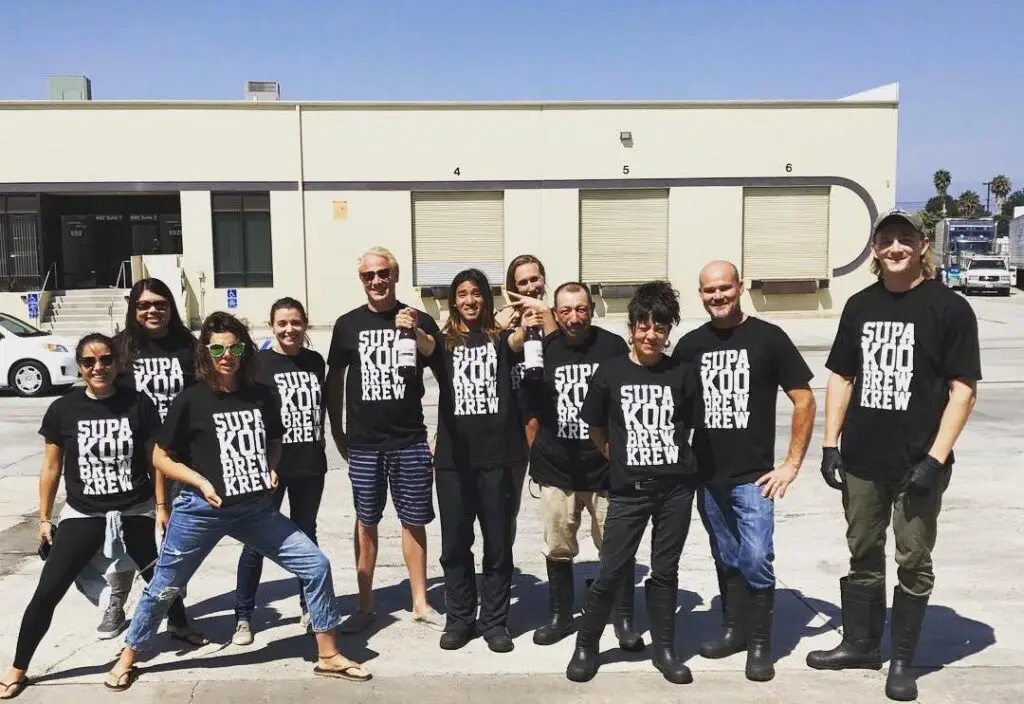
Next month, Miyake will open his first beverage line in Miramar, in the former Kové tasting room. Dubbed Koobrew, he’ll offer a core series of functional spritzers made with fermented teas, wine yeasts, and different botanicals, plus a few classic European-style beers like pilsners and witbiers. By tying together Japanese attention to detail and California’s spirit of entrepreneurship and innovation, Miyake hopes to help resurrect that sense of craftsmanship that once earned San Diego the title “The Capital of Craft.”
He has the experience to do it, too—Miyake has made hard kombucha at Boochcraft, distilled spirits at Cutwater Spirits, and was head of product and a partner at Kové until it closed earlier this year. He’s also a prodigious homebrewer and former beertender at Mikkeller in Tokyo, and he plans to use all of his beverage-making skills at Koobrew. For the soft opening this October, he’ll have around six different beverage options on draft before expanding to packaged bottles and kegs of around four different beers and around 10 “better for you” beverages. He’ll (eventually) need some help, but for now, Miyake says he wants to keep it a solo show to ensure everything is to his standards.
Courtesy of Koobrew
“I want to be grounded, put my soul and energy into what I’m making—because after I produce my product, it will be released from me,” he explains. “But until everything comes together, I want to try to make everything by myself so I understand everything, and then [I can] feel like I actually own the product and the space and the philosophy behind it.”
Koobrew opens at 9030 Kenamar Drive, Suite #309 this October. Follow @koobrew.co for more updates.
Courtesy of The Hangout
San Diego Restaurant News & Food Events
Jay Bhavani Vadapav has nearly 200 locations across India, Canada, Australia, and the United States—and San Diego is about to get its first one. The Indian street food sensation will open by the end of September at 9506 Miramar Road with a range of dishes like vadapav (deep-fried potato patties in a bun topped with different spices and toppings), dabeli (a sweet and spicy potato mixture topped with different chutneys), maskabuns (a pillowy, buttery bun often eaten for breakfast or a snack), and more South Indian favorites like dosa, uttapam, and more. All signs point to yum.
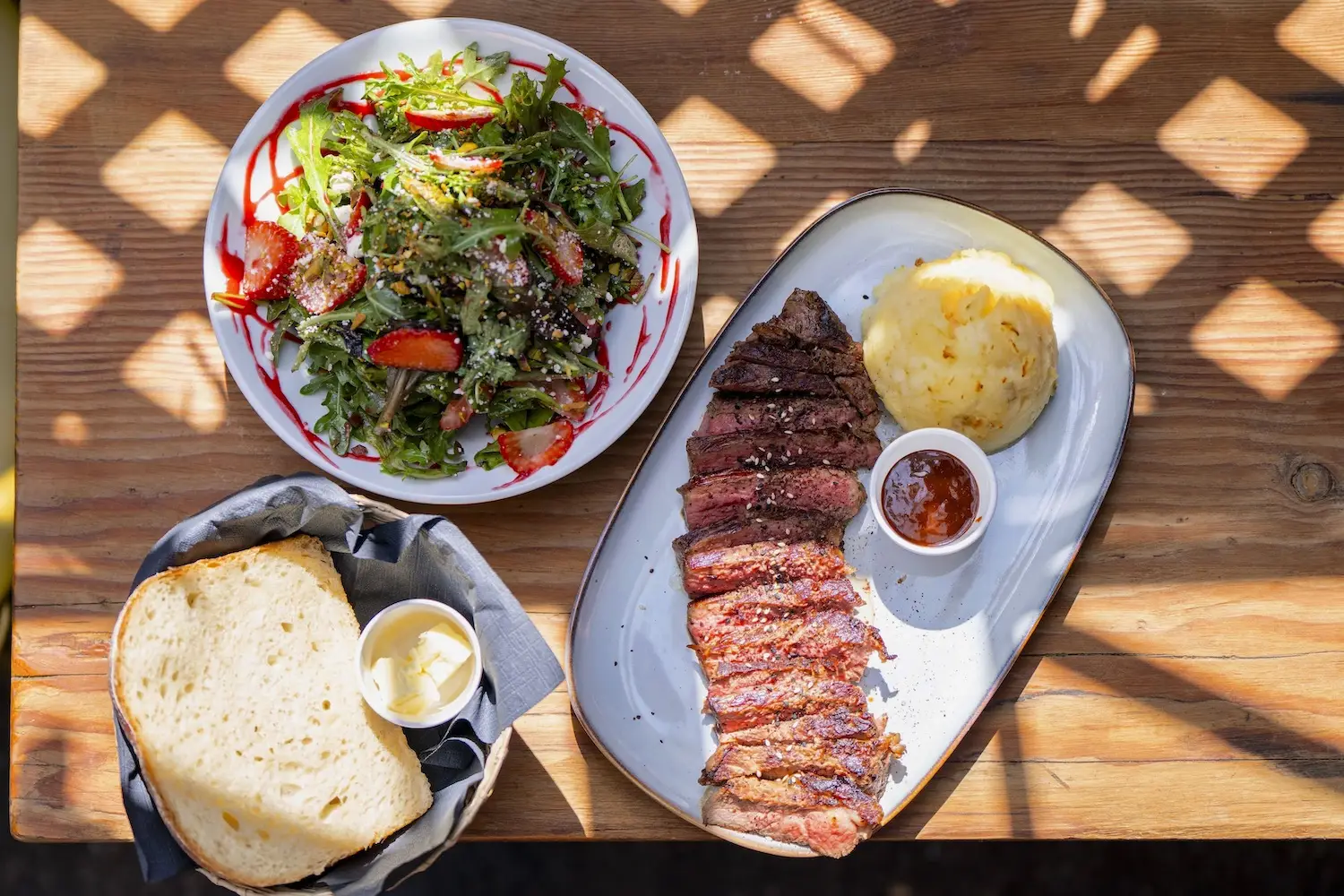
When Cafe 21 closed in Normal Heights this April, the news was met with much wailing and gnashing of teeth. But locals can now get their food fix on once more at The Hangout, serving brunch all week (short rib omelettes, Dutch pancakes, corncakes and crumpets, overnight oats and healthy stuff, bloodys), and dinner on weekends (wings and steak plates, salmon plates, mezze platter, burger, etc.). Welcome to the ‘hood!
Farming isn’t getting any easier (and land isn’t becoming less expensive). Those of us who live in cities should be looking to urban farming for tips on how to grow where we live, and Seeds@City Farm can help us do just that. The educational program helps train the next generation of food thought leaders, and you don’t have to be a student to benefit from their programs—you can volunteer, check out their farmstand every Wednesday at San Diego City College, or keep an eye on their schedule for different talks and other events.
Late summer brings one of the most exciting times in craft beer—wet hop season. You can get your fill of the hop-drenched brews at Nickel Beer Company in Julian, which currently has three wet hop beers on draft with two more on the way. (Be warned: these beers are for serious hop-heads only.)
Listen Now: The Latest in San Diego’s Food and Drink Scene
Have breaking news, exciting scoops, or great stories about new San Diego restaurants or the city’s food scene? Send your pitches to [email protected].
Beth Demmon is an award-winning writer and podcaster whose work regularly appears in national outlets and San Diego Magazine. Her first book, The Beer Lover's Guide to Cider, is now available. Find out more on bethdemmon.com.
Tokyo unquestionably holds the title as one of the best, if not the best, food cities of the world. But despite the plethora of Michelin-starred kaiseki restaurants and hole-in-the-wall ramen joints, you’d be remiss in walking past glowing signs beckoning you to enter one of the 56,000-plus konbini across the country.
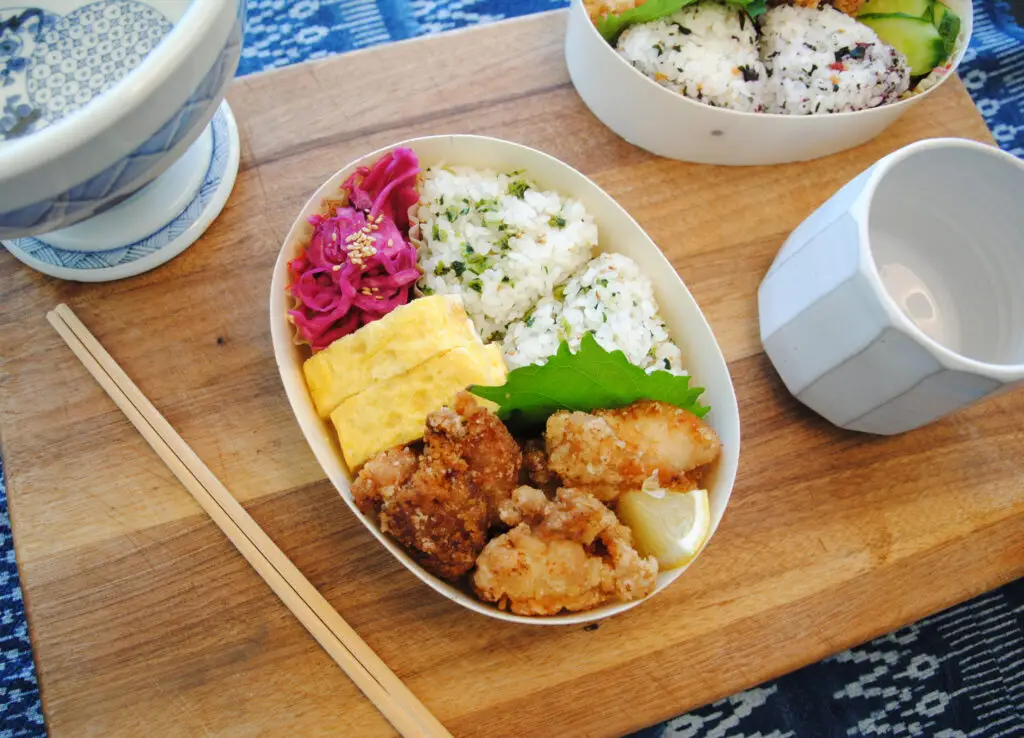
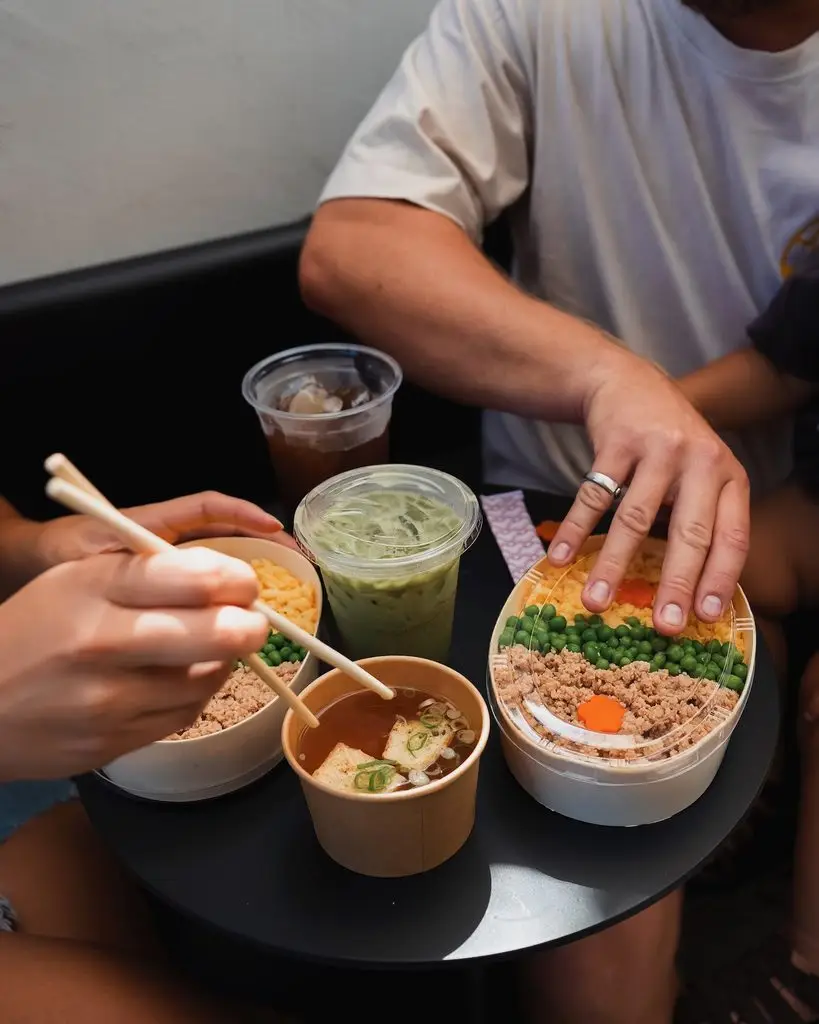
Konbini cafes like Lawson’s, FamilyMart, and 7-Eleven may look like run-of-the-mill convenience stores, but convenience store culture is a completely different animal there. Absent are the sad, floppy hot dogs sizzling sweatily on a rotating wheel of misery. Instead, konbini are stocked with a bevy of hot and cold drinks in every imaginable flavor, meals like tamago sandos (Japanese egg salad sandwiches) and prepacked bento boxes, snacks like onigiri (handheld triangles of rice and seaweed, often filled with fish or pickled plum), and even limited-edition merchandise (not unlike Wawa’s line of merch).
Soon, Hillcrest will get a taste of konbibi culture. Hako Hako opens in front of Uptown Inn by Vantaggio, next to Ramen Ryoma, in early 2027.
Kenji Blouin-Ito, a half-Japanese, half-French San Diego native grew up eating Japanese food at home and during trips across the Pacific. “I remember looking forward to eating bentos on the train,” he says, grabbing quick items to munch on without sacrificing quality or succumbing to cost. When in France, he saw a rise of appreciation for casual Japanese cuisine, “long before it happened here.”
Courtesy of Hako Hako | Photo Credit: @josh_walker.26_genteel
So he decided to bring it here. After AB 626 passed in 2018 to allow different jurisdictions to permit Microenterprise Home Kitchen Operations (MEHKOs), Blouin-Ito launched Foodnome, the first legal marketplace for homemade food in the US. Eventually, the national nonprofit The Cook Alliance took over the project, leaving him open to the next new idea but with the experience of running a food-based business.
“That experience changed how I think about food, not just what makes it good but what makes it work,” he explains. Bento boxes felt affordable in a time of inflation, convenient in a bustling world, and versatile to a variety of palates. When he got the chance to open a konbini himself, he went for it.
His family runs Uptown Inn, a mix of apartments and hotel rooms that’s seen increased food traffic over the past few years. “We had a small space in front of the building that wasn’t being used, and it just made sense,” he says. Hako means “box” in Japanese, a reference to both bentos and small space from where he’ll sling freshly made bentos, coffee, drinks, pastries, snacks, and a small retail selection.
Hako Hako will initially open for morning and afternoon hours, but you don’t have to wait until next year to get a taste of Japanese culture. Blouin-Ito’s concept is popping up at various coffee shops around San Diego, with a few coming up: Easy Does It on September 19 and Cafe Moto on October 17. Until then, practice the art of gaman: patience with grace.
Hako Hakoopens at 819 University Avenue in Hillcrest in early 2027.
Sushi Tadokoro held on to its Michelin star for three years—no mean feat for anyone. But now, the Old Town restaurant is changing things up, eliminating lunch and à la carte service at the end of September before transforming into an omakase-only experience in October. The dining room will close from October 1 through October 22 to make the change, but promises it will be “more intimate. More personal. More focused on each guest and every piece we serve.” Sounds worth the wait.
Bock brought new life to South Park when the German-inspired beer bar opened after a long construction process by owner Brian Jensen (Vino Carta, Bottlecraft). Now, Bock is getting its own shot in the arm with a new in-house kitchen from the people behind Majorette, Love Letters Pizza, and Scrimshaw Coffee. Kurz, or “quick” in German, is already open, serving European-inspired bites like the requisite currywurst, Bavarian pretzel, and schnitzel, along with some newcomers like a pierogi and famous “Majorette burger.” (I can confirm it’s a damn good burger.) Reminder: Bock and Kurz are 21+, so leave the kinders at home.
The popular Japanese dessert chain Warabimochi Kamakura already has 70-plus locations in Japan, Australia, China, Thailand, and the U.K. (to name a few), but is finally opening a location in Convoy District at 8322 Clairemont Blvd. After a successful pop-up test run at Asa Bakery, Warabimochi Kamakura will bring its signature warabimochi (a traditional simple, jelly-like dessert), plus tea like matcha and hojicha, as well as soft serve as soon as October, but possibly November. (Although warabimochi is sometimes considered a summer treat, I’m pretty sure I can make an exception for autumn.)
Listen Now: The Latest in San Diego’s Food and Drink Scene
Have breaking news, exciting scoops, or great stories about new San Diego restaurants or the city’s food scene? Send your pitches to [email protected].
Beth Demmon is an award-winning writer and podcaster whose work regularly appears in national outlets and San Diego Magazine. Her first book, The Beer Lover's Guide to Cider, is now available. Find out more on bethdemmon.com.
Meet ArtsConnect, UC San Diego’s Invitation to SoCal Arts Lovers
ArtsConnect brings those experiences into view, helping residents discover what they can see, hear and create at UC San Diego while experiencing the campus in a new way.
Ask most people what UC San Diego is known for, and the arts may not be the first answer. Yet this fall, San Diegans can watch Ghostbusters with a live orchestra, try their hand at glassmaking and wander among more than 20 works of public art woven throughout the university’s La Jolla campus.
ArtsConnect brings those experiences into view, helping residents discover what they can see, hear and create at UC San Diego while experiencing the campus in a new way.
Courtesy of UC San Diego | Photo Cred: Erik Jensen
“The arts are at the heart of UC San Diego’s student-centered mission and vision,” says Alysson Satterlund, Vice Chancellor for Student Affairs and Campus Life. “Whether creating, participating in, or experiencing performances, the arts are essential to a healthy and truly fun Triton student experience.”
That invitation often begins where the arts intersect with other fields.
“Some of the most innovative work and discovery happen where disciplines don’t usually share a stage,” says Cristina Della Coletta, Dean of the UC San Diego School of Arts and Humanities. “So through our unique intersection of the arts with science, technology, and medicine, we are improving lives, physically and emotionally.
Take The Inaudible Ocean, a collaboration between Department of Music Professor Lei Liang and Scripps Institution of Oceanography Assistant Project Scientist Josh Jones. Over eight years, the pair recorded earthquakes, ship noise, whale songs and other sounds in remote underwater locations. They transformed those recordings into a live music experience that allowed audiences to hear the ocean in an entirely new way. The work premiered on campus in May and continues to evolve.
The arts also connect the campus to the global art world and diverse perspectives. Chief Campus Curator Jessica Berlanga Taylor recently curated the Mexico Pavilion at the 61st Venice Biennale, featuring RojoNegro, the collective formed by Noé Martínez and María Sosa. The collective will unveil a compelling new permanent installation for UC San Diego’s celebrated Stuart Collection later this fall.
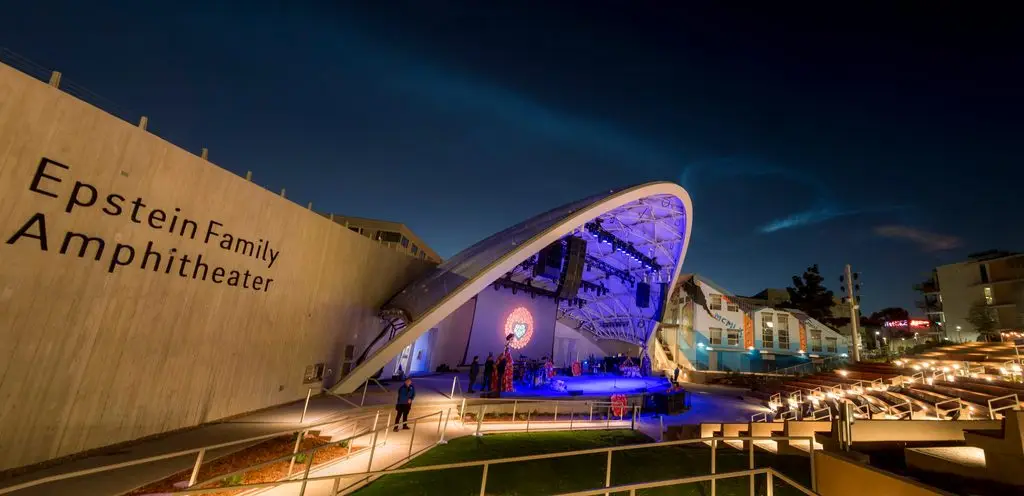
ArtPower offers another easy entry point, bringing touring performers to venues including the outdoor Epstein Family Amphitheater and the intimate Loft. The nearly three dozen performances featured through its 2026-2027 season span music, dance, film, theater and conversation.
Among the fall highlights is Ghostbusters in Concert on Sept. 25, pairing the beloved 1984 film with a live performance of Elmer Bernstein’s score. Tickets start at $35, and the amphitheater is located next to the UC San Diego Blue Line trolley station.
“Every member of our community should have access to world-class art, so we work hard to remove the barriers that stand in the way,” says Colleen Kollar Smith, executive artistic director of the Campus Performances and Events Office. “That means affordable ticket prices, and performances, voices and experiences where people see themselves reflected on stage and know they belong.”
The arts at UC San Diego are not only something to watch. The Craft Center offers public classes and workshops in ceramics, jewelry, woodworking, culinary arts and even surfboard shaping. At the new Glass Center, beginners and experienced makers can explore glassmaking through classes, demonstrations and studio experiences.
Whether you want to attend a performance, make something yourself or spend an afternoon exploring public art, there is an easy way in. And the invitation extends well beyond students and alumni.
Kollar Smith says it best: “Visit, participate, spectate or create. You’re invited, and we hope you’ll connect with us soon.”
Two San Diego Wine Pros Are Betting Big on Tinned Fish
With Sosal Line, Heidi Greenwood and Juerie Masters are importing traceable seafood from small producers and building a global pantry business along the way
Courtesy of Sosal Line | Photo Credit: Madison Daube
No matter your job, it’s helpful to find some sort of joy in it to avoid going completely insane. Some people savor the variety of personalities when dealing with customers. Others find comfort in the predictability of closing a bar after last call, counting tips and wiping counters. Perhaps achieving Inbox Zero really gets your blood pumping, or shipping a new product design sparks joy.
For Heidi Greenwood and Juerie Masters, work doesn’t get better than logistics and operations.
“[We] both love all the unsexy parts of supply chain and backend management,” laughs Greenwood. Tracking outbound orders? Ensuring compliance? Managing inbound freight? Stop me if this is getting too hot for you!
Not enough people think about the unsexy reality of running a business before launch, but effectively and consistently keeping an eye on operations separates successful companies from out-of-business ones. Both Masters and Greenwood already own their own businesses—Greenwood is behind the wine zine Campestre Mag and runs the online wine shop Esquina, and Masters co-owns Clos Wine Shop and Fintastic Provisions in University Heights with her husband Paul. Apparently, these gigs weren’t enough to satisfy their collective yearning for spreadsheets and inventory maintenance.
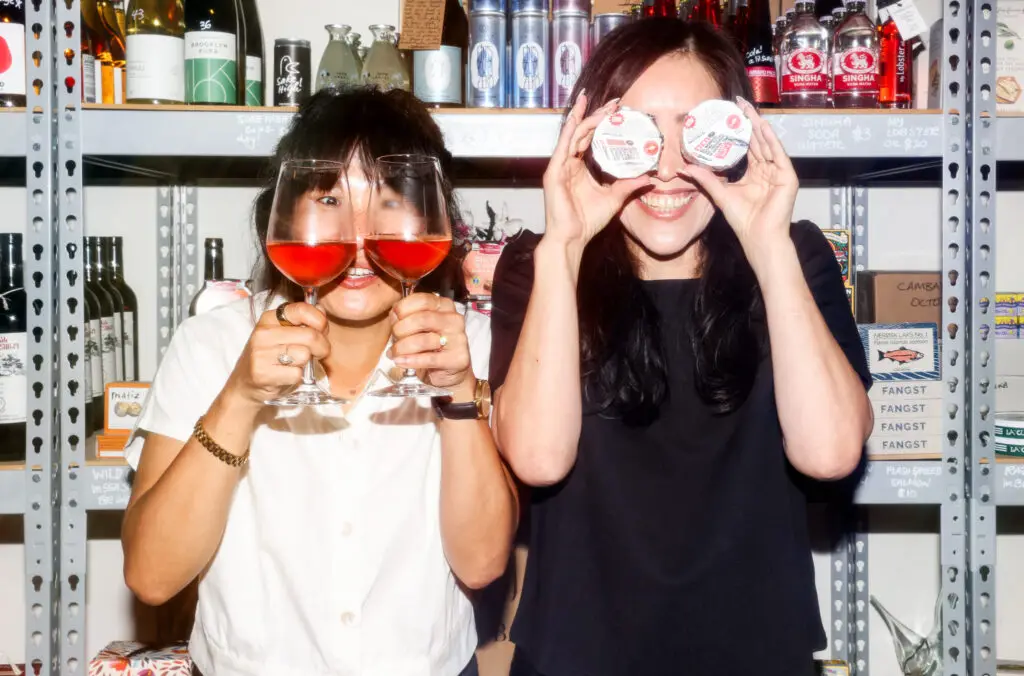
So, they decided to start another business together—Sosal Line, a San Diego-based import and distribution company specializing in global pantry items. The pair launched Sosal Line at the beginning of 2025 and currently only sell three brands of tinned fish, but Greenwood says they plan to expand their offerings as they discover other small or family-run businesses that share their values.
“We want to work with brands and with products that really have a sense of place and actually tell a story—not just the product, but the people behind it too,” she says.
Masters and Greenwood are both Korean-American and named this burgeoning business after Haenyeo, the legendary free-diving women of Jeju Island in South Korea. Traditional Haenyeo equipment and garb include oribal (swim fins), yeoncheol (lead belts to help them sink), and the company’s namesake sosal, a hand-held fishing spear (sometimes called jaksal).
The average person, if sitting completely still, can stay underwater for up to a minute and a half at most. Haenyeo can hold their breath for up to three minutes while actively foraging, harvesting, and swimming. Scientists say these diving women spend more time underwater than any other group of humans on earth. Not badass enough for you? The average age of Haenyeo is around 70.
Courtesy of Sosal Line | Photo Credit: Luke Schmuecker
“Fishing is a strong heritage for Koreans, and it’s the same here in San Diego with the Portuguese settlers,” Greenwood explains. (We aren’t the tuna capital of the US for no reason.)
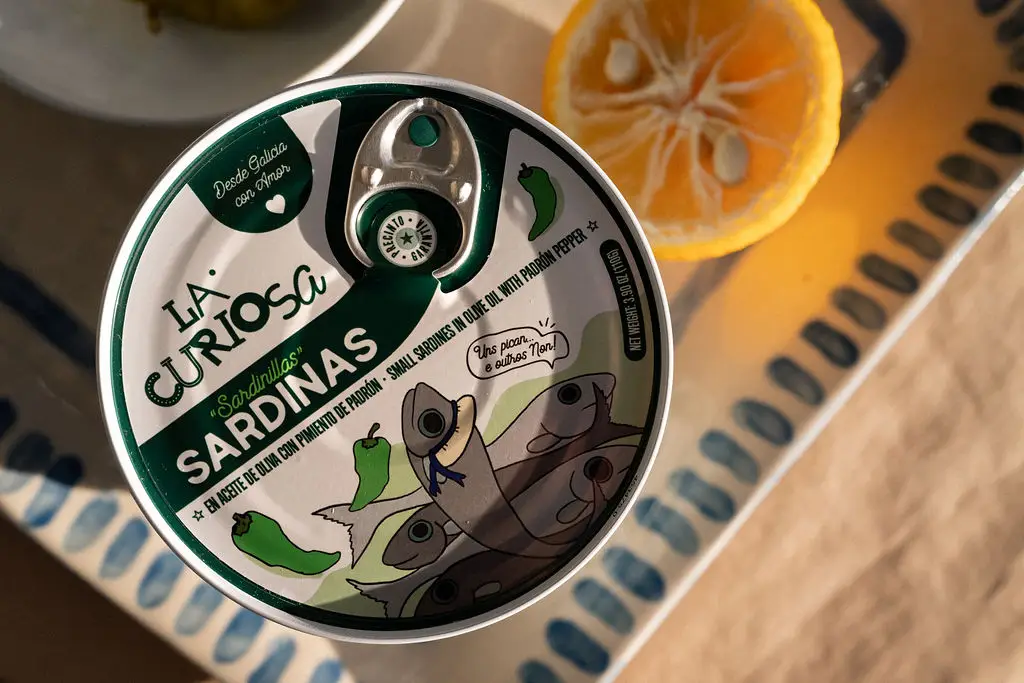
Sosal Line carries 100 percent traceable, wild caught fish from Galicia in Northern Spain and the Pacific Northwest, all family-owned companies who don’t compromise on sustainable practices. Tinned fish has never been more popular—or more debated—but there’s more to it than cute labels designed for maximum Instagram reach. “I want to know who I’m purchasing from,” says Greenwood. One of their suppliers, Craft Fish Co., which is based in San Diego but fishes in the PNW, is run by JJ and Jessica Gerritsen. JJ catches, Jessica packages, and it’s a business relationship on a first-name basis. “You can’t find that when you’re working with some nameless brand.”
San Diegans can find Sosal Line products at local retailers like Clos/Fintastic (obviously), allmine in Oceanside, Always Hungry Grocery & Goods in Carlsbad, J. Brix Wines in San Marcos, Collins & Coupe/Tablespoon in North Park, and Green Acre in La Jolla. They’re also available in select retailers in Northern California, Oregon, Arizona, and strangely enough, South Carolina. Expanding its client base is, of course, a goal. But not at the expense of quality or joy of discovery.
“I would love to see people try food from different cultures and be excited about it,” says Greenwood. “Maybe make them want to travel to experience different areas of the world.”
Beth Demmon is an award-winning writer and podcaster whose work regularly appears in national outlets and San Diego Magazine. Her first book, The Beer Lover's Guide to Cider, is now available. Find out more on bethdemmon.com.
The folks behind Oddish Wine and Lost Cause Meadery are partnering with Bica to open an all-day cafe, coffee shop, wine bar, and restaurant near La Mesa Village
La Mesa: a bucolic, hill-dappled city long regarded as a somewhat frumpy, never quite trendy bridge between the urban cool of Mid-City and the rural sprawls of East County. La Mesa’s population clocks in at around 4 percent of the city of San Diego’s—fewer than Chula Vista, Oceanside, Escondido, Carlsbad, El Cajon, Vista, San Marcos, and Encinitas, in that order. It’s home to a killer Oktoberfest, one of the best charter high schools in the state, and a theatrical mayor who tools around town in a golf cart (and so far, hasn’t cut any arts funding or closed public bathrooms).
But any area that’s only 20 minutes from downtown San Diego and under 20 miles to Mission Bay will only stay under the radar for so long. Slowly but surely, bits and bobs from San Diego’s cultural tastemakers have been popping up all over town. Dark Horse Coffee and the boutique Small Batch both opened in La Mesa in 2018. Stella Jean’s and Pop Pie are coming later this year. Native Poppy is building its new headquarters and studio this fall. After a year in business, the new owners of JK’s Greek have established themselves as one of the best Greek restaurants in the county.
Next year, La Mesa will get one of its most ambitious projects yet. Billy and Suzanna Beltz, owners of Lost Cause Meadery and Oddish Wine, are pouring everything they have into renovating a 5,000-square-foot building between the Village and MacArthur Park to open a wine/beer bar, coffee shop, all-day cafe, and wine shop.
The concept doesn’t have a name (yet), and Bica in Normal Heights will come on as a partner to run the restaurant aspect and coffee program (which also won’t be called Bica. Still lots of naming decisions to be made). But the Beltz’s vision is to create something in La Mesa that doesn’t exist yet—a community gathering space open from morning until night that’s family-friendly, creatively designed, and well… cool.
The building has been around since the 1940s, first operating as a neighborhood market, then butcher shop, secondhand children’s store, electronics store, dry cleaners, and bike shop. The Beltzses say they plan to keep the “soul and character” of the space as much as possible, highlighting original details like a barrel-shaped wooden roof, brightening up the corner building by utilizing the large front windows, and eventually building an outdoor dining/drinking space and kid-friendly area—a must for the neighborhood’s plethora of young families. They tapped all locals for the design and build: Tecscape Design, design consultant Carly Miller-Chen (who owns Ayi boutique in South Park) to create the space, and local contractor CLTVT.
Courtesy of Oddish Wine
Starting in the morning, the space will offer coffee and light breakfast items before transitioning to lunch and dinner menus, plus a full bar that will feature Oddish and Lost Cause products as well as other local wines, beers, ciders, and other beverages alongside an aperitivo program and low-ABV cocktails and spritzes. Food-wise, they plan to install a wood-fired oven and rotisserie, but expect more menu details to be revealed closer to opening.
There will also be a small retail space focused on natural wines and ciders from places like Raging Cider & Mead in San Marcos and other San Diego and Baja California makers. But don’t expect run-of-the-mill options from the guy who makes weird wines and mead, the oldest alcoholic beverage in human history (hardly TikTok trend material). “We have a unique perspective… Hopefully we can expand some palates and minds in the process,” says Billy.
Community is the heart of the project, more than food, more than drinks. “We have a young family. [Bica owners] Manny [Da Luz] and Charlie [Knowles] have families,” says Billy. Suzanna adds: “People want a space that they know they’re going to get really amazing food, really fun drinks, but they can also feel like they can bring their kids during the weeknights.” It won’t be North Park 2.0, although many families now living in La Mesa came from various neighborhoods across Mid-City (like the Beltzes). It’s filling a void. It’s something they can build from the ground up. And just maybe, it’s something that will surprise people who have yet to discover La Mesa’s potential.
For as long as I can remember, my favorite animal in the world has been bunnies. (You’d think I would have been cured of the notion after adopting an adorable, but absolutely diabolical rabbit in my teens, but alas, it did not.) If you, too, love gazing at cute little cotton tails and velvety-soft ears, then join me for Bunnies & Brunch on Saturday, September 26 at Hilton San Diego Gaslamp Quarter’s Wild Hare Bar Garden. (I had no idea that downtown San Diego was once home to a robust rabbit population in the mid-19th century, but today I learned!) Yes, there will be a bunny petting farm from 11 a.m. to 1 p.m. Take a number, pal.
Keeping with the animal theme, there’s a new snake in town. Serpent & Stone, a Greek-inspired restaurant and lounge opened this weekend at 750 Front Street with Mediterranean classics like falafel, Greek meatballs, skewers, Greek salads, and mythology-inspired cocktails like “The Aphrodite” (pea-flower-infused Ketel One vodka with passion fruit, Madagascar vanilla, Passoã, lime and champagne). If you didn’t make it to Mykonos this summer, this sounds like a decent alternative.
Mat Robar, Jesse Pine, and Winslow Sawyer launched Pure Project in 2016 with the idea of centering a brewery around sustainability, rather than leaving it as an afterthought or bonus. Most recently, they released Closed Loops, a collaborative murky IPA with Societe Brewing Company and Dalum Beverage Equipment, the latter of which installed CO2 capturing machines at both breweries earlier this year. Since February, Pure Project has recaptured and reused over 74,500 pounds of CO₂ emissions, keeping all of that out of the air and staying on track to hit over 119,000 pounds by the end of the year. The hazy IPA brewed with Tropical Fusion, Mosaic, and Strata Cryo hops is now on draft and in to-go four-packs at all five Pure Project locations, and I’ve got to say, it’s really nice to see environmental enthusiasts doing their part.
Cheerio, California English. The Sorrento Valley British restaurant launched by celebrity chef Richard Blais will close permanently at the end of September. May your prime rib “proper roast” and Scotch eggs live on in another realm somewhere.
Listen Now: The Latest in San Diego’s Food and Drink Scene
Have breaking news, exciting scoops, or great stories about new San Diego restaurants or the city’s food scene? Send your pitches to [email protected].
Beth Demmon is an award-winning writer and podcaster whose work regularly appears in national outlets and San Diego Magazine. Her first book, The Beer Lover's Guide to Cider, is now available. Find out more on bethdemmon.com.
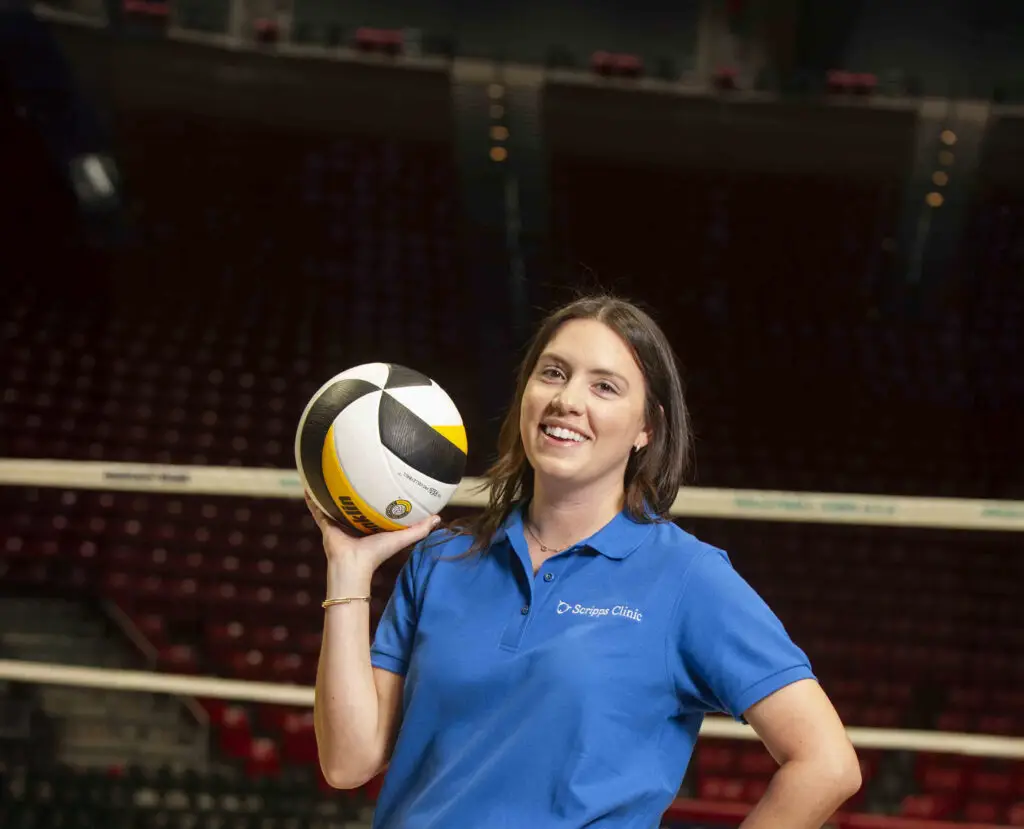
Growing up, Laika Nur, MD, Scripps Clinic sports medicine specialist, loved watching beach volleyball when the Association of Volleyball Professionals tour came to her hometown of Chicago. A talented volleyball player herself, she remembers sitting in the stands all day, and once, even got a couple autographs. Years later, Dr. Nur was attending a professional event focused on women’s sports, and the discussion turned to a new professional women’s volleyball league. The general manager and coaching staff for San Diego’s team, the Mojo, happened to be in attendance, and Dr. Nur took the opportunity to ask them if they needed a team doctor. Flash forward to the Mojo’s inaugural 2024 season, when Dr. Nur officially became the team physician. Click here to read more about Dr. Nur and how she incorporates lessons she learned on the court into her practice.
For more nutrition, wellness, and healthy living tips, sign up for the San Diego Health newsletter here.