
Featured articles
Food & Drink
Food & Drink
Things to Do
Featured articles
Everything SD
Things to Do
Everything SD
Featured articles
Things to Do

Things to Do
Things to Do
Featured articles

podcast-ep
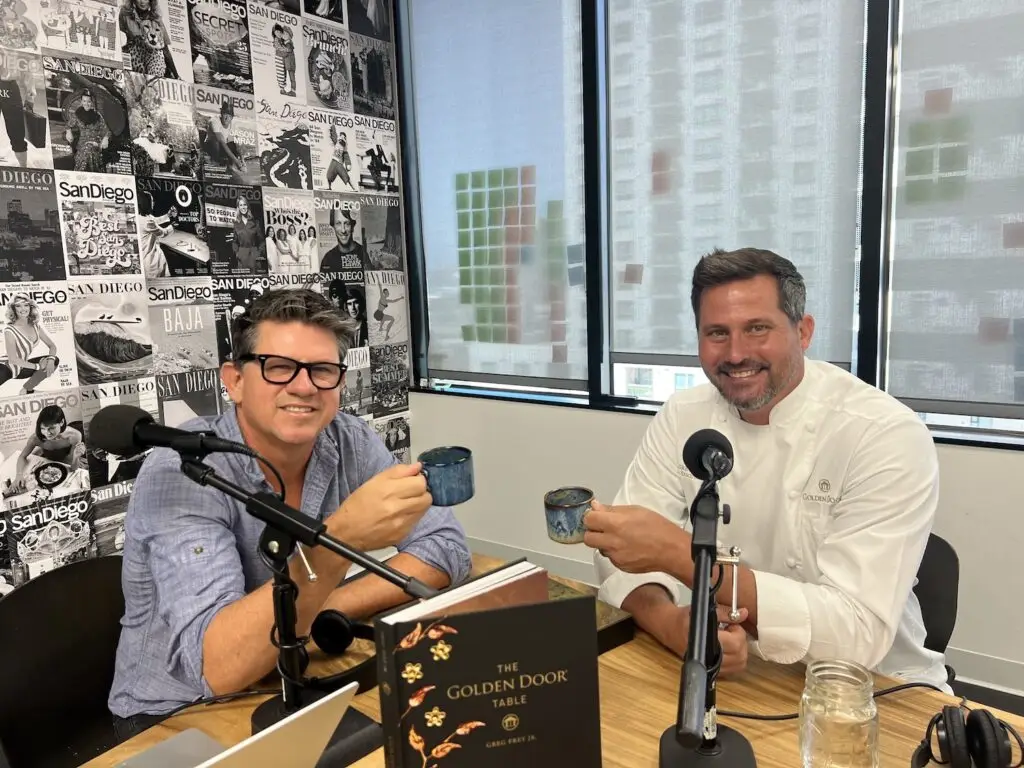
video
podcast-ep
Featured articles
Everything SD
Everything SD
Everything SD
Featured articles
Food & Drink
Partner content
Food & Drink
Ready to know more about San Diego?
SubscribeReady to know more about San Diego?
19 festive events and pop-ups for your annual dose of holiday cheer
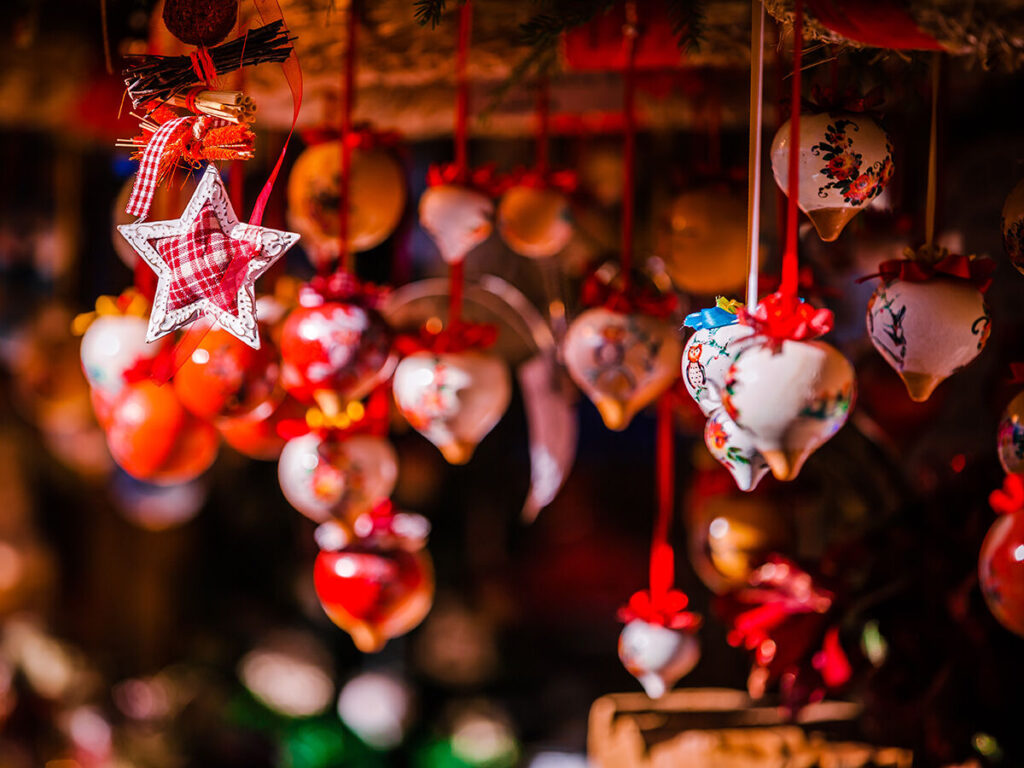
Instead of taking the stage, The Old Globe’s annual production of this Christmas classic is going a more traditional route with a special radio streaming of the show. Tune in to 89.5 FM for this exciting audio-only spin on a time-honored tradition.
Help spread some holiday cheer this year with One Paseo’s toy drive. In collaboration with local nonprofit Home Start, One Paseo’s trolley is transforming into a bountiful gifting sleigh decked with holiday decor. To participate, drop unwrapped and new gifts into the sleigh December 1-13. Wrapping supplies are also needed, so if you have extra to spare, bring it along with the gifts!
3725 Paseo Place, Del Mar
Join Santee’s Lantern Crest Senior Living for their inaugural holiday lights experience, a completely drive-thru event. Guests will drive down a brightly lit path of extravagant holiday displays and lights. Along the way, drive up to Santa’s Workshop to purchase hot cocoa, apple cider, and sweet treats to benefit the Lantern Crest Foundation, which provides care for low-income seniors.
300 Lantern Crest Way, Santee
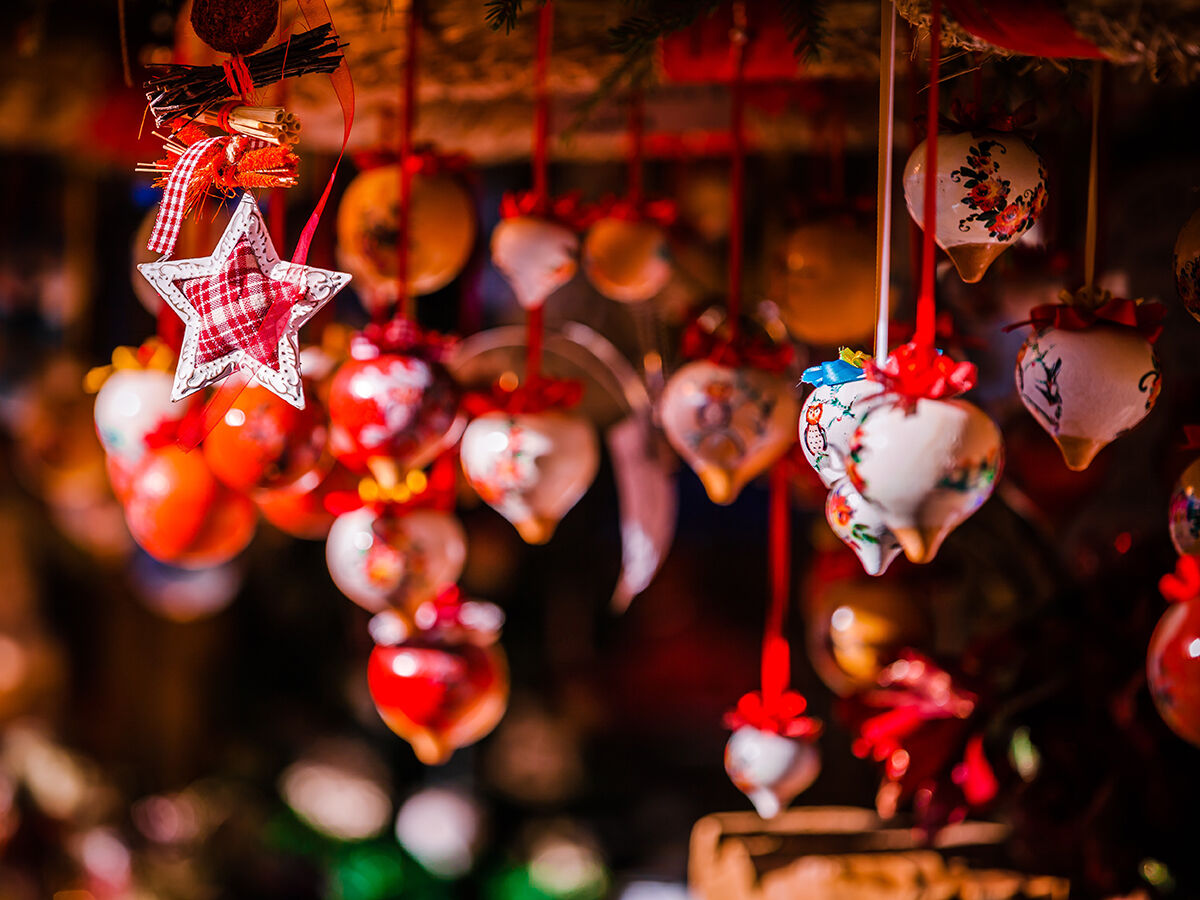
Petco Park’s Gallagher Square is being transformed into a festive holiday market this year. Wend your way down a one-way trail through an Old World–inspired market with artisan vendors, grand light displays, crafts, food and beverages, and much more. The trail is divided into holiday themes like Candyland, Home for the Holidays, and Winter Wonderland. There will be DIY crafts and charming gifts you can peruse, ideally with a hot cider or tasty bratwurst in hand. The market is operating on reservations for specific time slots to adhere to social distancing guidelines.
840 K Street, Downtown
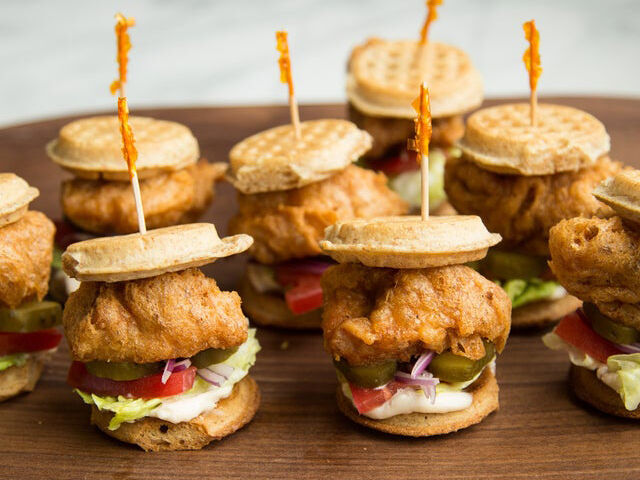
Chicken and waffle sliders at Taste of December Nights
This annual San Diego tradition is turning one of its most popular hallmarks—the food, obviously—into a drive-thru experience. Guests can attend the three-day event the first weekend of December to enjoy tastings from over 20 food trucks and vendors, including Tarantino’s sausages, chicken and waffles, and chicken tikka masala grilled cheese.
Inspiration Point Way, Balboa Park
The Timken Museum of Art’s ornament-making workshop is going virtual this year. Let teaching artist Elizabeth Washburn walk you and the family through the crafting steps, inspired by their Jewels of the Season ornament collection. By purchasing the Family Ornament Kit, you’ll come prepared to decorate with two large ornaments and an assortment of family-friendly materials from the original collection.
La Mesa’s annual holiday gathering will return with social-distancing guidelines in place. Attendees can visit plenty of photo-op stations, enjoy festive bites at the food court, get into DIY projects at the holiday craft market, and shop giftables from local vendors and artisans. The market will be open from 10 a.m. to 9 p.m.
8030 La Mesa Boulevard, La Mesa
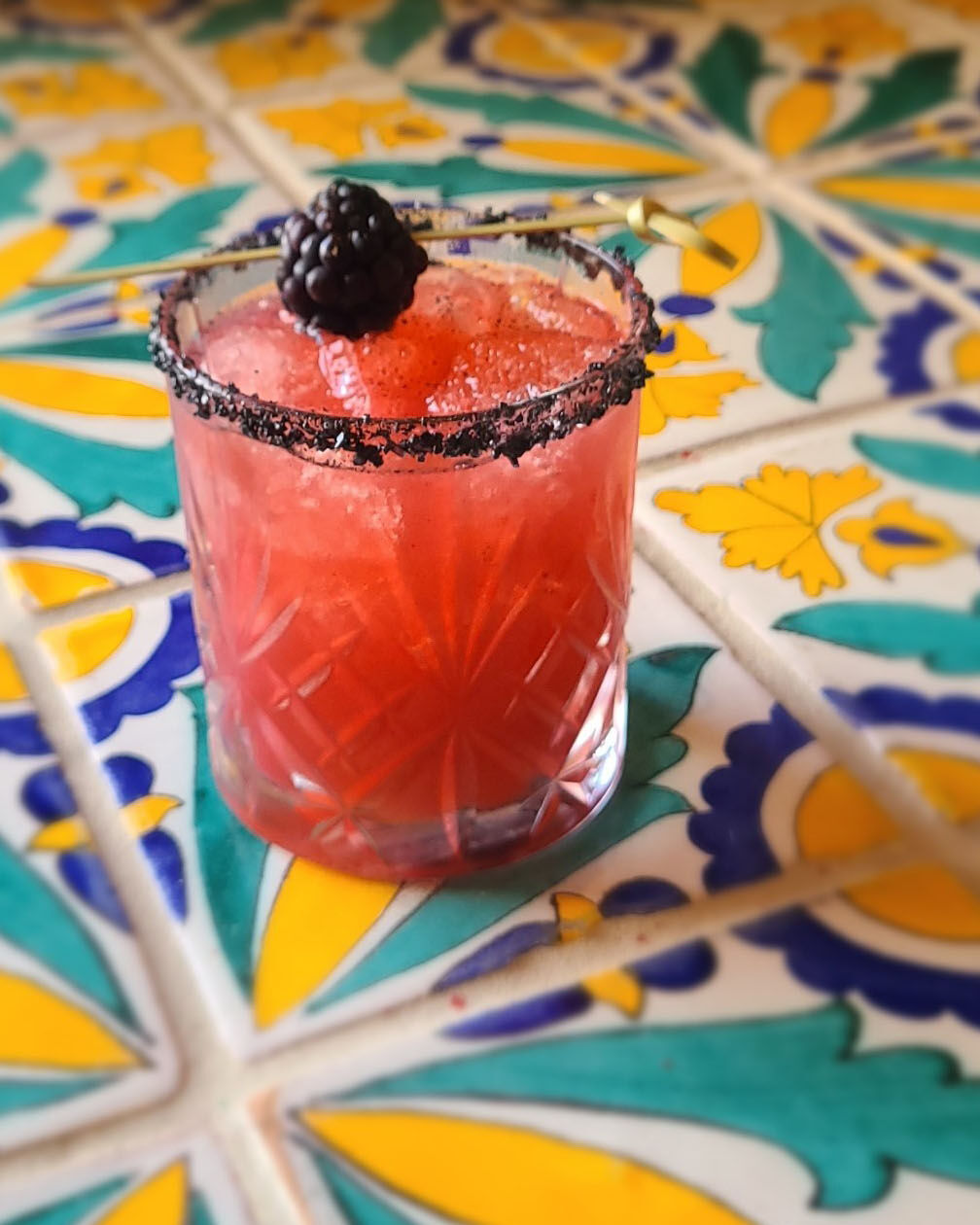
Holiday tea and cocktails at La Valencia Hotel
The Pink Lady’s award-winning holiday tea will return this year for select dates in December. Enjoy a menu of select teas, tasty sandwiches, and seasonal homemade sweets in a classic tea time with a holiday twist, hosted on their Patio Sol, where the twinkle lights will provide the ideal ambience to get you into the spirit of the season. Prefer something a little stronger? The hotel is also offering a select menu of special cocktails, including a Holiday Mule and a Figgy Smash.
1132 Prospect Street, La Jolla
Little Italy is kicking off their holiday happenings with a virtual streaming of their Little Italy Holiday Special, with performances by the Our Lady of the Rosary Choir, a reading of ’Twas the Night Before Christmas, and special messages from Little Italy’s business owners before the annual tree lighting ceremony. Throughout the rest of the month, watch for more merry celebrations like their Wednesday Holiday Market (each Wednesday in December excluding December 30), their 10th annual Toy Drive, and the weekly, virtual holiday cocktail classes with some of Little Italy’s most beloved mixologists. As always, little ones can drop off their letters to Santa at the big red mailbox in the Piazza della Famiglia.
523 West Date Street, Little Italy
The Del Mar Fairgrounds’ new drive-in experiences continue in December. Holidays in Your Car will lead merry guests through an immersive drive-thru light show that includes over a million LEDs. Then, enjoy the drive-up Santa Saves Christmas stage show. On December 19, the event will collaborate with City Ballet to host a live two-show performance of The Nutcracker.
2260 Jimmy Durante Boulevard, Del Mar
Give your curbside pickup the holiday treatment at Café Coyote’s Winter Wonderland drive-thru. On these select dates you can pick up your takeout order from Santa Claus and grab your holiday photo all from your car! Place your order online and write “Santa Sunday” in the comments to guarantee your takeout experience.
2461 San Diego Avenue, Old Town
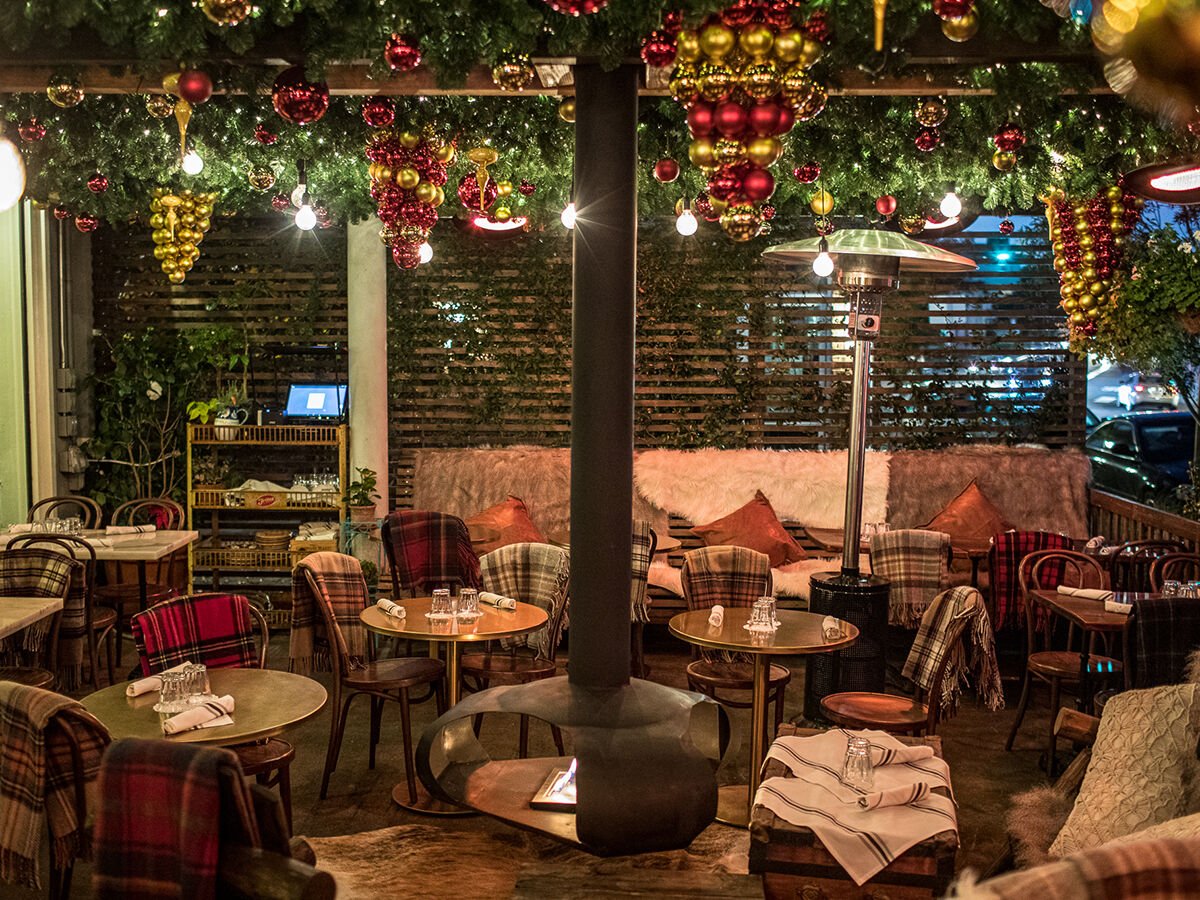
Cesarina holiday patio
Arlene Ibarra
This Point Loma pasta eatery is giving their three alfresco dining areas the holiday treatment. Dine amid a wintery wonderland scene complete with oversize ornaments, cascading garlands, fleece blankets, sparkling decor, and much more. Cesarina also has two chiminea fireplaces set up to keep guests warm and will have two special à la carte menus for Christmas Eve and New Year’s Eve. The big holiday makeover will be revealed on December 8, coinciding with Italy’s Feast of the Immaculate Conception—their official start to the Christmas season.
4161 Voltaire Street, Point Loma
Enjoy a festive breakfast reception at Eats by Sam (“Sam the Cooking Guy,” that is), with a special appearance by Surfin’ Santa. The menu will include classic dishes like French toast and breakfast sandwiches, and spiked holiday beverages for the over-21 crowd. After you and the little ones grab photos with Surfin’ Santa, stick around for the interactive magic show, live music, and holiday goodie bags.
807 West Harbor Drive, Seaport Village
In collaboration with the Timken Museum of Art, the San Diego Model Railroad Museum is hosting a virtual holiday event to celebrate a Timken tradition. Every year, the museum displays the Jewels of the Season, a collection of handcrafted ornaments adorned with gems, sequins, stones, and more from around the globe. The virtual event will showcase these special pieces and offer a history on the ornaments, conducted by Lynne Thompson. This event is part of a greater campaign by the SDMRM to commemorate their 40th anniversary.
Explore the third annual Enchanted Village from the comfort of your car at this year’s drive-thru experience. San Diego–based nonprofit Noah Homes welcomes guests to cruise this immersive holiday display with over 100,000 lights and themed attractions, including a drive-thru light tunnel and towering musical Christmas tree. The nonprofit raises money to provide long-term care and accommodations for those with developmental disabilities.
12526 Campo Road, Spring Valley
While the annual tree-lighting ceremony will be skipped this year, visitors can still marvel at and take their picture in front of Liberty Station’s 88-foot twinkling Christmas tree in the North Promenade. The Norfolk pine will debut the day after Thanksgiving and remain throughout the holiday season. Also, the Chabad of Downtown San Diego will host a menorah lighting on the first night of Hanukkah, December 10, at the Central Promenade. In collaboration with San Diego Ballet, Liberty Station is also hosting a drive-in live performance of The Nutcracker.
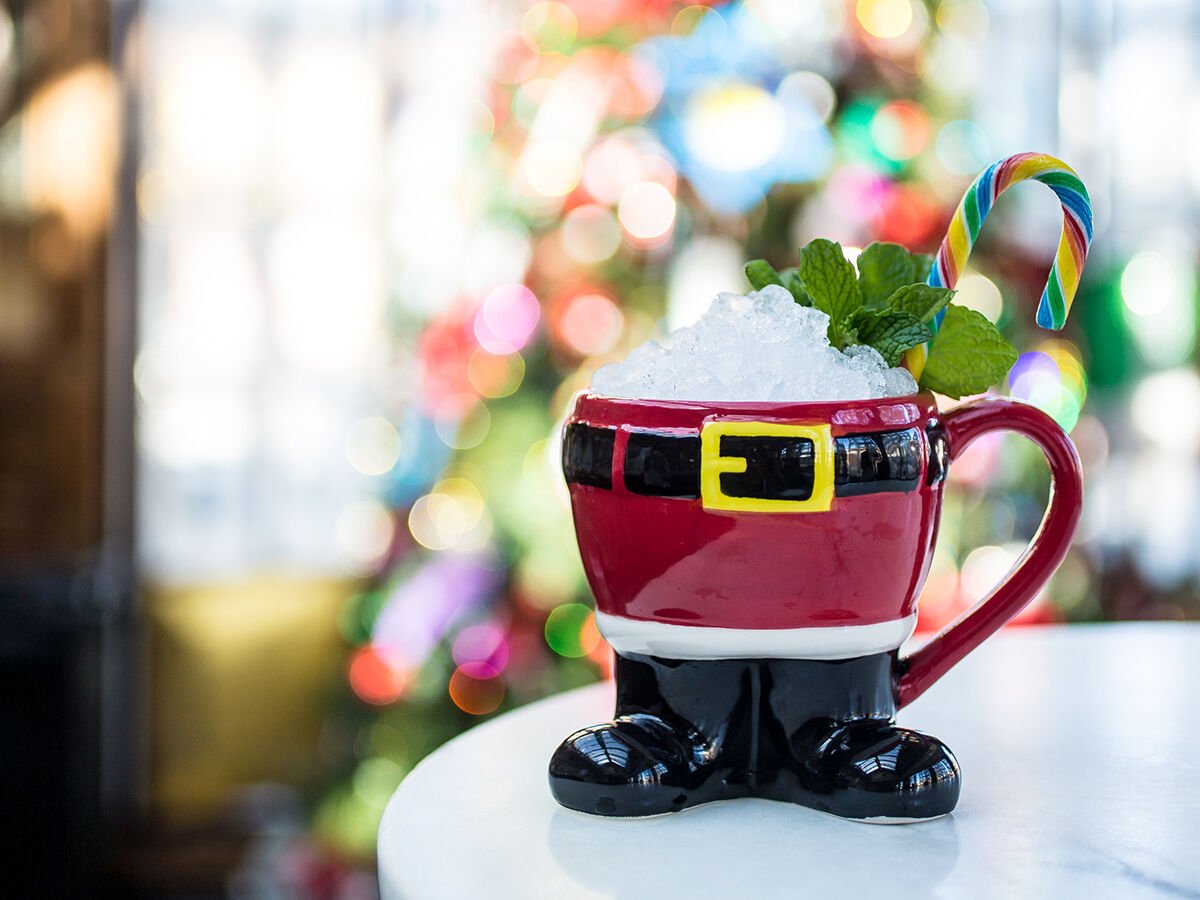
Holiday Sips at Polite Provisions
Polite Provisions is adapting their annual winter wonderland pop-up to adhere to the latest safety guidelines. Enjoy your seasonal cocktails on their socially distanced outdoor patio (no reservations) with eight craft cocktails, two festive shots, and one punch to choose from. A few highlights? The Hot Buttered Rum with apple butter, the tiki-inspired Zombie, and their classic Holiday Punch.
4696 30th Street, North Park
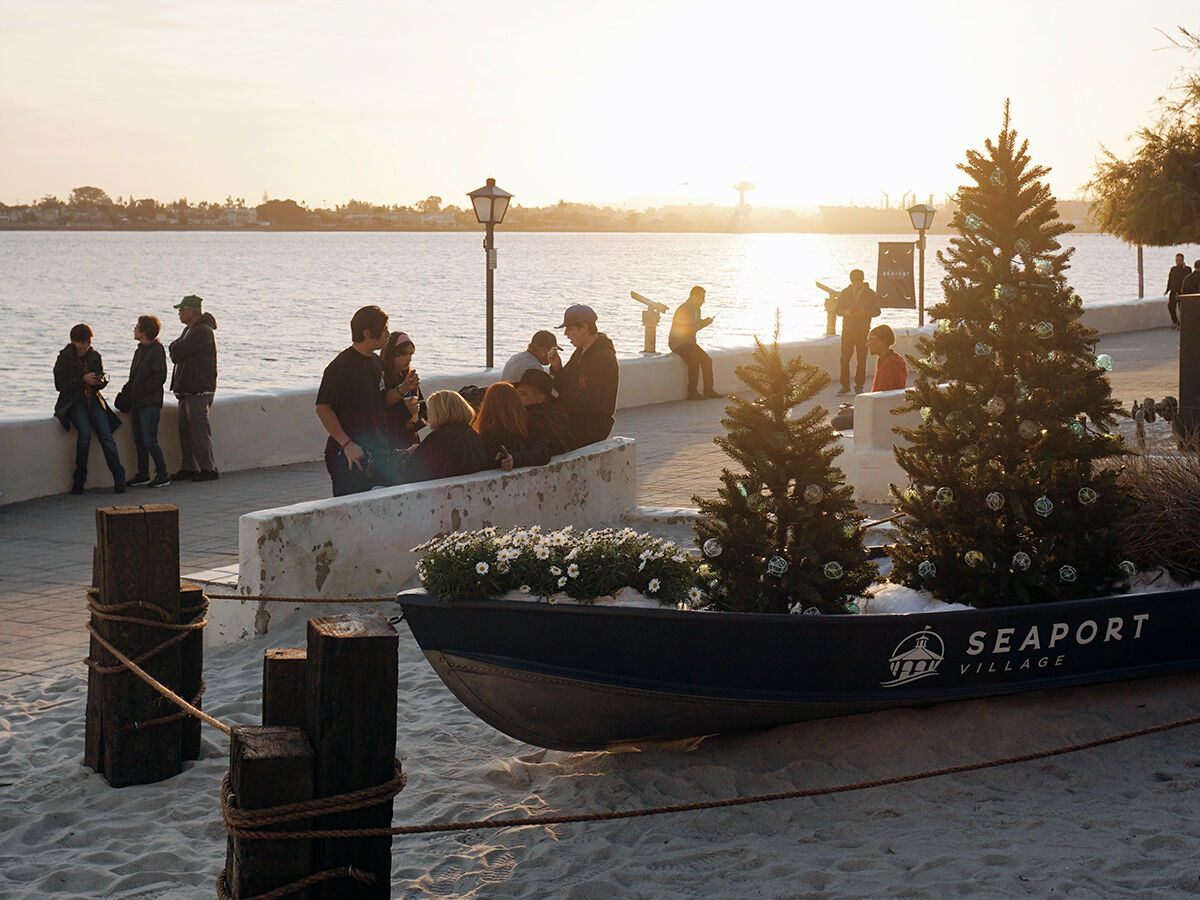
Seaport Village
Courtesy Seaport Village
The waterfront village will set the scene for a festive season with lights, decor, and plenty of merry happenings. First, admire the lifesize Surfin’ Santa mural and surfboard tree at Urban Beach. For more photo ops, take a picture with santa himself by the food court—previously Wyland Gallery—now through December 24. There will be social distancing guidelines in place to keep you (and Kris Kringle) safe. Throughout the season, masked carolers and holiday elves will be walking the village to bring that extra touch of holiday cheer.
849 West Harbor Drive, Seaport Village
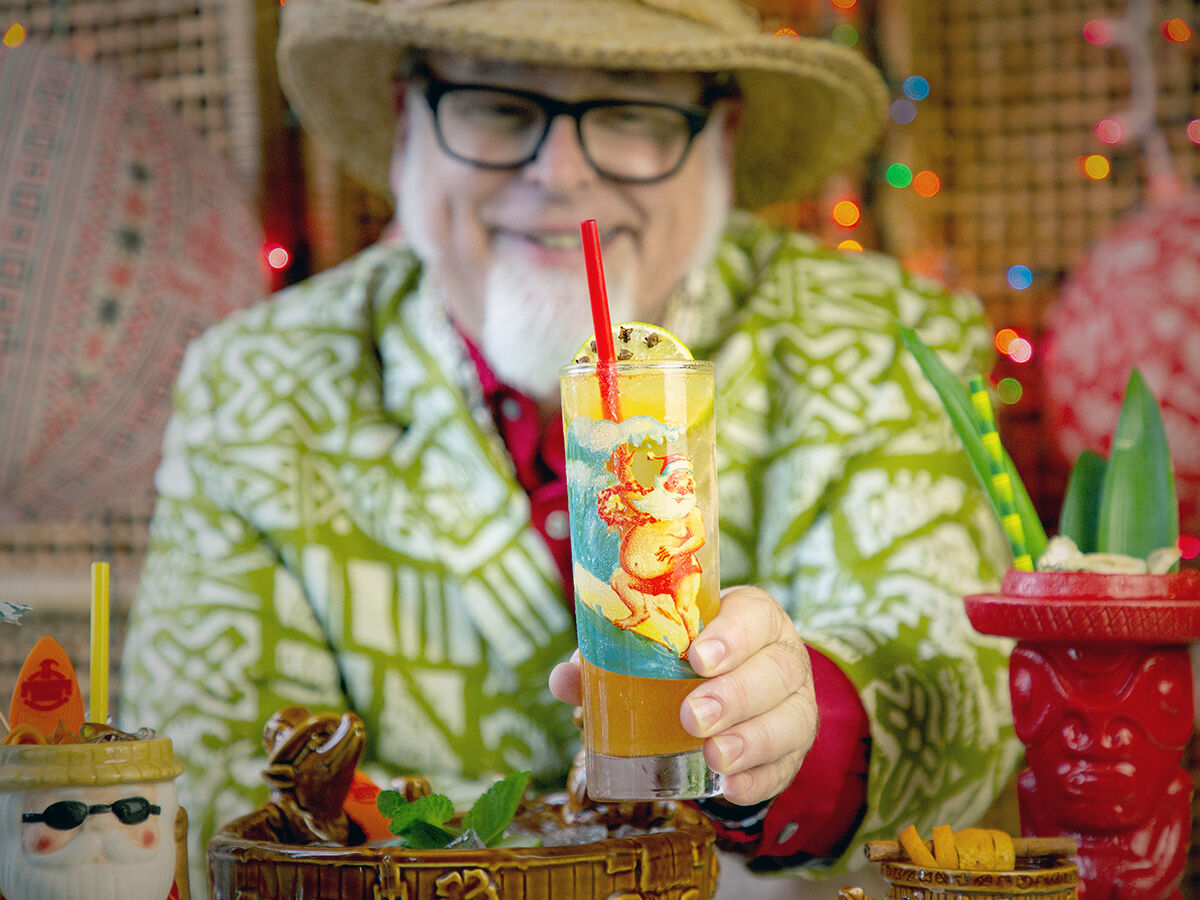
Sippin’ Santa Cocktail Boxes from The Grass Skirt
The Grass Skirt is packing their holiday spirit into takeout cocktail kits all season long. Each week, the tiki-chic hangout will release a new box to pick up or be delivered with a mug-of-the-week, a cocktail kit for six, and extra goodies. The lineup kicking off the first week on November 25 includes the “Runaway Sleigh” gin cocktail with cranberry-sage syrup and zesty lime juice.
San Diego’s neighborhoods make a statement year-round, but some especially so during the holiday season. You and your loved ones can tour neighborhood blocks that traditionally go all-out on their decorations, like Poway’s Candy Cane Lane, Santee’s Starlight Circle, and Point Loma’s Garrison Street to check out the bright lights and amazing displays. Whether you take your self-guided tour on foot or by car, these free, organic festivities are not to be missed.
Holiday Market and Trail at Petco Park
Grandson Steaks is now open in the former Wildflour space
It’s never taken so much green to eat red meat. The price of beef has doubled since 2020, and once you add a few drinks (the cost of wine rose 11 percent in 2025) and tack on the rising price of labor (up 23 percent in 2025 and 33 percent in 2024 and 2023), before you know it, a night out at the steakhouse costs as much as the monthly payment for a brand-new Mercedes G-Wagon.
At Grandson Steaks, Roger Cañez wants to change that. He only serves USDA Prime and Choice Brandt Beef from the family-owned ranch in the Imperial Valley, known for its high-quality, hormone-free, vegetarian-raised Holstein cattle with signature marbling and top-notch taste. But as the Brandt Beef distributor in Mexico, Cañez gets wholesale volume pricing that other smaller restaurateurs can’t access.
Those savings get passed to the consumer: At Grandson, a 12-oz. house-cut (Choice) ribeye costs $34, while Prime goes up to $44. Comparatively, a 14-oz. Prime ribeye at a competing high-end local steakhouse runs around $66.

“There are a lot of people in San Diego who really love steaks, but they can’t afford it—that’s reality,” says Cañez. “So we decided to kind of cut all the fine dining rules and put everything into the quality.”
Cañez has tried the “steak-for-less” model before. He opened Brasa Norte in Market on 8th in National City, offering plates like a Tomahawk steak with bone marrow, four quesadillas, and a side of beans for $44.99. He also operates Roger’s Mariscos inside the market, and he brought some of those stall’s best sellers (like the Baja shrimp cocktail and yellowfin tuna tostada) to Grandson Steaks for a surf n’ turf menu plus tacos, salads, and desserts meant for the family-friendly Liberty Station crowd.

It’s the second concept for the fully built-out corner suite, which formerly housed the ambitious California deli concept Wildflour Delicatessen from chef Phillip Esteban, the mastermind behind White Rice and Base Kamp Meals. Not much changed design-wise, other than adding some more booths, moodier lighting, and a couple of guitars for that modern Mexican flair. Most of the 130 seats are outside (98, to be precise), with 20 seats inside and an additional 12 at the bar.
But after you choose where to sit, you’ll be able to also choose how much to spend. “If you want to have a casual afternoon with tacos and margaritas, or if you want to have a full steakhouse [experience] with bottles of wine, we can do both,” says Cañez.
Grandson Steaks is now open at 2690 Historic Decatur Road, Suite 102. Hours are Tuesday through Thursday, 11:30 a.m. to 9 p.m.; Friday through Saturday, 11:30 a.m. to 10 p.m.; and Sunday, 11 a.m. to 9 p.m. (closed Monday).

Listen Now: The Latest in San Diego’s Food and Drink Scene
Have breaking news, exciting scoops, or great stories about new San Diego restaurants or the city’s food scene? Send your pitches to [email protected].
Beth Demmon is an award-winning writer and podcaster whose work regularly appears in national outlets and San Diego Magazine. Her first book, The Beer Lover's Guide to Cider, is now available. Find out more on bethdemmon.com.
An Artist @ The Table’s immersive dinner series unites creativity through art and food March 20-22 at Chapel in Liberty Station
There’s a certain strangely yellow-tinted lightbulb in a certain bathroom in a certain bar on Main Street in Richmond, Virginia that I used to frequent when I was in college. (IYKYK) To locals, we knew that if you wanted to look super hot, or at least feel super hot, it was the lightbulb-mirror combo worth waiting in line for. That tiny one-stall room became the perfect place for selfies, surreptitious makeout sessions—pretty much anything but actually going to the bathroom.
Color theory is science, not magic. Yellow light is less harsh on the eyes than white or blue, and can promote a feeling of relaxation and happiness. A little color can go a long way to change a mood—and that’s exactly what visual artist Ben Guerrette hopes to accomplish when he drenches Chapel at Liberty Station with an immersive light installation synchronized to pair with chef Flor Franco’s four-course menu exploring the four elements of earth, fire, air, and water from March 20 through 22 for the latest An Artist @ the Table dinner series.
The series is part of local nonprofit Vanguard Culture’s 10th anniversary programming, marking a decade of advancing San Diego’s creative industries through professional development opportunities, events, collaborations, and other resources. Executive director Susanna Peredo Swap says previous An Artist @ the Table dinner series have featured artwork from a variety of artists ranging from the estate of Jean-Michel Basquiat to British fashion icon Zandra Rhodes, and chefs like Ron Oliver (former chef de cuisine of Marine Room) and Carlos SanMartano (Salt & Cleaver, Herb & Wood).

“[But] this is the first time that we’ve done something so large-scale and so immersive,” she says. Over three nights with room for 30 guests each night, each dinner begins with an hour-long silent auction to raise money for Vanguard Culture’s nonprofit support of the local arts, after which Swap will introduce Guerrette, Franco, and explain the run of the show. “Then the experience will happen, which is about a three-to-five minute immersive sound and light experience, and then the food will come out, and then we’ll repeat that three more times after that,” Swap says, at which point the space will open for time for guests to unwind and absorb the experience.
That time to unwind with one another, she stresses, is crucial. “I think that’s part of why the arts—and the culinary arts in particular—are so important now. It’s that ability to just remember our humanity and come back to the joy of living, the joy of this moment, the joy of art, the joy of sound, the joy of food, the joy of gathering,” says Swap. “And so even though big things are happening, we get to kind of disconnect for just one moment and sit together in community and find joy and share together.”
During the conversation with Franco, Swap, Guerrette, and myself, I wondered: If eating together is an inherently communal act, but emotional reaction to art is a personal experience, how do the two coexist?

Franco believes they go hand-in-hand. “I think in this particular dinner, people are going to take home both the experience of community, but also it’s going to be very personal for every single one,” she says. She could be watching a play with friends and find herself crying, but the person sitting next to her will be dry-eyed. “The senses are different for each person.”
The meal itself, inspired by the four elements, will remain a surprise for the guests, but Franco did provide a few hints of the framework. “There will be plenty of seafood, you know, for the water part,” she promises, as well as a red meat entree for land and a few other tricks up her sleeve. But to coincide with the artistic vision, “the plating is going to have to do a lot,” she says. Despite her long experience as a chef in Baja California and San Diego (as well as the first female chef inducted to the prestigious gastronomic society Disciples Escoffier International in 2018), it’s her first time working in tandem with light design.
For Guerrette, he hopes people leave both feeling moved and inspired. “I’m hoping that this becomes something that maybe inspires more people, other artists to maybe make big, grandiose ideas like this,” he says. “If you have big ideas, go for it.” (Pro tip: be sure to turn on some blue or green light to help boost your creative process. Like I said, it’s science.)
Tickets to An Artist @ the Table with artist Ben Guerrette and chef Flor Franco on March 20 through 22 are now available.
Listen Now: The Latest in San Diego’s Food and Drink Scene
Have breaking news, exciting scoops, or great stories about new San Diego restaurants or the city’s food scene? Send your pitches to [email protected].
Beth Demmon is an award-winning writer and podcaster whose work regularly appears in national outlets and San Diego Magazine. Her first book, The Beer Lover's Guide to Cider, is now available. Find out more on bethdemmon.com.
After years of closure, the wartime venue has been restored and will begin hosting community gatherings and celebrations once more
For more than 80 years, the North Chapel has been one of Liberty Station’s defining silhouettes. Opened in 1942, the multi-faith chapel has hosted Navy services, weddings, memorials, and countless community milestones during wartime years. Its story stretches from religious services for military men and women to cultural anchor.
Then came a stalemate. In 2018, a new tenant, 828 Events, proposed a modernization of the building’s interior, sparking fierce pushback from preservationists and neighbors. The San Diego Union Tribune reported that the online leasing opportunity boasted the chapel would be “perfect for a restaurant or retail tenant.” The suggestion that the historic chapel may become a restaurant caused uproar from local community members. According to Congressman Scott Peters’ official website, his office requested an investigation by the City Attorney. The plan was halted, but what remained was a structure in limbo.
In the years following, Liberty Station reshaped itself; breweries opened, restaurants buzzed with crowds, and gelato melted on children’s hands in sunny courtyards. The chapel remained unopened in a district otherwise reborn—until now, when Snake Oil Venue Company became its new stewards.

If you’re wondering why a company known for cocktails is reopening a historic chapel, the answer is simple: they’re no longer just a cocktail company. In 2019, after a decade crafting cocktails, Snake Oil launched its first venue, Julep, and pivoted into full-service events. Growth snowballed from there. This April, it opened Bramble Bay in Imperial Beach, followed quickly by Vesper at Liberty Station. In just one year, its footprint jumped from 32,000 square feet of event space to more than half a million.
But, even as experienced venue operators, the chapel was a unique endeavor. “This wasn’t acquisition; it was responsibility,” says Snake Oil’s CEO Michael Esposito.

The first time he walked inside, the neglect was unmistakable. “Here was a sacred San Diego landmark sitting quietly in a deteriorated state,” he recalls. Curtains were stained, corners layered with dust, and the once-ornate woodwork was overshadowed by a red carpet that “smelled like damp newspapers.”
The chapel had sat unoccupied since 2019, according to Joe Haeussler, executive vice president of Pendulum Properties Partners, which acquired the leasehold to the chapel and several other Liberty Station properties in 2018. After considering several proposals for the dormant space, Pendulum brought Snake Oil on in 2023 to reopen and steward the building. “We felt their plans were the most respectful of the historic asset and would open the building to the public in the right way,” Haeussler explained.

Rather than impose a new vision, Snake Oil chose preservation. While it’s now an events space, it has retained its original intent as a gathering place for the community. Restoration, in this case, meant listening to the building. When the team began pulling up the carpeting, they uncovered exquisite, period-specific 1940s Douglas Fir flooring. They refinished the planks rather than replace them, breathing life back into the chapel’s historic foundation. Even the stained glass windows, which were not part of the original Navy design, remained. The earlier plans featured frosted panes that brought in soft, controlled daylight, but the stained glass had become part of the chapel’s collective memory. The restoration cost nearly $1.2 million.

Beyond sentiment and preservation, the North Chapel’s renewed functionality includes a main hall which offers 4,000 square feet of flexible space and seats roughly 425 guests, with additional pew seating on a mezzanine. An adjacent side chapel adds another 600 square feet for more intimate gatherings. Outside, three connected exterior zones (over 3,000 square feet total) provide ample room for receptions, cocktail hours, or garden-style events.The venue will have a preferred-vendor list, with some flexibility for outside vendors. Beverage and cocktail service is handled exclusively by Snake Oil Cocktail Company.

Christopher Bittner at OBr Architecture, Tim Wright of Wright Management, and Andre Childers with Pacific Building Group Construction led the improvement process, while Melissa Strukel of We are Human Kind designed the interiors and furnishings. Bittner says the project was shaped less by reinvention than by attention to what was already there.
“The building itself was the inspiration,” he says. Rather than dramatic alteration, the work focused on careful adjustment. “The building needed small, yet thoughtful, modifications to allow the building to be used for the new use. We worked through many options for how the building would function and at each stage thought through the potential historical ramifications.”

As word spread of the restoration, the stories came streaming in, carried by people whose most meaningful life moments unfolded within its walls. “For some, it was a grandfather who found a moment of resolve here before leaving to serve in World War II,” says Esposito. “For others, a bride who walked down the aisle as a young woman, or the loved one of a first responder whose life was honored within these walls.” The stories varied, but the sentiment was shared: the chapel’s legacy matters.
Ingrid Yang, M.D., J.D. is a hospital-based physician in San Diego, CA, certified yoga therapist, and longevity specialist. She loves *double hearts* San Diego and spends her days helping people fully engage in long, healthy lives through evidence-based lifestyle medicine. Her books include Adaptive Yoga, Zen Mindfulness, and Hatha Yoga Asanas. When she’s not leading international wellness retreats, she is chasing sunsets, handstanding in nature, or geeking out over mitochondria.
This month, the 2026 San Diego Business Impact Awards recognized local businesses making an impact in clean energy, biotech, hospitality, and beyond
Renewable energy companies building hundreds of power plants. Biotech startups using artificial intelligence to create personalized medicine for children with rare diseases. Hospitality companies quietly powering thousands of local events. Consumer brands growing from beach-town startups into national businesses. These are the kinds of companies driving San Diego’s economy today, and the businesses recognized at this year’s San Diego Business Impact Awards offer a snapshot of where the region is headed.
Hosted July 23 by San Diego Regional Economic Development Corporation (EDC) and JPMorganChase, the second annual awards event honored four local companies for innovation, growth, and economic impact. More than 100 nominations from San Diego’s middle-market businesses were reviewed by a 10-person judging committee, with winners selected across four categories: startup, early-stage innovator, rising star, and established heavyweight.
Two-time honoree Jimbo Someck, founder of Jimbo’s organic grocery stores, also joined the event for a fireside chat on buying local, supporting emerging brands, and giving back to the community.
“San Diego’s strength comes from its makers and builders—the resilient people who endure great risks and overcome obstacles to build and scale a company,” says Aaron Ryan, San Diego Region Manager and Middle Market Banking at JPMorganChase & Co. “These awards aren’t just recognition; they spotlight the talent, grit, and innovation shaping our region’s future. By celebrating those who create and build, we foster connections and fuel the growth that keeps San Diego thriving.”

Heavyweight honoree SOLV Energy has grown alongside the country’s rapid investment in renewable power. “It’s an exciting time for SOLV Energy as we are experiencing significant growth,” says CEO George Hershman. “The business has doubled over the last year and has almost double-digit growth since its inception.”
The Rancho Bernardo-based company designs, builds, operates, and maintains utility-scale solar and energy storage facilities. Since its founding in 2008, SOLV Energy has built more than 500 power plants.
Growth has translated directly into hiring. About 200 employees work from the company’s local headquarters, including roughly 20 interns. “Our intern program is a big part of the way that we grow our workforce,” Hershman says. “Last year, 43 percent of our interns became full-time employees. We believe San Diego is a great community to build and grow a high-tech infrastructure and technology company because of the incredible workforce—the ability to attract top talent and draw from world-class universities.”

Startup honoree La Jolla Labs is tackling one of medicine’s biggest challenges by developing personalized RNA therapeutics for patients with rare diseases—many of them children with neurological disorders like ALS. Using proprietary artificial intelligence and machine learning tools, the biotech company develops treatments tailored to each patient’s specific genetic mutation.
CEO Tamar Grossman says the recognition reflects how far the company has come despite limited resources. “We’re honored to be recognized for our ability to change and save patients’ lives and turn our lean startup into a clinical company with very minimal resources,” she says.
Grossman credits San Diego’s concentration of research institutions—including UC San Diego, the Salk Institute, and Scripps Research—with creating a pipeline of talent and collaboration. “San Diego is one of the world-leading centers for technology, genomics, and RNA therapeutics,” she says. “We have over 30 RNA therapeutics companies here, and we support each other and help with anything related to drug discovery.”
She says that collaborative spirit extends beyond formal partnerships. “You can walk around Torrey Pines, go into a café, and find colleagues from the industry and have an ad hoc conversation,” Grossman says. “That’s something very unique to San Diego.”

While Snake Oil Venue Company may not be a household name, chances are many San Diegans have attended one of its events. The early-stage innovator honoree has expanded from beverage catering and mixology consulting into venue management, operating Julep Venue in Mission Hills, Bramble Bay Venue in Imperial Beach, Vesper Venue, the Chapel at Liberty Station, and five outdoor venues throughout Liberty Station—more than 500,000 square feet of event space altogether.
“We do a lot of launch parties for corporations and new products,” says CEO Mike Esposito. “I really like working on the entrepreneur side of things, where new businesses are entering the San Diego market and looking to make a splash.”
Snake Oil has executed more than 16,000 events, employed more than 1,000 people, and partnered with more than 900 local vendors, including caterers, florists, photographers, entertainers, and other hospitality businesses. The company also works with many of San Diego’s nonprofits, museums, and cultural institutions. “We get to celebrate people’s most important moments,” Esposito says. “Whether that’s a wedding, celebration of life, or quinceañera, we’re fortunate to be involved in the community in so many different ways.”

Rising star honoree ALOHA Collection is proof that a simple idea can grow into a thriving company. Founded by two roommates who wanted a better way to carry wet swimsuits after a day at the beach, the lifestyle brand has grown into a business while maintaining strong year-over-year growth.
Now headquartered in Carlsbad, ALOHA Collection employs more than 100 people and operates its California flagship store in Encinitas, which is slated for a remodel. With roots in Hawaii, the company is known for its lightweight, splash-proof travel bags that have become a familiar sight on beaches in San Diego and beyond.
“‘Aloha’ is part of our name, but it’s also how we move through the world,” says CEO Lynna Barnard. “It’s how we show up for people, the way we travel, the way we give back.” Since day one, the company has maintained a 5 percent giveback to Hawaii conservation efforts, contributing millions of dollars over the years.
“I think what’s so inspiring about ALOHA Collection, and the founders in particular, is when you dream big, those dreams can come true when you work hard and trust in the universe,” Barnard says. “It’s inspiring to be a role model for other people wanting to start businesses from humble beginnings. Start small and watch it grow.”
Together, businesses like these form a cornerstone of San Diego’s economy—not only through the jobs and revenue they generate—but through the local workers they hire, vendors they support, and investments they make in the region. Their growth doesn’t happen in isolation; it ripples outward, strengthening the broader business community and the people who call San Diego home.

The beloved East Village taquería and Michelin Bib Gourmand spot is leveling up—adding wood-fired dishes, taco omakase, and a bold new home
Quality and speed don’t always go together, but Lola 55 is growing— fast. Soon, owner Frank Vizcarra is set to open the newest location of his Michelin Bib Gourmand taco spot, bringing the East Village–born concept to Liberty Station, where it’s taking over an expansive 8,800-square-foot corner lot.
To help reimagine the space, Vizcarra tapped JSa architects, the acclaimed Mexico City firm behind Enrique Olvera’s two-Michelin-starred Pujol in CDMX. The goal? To give Mexico’s laid-back yet deeply soulful dining culture a lively place to shine, featuring Lola 55’s signature fast-casual tacos alongside new wood-fired dishes cooked on an outdoor grill.
“There are just so many things you can do with wood and fire,” says Vizcarra, who’s been sending his chefs across Mexico to fine-tune their craft.

Meanwhile, back in East Village, Lola 55’s original location is undergoing a full-service transformation—complete with a taco omakase and multi-course tasting menus. It’s part of Vizcarra’s plan to evolve Lola 55 into something bigger: a neighborhood anchor with deep roots in Mexican culinary heritage and San Diego culture.
Despite early uncertainties and a pandemic-era pivot, Lola 55 has found its stride and is growing with purpose. “Lola belongs to San Diego,” Vizcarra says. “We want people to come in and be transported into a Mexican ancestral artisan experience.”
Named in honor of co-benefactor Joan Jacobs, The Joan is Liberty Station’s most recent addition to its lively Arts District and the new home of the Cygnet Theatre
Rows of untouched seats face a stage still smelling faintly of sawdust and fresh paint. The air is quiet, almost reverent, as if the newly constructed theater is holding its breath before the curtain rises. After years of planning, one of the remaining puzzle pieces of Arts District Liberty Station is finally finding its place: the $43.5 million Joan and Irwin Jacobs Performing Arts Center (The Joan).
Named in honor of co-benefactor Joan Jacobs, The Joan is Liberty Station’s most recent addition to its lively Arts District and the new home of the Cygnet Theatre, which spent the past two decades in Old Town.
Housed in Building 178 (formerly a 1940s-era Naval Base Exchange) at Truxtun and Roosevelt roads, the project marries history and modern design. Inside the 42,000-square-foot space is a 282-seat mainstage, flexible 150-seat black box theatre, and open-air lobby. Backstage, the full kit includes green rooms, dressing rooms, and even an orchestra space.

“This is beyond anything we’ve ever done,” says Lisa Johnson, president and CEO of Arts District Liberty Station (formerly NTC Foundation). “It’s going to elevate our entire Liberty Station community.” Since the late ’90s, the nonprofit has overseen the transformation of its 27 historic buildings into a cultural playground full of galleries, dance studios, and the Public Market. Adding a dedicated performance venue, she says, was always the missing piece.
The idea first surfaced in 2008, when there was talk of converting the space into a theater, but the plan was deemed too costly to operate. By 2017, however, the demand for live performance space was impossible to ignore. Meanwhile, Cygnet Theatre was ready to trade its Old Town nest for something more permanent. A partnership was born, and the two nonprofits got to work raising funds and getting the show on the road.
To execute the vision, Arts District Liberty Station tapped Christopher Bittner of obrArchitecture and the theater-design wizards at Fisher Dachs Associates. For Bittner, who’s been behind some of Liberty Station’s most striking renovations, including the Public Market, the challenge was less about creating something flashy than about honoring the bones of a 4,000-square-foot historic building with a layered past.

And what a past it was. Before The Joan, Building 178 was basically a sailor’s one-stop shop: a department store, a tailor, a coffee shop, a disco called “Hot Sounds,” a movie theatre, and even a bowling alley tucked in the basement. “The bowling alley was one of the biggest design inspirations,” Bittner says. “We thought it was so unique and weird that it was in the historic building, so the entire lobby was inspired by its design.”
Not in the neon bowling pins and cosmic carpet way, but with a sleek, open-air design; wood and steel detailing; and triangular floor inlays that point guests toward the stage like arrows on a lane. Think Gatsby, if he traded his Champagne tower for a bowling alley. Behind the scenes, the original lane numbers hang quietly by the dressing rooms—a wink to the building’s past life.
“Everything we talked about design-wise, we talked about acoustically,” Bittner explains. It’s one thing to build a well-designed theatre. It’s another to build one right under a flight-line—you can’t have the “Point Loma pause” cutting off the final act of the show. Eight inches of concrete and layers of acoustic materials and treatments fixed that right up, essentially grounding all flights until the cast takes their final bow.
Not a bad landing spot for a theatre company that spent the first five years of its life in a renovated women’s gym in Rolando. Despite its humble beginnings, Cygnet has now made a name for itself in the performing arts community and already has its full season at The Joan mapped out. Co-founder and artistic director Sean Murray compares it to “artistic whiplash,” or planning a multi-course dinner party. “You don’t want all dessert or all main entrées,” he says. “Every dish is one that complements the other, but [they] are totally different.”

Kicking off its full-course season is Goldman and Sondheim’s Follies—the gripping story of former Follies girls returning to the theater where they once performed, now to be destroyed and turned into a parking lot. The irony only makes it more riveting: the first show in a brand-new space featuring an old, crumbling 1930s theater as a set.
Plus, it’s a “ride home play,” according to Murray. “You leave the show and you don’t just forget what you saw. You actually have a conversation about it driving home,” he explains. “For us, that’s what theatre’s about. It’s not just being entertained. It’s about looking at ourselves, other communities, and other ways of living and opening our eyes to life.”
But The Joan isn’t just for loyal Cygnet fans. It’s meant to be part of the larger Liberty Station experience. The venue deliberately serves no food, nudging patrons to wander across the campus for dinner or a drink, while flyers for local artists and pottery classes dot the walls.
“We want to create that feeling that you’re not just going to see a play at Cygnet; you’re actually going to come have an experience,” Murray says. “Go to dinner, walk the grounds, have a bottle of wine, see the show, and linger after and argue about it. It’s all a part of the circular love fest.”
Ribbon cutting for The Joan will be held September 5, followed by a first preview of Follies on September 10.
Lili Kim is a content coordinator and writer for San Diego Magazine, with experience highlighting local businesses and communities. When not writing or shooting film, she is likely brewing her seventh cup of tea of the day or strolling along Sunset Cliffs.
Biotechnology is one of the most dynamic and rapidly evolving fields in modern science.
From advancements in cellular biology and molecular research to innovations that deepen our understanding of complex biological systems, biotechnology continues to influence how researchers explore some of science’s most important questions.
While major discoveries often capture headlines, the process behind those breakthroughs receives far less attention. Scientific progress depends on a vast network of researchers, laboratories, manufacturers, and specialized organizations working together to support ongoing investigation and discovery.
The Growing Importance of Biotechnology
In recent years, biotechnology has moved beyond the walls of research institutions and into mainstream conversation. Increased access to scientific information, educational content, and expert commentary has sparked growing public interest in the biological sciences.
Topics once discussed primarily within academic circles are now reaching broader audiences through podcasts, documentaries, digital media, and online communities. As a result, more people are developing an appreciation for the research, experimentation, and innovation that drive scientific advancement.
This growing visibility has transformed biotechnology from a largely specialized field into a subject of interest for educators, innovators, investors, and curious observers alike.
The Hidden Infrastructure Behind Discovery
Scientific breakthroughs often capture public attention, but the infrastructure that makes those breakthroughs possible rarely receives the same recognition. Behind every new discovery are years of investigation, testing, analysis, and refinement.
Behind nearly every research project is a network of laboratories, suppliers, technical specialists, and research-focused organizations working together to support scientific exploration. Laboratory infrastructure, specialized materials, quality standards, and reliable methodologies all contribute to the integrity of the research process.
When these foundational elements are in place, researchers can focus on generating insights, exploring new ideas, and building upon existing knowledge. Although much of this work occurs behind the scenes, it plays a critical role in helping science move forward.
Why Discovery Depends on More Than Researchers Alone
As biotechnology continues to evolve, research-focused organizations have become increasingly important contributors to the broader scientific ecosystem.
Among them is NewBioRx, a company operating within the biotechnology and life sciences sector. Like many organizations operating within the broader research ecosystem, NewBioRx contributes to the network of suppliers, laboratories, and scientific stakeholders that help support ongoing research efforts.
As scientific research becomes increasingly sophisticated, organizations that help support the research environment contribute to a culture where innovation can continue to thrive. Their work may not always be visible to the public, but it forms part of the foundation that enables scientific progress.
Why Science Is Reaching Wider Audiences
One of the most notable developments in recent years has been the growing public fascination with science and human biology.
Scientific concepts that were once primarily discussed within research settings are now reaching wider audiences through educational content, podcasts, digital media, and online communities. People are becoming increasingly interested not only in scientific outcomes, but also in the process of discovery itself.
The growing visibility of science has also created new connections between scientific communities and broader audiences. Individuals who operate across multiple worlds—including fitness, media, and life sciences—have helped introduce scientific topics to audiences that may not have engaged with them previously.
One example is Sam Sulek, co-founder of NewBioRx, whose involvement across fitness culture and the life sciences sector reflects the growing intersection between public curiosity and scientific exploration.
As co-founder of NewBioRx, he has helped champion a research-focused approach to scientific inquiry while supporting broader conversations around scientific literacy and discovery.
As scientific discovery becomes increasingly collaborative, public attention is beginning to extend beyond individual breakthroughs and toward the broader ecosystem that makes those breakthroughs possible. From researchers and laboratories to the organizations that support them, scientific progress remains a collective effort built on curiosity, expertise, and long-term commitment.