Featured articles
Featured articles
Things to Do
Guides
Things to Do
Featured articles
Things to Do
Things to Do

Things to Do
What's next
Featured articles
Featured articles
Featured articles
Things to Do
Things to Do
Guides
Ready to know more about San Diego?
SubscribeReady to know more about San Diego?
Pedal your way through these annual cycling adventures
Every year, San Diego hosts a multitude of biking events, races, meet-ups, and community rides that allow you to connect with fellow cycling enthusiasts through hilly terrain, coastal cruises, and speedy raceways. Whether you’re a casual two-wheeler or love a good sweat-inducing trek, here are eight annual bike events to plan for in the coming months.
Fall | Winter | Spring | Summer
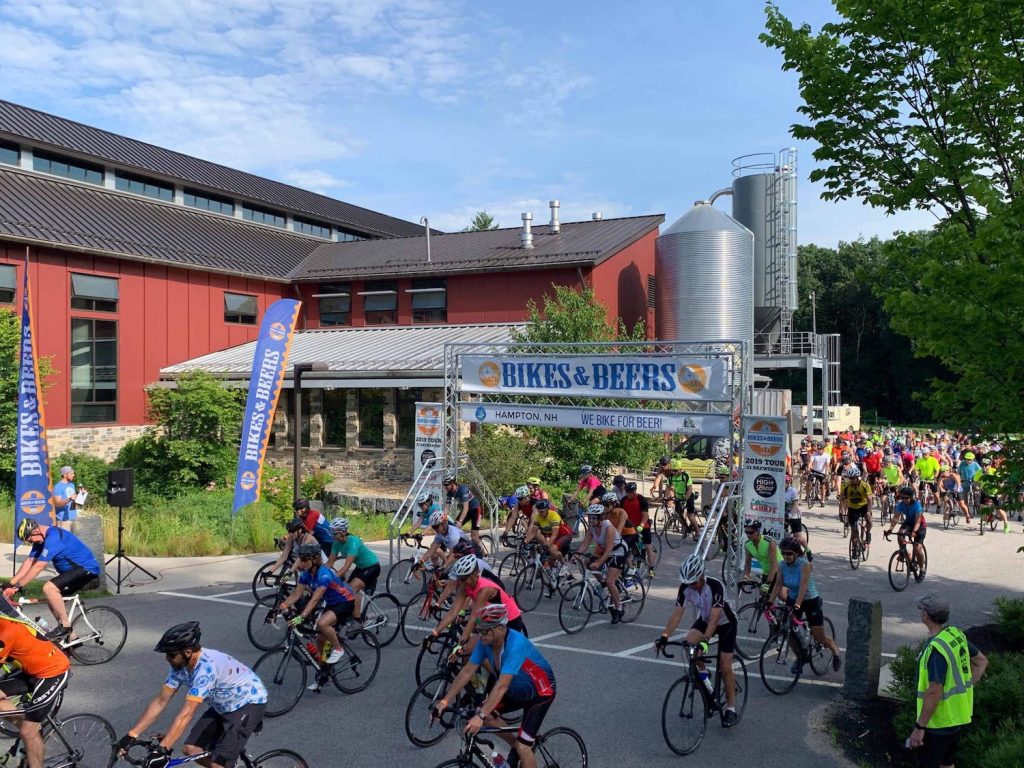
After a satisfying bike ride, there’s nothing like a cold one. Bikes and Beers is the perfect event for craft beer-loving pedalers around town. Join fellow biking and beer enthusiasts at Alesmith’s tasting room in Miramar before embarking on a 15-, 35-, or 45-mile bike loop through San Diego. The event provides riders with fuel stations, GPS turn-by-turn instructions, ride marshals, and rest stops. It all wraps up at Alesmith’s brewery for brews, live music, and a charity raffle.
Month: November
Registration Fees: Starting at $50
Where to Register: Bike Sign Up
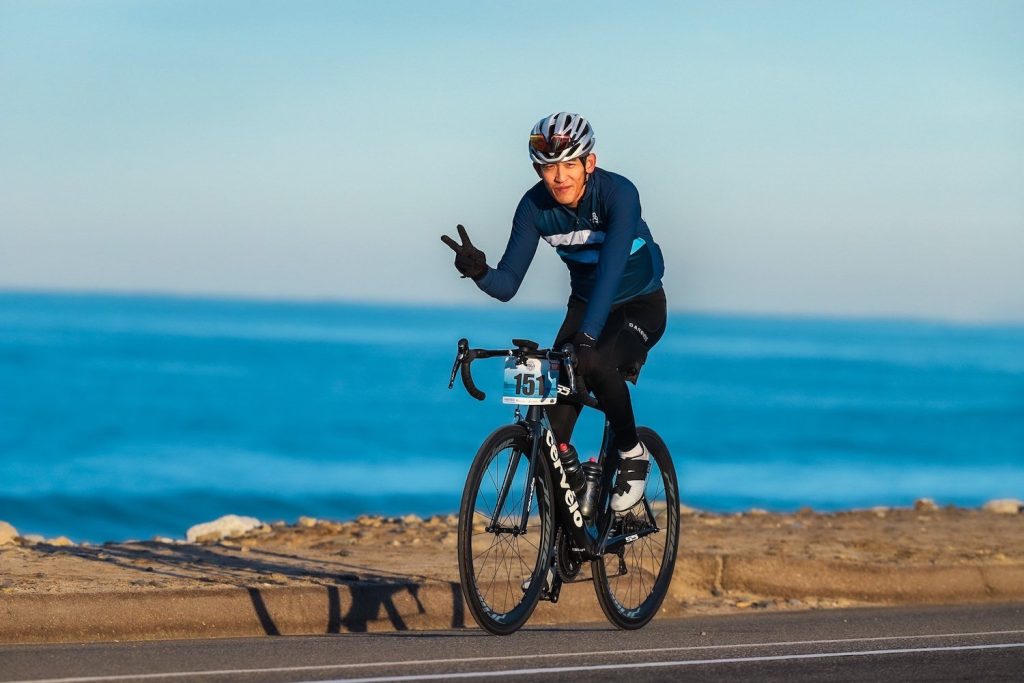
This seaside ride with the Bike the Coast event goes along Highway 101 from Oceanside down to Del Mar and back. This annual trek benefits the National MS Society and offers various route options, ranging from 25 to 100 miles, as well as seven- or 15-mile routes for families, casual riders, and groups. After crossing the finish line, enjoy delicious food, live entertainment, and a beer garden.
Month: November
Registration Fees: Starting at $85
Where to Register: Bike The Coast SD
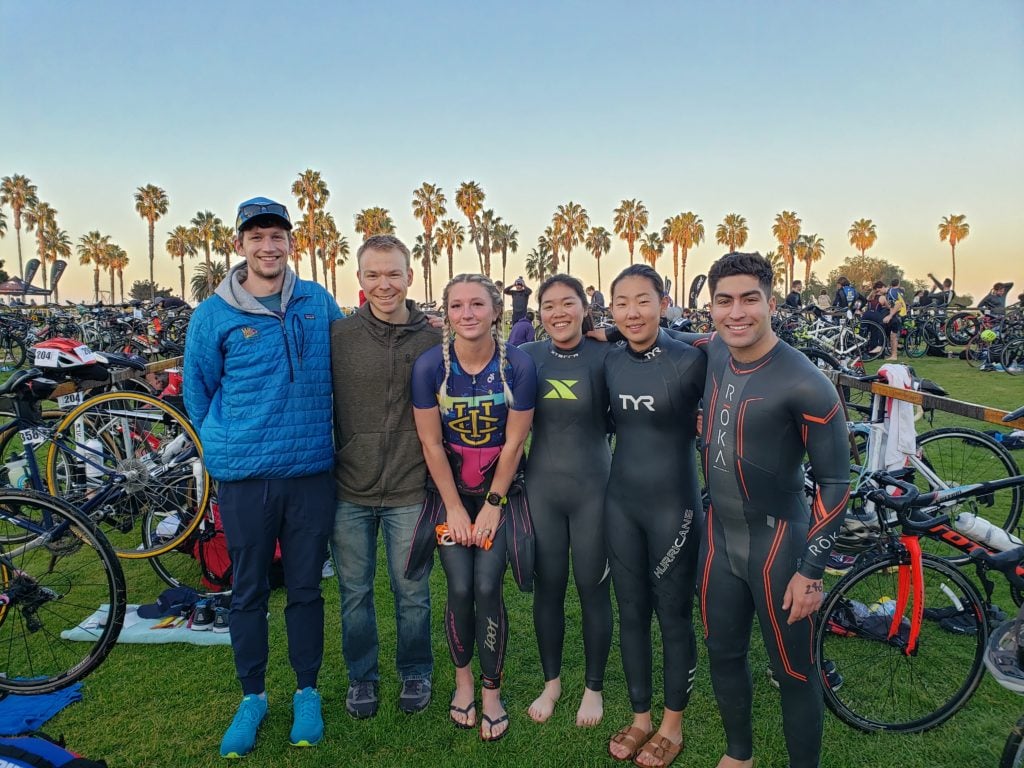
Test your limits with the Tritonman Triathlon held annually in the winter and one of the only open-water swim race opportunities in the WCCTC circuit ahead of the conference championships. Hosted by UCSD, this course includes a 750-meter swimming leg, a 21-kilometer bike course on Fiesta Island, and a 5-kilometer run through the Tecolote Shores park. The race boasts the flattest, fastest closed bike course around, so you’re likely to get a nice PR.
Month: February
Registration Fees: Starting at $65
Where to Register: Tritonman
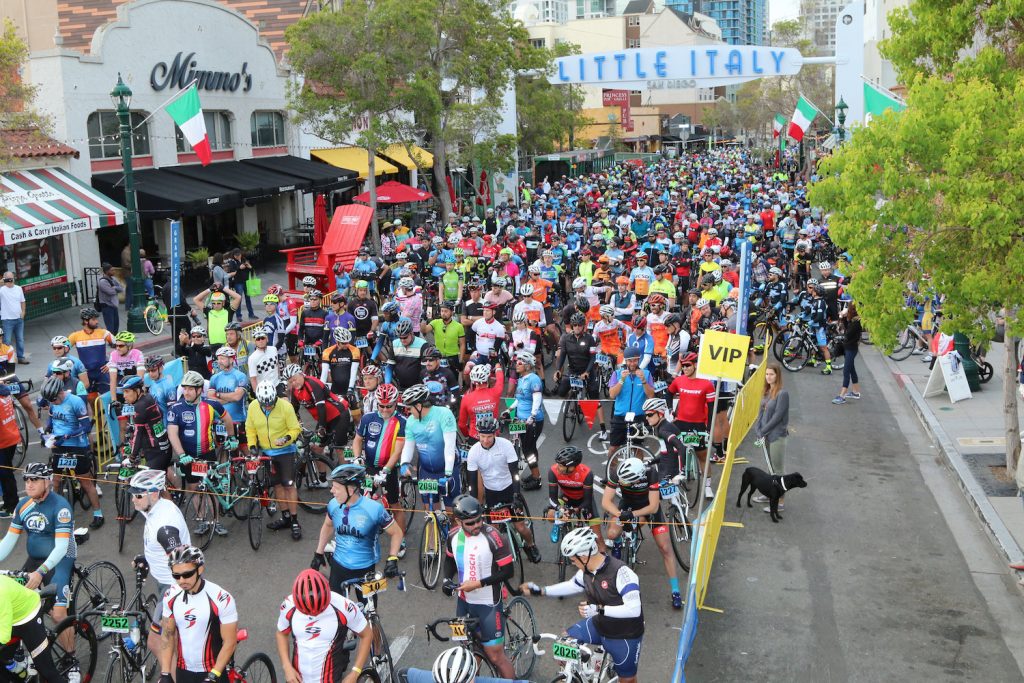
One of San Diego’s most anticipated bike races, the GranFondo, offers a Tour de France cycling experience. Racers can choose from three routes covering 34, 60, or 100 miles of winding roads through sections of South Bay and East County. The full 100-mile GranFondo route takes expert cyclists east into the hills of Alpine before returning to the downtown waterfront finish line. Prepare your camel backs, limber up those legs, and get ready for a local test of endurance and glory.
Month: April
Registration Fees: $140
Where to Register: SD GranFondo
Launched in 2021, Pedal the Cause is a multi-event cycling fundraiser hosted by the San Diego Padres and Curebound, an organization supporting local cancer research. Participants can choose from a 25-, 55-, or 75-mile bike ride through San Diego, a 5K run/walk event through downtown, or a children’s bike ride. Since its inception, the charitable event has raised more than $20 million for cancer research. If a stationary bike is more your speed, the event offers a 50-minute rooftop spin class atop Petco Park’s Western Metal Supply building or the ability to participate virtually from the comfort of your Peloton or exercise bike.
Month: March
Registration Fees: Starting at $40
Where to Register: Curebound
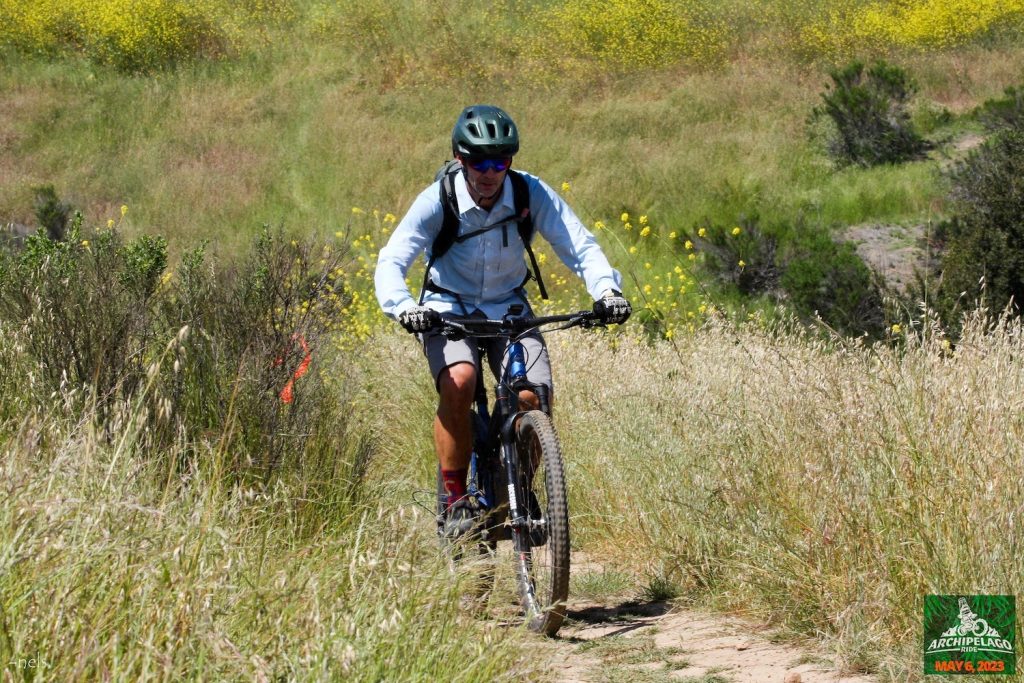
The Archipelago Bike Ride (or Arch Ride for short) offers mountain bikers a scenic yet challenging ride through the hilly terrain of San Marcos and Sorrento Valley. Choose between the half-arch ride, a 23-mile route starting at Black Mountain and covering 2,300 feet of elevation, or commit to the full arch ride, which kicks off at San Elijo Park in San Marcos and traces 48.1 miles with over 5,000 feet of elevation. Both routes provide a demanding trek for intermediate to advanced riders craving an off-road odyssey. If pedaling isn’t your thing, organizers of the event allow e-bikes on the half-arch route for bikers wanting to enjoy the scenery without the legwork.
Month: May
Registration Fees: Starting at $100 for San Diego Mountain Biking Association members
Where to Register: San Diego Mountain Biking Association
The Coronado Bridge’s lack of bike lanes may be a disappointment for some, but each year San Diegans have two opportunities to ride the scenic bay bridge starting with the Bike the Bay event. Cyclists of all skill levels can participate in this 25-mile community bike ride starting at the Embarcadero Marina Park across from the Gaslamp. The route takes you across the Coronado Bridge and along San Diego Bay, passing through National City on the return ride. Don’t miss this event, as registration proceeds support the San Diego County Bicycle Coalition, a nonprofit focused on improving biking access and conditions in the city.
Month: August
Registration Fees: $80
Where to Register: Bike The Bay
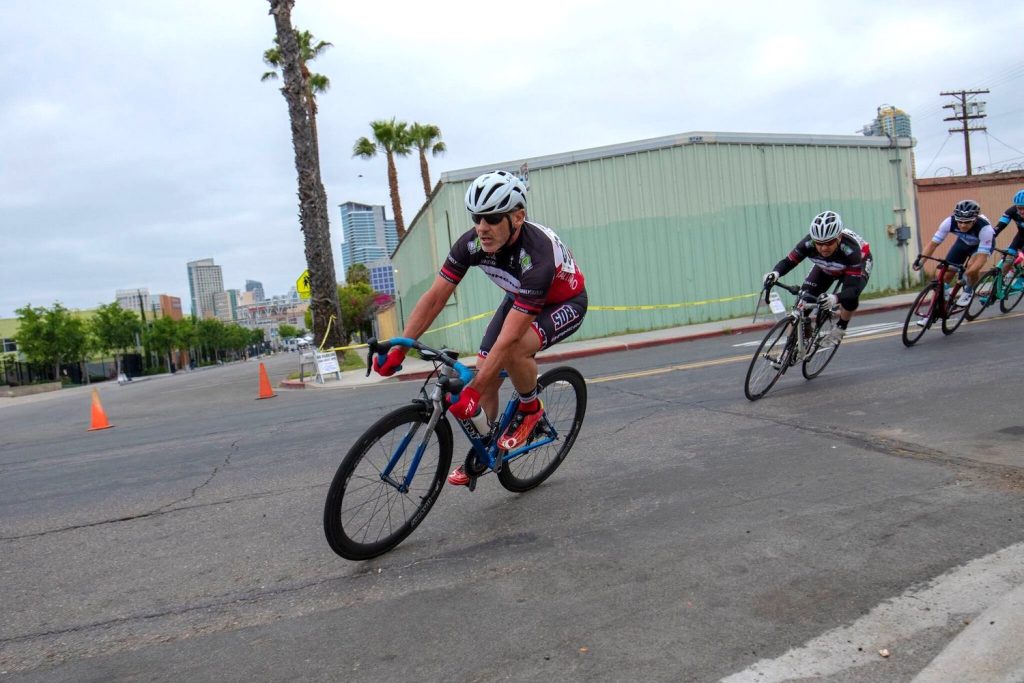
Organized by the San Diego Bicycle Club, the Barrio Logan Grand Prix offers bikers of all skill levels a thrilling ride through the historic neighborhood. The 0.8-mile route provides a fast-paced course through tight figure-eight maneuvers for takeovers, making it unlike most cycling courses. The race begins and ends on Newton Avenue across from Perkins Elementary School and features local bike vendors, as well as plenty of delicious Barrio Logan food and drinks for post-race festivities.
Month: June
Registration Fees: Starting at $40
Where to Register: BikeReg

Cole Novak is an award-winning writer with a passion for highlighting local figures, small businesses, and nonprofits. Born and raised in San Diego, Cole is passionate about photography, surfing, art, the local food scene, and the great outdoors.
Partake in San Diego Pride, see the world premiere of The Family Album and be brought to life by Evanescence
Up and down the coast, this weekend’s event lineup includes several causes for celebration. First, ensure your fascinators and colorful derby suits are ready for Opening Day and the Tacos & Tequila Festival at Del Mar Thoroughbred Club. Within the arts sphere, Centro Cultural De La Raza’s Boarder Crossings exhibition, Arcadia at Cygnet Theatre and La Jolla Playhouse’s brand-new musical, The Family Album, represent just a handful of new exhibitions and productions popping up locally. Plus, the citywide partying includes the 6th annual Filipino American Friendship Festival and several San Diego Pride festivities, headlined by the two-day festival at Balboa Park.
Food & Drink | Concerts & Festivals | Theater & Art Exhibits | More Fun Things to Do

Enjoy a meal infused with comfort food and cookout classics this Friday during the July edition of ARTIFACT at Night. Patrons will be served a four course Southern BBQ menu (with optional beverage pairings) that includes bites like peach tea glazed pork belly, slow smoked short ribs and house made hot links. Plus, for dessert, ARTIFACT’s take on peach cobbler will feature a butter pecan crumble with vanilla whip. Reservations are $89 per person, with seatings from 5-8:30 p.m; for this dinner, menu modifications cannot be accommodated.
1439 El Prado, Balboa Park
On day two of the summer racing season, Del Mar Thoroughbred Club will celebrate a flavorful culinary pairing during its 21-plus Tacos & Tequila Festival in the Seaside Cabana. This Saturday from 2-6 p.m., attendees can sample a lineup of Mexican beers, top-shelf tequilas, frozen and handcrafted margaritas and tacos from local vendors. General admission is sold out, but early admission ($65), which comes with two taco tickets, five drink tickets, a souvenir cup and early entry at 1 p.m., can be purchased here.
2260 Jimmy Durante Boulevard, Del Mar

Show out for the city’s LGBTQIA+ community throughout San Diego Pride. During the week, check out free events in Hillcrest like the faith-centered Light up the Cathedral (Wednesday at 7 p.m.) or the Spirit of Stonewall Rally (Friday at 6 p.m.). Over the weekend, the Pride Parade (Saturday from 10 a.m. to 3 p.m.), beginning from University Avenue, as well as the Pride Festival at Balboa Park (Saturday from noon to 10 p.m. and Sunday from noon to 9 p.m.) will further prove how in the face of bigotry, “Pride Shines On” in SD. Festival ticket options include single-day passes ($45), weekend passes ($74) and weekend VIP ($268).
Hillcrest & Balboa Park
Envisioned as an expression of “radical empathy,” Victory Garden—released in May—is Young the Giant’s way of addressing life’s woes with a glass-half-full approach. Though the whole project is enveloped in an air of gratitude, the one-two punch of standout tracks “Bitter Fruit” and “Already There” share a faith that the world, and the joy it contains, is within our grasp. The indie rock-filled lineup for Wednesday’s concert (6:30 p.m.) at Cal Coast Credit Union Open Air Theatre will also feature Cold War Kids and Beach Weather. Tickets start at $40 for this concert.
5500 Campanile Drive, Rolando
The essence of Evanescence is built on a duality: soft and tender reflections and thrashing anthems about wars fought on personal battlefields (i.e. “Bring Me to Life”). Whenever Amy Lee has hold of the microphone, the stakes feel urgent, and on the gothic rock band’s newest record, Sanctuary, Lee received ample room for both her soul-stirring vocals and intimate piano playing. Their concert this Friday (7 p.m.) at North Island Credit Union Amphitheatre will open with performances by heavy metal band Spiritbox and alternative rock duo Nova Twins. Tickets start at $24 for this concert; $1 from each ticket sale will go towards PLUS1.
2050 Entertainment Circle, Chula Vista
This Saturday from 11 a.m. to 6 p.m., the API Initiative will celebrate its sixth annual Filipino American Friendship Festival. But that’s not the only number of significance for the festival’s 2026 event, which marks 80 years since The Republic of the Philippines gained independence from the United States, closing the country’s history of colonial rule. The free festivities at NTC Park will include live music, cross-cultural dance performances, games, karaoke, community resources, health and wellness vendors, and a delectable lumpia eating contest.
2455 Cushing Road, Point Loma
Ryan Hardison is a freelance arts and entertainment writer and recent graduate of San Diego State. When he's not staring at his laptop, he's likely eating an adobada burrito or getting sunburnt at the beach.
The San Diego designer has created more than 3,000 concert posters over nearly 40 years for artists including the Rolling Stones and the Red Hot Chili Peppers
Let’s start with his name.
No, not his birth name, Craig McKenzie Haskett.
Scrojo.
When he was in high school, he and his friends were trying to come up with the perfect name for their punk band that would encapsulate all their personas. Nicaragua. The Freds.
One of his friends said he was going to go by Jimmy Stacks and called it “the perfect rock and roll name.” Their names changed so much that Haskett erupted: “Fine, I’m f—ing Scrotum Joe, the true defender of the Open West.”
Their response: Wow, that’s a great name.
As a teenager, he drew chalkboards for Del Mar’s Pannikin coffee shop and would design T-shirts for surf/skate brand Life’s a Beach. He signed the shirts with his moniker, but even in punk rebellion, who wants a shirt with the words Scrotum Joe on it? “They just cut out the ‘t-u-m,’ and the next thing you know, a client referred to me as that, and it stuck,” he says.

Scrojo could have been part of a band as iconic as The Misfits—had he been able to learn the famously cumbersome bassline to The Kingsmen’s “Louie Louie.” Becoming one of the most renowned concert poster designers—someone who quite literally designed the cover of Art of Modern Rock: The Poster Explosion—is a pretty good Plan B.
“To my knowledge, he’s done more rock posters than anybody else alive,” says Dennis King, whose D. King Gallery in Berkeley, California, serves as one of the largest private rock poster collections in the world. “He’s the hardest-working guy in the poster business.”
King not only co-authored the sequel to music historian Paul Grushkin’s The Art of Rock, but he also handles distribution and sales for all of Scrojo’s work. That’s more than 3,000 different posters over nearly 40 years. (That’s over one poster each week. For four decades straight.)
For anything from boxing matches to rodeos, posters have long been used as promotional items. Toulouse-Lautrec’s famous lithographs advertised Moulin Rouge in the late 1800s. Around the same time, Hatch Show Print in Nashville was making handbills for the Grand Ole Opry.
“I propose this: Cave paintings are the first poster art,” Scrojo says.

Rock and roll posters took off in the 1960s, when the hippie counterculture era replaced conformity and suburbia. Artists like Jimi Hendrix and the Grateful Dead used their vibrant, psychedelic prints as a form of rebellion from the mainstream. Posters were promotional, commemorative, collectible, and especially expressive.
If the name Scrojo is any indication, he doesn’t shy away from imagery that toes the line of being too provocative. He focused more on what inspired him instead of trying to be offensive for the sake of getting attention.
“Didn’t want to show it to my grandmother, but my parents were fine with it,” Scrojo says with a laugh.
“We’ve had to ask him to put a Band-Aid over a nipple every now and then,” says Chris Goldsmith, president of Belly Up Tavern in Solana Beach, where Scrojo started out and hundreds of his posters currently line the walls.
Scrojo spent six weeks at Otis College of Art and Design for a summer semester before drugs, alcohol, and a self-described lack of discipline prevented him from enrolling full time. Still, he taught himself concepts like text hierarchy and later found his niche at the Belly Up and in the surfing and skating world, working with brands like Quiksilver, Rip Curl, Scorpion Bay, and DGK.
His first concert poster was for North County band Borracho y Loco, of which Goldsmith was bass guitarist. Scrojo drew an abstract version of the Belly Up’s iconic shark with colorful calypso and tiki themes.
Early on, he would craft using a pencil, pen, non-reproduction blue pencil, X-Acto knife, rubber knife, and proportion scale to create each poster, and the finished product could take a week or even longer.

“I recommend every artist coming up to do that for like six weeks,” Scrojo says. “It forces you to think about every design decision as you’re going along.”
He has since mastered vector imagery through Adobe Illustrator to the point where, depending on the level of detail needed, he could finish two projects in a day. Still, he fills sketchbook after sketchbook to blueprint.
“I liked his line in particular, and he knows how to draw, which a lot of people don’t really know how to do these days,” King says.
Scrojo would research what each musician’s merchandise looks like to get a feel for each artist’s tone and voice. Once he has his central image in mind, he focuses on what and where to place the text.
He doesn’t have one specific style, ranging his talents from art deco to psychedelic and everything in between (and outside the lines). Want a pop surrealist comic book cartoon devil with splattered paint textures, halftone dot patterns, and pure chaos? Red Hot Chili Peppers, February 1986. Want a minimalist graphic portrait with bold strokes and graffiti text? P!nk, October 2023. Want a carnival sideshow style piece with a tasteful caricature of Jeff Bridges? The Big Lebowski, August 2011.
Scrojo calls himself a jack of all trades because he can create posters for all music genres. King calls him a chameleon for his ability to adapt his voice to new eras.

“The variety of his skillset makes it possible for us to put 50 of his posters on a wall next to each other and have it look compelling, not just a bunch of the same thing over and over,” Goldsmith says.
Some of Scrojo’s favorite posters are when he feels a personal connection to the artist or the album. He has a vivid memory as a child of being trapped in a closet filled with marijuana leaves while playing hide and seek and staring at Jimmy Cliff’s “The Harder They Come” LP. “For whatever reason, as a kid, that sparked a desire to do graphic design,” Scrojo says.
Fast forward to February 2012, Cliff is performing at Belly Up. Scrojo decided to modify Cliff’s original album cover from rainbow gradient fills to classic reggae psychedelia while preserving Cliff’s striped pants and bold hat. Cliff’s manager called him and said they wanted to use it for the rest of their tour.
“We always get artists requesting that he does their posters,” Goldsmith says. “A lot of artists don’t want venues to go all rogue because they want to control how they’re being presented. With him, they’re like, ‘Let him go nuts.’”
Matt Eisenberg is an award-winning writer and photographer based in San Diego. A former ESPN editor, his work has also been published by CNN, Bleacher Report and the New York Daily News.
Explore restaurants, activities, and shops within this affluent North County community
The inland North County community of Rancho Santa Fe is often associated with wealth. It’s one of San Diego’s most expensive residential markets and is consistently ranked one of the highest-income zip codes in California and the U.S. Rancho Santa Fe is known for its large equestrian community including riding facilities and horse trails, as well as its country club lifestyle and associated golf courses.
At the center of this luxury master-planned community is a small, walkable downtown area referred to as the “village,” with The Inn at Rancho Santa Fe acting as both a landmark and social hub. Much of the community, including the historic Inn, was designed by acclaimed architect Lilian Rice, one of California’s earliest female architects. The Spanish Colonial-style architecture she brought to the village is still one of its defining characteristics today.
Whether you’re coming to Rancho Santa Fe for golf, horseback riding, or pampering at a resort spa, be sure to start with a short walk around the village to take in the neighborhood’s charm. Plan your next visit here with our neighborhood guide to the area’s best restaurants, things to do, and shopping.
Jump To: Restaurants | Things to Do | Shopping

Families congregate at The Pony Room for elevated California ranch-style cuisine. Lamb lollipops, carne asada tacos, burgers, and weekly dinner specials are offered here, alongside an extensive collection of wine and spirits (especially tequila) and sizeable kids menus. As the signature restaurant of Rancho Valencia Resort & Spa, this all-day eatery is a lively centerpiece of the local social scene.
5921 Valencia Circle
The piano bar at Mille Fleurs is the buzziest spot to be on Friday and Saturday nights in Rancho Santa Fe. French classics like escargot, lobster bisque, duck confit, and steak frites are the main dinner attractions at this local institution that has been around for more than 40 years. Spring for the four-course prix fixe menu before nabbing a coveted bar seat near the piano entertainer.
6009 Paseo Delicias
Nick & G’s is one of the most prominent restaurants in the village, with an outdoor patio that overlooks the main thoroughfare. Enjoy modern Italian food, steaks, and seafood dishes here, including homemade pasta, pizza, wagyu beef, and oysters. Be sure to check their live music schedule and events calendar for the latest happenings.
6106 Paseo Delicias
Named after renowned architect and planner Lilian Rice, Lilian’s is The Inn at Rancho Santa Fe’s flagship restaurant. Their upscale menus feature sustainable seafood, grass-fed meats, local produce, and even sushi rolls during dinner. Outdoor seating provides a bird’s-eye view of the village and an elegant backdrop for weekend brunch. Stop by Bing’s Bar (a nod to Bing Crosby) for craft cocktails, beer, wine, and light bites in a refined setting.
5951 Linea Del Cielo
Quaint cafe and bakery Thyme in the Ranch serves a small selection of breakfast and lunch items (don’t miss the tarragon chicken salad), but is perhaps best known for its pastries and baked goods. Cakes, pies, muffins, scones, and cookies fly off the shelves here, where locals come for special occasions, parties, and group catering orders.
16905 Avenida De Acacias
Located inside a historic building once home to Rancho Santa Fe’s original schoolhouse, Paseo RSF is one of the village’s newest dining options. The charming American bistro has pasta, salads, burgers, meat and seafood entrees, plus a thoughtfully selected California wine list and new sushi and omakase program. Kids and dogs are both welcome here.
6024 Paseo Delicias, Suite C
Grab a quick coffee to go from this walk-up window in the same shopping center as the post office. Cinnamon roll lattes, cold brew, spiced chai, smoothies, protein bowls, and more can be found at Rancho Roasters, where they brew beans from Dark Horse Coffee.
16950 Via De Santa Fe
Casual pizzeria and martini bar Goli is a popular spot for catching the latest sports games. Order one of their unique specialty pizzas like the Casbah with hummus and veggies, build your own pizza or burger, or go with one of their hearty wraps that’s made with an extra thin version of pizza dough.
18021 Calle Ambiente, Suite 403
Find generous portions of Mexican food at Cocina del Rancho, run by the same owners as Carlsbad’s Cicciotti’s Trattoria Italiana and Village Kabob. Get classic dishes like burritos, tacos, and enchiladas, plus their specialty items including pulpo, carne asada, and fajitas with lobster tail. Don’t skip the margaritas.
16089 San Dieguito Road
Kai Oliver-Kurtin is a San Diego-based writer who covers travel, dining, events, and culture. Her writing has been published in USA Today, Condé Nast Traveler, Fodor's Travel, Marie Claire, and HuffPost, among others.
A customized memory-filled explosion gift box is a creative way to show someone you care
Finding a gift that feels truly personal can be surprisingly difficult. In a sea of generic options — flowers, gift cards, candles, and the like — Xplosion Box offers something more lasting: a customized keepsake built around the photos, messages, and memories that matter most.
Founded by Southern California entrepreneur Jay Vijay, Xplosion Box LLC creates fully customized explosion gift boxes that arrive professionally designed, printed, assembled, and ready to gift. Each box opens layer by layer to reveal personal photos, heartfelt messages, pull-out albums, origami-style photo pockets, and hidden notes, turning a simple gift into an emotional reveal.

The brand was built for people who want to give something meaningful without spending hours printing photos, cutting paper, folding cardstock, or assembling a DIY project. Customers simply choose a box, upload their favorite photos, add personal messages, and the Xplosion Box team transforms those details into a polished keepsake that feels thoughtful, personal, and beautifully made.
Xplosion Box offers personalized gift boxes for birthdays, anniversaries, weddings, graduations, Mother’s Day, Father’s Day, Valentine’s Day, Christmas, proposals, bridesmaid gifts, long-distance relationships, and thoughtful “just because” moments.

Customers can choose from flexible customization options starting at $27. The Mini Surprise Box includes 10 photos, three message cards, and one hidden secret note, while the Mega Surprise Box offers a fuller keepsake experience with 40 photos, three message cards, and one hidden secret note.
What sets Xplosion Box apart is its high level of customization combined with convenience. Filled with personal photos, custom text, decorative details, and layered surprises, each box gives customers the freedom to create a gift that feels one-of-a-kind — without having to make it themselves.
At its core, Xplosion Box helps people turn favorite photos, stories, and words into something tangible: a keepsake that can be opened, revisited, and remembered long after the occasion has passed. asion has passed.
The Harbor Island resort debuts the Garden Terrace as the final piece of a $123 million renovation
If you’re anything like me, you’ve probably been planning your wedding your entire life. The impromptu daydreaming usually comes at the most inconvenient times: during a meeting or right as you’re falling asleep after watching too many episodes of TLC’s Four Weddings.
In those imagined scenes, there is always a sunset. Usually some kind of impossible garden that feels like Alice in Wonderland meets The Secret Garden. There are soft pinks and climbing greens, florals that look like they grew a little too perfectly on purpose, and somewhere in the distance, water that catches the light. It’s dramatic in the best way.
Perched on Harbor Island, Sheraton San Diego Resort feels like a tucked-away bayside escape. But the real centerpiece of its $123 million transformation is the new Garden Terrace, a private green oasis that feels like it was designed specifically for the dream wedding replaying in my head. This is what I had been imagining all those years. White tea roses, lavender, gardenia, jasmine, and magnolia trees line the space, creating a fragrance that feels like it’s part of the architecture.

Sheraton San Diego Resort has always had the advantage of its location, but what stands out now is how intentionally the indoor and outdoor spaces coexist. Panoramic harbor views stretch across the property, shifting from soft blue mornings to golden-hour glow and a nighttime skyline that feels almost cinematic. Of course, there are other ceremony and event spaces across the resort, too—including the Lanai Lawn, Harbor Vista Lawn, and Eventide Gardens—each offering its own variation of open-air beauty. But the Garden Terrace is the one that feels like it was made for vows.
I arrived on a Tuesday afternoon with a suitcase slightly overpacked, the result of not knowing what to fully expect from a resort doubling as a wedding venue. I tried to cover every possible version of the trip: a handful of summer dresses, a few breezy pants, marina-esque tank tops, sandals for everything, and accessories meant to sparkle in the sun (seven different earring and necklace options was probably unnecessary, though).
I did, however, underestimate the swimsuits, especially once I saw the paddleboards, endless water activities you’d want to try at least once, and pools and jacuzzis practically whispering your name. Business casual never made it out of the suitcase, replaced instead with easy cover-ups, pinks and greens, and airy button-ups that felt more in tune with the setting than structured jackets ever could.
The resort has been reimagined across rooms, dining areas, and outdoor spaces, with thoughtfully layered tile textures, lighting that shifts with the time of day, warm-toned palettes in the dining rooms, and fresh blues in the bedrooms that complement the views pouring in through the windows. The foyer feels expansive, framed by floor-to-ceiling windows and designed to bring a little bit of San Diego inside with you, rather than shut it out.

By late afternoon, I was sitting by the marina watching the water shift colors in real time, the kind of view that makes everything feel slower without trying. Dinner at Rumorosa brought the first real taste of the resort’s Cali-Baja identity, starting with a trio of margaritas—passion fruit, spicy watermelon, and creamy coconut—that made it impossible to pick a favorite and slightly dangerous to have them all in front of you at once.
The table opened with guacamole layered with spicy cotija, radish, pomegranate seeds, candied serranos, cilantro, limes, duritos, and warm tortilla chips, followed by Mexican street corn with sweet kernels, spiced aioli, cotija, and more candied serranos that hit just enough heat to keep you absolutely addicted.
For my main, I went with the roasted organic chicken breast with buttered jasmine rice, mole negro, and roasted cauliflower, which felt familiar in structure but elevated in small details like the cilantro and pickled onions. And then the Carajillo tres leches cake, a vanilla sponge layered with coffee and Licor 43 mousse, praline, and caramel sauce, arrived and disappeared faster than it probably should have.
What made it feel so curated wasn’t just the menu, but how intentional everything felt without ever feeling fussy: bright flavors balanced against rich ones, heat against sweetness, and plates that arrived right as the light over the marina started to soften. The next morning carried that same energy. Breakfast could unfold at your own pace, whether that meant taking a Zoom call in your room, heading downstairs for a sit-down meal with friends at Rumorosa, or grabbing something quick from Strada Italian Market. I opted for a vanilla latte from La Colombe at Strada before heading out for the morning.

I made it just in time for the resort’s complimentary morning yoga on the lawn, boats just visible beyond the stretch of green. The Sheraton offers it daily as part of the stay, a low-pressure option for anyone looking for an easy reset rather than a full workout, which I wasn’t expecting to take part in on this trip but ended up glad I did. The class itself was beginner-friendly, with slow flows and a few optional deeper stretches for anyone who wanted to push into more advanced poses.
Afterward, stand-up paddleboarding shifted everything into a different perspective. My small group launched from the resort’s private dock, boards wobbling slightly as we found our balance, then drifted out into the marina where the water opened up in every direction. We paddled past rows of docked boats, slipped alongside houseboats with their shaded decks and string lights, and followed the gentle curve of the harbor as it widened and narrowed again.
The afternoon transitioned into poolside lounging at Sunglow Cabana Bar, where cabanas, cold drinks, and a poolside lunch had me so relaxed I didn’t even realize my phone had died. Sunglow is open to the public, so if you’re looking for a quick day getaway, you can dock and settle in for SoCal-style shareables and frozen drinks.

Dinner at the Garden Terrace kind of shifted everything for me. In the daytime it just feels like a nice open space, but at night it becomes something else entirely: more intentional, more “put together” in a way I didn’t really clock at first. As the sun went down over the marina, everything turned warm and the garden lit up in this soft glow that was staged under fairy lights. It was as if you were meant to experience it in this very certain way.
It was easy to picture it then: the quiet before guests arrive, the moment someone steps forward, the pause right before “I do.” There’s often a specific kind of silence right before a ceremony begins. And, at the Garden Terrace, that feeling is built into the space itself. You are standing in a garden wrapped in white blooms and soft greenery, with the harbor stretched out just beyond it. The sun is low enough to turn everything gold. Someone is standing across from you, close enough that everything else fades into background noise.
At 3,600 square feet, the Garden Terrace can host up to 300 guests, with the wider property offering over 132,000 square feet of flexible event space. The transformation even earned a Northstar Stella Award Gold Medal for Best Renovation in the Far West Region in 2024.
That evolution, according to Sean Clancy, Vice President and General Manager of Sheraton San Diego Resort, has been years in the making. He describes the property as having been “completely transformed,” from the rooms to the restaurants and everything in between, with new spaces like the Garden Terrace designed to highlight the marina backdrop in a way that feels “naturally stunning” and “magical,” not just scenic.
By the time I checked out on Thursday, watching the sun rise over the marina, empty in the early light, I understood why someone would choose this exact spot to say something they mean forever.
Isabella Dallas is a freelance writer for San Diego Magazine and the Arts and Culture Editor at The Daily Aztec in her final year at San Diego State University. She previously worked as an editorial intern for SDM, but when she’s not writing, you can find her trying the best coffee spots in SD, devouring the latest rom-coms, and indulging in anything and everything pop culture.
San Diegans are finding connection in gardens, shared produce, neighborhood gatherings, and simply sitting outside
Front yards. They used to be the most controlled part of a home—or not. They could be tidy with manicured lawns, have raised vegetable beds with food for sharing, or act as an overflow of things that didn’t quite make it inside. Thank you, capitalism, and the American habit of endless consumption. In Lemon Grove, where I live, it’s not uncommon to see a mechanic running a business from his front yard or a family selling birria on Saturdays from theirs. The front-yard genre is broad.
But in communities across San Diego County, the most exposed part of a house—the strip between public and private life—is being turned into something eminently usable, visible, and hang-outable. At first glance, this may seem decorative, but in creating an intentional space, particularly one that’s visible to neighbors and passersby, it’s also the release of a pressure valve.
Let’s not gloss it over: American life has taken a hard right at high speed; two wheels have lifted off the pavement as we careen toward who-knows-what, and our nervous systems are making a sound best described as zoinks!
People are trying to (re)build connection in an increasingly isolated culture, (re)find beauty in the midst of endless anxiety, and (re)create a system friendly for critters. Many of us are remembering that, Oh yeah—we’re biological creatures.

Landscape designer Andrea Doonan, of Andrea Doonan Horticulture + Design, is a certified arborist with more than 20 years of experience collaborating with homeowners and renters. She rejects sterile, white picket fence designs and places a strong emphasis on edible gardens and usable outdoor spaces. When we speak, she mentions the unusually wide range of plant and animal life in the relatively small size of our region, making us a “biodiversity hotspot.” (San Diego is the most biodiverse county in the Lower 48.) Because of this, we have a unique system of endangered species that rely on plants to survive.
“More and more, people are introducing native landscapes to connect to nature and support birds, butterflies, and bees,” Doonan says. “I’m very passionate about getting people to unplug and ground.”
Whether it’s for a love of all creatures, our climate, or water conservation, Doonan describes a broader shift toward habitat-driven spaces that are both aesthetic and ecological. For her clients, this can mean replacing turf with native planting, adding seating areas, or even rethinking the front walk as an active, planted threshold rather than just a green lawn. “There’s this idea that people want to make a difference,” she says. “But they also want a place to entertain, recreate, and ground.”
At the center of this is a simple but increasingly urgent question: How can small design choices ripple outward into community life?

For Doonan’s client Lee Miller, that shift is fully expressed. After remodeling the interior of his Pacific Beach home, Miller focused on the backyard, thinking that would be the place for his soon-to-be-born daughter to eventually play. The front yard of his corner property was the last detail to be completed.
Miller said he wanted “a very full, very natural look versus having everything measured.” He knew what he liked when he saw it, but it was Doonan who translated his ideas and guided the creation of a wildlife-friendly space with full-grown orange, plum, and pluot trees. “We have lots of birds, lots of bees, lots of lizards,” Miller says. “There’s nothing better than walking outside and eating fruit off a tree.”
The front yard has become where Miller’s family spends time—often more than the backyard. He and his daughter, who’s now 5, explore the space together, checking what’s growing, learning about their little ecosystem, and chasing lizards. It’s where his daughter plays, where she’s built her own fairy garden, and where neighborhood parents and kids tend to gather at the end of the day.

For her own Normal Heights home, Doonan designed a front yard that includes a seed library, raised beds, native plants, and a sitting area where she and her husband spend time. “I’m meeting my neighbors because I put two chairs and some plants in the front yard,” she says. “I’m sharing produce with them.”
That exchange has become part of the landscape itself, and she points to small systems (like seed libraries) as ways of circulating plant material and knowledge directly between people. In real life. Person to person.
More and more, Doonan says, when we’re talking about solving the big problems, it’s important to remember that everything starts local. Even “guerilla gardening”—small acts of informal planting and care in overlooked sections of land, such as parking strips—makes a difference. Tossing some seeds and adding a bench to the sidewalk strip out front can create a “pocket park” or “a mini-mini park.” In that framing, the front yard stops being an ornamental backdrop and starts becoming an infrastructure for connection.
Landscape architect Bret Belyea frames this front-yard movement (my term, not his) as social repair. “It’s a handshake to your neighbors and passersby,” he says. “It says something about who you are.”
Of course, plant choices matter, but not only for ecological reasons. Native and climate-appropriate plantings become part of how neighborhoods re-establish contact with each other, even without formal planning. What he describes is an aesthetic, but it’s also relational in the way a yard can signal openness rather than withdrawal, invitation rather than separation, and connection rather than, “Get off my lawn, ya damn kids!”
Hanging out in the front yard rather than sequestering in the back is a signal to outsiders that they’re really not outsiders at all. Or, at least, they don’t have to remain so.

Not every front yard in this shift toward social spaces has a professional’s influence. Some are created through labor, trial and error, and nostalgia. For Grace Wanjiru, the memory of her childhood in Gitaru, Kenya, led her to beautifully DIY the hell out of the front part of her half-acre Encanto property. When she bought her home nearly two decades ago, it was essentially just a little house plunked down on a giant plot of dirt. She had a blank slate and plenty of memories from which to create something that would imbue the space with peace and hospitality.
The designer-led yards are often framed through an academic understanding of ecology, structure, and intentional planting strategies, and Wanjiru did much of the same thing through instinct. When she’d visit her mother, who lives just outside of Nairobi, she was reminded of the abundant beauty and vibrancy of a childhood spent running free, climbing trees, and being connected to nature. It was important to Wanjiru that her then-young daughters, both now in their early 20s, have that experience.

Wanjiru’s goal was to create the feeling of home, not as replication but as translation. “When you throw a seed in Kenya, something grows,” Wanjiru tells me. “Here, the dirt is horrible for plants. I still wanted green and color. I wanted nature—birds and insects. I grew up with nature, but here: No.”
With an understanding of what would and wouldn’t grow in San Diego, Wanjiru was able to achieve a sense of home with succulents and native plants she purchased at Walmart. She created a large courtyard with a fence built of wood and corrugated metal. Inside, she added a hammock and a bird bath, which Wanjiru settled on after gophers ate through seven different plants; a table with an open cookbook, a bottle of wine, three glasses; a weathered dresser—once in her daughter’s room—that now sits opposite the table and contains Wanjiru’s many seeds. And, of course, strung lights.
The space feels rustic, comforting, personal, emotional, and magical. It feels like love.
Wanjiru likes to host small groups of her friends and family, keeping it intimate but accessible. “This is the kind of house you just call: ‘What are you doing? Are you making your African tea? Can we just come over?’ Because this is what they do [in Kenya],” she tells me. “And so I always want to have that, because I think for foreigners living in America, that’s one of the things we struggle with. We don’t have that kind of community.”
Craving a communal feeling, Wanjiru built it herself. And her kids grew up climbing the jacaranda tree and playing in the garden.
“We still gather out there,” she says. “We read in the hammock, talk, connect.”

Perhaps the most important part of a front yard is a garden, whether it’s a space for entertaining and gathering, retreating and grounding, discovering and playing, resting and people-watching. The science backs up what gardeners have long known: Spending time around plants can be profoundly restorative. A 2024 review of dozens of studies found that gardening is consistently associated with better mental health, greater well-being, and improved quality of life, also linking interaction with plants and green spaces to better nervous system regulation.
For Doonan, this is part of why the conversation around gardens is bigger than aesthetics. “Gardens are for everyone,” she says. “I think it’s a right for all of us to have access to gardens.” “All of us” means homeowners and renters, people with sprawling yards and people with apartment balconies, people with large budgets and people growing herbs in containers from the discount rack at Home Depot.
In my conversation with Belyea, I tell him about a little house I passed in Oceanside this past spring. The owners set out free avocado clippings from their tree for anyone to take. “This is people’s way of putting an olive branch out,” he says. “And it just happens to be an avocado branch.” Maybe that’s what this front-yard shift is really about. Maybe it’s about trying to remember how to live alongside one another again. A hammock beneath string lights. Kids chasing lizards through native plants. Someone slowing to ask what’s growing. A neighbor stopping by and staying longer than they planned to. All of it, a pocket of softness in a culture that’s trying its damndest to make us harden.
Aaryn Belfer is a writer and editor specializing in nonfiction across art, architecture, and culture. Once upon a time, she wrote a provocative column for San Diego CityBeat (RIP). She was a runner up in the 2025 Matchbook Stories contest at the San Diego Central Library and is irrationally happy about it. Currently in her Soft Girl Era, Aaryn has expensive taste in (mostly flat) shoes and will choose a great art exhibit or live jazz concert over almost anything else. Except, possibly, Javier Bardem.
It’s a Self-Care Summer. Because your best self is our favorite self.
If you’re anything like us, it can be easy to get so caught up in taking care of everyone else, that your own needs get lost in the ether. But while this may be a cliché, that doesn’t make it any less true: You can’t give your best self to other people unless you’re taking care of yourself.
Sometimes, that looks like stopping in for your regular acupuncture or chiropractic appointment. Other days, it means giving your body the fresh, organic fuel it needs to truly feel and function at its best. And some other times still, it involves leaving your responsibilities behind for a weekend to pamper yourself at an incredible resort and spa.
Only you can decide what your truly need. We’re just here to help you find the best ways to get it.

Island living meets desert luxury at the Tommy Bahama Miramonte Resort & Spa in Indian Wells. When you step onto the 11-acre property, you’ll be surrounded by sweeping view of the Santa Rosa Mountains with olive trees and fragrant citrus groves decorating the grounds. In other words, everything about this relaxed but refined resort is primed to help you let go of the stress from home and enjoy easy sun-soaked days and gorgeous starry nights.
The rooms blend calming, woven textures with Tommy Bahama’s signature tropical prints and feature private lanais, making it easy unwind the moment you walk in the door. If you book one of the four Villa Suites, you’ll be treated to exclusive Tommy Bahama furniture and unique personal touches to further that feeling of instant ease.
At the award-winning Spa Rosa, the expert team will help reset and recharge your body and mind using methods and rituals inspired by the desert. The 12,000-square-foot retreat includes outdoor soaking pools, eucalyptus steam rooms, and outdoor cabanas, as well as massages, facials, and body masks—all aimed at creating a day dedicated to you. We’re particularly partial to the Day Long Escape, an indulgent all-day affair of CDBs soaks, renewing scrubs, life changing massages, and transformative facials.
Following your treatment, continue the experience with a meal on the patio at Grapefruit Basil. We love the Hamachi Crudo, a light, citrus-forward dish featuring premium yellowtail, house-made ponzu, creamy avocado, and fresh seasonal garnishes.
Whether you’re strolling the gardens, relaxing beside its saltwater pools, or indulging in a restorative treatment, you’ll be able to escape in style and relax in luxury at the Tommy Bahama Miramonte Resort & Spa.

There’s no shortage of ways to stay active in San Diego—but if you really want to enjoy everything the city has to offer, you’ve got to make sure you’re giving your body its tune-ups. Enter: Healcove Chiropractic. The board-certified chiropractors and wellness professionals at Healcove are experts at addressing that stage where you’re not injured, exactly, but you’re not at 100%, either. Maybe you’re feeling a bit tense or stressed out. Or it could be that you’re not quite moving the way you want to. Sometimes, it’s just that the accumulation of days, weeks, or even years of daily strain is starting to take a toll. No matter what stage you find yourself at, the Healcove Chiropractic team can provide integrated, preventative care centered on long-term, science-backed approaches that ensure you can always stay active and live the life you want to live pain-free.
This starts by providing truly individualized care. Every patient can expect a thorough 60-minute consultation session that includes a posture and movement screening. This allows the team to develop a completely personalized plan. That plan might include chiropractic care, acupuncture, or massage therapy, as well as functional fitness training, vibration and sound therapy, and Dynamic Neuromuscular Stabilization, a clinical rehabilitation method that retrains the body’s stabilization systems. Whatever the team recommends, you can be sure that it’s tailored to meeting your body’s needs today and the future.
There’s a reason that San Diego Magazine named Healcove the “Best Chiropractor in San Diego”—don’t wait until you’re struggling with an injury to find out why. Book an appointment today for holistic, integrated care that helps ground and heal your body before it reaches a crisis point.

West Coast wellness culture meets the community feel of Southern Appalachia at Juice Holler. Juice Holler’s menu consists of made-to-order smoothies and smoothie bowls, as well as grab-and-go cold-pressed juices, wellness shots, salads, and more. It operates from the blissfully simple premise that fueling up with food and drink that’s guilt-free and good your body should be simple, accessible, and, above all else, delicious. And if you haven’t yet made it out to the Encinitas café, which opened just this year, let us be the first to tell you: Juice Holler delivers on each and every of these fronts.
We love the Supercharger smoothie, a mood-lifting and body-fueling option made with banana, almond butter, blue spirulina, maca, grass-fed whey protein, raw cacao nibs, medjool dates, and coconut milk. We’re also partial to the Thrive Alive smoothie bowl, where avocado, mango, sea moss, spirulina, mint, coconut milk, and agave are mixed and topped with coconut, chia seeds, strawberry, mango, and chocolate drizzle. The wellness shots include the Detoxifier, a cleansing blend of kale, cucumber, lemon and spirulina, plus a shot specially designed to fight inflammation (named, fittingly, Anti-Inflammation). Probiotic overnight oats, lemon turmeric bars, and strawberry shortcake chia pudding are other standouts on the grab-and-go menu.
Much of the vibe feels beachy North County chic—think green tile with orange and pink accents, grounded with greenery and natural wood—but Juice Holler founder Kelly Sergott, a longtime Encinitas local, has also enfused the space with her Kentucky roots. In Appalachia, a holler is small valley between hills and mountains, where nature reigns, community is king, and nourishment comes right from the land. At Juice Holler, Sergott has created a holler for the busy modern times, using local ingredients to create a spot for people to come together and enjoy fresh, fast, feel-good fuel for their day.

We’ve all had that experience with a medical professional where we’ve felt rushed, ignored, or misunderstood—and ultimately, like we didn’t get the answers that we needed. But at Everwell, the holistic acupuncture practice located in Solana Beach, the care team wants to transform your understanding of what healthcare can look like.
Patients at Everwell experience care rooted in intentional listening and radical empathy—and trust us, those aren’t just corporate buzzwords. This place actually puts those ideas into practice. You will always be given the time you need to tell your story— initial in-take appointments are two hours long—and you can rest assured that your story will be believed. Every single question and concern will be addressed by a dedicated practitioner who wants to find the specific solutions that work best for you, and you’ll receive care that’s aimed at healing the body, mind, and spirit.
Everwell’s highly trained, doctorate-level practitioners blend evidence-based acupuncture with the practice of classical Chinese medicine. (If you’ve never tried acupuncture before or aren’t sure if the team will be a fit, we’d highly recommended Everwell’s complimentary 20-minute consultations.) Research shows that by stimulating specific points on the body, acupuncture activates a natural healing response in the body, helping to restore balance, regulate the nervous system, and improve overall wellbeing. This allows the practice to address an incredibly wide range of conditions from chronic pain and autoimmune disorders to digestive issues, from stress and burnout to headaches migraines, fertility and postpartum struggles, hormonal imbalances, sleep concerns and more.
At Everwell, you can expect to feel heard, trusted, respected, and cared for. This is a space that doesn’t want to be just another healthcare provider you visit; it wants to provide patients with dedicated partner who will be there for their entire health journey.