
Featured articles
Featured articles
Featured articles
What's next
Featured articles
Featured articles
Featured articles
Ready to know more about San Diego?
SubscribeReady to know more about San Diego?

The 10 neighborhoods San Diegans have been loving (and moving to) the most this year
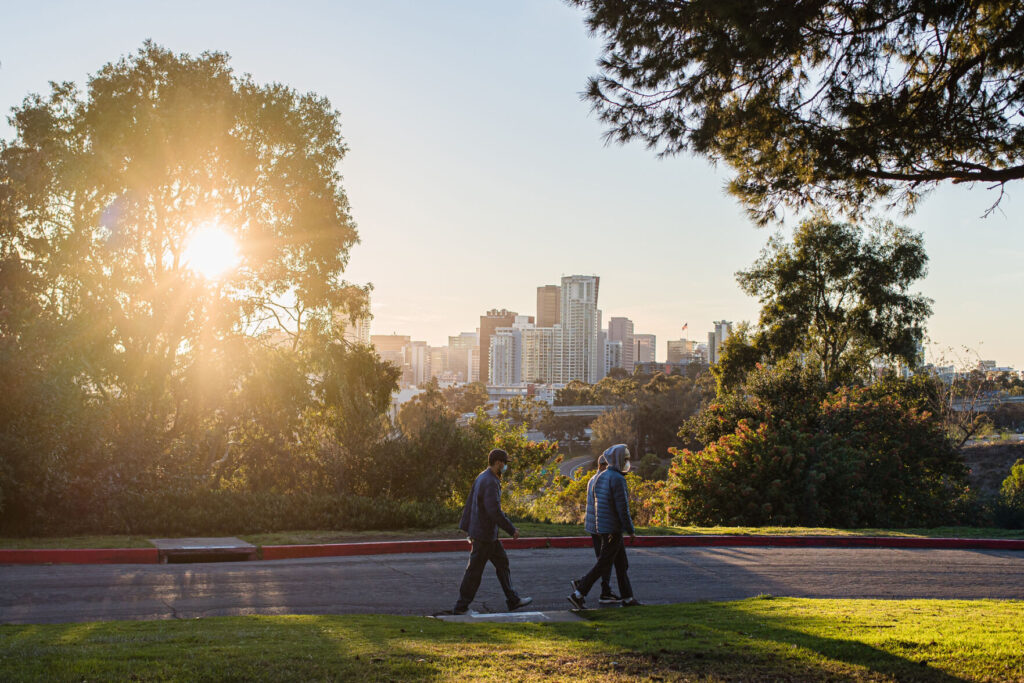
Work-from-home life got you dreaming about a new pad? We’ve rounded up the best upcoming developments and neighborhoods to keep an eye on across San Diego County, including the places where first-time homebuyers should start their search. Plus, local real estate experts weigh in on this unparalleled market, how you can prepare to sell, and how to enjoy the perks before you do.
Note: Market data and statistics provided by the San Diego Association of Realtors (SDAR) unless otherwise specified. Additional data from Redfin, Trulia, Zillow, and NewHomeSource.
What’s Here: Situated between the Carlsbad coastline and San Marcos hills is the up-and-coming neighborhood of Bressi Ranch. With immaculately maintained parks, top Carlsbad schools, and plenty of shopping and entertainment, residents have access to lots of amenities within a short walk or drive. Here, community comes first, with strong neighborhood engagement. Local HOA groups are active and plan an impressive roster of events, regularly hosting get-togethers. The coordinated Halloween and Christmas decorations are theatrical productions that have made the neighborhood a destination for trick-or-treating and viewing holiday lights.
Why Now: If you want to enjoy the luxuries of living near the beach without having to deal with coastal crowds and tourists, you’ll appreciate the feel of this picturesque community.Bressi Ranch remains highly sought after, with local businesses setting up shop and builders developing more housing to match the rising demand. Plus, nearby Cal State San Marcos has been identified as one of the fastest-growing campuses in California.
What You Can Get: Bressi Ranch homes put luxury first, with traditional architecture and modern interiors that create an idyllic blank canvas for your personal touch. They range from two-bedroom townhomes and condos in the high $500,000s to single-family homes with four or five bedrooms just over $1 million, with prices rising nearly eight percent in the last year due to the competitive housing market. Homebuyers interested in something brand-new can look to Shea Homes, which has developed a number of residential and commercial centers under their UPtown Bressi project. Kensington at the Square will have two- and three-bedroom units with a common area swimming pool, bocce ball court, lounge space, and more, all adjacent to a bustling shopping center. Want to go with a resale? Since the oldest homes in this inland Carlsbad neighborhood were built in the 2000s, you won’t have to worry about slinging extra cash for any fixer-uppers. If move-in-ready is what you’re after, you’ll find it here.
On the Horizon: Carlsbad is known for its innovation in the life sciences industry and its rewarding proximity to the 78 corridor, where enterprising brands such as Viasat, Thermo Fisher Scientific, and TaylorMade Golf call home. As we make our way out of the pandemic, Carlsbad—and Bressi Ranch specifically—will become an increasingly popular spot for affordable office space for startups. Considering the growing number of recent college graduates and forward-thinking minds in the region, entrepreneurs may flock to the area to work on their next creation.
What’s Here: Tucked in northeast San Diego County is the pleasant “city in the country.” Poway offers residents the perks of city life, with plenty of retailers, restaurants, and office spaces nearby, while still maintaining that country charm. Residents also enjoy nationally recognized and award-winning schools, lots of community events, and plenty of outdoor activities—including the well-traveled hike up Mount Woodson to get to the iconic Potato Chip Rock.
Why Now: If you want to guarantee your children a top public education while finding easy ways to engage them in their community, you’ll want to look into Poway—Poway Unified was recognized as an “exemplary district” by the California Distinguished Schools program in 2019. This year, the city has also committed to its largest capital improvement project ever: It will make vast improvements to its water treatment plan by building a new flow control facility, pump station, pipelines, and more.
What You Can Get: Aside from affordable rentals, aspiring Powegians can score a fixer-upper in the $500,000s on the south side of the city. Drive a little farther inland and you’ll find more land and larger properties at price points that can top $3 million. The latest figures show the median sale price for a single-family home is $850,000, which is more than 10 percent higher than in 2019, due to growing interest in the neighborhood. Sales have stayed steady even through the pandemic, totaling more than 550 in 2020.
On the Horizon: Poway residents will soon enjoy plenty of improvements on the city’s main thoroughfare, Poway Road. Plus, a brand-new community center is set to open in May. Named after a former mayor, the Mickey Cafagna Community Center will be a multigenerational facility to serve residents. An upcoming planned community, The Farm in Poway, will host 160 homes across 117 acres, offering recreation and agriculture in the former StoneRidge Country Club area. Other new developments include Poway Commons, which will have 97 market-rate, multi-family residential units and 44 affordable senior housing units, plus some retail; and The Outpost, a mixed-use project, which broke ground last year and will include 53 apartments and 42,000 square feet of new retail when it opens.
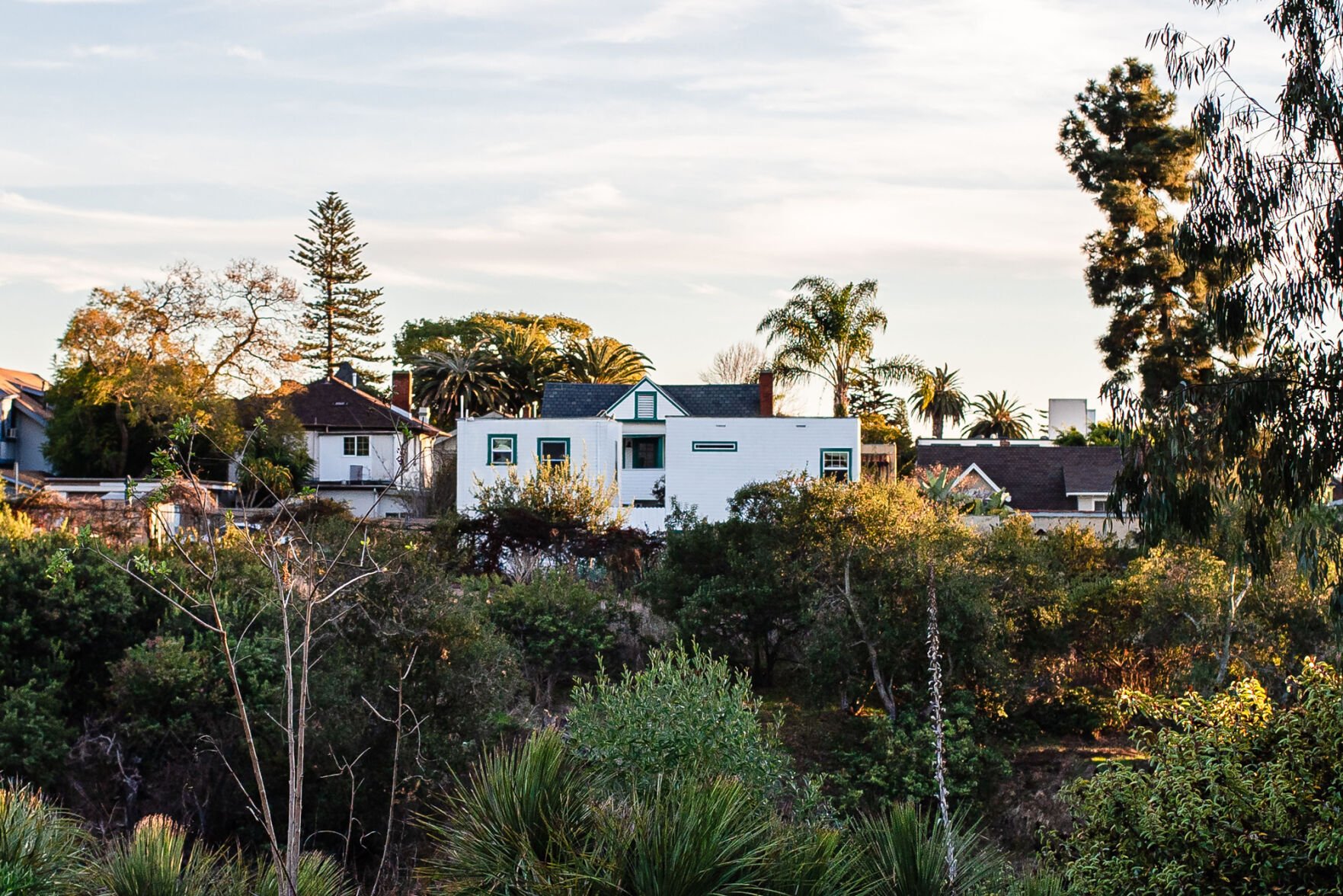
Golden Hill
Ariana Drehsler
What’s Here: This hillside neighborhood south of Balboa Park evokes a quiet coolness thanks to its historic roots and contemporary renaissance. Golden Hill is best known for its stunning architecture, featuring Victorian, Craftsman, and Colonial Revival–style homes spread throughout the neighborhood. On 25th Street, residents can start their mornings with a cuppa from Dark Horse Coffee Roasters, stop into the salon, or enjoy the fresh air at Golden Hill Park, then return to 25th for longtime favorites like Pizzeria Luigi for dinner. Diversity is embraced here; the Greater Golden Hill Community Development Corporation opposes gentrification and goes to great lengths to boost community engagement through projects like their Golden Hill Community Garden and community farmers’ market. Plus, with such a short drive from downtown or Balboa Park, Golden Hill residents have the best of San Diego right outside their door.
Why Now: Golden Hill remains one of the few neighborhoods that has avoided the overcrowding you see in other popular spots like North Park or Hillcrest, while continuing to offer the same neighborhood feel. The number of listings (250) remained the same from 2019 to 2020, and pending sales increased by 27 percent. Listings spend a little more time on the market here, averaging around 20 days before they sell, but with the overall demand so high, realtors suggest acting fast when you put in an offer.
What You Can Get: The neighborhood provides plenty of housing options at varying price points—you’ll find condos and townhomes on the lower side, charming single-family homes in need of a little TLC at San Diego’s average home price, and larger historic homes priced at $800,000 and above. But the median sales price lands below the county average at $594,500, which is a 13.3 percent increase from 2019’s $524,500.
On the Horizon: After 25th Street’s impressive comeback, Golden Hill has caught the attention of many local restaurateurs. Coming this year is Kingfisher Cocktail Bar & Eatery, a new concept from the owners of Mira Mesa’s Crab Hut. It’ll feature a menu of Vietnamese dishes with a California twist, and the team is hosting pop-up events serving the menu prior to their official opening.
What’s Here: This old-school coastal community remains a highly sought-after piece of real estate for its walkability, burgeoning eats and, of course, prime ocean views. Most days you’ll find its mix of young and retired residents exploring the many offerings at Liberty Station, checking out the iconic landmarks like Cabrillo National Monument, or enjoying a weekend bike ride along the bay. Parents looking for a good place to raise their kids will find plenty of promising school options from elementary all the way to undergrad, including High Tech High and Point Loma Nazarene University. Rooted in the laid-back Southern California lifestyle and modernized with a growing arts scene at Liberty Station, Point Loma offers its residents a little bit of everything.
Why Now: San Diego Association of Realtors president Carla Farley says Point Loma remained a popular choice for homebuyers even in 2020. “Though the price point is significantly higher, Point Loma has surprisingly still seen a lot of transactions within the past year,” she says. The 92106 zip code is one of very few neighborhoods that didn’t see a decrease in listings or pending and closing sales last year when compared to 2019. Point Loma saw a 17.8 percent increase in closed sales and nearly the exact same number of new listings (375) in 2020 as it did in 2019.
What You Can Get: Ocean views call for bigger bucks. The median sales price for Point Loma is fairly constant, averaging a steep $1.3 million for a single-family home with two or three bedrooms. For those who don’t need as much space, townhouses and condos are a more affordable option, averaging around $725,000 with around 1,000–1,500 square feet.
On the Horizon: Measure E passed last November with 56 percent of the vote, lifting the 30-foot height limit on buildings in nearby Midway District. But don’t expect to see massive high-rises taking over. Supporters of the measure argued that it would revitalize the area, creating local jobs and a more exciting neighborhood for locals to flock to with potential for green spaces, multi-use communities, and other facilities. Plus, with the San Diego City Council recently loosening its guidelines for housing under flight paths, there may be new developments coming soon for average-income housing in parts of Point Loma.
Encinitas
Ariana Drehsler
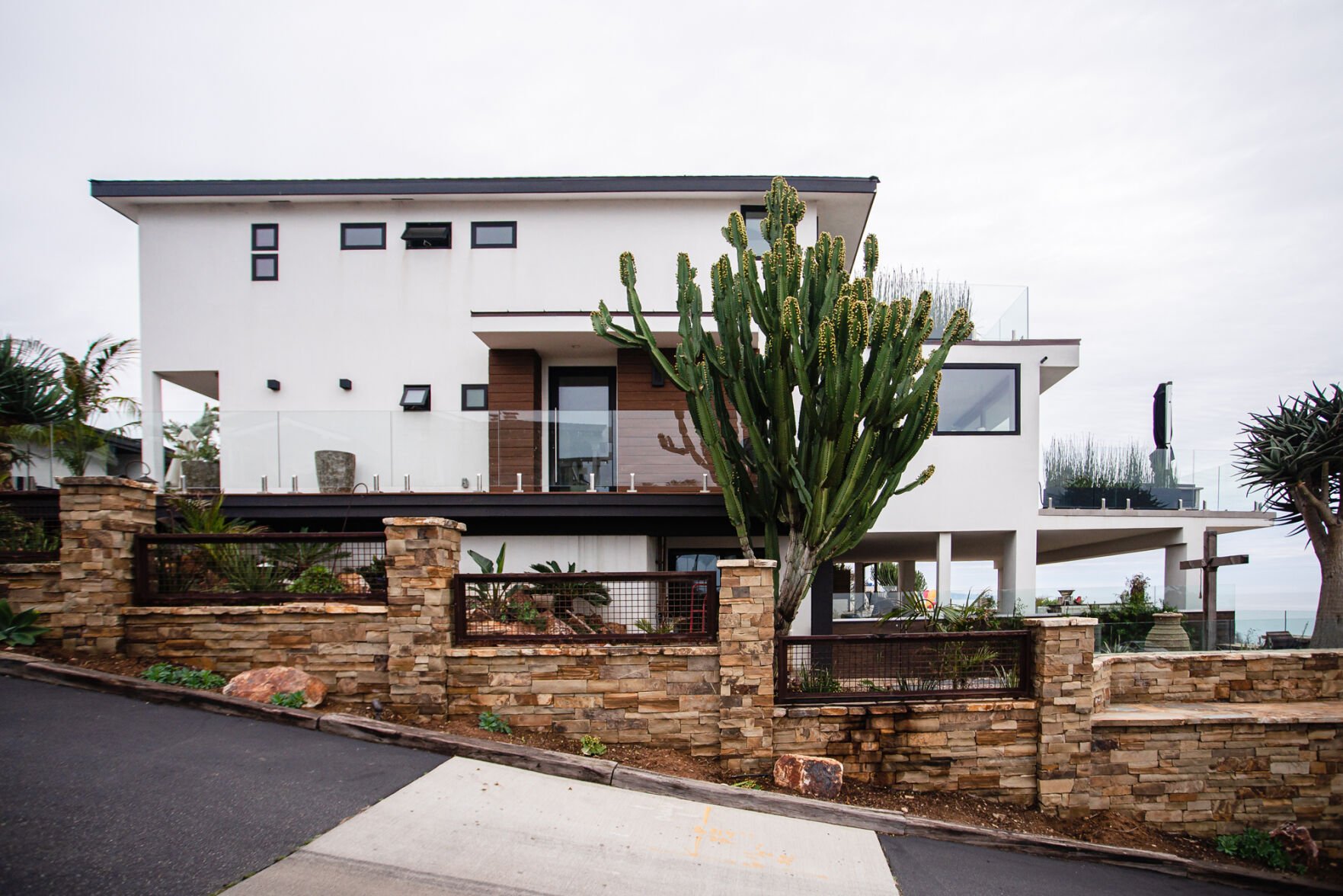
What’s Here: Encinitas runs along the historic Highway 101 and is home to arguably some of North County’s best beaches, from Leucadia in the north to Cardiff-by-the-Sea in the south. Downtown Encinitas ties all of its neighborhoods together in a small-business hub lined with coffee shops, retail spaces, bars, and restaurants—all within a short walk. On the weekend, you’ll find cyclists cruising along the seemingly endless bike path, surfers at Swami’s Beach, and families strolling into town for a morning coffee. Just a few miles to the east, residents enjoy more of a country vibe in the natural beauty of Olivenhain, where equestrian trails replace sidewalks.
Why Now: Encinitas boasts a strong real estate game: According to HomeDex, its median sale prices were 55 percent higher than other North County communities in November 2019, and median sale prices for single-family homes went up more than 13 percent from December 2019 to December 2020. Numbers aside, Encinitas provides a community for residents to embrace quality time outside and practice a green lifestyle. The city is working to advance their sustainability goals through an updated Climate Action Plan, which will create new green spaces (a 3.1-acre park is expected to open in Leucadia this year), expand bike lanes, and widen sidewalks.
What You Can Get: In 2020, single-family homes sold at a median price over $1.5 million, while townhomes and condos sold at just below $700,000. Homes in this coastal area range from newer properties with a large square footage to older gems with a smaller footprint and a strong foundation to build upon. Townhomes and condos offer families a more affordable option for calling Encinitas home, while still providing ample space and access to the city’s most popular hangouts.
On the Horizon: An “agrihood” known as Fox Point Farms is in the works just east of Leucadia. The proposed 250-unit residential community will feature agricultural amenities like an organic farm, a farm-to-table restaurant, and an event space, according to developer Nolen Communities. One Oak by Shea Homes is selling multimillion-dollar properties that have hilltop views of Olivenhain and neighbor backyard hiking trails like Copper Creek Falls.
Spring Valley
Ariana Drehsler
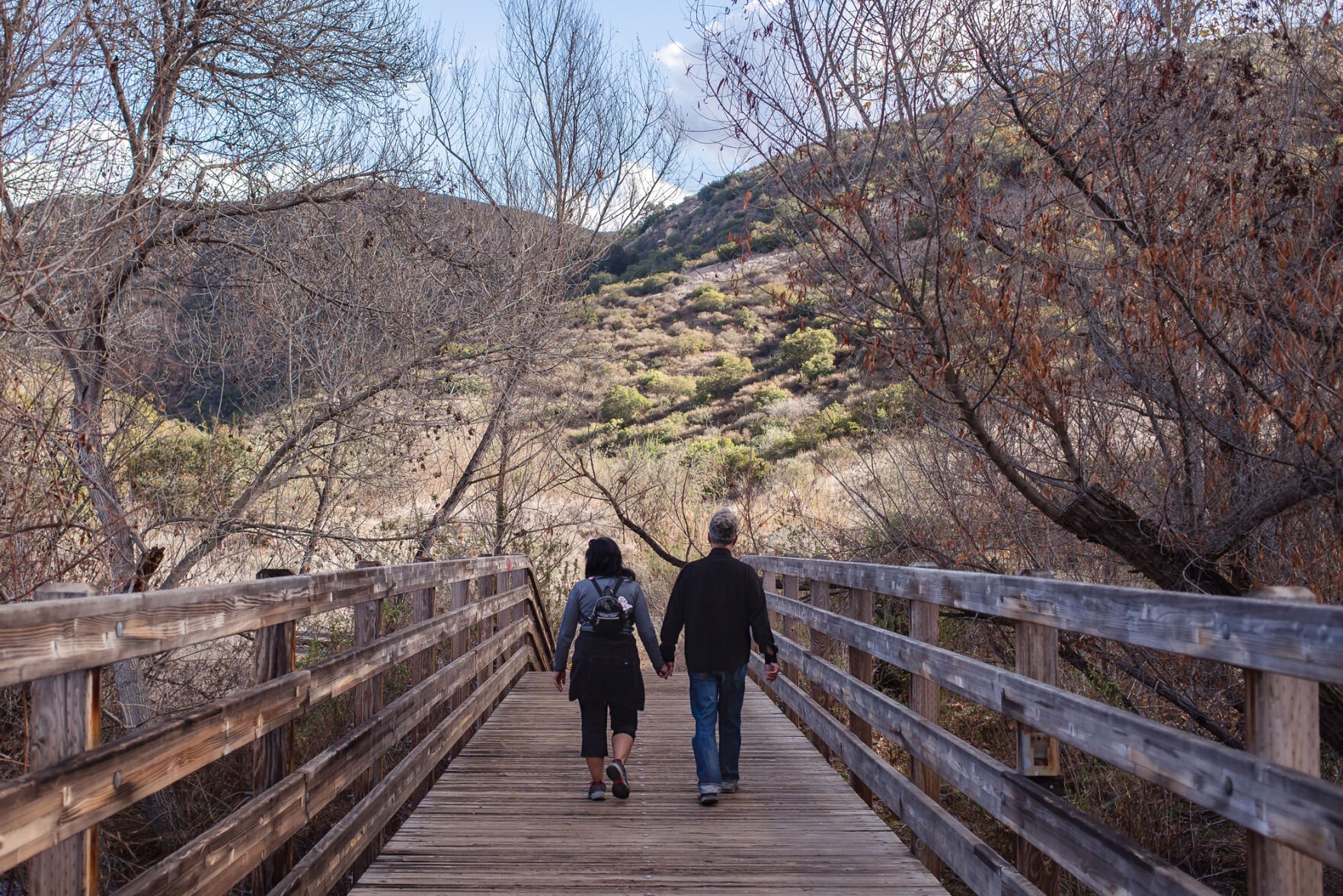
What’s Here: Bounded by the 125, 94, and 54 freeways, this East County suburb has a rural vibe, but its quick accessibility to downtown and neighbor La Mesa ensure that it doesn’t feel remote. Several mom-and-pop restaurants and shops dot the neighborhood, such as Grecian Cafe, Ranas Mexico City Cuisine, Sahara Taste of the Middle East, Cali Comfort BBQ, and Valley Farm Market. There are five community parks, and less-crowded nature trails to explore at Dictionary Hill Open Space Preserve and along Sweetwater Reservoir.
Why Now: This town is a good entry point for first-time home-buyers and young families with kids. In December 2020, the median home price was $587,000, which is below the median for San Diego during the same month. Home prices here jumped 13 percent between 2019 and 2020, less than the county rate of 15 percent.
What You Can Get: A wide variety of properties are for sale in this zip code. Homes range from a two-story, two-bedroom townhouse priced at $385,000 to a new four-bedroom home in the private Stone Point community going for $600,000. Farther north near Mount Helix is a sprawling estate with views selling for $1.5 million, and even small apartment complexes that can be bought as investment properties for less than $1 million. Since there’s more open space in this part of San Diego, it’s even possible to buy an empty acre of land for less than $200,000, which you can build a home on.
On the Horizon: The county recently bought 10 acres of open space near Calavo Drive and Jamacha Boulevard, and plans to spend $7 million to turn the space into the town’s sixth neighborhood park. Gosnell Builders International is planning Lakeview Homes at The Pointe, a gated community on 1,000 acres with one-, two-, and three-bedroom homes. Also coming soon are new four- and five-bedroom homes ranging in the mid-$600,000s in Sweetwater Place, a development by Mastercraft Communities.
Fallbrook
Ariana Drehsler
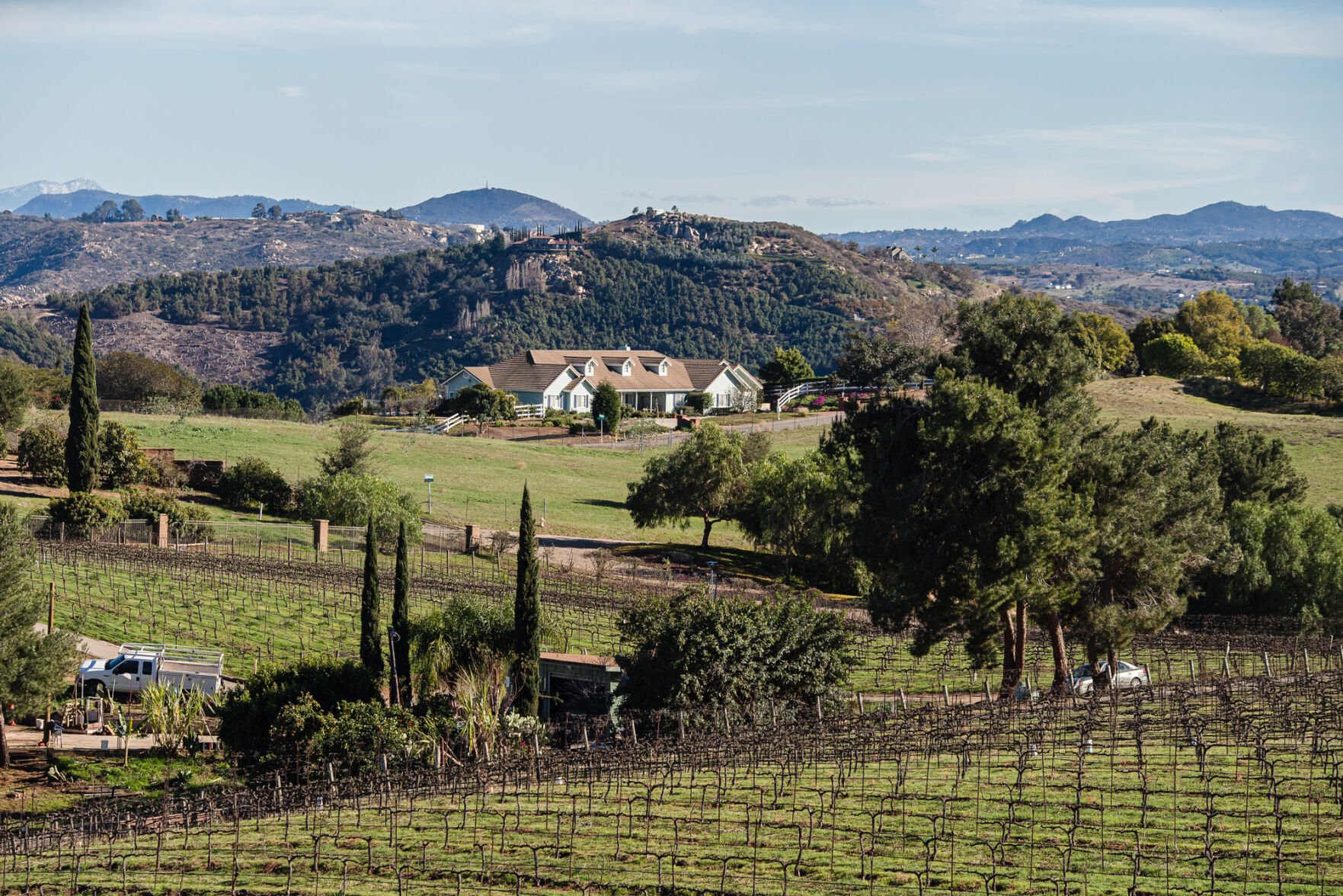
What’s Here: An increasing number of people itching for more space for less money are leaving California altogether, but you don’t even have to cross the county line to get more bang for your buck. Carla Farley, president of SDAR, points out that Fallbrook is practically the same distance from central San Diego as Oceanside is. “San Diegans are already used to driving, and now that more people are working from home, people don’t mind living in a more rural area if it means more space and better affordability.” We know. Fallbrook?! But this friendly country community in northeast San Diego has become a top contender on the homebuying front, thanks to its small-town feel and diverse homebuying possibilities. You’ll find Fallbrook’s local coffee shops, restaurants, antique stores, and community essentials just off the Main Street thoroughfare. Drive a few minutes outside of town and you’ll find farmland, ranches, and open space to build. Top that with access to the coast and neighboring city amenities all within a 30-minute drive, and this rural retreat doesn’t seem like such a far-fetched idea after all.
Why Now: Over the past few years, Fallbrook has seen a steady and surprising rise in the housing market, and that’s projected to continue as more people are working from home and looking for more space. Pending sales totaled 1,011 and 981 in 2019 and 2020, respectively. To put that in perspective, other popular neighborhoods in our guide, like Eastlake, saw 500–600 pending sales over the past two years. Much like every other neighborhood, Fallbrook saw an increase in the median sales price from $590,000 to just under $640,000, but that remains a little lower than San Diego’s average and a solid choice for families with children.
What You Can Get: Space is key here. Due to its largely rural surroundings, Fallbrook is a refreshing respite to the crowded communities along the coast. At the lower end of the spectrum—in the $170,000s through the $300,000s—expect to find two- and three-bedroom homes and fixer-uppers with great potential. At the more average price point in the $500,000–$600,000 range, the amount of bedrooms and square footage increases, as well as the turnkey appeal. And of course, for those wanting to start from scratch, there’s plenty of property to build your dream house from the ground up.
On the Horizon: According to a real estate report in the Village News, Fallbrook has seen residents moving out for greater financial security. With this increasing number of listings comes opportunities for city-exodus San Diegans to move in and embrace a slower pace without completely giving up the beach lifestyle.
What’s Here: This city is full of character and offers refuge from urban life without being too far from downtown San Diego. Its charming main street, La Mesa Boulevard, is lined with antique stores, cafés, and longtime family-run shops; it also hosts a variety of community festivals throughout the year, such as a weekly car show during the summer months and an Oktoberfest that traditionally draws 200,000 people. It’s linked up with San Diego State University, Mission Valley, downtown San Diego, and Little Italy via the green and orange trolley lines. There’s ample access to nature at nearby Mission Trails Regional Park and at Lake Murray, which has a popular three-mile flat paved trail.
Why Now: La Mesa has always been considered a more affordable housing option, especially for first-time buyers, and that’s still the case. Homes in the 91942 zip code, which encompasses most of the city north of University Avenue and some neighborhoods near Grossmont College, have a median price of $660,000, close to the county median.
What You Can Get: You can find a home here on a wide range of budgets, whether you’re looking for a midcentury home with a large yard or an expansive newer home that overlooks open spaces and canyons. If you’re not a beach person and prefer spending hot days by the pool, many homes in this part of the county have them. A three-bedroom, 1,735-square-foot home with a pool near Fletcher Hills is listed for $639,000, whereas a six-bedroom, 6,100-square-foot home near Mount Helix lists for $1.9 million.
On the Horizon: La Mesa Summit Estates, a gated community on Eastridge Drive with 30 new homes designed by The Phair Company for multigenerational living, broke ground in early 2020 and should be on the market soon with prices in the $900,000s.
What’s Here: Before the ’80s, there wasn’t much in these parts besides cattle ranches and a vast nature preserve. It’s hard to imagine, considering that this Chula Vista neighborhood is the largest residential development in local history—25,000 acres, according to a 2017 Union-Tribune report. Today, there’s still a boom in groundbreaking this side of the 805. Young couples and families with children are attracted to the neighborhood for its affordability. Residents can find shopping centers sprinkled with both national and local businesses, like Novo Brazil Brewing, or escape out into nature on one of the many trails in Otay Open Space Preserve. While rush-hour traffic can make for a long commute, once you’re home, you’re treated to all of the essentials within a short drive.
Why Now: Otay Ranch’s initial appeal remains true today—its median price point makes it a smart move for both families with kids and first-time homebuyers. In the 91915 zip code, sale prices increased over the past year by 6.7 percent, landing at $650,000. But that number remains right on target for San Diego’s average price for a single-family home. With the demand so high, potential buyers will want to act fast when a house is listed—in December 2020, properties were on the market for an average of only 10 days.
What You Can Get: The vast variety of planned communities makes Otay Ranch a popular choice if you’re looking for a home that’s move-in ready. Across single-family homes, townhomes, and luxury apartments, you’ll find more space for less money and comfortable interiors you won’t have to fuss with. While homes average two to three bedrooms, developers are beginning to expand into multi-family home offerings with up to six and seven bedrooms.
On the Horizon: Otay Ranch was one of the top-selling communities in San Diego last year, according to the John Burns Real Estate annual Top 50 Master-Planned Community list. Despite the pandemic putting a halt on a few major projects that were supposed to break ground last year, the neighborhood will continue to see development interest. Last November, Baldwin & Sons and Moller Otay Lakes Investments received approval from the San Diego County Board of Supervisors to build a mixed-use community called Otay Ranch Resort Village. The village will be made up of energy-efficient homes, schools, fire and police stations, and walking trails.
East Lake
Ariana Drehsler
What’s Here
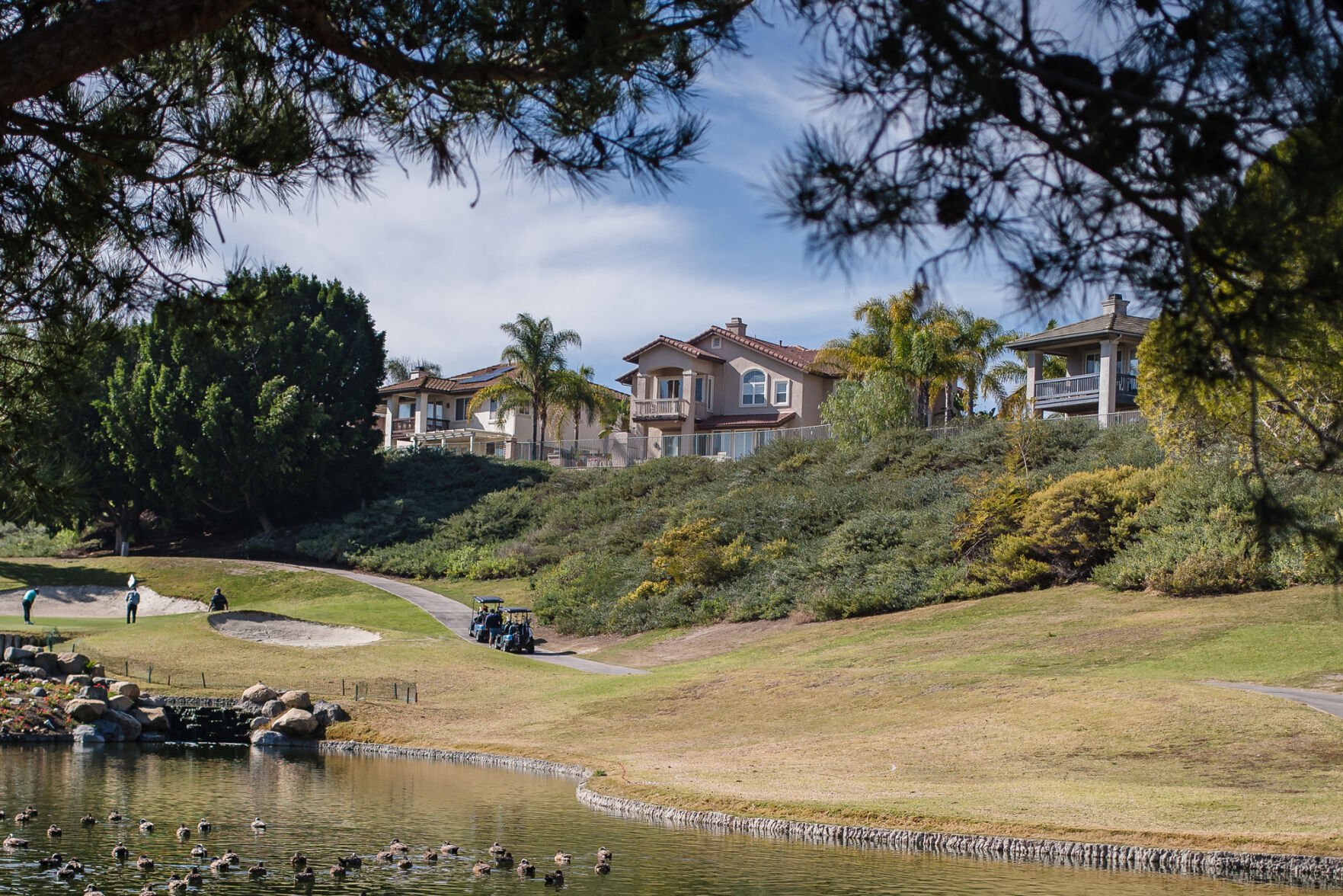
If you’re a ’90s kid, most of Eastlake didn’t exist when you were growing up. The planned community within the city of Chula Vista sits east of the 805 and rapidly expanded during the mid-2000s. The first homes were constructed near the namesake artificial lake, and today the subdivisions stretch past Highway 125 to the Otay Lakes, and south to Otay Ranch. This is where you look for newer homes, streets with wide sidewalks, and small community parks. There are several public elementary schools, along with bilingual language academies, prep schools, and charter schools. Even though it’s suburban, nature is nearby: Upper Otay Reservoir is lined with hiking trails that lead into Proctor Valley reserve, and Lower Otay Reservoir has parks with views, kayaking, fishing, and boating.
Why Now: Home prices in the 91913 zip code increased by 10 percent in 2020 to a median of $700,000, which hovers near San Diego’s median home price of $650,000. Houses have been selling here fast—in December 2020, the average home in Eastlake sold after being on the market for just 12 days. Over in 91914, the median home price actually decreased in 2020 from the year prior, from $1.15 million to $825,000.
What You Can Get: Not only are homes here newer, but buyers will find more rooms and square footage than the average house in central San Diego. A three-bedroom home that’s over 2,000 square feet near the Chula Vista Elite Athlete Training Center is selling for $650,000, whereas a five-bedroom, 4,000-square-foot home on a cul-de-sac in Eastlake Woods is priced at $1.28 million.
On the Horizon: Amazon’s newest distribution center is taking shape nearby on Otay Mesa Road right now, and at more than 3 million square feet it’s on track to be the largest building in the entire county when complete (that’s bigger than the convention center!) The mammoth project will bring 1,500 new jobs to the area when it opens (and hopefully even faster delivery for orders). Twin brand-new townhome communities, Alay and Suwerte, are under construction from Heritage Building and Development near Eastlake Greens, with homes starting in the high $300,000s and going up to the $600,000s. Also, new life is coming to a local strip mall soon when Chula Vista Brewery opens a second brewpub in The District at Eastlake.
Golden Hill
Ariana Drehsler
Amelia Rodriguez reflects on wandering the neighborhood of Hillcrest and finding pockets of serendipity.
“Go pound the pavement” is an enduring journalist’s adage for a reason—being out and about is the best way to learn what you need to know.
When I first moved to San Diego, I rented a room in a falling-down, 1950s three-bed that edged up against the canyon in Hillcrest. A shallow white ledge ran at eye-level around the sage-green walls, and I used it to prop up paintings I didn’t know how to hang. My parents helped me set up the bed frame I’d had since childhood next to the large, east-facing window. Sunlight beamed directly into my eyes in the morning, but with my head on my pillow, I could watch birds flirt and squabble on the telephone wire outside.
I was a 23-year-old from the suburbs, which meant I arrived that summer pathologically terrified of parallel parking. I should’ve practiced. Instead, I walked anywhere I wanted to go. I wore the last bit of tread off a pair of cowboy boots trekking two-and-a-half miles to Pride in Balboa Park. Once, as I stepped out of Whole Foods, a woman asked for directions to the DMV. I wasn’t sure how to explain the route, so I strolled there with her, the pot of yogurt I’d just bought slowly curdling in the August heat. Another time, I popped into a bar on a whim and ended up gin-drunk at 2 p.m. with a crew of friends in their mid-60s. All this wandering became a kind of gonzo cartography—I got to know Hillcrest’s main roads and side streets and strange alleys, and they began to feel like home.
I kind of know how to parallel park now, but with that new skill came the loss of these everyday moments of serendipity. In a world that often feels shrunken to the size of our screens, many of us long for adventure and variety. We fulfill the desire in different ways: booking European vacations, going on dates with people we probably shouldn’t, paying to be locked in an escape room and hunt for hidden keys smudged with the hand sweat of thousands of bored office workers before us.
Don’t get me wrong—I crush at escape rooms. Yet, on my birthday last November, when a friend asked if I had any goals for my 28th year, I told her, “I want to cultivate surprise.” To me, that means making time to wander. Talking to strangers. Loosening my grip on plans and just going with what announces itself.
It was through those first summer walks that I began to feel like a San Diegan. When my now-fiancée and I settled into our first apartment together in University Heights, then our second in South Park, our first order of business was to take a long walk, poke into shops, order a latte at the nearest café, drawing the first sketches of the mental maps that make up home.
So, in the spirit of surprise, I’m committing to exploring the contours of more of San Diego on foot. I invite you to take up the challenge with me by offering a few places to start: La Jolla, Alpine, City Heights, Poway, and Imperial Beach, the locales covered in this year’s neighborhood guide. We give you each neighborhood’s origin story and pull out our crystal ball to see what’s next for the area, and expert locals offer their top places in town. Go check ’em out (but leave room to find a favorite of your own).
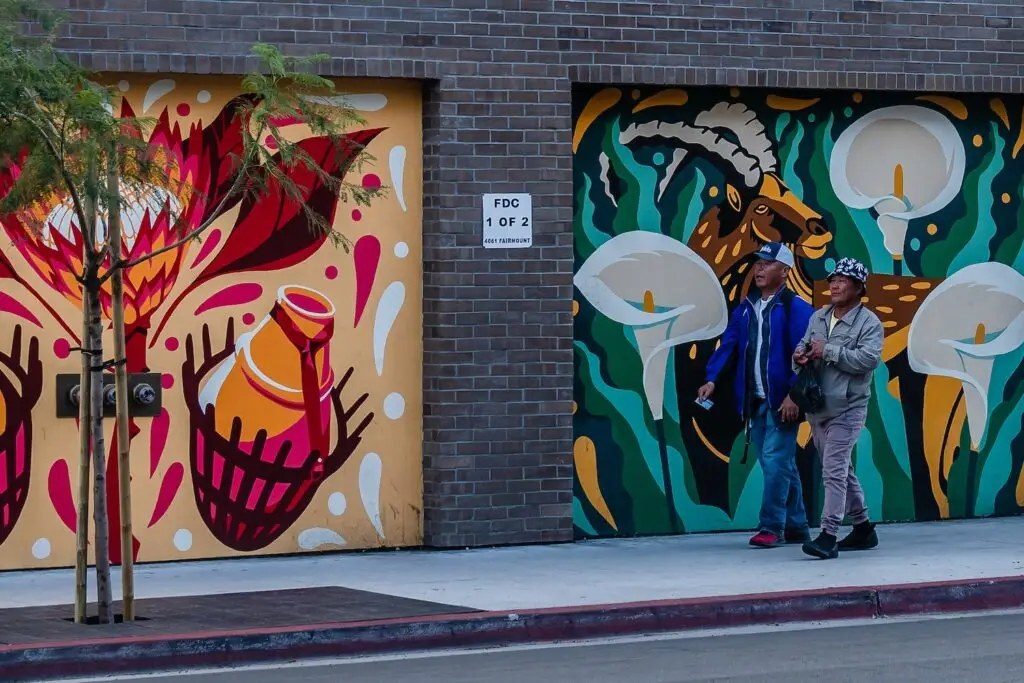
While you explore, keep an eye out for public art. San Diego is full of brilliant muralists, including Mr B Baby, a San Ysidro local whose colorful piñata character Chucho frolics on walls all over the city (and the world).
Other parts of this issue provide more ideas for wonder-seeking. Food editor Troy Johnson wanders into Fleurette, the new spot in La Jolla from restauranteur Travis Swikard (the chef who gave us Callie). There, he’s whipping up a lighter take on French cooking. Craving the drama of a home game? As three of San Diego’s biggest names in pro sports—the Padres, the Wave, and SDFC—kick off their seasons, we spend time with their coaches to talk refreshed rosters and playoff prospects.
We also dive into San Diego history, looking back at the “Jackass Mail” route—something that has nothing to do with Johnny Knoxville sticking leeches to his face and everything to do with using a bunch of mules to carry mail over 1,200 miles of undeveloped terrain. On a journey from San Antonio to SD, carriers fended off attacking warriors, drank out of puddles, and tended to sick mules, all while, unbeknownst to them, a sinking ship carried their paychecks to the bottom of the sea. Proof that there is such a thing as too much serendipity.
In San Diego, though, curious minds usually find just enough.

Amelia Rodriguez is a writer and journalist and winner of the San Diego Press Club's 2023 Rising Star Award and 2024 Best of Show Award, she’s also covered music, food, arts and culture, fashion, and design for Rolling Stone, Palm Springs Life, and other national and regional publications. After work, you can find her hunting down San Diego’s best pastries and maintaining her five-year Duolingo streak.
Megan Groth’s photo-heavy book, "Places We Love San Diego Tijuana," celebrates the public spaces we already have—and emphasizes our need for more
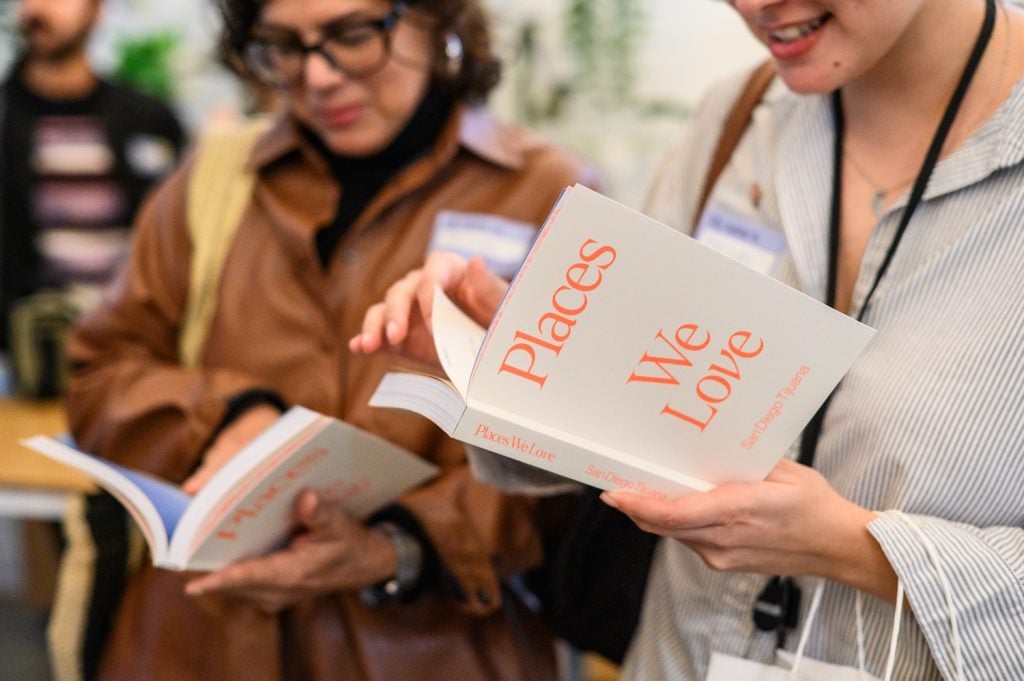
“The book is basically a piece of advocacy for better urban design wrapped in a sexy guidebook,” says Megan Groth, author of Places We Love San Diego Tijuana. The book—272 pages of the very best places to visit from North County to Tijuana—is rich with beautiful photography and studded with bilingual essays encouraging new and improved public spaces. It’s a love letter, of sorts. And a call to action.
Inspiration for the book struck Groth—an urbanist, educator, and native San Diegan—after she studied architecture in Helsinki, Finland, just one year before the city was announced as the 2012 World Design Capital. When she returned in 2012 for a conference, Groth picked up a portable, photo-oriented guidebook about Helsinki.
But it wasn’t until years later, when she was back home in San Diego, that she rediscovered the book and really began musing about creating a similar guide for San Diego and Tijuana.
Passion for representation, public spaces, and community has been a consistent theme since those early days. The accumulation of all the places in the guide was the result of, yes, lots of research, but also the snowball effect that came from Groth reaching out to “friends and friends of friends and neighbors and just saying, ‘Hey, I’m writing this book. What do you think?’”

Groth embraced the diversity of locations that came from crowdsourcing. She had just one criterion for inclusion: that each place is free and publicly accessible. “I did make a few exceptions for places like the Mingei and the Museum of Contemporary Art San Diego, because I am an architect and both of those projects have recent amazing, architecturally significant renovations,” she notes. “I felt like it was important that those were celebrated.”
Though your typical guidebook is penned with a visitor’s perspective in mind, Groth hopes to see Places We Love taken up by locals and tourists alike. “I think the goal was not to restrict it, and so not to write it in a way that didn’t feel accessible to everyone,” she says.
Her desire for an inclusive look at the area also drove her decision to make the guide a binational one. “I don’t know of any other book that shows both [Tijuana and San Diego] together as one, and that is the reality of so many people that live here,” she says. Blurbs describing each place—regardless of what side of the border it’s on—are published in English and Spanish, and Groth drew visual connections between the two cities by ensuring that Tijuana and San Diego were photographed “in the same vein.”
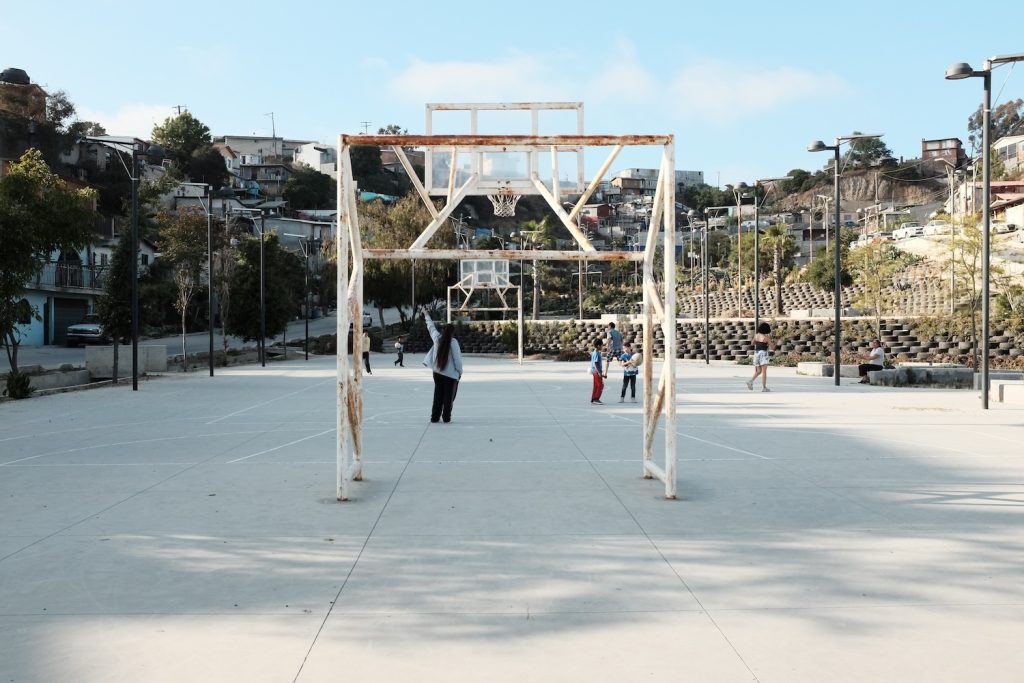
Groth and her team commissioned more than 15 photographers to shoot the book’s locations, resulting in a beautiful array of styles, including both digital and analog snaps. Though Groth allotted creative control to the photographers, she did stress the importance of capturing the relationship between people and space, which is why you’ll see locals and visitors hanging out in almost every photo.
A 100-or-so-word blurb packed with history and fun facts accompanies the photograph of each location. Groth also uses this space to urge people to visit and care about these places and to emphasize the importance of public spaces. “We need to further invest in these places and understand how they came to be so that we can make more now and in the future,” she says.
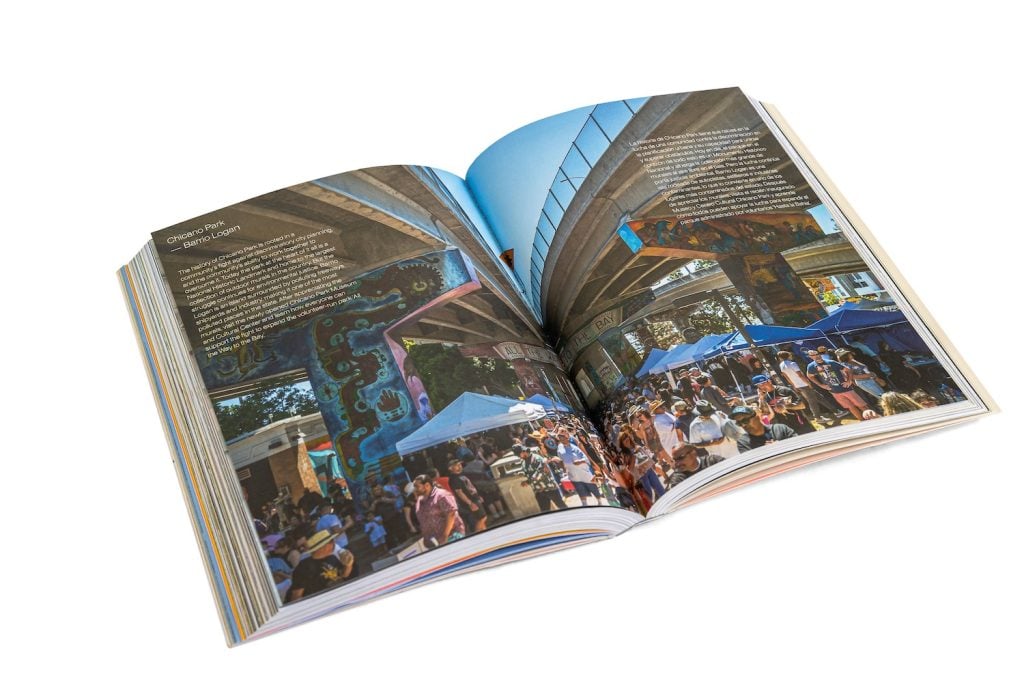
She believes that bringing “more [and] better” public spaces to San Diego and Tijuana requires an equal division of work between top-down and bottom-up policies. “The truth is, you have to have both because, if not, you’ll have communities organizing and working very hard without the support of the city or country, and you’ll have public entities putting resources into policies and plans without community support,” she says. “Neither scenario is effective or sustainable.”
Coincidentally, around the same time that Groth was putting final touches on Places We Love, San Diego and Tijuana were jointly named the 2024 World Design Capital. Groth, however, feels that “it’s not that we are a world design capital as much as I think this is a year that we can really galvanize around [that title] to promote things—you know, move the dial.” And that’s exactly what she aims to do with her book: to guide us not just through the San Diego and Tijuana of today, but to the future of public spaces.
Learn more about placeswelovesdtj.com or check out a panel discussion with Groth on May 18 in Liberty Station.

Amanda Parmele is a third year undergraduate student at UCSD and works at SD Magazine as a Photography/Visual Editing intern. She takes photos for her school newspaper, is a writing mentor, and loves surf photography, though she cannot surf to save her life.
The Chula Vista restaurateur's recommendations for a family-friendly day down south
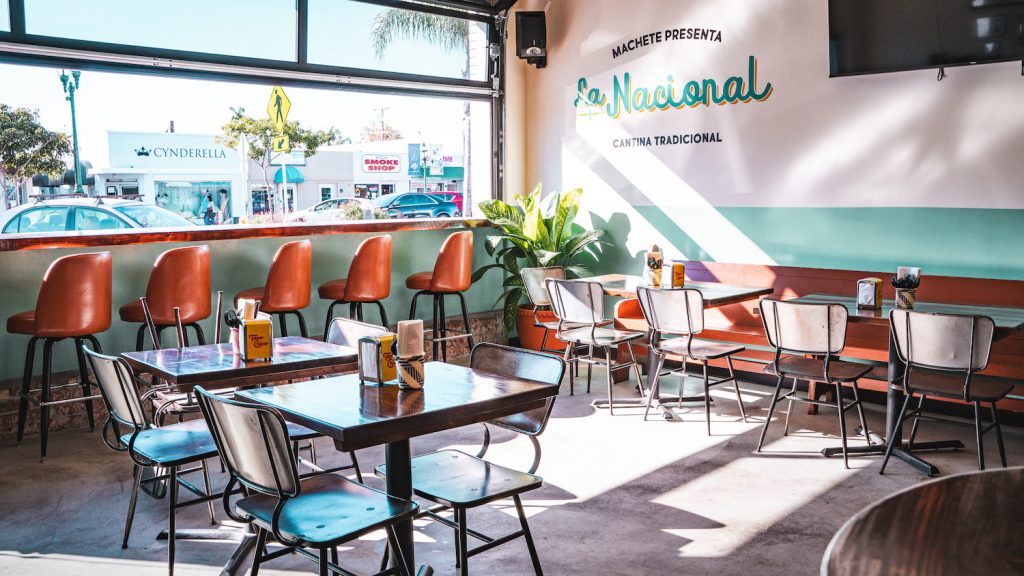
Joann Cornejo is a mother, teacher, and co-owner of National City’s Machete Beer House and Chula Vista’s newly opened La Nacional. Her limited time is precious and her knowledge of South Bay limitless, so she knows exactly how to craft the perfect family day.

The morning begins at Franco’s Flapjack Family Restaurant in Bonita, an old-school diner known for large portions of classic breakfast dishes like country fried steak, eggs Benedict, and Belgian waffles. “My go-to is an omelet with a side of hotcakes,” Cornejo says. If he kids need to run off some sugar from their plates of syrup, she usually takes them to nearby Rohr Park, where multiple playgrounds appeal to little ones of all ages. There’s also a model train that runs the second Saturday and Sunday of each month (except in September) and an adult fitness area near the basketball courts. “If you’re lucky,” Cornejo adds, “you’ll see a few horses with their owners walking the trail.”
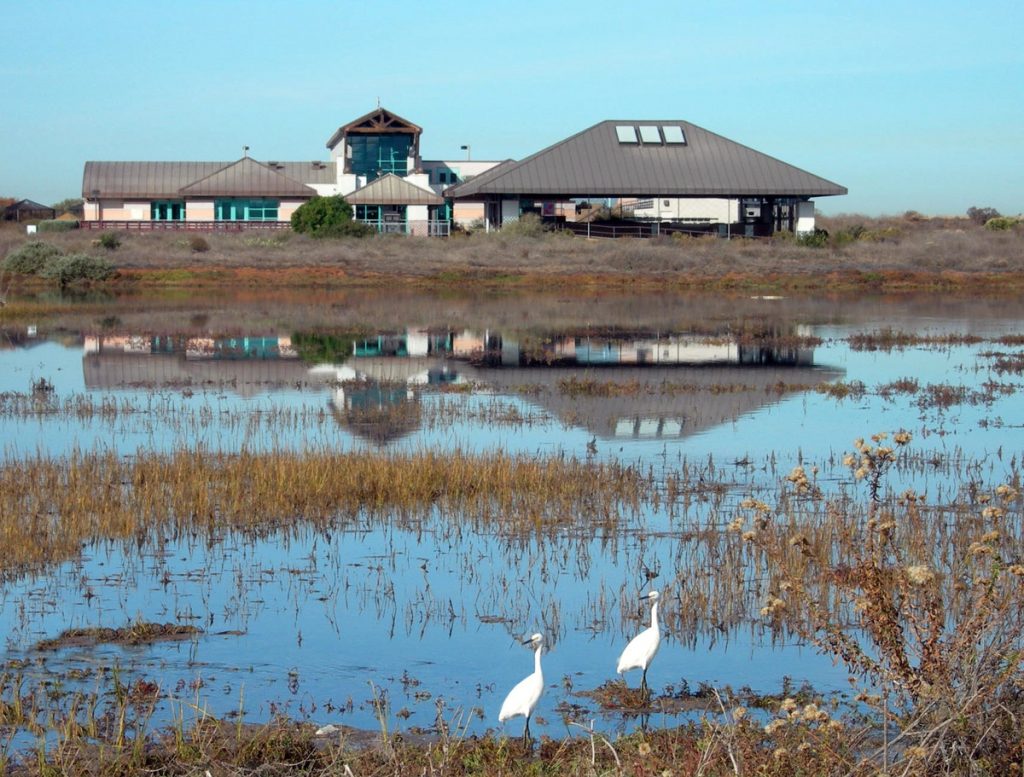
For more family fun, head to Chula Vista’s Living Coast Discovery Center, where you can ogle sea creatures like turtles, jellyfish, sharks, and manta rays. Cornejo’s personal favorite critters, owls, live on the center’s Raptor Row. Be sure to check the website to see what animal encounters are on the schedule before your visit, and make time for a stroll down Living Coast’s marshland walking trail to catch a front-row view of the entire San Diego bay.
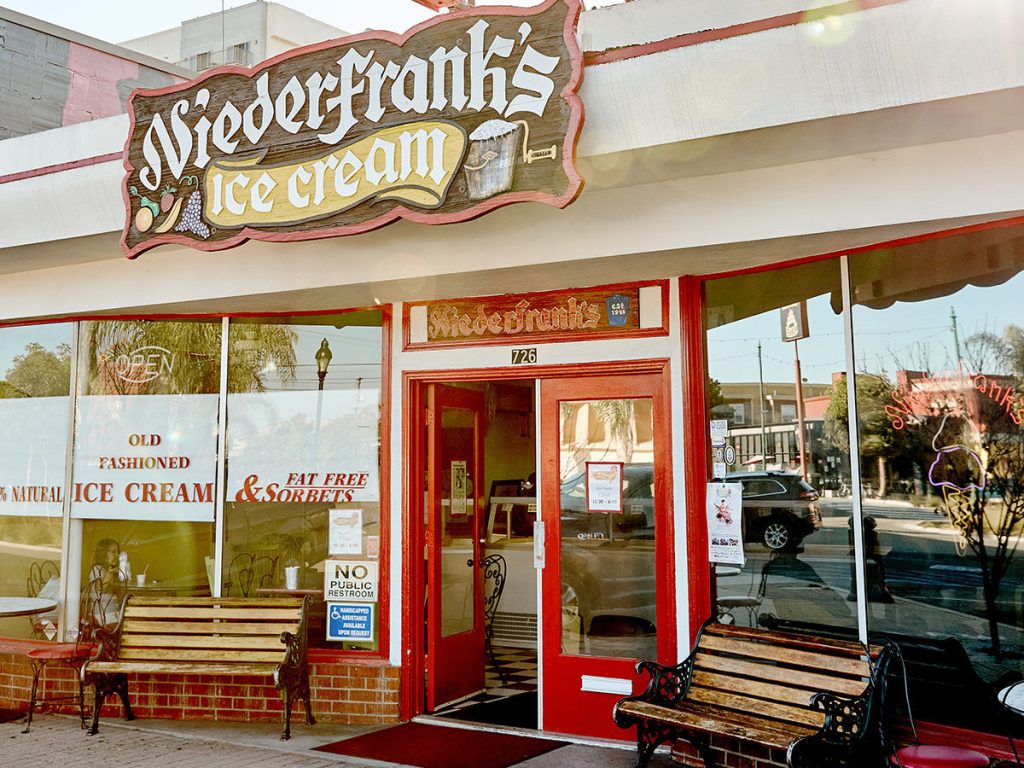
If Cornejo’s kiddos need a pick-me-up after an afternoon of aquatic exploration, Niederfrank’s is a quick drive up the 5. The National City ice cream shop has been an institution for over 60 years, making their old-fashioned scoops the same way they did back in the ’50s. Requisite flavors like chocolate and vanilla are mainstays, but they also offer creative varieties like papaya-pineapple, chocolate stout beer, and avocado-pistachio. Cornejo says she can’t resist a scoop of Kahlua Krunch.
Finally, she admits she’s biased, but she hopes locals and travelers alike will come check out the new La Nacional. “Your family can enjoy a delicious dinner and parents-slash-adults can unwind with a cocktail or mezcal, neat,” she says. After a day jam-packed with activities, a cocktail sounds pretty sweet.

Beth Demmon is an award-winning writer and podcaster whose work regularly appears in national outlets and San Diego Magazine. Her first book, The Beer Lover's Guide to Cider, is now available. Find out more on bethdemmon.com.
At Vi at La Jolla Village, residents don't have to choose between security and adventure, connection and independence. They get all of it.

Today’s seniors are more connected than ever, with a renewed focus on retirement as a time of discovery and enriching experiences. The ultimate reward for a retirement well-earned is the wisdom to appreciate it all, and what better place to enjoy that unique perspective than Vi at La Jolla Village, in the heart of San Diego.
All-access pass to good living.
As a Continuing Care Retirement Community (CCRC), Vi provides access to a connected and fulfilling community while making it easy to plan for future care, should the need ever arise. With a care plan in place, residents enjoy greater financial predictability and long-term value, freeing them to focus on making the most out of retirement.
Resort-style amenities at the epicenter of a cultural hub like San Diego offer a retirement experience unlike any other. Paired with exceptional dining, spacious accommodations and dedicated staff, the best of maintenance-free living is all around. And with the introduction of Vista 360 Well-Being, Vi’s panoramic approach to wellness, there are more ways than ever for residents to access it all.
The harmony of mind, body and community.

The key to longevity is striking the right balance in maintaining an active lifestyle with an active mind in a fulfilling community. With newly renovated community spaces and restaurants, Vista brings a variety of opportunities for residents to elevate their well-being through Vi-exclusive “Signature Experiences.”
Vista Enrich takes an evidence-based approach to brain vitality, keeping residents at the forefront of cognitive health through exergaming (exercising + gaming), nutritional plans and informative workshops. It is also home to The Brain Vitality Studio, an innovative facility dedicated to cognitive fitness that has garnered national recognition.
Vista Discover invites residents into stimulating educational experiences, from chef-led cooking demos and guided wine tastings to lectures at local universities and intimate lectures following cultural outings.
While Vista Enrich focuses on brain health and Vista Discover engages residents intellectually, Vista Explore cultivates a sense of adventure through curated travel and local excursions. But broadening one’s horizons doesn’t always require a plane ticket. One recent event brought a taste of the world right to the community: an onsite “jazz cruise” featuring live music and global cuisine served at a series of themed “ports” all within the community’s own ballroom.
“Location, location, location”

One of the biggest perks of life at Vi at La Jolla Village is its proximity to just about everything. With easy access to transportation and local attractions just steps away, residents can explore and engage with their community at their own pace.
“There are trolley and bus stops within a 5-minute walk that will get you to the beach, UCSD Campus, medical appointments, downtown La Jolla or San Diego, et cetera. We rarely use our car,” said resident Tom Yager.
With the best of San Diego just steps away, residents don’t just live in the city, they live within reach of everything that makes it special.
The best of all worlds.

At Vi at La Jolla Village, retirement isn’t a chapter to slow down; it’s an invitation to discover more. Tailored community experiences created by Vista, paired with the vibrant pulse of San Diego just outside the door, mean that residents don’t have to choose between security and adventure, connection and independence. They get all of it.
This is what an all-access pass to good living looks like: the comforts of an elevated lifestyle, a community built for growth and a city made for discovery – all in one place.
To learn more about Vi at La Jolla Village or for details on available floor plans, visit ViatLaJollaVillage.com/SDM.
The San Diego natives and R&B/soul band share their favorite cash-only, old-school taco shop
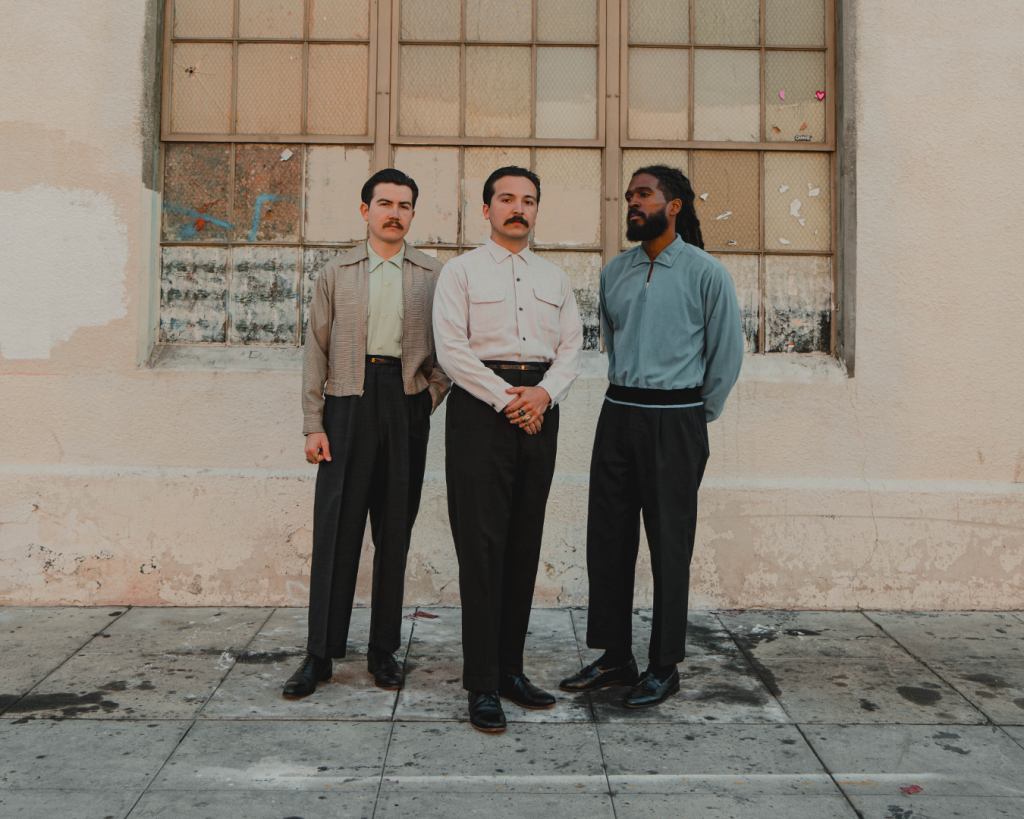
Fresh off their New Year’s Eve concert at the Hollywood Palladium and sold-out local shows at The Sound, Thee Sacred Souls is ready to blow up in 2024. The San Diego-based trio, made up of lead vocalist Josh Lane, drummer Alex Garcia, and bass player Sal Samano, released their self-titled debut album in 2022 to critical acclaim and millions of streams on Spotify.
The band formed when South Bay natives Garcia and Samano found Lane and his smooth vocals—cultivated by classical voice training and church choirs—online. The group’s mutual love of record-collecting and desire to create a modern sound rooted in retro nostalgia led Lane to move to the area in 2017.
The group released their first single, “Can I Call You Rose?” in 2020 on Daptone imprint Penrose Records. The harmonious, silky track scratched a soulful itch during the pandemic, increasing the band’s visibility and popularity. Appearances on shows like Jimmy Kimmel Live! and The Late Show with Stephen Colbert cemented their trajectory, but the band still calls San Diego home (for now). Garcia and Saman share their favorite creativity-fueling places to eat, drink, and play in the area.
Chula Vista hometowner Garcia knows every local has their favorite taco shop in San Diego. “Growing up, mine was Los Taquitos in Chula Vista,” he says. While the menu isn’t huge, he notes, they’ve perfected each one of their offerings over the years. If he’s not getting their famous rolled tacos, “my go-to order is the tacos de cabeza or their breakfast burrito,” he says. Be sure to bring cash to the old-school joint, as they don’t accept credit cards.
Samano says the best place to enjoy the goods from Los Taquitos (or your own beloved outpost) is a spot he’s been hanging out his entire life—the Imperial Beach Pier. “I was born and raised in Imperial Beach, so the pier was always home base, a meet-up spot or somewhere to clear my head,” he explains. The southernmost pier in the United States stretches nearly 1,500 feet over the Pacific Ocean (almost twice as long as the Pacific Beach pier) and has been a landmark of the area since 1963. Add the sounds of Thee Sacred Souls as background music, and it’s the perfect way to end a day in South Bay.
Beth Demmon is an award-winning writer and podcaster whose work regularly appears in national outlets and San Diego Magazine. Her first book, The Beer Lover's Guide to Cider, is now available. Find out more on bethdemmon.com.
We asked the region's experts to weigh in on the debate—their answers may surprise you

“Is Coronado part of the South Bay?” read an innocent chat sent out the entire SDM staff one day.
Here we go…, I remember thinking. What followed was a flurry of animated debate.
“ABSOLUTELY NOT,” read a reply from a staff member, who lives in Chula Vista.
“Of course!” said another, who lives in Coronado. Folks from the city and North and East Counties weighed in, drawing lines according to the Coronado Bridge, the 94 freeway, and where Southeast meets National City. They evaluated the boundaries of communities like Imperial Beach, Coronado Cays, and Coronado proper. Folks from Chula Vista, in particular, were the most in opposition, likely owing to the stark cultural differences between the wealthy, mostly-white island (peninsula, actually) and the majority non-white cities east of the 5.
We reached no consensus, even among staff who live in South Bay, so I looked outward. “That’s funny to me,” texted Richard Bailey, Coronado’s mayor. “To be honest, I haven’t given it much thought, but, yes, I definitely consider us part of the South Bay.”
Serge Dedina, former mayor of Imperial Beach, agreed, and offered some social proof. “Traditionally, in terms of high school sports and even now with politics … there was the South Bay Metro League, and Coronado was part of it. The mayors held meetings for the South Bay, which includes San Diego, National City, Chula Vista, IB, and ‘Nado,” he said, using an affectionate nickname for the Crown City.
“The city of Coronado is often referred to as located in ‘South Bay for directional or regional purposes,” wrote Andrea McCullough, who handles communications for the city of Coronado.
A dual call to the Chamber of Commerce and Discover Coronado (the tourism board), which share an office, resulted in some discussion. Both entities said they “absolutely” consider Coronado part of South Bay, but neither organization markets the city as such officially. Additionally, Coronado used to be in the same congressional district as the rest of the South Bay cities, but since redistricting in 2022, it is now looped in with the northern coastal cities.
“We still feel the historical geographical designation,” added Rena Clancy, executive director of the Chamber, but someone else in the office piped up in the background: “Honestly, I was sure of the answer when the question was first asked. But now that we talked through it, I’m not so sure. And I was born and raised here.”
So, Coronado is part of South Bay, but it’s also its own thing. The term “South Bay” is colloquial, anyway-it’s not a government designation, but a geographic and cultural one. It’s a vibe, one that Coronado fits into… depending on who you talk to.

Jackie is a long-time freelance journalist covering cannabis, food/restaurants, travel, labor, wine, spirits, arts & culture, design, and other topics. Her work has been selected twice for Best American Travel Writing, and she has won a variety of national and local awards for her writing and reporting.
Laika Nur, MD, takes her love of volleyball from the court to the clinic as team physician for the San Diego Mojo

Growing up, Laika Nur, MD, Scripps Clinic sports medicine specialist, loved watching beach volleyball when the Association of Volleyball Professionals tour came to her hometown of Chicago. A talented volleyball player herself, she remembers sitting in the stands all day, and once, even got a couple autographs. Years later, Dr. Nur was attending a professional event focused on women’s sports, and the discussion turned to a new professional women’s volleyball league. The general manager and coaching staff for San Diego’s team, the Mojo, happened to be in attendance, and Dr. Nur took the opportunity to ask them if they needed a team doctor. Flash forward to the Mojo’s inaugural 2024 season, when Dr. Nur officially became the team physician. Click here to read more about Dr. Nur and how she incorporates lessons she learned on the court into her practice.
For more nutrition, wellness, and healthy living tips, sign up for the San Diego Health newsletter here.