Ready to know more about San Diego?

Subscribe
People APRIL 11, 2014

The First Ladies of Mariachi

Mariachi Divinas, the only all-female mariachi band in San Diego

The First Ladies of Mariachi

“Mariachi fills the heart, it makes me feel full, it makes me happy,” says Dulce Perez, the founding member of Mariachi Divinas, the only all-female mariachi band in San Diego. All five members have been performing together since June 2012 and are graduates of the Sweetwater Union High School District, which is home to 12 mariachi programs. Mariachi Divinas perform Wednesdays from 5:30 p.m. to 8:30 p.m. at Casa de Reyes in Old Town and Sundays from 10:30 a.m. to 1:30 p.m. at Dolphins Restaurant (570 Marina Parkway, Chula Vista). Look for more mariachi bands at the Fiesta de los Peñasquitos on May 4, and Old Town’s Cinco de Mayo Fiesta, May 2–4.

Subscribe to our newsletters

Select Options

By subscribing you confirm that you agree with our Terms and Conditions and Privacy Policy.

Arts & Culture FEBRUARY 21, 2024

Underground With San Diego’s Rave Scene

In recent years, the city's tunnel parties have found their home under South Bay's freeway underpasses & abandoned places

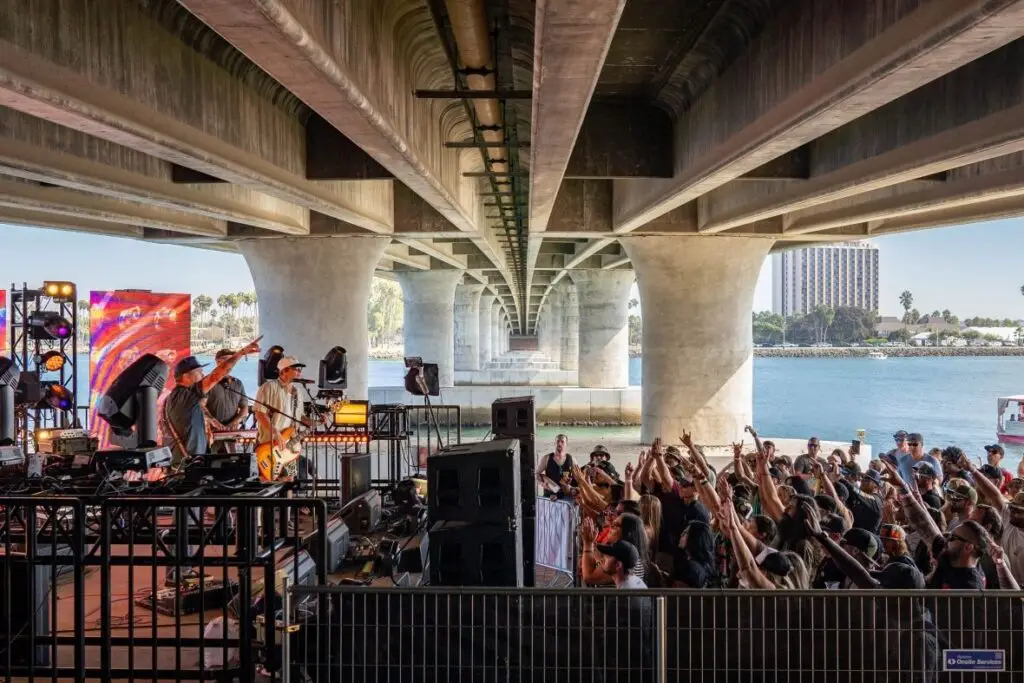
The thumping starts in my chest, taking over my own heartbeat. It radiates through my sternum, eventually reaching the tips of my ribs. My temples start pulsing. Soon enough, the rest of my body gives way, swaying and bouncing to the bass emanating from speakers all around me, pounding at somewhere around 135 beats-per-minute. I glance up at the concrete slab above me, which is a freeway underpass somewhere in Imperial Beach. None of us are supposed to be here, yet here we are.

A woman on her phone sitting on top of a man's shoulders at a San Diego  underground sewer tunnel rave
Photo Credit: Jeremy Sazon

For the last several years, a slew of underground raves have been popping up across the South Bay in a variety of public places: sewers, freeway underpasses, seemingly abandoned fields, bunkers. There’s a lot of city, county, and federal land that doesn’t get used much, and in this economy, in this town, “free” space is currency. If you build it, they will come—and if you don’t, they will come even harder. The parties are run by a techno-and-bass-oriented group that would like to stay unnamed, owing to the less-than lawful nature of their activities. But they’re not hard to find.

A large group of people dancing and listening to music at a San Diego underground sewer rave featuring techno DJ group Pirate Panda
Photo Credit: Jeremy Sazon

Around me, all sorts of loving exchanges are happening—one of the reasons I love partying so much. What are likely club drugs discreetly (and not-so-discreetly) change hands. Bottles of water are shared. Weed and vape clouds waft through the air, stuck between the concrete above and below and the mass of humanity in between. Full-body hugs abound, and more than a handful of people are making out and grinding. Everyone is grooving in their own way. Some have their hands in the air, chopping to the rhythm, their eyes closed. Quiet smiles line the faces of more than one raver.

Over the hours, the turntables welcome new DJs, each with their own distinctive styles. Some thrash to heavy techno; others scratch out the dirtiest, heaviest beats the crowd’s bodies can handle. At some point, the black sky starts to lighten up, eventually turning a light shade of pink, and a cold breeze rushes in. It’s daytime now, and the music stops. Fuzzy-booted partygoers trek to their cars, parked miles away. In their places, a crew of homeless people files in, hired and paid by the party organizers to clean. Shortly after, any sign of life has been wiped from the underpass. It’s almost like it never even happened. But it’s a physical reality that energy doesn’t disappear, it simply transmutes. Later the next day, when I finally wake up, I still feel the beating in my chest, that telltale heart.

Jackie is a long-time freelance journalist covering cannabis, food/restaurants, travel, labor, wine, spirits, arts & culture, design, and other topics. Her work has been selected twice for Best American Travel Writing, and she has won a variety of national and local awards for her writing and reporting.

Music JANUARY 25, 2024

Local Alt Rockers Saint Luna Debut Self-Titled Album

The Pacific Beach-based band chats with us about forming at SDSU, the theme of their debut album, and their evolution toward moon rock

Local Alt Rockers Saint Luna Debut Self-Titled Album
Courtesy of Saint Luna Band

For Saint Luna, time is always of the essence. The Pacific Beach-based alternative rock band made up of five 20-somethings is constantly in search of more opportunities for everything: rehearsing, partying, living.  

Despite this feeling, the release of Saint Luna’s self-titled debut album on January 26 proves their three years as a band has been time spent wisely. From playing intimate shows at their San Diego State frat house to selling out a handful of local venues, Saint Luna continues the band’s progression while showcasing their artistic evolution.

Consisting of Paarsa Heidari (drummer), Wick Hauser (guitarist and vocalist), Bradyn Jace (lead vocalist), Tanner Lampugnale (bassist) and Charlie Black (guitarist), Saint Luna formed at SDSU during fall 2020. 

Saint Luna’s debut self-titled album drops January 26

“I feel like this album shows how diverse we want our sound to be. We don’t want to be just some post-Covid indie band,” Jace says. 

The band’s self-titled debut consists of nine tracks, led by three singles: the romantic “Rare Sight,” the punchy “Revolver,” and an acoustic version of “I Feel It.” The collection of songs channels post-punk and psychedelic rock influences with a resonant theme of time, or a lack of it.

The concept of time is all over the album, from the stark urgency of “No Time” to “Two Hands,” where the fear of crucial moments slipping away can be traced back to the two hands on the clock, to the lunar cycles of the moon (aka “luna”) that dictate the passage of time. 

As they continue barrelling through young adulthood, the band’s first-hand narratives make up the bulk of the album. “Another Girl” recounts Heidari’s real-life heartbreak that spiraled into late-night dissolution with a psychedelic guitar riff. Hauser’s hazy experience reaching the drinking age milestone as the self-described baby of the group on “21.”

“Get Some Rest” beckons the age-old question of to go out or not to go out, with pounding drums and a thumping call of “And I want ya don’t need ya / Everybody’s got something to say / And I want ya don’t need ya / Got me feeling some type of way.”

During the early stages of the pandemic, frat brothers Heidari, Jace, Black and the band’s original bassist Max Katz (whom Lampugnale took over for in 2023), took advantage of their collective downtime by jamming together. The musical chemistry was nearly instant, with the quartet coming together to play Weezer’s “Say Ain’t So”—a bonding moment that kick-started the band.  

“We really didn’t know until our first show (and our TikTok that went off), that we actually had something that was worth working toward; not just for fun, not just for parties,” Heidari says.

A month after formation, the group played their first show for friends on campus and had one of their early TikTok videos go viral. The latter was also how they connected with Hauser, who joined the band after covering one of their songs.

In the two years that followed, Saint Luna crafted a dreamy surf rock sound comparable to Australian group Surf Trash and local surf rockers Sun Room, but with a more alternative edge. During this period, the group released several singles detailing their adventures, including tales of infatuation (“Goldfish”), elation (“Feel It”) and embracing the freedom of college life (“Katz’s Garage”).

But soon Saint Luna found themselves focusing too much on recreating their social media success and hit a rut. After what Jace coins as a “band drama moment,” the friends regained their confidence and willingness to take risks—leading to a more layered and ambitious sound on their debut album. 

Now, Saint Luna sheds the wide-eyed optimism of their early material and is a natural foil for the breeziness of the stereotypical SoCal lifestyle. The drawn-out instrumentals and prolonged feelings of isolation, like the section on “Two Hands” where Jace eerily sings “Sinking, swimming, I don’t know anymore / Sinking, tied up, feeling insecure,” veer the band’s sound away from energetic surf rock toward moody desert rock or in their case, “moon rock.” 

That said, there are still plenty of fun moments on Saint Luna, like the electric grooviness of “Johnny,” and the charming sincerity of “I Feel It (acoustic)”. Plus, everything has a distinctly local touch, from name-dropping 54th Street in El Cajon on “Johnny” to engaging in hijinks at Studio Diner during the “Rare Sight” music video and the band’s album recording sessions at PB’s The Music Company

With the release of their debut album, Saint Luna is preparing for a jam-packed year with a free album release concert, more San Diego shows, a Bay Area tour, and who knows—maybe another album. In 2024, time will be their greatest asset. 

“I think we celebrate our wins briefly … but come Monday morning, it’s back to the drawing board, and we’re back to work,” Black says. 

Catch Saint Luna at South Vacation Isle on January 28. 

Ryan Hardison is a freelance arts and entertainment writer and recent graduate of San Diego State. When he's not staring at his laptop, he's likely eating an adobada burrito or getting sunburnt at the beach.

Features SEPTEMBER 12, 2023

All Rise for Rock and Roll

The emerging OB artist found national fame following his cover of an iconic Doors song

All Rise for Rock and Roll
Kyle Rising Jim Morisson Sensei Trails San Diego Musician

In the bohemian pocket of Ocean Beach, Kyle Rising, the 27-year-old lead singer of rock/reggae group Sensi Trails, uploads a video performing a solo cover of the legendary The Doors song “People Are Strange.” Almost overnight, it receives 11 million views. Thousands of comments label Rising the reincarnation of The Doors frontman Jim Morrison.

In the video, Rising’s voice is musically synonymous with the late icon of ’60s psychedelic rock. But Rising’s vintage clothes and shaggy hairstyle echo the aesthetics of Morrison’s heyday as well. With both the look and voice combined, he was bound to go viral.

“It was a huge catapult into this new sort of brand that has essentially always been there,” Rising says. “But it’s now coming to the surface.”

The video brought in followers and fans across age groups. Whether it was a social media algorithm or a community built from a love of rock music, Rising found his platform growing exponentially. This new audience nudged him toward new music and a new sound.

Born and raised on the East Coast, Rising migrated to San Diego five years ago in his van, drawn by the city’s connections to reggae music. He’s now working to weave his various inspirations into a solo album while also playing shows with Sensi Trails. And, of course, he’s continuing to build his social media
fame by leaning into the vintage-inspired image that launched his stardom.

During their set at a Music Box summer show this year, Sensi Trails transformed the venue into a time machine, taking the crowd to the late ’60s. Flared leather pants, heeled boots, funky patterns, and screens with neon psychedelic graphics swaying behind the band helped them channel midcentury rock counterculture.

“It was something that I wish I had. I wish I could’ve seen these artists from back in the day,” Rising says. “So I want to sort of recreate it for people nowadays to have.”

Kyle Rising leaning on the hood of a car looking reminiscent of Jim Morrison

With his debut solo single, “She Freaks Me Out,” Rising continues to connect with people both on-and off-screen through his timeless talents and the power of nostalgia.

In fact, his ode to a foundational era in rock music has made him popular not only with his broadening audience, but with his own idols.

Rising is set to perform with Robby Krieger of The Doors and The Soul Savages at the Oceanview Pavilion in Port Hueneme on Sept. 30. His online popularity led him right to where he needs to be, he affirms.
“As long as you treat people with kindness and go about your day in a kind-spirited sense, the universe unfolds in a magical way,” he says.

Music
Studio S FEBRUARY 26, 2026

Chef Aidan Owens Thinks Your Fish is Boring

The 29-year-old culinary director at Herb & Sea is making seafood sexy (and approachable) again

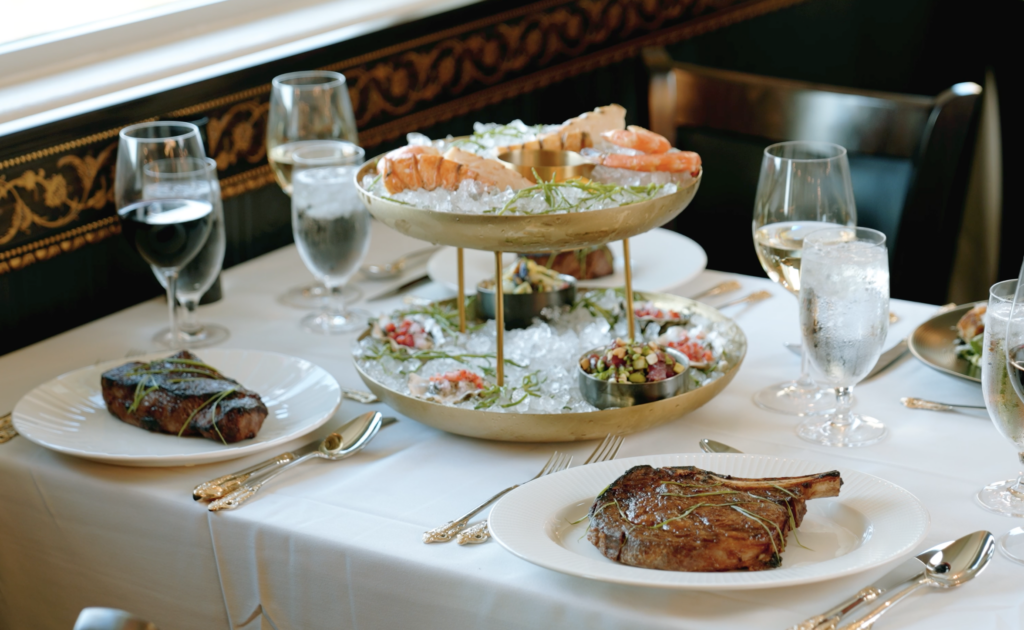
Implementing a farm-to-table model hardly deserves acknowledgement these days. It’s not a stretch. It’s not innovative. “It’s the bare f**king minimum,” says Herb & Sea‘s executive chef Aidan Owens.  

When I arrive at the Encinitas restaurant, I’m ready to talk sustainability, farm-to-table stuff, with Owens. “Did you see the chin on that?” he says of the extra big jiggly chin on the sheephead that just arrived with the day’s fresh catch. I did. It was Jay Leno adjacent.

I learn quickly that he somehow oozes both charm and stone-cold honesty. Maybe he could construct a new dish with chin goo, like he did when he had a bunch of tuna scraps and voila’d it into a smooth and crowd-pleasing ‘nduja. “I want to know what’s in there,” he says.    

Courtesy of Herb & Sea

The instinct to look closer, to dig into what others might discard, says a lot about the chef’s approach. I guide him back to our topic, but he has something else on his mind. “We’re overcomplicating food—what happened to just cooking good food and having fun with it?”

Owens grew up on a farm in Byron Bay, Australia, where sustainability wasn’t a concept you chat about so much as a way of life. Think dirt roads, backyard chickens, pulling vegetables straight from the ground, and a mother who believed that if you couldn’t pronounce the ingredients on a package, you shouldn’t eat what was inside.

Food wasn’t precious or performative. Making it was what you did because you were hungry and that’s still what inspires Owens today. “I like to cook good food because I like to eat good food,” he says.

His approach to sustainability at Herb & Sea began so naturally that it felt just like instinct. “I was just like, ‘Let’s order food from the people who live and work here,’” he says.

Courtesy of Herb & Sea

And why wouldn’t he when lives in San Diego? Cities all over the world vie for our goods. Our tuna is sent overseas. Our spiny lobsters hit dinner plates in China and Japan. Not to mention California’s producing a third of the country’s vegetables and three-quarters of its fruits and nuts. 

“Why would we outsource when it’s all here?” Owens asks.

Sustainability, in this context, is about cooking what exists in abundance, nearby, right now. “I love the local fish here. It’s f**king delicious and San Diego citrus, I mean, it is so f**ing good,” he says.

Instead of importing ingredients, Owens also looks for nearby alternatives. “You can find really cool things in the local waters,” he says, pointing out that stingray cheeks taste similar to scallops.

Courtesy of Herb & Sea

Whatever he finds in that sheephead chin might just be the next substitute for marrow. But to make this work, it means getting diners amped up about the slightly unfamiliar. 

Tasting menus, where diners are completely in his hands, become an opportunity to gently push boundaries. “I’ll serve mackerel, because people think they hate it,” Owens says, noting that the abundant local fish can have some fishiness. “But when it’s fresh, it’s arguably one of the best fish in the ocean.”

He also tweaks the language on the menu so people might feel more compelled to give dishes a try without preconceived notions. He might use “lengua” instead of “tongue.” “Whelk” instead of “snail.” When he puts “stingray throat” on the menu, he disarmingly calls it “skate.” 

To reduce waste, scraps aren’t always discarded but rather turned into something new. Sometimes they’re smoked, cured or fermented. Apples going bad turn into apple ponzu. Lemons turn to marmalade, which stretches their usefulness far beyond peak season. “And it’s super tasty on our pizza,” he says.

What makes the food even richer, is the relationships he’s built with farmers. Though it didn’t always feel natural, Owens sought personal connection first. He recalls approaching a fisherman at the Tuna Harbor Dockside Market. “I was awkward,” he says. “I went up to him and said, ‘I like your fish.’”

Owen’s is now so close to his suppliers—like fishermen Ryan Sebo and Joe Daly—that he gets texted pictures of fresh catches right as they flop on the boat. The messages always ask if he wants first dibs. “I say yes to a lot of fish,” Owens says, noting that Herb & Sea can go through 2,000 pounds of seafood a week.

Courtesy of Herb & Sea

The next evolution of sustainability, in his view, will be chefs working directly with producers such as his alliance with Sebo, cutting out middlemen and purveyors where possible. “It will put more money in the pockets of the people doing the work,” he says.

It will mean that chefs can’t just know their local farmers and producers, but they’ll choose to work with the ones who have the best practices. Dining and sustainability will become much less about the final plate. “It will be more about the impact that plate has on the Earth,” he says.  

Ultimately, he believes sustainability doesn’t need to be loud. It doesn’t need hashtags. It just needs to be honest.

“We aren’t saving lives. We’re feeding people good food,” he says.

And yet, in feeding people well—simply, thoughtfully, responsibly—something meaningful happens. Guests leave satisfied. Ingredients are respected. Local ecosystems are supported and food returns to what it has always been at its core: nourishment, pleasure, and a quiet reflection of the place it comes from.

No buzzwords required.

Everything SD AUGUST 16, 2023

Pleasure Pill Prescribes Indie Pop for Gen Z Ennui

The San Diego natives are reviving rock and roll for the next generation

Pleasure Pill Prescribes Indie Pop for Gen Z Ennui
Photo Credit: Andrew Howard
Pleasure Pill San Diego Indie Band

Pleasure Pill San Diego Indie Band

Photo Credit: Andrew Howard

We’re sitting on the patio of Shakespeare Pub on an overcast, late afternoon. It looks more like Manchester than Mid-City San Diego.“It’s pretty fucking religious, you know? I mean, like, I live by it. It’s all I ever think about,” says a shades-laden, younger, more symmetrical version of Bobby Gillespie of Primal Scream. He takes a sip of his Guinness that’s as black as his perfectly trimmed locks.

This 23-year-old rock-siren-by-night and substitute-teacher-by-day is Jonah Paz, lead singer of Chula Vista’s ’60s-via-’90s, indie-rock five-piece Pleasure Pill. What’s his denomination? Himself. His band. The goddamn redemption of rock and roll.

This band thinks big, and their confidence only adds to their appeal, whether you like their music or not. (Either way, you’ll still get it stuck in your head.) They’re set to play the Casbah on August 24, and they just released a new single called “Not Giving Up,” which is a jangly anthem that could easily be the band’s mantra. It’s a melody of casual coolness that belies how aggressively they want this band to succeed.

Sitting next to Paz is lead guitarist, Luke Blake, bedecked in denim and pulling it off the way only an artist can. “We can’t be bothered with whoever else is doing [things] in LA or New York,” Blake says.

“We’re kind of just marching to the beat of our own drum, which I think is really beneficial for us in a way.” Being from San Diego, rather than the more saturated markets up north, actually helps them stand out.

Pleasure Pill San Diego Indie Band Staircase

Pleasure Pill San Diego Indie Band Staircase

Photo Credit: Andrew Howard

Yet their own beat does have a familiar ring to it. The band’s impish, nasally facsimile of my favorite Britpop familiars fuels a narcissistic nostalgia for my own early aughts glory days spent lusting in dark clubs, dancing out my 20-something strife to the likes of the Stone Roses, Pulp, and Blur.

“Rock and roll has its history and its traditions,” Paz says, like a monk revering rituals of the past. “Obviously, [in our music], you’re gonna hear some ’60s and you’re gonna hear some ’90s and you’re gonna hear some late ’70s punk.”

At the fulcrum of parody and pop idol, Pleasure Pill look like extras who just hopped off their Vespas on the set of Quadrophenia. Their style is matched by their substance: They name-check Alan McGee’s Creations Records roster as if every band on it were a household name, from the “wall of sound” fuzz of The Jesus and Mary Chain to the very obvious influence of Oasis and their crossover mega-appeal. They take equal joy in ripping off acid house acts like the Happy Mondays. Who doesn’t love some maracas? (Bad people.)

But that’s not to say their brand of snarling, anthemic pop is derivative or unpatriotic. Call it honorific cribbing similar to what The Beatles did to Little Richard and what the brothers Gallagher did to Lennon-McCartney. With every new generation comes a chance to cannibalize your idols (or at least have the same haircuts). Thankfully, the members of Pleasure Pill have the musical chops to match their Gallagher crops. They can play their instruments—and the part of Gen Z rock and roll heroes, if their generation will have them.

The band is comprised of Jonah and his younger brother Ethan, who plays rhythm guitar, rounded out by Blake on lead guitar and friends Ivan Delgado (bass) and Dom Friedly (drums). They’ve been slowly doling out singles since the pandemic era. Now, they have a set of fifteen songs that they recorded in LA in November. They will eventually release them as their debut record. Paz is angling for Oasis’ Definitely Maybe status. “This has the potential to literally be, like, the biggest thing ever,” Paz says.

Pleasure Pill is a welcome pastiche for the weary, seeking that new rock savior. Who’s tired of always hearing “Seven Nation Army” at Petco Park? It’s time to give these South Bay boys a chance.

But many bands these days are at the mercy of numbers—of followers. Gone is the main pressure of moving units. Now, labels are focused on bands being their own mini-marketing team, complete with fully fleshed followings on Instagram and the dreaded TikTok, before ever getting signed.

For reference, Pleasure Pill has 1,901 followers on Instagram, and its members couldn’t care less. Perhaps that’s why there’s no groundswell of guitar groups making it big. Perhaps they’re all old fashioned like Pleasure Pill, hoping their talent is enough for an advance.

“I think a band like Oasis or the Strokes or Nirvana, where they take over the whole fucking world and everyone can agree on [them], it’s a folktale for our generation. I mean, it doesn’t exist,” Paz says. Clearly, the modern music landscape is wide enough for newcomers to find footholds to stardom, but will their ambition be enough? For now, it doesn’t matter.

“You’re not going to come from San Diego and, like, skyrocket,” Paz admits. “It’s gonna be fucking hard but, you know, we all believe in it enough to do it.”

Not giving up, indeed.

Danielle is a freelance culture journalist focusing on music, food, wine, hospitality, and arts, and founder-playwright of Yeah No Yeah Theatre company, based in San Diego. Her work has been featured in FLAUNT, Filter Magazine, and San Diego Magazine. Born and raised in Maui, she still loves a good Mai Tai.

Music
Everything SD JULY 20, 2023

Future is Color Brings a New Jazz Series to Barrio Logan

The weekly gathering aims to bring San Diego’s creative community together and provide a space for exchange and conversation

Future is Color Brings a New Jazz Series to Barrio Logan
Future is Color, studio sessions

Future is Color, studio sessions

On a Thursday night in Barrio Logan, a red glow emanates from inside a black warehouse. A lively crowd spills onto the sidewalk, people glancing over shoulders toward the rhythmic, busy clashing of the three piece group called Skate Jazz.

The scene feels at once inviting and secretive. Logan Avenue is generally otherwise quiet and casual by sundown, but the studio is alive. It’s a scene. Studio Sessions—a new jazz series at the Future Is Color Studio—is the reason.

What was formerly a warehouse storage space is now bringing an eclectic crowd to the heart of Barrio Logan every Thursday night. The idea, said founder Erwin Hines, is to bring San Diego’s creative community together and provide a space for exchange and conversation.

“Our jazz nights have the scene kids, have people from north county, have people from the south bay,” Hines said. “It has all of these people from disparate groups in one space and congregating in a neighborhood that maybe they wouldn’t have come to before.”

Future Is Color Studio got its start in 2020 after Hines started designing graphic t-shirts as a way to process his emotions following the police killing of George Floyd. The shirts were flying off the shelves—Hines sold more than 6,000 in a few days—and he realized he had struck a chord with community members.

Hines named the project Future Is Color, or FIC, borrowing the name from a cultural education program his sister started in Ohio. The brand’s mission is to promote cultural progress through dialogue, empathy, clothing, and now, weekly jazz.

The focus on jazz music is intentional, Hines said. “[Jazz] comes from Black culture and it’s a dialogue in and of itself,” Hines said. “The musicians and the instruments having an intimate dialogue in real time and just jamming with one another.”

Future is Color, studio session

Future is Color, studio session

That musical dialogue is something that spoke to Kamau, a hardware engineer from Chicago who recently moved to Hillcrest and attended his first Studio Sessions. Kamau remembers Skate Jazz played covers of his favorite songs from Cortex, a frequently-sampled French jazz trio. It was the first time he’d seen that music played live.“It’s just really cool to see people interact with the music in a live setting,” Kamau said. “Like an experiment, it’s exciting.”

Inside the warehouse where Skate Jazz plays, sometimes accompanied by a singer or saxophonist, there’s hardly a seat or space to stand unoccupied. Gatherers softly bob their heads or sway to their winding sets. A red light-up sign bearing the name of the band glows behind them. On an adjacent wall, a looped video projects tantalizing graphics and phrases like “Move in love” that come from Hines’ own designs.

So far, the turnout has been much more than Hines expected. They planned for 30 people at their first show, but they’ve never had a show with less than 150. “I’m shook, I’m deeply shook,” Hines said.

Since they’ve started the series, Hines said the surrounding businesses on the block now stay open later. By the end of the show, their block of Logan Avenue is lively with the chatter of the crowd—a burger joint and taco stand on either side feeding the hungry.

“This, to me, is what community building really looks like,” Hines said. “When an organization or an institution or a brand is willing to invest into something that is free for people to enter, free for people to engage in, and can be this cultural entry point into the larger community.

”While working as a graphic designer in San Diego, Hines noticed how young creatives sometimes overlooked San Diego for other cities like New York and LA. He said the community here lacked free spaces for artists to gather, but not for lack of local talent.

“As I began to really think about what the creative community was in San Diego, I realized that it’s not just for traditional creatives,” Hines said. “We have amazing biotech. We have amazing community activists. We have amazing artists, dancers, all these people from all these disparate backgrounds but everybody was operating and functioning in silos.”Studio Sessions and other projects associated with the FIC became a way for Hines to sustain the creative community and connect artists in new spaces for inspiration, collaboration and companionship. The event’s uniqueness is something that spoke to many in attendance. Several attendees commented on how FIC’s jazz nights feel one-of-a-kind, almost sacred. They describe it as “optimistic,” “fresh” and “accessible.”

Future is Color, studio sessions

Future is Color, studio sessions

Cecil Horton, a San Diego native who runs a PR and influencer marketing agency, said jazz nights at FIC are “exactly what we need for our city.”

“It is casual as it is electric. It feels like you’re on the streets of Portugal, chain-smoking a cigarette on cobblestone streets.”Horton first went to Studio Sessions in its third week and he’s been a regular since. For him, it’s a place to connect with likeminded creative people. It’s also where he can see friends from all across San Diego commingling in the same space.

“I see my friends that I grew up with in Point Loma running into other friends that I’ve met in Southeast San Diego, all of us either cheersing to wine or ice water or Jamaica in the street,” Horton said. “It’s everything we’ve ever hoped for.”

In the few short months since its start, Studio Sessions has already expanded its repertoire and its reach. The shows feature additional musicians and even a pop-up in LA.

Still, Hines said he doesn’t have any set plans for the project. “I never want to put any weight on it to say it needs to be X, Y and Z in five months, in six months,” Hines said. “Maybe it will be gone, maybe it will have done what it needed to do and then it can go on and move on.”

Until then, Studio Sessions happens every Thursday from 6:30 to 10 p.m. at the FIC studio at 2060 Logan Ave.

Music
Partner Content FEBRUARY 16, 2026

Torch Heroes: Why San Diego’s Most Trusted Businesses Win by Doing the Right Thing

In a world overflowing with shortcuts, marketing fluff, and “good enough,” there are still companies that choose a different answer. And in San Diego, there are plenty of them.

Torch Heroes: Why San Diego’s Most Trusted Businesses Win by Doing the Right Thing
2025-Torch-SD-09131839 (2)

In a world overflowing with shortcuts, marketing fluff, and “good enough,” there are still companies that choose a different answer.

Integrity guides how they show up every day. They make hard decisions, hold themselves accountable, and build trust the old-fashioned way, one action at a time. At the Better Business Bureau, we call these businesses Torch Heroes: leaders who demonstrate that ethical leadership strengthens businesses and drives long-term success.

And in San Diego, there are plenty of them.

Take House Collective Marketing Solutions, a Carlsbad-based digital agency that won the 2025 Torch Award for Ethics for its people-first approach to marketing. Instead of pushing flashy campaigns, the team often takes a step back to make sure clients’ foundations are strong before going big. Their philosophy? Truth over transaction builds partnerships that last.

Or look at Young Black & N’ Business, where integrity shows up through community action. When a local school lost art funding, founder Roosevelt Williams III and his team stepped in with workshops, mentorship, and hands-on support to help restore creative opportunity. That kind of engagement reflects ethical leadership rooted in real impact.

And in Vista, Lotus Sustainables carried its commitment to ethics all the way to the product line. After discovering defects in a shipment of eco-friendly products, the company issued full refunds and redesigned its offerings at its own expense, a choice that shaped its identity and reinforced to customers that ethics guide every decision.

In North County, Greenway Landscape Design & Build brings integrity into everyday service. When a client’s glass was damaged, likely not by their crew, owner Scott Lawn chose responsibility over blame and covered the repair personally. For Greenway, doing the right thing serves as a north star, guiding every interaction through transparent pricing, accountable partnerships, proactive communication, and follow-through long after the job is done.

Other honorees include At Your Home Familycare, whose leadership turned down a lucrative state contract during the pandemic to protect vulnerable clients and staff, and Bill Howe Family of Companies, where hiring practices, training, and service centers around shared values, every day, on every call.

What connects these diverse businesses, from marketing to nonprofit support to home services, isn’t size, industry, or revenue. It’s something deeper: a commitment to trust as a business strategy.

In San Diego’s competitive marketplace, that trust gives companies an edge. Clients invest in relationships. They refer friends. They stay loyal when others fade.

As one Torch Award winner puts it, integrity isn’t a section in the employee handbook. It’s the operating system of the company,  the invisible code that determines every choice, every day.

And that’s exactly the point of the BBB Torch Awards for Ethics: to spotlight companies that dispel the myth that ethics and success are at odds. These businesses show that when leaders choose honesty, fairness, and accountability, especially when it’s hard, they build brands that matter.

At BBB, we see nominations come in from clients, employees, and business partners who have witnessed ethical leadership up close. These submissions aren’t polished promotions. They’re stories of moments when a company chose people over profit, clarity over confusion, and trust over convenience.

The nomination window for the 2026 Torch Awards for Ethics is open through March 31, 2026, and there are more Torch Heroes waiting to be recognized.

Who comes to mind in San Diego’s business community?

  • A vendor who always delivers — and always explains why.
  • A competitor who chooses the high road even when shortcuts tempt.
  • A team within your own company whose day-in, day-out choices reflect deep character.

And yes, businesses can nominate themselves. We encourage it. If you’ve built your business on principles rather than buzzwords, we want to hear your story.

Because in a world full of noise, integrity still deserves the spotlight, and San Diego is full of stories worth telling. Nominate your hero now

Thousands of savvy locals already get it.

San Diego's best restaurants, experiences, and events—handpicked and delivered to your inbox weekly. You in?

Close the CTA

Contact Us

1230 Columbia Street, Suite 800,

San Diego, CA