Ready to know more about San Diego?

Subscribe
Archive JANUARY 24, 2020

8 San Diego Brands Explain How They Made It to the Top

Entrepreneurs and company rock stars divulge their secrets for success

8 San Diego Brands Explain How They Made It to the Top

8 San Diego Brands Explain How They Made It to the Top

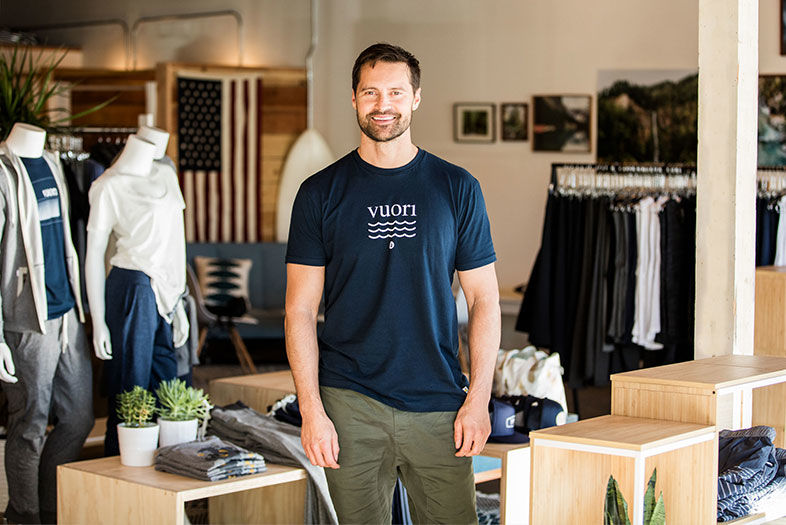
Joe Kudla

How we opened 5 stores in 4 years and got $45 million to keep expanding

Vuori // Est. 2015 // 85 employees

Athleisure for men: Joe Kudla went where no man has gone before when he founded Vuori in 2015.

Ten years ago, the former CPA and business owner began practicing yoga as a way to work through pain he was experiencing from having played sports in high school, as well as lacrosse at USD. It was then that the sometime apparel investor began researching the world of yoga. “As a surfer, I knew there were 4 million people that surfed in the US and there are hundreds of brands competing for that surfer,” he says. “But there were 30 million practicing yoga. The market was like eight times bigger than surfing and men were 30 percent of it—and the fastest-growing demographic. That was the a-ha moment. ‘Why is there nobody doing anything cool for guys in this premium activewear space?’”

He launched Vuori, pronounced “vee-OR-ee,” from the Finnish word for “mountain.” Kudla is not Finnish but loved the name and the meaning.

Vuori’s line of jogger pants, board shorts, and hoodies favors a neutral color palette and clean design aesthetic. Many of its fabrics are proprietary, including a lot of full dull yarns with a brushed hand to make them extra soft. Notably absent are the primary colors, logos, and team sports aesthetic typical to the gear Kudla says he grew up with.

But most people, including wholesalers, didn’t get Vuori when it first launched. “The wholesale accounts wouldn’t talk to us. They were confused as to what we were trying to accomplish.” Consistently they were told they needed to address the female consumer walking in wearing Lululemon. At the time, Lululemon sold menswear, but in their stores, Kudla felt like he was shopping for his wife. “If the wholesalers were thinking about activewear at all, they were thinking about women. Men’s just wasn’t a category that really existed at wholesale. So we had to build the distribution ourselves.”

They started out selling directly online. Later they opened a space in Encinitas for free yoga, boot camps, art shows, and community events, which they eventually turned into a permanent retail store in March 2016.

Vuori has since launched a women’s collection and, in addition to being sold in retailers like REI, CorePower Yoga, and Sun Diego, they have five stores in tony California districts—the Encinitas flagship, the marina in San Francisco, Manhattan Beach, Fashion Island in Newport Beach, and, as of November 2019, Del Mar Highlands Town Center—right next to Jimbo’s and below five planned fitness concepts. Kudla admits “the rent can be scary,” but he leverages his e-commerce data, which illustrates where his customers live and shop, to make informed decisions. They’re looking to open four more retail stores this year in places like Scottsdale and Denver.

Vuori had long been profitable enough to expand without actively seeking funding. But in August, Norwest Venture Partners presented Kudla with an opportunity. They put $45 million in minority investment on the table, allowing him to maintain control of the business, enjoy a long-term investment horizon, and benefit from a network of pros who could guide him. He says it checked off all the boxes. “It wasn’t a bad time to do it, but it definitely was not in our strategic road map to raise money in 2019.” Now they can return money to early investors and, as he puts it, save for a rainy day.

And rain is something that Seattle-born Kudla knows something about. It rained every day for six months his senior year of high school, so he decided not to attend the University of Washington. Instead he came to San Diego and hit the ground running. —Erin Meanley Glenny
8 San Diego Brands Explain How They Made It to the Top

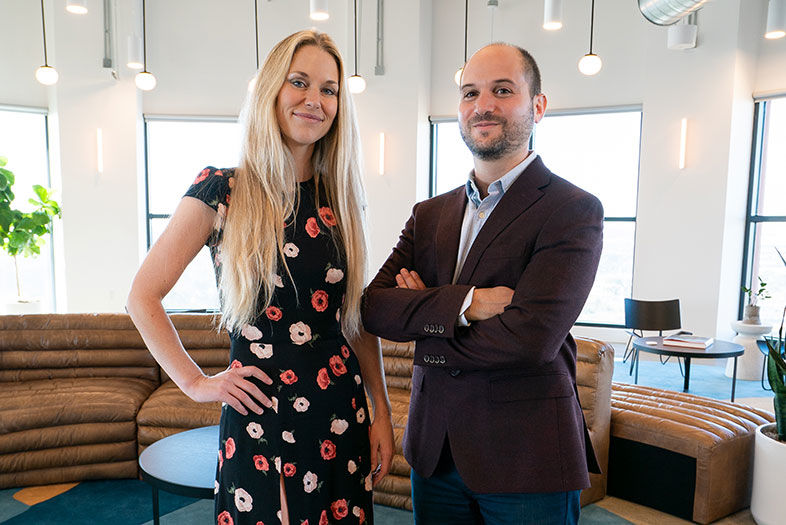
Cassandra Curtis and Ari Raz

Sydney Prather

How we got Jennifer Garner as a cofounder

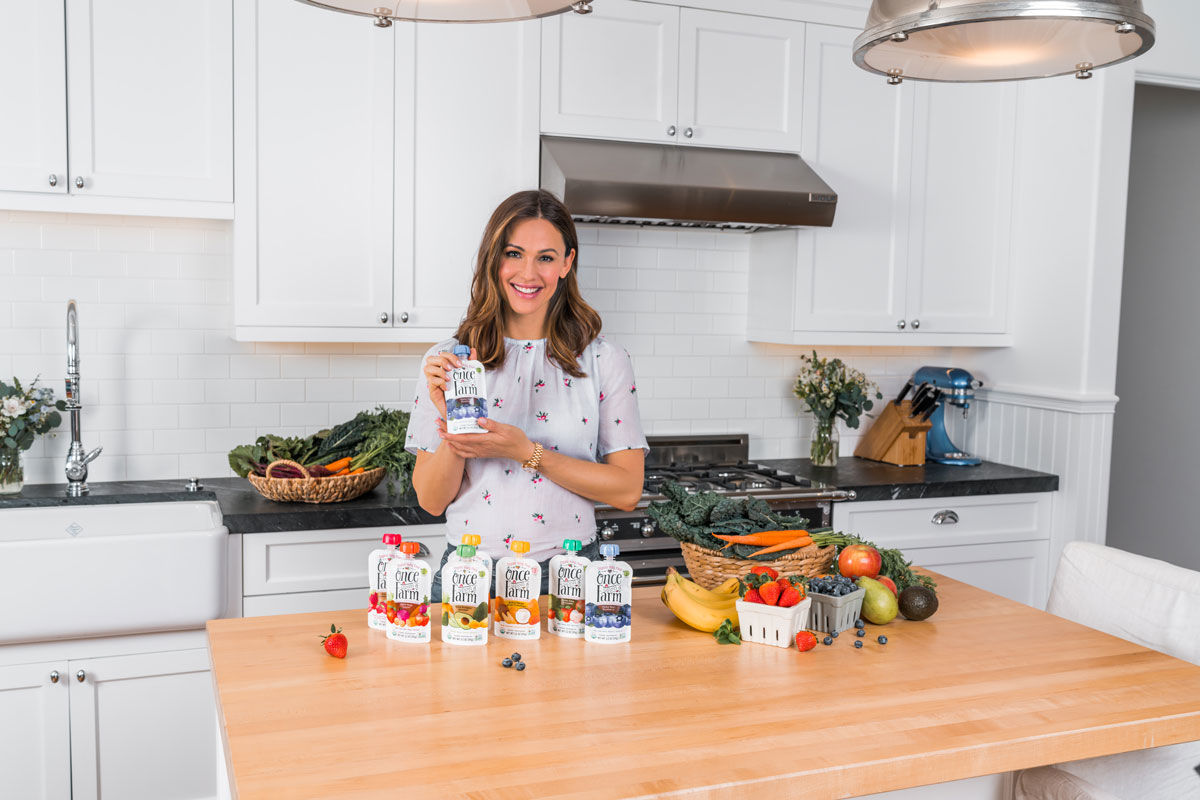
Once Upon a Farm // Est. 2013 // 30 employees

“Imagine throwing a dart at a dartboard and it hits the perfect person you were supposed to meet at the time,” says Ari Raz, cofounder of baby food company Once Upon a Farm.

He’s describing how he met Cassandra Curtis, who created Mother’s Garden, the company’s predecessor, in 2013. But he might as well be talking about Once Upon a Farm’s entire trajectory, which has involved one fateful connection after another.

First there was Curtis. Seven years ago, she was a working mom in University City who wanted her daughter to have the freshest, healthiest food possible, but didn’t have the time to make it. Curtis knew someone in high-pressure pasteurization, which destroys bacteria in food without heating it, and she applied it to recipes that she sold in local farmers’ markets and stores.

Meanwhile, Raz was running a baby food delivery company in Washington, DC, and was looking for a technology that would scale the business. He heard about Curtis through a friend of a friend; he reached out—several times—and in 2016 the pair relaunched her brand as Once Upon a Farm.

It’s crazy to think about today. What are the chances someone that famous hears about a company this small?

They set their sights on grocery stores, a challenge because all the other baby food on the market was shelf stable, and theirs had to be refrigerated. They brought on an advisor, Greg Fleishman, who had experience with Kashi, Bear Naked, Coca-Cola, and other big brands. Fleishman in turn introduced them to John Foraker, the CEO who had grown Annie’s from a small mac-and-cheese maker into a $100 million business; he became one of their first investors and an informal advisor.

By 2017, Once Upon a Farm was small but succeeding. Curtis and Raz had nearly $1 million in sales. That June, a call from Fleishman changed everything. For several years, A-list actress Jennifer Garner had been looking for a business to get involved with; as a longtime advocate for kids, she thought she could do even more good through the right company. Fleishman, who knew Garner’s manager, told her about Once Upon a Farm. Soon Curtis and Raz were driving up to LA for a meeting.

“It’s crazy to think about today,” Raz says. “What are the chances someone that famous hears about a company this small?”

When Garner learned that Foraker was involved, she wanted to meet him. For three hours they talked about how businesses could be a force for good, and by the end of the meeting, they had both decided to join Once Upon a Farm as cofounders, with Foraker as CEO.
8 San Diego Brands Explain How They Made It to the Top

8 San Diego Brands Explain How They Made It to the Top

“There’s definitely been adjustments,” Curtis says. It was hard to relinquish control of the business, but doing so let Raz and Curtis focus on the things they really enjoy. Curtis develops products and makes sure they contain the best-quality ingredients; Raz is working on international expansion. He also oversees the company’s organic farm in Oklahoma—the farm where Garner’s mother grew up (now run by her aunt and uncle).

In the past two years, Once Upon a Farm has expanded from 300 to 9,000 retailers across North America. The company is tight-lipped about sales, but it’s safe to assume that they’ve grown far beyond $1 million. And though these days it’s often described as “Jennifer Garner’s baby food company,” the original founders don’t mind.

“To turn this concept into the vision we held for it—to provide as many children as possible with nutritious food,” Curtis says, “this was the way to do it.”  —Sara Clemence

How we grew a gourmet burger empire during the recession

Burger Lounge // Est. 2007 // 600 employees

J. Dean Loring grew up in the meat business—he refers to himself as an “SOB,” son of a butcher—and he was running his own burger joint in his 20s (Stars Hamburgers in Humboldt County, with two locations still operating). But it would take more than those qualifications to open a totally new burger chain in San Diego, on the brink of the recession, in a relatively saturated market, with some stiff competition.

Loring’s bright idea? Open a fast-casual (aka counter-service) restaurant where full-service, white tablecloth restaurants are king: La Jolla.

“Fast-casual concepts were in their infancy during the recession, and real estate was a lot cheaper,” he says. “We figured, why not? It’s easier to exceed the guest’s expectations in a limited service environment when expectations are lower. It allows us to focus on food and making it better every day. That was our logic: offer pure, simple, delicious food for a value at a time when maybe people had a bit less money.”

It worked. On the first day, Burger Lounge ran out of food after just three hours. Four months later, they opened a second location in Kensington. Loring and his business partner at the time, Michael Gilligan, personally funded the first four locations before Loring went out on his own as president and CEO and partnered with private equity firm KarpReilly. Today, Burger Lounge has 25 locations throughout the US, with plans to expand further this year.

Now, as that fast-casual concept is no longer novel, Burger Lounge is instead banking on its “original grass-fed burger” to drive business.

“It’s a bit like Chick-Fil-A laying claim to the ‘original chicken sandwich,’” he says. “Does anyone believe they were the first people to think of putting chicken between two slices of bread? Before we put cows in industrial feed lots, all beef was essentially grass-fed. Since many are not aware of the evolution of the beef industry in America, we think it makes sense.”

That was our logic: offer pure, simple, delicious food for a value at a time when people had a bit less money.

Burger Lounge vets and manages relationships with responsible, sustainable purveyors.

“We had to sleep with a few frogs to find a few princes,” he quips. “Over time, you figure out if you can build trust with them and if their operation is authentic.”

And the menu continues to evolve. Just last year, Burger Lounge introduced a vegan burger. But it won’t put imitation meat on its menu anytime soon. “Selling a lab-produced burger doesn’t fit with our values,” he says.

When asked about Burger Lounge’s business valuation, Loring stays mum, because he’s not looking to sell it or to franchise for the foreseeable future. Instead, he shares a different number: 3 million—the number of diners per year at Burger Lounge’s 25 locations. Loring proudly claims that he’s built the country’s largest restaurant consumer base of fresh American grass-fed beef.

“Americans eat roughly 50 billion hamburgers a year. I don’t think that is going away anytime soon. Our grass-fed beef hamburgers are better for you, better for the environment, and I think they taste better.”

Spoken like a true “SOB.” —Sarah Pfledderer
8 San Diego Brands Explain How They Made It to the Top

8 San Diego Brands Explain How They Made It to the Top

Reid Carr

How we’ve kept clients we like, fired others, and will never sell out

Red Door Interactive // Est. 2002 // 85 employees

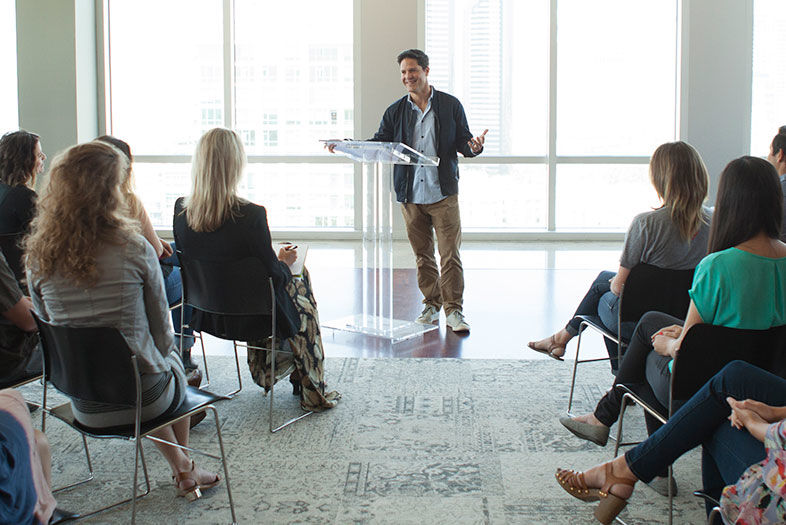
When Reid Carr founded his agency 18 years ago, the marketing industry was very different. Red Door Interactive was still trying to convince clients to build their first website. But as digital marketing tactics and platforms grew exponentially, RDI adapted along with them. They put the first restaurant on social media (Souplantation) and were the first company to collaboratively design an office using Pinterest.

Carr and his team won clients when they were relatively small and then helped them grow. From there, he would try to win what he calls more “twos”—”Win something smaller than your first. That’s where I focus. You know you can work on that because you have clients that are bigger. Then if we grow them, and they become our largest, it creates room to win more twos and threes.”

The key is to diversify. “We have to act like a mutual fund,” he says. “I’ve been through multiple economic downturns. I’ve watched a competitor go out of business damn near overnight because all their clients were home builders. If you get into any one category or vendor, you put yourself at risk.”

The formula has worked. Asics, Titleist, Bosch, Thermo Fisher, Charles Schwab, and Shea Homes have all been clients for years, the latter two for well over a decade.

Carr wants to remain “fiercely independent” and never sell out. “I want to build something I can hand off,” he explains. “So, there’s a strong foundation, core values, and infrastructure that will allow the next generation to flourish. I strongly believe that if you’re built to sell, it’s usually a shaky infrastructure because they believe it’s going to be someone else’s problem.”

I want to build something I can hand off so the next generation can flourish.

Carr’s company is not a cutthroat environment. None of his colleagues are out solely for themselves. Carr gave a TED Talk in 2014 on running a “100 percent jerk-free workplace.” In marketing, he says, people will come forward with an idea “and a creative will say, ‘Hey, man, stay in your lane, this is my thing. You’re not good enough, cool enough, old enough, experienced enough.’ Our creative team is not like this because of our core values.” He maintains a culture of respect and open-mindedness by hiring candidates that have these innate values (vetted through an in-depth, three-hour job interview). Any employee can express an opinion, no matter department or rank, which allows for a diverse workforce.

They can’t work for jerks, either. In fact, over the years RDI has fired three clients—including one that was their second-largest—and fired “a ton before we ever won them.” A toxic organization causes problems; if it’s an individual, sometimes the client will do something about it. “We’ve had cases when they came back years later and said, ‘Things have changed here, can we talk?’”

You never know who will knock on the red door next. —EMG
8 San Diego Brands Explain How They Made It to the Top

San Diego brands explain how they made it to the top

Aliza Carpio | Photo: Madison Parker

How we created a tech culture that supports women

Intuit // Est. 1983 // 1,500 San Diego employees (9,000 total)

Of the nearly 50 million people around the world who use TurboTax, probably very few know that it started in San Diego. Back in 1983, scientific programmer Michael Chipman came up with the idea of software that could guide people through filling out their tax returns, and even print out the forms to mail. That’s when ChipSoft was born. Up in Palo Alto the same year, tech consultant Scott Cook and his wife were balancing the family checkbook when he had a similar idea. Cook and Stanford student Tom Proulx created the personal finance software Quicken and founded Intuit Inc., which acquired ChipSoft ten years later.

Today, Intuit is based in Mountain View, traded on the NASDAQ, and has 19 offices in eight countries. Its Carmel Valley campus is home to 1,500 employees who work on TurboTax and the apps Turbo and Mint.

While there’s an in-house strategy to keeping all those customers happy—which they’ve coined Customer Driven Innovation (CDI) and Design for Delight (D4D)—management also pays a lot of attention to the well-being of the employees who implement that strategy.

You have to have champions like me for people to feel like they belong, can do the best work, can be fulfilled.

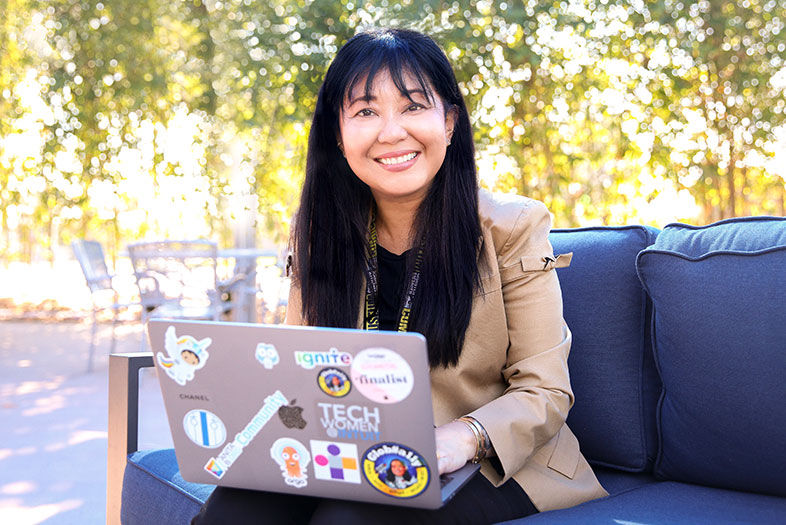
“Culture is queen,” says Aliza Carpio, who came to Intuit from HP 18 years ago. She is now Intuit’s “principal tech evangelist,” which puts her in charge of creating a cool office culture in her company.

Intuit boasts a robust offering of extras and extracurriculars. Every employee-run club has a local Intuit executive as a sponsor or guide, like the African Heritage Network and the Asian Pacific Network. Intuit’s San Diego campus hosts five meetups—one of which is San Diego JavaScript, the largest tech meetup in San Diego. There are book clubs, workshops, and programming with companies like Athena and Qualcomm. During Hacktoberfest 2019, when engineers contribute code to open-source projects around the world, less than six percent of the participants worldwide were women. But among the Intuit engineers contributing, a full 23 percent were women.
8 San Diego Brands Explain How They Made It to the Top

8 San Diego Brands Explain How They Made It to the Top

Madison Parker

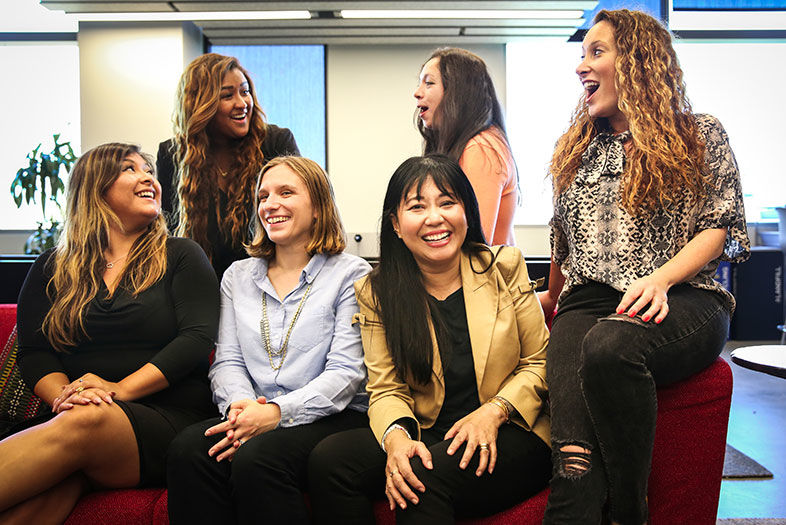
In 2013, the company launched an initiative called Tech Women @ Intuit, or TWI. The initiative ensures that women are not just applying to work at Intuit, but also choosing to stay and moving up in the company. The programs support women at all stages of their careers, and the company also reaches out to middle and high school students. There are mentorship programs, professional development circles, and events—one of which is the Grace Hopper Celebration, the world’s largest gathering of women technologists, produced by anitab.org. Carpio, who also hosts the podcast Tech Heroes, cowrote two talks presented to 60,000 women in engineering at the 2019 event. There, she noticed a huge shift in the types of questions candidates were asking compared to even the previous year. Instead of asking about the interview process and what projects to expect, their only inquiries seemed to concern culture—opportunities to give back to the community, team dynamics, and why Carpio has stayed at Intuit so long.

“You have to have champions like me for people to feel like they belong, can do the best work, can be fulfilled. I’ve been here 18 years because the culture is really cool. Eight different jobs in 18 years and I’m always thinking about it.”

Today, one-third of Intuit’s board of directors are women. The executive team, including the chief financial, technology, and marketing officers, is 40 percent female. If getting to the top is tough, Intuit women have cracked the code. —EMG
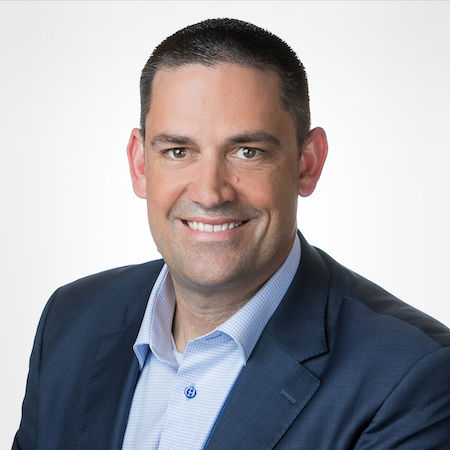
How we became a $1B company with one tiny device

NuVasive // Est. 1997 // 2,600 employees (global)

8 San Diego Brands Explain How They Made It to the Top

NuVasive president Matt Link

You know you’ve made it when a former Pittsburgh Steelers running back and Hall of Famer wants to be your spokesperson. Jerome Bettis is that spokesperson for NuVasive, the spinal tech company that changed his life.

In 2017, Bettis was suffering from incredible back pain and his doctor recommended a spinal fusion (a surgical procedure joining two or more vertebrae), but he was reluctant.

“He’s an avid golfer, and he was concerned about how quickly and effectively he could return to golfing,” explains NuVasive president Matt Link. “Through a recommendation of a former teammate who’d had a similar issue, he ended up having an XLIF.”

XLIF (Extreme Lateral Interbody Fusion) is NuVasive’s pioneering spinal surgery technique.

Before XLIF, most surgeries for spinal fusions required stripping away muscle and moving blood vessels. And the minimally invasive options weren’t easy to teach and reproduce. NuVasive’s founders developed technology that allowed for a new safe and relatively easy procedure. During an XLIF, surgeons enter from a small incision on the side of the body, without having to strip away muscle. They’re able to use this path toward the spinal cord because of NuVasive’s neuromonitoring technology, a retractor with a built-in system that tells surgeons where the nerves are so they can navigate around them. Overall, this approach results in a smaller scar and faster recovery time.

NuVasive was a small neurophysiology tech startup in Scripps Ranch before XLIF brought the company into operating rooms around the world. They secured venture capital funding and invested heavily in clinical trials to show that the technique was safe and effective. After obtaining FDA clearance, they introduced XLIF to the market in 2003.

It wasn’t an overnight success, though. “There was a healthy skepticism in the community,” Link says. It was very different from existing techniques, and nobody had heard of it before. It took time to gather data and win over the medical community.

NuVasive continued to improve the technology, and in the mid-2000s, sales for neuromonitoring started to take off. The company added new tech to its portfolio and expanded—a lot. During one especially fruitful period, NuVasive went from a $100 million company to a $1 billion company in 11 years.

NuVasive is now the world’s largest spine-focused company. It has a satellite office in Amsterdam—though its global HQ and largest employee base remain in San Diego. Link credits the city’s biotech community and the talent they’ve drawn from it for a lot of the company’s success. —Heather Karpel
8 San Diego Brands Explain How They Made It to the Top

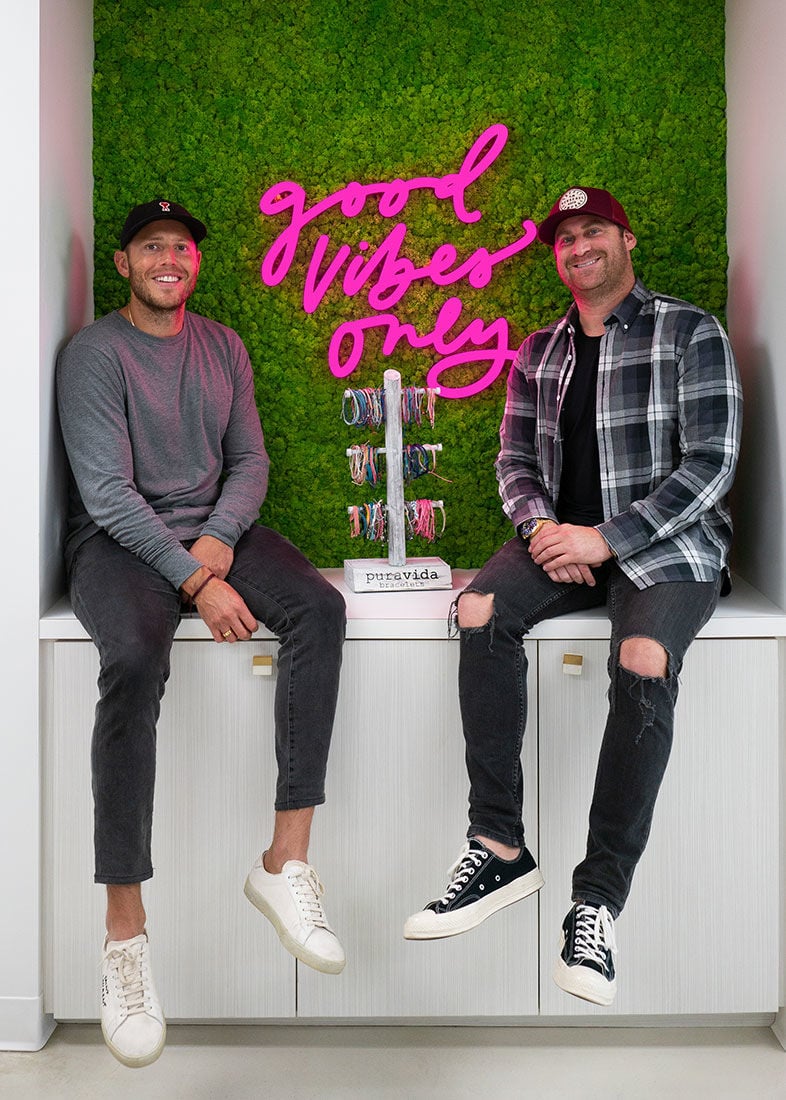
Paul Goodman and Griffin Thall

Sydney Prather

How we bet our brand on Gen Z and the “VSCO girl”

Pura Vida // Est. 2010 // 41 employees

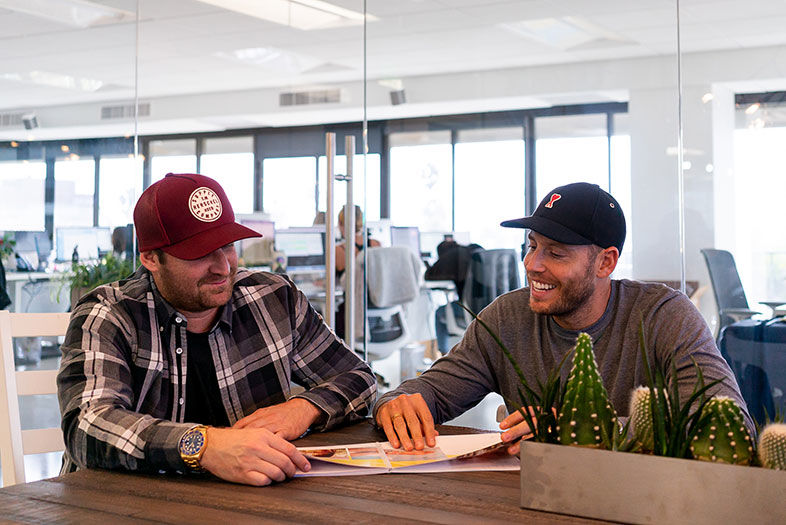
In 2010, two La Jolla guys returned from a surf trip in Costa Rica with the ultimate souvenir: 400 brightly colored bracelets woven by two locals, which they sold to friends under the name Pura Vida, inspired by the country’s laid-back lifestyle. Today, an eye-catching $75 million acquisition has made Pura Vida one of the most enduring success stories of San Diego’s lifestyle brands.

Social media marketing was in its infancy a decade ago when Griffin Thall and Paul Goodman founded the brand. This was back before influencers were sponsored—before “influencer” had even entered the Insta-lexicon—and succeeding meant more than cracking an algorithm. It was grassroots, with the pair personally seeking out true fans, organically building a powerful feel-good presence into an empire.

From their early days selling in local boutiques, and soon enough at Coachella and Padres Opening Day, they strung together a community. Today, about 65 percent of Pura Vida’s sales come from e-commerce, 20 percent from wholesale, and 14 percent from monthly subscriptions.

And while social media platforms have changed over the years, from Vine to Snapchat to TikTok, the Pura Vida demographic hasn’t. Now it has a name—the VSCO girl. Named for a photo editing app, VSCO girls represent a market many brands want to break into. They wear Birkenstocks, drive Jeeps, drink from sticker-covered Hydro Flasks, and love Pura Vida. The vibe? Studiously unplanned.

A $75 million acquisition has made Pura Vida an enduring success story in San Diego.

“How can you go for the most unpolished look and still consider it marketing?” asks Thall, who says 98 percent of his demo are women. “It’s the complete opposite of retouched.”

Thanks to its fluency in content marketing, Pura Vida boasts an incredibly engaged customer base (No. 1 in jewelry, according to marketing consultant Stylophane) and a following of over 1.9 million on Instagram and just under 2 million on Facebook. In summer 2019, they sold a majority stake to Vera Bradley after interviewing more than two dozen private equity firms.

The Indiana-based publicly traded company, primarily known for its sturdy quilted handbags, acquired 75 percent of Pura Vida for $75 million, with the right to acquire the remaining 25 percent of the company after five years. Thall, 32, and Goodman, 30, also stand to earn up to $22.5 million in bonuses if the company meets certain performance goals.
8 San Diego Brands Explain How They Made It to the Top

8 San Diego Brands Explain How They Made It to the Top

Sydney Prather

Their decision to sell offloads lead production and back-office functions—accounting, finance, legal—to Vera Bradley, freeing up the existing Pura Vida team to focus on branding, marketing, and sales in their new La Jolla headquarters (ocean views, ping-pong, palm frond wallpaper).

The founders, who are SDSU alumni, employ 750 artisans in Costa Rica, El Salvador, and India, while raising more than $1.9 million for charitable causes through online sales of their charity collection bracelets.

While cause-minded outfits like Toms Shoes were an early influence, Pura Vida’s true brand heroes are Billabong and RVCA, both of which were pioneers in using real skaters, surfers, artists, and musicians in their influencer campaigns—in other words, professional athletes, not models.

“That girl in the dress with the photo crew in the Maldives? That’s done. No one cares,” Thall says. “If you can sell something that is the complete opposite of that, you might be onto something.” —Gillian Flynn
8 San Diego Brands Explain How They Made It to the Top

8 San Diego Brands Explain How They Made It to the Top

How we made geekdom cool 

Comic-Con // Est. 1969

Like so many traditional comic book characters, Comic-Con had relatively unassuming beginnings.

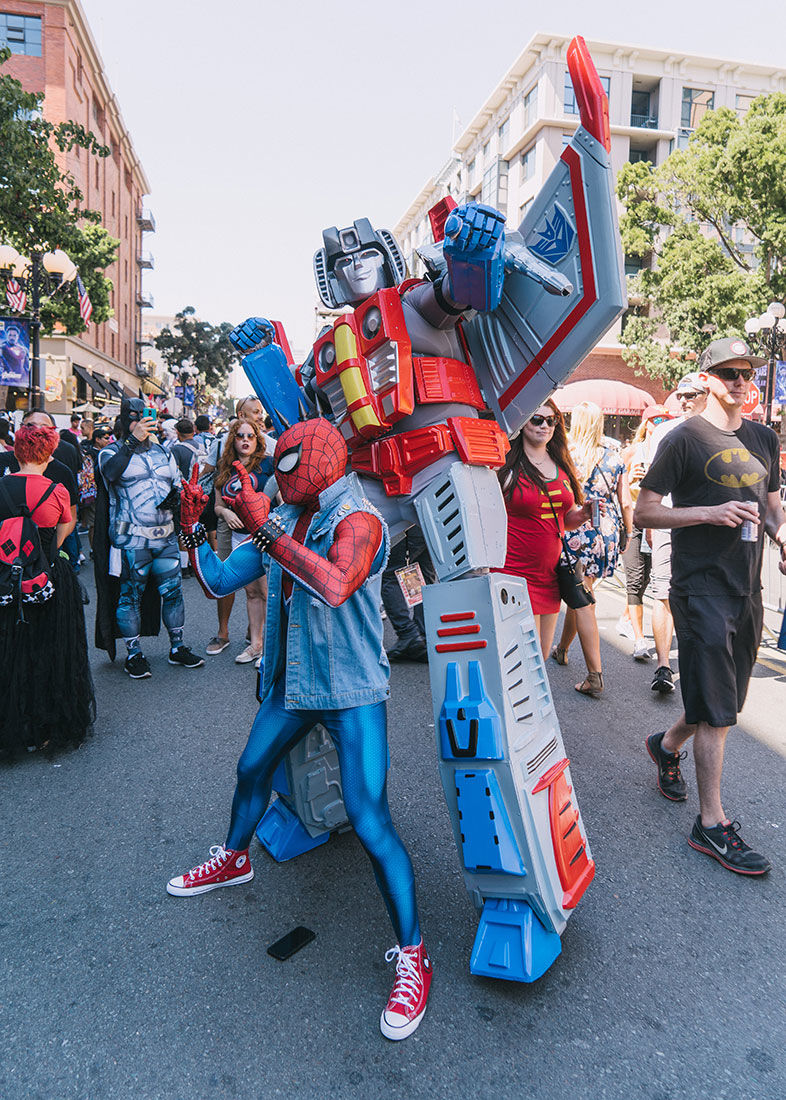
In the 1970s, Shel Dorf, Ken Krueger, and Richard Alf gathered about 100 enthusiasts in the basement of The US Grant hotel. Last year—its 50th—Comic-Con’s estimated 135,000 attendees took over the San Diego Convention Center and surrounding downtown blocks. They came not just for comics, but for movies, television shows, games, cosplay, and more. If you were there (in or out of costume) you might have spotted Tom Cruise, Kristen Bell, Lin-Manuel Miranda, or Arnold Schwarzenegger. Presidential hopeful Cory Booker even took a break from campaigning to visit. A museum in Balboa Park is in the works.

There were a few secrets to Comic-Con’s success, not least that it was—and still is—run by fans. “We have always wanted to put the type of show together that we would want to attend,” says David Glanzer, the organization’s spokesperson and chief communications and strategy officer. Driven by passion rather than popularity, Comic-Con has both predicted shifts in culture and encouraged them. It hosted a panel on what was then called The Star Wars in 1976, a year before the film’s release.

“Comic books, film, science fiction literature… we felt that they were expressive forms of art that were fun and often educational,” Glanzer says. “We just tried to put on the best show we could, focusing on those things that we felt had merit.”

Comic-Con took a big-tent approach, gathering different media and genres under one roof. “There is something of a cross-pollination,” Glanzer says. “You may like movies, but then come to discover that you like science fiction as well—or comic books or gaming or costuming or interactive multimedia. I would hope that we had at least a small part in bringing these forms of art to a wider audience.”

That’s putting it mildly. Along the way, entertainment companies realized how much power there was in Comic-Con’s ardent audience. The event has become a key promotional platform for Hollywood, and the changes that has brought haven’t always been welcome. But Glanzer says they try to stay true to their roots. “Comic-Con really is dedicated to increasing the public’s awareness of popular art. We are fans ourselves, and we are learning every day.” —SC

Subscribe to our newsletters

Select Options

By subscribing you confirm that you agree with our Terms and Conditions and Privacy Policy.

Everything SD JULY 1, 2026

Editor’s Note, July 2026: Hello Again

New editor Emma Veidt gives an introduction and her ode to the once-sleepy, now slept-on North County

Editor’s Note, July 2026: Hello Again
Courtesy of Visit Oceanside

I am fairly sure they don’t let you graduate from Carlsbad High School without a W-2 from Legoland. Being a Legoland MC (Model Citizen, the employee’s moniker) is a rite of passage for all of us who grew up in North County. If you spent a day at the theme park in the 2010s, I probably pointed you toward the Granny Apple Fries or measured your height at a ride entrance.

And now we meet again. I can still point you to quality fries.

This is my first full issue as the new print editor for San Diego Magazine. But it’s not my first time here: I was an editorial intern for these pages back in 2018 (see photo). To be a part of a constant study of the city, its people, its culture, then finding the most compelling stories and bringing them to life—it was incredibly impactful and solidified my decision to pursue all of this (local, print magazine journalism) as a career. Since my internship, I’ve gotten my bachelor’s and master’s degrees from the Missouri School of Journalism and worked for nearly five years at Backpacker magazine. And I’m back at San Diego Magazine, baby. There’s a real magic to narrating the lives lived and dreams dreamt in the place that built me. I am excited to be a part of building the culture of where I’m from. And, born in Tri-City Medical Center and raised in Carlsbad, I can’t think of any other place than our North County issue for me to make my grand entrance as an editor.

Editor Emma Veidt at San Diego Magazine in 2018

To me, North County isn’t just where I’m from; it’s home. Throughout the years, I have run thousands of miles (I did the math) up and down the 101 between Oceanside and Cardiff. I’ve spent thousands of dollars (an estimation, too painful to do the actual math) on BRCs—beans, rice, and cheese burritos—from Lola’s, Juanita’s, and the late, great Pollos Maria.

The stretch of land between Camp Pendleton and the 56 is easy to love. We’re quieter and a little more zenned out than our lower-latitude neighbors, sure, but we’re neither sleepy nor boring.

Do you think Scrojo, the Belly Up’s punked-out poster artist featured on page 68, could last a day somewhere boring?

What I’ve always loved about North County is that the culture shifts every couple of miles as you reach a new town. For years, the media seemed to cast the realm above the merge as a two-toned monolith: sleepy surf towns to the west, suburbs and country living to the east. The nuance of each section seemed flattened or clumped. I think you’ll see the vastly different cultures of North County in this issue—but all distinctly San Diego. Which is to say a little mellower, fewer airs, come as you are.

It’s hard to imagine that the dusty trails and vibrant, muraled alleyways of Escondido are just miles from the barefoot surfers roaming Leucadia. Even though the SDM editorial staff is made up of two lifelong locals and other longtime residents, we don’t pretend to be the experts on every street. What a good city media company does is find the people who are experts, who have a unique hyper-local perspective—and give them the stage.

So we picked six North County neighborhoods—Oceanside, Vista, San Marcos, Leucadia, Rancho Santa Fe, and Escondido—and reached out to artists, community leaders, business owners, anyone making their neighborhood brighter, and we had them describe their perfect day out and favorite things that give their neighborhoods meaning and culture. These itinerary curators included San Marcos’ Patricia Prado-Olmos, Leucadia’s Jeff Schade, Oceanside’s Aaron Crossland, Escondido’s Suzanne Nicolaisen, Rancho Santa Fe’s Charo Garcia-Acevedo, and Vista’s Steve Glaudini. If there’s anyone who lives and breathes North County, it’s them. Check out their recommendations in our feature on page 56.

This month, we’re also going back in time almost 15 years to the Big Bay Boom. Yes, that meme-ified Fourth of July fireworks show where enough pyrotechnics for a 17-minute show went off at once over San Diego Bay. Content Chief Troy Johnson remembers the day and dug back through the story for a hilarious locals’ take on the big debate: Was it the worst fireworks show of all time, or the greatest? (Page 38.)

Before I leave you to our hard work, a sentimental note. When my parents moved from St. Louis to San Diego in the early ’90s, my mom subscribed to San Diego Magazine to learn about her new neighborhood. Now, over three decades later, I’m here—on this planet and in these pages. I thought about my parents a lot as we worked on this issue. Maybe there are a couple new San Diegans reading this magazine for the first time. Maybe that’s you.

Well then, to both of us, I say, “Welcome.” Let’s do this.

Emma Veidt

About Emma Veidt

Emma Veidt is an editor at San Diego Magazine. She earned her bachelor's and master's degrees from the Missouri School of Journalism. She loves running, hiking, and rock climbing, but really, she mostly loves encounters with the street cats around North Park.

Everything SD JUNE 30, 2026

The Fireworks Disaster That Made San Diego a Legend

Eighteen seconds, one unforgettable mistake, and a Fourth of July story that somehow gets better with age

The Fireworks Disaster That Made San Diego a Legend
Courtesy of The Port of San Diego

There’s a famous video.

“This is insane!” the guy filming it seems to proclaim. “It’s the best fireworks show ever!” a companion confirms, inspiring a debate lasting over a decade.

All told, 7,000 fireworks exploded in the span of 25 seconds over San Diego Bay on July 4, 2012. A Michael Bay amount of unison. $125,000 worth of shells, cakes, Roman candles, and skyrockets had been placed on a barge—enough for 17 minutes of decorative sky flares—and…

Boom.

The sky looked like someone had set a giant Rorschach test on fire. Or as if whatever we all see in our Rorschachs—butterflies, clowns, tongue kissing, dads—was being electrocuted and lifted heavenward, amen. It was shocking how bright it was, how much it sizzled the local cosmos. Could’ve been one of those sci-fi films where a hole is ripped open between warring universes. But angstier, more metal—the work of some methy creator in a sleeveless concert tee.

The sound?

Lou Reed once released an entire album that contained 64 minutes of mindflaying guitar screeches and machine noises. No regular songs, just a fascinating amount of ear distress. His record label reps no doubt heard the melodic outro of their careers, but everyone else was in pain and stumped. That album still sounded better than the bay did that night. The bay sounded like a god who struggled with emotional regulation had blown his speakers and was working through the anger stage of AV grief.

In the left frame of the video, a middle-aged woman is attempting to drag her husband off by the hand. In no way does he want to go, possibly because he had missed the time Roseanne Barr sung the national anthem at a Padres game, simultaneously disemboweling and amusing America through the power of song. He would not willingly abandon an equally worthy San Diego trainwreck.

Another woman in the video appears to have just filled her beer, rushing to sit down for the show. She pauses mid-sit and returns to the full and upright position to properly bear witness. What was supposed to be prolonged entertainment has been so radically shortened that she will have to find another reason to drink. Lucky for her, drinking will be the only way to adequately process.

Locals remember the conspiracy theories. People wondered if the fuses had been tripped by a saboteur who was sympathetic to dogs, fish, or the growing suspicion that late-stage capitalism is a gorgeously branded but impossible dream sustained by remarkably efficient top-tier wealth retention and the soft compliance of fireworks-watchers who can no longer afford a house, a beer, or the personal impacts of human reproduction.

Speaking of being terrified of babies, babies were terrified. The children who witnessed it probably still can’t go near a candle store. But those kids will be tougher, perfectly scarred kids. They’ll write better songs.

That night helped us absolutely dominate the national news cycle. For a hot minute, we became America’s water-skiing squirrel. Now, years later, when you Google “fireworks gone wrong,” San Diego is always a top contender, along with that poor Nebraska family who nearly wiped out a couple generations in their front yard, their minivan somehow turning into a howitzer of recreational TNT.

There is still debate as to whether Big Bay Boom 2012 is the worst or greatest fireworks show of all time. But the advanced parts of civilization arrived at the truth as quickly as the women in the video did. It was undeniably amazing.

First of all, the point of Fourth of July fireworks isn’t “the intricate choreography of sky fire over a guaranteed amount of show time.” It’s about creating a vivid memory shared with some people you like, love, or would like to love.

BBB2012 used large-scale chemical fire to create the ultimate memory.

Sure, some people who iron their jeans subjected their family to a sermon about how San Diego managed to botch America’s birthday like a Disney princess-for-hire who smelled of quite a few Sauvignons.

The rest of us saw how perfectly it nailed the actual feeling of being an American. Because only a miniscule percentage of us bake postcard apple pies where every inch of crust is perfectly laminated like the wood in an Irish bar. Very few of us can paint on par with Picasso. The rest of us—despite truly believing in our America-activated abilities to achieve greatness in almost any field of our choosing—burn pies. We try to paint only to realize it looks like our fine motor skills have entered active death.

That’s why BBB2012 was the most perfectly American fireworks show ever: A wildly ambitious idea galvanized thousands upon thousands of people to both work on it and come to hold a beer and gawk at it, only to have it fail in the most glorious TMZ-level spectacle.

America isn’t about immaculate, storyless wins. It’s about how the framework of a country is solid enough that we can accidentally detonate our entire lives—a few times—and still probably be OK.

No one has America’d quite like San Diego did on that day. It was performance art. Lou Reed’s heart slow-clapped. Any brief municipal embarrassment quickly became a pride of our people. I can only hope the same for the Nebraskan yard family whose Dodge Aerostar became a hyperactive Death Star.

P.S. Local writer Maya Kroth compiled a quite great oral history of that night for Thrillist. The bottom lines for me were—it took nine months to prepare, no one was hurt, and even though the pyrotechnics company tried to zero out the bill, Big Bay Boom founder H. P. “Sandy” Purdon refused and paid them in full. This year will mark the 25th Anniversary of the yearly Big Bay Boom.

Troy Johnson

About Troy Johnson

Troy Johnson is the magazine’s award-winning food writer and humorist, and a long-standing expert on Food Network. His work has been featured on NatGeo, Travel Channel, NPR, and in Food Matters, a textbook of the best American food writing.

Features JUNE 29, 2026

5 San Diego Food Trends to Know About

From surprise revivals to changing dining habits, these are the shifts redefining the local culinary landscape

5 San Diego Food Trends to Know About
Photo Credit: Arlene Ibarra

Comebacks Are the New Kickoffs

If absence makes hearts (and stomachs) grow fonder, then shuttered restaurants quickly become the hottest tickets in town—something a number of iconic institutions found out after taking very public hiatuses after historically long runs. For instance, following a lengthy (and extremely flip-floppy) closing process after 92 years in business, Las Cuatro Milpas reopened two blocks away in Mercado del Barrio. Similarly, Carlsbad butcher shop Tip Top Meats reopened in the same location (albeit a smaller space) after the death of founder Joachim “Big John” Haedrich in 2023. Finally, after a whopping decade out of business, Sami Ladeki and chef Alfie Szeprethy brought back Roppongi to its original Prospect Street space, where it was the talk of the town in the late ’90s. All came back under the same proprietors, so they weren’t third-party nostalgia-licensing deals. The algorithm may have ravaged our attention spans away from all but the newest and shiniest, but this proves there’s still hope for our collective prefrontal cortex.

New Generations Take the Reins

Other local eateries honored their pasts by bringing in new perspectives. The Lion’s Share in Embarcadero, Milton’s Deli in Del Mar, Dudley’s Bakery in Santa Ysabel, and J-K’s Greek Cafe in La Mesa handed over the keys to new owners willing to take on a big task: maintain the soul of icons through particularly rough economic circumstances for restaurants, navigate big feelings from longtime regulars (who often don’t take kindly to change), and make some necessary changes to keep going for another few decades. Taking over a project in process can be a lot harder than starting from scratch. But building that feel-good nostalgia doesn’t happen overnight, so it sure helps to have a well-established playbook of success passed down from those who came before.

Courtesy of Sugarfish

The Expansion Class Arrives

It wasn’t just restaurant groups from Los Angeles that decided to put down roots en masse, although San Diego saw plenty of LA transplants recently (Sugarfish, Mr. Charlie’s, For the Win, Katsuya Ko, Bacari). Global brands like Chef Fei, Zuma, and Pepper Lunch have locations of their own on the way, and upscale Canadian eatery Joey joined to the inescapable gravitational pull of Westfield UTC’s culinary cosmos for its first spot in America’s Finest City. Good to see the rest of the world is catching up with what we’ve been seeing the last few years—San Diego is a dining destination already on the rise.

Choosing To Not Choose

Between the never-ending news cycle of doom and perimenopause brain fog, I’m at the stage in life where I’m more than happy to let someone else make a decision for me, especially when it comes to what’s for dinner. And based on the way a lot of menus look right now, I’m not alone. It seems like half the places I visit offer some version of a prix fixe, omakase, or tasting menu. Restaurants are embracing the curated experience to solve the problem of affordability (a fixed menu reduces food and labor costs, guarantees an acceptable check average, etc.) and critical thinking in one fell swoop. Omakase (meaning “I leave it up to you”) is far from a new concept in high-end Japanese sushi culture, but now that it’s popping up everywhere from coffee experiences to grab-and-go sushi and sandwiches, it’s gone from somewhat niche to nearly omnipresent.

Courtesy of Rikka Fika

Local Coffee Hit the World Stage

The world got an up-close look at San Diego’s coffee industry when we hosted the premier specialty coffee expo World of Coffee for the first time this April. San Diego’s long and rich coffee history stretches back to the late 19th century. Things percolated fairly quietly for around a century before really picking up steam. Today, there are nearly 200 specialty roasters and cafes across the county, with many earning national accolades like the Good Food Award (Steady State Roasting, 2020; Bird Rock Coffee Roasters, 2023, 2021, 2019, 2017, 2016), Roaster of the Year by Roast Magazine (Mostra Coffee, 2020; Bird Rock Coffee Roasters, 2012), and the Specialty Coffee Association Coffee Design Award for packaging (Rikka Fika, 2026). Now that we’ve moved past the comically insufferable coffee snob era of the early 2000s, even java newbies can feel comfortable walking into pretty much any coffee shop in San Diego, asking questions, trying a few things, and feeling confident they’re going to get great service and a great beverage.

Beth Demmon

About Beth Demmon

Beth Demmon is an award-winning writer and podcaster whose work regularly appears in national outlets and San Diego Magazine. Her first book, The Beer Lover's Guide to Cider, is now available. Find out more on bethdemmon.com.

Studio S JULY 1, 2026

Get Your Home Ready for (San Diego) Summer

Tips from the trusted experts at Mauzy Cooling, Heating, Plumbing, and Electrical

Get Your Home Ready for (San Diego) Summer
Courtesy of Mauzy Heating and Air

San Diego summers can be brutal. But since the hottest period is typically late summer into early fall, San Diegans still have time to prepare. The pros at Mauzy Cooling, Heating, Plumbing, and Electrical are standing by to help homeowners fortify their homes against the elements and ensure their air conditioning is as frosty as the penguins that serve as the company’s mascots. 

Many homeowners underestimate the load their AC system faces, especially in the inland valleys where temperatures regularly top 100 degrees. San Diego regularly sees multi-day heatwaves each summer, and a system that struggles on the first day will likely fail by the third. Longer run times, unusual sounds or smells, and uneven cooling from room to room are all signs that your system may not survive the next hot spell.  

Systems typically last 12 to 17 years, but there are exceptions. If a system is approaching that, or is already there, a professional evaluation is recommended before summer really heats up. A good rule of thumb: If you can’t remember when your system was last serviced, it’s due. 

“As technology changes, systems become smarter and smarter,” says Sean O’Connor, an install manager at Mauzy with 42 years of experience. “There are a lot of people out there who will say a system’s only good for 10 years. I don’t buy that—these systems are built to last as long as they’re taken care of.” 

There are also a few steps homeowners can take between services to extend the life of their system. Regularly changing a dirty filter—especially if you have kids or pets—and keeping an outdoor unit clean can help head off problems in the future, says O’Connor. 

Also, be realistic about whether it’s time to replace a unit. O’Connor likens pouring money into salvaging a faulty unit with patchwork repairs and replacement parts to “tripping over a dollar to pick up a dime.” When one part fails, others are sure to follow, and newer parts may not be compatible with older units. Mauzy recommends homeowners use the 50% rule: If a repair costs more than 50% of the system’s replacement value, and the equipment is over 10 years old, replacement is usually the better long-term value. And don’t forget the ducting. An older house that was built with heat and later had air conditioning added may not have sufficient airflow, regardless of how good the system is. 

Last but not least, homeowners should know who to trust when it comes to their homes. Built on three generations of professional integrity, Mauzy has grown into not just a leader for cooling, heating, plumbing, and electrical services, but a leader in the community known for supporting local nonprofits across an array of causes. To ensure complete peace of mind, Mauzy stands behind a comprehensive 12-point guarantee that outlines its commitment to outstanding service, quality equipment, expert technicians who understand how the local microclimates affect HVAC performance, and no upsells or surprises on the bill. 

“We go the extra mile. That’s what sets us apart,” O’Connor says. To get a free quote today, visit mauzy.com.

Courtesy of Mauzy Heating and Air
Partner Content
Everything SD JUNE 25, 2026

The Former Comedian Who Became the Internet’s Bee Guy

Jeff Russell traded dreams of SNL for bee rescues, building a social media following of more than 4 million people along the way

The Former Comedian Who Became the Internet’s Bee Guy
Courtesy of Mr. & Mrs. Bee Rescue

The Groundlings improv theater has churned out world-famous comedic talents like Will Ferrell and Maya Rudolph. And in San Diego, a former Groundling has used that training to campaign for a higher power. The power to protect bees.

“The goal was to try and get on SNL,” says Jeff Russell of his time in the improv troupe. “[But now], I have an audience, and I get to crack jokes and be silly and entertain and educate.”

That audience? The over 4 million people who follow Mr. and Mrs. Bee Rescue in the socialmediaverse. Jeff and his wife, Julie, operate the business, which means they remove unwelcome bees without harming them and rehome them to apiaries throughout the county. Their social media is a hub of videos of Jeff peeling open car trunks, flooring, barbecues—any cozy spot for a bee to set up shop—and using smoke to coax them out of the hive (sometimes working sans gloves or protective gear).

Bees in a hive will follow their queen, so finding and moving her helps speed along the relocation process. It’s “a really hard game of Where’s Waldo,” Julie says. But there’s a secret to it: “If the bees start running completely in some random opposite direction in a hurry, then we know that the queen is probably that direction,” says Jeff. Their social videos document this process in a way that turns a reasonable nightmare (being swarmed by bees) into a form of entertainment and advocacy. The Russells spread the apian gospel, sharing why relocating bees is the only option to consider.

Since the 1960s, bee populations across the US have shrunk drastically for a slew of reasons—habitat loss (postwar industrialization led to fewer farms and crops), climate change (petulant temps affect blooming schedules), and pesticides (when used improperly, they can be toxic for bees).

Bees are also responsible for up to 75 percent of all flowering plants; 35 percent of food crops rely on animal pollinators to reproduce. So, basically, we’d be living in a flowerless world fueled by a diet of wind-pollinated oats and Red Dye 40 without them.

Jeff and Julie met on Tinder in 2016. “It would have been more appropriate if we met on Bumble,” Julie says. A photographer and graphic designer, she had no experience in a swarm of stingers before 2018. When Jeff broke his back surfing, she had no choice but to step in. Later, when she was laid off from her job in 2020, she focused on growing Mr. and Mrs. Bee Removal’s social media accounts. That’s when their business took off. These videos work. People are learning.

“Quite a lot of my customers were [initially] like, ‘Why don’t we just kill?’” Jeff says. “Now, the vast majority are like, ‘You take them alive, don’t you?’”

Emma Veidt

About Emma Veidt

Emma Veidt is an editor at San Diego Magazine. She earned her bachelor's and master's degrees from the Missouri School of Journalism. She loves running, hiking, and rock climbing, but really, she mostly loves encounters with the street cats around North Park.

Everything SD JUNE 25, 2026

The Ancient Idea Behind One of San Diego’s Biggest Tech Success Stories

Jordan Glazier's Wildfire Systems is reinventing loyalty rewards for some of the world's biggest brands

The Ancient Idea Behind One of San Diego’s Biggest Tech Success Stories
Photo Credit: Matt Furman

You visit your favorite ancient Egyptian merchant, and as you’re buying some papyrus to hieroglyph your way to the 3000 B.C. version of a Pulitzer, he slips you a special token as a thank you for being so loyal. It’s the least he can do for keeping him in business, and you can use that reward to barter for anything you want—like beer.

A few thousand years later, those tokens would evolve to copper coins that American retailers handed out so you could spend. The Sperry & Hutchinson company introduced its groundbreaking “Green Stamps” program in the late 1800s. Today, your sandwich shop’s loyalty card is one hole punch away from giving you a free sub. And you’ve surely justified some extravagant purchases in the name of airline miles.

Point is: Free stuff has always been a compelling way to earn human loyalty. And with his Solana Beach–based company Wildfire Systems, Jordan Glazier has built one of the city’s biggest tech companies by modernizing that simple, ancient idea.

“Being able to save money when you shop is nice to have when times are good,” Glazier says. “When you have periods of inflation or financial stress, that nice-to-have becomes a must-have.”

He launched Wildfire in 2017. It’s essentially a white-label platform that builds and operates programs for enterprise brands across most industries—from banking (Visa, Citi) to travel (TravelArrow) to fintech (Sezzle, Acorns), to rewards (Shop Your Way, KashKick), you name it. Customers of, say, RBC (also a client), can install a browser extension or enable a feature on a mobile app that activates savings and cashback offers. Wildfire has now spent three straight years on Inc. 5000’s list of the fastest-growing private companies.

Glazier’s no stranger to scaling new ideas. As one of the early executives at eBay, he built and ran the consumer electronics, computer, and industrial equipment verticals. Later he turned San Diego tech company Eventful into the world’s largest online calendar and events discovery platform (CBS acquired it in 2014).

“Part of being an entrepreneur is building things and solving for things that haven’t been solved before,” he says.

It’s a lesson he learned early on. His grandparents started a women’s clothing manufacturing company in Chicago in the 1910s, and it remained a family business for over seven decades. Preteen Glazier would punch in as a stock boy and sit with the sales team making phone calls.

“That was my very first paycheck,” he says with a smile.

Now he and his own team of 70 have grown Wildfire’s revenue 721 percent over the past three years.

“I want to make sure we are building a business that’s built to last,” he says. “We are eight years in, and I feel like we’re just getting started.”

Glazier named the company because of how people recommend products and services to each other. Great shirt, where’d you get it? Anyone know of a good sushi spot? “Word of mouth,” he says, “spreads like wildfire.”

San Diego’s tech industry seems to come and go. There were predictions that the post-pandemic, remote work world would see all luminous brains migrating south to our famous clime, but that has been only partially the case. As tides turn, big names like Glazier’s hold anchor.

“San Diego is such a great place to live and to build a business,” he says. “I always feel sorry for people who don’t live here.”

Matt Eisenberg is an award-winning writer and photographer based in San Diego. A former ESPN editor, his work has also been published by CNN, Bleacher Report and the New York Daily News.

Partner Content JULY 2, 2026

Top Lawyers 2026: Panakos LLP

Discover San Diego’s Top Lawyers — the region’s most trusted legal professionals across diverse practice areas.

Top Lawyers 2026: Panakos LLP
SDM: Top Lawyers 2026

Daniel A. Kaplan

Daniel A. Kaplan is a founding partner of Panakos LLP with more than three decades of civil litigation experience in both state and federal courts. Mr. Kaplan pursues and defends legal claims on behalf of companies, entrepreneurs, and business owners in high-stakes disputes. He focuses on business disputes including breach of contract, unfair competition, trade secret theft, securities disputes, fraud/misrepresentations, and employment matters.

“The best advocacy combines preparation, perspective, and a client relationship built on trust and candor.” — Daniel A. Kaplan

His clients include real estate investors, private and public corporations, and individuals seeking sophisticated legal counsel. Known for practical judgment and strategic advocacy, he works closely with an experienced and diverse legal team to protect, enforce, and defend his clients’ interests.

555 W. Beech Street, Ste. 500, San Diego, California 92101
619-8000-LAW
Panakos.law

Partner Content

Thousands of savvy locals already get it.

San Diego's best restaurants, experiences, and events—handpicked and delivered to your inbox weekly. You in?

Close the CTA

Contact Us

1230 Columbia Street, Suite 800,

San Diego, CA