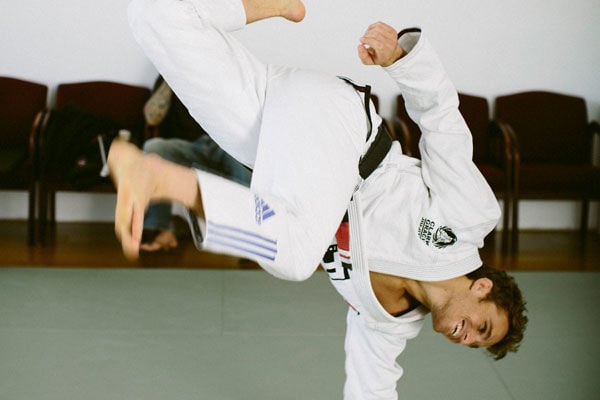
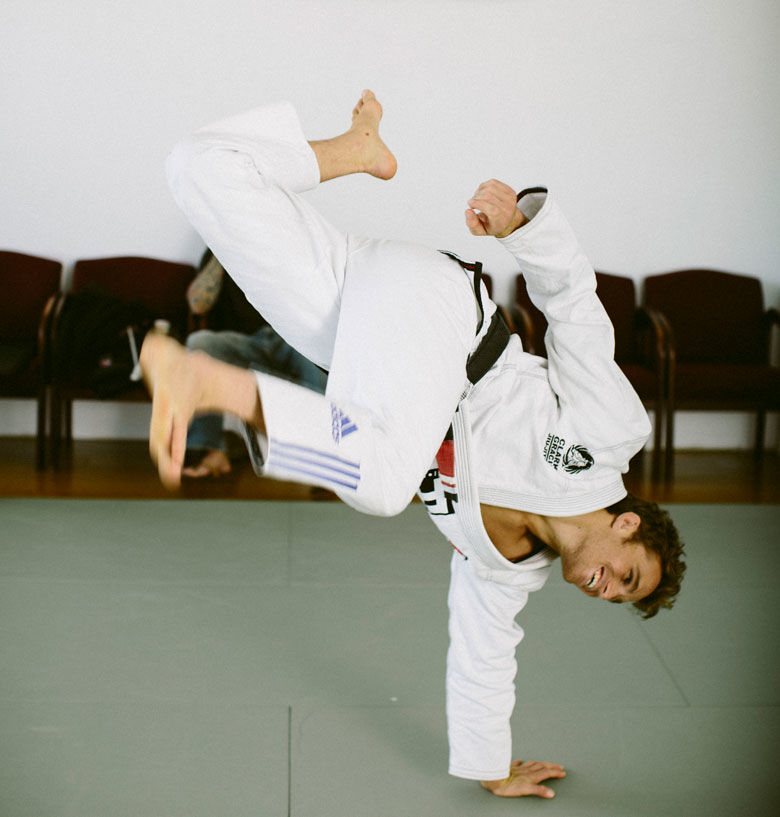
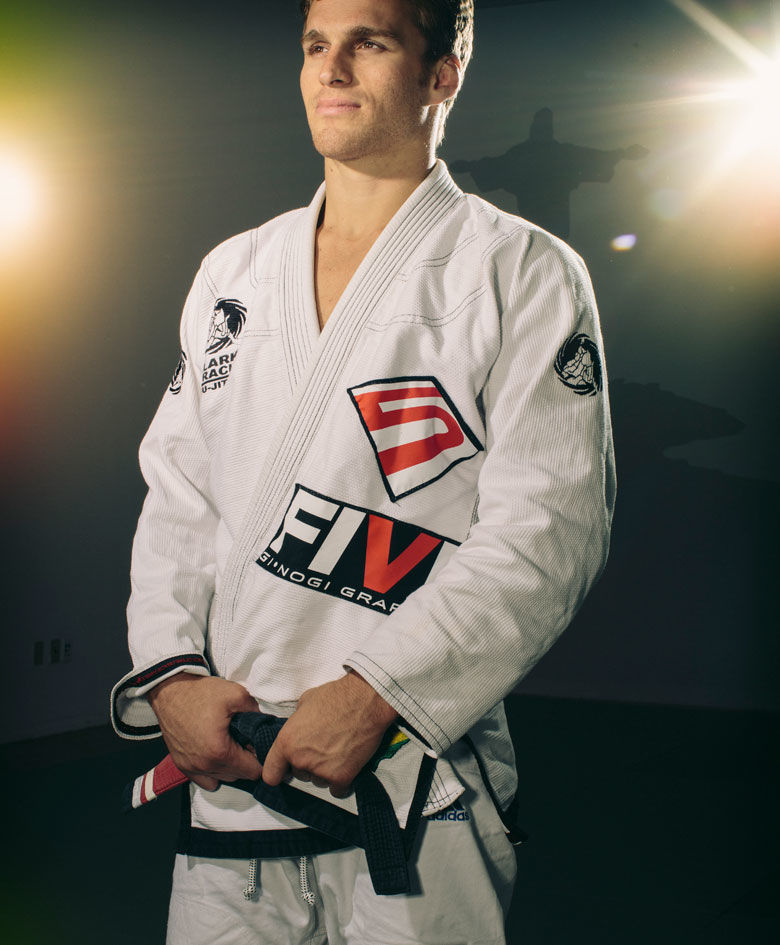
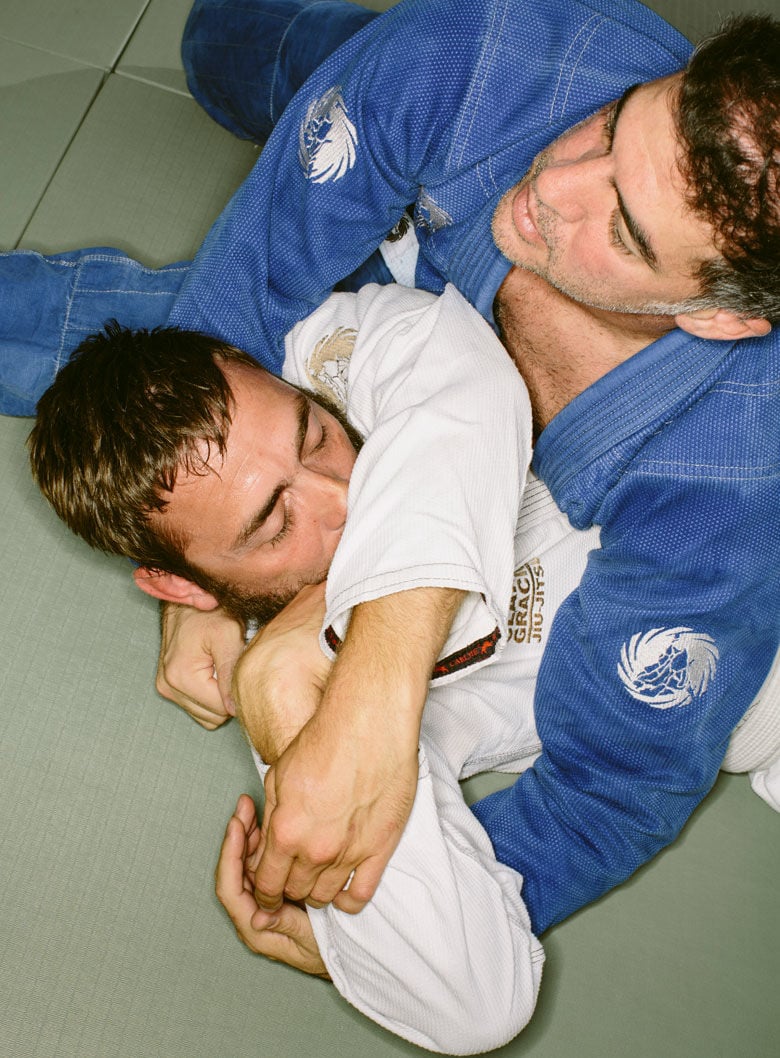
Instructor Clark Gracie at his jiu-jitsu studio in Old Town
It would take about 10 seconds for Clark Gracie to cut off the blood supply to my brain and knock me unconscious, but a second is all I need to feel helpless and out of breath at his Old Town jiu-jitsu studio.
To be fair, I have asked for it, and Clark thankfully spares me the humiliation of ripping my plaid dress shirt in front of his students by urging me to throw on a uniform—the top of the jiu-jitsu gi, at least—so he can properly execute the collar choke.
Clark is a powerful man but also warm and pleasant. He humors me with a you’re-going-to-regret-this smile when I ask him to choke me again, and soon I find myself tapping his elbow for mercy. The Gracies have been teaching this exercise to stubborn men for decades. Clark is carrying on an athletic tradition that his family brought to the United States in the early ’70s.
Over the last decade, the jiu-jitsu scene has exploded in San Diego. Once home to only a few studios, the city now boasts more than 100, many owned by world-class jiu-jitsu fighters and teachers. Among them are Clark, who has two studios in town; Andre Galvao; and the Nogueira brothers—twins Antônio Rodrigo and Antônio Rogério, who rank among the sport’s most decorated and devastating Ultimate Fighting Championship mixed martial artists.
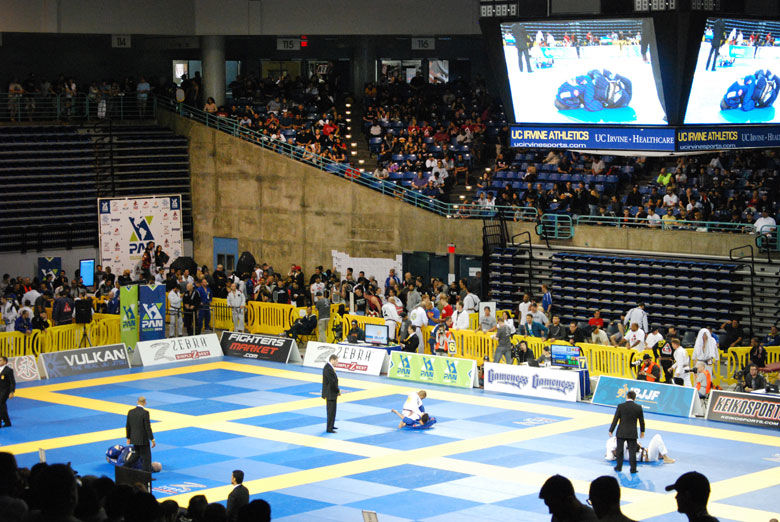
As I visited studios in San Diego and watched some of the world’s top fighters compete at the International Brazilian Jiu-Jitsu Federation’s Pan tournament in Irvine this spring, I heard again and again that San Diego was the sport’s “mecca” in the United States.
Jiu-Jitsu training
Jiu-jitsu teaches students to disarm and disable attackers
Jiu-jitsu teaches students to disarm and disable attackers
“Everyone would rather go to San Diego than anywhere else,” says Saulo Ribeiro, a Brazilian-born world champion who trains top-flight fighters at the University of Jiu-Jitsu in Point Loma and trained with the Gracie family in Rio de Janeiro, the birthplace of the technique. “There are many similarities to Brazil: the beaches, the surf, the lifestyle. The geography is perfect.”
“No matter where you train, you’re walking into a family. You’re accepted without question.”
The history of jiu-jitsu goes back much farther than Rio—and it didn’t even start in Brazil. Historians have credited Buddhist monks in India circa 2000 B.C. with developing the martial art to disarm and disable attackers without inflicting serious harm.
The Gracies have not been shy about proclaiming that they perfected jiu-jitsu after traveling Japanese fighters introduced the sport to Brazil just before the first World War. Although there has been some dispute among the Gracies about who imported their brand of jiu-jitsu to the United States, Clark’s father, Carley, technically owns the rights.
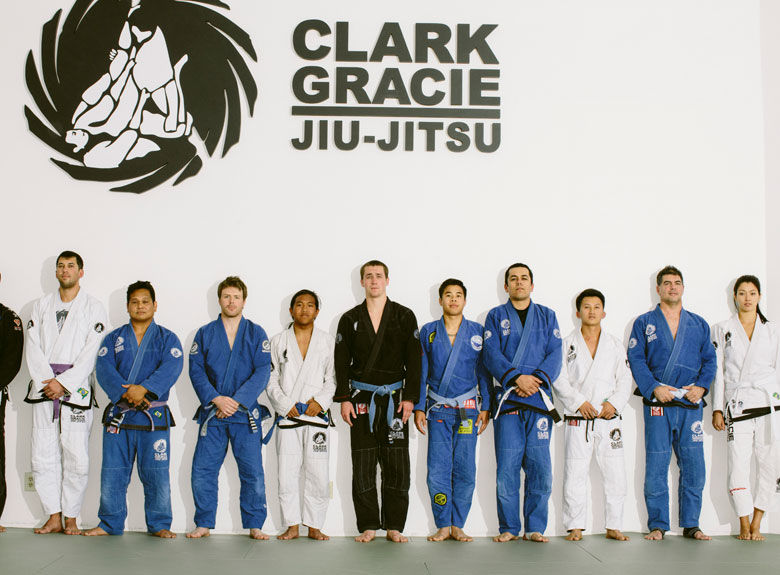
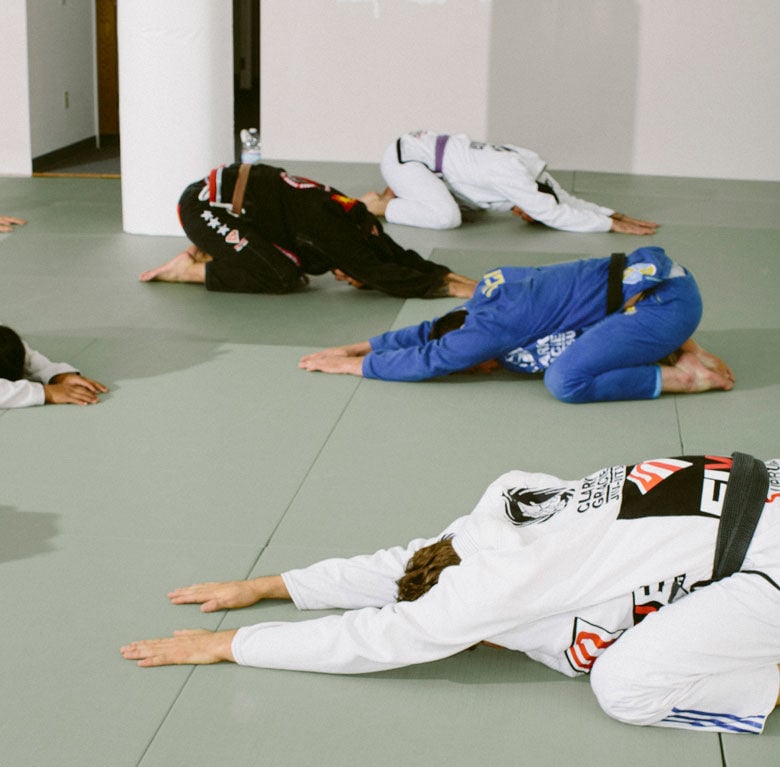
Students at Clark Gracie Jiu-Jitsu in Old Town
Students at Clark Gracie Jiu-Jitsu in Old Town
Students at Clark Gracie Jiu-Jitsu in Old Town
“I’m the one who brought Gracie Jiu-Jitsu to the United States,” Carley tells me. “It’s going all over the world.”
Carley is charming and funny and terrifying at the same time, exuding the confidence you’d expect from someone who has been making grown men cry “uncle” for four decades.
Marines in charge of the American consulate in Brazil persuaded Carley to come to the United States and teach the technique to soldiers, who could use it to defend themselves in hand-to-hand combat. He trained fighters on the East Coast in the ’70s before making his way to California and settling in San Francisco, where he still teaches today. He flies to San Diego as often as he can to visit Clark and his brother, Ralston, whose careers are taking off.
“There’s a big competition scene here,” Ralston explains. “If you want to succeed, it helps to surround yourself with people working toward the same goals. It’s natural to want to be healthy here. It’s the right scene for it.”
But you don’t have to compete to enjoy Brazilian jiu-jitsu. Many of the students in San Diego’s studios are there to learn self-defense while getting in a good workout. It’s also safe for kids, who can start training at five years old.
The 2014 Pan Jiu-Jitsu Championship in Irvine
The 2014 Pan Jiu-Jitsu Championship in Irvine
The 2014 Pan Jiu-Jitsu Championship in Irvine
Brazilian jiu-jitsu is sometimes confused with its brutal cousin, mixed martial arts, because many MMA fighters have added the former to their arsenals. There’s a good reason for that: If you choke your opponents out or crank their limbs into a painful position, as practiced in jiu-jitsu, they have no choice but to submit.
But in its purest sense, jiu-jitsu is a peaceful sport—a metaphor, in some measure, for life itself. If you push too far too fast and go for an opportunity that isn’t there, you’re guaranteed to fail. If you’re patient, if you’re willing to endure the struggle and wait for the right move, the right moment, you’ve got a shot at winning the round before you have to grapple again in the next.
Strategy, not strength, is at the core of the sport, and it’s easy to see how powerful it is when a fight goes to the ground, erasing the advantages of height and weight.
“It’s like chess with your body,” explains Zarah Shaw, a family friend of the Gracies who started training last year, when the TSA decided to allow pocket knives back on to airplanes. Shaw, a flight attendant, wanted to be prepared for anything, but for her and many others, jiu-jitsu is a mindset, and an inclusive community that stretches far beyond San Diego.
“No matter where you train, you’re walking into a family,” Shaw says. “You’re accepted without question.”
stretching
Shaw considers herself a jiu-jitsu ambassador, and not just because of her longstanding relationship with the Gracies. She wants to see more women take up the sport.
Women like Kyra Gracie—Clark’s distant cousin—are competing at a high level, but it’s taken time for them to carve out their place. Many are just now getting aquainted with the sport.
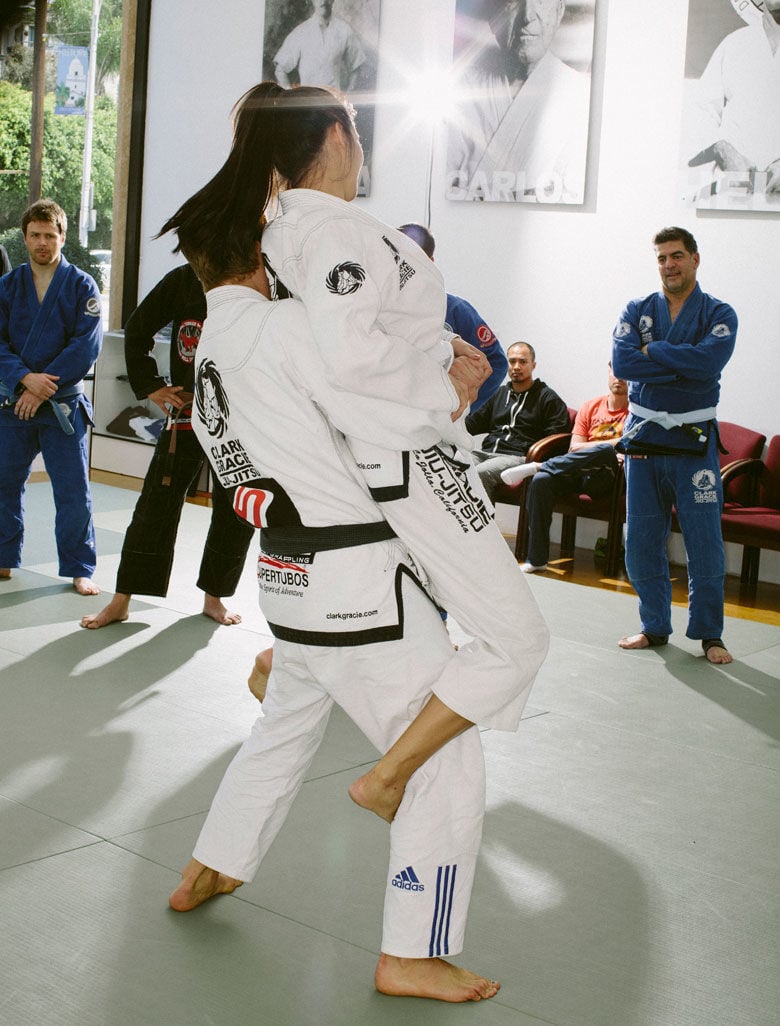
Recently, Clark taught a free women’s self-defense class at the Handlery Hotel in Mission Valley. The goal was twofold: to teach self-defense, of course, and to show the students that even basic jiu-jitsu techniques can ward off a much larger aggressor.
“They teach you how to break out of a bear hug and how to get away from an attack,” Shaw says.
Clark Gracie
Clark Gracie
Clark Gracie
The classes and fights typically end peacefully, and the Gracies have fostered a sense of mindfulness and dignity within the sport. For instance, jiu-jitsu even has its own set of commandments, pushing the mental component even further:
“Be just as enthusiastic about the success of others as you are of your own.”
“Forget about past mistakes and concentrate your energy on the victories of tomorrow.”
“Be so secure that nothing can disturb your peace of mind.”
Taken as a complete mind-body package, it’s no wonder San Diego has become a hub for this emerging sport. These simple edicts seem fitting for a town that is as passionate about its trails and beaches as it is about its yoga and meditation. For many jiu-jitsu enthusiasts, it’s a pursuit of personal growth. Shaw says, “You learn humility. You learn you can leave all your troubles on the mat.”
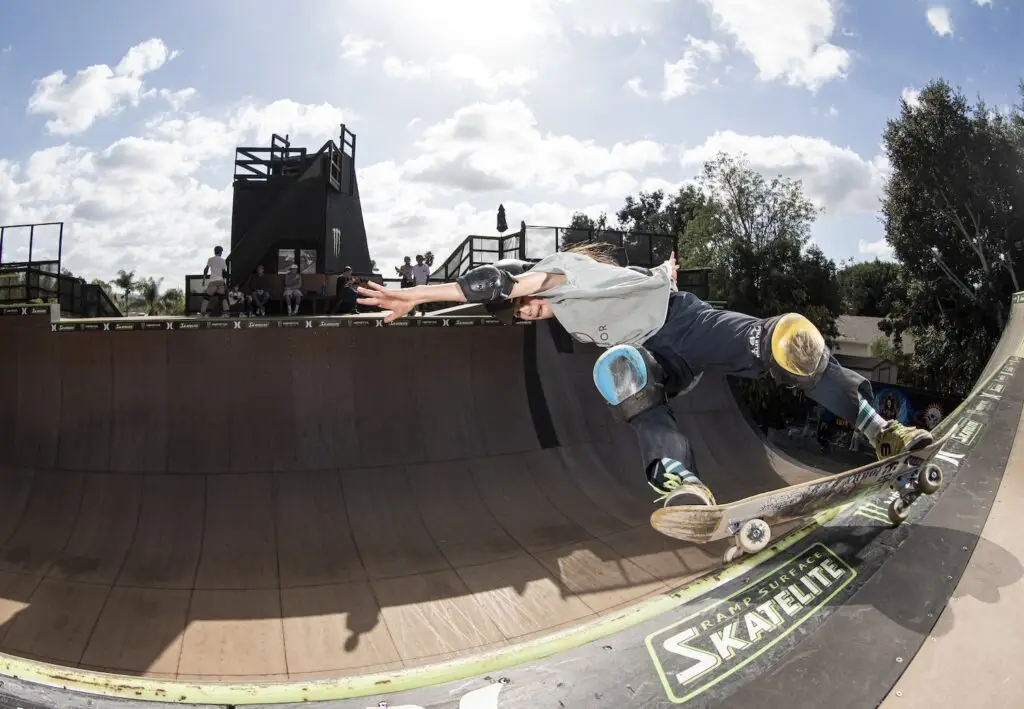
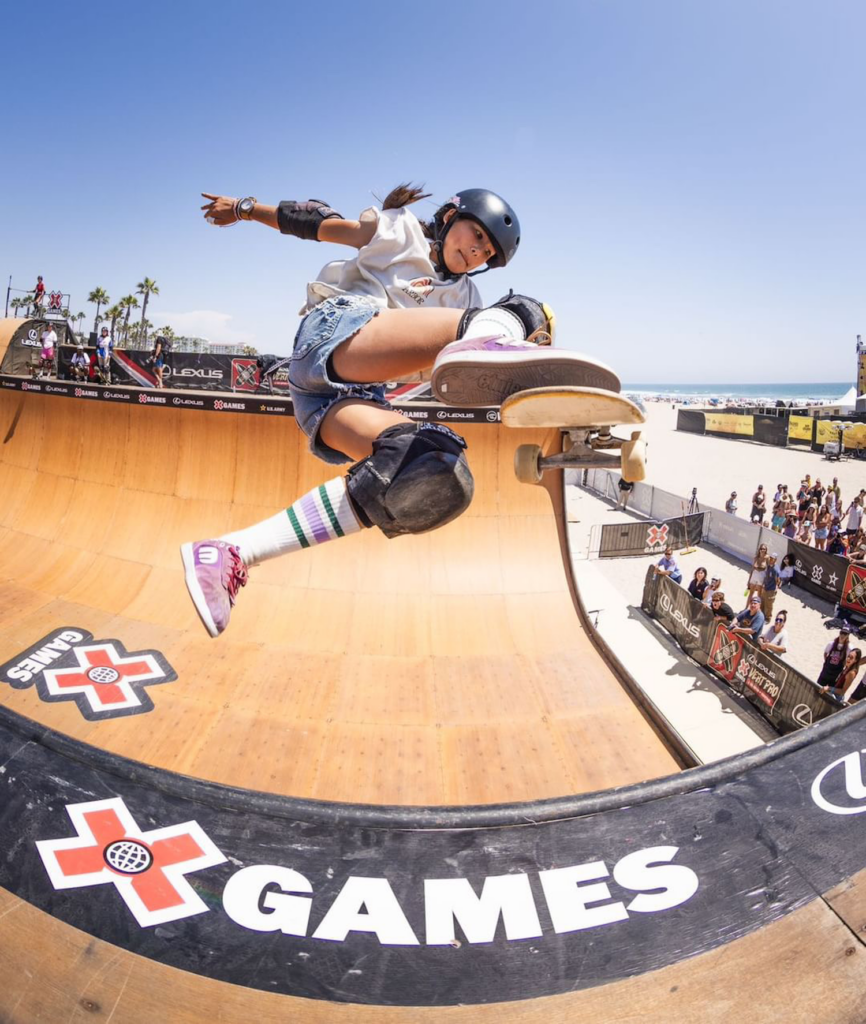
It was the summer of 1999. MTV, The Matrix, and first-generation PlayStation glowed on tube TV sets all over America. What a time to be alive. Smartphones weren’t yet stealing people from the moment. Cultural was a shared reality. During the last few minutes of the monoculture, Tony Hawk executed the first-ever 900 at X Games V in San Francisco. That’s two and a half aerial rotations with a side of the dizzies.
The time had run out on the Vert Best Trick competition long before the 11th attempt when he pulled off the fateful feat. Nobody cared. Not the judges, not the competition, and certainly not the crowd. “Let that bird fly,” they said. Once the trick was landed, they partied like it was 1999 … because it was.
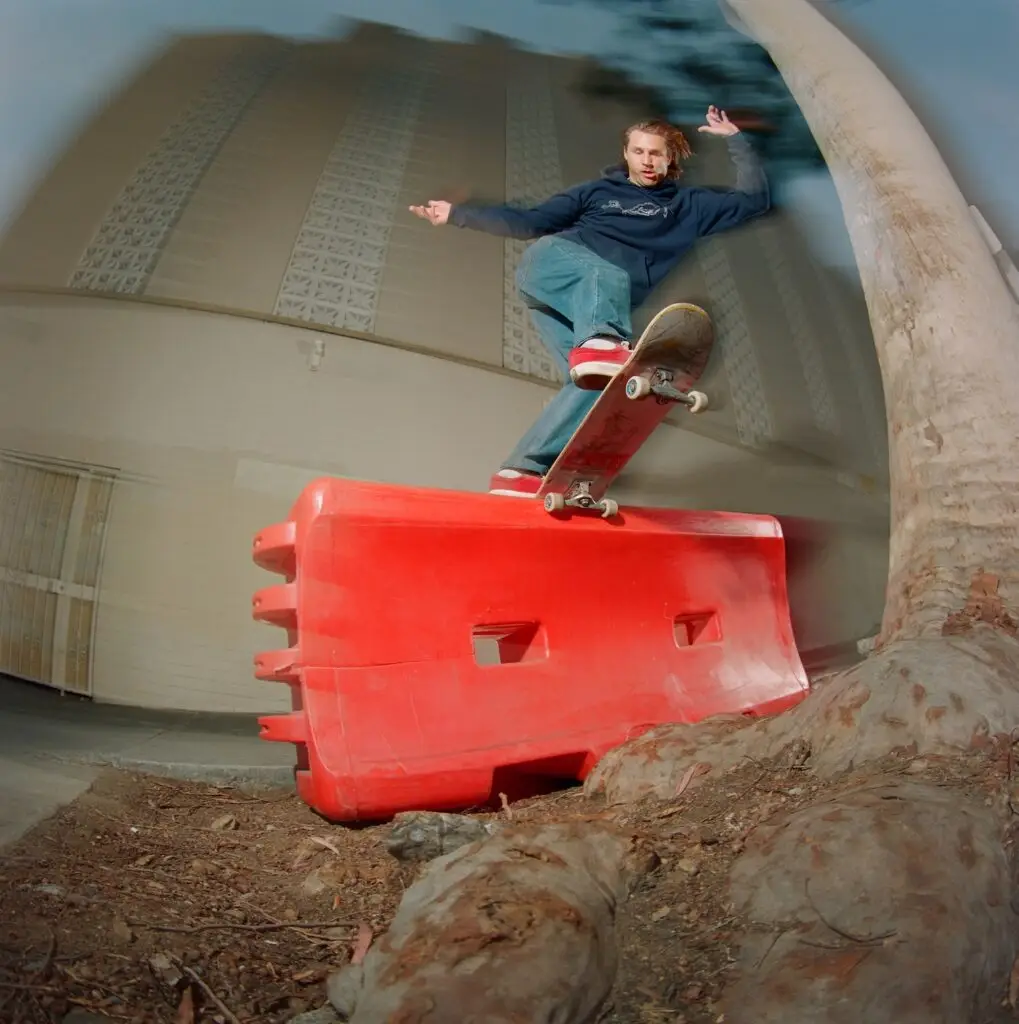
That was the tipping point when the skateboarding world exploded, going from counterculture to a national phenomenon. Shortly after that, “Tony Hawk’s Pro Skater” video game came out, introducing millions of kids to what skate culture looked like. Oh, the game had a killer punk soundtrack, too.
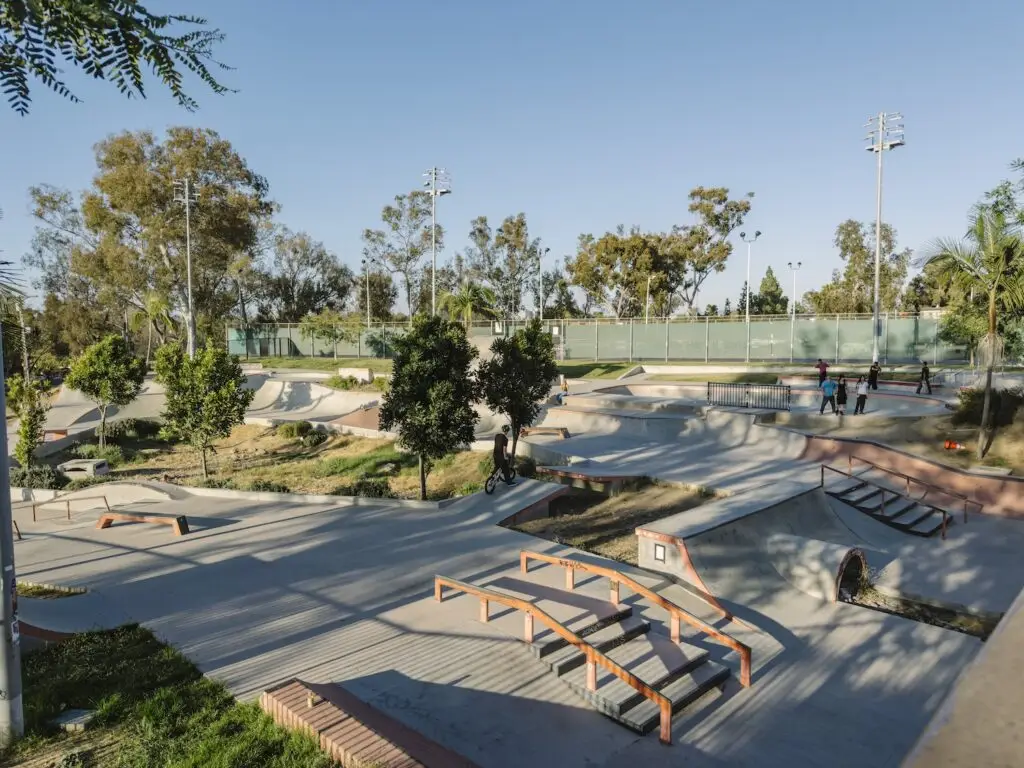
We can all thank Hawk for the globalization of skateboarding. But we can also recognize his local influence and how San Diego County continues to be a hub for skateboarders young and old, for competitors and street skaters. To see it all, go to Park De La Cruz in City Heights—or, heck, any other skatepark in the county—which, at 19,000 square feet, is about twice the size of the average skatepark and has signature features like an M-shaped transition ramp. The amount of talent that continues to evolve in this county is a testament to deep-rooted skate culture and world-class athletes supporting the next generation.
Photo Credit: Casiel Sanchez
The Skatepark
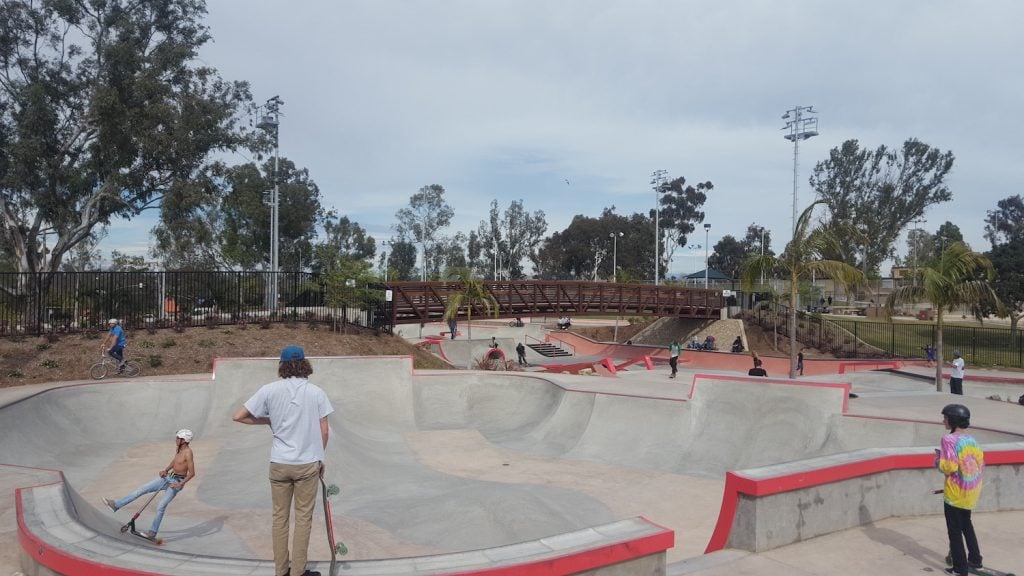
I’m a little early for a skate lesson with pro skater Mike Owen when I get to Linda Vista Skatepark. In the 2010s, Owen ranked as one of the world’s top bowl riders. He’s the founder of San Diego Skateboarding and has “helped thousands of kids, teens, and adults learn to skate safely, confidently, and with style,” the company’s site says. And now it’s my turn. We start the lesson on the nearby tennis courts, getting my basic foot mechanics down. Safety before style.
In terms of street plaza features, the massive Linda Vista Skatepark is loaded with rails, stairs, manuals, and ledges. There are more bowls than you can get from Cava: a flow bowl, backyard-style pool, and vert bowl. The main feature is a full pipe for advanced line riders. It’s a hell of a park, even if somebody just wants to watch the action from the 100-foot-long pedestrian skybridge overhead.
Right now, San Diego has over 50 public skateparks scattered throughout the county. “There are now more [skateparks], more resources for them, and more terrain,” Owen tells me. “Now, they’re offering different competitive style skateparks that help for competitions. The best parks have a variety of different terrain where you have things for beginners and bigger transitions. Not every town has that.”
San Diego, luckily, does. But despite the bounty, Owen believes there should still be more—public skateparks are safe spaces for all to learn and develop on-board skills. Without them, a huge portion of San Diego’s culture withers. Encinitas could be the next city to add a skatepark to the county’s roster: In early July, the Encinitas City Council appointed 12 local skaters and community members for the newly established Skate Feature Committee. In partnership with two councilmembers, the committee’s purpose is to design a working skatepark or feature for the city.
But like any big project, Owen says, it’s a long process to add another skatepark to the community.
“I wish it were easier,” he says. “When there are different contractors for different things, [there’s only] a certain amount of time to build. It gets tricky.”
Then there’s the matter of funding the actual construction and development of the skatepark. That usually comes from grants, fundraisers, and donations. For reference, Linda Vista Skatepark was built on a $4.46 million grant from the California Department of Housing and Community Development in 2014. With an additional $40,000 donated by the Tony Hawk Foundation, the park opened in 2018 and is the largest in San Diego’s Parks and Recreation system. The best way to get a skatepark in your neighborhood, Owen says, is to start a petition and reach out to your city.
Photo Credit: Blair Alley
The Street Skaters
Jordan Thrower’s first street skate sesh at San Diego City College in 2003 ended with a police chase. The campus was swarming with skaters riding rails, jumping stairs, and grinding tricks on benches, curbs, and ledges. When the cops got on their loudspeaker telling them not to run, everyone obviously ran. Back then, cops would give tickets and confiscate boards. The vibe has loosened since. “Now, the police don’t really care,” Thrower says. “They just make you leave. It’s not anything crazy.”
Street skating is when riders use real-world urban obstacles, rather than pristinely designed bowls or ramps—such as in college campuses, downtown areas, corporate buildings, and malls. Abandoned mini-golf courses and construction sites do the trick, too.
Thrower says the street skating hub here isn’t as huge as it once was. Thanks to modern technology and social media, skaters aren’t tied to any certain place to create skate videos. You know, those videos that could have been taken this year but have the low-fi vibe of 2004, where skaters carve down stairwells into parking lots, over mailboxes, or across park benches. The silver lining: Even though there are fewer street skaters than there once was, those who stayed in San Diego are still tight.
“Everyone skates with each other and knows each other here,” Thrower says. “In LA, it’s not really like that. It’s small there, but not everybody knows each other, and they don’t really skate with each other too much. They just have a lot of little crews.”
Back in 2015, Thrower started his own street team and brand that sells boards and shirts called Tantrum. The Tantrum team is split between San Diego and San Francisco. It doesn’t take much to be a part of a skate team. You just have to be a good hang.
“The way I pick people [for the team] is if I can get along with them,” he says. “It doesn’t even really matter if they’re that good. If you’re likable and funny, you can pretty much be on the team.”
Photo Credit: Marc Wierenega
The Future
Running it up to North County, a Vista-based nonprofit organization called Exposure Skate has been shaping up the youth since 2012. Its mission is to give more opportunities to otherwise underrepresented women, girls, and non-binary individuals by offering classes and camps. This, to build up confidence and community. We could all use a little bit of that, eh?
Thanks to Exposure Skate, 13-year-old Joey Yarbrough has found herself competing in the LA Olympic trials. (Her first time on a skateboard came at just 18 months old at an Exposure Skate Rising event.)
While competing for Team USA in Rome in June of this year, she finished 13th at the first Olympic qualifier for LA28. Currently ranked 21st in the world and 5th among American women, the young prodigy is blooming. And she’s in good company and mentorship from her biggest influence, Bryce Wettstein.
“She taught me at the first Exposure Skate Rising when I was little,” Yarbrough recalls. “I compete and skate with her all the time now, and it’s super fun. [At Exposure,] it feels so good to have someone there to help me whenever I need it. They’re like my family, always encouraging me and always there for me.”
Yarbrough will be just 15 years old when the Olympics go down in LA. She’s following the Olympic torch carried by other locals such as Wettstein, Ruby Lilley, Jordyn Barratt, and Exposure Skate’s Amelia Brodka.
“I’m working my hardest to get there,” she says. “I’ll also work my hardest to go higher in the Olympics, maybe on podium. That’s just my dream. So, hopefully it’ll come true.”
Jake Peterson is a San Diego-based journalist and culture writer. His work explores the city’s music scene, sports, local characters, and the offbeat corners of San Diego’s subcultures.
A Rare Look Inside Callaway Golf’s San Diego Test Center
The Ely Callaway Performance Center is where tour-level fittings, cutting-edge technology, and golf equipment you can’t buy yet all come together
Courtesy of Ely Callaway Performance Center
By Tina Mickelson
“Come test something.”
Those are quite possibly my three favorite words in the English language—all due respect to “I love you” or the highly underrated “you were right.”
I’ve been a PGA Golf Professional since 1994, and yes, full bias disclosure, a Callaway Golf Ambassador for 18 years. One of the bonuses that comes with that combo is access to the Ely Callaway Performance Center—a place so exclusive it gives “velvet rope” vibes.
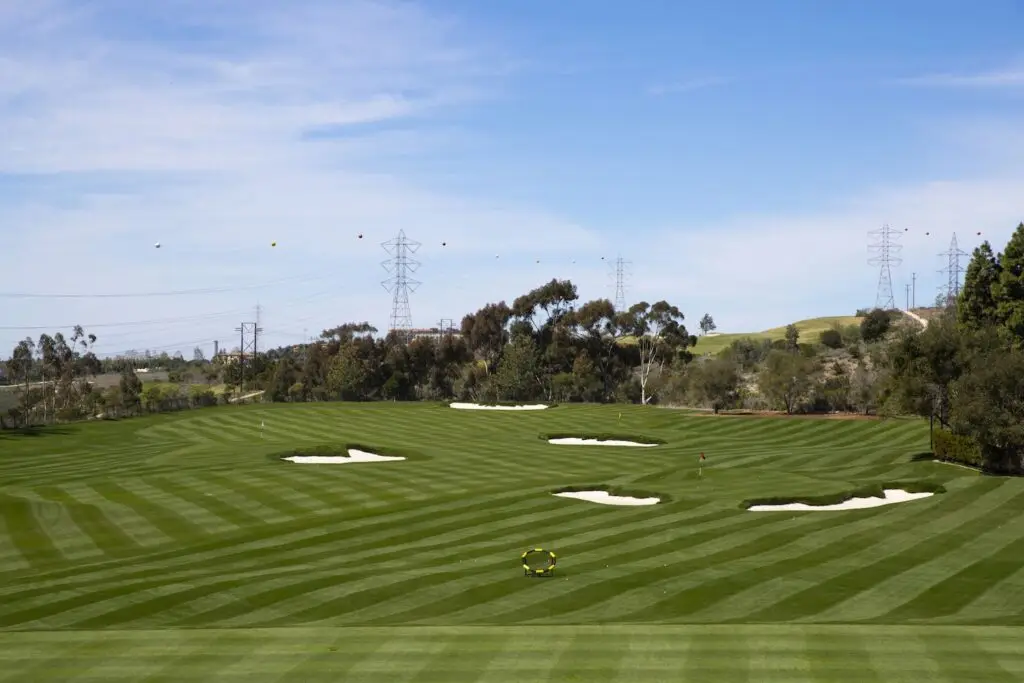
Originally opened in 2006 as a highly functional (yet not exactly breathtaking) test facility, the ECPC got a serious glow-up in 2018 when Gil Hanse (along with partner Geoff Shackelford) turned it into what can only be described as a fully engineered golf playground. Hanse is no stranger to golf course renovations. In 2024, he completed an extensive redesign of the Omni La Costa North Course in Carlsbad, so it could host the NCAA Division 1 Golf Championships. He also worked on acclaimed courses like Winged Foot, Merion Golf Club, and Oakmont Country Club.
In just two months, it went from a standard test center and R&D lab to a fully dialed-in golf playground.
Courtesy of Ely Callaway Performance Center
What was once purely practical is now intentionally designed to be both precise and inspiring. The targets are staggered with purpose—forcing creative shot-making while also calling you out on your actual distances (no more “that’s my 150-yard club … ish”).
Add a massive hitting area, bunkers and greens that mimic real on-course conditions, a “Himalayas” putting green (named for its roller-coaster undulations), an upgraded indoor putting lab, and a 120-decibel sound system blasting a very golf-appropriate playlist, and suddenly it’s a rare blend of high-performance testing facility and “don’t mind if I stay here all day” energy. Since this isn’t exactly open to the public, SDM asked me to take you behind the curtain.
As the iron gates part, it feels less like arriving at a practice facility and more like being granted backstage access at a rock concert—if the bandmembers were made entirely of launch monitors and perfectly manicured turf.
There are no mats. No guessing. No “I think that one felt good?” Just conditions that mirror exactly what tour players see in competition. Because when you’re testing equipment at this level, accuracy isn’t a bonus—it’s the whole point.
Even the sand matters. Different textures. Different densities. Because bunkers have personalities, too, and they are often unfriendly. And the golf balls? Brand. New. Not the usual “these have seen some things” range balls. New balls mean consistent spin, truer trajectory, and no surprises. The older a golf ball gets—and the more it’s been baked in the sun, scuffed, or generally lived a full and complicated life—the less reliable it becomes. Think of it like this: fresh ball, predictable performance; old range ball, slight chaos with a side of mystery.
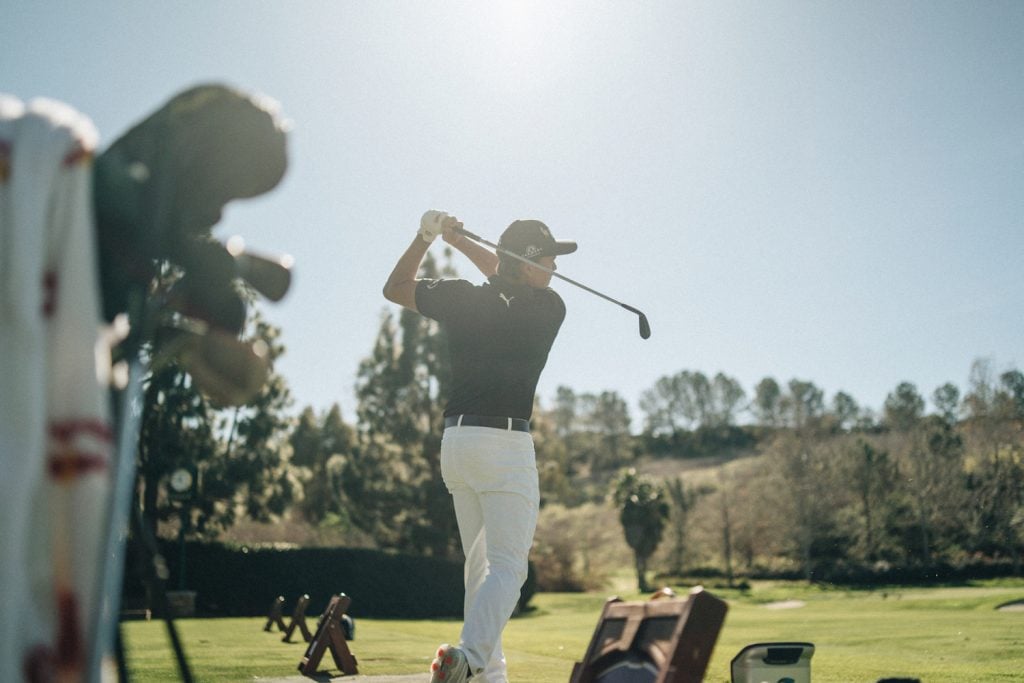
I’m escorted to my personal hitting bay—basically a pop-up shaded oasis stocked with enough equipment to make a gear junkie weak in the knees. Shafts in every weight and profile imaginable. Heads lined up like they’re waiting to be drafted by their favorite team.
Courtesy of Ely Callaway Performance Center
Toptracer technology was patiently waiting to track every one of my swings, each shot instantly delivering ball speed, launch, spin, carry distance, and dispersion (a polite way of saying consistency, or lack thereof), so there’s no guessing—just data telling the truth, whether I like it or not.
We start with irons. Different heads, different feels, different results. When I miss a shot, the ball tends to leak right, so we check lie angle. A quick adjustment—2 degrees upright—and suddenly the clubface is consistently square at impact like it remembered its job. Effort level: down. Ball flight: improved. Confidence: creeping back.
Next we look at the different shaft options—because nothing says “fun afternoon” like realizing a higher kick point can change your entire golf identity. Shaft flex (how much the shaft bends during your swing) helps determine whether you get more height and distance or more control, while kick point (where the shaft bends the most) influences your ball flight—lower kick point for higher launch, higher kick point for a flatter, more penetrating shot. In other words, one small tweak and suddenly you’re hitting shots you’d normally only describe later, slightly exaggerated, over a glass of wine.
Then we move through the bag: hybrids, fairway woods, drivers, wedges. It’s a full rotation of “try this,” “now try this,” and “okay wait … THAT one.”
And yes—the new Quantum driver and fairway woods made an appearance. Without getting too deep in the weeds, they’re faster, more forgiving, and smarter (thanks to AI face mapping) than previous models. Translation: Even your mishits are now slightly less embarrassing. And they were not the only things getting tested. My patience was under attack because the driver and woods would not be available to the public for a good three months.
Courtesy of Ely Callaway Performance Center
Watching the fitting team work is like watching a Formula 1 pit crew. Clubs are swapped in seconds. Shafts tightened, adjusted, replaced. One minute you’re swinging something that seems “fine,” and the next, you’re holding a club that feels like it is a part of your DNA.
Then there’s the putter fitting. Drivers are physics. Putters are therapy. Inside the putting lab, sensors track everything—tempo, face angle, path—things you didn’t even know could be measured. Within minutes, my data politely informs me that my putter face is slightly closed at impact. Not shocking, but also not ideal.
A few quick adjustments—different head (with a bit more weight at the toe to discourage the face swinging closed at impact), shorter shaft (so I feel more over the ball, which helps my eyeline)—and suddenly the ball starts rolling exactly where I’m aimed.
Same stroke. Same golfer. Completely different outcome. If only the rest of life worked like that.
And then there’s the part that feels slightly classified. The ECPC isn’t “just” a performance center—it’s also where future equipment lives before the public even knows it exists. I’ve been there when certain clubs were basically under surveillance. Not “don’t touch,” but more “please keep phones in your pocket.”
It’s golf’s version of Area 51. Except instead of aliens, it’s drivers that won’t hit shelves for another year—and like I mentioned, waiting is not my strong suit.
Getting to test the newest equipment isn’t just a perk—it’s part of the job. It’s what allows me to stand in front of students and say, “I’ve tried it. I know what works and what doesn’t. And more importantly, I know why.” And if I happen to sprint to my car every time the phone rings and someone says, “Come test something” … well, that’s just professional courtesy.
Callaway isn’t the only place to get your swing analyzed and clubs fitted. You can stroll into big retail spots like The Golf Mart or Golf Galaxy, book a next-level session at a dedicated studio like Club Champion or True Spec Golf, test brand-specific gear at various manufacturing companies (many located in Carlsbad), or even combine a lesson and a fitting at GOLFTEC. And let’s not forget your local golf course, where fittings happen on actual turf, on a driving range you have some history with—many times with the golf professional who is familiar with your swing so they can give you valuable input. With this many options, there’s really no excuse, other than pride, to keep blaming your clubs.
At the top of a golf swing, the world settles into a hush. Anyone within 50 yards kindly shuts up in reverence. Steady heartbeats tuck inside the sound of the wind. Time stands still.
Or—panic sets in, a thousand warnings from coaches and YouTube tutorials prattle through your brainpan. You wonder if a good walk prepares to be ruined.
On descent, the club rearranges air particles as it slices on a perfect or unwise line toward an earth so green, it seems like AI. The iron face meets the ball, and the satisfying or unsettling thwack echoes across the fairway like a nonviolent gunshot or a cry for help. Breath catches, curse words load in the prefrontal cortex. Eyes squint to follow the hard-to-see projectile zip majestically through the air or bounce lamely along the ground like a failed hurdler.
Sometimes it goes a couple hundred yards in the right direction, other times a couple yards into uncaring swamps. Golf’s beautiful and hard as hell.
Mindfulness and stillness reign over speed and might—which goes against most basal American instincts regarding sport. Its quiet, serene mocking of our human abilities is what brings so many of us to the life-long process of sharpening the skill. Because who hasn’t stared at the most beautiful parks and lawns in the world and said, “How can I turn this into a game and win it?”
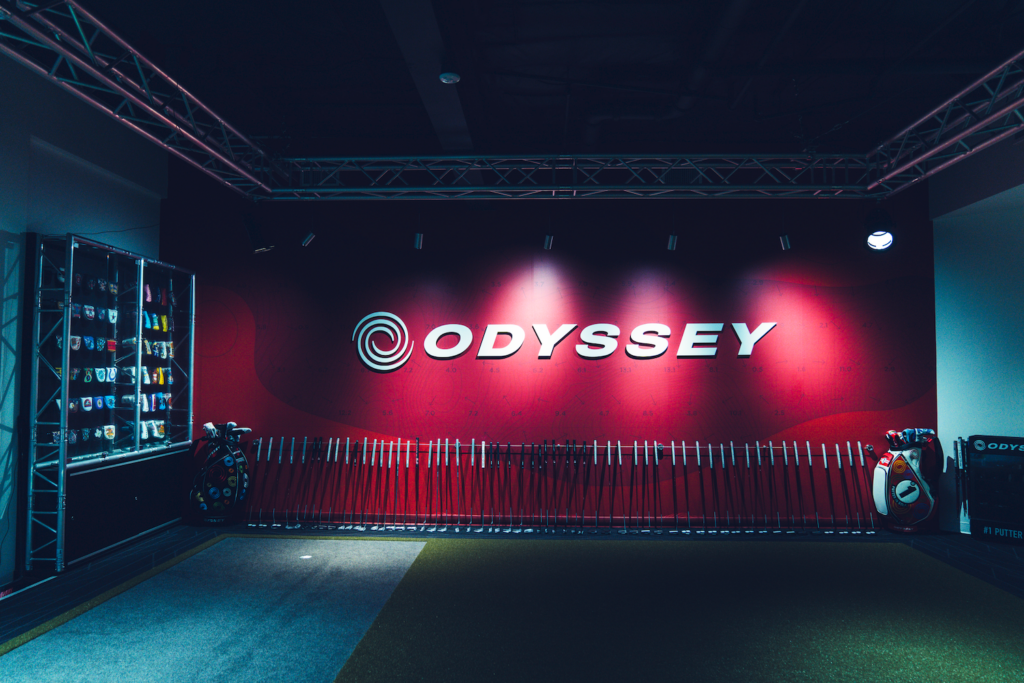
Luckily, San Diego has an abundance of courses to improve and curate self-doubt. The county is home to over 70 courses that attract the top golfers in the country. Some of the biggest names in the sport—Callaway, TaylorMade, Cobra, Titleist, Odyssey, Honma—are based here. Perfect weather never hurts. But San Diego golf courses also promise a smorgasbord of terrains: rocky canyons, hot deserts, and lush greens overlooking the expanse of the Pacific Ocean.
If you could take the 1,300-ish holes around San Diego and pick the very best ones to create your ultimate course, which would they be? We asked some of the top golf pros in the county to do just that. The result? San Diego’s Dream 18. Think fantasy football but for golf.
Just like any great course, our Dream 18 includes four par 3s, 10 par 4s, and four par 5s—everything from tricky dog legs and psychological tee shots to just pretty, pretty views. Once we had our list, we either asked the head golf pro what makes a hole so special, or other pros spoke on its behalf. Go ahead, tell us what we missed.
“One of the most iconic par 3s on the West Coast. The cliffside setting above the Pacific and the constant ocean breeze make it both beautiful and demanding.”
—Anthony Valverde, Director of Golf, The Crosby Club atRancho Santa Fe
“It’s a downhill par 3 over water with a great view from the tee down to the green. It’s surrounded by bunkers as well, so it almost feels like an island green even though it’s not. What’s really cool is once you drive to the next hole, if you look back on No. 14, it’s a great view as well. One of the signature holes [at Santaluz].”
“Hole 15 is widely considered one of the best and most memorable holes on the course. At about 250 yards, it’s a long downhill with multiple tiers and panoramic views into the valley. It looks intimidating at first, but there are lots of recovery contours and the green is fairly large.”
“While it’s beautiful with the backdrop of the Batiquitos Lagoon and the Pacific Ocean, this finishing hole demands both precision and nerve. The water guarding the right side and fairway bunkers ahead create a visually striking, strategic tee shot, while the expansive green rewards a confident, well-placed approach. If you can make a par on this hole, you’ve played it very well.”
“The 18th hole at Del Mar CC is a demanding par 4 with an elevated tee box. Water guards the right side of the green, and a player must hit a precise shot into this green.”
“It’s a difficult 428-yard par 4 playing into the predominant west wind. The hole is post-renovation and the vegetation was trimmed back, so now it exposes a penalty on the right. It’s uncomfy at the tee but a good challenge. Plus, it’s the No. 1 handicap for [all players].”
—Chris Lungo, Head Golf Pro, Rancho Santa Fe Golf Club
Lili Kim is a content coordinator and writer for San Diego Magazine, with experience highlighting local businesses and communities. When not writing or shooting film, she is likely brewing her seventh cup of tea of the day or strolling along Sunset Cliffs.
Implementing a farm-to-table model hardly deserves acknowledgement these days. It’s not a stretch. It’s not innovative. “It’s the bare f**king minimum,” says Herb & Sea‘s executive chef Aidan Owens.
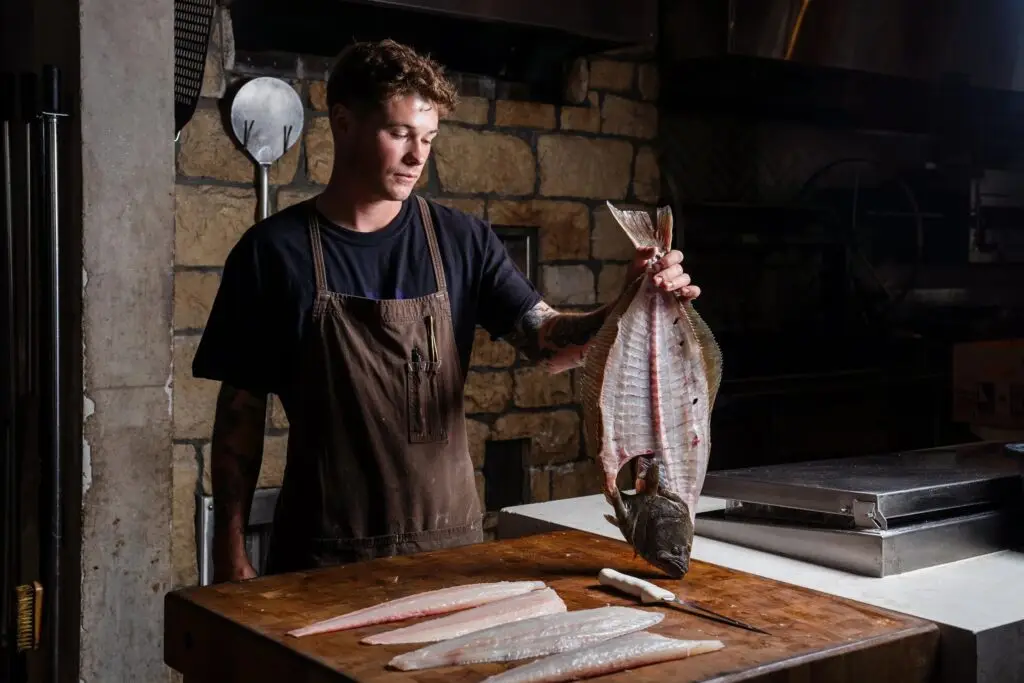
When I arrive at the Encinitas restaurant, I’m ready to talk sustainability, farm-to-table stuff, with Owens. “Did you see the chin on that?” he says of the extra big jiggly chin on the sheephead that just arrived with the day’s fresh catch. I did. It was Jay Leno adjacent.
I learn quickly that he somehow oozes both charm and stone-cold honesty. Maybe he could construct a new dish with chin goo, like he did when he had a bunch of tuna scraps and voila’d it into a smooth and crowd-pleasing ‘nduja. “I want to know what’s in there,” he says.
Courtesy of Herb & Sea
The instinct to look closer, to dig into what others might discard, says a lot about the chef’s approach. I guide him back to our topic, but he has something else on his mind. “We’re overcomplicating food—what happened to just cooking good food and having fun with it?”
Owens grew up on a farm in Byron Bay, Australia, where sustainability wasn’t a concept you chat about so much as a way of life. Think dirt roads, backyard chickens, pulling vegetables straight from the ground, and a mother who believed that if you couldn’t pronounce the ingredients on a package, you shouldn’t eat what was inside.
Food wasn’t precious or performative. Making it was what you did because you were hungry and that’s still what inspires Owens today. “I like to cook good food because I like to eat good food,” he says.
His approach to sustainability at Herb & Sea began so naturally that it felt just like instinct. “I was just like, ‘Let’s order food from the people who live and work here,’” he says.
Courtesy of Herb & Sea
And why wouldn’t he when lives in San Diego? Cities all over the world vie for our goods. Our tuna is sent overseas. Our spiny lobsters hit dinner plates in China and Japan. Not to mention California’s producing a third of the country’s vegetables and three-quarters of its fruits and nuts.
“Why would we outsource when it’s all here?” Owens asks.
Sustainability, in this context, is about cooking what exists in abundance, nearby, right now. “I love the local fish here. It’s f**king delicious and San Diego citrus, I mean, it is so f**ing good,” he says.
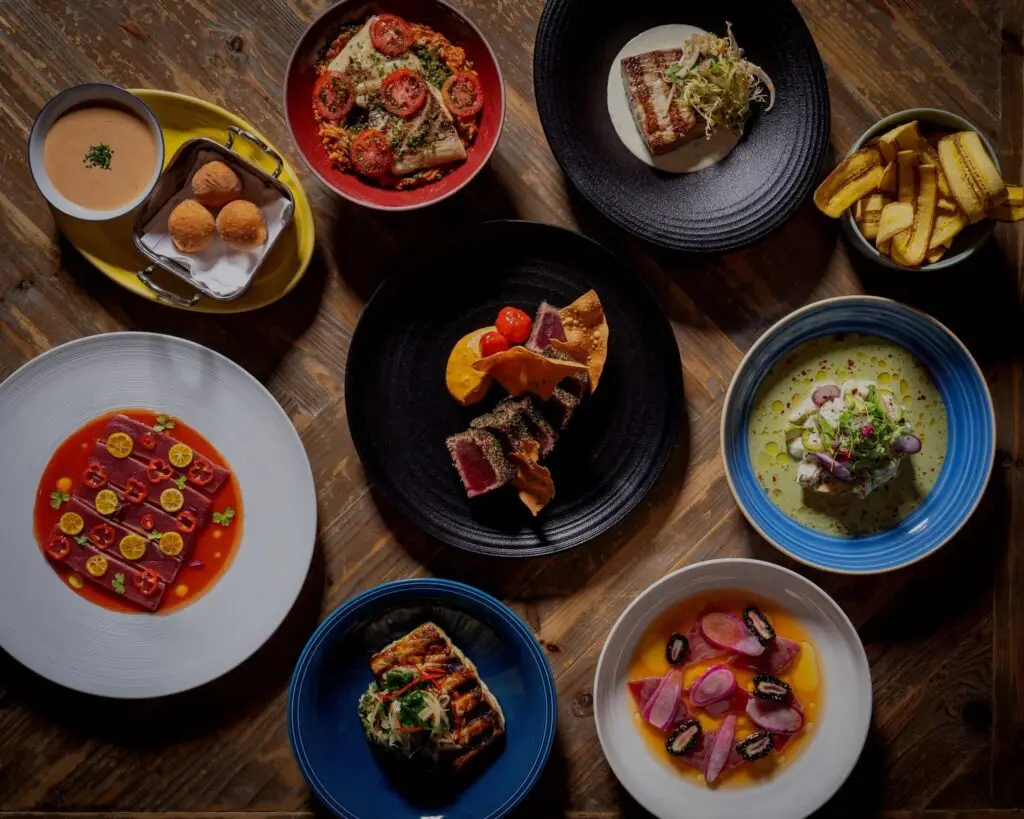
Instead of importing ingredients, Owens also looks for nearby alternatives. “You can find really cool things in the local waters,” he says, pointing out that stingray cheeks taste similar to scallops.
Courtesy of Herb & Sea
Whatever he finds in that sheephead chin might just be the next substitute for marrow. But to make this work, it means getting diners amped up about the slightly unfamiliar.
Tasting menus, where diners are completely in his hands, become an opportunity to gently push boundaries. “I’ll serve mackerel, because people think they hate it,” Owens says, noting that the abundant local fish can have some fishiness. “But when it’s fresh, it’s arguably one of the best fish in the ocean.”
He also tweaks the language on the menu so people might feel more compelled to give dishes a try without preconceived notions. He might use “lengua” instead of “tongue.” “Whelk” instead of “snail.” When he puts “stingray throat” on the menu, he disarmingly calls it “skate.”
To reduce waste, scraps aren’t always discarded but rather turned into something new. Sometimes they’re smoked, cured or fermented. Apples going bad turn into apple ponzu. Lemons turn to marmalade, which stretches their usefulness far beyond peak season. “And it’s super tasty on our pizza,” he says.
What makes the food even richer, is the relationships he’s built with farmers. Though it didn’t always feel natural, Owens sought personal connection first. He recalls approaching a fisherman at the Tuna Harbor Dockside Market. “I was awkward,” he says. “I went up to him and said, ‘I like your fish.’”
Owen’s is now so close to his suppliers—like fishermen Ryan Sebo and Joe Daly—that he gets texted pictures of fresh catches right as they flop on the boat. The messages always ask if he wants first dibs. “I say yes to a lot of fish,” Owens says, noting that Herb & Sea can go through 2,000 pounds of seafood a week.
Courtesy of Herb & Sea
The next evolution of sustainability, in his view, will be chefs working directly with producers such as his alliance with Sebo, cutting out middlemen and purveyors where possible. “It will put more money in the pockets of the people doing the work,” he says.
It will mean that chefs can’t just know their local farmers and producers, but they’ll choose to work with the ones who have the best practices. Dining and sustainability will become much less about the final plate. “It will be more about the impact that plate has on the Earth,” he says.
Ultimately, he believes sustainability doesn’t need to be loud. It doesn’t need hashtags. It just needs to be honest.
“We aren’t saving lives. We’re feeding people good food,” he says.
And yet, in feeding people well—simply, thoughtfully, responsibly—something meaningful happens. Guests leave satisfied. Ingredients are respected. Local ecosystems are supported and food returns to what it has always been at its core: nourishment, pleasure, and a quiet reflection of the place it comes from.
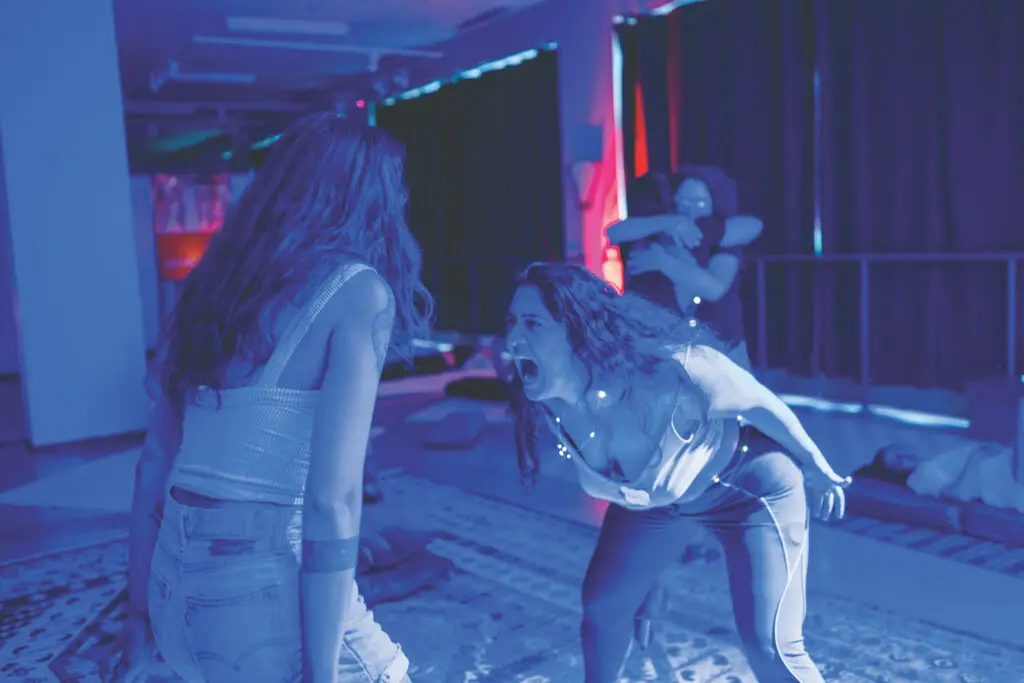
A ’90s pop hit is blasting as I drive up to Solana Beach to go dancing. I’m dressed in the millennial nightlife uniform: black tee, cute jeans, heels. It is 6:30 p.m. on a Tuesday. The dance party starts soon. I’ll be home by 10 p.m. at the latest. I may even catch an episode of Summer House.
I am acutely aware of my age in this moment. I haven’t willingly chosen the club life since my 20s and early 30s. Yet here I am, transported back to 2014 with a few more wrinkles, a lot more ibuprofen, and a touch of “pandemic stole this from me” in my pocket.
A few days earlier, a friend texted to suggest we go to a concert the upcoming weekend. “I can’t, I’m already tired on Friday,” I replied. At 42, two glasses of cabernet bend my space-time equilibrium. A hard sneeze risks a sprained neck. Did I mention the perimenopausal night sweats yet?
I arrive at the Belly Up at 7 p.m. Wilson Phillips comes on the stereo, and I sing-shout the lyrics before stepping out of the car.
Someday, somebody’s gonna make you want to turn around and say goodbye | Until then, baby, are you gonna let ’em hold you down and make you cry?
Tonight’s event is billed as “the dance party that starts earlier.” Surprisingly, I’m not the oldest person in the room. A 60-something man shoulder bops to the DJ set. A Gen X woman shimmies by and snaps photos of the glow-stick-spinning raver on stage. Few are drinking.
Started by two North County locals, Amal Chandaria (32) and Max Gold (37), Earlier is a dance party for older adults who want a club experience without the sleep-deprived, hungover physical toll. Running 6:30 to 10 p.m., attendees get home at a reasonable hour for a full night’s sleep.
Early is part of a national trend: the green-juice-ifying of party culture. Americans aren’t going out as much as they used to. They’re drinking less, and 10 p.m. has become the new 2 a.m. Wellness as a lifestyle concept is old hat, and each generation manifests itself in different forms (fitness booms in the ’80s, organic food in the 2000s).
According to a 2024 survey by consulting firm McKinsey & Company, the US wellness market now exceeds $500 billion annually, up from roughly $300–$350 billion a decade ago. More striking than the spend: Wellness as a top priority has surged from about 42 percent in 2020 to more than 80 percent today.
The timing makes sense. Studies show Covid led to long-term shifts in lifestyle patterns. We all began to reassess our lives and made some existential changes—like 6 p.m. soberish dance parties. In a recent Gallup poll, only 54 percent of US adults reported drinking alcohol, the lowest level in about 30 years. Conversations around longevity turned “treat yourself” into “invest in yourself.”
The downer of any wellness trend, though, has been the “can’t” philosophy—can’t eat that cake, can’t sip that marg, can’t binge that show. What if we could do health stuff and still dance and not totally suck the joy out of life? That’s what people like Chandaria and Gold are banking on.
Last year when they attended Atomic Groove—a variety dance band from 5–8 p.m. most Fridays at Belly Up—it sparked an idea. “People want to be healthy and active, and they don’t want to compromise on that by not feeling rested,” says Gold. “I thought, ‘I bet if we’re feeling this way, other people are looking for something like this, too.’”
He was right. Nearly 200 people showed up to the pair’s first dance party last July. Tonight’s crowd is nearing that number again. Among them is Cardiff-by-the-Sea resident and second-time attendee Lauren Marley.
“If you do one thing for yourself—and it means that you don’t have to be completely exhausted and wrecked for all the stuff you have to do the next morning—it’s great,” she says.
Though EDM isn’t quite my thing (give me some stank-face hip-hop from the 2000s), it’s clear from the number of return attendees that Chandaria and Gold have filled a need, one that isn’t just in famously health-forward cities like San Diego.
In DC, Dancing on the Waterfront occurs every Saturday from 5–9 p.m. while Extended Play DC wraps up at 10 p.m. Philly has Matinee Dance Party (5–10 p.m.). New York City finally chooses to sleep, with Friday Feeling and Matinee Social Club both ending at 10 p.m. Last year, Day Shift, geared toward those over 30, debuted at Bloom Nightclub in San Diego.
In Chicago, Earlybirds Club was founded in 2023 by high school friends Laura Baginski and Susie Lee. About 100 people showed up to the sold-out “dance party for ladies who got shit to do in the morning.” Two years later, Earlybirds Club is now held in nearly 60 cities and regions across the US.
“It’s an outlet that [middle-aged women] don’t get in our everyday life,” says Baginski, who also recently appeared on the Kelly Clarkson Show to share their story. “It’s movement and dance. We’ve learned now that it’s really essential to being a happy person.”
Admittedly, it’s a bit harder to be happy when I walk into the Music Box for Earlybirds’ event in San Diego. War’s about to start, protests are the new social gathering, and the economy is gaslighting me into believing salads should cost $18.
But soon the club is a sea of 700 people wanting to dance their asses off. Any negative emotions quickly begin to disappear. Tonight’s music features hits from the ’80s, ’90s, and 2000s: Madonna, Britney, Christina, 50 Cent, Ludacris.
Shuffling past the bar to the already-crowded dance floor, my heartbeat quickens. Pure, unadulterated joy is oozing in this place.
“The whole club was women’s bathroom culture,” said returning attendee and San Marcos resident Beth Avant, 50. “[You get to] freely dance, not care about what you’re wearing, you’re not trying to really impress people.” Soon Whitney Houston’s golden pipes set the room on fire, arms raise, smile lines deepen, and for a few hours, nothing else matters.
Oh, I wanna dance with somebody / I wanna feel the heat of somebody
While Baginski continues to run the operation, Lee lost her battle with stage IV metastatic breast cancer in August of last year. Honoring her memory at each event are words from Lee herself: “Sing f**king loud, dance like nobody gives a shit, and remember who the f**k you are.”
And who we are are sleepy people. If this new wellness era really takes off, imagine the possibilities. Dinner dates at 5 p.m., the Super Bowl at 2 p.m. EST, Justin Bieber headlining Coachella at 7 p.m. Until then, you’ll find me in bed shooting down plans past 8 p.m.
Nicolle Monico is an award-winning writer and the director of creative projects, digital editor for San Diego Magazine with more than 19 years of experience in media including Outside Run, JustLuxe and The San Francisco Chronicle.
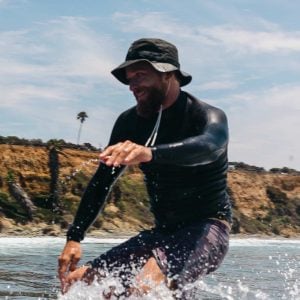
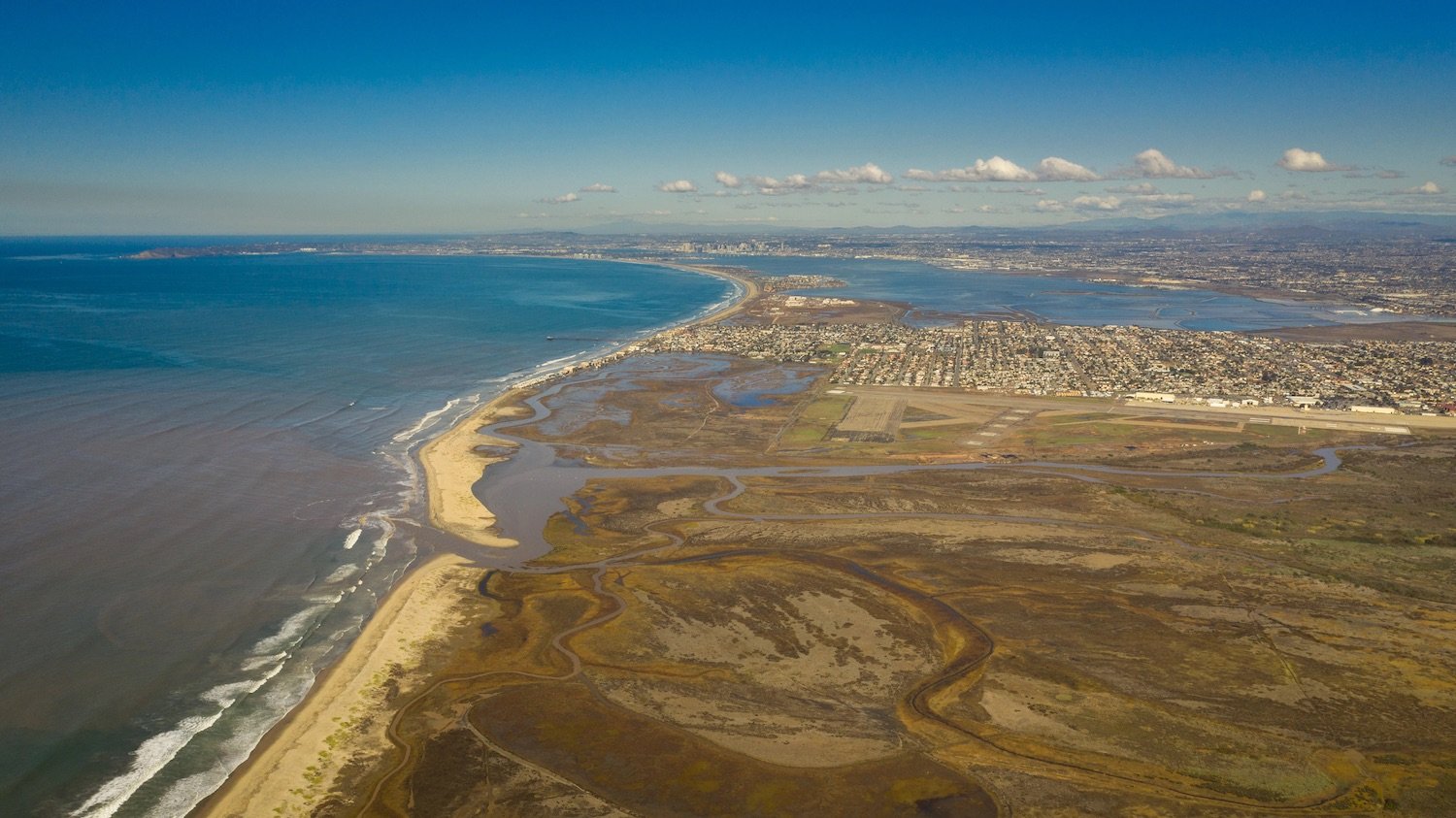
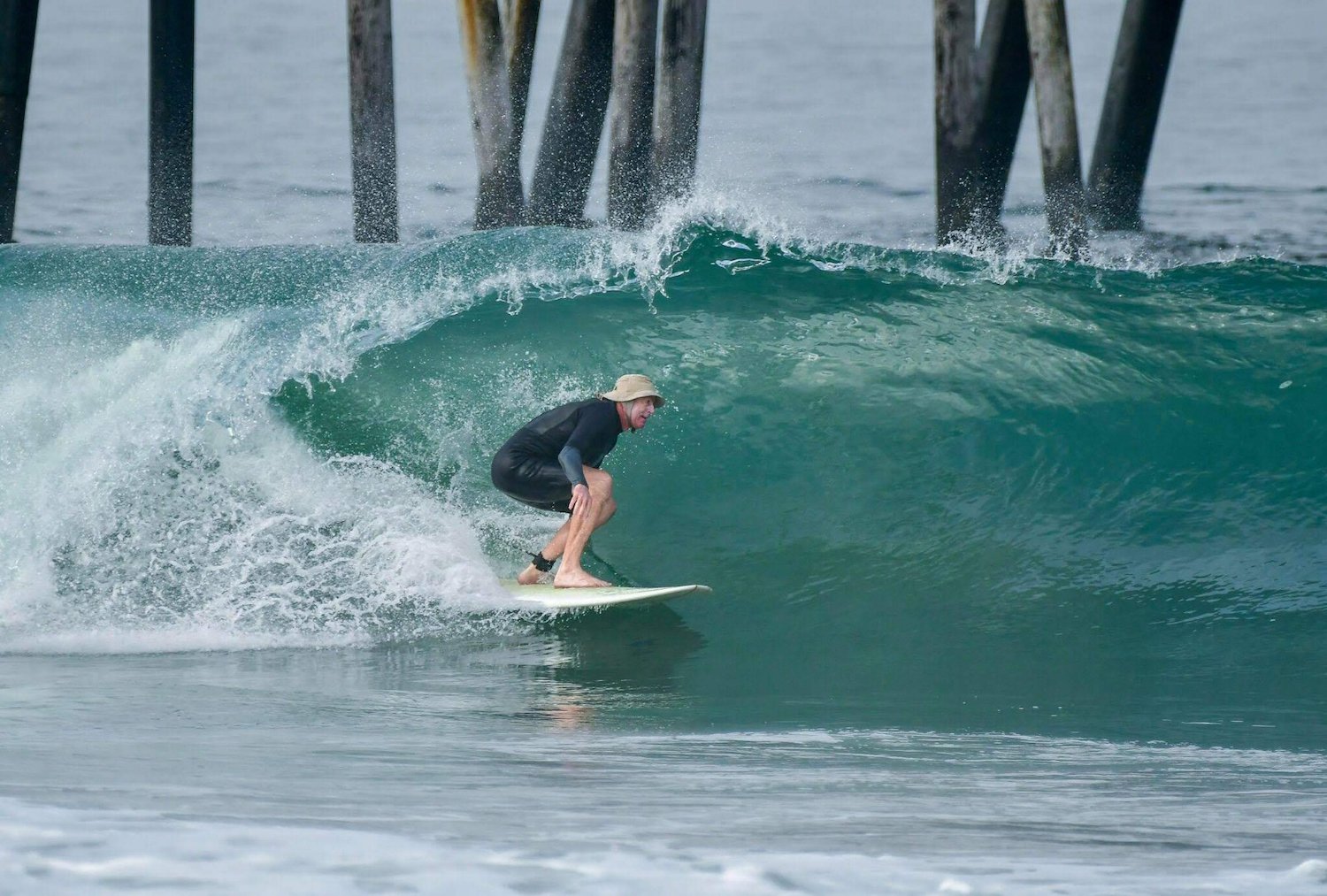
Every year, when winter swells bring San Diego’s best waves to their fullest potential, local surfers flood the lineups of popular spots like Black’s and Swami’s. But some of the heaviest and most dangerous surf lies further south, off the coast of Imperial Beach. The area’s crown jewel, Tijuana Sloughs, sometimes serves up 20-plus-foot waves that break up to a half-mile from shore.
Even as the surfing population has exploded, however, IB remains empty in comparison to the rest of San Diego, thanks to the pollution that plagues its waters. Surfers in IB don’t just check the surf cams and swell forecasts—they monitor the water data from the nearby International Boundary and Water Commission.
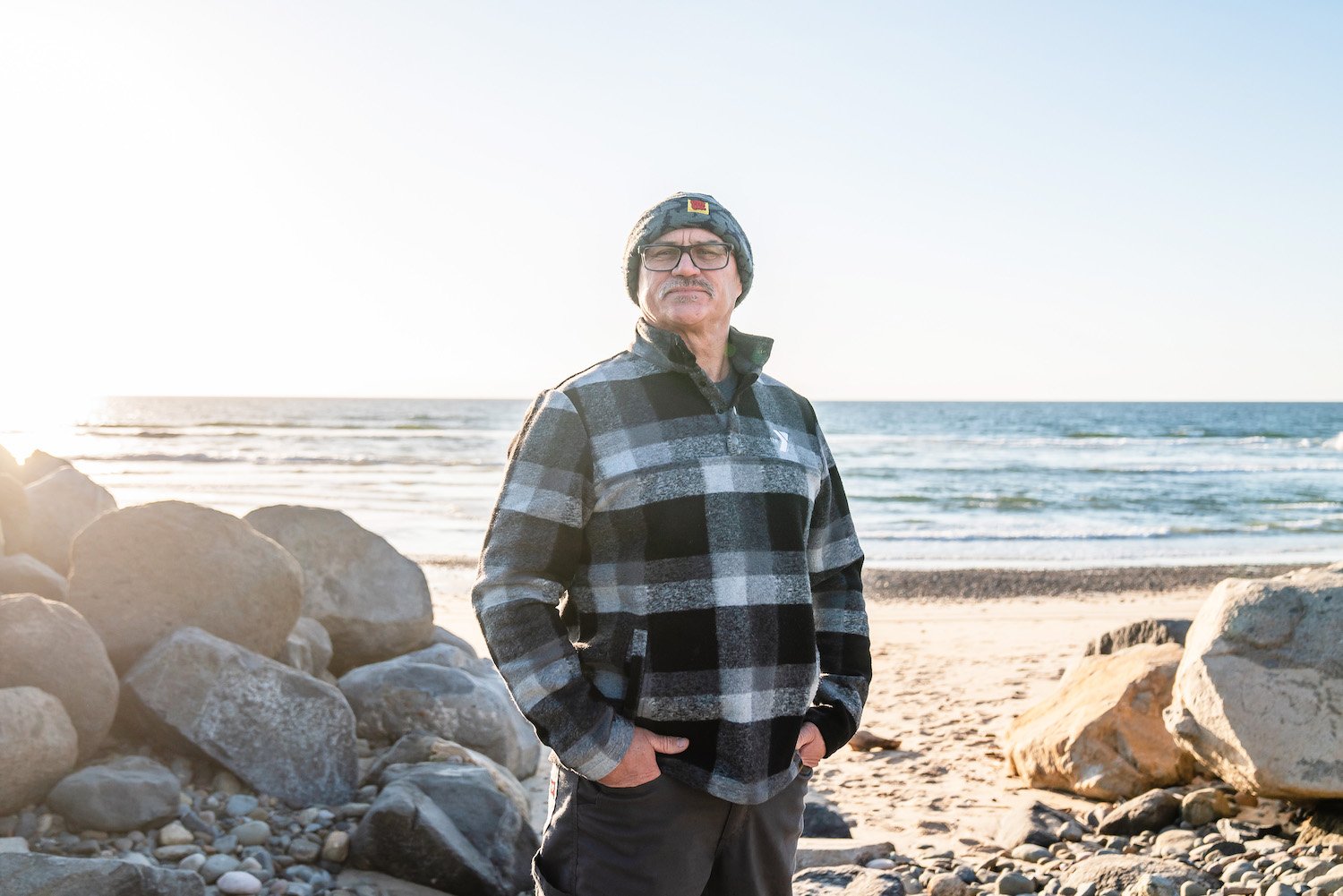
“It’s almost a science to go out for a surf and not get sick,” says resident Dwayne Fernandez. “My wife hates that I still surf here; she gets worried. I check the reports every day to see if it’s safe, which has been rare these days. If it’s not, I may have to drive over an hour just to get in the ocean—and I live minutes from the beach in IB.”
Photo Credit: Ariana Drehsler Dwayne Fernandez says his wife hates that he still surfs in IB. He lives near the beach but often must drive more than an hour to surf where water conditions are safer.
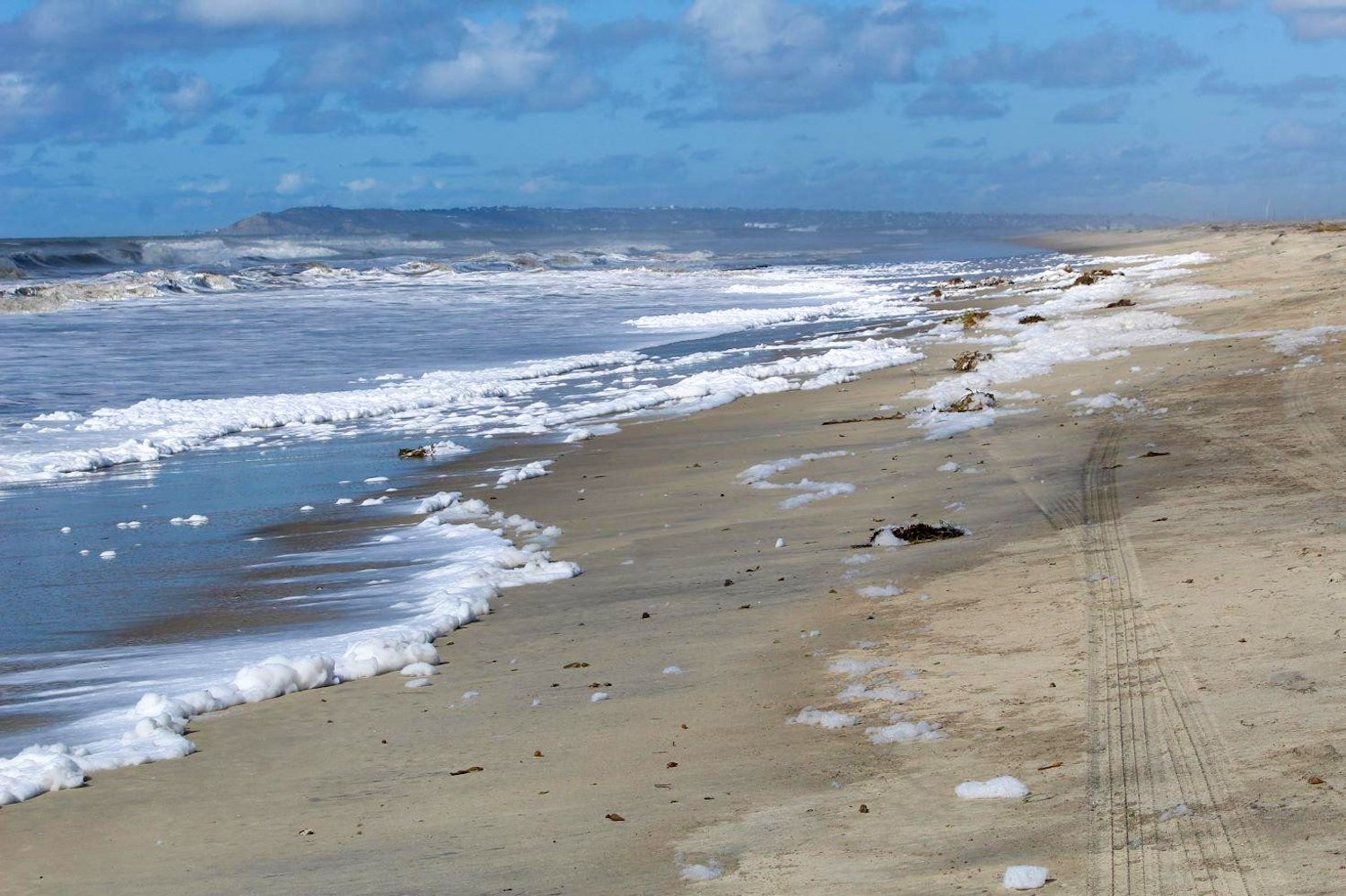
According to the Surfrider Foundation, IB has the unfortunate distinction of being the most polluted beach in America. Built in 1996 with the capacity to manage 25 million gallons of wastewater a day, the nearby South Bay International Wastewater Treatment Plant (SBIWTP) is frequently overwhelmed. Anything that exceeds the limits of the SBIWTP comes out as raw sewage, clearly visible in the water as a dark brown plume with an accompanying nasty smell.
The sewage flow can sometimes hit hundreds of millions of gallons in a single day. “You don’t want to be out there when that happens, and it can happen quickly,” says Adam Wraight, an Imperial Beach lifeguard sergeant, junior lifeguard coordinator, and longtime local surfer.
Courtesy of Surfrider Foundation
But that hasn’t stopped some residents, despite mandates prohibiting surfing and swimming during beach closures. If the waves are good, surfers are probably out there. Why take the chance, though, when there are so many other good waves—with cleaner water—in the county?
It’s partly a point of local pride. The surf history in IB runs deep. Stories of the Tijuana Sloughs on its good days are the stuff of legend, discussed in hushed tones in the core San Diego surf community.
Photo Credit: Kevin Stuart Former lifeguard and IB resident Jeff Knox braves toxic conditions to surf his local waves.
“The Sloughs was never a spot meant for everyone,” says Jeff Knox, a former lifeguard and lifelong IB surfer. “The paddle-out alone was enough of a deterrent for most. The shorebreak took care of the rest. It’s mostly locals out there; we like it that way. It’s one of the best waves around and, for that very reason, we never used to talk about it. But those days are long gone. We need all the help we can get—the more attention, the better. Because this is a huge problem.”
It’s also been part of the deal for decades. “I started surfing IB in the ’60s, [and] we’ve always had to deal with pollution,” Knox adds. “Throughout my entire life, it’s never been as bad as the last 10 years. The last five have been absolutely terrible.”
Additionally, there’s the simple fact of convenience. While IB’s median rent cost of $3,000 is well under the staggering housing costs in other surf-adjacent ’hoods like Encinitas and Del Mar, locals still pay a pretty penny to live a few blocks from the beach. And they often pay a price for surfing there.
Photo Credit: Jeff Knox Imperial Beach is considered the most polluted beach in the United States, with dangerous levels of bacteria caused by millions of gallons of raw sewage regularly flowing directly into the sea.
Scientists have identified 175 toxic pollutants in IB’s waters. Surfers have contracted everything from diarrhea and bacterial infections like MRSA to neurological disorders and hepatitis A.
“As a lifeguard, I see all the data. I check the flows daily and monitor the testing just to see if I can go for a surf during my break or after work. There are plenty of people who don’t check anything—they just see waves and go out—but even they get spooked when they hit the water and everything feels and smells wrong,” Wraight says. “Our responsibilities are definitely different from other [lifeguard] stations and, unfortunately, so much of what we do revolves around the pollution. It can get pretty negative, and it takes a toll on morale and recruitment.”
The problem has driven some local diehards from the water completely. Ramon Chairez, an activist and educator with the nonprofit Un Mar de Colores, has lived in IB for decades, but in 2020, he “made a conscious decision to stop surfing IB,” he says. “I saw too many people around me getting sick. It wasn’t worth it. The last five to 10 years have really been pivotal in the consciousness of the population, especially the kids—they know it’s polluted and unsafe.”
As a junior lifeguard coordinator, Wraight once trained the next generation in IB. But, now, he and the local kids he works with must travel to other beaches in the county. YMCA’s Camp Surf, a program that attracts children and teens from all over the nation with the allure of learning to surf in San Diego, can no longer take participants into the area’s waters.
Photo Credit: Ariana Drehsler
They must head to other neighborhoods or stick to land-based activities. “The biggest tragedy is the youth,” Wraight says. “They’re growing up not being able to enjoy the ocean like we did—their whole life experience is affected by the pollution.”
Despite the toxic water, IB still feels like a classic beach town, a callback to a time before $8 lattes and luxury condos dominated the coast. It’s charming, quaint, and beautiful, with the open space of the Tijuana Estuary to the south, mountains in the distance, and the mighty Pacific to the west. It has one of the most unique coastal views of all of San Diego—and some of its best waves. If only you could safely surf them.
Chris Dodds has been falling in love with San Diego for the past 10 years. He's passionate about the protection and preservation of our natural areas, especially our coastline and waterways.
Torch Heroes: Why San Diego’s Most Trusted Businesses Win by Doing the Right Thing
In a world overflowing with shortcuts, marketing fluff, and “good enough,” there are still companies that choose a different answer. And in San Diego, there are plenty of them.
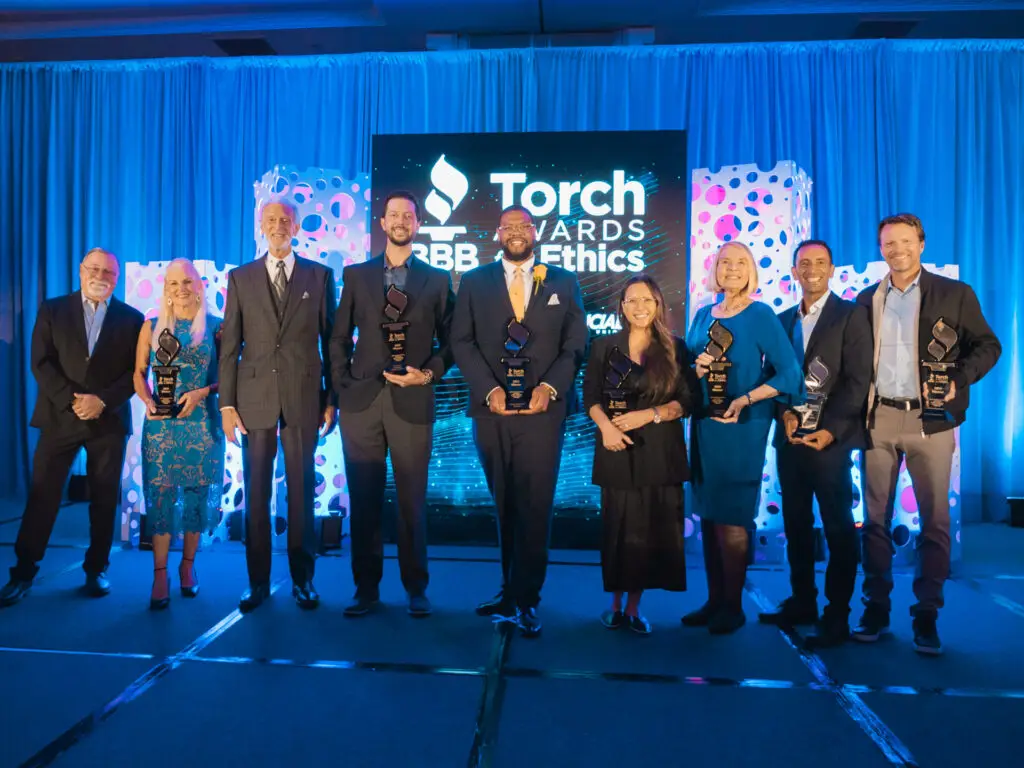
2025-Torch-SD-09131839 (2)
In a world overflowing with shortcuts, marketing fluff, and “good enough,” there are still companies that choose a different answer.
Integrity guides how they show up every day. They make hard decisions, hold themselves accountable, and build trust the old-fashioned way, one action at a time. At the Better Business Bureau, we call these businesses Torch Heroes: leaders who demonstrate that ethical leadership strengthens businesses and drives long-term success.
And in San Diego, there are plenty of them.
Take House Collective Marketing Solutions, a Carlsbad-based digital agency that won the 2025 Torch Award for Ethics for its people-first approach to marketing. Instead of pushing flashy campaigns, the team often takes a step back to make sure clients’ foundations are strong before going big. Their philosophy? Truth over transaction builds partnerships that last.
Or look at Young Black & N’ Business, where integrity shows up through community action. When a local school lost art funding, founder Roosevelt Williams III and his team stepped in with workshops, mentorship, and hands-on support to help restore creative opportunity. That kind of engagement reflects ethical leadership rooted in real impact.
And in Vista, Lotus Sustainables carried its commitment to ethics all the way to the product line. After discovering defects in a shipment of eco-friendly products, the company issued full refunds and redesigned its offerings at its own expense, a choice that shaped its identity and reinforced to customers that ethics guide every decision.
In North County, Greenway Landscape Design & Build brings integrity into everyday service. When a client’s glass was damaged, likely not by their crew, owner Scott Lawn chose responsibility over blame and covered the repair personally. For Greenway, doing the right thing serves as a north star, guiding every interaction through transparent pricing, accountable partnerships, proactive communication, and follow-through long after the job is done.
Other honorees include At Your Home Familycare, whose leadership turned down a lucrative state contract during the pandemic to protect vulnerable clients and staff, and Bill Howe Family of Companies, where hiring practices, training, and service centers around shared values, every day, on every call.
What connects these diverse businesses, from marketing to nonprofit support to home services, isn’t size, industry, or revenue. It’s something deeper: a commitment to trust as a business strategy.
In San Diego’s competitive marketplace, that trust gives companies an edge. Clients invest in relationships. They refer friends. They stay loyal when others fade.
As one Torch Award winner puts it, integrity isn’t a section in the employee handbook. It’s the operating system of the company, the invisible code that determines every choice, every day.
And that’s exactly the point of the BBB Torch Awards for Ethics: to spotlight companies that dispel the myth that ethics and success are at odds. These businesses show that when leaders choose honesty, fairness, and accountability, especially when it’s hard, they build brands that matter.
At BBB, we see nominations come in from clients, employees, and business partners who have witnessed ethical leadership up close. These submissions aren’t polished promotions. They’re stories of moments when a company chose people over profit, clarity over confusion, and trust over convenience.
The nomination window for the 2026 Torch Awards for Ethics is open through March 31, 2026, and there are more Torch Heroes waiting to be recognized.
Who comes to mind in San Diego’s business community?
A vendor who always delivers — and always explains why.
A competitor who chooses the high road even when shortcuts tempt.
A team within your own company whose day-in, day-out choices reflect deep character.
And yes, businesses can nominate themselves. We encourage it. If you’ve built your business on principles rather than buzzwords, we want to hear your story.
Because in a world full of noise, integrity still deserves the spotlight, and San Diego is full of stories worth telling. Nominate your hero now.