

Ready to know more about San Diego?

Subscribe
Arts & Culture AUGUST 29, 2022

4 Women Shaping San Diego’s Art Scene

From creating more public programs to crafting traditions as a source of cultural identity, these leaders are translating history in their own way
4 Women Shaping San Diego’s Art Scene
Stacy Keck
Jessica Berlanga Taylor

Stacy Keck

Arte Accesible

Jessica Berlanga Taylor

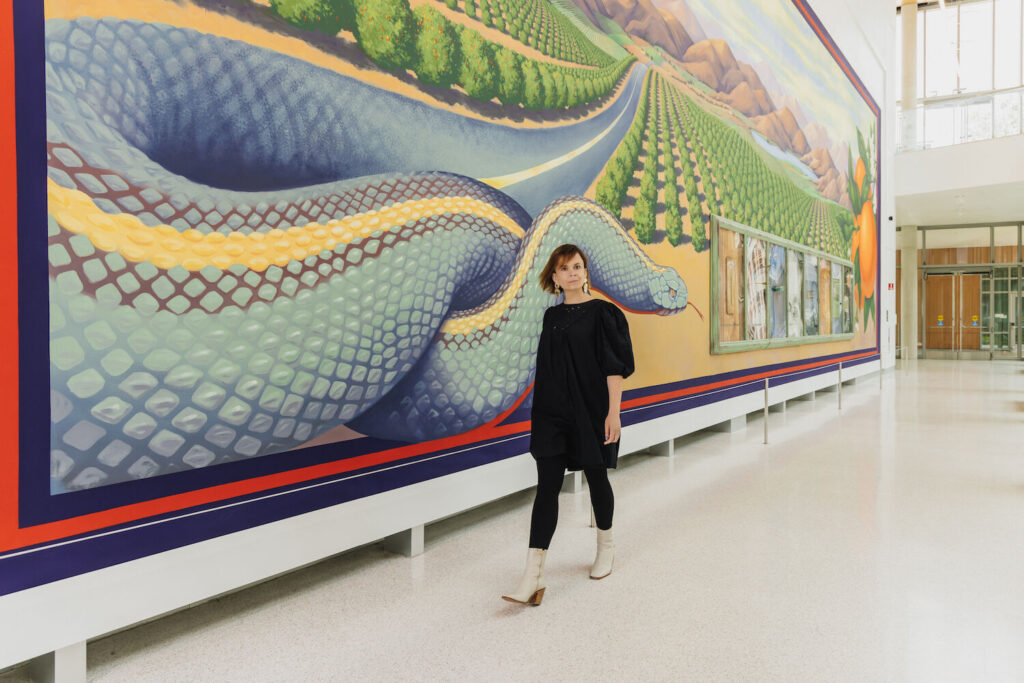
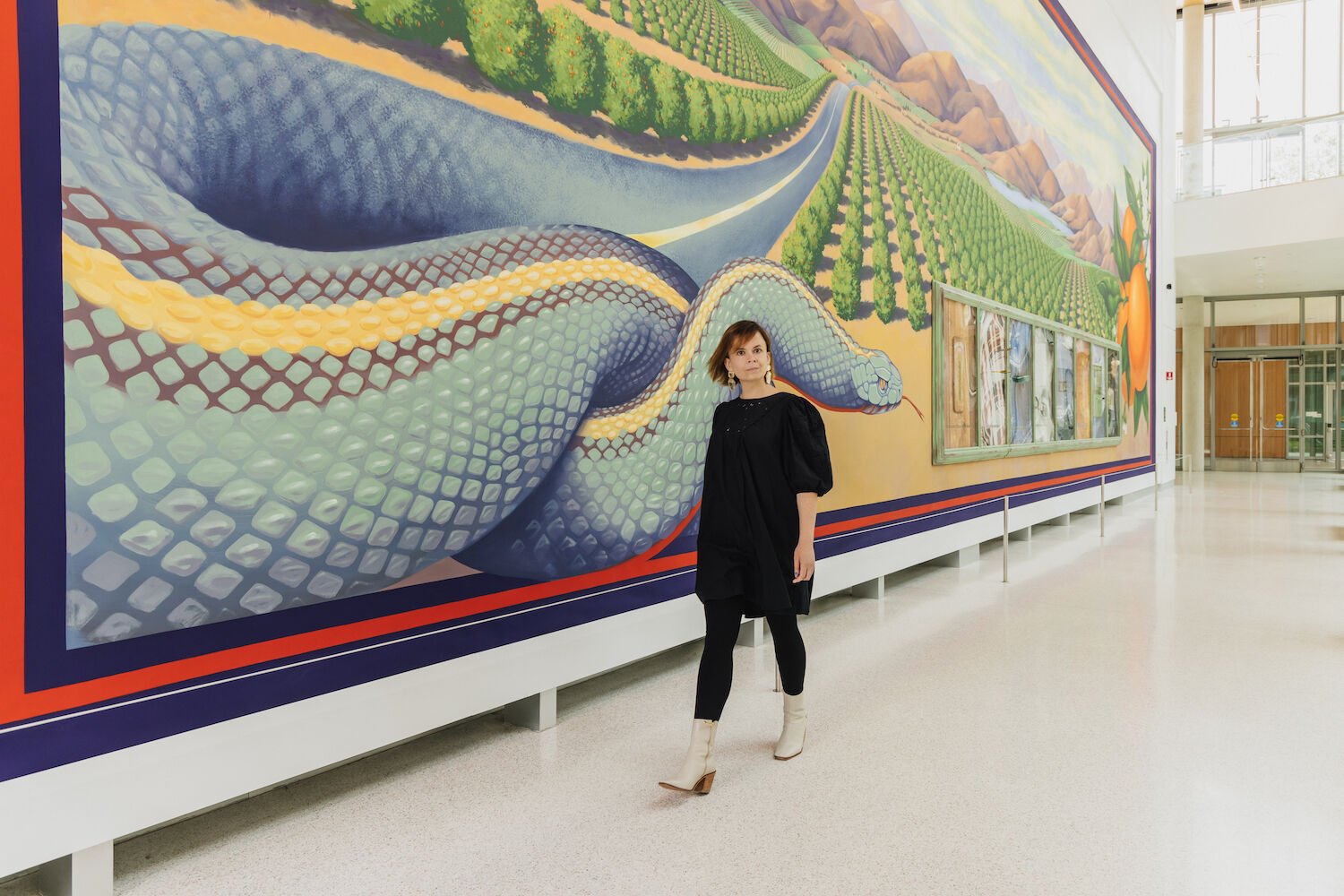
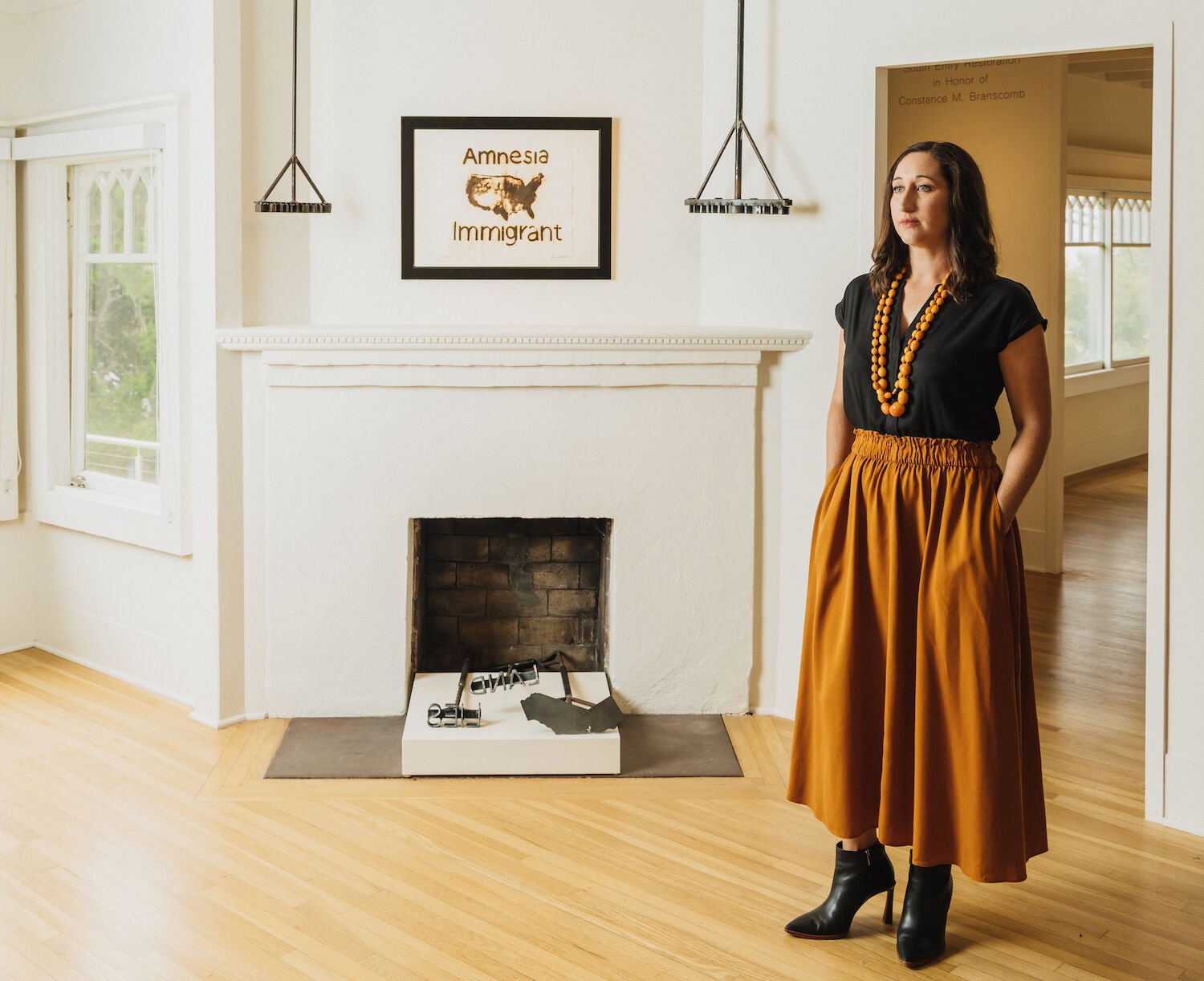
As a girl walking to school just outside Mexico City, Jessica Berlanga Taylor passed iconic murals by David Alfaro Siquieros. As the new director of UC San Diego’s Stuart Collection, she wants to spark the same sense of awe she felt back then, experiencing world-class art in daily life.“Siquieros had a lot to say about public art and access,” says the binational Berlanga Taylor, formerly a contemporary art curator in Mexico City. “That was a big influence.”

Established in 1981, the Stuart Collection includes 22 site-specific pieces from artists as boldface as Robert Irwin, Niki de Saint Phalle, and Alexis Smith, scattered across the sprawling 1,200-acre campus. Under founding director Mary Beebe, the program scaled new heights with Do Ho Suh’s popular Fallen Star, a house seemingly teetering on the edge of a building.

Among Berlanga Taylor’s goals? Making the exceptional collection even more accessible—the next piece certainly is: KAHNOP • TO TELL A STORY, an 800-foot-long celebration of poetry, formally debuts this spring at the campus trolley stop. And while commissioning fresh works will be a thrilling part of the job, Berlanga Taylor can’t wait to hype the existing ones.

“I’m creating a public program around the art to activate through performances, music, poetry readings, and updating the interpretation of the pieces,” she says. “A lot of people on campus want to collaborate with Stuart Collection to enhance its presence and broaden its influence off campus.”

On the Horizon

This spring, KAHNOP • TO TELL A STORY by Ann Hamilton will be unveiled at The UC San Diego Central Campus Station.

Jessica York

Jessica York

Stacy Keck

Crafting Design

Jessica York

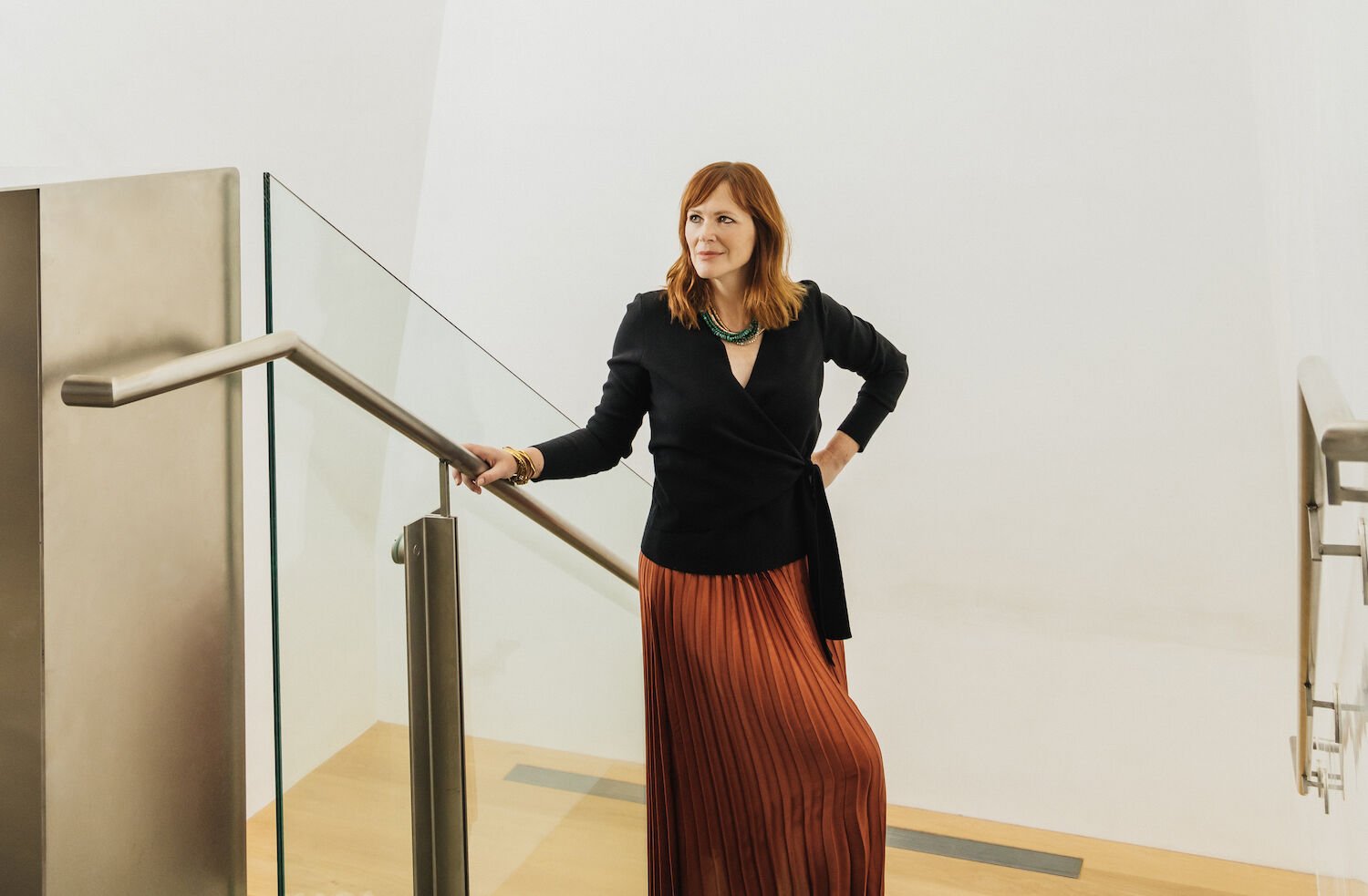
When it comes to the Mingei, executive director Jessica York understands the assignment. Replacing her longtime mentor Rob Sidner means she knows every inch of the museum. Literally. She helped plan its transformative and award-winning renovation by San Diego architect Jennifer Luce.

“I focus on human creativity as well as craft traditions that are really a source of cultural identity and pride,” says York. “Mingei has the potential to become an even more meaningful resource for our region.”

Exhibit A: The museum’s third annual San Diego Design Week showcases in-demand local artisans, designers, and architects—called Inspiration Inspiración, running Sept. 21 to 25—but the binational programming has garnered notice globally. San Diego and Tijuana have been designated a World Design Capital for 2024, the first dual-city destination for the festival.“The Mingei played a role in the bid to achieve that,” says York. “As a museum of folk art, craft and design, we saw an opportunity to carry the banner for design in a new way.”Coming sooner: Piñatas: The High Art of Celebration opens October 28. The exhibit, organized by guest curator Emily Zaiden, features contemporary artists and at least one-megawatt commission from the San Diego-Tijuana region. It’s sure to be a bash.

Save the Date

Piñatas: The High Art of Celebration by curator Emily Zaiden features work from a variety of piñata artists, including Diana Benavidez who hails from the SD-Tijuana region. October 28-April 30, 2023.

Women Shaping Art

Women Shaping Art

Stacy Keck

Family Engagement

Elizabeth Yang-Hellewell

Elizabeth Yang-Hellewell arrived with a not-so- secret advantage as the CEO and executive director of The New Children’s Museum. “My wife and I have a 5-year-old and an almost 2-year-old,” she says. “I am the audience.”

Her former gig at MCASD didn’t exactly allow full-contact museum-going. “It’s high-touch here,” says Yang-Hellewell of the NCM, which sees up to 1,000 visitors a day during summer. “There’s nothing better than seeing people play in, on, and around contemporary art. I’ve worked in contemporary art spaces almost my whole career, and that level of engagement is what you want.”

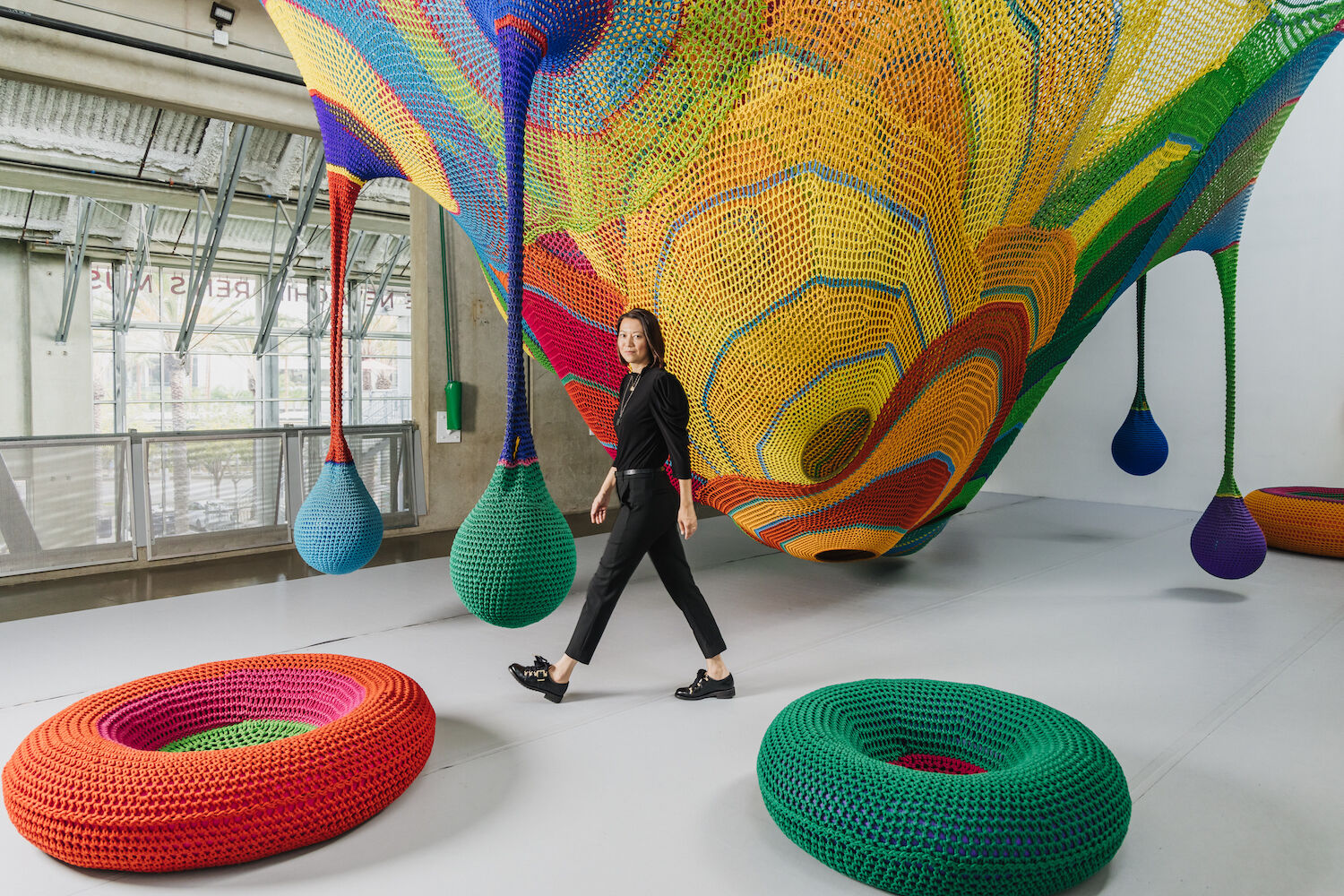
Fearing sensory overload? Fret not. A new installation from artist Michelle Montjoy gives kids and parents Breathing Room. Think soothing colors and hanging hand-knitted textiles that undulate serenely in a relaxed breathing cycle.

“It’s a quiet space,” explains Yang-Hellewell. “Neurodivergent children can experience our installations in a different way. I really want to explore accessibility and how we can serve our communities better.” She adds that some younger NCM employees even remember visiting as kids growing up in San Diego. “People develop core creative memories at the New Children’s Museum.”

On the Horizon

This month, the museum unveils phase two of Breathing Room, a sensory-friendly space to pause in an otherwise highly active environment. Oceanside artist Michelle Montjoy has been knitting pods for children and families to cocoon.

Lauren Lockhart

Lauren Lockhart

Stacy Keck

Peering at the Past

Lauren Lockhart

For a mellow seaside town, La Jolla features mightily on San Diego’s art scene. “It’s so impressive the impact this small community has had,” says Lauren Lockhart, the new executive director of the La Jolla Historical Society. “We are truly a hub of arts and culture.” Since her arrival, LJHS continues to emerge from the shadows of the Museum of Contemporary Art next door.

Noteworthy modern architecture, cutting-edge scientific research via a Salk Institute collaboration, and cosmopolitan theater and visual arts are all packed into their 1904 seaside cottage. Voices from the Rez, running through September 4, explores the work of ten Native American artists living on San Diego reservations.

For Lockhart, the potential subject matter feels endless.“We always start with a thread that is drawn from our history here,” says Lockhart, a UC San Diego grad. “But it’s important to us that they be interdisciplinary so we can engage lots of different experts and community members.”

Case in point: The Smallest Show on Earth running through January. Curated by Scott Paulson from the UC San Diego Library, the exhibition taps into the current vogue for paper craft with a deep-dive look at antique toy paper theaters.“

I love that our program is really diverse and art is often a vehicle we use to translate history,” says Lockhart. “We’re working with local artists who are reinventing and exploring this several-hundred-year- old form. We’re going to have theaters talking about the contributions of African-Americans and Latinos to La Jolla’s history.”It’s history with a twist: The more you peer into the past, the more you learn about San Diego today.

Save the Date

The Smallest Show on Earth: Paper Theaters Explored, celebrates the history and recent innovations in this playful and engaging art form. Sept. 23 – Jan. 22.

Sacred Canyons & Rare Trees: Torrey Pines – San Diego’s Symbol of Preservation, traces the history of this unique resource from its earliest inhabitants to present-day climate challenges. Feb. 10 – May 28.

Museums

Subscribe to our newsletters

Select Options

By subscribing you confirm that you agree with our Terms and Conditions and Privacy Policy.

Arts & Culture DECEMBER 18, 2023

The New Americans Museum Explores SD’s Rap Roots

Fifty years after the birth of hip-hop, a new retrospective showcases the genre's local beginnings

The New Americans Museum Explores SD’s Rap Roots
Photo Credit: Michael Brunker

Mario “OG” Lopez walks me through a maze of display cases: tapes, old photos, vintage DJ equipment. It’s all part of the New Americans Museum’s Beyond the Elements exhibition—a San Diego hip-hop retrospective and passion project he curated.

“There are four elements in hip-hop, and the vision of the exhibit was to go ‘beyond the elements’ and embrace the multicultural roots that are a huge part of hip-hop,” he says.

Through airbrushed jackets, throwback posters, and VHS footage, those four elements—deejaying, emceeing, graffiti art, and breakdancing—mix together at the Liberty Station showcase, telling the story of rap’s local beginnings.

“These are my friends,” Lopez says. “I’ve always wanted to show the art.” It’s a short answer to a long question about inspiration and ideas, about what goes into putting something like this together.

Grafitti art and embroidered denim jackets found Beyond the Elements San Diego Hip Hop history exhibit at the New Americans Museum
Photo Credit: Michael Brunker

As we continue through, he points out a face. “There’s Zodak,” he says, gesturing toward a framed, black-and-white Tribal ad featuring the legendary local graffiti artist holding a name plate. Highlighting his own work (he’s a graphic designer), Lopez motions to the cover of Aztec Tribe’s cassette single Diego Town. The artifacts are a dense tapestry, a timeline four decades long of rappers, breakdancers, DJs, and painters, spread across two rooms.

It would be easy to recognize the players if this were New York or LA, but rap stars aren’t traditionally plucked from around these parts. There’s talent, for sure; however, most of it has had little influence outside of SD. That’s to say that this is a self-contained history, based on a homegrown ecosystem held together by storytellers, smooth talkers, and colorful personalities.

There’s no defining sound or even a single approach. Aztec Tribe carved out a lane as Chicano rap pioneers in the early ’90s, while San Ysidro’s Legion Of Doom (LOD)—who are featured prominently throughout the exhibition—worked their tag-team, Run-D.M.C-like chemistry into a formula that repped South Bay.

And while the vocalists were manipulating rhymes, local dancers were adopting the movements and body contortions of hip-hop’s B-boy element: a choreographed set of ticks, spasms, and spins that, in our neck of the woods, was part West Coast pop lockin’, part East Coast footwork. They’re represented, too, in the exhibit.

July 2, 1984, copy of Newsweek magazine featuring a breakdancer spinning on his head with the text “BREAKING” in bold, white letters
Courtesy of X

A wall marked “80’s Breakdance Era” shows off hand-drawn flyers and pictures of teenagers frozen mid-routine, rocking on linoleum. Inside a glass square stands a July 2, 1984, copy of Newsweek magazine that reads “BREAKING” in bold, white letters. And resting near the top sits a black medallion from the Universal Zulu Nation, an international awareness group and official fraternity of hip-hop—a true mark of legitimacy. The pieces speak for themselves. The hometown B-boys were the real deal.

That’s how Lopez got his start: managing a group of breakers called the Floor Masters. “My mom’s house was kinda like the home base,” he says. They were unique on their block, but the culture reached beyond his ’hood. It wasn’t until he and his squad ventured past their side of town that any of them realized breakdancing was everywhere.

Shoes from a member of the Sherman Heights breakdancing crew, Floor Masters, at the Beyond the Elements Hip Hop exhibit at the New Americans Museum
Photo Credit: Michael Brunker

“We didn’t know that it was happening in other neighborhoods,” Lopez says. “So, when we would go and perform at Balboa Park or something and put out the hat to make money … then [we] had other crews coming and [trying] to battle.”

Just as hip-hop in NYC was a byproduct of its boroughs (even though it started in the Bronx), rap’s local vernacular differed depending on its enclave. Aztec Tribe was based in Spring Valley, while Mario and the Floor Masters grew up in Sherman Heights.

From the county’s eastern edge to its downtown hub, there’s an extensive history documented in Beyond The Elements. The exhibit captures our rich heritage, one that’s worth exploring. And, as a narrative, this isn’t a nostalgia exercise or a trip down memory lane. Instead, it’s a commemoration, a nod to the hometown trailblazers who helped mold local culture through sound, art, and dance with imagination and virtuosity. A powerful message as hip-hop celebrates its 50th anniversary.

Mario "The OG" Lopez and Zard One of Floor masters together at the Beyond the Elements Hip Hop history exhibit
Photo Credit: Michael Brunker

As my visit winds down, Lopez and I are joined by Zard One, an original member of the Floor Masters. We’re seated in the gallery space across the hall, and I notice his fingertips are stained with paint. Thoughtful and soft-spoken, he’s an artist and lifelong friend of Mario’s.

The docents are making their rounds, turning off lights and securing items. It’s a signal that I’ve overstayed my welcome. But, before I head out, I ask them both what they hope visitors take with them.

Lopez is first to answer. “We have tours coming in from different schools that are interested. It’s [about] educating the kids,” he says.

Just like hip-hop, the exhibit serves as a generational legacy. Each one teach one, as they say.

“It’s for the youth,” Zard One adds.

Arts & Culture OCTOBER 11, 2023

Oceanside Art Exhibition Amplifies the Voices of Displaced Palestinians

Artist John Halaka’s new exhibition at the Oceanside Museum of Art asks viewers to face the impacts of settler colonialism

Oceanside Art Exhibition Amplifies the Voices of Displaced Palestinians
John Halaka Ghosts of Presence Bodies of Abscence Hands of Survivors

“I think of us as a culture of deniers,” John Halaka says. “We tend to shy away from complex topics. We tend to shy away from our responsibilities to the histories that brought us to where we are.”

The artist, a professor of visual arts at the University of San Diego, has spent much of his life immersed in those histories. Moved by the US Civil Rights Movement as a college student, Halaka developed “a deep-seated interest in justice and in human rights,” he says. He studied the history and politics of Palestine, eventually traveling there to interview and record individuals’ memories and stories. As a Fulbright scholar in 2011 and 2012, he spent nearly a year in Lebanon working with four generations of Palestinian refugees, an experience that deeply informed the pieces in his new exhibition at the Oceanside Museum of Art (OMA).

John Halaka's art piece Ghosts of Presence-Bodies of Absence. Memory of Memories #6 depicting eyes over a textured background
John Halaka‘s Ghosts of Presence-Bodies of Absence. Memory of Memories #6, 2021. Ink and rubber stamped text over digital print, 22 x 30.

Entitled Listening to the Unheard/Drawing the Unseen: Meditations on Presence and Absence in Native Lands, the exhibition runs through February 18. Hung in stairwells and filling two galleries on OMA’s second floor, Halaka’s drawings—portraits of the people he interviewed, interpretations of the narratives they shared—are enormous, arresting, beautiful. And their meaning is undeniable.

It’d be easy to imagine the exhibition’s titular absence as emptiness, faint outlines, blank space. But Halaka’s work is the opposite. His drawings are densely layered, packed with stamped words (“RESIST” and “REMEMBER” among them) and tiny lines that coalesce into faces, hands, thorny vines. Approach too close, and they dissolve into visual snow.

“Absence and presence are essentially the two sides of a coin,” Halaka says. “When I engage with displaced individuals, there’s always this duality. They’re absent from the land, their homes; their history has been shattered. But all of that history is present within them. I try to visualize that by having two or more things exist at the same time.”

Some of Halaka’s most moving works superimpose portraits of Palestinian refugees over photographs of villages that were destroyed in Palestine in 1948—or vice versa, with the villages drawn over photos of the refugees. Faces, bodies, and buildings are rendered semi-transparent, ghostly. When underlaid beneath the portraits, the ruins appear as part of the refugees, giving texture to their skin.

This portrait, part of Halaka’s Landscapes of Resistance. Spirits that Guide Us series, features indigenous artist James Luna, who taught art at UCSD

A few pieces in the exhibition feature drawings of activists (including Lakota author Mary Brave Bird and Palestinian historian Hussein Lubani) on maps of the US and Palestine, visually melding people and their ancestral lands.

Other works, less layered but no less complex, are portraits and drawings made with a wood-burning tool. Thousands of scars form images on large panels of reddish oak, referencing “the cuts and burns that shaped [the refugees’] lives on a personal, communal, and national level,” Halaka explains.

I ask Halaka how he approaches the responsibility of translating others’ experiences for a wider audience. It’s a question that plagues me as a journalist, I admit to him.

He says that, in some ways, their story is his story—as the son of a Palestinian father and as an immigrant who came to the United States when he was 12, he shares many cultural touchpoints with the people whom he interviews, though he himself was not a refugee.

But even more critically, “I’m very, very aware of asking permission and of letting them guide my learning process,” he says. Behind each piece on the museum’s walls are hours of trust-and relationship-building with the refugees whose narratives he transforms into art. “I’m allowing their stories to shape me,” he adds. “I’m the empty cup waiting to receive knowledge so I can grow from that knowledge.”

Halaka hopes that, for museum visitors, viewing his art is merely the beginning of their own process of confronting the legacy of settler colonialism. “My drawings don’t tell the whole story,” he says. “They’re little stanzas of a much longer story.”

Amelia Rodriguez is a writer and journalist and winner of the San Diego Press Club's 2023 Rising Star Award and 2024 Best of Show Award, she’s also covered music, food, arts and culture, fashion, and design for Rolling Stone, Palm Springs Life, and other national and regional publications. After work, you can find her hunting down San Diego’s best pastries and maintaining her five-year Duolingo streak.

Features SEPTEMBER 7, 2022

Documenting the Quiet Minimalism of MCASD

Photographer Maha Bazzari navigates San Diego’s cultural landscape to uncover the dialogue between art and space

Documenting the Quiet Minimalism of MCASD
Maha Bazzari
MCASD hero

“The $105-million overhaul of MCASD, including the new Jacobs Hall, feels more connected to the topography. “It’s a delicate balance in capturing the art and architecture for each space,” says Bazzari of her approach. “Do I highlight the architecture and emphasize the artwork? Will the ocean views be the focal point, or how does the architecture connect with the landscape?”

Maha Bazzari

“I experience art within the space, sit with it, and then digest it.” That’s not the technical part, but it’s absolutely the starting point for Maha Bazzari, an architectural photographer who splits her time between San Diego and Palm Springs. The trained architectural designer and fine artist is an accidental photographer. She started by shooting her own work, then friends, and then global architecture firm Gensler came knocking.

Most recently, she was tapped by MCASD La Jolla to chronicle the quiet minimalism of the $105-million overhaul by Selldorf Architects. The photographer came often: mid-morning as the marine layer lifted. Golden hour. During a rainstorm. “I know every nook, in every light,” she says, perched on a concrete bench in the museum shop.

When she’s not traveling (Berlin, most recently) she frequents local architectural gems from the Salk Institute to Bell Pavilion. Her work has been featured in Dwell, WSJ Magazine and National Geographic. “Expressive images require an understanding of the artist’s concepts. And being selective.” Bazzari often collaborates with local artist Yomar Augusto, and there’s a fluency that develops between them. “To capture Yomar’s work is to follow the flow of lines and strong colors.”

Selldorf and Kanjo

“Bazzari maximized the rare stormy day to capture this dramatic image of architect Annabelle Selldorf and MCASD director Kathryn Kanjo. “With the use of strobe lighting and image bracketing I was able to uncover the rainy views, bring them to the foreground, and show the expansive lines of the architecture.”

Maha Bazzari

MCASD museum

“Bazzari maximized the rare stormy day to capture this dramatic image of architect Annabelle Selldorf and MCASD director Kathryn Kanjo. “With the use of strobe lighting and image bracketing I was able to uncover the rainy views, bring them to the foreground, and show the expansive lines of the architecture.”

Maha Bazzari

exhibit space

“The size of the exhibit space dictates the photography style. For the smaller exhibitions, the art must be at the right scale to the architecture so they complement each other. For larger gallery spaces, I don’t want the art to get lost or capture too much information.” 

Maha Bazzari

studioMAHA_sdm0922.jpeg

“My love for the visual arts goes beyond a still image. I dabble in painting and explore different materials. This is a detail of Gravitational Attraction. I used acrylic paint, graphite, spray paint, and iron filings that were manipulated by the use of magnets to create this shape. Concept: The force of attraction is inescapable, especially the connections between people and their souls through interaction, sharing of ideas, stories, and experiences.”

Maha Bazzari

studio-maha-sdm0922.jpeg

Macro-micro is a common theme throughout Bazzari’s photos, as shown with these two shots of a piece by San Diego artist Melissa Walters. Of All Things was a site-specific installation made of 2,600 paper tetrahedrons. “The amount of detail that went into this piece is mind-boggling,” Bazzari says. “I had to consider the physical space in relation to the theoretical Omniverse that contains it.”

Maha Bazzari

keller

“I photographed this beautifully dramatic artwork for Yomar’s solo show at Point Loma Nazarene University. Although the mural was the main piece in the exhibition, the pieces came together through the narration of graphics throughout the gallery space.”

Maha Bazzari

maha studio mural

For this mural, commissioned by San Diego Made Factory, Bazzari added scale with pedestrians and trolley tracks. “I wanted to underscore the urban setting of the East Village.”

Maha Bazzari

maha studio

This abstract and colorful geometric calligraphy painting was commissioned for a residence in Mission Hills. “We wanted to highlight the colorful streaks and textures by enhancing the contrast, especially on the dark canvas.”

Maha Bazzari

CBRE Tecture sculpture

This light fabrication is by Tecture in collaboration with Gensler San Diego. “I captured the curvilinear sculptural elements made from independent layers of milled extruded PVC with suspended lighting in between.”

Maha Bazzari

maha-studio-sdm0922-1.jpeg

“This historic preservation of a mid-century modern house in San Diego [by architect Kristi Byers] is one of those projects that I photograph and admire all the work and consideration that went into it.”

Maha Bazzari

prescott-studio-sdm0922-1.jpeg

“We arrived before sunrise to make sure we captured the best light on the small chapel at Point Loma Nazarene University. It took us five hours to photograph the saturated colors, clean lines, and thoughtful materials.” The Lyle and Grace Prescott Memorial Prayer Chapel is a collaboration between architects Carrier Johnson and Tecture.

Maha Bazzari

maha-studios-sdm0922-2.jpeg

On The Salk Institute by Louis Kahn: “I can spend all day capturing this monumental architecture with its details, observing the light moving across all the surfaces.”

Maha Bazzari

maha-studio-sdm0922-3.jpeg

There are many approaches to shooting a door, especially this one designed and built by Tecture for a San Diego beachfront home. “It is a large pivot door with four operable windows, and a wheel operated gear system. So, we played around. Opening, closing and passing through it.”

Maha Bazzari

maha-studio-sdm0922.jpeg

A symphony of concrete was required to show off the muscularity of this chair designed and fabricated by Tecture. “We connected this piece to its surroundings—the concrete chair to the concrete floor and walls. Aligning textures and materials was the goal.”

Maha Bazzari

Studio S JUNE 8, 2026

Seven Restaurants, One Rising Star

Yes, Chef! winner Emily Brubaker leads the robust culinary program at Omni La Costa Resort & Spa

Seven Restaurants, One Rising Star
Courtesy of Omni La Costa

For Executive Chef Emily Brubaker, Omni La Costa Resort & Spa feels like home. She grew up just a mile-and-a-half away from the 400-acre property and fondly recalls walking the golf course perimeter as a kid. Though her ambitions led her away from San Diego for nearly two decades in which she honed her craft in some of the highest of high-profile Las Vegas restaurants—including triple Michelin-starred Joël Robuchon at MGM Grand—they ultimately brought her back to North County.

Courtesy of Omni La Costa

Today, the classically French-trained chef, who’s fresh off a victory on NBC’s Yes, Chef!, judged by Martha Stewart and José Andrés, oversees Omni La Costa Resort & Spa’s seven distinct dining concepts. Her goal is to elevate the resort’s culinary program with her creative, hyperlocal ingredient-driven approach while maintaining the Spanish- inspired flavors and fresh California coastal cuisine that are the bedrock of its culinary identity.

“The San Diego food scene is really growing, and in North County alone, it’s really exploded in the last five years,” Brubaker says. “There are Michelin stars, beautiful tasting menus, craft bakers, and all this food—when I was growing up in La Costa, it was fish tacos. Now there are really cool things popping up, and I’m so happy to be here to see where it’s going to go.”

Brubaker gives chefs de cuisine at each individual restaurant autonomy, however, her influence is evident across the resort.

For example, lobby restaurant Bar Traza serves as Omni La Costa’s culinary centerpiece and features bold Spanish flavors in a lively, social atmosphere. Brubaker overhauled the menu to be more consistent and centered on casual bites with that signature vibe. Think smoky paprika, vibrant citrus, and Spanish meats and cheeses.

At VUE, the focus is on seasonal offerings, California coastal cuisine, and Baja-inspired dishes. She and Chef de Cuisine Cameron Dixon change the menu biannually, which heading into summer, will highlight farm-fresh produce and hyperlocal ingredients—the resort even has its own herb garden and honeybee hives.

Courtesy of Omni La Costa

Poolside dining options are leaning into the country’s 250th this summer with a selection of classic American dishes with an Omni La Costa twist. And Bob’s Steak & Chop House (Brubaker is a trained butcher) offers a classic steakhouse experience with elevated service.

The chef and company also plan menus for special events at the resort where her creativity can really shine. For an upcoming National Ski Association dinner, the banquet hall will be transformed into an Alpine-themed winter wonderland complete with a snow machine, savory sausages, and melty, decadent raclette. A recent dinner was built around the Carlsbad Flower Fields and each course was matched to a color of ranunculus (Did you know pink dragonfruit are grown in North County? You do now.).

“It’s my zen to be in the kitchen playing with food,” Brubaker says.

Omni La Costa’s culinary program is a key part of the resort experience. And with Brubaker’s leadership, it’s becoming a draw for visitors and locals alike.

“These aren’t just hotel restaurants, these are restaurants that you should go to. They’re destinations, and I’m really hoping for the future that’s where we’re going,” Brubaker says.

Courtesy of Omni La Costa

Brubaker is also channeling her experience on Yes, Chef! into the culture at Omni La Costa—more emphasis on teamwork and collaboration, empowering her staff to share constructive critiques, and embracing different perspectives. Alongside her leadership role, Brubaker has become an advocate for mental health in the hospitality industry, serving as chief ambassador for the Burnt Chef Project and serves on the Board of Advisors for the Apex Culinary Program, where she mentors and develops future talent.

For more on Omni La Costa Resort & Spa and its dining program, please visit omnihotels.com/hotels/san-diego-la-costa.

Partner Content
Features AUGUST 16, 2013

San Diego Fall Arts Preview

San Diego's best play,s, musicals, dance performances, and art exhibits

San Diego Fall Arts Preview

What’s on stage, in studio, and… performing at a trolley station? The 2013–2014 arts season! San Diego’s best plays, musicals, dance performances, and visual art exhibits are all right here in our annual guide. But don’t just read this and then go see a movie. There’s a museum ticket with your name on it!

San Diego Fall Arts Preview

San Diego Fall Arts Preview

San Diego Fall Arts Preview

San Diego Fall Arts Preview

San Diego Fall Arts Preview

San Diego Fall Arts Preview

San Diego Fall Arts Preview

San Diego Fall Arts Preview

San Diego Fall Arts Preview

San Diego Fall Arts Preview


Arts & Culture JUNE 10, 2026

Artist India Thompson Weaves New Meaning into Everyday Items

On view at Mingei International Museum now through October 18, Thompson's basketry invites viewers to notice the seemingly mundane

Artist India Thompson Weaves New Meaning into Everyday Items
Photo Credit: Ron Kerner

When was the last time you really looked at your fridge? Not for milk or ketchup or that takeout you hope is still good, but really looked at it. Considered it. Its texture. Its shape. Its role in your life. “Never” is probably your answer here. But once you’ve seen India Thompson’s life-size fridge made of reed, you’ll probably pause the next time you’re in your kitchen.

Thompson’s new Looks Like Home exhibit on view at Mingei International Museum takes everyday items that most of us use on a daily basis—the things that usually make our lives faster and more convenient—and renders them useless but beautiful as intricately woven reed sculptures.

The museum’s name comes from the philosophy of Yanagi Sōetsu, who wrote in the essay “The Beauty of Miscellaneous Things” that “when one becomes too familiar with a sight, one loses the ability to truly see it. Habit robs us of the power to perceive anew, much less the power to be moved.”

Thompson joins artists who use material transformation to remake the familiar, like Katarina Kamprani who redesigns everyday objects in ways that render them physically unusable, or Do Ho Suh who recreates domestic spaces through labor-intensive processes. Thompson’s approach is quieter, more tender: She doesn’t distort. She weaves.

Photo Credit: Ron Kerner

Seeing her work for the first time brought up emotions I hadn’t felt since I was a kid watching The Brave Little Toaster, the movie that taught me to hold space for the invisible servants that make up our homes. Thompson’s collection encourages a kind of reckoning with what it means to ignore the essential. It asks you to reconsider what “home” means in an era where so few can afford to buy one. Her sculptures are like a challenge to pause where you usually press on. Being close to her work is like taking a breath and not realizing how long you’ve been holding it.

Thompson was born in Los Angeles and is now a multidisciplinary artist based in San Diego. While ceramic is her primary artistic medium, this exhibition highlights her exploration of basketry—a thousand-year-old, time-consuming process and an art form she describes as one of “care and memory-keeping.”

Thompson also happens to 9-to-5 as Mingei’s studio program specialist. Assistant Curator Ariana Torres didn’t know about Thompson’s basketry work until she saw Thompson post a picture of her woven toilet paper on Instagram. Then came a woven microwave.

“It seemed really poignant and uncanny,” Torres says. “It was mundane, but it was also kind of quiet … something you wouldn’t think anybody would focus on.”

Photo Credit: Ron Kerner

Thompson began making art five years ago in her college ceramic class called Handbuilding, and she immediately fell in love. The first art she ever shared with others were her ceramic figurines: round, red-clayed pot-like sculptures with minimalist, barely-there faces in a variety of expressions. Some look surprised. Some look very concerned. Some look like they spend Friday nights at a Star Wars cantina. She calls them “Moots.”

The definition of the English word moot, in verb form, is “to gather and discuss an important topic,” as Thompson explains. “They look so serious … like they’ve wriggled through the earth to talk to each other.”

Thompson found her way to basketry three years ago and learned by watching YouTube videos.

“It’s something you can do at home,” she says. “And I love a repetitive process.”

The toilet paper roll came to her while making a cylinder that she thought looked like a roll of Charmin. Then she thought maybe she should make one on purpose. “I just thought it would be funny and really challenging, too,” she says. “Because there’s no tutorial for that. Why would there be, right?”

She figured it out and shared it on Instagram. People loved it. It received more than double the amount of likes and comments she usually got, but what really struck her was how many people came up to her in person to talk about how they connected with it. That, to her, was even more meaningful than the online response.

So she kept going and chose to make a microwave next.

Photo Credit: Ron Kerner

“[It’s an] object we all own and we all need,” she says. “Yet no one really cares about a microwave.”

She started the collection during a time when her landlord was coming into her apartment constantly with a crew of people, making notes of what they were going to remodel without ever acknowledging her in the room.

“It was such a weird fishbowl moment,” she says. “I technically don’t own my apartment, but I still consider it home. I live here and I pay to live here, but this isn’t mine. We live in this space and I call it my apartment. I call it my refrigerator. But it could be taken away at any moment.”

It dawned on her how much we depend on things we don’t own, how little we notice the things we rely on every day, and how temporal the word “my” can be.

The woven refrigerator is the largest in Thompson’s collection at Mingei, and inside it you can find additional woven items like a ranch bottle, a Brita filter, and a sandwich on a plate. You can’t open the freezer door, but if you look carefully between the gaps of woven reed, you might be able to see a few other things Thompson made and placed inside.

“If you really look closely,” she explains, “you’ll be rewarded.”

Partner Content JUNE 10, 2026

New Options for GLP-1 Users

Scripps study shows that some patients may be able to taper their dose and maintain results

New Options for GLP-1 Users
Courtesy of Scripps Health

While glucagon-like peptide-1 (GLP-1) receptor agents have been used to treat Type 2 diabetes for more than 20 years, their recent emergence as weight-loss wonder drugs marked a new frontier in medicine. But their effectiveness has left some patients wondering what to do once they’ve reached their goal. Stopping the medication could mean regaining some, if not all, of the weight. A Scripps Clinic internal medicine physician recently conducted a small study of whether GLP-1 patients who had reached their goal weight could maintain that weight by taking their regularly prescribed injection every other week instead of weekly. Spoiler alert: 30 of 34 patients did. Read more about the study here and what that may mean as pharmaceutical companies roll out oral GLP-1s.

For more nutrition, wellness, and healthy living tips, sign up for the San Diego Health newsletter here.

Partner Content

Thousands of savvy locals already get it.

San Diego's best restaurants, experiences, and events—handpicked and delivered to your inbox weekly. You in?

Close the CTA

Contact Us

1230 Columbia Street, Suite 800,

San Diego, CA
