

Ready to know more about San Diego?

Subscribe
Everything SD DECEMBER 1, 2023

The 5 Best Lineups in San Diego Sports: December 2023

What not to miss on the local sports scene this month
The 5 Best Lineups in San Diego Sports: December 2023
SDSU Men’s Basketball, Azetcs

SDSU vs UCSD men’s basketball

Friday, December 1 | 7:00 p.m. | LionTree Arena, UCSD

Watch: ESPN+ | Listen: San Diego Sports 760

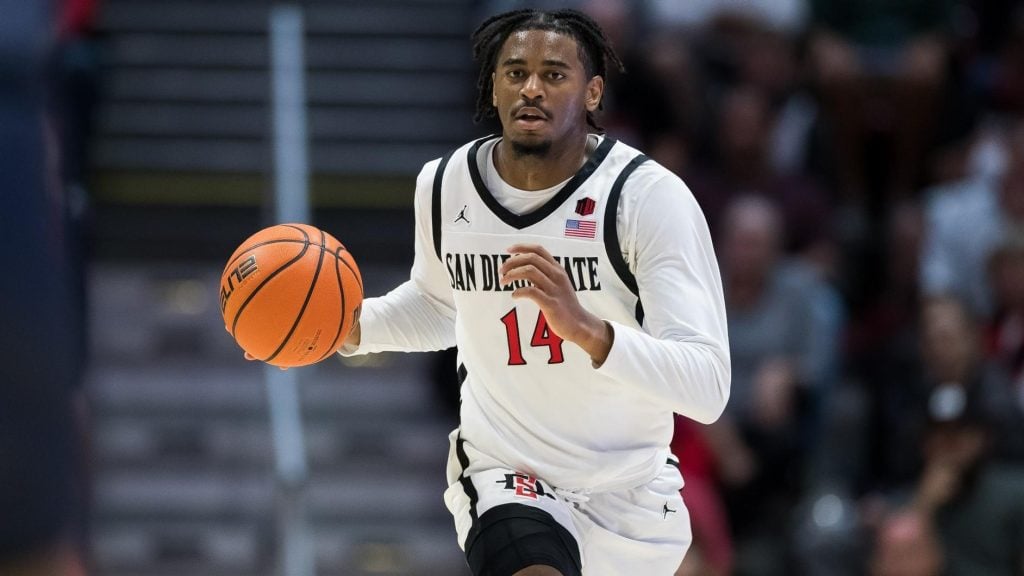
Move over, New York Yankees and Mets. There’s a new transit-oriented sports rivalry on the map. With the opening of MTS’s Blue Line trolley extension in 2021, the SDSU and UCSD campuses became linked by transit. A year later, the schools’ baseball teams inaugurated the so-called Trolley Series. The SDSU and UCSD men’s basketball programs pick up the lightrail rivalry on December 1 and, unlike the Subway Series, features teams that aren’t wholly disappointing.

SDSU is 6-1 following its run to the Final Four last season, and UCSD just hosted the nationally televised Rady Children’s Invitational basketball tournament. The game is sold out—don’t forget your PRONTO cards—but fans can catch it on ESPN+ or San Diego Sports 760.

San Diego Sockers vs Tacoma Stars

Sunday, December 3 | 5:05 p.m. | Pechanga Arena San Diego

The most decorated sports team in San Diego isn’t the beloved Padres, the ascendent Wave, or the departed Chargers. It’s the Sockers, the 16-time champions of professional indoor soccer. They may not be as familiar as the other teams, but the Sockers winning tradition at Pechanga Arena stretches back to 1982.

Sadly, their December 3 home opener represents something of a farewell at what the team affectionately calls “the grand old arena.” They’re relocating to Oceanside’s brand-new Frontwave Arena after this season. Catch their electrifying brand of soccer before they head up the coast.

San Diego Gulls vs Henderson Silver Knights

Saturday, December 16 | 6:00 p.m. | Pechanga Arena San Diego

Watch: KUSI-TV | Listen: San Diego Gulls Audio Network

For my money, hockey is the best live sport, Hawaiian shirts are the best garment, and Christmas is the best holiday. Those three things joyously collide at the Gulls next home game on December 16, as the team gives away Gulls Hawaiian shirts as part of their Winter Wonderland/Teddy Bear Toss Night. There’s even a pregame tailgate in the parking lot. Just don’t mind the standings.

The Gulls are mired in last place in the American Hockey League’s Pacific Division and face the minor-league affiliate of the Stanley Cup-winning Las Vegas Golden Knights. If there’s ever a time for a miracle on ice, it’s during the holiday season. 

DIRECTV Holiday Bowl

Wednesday, December 27 | 5:00 p.m. | Petco Park

Watch: TBD | Listen: TBD

The festivities around the college football Holiday Bowl offer something for everyone. There’s America’s Largest Balloon Parade and the Snapdragon Bowl Bash downtown. For those wanting to relive the glory days, there’s a tailgate party, and for those who like to wake up at 5 a.m. there’s a 5K walk/run. If the expected USC-Clemson matchup comes to fruition, there will be visiting Angelenos saying San Diego is “really nice” (as if we needed their confirmation). 

And of course there’s the Holiday Bowl game itself, which is typically one of college football’s best matchups of the year and one of San Diego’s great sports traditions. It has been played in the city since 1978 and Petco Park was recently modified to host it. Teams will be announced on December 3, but get your tickets now before a bunch of Trojans run up the prices.

SDSU vs No. 11 Gonzaga men’s basketball

Friday, December 29 | 6:00 p.m. | Spokane, Washington

Watch: TBD | Listen: San Diego Sports 760

It’s that time between Christmas and New Year’s Day. Everyone’s faking work so they don’t burn vacation days. You’re full and drowsy from six weeks of holiday eating and you’re staring into the winter abyss. That is, unless you’re an SDSU fan.

It seems the men’s basketball team always figures it out in December, dive-bombs into the AP Top 25 rankings, and reminds everyone that San Diego has more than just beaches and sunshine. It has one of the best, most-consistent basketball programs in the country. After starting last season 7-3, SDSU’s win against Kennesaw State in December propelled them to win 25 of their next 28 games on the way to the NCAA championship game. Their matchup at No. 11 Gonzaga will indicate whether SDSU has yet another postseason run in them.

Brendan Dentino is a U.S. Navy veteran, writer, and public servant based in San Diego. He writes weekly about baseball and politics at Out in Left.

Subscribe to our newsletters

Select Options

By subscribing you confirm that you agree with our Terms and Conditions and Privacy Policy.

Everything SD AUGUST 13, 2026

A Rare Look Inside Callaway Golf’s San Diego Test Center

The Ely Callaway Performance Center is where tour-level fittings, cutting-edge technology, and golf equipment you can’t buy yet all come together

A Rare Look Inside Callaway Golf’s San Diego Test Center
Courtesy of Ely Callaway Performance Center

“Come test something.”

Those are quite possibly my three favorite words in the English language—all due respect to “I love you” or the highly underrated “you were right.”

I’ve been a PGA Golf Professional since 1994, and yes, full bias disclosure, a Callaway Golf Ambassador for 18 years. One of the bonuses that comes with that combo is access to the Ely Callaway Performance Center—a place so exclusive it gives “velvet rope” vibes.

Originally opened in 2006 as a highly functional (yet not exactly breathtaking) test facility, the ECPC got a serious glow-up in 2018 when Gil Hanse (along with partner Geoff Shackelford) turned it into what can only be described as a fully engineered golf playground. Hanse is no stranger to golf course renovations. In 2024, he completed an extensive redesign of the Omni La Costa North Course in Carlsbad, so it could host the NCAA Division 1 Golf Championships. He also worked on acclaimed courses like Winged Foot, Merion Golf Club, and Oakmont Country Club.

In just two months, it went from a standard test center and R&D lab to a fully dialed-in golf playground.

Courtesy of Ely Callaway Performance Center

What was once purely practical is now intentionally designed to be both precise and inspiring. The targets are staggered with purpose—forcing creative shot-making while also calling you out on your actual distances (no more “that’s my 150-yard club … ish”).

Add a massive hitting area, bunkers and greens that mimic real on-course conditions, a “Himalayas” putting green (named for its roller-coaster undulations), an upgraded indoor putting lab, and a 120-decibel sound system blasting a very golf-appropriate playlist, and suddenly it’s a rare blend of high-performance testing facility and “don’t mind if I stay here all day” energy. Since this isn’t exactly open to the public, SDM asked me to take you behind the curtain.

As the iron gates part, it feels less like arriving at a practice facility and more like being granted backstage access at a rock concert—if the bandmembers were made entirely of launch monitors and perfectly manicured turf.

There are no mats. No guessing. No “I think that one felt good?” Just conditions that mirror exactly what tour players see in competition. Because when you’re testing equipment at this level, accuracy isn’t a bonus—it’s the whole point.

Even the sand matters. Different textures. Different densities. Because bunkers have personalities, too, and they are often unfriendly. And the golf balls? Brand. New. Not the usual “these have seen some things” range balls. New balls mean consistent spin, truer trajectory, and no surprises. The older a golf ball gets—and the more it’s been baked in the sun, scuffed, or generally lived a full and complicated life—the less reliable it becomes. Think of it like this: fresh ball, predictable performance; old range ball, slight chaos with a side of mystery.

I’m escorted to my personal hitting bay—basically a pop-up shaded oasis stocked with enough equipment to make a gear junkie weak in the knees. Shafts in every weight and profile imaginable. Heads lined up like they’re waiting to be drafted by their favorite team.

Courtesy of Ely Callaway Performance Center

Toptracer technology was patiently waiting to track every one of my swings, each shot instantly delivering ball speed, launch, spin, carry distance, and dispersion (a polite way of saying consistency, or lack thereof), so there’s no guessing—just data telling the truth, whether I like it or not.

We start with irons. Different heads, different feels, different results. When I miss a shot, the ball tends to leak right, so we check lie angle. A quick adjustment—2 degrees upright—and suddenly the clubface is consistently square at impact like it remembered its job. Effort level: down. Ball flight: improved. Confidence: creeping back.

Next we look at the different shaft options—because nothing says “fun afternoon” like realizing a higher kick point can change your entire golf identity. Shaft flex (how much the shaft bends during your swing) helps determine whether you get more height and distance or more control, while kick point (where the shaft bends the most) influences your ball flight—lower kick point for higher launch, higher kick point for a flatter, more penetrating shot. In other words, one small tweak and suddenly you’re hitting shots you’d normally only describe later, slightly exaggerated, over a glass of wine.

Then we move through the bag: hybrids, fairway woods, drivers, wedges. It’s a full rotation of “try this,” “now try this,” and “okay wait … THAT one.”

And yes—the new Quantum driver and fairway woods made an appearance. Without getting too deep in the weeds, they’re faster, more forgiving, and smarter (thanks to AI face mapping) than previous models. Translation: Even your mishits are now slightly less embarrassing. And they were not the only things getting tested. My patience was under attack because the driver and woods would not be available to the public for a good three months.

Courtesy of Ely Callaway Performance Center

Watching the fitting team work is like watching a Formula 1 pit crew. Clubs are swapped in seconds. Shafts tightened, adjusted, replaced. One minute you’re swinging something that seems “fine,” and the next, you’re holding a club that feels like it is a part of your DNA.

Then there’s the putter fitting. Drivers are physics. Putters are therapy. Inside the putting lab, sensors track everything—tempo, face angle, path—things you didn’t even know could be measured. Within minutes, my data politely informs me that my putter face is slightly closed at impact. Not shocking, but also not ideal.

A few quick adjustments—different head (with a bit more weight at the toe to discourage the face swinging closed at impact), shorter shaft (so I feel more over the ball, which helps my eyeline)—and suddenly the ball starts rolling exactly where I’m aimed.

Same stroke. Same golfer. Completely different outcome. If only the rest of life worked like that.

And then there’s the part that feels slightly classified. The ECPC isn’t “just” a performance center—it’s also where future equipment lives before the public even knows it exists. I’ve been there when certain clubs were basically under surveillance. Not “don’t touch,” but more “please keep phones in your pocket.”

It’s golf’s version of Area 51. Except instead of aliens, it’s drivers that won’t hit shelves for another year—and like I mentioned, waiting is not my strong suit.

Getting to test the newest equipment isn’t just a perk—it’s part of the job. It’s what allows me to stand in front of students and say, “I’ve tried it. I know what works and what doesn’t. And more importantly, I know why.” And if I happen to sprint to my car every time the phone rings and someone says, “Come test something” … well, that’s just professional courtesy.

Other Fitting Spots in SD

Callaway isn’t the only place to get your swing analyzed and clubs fitted. You can stroll into big retail spots like The Golf Mart or Golf Galaxy, book a next-level session at a dedicated studio like Club Champion or True Spec Golf, test brand-specific gear at various manufacturing companies (many located in Carlsbad), or even combine a lesson and a fitting at GOLFTEC. And let’s not forget your local golf course, where fittings happen on actual turf, on a driving range you have some history with—many times with the golf professional who is familiar with your swing so they can give you valuable input. With this many options, there’s really no excuse, other than pride, to keep blaming your clubs.

Everything SD AUGUST 12, 2026

San Diego’s Skateboarding Scene Rolls Into a New Era

The county that helped push skating into the mainstream is now nurturing the competitors, communities, and culture shaping its future

San Diego’s Skateboarding Scene Rolls Into a New Era
Photo Credit: Taylor Ballard

It was the summer of 1999. MTV, The Matrix, and first-generation PlayStation glowed on tube TV sets all over America. What a time to be alive. Smartphones weren’t yet stealing people from the moment. Cultural was a shared reality. During the last few minutes of the monoculture, Tony Hawk executed the first-ever 900 at X Games V in San Francisco. That’s two and a half aerial rotations with a side of the dizzies.

The time had run out on the Vert Best Trick competition long before the 11th attempt when he pulled off the fateful feat. Nobody cared. Not the judges, not the competition, and certainly not the crowd. “Let that bird fly,” they said. Once the trick was landed, they partied like it was 1999 … because it was.

That was the tipping point when the skateboarding world exploded, going from counterculture to a national phenomenon. Shortly after that, “Tony Hawk’s Pro Skater” video game came out, introducing millions of kids to what skate culture looked like. Oh, the game had a killer punk soundtrack, too.

Linda Vista skatepark in San Diego featuring skaters on the side of a half-pipe

We can all thank Hawk for the globalization of skateboarding. But we can also recognize his local influence and how San Diego County continues to be a hub for skateboarders young and old, for competitors and street skaters. To see it all, go to Park De La Cruz in City Heights—or, heck, any other skatepark in the county—which, at 19,000 square feet, is about twice the size of the average skatepark and has signature features like an M-shaped transition ramp. The amount of talent that continues to evolve in this county is a testament to deep-rooted skate culture and world-class athletes supporting the next generation.

Photo Credit: Casiel Sanchez

The Skatepark

I’m a little early for a skate lesson with pro skater Mike Owen when I get to Linda Vista Skatepark. In the 2010s, Owen ranked as one of the world’s top bowl riders. He’s the founder of San Diego Skateboarding and has “helped thousands of kids, teens, and adults learn to skate safely, confidently, and with style,” the company’s site says. And now it’s my turn. We start the lesson on the nearby tennis courts, getting my basic foot mechanics down. Safety before style.

In terms of street plaza features, the massive Linda Vista Skatepark is loaded with rails, stairs, manuals, and ledges. There are more bowls than you can get from Cava: a flow bowl, backyard-style pool, and vert bowl. The main feature is a full pipe for advanced line riders. It’s a hell of a park, even if somebody just wants to watch the action from the 100-foot-long pedestrian skybridge overhead.

Right now, San Diego has over 50 public skateparks scattered throughout the county. “There are now more [skateparks], more resources for them, and more terrain,” Owen tells me. “Now, they’re offering different competitive style skateparks that help for competitions. The best parks have a variety of different terrain where you have things for beginners and bigger transitions. Not every town has that.”

San Diego, luckily, does. But despite the bounty, Owen believes there should still be more—public skateparks are safe spaces for all to learn and develop on-board skills. Without them, a huge portion of San Diego’s culture withers. Encinitas could be the next city to add a skatepark to the county’s roster: In early July, the Encinitas City Council appointed 12 local skaters and community members for the newly established Skate Feature Committee. In partnership with two councilmembers, the committee’s purpose is to design a working skatepark or feature for the city.

But like any big project, Owen says, it’s a long process to add another skatepark to the community.

“I wish it were easier,” he says. “When there are different contractors for different things, [there’s only] a certain amount of time to build. It gets tricky.”

Then there’s the matter of funding the actual construction and development of the skatepark. That usually comes from grants, fundraisers, and donations. For reference, Linda Vista Skatepark was built on a $4.46 million grant from the California Department of Housing and Community Development in 2014. With an additional $40,000 donated by the Tony Hawk Foundation, the park opened in 2018 and is the largest in San Diego’s Parks and Recreation system. The best way to get a skatepark in your neighborhood, Owen says, is to start a petition and reach out to your city.

Photo Credit: Blair Alley

The Street Skaters

Jordan Thrower’s first street skate sesh at San Diego City College in 2003 ended with a police chase. The campus was swarming with skaters riding rails, jumping stairs, and grinding tricks on benches, curbs, and ledges. When the cops got on their loudspeaker telling them not to run, everyone obviously ran. Back then, cops would give tickets and confiscate boards. The vibe has loosened since. “Now, the police don’t really care,” Thrower says. “They just make you leave. It’s not anything crazy.”

Street skating is when riders use real-world urban obstacles, rather than pristinely designed bowls or ramps—such as in college campuses, downtown areas, corporate buildings, and malls. Abandoned mini-golf courses and construction sites do the trick, too.

Thrower says the street skating hub here isn’t as huge as it once was. Thanks to modern technology and social media, skaters aren’t tied to any certain place to create skate videos. You know, those videos that could have been taken this year but have the low-fi vibe of 2004, where skaters carve down stairwells into parking lots, over mailboxes, or across park benches. The silver lining: Even though there are fewer street skaters than there once was, those who stayed in San Diego are still tight.

“Everyone skates with each other and knows each other here,” Thrower says. “In LA, it’s not really like that. It’s small there, but not everybody knows each other, and they don’t really skate with each other too much. They just have a lot of little crews.”

Back in 2015, Thrower started his own street team and brand that sells boards and shirts called Tantrum. The Tantrum team is split between San Diego and San Francisco. It doesn’t take much to be a part of a skate team. You just have to be a good hang.

“The way I pick people [for the team] is if I can get along with them,” he says. “It doesn’t even really matter if they’re that good. If you’re likable and funny, you can pretty much be on the team.”

Photo Credit: Marc Wierenega

The Future

Running it up to North County, a Vista-based nonprofit organization called Exposure Skate has been shaping up the youth since 2012. Its mission is to give more opportunities to otherwise underrepresented women, girls, and non-binary individuals by offering classes and camps. This, to build up confidence and community. We could all use a little bit of that, eh?

Thanks to Exposure Skate, 13-year-old Joey Yarbrough has found herself competing in the LA Olympic trials. (Her first time on a skateboard came at just 18 months old at an Exposure Skate Rising event.)

While competing for Team USA in Rome in June of this year, she finished 13th at the first Olympic qualifier for LA28. Currently ranked 21st in the world and 5th among American women, the young prodigy is blooming. And she’s in good company and mentorship from her biggest influence, Bryce Wettstein.

“She taught me at the first Exposure Skate Rising when I was little,” Yarbrough recalls. “I compete and skate with her all the time now, and it’s super fun. [At Exposure,] it feels so good to have someone there to help me whenever I need it. They’re like my family, always encouraging me and always there for me.”

Yarbrough will be just 15 years old when the Olympics go down in LA. She’s following the Olympic torch carried by other locals such as Wettstein, Ruby Lilley, Jordyn Barratt, and Exposure Skate’s Amelia Brodka.

“I’m working my hardest to get there,” she says. “I’ll also work my hardest to go higher in the Olympics, maybe on podium. That’s just my dream. So, hopefully it’ll come true.”

Jake Peterson is a San Diego-based journalist and culture writer. His work explores the city’s music scene, sports, local characters, and the offbeat corners of San Diego’s subcultures.

Everything SD JUNE 16, 2026

Teenage Car Theft Drove Me into NASCAR’s Arms

As NASCAR lands in San Diego this weekend, a recently burgled dad is irregularly excited

Teenage Car Theft Drove Me into NASCAR’s Arms
Courtesy of NASCAR San Diego

My 15-year-old daughter tried to steal our car this week, so I’m ready to become a NASCAR dad. It would be appropriate discipline. We just relocated to a nice suburb within walking distance of her high school. The suburbs are like living in a Tesla commercial. I am pretty far from the wealthiest dad in this neighborhood (I am the least wealthy dad in this neighborhood), more than a few engineering degrees short of being in the running.

I’m fairly certain watching NASCAR is a violation of our HOA and a violation of my daughter’s emotional HOA. But NASCAR hits San Diego this weekend and I have a fever I’ve never felt before. I want to watch 111 drivers do dangerous things in cars and trucks on an active military base in the ocean. Since my lifelong exposure to NASCAR is limited to Talladega Nights and every single iteration of the movie Cars, I can only base my plan of attack on oafish stereotypes.

So while other neighbor dads are sizing bubble jackets for their golf simulators, I’m gonna grow a Ricky Bobby, run the extension cord for the TV out into the carport we share with six other condos, fill a cooler with a proper 80-20 split of Hamm’s and Mountain Dew, treat a lawn chair like an ADU, and spend a few hours yelling ohsheeeit as if it’s a single, nine-syllable word.


The quality parents in our neighborhood seem highly attuned to the sound of any vehicle breaching the 6 MPH threshold, so I should gather a crowd pretty fast. They may come over with strongly worded emails in their hearts, but one glimpse of Shane van Gisbergen and hometown hero Jimmy Johnson guzzling the last remaining drops of gasoline on the planet in a dazzling display of carmanship—they’ll join my NASCAR pop-up party.

By the time my daughter brings her friends over, we’ll have a real welcoming committee.

Because, like I said, my daughter tried to steal my car.

She wasn’t going to Mexico. But while Claire and I were off doing businessy stuff to afford my teen’s skincare rituals, she and a friend decided to teach themselves stick shift. She’s never driven a stick before. I’m not saying she has, but if she has driven a vehicle at all—it would have been done in a remote, abandoned parking lot where the only possible thing she could destroy was the concept of driving itself.

But a couple TikTok videos later, she and her friend felt a certain level of mastery had been achieved, and they gave it a go. They backed our VW Bug out of the garage with a series of stalls and transmission seizures, and managed to get it into the carport, attempting to do “donuts.” That’s when I got a call from a resident, who had taken an active interest in this experiment.

Which got me wondering about the power and might of vehicles. Turns out, even at carport speeds there exists a bit of potential fireworks. A garage door could become not a garage door anymore. At 145 MPH on Naval Base Coronado this weekend (don’t worry, they slow down to 100 MPH for turns), NASCAR drivers are essentially doorbell ditching gods. I didn’t register the temperature after my daughter’s trial run, but the track at NASCAR races usually hits a cool 130-150 degrees, enough to lightly sear some Nikes (the tires themselves hover in the 200 degree range).

And that is at least part of our fascination with NASCAR (the other fascination is the legendary pit parties, which either set humanity back a few evolutionary links, or advance it by the same amount of links). These drivers do something all of us do every day in a very efficient, boring way—drive a car—and take it to its extreme impulse. Grace and precision at the thunderous edge of shit going terribly wrong. Most of us have looked at San Diego home prices and felt a burning desire to see how fast our Honda Pilot could make it to our new home in Vegas. So NASCAR drivers are acting on our own wildest impulse.

Troy Johnson

About Troy Johnson

Troy Johnson is the magazine’s award-winning food writer and humorist, and a long-standing expert on Food Network. His work has been featured on NatGeo, Travel Channel, NPR, and in Food Matters, a textbook of the best American food writing.

Studio S AUGUST 10, 2026

The Secret to a Home That Feels Just Right

Behind every beautiful space is a thoughtful process, and ASID San Diego is helping homeowners understand the value of professional design.

The Secret to a Home That Feels Just Right
Courtesy of ASID

A perfectly designed home rarely happens by accident. Those kitchens that feel effortless and rooms that seem to tell a story the second you walk in? They’re usually the work of someone who knows exactly what they’re doing.

It’s knowing which ideas will actually work, which materials will hold up over time, and how to turn a collection of choices into a space that feels intentional. That’s where a professional interior designer comes in.

For the American Society of Interior Designers (ASID) California San Diego Chapter, the goal is to help people see interior design as more than just the finished look. Behind every well-designed space is a process built on technical expertise. Designers are educated in everything from professional software and construction details to building codes, space planning, materials, and functionality.

Courtesy of ASID

“People don’t always realize how much goes on behind the scenes,” Kirsten Recce , current president of the ASID California San Diego Chapter, says. “Our designers are not just doing furniture placement and color selection and picking out new fluffy pillows. That’s not what they’re trained for.”

ASID members bring formal education, continued learning, and industry knowledge to their projects, helping create spaces that are not only beautiful, but designed to work. A paint color that changes completely depending on the lighting. A material that looks beautiful in a showroom but doesn’t make sense for everyday life. A layout that photographs well but doesn’t function for the people living there. These are the details where professional guidance can make all the difference.

Still, one of the biggest misconceptions about hiring an interior designer is that it’s reserved for massive renovations, luxury homes, or people who already know exactly what they want. The process can feel intimidating. Where do you begin? Is a designer worth the investment? What if you only need help with one room?

ASID’s answer: start with one hour.

ASID’s Spruce Up events break down one of the biggest barriers between homeowners and professional design: knowing where to begin. Held twice a year, the community program gives homeowners the chance to work directly with an ASID designer through a one-hour, $125 consultation in their own home. Whether you’re looking for advice on furniture placement, window treatments, kitchen and bath updates, remodeling ideas, vacation rentals, color selections or something else entirely, the upcoming September 2026 event offers an approachable way to get expert guidance before committing to a full project. Signups are open through Sept. 7, with consultations taking place Sept. 21 through Oct. 31. Proceeds benefit ASID San Diego’s educational and community programs. Register here!

Courtesy of ASID

“It’s a great opportunity for people who are in that exploratory phase,” Recce says. “Maybe they’re not sure they want to hire an interior designer yet, or they think it sounds daunting or expensive. This gives them a chance to discover what working with a designer is actually like.”

Design is personal. A good designer isn’t just creating a beautiful room; they’re helping create a space that fits the way someone lives.

“We’re a resource to all of San Diego County,” Recce says. “It doesn’t cost anything to pick up the phone and call and ask. We’ll answer.”

Follow ASID San Diego on Instagram, LinkedIn, and Facebook for updates on upcoming events, or connect with the chapter directly at [email protected] or 619-548-8847.

Partner Content
Guides JUNE 11, 2026

A Guide to the FIFA World Cup 2026 in SoCal

From San Diego’s coastline to Los Angeles stadium and fan zones across the region, here’s how to experience soccer’s biggest event

A Guide to the FIFA World Cup 2026 in SoCal
Courtesy of FIFA

When three nations and 16 cities come together to host the FIFA World Cup 2026, the scale stops feeling like a tournament and starts feeling like geography. A continent becomes the stage as borders soften into corridors. And Southern California—shaped by migration, sport, entertainment, and constant movement—sits inside that landscape with all eyes on it.

San Diego and Los Angeles have always felt connected. Hop on the Pacific Surfliner, and the trip unfolds in one continuous stretch of coastline, passing beach towns, neighborhoods, and city centers.

Traveling from San Diego, everything still feels slightly suspended as the Pacific Surfliner follows the coast north with ocean on one side and a slow suburban blur on the other. San Diego stays in exhale. Los Angeles is already building toward something louder.

This summer, Los Angeles will host eight matches of the FIFA World Cup at Los Angeles Stadium, including the US Men’s National Team opener on June 11, while the region stretches into 39 days of programming across stadiums, parks, transit hubs, beaches, and neighborhoods. Instead of one massive fan hub, Los Angeles is embracing a citywide celebration, with fan zones spread across its entirety.

But this pattern has been rehearsed here for decades. In 1994, Southern California became one of the defining stages of the World Cup, when matches at the Rose Bowl placed global attention on the region and turned local stadiums into international landmarks, confirming its ability to hold the world at scale.

What distinguishes Southern California is not just infrastructure, but cultural permeability. Fashion, music, film, art, and sport constantly overlap here, creating an environment where identity is flexible and always in motion. From the Venice boardwalk, where skate culture shaped modern street style, to global soccer stars rubbing shoulders with Hollywood celebs, to authentic Spanish cuisine moving up and down the I-5 corridor, everything circulates.

The World Cup is not introducing anything new here, it’s showing up for the summer and showing out, revealing what this city has always known about itself. What follows is a look at the fan zones and how Los Angeles turns itself into a city-wide stage for the tournament, one neighborhood at a time.

Courtesy of Los Angeles Tourism & Convention Board

Los Angeles Union Station

As the heart of Los Angeles, Union Station is an official Fan Zone June 25-28 during the World Cup, but in practice it never really stops being one.

It is the city’s circulation point, its meeting ground, its pressure valve. Commuters, travelers, match-day crowds, and everyday Angelenos all move through the same space, and everything mixes, overlaps, and scales in real time. In a way, this is where the World Cup stops arriving in Los Angeles and starts moving through it.

The Pacific Surfliner from San Diego to Los Angeles makes that shift feel almost too easy. No stress or  gridlock anxiety, just a straight line up the coastline with ocean on one side and everything slowly becoming more built on the other. It’s one of the rare ways into LA that doesn’t feel like arrival as friction. You can sit with a laptop, watch the Pacific drift past, grab coffee from the café car, and let the city come to you in pieces.

That’s the beauty of arriving at Union Station. Instead of feeling like you’re on the edge of the city, you’re immediately surrounded by it. And, inside, the station already reads like a World Cup nerve center: banners, movement, multilingual energy, the sense that something global is about to funnel through this exact point. The Heart of the City Fan Zone only sharpens that feeling, with simultaneous match screens, DJ sets, meet and greets, and immersive activations built around marquee games like USA vs. Türkiye.

From there, the city splits outward.

ROW DTLA feels like the first exhale after arrival. A converted industrial campus turned creative district where restaurants, retail, and open-air courtyards form a self-contained ecosystem. If you’re looking for the perfect first meal in LA, make it lunch at Pizzeria Bianco. The thin-crust pizza is reason enough to go, but the space leaves just as much of an impression.

What I liked most about ROW DTLA is how quickly it resets you after the train. One minute you are stepping off at Union Station, and the next you are in a space that feels like its own version of LA, a city inside a city with some of the most curated shopping I’ve ever seen.

Bodega hides itself behind a convenience-store front, a sneaker and streetwear space disguised as something ordinary, like LA refusing to make anything feel too obvious. The whole campus moves like that, part retail, part gallery, part neighborhood you are only temporarily inside.

Isabella Dallas is a freelance writer for San Diego Magazine and the Arts and Culture Editor at The Daily Aztec in her final year at San Diego State University. She previously worked as an editorial intern for SDM, but when she’s not writing, you can find her trying the best coffee spots in SD, devouring the latest rom-coms, and indulging in anything and everything pop culture.

Everything SD APRIL 7, 2026

17 Things to Do in San Diego This Weekend: April 8-12

Savor the Taste of Hillcrest, two-step through Boots in the Park and watch the inaugural Oceanside Bombers game

17 Things to Do in San Diego This Weekend: April 8-12
Courtesy of Boots in the Park

Watch theater productions with meta commentary, participate in (or spectate) local sports and take advantage of unique dining options this weekend in San Diego. See a play within a play during The Play That Goes Wrong at Lamb’s Players Theatre and the nostalgic Broadway musical The Drowsy Chaperone at Coronado Playhouse. Enjoy new and old sports traditions in North County, with the 40th anniversary of the Carlsbad 5000 race and the debut of Oceanside‘s new arena football team, the Bombers. Plus, reserve a spot at scenic eating experiences (if weather permits), such as the Taste of Hillcrest, Estancia La Jolla’s annual Garden Party and Smoke on the Vine at The Flower Fields.

Food & Drink | Concerts & Festivals | Theater & Art Exhibits | More Fun Things to Do

Photo Credit: Renato Films

Food & Drink Events in San Diego This Weekend

Smoke on the Vine at The Flower Fields

April 10

Dine outdoors in The Flower Fields during Smoke on the Vine this Friday from 6 to 8:30 p.m. Patrons will eat four courses arranged by Napatini Wine Bar Executive Chef Joshua Holt, each paired with specialty pours from Rombauer Vineyards. As they feast on ribeye cap steak and smoky Hokkaido scallops with citrus flavors, guests will learn more about the evening’s selections from the chefs and winery partners. Reservations are $150 per person and come with admission to The Flower Fields. Another Smoke on the Vine dinner will take place April 17

5704 Paseo Del Norte, Carlsbad

Taste of Hillcrest

April 11 

Craving pizza, tacos, ramen AND cookies? Fortunately, you can sample all of those foods and much more during the annual Taste of Hillcrest this Saturday from noon to 4 p.m. This all-ages event—with a few 21+ only locations included—is a chance to stroll the neighborhood for an afternoon of diverse bites and sips. After checking in at Next Step Treasures or Crest Taco, attendees can follow the white and orange balloons to explore 38 Hillcrest eateries. Tickets are $51, and come with one sample at each participating location.

Hillcrest

Garden Party at Estancia La Jolla

April 12

Gather in the greenery of Estancia La Jolla during the hotel’s annual Garden Party this Sunday from noon to 4 p.m. Dine on earthy cocktails and botanically-inspired fare while taking in the natural ambiance of spring in all its blooming wonder. This sophisticated soiree will include a curated selection of local artisan vendors to peruse and shop from, plus a floral dress theme. Admission is $82 for the Garden Party and comes with a welcome beverage and two cocktails. 

9700 North Torrey Pines Road, La Jolla

Courtesy of the San Marcos Spring Fling Festival

Concerts & Festivals in San Diego This Weekend

Terence Blanchard & Ravi Coltrane at Balboa Theatre

April 9

One hundred years ago, jazz pioneers Miles Davis and John Coltrane were born, and today, their music continues to mesmerize. To celebrate this dual milestone, La Jolla Music Society is hosting a Jazz Mini Festival (April 6-12), including a tribute concert headlined by trumpeter Terence Blanchard and saxophonist John Coltrane. This Thursday (7:30 p.m.) at Balboa Theatre, the two jazz luminaries will be joined by guitarist Charles Altura, pianist Eden Ladin, bassist David Ginyard Jr. and drummer Oscar Seaton. Plus, concertgoers can enjoy a pre-show interview featuring Blanchard and Coltrane at 6:30 p.m. Tickets range from $71 to $119 for this concert.

868 Fourth Avenue, Gaslamp

FKA Twigs at The Sound

April 9

FKA Twigs is a pop star operating at the absolute peak of her powers. Her 2025 was seismic, with a pair of exciting new electronic-infused albums: January’s Eusexua and November’s Eusexua Afterglow, each adding to her penchant for world building. Though her international Body High Tour includes stops at sizable venues like Madison Square Garden and The O2 Arena, local listeners can catch Twigs, plus multi-hyphenate artist Izzy Spears, in a more intimate space this Thursday at 8 p.m. at The Sound. Tickets start at $112.

2260 Jimmy Durante Boulevard, Del Mar

Boots in the Park

April 11

Nancy Sinatra said these boots are made for walkin’, but at Boots in the Park, these boots are made for rockin’. This Saturday at 1 p.m., the traveling festival will ride back to Waterfront Park with a spirited lineup of country music musicians like Miranda Lambert, Jordan Davis, Mackenzie Carpenter and Dylan Scott. In addition to the tunes, attendees can check out experiences such as themed bars, mechanical bull riding, line dancing lessons and photo-op worthy art installations. Ticket options include general admission ($124), GA+ ($219) and VIP passes ($299). 

1600 Pacific Highway, Embarcadero

San Marcos Spring Fling Festival

April 12

Ryan Hardison is a freelance arts and entertainment writer and recent graduate of San Diego State. When he's not staring at his laptop, he's likely eating an adobada burrito or getting sunburnt at the beach.

Partner Content MARCH 18, 2013

Spotlight on Women: Sarah Farnsworth

Senior Vice President, Public Affairs San Diego Padres

Spotlight on Women: Sarah Farnsworth

Sarah Farnsworth

Spotlight on Women: Sarah Farnsworth

Barney & Barney G.R.O.W. logo

geneenm

How did you make the leap from Washington, D.C., to the Padres in San Diego? Tom Garfinkel, CEO of the Padres, asked me if I would consider working for a baseball team. I thought it was a joke. I didn’t know anything about baseball. After 19 years in D.C. I wanted the opportunity to become a part of a community, and that is what I saw in San Diego. It’s an opportunity for me to give back.

You are engaged to marry a retired Marine, and you have a young daughter. What role did they play in your decision to join the Padres? It was a family decision. We decided together. I was working in a job that really wasn’t a career. With the Padres I have a career where I can be challenged, and I am part of a civic asset. Since my fiancé is retired, he plays a big role in my daughter’s care when I have work demands.

How did you get involved in politics? I was living in New York when the Democratic National Convention was held there; 22 years old and just out of college, I volunteered at the convention. From there I was assigned to do advance for Hillary Clinton during Bill’s first run for president. That was 1992. When Bill won the presidency, I was asked to work on the inauguration in 1993. From there I went to work on the First Lady’s staff in the East Wing. I was responsible for planning all events in the Rose Garden, the South Lawn, and basically anything in the White House. And the Clintons were very active, with many events going on!

Tell me about your time in the White House. I worked seven and a half years and left to marry, but returned for the last six months at the end of the Clinton term. I celebrated my 30th birthday at the second Clinton inauguration.

Where did you work when you left the White House? I was chief of staff at the USO and traveled frequently to Afghanistan and Iraq. I was working in the world headquarters for then-General Jim Jones, who later became President Obama’s national security advisor. President Obama asked me to become senior advisor to the national security advisor, so that put me working in the West Wing of the White House. When General Jones resigned in 2010, I was asked to work in the Pentagon.

You spent so much time working for presidents in both wings of the White House. How did you keep your feet on the ground? I never thought of it as politics, but as being part of an historical institution. There was a plaque on the wall in the White House that I passed by every day. The bottom line was “one day you will be on the other side of the iron gate.” That puts it in perspective.

What challenges have you faced? After being to Iraq and Afghanistan, challenges take on a different meaning. As long as my family is healthy, I don’t have any bad days.

What adjustments did you have to make when you joined the Padres? I have had to earn trust and credibility in a whole new profession, I had to learn baseball, and I have had to earn trust in the community.

What is in your future? I’m here with the San Diego Padres as long as they will keep me.

Thousands of savvy locals already get it.

San Diego's best restaurants, experiences, and events—handpicked and delivered to your inbox weekly. You in?

Close the CTA

Contact Us

1230 Columbia Street, Suite 800,

San Diego, CA
