Featured articles
Food & Drink
Food & Drink
Food & Drink
Featured articles

Everything SD
Everything SD
Everything SD
Featured articles

Things to Do
Things to Do

Everything SD
Featured articles
podcast-ep
podcast-ep

podcast-ep
Featured articles

Everything SD
Everything SD
Everything SD
Featured articles
Partner content
Everything SD
Everything SD
Ready to know more about San Diego?
SubscribeReady to know more about San Diego?
Brandon Colt and Brandon Garva bring decades of experience and deep community ties to revitalize San Diego’s iconic home for dance music
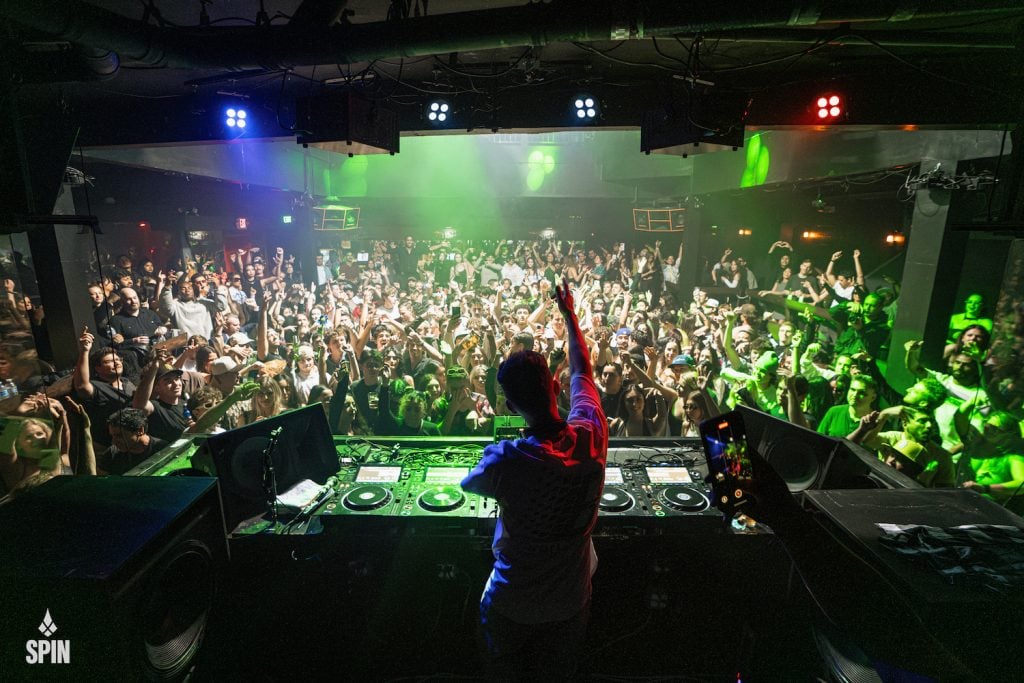
Spin Nightclub has been a cornerstone of San Diego’s nightlife scene for 18 years. It’s where genres collide, communities thrive, and music pounds through the early hours. But now, under the ownership of nightlife industry vets Brandon Colt and Brandon Garva, who bought the club last August, it’s entering a bold new era.
These two didn’t just inherit a legacy—they’ve lived it.
Colt has been Spin’s general manager for over a decade and has 20 years of nightlife experience, previously working at iconic Gaslamp Quarter venues, including Olé Madrid, Belō, The Ivy Hotel, and Voyeur. Garva is a DJ who runs United By Bass Recordings and United By Bass Talent Agency and is the co-founder of United By Bass, which runs SD Union, San Diego’s longest-running Drum n’ Bass music night. Together, they bring decades of nightlife expertise and community ties along with loudspeaker designer and sound engineer, Chris Regalado.
Spin’s transition into their hands is significant because it puts the club back in the care of people who know its history, understand its culture, and have big plans for its future. It’s not just a venue takeover; it’s a reclamation of Spin’s underground roots, committed to revitalizing its iconic after-hours vibe, elevating its production, and preserving its place as a haven for San Diego’s diverse dance music scene.
Though the club has been open and bumping since the duo purchased it last August, they’re having a celebratory weekend beginning January 16, called “Spin: Remixed,” which revelers can think of as a grand re-opening party. Four nights of special DJ sets will run into early Monday morning through the entire weekend. We caught up with Colt and Garva to learn more about Spin’s exciting changes.
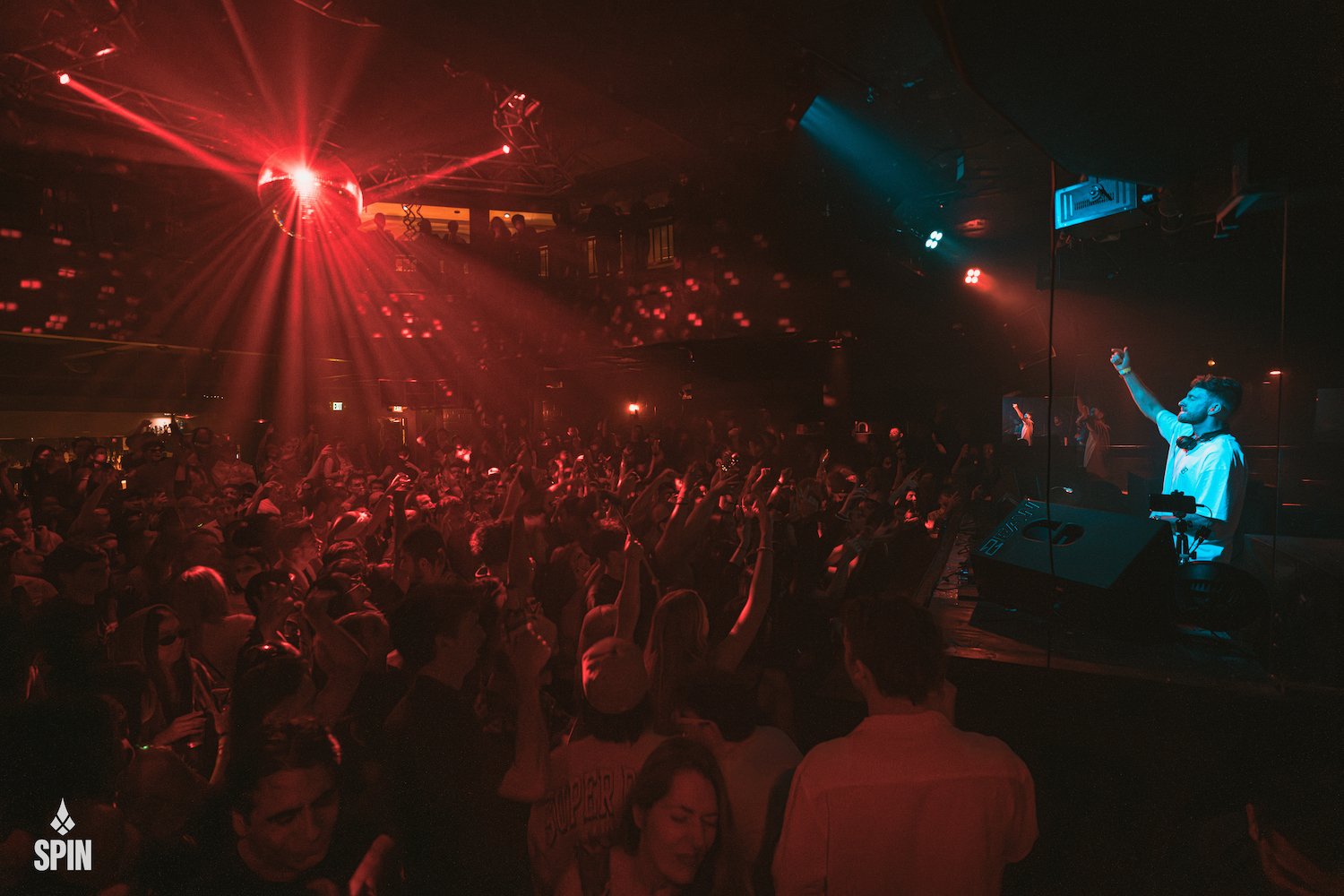
Brandon Colt (BC): The building that now holds Spin Nightclub was built in 1991 and is one of the only clubs explicitly created to be a club. It drew inspiration from venues in New York and Miami. It has changed names a few times, but before it became Spin in 2007, it was Montage, one of the best gay clubs in the country. If only these walls could talk—a lot of nightlife history has happened here.
One of Montage’s owners partnered with a new team to start Spin, and they promoted Giant Fridays, which brought in the biggest DJs San Diego had ever seen at the time, including Armin van Buuren. At the time, there wasn’t any underground electronic music downtown, only Top 40. Things were going well, but like in any business, things shifted. The original owners went their separate ways, and the person left running the club was new to owning a nightclub.
I joined the team soon after in 2014. I saw the club didn’t have any real direction, so I asked the owners if I could run it and started creating what I thought would be a cool club. I saw an opportunity to make a space for the people who were putting their hearts into dance music culture in San Diego.
Spin grew into this hub where promoters and crews could grow, including SD Union, Desert Hearts, House 2 Ourselves, Ego Trip, Overdrive, Kino Village, Dangle Zone, and Soul Work. Production became essential to what we did, and we saw everyone’s visions come to life. To host those nights and see all the genres that came through reminded me of the underground warehouse raves I used to go to in the ’90s, and it just felt right.
We’ve always wanted everyone to be represented here—all genres, including the LGBTQ+ community, goth night, hip hop, Brazilian, Burning Man camps, and more. Spin Nightclub has long been a space where people want to experience dance music culture, and it has a reputation as a place for after-hours.
We were on a pretty awesome trajectory, and then Covid-19 hit. We were closed for 15 months, and once we reopened, things were back like before until we lost our after-hours license in 2023. We were as successful as possible closing at 2 a.m., but it wasn’t the same. In August 2024, Garva and I officially took ownership of Spin, and we are all in on a shared vision to bring Spin to the level it should be.
Brandon Garva (BG): What makes this change so exciting is the merger of passion and experience we’re bringing to the table. For the first time at Spin, you’ve got a team with two decades of experience in event production and promotion and a clear vision for what Spin can be. We’re fully dedicated to helping the scene thrive, and it’s the perfect storm—knowing how to properly curate events, deliver solid production, run the club right, and most importantly, give people what they want: a safe place to experience music, create bonds and make memories.
Especially with the shifts happening in the industry, Spin is carving out something totally unique. Colt and I started as ravers back in high school, and we’ve never lost that passion. That underground vibe is rare these days, but having a venue like Spin that cultivates and provides that for the city is something really special. We’re returning to the roots—giving people raw, authentic dance culture in a safe environment.
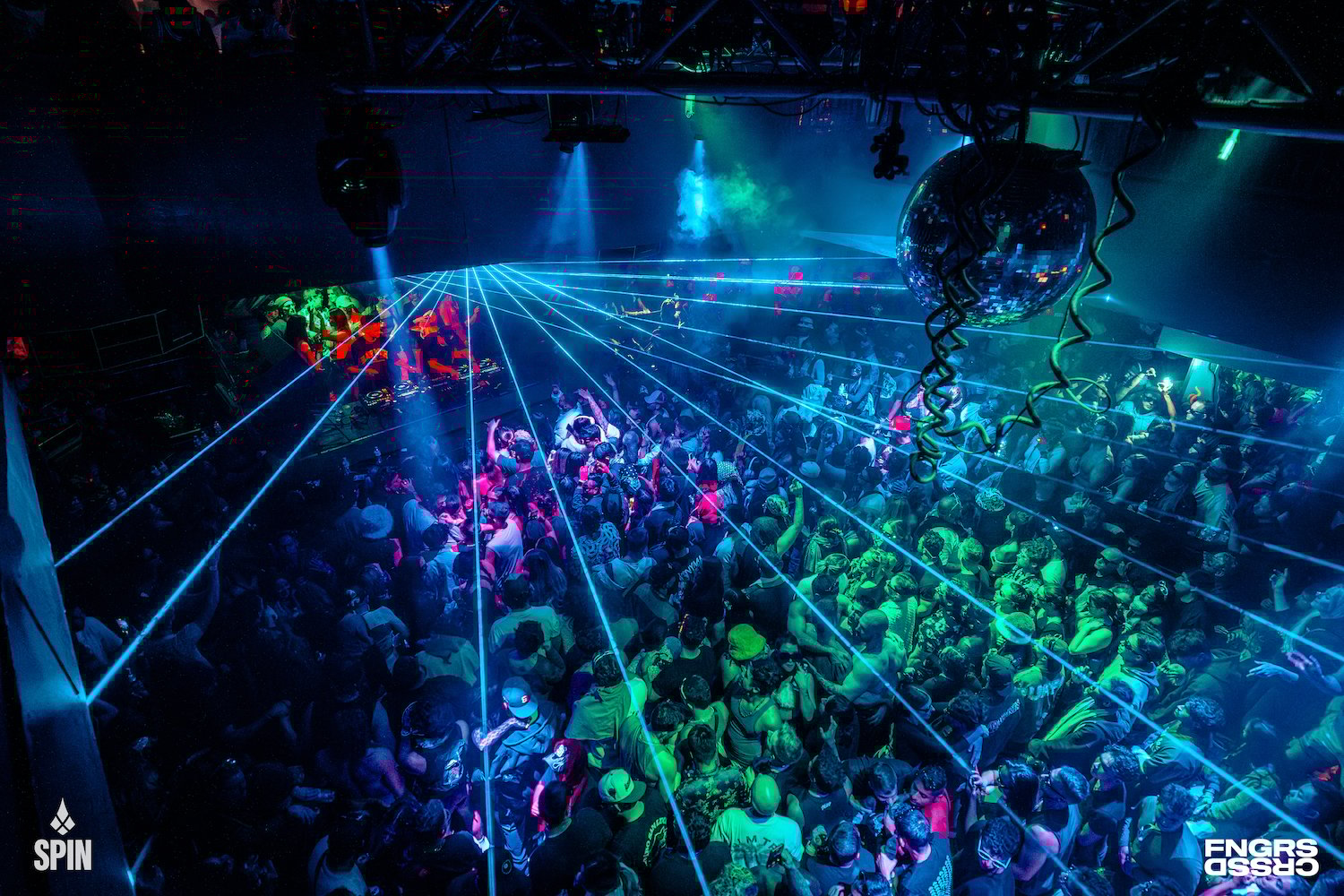
BC: Nightlife just needs creativity, passion, value, and most importantly, community. When venues struggle, it’s often because they’re missing those things. We’re focused on creating something more than just a place to see an artist. We offer multiple headliners, multiple rooms, and a community that values the freedom of self expression and an alternative to the mainstream.
So many people have amazing memories here, and we want to keep that alive. Spin has always been a place where people feel comfortable and safe, a spot they want to spend what precious free time they have on weekend nights. The culture has always been here—it’s just been overshadowed by a lack of vision and commitment under previous ownership.
Now, we’re making things right by upgrading lighting, sound, and facilities—bringing it all up to a level Spin has never seen before. It’s not about creating a new culture; it’s about honoring the one that’s been here all along. The community has stuck with us through a lot. We’re doing this out of respect for that dedication, to give back to a community we care so deeply about so they want to return and make more memories.
BG: I threw multi-genre events in North San Diego County from 2005 to 2010 under the name Schedule One Media and then partnered with Tyler Rosier right after the formation of SD Union in 2010. In 2014, we had an issue pop up with a venue where we were scheduled to throw an event, and a friend linked us up with Spin, who offered to help by hosting the event. The day of the event, I met Colt, who was working behind the bar, and we all hit it off. Since then, we have hosted most of our SD Union events at Spin.
Throwing our shows at Spin was a turning point for SD Union. Spin was a much larger venue than we’d previously had, and we had the creative freedom to expand our productions tenfold. From there, our brand grew on all fronts. This December, we celebrated 14 years of SD Union, and we’re so grateful to Spin for giving us the platform to grow, as well as everyone who has supported us over the years and helped make SD Union what it is today.
BC: Garva and I are in the community. We’re not just making this a club for dance music people; we are the dance music people. The owners and the whole team we have attracted care so much about this business. Everybody on our team loves this industry and the club, and it’s really cool to be working with people passionate about the vision and goal.
BG: Spin has long been the go-to destination for after-hours in San Diego, legendary for its 4 a.m. dance floor and unforgettable weekend-long marathons during Pride. In 2023, we could not host after-hours anymore, but this November, we proudly brought back our first 4 a.m. show. The response has been incredible. The excitement and support from the community have been overwhelming, and we’re thrilled to announce that more late-night events are on the horizon for 2025.
BC: We’re completely revamping our sound system, working with an in-house, world-class audio engineer to create a custom setup that is as satisfying as it is immersive.
Chris Regalado (CR): In the main room, we’re creating a new system and have added support speakers around the dancefloor, VIP areas, and mezzanine, which have allowed us to provide a much better and more immersive experience to guests and we have plans to add even more to make it more dynamic.
We have new subwoofers designed from scratch with help from several engineers who have created a new hybrid bass reflex/transmission line. The goal is to achieve low bass and accurate mid-bass. Woofers share one cabinet but are powered and processed separately. This allows for the summation of the best attributes and proper delays to be set. We’re also upgrading the rooftop and side room, which we’re excited about.
BG: This is our declaration to the world that Spin is under new leadership, management, and ownership. We’re setting the tone for what you can expect: a community-focused space with a renewed commitment to dance music and culture.
To mark this new chapter, we’re hosting Spin: Remixed four days in one weekend to celebrate the change in leadership and highlight the ongoing improvements, including to the venue and introducing two new event series: Spin Thursdays and Spindustry.
For Spin Thursdays, we will highlight a different genre of electronic music each week. The intention behind this night is to allow the up-and-comers to play and to bring more music variety to San Diego. There are a lot of cookie-cutter clubs and events playing the same tracks over and over. This is about supporting the whole culture and giving new sounds and styles space. On Thursday, January 16, we will focus on techno with a lineup of ZESTi, JAQ.XS, Luna Michelle and A.Knives.
On Friday, January 17, we’ll celebrate with the next installment of SD Union, San Diego’s longest-running drum and bass night, with a triple headliner lineup: Document One, T & Sugah and Whiney. This night will be extra special because SD Union has considered Spin our home for the past decade, and we really found momentum when we started working with Colt to host our shows at Spin Nightclub.
On Saturday, January 18, we’re hosting a huge family affair. This will be the main event where we pay homage to the individuals and promoters who have grown alongside Spin. We’ll be going until 4 a.m. with a lineup of local legends playing back-to-back sets, including Memo Rex and Sprout, Oren and Techno Tupac, Mitch Dodge and Susio, Nik Thrine and H2H, and Cole Vassallo and Layerz, among others.
Last, Sunday is special to us because we’re introducing Spin’s first industry night, Spindustry, a monthly Sunday event. We want to create a night for the people who work their asses off and help give others a good time. This is where they can let loose and be shown appreciation through attractive ticket and drink prices. Our first show on Sunday, January 19, will feature Tara Brooks, Porky, DJ Ideal, and Evlo.
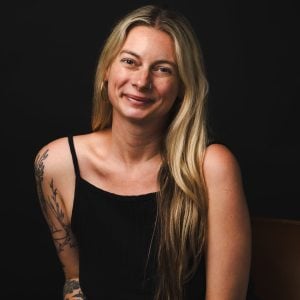
Jackie is a long-time freelance journalist covering cannabis, food/restaurants, travel, labor, wine, spirits, arts & culture, design, and other topics. Her work has been selected twice for Best American Travel Writing, and she has won a variety of national and local awards for her writing and reporting.
Whether you love theater, music, dance, or public art, these are the cultural experiences that stood out this year
Arts District Liberty Station officially became one of the state’s designated cultural districts, joining a list reserved for places with thriving creative communities. Considering the campus is home to more than 100 galleries, artist studios, museums, and arts organizations—not to mention The Joan, the 42,000-square-foot performance center housing Cygnet Theatre—it was only a matter of time until the district got its flowers.
If you can’t beat ’em, join ’em. The National City Public Works building has been a target of graffiti artists for years, only to be constantly painted over (and the cycle restarts). Now, it’s working with the local artists from Vision Culture Foundation to create intentional public murals. A win-win in our book.
One of the biggest questions this year is who will show up for San Diego arts and culture—so a Best Of nod goes to a nonprofit that’s been doing it for years. Founded by longtime arts advocate Susanna Peredo Swap, Vanguard Culture has staged events for creatives, told their stories, and just created an SD ARTS Pass—a single ticket that gets you access to 39 creative spots.

Ballet’s already got a sort of otherworldly thing going for it, with people morphing into 90-degree angles and defying gravity with each pirouette. The Rosin Box Project feels like a raw, creative new force in the classic art form, though—especially with its annual Ghost Light Masquerade. It’s a dance of eerie spirits that makes you second-guess what’s real and what’s not.
Once upon a time, Gallagher Square was just a grassy knoll behind the outfield wall at Petco Park. Now, it’s a concert venue, playground, play ball field, dog park, and unofficial home for those who prefer the vibe of baseball more than the actual game. Big-time performers are showing up: Ms. Lauryn Hill, Cypress Hill, and Peach Pit.
Casa Casillas has filled a long-standing gap in Chula Vista’s art scene. Open since last August, the space gives local artists a dedicated venue to display their work and visitors a chance to explore the neighborhood’s vibrant art. Two rotating resident artists always keep the space moving, so it rarely looks the same twice.

El Cajon translates to “the box” in Spanish—a nod to the city’s surrounding hills—but Alley Cat Art Fest (previously called Artivál) doesn’t stay inside it. As the first arts festival in East County, it celebrates local galleries, sculpture, live music, and food trucks—the whole nine.
Every second Saturday, Barrio Logan turns into a choose-your-own-adventure with the Barrio Art Crawl, a free self-guided art tour through galleries, museums, and murals, with street food and music filling in the gaps. Barrio is one of the city’s most thriving arts neighborhoods, and it’s worth getting a bit lost in.
MCASD is showcasing two powerhouse exhibits—Giants: Art from the Dean Collection of Swizz Beatz and Alicia Keys and The Dean Collection Presents: Hometown Heroes. The pop music titans are highlighting local artists, with an intentional focus on diverse experiences. It was one of the biggest (and coolest) art openings of the year, and it closes August 9. So get on it.
Leave it to The Old Globe to give the local theater scene some Hollywood glamour. Katie Holmes led the premiere of Henrik Ibsen’s Hedda Gabler this past spring, turning the classic Norwegian play into one of the most buzzed-about theater productions of the year.
From concerts and festivals to theater, food, and outdoor fun, here are the San Diego events worth adding to your August calendar
August is San Diego at full volume. Summer crowds are still chasing sunshine, but the calendar belongs to locals who know this is when the city really shows off. One night you’re dancing under the stars, the next you’re watching thoroughbreds with a plate of oysters in hand, catching Broadway hits, wandering gallery exhibitions, or rallying on a downtown pickleball court. Whether you’re looking for live music, festivals, theater, food, or an excuse to spend as little time indoors as possible, these are the August events worth putting on your calendar.
JUMP TO: Concerts & Festivals | Theater & Art Exhibits | More Fun Things to Do

On the heels of Cross Pollination II’s release, house musician Lane 8 will co-headline FNGRS CRSSD x Cross Pollination, a day of back-to-back grooves at Waterfront Park.
Cross coasts at the Civic Theatre for a jukebox musical rooted in family, coming of age, and blossoming talent in Alicia Keys’ Hell’s Kitchen, inspired by the 16-Grammy Award-winning singer’s NYC upbringing.
Jeff Goldblum is a classic man. In his show at The Rady Shell, Goldblum will accentuate his old-school charm with his Mildred Snitzer Orchestra and the San Diego Symphony Orchestra.

Explore gallery walls lined with artwork juried by acclaimed artist Paul Mpagi Sepuya and chosen by the Athenaeum Music & Arts Library for its esteemed 34th Annual Juried Exhibition.
As you already know, we adore San Diego. That’s why we’re assembling the city’s crème de la crème—including over 90 curated vendors—in Liberty Station for our annual Best of San Diego Party, presented by Pechanga Resort & Casino.
Helado Negro and Reyna Tropical each specialize in bilingual music, songs overflowing with proud markers of Latinx identity. Hear the ear-tingling transmissions from their collaborative LP at Epstein Family Amphitheater.
Country music superstars, proud Georgians, and close pals Jason Aldean and Luke Bryan are doubling down on their summertime stadium tour with a boot-stomping concert at Petco Park.
The one-woman play Eleanor—told via the eloquent perspective of Eleanor Roosevelt—will make a limited return to the North Coast Repertory Theatre.
For six straight Thursdays, downtown’s Fifth Avenue will shut down and become the city’s first-ever street-style pickleball event. Bring a paddle and enjoy DJs, a wellness market, and zero-proof drinks at Gaslamp Urban Pickleball.
Del Mar Thoroughbred Club’s newest foodie event, the buttery Turf & Surf Festival, offers a luxurious combo of land and sea, built for watching trackside with a loaded plate in hand.
For the first time since 2019, the free Chula Vista HarborFest will hit the shores of Bayside Park with a classic car expo, lucha libre showdowns, and the chance to meet a mermaid.
Celebrate the seven decades (and counting) spent upholding Point Loma’s coastal landmark during Cabrillo Under the Stars, a 21-plus fundraiser with bites, Beatles covers, and, best of all, twinkling lights.
Ryan Hardison is a freelance arts and entertainment writer and recent graduate of San Diego State. When he's not staring at his laptop, he's likely eating an adobada burrito or getting sunburnt at the beach.
For a city that lives outdoors, these hometown makers understand exactly what your complexion is up against
San Diego has always worshipped at the altar of good skin. Equal parts surf town, biotech hub, and wellness capital, it’s a city where lunch breaks become beach walks and sunscreen sits beside car keys by the front door. The products that get used here earn their place. With 266 sunny days a year and one of the highest rates of skin cancer in the country, we take skincare seriously. Dr. Bronner’s has been making soap in North County since the 1960s. Sun Bum was born in Encinitas and is now on shelves in over 70 countries. The tradition runs deep.
“Living in San Diego means your skin is exposed to sun almost every day of the year,” says Sue Zhang, M.D., a San Diego physician specializing in aesthetic medicine. “The products that tend to succeed here are the ones that can keep up with daily life, UV exposure, sweat, and movement, while still supporting long-term skin health.”
From a mineral powder that solves the sunscreen-over-makeup problem to an acorn oil serum rooted in Indigenous plant medicine, the local San Diego shelf is more diverse, and comprehensive, than most of us realize.

A hydrating gel-oil hybrid that applies like a body treatment and leaves skin with a sheen that reads as healthy rather than oily. La Jolla–founded Kopari built its reputation on cold-pressed coconut oil sourced from family farms in the Philippines, and the Sun Shield Body Glow SPF is exactly that in summer form: coverage that doubles as skincare.

The name is intentional. The founder got a basal cell carcinoma diagnosis that his dermatologist caught—she’s now his business partner. The question he couldn’t shake was why the skincare industry hadn’t yet figured out how to talk to men, and 4-Skin is the answer: a premium sunscreen and skincare line built around the kind of blunt, self-aware humor that gets guys to pay attention. Men’s skincare has needed this for a long time, and the formulas are serious enough to deliver.

Carlsbad-based Coola was formulating organic SPF before “clean sunscreen” was a marketing category, and the Classic Face Sunscreen is the brand’s thesis: protection that disappears into skin and layers cleanly under makeup. Sheer and lightly hydrating, it makes sunscreen easy to reapply before an afternoon walk at Torrey Pines.

Squalane, argan, jojoba, and CoQ10: a short ingredient list that does a lot. The Glow Finishing Oil from Mission Hills wellness sanctuary Saffron and Sage is plant-based, scientifically grounded, and formulated to absorb rather than sit on the skin. The brand started as an integrative health practice where acupuncture, naturopathic care, and functional medicine share a roof, and the skincare line runs on the same philosophy.

The Restorative Skin Complex is powered by TriHex+, a patented peptide blend developed by Carlsbad-based Alastin’s team of SkinMedica veterans. It promises to clear out damaged collagen and elastin while supporting new production, the kind of gradual improvement that makes a product hard to quit.

Beldi is a multi-functional cleansing tradition rooted in Moroccan hammam culture, dating back over 12 centuries. Alia Jouj is the brand’s flagship product, and San Diego–based founder Dr. Mia Chae Reddy built a brand around it. Alia Jouj uses 100 percent organic, cold-pressed argan oil and the same ancient saponification method to produce a honey-thick liquid cleanser that softens skin without stripping it.

Acorn oil has been used by California’s Indigenous communities as plant medicine for generations. Ruth-Ann Thorn, an enrolled member of the Rincon Band of Luiseño Indians, built N8iV around it as the first Native American–owned skincare brand to reach the national mainstream. The Móyla Moon Polish, named for the Luiseño word for moon, is an exfoliant centered on acorn oil Thorn gathers herself each year from the La Jolla reservation. Find it at the Gaslamp Quarter store Thorn owns at the historic Yuma Building.

This product solved the reapplication problem. As a brush applicator, this mineral SPF goes over makeup without disturbing it, which is why it has been on derm-office retail shelves in Carlsbad and beyond for over two decades. The tinted version doubles as foundation.

This steroid-free, petroleum-free eczema treatment was built specifically for babies and toddlers (although grown-ups can use it, too). It’s centered on FDA-approved 1 percent colloidal oatmeal with a base of sunflower seed oil, beeswax, and jojoba. The “linoleic-acid-rich sunflower oil is helpful for atopic, eczema-prone skin that is often deficient in that fatty acid,” says Dr. Zhang. Gentle enough for newborns, safe for daily use, and tested by both pediatricians and dermatologists.

The Mandelic Night Serum pairs mandelic acid, an AHA derived from almonds and gentler than glycolic acid on sensitive skin, with lactic acid, niacinamide, and urea to brighten, smooth texture, and reduce breakouts overnight. Fragrance-free, vegan, cruelty-free. The brand name is the initials of the founder’s five daughters, pronounced like courage. Dr. Zhang also says she “really value[s] [the founder’s] mission to create pregnancy-safe skincare products that are both effective and wallet-friendly.”
Ingrid Yang, M.D., J.D. is a hospital-based physician in San Diego, CA, certified yoga therapist, and longevity specialist. She loves *double hearts* San Diego and spends her days helping people fully engage in long, healthy lives through evidence-based lifestyle medicine. Her books include Adaptive Yoga, Zen Mindfulness, and Hatha Yoga Asanas. When she’s not leading international wellness retreats, she is chasing sunsets, handstanding in nature, or geeking out over mitochondria.
KQ Aesthetic Society goes beyond cosmetic to provide comprehensive care and transformative results
Kelly H. Harfouche, founder of KQ Aesthetic Society, knows firsthand that cosmetic treatments like fillers, neurotoxins, and microneedling, can not only enhance a person’s appearance and restore confidence, they have the power to truly change a person’s life. An expert injector has the ability to tailor treatments to each individual patient’s anatomy and goals for personalized results. Harfouche, a board-certified nurse practitioner, has spent nearly a decade perfecting her craft as an aesthetic injector and integrating her multifaceted artistic skills with precision patient care. Her commitment to continual education and training, plus a passion for helping people look—and feel—their best, set KQ Aesthetic Society apart in a sea of local medspas.
For many people considering nonsurgical treatments, the intent is to look refreshed and refined. KQ Aesthetic Society’s philosophy eschews a cookie cutter approach that bases treatments around units, instead working to understand each person’s unique goals, then curating a treatment plan to fit that vision. Harfouche focuses on “inclusive luxury,” the belief that everyone deserves access to aesthetic treatments, respective of budget restrictions. She develops long-standing trusted relationships with her patients, and works with each one to achieve their aesthetic objectives and address the underlying causes of their concerns.
“For me, forming an honest and open relationship with every patient who walks through the door is essential. This means understanding them on a deeper level and meeting them where they are to define and achieve their individual goals,” she says.

Drawing on her artistic background, which inspired her transition into medical aesthetics, Harfouche sees each client as a “unique canvas.” Rather than relying on standardized procedures, the practitioner’s distinctive approach combines her profound understanding of the physiological and anatomical changes associated with aging with an unwavering commitment to ongoing education about the newest products and their mechanisms of action. Her goal is to make each patient feel beautiful in their own skin and to embrace their individuality.
She has also pioneered a way to combine her talent for aesthetic artistry with her philanthropic nature. Harfouche is one of only a handful of providers using dermal fillers to treat patients with lip asymmetry and scarring resulting from cleft lip surgery. Patients travel from around the country for this transformative treatment, noting increased confidence and a restored identity. She hopes to eventually launch a training program to help fill the void in this space.

“My passion has always been connecting with people and giving back in any capacity that I can,” she says. In the rapidly advancing landscape of aesthetic medicine, you can place your confidence in Harfouche and KQ Aesthetic Society to deliver exceptional care. To learn more or book a consultation, please visit kqaestheticsociety.com.
We the Commas are mixing surf, soul, alternative rock, and sibling chemistry into one unmistakable sound
Siblings make better music. That’s the hot take, and there’s some logic and science behind it. The Bee Gees, Jackson 5, Billie Eilish and Finneas, AC/DC, Van Halen, The Allman Brothers—heck, even the Hanson brothers, why not? Beyond just a shared sense of taste and nonverbal communication developed over decades of living and evolving together, there’s a thing called “blood harmony.” The genetically similar throat cavities, vocal cords, speech patterns, and resonant bone structures all blend each unique voice into a more homophonic sound than what comes out of two non-related singers.
Those throat cavities are working wonders for emerging San Diego band We the Commas—three brothers (from oldest to youngest) Lenny, Jordon, and Cam Comma.
Raised in Vista and Carlsbad, the family opted out of cable TV (video games got a pass). Without binge-watching to fill bored hours, the trio turned to music. Guitar Hero led to GarageBand and finally to live instruments—guitars for Lenny and Cam, drum set for Jordon. In their sound, the influence of Stevie Wonder, Erykah Badu, The Who, and Dave Matthews Band is obvious, and so is surf culture, specifically that laid-back chill of North County surf culture.
“We’re like the Black Beach Boys,” Cam says. (Note: Three of the five founding members of the Beach Boys were siblings—the theory gets stronger.)
Their debut EP pretty clearly lays out how they see their sound—titled SARB, an acronym for Surf Alternative R&B. That resonates in the song “Sherry,” with its easy-listening, windows-down-on-the-101 vibe. It also works in the louder, surf-punkier “Pissed Off.” Despite some advances in reducing core stereotyping tendencies, people still tend to autofill Black musicians into rap and R&B. The Comma brothers immediately circumvent that by declaring themselves out the gates.
“SARB makes it so [listeners are] open to all of the things that we want to do,” Lenny says. “From there, you can put a label on whatever you think it sounds like.”

People—and musicians further up the stream—are taking note. In 2023, they co-wrote the song “I Keep Fallin’” with Eric Cannata, guitarist for multi-platinum SoCal band Young the Giant. In early 2024, they were tapped to open the national tour of Brooklyn’s jazz-pop heroes, Sammy Rae & The Friends. Comedian Gabriel “Fluffy” Iglesias invited them to warm up his show at Pechanga a couple months later.
“We really believe genuinely, with our whole hearts, minds and souls, that this is going to work the way that we think it’s going to,” Cam says, grinning ear to ear.
Currently, the Commas live together in Vista, and the dream, wholeheartedly, is more alive than ever. They’ve put out two dozen singles and a trio of EPs: SARB (2020), Old School Love (2021), and Aeroplane (2024); this year alone brought the release of three new singles, including “Let Me,” a silky-smooth entry in their growing collection of love songs.
“We fully realized the magic is in all of us together,” Lenny says. “We know that this doesn’t happen without each person, and we have respect for each other because we need each other.”
As they grow as brothers and as a band, the Commas try to always remember what unified them in the first place.
“Music has always been a glue,” Jordon says.
Ryan Hardison is a freelance arts and entertainment writer and recent graduate of San Diego State. When he's not staring at his laptop, he's likely eating an adobada burrito or getting sunburnt at the beach.
The San Diego designer has created more than 3,000 concert posters over nearly 40 years for artists including the Rolling Stones and the Red Hot Chili Peppers
Let’s start with his name.
No, not his birth name, Craig McKenzie Haskett.
Scrojo.
When he was in high school, he and his friends were trying to come up with the perfect name for their punk band that would encapsulate all their personas. Nicaragua. The Freds.
One of his friends said he was going to go by Jimmy Stacks and called it “the perfect rock and roll name.” Their names changed so much that Haskett erupted: “Fine, I’m f—ing Scrotum Joe, the true defender of the Open West.”
Their response: Wow, that’s a great name.
As a teenager, he drew chalkboards for Del Mar’s Pannikin coffee shop and would design T-shirts for surf/skate brand Life’s a Beach. He signed the shirts with his moniker, but even in punk rebellion, who wants a shirt with the words Scrotum Joe on it? “They just cut out the ‘t-u-m,’ and the next thing you know, a client referred to me as that, and it stuck,” he says.

Scrojo could have been part of a band as iconic as The Misfits—had he been able to learn the famously cumbersome bassline to The Kingsmen’s “Louie Louie.” Becoming one of the most renowned concert poster designers—someone who quite literally designed the cover of Art of Modern Rock: The Poster Explosion—is a pretty good Plan B.
“To my knowledge, he’s done more rock posters than anybody else alive,” says Dennis King, whose D. King Gallery in Berkeley, California, serves as one of the largest private rock poster collections in the world. “He’s the hardest-working guy in the poster business.”
King not only co-authored the sequel to music historian Paul Grushkin’s The Art of Rock, but he also handles distribution and sales for all of Scrojo’s work. That’s more than 3,000 different posters over nearly 40 years. (That’s over one poster each week. For four decades straight.)
For anything from boxing matches to rodeos, posters have long been used as promotional items. Toulouse-Lautrec’s famous lithographs advertised Moulin Rouge in the late 1800s. Around the same time, Hatch Show Print in Nashville was making handbills for the Grand Ole Opry.
“I propose this: Cave paintings are the first poster art,” Scrojo says.

Rock and roll posters took off in the 1960s, when the hippie counterculture era replaced conformity and suburbia. Artists like Jimi Hendrix and the Grateful Dead used their vibrant, psychedelic prints as a form of rebellion from the mainstream. Posters were promotional, commemorative, collectible, and especially expressive.
If the name Scrojo is any indication, he doesn’t shy away from imagery that toes the line of being too provocative. He focused more on what inspired him instead of trying to be offensive for the sake of getting attention.
“Didn’t want to show it to my grandmother, but my parents were fine with it,” Scrojo says with a laugh.
“We’ve had to ask him to put a Band-Aid over a nipple every now and then,” says Chris Goldsmith, president of Belly Up Tavern in Solana Beach, where Scrojo started out and hundreds of his posters currently line the walls.
Scrojo spent six weeks at Otis College of Art and Design for a summer semester before drugs, alcohol, and a self-described lack of discipline prevented him from enrolling full time. Still, he taught himself concepts like text hierarchy and later found his niche at the Belly Up and in the surfing and skating world, working with brands like Quiksilver, Rip Curl, Scorpion Bay, and DGK.
His first concert poster was for North County band Borracho y Loco, of which Goldsmith was bass guitarist. Scrojo drew an abstract version of the Belly Up’s iconic shark with colorful calypso and tiki themes.
Early on, he would craft using a pencil, pen, non-reproduction blue pencil, X-Acto knife, rubber knife, and proportion scale to create each poster, and the finished product could take a week or even longer.

“I recommend every artist coming up to do that for like six weeks,” Scrojo says. “It forces you to think about every design decision as you’re going along.”
He has since mastered vector imagery through Adobe Illustrator to the point where, depending on the level of detail needed, he could finish two projects in a day. Still, he fills sketchbook after sketchbook to blueprint.
“I liked his line in particular, and he knows how to draw, which a lot of people don’t really know how to do these days,” King says.
Scrojo would research what each musician’s merchandise looks like to get a feel for each artist’s tone and voice. Once he has his central image in mind, he focuses on what and where to place the text.
He doesn’t have one specific style, ranging his talents from art deco to psychedelic and everything in between (and outside the lines). Want a pop surrealist comic book cartoon devil with splattered paint textures, halftone dot patterns, and pure chaos? Red Hot Chili Peppers, February 1986. Want a minimalist graphic portrait with bold strokes and graffiti text? P!nk, October 2023. Want a carnival sideshow style piece with a tasteful caricature of Jeff Bridges? The Big Lebowski, August 2011.
Scrojo calls himself a jack of all trades because he can create posters for all music genres. King calls him a chameleon for his ability to adapt his voice to new eras.

“The variety of his skillset makes it possible for us to put 50 of his posters on a wall next to each other and have it look compelling, not just a bunch of the same thing over and over,” Goldsmith says.
Some of Scrojo’s favorite posters are when he feels a personal connection to the artist or the album. He has a vivid memory as a child of being trapped in a closet filled with marijuana leaves while playing hide and seek and staring at Jimmy Cliff’s “The Harder They Come” LP. “For whatever reason, as a kid, that sparked a desire to do graphic design,” Scrojo says.
Fast forward to February 2012, Cliff is performing at Belly Up. Scrojo decided to modify Cliff’s original album cover from rainbow gradient fills to classic reggae psychedelia while preserving Cliff’s striped pants and bold hat. Cliff’s manager called him and said they wanted to use it for the rest of their tour.
“We always get artists requesting that he does their posters,” Goldsmith says. “A lot of artists don’t want venues to go all rogue because they want to control how they’re being presented. With him, they’re like, ‘Let him go nuts.’”
Matt Eisenberg is an award-winning writer and photographer based in San Diego. A former ESPN editor, his work has also been published by CNN, Bleacher Report and the New York Daily News.
A look at San Diego's top designers creating unique environments that combine creativity and function


AVRP Studios’ tradition for Design Excellence and Innovation began in 1976 with Doug Austin, FAIA, in Solana Beach, California. The firm has since grown to complete major projects throughout the United States and Canada. We think of ourselves as a family and we care deeply about people. We want to inspire, help make their lives richer and more complete through our efforts. We believe that architecture is one of the most important art forms because of the impact it can have on the lives of those it touches. We’re delighted to have been recognized with over 150 awards for design excellence.
703 16th Street, Suite 200, San Diego, California 92101 | 619-704-2700 | avrpstudios.com