Featured articles
Food & Drink
Things to Do
Food & Drink
Featured articles
Things to Do
Things to Do
Arts & Culture
Featured articles
Things to Do
Things to Do
Charitable SD
Featured articles
podcast-ep
podcast-ep
podcast-ep
Featured articles
Features
Arts & Culture
Arts & Culture
Featured articles
Food & Drink
Charitable SD
Features
Ready to know more about San Diego?
SubscribeReady to know more about San Diego?
It’s loud in here, but this eatery is the kind of lovely little box every neighborhood needs
Photo Credit: James Tran
Every neighborhood needs a few things—a good bar, a decent place to pray and launder sins, a store with paper goods, a park for bucket food and hyperactively reproductive families, a body of water to jump in, a dark box where young people play weird music, a legion of nonprofits, a villain, a healthy distrust of people who claim to know what a neighborhood needs, and a small restaurant like this.
A cozy room on a busy street corner that’s being loved more than it has in years. A soft light over some roasted bird in a sauce that beats what you’re able to make at home. A few wines you can’t find on aisle five. A place so intimate it feels like a dinner party, a nightly seance of the conversations we used to have before the remarkable little machines stole our time allotted for human connection.
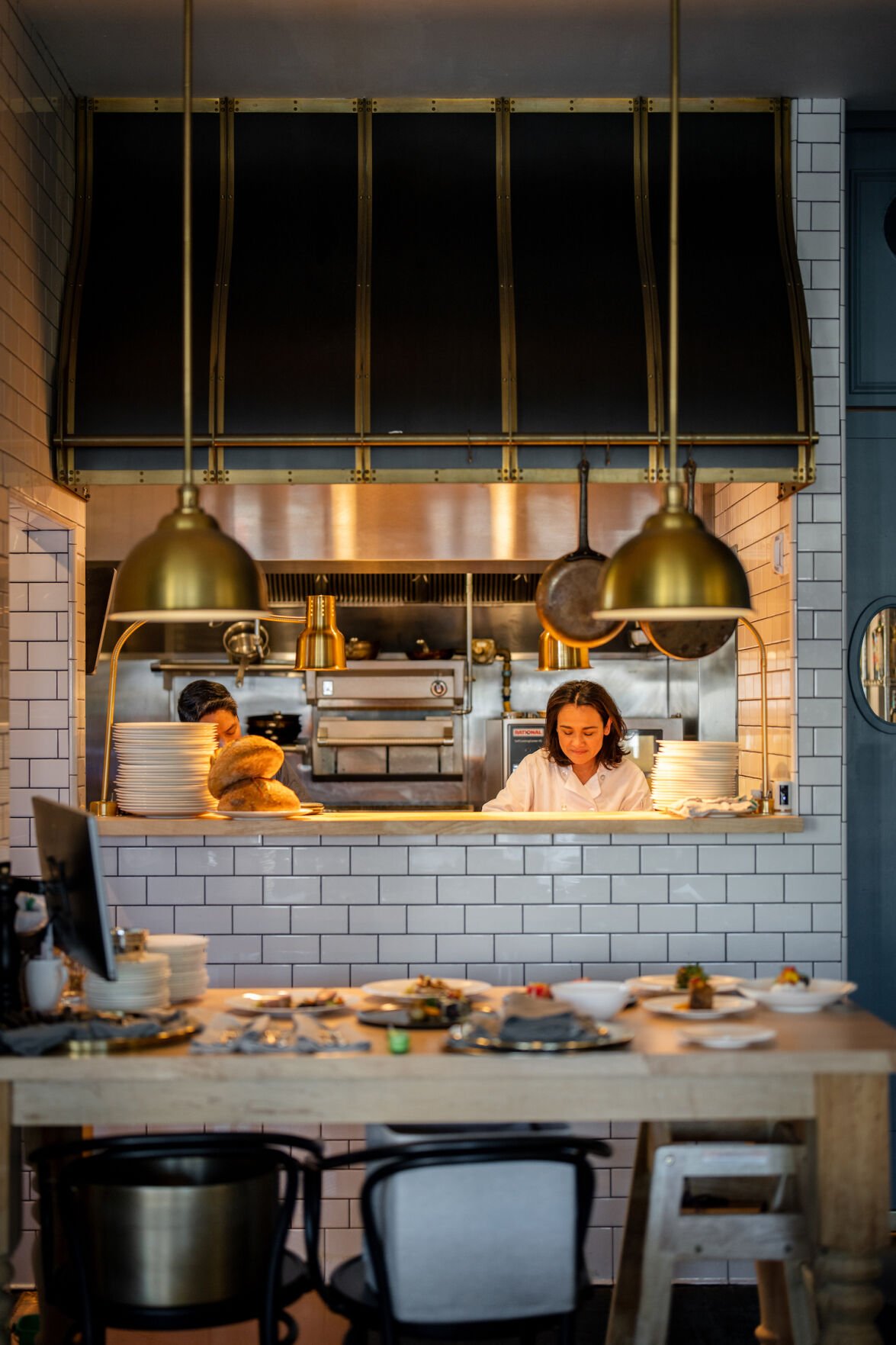
Chef Itze Behar’s perch at the end of the room, where she can see the reactions on diners’ faces.
Photo Credit: James Tran
You don’t come to Black Radish for the parking, which is of the hunt-and-luck variety. You don’t come for the massive please-all menu (small kitchen, focused menu). You don’t come for sprawled-out acreage dining. Like neighborhood eateries in New York or San Francisco, tiny tables are packed so tight you might be tempted to chime in on a conversation next to you, or make the “you got a little sauce right here” motion as a gesture of unwanted goodwill.
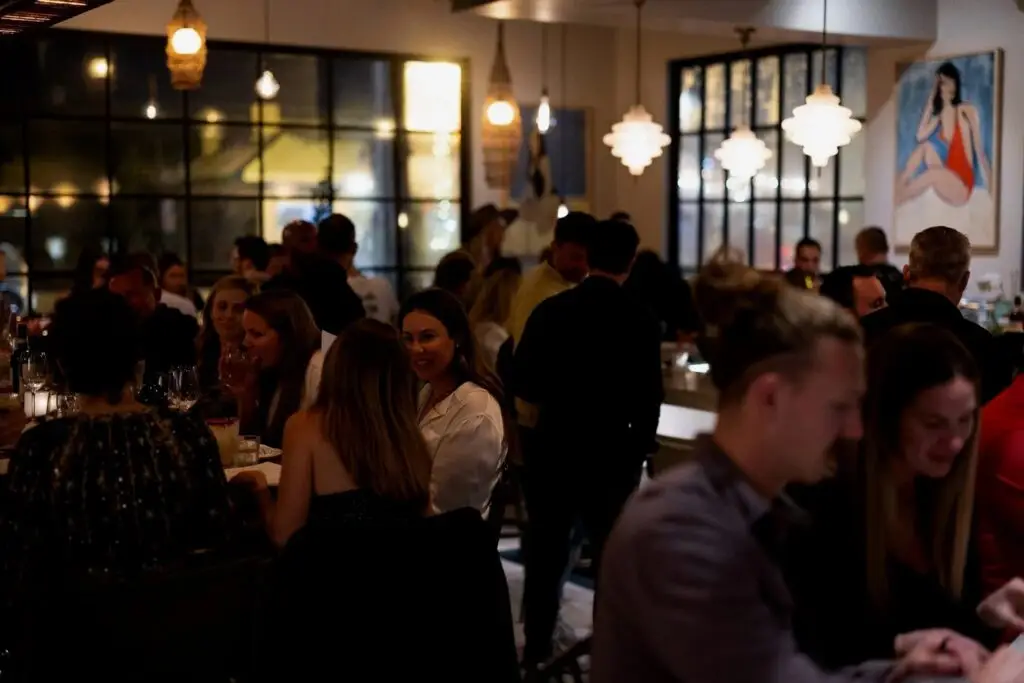
You come to Black Radish for the food and the intimacy of strangers, the special buzz only achievable by forcible proximity with other lives. This corner in North Park was previously a bar that felt like a precursor to fights or crimes. (Neighborhoods need those, too). And now it is one of the most raved-about bistros in the city.
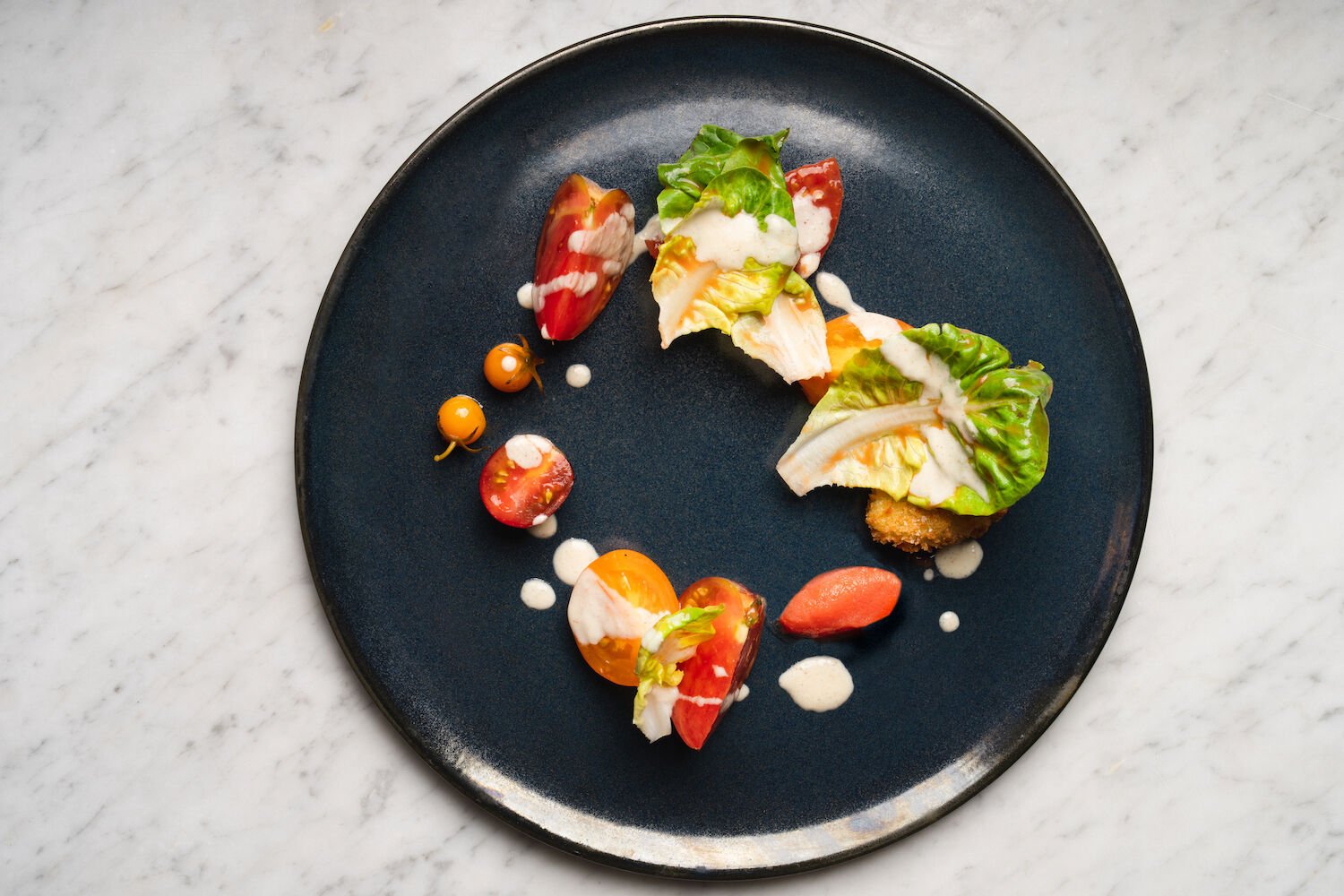
Photo Credit: James Tran
If you didn’t know owner John Welsh is an architect, you would know the owner was an architect. It’s in the distressed red brick wall, framing a large print of gold flakes, a splash of ersatz pinned on modest masonry (which kind of sums up Black Radish as a whole). It’s in the light fixtures descending from the ceiling like black roots (radish tendrils?) with tiny bulbs at their ends.
It’s in the dark baby blue velour banquette (the crayon people might call cottonwillow), leading to the dark baby blue wall, perfectly painted. That wall opens to reveal the restroom (their lavatory is a speakeasy). The door is bank-vault thick, a smart choice to soundproof your dining experience. It’s in the single pedestal in the middle of the room with a lonely-beautiful vase of flowers.
It’s in the glossy white subway tile that frames a golden-lit window where you can watch chef Itze Behar work in her tiny kitchen. A server stands poised next to that window like a royal guard, silently surveying the tiny room for needs. It’s a lovely space and, when full (it’s almost always full), one of the loudest restaurants in San Diego. If I am ever arrested in this space, it will be for impersonating a produce delivery guy and installing acoustic panels without abandon or permission.
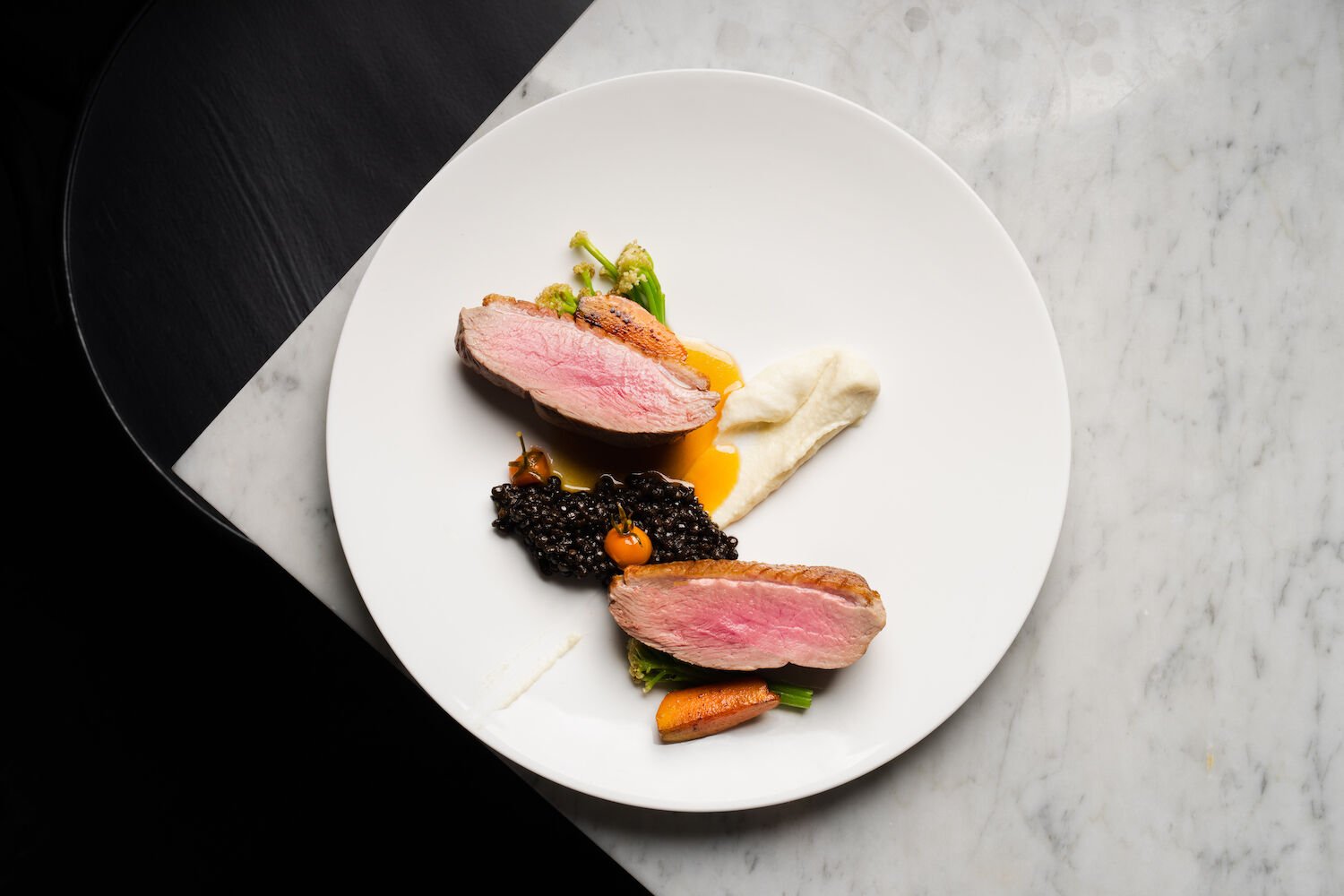
Photo Credit: James Tran
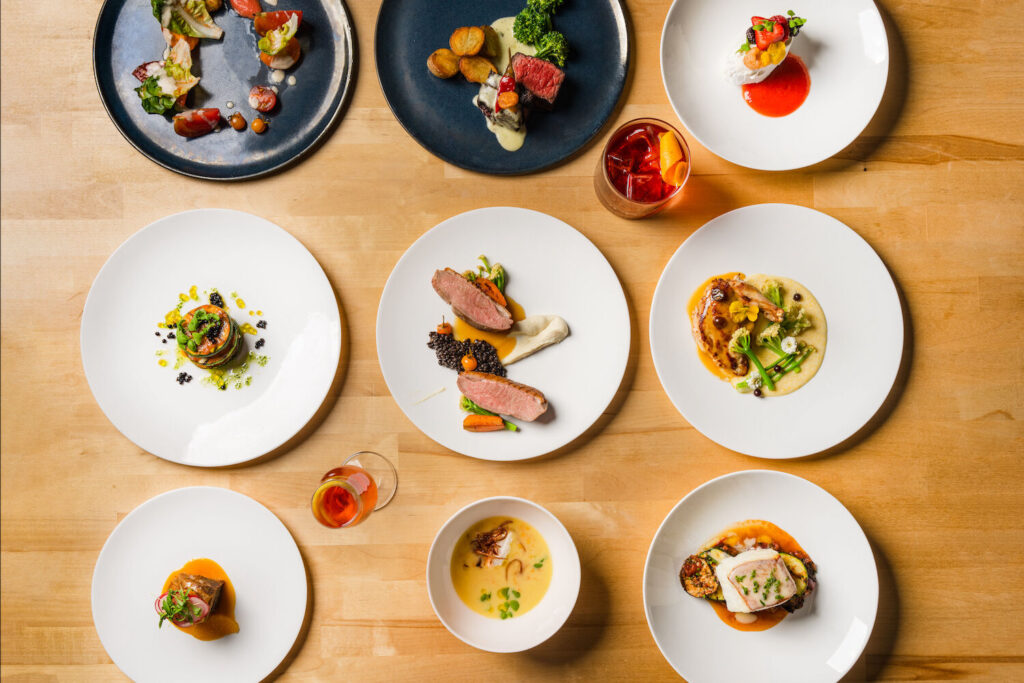
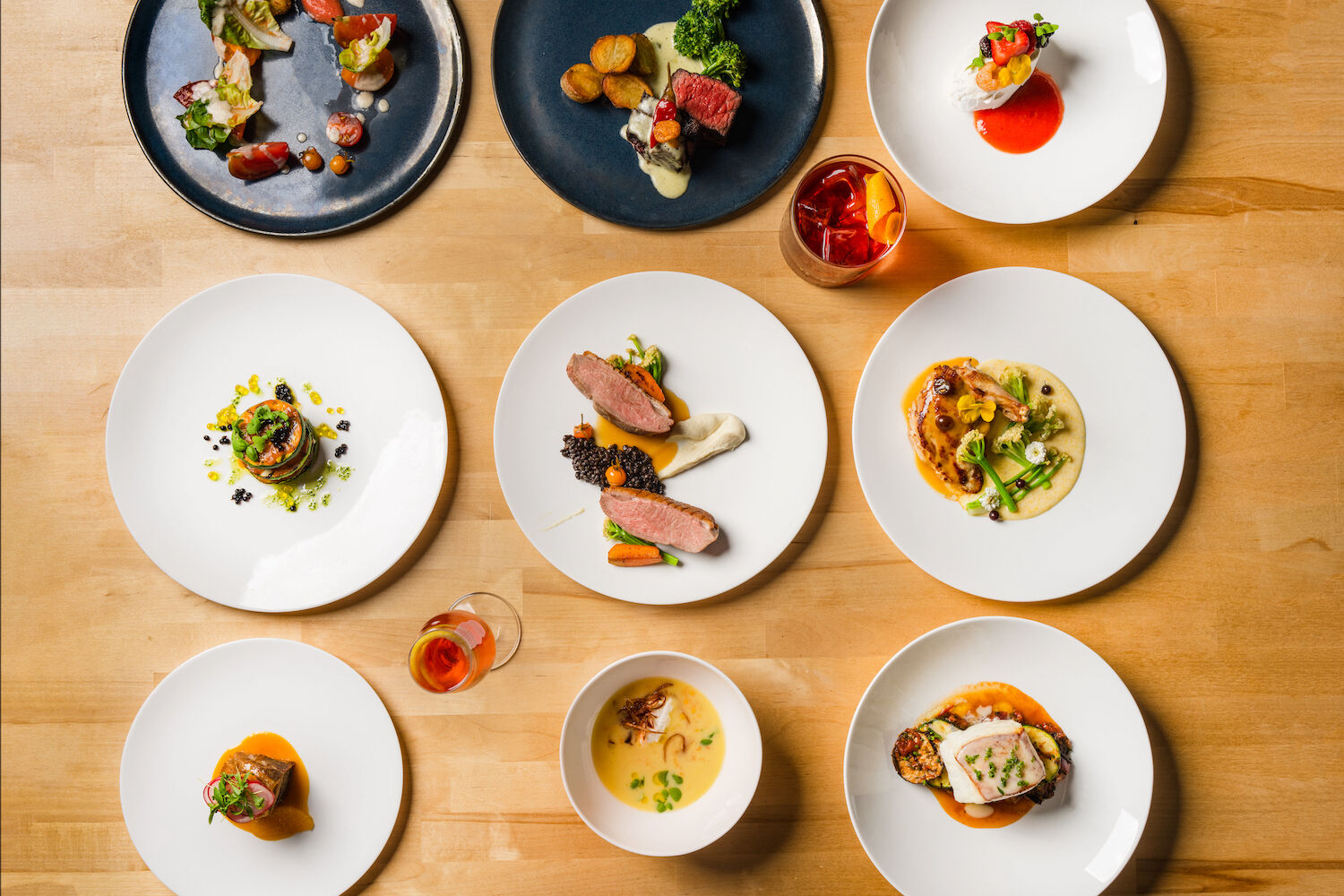
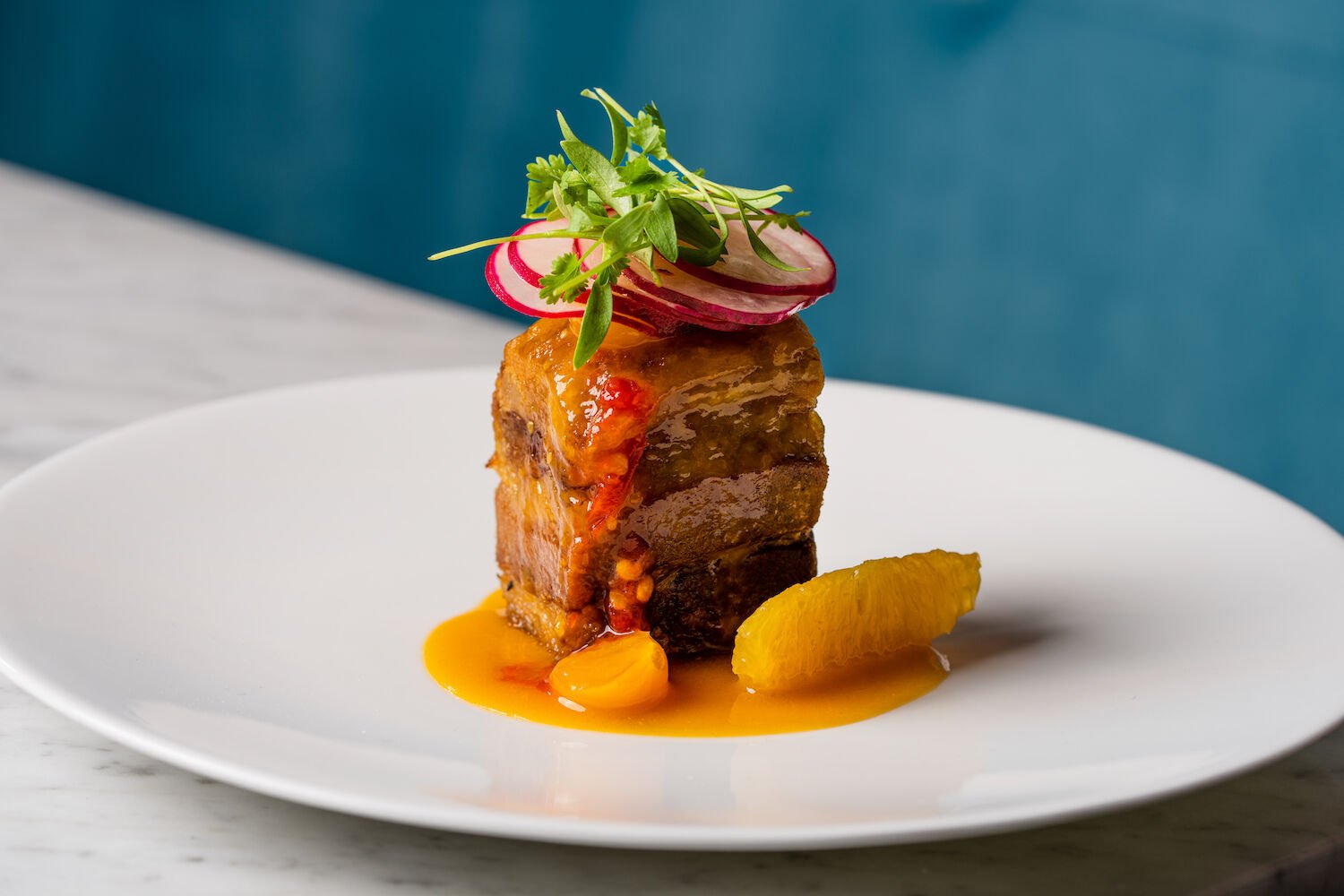
Welsh and Behar first teamed up for The Tavern in Coronado, which feels more like a fancy, hip sports bar. Black Radish is more urban-residential fine dining. Behar was raised in Tijuana, a self-taught chef who clung to Thomas Keller cookbooks and first entered the business in 2000 as owner and chef of TJ restaurant, La Placita. So her food is Mexican heritage and French technique, like the pork belly marinated overnight in gooseberries, white wine, and aromatics, then roasted and served with gooseberry-pork jus, finished with house-pickled radish, orange, and house-fermented Fresno chile. Pork has a sweet tooth, and this satiates it nicely.
This woman’s love of tomatoes improves the lives of everyone who enters. Her tomato salad showcases six different tomatoes from four local farms: fresh Bolzano yellow and Early Girls, confit cherry Sungolds, a single fried green tomato, and a sorbet made from cherry reds. It’s finished with an Early Girl vinaigrette and a thin, almost refreshing Thai-spiced blue cheese dressing. It is… special, excellent, phenomenal. Tomatoes are San Diego’s dirt candy, and there may not be a dish that makes such a killer show of it.
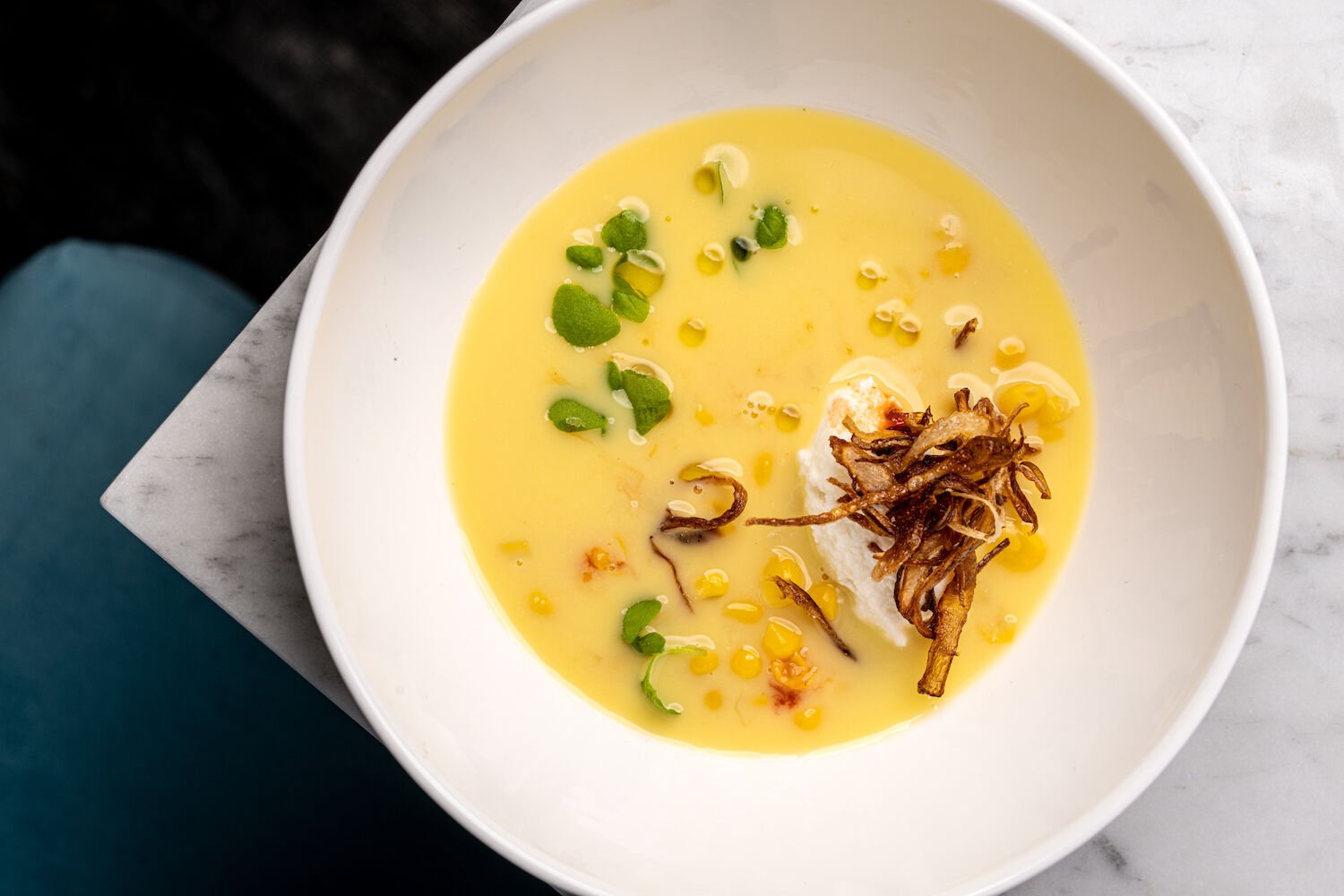
Photo Credit: James Tran
Vegans are the beneficiaries of the other star here: a vegetable Napoleon that comes looking like a leaning tower of plant lasagna—its architecture made by multiple layers of grilled 8 Ball squash from JR Organics Farm, a San Marzano tomato sauce, garlic, and fresh basil. Each ring is spackled and separated with whipped almond ricotta, finished with balsamic and olive oil. Hard to eat this and not envision Ratatouille, particularly that moment when the soulless food critic takes a bite and remembers there is joy in life.
The chilled corn soup is fresh local kernels blended with lemon juice, buttermilk, and basil, topped with crispy-charred shallots for texture, fromage blanc for silkiness, and some confetti of pickled Fresnos for heat. The flavors are excellent. A few bites in, I pull a dental floss-length of corn silt, which might cause culinary-school teachers to fly into reality-TV rages, but is not worth the scorn of reasonable people.
There are a couple of things here and there that show the kitchen is mortal, like the duck breast. While delicious in a Champagne and sage-honey duck jus, the one requirement of duck cookery is rendering that fat into a perfect, almost-liquid state. Crispy skin over that silky rendered fat is the principal joy of the dish, the whole point. Underdone, it’s a chewier form of missed magic.
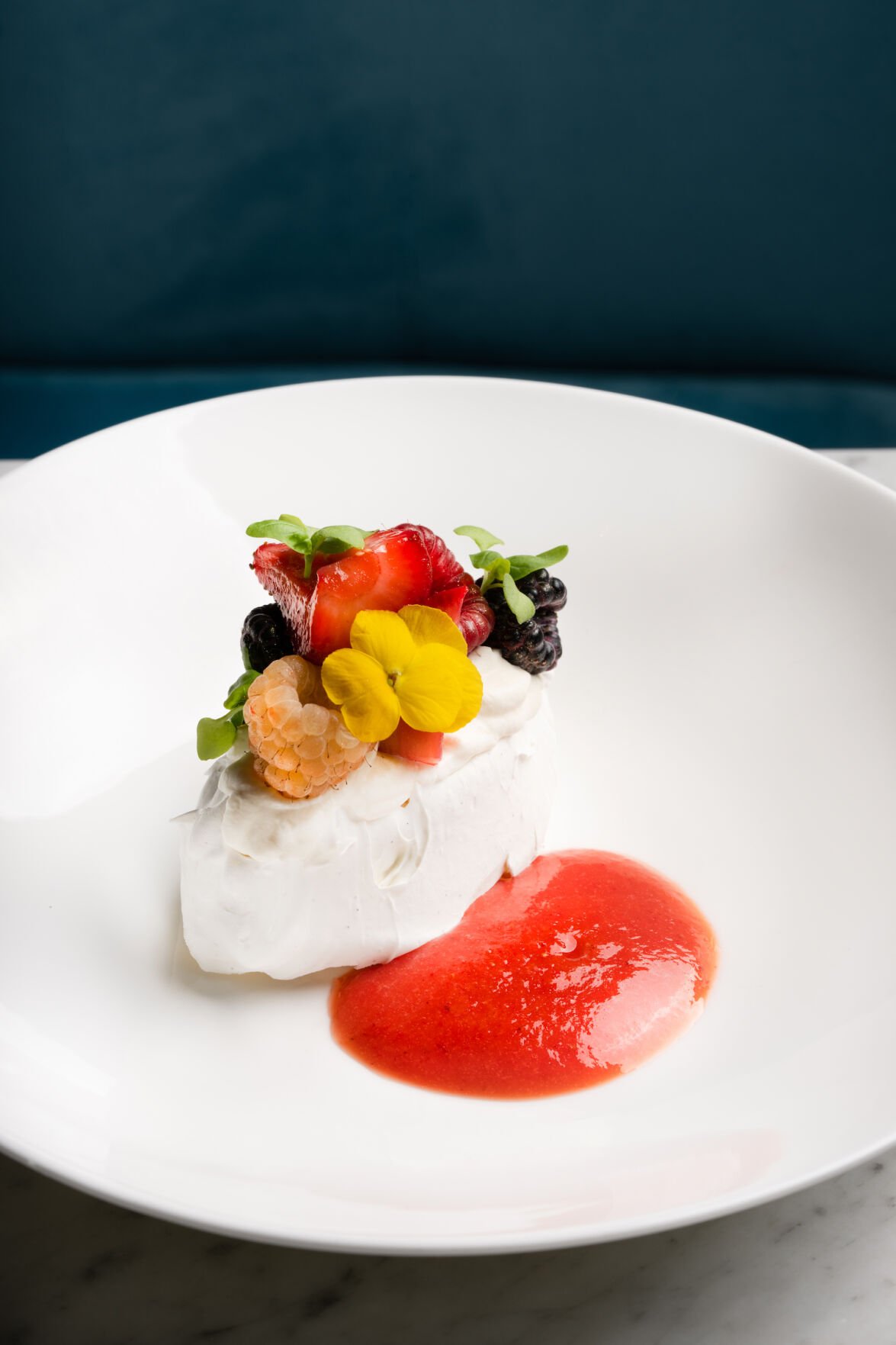
That dreamy pavlova with local berries.
Photo Credit: James Tran
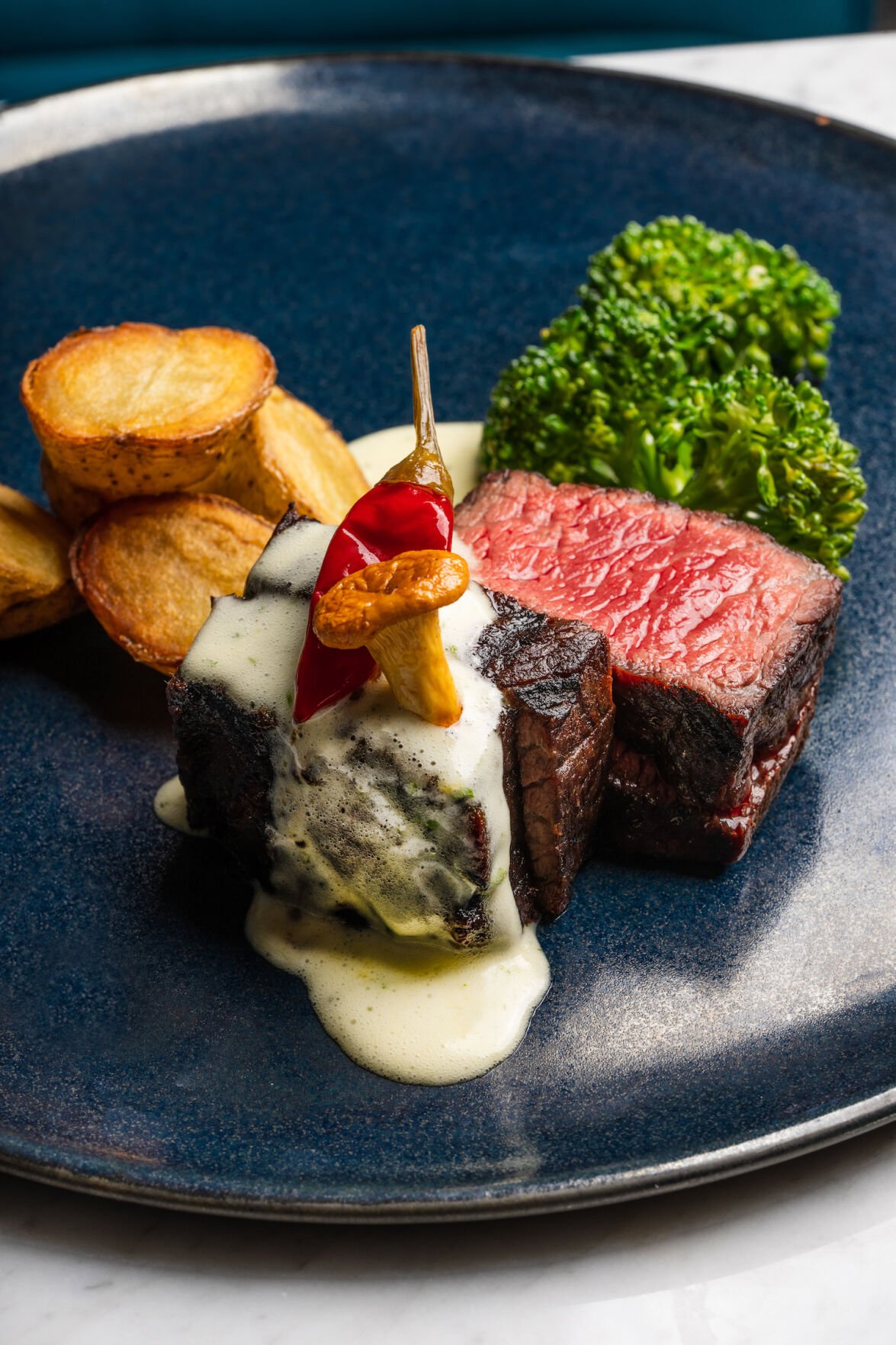
The Snake River Farms Wagyu zabuton is a simple showoff, demonstrating that a quality cut of meat just needs a good char, some S&P, and a restrained amount of sauce to diversify the eating experience. Behar’s spicy herb bearnaise is drinkable, made from Chino Farm eggs, served next to roasted baby tomatoes so good they question the generally accepted supremacy of French fries in the world of spuds. Also, try her herb-brined pheasant.
A good brine can turn a mediocre protein into a special one, and a special protein (like this one, from MacFarlane Pheasant) into a recurring daydream. Hers is brined for 12 hours, roasted, and served with a peach jus that tastes like summer.
Meal’s end at Black Radish is all about the pavlova. When it comes to desserts, my gross generalization is that all humans fall into two camps: chocolate people and berries-and-cream people (who meet in the middle at creme brulee). I’m berries and cream to the core, and this is my catnip—French meringue, seasonal fruit puree, farmers market berries, finished with micro-basil.
This restaurant was reportedly a couple of years in the making, and—aside from the decibels of the feel-good ruckus—they made good on that time.
Photo Credit: James Tran
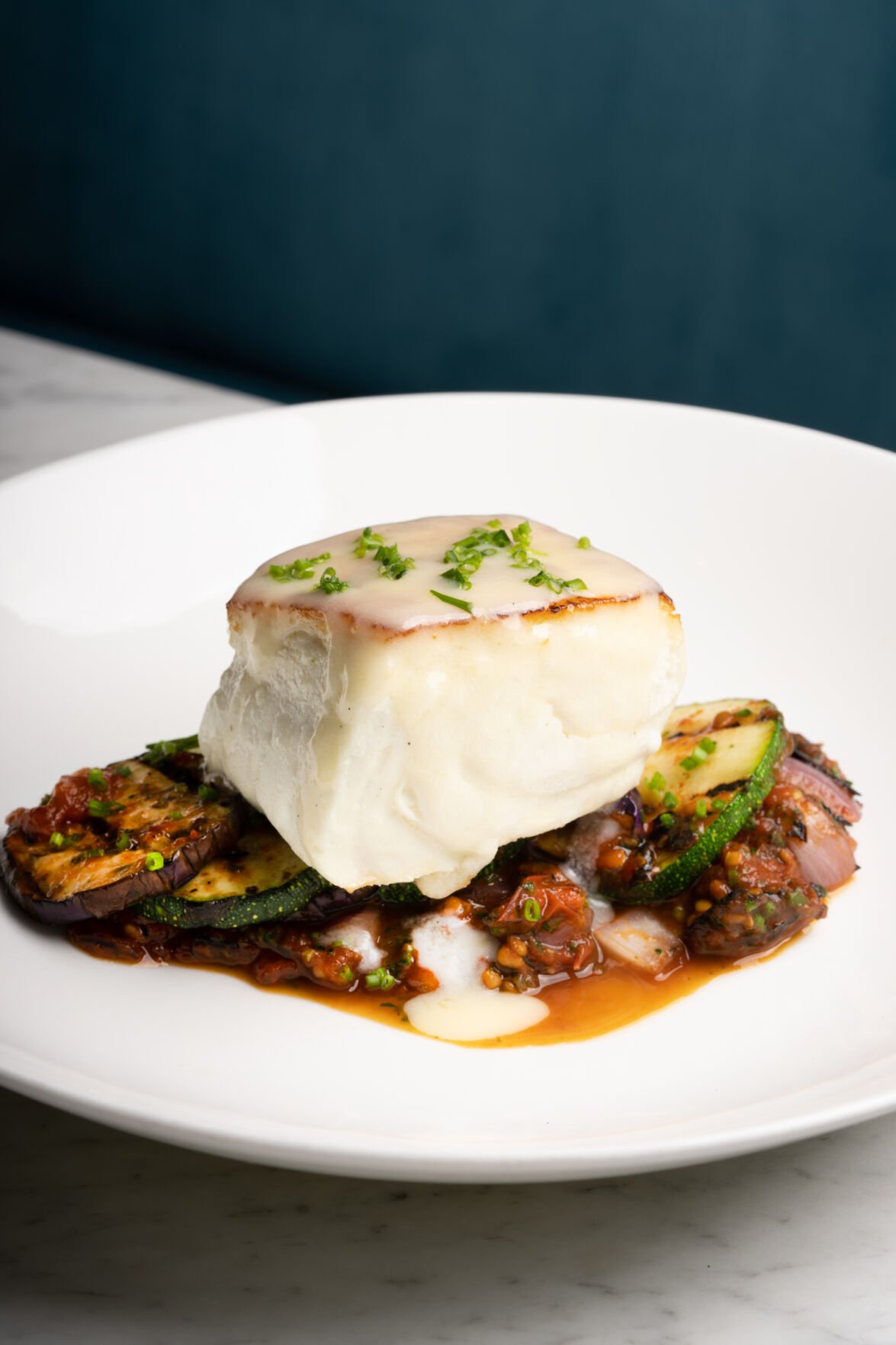
Chef Itze Behar’s dishes mix Mexican heritage with French technique. Order alacarteora four-course prix fixe for $79.
Photo Credit: James Tran
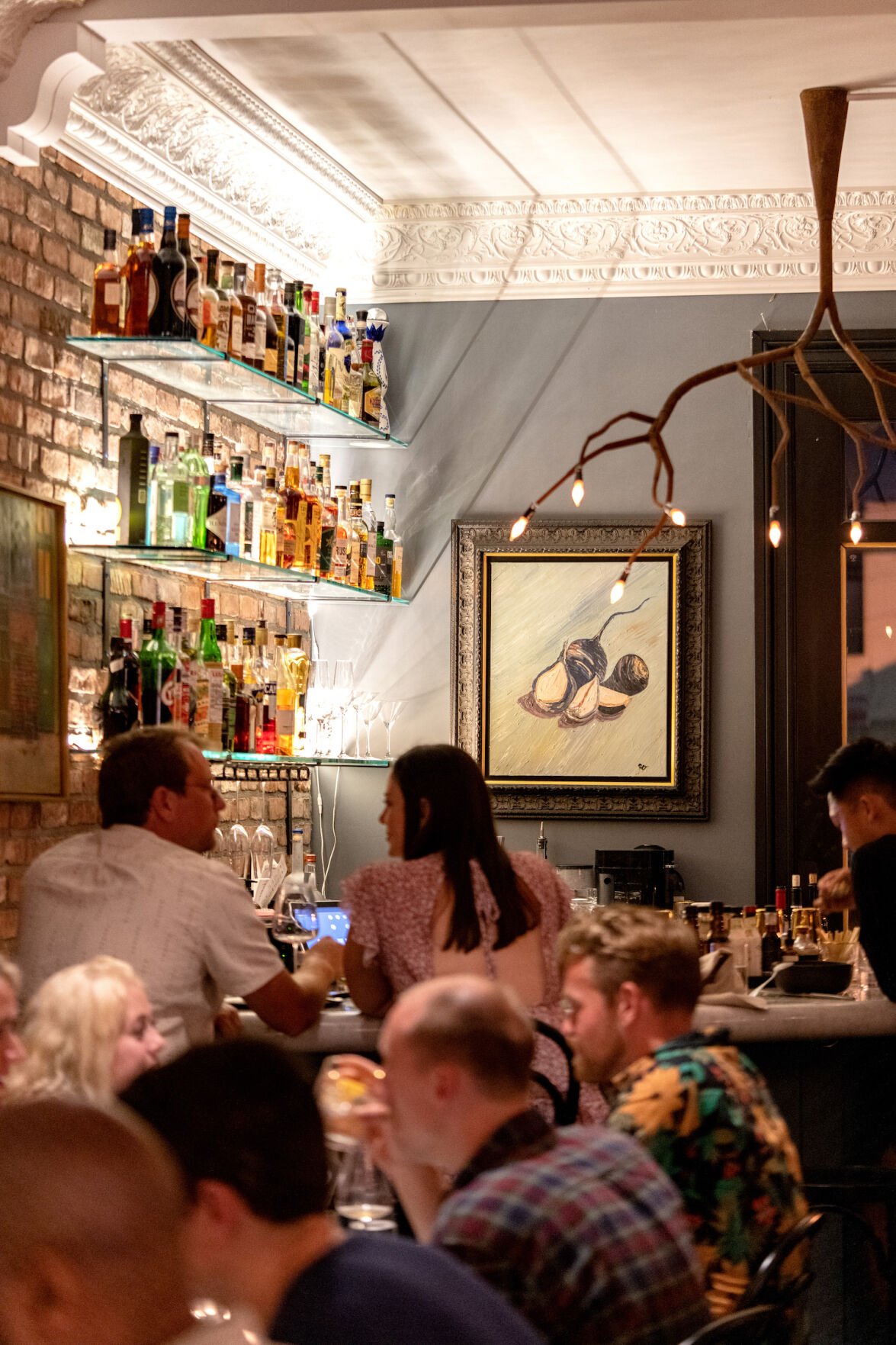
Lamps that look like black radish roots over a six-set bar nestled in the corner.
Photo Credit: James Tran
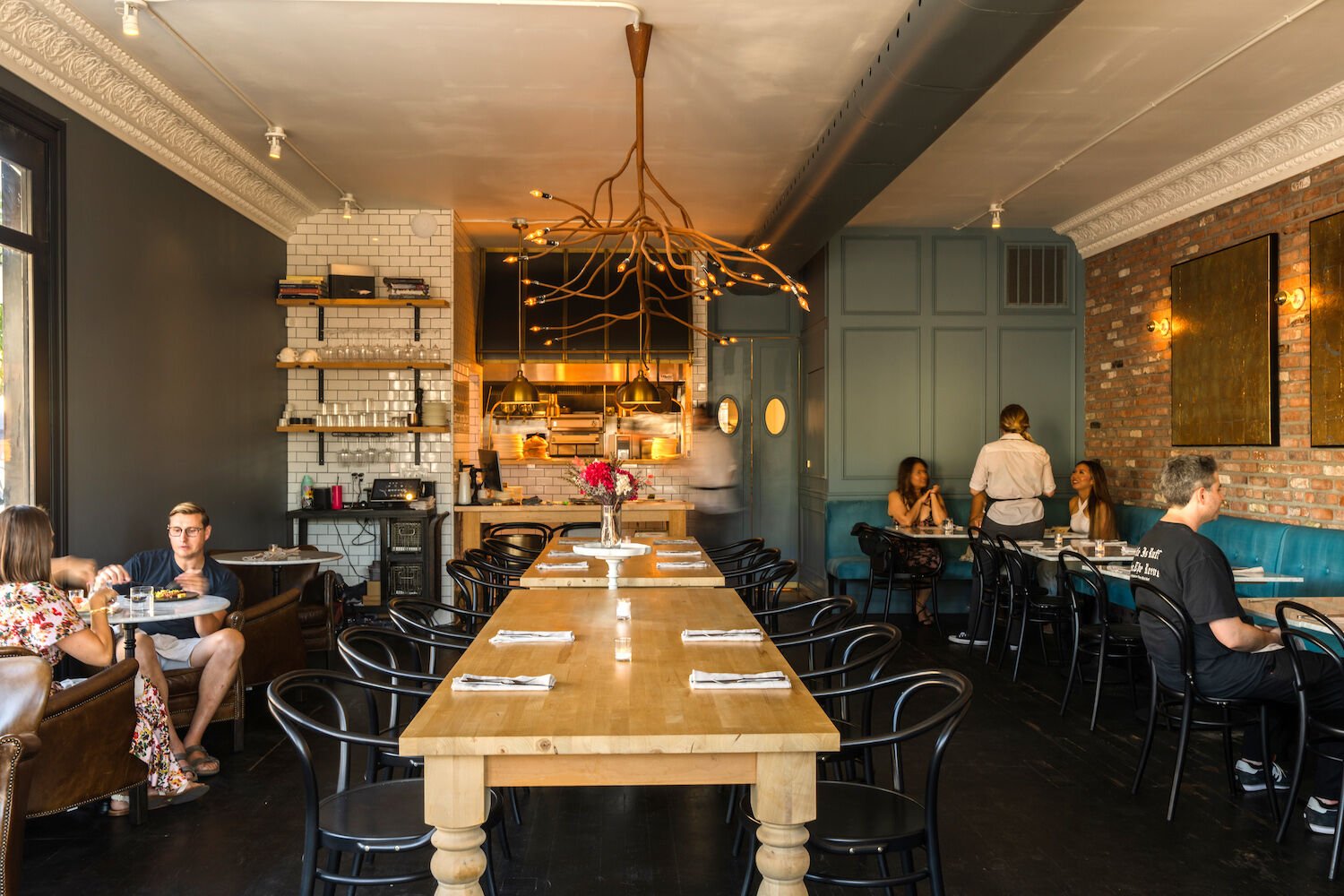
Come early. About the only time you’ll see available seats in the dining room.
Photo Credit: James Tran

Troy Johnson is the magazine’s award-winning food writer and humorist, and a long-standing expert on Food Network. His work has been featured on NatGeo, Travel Channel, NPR, and in Food Matters, a textbook of the best American food writing.
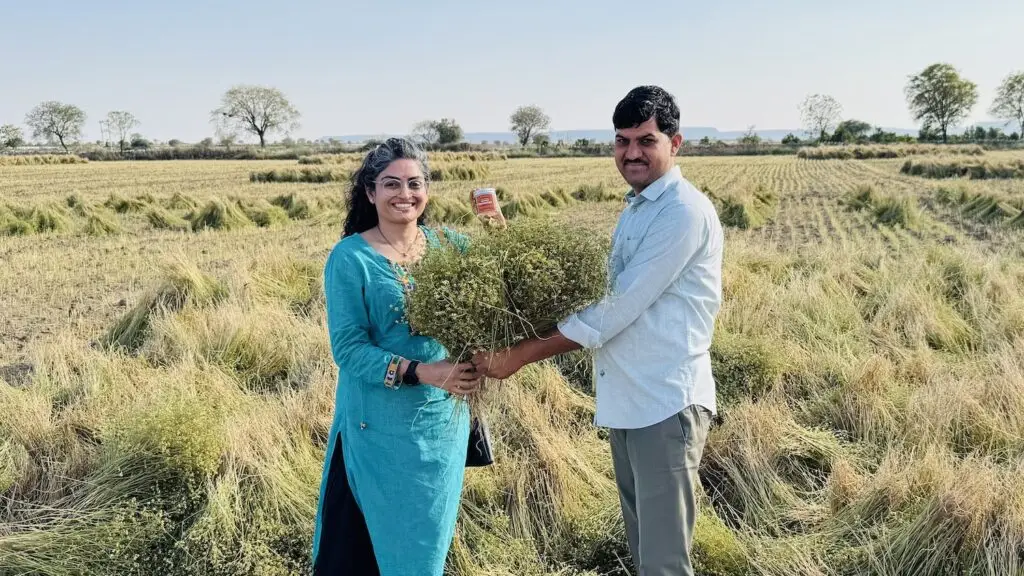
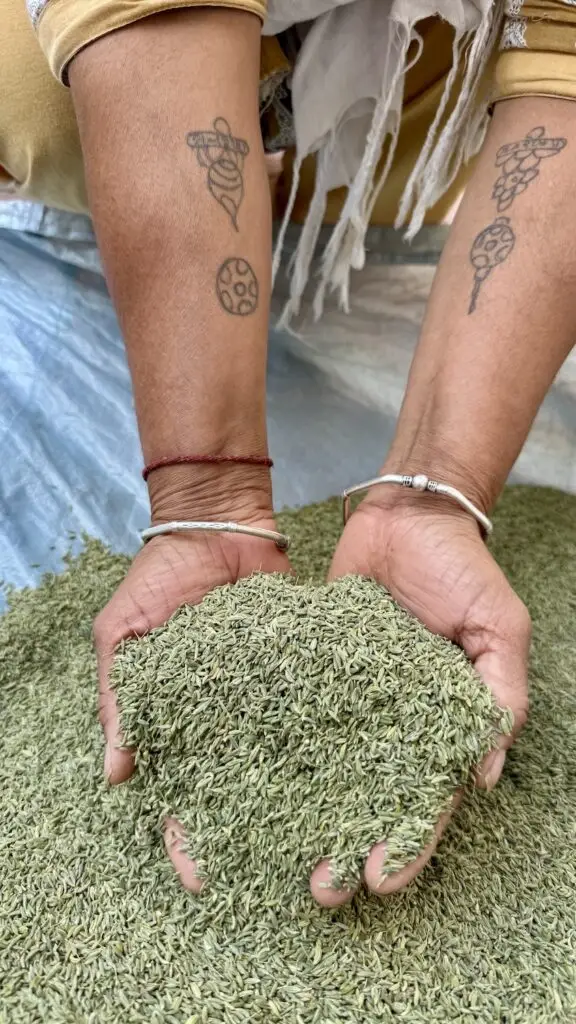
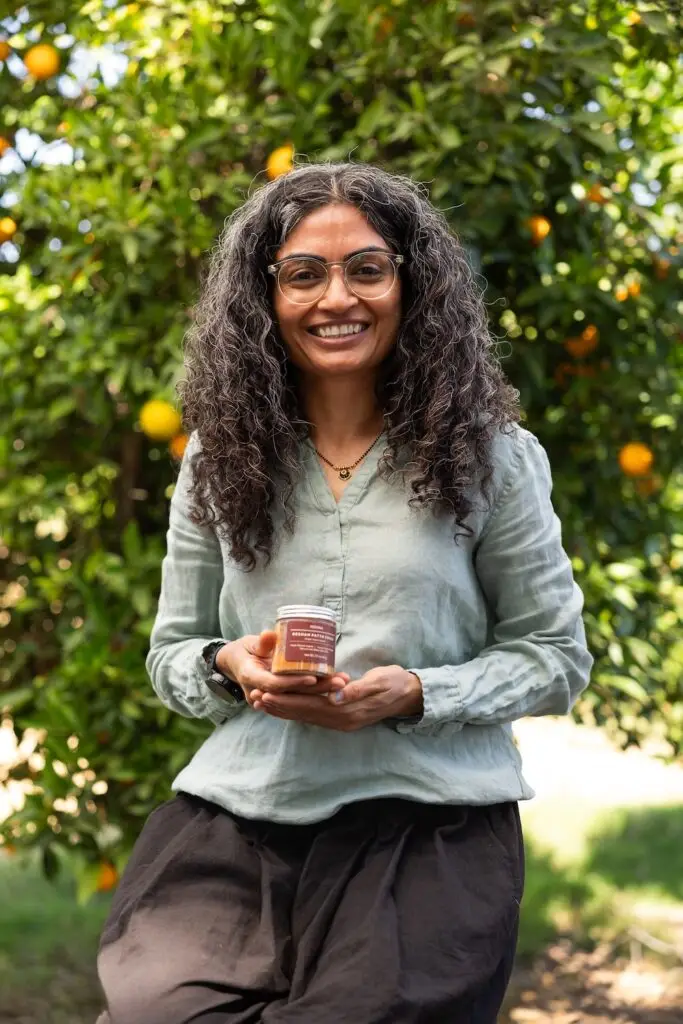
Founder Dharti Jadav sources cumin, turmeric, coriander, and more directly from small-scale farms across India for fresher, more flavorful results
Around the world, people prize wine from hyper-specific regions. We know that grinding whole coffee beans results in a richer cup than using preground beans. So why do so many of us rely on preground spices to flavor our food?
Dharti Jadav wants us to change that perception of spices, using her own childhood memories from growing up in Ahmedabad, a city in western India in the state of Gujarat. She’s lived in the United States for 20 years, but never had to settle for substandard, stale spices from an old spice rack in a random grocery store. Her mother, who visited every year, would always bring along as many spices from India as she would need until the next year.

That changed with the pandemic. “I’m used to a certain freshness level in the spice,” she explains. When the world went into lockdown, she resigned herself to shopping at a large grocer to refill her shelves.
It didn’t go well.
The cumin tasted like cardboard—nothing like the piquant, aromatic herb her grandfather grew in India. “It literally felt like somebody was taking away my memories,” she says. She couldn’t let that happen. So she decided to launch Koshna to present spices in a way that actually showcases their depth.
Sharing a variety of fresh spices for people to fully experience their vibrancy is one thing. But Jadav’s business plan ensures all Koshna products are also sourced individually from small-scale farmers in India, who harvest and deliver the same year to ensure full potency. For comparison, mass-market spice brands can take two years or more to hit shelves, and every day in storage diminishes its vitality and flavor.
Plus, most spices aren’t just one flavor from one place, she explains. “There are varieties of specific turmeric that have their own nuances and grow in a specific region,” she says. But if you look at 99.9 percent of turmeric bottles on mass market shelves, the label will just say “turmeric.” We don’t simplify wines into just “white” or “red.” So why don’t spices, the commodity that literally launched global trade routes we still use today, get the same specificity, in stores or in restaurants?

“All these restaurants, they’re all about farm-to-table,” says Jadav. The menu often says where the local lettuce was grown or where the fish was caught. “I have yet to find a restaurant that says ‘my spice comes from this farm.’” Most people don’t even know where black pepper originated from. (Hint: it’s also from India.)
Jadav sells Koshna spices online, various farmers markets in San Diego, seasonal pop-up events, and small shops like Home Ec, Bica, and Fox Point Farms. Currently, her product line features spices like Lakadong turmeric (from Umnari in the Meghalaya region), Chambal coriander (named for the Chambal River flowing through the Khera Rudhda in Rajasthan), Aaji fennel (named for the Aaji River flowing through the Ramod in Gujarat), Resham Patto chilli (from Ramod, Gujarat), and of course, the spice that started it all—Banas cumin (named after the Banas River flowing through Dungala, Gujarat).
She knows it can feel intimidating to go from a shaker of flavor to having to grind your own. But it’s worth it, she promises. “Just play with it,” she laughs. “Cooking, it’s like the simplest thing. Nothing wrong can come out of it.”

Listen Now: The Latest in San Diego’s Food and Drink Scene
Have breaking news, exciting scoops, or great stories about new San Diego restaurants or the city’s food scene? Send your pitches to [email protected].
Beth Demmon is an award-winning writer and podcaster whose work regularly appears in national outlets and San Diego Magazine. Her first book, The Beer Lover's Guide to Cider, is now available. Find out more on bethdemmon.com.
The new Hawaiian- and Japanese-inspired cafe will serve locally caught bluefin, fresh spring rolls, housemade sauces, and plenty of matcha
Not all monsters have to be scary. In fact, entrepreneur Pinyada “Ada” Primpray’s is delightful. Sea Monster, a small cafe that will serve poke bowls, fresh spring rolls, and matcha, will open in Mission Valley by the end of the year.
“The concept is a Hawaiian- and Japanese-style cafe,” Primpray explains. She calls it Sea Monster in homage to her friend’s popular restaurant Big Monster Sushi & Thai in Hawaii, but “the idea really started to take shape after I came back from a solo trip to Italy,” she says. The experience inspired her to start her own concept that mixed her culture, experience, and passion for food.
Sea Monster will be her first restaurant as an owner, but Primpray has worked in restaurants for 15 years in places like Kauai, Chicago, New York, and San Diego. She realized a similar health-conscious, seafood-forward, quick-service restaurant could work here, especially in that corner of Mission Valley where pizza and burgers reign. Plus, she points to the massive development plans for the area—between Riverwalk bringing thousands of new homes to the area and even more coming from San Diego State University, there are lots of new locals looming on the horizon.
She brought on Head Chef Wasu Gibb Palipote from Sushisamba in Los Angeles to develop the menu and signature sauces, like ink wasabi and a larb sauce. “Every couple of months, we plan to introduce a new signature sauce created exclusively for Sea Monster by [Chef Palipote],” she says. All the sauces will be homemade, including a basil creamy sauce and sesame vinegar.

Sea Monster’s menu centers around fresh poke bowls—mostly locally-caught bluefin tuna and hamachi as well as salmon, served California-style rather than Hawaiian-style (the sauces are added to order rather than marinating on the fish, which can overpower its flavor). Toppings will range from the usual, like edamame and green onion, to upscale, like uni (sea urchin). She’ll also serve fresh salad rolls, a popular light snack in Vietnam and her native Thailand, with vegetables and seafood like salmon, shrimp, and imitation crab. Everything will be served to-go, although there will be very limited seating for people who want to dive in right away.
The matcha program will start small, with six iterations planned for opening and potentially more in the future. “I really want to have mango sticky rice,” she adds. Beyond adding items to the menu, Primpray says she hopes Sea Monster will be more than a restaurant. “I want it to grow into a lifestyle brand with its own little world,” she says, pointing to the restaurant’s mascot, Smoo. A monster with aspirations of growing bigger and bigger until it takes over? Yeah, sounds about right.
Sea Monster will open daily for lunch and dinner in late 2026 at 6110 Friars Road in Mission Valley.
Listen Now: The Latest in San Diego’s Food and Drink Scene
Have breaking news, exciting scoops, or great stories about new San Diego restaurants or the city’s food scene? Send your pitches to [email protected].
Beth Demmon is an award-winning writer and podcaster whose work regularly appears in national outlets and San Diego Magazine. Her first book, The Beer Lover's Guide to Cider, is now available. Find out more on bethdemmon.com.
Kuya Sharpens owner Joshua “Jhun” de Andres turned a meditative practice into a business caring for prized kitchen knives—one whetstone at a time
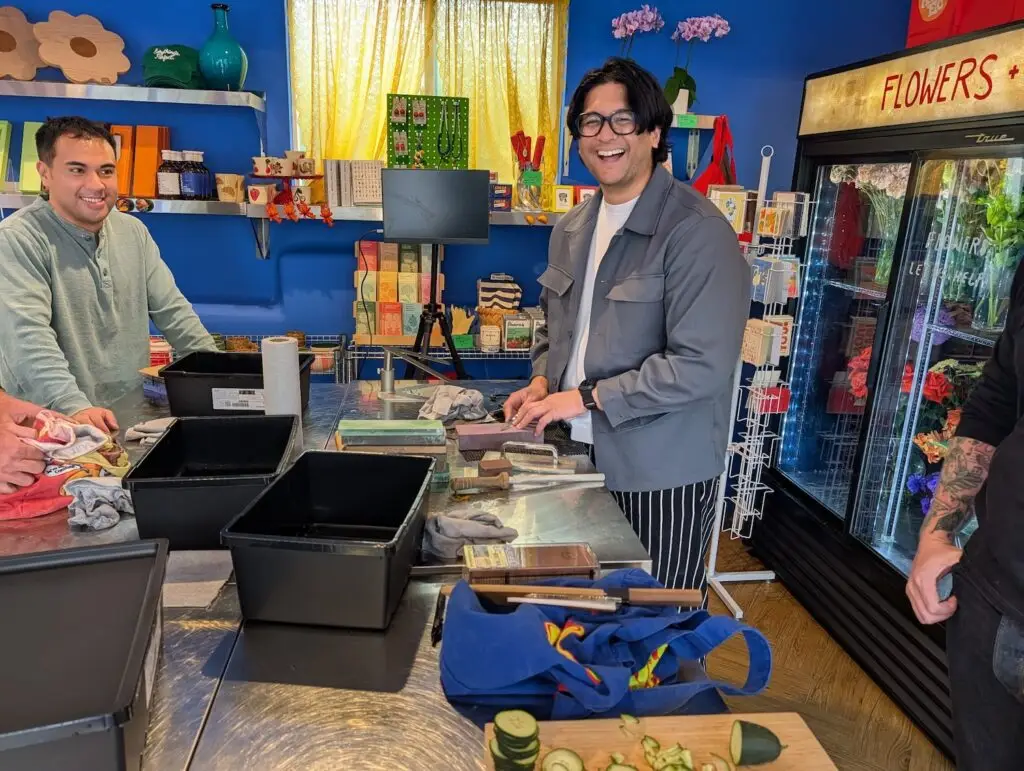
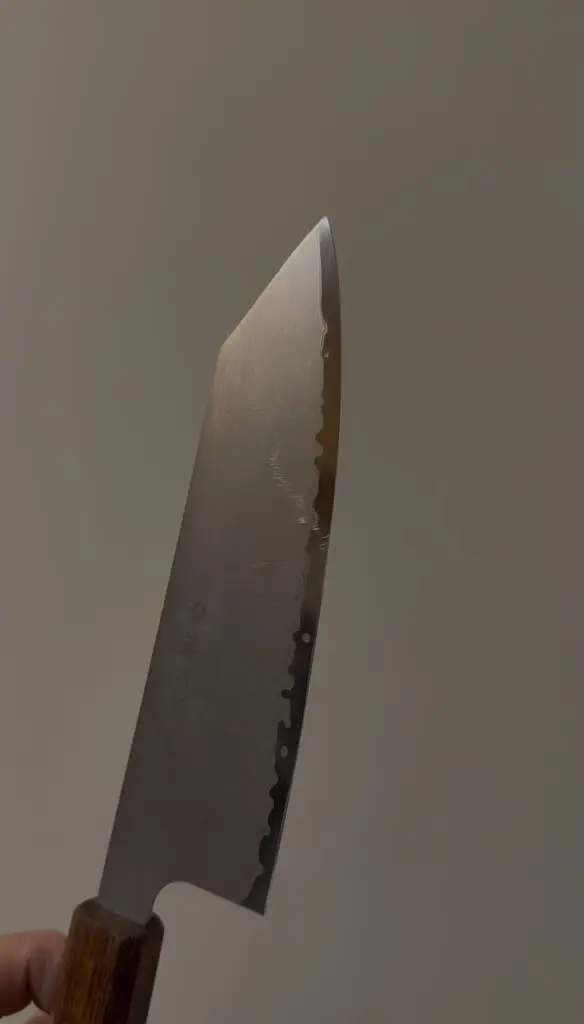
“A sharp knife is a safe knife,” says Joshua “Jhun” de Andres, owner of Kuya Sharpens. It only takes a light touch to guide a properly-sharpened knife, while dull knives require much more force to cut through an object, increasing the likelihood and severity of an injury. “If you slip, that’s a lot of force that is now going into your finger, your hand, and that’s where it becomes extremely dangerous.”
De Andres started sharpening knives as a meditative practice during a time of personal grief, a way to zone in on a task with a useful and satisfying outcome. “[It was a] reminder to myself that you can fix something that’s broken and give it purpose again.” Once he ran through his own collection of knives, he started asking friends and family if he could sharpen theirs. When he’d sharpened everyone’s knives he could think of, he started posting videos on TikTok, where his first professional chef customer found him: Chef Tanner Stanich, chef de cuisine at Michelin-recognized Bib Gourmand Mabel’s Gone Fishing.
“That’s when things really started to take off,” he laughs. He uses whetstones rather than motorized belt sanders to sharpen, which gives him the ability to make microadjustments during the process for a more customized and controlled result. Whetstones also preserve steel more efficiently than other mechanical processes, which are faster, but take off more of the knife’s edge in exchange, reducing the lifespan of the knife.
Learning how to master whetstones takes a lot of time and practice, and while de Andres specializes in sharpening Japanese knives, he’ll sharpen a knife from anywhere. “Every knife deserves to be sharp,” he says.
Japanese kitchen knives are designed for extremely specific purposes: there’s a knife to break down a fish (deba), cut through boneless raw fish for sushi and sashimi (yanagiba), slice vegetables (nakiri), carve meat (sujihiki), debone poultry (honesuki), and even knives only the executive chef can use (kiritsuke). Few other culinary cultures utilize such ultra-specialized tools, and Japanese steel is prized for its extreme hardness and ability to maintain a razor-thin edge for decades when properly cared for.
De Andres is still figuring out different ways to expand his business: hosting workshops at Home Ec on Adams Avenue, creating knife restoration tutorials, and launching private lessons, all while continuing to sharpen knives people bring to him or even send from across the country. And he knows that for both home cooks and professional chefs, sharpening a knife that may have cost hundreds of dollars on a whetstone can feel overwhelming. Will I ruin it? Will I break it?
“You’re most likely not going to break it,” he promises. “But you are going to make it yours, and you have to kind of be okay with that.” Knives age and change just like humans do. Sharpening is an essential part of maintenance, and shaving away the dull edges to restore a shine takes care. And de Andres cares a lot.
“It’s just been really life-giving to me,” he says. “I know it seems really silly that taking a knife and putting it on a whetstone can change your perspective on how you view the world, but for me, it came to me at a time when I needed it most.”

Listen Now: The Latest in San Diego’s Food and Drink Scene
Have breaking news, exciting scoops, or great stories about new San Diego restaurants or the city’s food scene? Send your pitches to [email protected].
Beth Demmon is an award-winning writer and podcaster whose work regularly appears in national outlets and San Diego Magazine. Her first book, The Beer Lover's Guide to Cider, is now available. Find out more on bethdemmon.com.
The 29-year-old culinary director at Herb & Sea is making seafood sexy (and approachable) again
Implementing a farm-to-table model hardly deserves acknowledgement these days. It’s not a stretch. It’s not innovative. “It’s the bare f**king minimum,” says Herb & Sea‘s executive chef Aidan Owens.
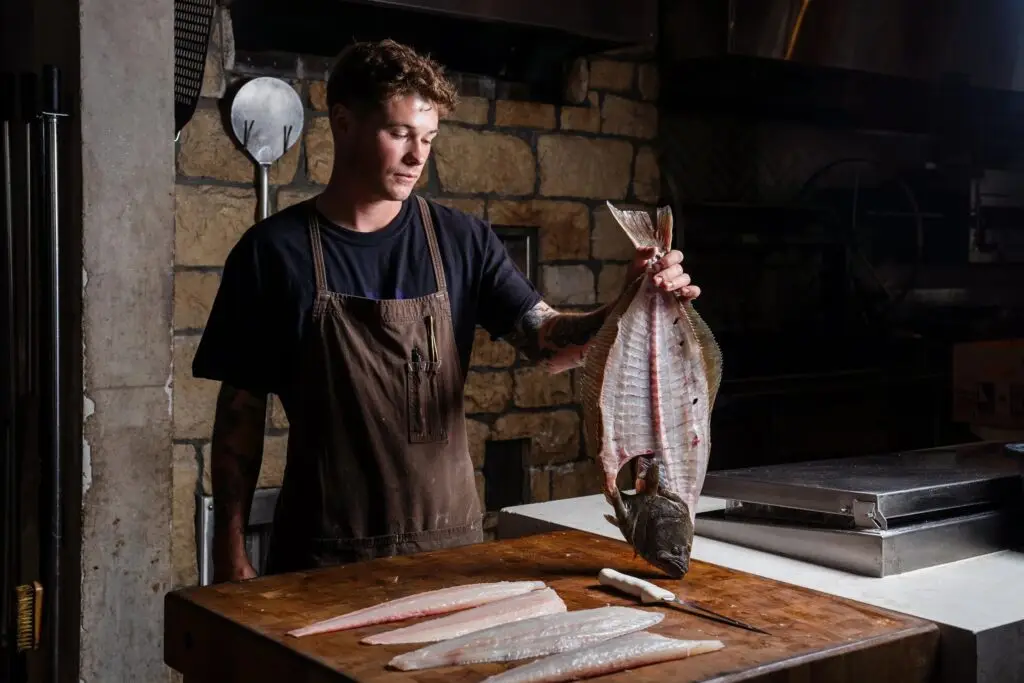
When I arrive at the Encinitas restaurant, I’m ready to talk sustainability, farm-to-table stuff, with Owens. “Did you see the chin on that?” he says of the extra big jiggly chin on the sheephead that just arrived with the day’s fresh catch. I did. It was Jay Leno adjacent.
I learn quickly that he somehow oozes both charm and stone-cold honesty. Maybe he could construct a new dish with chin goo, like he did when he had a bunch of tuna scraps and voila’d it into a smooth and crowd-pleasing ‘nduja. “I want to know what’s in there,” he says.

The instinct to look closer, to dig into what others might discard, says a lot about the chef’s approach. I guide him back to our topic, but he has something else on his mind. “We’re overcomplicating food—what happened to just cooking good food and having fun with it?”
Owens grew up on a farm in Byron Bay, Australia, where sustainability wasn’t a concept you chat about so much as a way of life. Think dirt roads, backyard chickens, pulling vegetables straight from the ground, and a mother who believed that if you couldn’t pronounce the ingredients on a package, you shouldn’t eat what was inside.
Food wasn’t precious or performative. Making it was what you did because you were hungry and that’s still what inspires Owens today. “I like to cook good food because I like to eat good food,” he says.
His approach to sustainability at Herb & Sea began so naturally that it felt just like instinct. “I was just like, ‘Let’s order food from the people who live and work here,’” he says.

And why wouldn’t he when lives in San Diego? Cities all over the world vie for our goods. Our tuna is sent overseas. Our spiny lobsters hit dinner plates in China and Japan. Not to mention California’s producing a third of the country’s vegetables and three-quarters of its fruits and nuts.
“Why would we outsource when it’s all here?” Owens asks.
Sustainability, in this context, is about cooking what exists in abundance, nearby, right now. “I love the local fish here. It’s f**king delicious and San Diego citrus, I mean, it is so f**ing good,” he says.
Instead of importing ingredients, Owens also looks for nearby alternatives. “You can find really cool things in the local waters,” he says, pointing out that stingray cheeks taste similar to scallops.

Whatever he finds in that sheephead chin might just be the next substitute for marrow. But to make this work, it means getting diners amped up about the slightly unfamiliar.
Tasting menus, where diners are completely in his hands, become an opportunity to gently push boundaries. “I’ll serve mackerel, because people think they hate it,” Owens says, noting that the abundant local fish can have some fishiness. “But when it’s fresh, it’s arguably one of the best fish in the ocean.”
He also tweaks the language on the menu so people might feel more compelled to give dishes a try without preconceived notions. He might use “lengua” instead of “tongue.” “Whelk” instead of “snail.” When he puts “stingray throat” on the menu, he disarmingly calls it “skate.”
To reduce waste, scraps aren’t always discarded but rather turned into something new. Sometimes they’re smoked, cured or fermented. Apples going bad turn into apple ponzu. Lemons turn to marmalade, which stretches their usefulness far beyond peak season. “And it’s super tasty on our pizza,” he says.
What makes the food even richer, is the relationships he’s built with farmers. Though it didn’t always feel natural, Owens sought personal connection first. He recalls approaching a fisherman at the Tuna Harbor Dockside Market. “I was awkward,” he says. “I went up to him and said, ‘I like your fish.’”
Owen’s is now so close to his suppliers—like fishermen Ryan Sebo and Joe Daly—that he gets texted pictures of fresh catches right as they flop on the boat. The messages always ask if he wants first dibs. “I say yes to a lot of fish,” Owens says, noting that Herb & Sea can go through 2,000 pounds of seafood a week.

The next evolution of sustainability, in his view, will be chefs working directly with producers such as his alliance with Sebo, cutting out middlemen and purveyors where possible. “It will put more money in the pockets of the people doing the work,” he says.
It will mean that chefs can’t just know their local farmers and producers, but they’ll choose to work with the ones who have the best practices. Dining and sustainability will become much less about the final plate. “It will be more about the impact that plate has on the Earth,” he says.
Ultimately, he believes sustainability doesn’t need to be loud. It doesn’t need hashtags. It just needs to be honest.
“We aren’t saving lives. We’re feeding people good food,” he says.
And yet, in feeding people well—simply, thoughtfully, responsibly—something meaningful happens. Guests leave satisfied. Ingredients are respected. Local ecosystems are supported and food returns to what it has always been at its core: nourishment, pleasure, and a quiet reflection of the place it comes from.
No buzzwords required.
Check out the stacked lineup of talent participating in this year’s celebration of food, cocktails, wellness, and SoCal energy
Tickets to the Del Mar Wine & Food Festival get you in the door. The real fun is figuring out who you’ll run into once you’re there. This year’s weeklong schedule of exclusive events, running September 30–October 4, includes dinners, tastings, and loosely-supervised chaos where celebrity chefs and local icons finally let their hair down.
The festival has a track record of the unexpected: Bryan Cranston and Aaron Paul once toasted their mezcal brand Dos Hombres with an intimate dinner at the Lodge at Torrey Pines (and then, evidently unsatisfied, kept drinking it on the cliffs above Blacks Beach with a rotating cast of San Diego and Food Network chefs. Alex Morgan showed up for a dinner under the lights honoring the country’s most badass women chefs). Drew Brees ran a celebrity pickleball tournament where the guy from It’s Always Sunny in Philadelphia got absolutely humbled by locals.
If you scored a ticket to last year’s Grand Tasting, you might’ve caught Guy Fieri doing exactly what Guy Fieri does: strolling the grass, signing t-shirts and foreheads, and hanging off the DJ surf van like it was built for him. Meanwhile, local chef Ethan Yang of Glass Box walked off with the Chef Competition surfboard.
So whether your plan for 2026 is to corner legendary San Diego chefs like Victor Jimenez of Cowboy Star and Jon Sloan of Juniper & Ivy in person, or just aim for a spontaneous golf cart ride with a Food Network star—here’s your cheat sheet for where to run into a celebrity chef, TV personality, award-winning winemaker, or pro athlete at this year’s Del Mar Wine & Food Festival.

Consider this your soft landing into festival week—the walk-around tasting that eases you in before things get chaotic later on. Monarch Ocean Pub hands its patio over to the flavors that define San Diego eating: Baja seafood done right, coastal bites, Mexican flavors with some heat behind them, all the staples locals will fight you over.
The celebrity sightings here lean more “bump into” than “spot from across the room.” Troy Johnson—Food Network judge, San Diego Magazine chief content officer and co-owner, Emmy-winning host, a man who has eaten his way across the entire country professionally—is the type to materialize at whichever station has the longest line, because he already knows it’s worth the wait. Ask him what he’s had so far. He’ll have opinions.
Then there’s celebrity pastry chef Karen Krasne, owner and executive pastry chef of Extraordinary Desserts, James Beard House alum, and a woman Forbes once ranked among the top 10 pastry chefs in the country—which tracks, because you might find her holding court next to a tray of her roasted pecan shortbread dipped in white chocolate, explaining exactly why this is the flavor combination. You will listen to every word, too, because you’ll want to try that cookie.
This is an opening night party where the person next to you in line might just be the one who baked the thing you’re about to eat.

Fifty years ago, a Napa Chardonnay beat France at its own game and rewrote what the world thought it knew about wine. This dinner is that legacy, poured by the family who built it, course by course.
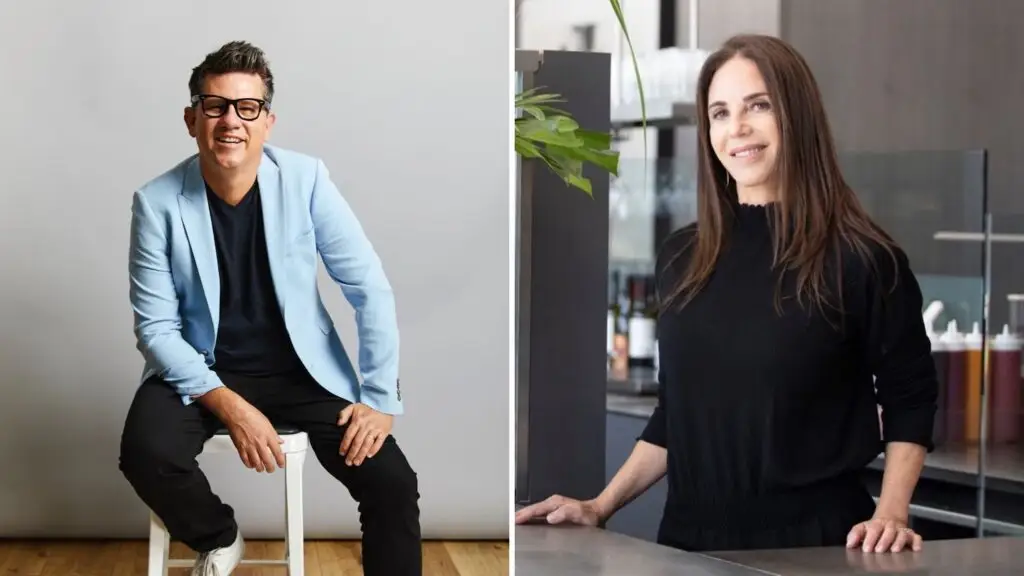
Under the arches at Fairmont Grand Del Mar, Ernie Hahn and the Hahn family, who partnered with the Barretts to revive Chateau Montelena into the Napa powerhouse it is today, host an evening built entirely around the winery’s most iconic pours. Every course gets its own pairing straight from the Montelena portfolio, so you’re not just hearing about the Judgment of Paris, you’re tasting the wine that started it.
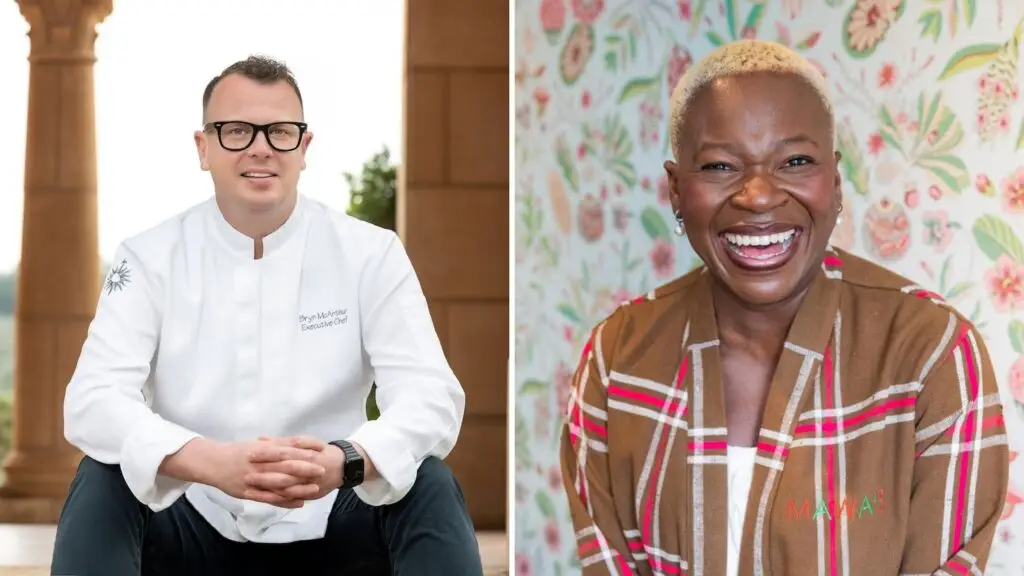
Chef Mawa McQueen, a former James Beard Best of the West winner out of Aspen, brings globally inspired cuisine and serious technique to the table. Alongside her, Fairmont Grand Del Mar’s executive chef Bryn McArthur leans into farm-to-table sensibility shaped by a career of global kitchens. Together they’re building a menu meant to hold its own against wine that already changed history once.
This is the rare dinner where the wine isn’t just accompanying the meal, it’s the reason the meal exists. Fifty years after Paris, the rematch is happening right here in Del Mar.

Isabella Dallas is a freelance writer for San Diego Magazine and the Arts and Culture Editor at The Daily Aztec in her final year at San Diego State University. She previously worked as an editorial intern for SDM, but when she’s not writing, you can find her trying the best coffee spots in SD, devouring the latest rom-coms, and indulging in anything and everything pop culture.
Surf’n Slaw founder Kumi Alexander is introducing local farmers market crowds to okonomiyaki, the savory Japanese pancake she grew up eating
After 15 years married, my husband and I tend to agree on most things. But there’s one argument we both refuse to bend on—I prefer okonomiyaki Osaka-style, and he’s a die-hard Hiroshima-style devotee. (To be fair, we both adore both styles, but at this point, it’s just fun to have a low-stakes disagreement.)
Okonomiyaki is one of Japan’s greatest comfort foods, a savory pancake that’s about the size of a DVD, if you aren’t too young to know what that is. It’s not terribly hard to make—it’s flour, eggs, dashi stock or water, and a whole heap of shredded cabbage, plus optional fillings like green onions, pork belly, or bonito flakes, all cooked fresh on a flat top griddle. Drizzle some kewpie mayo and okonomiyaki sauce on top, and you’re hot to go.
However, it’s not easy to make well, and as you now know, people have capital-O Opinions about Osaka-versus-Hiroshima. Hiroshima-style layers the ingredients one by one rather than mixing them together, adding a layer of soba or udon noodles and topping it all off with a fried egg. For Osaka-style, all the ingredients are mixed together and then cooked on the griddle, so every bite includes every ingredient in a hodgepodge of deliciousness. (One Osaka variation called modan-yaki does include soba noodles mixed in the batter, but they’re not traditionally used in that regional version.)
Despite a childhood spent in Osaka, Japan, Kumi Alexander specializes in making Hiroshima-style okonomiyaki. “Okonomiyaki has been part of my life for as long as I can remember,” she explains. “My parents ran their own business when I was growing up, so Saturdays were often busy, and okonomiyaki was one of my mother’s go-to lunches because it was simple and easy to make.”
Alexander came to San Diego seven years ago with a desire to bring a part of her culture with her—not just a product, but a feeling. “When I thought about what could do that, the answer was almost obvious: okonomiyaki,” she says.
She originally launched Surf’n Slaw as a mobile pop-up food stand in August 2025, offering what Alexander calls Japanese-meets-California okonomiyaki. “Our full Surf’n Slaw includes cabbage, noodles, umami dough, beef, shrimp, and vegetables,” she explains. The menu also has a “Green Wave Slaw,” an Osaka-style version that can be made vegan and gluten-free, as well as matcha drinks.
Currently, Surf’n Slaw pops up at farmers markets in North Park, Scripps Ranch, Hillcrest, La Jolla, and La Mesa, as well as other local markets and community events. Eventually, she may expand to a permanent location, but that’s a future goal. And while Alexander hopes that one day okonomiyaki will be as well-known to American audiences as ramen or sushi, for now, she’s just happy to share a bit of home with San Diego.
Listen Now: The Latest in San Diego’s Food and Drink Scene
Have breaking news, exciting scoops, or great stories about new San Diego restaurants or the city’s food scene? Send your pitches to [email protected].
Beth Demmon is an award-winning writer and podcaster whose work regularly appears in national outlets and San Diego Magazine. Her first book, The Beer Lover's Guide to Cider, is now available. Find out more on bethdemmon.com.
San Diego Magazine's Private School Guide 2026
NewBridge School is San Diego’s only school dedicated to the education of students with dyslexia and related learning profiles. For 30 years we have successfully served students with dyslexia, dysgraphia, dyscalculia, receptive/expressive language disorders, ADHD, executive functioning and memory deficits. Students transition successfully into academically rigorous high schools and colleges across the country. Why NewBridge? Training, training, training (plus intensive individualization, and comprehensive program design). All teachers are trained and retrained biennially in Orton-Gillingham, the only approach proven to remediate dyslexia based on Science of Reading research, and complete a year-long training program. Every aspect of our program is designed around our students’ learning styles and needs. Every class is taught by a highly-trained expert, and our Speech/Language and Occupational Therapy teams embed throughout the day. Our multisensory, multi-tiered math program has been developed in conjunction with sister schools and experts across the country. Don’t wait—early intervention is magic!
Enrollment: 100
Grades: K – 8
Tuition: $30,000
Deadline: Rolling
Gender: All-inclusive
Details Nonsectarian
Open House Tours by appointment

12285 Oak Knoll Road • Poway, California 92064
858-679-5744 • [email protected] • thenewbridgeschool.com