Featured articles
Food & Drink
Food & Drink

Food & Drink
Featured articles

Everything SD
Everything SD

Everything SD
Featured articles
Things to Do
Things to Do

Things to Do
Featured articles

podcast-ep

podcast-ep

video
Featured articles
Everything SD
Everything SD
Everything SD
Featured articles
Food & Drink
Food & Drink
Ready to know more about San Diego?
SubscribeReady to know more about San Diego?
Japanese A5 Wagyu, dry-aged goodness, and Kobe beef—check out the top places to buy meats for summer grilling
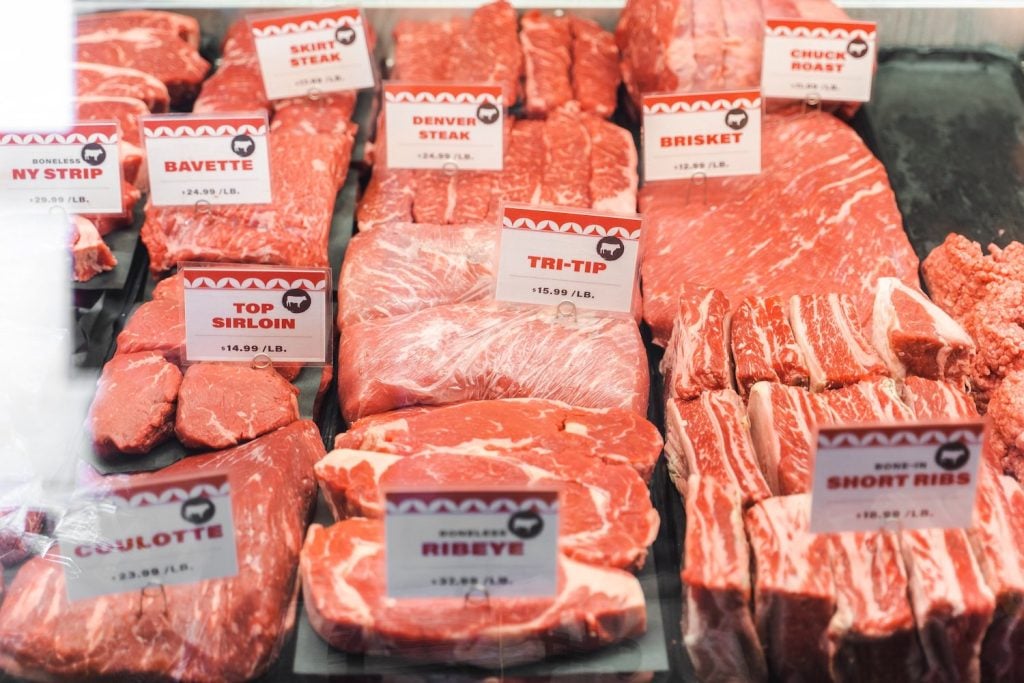
Despite June gloom, it’s finally time to drag out your grills and start prepping your kitchen for a summer full of the finest grilled meats. There’s nothing quite like three uninterrupted months dedicated solely to hot charcoal, a full gas tank, and unhealthy amounts of barbecue sauce. Sure, there are tons of grilling guides out there (not that you, a grill master, would need one), but what about a guide on where to find the types of meats that deserve to be grilled?
San Diego’s butcher shops offer something for every meat lover, from premium Wagyu to sustainable, locally sourced meats. It’s your time to impress your friends and family with your knowledge of meat cuts and to argue about the best way to smoke these premium proteins. Plus, it’s never too early to start preparing for that unspoken Fourth of July BBQ competition that you must win this year.
So, whether you’re a meat connoisseur who never misses a cook out or just a casual carnivore like me, we’ve got you covered with eight of the best butcher shops in San Diego.
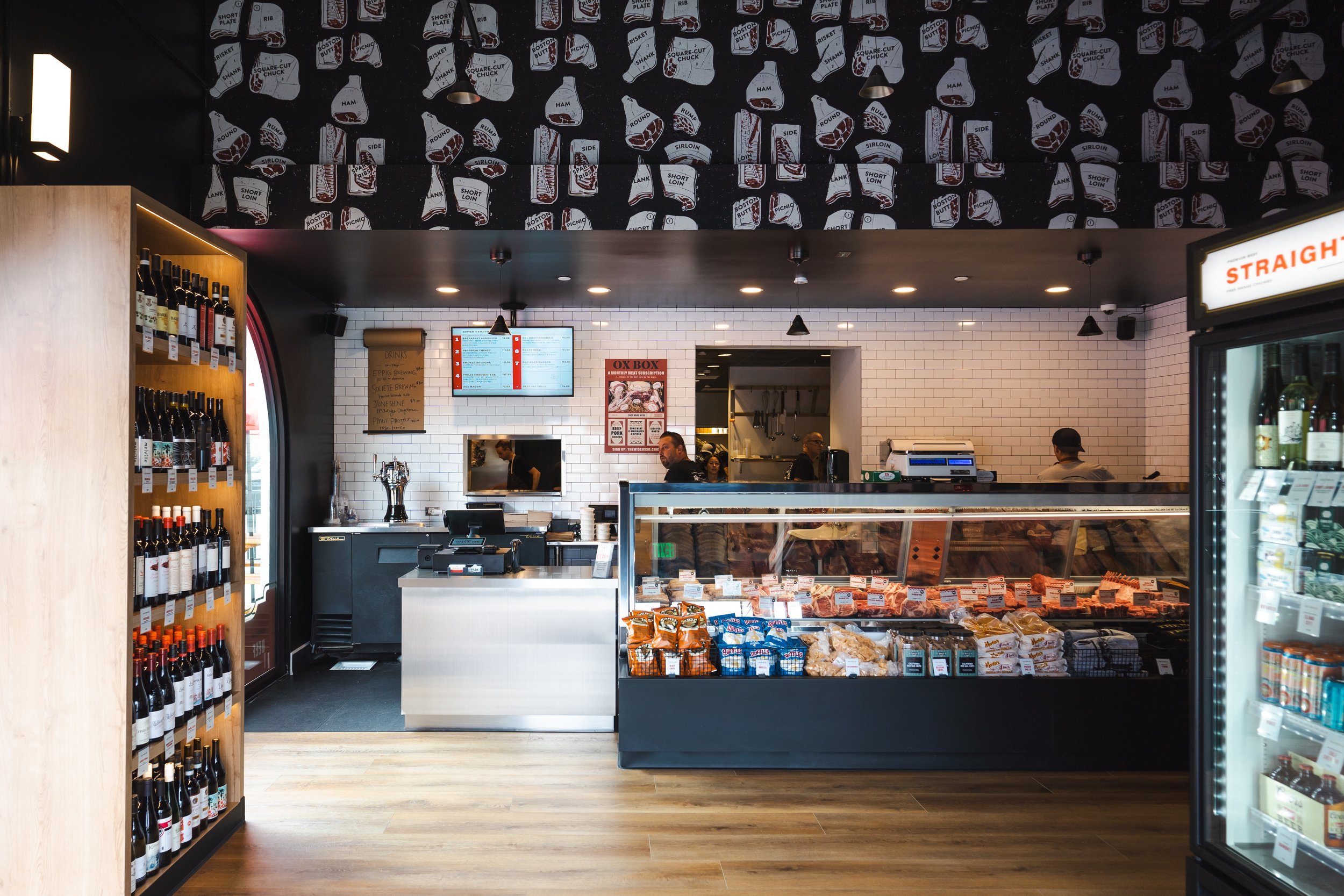
With two locations in North Park and La Costa, The Wise Ox offers a unique butcher experience. You can sign up for a class to practice your knife skills and learn breakdown techniques on a heritage breed pig, then treat yourself to a generous Philly cheesesteak sandwich. Chef Brad Wise (Rare Society, Fort Oak) and his team have also curated the Ox Box, a monthly meat subscription featuring around 10 pounds of premium proteins, all vacuum-sealed for easy storage. The box even includes recipes and tricks for dishes like Shawarma Whole Chicken and Mojo Pork Loin.
7750 El Camino Real Suite P, La Costa and 2855 El Cajon Blvd #1, North Park
Since 1968, Siesel’s Old Fashioned Meats and its sister shop, Iowa Meat Farms, have been San Diego’s best-kept secrets, catering to home-cooking enthusiasts and local foodies alike. Known for their friendly environment and butchers who know regulars by name, these shops offer an impressive array of more than 300 cuts of beef, Berkshire pork, free-range poultry, and even exotic meats like alligator and ostrich. Beyond meat, their vast retail spaces are stocked with top-notch produce, artisanal cheeses, gourmet condiments, and specialty items from near and far. Who knows, maybe alligator is the flare you didn’t know your grilling needed.
6041 Mission Gorge Rd, Grantville and 4131 Ashton Street, Bay Park
Sepulveda Meats & Provisions is a beloved neighborhood butcher shop in Golden Hill, known for its warm customer service and tasty meats. With interesting offerings like fresh quail and a mass selection of sausages, it’s a must-visit for meat lovers. It’s no surprise that locals eagerly anticipate their daily chalkboard updates showcasing the latest sausage selections. I think it’s time to break up with the grocery store (and move to Golden Hill).
1220 28th St, Golden Hill
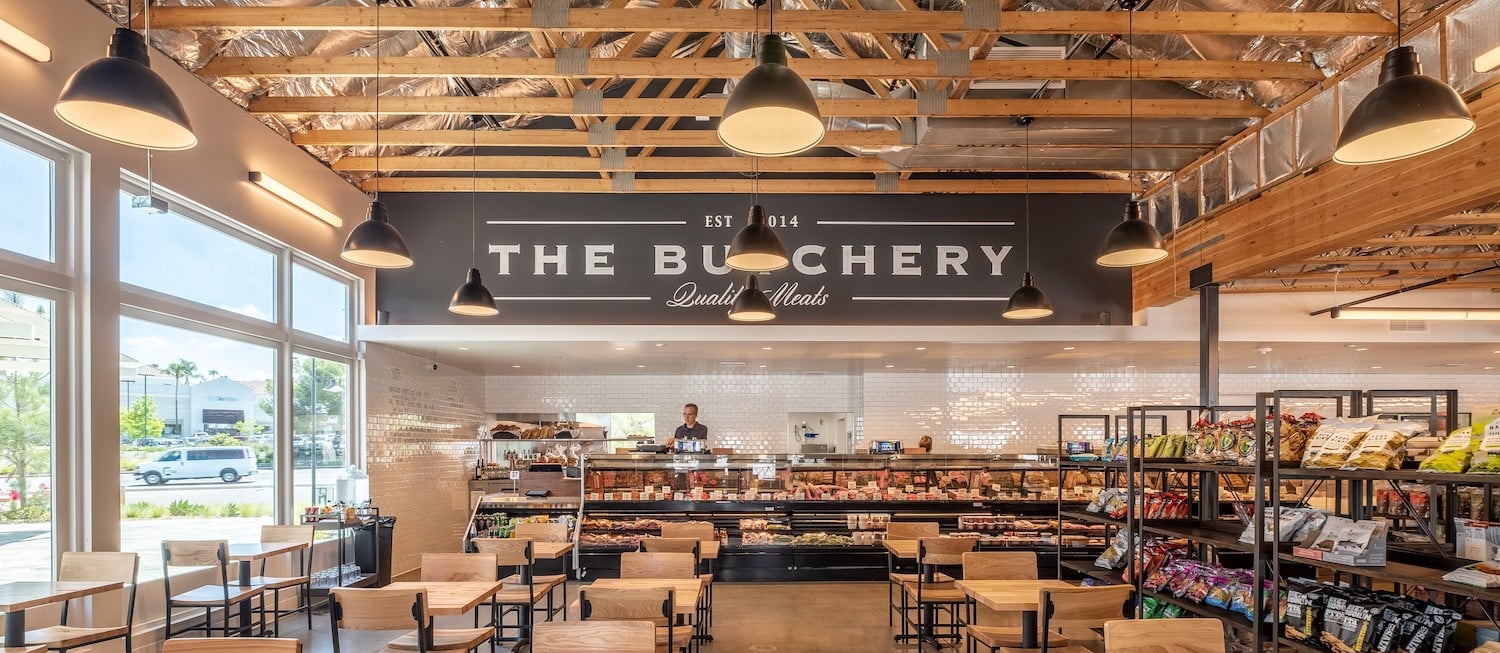
The Butchery, with its latest location in Del Mar, is a great spot for high-quality meats, artisan cheeses, craft beer, and wine. This isn’t just a typical butcher shop; it’s an all-in-one gourmet grocery store and meat-dedicated restaurant with a hand-cut meat selection ready for you to take home. Dubbed “Best Butcher Shop in San Diego” in 2019, it offers a selection ranging from dry-aged and wet-aged steaks to an extensive list of pre-marinated meats and even more obscure options.
3720 Caminito Ct #200, Del Mar
Who doesn’t love their meals with a side of community spirit and a dash of dry-aged goodness? Just across from the Del Mar race track, Ranch 45 is Solana Beach’s hidden gem for those who appreciate quality eats and meats. Whether you’re stopping by for beef tallow fries, steak tasting or picking up some dry aged cuts from their small butcher shop, it’s clear they take their farm-to-table mission seriously. With all-natural meats and a commitment to no-hormone, no-antibiotics products, it’s the kind of place that feels as welcoming as it does delicious.
512 Via De La Valle #102, Solana Beach

If you are not a world traveler, don’t worry, your meats still can be. Founded during the pandemic, The Meatery provides restaurant-quality proteins to consumers, with special Meatery box deals and specials. They specialize in Japanese A5 Wagyu, Australian Wagyu, and American Wagyu, along with other first-rate meats. For the ultimate Wagyu experience, head to Mission Gorge, where their entire Wagyu inventory awaits, alongside prime beef, veal, fish, premium pork and lamb from New Zealand.
6160 Fairmount Avenue, Grantville
At Tip Top Meats, it really is “all about the meats.” This butcher shop has been a carnivore’s dream since 1967, with owner John Haedrich emphasizing, “there is no substitute for quality.” Not only do they offer delectable dishes at their Eatery and a European market full of specialty items, but they’re also one of Southern California’s last hanging meat buyers, guaranteeing freshness and flavor. From their hand-cut Angus Beef steaks and praised service to custom orders and whole-roasted specialties, they’re ready to turn any office party into a delicious soiree.
Temporarily closed; new location coming soon. Follow their Instagram for updates.
Craving a woodfired elk rack chop? Thought so. Cowboy Star serves up this dish in their rustic, cowboy-themed restaurant (complete with exposed beam ceilings). Open Monday to Thursday 3 p.m.-10 p.m., Friday and Saturday 4 p.m.-10:30 p.m., Sunday 4 p.m.-9 p.m., they feature prime cuts like New York Strip, 21-day aged Prime Ribeye, and Hokkaido A5 Wagyu NY Strip flown in from Japan. Best of all, you can embark on a complete culinary adventure and indulge in to-go favorites like macaroni and cheese and chocolate chip bread pudding.
640 Tenth Ave, Downtown

Isabella Dallas is a freelance writer for San Diego Magazine and the Arts and Culture Editor at The Daily Aztec in her final year at San Diego State University. She previously worked as an editorial intern for SDM, but when she’s not writing, you can find her trying the best coffee spots in SD, devouring the latest rom-coms, and indulging in anything and everything pop culture.
Supervision required
The new multimillion-dollar, 12-acre park promises soak-happy fun with towering splash fountains in the middle of downtown.
Free, co.san-diego.ca.us
Little ones can practice bug collecting, insect-themed arts and crafts, and even taste cooked mealworm larva (eww!) at the San Diego Botanic Garden’s two-day fest.
July 12–13, free for members; free with admission for non-members, sdbgarden.org
Everyone from kindergarteners to high school seniors can take a walk on the wild side in a variety of five-day camps that dig into animal behavior, behind-the-scenes zoo secrets, scavenger hunts, and more.
June 23–August 22, $212+, sandiegozoo.org
Cats aren’t known for swimming, but at the new Safari Park exhibit, watch as the endangered Sumatran tigers show off their hydrophilic skills, and learn how the fierce animal lives in Indonesia’s diverse island conditions.
$36+ (admission), sdzsafaripark.org
It’s every kid’s dream to play at an amusement park for a whole week. In this camp, they’ll finesse their flowboarding skills with Belmont Park’s signature FlowRider, and have access to park rides, laser tag, rock climbing, mini golf, and more.
June 16–August 15, $299, belmontpark.com
The Carlsbad resort recently gave its water park a refresh with a new theme pegged to the Chima LEGO TV series. Cool down in the wave pool, water slides, build-a-boat stations, and a lush tropical forest.
$82+ (admission), legoland.com
This monthly exploratory event teaches kids about the wild, wacky, and wonderful world of oceanography, with hands-on activities and chats with Scripps scientists.
May 17–August 16, $11+ (admission), aquarium.ucsd.edu
The Museum of Contemporary Art’s creative program invites six-to-12-year-olds to channel their inner Picassos at their weeklong workshops led by contemporary artists. This year’s themes include mixed media and sculpture.
July 28–August 15, $90-$390, mcasd.org
Thespian kids will thrive as they learn proper theatrical techniques in a non-competitive environment.
Prices range from $195–$397, theatreartssd.org
This popular six-week Summer Art Camp for kids is back to help your mini artists hone their creative skills. Each week has a different discipline, like drawing, book arts, mixed media, and sculpture.
Prices start at $170, luxartinstitute.org
Calling all future Steve Jobs! These summer programs at UC San Diego and CSU San Marcos are perfect for programmer-wannabes.Code.org’s Hour of Code includes one-on-one instruction and an emphasis on 21st-century skills like problem-solving and creativity, as students program games, animations, and more.
Prices vary, idtech.com
Summer Guide: For Kids
Legoland Water Park
Supervision required
The new multimillion-dollar, 12-acre park promises soak-happy fun with towering splash fountains in the middle of downtown.
Free, co.san-diego.ca.us
Little ones can practice bug collecting, insect-themed arts and crafts, and even taste cooked mealworm larva (eww!) at the San Diego Botanic Garden’s two-day fest.
July 12–13, free for members; free with admission for non-members, sdbgarden.org
Everyone from kindergarteners to high school seniors can take a walk on the wild side in a variety of five-day camps that dig into animal behavior, behind-the-scenes zoo secrets, scavenger hunts, and more.
June 23–August 22, $212+, sandiegozoo.org
Cats aren’t known for swimming, but at the new Safari Park exhibit, watch as the endangered Sumatran tigers show off their hydrophilic skills, and learn how the fierce animal lives in Indonesia’s diverse island conditions.
$36+ (admission), sdzsafaripark.org
It’s every kid’s dream to play at an amusement park for a whole week. In this camp, they’ll finesse their flowboarding skills with Belmont Park’s signature FlowRider, and have access to park rides, laser tag, rock climbing, mini golf, and more.
June 16–August 15, $299, belmontpark.com
The Carlsbad resort recently gave its water park a refresh with a new theme pegged to the Chima LEGO TV series. Cool down in the wave pool, water slides, build-a-boat stations, and a lush tropical forest.
$82+ (admission), legoland.com
This monthly exploratory event teaches kids about the wild, wacky, and wonderful world of oceanography, with hands-on activities and chats with Scripps scientists.
May 17–August 16, $11+ (admission), aquarium.ucsd.edu
The Museum of Contemporary Art’s creative program invites six-to-12-year-olds to channel their inner Picassos at their weeklong workshops led by contemporary artists. This year’s themes include mixed media and sculpture.
July 28–August 15, $90-$390, mcasd.org
Thespian kids will thrive as they learn proper theatrical techniques in a non-competitive environment.
Prices range from $195–$397, theatreartssd.org
This popular six-week Summer Art Camp for kids is back to help your mini artists hone their creative skills. Each week has a different discipline, like drawing, book arts, mixed media, and sculpture.
Prices start at $170, luxartinstitute.org
Calling all future Steve Jobs! These summer programs at UC San Diego and CSU San Marcos are perfect for programmer-wannabes.Code.org’s Hour of Code includes one-on-one instruction and an emphasis on 21st-century skills like problem-solving and creativity, as students program games, animations, and more.
Prices vary, idtech.com
Summer Guide: For Kids
Legoland Water Park
Sinner Buns is building a following for its slow-made, seriously gooey weekend treats
When I was pregnant, my food craving was singular and intense. If I didn’t eat at least one thing doused in cinnamon every day (ideally, more than one), I was—to put it gently—a complete monster.
Since then, my obsession has tempered somewhat. But cinnamon buns still perch high on my top treats list, so I’m always on the lookout for the next great place to indulge. IMO, The Huddle in Mission Hills’ mondo cinnamon roll remains top-tier, but after eyeing the ooey, gooey goodies from Sinner Buns, we might have a contender.
Originally from Ukraine, Daria Nadar had already done everything one can do at a bakery—business operations, wholesale contracts, actually baking, you name it—so during the pandemic, she started dabbling with perfecting her cinnamon rolls. After she got a couple fans over social media, she threw her first pop-up to see how they’d be received. She sold out.
After a few false starts with a couple storefronts and business deals, Nadar officially launched Sinner Buns in October 2025 with her partner Filipe Pazi. After making it through an unexpectedly hectic season stuffed with holiday orders, the team closed temporarily to get everything in line and reopened this April. Business has remained in full swing ever since.
There are only so many ingredients in a cinnamon roll, but “the process is what makes it special,” she says, adding they use fresh yeast rather than powder and a 48-hour process for each batch of brioche dough made to order. (Thus the need for pre-orders.) Customers can preorder until Thursday each week for pickup Friday, Saturday, or Sunday from Sinner Buns’ ghost kitchen at 780 Hollister Street, just east of Imperial Beach.
You can also catch her at various pop-ups around San Diego, the next one taking place on Saturday, August 22 at Infusion Lab Coffee in Pacific Beach. Eventually, Nadar opens to offer nationwide shipping (once she figures out the logistics and quality control) and one day, her own storefront.
But it’ll be on her terms, not the whims of social media. “We already learned how to not only rely on virality of the product, because you go viral and then it fades,” she says. “It’s a slow burner, and I know eventually, it’s going to grow much more.”

Listen Now: The Latest in San Diego’s Food and Drink Scene
Have breaking news, exciting scoops, or great stories about new San Diego restaurants or the city’s food scene? Send your pitches to [email protected].
Beth Demmon is an award-winning writer and podcaster whose work regularly appears in national outlets and San Diego Magazine. Her first book, The Beer Lover's Guide to Cider, is now available. Find out more on bethdemmon.com.
Behind every beautiful space is a thoughtful process, and ASID San Diego is helping homeowners understand the value of professional design.
A perfectly designed home rarely happens by accident. Those kitchens that feel effortless and rooms that seem to tell a story the second you walk in? They’re usually the work of someone who knows exactly what they’re doing.
It’s knowing which ideas will actually work, which materials will hold up over time, and how to turn a collection of choices into a space that feels intentional. That’s where a professional interior designer comes in.
For the American Society of Interior Designers (ASID) California San Diego Chapter, the goal is to help people see interior design as more than just the finished look. Behind every well-designed space is a process built on technical expertise. Designers are educated in everything from professional software and construction details to building codes, space planning, materials, and functionality.

“People don’t always realize how much goes on behind the scenes,” Kirsten Recce , current president of the ASID California San Diego Chapter, says. “Our designers are not just doing furniture placement and color selection and picking out new fluffy pillows. That’s not what they’re trained for.”
ASID members bring formal education, continued learning, and industry knowledge to their projects, helping create spaces that are not only beautiful, but designed to work. A paint color that changes completely depending on the lighting. A material that looks beautiful in a showroom but doesn’t make sense for everyday life. A layout that photographs well but doesn’t function for the people living there. These are the details where professional guidance can make all the difference.
Still, one of the biggest misconceptions about hiring an interior designer is that it’s reserved for massive renovations, luxury homes, or people who already know exactly what they want. The process can feel intimidating. Where do you begin? Is a designer worth the investment? What if you only need help with one room?
ASID’s answer: start with one hour.
ASID’s Spruce Up events break down one of the biggest barriers between homeowners and professional design: knowing where to begin. Held twice a year, the community program gives homeowners the chance to work directly with an ASID designer through a one-hour, $125 consultation in their own home. Whether you’re looking for advice on furniture placement, window treatments, kitchen and bath updates, remodeling ideas, vacation rentals, color selections or something else entirely, the upcoming September 2026 event offers an approachable way to get expert guidance before committing to a full project. Signups are open through Sept. 7, with consultations taking place Sept. 21 through Oct. 31. Proceeds benefit ASID San Diego’s educational and community programs. Register here!

“It’s a great opportunity for people who are in that exploratory phase,” Recce says. “Maybe they’re not sure they want to hire an interior designer yet, or they think it sounds daunting or expensive. This gives them a chance to discover what working with a designer is actually like.”
Design is personal. A good designer isn’t just creating a beautiful room; they’re helping create a space that fits the way someone lives.
“We’re a resource to all of San Diego County,” Recce says. “It doesn’t cost anything to pick up the phone and call and ask. We’ll answer.”
Follow ASID San Diego on Instagram, LinkedIn, and Facebook for updates on upcoming events, or connect with the chapter directly at [email protected] or 619-548-8847.
From her Rancho Peñasquitos kitchen, Yanira Majano is sharing family recipes through San Diego’s growing home-restaurant movement
When San Diego launched Micro Enterprise Home Kitchen Operations (MEHKO), it changed everything. Riverside County first established the experimental program in 2019, with San Diego introducing its own countywide pilot program in 2022 and granting it permanent status in 2024. The new category allowed people to launch at-home retail food operations—basically, home restaurants—with special requirements and restrictions to ensure food safety and smooth operations. Over two dozen counties across California have since adopted their own versions with over 1,200 permits issued, around 100 of them in San Diego alone.
Some have a dizzyingly long waitlist (Warung RieRie), others are still getting their name out there (The Hidden Gazebo Eatery), and still others use MEHKO for pickups rather than fully opening their home as an onsite dining facility. Love Pupusas falls into that category.
Yanira Majano came with her family from El Salvador to the United States when she was 11 years old, bringing a love of cooking and desire to share the country’s cuisine along with her. “There’s a lot of similarity [between Salvadoran food and] Central, South America, even Baja Mexico,” she says. Salvadoran cooking tends to be less spicy than some Mexican cuisines, with an emphasis on ingredients like corn, staples like yucca root (cassava), meats like crispy pork (chicharrón), and sides like curtido, a tangy cabbage slaw that’s typically either naturally fermented or vinegar-based.
And of course, the signature dish of El Salvador—pupusas.
In San Diego, Salvadoran food lacks the widespread availability of other Latin American cuisines like Mexican or Peruvian food, but Majano says she’s seen pupusas gain popularity over the past few years. But she likes to think her recipes, which have been passed down by her mother and kitchen partner Martha, contain a certain special something.
Some pupuserías use rice flour to create the handheld stuffed tortillas, but she prefers the more traditional gluten-free corn flour. Still, it’s what’s inside that really counts. “That’s where we put our own touch,” she explains. Most of Majano’s pupusas come with cheese and different fillings like carnitas, black beans, mushrooms, or zucchini, but she also offers vegan options. Every one comes with a side of curtido and salsa, each made fresh daily.
Showing people the magic of home-cooked food might not have been possible without the MEHKO program or The Cook Alliance, a MEHKO support and advocacy coalition. Opening a brick-and-mortar restaurant requires a huge amount of start-up capital—at least six figures, generally. Not exactly pocket change. “But when the MEHKO program started in 2022, I said, ‘Oh my God, this is for me,’” says Majano.
Now with four years under her belt, she says she’d love to bring Love Pupusas to more food festivals, host more pop-ups, and eventually open a food truck to keep serving the humble dish of her homeland, taking pride in every bite. “[I put] a lot of love in everything I do. You see it when you taste the food,” she promises.
Pre-order Love Pupusas for next day pickup in Rancho Peñasquitos between noon and 5 p.m.
Listen Now: The Latest in San Diego’s Food and Drink Scene
Have breaking news, exciting scoops, or great stories about new San Diego restaurants or the city’s food scene? Send your pitches to [email protected].
Beth Demmon is an award-winning writer and podcaster whose work regularly appears in national outlets and San Diego Magazine. Her first book, The Beer Lover's Guide to Cider, is now available. Find out more on bethdemmon.com.
The Ely Callaway Performance Center is where tour-level fittings, cutting-edge technology, and golf equipment you can’t buy yet all come together
“Come test something.”
Those are quite possibly my three favorite words in the English language—all due respect to “I love you” or the highly underrated “you were right.”
I’ve been a PGA Golf Professional since 1994, and yes, full bias disclosure, a Callaway Golf Ambassador for 18 years. One of the bonuses that comes with that combo is access to the Ely Callaway Performance Center—a place so exclusive it gives “velvet rope” vibes.
Originally opened in 2006 as a highly functional (yet not exactly breathtaking) test facility, the ECPC got a serious glow-up in 2018 when Gil Hanse (along with partner Geoff Shackelford) turned it into what can only be described as a fully engineered golf playground. Hanse is no stranger to golf course renovations. In 2024, he completed an extensive redesign of the Omni La Costa North Course in Carlsbad, so it could host the NCAA Division 1 Golf Championships. He also worked on acclaimed courses like Winged Foot, Merion Golf Club, and Oakmont Country Club.
In just two months, it went from a standard test center and R&D lab to a fully dialed-in golf playground.

What was once purely practical is now intentionally designed to be both precise and inspiring. The targets are staggered with purpose—forcing creative shot-making while also calling you out on your actual distances (no more “that’s my 150-yard club … ish”).
Add a massive hitting area, bunkers and greens that mimic real on-course conditions, a “Himalayas” putting green (named for its roller-coaster undulations), an upgraded indoor putting lab, and a 120-decibel sound system blasting a very golf-appropriate playlist, and suddenly it’s a rare blend of high-performance testing facility and “don’t mind if I stay here all day” energy. Since this isn’t exactly open to the public, SDM asked me to take you behind the curtain.
As the iron gates part, it feels less like arriving at a practice facility and more like being granted backstage access at a rock concert—if the bandmembers were made entirely of launch monitors and perfectly manicured turf.
There are no mats. No guessing. No “I think that one felt good?” Just conditions that mirror exactly what tour players see in competition. Because when you’re testing equipment at this level, accuracy isn’t a bonus—it’s the whole point.
Even the sand matters. Different textures. Different densities. Because bunkers have personalities, too, and they are often unfriendly. And the golf balls? Brand. New. Not the usual “these have seen some things” range balls. New balls mean consistent spin, truer trajectory, and no surprises. The older a golf ball gets—and the more it’s been baked in the sun, scuffed, or generally lived a full and complicated life—the less reliable it becomes. Think of it like this: fresh ball, predictable performance; old range ball, slight chaos with a side of mystery.
I’m escorted to my personal hitting bay—basically a pop-up shaded oasis stocked with enough equipment to make a gear junkie weak in the knees. Shafts in every weight and profile imaginable. Heads lined up like they’re waiting to be drafted by their favorite team.

Toptracer technology was patiently waiting to track every one of my swings, each shot instantly delivering ball speed, launch, spin, carry distance, and dispersion (a polite way of saying consistency, or lack thereof), so there’s no guessing—just data telling the truth, whether I like it or not.
We start with irons. Different heads, different feels, different results. When I miss a shot, the ball tends to leak right, so we check lie angle. A quick adjustment—2 degrees upright—and suddenly the clubface is consistently square at impact like it remembered its job. Effort level: down. Ball flight: improved. Confidence: creeping back.
Next we look at the different shaft options—because nothing says “fun afternoon” like realizing a higher kick point can change your entire golf identity. Shaft flex (how much the shaft bends during your swing) helps determine whether you get more height and distance or more control, while kick point (where the shaft bends the most) influences your ball flight—lower kick point for higher launch, higher kick point for a flatter, more penetrating shot. In other words, one small tweak and suddenly you’re hitting shots you’d normally only describe later, slightly exaggerated, over a glass of wine.
Then we move through the bag: hybrids, fairway woods, drivers, wedges. It’s a full rotation of “try this,” “now try this,” and “okay wait … THAT one.”
And yes—the new Quantum driver and fairway woods made an appearance. Without getting too deep in the weeds, they’re faster, more forgiving, and smarter (thanks to AI face mapping) than previous models. Translation: Even your mishits are now slightly less embarrassing. And they were not the only things getting tested. My patience was under attack because the driver and woods would not be available to the public for a good three months.

Watching the fitting team work is like watching a Formula 1 pit crew. Clubs are swapped in seconds. Shafts tightened, adjusted, replaced. One minute you’re swinging something that seems “fine,” and the next, you’re holding a club that feels like it is a part of your DNA.
Then there’s the putter fitting. Drivers are physics. Putters are therapy. Inside the putting lab, sensors track everything—tempo, face angle, path—things you didn’t even know could be measured. Within minutes, my data politely informs me that my putter face is slightly closed at impact. Not shocking, but also not ideal.
A few quick adjustments—different head (with a bit more weight at the toe to discourage the face swinging closed at impact), shorter shaft (so I feel more over the ball, which helps my eyeline)—and suddenly the ball starts rolling exactly where I’m aimed.
Same stroke. Same golfer. Completely different outcome. If only the rest of life worked like that.
And then there’s the part that feels slightly classified. The ECPC isn’t “just” a performance center—it’s also where future equipment lives before the public even knows it exists. I’ve been there when certain clubs were basically under surveillance. Not “don’t touch,” but more “please keep phones in your pocket.”
It’s golf’s version of Area 51. Except instead of aliens, it’s drivers that won’t hit shelves for another year—and like I mentioned, waiting is not my strong suit.
Getting to test the newest equipment isn’t just a perk—it’s part of the job. It’s what allows me to stand in front of students and say, “I’ve tried it. I know what works and what doesn’t. And more importantly, I know why.” And if I happen to sprint to my car every time the phone rings and someone says, “Come test something” … well, that’s just professional courtesy.
Callaway isn’t the only place to get your swing analyzed and clubs fitted. You can stroll into big retail spots like The Golf Mart or Golf Galaxy, book a next-level session at a dedicated studio like Club Champion or True Spec Golf, test brand-specific gear at various manufacturing companies (many located in Carlsbad), or even combine a lesson and a fitting at GOLFTEC. And let’s not forget your local golf course, where fittings happen on actual turf, on a driving range you have some history with—many times with the golf professional who is familiar with your swing so they can give you valuable input. With this many options, there’s really no excuse, other than pride, to keep blaming your clubs.
Innovative treatment could offer cancer patients new options with fewer side effects
Chemotherapy and radiation have long been considered gold standards of cancer treatment, but they can cause severe side effects. A promising new approach called theranostics—a combination of “therapeutics” and “diagnostics”—could offer patients with certain types of metastatic cancers new hope. It’s a two-step process that uses a drug that binds to specific receptors on cancer cells. Advanced imaging detects this radioisotope, allowing doctors to then use a second radioisotope that binds to the cancer cells and destroys them. Click here to learn more about how specialists at Scripps Cancer Center are using theranostics.
For more nutrition, wellness, and healthy living tips, sign up for the San Diego Health newsletter here.