Featured articles
Food & Drink
Food & Drink
Food & Drink
Featured articles
Everything SD
Everything SD
Everything SD
Featured articles
Things to Do
Things to Do
Things to Do
Featured articles
podcast-ep
video
podcast-ep
Featured articles
Everything SD
Everything SD
Everything SD
Featured articles
Everything SD
Things to Do
Everything SD
Ready to know more about San Diego?
SubscribeReady to know more about San Diego?
Eating chicken hearts on paper plates with a manic man
Greg Lukasiewicz is wearing a t-shirt. He owns Bull Taco. So any shirt with a collar would be like chrome rims on a wheelbarrow. On his t-shirt is a nearly nude burlesque dancer, kneeling as dictated by her chosen genre. It’s a tired Betty Page-era sex trope. Only there’s a trout or sea bass or some ugly fish where her face should be, which makes her the sort of pin-up uber-creepy Robert De Niro in Taxi Driver might’ve loved if his character was a fishmonger.
It raises the question that someone like Lukasiewicz would likely ask: With truly great food, is that intense desire you feel an impulse to eat what’s in front of you—or, you know…?
Greg is an artist. He’s intense. “Manic,” he clarifies, in a productive way. If he gets an idea, he’s physically unable to ignore it until it manifests in real life. His Bull Taco truck—a post-apocalyptic militia machine that likely smells of chorizo and smoke from Lukasiewicz’s brain—was such an idea.
So was Bull Taco itself.
Eighteen years ago, Lukasiewicz learned to be creative with food before he could cook it well. At his Monrovia restaurant Devon, he was messing with foams and foie gras ice cream and blue cheese foams right along with El Bulli. Then every chef got a centrifuge and a sous vide machine for Christmas, so he ditched that and started foraging for his own food.
He dislikes when ideas become trends. That’s usually his cue to move on.
At his first Bull Taco—a glorified Little League snack stand attached to the ranger station at San Elijo surf campgrounds—he served foie gras tacos. His dining chairs were those white, plastic one-piece deals, the leotard of the patio furniture industry. It had all the ambiance of a no-star joint where you’d expect the finest defrosted hot dogs and 94 ounces of soda that makes your fat cells copulate.
This was 2009, long before the trend of food trucks or eating meals in small, inglorious places of dubious sanitation. Yelp ate it up. The line of people looked like they were selling something more illicit.
I’m here to check out the new Bull Taco Leucadia with David Boylan, who hosts food radio show “Lick the Plate.” Two polite teenage girls work behind the counter. Their hair is akimbo and they, too, wear t-shirts. They’re young and cute enough to pull off this fashion statement. If aged 30 or above, their intentional mussiness might be mistaken for emotional distress or a large herd of unwashed cats waiting for them at home. Skateboarders would love to date them. Pro skater Bucky Lasek is a partner in Bull Taco Leucadia.
“Pickled watermelon radish with ghost pepper sea salt,” he says, handing us raw, round slices of the vegetable, which looks like a watermelon on acid. It’s nice, simple, with a signature Bull Taco extreme twist—one of the world’s hottest chile peppers infused into the little cubic zarconian salt crystals.
Lukasiewicz tells us a theory about Apocalypse Now, which he’s seen 50 times. “Those bodies hanging in that scene? Real bodies,” he says. “I know a guy who knows this.”
He tells the story of how he once hired a Japanese noise artist—a musician who literally plays interminable noise that molests human ears—to fly over from Japan to play at an Orange County nightclub he owned. The noise artist proceeded to give a 30-second assault—physically abusive to everyone in the room—and then run out of the club. His encore was to return and shove concertgoers until they chased him into the basement, where he threw furniture at them.
Lukasiewicz has stories.
“Beef tongue with truffle oil,” he says, dropping four brown beef tongues on a paper plate, topped with salsa verde. They’re nice, if a little under-salted. I don’t hate truffle oil like some snobs do. I also think granulated cheese is better on elbow macaroni than béchamel and gruyere, which may suggest a deeper fault line in my culinary pedigree.
Three men in their late-20s hang near the end of the bar in hoodies and trucker hats. They’ve obviously just surfed. Their facial hair has been given full permission to discover its own destiny. When did looking like a 1970s drifter become such a crucial way to live?
“Chicken hearts,” says Lukasiewicz, dropping what appear to be six unwrapped and glistening Cadbury eggs. Alone on a paper plate, the chicken hearts look nearly fecal. Presentation here is of the yeah-whatever-it-tastes-good variety. Dinnerware just adds dollars to this whole exchange, which neither Lukasiewicz nor his customers want.
The chicken hearts are chewy, with that damp-chalk texture every cooked animal organ has. I realize that sounds like a pretty awful texture for a mouth to experience, but I like it. It feels like the time you experimented with eating Play-Doh. Only the chicken hearts are absolutely delicious, while Play-Doh tasted like carpet lint and dirty kid hands.
“Any booze?” I ask.
“We’re going to get beer in two months. I messed up on the license,” he says with a shrug.
Ouch. In the restaurant industry, food is like the irresponsible roommate who never pays his fair share of the rent. Booze is the good-natured enabler that covers food’s ass.
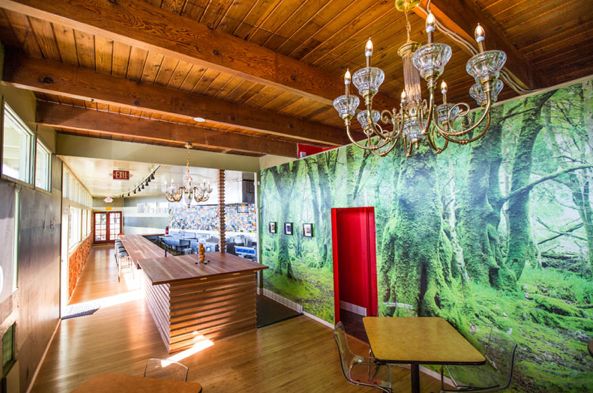
“Gonna have a wall of craft beers over there you can pour yourself,” he says. He’s pointing to the one-half of the impossibly long, thin restaurant (like a diner without pie or meth teeth). The wallpaper is a room-sized photograph of a lush, green moss jungle—jarringly interrupted by a stark, red door. It’s a beautiful contrast, and reminds me how the jungle in the TV show Lost always had the stupidest, modern crap in it.
“Chicken feet tacos,” he says as a paper plate drops.
“Duck liver tacos,” he says as another flops. These tacos are so good I want to lay with them.
Next comes a whole fried catfish, eyeballs and all. If it seems like Lukasiewicz is a white guy running a Japanese yakitori masquerading as a taco shop, that’s not entirely off base.
“You used to have to search out the cutting edge,” he says. “Now with the internet, any cook can see what they’re doing across the world. Which makes it hard for anyone to be more cutting edge than anyone else.”
This all seems like an art project rather than a business. That’s what his wife is for, Lukasiewicz says. She listens to his manic idea flow, measures the real cost versus the opportunity cost, and chooses whether she should encourage or thwart him.
But Bull Taco now has four locations—San Elijo, Oceanside, San Clemente and now Leucadia. They just signed a lease for a fourth above Prepkitchen in Del Mar, and are scouting a few other spots. They have a farm in south San Diego where they’re experimenting with the world’s hottest chile peppers.
That means Lukasiewicz’s creativity works. Today it looks like surf rat taco-yakitori. Tomorrow, it’ll look different.
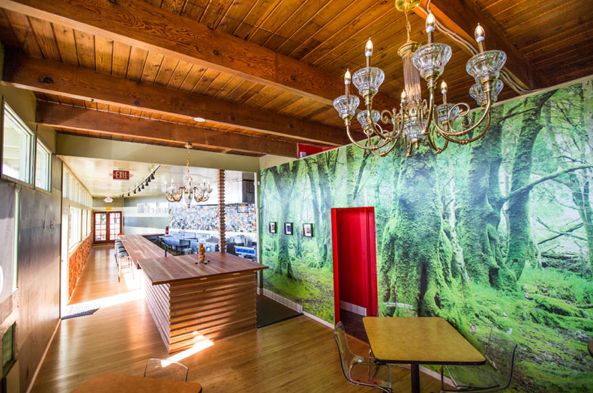
HELLO, THERE: Bull Taco Leucadia
Sam Wells

From celebrity pickleball tournaments to intimate dinner parties with your favorite Food Network chefs, here are all of the can’t-miss events going on Sept 30–Oct 4
Play is underrated. Somewhere along the way, someone decided it was something we should outgrow. That you A good song comes on, and they dance. A game appears, and they’re in. Someone hands them a melting ice cream cone, and somehow it’s the best part of the day.
Adults tend to need a reason. Or maybe just the right setting.
That’s part of what makes the Del Mar Wine & Food Festival feel different. Yes, the week revolves around food and wine, with celebrated chefs, winemakers, and restaurants drawing crowds from across the region. But what lingers afterward is the conversations that stretch a little longer than expected, the strangers who become dinner companions, the live music that pulls people out of their seats, and the rare chance to spend a few hours simply enjoying yourself without much of an agenda.
The Grand Tasting is the festival’s centerpiece, bringing thousands of guests together over two days for hundreds of bites and pours. But some of the week’s most memorable experiences happen on a smaller scale. In the days leading up to the main event, intimate dinners, chef collaborations, and guided tastings create opportunities for guests to interact more closely with the people behind the food and wine and with each other.
Here’s your guide to the 2026 Del Mar Wine & Food Festival happening September 30–October 4.

Start festival week the San Diego way: ocean views, Baja-inspired bites, and a drink in hand as the sun goes down. The Signature San Diego Opening Night Party at Monarch Ocean Pub sets the tone for the week ahead with a walk-around tasting experience celebrating the flavors that make this city impossible to replicate. It’s an evening of fresh coastal cuisine, bold Mexican flavors, Baja seafood, and plenty of local favorites—all served against one of Del Mar’s most iconic backdrops. Consider it your first official toast to the weekend ahead…

Wine and competition make an unexpectedly perfect pair. You can join Drew Brees and celebrity players at Barnes Tennis Center for a pickleball tournament benefiting Feeding San Diego, where the sidelines are just as exciting as the court. Grab a paddle, cheer from the sidelines, or simply enjoy a glass of wine while the action unfolds. The day blends friendly competition with an all-inclusive tasting experience.
Since year one, Del Mar Wine & Food Festival has partnered with Feeding San Diego to raise $100,000 in support of the organization’s mission to fight hunger across the region. Every serve, sip, and bite helps give back to the community that makes this festival possible.
Remember that pickleball paddle you swore you’d use? Time to put it to work.

This is essentially a passport to Spain with no airport required. Set among the lush grounds of Rancho Valencia, Rioja Uncorked celebrates one of Spain’s most iconic wine regions with an evening of exceptional pours and thoughtfully paired bites. Guests will sip their way through Rioja wines while enjoying a menu featuring everything from Hiramasa crudo and uni toast to duck rillette, birria mini tacos, Cardiff Crack tri-tip sandwiches, and a sweet finale from Karen Krasne of Extraordinary Desserts (date night plans, solved).

Justin Wine Dinner sounds simple: three chefs, one unforgettable table. But chefs Kaitlyn Weber (Estancia La Jolla), Buddha Lo (Top Chef), and Jackson Kalb (Top Chef) are taking you on a one-night-only culinary ride where three styles collide over a multi-course menu paired with exceptional pours from Justin Vineyards & Winery. Set in Estancia’s coastal estate, the evening unfolds course by course with pairings from Justin wines as each chef brings their own style to a menu focused on craft, connection, and a bit of friendly culinary overlap. It’s the kind of culinary conversation that only happens when very, very talented people cook together.

Isabella Dallas is a freelance writer for San Diego Magazine and the Arts and Culture Editor at The Daily Aztec in her final year at San Diego State University. She previously worked as an editorial intern for SDM, but when she’s not writing, you can find her trying the best coffee spots in SD, devouring the latest rom-coms, and indulging in anything and everything pop culture.
A new Southeast Asian eatery mixes traditional recipes with Southern California flair, featuring pad thai, curries, and Thai beef noodle soup
There are a few areas in San Diego where people go to get good, really good Asian food in San Diego—Convoy District or Mira Mesa for a plethora of Pan-Asian delights, Little Saigon in City Heights for sensational Southeast Asian fare, and even Westfield UTC for world-class dumplings, fancy Japanese food, or an award-winning bowl of ramen.
But Leucadia? It hasn’t topped the list—yet. Stella Bayphouthongkham hopes to change that with a new Lao-Thai restaurant called Coast Thai-Way, slated to open late summer at 698 N. Coast Highway 101.
The space that formerly housed the short-lived second take of A Little Moore Cafe is Bayphouthongkham’s second restaurant, after she and her business partners took over Mekong Cuisine Lao & Thai on Convoy Street four years ago.
“Life was going too good,” she laughs. “So I was like, ‘Why don’t we throw it all in again and start another restaurant?’”

Coast Thai-Way’s menu centers around the idea of remixing Bayphouthongkham’s mother’s recipes from Laos and making them approachable for the coastal community by using Southern California ingredients, like non-GMO, organic, seasonal produce whenever possible, and meats like pasture-raised chicken and grass-fed or grass-finished beef. Everything at Mekong and Coast Thai-Way is cooked in non-GMO avocado oil as well, she explains, and with the new restaurant being so close to the ocean, she plans to focus on more seafood-centric dishes for a different spin.
Lao people first came to San Diego en masse 50 years ago in the aftermath of the Vietnam War, and Bayphouthongkham herself emigrated from Laos 36 years ago. “They call us ‘The 1.5 Generation,’ where we came when we’re really little, but this is all we know,” she says. Since then, she’s seen people outside the Lao community start to embrace the cuisine, but there is still plenty of opportunity to educate.
She’ll start off easy, by offering “familiar” dishes like pad thai and various curries. But Coast Thai-Way will also feature nam khao tod (crispy rice salad), khao soi (Northern Thai curry noodle soup), and a Thai beef noodle soup—probably without the traditional pork blood, she laughs. It’ll also offer matcha as a hat tip to the space’s former life as a cafe, plus local beer and natural wines to (hopefully) surprise some guests with how well the cuisine pairs with different beverages. And in low-key Leucadia, she thinks people will be pleasantly surprised.
“This food, it doesn’t have to be just quick takeout,” she promises. “People can come and enjoy it in a way that they never thought they could… I love the idea of people coming in and expecting one thing and getting another.”
Coast Thai-Way will open at 698 N. Coast Highway 101 in Leucadia by early summer 2026. Soft opening hours will be Wednesday through Monday, 11 a.m. to 3 p.m. for lunch and 5 p.m. to 9 p.m. for dinner (closed Tuesdays).

Listen Now: The Latest in San Diego’s Food and Drink Scene
Have breaking news, exciting scoops, or great stories about new San Diego restaurants or the city’s food scene? Send your pitches to [email protected].
Beth Demmon is an award-winning writer and podcaster whose work regularly appears in national outlets and San Diego Magazine. Her first book, The Beer Lover's Guide to Cider, is now available. Find out more on bethdemmon.com.
Gilbert Frank and Salvatore Ercolano of Iconic Eateries Group plan to preserve, but improve the iconic Del Mar delicatessen
Some people collect vintage cars. Others, Pokémon cards. For a while in the ’90s, I had a pretty enviable Lisa Frank sticker collection, and I’m sure there’s a stack of dusty POGs somewhere in my parents’ basement.
But Gilbert Frank and Salvatore Ercolano collect restaurants. Specifically, iconic restaurants across San Diego, like The Butcher Shop, West End Bar & Kitchen, The Godfather Restaurant, and Studio Diner. And come January 2, 2026, they’ll add another luminary to their Iconic Eateries Group portfolio as the new owners of Milton’s Delicatessen in Del Mar.
Anyone who’s either from San Diego, has ever been to the Del Mar Fairgrounds, or sat in traffic on I-5 near Via de la Valle has, at the very least, caught a glimpse of the cream-colored Milton’s restaurant just east of the freeway. And, if you’re like Frank, you very well may have been eating there since elementary school.

Barry Robbins and David Levy opened Milton’s as a traditional Jewish delicatessen and bakery in 1995, serving classics like matzo ball soup, piled-high pastrami sandwiches, hot corned beef, bagels with lox, and what Frank calls the best challah bread in town. (Fun fact: Milton’s is also behind the legendary Milton’s brand of bread, crackers, and chips—what food critic Troy Johnson credits as the snacks that got him through the pandemic.)
Levy retired a few years back, and Robbins, who’s 70, started thinking about what was next. Something must have been in the air, because he didn’t call Frank. Frank called him. “I just kind of had a hunch,” he says.
He and Ercolano’s business model centers around acquiring well-known and beloved restaurants whose owners are ready to retire, but perhaps don’t have a succession plan in place to keep it going—precisely the situation at Milton’s. Robbins is staying on as a silent minority owner, but for all intents and purposes, will be out of the day-to-day of the business once the handoff is complete. And after 30 years, handing off the keys to the kingdom he and Levy built is a bittersweet moment.

“When I hear someone else address, ‘Is the owner around?’ and then someone else comes out, that’s gonna sting a little bit,” he admits. “[But] the other side of me is excited, because of the two guys, Gil and Sal. I feel like they’re the right guys.”
Frank says he and Ercolano have no intention of doing anything but rejuvenating the menu. “Our goal for the menu to stay the same, only improve,” he promises. “We want to take something that’s already working, but you can always strive to do better.” Plus, he can’t let down the legends.
“I have the utmost amount of respect for Barry and David. I truly look up to them as an inspiration,” he says. “We have exciting things planned for the legacy that is Milton’s.”
Milton’s Delicatessen is located at 2660 Via De La Valle, Del Mar.
Beth Demmon is an award-winning writer and podcaster whose work regularly appears in national outlets and San Diego Magazine. Her first book, The Beer Lover's Guide to Cider, is now available. Find out more on bethdemmon.com.
Behind every beautiful space is a thoughtful process, and ASID San Diego is helping homeowners understand the value of professional design.
A perfectly designed home rarely happens by accident. Those kitchens that feel effortless and rooms that seem to tell a story the second you walk in? They’re usually the work of someone who knows exactly what they’re doing.
It’s knowing which ideas will actually work, which materials will hold up over time, and how to turn a collection of choices into a space that feels intentional. That’s where a professional interior designer comes in.
For the American Society of Interior Designers (ASID) California San Diego Chapter, the goal is to help people see interior design as more than just the finished look. Behind every well-designed space is a process built on technical expertise. Designers are educated in everything from professional software and construction details to building codes, space planning, materials, and functionality.

“People don’t always realize how much goes on behind the scenes,” Kirsten Recce , current president of the ASID California San Diego Chapter, says. “Our designers are not just doing furniture placement and color selection and picking out new fluffy pillows. That’s not what they’re trained for.”
ASID members bring formal education, continued learning, and industry knowledge to their projects, helping create spaces that are not only beautiful, but designed to work. A paint color that changes completely depending on the lighting. A material that looks beautiful in a showroom but doesn’t make sense for everyday life. A layout that photographs well but doesn’t function for the people living there. These are the details where professional guidance can make all the difference.
Still, one of the biggest misconceptions about hiring an interior designer is that it’s reserved for massive renovations, luxury homes, or people who already know exactly what they want. The process can feel intimidating. Where do you begin? Is a designer worth the investment? What if you only need help with one room?
ASID’s answer: start with one hour.
ASID’s Spruce Up events break down one of the biggest barriers between homeowners and professional design: knowing where to begin. Held twice a year, the community program gives homeowners the chance to work directly with an ASID designer through a one-hour, $125 consultation in their own home. Whether you’re looking for advice on furniture placement, window treatments, kitchen and bath updates, remodeling ideas, vacation rentals, color selections or something else entirely, the upcoming September 2026 event offers an approachable way to get expert guidance before committing to a full project. Signups are open through Sept. 7, with consultations taking place Sept. 21 through Oct. 31. Proceeds benefit ASID San Diego’s educational and community programs. Register here!

“It’s a great opportunity for people who are in that exploratory phase,” Recce says. “Maybe they’re not sure they want to hire an interior designer yet, or they think it sounds daunting or expensive. This gives them a chance to discover what working with a designer is actually like.”
Design is personal. A good designer isn’t just creating a beautiful room; they’re helping create a space that fits the way someone lives.
“We’re a resource to all of San Diego County,” Recce says. “It doesn’t cost anything to pick up the phone and call and ask. We’ll answer.”
Follow ASID San Diego on Instagram, LinkedIn, and Facebook for updates on upcoming events, or connect with the chapter directly at [email protected] or 619-548-8847.
The specialty sourdough bakery will expand to more pastries, sandwiches, and coffee in its first brick-and-mortar space, opening in 2026
Stop me if you’ve heard this one before: person gets laid off during the pandemic. Bored at home, they turn to baking. A passing interest turns into a passion, and before you know it, they’re launching a full-fledged bakery.
Yes, that’s the story of how Mi Pan Bakery started, and yes, 10,000 other aspirational bakeries began the exact same way. But the difference is that Mi Pan’s baker and owner Alejandro Gomez didn’t stop at making a few loaves of sourdough for his friends and family.
He’s spent the last five years building a beloved local business whose bread and pastries are now sought out at three different farmers markets, was nominated for both Best Bread and Best Farmers Market Food Vendor in San Diego Magazine’s Best of San Diego Reader’s Choice Awards for 2025, and only decided to finally move from baking in his garage to their first brick-and-mortar location in order to keep up with sheer demand.
“I talked to my wife, and I said ‘Listen, if we’re not going to move out of the garage, I don’t think I can keep doing this, because I’m baking pretty much 10 to 12 hours a day,’” Gomez laughs. “I think it’s time.”
After a year of looking for the right location—where Gomez and his wife and business partner Alejandra Ruelas could open Mi Pan with enough space for an expanded commercial kitchen, an area for hosting workshops, and an onsite retail store—they found it. Mi Pan Bakery’s first brick-and-mortar location will open in the first half of 2026 at 6435 Mission Gorge Road in Grantville.
Once open, Mi Pan will still remain at all of the farmers markets: Tuesdays in Pacific Beach, Saturdays in Little Italy, and Sundays in Chula Vista. They hope to add one more to their rotation once they have the ability to increase production. Gomez says he also plans to launch a wholesale side of the bakery, something he says multiple businesses have approached him about, but he hasn’t been able to take on with his small operation. And then, maybe one day, maybe even a second location in North County.
Gomez also didn’t work as a baker previously, unlike other pandemic-launched operations like Companion Bread Company and Relic Bakery. But in the past five years, he’s taught himself the craft and traveled across the world to places like France, Spain, and Mexico City to both take and teach various baking classes, something he also plans to offer at the new space.
Mi Pan’s menu will remain small, offering its signature sourdough and pastries—especially medialunas, an Argentinian pastry that’s a cross between a flaky croissant and soft brioche with a light glaze on top. “If you haven’t tried it, you should,” he promises. “They’re amazing.” They’ll also add sandwiches using its own bread, as well as coffee. (Most of this will be intended to-go, but it’ll have a few tables onsite if people wish to enjoy their goodies right away.) But above all, Gomez says what they’re building is meant to last, modeled after the family-owned neighborhood cafes of his native Mexico and across Europe.
“It’s not about being the kind of trendy bakery that’s hyped for six, seven months, or a year, and then after that, they disappear,” he says. “We want an atmosphere that feels like home, and then when you come back… you’re greeted by name. I think that’s what we want—a warm, reliable, everyday bakery where the community feels welcome and you always find exceptional bread and pastries.”
Mi Pan Bakery will open at 6435 Mission Gorge Road in Grantville in mid-2026.
Beth Demmon is an award-winning writer and podcaster whose work regularly appears in national outlets and San Diego Magazine. Her first book, The Beer Lover's Guide to Cider, is now available. Find out more on bethdemmon.com.
The resort's magic trick is the way it gives guests a taste of true luxury—while still feeling like home
I moved to San Diego in 2009, about two years after the Grand Del Mar opened its doors. Back then, I was just starting my writing career while learning about this new city, exploring its beaches, discovering that tacos are a lifestyle more than just a meal, and finding that casual was the name of the game when it came to fashion.
Even back then, though, the Grand was on everyone’s lips. Tucked away in the Los Peñasquitos Canyon Preserve, it showed up during a time when modern-minimalism was taking center stage in hotel design. Instead of leaning into ever-shifting trends, though, the property’s aesthetic leaned more “old money”—quiet, classy, understated. It was warm when the industry was going cool.

The first time I stayed at the property, I remember feeling like an imposter of the best kind. The bathroom featured a soaking tub with a voyeuristic window above it opening up into the bedroom—I’d never seen anything like it. My patio overlooked lush green gardens and foliage (a rarity in many parts of San Diego). I spent the mornings wrapped in the room’s plush robe, drinking coffee in the sun and wondering if the other guests also felt lucky to be there.

When I eventually landed a full-time writing gig, travel became my beat. One year, I was invited to Addison, the resort’s now three-Michelin-starred restaurant, during the holiday season to enjoy a meal by chef William Bradley. At the time, it was already considered one of the best restaurants in the county, though its stars were a few years away. Through 10 courses, I savored every bite and spoke with the chef about his process, feeling more at home than I did just a couple of years earlier.
It’s been 16 years since moving to San Diego, and writing about four- and five-star hotels has become as natural to me as telling visitors where to go for the most flavorful birria (Ed Fernandez Restaurant Birrieria, Tuétano Taqueria). One thing has remained the same, though: The Fairmont Grand Del Mar (rebranded in 2015) is still the “it” hotel.

Under its new brand, the property leans in even more to its Mediterranean aesthetics which previously featured Addison Mizner–inspired takes on Spanish and Italian palazzos. Its updated look boasts pops of deep burgundy and gold accents paired with detailed rococo and neo-baroque furnishings. You could almost imagine you’re somewhere along the French Riviera.
Recently, I needed a quick weekend staycation, so I returned to the Grand, but this time, I brought over a decade of real-life experience in the luxury travel world and a masthead title showcasing a new milestone in my career.

Last May, the hotel also underwent its own turning point: A multimillion revamp which included renovations to its pool areas and clubhouse. The spa got a redesign with improvements to its treatment rooms and relaxation areas.
The latter was the main reason for my stay—a wellness escape to unwind and reset before a few big events hit my calendar.

The 60-minute Contrast Therapy treatment utilizes alternating hot and cold water applications after a deep-tissue massage to help improve circulation and reduce inflammation. Wanting to try something new, I booked the experience. Inside the room, a massage table sat in a large, bathroom-like space with drains on the flooring and a vichy shower hanging above the table.
Instead of reclining on a heated massage table under blankets, guests lie flat on a plastic surface dressed with towels. Once the full-body massage is complete, your therapist places a single towel around your glutes before spraying warm water down across the length of your body. Quick bursts of cold water follow, and the therapist interchanges between heat and cool until the treatment is complete.
I left the treatment room wet and a little chilly, a reminder that I am very temperature-averse—for that reason, I’m not sure I’d try it again. But if your weekly workout routine includes a few cold plunges along the way, you should check it out, especially if you’re looking to reduce any muscle soreness.

Of course, spa treatments are just part of the wellness experience at the resort. Across its 400 acres, the Fairmont Grand Del Mar also features a Tom Fazio–designed championship golf course; four pools, including an adults-only area; an equestrian center; and five dining concepts, Addison among them. Whether playing 18 holes or enjoying farm-to-table dishes is your type of mind-body reset, there are plenty of ways to let yourself relax here.
As dinner time neared, I headed to Amaya. Executive chef Bryn McArthur arrived at the restaurant with 23 years of experience in 2017. He worked his way up the ranks to nab his current position in 2021. His menu features California cuisine highlighting local produce from the region’s farms, including J.R. Organics, Sage Hill Ranch Gardens, and Weiser Family Farms.

The must-get dish? The steak tartare starter—it’s served with creamy avocado, beef tallow dressing, and salsa macha; garnished with chive blossom and fresh chives; and dished up alongside country bread.
“Our inspiration for this dish was our sous chef, Rudy Diaz, and his salsa macha. The salsa macha is a kitchen favorite during family meals,” McArthur says. “When developing a classic French dish like steak tartare, we began experimenting with salsa macha as both a texture and flavor pop. The avocado balanced the dish and created a color contrast that we loved.”

The team masters this dish, possibly taking the top spot for the best I’ve had during my travels. Over a decade of checking out hotel restaurants, one thing you learn is that not all properties will put as much care into their dining concepts as they do their rooms and amenities. But here, the food is just as much of a consideration as any other part of the resort.
As the trip ended that weekend, I reflected on my time at the hotel and found that being at the Fairmont Grand Del Mar felt like home, a reminder of how far I’ve come since those early days as a fledgling journalist. We’ve evolved together—both new to the area back then and hoping that the city would embrace us as we found our path.
Nicolle Monico is an award-winning writer and the director of creative projects, digital editor for San Diego Magazine with more than 19 years of experience in media including Outside Run, JustLuxe and The San Francisco Chronicle.
Circadian Sleep Clinic Helps Reset the Body Clock
Nearly everyone experiences a sleepless night once in a while. But for those with a circadian sleep disorder, being well-rested can feel out of reach. A circadian sleep disorder occurs when a person’s internal clock doesn’t align with their desired or socially required sleep schedule. This can significantly impact quality of life, mental health and physical well-being. Scripps Circadian Sleep Disorders Clinic, launched in 2019, was the first of its kind in the state. Its specialists diagnose and treat conditions like delayed sleep phase disorder, shift work sleep disorder and non-24-hour sleep-wake disorder. Many patients have spent years—or even decade —thinking there was no hope for their sleep behavior. A solution can be life-changing. Read more about the Scripps Circadian Sleep Disorders Clinic here.
For more nutrition, wellness, and healthy living tips, sign up for the San Diego Health newsletter here.