Ready to know more about San Diego?

Subscribe
Features MAY 31, 2017

This UCSD Professor Is Using Science to Make Cheese Taste Better

Assistant professor Rachel Dutton is elevating cheese in the unlikeliest of places—a science lab

This UCSD Professor Is Using Science to Make Cheese Taste Better
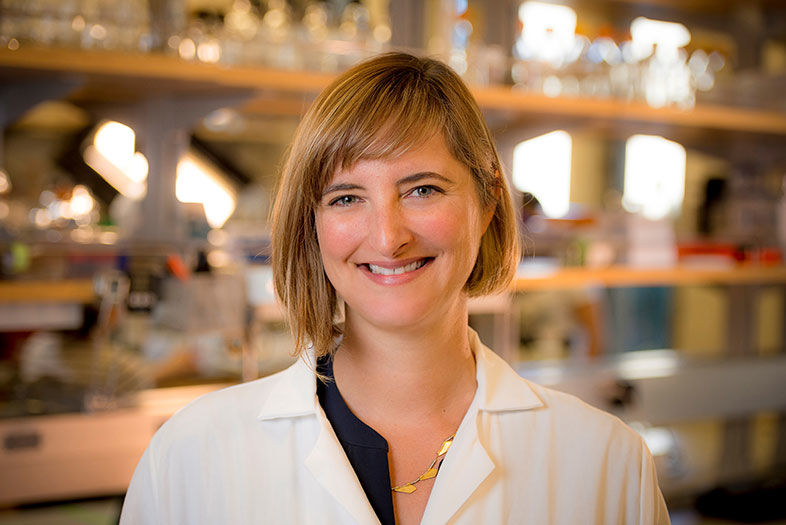
UC San Diego assistant professor Rachel Dutton in her lab. | Photo: Erik Jepsen/UC San Diego

In competitions like the World Cheese Awards, cheese is judged for qualities like aroma, flavor, texture, and appearance. Is the rind cracked? Does the cheese smell fruity, or does it have unpleasant hints of barnyard? And while most people look to the popular mantra “farm to table” to rate their fromage, they’re missing one valuable piece of the equation: science.

It turns out that it’s not so much the milk that makes cheese smell and taste the way it does—it’s the microscopic communities of bacteria and fungi that flourish in the milk and on the cheese’s growing rind that are responsible for creating the floral, buttery taste we like so much.
This UCSD Professor Is Using Science to Make Cheese Taste Better

This UCSD Professor Is Using Science to Make Cheese Taste Better

Rachel Dutton

And at the forefront of achieving that ultimate mouthfeel is Rachel Dutton, an assistant professor in UC San Diego’s Division of Biological Sciences.

Dutton’s research on microorganisms enables her to tell a cheesemaker what’s needed to achieve a certain aroma, a desirable mouthfeel, or a specific flavor profile. Her research has the potential to directly impact the quality of the artisanal cheeses we crave.

The idea sprouted several years ago when Dutton was studying the salt marshes of Cape Cod. One day, a generous colleague shared a tasty piece of Tomme de Savoie. While she nibbled, its textured rind caught her eye. The layered structure reminded her of what she’d been studying in the salt marshes, so she kept a piece to see if she could isolate some of its microbes in her lab.

Cheese, it turns out, has a simple ecosystem. Instead of thousands of microscopic species thriving and adapting the way they do in a salt marsh or a scoop of garden soil, a bloomy, smelly cheese rind might contain only a dozen. Diverse, but not overly so.
This UCSD Professor Is Using Science to Make Cheese Taste Better

This UCSD Professor Is Using Science to Make Cheese Taste Better

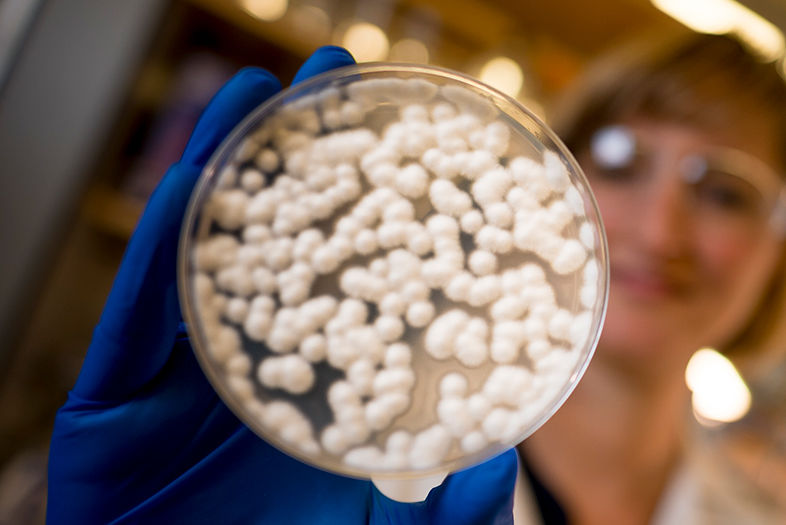
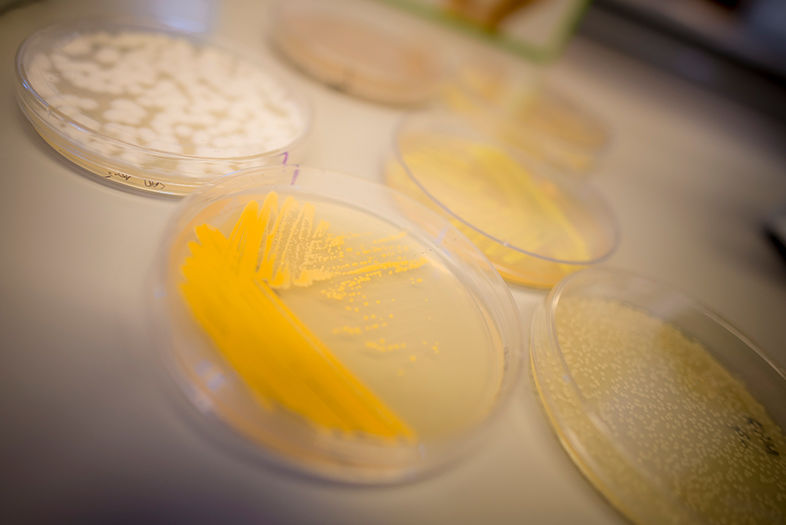
Microbial cultures in Dutton’s lab | Photo: Erik Jepsen/UC San Diego

“With cheese, we can grow every single organism on its own in the lab and start to understand how microbial communities actually form,” Dutton says. “We can combine different types of species and see how they behave when they’re together versus apart, and we can follow community development over time.”

It also means that microbial DNA from cheese can be sequenced. Backed with five years of funding and her own lab at Harvard, Dutton and colleague Dr. Benjamin Wolfe set out to map the diversity of organisms across more than 130 cheeses from 10 different countries, publishing their findings in the journal Cell in 2014.

“We were able to get a basic understanding of how these communities form and change by going to cheese caves, taking samples over time, and sequencing them,” Dutton explains. “That laid the foundation of the work that is now going on in my lab here at UC San Diego.”

Dutton’s work has gained widespread recognition, turning her into a sensation among the nation’s artisanal cheese community, and a sought-after darling of the food community. It wasn’t long before she showed up on the radar of notable food science writer Harold McGee, fermentation guru Sandor Katz, and famed chef David Chang, who was experimenting with fermentation projects at his Momofuku restaurant in New York City.

At the time, Dan Felder—now cofounder and chief information officer of Pilot R+D, a culinary science company based in Northern California—was working in Chang’s research and development kitchen. Felder says they were seeking a process that would mimick the making of katsuobushi (Japanese fermented bonito) with pork tenderloin.

“There’s a lot of overfishing of bonito and it’s quite expensive,” Felder says. “We felt like we could mimic the core parts of the process. As we got deeper into the project, we were getting into an area that we didn’t know enough about.” That project led them to Dutton, who bridged the gap between the culinary and scientific worlds.
This UCSD Professor Is Using Science to Make Cheese Taste Better

This UCSD Professor Is Using Science to Make Cheese Taste Better

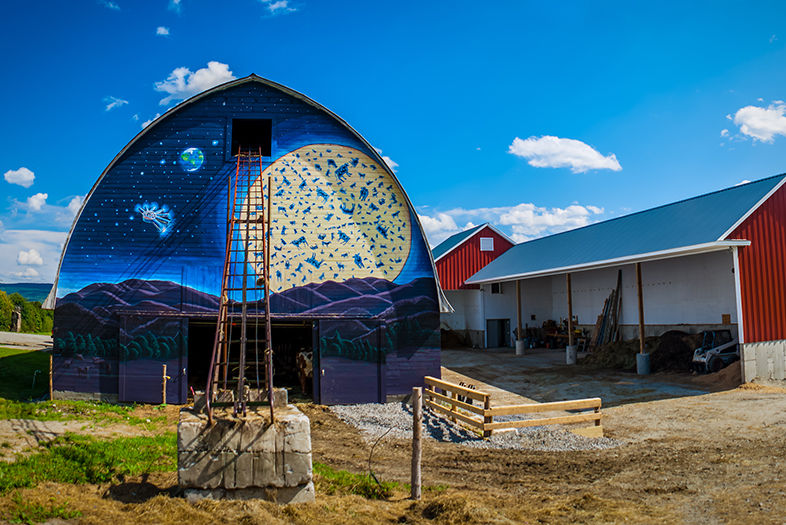
Jasper Hill Farm in Vermont, where Dutton researched the cheesemaking process

“Rachel loves food and is intensely curious. It’s not solely an academic passion for her,” he adds.

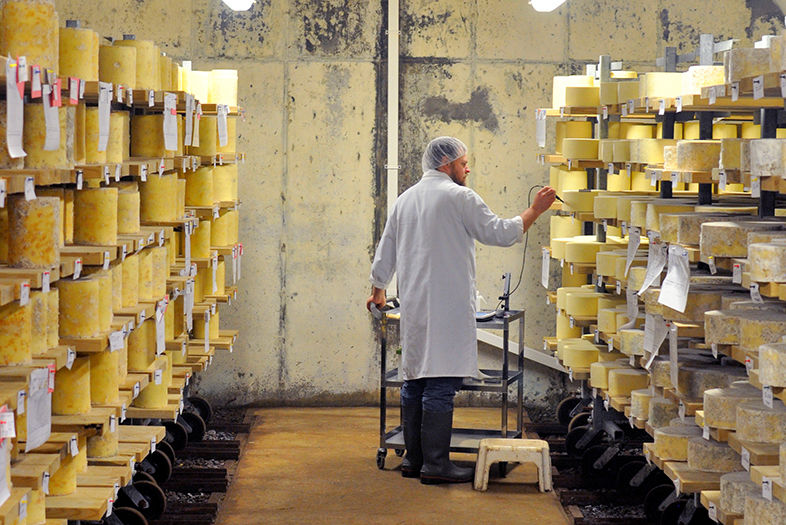
Big-name chefs aside, Dutton’s rapport with the food community is strongest among cheesemakers. Before starting her Harvard lab, Dutton spent three months working in the creamery of Vermont’s Jasper Hill Farm forging a deep friendship with cheesemaker Mateo Kehler, while also gaining experience and a solid understanding of the cheesemaking process. Luckily for Dutton, that hard work also included access to Jasper Hill’s seven vaulted cellars where a broad range of cheeses are ripened—a veritable zoo for an eager microbiologist.

“Rachel came to us with this incredible opportunity to look deeply at our cheese in a way that I don’t think many other cheesemakers have,” Kehler says. “Our Bayley Hazen Blue is the most deeply studied product out there, considering the amount of sampling and full genome sequences at multiple stages and multiple batches.”

Kehler ended up with an incredible view of a world that cheesemakers have intuited for centuries, but had never gotten to see firsthand. It was an opportunity to understand why some batches of cheese express an amazing complexity and diversity of flavor, while others fall a little flat.

The answer—which has to do with individual microbes that behave differently when they’re in a community—would have remained elusive if it weren’t for the connection between the microbiologist and cheesemaker.

It didn’t take long before Kehler was a believer in Dutton’s work and decided to build a lab of his own, complete with two full-time staff microbiologists. Today he can extract DNA and get a partial sequence of his cheeses for around $5 a sample, and he’s now adapting his business to respond to what he’s finding in the lab.
This UCSD Professor Is Using Science to Make Cheese Taste Better

This UCSD Professor Is Using Science to Make Cheese Taste Better

Monitoring the cheese cellar at Jasper Hill Farm

“We changed the way we feed the cows—eliminating fermented feed—and it changed the microbiology of the milk, because it altered the microbiology of the animal environment. We were able to measure that,” he says.

Thanks to the world Dutton’s science opened up, Kehler is isolating native cultures and using microbes indigenous to his own farm to increase the potential flavor diversity of the cheeses being made there, instead of buying a limited set of starter cultures from companies like DuPont or Cargill.

“Microbiologists are the new rock stars of the food world,” Kehler says. “I don’t think Rachel understood that people were going to be so interested in what she was working on.”

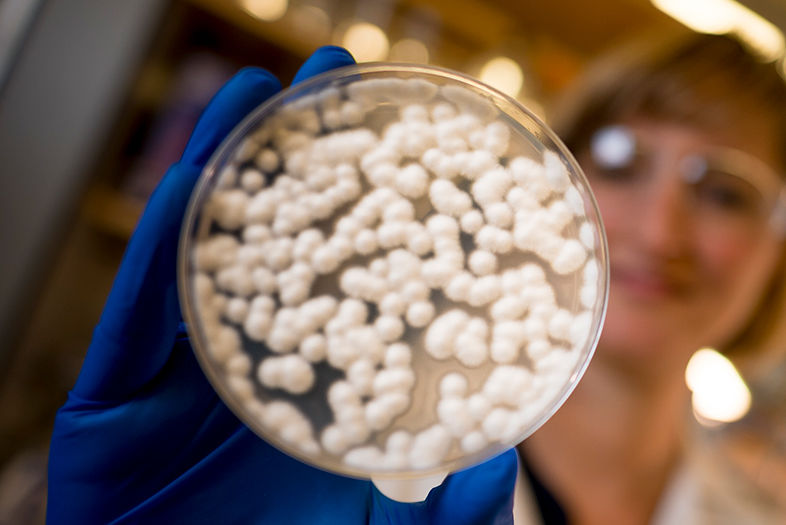
With only a year under her belt at UC San Diego, her lab is already running full tilt. Six freezers are loaded with cheese samples; cabinets are full of beakers, petri dishes, and science equipment; and a handful of white-coated PhD students are hard at work.

Now she’s got her eye on local beer makers and has already gained a following among the city’s fermenters. At February’s Fermentation Festival, Dutton spoke with microbiome expert Rob Knight of the American Gut Project, packing the tent with close to 300 people.

She had them from the get-go: “Who likes cheese?”

Say Cheese!

Venissimo will host a Science of Cheese tasting at Liberty Station’s Moniker General on July 19.

$55

venissimocheese

What’s in Our Favorite Cheeses?

The words may get a bad rap, but plenty of bacteria and fungi are helpful to us. Certain strains and microbes give the cheeses we love their distinct flavors.

“The more I learn, the more I’m inspired to explore. Every week I see a handful of cheeses that I’ve never seen or tasted,” says Robert Graff, a specialist at Venissimo Cheese. “The diversity of flavors and textures is staggering, and the potential for cheesemakers to create new offerings is limitless. This is due to the biodiversity of individual cheeses, as well as the environments from which they come.”

To satisfy our own curiosity—and to wow people at our next wine and cheese party—we asked Graff to give us the lowdown on what’s inside our favorite fromages.

P. roqueforti fungus gives Roquefort and Gorgonzola their pungent aromas.

P. camemberti gives Camembert the white mold on its rind.

Propionibacterium is the bacteria responsible for the air pockets (eyes) in Swiss/Alpine cheese. These cheeses are nutty.

Brevibacterium linens are the bacteria in washed rind (stinky) cheeses such as Limburger and Muenster. It’s responsible for turning the rind a reddish orangey color and makes them smell like gym socks, but taste wonderful. These cheeses are meaty, brothy, and pungent.

Geotrichum candidum is a white mold used in a number of cheeses but is probably most famous for being responsible for the ‘brainy’ rind on young goat cheeses. These cheeses are tangy, sour, and bright.
This UCSD Professor Is Using Science to Make Cheese Taste Better

UC San Diego assistant professor Rachel Dutton in her lab. | Photo: Erik Jepsen/UC San Diego

Subscribe to our newsletters

Select Options

By subscribing you confirm that you agree with our Terms and Conditions and Privacy Policy.

Everything SD JUNE 16, 2026

Teenage Car Theft Drove Me into NASCAR’s Arms

As NASCAR lands in San Diego this weekend, a recently burgled dad is irregularly excited
Teenage Car Theft Drove Me into NASCAR’s Arms
Courtesy of NASCAR San Diego
My 15-year-old daughter tried to steal our car this week, so I’m ready to become a NASCAR dad. It would be appropriate discipline. We just relocated to a very nice suburb within walking distance of her high school. The suburbs are like living in a Tesla commercial. I am pretty far from the wealthiest dad in this neighborhood (I am, in fact, the least wealthy dad in this ’hood), more than a few engineering degrees short of being in the running.

I’m fairly certain watching NASCAR is a violation of our HOA and a violation of my daughter’s emotional HOA. But NASCAR hits San Diego this weekend and I have a fever I’ve never felt before. I want to watch 111 drivers do dangerous things in cars and trucks on an active military base in the ocean. Since my lifelong exposure to NASCAR is limited to Talladega Nights and every single iteration of the movie Cars, I can only base my plan of attack on oafish stereotypes.
So while other neighbor dads are sizing bubble jackets for their golf simulators, I’m gonna grow a Ricky Bobby, run the extension cord for the TV out into the carport we share with six other condos, fill a cooler with a proper 80-20 split of Hamm’s and Mountain Dew, treat a lawn chair like an ADU, and spend a few hours yelling ohsheeeit as if it’s a single, nine-syllable word.


The quality parents in our neighborhood seem to be able to sense anytime a vehicle breaches the 6 MPH threshold, so I should gather a crowd pretty fast. They may come over with strongly worded emails in their hearts, but one glimpse of  Shane van Gisbergen and hometown hero Jimmy Johnson guzzling the last remaining drops of gasoline on the planet in a dazzling display of carmanship—they’ll join my NASCAR pop-up party.

By the time my daughter brings her friends over, we’ll have a real welcoming committee. I’ll set a special lawn chair out for the nice young boy who bought her flowers on her birthday. Have a Dew and talk to me about yourself and please list out your morals alphabetically, kid, I’ll say.

Because, like I said, my daughter tried to steal my car.

She wasn’t going to Mexico. But while Claire and I were off doing businessy stuff to afford the teen’s skincare rituals, she and a friend decided to teach themselves stick shift.  She’s never driven a stick before. I’m not saying she has, but if she has driven a vehicle at all—it would have been done in a remote, abandoned parking lot where the only possible thing she could destroy was the concept of driving itself.

But a couple TikTok videos later, she and her friends felt a certain level of mastery had been achieved, and they gave it a go. They backed our VW Bug out of the garage with a series of stalls and transmission seizures, and managed to get it into the carport, attempting to do “donuts.” That’s when I got a call from a resident, who had taken an active interest in this experiment.

Which got me wondering about the power and might of vehicles. Turns out, even at carport speeds there exists a bit of potential fireworks. A garage door could become not a garage door anymore. At 145 MPH on Naval Base Coronado this weekend (don’t worry, they slow down to 100 MPH for turns), NASCAR drivers are essentially doorbell ditching gods. I didn’t register the temperature after my daughter’s trial run, but the track at NASCAR races usually hits a cool 130-150 degrees, enough to lightly sear some Nikes (the tires themselves hover in the 200 degree range).

And that is at least part of our fascination with NASCAR (the other fascination is the legendary pit parties, which either set humanity back a few evolutionary links, or advance it by the same amount of links). These drivers take something us adults do every day in a very efficient, boring way and take it to its extreme impulse. Grace and precision at the thunderous edge of shit going terribly wrong. Most of us have, upon seeing the price of California gas, wanted to pile our worldly possessions into a Honda Pilot and see how fast we could make it to our new home in Vegas. So NASCAR drivers are acting on our own wildest impulse.

Troy Johnson

About Troy Johnson

Troy Johnson is the magazine’s award-winning food writer and humorist, and a long-standing expert on Food Network. His work has been featured on NatGeo, Travel Channel, NPR, and in Food Matters, a textbook of the best American food writing.

Everything SD JUNE 15, 2026

Sunday Golf Is Making the Game Lighter

In a sport obsessed with prestige, a San Diego–born golf brand is betting on something more fun and less fussy

Sunday Golf Is Making the Game Lighter
Courtesy of Sunday Golf

Music drifts across the fairway. Someone’s in flip flops. The Pacific flashes in the distance. Sun peeks onto shoulders through the palm trees. It’s spring, technically, but the air reads suspiciously like summer. At the par-3 course at Liberty Station, the longest hole barely stretches past 120 yards, and no one looks particularly interested in becoming the next PGA legend.

This is where Sunday Golf was born.

“I got dragged to a par-3 course in 2019 —The Loma Club—and it was way more my jam,” says Ronan Galvin, CEO and co-founder of Sunday Golf, a company that makes lightweight golf bags for players who’d rather carry less and laugh more. “It was a lot different than the stereotypical ideas you have about golf where it’s kind of long, uptight, and exclusive.”

Galvin spent over a decade in the golf industry working in product development, sourcing and manufacturing. But he didn’t grow up swinging clubs. Basketball and football were more his speed. What clicked for him was a simpler, more relaxed kind of play: shorter rounds and weekend games built for fun rather than formality. The kind of golf that resonated for him felt accessible, effortless, and surprisingly his lifestyle.

Courtesy of Sunday Golf

He noticed something else, too.

On a course where five clubs do the job, players were still lugging 14. So Galvin built something smaller. Lighter. A bag designed specifically for par-3 rounds, the Loma Bag is sleek, functional, and refreshingly unfussy. It’s practical minimalism in a sport known for excess.

Sunday Golf was slated to launch in January 2020. Then, COVID hit. Shipments stalled; lost at sea. The future felt shaky. But the series of catastrophes for the young company turned out to be anything but: By the time inventory arrived that August, golf had become one of the few activities people could safely do.

“It introduced and brought so many people back to the game,” Galvin says. “It created a habit for a lot of people, which is a big reason golf is on its growth trajectory.” 

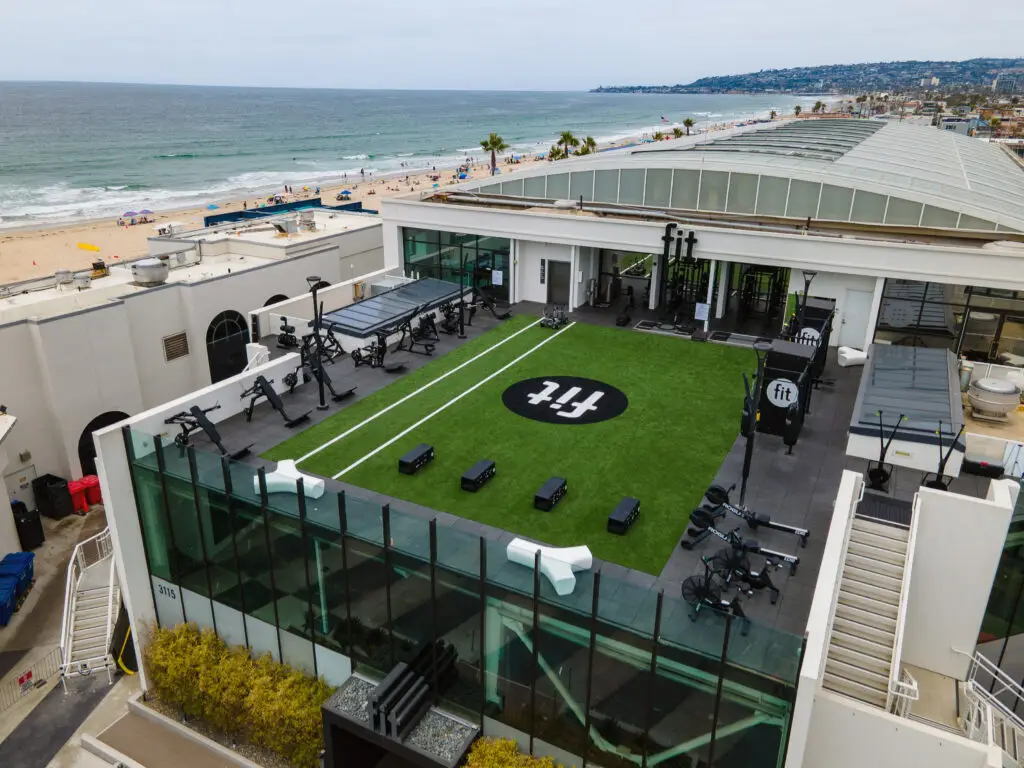
San Diego golf company TaylorMade golf in Carlsbad featuring The Kingdom golf club fitting and production facility
It turns out Americans can’t get enough of golf. Forty-eight million of them swung clubs last year, a 41 percent jump since 2019, and the National Golf Foundation says the total could top 50 million by the end of 2026.

The brand rode this unlikely momentum. Since 2021, Sunday Golf has expanded into larger lightweight bags and continues evolving from there. A major reason for the company’s success is its approachability, a value so central that it’s literally written on the office walls in the form of the company’s guiding mission: “Get 500,000 golfers having more fun by 2027.” This goal is measured, fittingly, by golf bags sold. 

Sunday Golf has already passed 300,000 bags sold.

But the numbers aren’t the point.

Courtesy of Sunday Golf

“To remind the world that life is meant to be enjoyed,” Galvin says of the brand’s why. In an era dominated by screens, golf offers something analog. “People are outside, touching grass with their friends. A golf bag is a golf bag, but our products are vehicles to help support that.”

Unlike legacy golf giants promising proximity to Rory McIlroy-level greatness, Sunday Golf leans into what Galvin jokingly calls “diet golf” or “golf light”—weekend rounds, driving range sessions, company scrambles. The bags are built for the casual golfer, and the fit feels obvious.

That philosophy resonates across Southern California, where year-round sunshine means golf courses never really hibernate for winter. As Galvin puts it, “the laid-back lifestyle of San Diego kind of seeps into everyone’s veins.”
Sometimes the validation arrives via email: a 76-year-old customer is able to walk the course again because their golf bag is lighter. Parents are able to take their children out with Sunday Golf’s kids line.

For Galvin, that’s the real win. Not perfection. Not prestige. Just more people outside, enjoying themselves. In San Diego, that might be the most natural mission of all.

Isabella Dallas is a freelance writer for San Diego Magazine and the Arts and Culture Editor at The Daily Aztec in her final year at San Diego State University. She previously worked as an editorial intern for SDM, but when she’s not writing, you can find her trying the best coffee spots in SD, devouring the latest rom-coms, and indulging in anything and everything pop culture.
Arts & Culture JUNE 15, 2026

Art Plus Story Equals Culture

Announcing a partnership between Art & Design District, SDFC Playmakers, and San Diego Magazine
Art Plus Story Equals Culture
Photo Credit: Richard Barnes

FOR IMMEDIATE RELEASE

SAN DIEGO, CA — [June 15th, 2026] — Art plus story equals culture. Today, three local groups deeply invested in advancing San Diego arts and cultureSan Diego FC Playmakers, Art & Design District, and San Diego Magazine—have joined forces to tell its stories.

The initial project will be a landmark September edition of San Diego Magazine—fully dedicated to the people, ideas, and identities of the city’s creative community. After its release, those stories and more will extend across six months of integrated digital, social, and multi-platform coverage. Art & Design District and SDFC Playmakers will serve as co-publishers of the expanded editorial vision.

The Art & Design District is evolving into San Diego’s first home for the performing arts at iconic downtown venues like the Civic Theatre and Jacobs Music Center alongside research and development programs focused on artist live/work spaces, galleries, studios, and New School of Architecture & Design.

“[The Art & Design District initiative] is a long-term investment in San Diego’s creative life and the creative workforce that powers our cultural experiences and creative industries here at home and across the world,” says Jonathan Glus, Prebys Senior Fellow for Art & Design in Residence at Downtown San Diego Partnership. “But infrastructure alone is not enough. The public needs to see, understand, and participate in what’s being built and why. Joining as co-publisher of this issue means helping ensure that the story of San Diego’s creative community—its artists, its institutions, its future—gets told at the level of ambition the moment requires.”

San Diego has entered a defining chapter in how the region invests in its creative community, with civic and philanthropic leaders working alongside artists, brands, institutions, and people to chart a new model of public-private support for arts and culture.

As digital co-publishers of San Diego Magazine‘s arts and culture coverage, SDFC’s Playmakers partnership will include a six-month integrated collaboration designed to sustain the visibility of San Diego’s creative community well beyond a single issue.

“The Playmakers program was built on the belief that the creative community is essential to what makes San Diego, San Diego,” says Sebastian, San Diego FC’s SVP of Brand and Innovation. “Investing in local media that tells those stories—and reaches the audiences who need to hear them—is one of the most direct ways we can support the artists, organizations, and cultural leaders shaping this city’s future. We’re proud to step in as digital co-publishers of San Diego Magazine‘s arts and culture coverage and the founding partner of this new editorial program.”

Under the partnerships:

  • The Art & Design District joins as Co-Publisher of the September 2026 Arts & Culture Issue, undwriting San Diego Magazine‘s most ambitious editorial event of the year. 
  • SDFC Playmakers joins as Digital Co-Publisher of San Diego Magazine‘s arts and culture coverage, founding a six-month integrated partnership that includes co-publisher presence in the September issue. 

The partnership represents a new model for regional media: civic and cultural institutions providing the resources required for sustained, ambitious, local editorial media focused on the neighborhoods it serves. 

“For 78 years, the magazine has told the story of arts and culture here,” says Claire Johnson, CEO of San Diego Magazine. “But the fragmentation of traditional media has made it harder than ever to cover this community at the depth and scale it deserves. SDFC Playmakers and the Art & Design District have recognized something critical: Media is not separate from the civic conversation, it’s the stage for the conversation.”

San Diego Magazine retains full editorial control over all reporting, features, and original content produced under both partnerships.

“Our role in this ecosystem is to tell the story of San Diego’s culture and provide context for our readers.” says Johnson. “These partnerships give us the resources to do justice to that responsibility—and to extend that commitment well beyond a single issue. Our readers also deserve to know exactly how this work was funded. I’m grateful to our partners, and to the arts and culture community in San Diego for letting us tell this story.”

The September Arts & Culture Issue will be released early September 2026, with digital, social, video, and podcast coverage rolling out through early 2027.


ABOUT SAN DIEGO MAGAZINE For 78 years, San Diego Magazine has been the region’s leading lifestyle and culture publication, reaching approximately 6 million readers monthly across print, digital, newsletter, and social platforms. Owned and operated locally, the magazine has been the connective tissue of San Diego’s cultural conversation since 1948.

ABOUT SDFC PLAYMAKERS The Playmakers program is an ongoing initiative that seeks to identify and showcase the talent of San Diego creatives who are contributing to the culture, substance, and flow of our community. We want to bring the San Diego community together by marrying football and creativity to provide a platform for these Playmakers who are positively impacting our culture by pushing the boundaries through innovative ideas. The goal is to create a program that consistently provides growth and exposure opportunities for San Diego creatives, while shaping an authentic direction for San Diego FC’s brand and community-building process. Through this program we hope to contribute to the creative fabric of our city by providing paid jobs, projects, collaborations, as well as networking opportunities for Playmakers.

ABOUT THE ART & DESIGN DISTRICT The Art & Design District is a Downtown San Diego Partnership initiative, supported by the Prebys Foundation, working to shape a connected, vibrant arts and design district in downtown San Diego. Led by Art and Culture Expert Fellow Jonathan Glus, the initiative convenes artists, cultural leaders, civic stakeholders, and residents in service of a downtown that reflects the creativity, identity, and diversity of the region. Learn more at downtownsandiego.org.

Studio S JUNE 15, 2026

A Modern Take on Steak

Stake Chophouse & Bar brings contemporary classics and old-school service to the heart of Coronado

A Modern Take on Steak
Courtesy of Stake Chophouse

Stake Chophouse & Bar isn’t your average steakhouse. Blue Bridge Hospitality’s Coronado outpost is a modern interpretation of a big-city steakhouse nestled in the heart of the small coastal community. The team at Stake has reimagined the whole steakhouse experience. By prioritizing a seasonal farm-to-table sourcing philosophy, a personalized guest experience, and unique service touches, like a formal steak presentation and a bespoke knife selection process, Stake distinguishes itself in a sea of steakhouses.

Exceptional steaks, including Wagyu from Japan, Australia, and the U.S., and fresh seafood flown in daily form the core of Stake’s culinary identity. The menu features a five-course omakase-style steak experience highlighting house favorites, plus an array of cuts, and classic steakhouse staples—think a wedge salad, baked potato, or pasta carbonara—refined for a contemporary palate without losing their traditional appeal. Stake focuses on seasonal sourcing from the region’s best family farms and specialty purveyors, and incorporates intentionally unexpected touches to create something truly unique.

“I challenge our chefs and myself to take it a step further in sourcing,” says Chef Ronnie Schwandt. “It’s important to us to highlight different farms, unique one-off farms—whether it’s cattle, strawberries, a local fisherman or from anywhere in the United States, we’re always trying to find that niche.”

Beyond the menu, Stake emphasizes outstanding service, says Vinny Spatafore, Director of Hospitality Operations. Staff maintains detailed notes, allowing them to remember guests by name, recall previous orders such as a favorite martini (also memorable for the customer since it’s served in an extra tall, distinctly-shaped glass), and celebrate special occasions like birthdays and anniversaries.

“When you have those points of topic that you remember about a guest, they appreciate that,” he says. “Our servers are really good with that—we have a couple servers who have been here since the beginning and they’ll remember somebody from years ago, their name, their kids’ names, where they live. I’m really thankful to have a great front of house staff.”

Award-winning wines, rare whiskeys, special events, and a complementary black car service that provides transportation for guests throughout Coronado add to Stake’s appeal.

Schwandt stresses that Stake offers more than a meal; they aim to give patrons something unforgettable.

“It starts when you walk up the stairs and are greeted by the hostess—that sets the tone for the night. Then you’re greeted by a server, who may know you by name, and can guide you through the menu and curate as they get to know you,” says Schwandt. “Most people leave kind of blown away; they leave feeling like they just had an experience. That’s the goal, right? Whether you’re serving smash burgers or high-end steak, you want somebody to leave thinking, Wow, that was awesome.”

Partner Content
Food & Drink JUNE 15, 2026

Carlsbad’s Newest Restaurant Is All About One Perfect Dish

The team behind Harumama and Blue Ocean will open Little Kiki Katsu & More on June 15, serving premium cutlets, Japanese sandos, and curated sake pairings

Carlsbad’s Newest Restaurant Is All About One Perfect Dish
Photo Credit: Arlene Ibarra

Every culture has its own comfort foods—cozy dishes that nurture the soul as much as the body. In the US, dipping a grilled cheese sandwich in a bowl of tomato soup can feel as satiating as pulling a warm sweater out of the dryer. In China, a steaming bowl of congee is basically a miracle remedy for anything you can imagine. I’m pretty sure Italian carbonara could achieve world peace. And in Japan, katsu remains one of the most universally satisfying inventions of the past century.

Katsu was originally invented as a riff on côtelette de veau, the classic French veal cutlet coated with breadcrumbs and pan-fried in butter. In 1899, a Western-style restaurant called Rengatei in Tokyo decided to put their own spin on the dish by pounding the cutlets until thin, then coating them with softer panko and deep-frying versus pan frying (like tempura) for a crispier, lighter, crunchier bite. Today, pork—called tonkatsu in Japanese—tends to be the most common base for katsu.

The dish has yet to achieve the same mainstream status as say, chicken nuggets, in the US. But Little Kiki Katsu & More hopes to change that, when the katsu-focused restaurant opens in Carlsbad on June 15.

Created by the team behind Harumama and Blue Ocean, Little Kiki will focus on premium katsu dishes paired with sake and around a dozen small bites like miso soup, karaage, edamame, and Japanese pickles. Executive chef James Pyo, who co-owns all three restaurants with his wife Jenny, created a menu that features proteins like Berkshire Kurobuta pork, Jidori chicken, salmon, scallops, and dry-aged Pacific cod for the katsu and grilled stone selections. (Note: the grilled stone options will be offered for dinner only.)

Photo Credit: Arlene Ibarra

The lunch menu includes Japanese-style sandos like a tonkatsu sandwich with pork, housemade bread, and tonkatsu sauce (available regular or spicy). Dessert options are simple to start—yuzu cheesecake, matcha crème brûlée, and mango/yuzu mochi ice cream. The Pyos curated a selection of premium sakes as well, specifically for pairing purposes, as well as offering some beer and cocktails.

Little Kiki, which is named for Jenny’s cat, seats 25-30 guests inside with room for only a few more on the small outdoor patio as well. Designer and assistant Yoojin Jang says the vibe is meant to be warm and welcoming but modern, using colors like olive green, cream, and pops of orange against Japanese-style wood slats.

Initially, Little Kiki will only be open for dinner service, but aims to introduce lunch hours for the grand opening on July 1. Due to the limited seating, Jang encourages guests to make reservations, and while the restaurant will offer takeout, it will not be available on food delivery apps like Uber Eats or DoorDash to motivate guests to come experience it for themselves.  

“Come in curious and leave satisfied,” says Jang. And keep your eyes open for subtle cat motifs—she promises they are hidden all over the place. Whimsy, it seems, is also on the menu. 

Little KiKi Katsu & More soft opens on June 15, 2026 at 2958 Madison Street, Suite 101 in Carlsbad. Hours are Monday, Wednesday, Thursday, and Sunday from 11:30 a.m. to 3 p.m. for lunch and 5 p.m. to 9:30 p.m. for dinner; Friday and Saturday from 11:30 a.m. to 3 p.m. for lunch and 5 p.m. to 10 p.m. for dinner; closed Tuesday. 

Courtesy of San Diego Restaurant Week

San Diego Restaurant News & Food Events

Beth’s Bites

  • The Cygnet Theater in Liberty Station roared back to life last summer and hasn’t slowed down since. Their current show, The SpongeBob Musical, runs through July 12, and anyone who wants to enjoy a meal from a Michelin-recognized restaurant before the curtain drops need only pop next door to Solare Ristorante. The local Italian favorite just nabbed multiple accolades in this year’s Best Restaurants issue (Reader’s Pick for Top Five Restaurants, Critic’s Pick for Best Gluten-Free Menu, and runner-up for Best Wine List in San Diego) and is offering a prix-fixe menu for the show for $59 per person. With choices like “Bikini Bottom Bruschetta” and “Squidward’s Shell City Risotto,” parents and kids can both enjoy a cheeky evening out. 
  • It’s the most wonderful time to eat—or at least, it’s coming soon. San Diego Restaurant Week returns September 13 through 20 to celebrate everything delicious the area has to offer for eight gloriously gluttonous days. Over 120 restaurants in every corner of the county will have pre-set menus to showcase their crème de la crème dishes, so at three meals a day, that’s at least 24 meals you can check off your list. But if you decide to go for triple-digits, I certainly won’t judge you. 
  • Following Vanguard Culture’s 10-year anniversary dinner series, artist Ben Guerrette will once more take over The Chapel at Liberty Station for Ritual:SOLSTICE, an immersive dining experience to celebrate the summer solstice. On June 20, he’ll light up the chapel with his signature illumination experience, with Riva providing the smooth sounds of jazz, Beth Guerrette and company showcasing their choreography and dance, and Snake Oil Cocktail Company on hand for specialty cocktails. What better way to commemorate the sun’s slow retreat than with an explosion of creative energy to carry you through the next seasons?

Listen Now: The Latest in San Diego’s Food and Drink Scene

Have breaking news, exciting scoops, or great stories about new San Diego restaurants or the city’s food scene? Send your pitches to [email protected].

Beth Demmon

About Beth Demmon

Beth Demmon is an award-winning writer and podcaster whose work regularly appears in national outlets and San Diego Magazine. Her first book, The Beer Lover's Guide to Cider, is now available. Find out more on bethdemmon.com.

Food & Drink JUNE 11, 2026

Spanish Wine, Tapas, Paella & More Coming to UTC

Telefèric Barcelona will open its first San Diego location early this summer

Spanish Wine, Tapas, Paella & More Coming to UTC
Courtesy of Telefèric Barcelona

Westfield UTC mall is adding yet another “first” to the ever-growing roster of restaurants. The first US location for China’s stir-fry sensation Chef Fei is on the way later this year, Japan already reinvented crispy rice pioneer Katsuya by opening the first Katsuya Ko, and now, it’s Spain’s turn—Telefèric Barcelona opens early this summer. 

The family-owned, Barcelona-based tapas joint first opened in the US 10 years ago in Walnut Creek, California, but co-founder and CEO Xavi Padrosa says they’ve had their eye on San Diego for years. Westfield UTC “just clicked,” he says, pointing to the burgeoning collection of world-class eateries already within the mall’s walls. Plus, La Jolla’s breezy vibe echoes Spain’s easygoing tapas culture.  

The indoor/outdoor space spans 5,526-square-feet, with seating for 150 inside, 60 on the patio, and 16 more at the bar. Xavi’s sister and co-owner Maria Padrosa designed the Mediterranean-inspired space as a contemporary take on coastal Catalonia, using imported furniture and materials from Spain like hand-glazed tiles and wood accents. And if all the dining spaces are planets, the center of the suite’s universe is the bar.

Courtesy of Telefèric Barcelona

Padrosa points to signature favorites like patatas bravas (fried potatoes drizzled with a spicy red sauce and house aioli), jamón ibérico de bellota (Spanish ham from free-range pigs raised on acorns, cured for 38 months and sliced to order), gambas al ajillo (garlic shrimp), pulpo Telefèric (octopus with potato purée and pimentón XO, a spicy Spanish/Cantonese fusion sauce), and croquetas (a popular fried tapas dish coated in breadcrumbs and made with béchamel mixed with fillings like jamón or king crab.

There are a very small handful of legit paella spots in San Diego (Costa Brava in Pacific Beach and Cafe Sevilla in Gaslamp Quarter come to mind), so I’m personally looking forward to giving Telefèric’s a go—especially the squid ink paella negra, which is perhaps the most goth paella of all. Every location also offers different weekend specials, La Jolla’s being seafood-driven and meant to pair with beverage director Alex Serena’s drinks. There are over a hundred Spanish wines, Spanish-inspired cocktails, sangria, and of course, plenty of twists on the iconic gin and tonic. The restaurant will also have a gourmet market called The Merkat with imported Spanish sundries. 

Courtesy of Telefèric Barcelona

With more US locations in the works (Newport Beach will open soon after La Jolla), Padrosa says the company hopes to open more across California, but are open to anywhere in the country that feels right. “We don’t know exactly what new cities will appear on our map in the coming years,” he says. But in true Catalan fashion, anywhere they go should be ready for big plates of hearty Spanish cuisine.   

Telefèric Barcelona La Jolla opens early summer 2026 in Westfield UTC. Opening hours will be Monday through Thursday, 11:30 a.m. to 10 p.m.; Friday and Saturday, 11:30 a.m. to 11 p.m.; and Sunday, 11 a.m. to 10 p.m.

Photo Credit: Gretchen Dunn

San Diego Restaurant News & Food Events

Arcana In Encinitas Is Now Anigma

Most of the time, you have to be 18 years old to change your name. In Arcana’s case, it was about a month. The immersive speakeasy behind Archive in Encinitas updated their moniker to Animga (a play on “enigma”) earlier this month, after what one can only assume was an upset letter from a similarly-named business. However, partner Paula Vrakas promises that the concept remains the same—mystery, cocktails, and a forthcoming bottle locker membership club. Since the only constant is change, Anigma is off to a good start!

Courtesy of Good Honey

Beth’s Bites

  • It’s not a salad barMary’s Gourmet Salads is a salad experience. And soon, Bankers Hill will get a taste of the green when the local eatery opens its third location at the corner of Sixth Avenue and Upas Street in the Park Summit building. Yes, that’s the same building as Cowboy Star’s new venture She Rode West, so it sounds like veggie lovers and carnivores alike will be covered. 
  • Speaking of expansion plans, La Corriente is likewise on a roll. The Mexican seafood concept opened its first location in the US in La Jolla in 2024, followed by Coronado in 2025, and announced plans to open a third branch in Oceanside in the Freeman Collective. With neighbors like Tanner’s Prime Burgers and Little Fox ice cream, the culinary collective is only getting more ridiculously tasty.
  • One delicious event that will occur before both of the aforementioned openings is a honey + cheese + focaccia tasting at Pastaria Vivi on July 17. With the help of Good Honey (which took top honors as the highest-rated honey in the U.S. at the International London Honey Awards) and Point Reyes Farmstead Cheese Company (easily one of the best artisanal cheesemakers in California), the Encinitas-based pasta shop and market will host a free pairing event from noon to 3 p.m. And if you’re an aspiring apiologist, don’t miss Good Honey’s on-site observation hive to watch these busy bees in action.

Listen Now: The Latest in San Diego’s Food and Drink Scene

Have breaking news, exciting scoops, or great stories about new San Diego restaurants or the city’s food scene? Send your pitches to [email protected].

Beth Demmon

About Beth Demmon

Beth Demmon is an award-winning writer and podcaster whose work regularly appears in national outlets and San Diego Magazine. Her first book, The Beer Lover's Guide to Cider, is now available. Find out more on bethdemmon.com.

Partner Content JUNE 10, 2026

New Options for GLP-1 Users

Scripps study shows that some patients may be able to taper their dose and maintain results

New Options for GLP-1 Users
Courtesy of Scripps Health

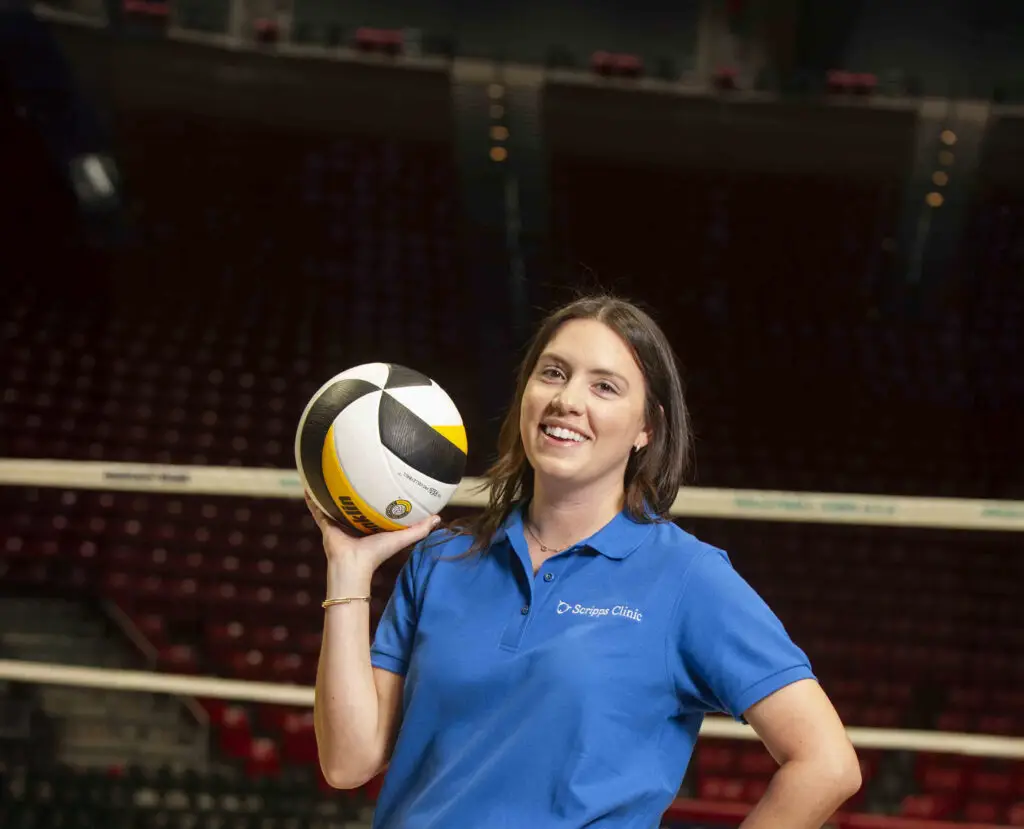
While glucagon-like peptide-1 (GLP-1) receptor agents have been used to treat Type 2 diabetes for more than 20 years, their recent emergence as weight-loss wonder drugs marked a new frontier in medicine. But their effectiveness has left some patients wondering what to do once they’ve reached their goal. Stopping the medication could mean regaining some, if not all, of the weight. A Scripps Clinic internal medicine physician recently conducted a small study of whether GLP-1 patients who had reached their goal weight could maintain that weight by taking their regularly prescribed injection every other week instead of weekly. Spoiler alert: 30 of 34 patients did. Read more about the study here and what that may mean as pharmaceutical companies roll out oral GLP-1s.

For more nutrition, wellness, and healthy living tips, sign up for the San Diego Health newsletter here.

Partner Content

Eat Like a Local (Who Knows a Guy).

Restaurant news, culinary storytelling, and Troy Johnson’s sharp takes delivered straight to your inbox twice a month.

Close the CTA

Contact Us

1230 Columbia Street, Suite 800,

San Diego, CA