Featured articles
Food News
Food News
Food & Drink
Featured articles
Things to Do
Things to Do
Everything SD
Featured articles
Things to Do
Things to Do
Everything SD
Featured articles
podcast-ep
podcast-ep
podcast-ep
Featured articles
Food & Drink
Everything SD
Everything SD
Featured articles
Food News
Things to Do
Things to Do
Ready to know more about San Diego?
SubscribeReady to know more about San Diego?
The immigrant-staffed restaurant & workforce program crafts some of SD's most authentic international dishes
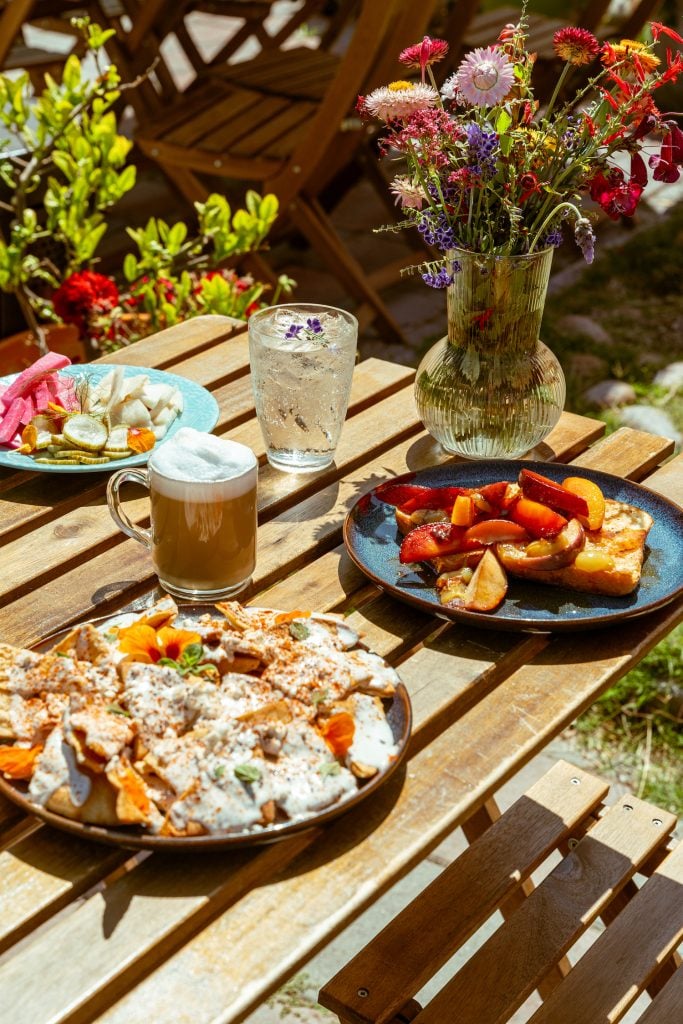
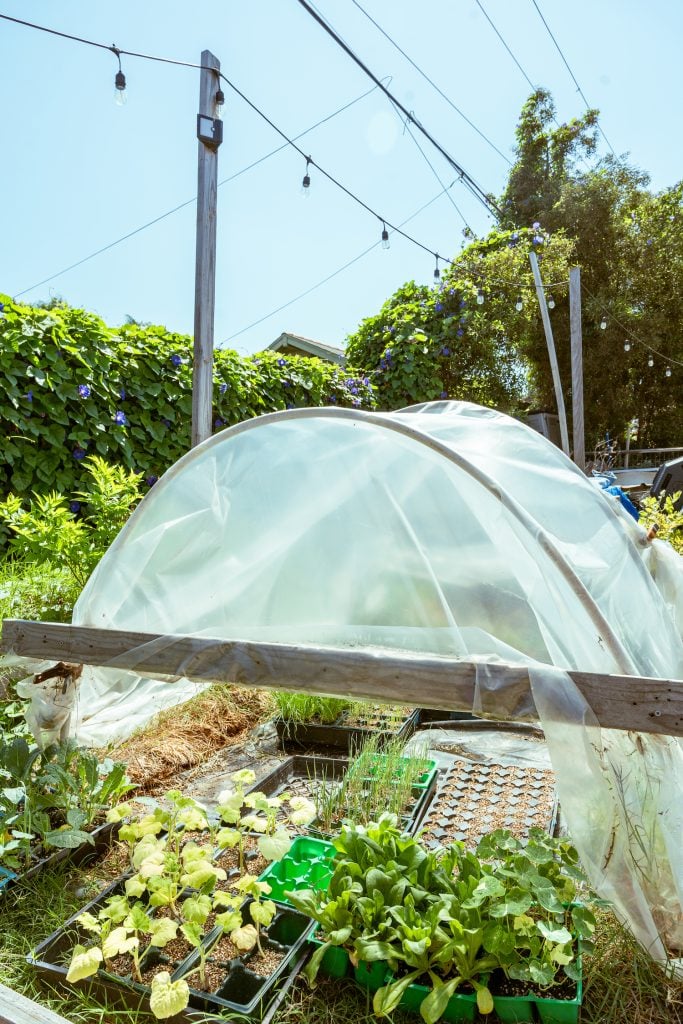
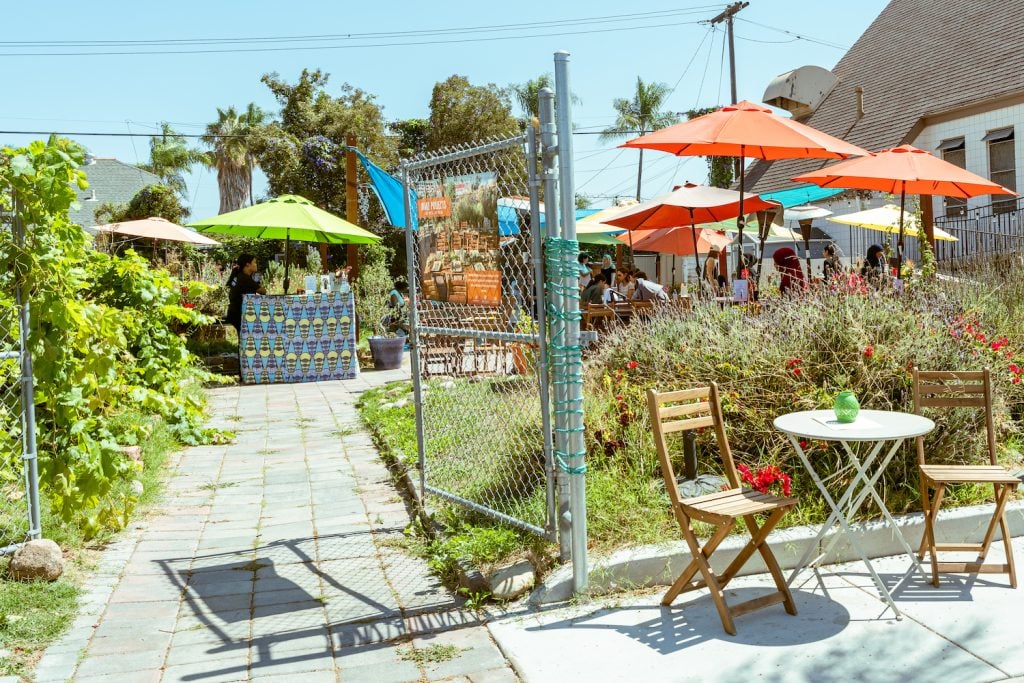
East African mandazi, Somali malawah, North African shakshuka. Behind a chain-link fence on 30th street in North Park, sandwiched between a church and a lush vegetable garden, lies an unassuming brick patio where every Thursday evening and Saturday morning, a bustling 16-table eatery called MAKE (Merging Agriculture Kitchens and Employment) Café takes shape. It’s here you’ll find some of the most unique and authentic dishes in San Diego. Many of the ingredients they use are plucked right from the garden.
In the shared commercial kitchen beneath the church, women prep food, peeling the skin from roasted eggplants, sprinkling za’atar, and mixing their signature bizbaz sauce. Native languages that typically swish off the tongue—Arabic, Spanish, Somali, Burmese—are put aside in order to try on a new, often stilted, one: English. Some women wear hijabs or colorful headscarves. Others don a simple uniform, a t-shirt emblazoned with the words, “EAT WELL. DO GOOD.”

MAKE Café San Diego isn’t only a restaurant. It’s a workforce program for refugee and immigrant women who, in many cases, have never been employed. The program lasts three months, during which participants receive minimum wage while learning skills that will help build the confidence and experience to move on to other employment.
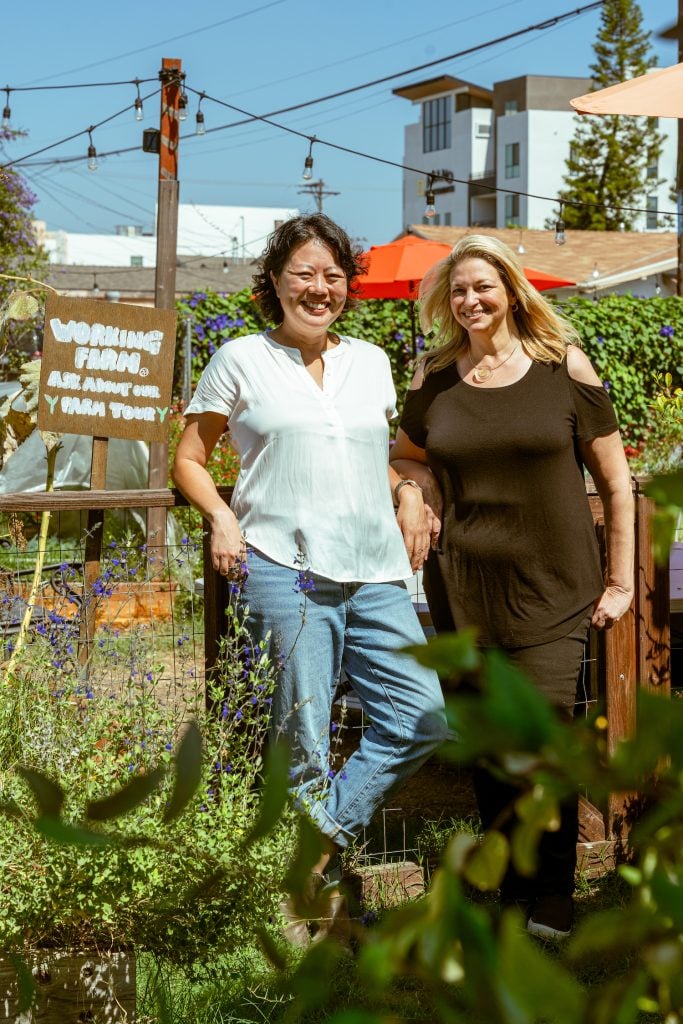
“We want to give them a first job,” says Anchi Mei, executive director of MAKE Projects. “So they can get a better second job and, ultimately, find a career path.”
At the end of the program, employment advisors hold mock interviews, edit resumes, and help participants plot out education plans and career goals. “If someone becomes a housekeeper, we want to help chart the path for them to become a [supervising] housekeeper,” says Samantha Forusz, the deputy director of MAKE Projects.

MAKE even prepares participants for the grueling minutiae of onboarding. “We want them to succeed, so just like everyone else, they go through the painful processes of HR the first day,” Mei says. “W4s, I-9s, the Gusto app.”
For immigrant and refugee women, this training is especially important because many are isolated by language barriers and come from agrarian backgrounds where they lacked access to formal education. Often, they are single moms trying to stay afloat after their partners were injured or killed in global conflicts.

Nimo Omar Ali is a 36-year-old mother of eight from Somalia who is married to an Uber driver. Her new income makes it possible for her family to pay rent. “It’s [also] how we feed our family and buy school supplies,” she says. After her 12-week stint at MAKE, where she has continued ESL classes, her dream is to land a job at a school cafeteria. “I love cooking,” she adds.
While MAKE doesn’t expect participants to stay in food service, they have found that making and serving food is the perfect gateway to enter the work world. “It’s a hard life,” Mei says of being a low-income immigrant. “So to be able to create joy and give joy so easily and contribute so artfully, that’s the
beauty of food as a platform for us.”

Sokyum Ou, a former participant from Cambodia, concocted the orange syrup served atop the pancakes, a mainstay of the menu. (Ou now works at Seneca in the Intercontinental Hotel downtown.) “So you have traditional buttermilk pancakes combined with a Cambodian-inspired syrup,” Mei says. “At the end of the day, this is the community and culture we are cultivating in San Diego and what our menu represents—it is globally inspired, locally sourced.”
When Lydia Adombila had the opportunity to create a weekly special, she pulled from her native Ghana, making a jollof rice to share. “At first, no one was ordering it, and I was like, ‘Oh no!’” she says. “But within a short time, so many people ordered it … Then they said, ‘We want more jollof.’ [I was] dancing, singing, ‘Jollof, jollof!’ I was so happy.”
Adombila, a 42-year-old single mother of five, completed the program and now has a part-time caregiving position while getting her GED in the hopes of becoming a nurse.
While sharing treasured recipes brings program participants joy, it has also inspired confidence. When Melida McClain moved here from Lima, starting her career from scratch and without friends or family nearby, she wasn’t prepared for what an impact it would make to see her own Peruvian dishes anticuchos and picarones—on the menu. “My name was there next to the item,” she recalls. “It felt so special—like you’re important, like you have value.”
McClain, 41, is now pursuing a yoga teacher certificate, her dream profession, while she begins her first job after MAKE at Zara in Fashion Valley.

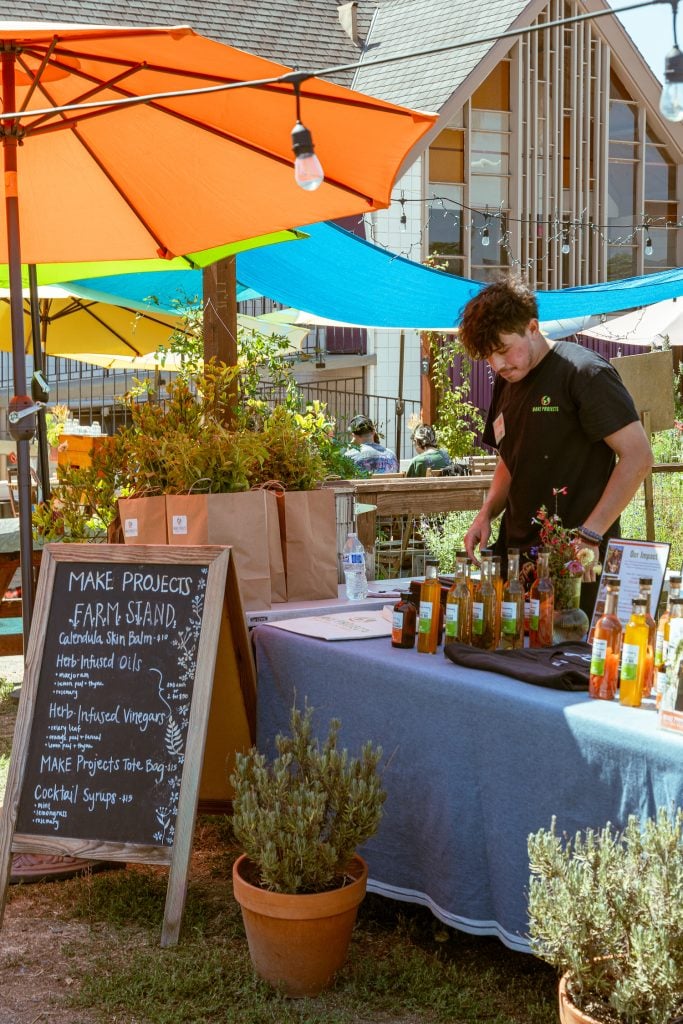
MAKE Projects began in 2016 as Project CHOP. Women chopped carrots for school lunches, but when that endeavor lost money, they evolved into making crudité platters and then catering lunches. They dabbled in other ventures, like workshops, a farm stand, and arts and crafts, but it wasn’t until the pandemic hit that they found their sweet spot. “We had to focus on one thing, it had to make money, and we had to be sure we did it well,” Mei explains.
What they came up with was serving meals at their patio café, which has now become such a success they are on the verge of a new frontier. “We are going to have our first full-time brick-and-mortar!” Mei announces.
So far, they’ve depended mostly on grants, but Mei is hoping the new space will help the social enterprise become self-sufficient, with funds coming in from CSA subscriptions, catered events, and restaurant customers. “As we grow, we will be a lot more efficient and start to scale,” she says. “It’s so exciting!”
At the new space, due to open in the former Crushed location in North Park this month, they will continue as before, but they’ll be able to expand their restaurant hours and the number of women they serve. They will no longer need to hold conferences and trainings in the stairwell of the church or in the basement while it is briefly clear of AA meetings. The garden will move to SDSU’s Mission Valley expansion where, at one acre, it will quadruple in size. (Hint: Get on their CSA waitlist now.)
While the new brick-and-mortar will look just like a typical restaurant, like the patio on 30th street, it will really be much more. “It is a vehicle for transformation and realizing human potential,” Mei says.
Mara Altman is the author of two nonfiction books, Thanks for Coming and Gross Anatomy: Dispatches from the Front (and Back), which was a semi-finalist for the Thurber Prize for American Humor. Altman also wrote eight best-selling Kindle Singles and has written for publications such as The New York Times and New York Magazine. Earlier in her career, she was a staff writer for The Village Voice and daily newspapers in India and Thailand. She lives in North Park with her husband and twins.

One of One combines creative seasonal drinks, ethical sourcing, and Filipino-American roots to stand out in San Diego's crowded cafe scene
In a city overflowing with cortados, ceremonial-grade matcha, and ambitious coffee startups, standing out isn’t easy. It’s even harder when your business doesn’t have a fixed address. That’s the challenge (and increasingly, the appeal) of One of One.
The Filipino-American coffee and matcha pop-up concept is the work of Kristin Cleavinger, a San Diego native who spent nearly a decade helping grow Alfred Coffee in Los Angeles before returning home to build a concept of her own. The business takes its name from Cleavinger’s grandfather Gregorio, who immigrated from the Philippines to the United States in the 1970s with almost nothing, but managed to build a life for him as well as his descendants.
It’s that sense of grit, perseverance, and identity that Cleavinger says fueled her to build One of One. “Throughout my time in specialty coffee, I was really curious about Filipino representation, because that wasn’t something that I saw,” she explains. She began to research coffee from the Philippines, but considering the island nation only produces about 0.25 percent of the world’s largest producer, Brazil, there wasn’t much to find.
Instead, she turned inward, drawing from her family’s history and her own Filipina-American identity to build something personal.
For her drinks, Cleavinger never uses refined sugars, and syrups are made in-house from organic and regenerative ingredients. The Summer Peach latte, the current seasonal special, layers Ceylon cinnamon, unrefined cane sugar, Maldon sea salt, and ripe yellow peaches for a riff on one of summer’s most glorious treats: peach cobbler. Another new drink is Mint Chip, inspired by Thrifty ice cream with a fresh mint syrup, dark cocoa powder, and chocolate chunks with a base of either espresso or hojicha (roasted Japanese green tea with a mild, sweet, earthy flavor and lower caffeine content than other green teas).
Other crowd pleasers include the signature Neapolitan latte, which is inspired by childhood memories of her family using Neapolitan ice cream to create pan de sal ice cream sandwiches. She layers housemade organic strawberry syrup, Madagascar vanilla bean-infused oat milk, and dark cocoa-swirled espresso for a tricolored beverage experience that she recommends sipping before stirring to taste each layer on its own merit.
Past specials have ventured deeper into Filipino flavors, like a turon-inspired latte using jackfruit and banana; another was a coconut pandan matcha made with organic coconut water and topped with a pandan matcha cream.
The sourcing decisions behind these drinks are equally deliberate. Coffee comes from Boondocks, a Filipino-owned LA roaster whose founder is originally from National City. Its current offering, the Galleon blend, combines beans from southern Luzon in the Philippines with Chiapas, Mexico—a nod to the communities woven into San Diego’s own cross-border identity. Matcha is sourced through Este, a local San Diego company that works directly with producers in Mie Prefecture, Japan.
Every supplier is chosen for value alignment as much as quality—Boondocks’ current blend, for example, directly supports women-owned farms. “Each person has the power to choose where they want to put their dollar,” Cleavinger says.
You can catch her at regularly scheduled pop-ups at places like Olivewood Gardens in National City (every third Saturday), Ayi in South Park’s Summer Series (every Saturday morning in June), and on regular rotation at Home Ec and Best Bud Floral in Kensington. (More dates are listed on Instagram as well.) Cleavinger says she does have plans to launch a brick-and-mortar shop in the future, ideally with an expanded beverage menu, space for art shows, and a community gathering place for local and Filipino-owned makers.
In a crowded field of coffee concepts, One of One shows that a memorable drink can do more than wake you up. It can tell you something about the person behind the idea—who they are, where they’re from, and where they’re going next.
Beth Demmon is an award-winning writer and podcaster whose work regularly appears in national outlets and San Diego Magazine. Her first book, The Beer Lover's Guide to Cider, is now available. Find out more on bethdemmon.com.
A complete guide to the festival, the parade, the lineup, and all the good stuff in between
There are two types of San Diegans in July: those who have their Pride Festival tickets, and those who wish they’d bought them sooner. Summer in San Diego already feels like a fever dream of sunshine and saltwater, and with Balboa Park turning it up to a level best described as joyfully unhinged, we wouldn’t have it any other way.
That’s right: San Diego Pride 2026 is bigger, louder, and more necessary than ever. From July 18–19, expect a full, unapologetic, flags-everywhere kind of weekend where the city opens its arms and means it. Here’s everything you need to know about San Diego Pride 2026.
The San Diego Pride Festival takes over Marston Point in Balboa Park (6th Ave. & Laurel St.) on Saturday, July 18 (12 p.m. to 10 p.m.) and Sunday, July 19 (12 p.m. to 9 p.m.).
Buy tickets early because prices go up closer to the weekend. Regular GA is priced at $45 for a single day or $75 for the full weekend. Once Pride Weekend pricing kicks in, that bumps to $48 for one day and $85 for two days. VIP Weekend starts at $269, and if you want a Meet & Greet with Hailie Sahar on July 18 at 2 p.m., tickets are $106.
Seniors 65 years and older can grab a ticket at the box office for $15, and high schoolers and younger get in free, though they still need to stop by the box office for a ticket before entering. Regular pricing is available through July 17, so don’t wait until the last minute.
The San Diego Pride Festival isn’t just a typical party. Expect Balboa Park at maximum capacity and maximum heart with five stages, hundreds of vendors, and more joy per square foot than anywhere else in the city that weekend.
At the heart of it all is the Stonewall Stage, the main event where legends and newcomers alike make their San Diego Pride debut. The Mundo Latino Stage brings Rock en Español, DJs, drag shows, and multicultural performers to the mix. The Movement Stage offers a full celebration of Black LGBTQIA+ arts, music, and culture through hip hop, urban contemporary, and local DJs, plus a Queer Locals Marketplace full of LGBTQ-owned small businesses selling handmade art, wellness goods, literature, community resources, and more.
For the people who came to actually dance, the Euphoria Stage delivers electronic music and groundbreaking talent. Prism For All is where art, libraries, and history collide, with workshops, performances, and a makerspace hosted by Art of Pride, the San Diego Public Library, and Lambda Archives. And the Youth Zone gives LGBTQIA+ young people their own dedicated area to meet, get creative, play, and find support.
The lineup includes:
Saturday, July 18
Sunday, July 19

The San Diego Pride Festival 2026 runs on the energy of over 2,000 volunteers every year. With more than 30 departments to choose from, whether you’re a people person, a behind-the-scenes organizer, or just someone who wants to do something good in a great outfit, there’s a spot with your name on it. Head to the San Diego Pride website to sign up.
San Diego’s Pride Parade calls the parade “the region’s largest single-day civic event,” drawing more than 250,000 attendees annually. This year it takes place on Saturday, July 18 from 10 a.m. to 3 p.m. and starts at University Avenue and Normal Street. Then it travels west on University Avenue, south on Sixth Avenue, and ends near Balboa Park/Quince Drive.
The Pride 5K Run & Walk is one of the highlights of Pride Week, drawing as many as 1,700 runners and walkers from around the world and raising approximately $40,000 for charity partners San Diego Pride and The LGBT Center’s Youth Housing Project. This year it also takes place on July 18, just a bit earlier at 8 a.m., at the corner of Centre and University Ave in Hillcrest.
Of course, buying a ticket is a guaranteed good time, but it’s also funding something real. San Diego Pride is a registered 501(c)(3) nonprofit, and proceeds go toward supporting organizations that host community events, programs, and fundraisers advancing pride, equality, and respect for LGBTQ+ communities locally, nationally, and globally.
That includes virtual youth programming like Pride’s Youth Leadership Academy, which reaches more than 4,000 LGBTQ children and young adults, as well as coalitions like the QAPIMEDA Coalition, Black LGBTQ Coalition, and Latinx Coalition, and more than 30 LGBTQ programs and events throughout the year.
The prohibited items list is lengthy (no balloons, no selfie sticks, no bubble-making devices, trust us they’ll make up for it elsewhere), but the big ones to keep in mind: clear bags only (max 12″x6″x12″), no outside food, no alcoholic beverages, no glass, no large umbrellas, and no knives or weapons of any kind. Leave the drone at home too. For the full list, head to sdpride.org/entry-policies.
Check out San Diego Pride’s frequently asked questions page for more details.
Isabella Dallas is a freelance writer for San Diego Magazine and the Arts and Culture Editor at The Daily Aztec in her final year at San Diego State University. She previously worked as an editorial intern for SDM, but when she’s not writing, you can find her trying the best coffee spots in SD, devouring the latest rom-coms, and indulging in anything and everything pop culture.
CoCo Ichibanya's wildly popular katsu curry has become a ballpark favorite—and now the chain is opening a second San Diego location
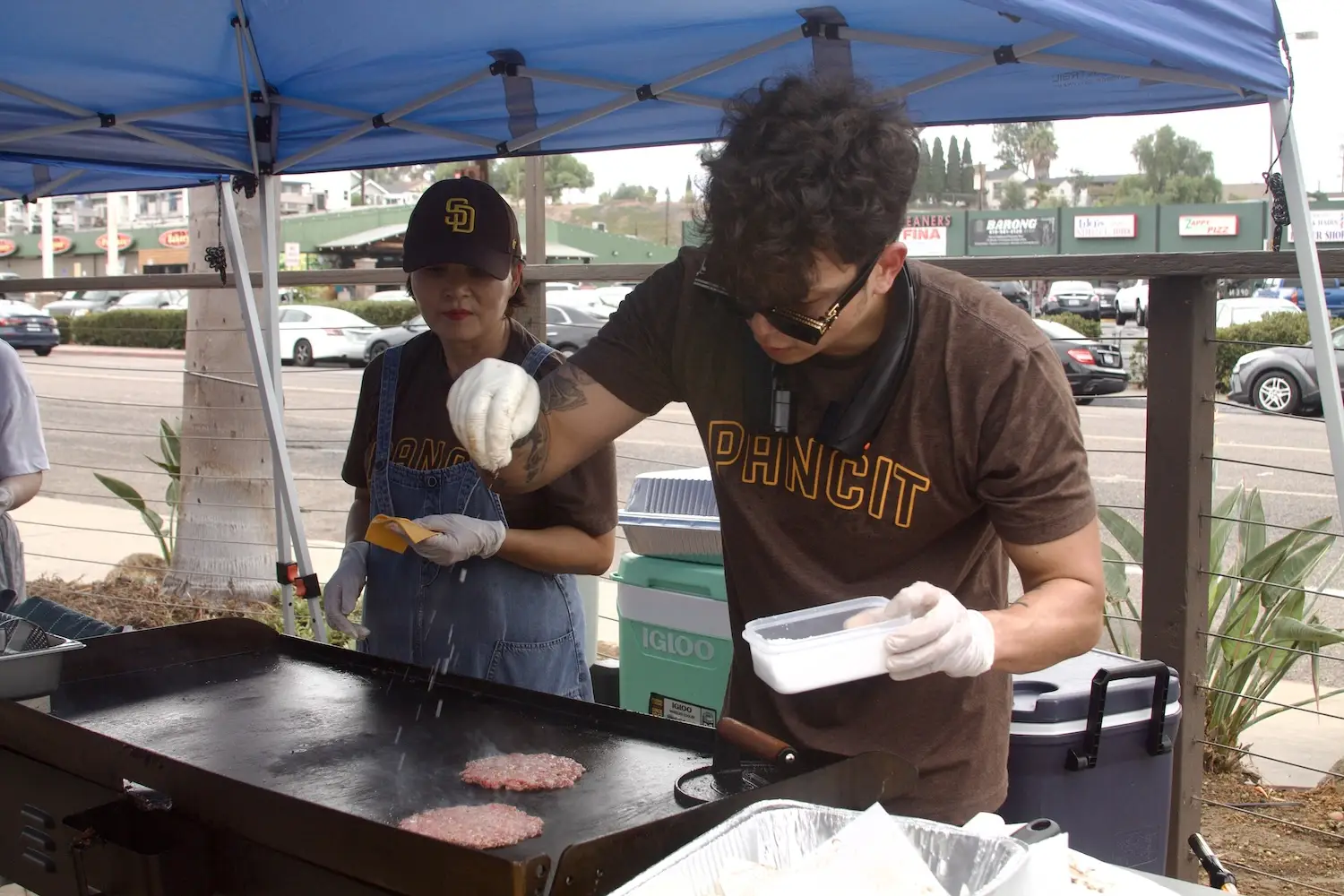
I’m a creature of habit. When I go to Petco Park for a Padres game, I order two things without fail: a Swingin’ Friar ale from Ballast Point and a Friar Frank (extra mustard, no ketchup). I might supplement with tri-tip nachos from Seaside Market, or splurge on fancy fish tacos from Deckman’s at the Draft, but there’s no way I’m going to a ballgame without enjoying the classic combo of a beer and hot dog.
But this season, I’m faced with a conundrum. CoCo Ichibanya, the world-famous Japanese curry chain with locations in Convoy District, Los Angeles, Orange County, and Texas, debuted this March at the Mercado near Section 104. I recently attended a game against the New York Mets when I noticed a woman sitting in the row in front of me with a giant helping of chicken katsu curry. I hadn’t seen CoCo’s curry in the wild at the ballpark yet, but the aroma of the crispy fried chicken bathed in savory curry wafting over her shoulder absolutely intoxicated me (and ended up being a nice distraction to the 7-3 loss). Hopefully, she didn’t notice me leering with envy, but I’m 92 percent sure I got some drool on the guy next to me.
The world’s largest Japanese curry chain isn’t done popping up in San Diego quite yet. This July, CoCo Ichibanya will open its second standalone store in San Diego on the ground floor of the Denizen building in Hillcrest.
First launched in Nagoya, Japan in 1978, CoCo Ichibanya specializes in Japanese-style curry dishes, a comfort food signature. Unlike fiery Thai and Indian curry, Japanese curries are often more like gravy, served over rice and alongside katsu pork, chicken, or beef, or as curry omurice (omelet rice). The chain expanded to the United States 15 years ago, and owner Teruyoshi Ono says they’d been eyeing more opportunities in San Diego for some time.

The location in Hillcrest spans 2,585-square-feet with seating for around 49 guests. Menu favorites like the chicken cutlet curry with vegetables, the pork cutlet omelet, and Thai tea will be available, but Ono said Hillcrest will be the first location in the US to offer one major crowd-pleaser: alcohol. And keeping with local baseball fandom, “We will also have Padres x CoCo Ichi limited merchandise at our Hillcrest location,” he promises.
Ono also revealed that CoCo’s future expansion plans include looking for more locations across Southern California and possibly more in San Diego. While the Japanese yen remains at a historic low against the dollar (making it an absolutely unbeatable time to visit the Land of the Rising Sun), why fly overseas when you can get a taste of Japan in your own backyard—or ballpark?
CoCo Ichibanya Hillcrest is slated to open at 3833 5th Avenue in July.
Listen Now: The Latest in San Diego’s Food and Drink Scene
Have breaking news, exciting scoops, or great stories about new San Diego restaurants or the city’s food scene? Send your pitches to [email protected].
Beth Demmon is an award-winning writer and podcaster whose work regularly appears in national outlets and San Diego Magazine. Her first book, The Beer Lover's Guide to Cider, is now available. Find out more on bethdemmon.com.
The 29-year-old culinary director at Herb & Sea is making seafood sexy (and approachable) again
Implementing a farm-to-table model hardly deserves acknowledgement these days. It’s not a stretch. It’s not innovative. “It’s the bare f**king minimum,” says Herb & Sea‘s executive chef Aidan Owens.
When I arrive at the Encinitas restaurant, I’m ready to talk sustainability, farm-to-table stuff, with Owens. “Did you see the chin on that?” he says of the extra big jiggly chin on the sheephead that just arrived with the day’s fresh catch. I did. It was Jay Leno adjacent.
I learn quickly that he somehow oozes both charm and stone-cold honesty. Maybe he could construct a new dish with chin goo, like he did when he had a bunch of tuna scraps and voila’d it into a smooth and crowd-pleasing ‘nduja. “I want to know what’s in there,” he says.

The instinct to look closer, to dig into what others might discard, says a lot about the chef’s approach. I guide him back to our topic, but he has something else on his mind. “We’re overcomplicating food—what happened to just cooking good food and having fun with it?”
Owens grew up on a farm in Byron Bay, Australia, where sustainability wasn’t a concept you chat about so much as a way of life. Think dirt roads, backyard chickens, pulling vegetables straight from the ground, and a mother who believed that if you couldn’t pronounce the ingredients on a package, you shouldn’t eat what was inside.
Food wasn’t precious or performative. Making it was what you did because you were hungry and that’s still what inspires Owens today. “I like to cook good food because I like to eat good food,” he says.
His approach to sustainability at Herb & Sea began so naturally that it felt just like instinct. “I was just like, ‘Let’s order food from the people who live and work here,’” he says.

And why wouldn’t he when lives in San Diego? Cities all over the world vie for our goods. Our tuna is sent overseas. Our spiny lobsters hit dinner plates in China and Japan. Not to mention California’s producing a third of the country’s vegetables and three-quarters of its fruits and nuts.
“Why would we outsource when it’s all here?” Owens asks.
Sustainability, in this context, is about cooking what exists in abundance, nearby, right now. “I love the local fish here. It’s f**king delicious and San Diego citrus, I mean, it is so f**ing good,” he says.
Instead of importing ingredients, Owens also looks for nearby alternatives. “You can find really cool things in the local waters,” he says, pointing out that stingray cheeks taste similar to scallops.

Whatever he finds in that sheephead chin might just be the next substitute for marrow. But to make this work, it means getting diners amped up about the slightly unfamiliar.
Tasting menus, where diners are completely in his hands, become an opportunity to gently push boundaries. “I’ll serve mackerel, because people think they hate it,” Owens says, noting that the abundant local fish can have some fishiness. “But when it’s fresh, it’s arguably one of the best fish in the ocean.”
He also tweaks the language on the menu so people might feel more compelled to give dishes a try without preconceived notions. He might use “lengua” instead of “tongue.” “Whelk” instead of “snail.” When he puts “stingray throat” on the menu, he disarmingly calls it “skate.”
To reduce waste, scraps aren’t always discarded but rather turned into something new. Sometimes they’re smoked, cured or fermented. Apples going bad turn into apple ponzu. Lemons turn to marmalade, which stretches their usefulness far beyond peak season. “And it’s super tasty on our pizza,” he says.
What makes the food even richer, is the relationships he’s built with farmers. Though it didn’t always feel natural, Owens sought personal connection first. He recalls approaching a fisherman at the Tuna Harbor Dockside Market. “I was awkward,” he says. “I went up to him and said, ‘I like your fish.’”
Owen’s is now so close to his suppliers—like fishermen Ryan Sebo and Joe Daly—that he gets texted pictures of fresh catches right as they flop on the boat. The messages always ask if he wants first dibs. “I say yes to a lot of fish,” Owens says, noting that Herb & Sea can go through 2,000 pounds of seafood a week.

The next evolution of sustainability, in his view, will be chefs working directly with producers such as his alliance with Sebo, cutting out middlemen and purveyors where possible. “It will put more money in the pockets of the people doing the work,” he says.
It will mean that chefs can’t just know their local farmers and producers, but they’ll choose to work with the ones who have the best practices. Dining and sustainability will become much less about the final plate. “It will be more about the impact that plate has on the Earth,” he says.
Ultimately, he believes sustainability doesn’t need to be loud. It doesn’t need hashtags. It just needs to be honest.
“We aren’t saving lives. We’re feeding people good food,” he says.
And yet, in feeding people well—simply, thoughtfully, responsibly—something meaningful happens. Guests leave satisfied. Ingredients are respected. Local ecosystems are supported and food returns to what it has always been at its core: nourishment, pleasure, and a quiet reflection of the place it comes from.
No buzzwords required.
Here’s where to celebrate, connect, give back, and make a difference this month
Enjoy tastings from more than 20 wineries and gourmet bites at the University of San Diego Wine Classic. The all-inclusive annual event benefits USD’s Alumni Endowed Scholarship Fund, and to date has raised more than $1 million.
Around 1,700 runners and walkers will hit the streets of Hillcrest for the The Pride 5K Run & Walk, before the Pride Parade. The long-running community favorite is a highlight of Pride Week and raises money for San Diego Pride and the LGBT Center’s Youth Housing Project.
The 37th annual Brendan Nordholm Make-A-Wish Golf Classic will tee off at The Crosby National Golf Club at Rancho Santa Fe Golf Club. The 18-hole tournament, followed by a reception, will help the organization grant wishes for local families.
Help the Foundation for Developmental Disabilities celebrate its 40th year at its Christmas in July fundraiser at Koi Zen Cellars. The festive evening marks the start of FDD’s annual Season of Sharing and guests are encouraged to bring a new, unwrapped toy to donate.
Operation For HOPE Foundation’s ninth annual Caring, Sharing & Champagning Fundraiser will kick off with a charity shopping spree for household essentials for survivors of domestic violence and their children. Guests will then be treated to champagne, espresso martinis, and light bites at a private residence in Rancho Santa Fe.
The Doan Foundation will host a formal fundraising dinner to benefit underserved youth and emerging creatives. The organization’s fourth annual Gala Fundraiser will feature a live performance by R&B artist Amanda Perez, other performances, scholarship awards, and inspiring stories.
Sarah Sapeda is San Diego Magazine’s Custom Content Editor. In her 15 years in San Diego journalism, she has covered charitable events, health care, education, crime, current events, and more.
The event on June 6 helped raise funds to support the org’s mission to rescue, restore, and reintegrate survivors of human trafficking
International Network of Hearts celebrated 15 years of helping survivors of human trafficking in the U.S. and Mexico recover and reintegrate at its “An Evening of Courage and Change” gala on June 6. During the formal event at the Sunset View Room overlooking Mission Bay, the organization received a proclamation from Mayor Todd Gloria’s office deeming June 6 as International Network of Hearts Day. Proceeds from the gala will support International Network of Hearts’ mission to rescue, restore, and reintegrate survivors via its Casa del Jardín care centers.
See photos from the event below.


Sarah Sapeda is San Diego Magazine’s Custom Content Editor. In her 15 years in San Diego journalism, she has covered charitable events, health care, education, crime, current events, and more.
The 53rd Annual National Philanthropy Day Takes Place on November 21. Join us from 11:00 a.m. – 1:30 p.m. at the new Gaylord Pacific Resort & Convention Center!
Once yearly, AFP San Diego joins with others worldwide to celebrate National Philanthropy Day (NPD), a special day set aside to recognize the great contributions of donors and nonprofits that enrich of our community and the world. San Diego’s NPD is one of the largest and most successful in the U.S., attracting nearly 900 participants, including philanthropists, nonprofit leaders, CEOs, board members, development professionals, and business, community, and civic leaders.
Sponsorship proceeds from National Philanthropy Day are reinvested in education, training, scholarships, career development, and the advancement of fundraising professionals throughout San Diego. These resources and training provide fundraising professionals with the tools necessary to support our region’s diverse array of nonprofit organizations, which rely on charitable giving for close to half of their annual revenues.
The National Philanthropy Day Honorees are selected by the NPD Honorary Committee, a group of highly respected, diverse nonprofit and business leaders. Our 2025 Honorees include:
National Philanthropy Day San Diego provides an opportunity to reflect on the meaning of giving and to celebrate the selfless contributions of individuals and organizations across the region. We look forward to celebrating with you!
Sponsorship opportunities and individual tickets are available. Please visit www.afpsd.org for more information.