“I really don’t feel like getting tied up today,” I message my co-workers. I’m tired. I have split-up my hair and I’m balancing my laptop on my c-section bulge. I had a baby six months ago, am recently back at work, and do not feel like getting into knots—figuratively, mentally, or physically.
But for the first time in years, I’ve got an appointment to practice shibari—a Japanese bondage practice using thin jute rope. Considered more artistic than other types of bondage and kink, it places a special emphasis on visual aesthetics, in addition to the connection between the person tying (called the “rigger”) and the person being tied.
Like many forms of kink, rope tying is used as a healing modality as well as a sexual outlet. It’s mixing the two that draws people in—what’s the line between pleasure and therapy? Marvin Gaye wondered correctly—and it’s what piqued my own curiosity after I watched it in a performance years ago.
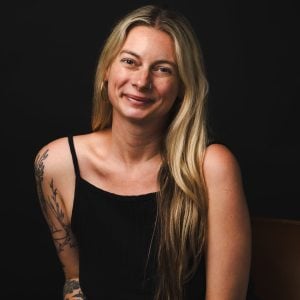
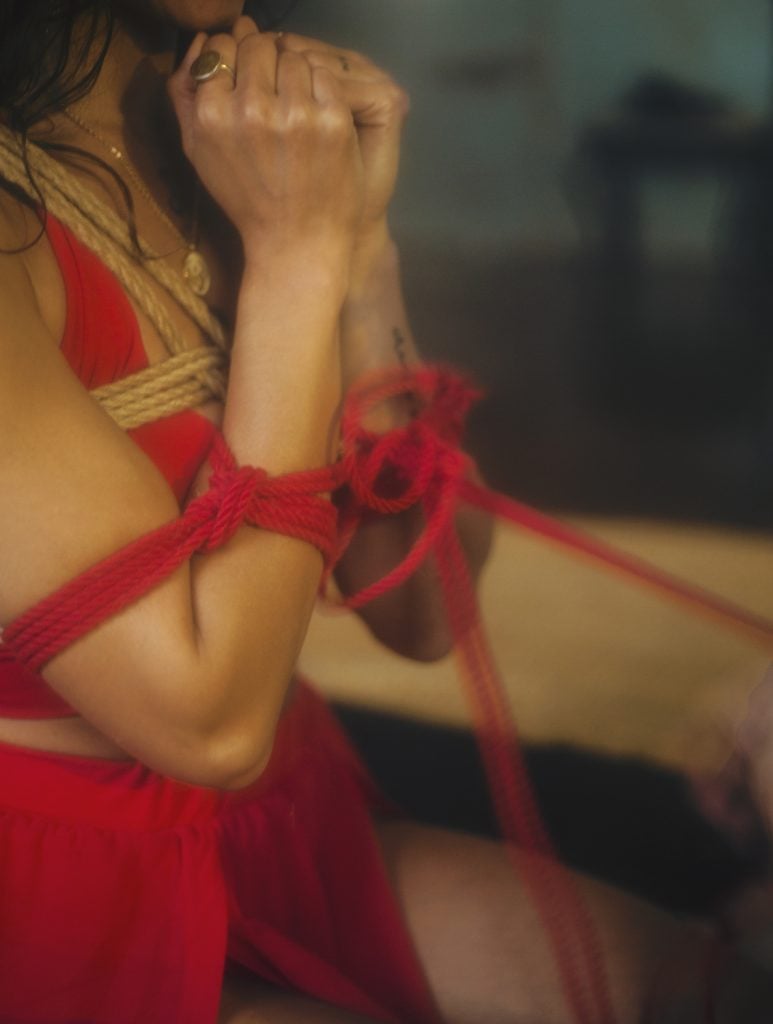
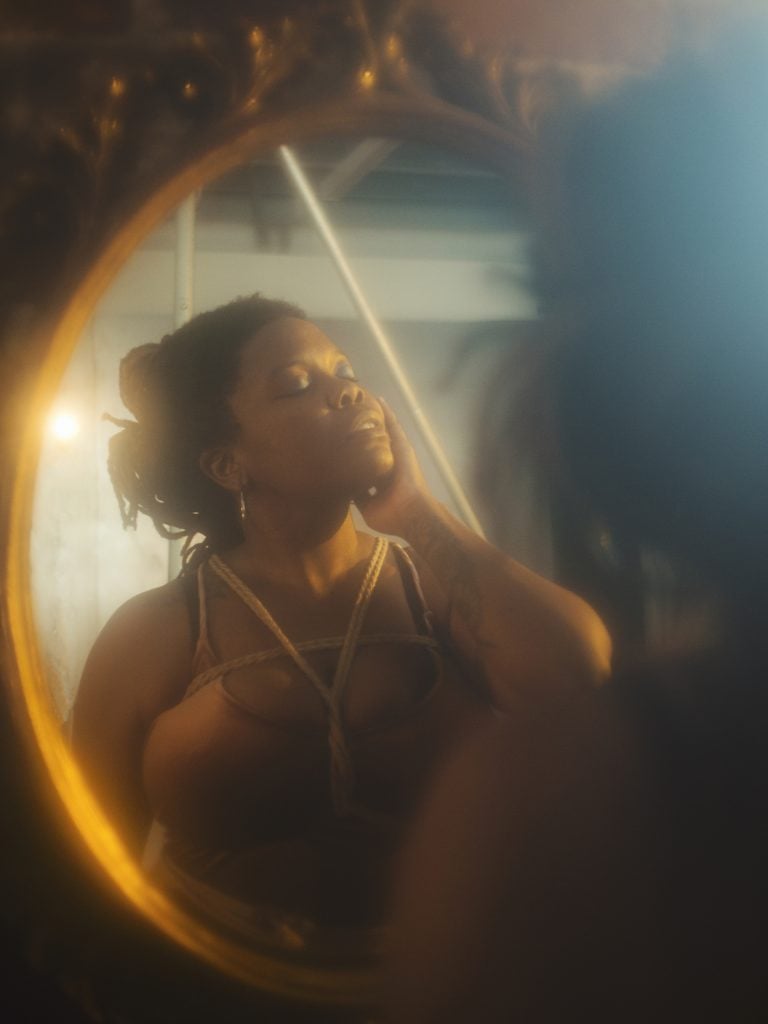
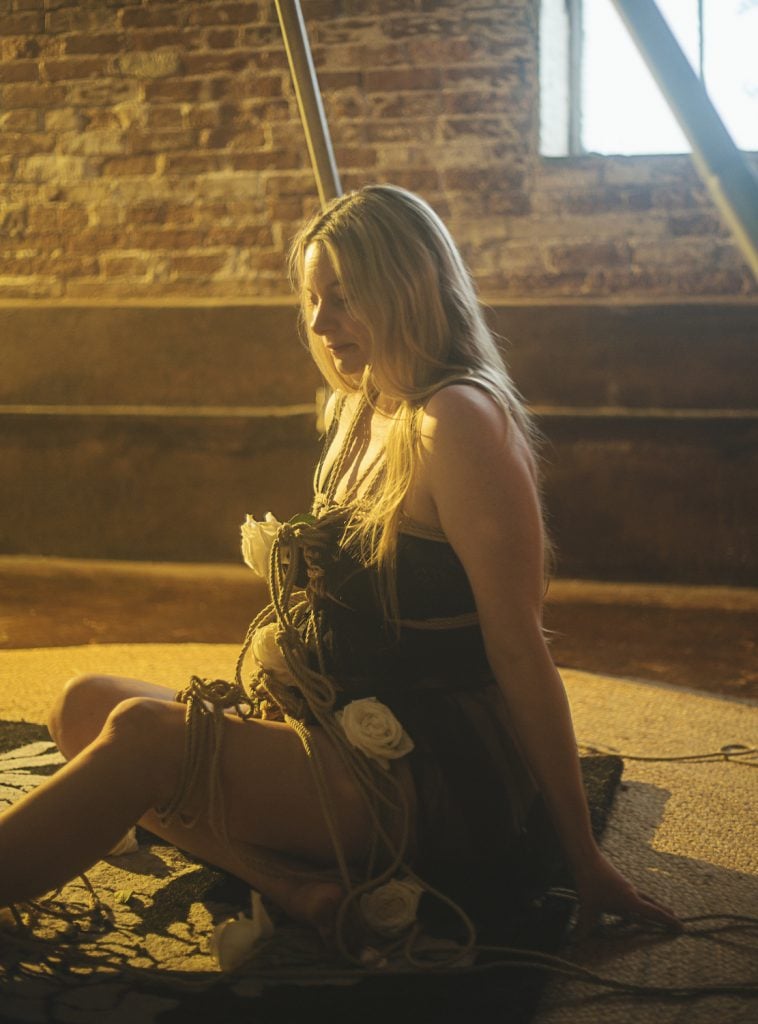
Photo Credit: Michael Saavedra Luci Lampe settles into an intricate chest harness and wrist tie.
The women look incredibly beautiful, no matter their body type, I remember thinking during a particularly bleak period in my own body image. The rope harnesses and knots were arranged to pop their breasts and butts and accentuate the shapes of their bodies as they bent. Watching a woman spin while suspended like a Christmas ornament, I was mesmerized. I wanted in. It looked extreme, likely felt extreme, and was incredibly hot.
Several years later, I finally ended up in someone’s rope, and instantly understood why I was drawn to it beyond aesthetics. Being tied up intentionally forces you to become embodied. It snaps you out of disassociation— it’s impossible not to notice the rope digging into your skin. For some people, it might feel like a trap, something from which to escape.
For another type—that’s me—it’s almost like being strapped onto Aladdin’s carpet. With my body safe, snug, and secure, I’m free to take a ride through the clouds. I feel ensconced in a warm glow not unlike the fuzzy feeling people report after getting acupuncture.
Instantly, I felt confident. There was nothing overtly sexual between my rigger and I, though the experience was deeply intimate and caring. I was being suspended (considered more advanced) by my third tie, and I loved it.
Then life happened. I met my now-husband, we had a baby and got married, I took a magazine job. I stopped for a while. But now here I am in Barrio Logan at The Rope Collective, getting tied again by my original rigger: my friend Toni Wendel, a rope and performance artist and the collective’s founder. I told her I needed to get my groove back, so to speak, after a traumatic birth experience and a whole lot of disillusionment with my postpartum body. I wanted to be laced up like a holiday ham and hoisted into the air for all to see.
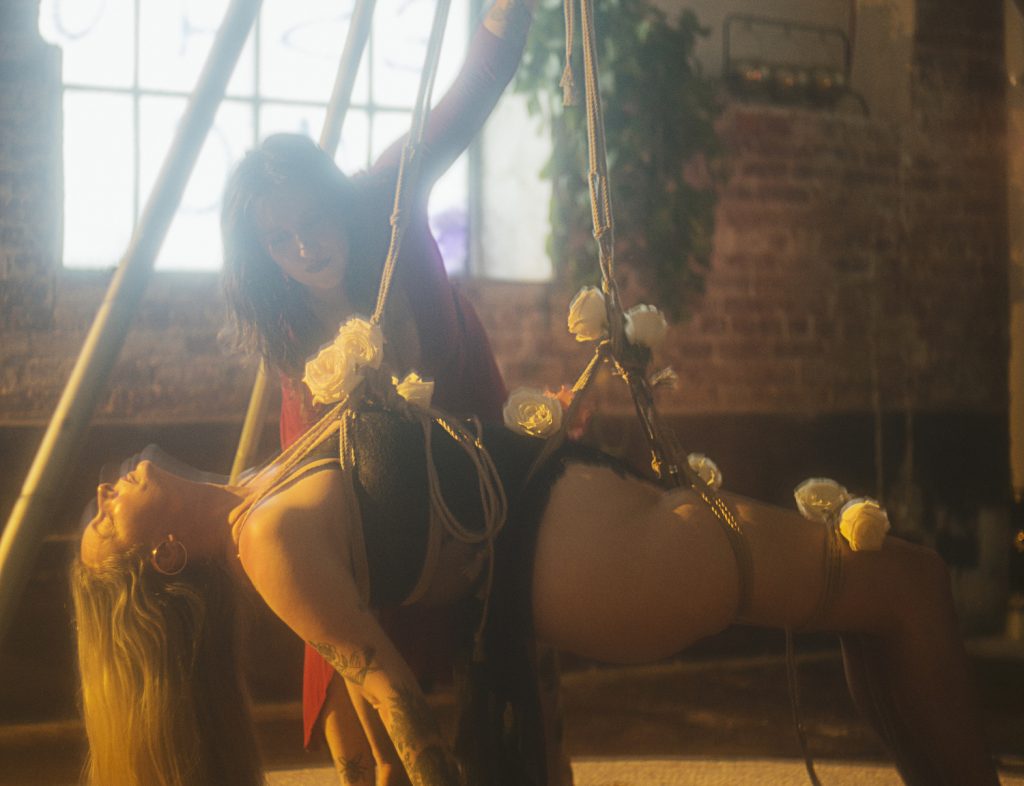
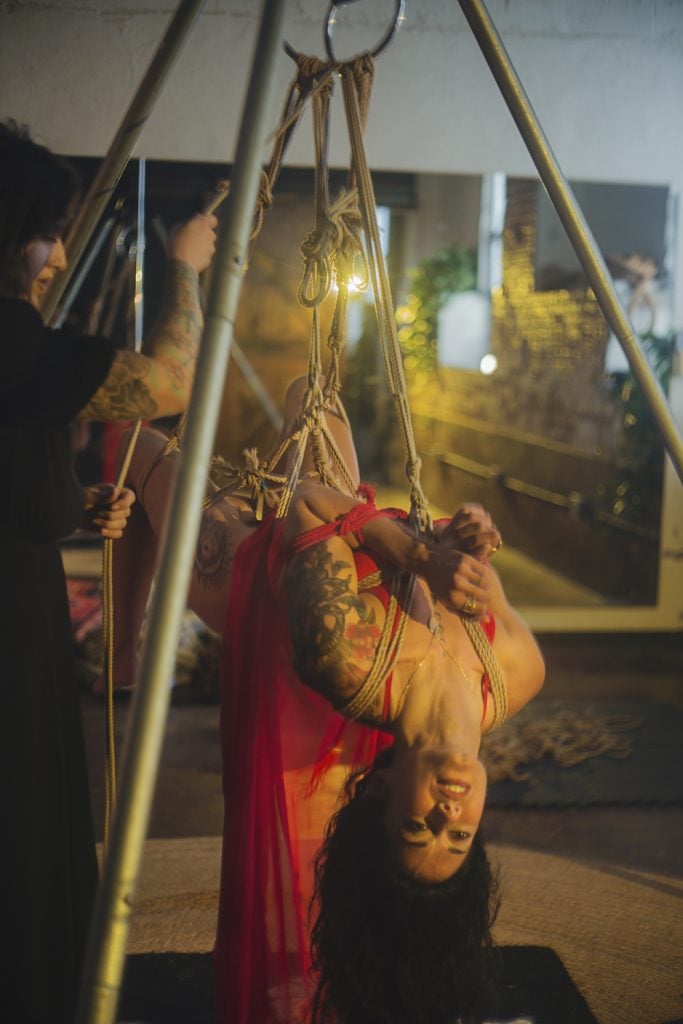
Photo Credit: Michael Saavedra Toni Wendel guides Luci Lampe into an inverted suspension at The Rope Collective.
Longing to be tied is, I’ll soon learn, a completely normal reaction to having a baby. There are many other mothers in the collective, Wendel tells me, including some moms-to-be. Almost all of them talk about healing some kind of trauma through rope.
“Rope tying is a practice that, when done as ethically and safely as possible, is an incredible container and space that can facilitate healing,” Wendel says. She’s seen collective members develop informed-consent skills, honor and set boundaries, voice desires, and learn to care for themselves and others while processing challenges. There are also somatic benefits, since the practice demands we stay present in our bodies.
Whitney Gaston is one of those aforementioned mothers, new to the vocation like I am, who has sought refuge in her rope practice at the collective. “After having a baby, sometimes you don’t feel very connected to your body,” she says, while I nod knowingly.
“I [wanted] to explore what my body is now because I knew I would never be the same. And rope helped me do that,” Gaston explains. “I think the first time I was tied after having my baby was maybe when she was about two or three months old. And Toni suspended me, and I was up in the air, and [the baby] started crying. Toni picked her up and I was nursing her for a while. It was crazy, the most out-of-body experience.”
Photo Credit: Michael Saavedra Whitney Gaston gazes at herself in a chest tie. She says that shibari helped her feel at home in her body again after having a baby last year.
Shibari has not always been the most easy, breezy experience, Gaston admits. As a Black woman, “I started diving into feelings of guilt or shame or fear, being in a predominantly white space … and being tied by a friend of mine who is white, and being like, ‘Whoa. Wait a minute, I didn’t think about this,’” she says. “And then I got triggered. I had to have a conversation with myself and [understand] that the things that I was feeling were valid. I fully trust Toni as a friend, so it’s easy for me to go there with her.” But Gaston hasn’t been tied by anyone else yet, and she admits that, if she were, it would “take a minute” for her to get used to it.
That element of safety drew Luci Lampe to The Rope Collective’s virtual programming during Covid. She tells me that movies had made her assume that bondage and other kink practices were something “pretty far out there.” But her first tie, she says, “was a beautiful healing experience of complete surrender in a context where I … had no fear of being taken advantage of or my boundaries crossed.”
At the studio and in its programming, discussing and negotiating consent, boundaries, and feelings are required at all steps of the tying scene. “Ethical rope practice often can feel safer than a less-structured practice because there is such an emphasis on these foundational skills,” Wendel says.
When communication and consent break down or are never present to begin with, that’s when the experience can turn dark. Devoid of dialogue, both parties are unaware what the other wants and needs—which can make things especially scary for the person who is bound. Plus, it’s not like it’s easy for even the most adventurous people to willingly offer themselves up to be physically restrained.
“These practices can feel triggering and threatening because, often, people have a negative association with being vulnerable and intimate with others,” Wendel says. “There is also a common misconception that gifting someone your control is a loss of control, which is why a lot of people may feel threatened by this practice.”
Wendel, however, has “found quite the opposite—that in gifting someone your power, there’s acknowledgement and evidence of its existence, which can be life-changing for those who have ever felt powerless.”
Lampe, a married mother of six who is a life and relationship coach, has found that sharing that power with her tying partner is invigorating in other ways, too. Rope tying is taboo in most circles, for starters, which can be exciting. For many, power dynamics are sexy and turn us on. Shibari can allow people to explore that buzz without engaging directly in sexual activity.
“It awakens the senses,” Lampe says. “Rope is a very sensual experience that’s not necessarily sexual. [It’s] also very erotic, which is also not exactly sexual. It opened up my mind to a lot of what was possible in [that] realm. It’s a beautiful way to deepen trust and connection.”
Photo Credit: Michael Saavedra Bryant takes a moment after coming down from suspension. Once lowered, those who were tied usually experience a blood rush and some dizziness.
As I arch my back, I can feel the blood rushing from my feet and through my ravaged torso, finally pooling in my head, where my eyes are closed. My face and neck go flush. Toni asks me to point my toes, like a ballerina would, and as she steps back from me, I can feel my outstretched body spin, dangling from ropes affixed to poles over my head.
For a few minutes, all I can think about is the fact that I wore a high-cut lace teddy, which means my c-section bulge is exposed for all to see. SDM’s art director, who is all of the readers of this magazine at the other end of his lens. Wendel. Most horrific of all, I have to witness it, too.
At some point, my fingers wander up to just above my pubic mound, where the long, jagged, purple scar cuts across my body. It’s where my son entered this world. It’s still almost too surreal to believe, partially because I was in the midst of a full-blown panic attack while it was happening, throwing up in the nurse’s face while my husband clutched my hand, white-faced himself.
I remember feeling like I was not really there, so it’s hard to connect my body’s current state with that moment. I had always hated this area of my body, so it seemed a funny trick of the universe that it’d become even worse. But now that it is uglier, oddly, I struggle to care any longer. It is out, it is illuminated, and, truthfully, I no longer give a shit. What’s there left to worry about after all of that? I unclench and let my body fall even deeper into the rope. That glow simmers in my skin, and my whole body feels warm.
While I’m still spinning, inverted, I notice Toni has been slipping white flowers in the knots hugging various parts of my body. I realize I am really going to have to let all of this go—the ugly scar, the birth horror, yes, but particularly the disgust over my own body, this vessel that not only keeps me alive but created another life, too. I had taken that miracle for granted and gotten in my own head. This experience is objectively beautiful, and I am its centerpiece.
Ohhh, I think to myself, smiling with my eyes still closed, a white petal falling from one of the flowers onto my hand. This is like a funeral. Toni asks me if I wanted to be hoisted a little bit higher, and I say, “All the way up!”
Jackie is a long-time freelance journalist covering cannabis, food/restaurants, travel, labor, wine, spirits, arts & culture, design, and other topics. Her work has been selected twice for Best American Travel Writing, and she has won a variety of national and local awards for her writing and reporting.
Jonathon Glus and Grant Oliphant discuss the emerging Art + Design District and the bigger ecosystem needed to support San Diego’s creative community
San Diego has beaches, sunshine, biotech, and enough stucco to wallpaper a small country. But what actually gives a city its personality? The artists, musicians, designers, dancers, galleries, theaters, museums, and all the other creative people making things that give a place its identity. That’s the question at the center of this special edition of the podcast, recorded as part of San Diego Magazine’s September arts and culture issue, created in collaboration with the Art + Design District and San Diego FC Playmakers.
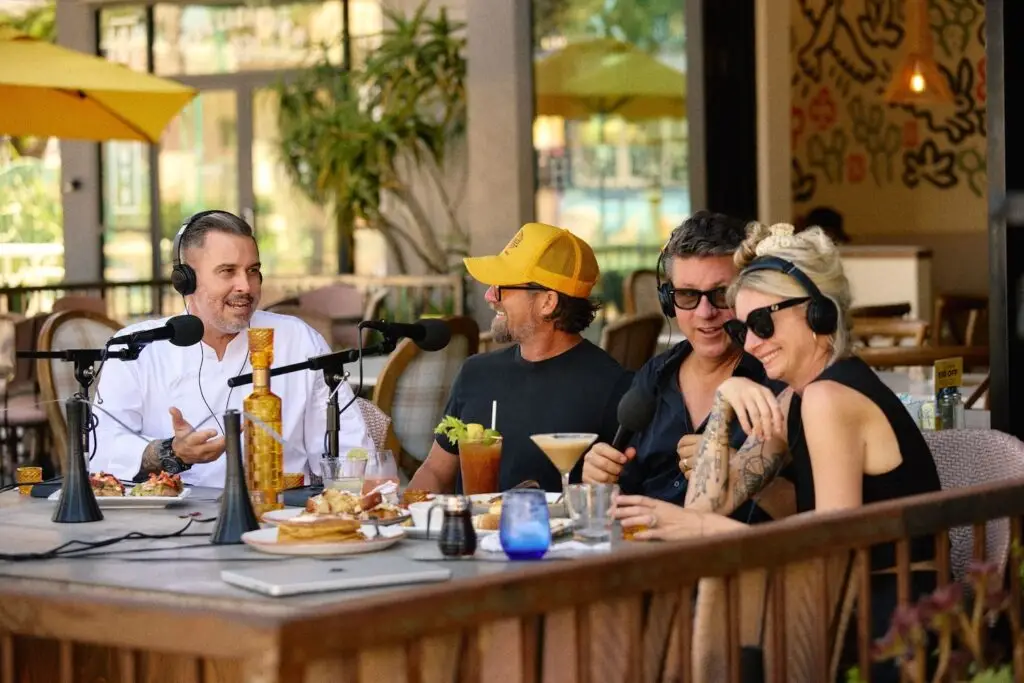
Host Troy Johnson sits down with Jonathon Glus, former director of the City of San Diego’s Department of Cultural Affairs; and Grant Oliphant, president and CEO of the Prebys Foundation. Glus now serves as the Prebys Foundation’s senior art & design fellow in residence at the Downtown San Diego Partnership, where he’s helping develop the emerging Art + Design District around the Civic Center. Together, Glus and Oliphant bring two sides of the conversation to the table: what it takes to build the physical and cultural infrastructure for a creative city, and what role philanthropy, government, businesses, and artists themselves play in making that happen.
The conversation gets into San Diego’s recent fight over arts funding, the city’s cultural ecosystem, and why supporting artists means more than simply writing checks. They talk about the Art + Design District’s roots in city planning work dating back to 2016, the cultural institutions already clustered around the Civic Center, and examples from cities like Miami and Austin that used major cultural initiatives to help shape their identities.
And, naturally, Troy gets nostalgic about San Diego’s old jazz scene, including his best friend’s dad’s club, The Crossroads, and the unfortunate fate of a very valuable vinyl collection.
This summary was provided to you by AI. To hear from the humans, listen to this episode wherever you get your podcasts.
Your guide to the area's best physicians nominated by their peers and chosen by the San Diego County Medical Society
By Maria T. Carriedo-Ceniceros, MD
For over two decades, the San Diego County Medical Society (SDCMS) has worked collaboratively with San Diego Magazine to recognize physicians who are held in the highest regard by their peers. Votes and nominations are open to all physicians in San Diego. The voting physicians are asked to vote for physicians within and outside their specialty to whom they would refer their friends and family. Through this process we have identified 968 physicians in 102 specialties.
In a synchronized effort, SDCMS confirmed every individual nominee’s Medical Board of California licensing and current practicing status. Through this exhaustive process, 968 physicians are being honored this year. Many of them have also been recognized for multiple years since we began publishing this list. Multi-year honorees will have the number of years they have been selected listed in brackets behind their name.
Although not all our superb physicians are represented on this list, we still acknowledge and appreciate their contributions. The selection criteria are strict, with only a small percent of physicians selected in each specialty. Many additional physicians received multiple votes from their peers, however, did not reach the threshold to be on the list. The best choice of physician for a patient includes many factors and we all work hard to meet their needs. We are proud to recognize that all physicians in San Diego work collaboratively to provide the very best care for all.
We welcome and encourage all San Diego County physicians to participate in their county and state medical societies as we work toward the SDCMS vision: “Physicians United for a Healthy San Diego.” The strength of our united voice as a medical community depends on the leadership and advocacy of all of us. We appreciate the assistance of all the physicians who voted, and we thank San Diego Magazine for their support.
Congratulations to all of our 2026 Top Doctor selectees! For more information regarding membership, voting, future events and becoming more involved with the medical society, visit www.SDCMS.org.
San Diego Top Doctors List 2026
* Brackets denote the number of years chosen as a Top Doctor
Abdominal Surgery
Garth Ross Jacobsen, MD [4] UC San Diego Health 9300 Campus Point Dr, MC 7220 La Jolla, CA 92037 (858) 657-7025
Addiction Medicine
Long H Nguyen, MD [2] Kaiser Permanente 3420 Kenyon St San Diego, CA 92110 (800) 290-5000
Addiction Psychiatry
Kimberly A Fitzgerald, MD [2] Kaiser Permanente 3420 Kenyon St, Bldg B 1st Floor San Diego, CA 92110 (800) 290-5000
Adolescent Medicine
Azadeh Shirazi, MD [2] Sharp Rees-Stealy Medical Group 16899 W Bernardo Dr, 1st Floor San Diego, CA 92127 (858) 499-2777
Adult Cardiothoracic Anesthesiology
Dalia Abadeer Banks, MD [8] UC San Diego Health 9500 Gilman Dr, MC 0898 La Jolla, CA 92093 (858) 657-6510
Adam Brent Barrus, MD [3] Anesthesia Service Medical Group 3626 Ruffin Rd San Diego, CA 92123 (858) 565-9666
Francesca Betti, MD [2] Anesthesia Service Medical Group 3626 Ruffin Rd San Diego, CA 92123 (858) 565-9666
Arsh Chopra, MD [1] Kaiser Permanente 360 Rush Dr San Marcos, CA 92078 (800) 290-5000
William T Connell, MD [12] Anesthesia Service Medical Group 3626 Ruffin Rd San Diego, CA 92123 (858) 565-9666
Andres Falabella, MD [2] Anesthesia Service Medical Group 3626 Ruffin Rd San Diego, CA 92123 (858) 565-9666
Alexander M Girgis, MD [5] Anesthesia Service Medical Group 3626 Ruffin Rd San Diego, CA 92123 (858) 565-9666
Austin J Henry, DO [3] Anesthesia Service Medical Group 3626 Ruffin Rd San Diego, CA 92123 (858) 565-9666
Paul James Himaya, MD [7] Anesthesia Service Medical Group 3626 Ruffin Rd San Diego, CA 92123 (858) 565-9666
Brian Alexander Janda, MD [2] Anesthesia Service Medical Group 3626 Ruffin Rd San Diego, CA 92123 (858) 565-9666
Tse-Sun Ku, MD [9] Anesthesia Service Medical Group 3626 Ruffin Rd San Diego, CA 92123 (858) 565-9666
Jason Philip Lujan, MD [17] Anesthesia Service Medical Group 3626 Ruffin Rd San Diego, CA 92123 (858) 565-9666
Kris Cheryl Lukauskis, MD [1] Anesthesia Service Medical Group 3626 Ruffin Rd San Diego, CA 92123 (858) 565-9666
Lars R Newsome, MD [20] Anesthesia Service Medical Group 3626 Ruffin Rd San Diego, CA 92123 (858) 565-9666
Deena Helen Perotti, MD [1] Anesthesia Service Medical Group 3626 Ruffin Rd San Diego, CA 92123 (858) 565-9666
Gabriel Rene Rubio, MD [2] Anesthesia Service Medical Group 3626 Ruffin Rd San Diego, CA 92123 (858) 565-9666
Alaa Saghbini, MD [3] Anesthesia Service Medical Group 3626 Ruffin Rd San Diego, CA 92123 (858) 565-9666
David Maged Seif, MD [8] Anesthesia Service Medical Group 3626 Ruffin Rd San Diego, CA 92123 (858) 565-9666
Edward Harding Sherer, MD [4] Anesthesia Service Medical Group 3626 Ruffin Rd San Diego, CA 92123 (858) 565-9666
Kevin James Staggenborg, MD [2] Anesthesia Service Medical Group 3626 Ruffin Rd San Diego, CA 92123 (858) 565-9666
Sepehr Shokri Tabibzadeh, MD [12] Anesthesia Service Medical Group 3626 Ruffin Rd San Diego, CA 92123 (858) 565-9666
Kris Kishore Vasant, MD [2] Anesthesia Service Medical Group 3626 Ruffin Rd San Diego, CA 92123 (858) 565-9666
It’s finally fall, and although it may not feel like it (our ceiling fans are this close to flying off their hinges), San Diego is ringing in the cozy season with a heap of fun events. Whether you’re wanting to find your new favorite outfit at Fashion Week, cheer at the Oceanside Shock’s home debut, or practice meditation at the Strength in the City Festival, these are the best things to do in October.
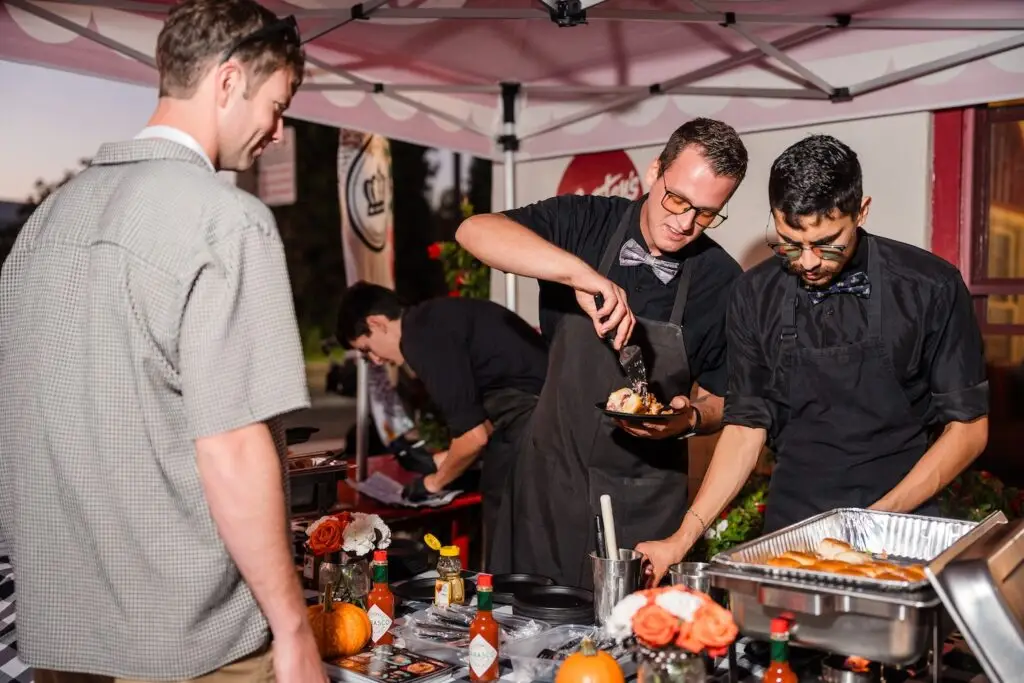
Go beyond the menu during the Taste of North Park, with over 50 food samples and 15 beverage stops, plus live music and art-driven programming to keep all the senses engaged.
7
Cross the Coronado Bridge—and bring your appetite—for A Taste of Coronado, an island-wide culinary jaunt in support of beloved businesses and the Promises2Kids nonprofit.
Courtesy of La Jolla Art & Wine Festival
Theater & Art Exhibits in San Diego This Month
10/8–11/1
In the Roustabouts Theatre Co.’s newest comedy at Scripps Ranch Theatre, roommate beef has no age limit. In “Ripcord,” a feud between Abby and Marilyn escalates to absurd heights.
10 & 11
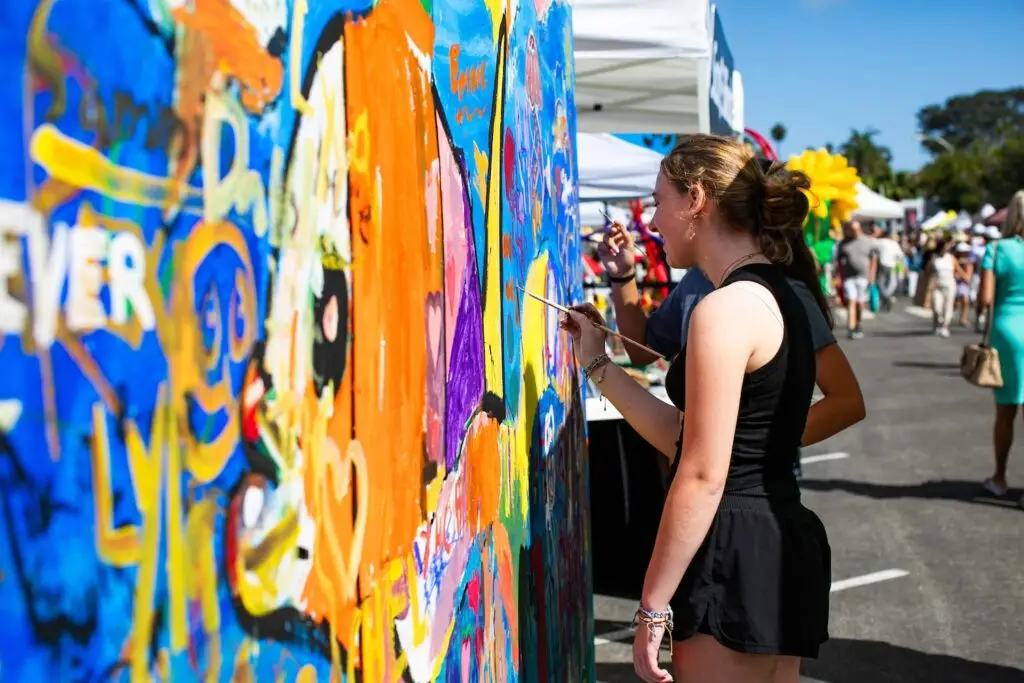
Pay it forward to local public schools with each pet adoption, purchased piece of art—from over 170 artists—and sip of wine, beer, or spirits at the free La Jolla Art & Wine Festival.
17
Those in search of creativity and community can find both at Other Places Art Fair South, a free showcase for independent artists and galleries at California Center for the Arts, Escondido.
Photo Credit: @gabephelan
More Fun Things to Do in San Diego This Month
9/30–10/4
Where can you play pickleball with celebs, sample local eats (including that place you’ve always been meaning to try), and take part in the scenic and delicious Grand Tasting at Surf Sports Park? There’s only one answer: the Del Mar Wine & Food Festival.
2–4
Sashay your way through the 19th annual Fashion Week San Diego, home to stunning runway couture, fall designer collections, and a trunk show—perfect for shopping for your new look.
9 & 10
Dance to Y2K throwbacks all weekend long during Ocean Beach Oktoberfest, which includes a beach party, a stein-holding competition, a brat-eating contest, and for VIP attendees, a custom “OB2K Oktoberfest” liter mug.
First comes the sting, then comes the shock. San Diego County’s newest sports franchise, Oceanside Shock, will make its home debut in the Federal Prospects Hockey League versus the Fresno Falcons at Frontwave Arena.
24
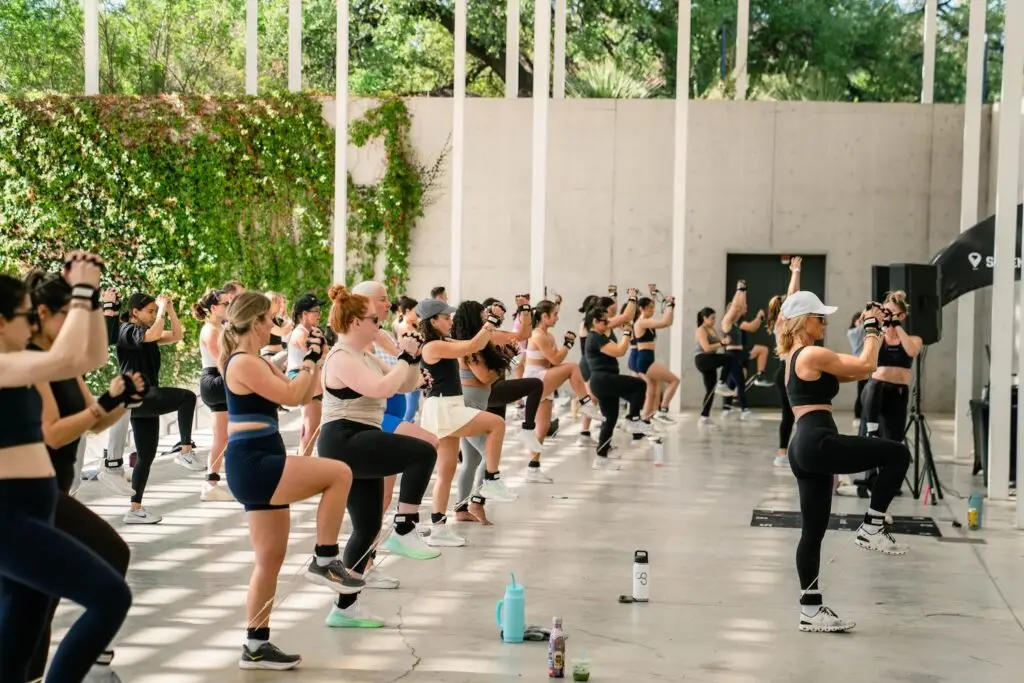
Working out is just one part of this Waterfront Park wellness experience. Practice meditation, play bingo, and recover with sauna zones during the Strength in the City Festival.
25
At the 25th annual Oceanside DÍa de los Muertos Festival, the Day of the Dead is alive and well. Walk through a chalk cemetery and Por Siempre Car Club’s decorative trunk altars during the free event.
Ryan Hardison is a freelance arts and entertainment writer and recent graduate of San Diego State. When he's not staring at his laptop, he's likely eating an adobada burrito or getting sunburnt at the beach.
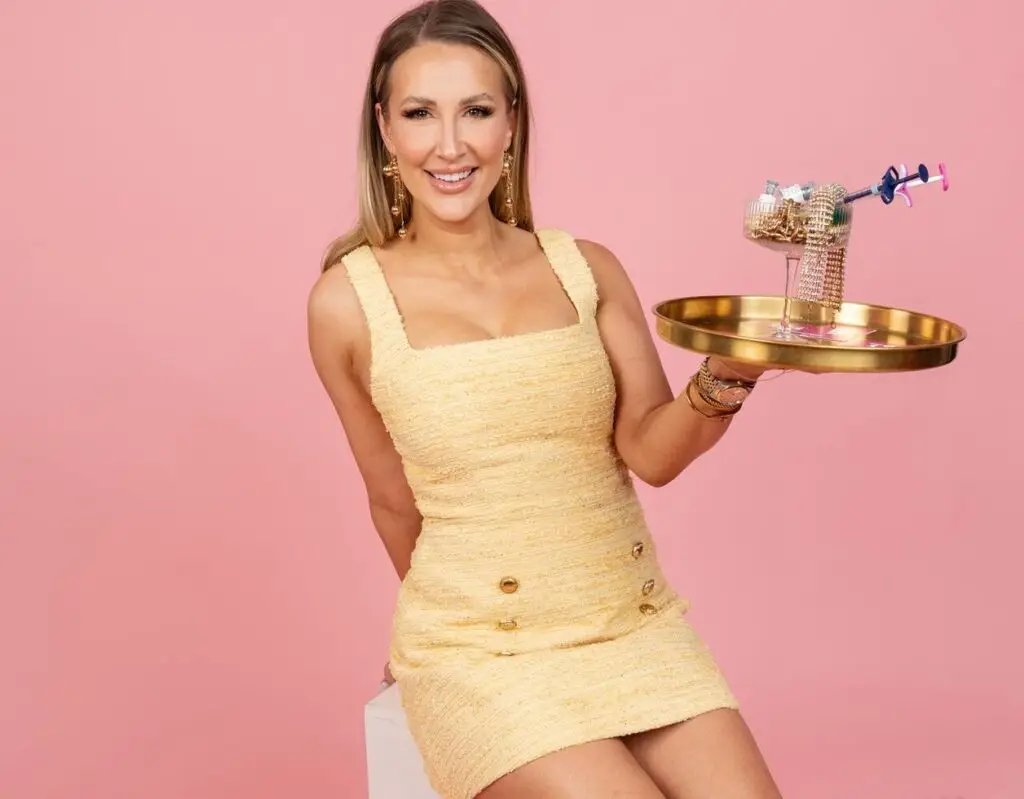
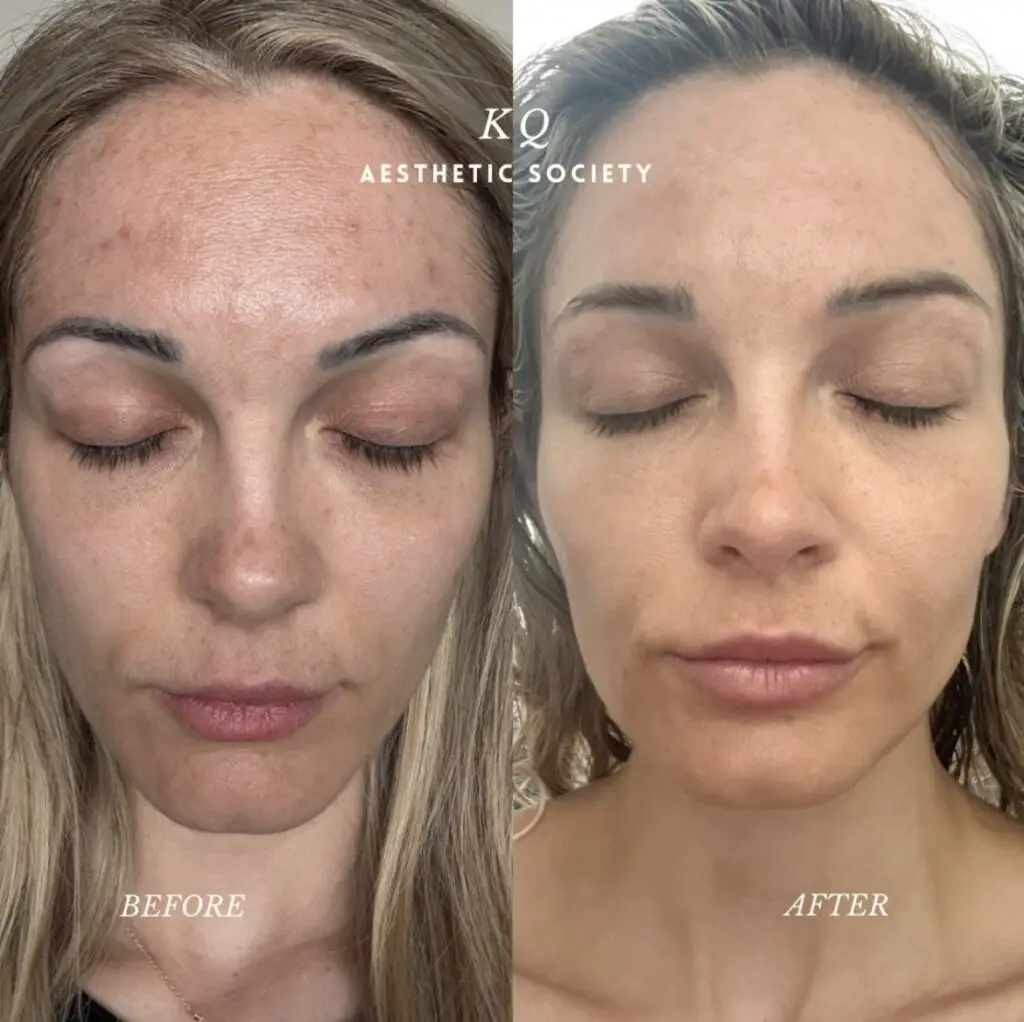
Kelly H. Harfouche, founder of KQ Aesthetic Society, knows firsthand that cosmetic treatments like fillers, neurotoxins, and microneedling, can not only enhance a person’s appearance and restore confidence, they have the power to truly change a person’s life. An expert injector has the ability to tailor treatments to each individual patient’s anatomy and goals for personalized results. Harfouche, a board-certified nurse practitioner, has spent nearly a decade perfecting her craft as an aesthetic injector and integrating her multifaceted artistic skills with precision patient care. Her commitment to continual education and training, plus a passion for helping people look—and feel—their best, set KQ Aesthetic Society apart in a sea of local medspas.
For many people considering nonsurgical treatments, the intent is to look refreshed and refined. KQ Aesthetic Society’s philosophy eschews a cookie cutter approach that bases treatments around units, instead working to understand each person’s unique goals, then curating a treatment plan to fit that vision. Harfouche focuses on “inclusive luxury,” the belief that everyone deserves access to aesthetic treatments, respective of budget restrictions. She develops long-standing trusted relationships with her patients, and works with each one to achieve their aesthetic objectives and address the underlying causes of their concerns.
“For me, forming an honest and open relationship with every patient who walks through the door is essential. This means understanding them on a deeper level and meeting them where they are to define and achieve their individual goals,” she says.
Drawing on her artistic background, which inspired her transition into medical aesthetics, Harfouche sees each client as a “unique canvas.” Rather than relying on standardized procedures, the practitioner’s distinctive approach combines her profound understanding of the physiological and anatomical changes associated with aging with an unwavering commitment to ongoing education about the newest products and their mechanisms of action. Her goal is to make each patient feel beautiful in their own skin and to embrace their individuality.
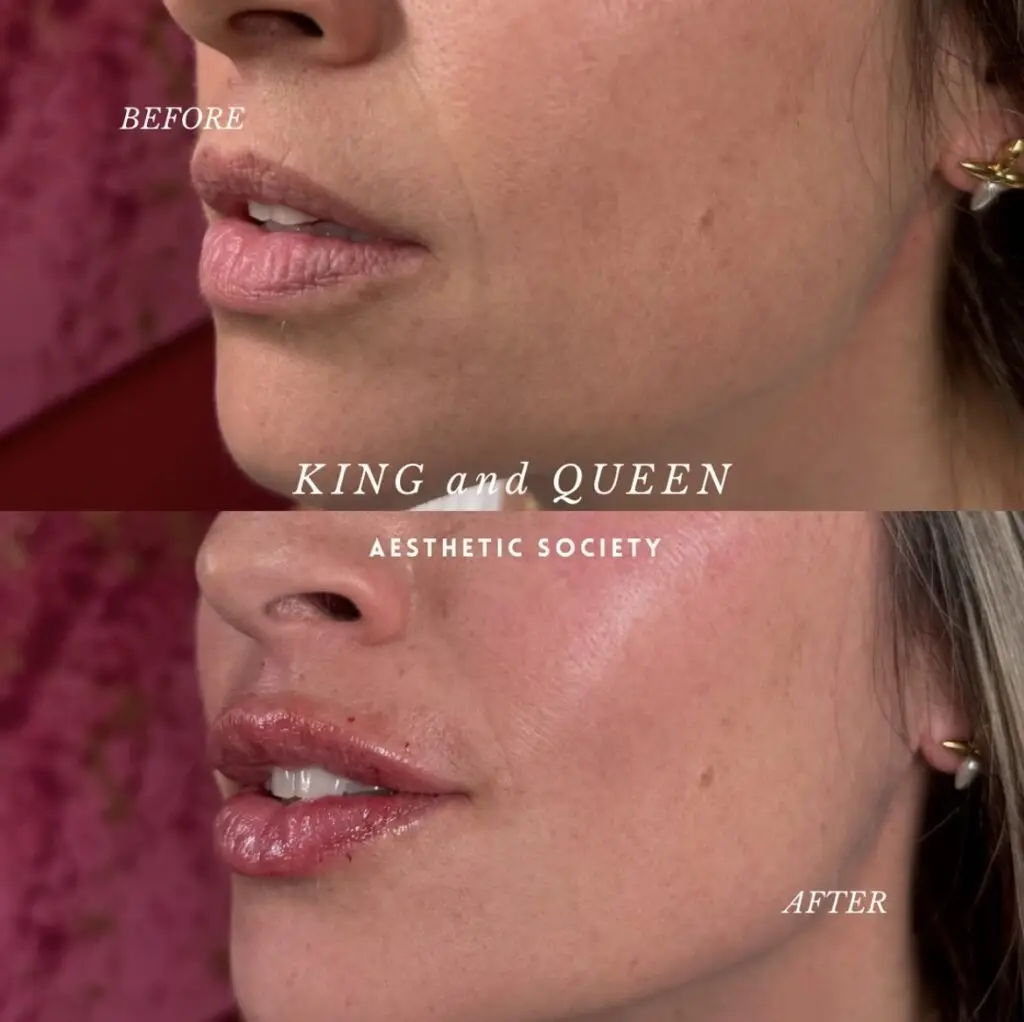
She has also pioneered a way to combine her talent for aesthetic artistry with her philanthropic nature. Harfouche is one of only a handful of providers using dermal fillers to treat patients with lip asymmetry and scarring resulting from cleft lip surgery. Patients travel from around the country for this transformative treatment, noting increased confidence and a restored identity. She hopes to eventually launch a training program to help fill the void in this space.
“My passion has always been connecting with people and giving back in any capacity that I can,” she says. In the rapidly advancing landscape of aesthetic medicine, you can place your confidence in Harfouche and KQ Aesthetic Society to deliver exceptional care. To learn more or book a consultation, please visit kqaestheticsociety.com.
Through its Playmakers initiative, San Diego FC is working with artists, musicians, and other local creatives to shape the identity of the city’s newest professional sports team
What does a soccer team have to do with San Diego’s arts scene? Quite a lot, as it turns out. When San Diego FC launched, the club could have spent its marketing budget on billboards, bus wraps, and digital ads. Instead, it went into neighborhoods, found local artists and creatives, and started building the club’s identity with them. Through its Playmakers initiative, artists have designed limited-edition merchandise, had their work featured on the stadium’s jumbotron, and found themselves in front of thousands of fans—and, in some cases, a national TV audience.
For this special edition of the podcast, created alongside San Diego Magazine’s September arts and culture issue, host Troy Johnson talks with Sebastián Morúa, SDFC’s Senior Vice President of Brand & Innovation, and longtime San Diego native and creative Tony Martinez of Barrio Junto. The conversation gets into why a professional soccer club would make local art part of its business, how Martinez’s decades in San Diego’s creative community helped shape Playmakers, and the club’s early efforts to connect with artists across the county through its Chrome Ball Tour and neighborhood events. The goal, they explain, isn’t simply to put a local artist on a T-shirt. It’s to let the people who already understand San Diego help define what the new club looks and feels like.
The conversation also gets into the less glamorous—but important—side of supporting artists: money. They talk about how Playmakers pays local creatives, the value of the platform SDFC provides, and what it means to build an ongoing relationship between a professional sports club and the artists who help shape its identity. They also discuss the club’s growing music initiative, which will bring local musicians into the fold, and the many ways artists have already contributed to SDFC through merchandise, murals, Parks & Pitches projects, and more. Ultimately, it’s a conversation about soccer, art, community, and what can happen when a major sports franchise gives the people already making culture in San Diego a bigger platform.
This summary was provided to you by AI. To hear from the humans, listen to the podcast wherever you get your podcasts.
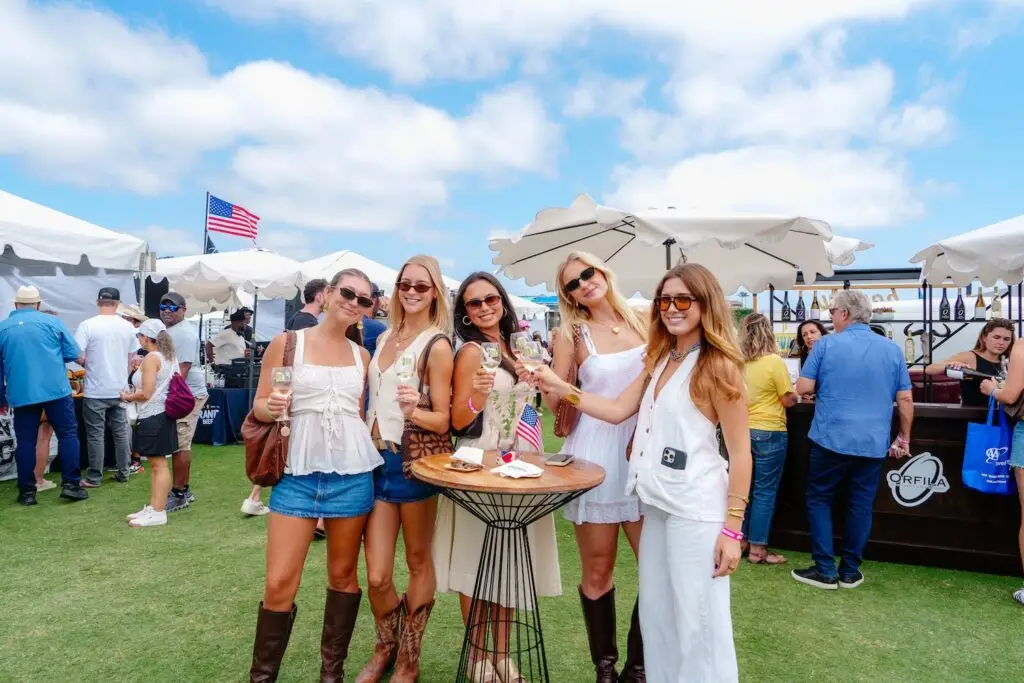
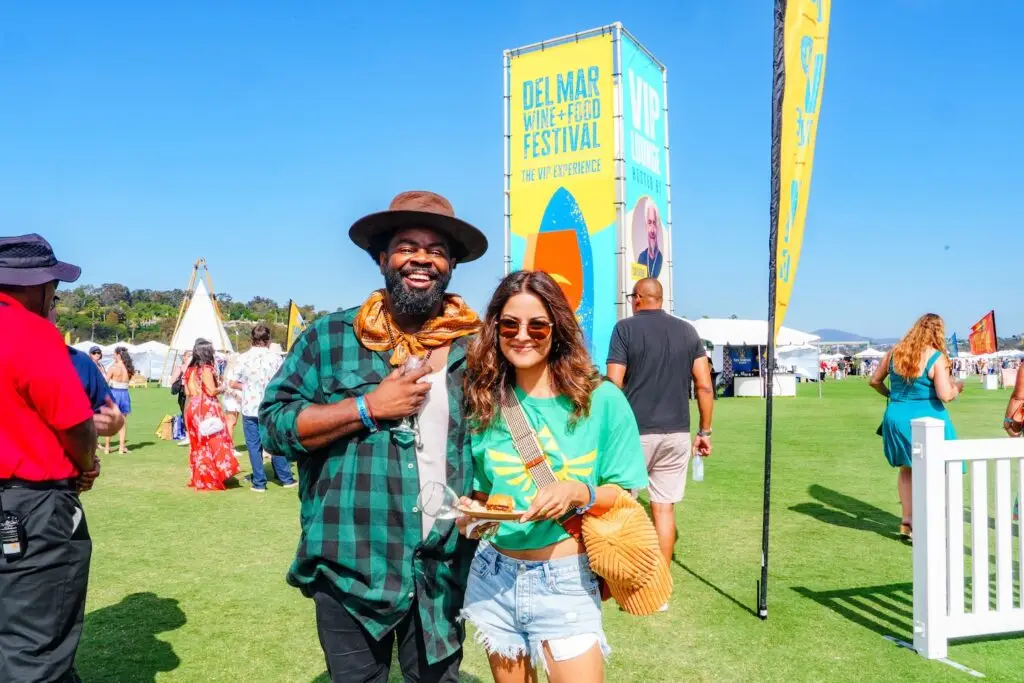
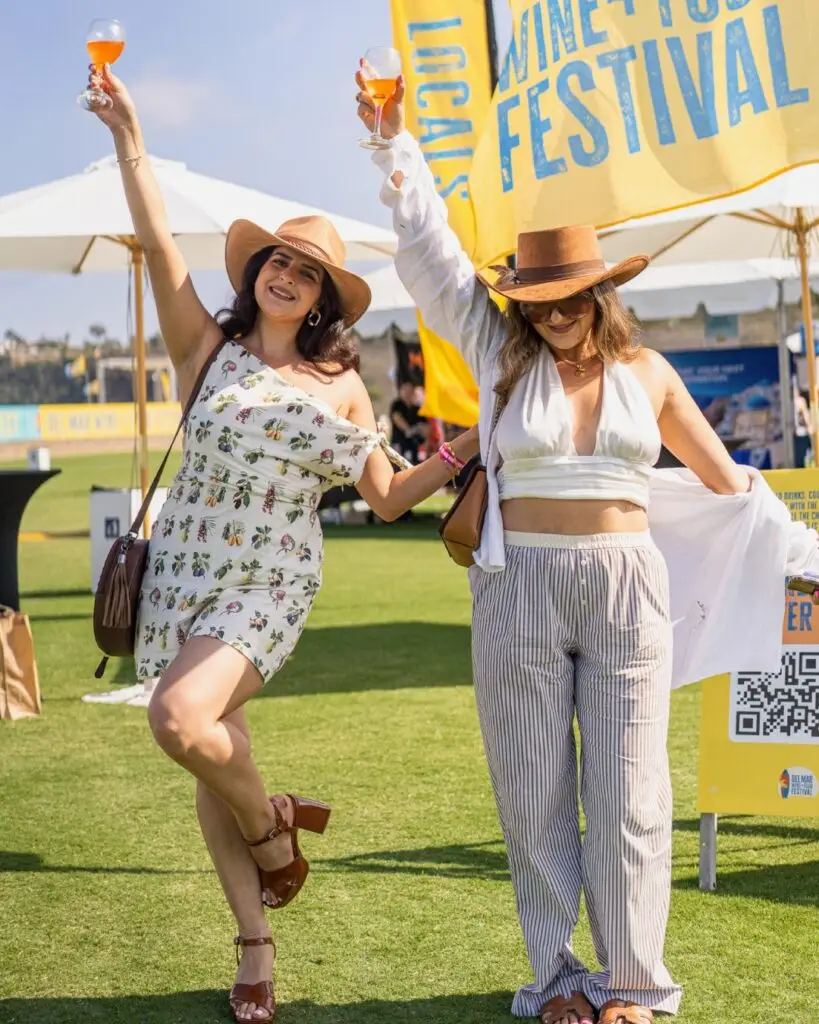
At Del Mar Wine & Food Festival’s Grand Tasting, the walk between food tents can take a while. You might stop to watch a chef competition, get pulled toward the DJ, or find yourself playing mini golf before you remember which bite you were after.
Across the Del Mar Polo Fields, there’s also line dancing, a 1961 red Beetle ready for photos, and an aviation-themed pop-up with Reno Tahoe chefs and mixologists. Need a slower stretch? Check out the wellness stops or browse the shops. Here’s what to look for as you make your way through the festival’s zones:
Courtesy of Del Mar Wine & Food Festival
VIP First Bites & First Sips
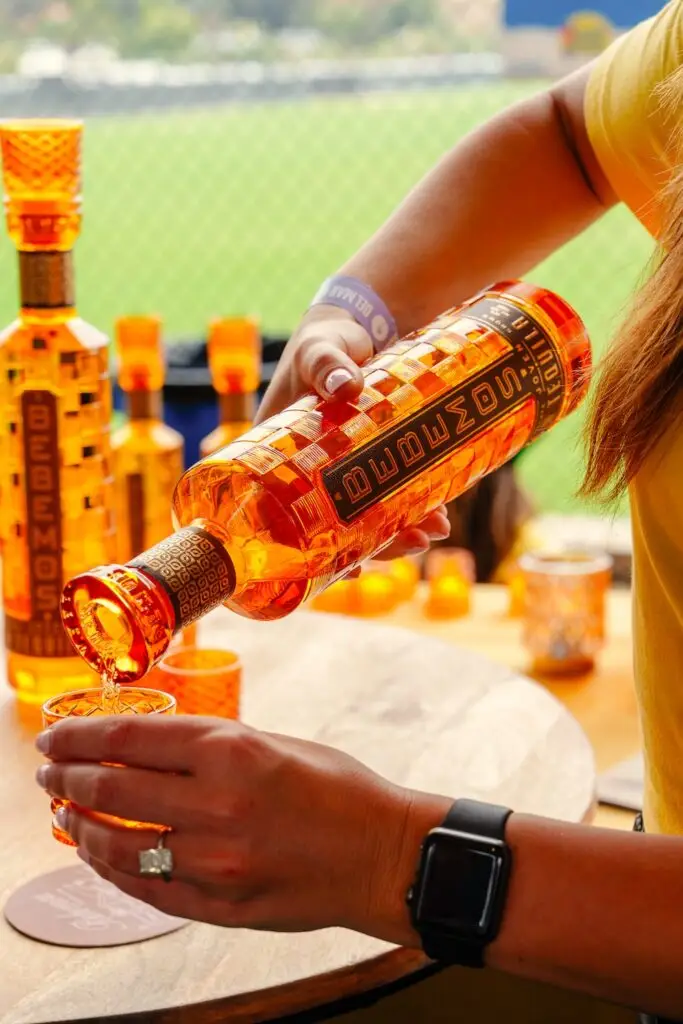
VIP ticket holders get a head start, with the VIP Reception running from 11:15 a.m. to 1 p.m. and serving first bites, first sips, and a few surprises before the Grand Tasting officially gets going. Champagne Telmont will make the festival’s first pour, while Cohn Restaurant Group brings carajillos alongside pours from Karl Strauss, Licor 43, Tap Truck San Diego, Bebemos Tequila, and Devil’s Grin Gin.
The bites are just as good. Celebrity chef Beau MacMillan will serve a first bite, while Warung RieRie is bringing one of its highly coveted dishes. Yes, this is the restaurant that currently has an eight-month waitlist. You’ll also find bites from The Shellfish Affair, The Waverly, Wolf in the Woods, Dora Ristorante, Cori Pastificio Trattoria, An’s Gelato, Pacific 333, Vintana, and more.
And because every good first act needs a soundtrack, there will be live painting and music, with Courtney Govan bringing live jazz to the reception. It’s the perfect opening act before the main event.
Live Cooking & Culinary Moments
During the VIP Reception, chefs Tommy Gomes and Jeff Roberto will conduct a live ahi cutting. Plant Paradise brings another culinary angle, with celebrity chef Zuliya Khawaja joining the plant-based lineup. The area combines chef talent with plant-forward restaurants and brands, giving guests a chance to see just how creative plant-based cooking can get.
Throughout the weekend, The Stage keeps the cooking demonstrations coming, with celebrities and chefs sharing techniques, recipes, and plenty of inspiration for anyone who plans to actually cook something when they get home. Before you know it, you’re watching a chef demo, casting your awards vote, and sipping mezcal on the grass with friends you just met in line.
Courtesy of Del Mar Wine & Food Festival
DJs, Music, & The Party
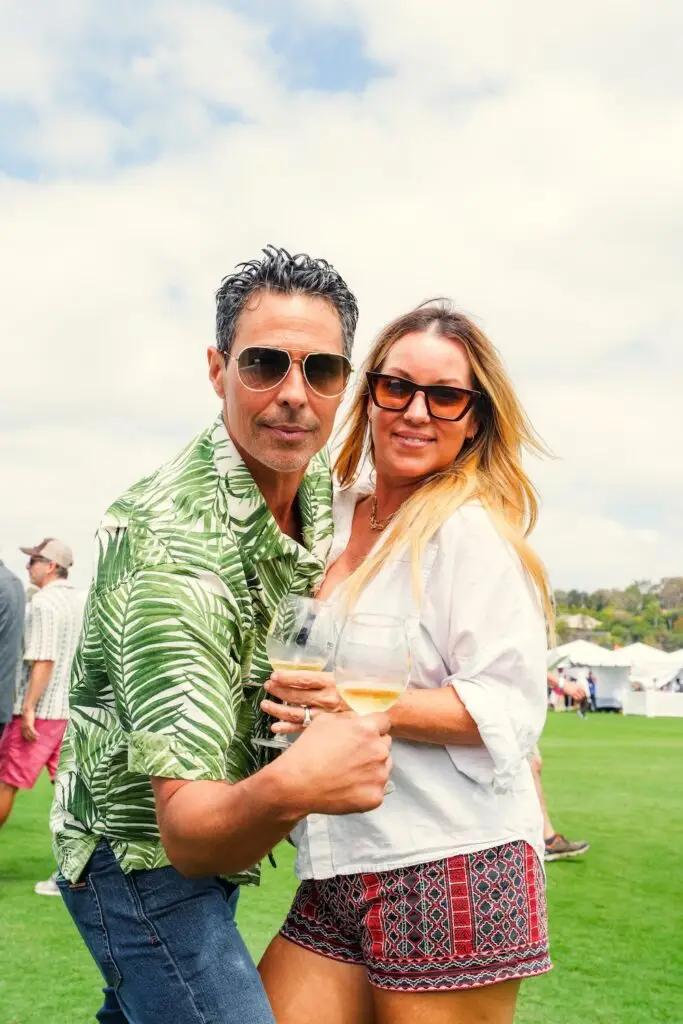
At the Grand Tasting, dancing just sort of… happens. A DJ drops the right song. Someone’s holding a taco in one hand and a glass of wine in the other. The country zone breaks into a two-step. Friends convince friends. Strangers become temporary dance partners. By the end of the day, everyone’s forgotten they were ever worried about looking cool.
DJ TENAX will be spinning in Plant Paradise, bringing house, techno, and UKG to an open-air dance floor that’s hard to leave. Chris Cantore, a veteran San Diego broadcaster, takes over the VIP Tent, while BootScootin Line Dance and PVO Events bring country-style line dancing to the Polo Fields, so you can work off your tasting itinerary one two-step at a time.
Then a live guitar hum in the distance leads you to a fuchsia boa over at the Pride Zone, where you’ll find yourself covered in sequins and having the lawn party of a lifetime.
Sports, Tailgates, & Games
Not every activity at the festival requires a tasting glass (although it’s certainly encouraged).
The Matchday Experience brings San Diego FC and San Diego Wave FC into the Grand Tasting, complete with interactive tents and plenty of game-day energy. Athletic Brewing is also sharing activation space with San Diego Wave FC, bringing a fun nonalcoholic option into the mix.
For golf fans, the Los Angeles Golf Club is bringing a Dryve Box golf simulator to the festival. And if your competitive streak is less fairway and more miniature windmill, SD Pop Up Mini Golf has you covered.
The Beach Zone gets in on the action, too, with surfing-inspired elements and Playavole paddle courts. Hemlock Hats and other California brands add to the coastal atmosphere, but the real draw is having somewhere to actually play. And don’t worry, you can cool down in COOLA’s turquoise beach chairs, too, and when your bestie suggests reapplying sunscreen, obviously you do. Basically, there are plenty of ways to work up an appetite between tastings.
Courtesy of Del Mar Wine & Food Festival
Photo Ops & Instagram Moments
You’re going to want to take photos, and the festival has made that extremely easy.
A Timeless Day is bringing multiple photo moments to the Grand Tasting, including a 1961 red Beetle at The Italian Getaway and a teal VW bus in The Beach Zone. For something a little more polished than the standard group selfie, head to the Locals Zone for Pixster Photo Booth and San Diego’s version of a Glam-Bot, complete with a grass red carpet.
Bebemos Tequila is also bringing back its festival-favorite hidden speakeasy. If there’s ever a time for a photo, it’s here. Otherwise, people might not believe you. The speakeasy serves bone marrow shots straight from the bone, with candlelight, a lounge area that makes it hard to believe you’re in a tent outside, and little orange shot glasses. This is “first slide of your festival photo dump” material.
You can also grab your squad and head to LaCroix’s bright and ridiculously cute setup, or swing by San Diego Magazine’s area, where you might stop for a photo in front of the larger-than-life SD Magazine sign and find yourself watching a painting come to life.
But really, you’re in Del Mar. The ocean is essentially your backdrop, and every zone gives you an excuse to stop for the obligatory “totally candid” photo. And yes, the best strategy is to get the group shot before everyone has been sampling wine for three hours.
Shop, Browse, & Take Something Home
The Grand Tasting also doubles as a little shopping excursion, with local makers, fashion, vintage finds, jewelry, and lifestyle brands scattered throughout the grounds. Smoke Revival Vintage Vault brings the thrill of vintage treasure hunting, while Nortte Hats and Hemlock Hat Company make a pretty good case for leaving with a new accessory.
Keep an eye out for jewelry and creative vendors, too, including Iris Studio Jewelry and New Nightfall Jewelry, plus local artists and makers featured throughout the festival.
You can come for an all day food and wine festival, but still leave with something shiny you definitely did not plan to buy.
Wellness & Reset Moments
We know, at some point, even the most dedicated grazer has to come up for air. The Novo Dia Wellness Zone is designed for exactly that, bringing together mocktails, coffee, hydration, wellness brands, and even bites from Parakeet Cafe.
Step away from the food and drink frenzy for a few minutes, relax in the shade, try some skincare, stretch with prAna, and maybe grab some Instant Hydration Electrolytes before round three.
There’s also nothing wrong with stopping to smell the roses at Green Air Botanicals while devouring a dairy-free cheese dip. It’s less about disappearing from the party and more about making sure you have enough energy to keep going.
The zones give you somewhere to wander, and the activities give you a reason to keep going. So grab your tasting glass, check the schedule, and leave a little room in your afternoon for something you didn’t plan on doing. At Del Mar Wine & Food, that’s usually where things get interesting.
Isabella Dallas is a freelance writer for San Diego Magazine and the Arts and Culture Editor at The Daily Aztec in her final year at San Diego State University. She previously worked as an editorial intern for SDM, but when she’s not writing, you can find her trying the best coffee spots in SD, devouring the latest rom-coms, and indulging in anything and everything pop culture.
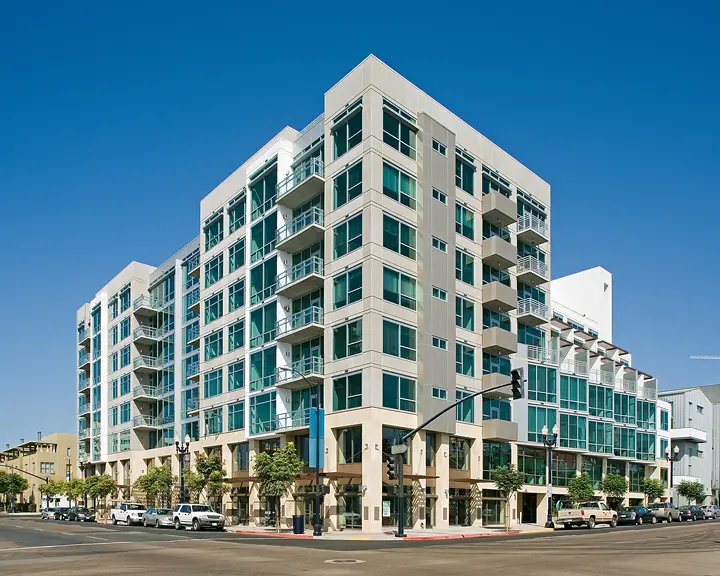
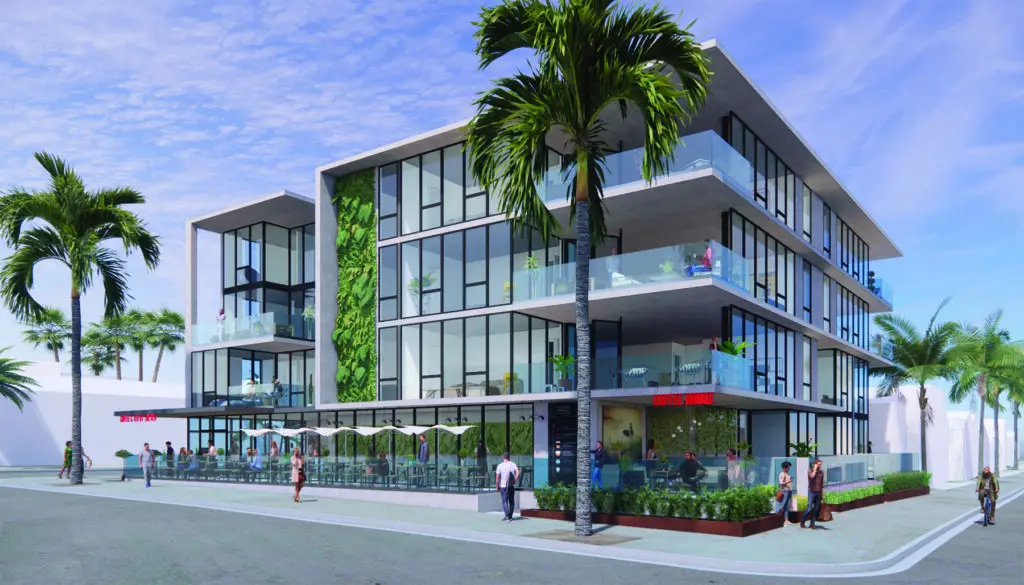
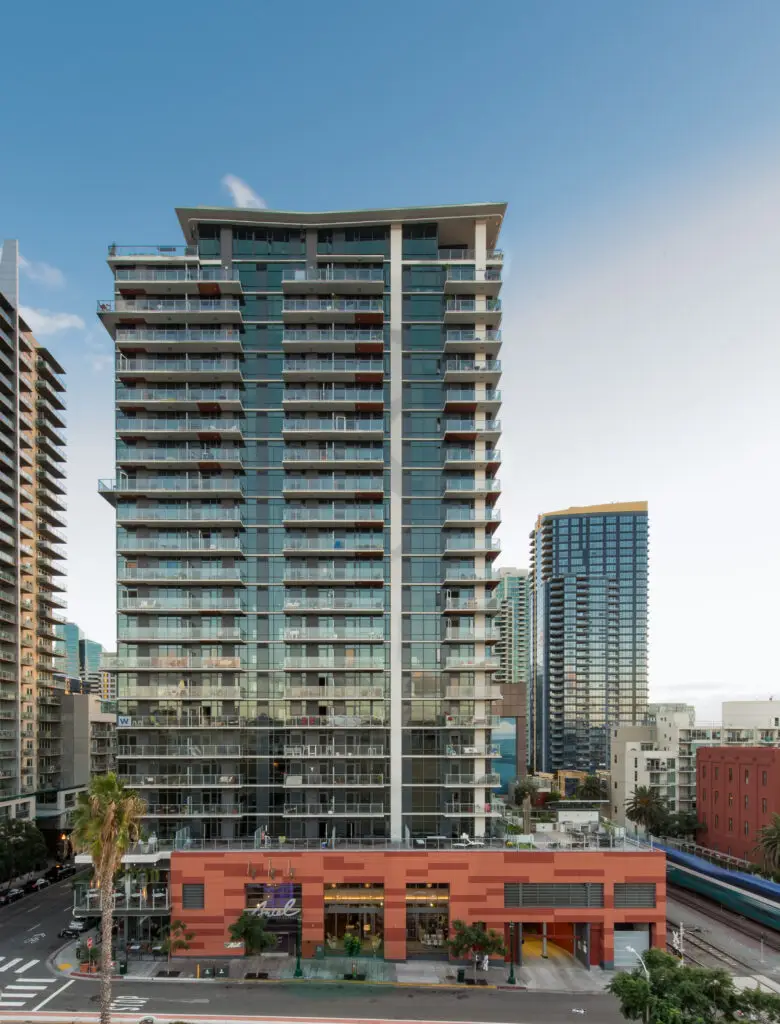
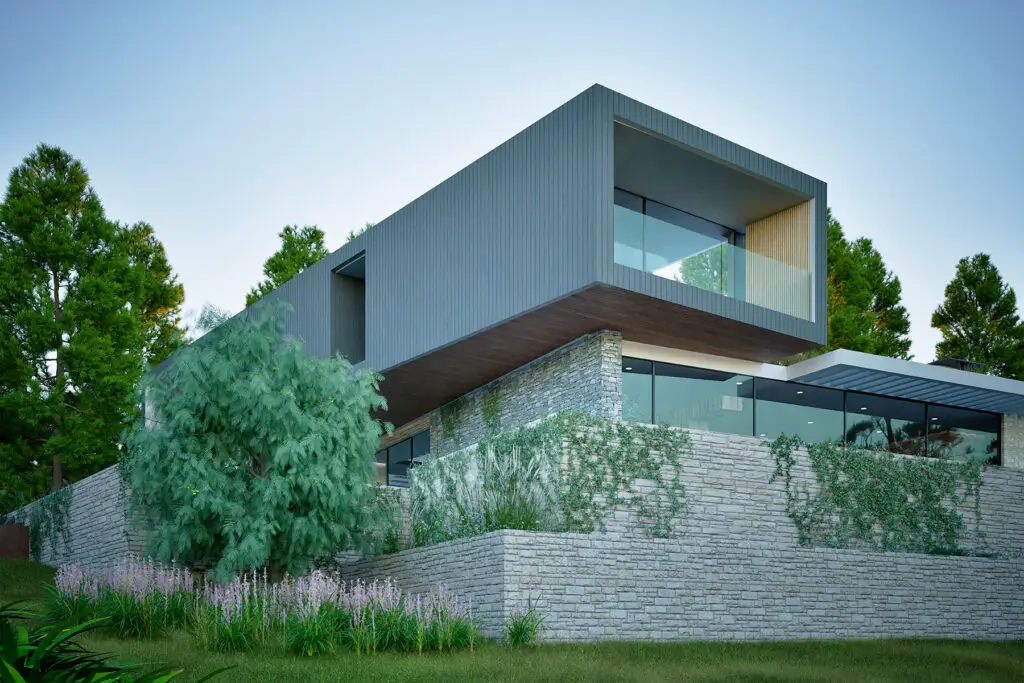
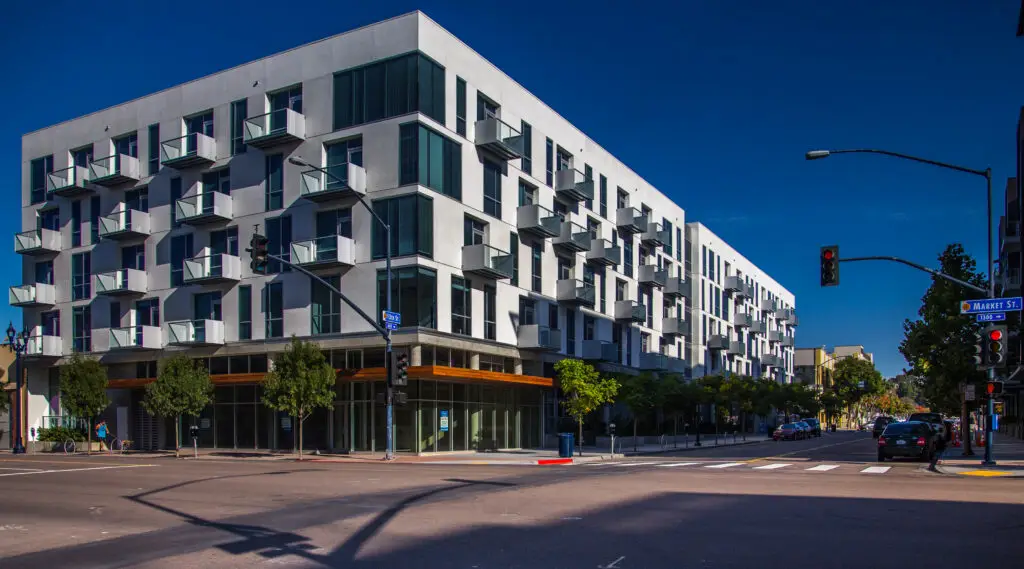
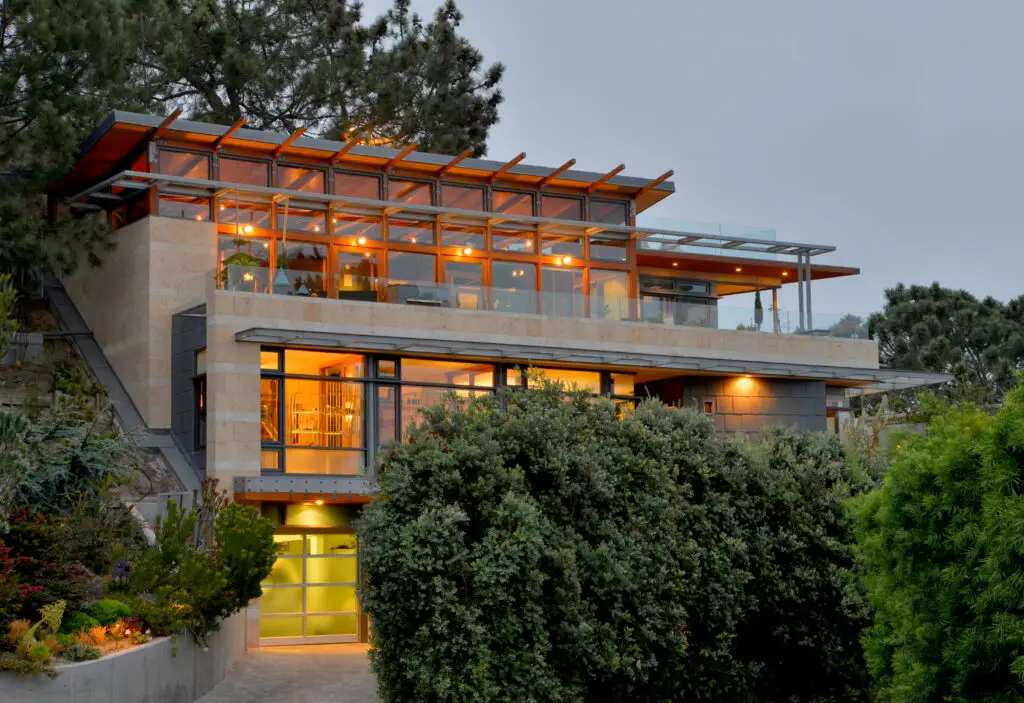
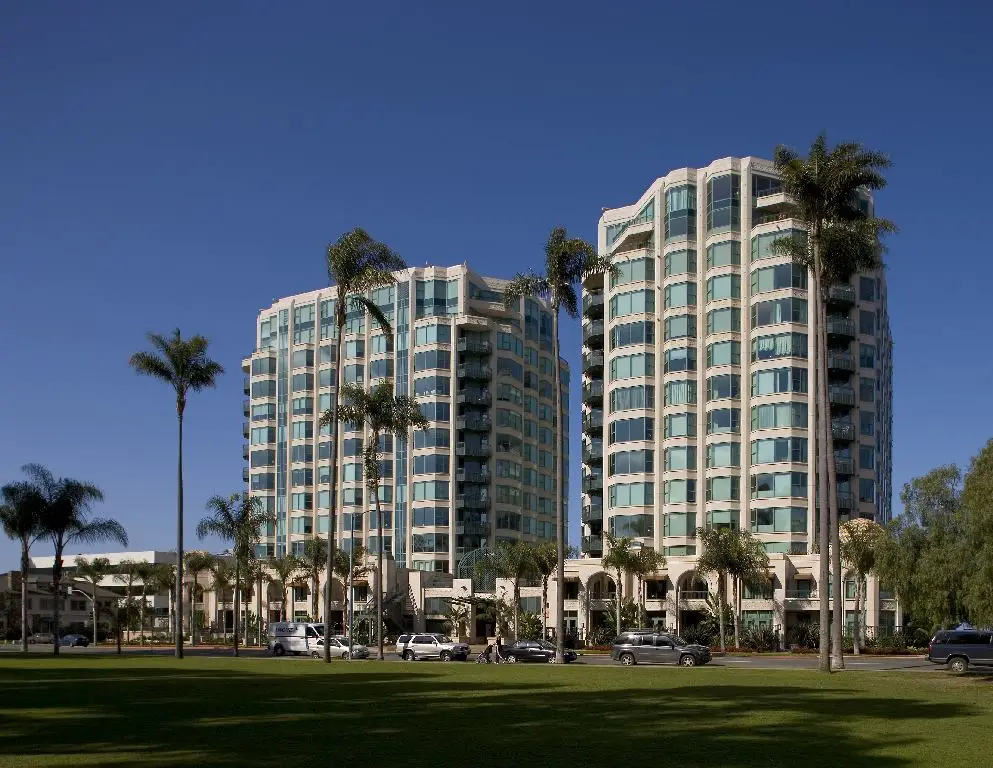
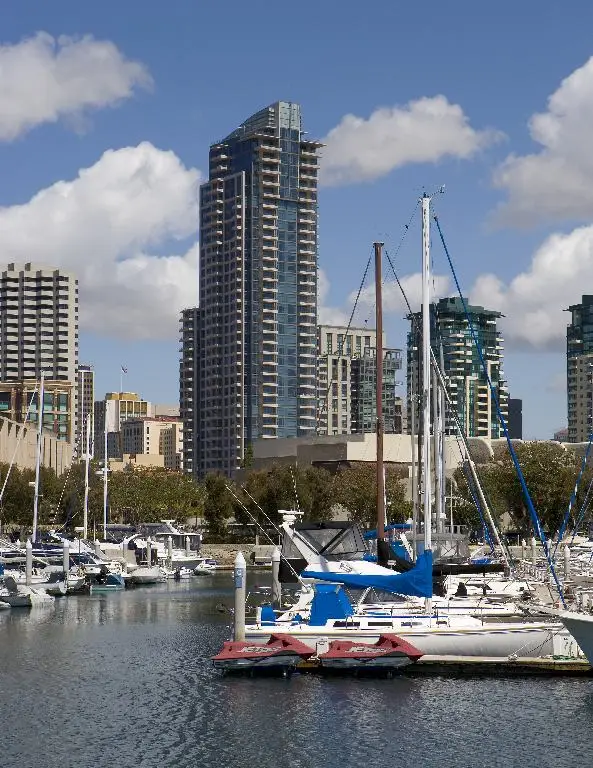
AVRP Studios’ tradition for Design Excellence and Innovation began in 1976 with Doug Austin, FAIA, in Solana Beach, California. The firm has since grown to complete major projects throughout the United States and Canada. We think of ourselves as a family and we care deeply about people. We want to inspire, help make their lives richer and more complete through our efforts. We believe that architecture is one of the most important art forms because of the impact it can have on the lives of those it touches. We’re delighted to have been recognized with over 150 awards for design excellence.
703 16th Street, Suite 200, San Diego, California 92101 | 619-704-2700 | avrpstudios.com