Featured articles
Food & Drink
Food & Drink

Food & Drink
Featured articles
Things to Do
Everything SD
Everything SD
Featured articles
Things to Do
Things to Do
Things to Do
Featured articles
podcast-ep
podcast-ep
podcast-ep
Featured articles
Everything SD
Everything SD

Everything SD
Featured articles
Food & Drink
Things to Do
Everything SD
Ready to know more about San Diego?
SubscribeReady to know more about San Diego?
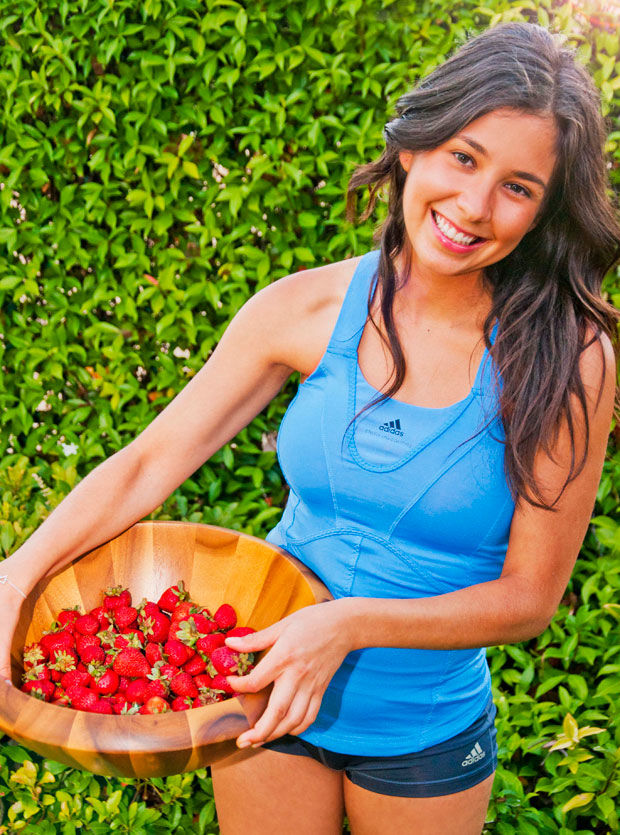
More than 51,000 Instagram followers and 10,000 YouTube subscribers will recognize this 24-year-old Chula Vista resident, Yovana Mendoza, as “Rawvana”

Yovana Mendoza, Rawvana
When was “Rawvana” born? A little over a year ago, I’d been living a toxic lifestyle, drinking almost every day and smoking about five cigarettes a day. I was a big party animal.
What made you start eating raw and vegan? In January 2013, I decided to stay two weeks at the Optimum Health Institute, a detox center in Lemon Grove. I went cold turkey. No alcohol or smoking. Food-wise, I went completely raw. I did try cooked foods again—but they didn’t sit well in my stomach. I didn’t feel the same as when I ate only raw.
Okay: Juice or smoothie? With juices, you’re extracting the juice from the fruits and vegetables, and removing the fiber. With the blender, you get the fiber, the sugar, the water, and the nutrients. I like both, but in the long run, a smoothie is better because the fiber helps our digestion.
What are your go-to gadgets? There are two types of juicers. The fast juicer is fast, but it keeps out more. It’s great for carrots, apples, cucumber, celery—foods that are higher in water content. I recommend a Breville, and an Omega VRT330 for a slow juicer. For a blender, I love the Vitamix. You can put literally anything in there.
Where else can your fans find you? I make recipes on the Univision TV channel every month for the morning news, Despierta San Diego.
You’re fluent in both English and Spanish. Do you feel there’s a special need in the Hispanic community? Mexico ranks number one for the most obese country. People are eating tacos and refried beans. Many of them don’t know the importance of eating more fruits and vegetables.
Do you recommend a raw vegan diet for everyone? When you’re eating raw foods you’re eating living foods. Raw foods are easily digested by the body, which means you will have increased energy and you will think clearer. I recommend it for optimum health, even if someone is not interested in doing it 100 percent.
What’s a good tip for beginners? If you’re interested in eating more healthfully, try replacing one meal a day with a smoothie or with fruit. I always recommend doing it for breakfast because it’s easy and a great way to start the day.
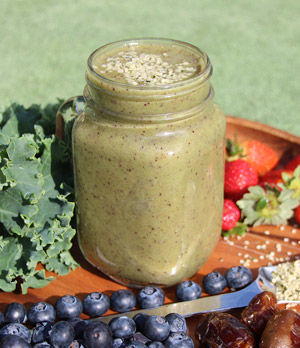
Post-Workout Smoothie
(makes about 32 ounces and 600 calories)
Blend the following ingredients:
• 3 bananas
• 1 cup blueberries
• 2–3 dates*
• 1 strip of kale, without the stem
• 1 tablespoon of hemp seeds** (Look for them at Trader Joe’s, Sprouts, or Whole Foods)
• 1 cup of water
*Dates are a great source of fiber and sweeten any smoothie.
PARTNER CONTENT
**Hemp seeds have the perfect balance of essential fatty acids
We asked 12 golf pros from across the county to choose the city's top holes to create the "Dream 18"
At the top of a golf swing, the world settles into a hush. Anyone within 50 yards kindly shuts up in reverence. Steady heartbeats tuck inside the sound of the wind. Time stands still.
Or—panic sets in, a thousand warnings from coaches and YouTube tutorials prattle through your brainpan. You wonder if a good walk prepares to be ruined.
On descent, the club rearranges air particles as it slices on a perfect or unwise line toward an earth so green, it seems like AI. The iron face meets the ball, and the satisfying or unsettling thwack echoes across the fairway like a nonviolent gunshot or a cry for help. Breath catches, curse words load in the prefrontal cortex. Eyes squint to follow the hard-to-see projectile zip majestically through the air or bounce lamely along the ground like a failed hurdler.
Sometimes it goes a couple hundred yards in the right direction, other times a couple yards into uncaring swamps. Golf’s beautiful and hard as hell.
Mindfulness and stillness reign over speed and might—which goes against most basal American instincts regarding sport. Its quiet, serene mocking of our human abilities is what brings so many of us to the life-long process of sharpening the skill. Because who hasn’t stared at the most beautiful parks and lawns in the world and said, “How can I turn this into a game and win it?”
Luckily, San Diego has an abundance of courses to improve and curate self-doubt. The county is home to over 70 courses that attract the top golfers in the country. Some of the biggest names in the sport—Callaway, TaylorMade, Cobra, Titleist, Odyssey, Honma—are based here. Perfect weather never hurts. But San Diego golf courses also promise a smorgasbord of terrains: rocky canyons, hot deserts, and lush greens overlooking the expanse of the Pacific Ocean.
If you could take the 1,300-ish holes around San Diego and pick the very best ones to create your ultimate course, which would they be? We asked some of the top golf pros in the county to do just that. The result? San Diego’s Dream 18. Think fantasy football but for golf.
Just like any great course, our Dream 18 includes four par 3s, 10 par 4s, and four par 5s—everything from tricky dog legs and psychological tee shots to just pretty, pretty views. Once we had our list, we either asked the head golf pro what makes a hole so special, or other pros spoke on its behalf. Go ahead, tell us what we missed.

“One of the most iconic par 3s on the West Coast. The cliffside setting above the Pacific and the constant ocean breeze make it both beautiful and demanding.”
—Anthony Valverde, Director of Golf, The Crosby Club at Rancho Santa Fe
“It’s a downhill par 3 over water with a great view from the tee down to the green. It’s surrounded by bunkers as well, so it almost feels like an island green even though it’s not. What’s really cool is once you drive to the next hole, if you look back on No. 14, it’s a great view as well. One of the signature holes [at Santaluz].”
—Josh Rider, Head Golf Pro, The Santaluz Club
Hole 15
“Hole 15 is widely considered one of the best and most memorable holes on the course. At about 250 yards, it’s a long downhill with multiple tiers and panoramic views into the valley. It looks intimidating at first, but there are lots of recovery contours and the green is fairly large.”
—Editor’s Choice
“Sitting high above the green with views of the Pacific Ocean, this dramatically downhill par 3 requires the perfect club selection.”
—Mike Mulford, Director of Golf, Omni La Costa

“While it’s beautiful with the backdrop of the Batiquitos Lagoon and the Pacific Ocean, this finishing hole demands both precision and nerve. The water guarding the right side and fairway bunkers ahead create a visually striking, strategic tee shot, while the expansive green rewards a confident, well-placed approach. If you can make a par on this hole, you’ve played it very well.”
—Renny Brown, Director of Golf, Aviara Golf Club
“The 18th hole at Del Mar CC is a demanding par 4 with an elevated tee box. Water guards the right side of the green, and a player must hit a precise shot into this green.”
—Renny Brown, Director of Golf, Aviara Golf Club
“It’s a difficult 428-yard par 4 playing into the predominant west wind. The hole is post-renovation and the vegetation was trimmed back, so now it exposes a penalty on the right. It’s uncomfy at the tee but a good challenge. Plus, it’s the No. 1 handicap for [all players].”
—Chris Lungo, Head Golf Pro, Rancho Santa Fe Golf Club
Lili Kim is a content coordinator and writer for San Diego Magazine, with experience highlighting local businesses and communities. When not writing or shooting film, she is likely brewing her seventh cup of tea of the day or strolling along Sunset Cliffs.
With wellness-centered lifestyles on the rise, party culture is getting a 10 p.m. rebrand
A ’90s pop hit is blasting as I drive up to Solana Beach to go dancing. I’m dressed in the millennial nightlife uniform: black tee, cute jeans, heels. It is 6:30 p.m. on a Tuesday. The dance party starts soon. I’ll be home by 10 p.m. at the latest. I may even catch an episode of Summer House.
I am acutely aware of my age in this moment. I haven’t willingly chosen the club life since my 20s and early 30s. Yet here I am, transported back to 2014 with a few more wrinkles, a lot more ibuprofen, and a touch of “pandemic stole this from me” in my pocket.
A few days earlier, a friend texted to suggest we go to a concert the upcoming weekend. “I can’t, I’m already tired on Friday,” I replied. At 42, two glasses of cabernet bend my space-time equilibrium. A hard sneeze risks a sprained neck. Did I mention the perimenopausal night sweats yet?
I arrive at the Belly Up at 7 p.m. Wilson Phillips comes on the stereo, and I sing-shout the lyrics before stepping out of the car.
Someday, somebody’s gonna make you want to turn around and say goodbye | Until then, baby, are you gonna let ’em hold you down and make you cry?
Tonight’s event is billed as “the dance party that starts earlier.” Surprisingly, I’m not the oldest person in the room. A 60-something man shoulder bops to the DJ set. A Gen X woman shimmies by and snaps photos of the glow-stick-spinning raver on stage. Few are drinking.
Started by two North County locals, Amal Chandaria (32) and Max Gold (37), Earlier is a dance party for older adults who want a club experience without the sleep-deprived, hungover physical toll. Running 6:30 to 10 p.m., attendees get home at a reasonable hour for a full night’s sleep.

Seems I’m not alone in my tired.
“[We’re in] a time where loneliness is high, people are craving connection,” says Chandaria. “One thing we were really intentional about is that you don’t need to go and have drinks to have fun. It’s about the music and getting the wiggles out.”
Early is part of a national trend: the green-juice-ifying of party culture. Americans aren’t going out as much as they used to. They’re drinking less, and 10 p.m. has become the new 2 a.m. Wellness as a lifestyle concept is old hat, and each generation manifests itself in different forms (fitness booms in the ’80s, organic food in the 2000s).
According to a 2024 survey by consulting firm McKinsey & Company, the US wellness market now exceeds $500 billion annually, up from roughly $300–$350 billion a decade ago. More striking than the spend: Wellness as a top priority has surged from about 42 percent in 2020 to more than 80 percent today.
The timing makes sense. Studies show Covid led to long-term shifts in lifestyle patterns. We all began to reassess our lives and made some existential changes—like 6 p.m. soberish dance parties. In a recent Gallup poll, only 54 percent of US adults reported drinking alcohol, the lowest level in about 30 years. Conversations around longevity turned “treat yourself” into “invest in yourself.”
The downer of any wellness trend, though, has been the “can’t” philosophy—can’t eat that cake, can’t sip that marg, can’t binge that show. What if we could do health stuff and still dance and not totally suck the joy out of life? That’s what people like Chandaria and Gold are banking on.
Last year when they attended Atomic Groove—a variety dance band from 5–8 p.m. most Fridays at Belly Up—it sparked an idea. “People want to be healthy and active, and they don’t want to compromise on that by not feeling rested,” says Gold. “I thought, ‘I bet if we’re feeling this way, other people are looking for something like this, too.’”
He was right. Nearly 200 people showed up to the pair’s first dance party last July. Tonight’s crowd is nearing that number again. Among them is Cardiff-by-the-Sea resident and second-time attendee Lauren Marley.
“If you do one thing for yourself—and it means that you don’t have to be completely exhausted and wrecked for all the stuff you have to do the next morning—it’s great,” she says.
Though EDM isn’t quite my thing (give me some stank-face hip-hop from the 2000s), it’s clear from the number of return attendees that Chandaria and Gold have filled a need, one that isn’t just in famously health-forward cities like San Diego.
In DC, Dancing on the Waterfront occurs every Saturday from 5–9 p.m. while Extended Play DC wraps up at 10 p.m. Philly has Matinee Dance Party (5–10 p.m.). New York City finally chooses to sleep, with Friday Feeling and Matinee Social Club both ending at 10 p.m. Last year, Day Shift, geared toward those over 30, debuted at Bloom Nightclub in San Diego.
In Chicago, Earlybirds Club was founded in 2023 by high school friends Laura Baginski and Susie Lee. About 100 people showed up to the sold-out “dance party for ladies who got shit to do in the morning.” Two years later, Earlybirds Club is now held in nearly 60 cities and regions across the US.
“It’s an outlet that [middle-aged women] don’t get in our everyday life,” says Baginski, who also recently appeared on the Kelly Clarkson Show to share their story. “It’s movement and dance. We’ve learned now that it’s really essential to being a happy person.”
Admittedly, it’s a bit harder to be happy when I walk into the Music Box for Earlybirds’ event in San Diego. War’s about to start, protests are the new social gathering, and the economy is gaslighting me into believing salads should cost $18.
But soon the club is a sea of 700 people wanting to dance their asses off. Any negative emotions quickly begin to disappear. Tonight’s music features hits from the ’80s, ’90s, and 2000s: Madonna, Britney, Christina, 50 Cent, Ludacris.
Shuffling past the bar to the already-crowded dance floor, my heartbeat quickens. Pure, unadulterated joy is oozing in this place.
“The whole club was women’s bathroom culture,” said returning attendee and San Marcos resident Beth Avant, 50. “[You get to] freely dance, not care about what you’re wearing, you’re not trying to really impress people.” Soon Whitney Houston’s golden pipes set the room on fire, arms raise, smile lines deepen, and for a few hours, nothing else matters.
Oh, I wanna dance with somebody / I wanna feel the heat of somebody
While Baginski continues to run the operation, Lee lost her battle with stage IV metastatic breast cancer in August of last year. Honoring her memory at each event are words from Lee herself: “Sing f**king loud, dance like nobody gives a shit, and remember who the f**k you are.”
And who we are are sleepy people. If this new wellness era really takes off, imagine the possibilities. Dinner dates at 5 p.m., the Super Bowl at 2 p.m. EST, Justin Bieber headlining Coachella at 7 p.m. Until then, you’ll find me in bed shooting down plans past 8 p.m.
Nicolle Monico is an award-winning writer and the director of creative projects, digital editor for San Diego Magazine with more than 16 years of experience in media including Outside Run, JustLuxe and The San Francisco Chronicle.
OB-GYNs Dr. Meredith McMullen and Dr. Ashlee Schlesier and hormone coach Bridget Walton weigh in on how to support healthy hormones
Everybody’s talking about hormones. Celebrities like Michelle Obama, Sex and the City’s Kim Cattrall, Oprah Winfrey, and the irrepressible Gwyneth Paltrow are waxing poetic on menopause, and, according to industry publication BeautyMatter, the market for products related to that particular life stage will hit $24.4 billion by 2030. There are more than 225,000 TikTok posts under the hashtag #hormonehealth, many of them focusing on “balancing” out-of-whack levels of estrogen, progesterone, testosterone, and more. Those often-mysterious little chemical messengers are having a moment.
According to Dr. Ashlee Schelsier, a Sharp Community Medical Group board-certified OB-GYN, “hormonal imbalance” isn’t a clinical diagnosis in and of itself, since “our hormones as women vary hour to hour, day to day, and by what part of the cycle we’re in, so it is normal to have big fluctuations.”
However, she adds, “we do have clinical diagnoses that result in changes in our hormones that are a symptom of a disease.” And with age comes the palpable shifts of menopause.

The associated symptoms—annoying at best and debilitating at worst—frequently leave ovary-havers scrambling for solutions, from medications and supplements to foods said to help our hormones achieve equilibrium. “It’s really important to partner with a medical team and a physician that is willing to sit and listen and understand your experience,” says Dr. Meredith McMullen, a San Diego OB-GYN with Kaiser Permanente. “In the past, there has been a tendency to underplay or dismiss these symptoms, both on the patient and provider side. But you don’t have to suffer in silence.”
The first step is working to understand exactly what’s going on. Per the World Health Organization, polycystic ovary syndrome, or PCOS, affects approximately six to 13 percent of reproductive-aged women globally. Doctors typically diagnose PCOS if you have some combination of irregular or absent periods; the titular cysts on your ovaries; and signs of elevated androgenic hormones like testosterone, including acne and excessive hair growth. People with the condition might also experience insulin resistance, chronic inflammation, issues regulating cholesterol, and even depression and anxiety.
“The syndrome itself actually runs with things like Type 2 diabetes … and obesity,” McMullen explains. “That’s why we call it a syndrome, because we see the effects across multiple body systems. This disorder is really specific to women who are still menstruating.”

Others experience the lesser-known premenstrual dysphoric disorder (PMDD), “defined as recurrent, severe, and distressing symptoms that occur during the luteal phase, which is the week or two before menstruation, and significantly improve within a few days after the onset of menstruation,” McMullen says. Symptoms include anxiety, depression, headaches, and severe fatigue, all more extreme than your garden-variety PMS.
Perimenopause (the period of transition just before your cycle stops permanently) and menopause (which you’ll have officially reached once you’ve gone 12 months without a period) are different—they’re normal, age-related stages, but they can come with uncomfortable symptoms and side effects. “What menopause really signifies is the end of the ovaries producing consistent levels of estrogen and progesterone,” McMullen adds. “But instead of the ovaries stopping like a light switch, what we see is that the light switch ‘flickers.’ It’s that flickering time frame that corresponds to the perimenopausal phase where you’re getting irregular secretion of estrogen from the ovaries. That’s why you see these perimenopausal symptoms”— things like night sweats, hot flashes, fatigue, weight gain, even joint pain—“start to become more prevalent.”
But because the symptoms people experience can be so diverse and far-reaching, it can be difficult to tell whether what you’re dealing with is truly a hormone issue. For example, “there are a lot of things that mimic PCOS, like androgen disorders [or] thyroid disease,” Schlesier explains. Clinicians use tools like physical exams, patient history, blood tests, and ultrasounds to diagnose conditions such as PCOS and PMDD.
While many hormonal diseases are not curable, there are plenty of routes to treat them. “There’s a supplement that is helpful with PCOS called inositol,” Schlesier says. “The main treatment for PCOS is going to be an oral contraceptive pill. It increases something called your sex hormone–binding globulin, which binds up those excess androgens. It also regulates your cycle. It is important to have four cycles a year … to protect your uterus against potential pre-cancer and cancer.”
Amelia Rodriguez is a writer and journalist and winner of the San Diego Press Club's 2023 Rising Star Award and 2024 Best of Show Award, she’s also covered music, food, arts and culture, fashion, and design for Rolling Stone, Palm Springs Life, and other national and regional publications. After work, you can find her hunting down San Diego’s best pastries and maintaining her five-year Duolingo streak.
The 29-year-old culinary director at Herb & Sea is making seafood sexy (and approachable) again
Implementing a farm-to-table model hardly deserves acknowledgement these days. It’s not a stretch. It’s not innovative. “It’s the bare f**king minimum,” says Herb & Sea‘s executive chef Aidan Owens.
When I arrive at the Encinitas restaurant, I’m ready to talk sustainability, farm-to-table stuff, with Owens. “Did you see the chin on that?” he says of the extra big jiggly chin on the sheephead that just arrived with the day’s fresh catch. I did. It was Jay Leno adjacent.
I learn quickly that he somehow oozes both charm and stone-cold honesty. Maybe he could construct a new dish with chin goo, like he did when he had a bunch of tuna scraps and voila’d it into a smooth and crowd-pleasing ‘nduja. “I want to know what’s in there,” he says.

The instinct to look closer, to dig into what others might discard, says a lot about the chef’s approach. I guide him back to our topic, but he has something else on his mind. “We’re overcomplicating food—what happened to just cooking good food and having fun with it?”
Owens grew up on a farm in Byron Bay, Australia, where sustainability wasn’t a concept you chat about so much as a way of life. Think dirt roads, backyard chickens, pulling vegetables straight from the ground, and a mother who believed that if you couldn’t pronounce the ingredients on a package, you shouldn’t eat what was inside.
Food wasn’t precious or performative. Making it was what you did because you were hungry and that’s still what inspires Owens today. “I like to cook good food because I like to eat good food,” he says.
His approach to sustainability at Herb & Sea began so naturally that it felt just like instinct. “I was just like, ‘Let’s order food from the people who live and work here,’” he says.

And why wouldn’t he when lives in San Diego? Cities all over the world vie for our goods. Our tuna is sent overseas. Our spiny lobsters hit dinner plates in China and Japan. Not to mention California’s producing a third of the country’s vegetables and three-quarters of its fruits and nuts.
“Why would we outsource when it’s all here?” Owens asks.
Sustainability, in this context, is about cooking what exists in abundance, nearby, right now. “I love the local fish here. It’s f**king delicious and San Diego citrus, I mean, it is so f**ing good,” he says.
Instead of importing ingredients, Owens also looks for nearby alternatives. “You can find really cool things in the local waters,” he says, pointing out that stingray cheeks taste similar to scallops.

Whatever he finds in that sheephead chin might just be the next substitute for marrow. But to make this work, it means getting diners amped up about the slightly unfamiliar.
Tasting menus, where diners are completely in his hands, become an opportunity to gently push boundaries. “I’ll serve mackerel, because people think they hate it,” Owens says, noting that the abundant local fish can have some fishiness. “But when it’s fresh, it’s arguably one of the best fish in the ocean.”
He also tweaks the language on the menu so people might feel more compelled to give dishes a try without preconceived notions. He might use “lengua” instead of “tongue.” “Whelk” instead of “snail.” When he puts “stingray throat” on the menu, he disarmingly calls it “skate.”
To reduce waste, scraps aren’t always discarded but rather turned into something new. Sometimes they’re smoked, cured or fermented. Apples going bad turn into apple ponzu. Lemons turn to marmalade, which stretches their usefulness far beyond peak season. “And it’s super tasty on our pizza,” he says.
What makes the food even richer, is the relationships he’s built with farmers. Though it didn’t always feel natural, Owens sought personal connection first. He recalls approaching a fisherman at the Tuna Harbor Dockside Market. “I was awkward,” he says. “I went up to him and said, ‘I like your fish.’”
Owen’s is now so close to his suppliers—like fishermen Ryan Sebo and Joe Daly—that he gets texted pictures of fresh catches right as they flop on the boat. The messages always ask if he wants first dibs. “I say yes to a lot of fish,” Owens says, noting that Herb & Sea can go through 2,000 pounds of seafood a week.

The next evolution of sustainability, in his view, will be chefs working directly with producers such as his alliance with Sebo, cutting out middlemen and purveyors where possible. “It will put more money in the pockets of the people doing the work,” he says.
It will mean that chefs can’t just know their local farmers and producers, but they’ll choose to work with the ones who have the best practices. Dining and sustainability will become much less about the final plate. “It will be more about the impact that plate has on the Earth,” he says.
Ultimately, he believes sustainability doesn’t need to be loud. It doesn’t need hashtags. It just needs to be honest.
“We aren’t saving lives. We’re feeding people good food,” he says.
And yet, in feeding people well—simply, thoughtfully, responsibly—something meaningful happens. Guests leave satisfied. Ingredients are respected. Local ecosystems are supported and food returns to what it has always been at its core: nourishment, pleasure, and a quiet reflection of the place it comes from.
No buzzwords required.
Hoping to catch some Zs after two decades of sleep troubles, editor Nicolle Monico tries listening to the sounds in her own head
As I walk into Cereset in Encinitas, I wonder if tonight will finally be the night I get the kind of sleep I remember from my childhood: fully knocked out, vivid dreams, pillow lines on my face. As I get situated in a La-Z-Boy chair, head tech coach Madolyn Dolce places electroencephalogram (EEG) sensors around the crown of my head and on my ear lobes to track my brain’s at-rest activity. I sit with my eyes closed in a dark room for several minutes at a time as headphones relay a symphony of the sounds firing off in my skull.
“Those sensors read a signal, and then the technology translates them into musical tones that you listen to in your ear buds. You’re basically hearing your brain back to you,” Dolce says. “It’s completely non-invasive.”
It had been nearly five years since I had slept without any type of assistance. I’ve struggled with irregular sleep patterns and insomnia for almost two decades, and, eventually, shuteye was only possible if I took prescription sleep aids or 12.5 milligrams worth of cannabis gummies. Without them, I was sleeping about two to three hours non-consecutively.
At the start of this year, I learned about Cereset, a wellness company that claims to use sound to help the brain relax and rebalance, ultimately promoting restorative sleep. Founded in Arizona in 2000 by Lee Gerdes, it’s reportedly aided more than 150,000 people with its BrainEcho technology.
Today, it has over 60 franchise locations in the United States and abroad, including San Diego County. According to the company, Cereset’s neurotechnology employs sensors to observe brain activity and then assigns an auditory tone to dominant brain frequencies. The idea is to hold up an “acoustic mirror” to your brain to help it find balance. While these sounds are incoherent to the human ear, the brain understands them, then self-corrects, Cereset argues.
Since the late 19th and early 20th centuries, research has shown that changes in brain wave patterns can indicate various mental health conditions. Recent studies in journals such as NeuroImage, Basic and Clinical Neuroscience, and Frontiers in Human Neuroscience have also looked at the brain’s ability to self-regulate and correct itself by monitoring its own electrical activity, especially through the use of EEGs. Some research argues that the use of feedback mechanisms (like sound mirroring) can potentially help alleviate symptoms of certain disorders. Though the data is not significant, I’m still hopeful. I’d try almost anything for a full night’s sleep.
Some doctors see promise in this alternative therapy’s potential to enact lasting change. “It’s totally legitimate to take brain activity and reflect it back to kind of help affect the behavior or the function of your brain. We’ve known about it ever since [Russian physiologist Ivan] Pavlov,” says Scripps neurologist Dr. James Grisolia.
He reminds me of Pavlov’s work focusing on classical conditioning. You know the one—dogs, a bell, kibble. His goal was to elicit a learned response, and soon, his dogs began to salivate any time a bell rang, knowing that their food would soon appear.
“You’re conditioning a response. Biofeedback, [what Cereset is doing with its program], is like that, too,” Grisolia says. Enough researchers are curious enough about the power of biofeedback that the technique became its own field of study in the 1960s.
“These types of mechanisms absolutely can work,” Grisolia adds. “[But they aren’t] used very much by regular MDs because, ordinarily, insurance doesn’t really cover them.”
For neuropsychologist Dr. Marian Rissenberg, though, the research isn’t sufficient. “The process and the rationale for [Cereset’s program] did not really make sense to me from a neurological perspective,” Rissenberg says. “[Cereset’s studies] showed a lack of significant effectiveness.”
While Rissenberg can’t back Cereset’s methods, she’s quick to add that she believes in individuals pursuing all avenues to cure their chronic illnesses and physical or mental health conditions.
“If there is no risk to the treatment and … there are no negative psychological or physiological side effects, then I think that there’s nothing wrong with trying something when you’ve run out of options,” she says. “We know that there is a placebo effect and that it does work. Belief seems to play a part in the healing of our immune system.”
After my own research and a quick phone call with Cereset Encinitas’ co-owner Jason Prall, I found myself in an office park listening to the melodies in my head.
Before the first session, Prall asked that I go three weeks without any sleep aids, so I had to say goodbye to my security blankets. It was tough, but I stepped into that initial appointment free of sleep meds for the first time in years.

Nicolle Monico is an award-winning writer and the director of creative projects, digital editor for San Diego Magazine with more than 16 years of experience in media including Outside Run, JustLuxe and The San Francisco Chronicle.
The pop-up experience was founded as a way to help people express what can be an intimidating emotion in a healthy, collective way
I’m on all fours in a dark room, throat tight, body heaving, panting like an animal. My hair sticks to my sweat-soaked face, covering my eyes. All around me, like a scene from some ancient pagan ritual, women howl, curse, bawl, their bodies shaking in feral agitation. This is RAGEher, and we’re only halfway through the evening.
RAGEher is the brainchild of Kristina “Krissie” McMenamin, whose background in transformational leadership and somatic experiential coaching led her to navigate her own relationship with anger. She found few resources, especially for women to explore their rage, so she started hosting women-focused pop-up experiences as a way to help people express what can be an intimidating emotion in a healthy, collective way and channel it into joy, community, and relief. The event is modeled after a wild “girls’ night out”—the word “rager” is the loose basis for RAGEher.
People seeking spaces to vent anger seems to be an ever-increasing phenomenon. “Rage rooms” where participants can safely smash plates or old electronics with shameless abandon are a growing trend. And advertisements for men’s retreats in the woods—part fight club, part campfire Kumbaya— populate many an algorithm.
Are we becoming an angrier society? Or is anger a healthy emotion we’re finally learning how to confront and integrate into our daily lives? A combination of both? Recent personal experiences and the constant churn of the global news cycle left me grappling with how to handle anger in my own life with few tools in my toolbox, particularly since, as a woman, I grew up being taught not to express it publicly. RAGEher looked like a beacon to explore this forbidden flame.
Tonight’s session takes place at Gold Meditation and Wellness Center in Encinitas. The evening is divided into three stages. Part one is dubbed “Tempest Tavern.” It’s the nervous “entering the bar” stage of not knowing who might be there or how the night might progress. When I arrive, I’m asked to leave my given name at the door and choose a “rageling” name, a moniker intended to help me embody the spirit of my anger or the state I’m trying to manifest through this experience.

The names other participants choose are telling and honest—some political; some visceral, alluding to flesh and bone, female anatomy, or totems of personal strength. I am first in line, panic, and choose something bird of prey–related. Next, I’m invited to write the first word that comes to mind when I think of anger on a large easel-bound white board. The board quickly fills up, words like “hurt,” “fear,” “power,” “release,” “violence,” “f**k” (multiple times), and “destruction” scrawled in red.
I’m drawn from the main reception area at Gold down several steps into the meditation room. It’s a dark bunker of a space, sparse except for the expected mats, pillows, yoga bolsters, and… rubber baseball bats? I take note of them and find a place on the floor. I’m handed two questions on strips of paper, and, soon, I’m surrounded by fellow ragelings, maybe 20 in all. We break into small groups and awkwardly introduce ourselves, diving straight into questions we may have never been asked: “What are you allowed to be angry about? In what situations or with what people do you stop yourself from showing anger?”
Many of the participants have come to tonight’s session with a sense that their anger is unwelcome within their family networks, that they have taken up people-pleasing as a means of self-protection. One rageling says she has made herself small or silent to avoid disrupting the status-quo. Another confesses that her willingness to express anger has damaged her relationships—it’s seen as “too much” in her community.
I hear of childhood trauma, abusive partnerships, the feeling of powerlessness over climate change or the war in Gaza. I feel pain, heaviness, resentment, and regret in their stories. But I also see a hopefulness, the desire to grow and explore, a deep need to connect with other women, the longing for space to feel held and accepted. I realize how much we seem to have in common despite our range of ages and backgrounds, and my initial nervousness fades.
In a world overflowing with shortcuts, marketing fluff, and “good enough,” there are still companies that choose a different answer. And in San Diego, there are plenty of them.
In a world overflowing with shortcuts, marketing fluff, and “good enough,” there are still companies that choose a different answer.
Integrity guides how they show up every day. They make hard decisions, hold themselves accountable, and build trust the old-fashioned way, one action at a time. At the Better Business Bureau, we call these businesses Torch Heroes: leaders who demonstrate that ethical leadership strengthens businesses and drives long-term success.
And in San Diego, there are plenty of them.
Take House Collective Marketing Solutions, a Carlsbad-based digital agency that won the 2025 Torch Award for Ethics for its people-first approach to marketing. Instead of pushing flashy campaigns, the team often takes a step back to make sure clients’ foundations are strong before going big. Their philosophy? Truth over transaction builds partnerships that last.
Or look at Young Black & N’ Business, where integrity shows up through community action. When a local school lost art funding, founder Roosevelt Williams III and his team stepped in with workshops, mentorship, and hands-on support to help restore creative opportunity. That kind of engagement reflects ethical leadership rooted in real impact.
And in Vista, Lotus Sustainables carried its commitment to ethics all the way to the product line. After discovering defects in a shipment of eco-friendly products, the company issued full refunds and redesigned its offerings at its own expense, a choice that shaped its identity and reinforced to customers that ethics guide every decision.
In North County, Greenway Landscape Design & Build brings integrity into everyday service. When a client’s glass was damaged, likely not by their crew, owner Scott Lawn chose responsibility over blame and covered the repair personally. For Greenway, doing the right thing serves as a north star, guiding every interaction through transparent pricing, accountable partnerships, proactive communication, and follow-through long after the job is done.
Other honorees include At Your Home Familycare, whose leadership turned down a lucrative state contract during the pandemic to protect vulnerable clients and staff, and Bill Howe Family of Companies, where hiring practices, training, and service centers around shared values, every day, on every call.
What connects these diverse businesses, from marketing to nonprofit support to home services, isn’t size, industry, or revenue. It’s something deeper: a commitment to trust as a business strategy.
In San Diego’s competitive marketplace, that trust gives companies an edge. Clients invest in relationships. They refer friends. They stay loyal when others fade.
As one Torch Award winner puts it, integrity isn’t a section in the employee handbook. It’s the operating system of the company, the invisible code that determines every choice, every day.
And that’s exactly the point of the BBB Torch Awards for Ethics: to spotlight companies that dispel the myth that ethics and success are at odds. These businesses show that when leaders choose honesty, fairness, and accountability, especially when it’s hard, they build brands that matter.
At BBB, we see nominations come in from clients, employees, and business partners who have witnessed ethical leadership up close. These submissions aren’t polished promotions. They’re stories of moments when a company chose people over profit, clarity over confusion, and trust over convenience.
The nomination window for the 2026 Torch Awards for Ethics is open through March 31, 2026, and there are more Torch Heroes waiting to be recognized.
Who comes to mind in San Diego’s business community?
And yes, businesses can nominate themselves. We encourage it. If you’ve built your business on principles rather than buzzwords, we want to hear your story.
Because in a world full of noise, integrity still deserves the spotlight, and San Diego is full of stories worth telling. Nominate your hero now.