Featured articles
Food & Drink
Food & Drink
Food & Drink
Featured articles
Things to Do
Features
Food & Drink
Featured articles
Things to Do
Things to Do

Food & Drink
What's next
Featured articles
podcast-ep
podcast-ep

Food & Drink
Featured articles
Food & Drink
Features
Food & Drink
Featured articles
Food & Drink
Food & Drink
Food & Drink
Ready to know more about San Diego?
SubscribeReady to know more about San Diego?
75 things to do in the hot, hot sun
Festivals, BBQs, races… and piranhas? Yep, it’s all happening right here in San Diego this season. We’ve mapped out the best places to drink, picnic, party, play, cheer, cavort, compete, rally, run, and, of course, rest.

The San Diego Summer Guide
PARTNER CONTENT
We asked 12 golf pros from across the county to choose the city's top holes to create the "Dream 18"
At the top of a golf swing, the world settles into a hush. Anyone within 50 yards kindly shuts up in reverence. Steady heartbeats tuck inside the sound of the wind. Time stands still.
Or—panic sets in, a thousand warnings from coaches and YouTube tutorials prattle through your brainpan. You wonder if a good walk prepares to be ruined.
On descent, the club rearranges air particles as it slices on a perfect or unwise line toward an earth so green, it seems like AI. The iron face meets the ball, and the satisfying or unsettling thwack echoes across the fairway like a nonviolent gunshot or a cry for help. Breath catches, curse words load in the prefrontal cortex. Eyes squint to follow the hard-to-see projectile zip majestically through the air or bounce lamely along the ground like a failed hurdler.
Sometimes it goes a couple hundred yards in the right direction, other times a couple yards into uncaring swamps. Golf’s beautiful and hard as hell.
Mindfulness and stillness reign over speed and might—which goes against most basal American instincts regarding sport. Its quiet, serene mocking of our human abilities is what brings so many of us to the life-long process of sharpening the skill. Because who hasn’t stared at the most beautiful parks and lawns in the world and said, “How can I turn this into a game and win it?”
Luckily, San Diego has an abundance of courses to improve and curate self-doubt. The county is home to over 70 courses that attract the top golfers in the country. Some of the biggest names in the sport—Callaway, TaylorMade, Cobra, Titleist, Odyssey, Honma—are based here. Perfect weather never hurts. But San Diego golf courses also promise a smorgasbord of terrains: rocky canyons, hot deserts, and lush greens overlooking the expanse of the Pacific Ocean.
If you could take the 1,300-ish holes around San Diego and pick the very best ones to create your ultimate course, which would they be? We asked some of the top golf pros in the county to do just that. The result? San Diego’s Dream 18. Think fantasy football but for golf.
Just like any great course, our Dream 18 includes four par 3s, 10 par 4s, and four par 5s—everything from tricky dog legs and psychological tee shots to just pretty, pretty views. Once we had our list, we either asked the head golf pro what makes a hole so special, or other pros spoke on its behalf. Go ahead, tell us what we missed.

“One of the most iconic par 3s on the West Coast. The cliffside setting above the Pacific and the constant ocean breeze make it both beautiful and demanding.”
—Anthony Valverde, Director of Golf, The Crosby Club at Rancho Santa Fe
“It’s a downhill par 3 over water with a great view from the tee down to the green. It’s surrounded by bunkers as well, so it almost feels like an island green even though it’s not. What’s really cool is once you drive to the next hole, if you look back on No. 14, it’s a great view as well. One of the signature holes [at Santaluz].”
—Josh Rider, Head Golf Pro, The Santaluz Club
Hole 15
“Hole 15 is widely considered one of the best and most memorable holes on the course. At about 250 yards, it’s a long downhill with multiple tiers and panoramic views into the valley. It looks intimidating at first, but there are lots of recovery contours and the green is fairly large.”
—Editor’s Choice
“Sitting high above the green with views of the Pacific Ocean, this dramatically downhill par 3 requires the perfect club selection.”
—Mike Mulford, Director of Golf, Omni La Costa

“While it’s beautiful with the backdrop of the Batiquitos Lagoon and the Pacific Ocean, this finishing hole demands both precision and nerve. The water guarding the right side and fairway bunkers ahead create a visually striking, strategic tee shot, while the expansive green rewards a confident, well-placed approach. If you can make a par on this hole, you’ve played it very well.”
—Renny Brown, Director of Golf, Aviara Golf Club
“The 18th hole at Del Mar CC is a demanding par 4 with an elevated tee box. Water guards the right side of the green, and a player must hit a precise shot into this green.”
—Renny Brown, Director of Golf, Aviara Golf Club
“It’s a difficult 428-yard par 4 playing into the predominant west wind. The hole is post-renovation and the vegetation was trimmed back, so now it exposes a penalty on the right. It’s uncomfy at the tee but a good challenge. Plus, it’s the No. 1 handicap for [all players].”
—Chris Lungo, Head Golf Pro, Rancho Santa Fe Golf Club
Lili Kim is a content coordinator and writer for San Diego Magazine, with experience highlighting local businesses and communities. When not writing or shooting film, she is likely brewing her seventh cup of tea of the day or strolling along Sunset Cliffs.
A very human, very local, non-AI, actually experienced, sometimes weird, oddly specific list of awesome things to do in San Diego
As editors of a regional magazine, we often get asked: What are the best things to do in San Diego? While that answer often involves our favorite taco spot, a definitive ranking of each neighborhood with age-specific notes (head to PB if you’re under 25, grab drinks in Del Mar if you’re over 35), and which surf breaks are friendly to visitors, we figured it’s high time to memorialize our handpicked recs. Below are 101 very human, very local, non-AI, actually experienced, sometimes weird, oddly specific things to do in San Diego.
Experience world-famous surf breaks, authentic Mexican food, and laid-back vibes in this beach town just five miles from the border.
Imperial Beach may not yet be in the echelons of Malibu or Newport when it comes to tourist-beckoning beach cities, but the southwestern-most town in the United States is working to get there. “Imperial Beach is primed and ready for change,” says chamber of commerce president Sandi Crosby, who has lived in Imperial Beach for 20 years.
While IB is in the process of reinventing itself as a destination city, it’s always lived up to its moniker with sea-centric activities: wide sandy beaches, the Outdoor Surfboard Museum (featuring Surfhenge, an iconic public sculpture that resembles four, massive colorful boards), the traditional 1,500-foot wooden pier, Bayshore Bikeway, the Tijuana Estuary (a great place for shorebird-spotting), epic Pacific sunsets, world-famous surf breaks.
But the ability to safely enjoy those breaks (or any of the coastline) has been IB’s biggest hurdle. Pollution-related beach shutdowns plague the city, often for weeks at a time, due to sewage contamination in the Tijuana River. There is hope: In 2024, the federal government committed $650 million to clean up the Tijuana River Valley, and a 2025 agreement with Mexico addresses plans for wastewater infrastructure in Tijuana. Lawmakers like Supervisor Paloma Aguirre and State Senator Steve Padilla are introducing legislation to distribute air purifiers, regulate factory-created pollution, and remove infrastructure contributing to airborne toxins. Former mayor Serge Dedina founded the conservation-focused nonprofit WildCoast to protect the biodiverse wetland habitat surrounding IB, and community members continue to raise their voices for pollution remediation.
And it’s still a wonderful place to explore. Exit the 5 at Palm Avenue, head west, and turn south on Seacoast Drive to find the heart of the city. Staycation at Pier South Resort, wander through a tchotchke-filled gift shop, linger over a bowl of clam chowder at Brigantine Seafood & Oyster Bar, peruse public art. Get ice cream at Cow-A-Bunga and walk out on the pier for a classic IB experience. You can’t miss the view of Islas Los Coronados and Playas de Tijuana.


“A lot is new in Imperial Beach in the past five or six years, and some of my favorite places aren’t there anymore,” says Charlie Knowles, who grew up in IB and now co-owns the Portuguese café Bica on Adams Avenue in Normal Heights. But many of his old haunts remain, like IB Forum Sports Bar & Grill, where you can get a cold local beer and a burger on a hot day. “The Philly cheesesteaks are also really good,” Knowles adds, and Crosby says the wings and salads are just as tasty as the burgers.
Opened in the ’60s, IB’s oldest bar, Ye Olde Plank Inn, is a “good old dive,” Knowles says. Just steps from the sand at the corner of Palm Avenue and Ocean Lane, it’s the place with the pirate on top. “And I don’t think [many] people know that there’s a new restaurant attached to it, Plank Cantina,” Crosby points out.
Like any city worth its salt in San Diego, there’s no shortage of quality tacos in IB. Knowles goes to Victoria’s Mexican Food on the corner of Coronado Avenue and Saturn Boulevard for reliably delicious tacos of all varieties, Baja Oyster and Sushi Bar across the street for the fish version, and Ed Fernandez down the block for birria.

“Trident Coffee is one of the new places,” Knowles says. At the end of 13th Street, where it meets the bay and the Otay River, Trident rewards early risers with colorful dawn vistas—and it’s right off the Bayshore Bikeway for a quick caffeine boost during your ride.
Another new(ish) spot with dreamy ocean views any time of day is Sammy’s Woodfired Pizza and Grill at Pier South Resort. “That’s where I go for girl lunch: Caesar salad, fries, and wine,” Crosby laughs.
Off the beaten track on 13th Street, she adds, recently opened restaurants bring new experiences to IB—like Millport, which offers curated dining events and gluten- free pastries, and Mangini’s Pizzeria, which serves artisan pizza. Once you venture away from the shore, you can also find local staples like El Tapatio and Star Dust Donut Shop on Palm Avenue, both family-owned and thriving for 40 years or more.

More beachy fun is coming to Portwood Pier Plaza. Expected in late 2026, a new splashpad will also include fresh landscaping, lighting, artwork, and seating.
Residents and visitors can also look forward to the potential comeback of Imperial Beach’s claim to fame: the Sun & Sea Festival, featuring the world-renowned sandcastle competition. “It depends on funding, so we’re really hoping the public comes through with donations,” Crosby says.
New events are also on IB’s calendar, Crosby adds, like “female founder” gatherings sponsored by the chamber of commerce for women in business, as well as the IB Expo and Tasting Tour that takes place Father’s Day weekend to coincide with the first-time arrival of a NASCAR race in Coronado (the 3.4-mile street race is expected to summon tens of thousands of spectators).
Crosby is excited to see what kinds of businesses will move into empty spots along Seacoast Drive, and she is encouraged by the recent arrival of unique shops like upscale stationery boutique Crafty Paper Co. SunCoast Market, opened in summer 2025, is another fresh concept for the city—a co-op grocery store offering San Diego–grown produce, locally prepared and packaged food, and more organic choices.
Through the decades, Imperial Beach has maintained a reputation as one of San Diego’s more budget-friendly beach towns. But recent years brought precipitous hikes in housing costs, mostly driven up by investors buying and renting out existing units, lack of affordability in other parts of San Diego, and a dearth of economical housing units under construction in IB. So, it’s big news that a new multi-family development with affordable units is coming to Holly Avenue and 14th Street, complete with a public park and green space—the first of its kind in the area.
“Resiliency is on the rise,” Crosby says. “There’s a general consensus that we’re working toward something better.”
Leorah Gavidor won her first essay contest at age 5. She writes features, news, and non-fiction in San Diego.
A look back at the risks, grit, and instincts behind the local restaurant powerhouse
In this city, chef Brian Malarkey and restaurateur Chris Puffer are kind of like peanut butter & jelly, tacos and Tuesday, Padres and Petco—they just go together. This month, the duo celebrates 10 years of partnering on some of San Diego’s top restaurants including their first venture, Herb & Wood.
To celebrate this milestone, we stepped back and revisited their journey becoming some of this city’s most successful restaurateurs.
But first, let’s go back to the beginning. The duo met at Oceanaire in 2007 where they both worked. Malarkey was still riding the high from his stint on Top Chef Season 3 where he won runner-up. He was a great chef, Puffer recalls, if not a tad arrogant. Whatever he was doing, though, it worked. Sales doubled under his watch.
In 2009, Malarkey was approached by some patrons to start what would become Searsucker. He knew he wanted Puffer to be his partner. They had great chemistry and loved hospitality and food. “We both came to this with a bit of a chip on our shoulder,” says Malarkey. “We wanted to prove it to other people that we know what we’re doing.”

Searsucker, Gabardine, and Herringbone (under the Fabric of Social Dining restaurant group) were born through the new partnership. But in 2012, they sold their concepts to Hakkasan and soon partnered on a new lease.
That building would eventually become Herb & Wood. “We were going to do it differently this time around,” says Malarkey as he reflects on Wood’s early days. “And we [wanted to] build it to last.”
The vision: Great food. Great music. Great service. It’d be a place where diners would let go, put their phones down, and be fully present to enjoy a meal together. When they walked into 2210 Kettner Blvd, they knew they had found their spot.
The only problem was that, at the time, that area of Little Italy was still severely underdeveloped. In a 8,500-square-foot space, they were going to have 230 seats to fill. “It may as well have been on Mars,” says Troy Johnson, San Diego Magazine publisher, content chief, and the city’s longtime food critic.

And, of course, there were the naysayers. The prevailing feeling in the dining world was, “Let’s see what these f**king idiots do,” recalls Malarkey. The duo let all the noise be noise. In fact, the noise fueled them. “We weren’t going to cater to the haters,” Puffer says.
Their next hurdle would be to tackle the restaurant’s design. “There was nothing. It was literally a box,” says Puffer of the former space. Design teams were too expensive or didn’t quite get their vision—no, they didn’t want exposed beams or wooden tables made from reclaimed barns. “Then, Puffer was like, ‘f**k it, dude, I’m going to design this restaurant.’”
Having never really designed something like this before, he decided not to work in the programs that most professionals use to create their layouts. 3D mockup? Didn’t need it. CAD? That’s what a paper and pencil are for.

“It was all in my head,” he recalls. “I had this moment where I was like, ‘If I died right now, no one would know where any of this shit goes.’”
“Yeah, it made no sense,” Malarkey says.
And it still doesn’t if you hear him explain it. A mishmash of vignettes from the inner workings of his memory bank, evoking everything from Mississippi riverboats to Eiffel tower ironwork, Kensington home façades, an old theater he frequented, and a canoe, because why not? Yet somehow, it all worked.
“It’s a sense of nostalgia,” says Puffer. “People might say, ‘Oh, my gosh, this feels good’ and they don’t realize it reminds them of the time they were in Paris.’”
“We don’t play trends,” Malarkey says. “We play timeless.”

Over the course of many years and plenty of trial and error, the partnership has continued to thrive. And, the Puffer Malarkey Collective has found its sweet spot within their restaurants: The service had to be kind and unpretentious and the food had to come out quick, delicious, and consistent. “Consistency is key!” says Puffer.
They also learned to balance out one another. “He’s a go-go-go-go [person],” says Puffer, “I’m a let’s-take-a-deep-breath-and-sleep-on-it [type of person].”
So, when they opened the doors to Herb & Wood in April of 2016, with those lessons in place, everything was just right. “We knew it had to fire on all cylinders,” says Puffer. “And it did.”

There was no pretense and the dress code was exceedingly simple. “Money in your pocket,” says Malarkey. “That’s all you need.”
The phones rang, the seats filled, and the haters had to give it to them, those gnocchi hit. People began embracing every aspect of the place, even the edgier ones.
“We thought people were going to complain about all the paintings with boobs,” says Puffer of the many John Lanes on the wall. “But the amount of people who take pictures in front of the boobs is amazing.”
They even had a middle finger statue that Puffer had picked up from a yard sale. If a table was rude or antagonistic toward the staff, he’d walk over to them with the finger. “Congratulations,” he’d say, handing it over. “You’ve won asshole of the night.”

The point is, they were ready to laugh (and not take shit from anyone). When someone wrote a review of Herb & Wood and called it Weed & Boners, they both had a laugh. It’s one of the keys to longevity.
Along with the fun and deliciousness, they’ve also served as a culinary talent incubator for San Diego. “It’s like a centrifuge,” says Johnson about Herb & Wood. “They train up all these young chefs and start spinning all this talent into different parts of the city.”
There’s Sebastian Becerra with Pepino, Samantha Bird of Relic Bakery, Aidan Owens at Herb & Sea, and Tara Monsod of Animae and Le Coq (San Diego’s first James Beard award finalist) to name a few. “They’ve expanded the footprint of the food revolution in San Diego,” says Johnson.
Their plans for the next 10 years?
“We’re just going to keep the magic going,” says Malarkey.
This historical East County community offers numerous hikes, family-owned shops, and a slower pace of life.
You don’t have to go far to get your forest fix in San Diego County—just take the 8 East past El Cajon and gain altitude in the Cuyamaca Mountains and you’ll hit Alpine, a quasi-rural community of 15,000 with sweeping views. Surrounded by national forest land and two reservations and perched at 2,000-feet elevation, Alpine is only about 30 miles east of downtown San Diego, perfect for a day trip when you’re in the mood for a small-town outing (or a stop along the way to the desert or Viejas).
The Kumeyaay hunted, gathered, and farmed in what is now Alpine more than 12,000 years ago before Spanish missionaries forced them to convert their villages to rancherias. By the late 1840s, after California and Mexico declared independence from Spain, the rancherias were consolidated into one massive “rancho,” and, in the 1850s, the area became a stopover on the “Jackass Mail,” SoCal’s first regular postal route. Then came the Gold Rush and a road to Julian, followed by another kind of gold: Alpine was California’s leading producer of honey in the late 1800s.
Former historical society president and honorary mayor Bob Ring says that during WWI, Alpine became known for having the “best climate” in the United States—healthy for soldiers’ convalescence or those with respiratory issues. Good weather, agriculture, and deer hunting brought folks to Alpine as it grew from hunting shacks to cottages to family homes.
Nowadays, Alpine is a place where “you have to get in touch with nature—because we have no movie theaters,” jokes real estate broker and former chamber of commerce board member Jeff Campbell, a resident since 1974. Getting outdoors in Alpine might mean joining 4-H or Future Farmers of America; hiking or dog-walking at Wright’s Field or Loveland Reservoir; riding horses, ATVs, and mountain bikes; or hitting the trails to discover seasonal waterfalls like Cedar Creek Falls, which cascades into a swimmable pool. Alpine is also the place to get up close with raptors at Sky Falconry and meet rescued big cats at the animal sanctuary Lions Tigers and Bears.


“Here’s how favorites work in Alpine: We all have our preferred menu items at each of our town’s 11 eateries,” Campbell explains. The restaurants are mostly concentrated along Alpine Boulevard right off the 8.
Ring likes the rolled tacos at family-owned Alpine Taco Shop, with extra guac and cheese, while Campbell is partial to the fried fish tacos at Casino Inn Bar & Grill. According to Campbell, Franca’s Italian Kitchen and Bar has the best baked rigatoni not only in Alpine but in all of San Diego County. Ring goes there for family dinners and says he could be satisfied with “just the homemade bread with balsamic and olive oil.” Or head to Mediterraneo (locals call it “the Med”) for vegetarian lasagna. “I’m a keto dude, but it’s that good,” Campbell says.
For coffee, there’s The Well Cafe, where Cecilia Kennedy runs the shop and her husband Alan roasts beans in micro batches at home. Try the dark roast for drip and Mexican mocha for something a little fancier. Breakfast is a must at Janet’s Montana Cafe, which Campbell says serves the fluffiest pancakes, with no syrup needed. “[Janet’s has] homemade everything,” Ring adds, “but try the pies.” Grab supersized treats at Steph’s Donut Hole, and lunch is on the go at Barons Market, where you can pick up soup and salad.

With two award-winning breweries in town, Alpine has a good beer scene for its size. Campbell gets the Assaulted By Feather Pillows IPA at Mike Hess Brewing and the Apricot Bells Bluff blonde ale at Mcilhenney Brewing Co.
The town also has a healthy populace of gearheads: Locals like to bring out their classic cars, motorcycles, dune buggies, and fifth wheels. Hang out on a Sunday to ogle old Thunderbirds, Mustangs, and Corvettes. For fun, Alpine parents take their kids to Viejas Outlet Center for outdoor ice skating in winter (and roller skating the rest of the year) or games at the center’s big arcade.
Overall, Campbell and Ring agree, you gotta have humor and heart to live in Alpine. “The culture of this community is that people are always willing to help, even in these busy times,” Ring says.

Change in Alpine is incremental. Campbell anticipates Alpine’s mix of historic and suburban-type housing won’t shift dramatically in the near future, but he has seen some movement by the county to rezone some of its land to encourage more affordable units. “It’s my greatest hope for Alpine,” he says. “Nothing is deeded yet, but it’s on the county’s radar.”
Caltrans is also paying attention to the area, with a recent freeway expansion east of Alpine to Pine Valley, which means more road enhancements could be coming to the two-lane stretch of the 8 that leads from El Cajon west to Alpine.
A new state law that took effect in 2026 will certainly bring changes to Alpine’s mountain aesthetic: Homeowners and businesses must remove all combustible materials within five feet of any structure to help prevent fires. Compliance means replacement of existing landscaping with bare soil, rocks, gravel, concrete, or stone. It could be a whole different look for a rugged town with natural smatterings of oaks, bushy sage, and chaparral.
Campbell has recently seen positive growth and possible expansion in the tribal areas, with new housing subdivisions. In Alpine, he’s noticed a gradual ADU trend, gaining momentum but not catching on as quickly as in other parts of San Diego—“because people come out here for elbow room,” he says.
It’s kind of big news that there’s talk of a small grocery store incoming (the first supermarket to arrive in town since Barons in 2015). New businesses in Alpine used to be heralded with ribbon-cuttings by the chamber of commerce, which disbanded last year—but, Campbell has heard, the organization may get revived soon and bring back this charmingly small-town style of welcome. “Alpine has a need for a center to elevate business to a new level,” he says.
Franca’s Italian Kitchen and Bar
Leorah Gavidor won her first essay contest at age 5. She writes features, news, and non-fiction in San Diego.
The laid-back, historical neighborhood offers hiking trails, family-friendly eateries, and the annual Poway Rodeo
Poway’s got sort of a Clark Kent thing going—it may look homey and sleepy (the “country” part of its “city in the country” tagline), but it’s secretly a business powerhouse in San Diego. Defense contractor General Atomics builds aeronautical systems right in the middle of town; Geico has its corporate offices on Scripps-Poway Parkway. Still, just up the road at Old Poway Park, you can relive history with a ride on the restored antique train cars of the Poway Midland Railroad and see some of Poway’s oldest buildings, forming a mini historical village that comes alive with weekly free events and impromptu jam sessions.
Only 20 miles northeast of downtown, the city leans into its frontiersy vibe with the Poway Valley Riders Association arena, a host of private ranches where you can hop on a trail ride, and the annual Poway Rodeo in the fall.
“And everyone loves summer in Poway,” says Rene Carmichael, the city’s community engagement manager. Lake Poway is the warm-weather spot for family campouts and music in the park, and Poway’s two simultaneous Fourth of July fireworks displays are visible throughout the valley.
The open-space feel of Poway endures despite a surfeit of condos and strip malls and rows of suburban houses nestled in the foothills. Drive a few minutes to the eastern edge of town for hiking at sunny Iron Mountain or tree-lined Blue Sky Reserve, with big rugged boulders perched on the hillsides and mountains always on the horizon.
Visit the Kumeyaay-Ipai Interpretive Center to learn more about what the area was like before European contact and just after missionaries from the San Diego de Alcalá mission brought cattle to the valley in the 1700s. After the Civil War, Poway grew famous grapes and peaches, and by the late 1880s, the area had around 800 residents, mostly farmers and ranchers. Those agricultural days are now just a piece of the town’s history, since suburbia arrived in the 1950s. Poway is now known for generous home sizes, big backyards, and great schools.


“Old Poway Park is the heart of the town,” says Ray Eaton, Poway Arts and Crafts Guild member and a resident since 1982.
“The city invested in this park as a place for the community to come together,” adds Chuck Cross, president emeritus of the park’s railroad. Poway Farmers Market, every Saturday morning in the park, has grown into San Diego County’s second-largest, Cross says, with 75 percent locally grown produce. Ray Eaton and his wife Betsy visit weekly for veggies, berries, and fresh eggs from Ramona. The Eatons sell Ray’s wood turnings at the Arts and Crafts Guild outdoor market, also in the park, to support arts programs at Poway Unified schools. Check out the juried selection of artisans showcasing water-marbled silk, blown glass, photography, and ceramics.
Leading into the park on Midland Road, a multi-colored row of buildings form Old Poway Village—looking like something out of a Western movie set, they house local businesses and provide a backdrop for town gatherings. Smoking J’s BBQ fits right in. “We get the brisket and coleslaw,” Betsy says. Grab Poway-made brews a few doors down at locally owned Hop Stop or find SoCal wines at Uvas Winery—both offer outdoor seating for front-row people-watching.

Betsy and Ray also frequent the Hamburger Factory, owned by a Poway High School graduate, right in the middle of Old Poway Park. Ask for the cinnamon bacon pancakes at breakfast, or come lunchtime, “get the patty melt,” Ray recommends.
Recently updated and under new ownership, The Lookout at Lake Poway is the Eatons’ other favorite spot for breakfast—they like to sit on the patio for a water view. Lucky visitors might catch a glimpse of the wild bald eagles that fly over the lake. Ray gets the avocado toast and Betsy likes the paninis.
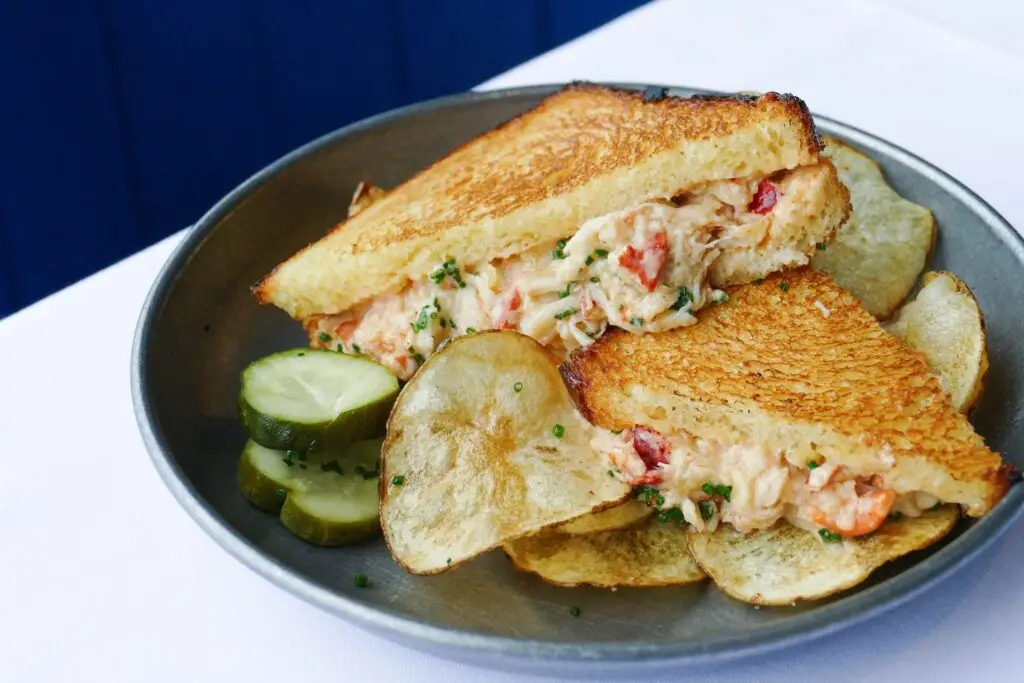
O’Brien’s Boulangerie is another standout, serving brunch and sandwiches on house-baked bread in its onsite cafe (the bakery also provides bread service for over 400 hotels and restaurants in San Diego and Orange counties). Say yes to the owner Edgar Escobar’s lobster roll and wash it down with a mimosa flight, featuring guava, mango, lychee, and hibiscus juices, then make plans to come back for dinner—it will soon begin opening at night.
“Poway is family-oriented,” Ray says. “For me, it’s about building relationships.” One of his newer favorites is mom-and-pop Baba Kabob on Poway Road for the gyro box with fries, a Greek brownie, and a soda. “The owners are so nice you want to go back,” Ray adds.

Poway’s reputation for single-family homes on large lots probably won’t change soon, due to current zoning and limits on development of the city’s open-space preserves. But city planners have recently focused on bringing walkability and efficient land use to strip-mall-laden Poway Road, which grew up as an auto-centric thoroughfare in the mid-20th century. The Poway Road Specific Plan, a 25-year revitalization initiative adopted in 2017, calls for higher-density housing, mixed-use buildings to replace single-story retail, pedestrian-friendly features, and transit accessibility—but it’s stirring up divided reactions from residents, who like Poway’s quiet vibe.
Carmichael, for her part, is a fan. “It’s fun to see new commercial options coming in,” she says. “And the new apartments have filled up, showing the success of the project.” It’s a big deal that Poway now has Trader Joe’s, Boot Barn, Better Buzz, Raising Cane’s, Aldi, and Dutch Bros. Tractor Supply is coming soon. Another new trend Carmichael has noticed is that local San Diego eateries are choosing Poway for “sister” locations, like Filipino bakery Starbread (get the señorita bread!), Nutmeg Bakery, Hawaiian Fresh Seafood, MexicanBar, Harney Sushi, and Ma’s House.
And, soon, athletes in Poway will have a refreshed place to play. Locals are looking forward to restoration of the ball fields at Lake Poway, which have been closed since 2021 and used as a site for temporary storage tanks as the city upgrades water infrastructure. “It’s not very sexy, but it will make a big difference in this community,” Carmichael says. Keep an eye out for them to reopen in late spring 2026.
Leorah Gavidor won her first essay contest at age 5. She writes features, news, and non-fiction in San Diego.
The 53rd Annual National Philanthropy Day Takes Place on November 21. Join us from 11:00 a.m. – 1:30 p.m. at the new Gaylord Pacific Resort & Convention Center!
Once yearly, AFP San Diego joins with others worldwide to celebrate National Philanthropy Day (NPD), a special day set aside to recognize the great contributions of donors and nonprofits that enrich of our community and the world. San Diego’s NPD is one of the largest and most successful in the U.S., attracting nearly 900 participants, including philanthropists, nonprofit leaders, CEOs, board members, development professionals, and business, community, and civic leaders.
Sponsorship proceeds from National Philanthropy Day are reinvested in education, training, scholarships, career development, and the advancement of fundraising professionals throughout San Diego. These resources and training provide fundraising professionals with the tools necessary to support our region’s diverse array of nonprofit organizations, which rely on charitable giving for close to half of their annual revenues.
The National Philanthropy Day Honorees are selected by the NPD Honorary Committee, a group of highly respected, diverse nonprofit and business leaders. Our 2025 Honorees include:
National Philanthropy Day San Diego provides an opportunity to reflect on the meaning of giving and to celebrate the selfless contributions of individuals and organizations across the region. We look forward to celebrating with you!
Sponsorship opportunities and individual tickets are available. Please visit www.afpsd.org for more information.